



Every school has that one game. The opponent is the same each year, the stakes feel impossibly high regardless of standings, and the trophy that changes hands afterward carries more weight than any conference title. Rivalry trophies represent something physical trophy cases rarely capture well: an ongoing story with no final chapter, a live archive updated each season, and a direct line connecting current athletes to alumni who played the same rivalry decades earlier.
This guide explains what rivalry trophies are, explores how schools can archive yearly winners in formats that earn search-snippet placement, and shows how modern displays—from dedicated hallway cases to interactive touchscreen archives—give rival game history the sustained visibility it deserves.
Rivalry game displays work best when they combine physical hardware with layered historical context. The trophy itself is the anchor, but the yearly winner records, game scores, player names, and alumni stories are what transform a static case into a living archive that engages students, visitors, and returning graduates alike.

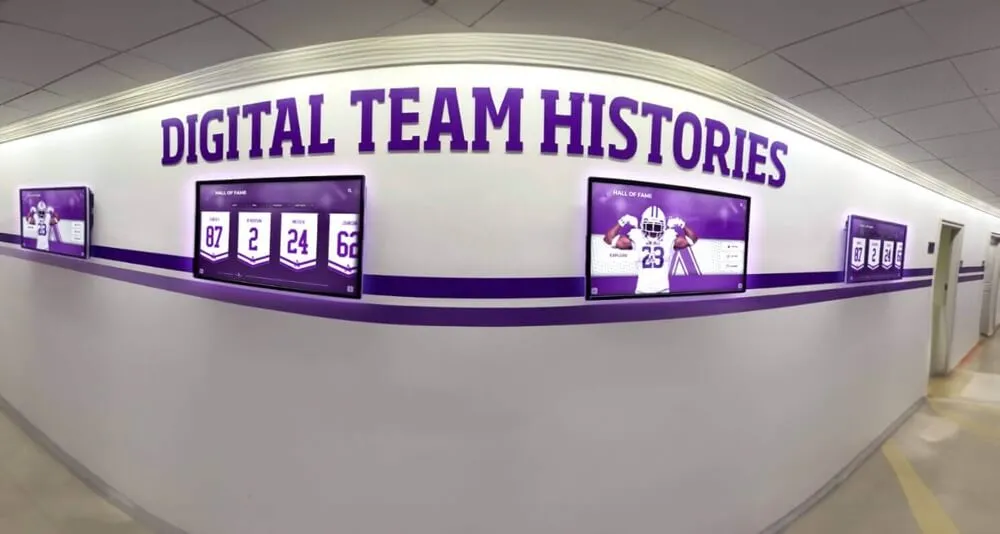
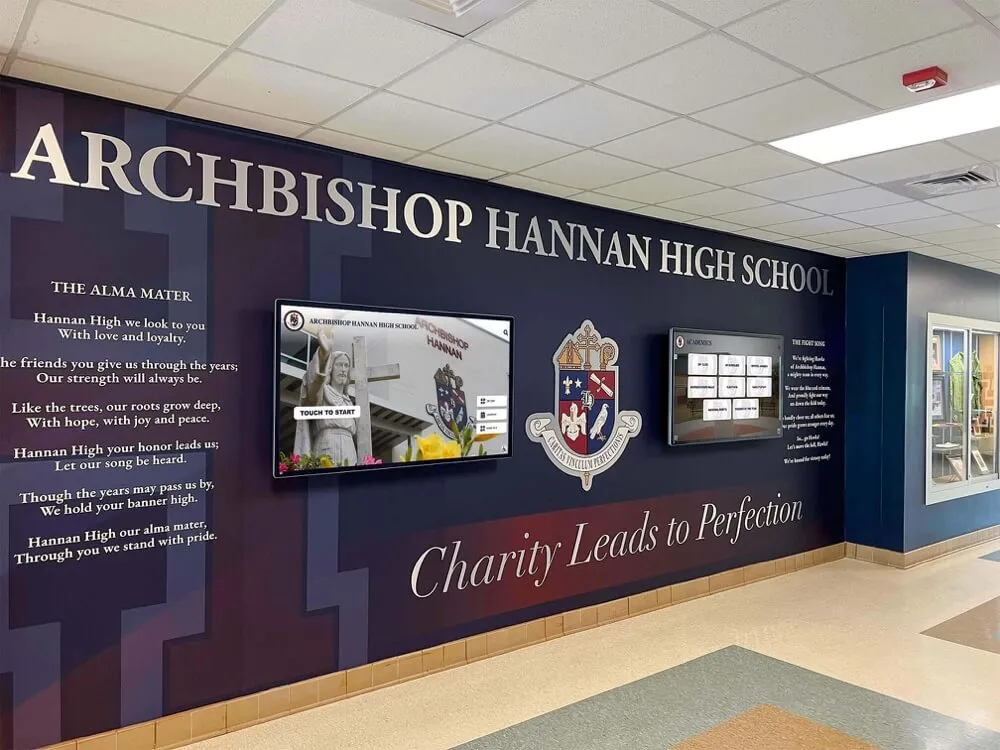
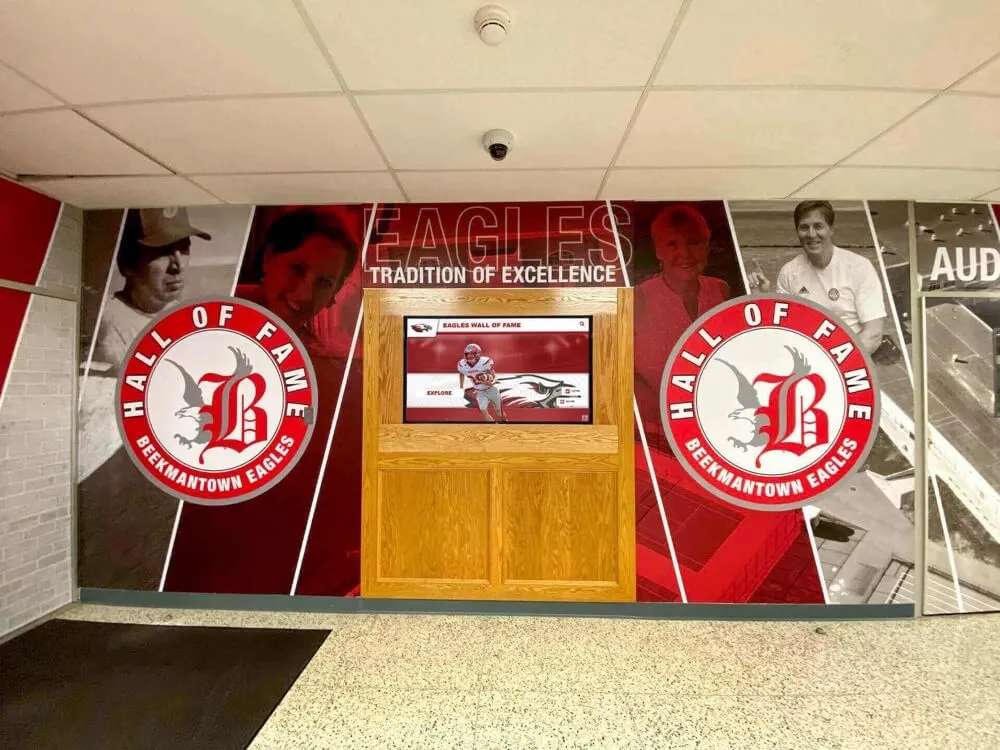
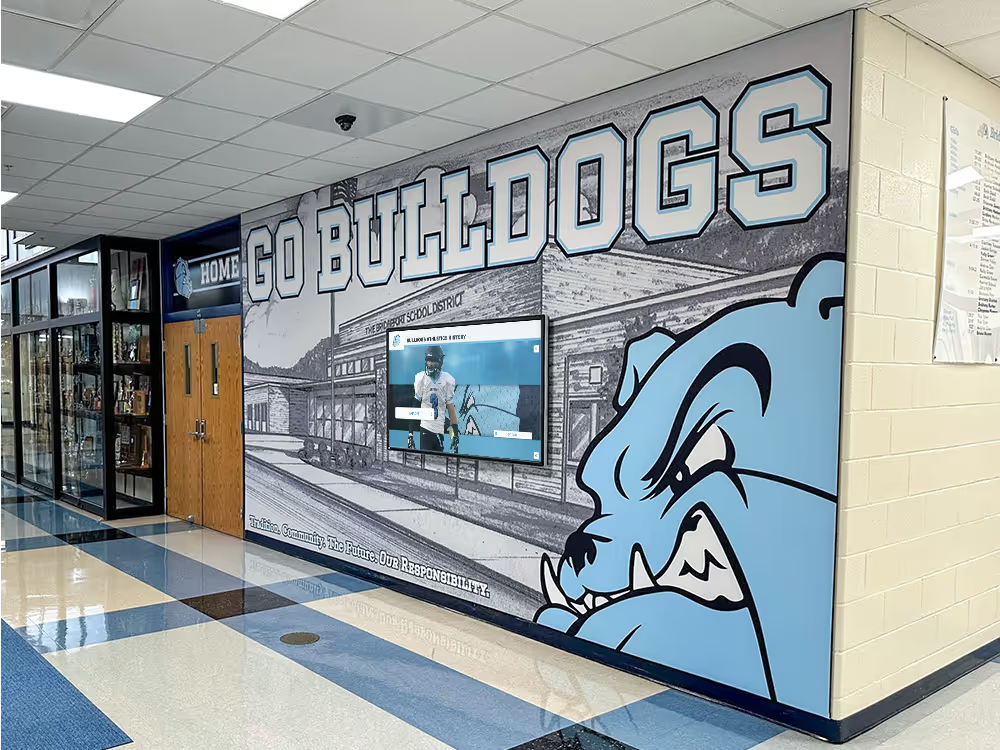
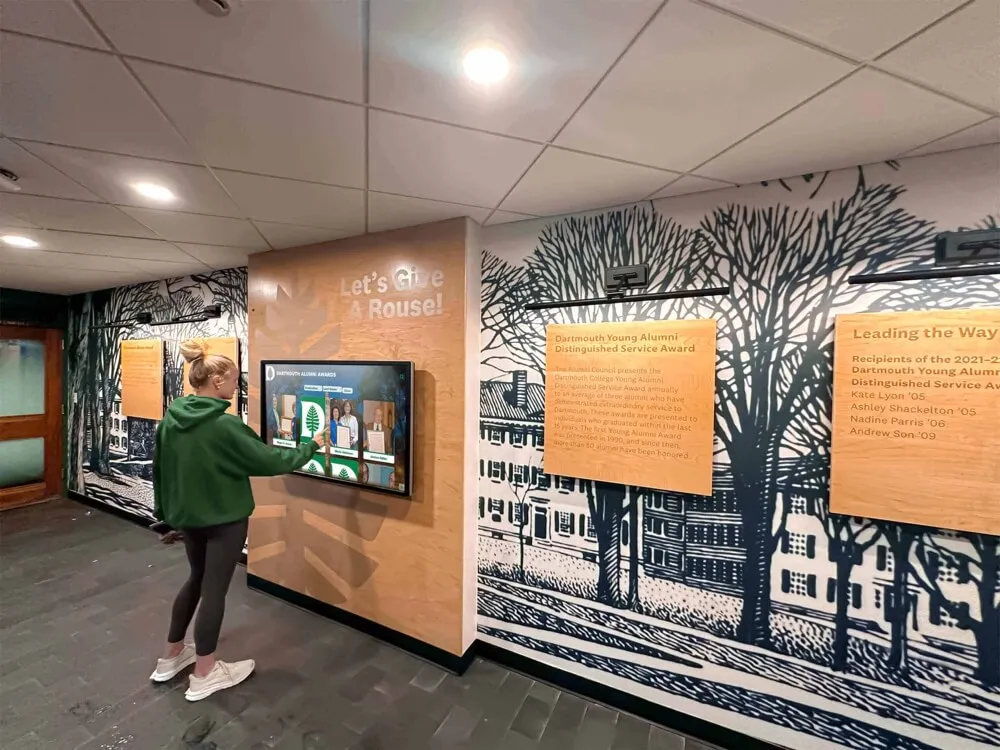
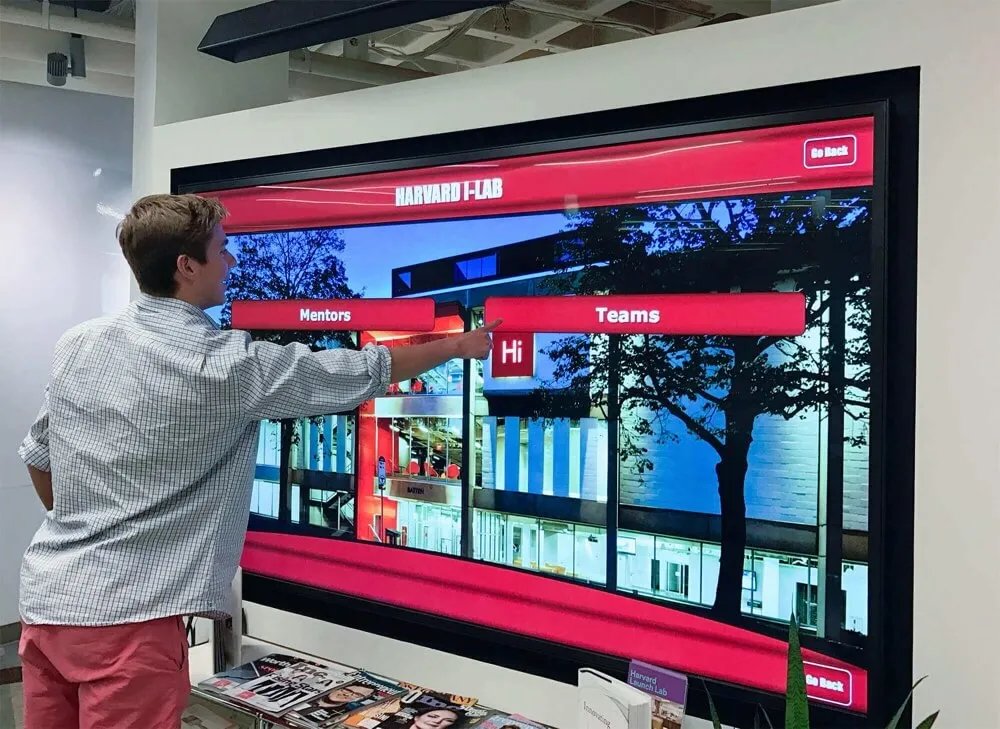
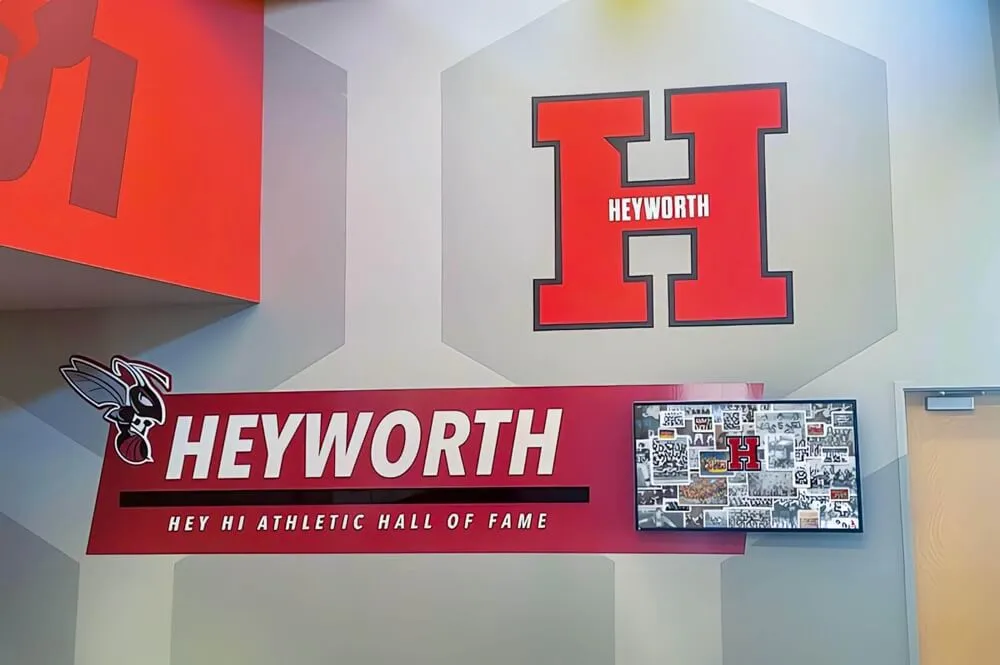
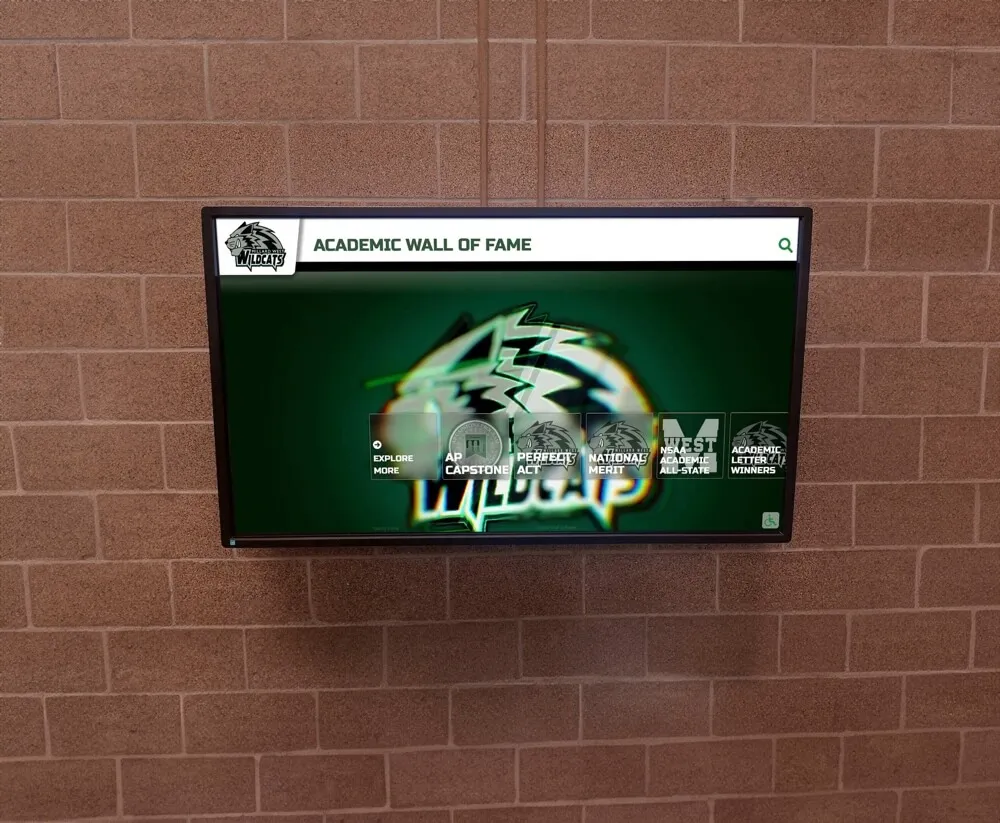
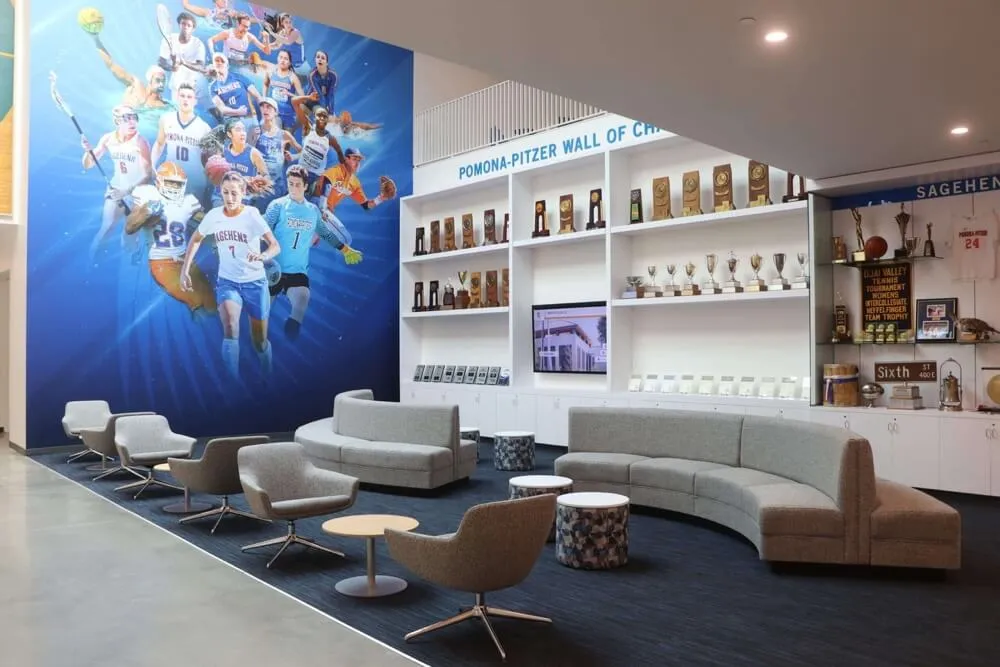
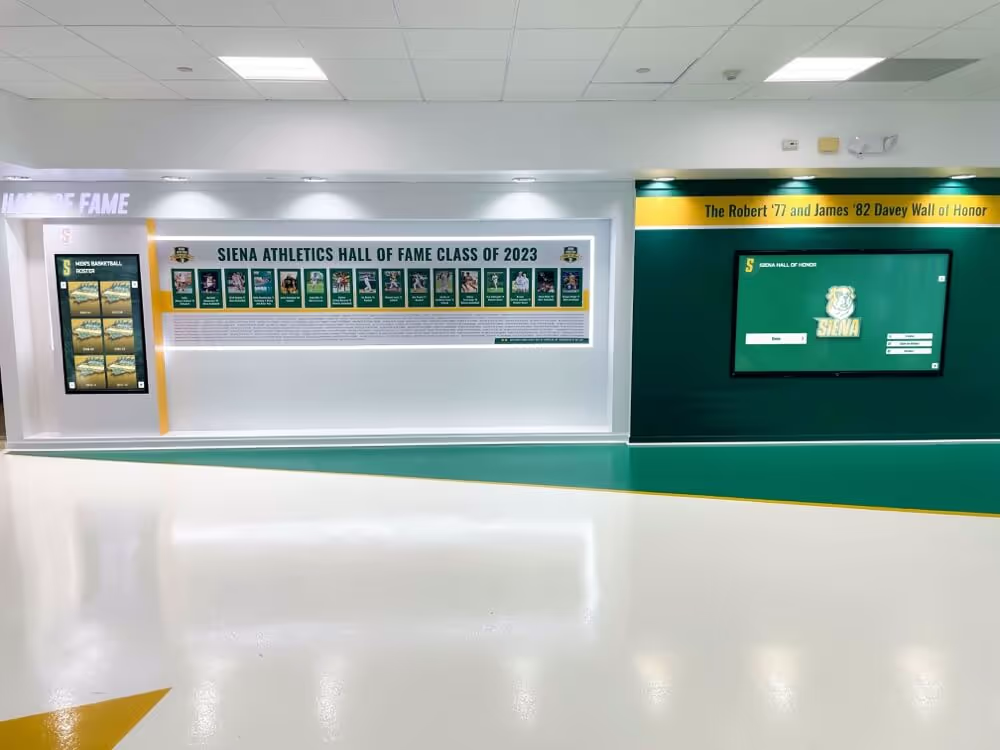
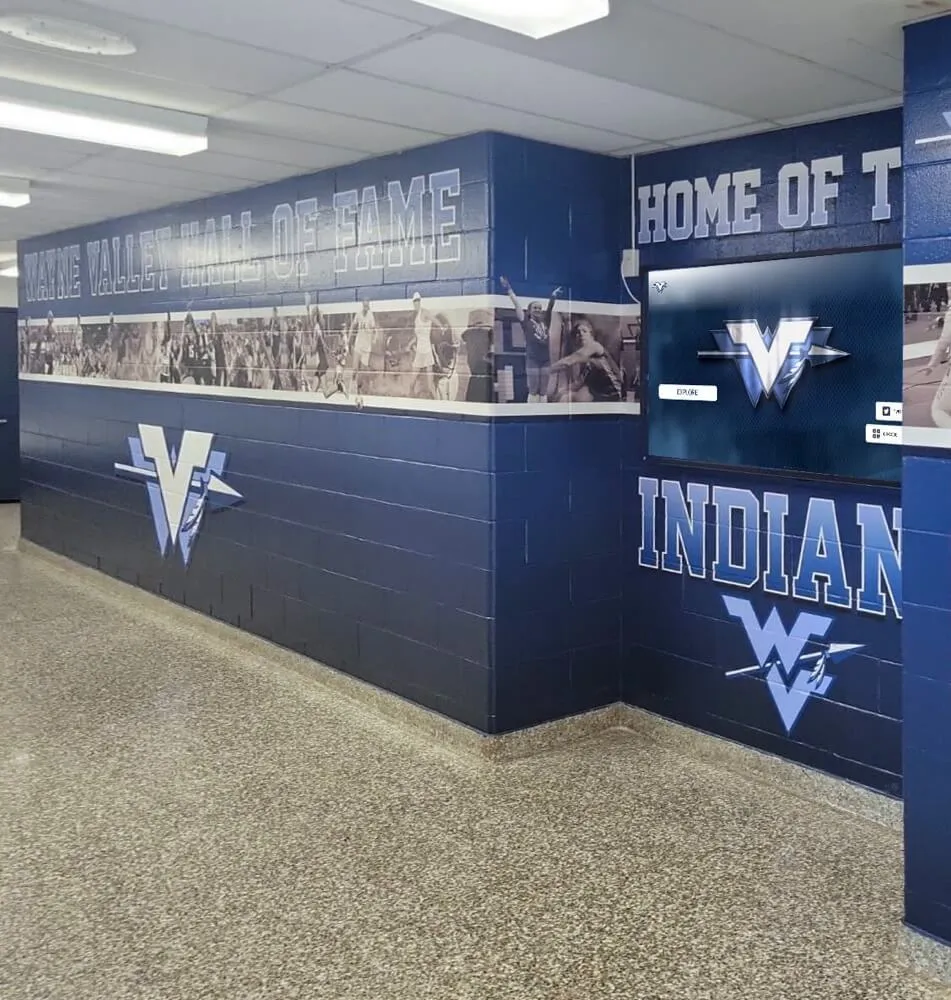
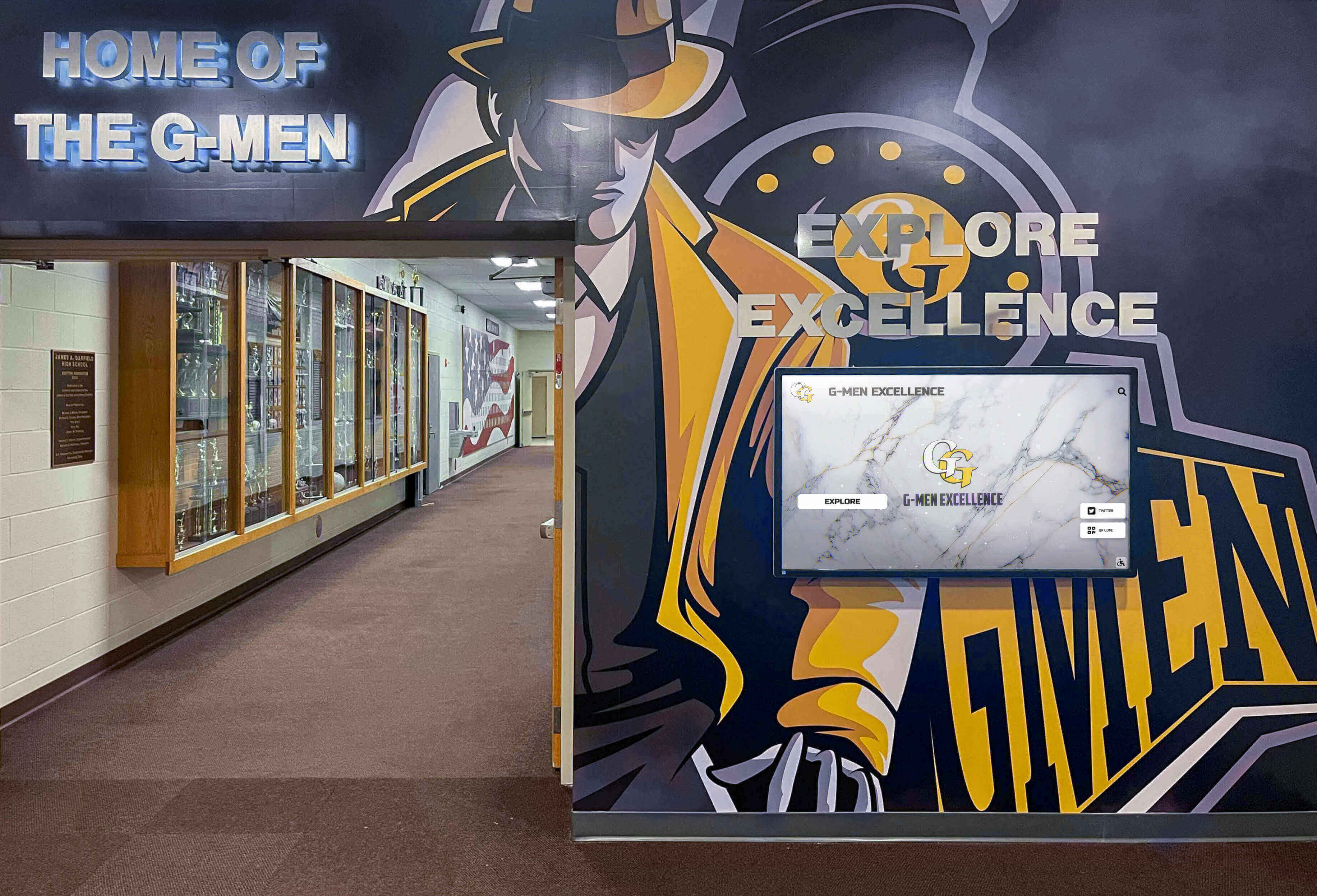
Dedicated hallway displays combine murals, signage, and trophy cases to create immersive rivalry game archives that visitors engage with naturally
What Are Rivalry Trophies?
A rivalry trophy is a physical award—typically a trophy, cup, axe, bell, jug, or other symbolic object—that rotates between two competing schools each time they play a recurring matchup. Unlike traditional championship trophies that a school keeps permanently, rivalry trophies transfer to the winner after each game, creating a continuous chain of custody that makes the object itself a record of the series.
Key characteristics of rivalry trophies:
- Perpetual possession — The trophy is never permanently owned; it changes hands each season
- Shared meaning — Both schools attach institutional identity to the same object
- Built-in archive — The history of who held the trophy, and when, documents the full series
- Community resonance — Students, alumni, and community members often track the rivalry for generations
- Symbolic weight — Unusual or historic objects (a jug, a bell, a saddle) reinforce the tradition’s uniqueness
Rivalry trophies exist at every level of school athletics, from high school homecoming games to Division I football matchups. At the college level, trophies like the Little Brown Jug (Michigan vs. Minnesota, established 1909) and the Victory Bell (USC vs. UCLA, established 1941) have documented histories spanning a century. High school rivalries—often between neighboring towns or conference rivals—carry comparable emotional weight within their communities even without national audiences.
Why the Archive Matters as Much as the Trophy
Possessing the trophy matters for exactly one season. The complete archive—who won each year, final scores, standout performances, and the stories behind memorable games—matters forever.
Schools that invest in rivalry archives unlock several lasting benefits:
Alumni engagement: Graduates who played in rivalry games want to see their year in the record. A searchable archive of yearly winners is often one of the first things returning alumni check during homecoming weekend.
Recruiting value: Prospective student-athletes evaluate program culture. A visible, well-maintained rivalry record communicates that the school takes competitive history seriously.
Community identity: In towns where the rivalry game is an annual civic event, the public archive reinforces shared identity and gives local media, boosters, and community members a reference point each season.
Institutional memory: Coaching changes, facility upgrades, and administrative turnover can cause historical records to disappear. A dedicated rivalry archive prevents gaps that become increasingly difficult to fill.
Sample Yearly Winner Archive Table
The table format below is a common structure for rivalry trophy documentation. Schools can adapt this for their own series, embedding it in physical display panels, printed programs, or interactive digital kiosks.
| Season | Winner | Score | Location | Series Record (W-L-T) |
|---|---|---|---|---|
| 2024 | Home School | 28–14 | Home | 42–35–3 |
| 2023 | Rival School | 21–17 | Away | 41–35–3 |
| 2022 | Home School | 34–7 | Home | 41–34–3 |
| 2021 | Tie | 14–14 | Away | 40–34–3 |
| 2020 | Season not played | — | — | — |
| 2019 | Rival School | 17–10 | Home | 40–34–2 |
| 2018 | Home School | 24–21 | Away | 40–33–2 |
A table structured this way gives search engines clean, extractable data for featured snippet placement and gives visitors an immediate at-a-glance record without requiring navigation. Schools maintaining digital displays often mirror this table in their touchscreen kiosk interfaces, allowing users to filter by decade or sort by margin of victory.
For a broader look at how schools preserve game-winning hardware alongside yearly records, the guide on football display cases and preserving game balls from school athletic history covers companion display strategies worth reviewing alongside rivalry trophy planning.
How Schools Traditionally Display Rivalry Trophies
Physical display options for rivalry trophies range from a single dedicated case to full hallway installations.
The Dedicated Rivalry Case
The most focused approach dedicates one case entirely to the rivalry: the trophy in the center, surrounded by a winner plaque listing each year’s outcome, framed photos from memorable games, and newspaper clippings from significant matchups. This format concentrates the full history in one location and signals to visitors that the rivalry deserves singular attention rather than placement among general athletic awards.
Effective dedicated cases include:
- A prominently labeled header identifying both schools and the trophy’s name
- A current-status indicator showing which school holds the trophy
- Cumulative series record displayed in large format (e.g., “Home 42 | Rival 35 | Ties 3”)
- Year-by-year records either engraved or printed on a poster insert
- Game photographs organized chronologically
Integration with Athletic Hallway Displays
Many schools embed rivalry trophy recognition within a broader athletic hallway or hall of fame installation rather than isolating it. This works well when the rivalry is one of several story threads the display tells, and when the school wants to connect rivalry history to individual athletes who played in significant games.
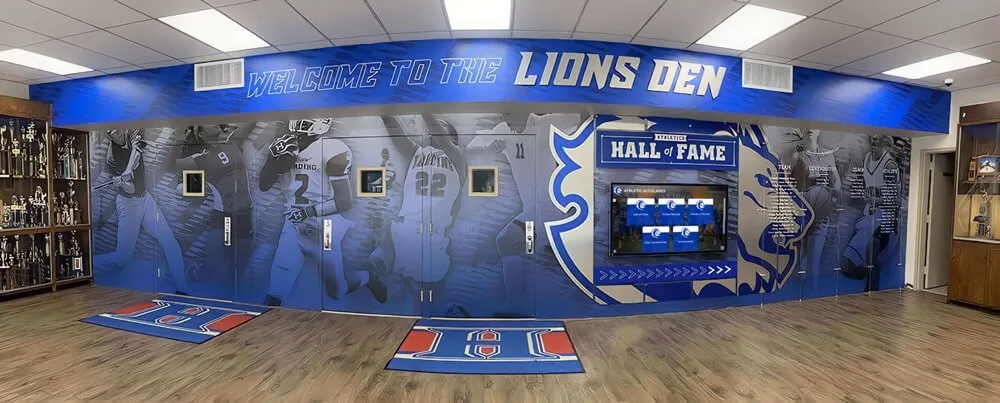
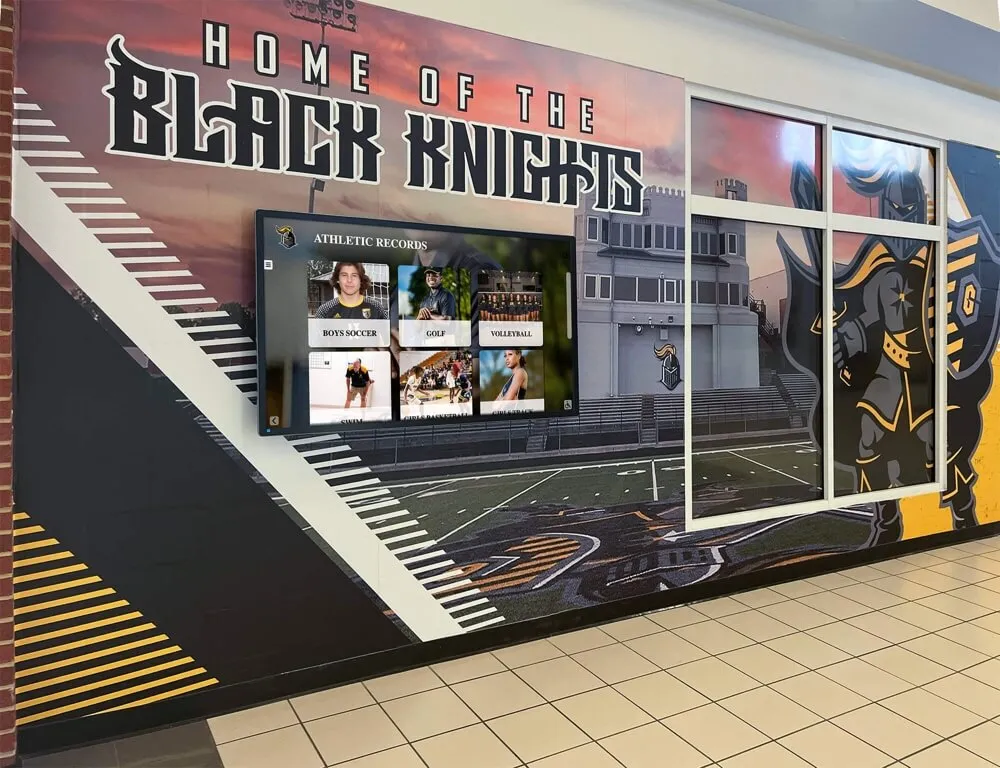
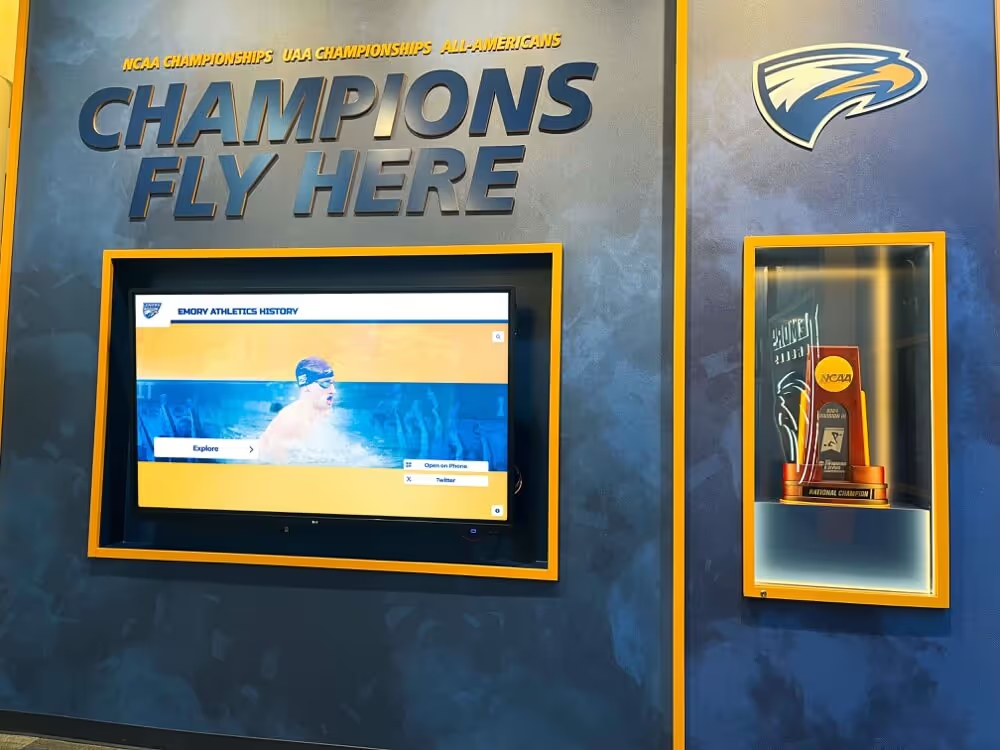
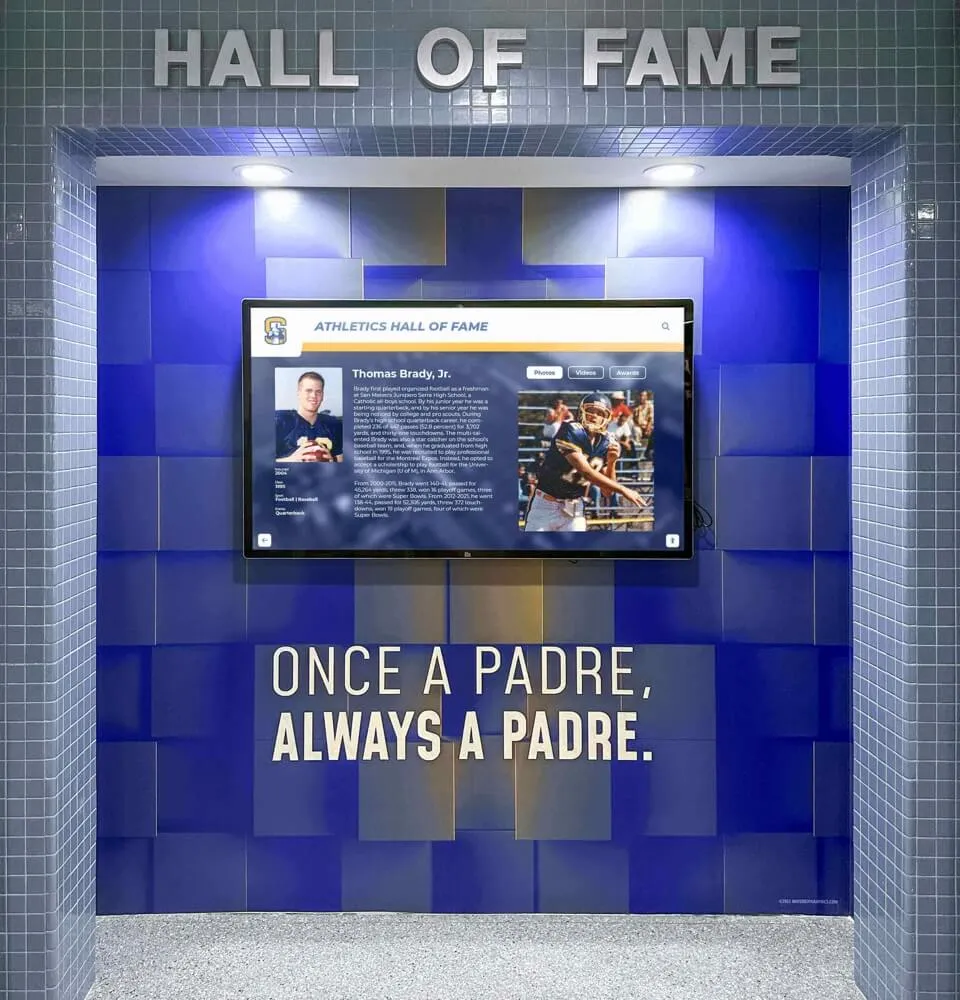
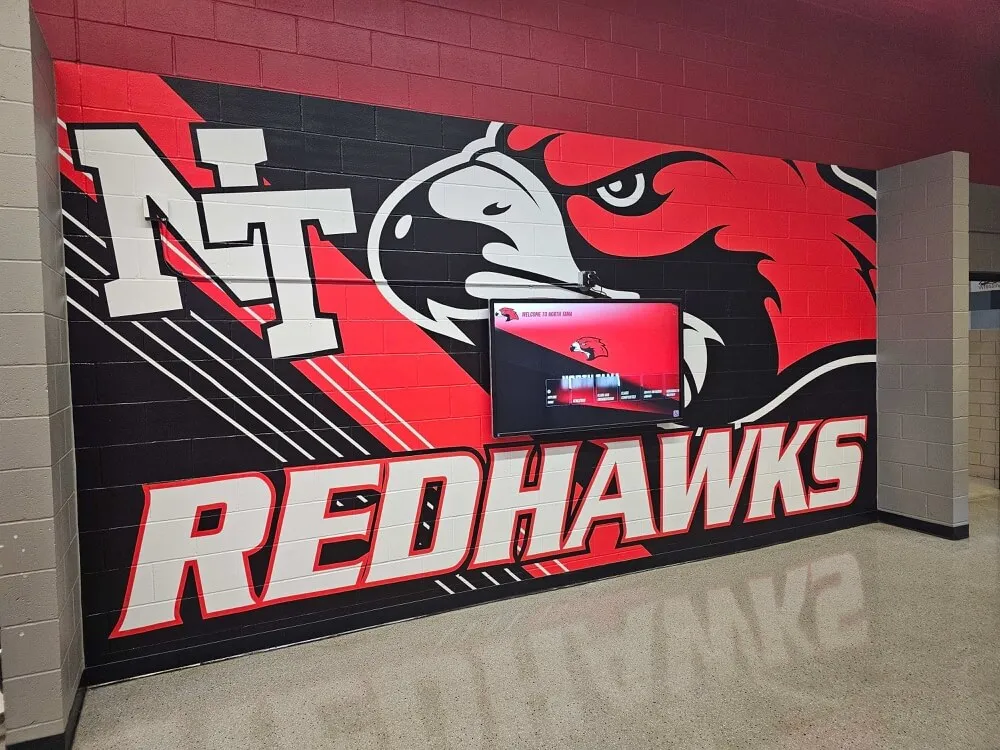
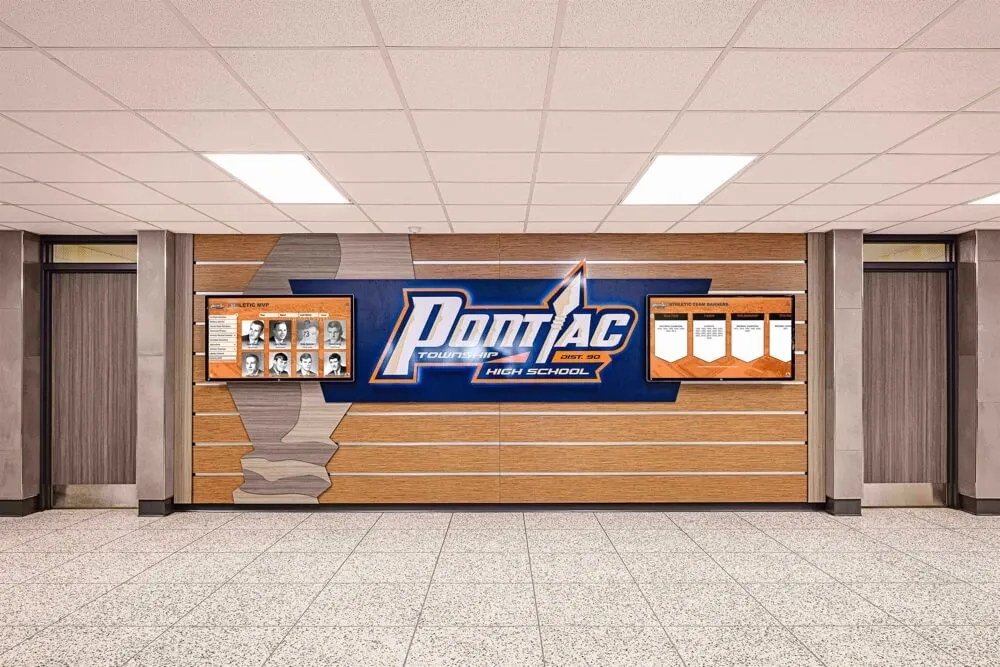
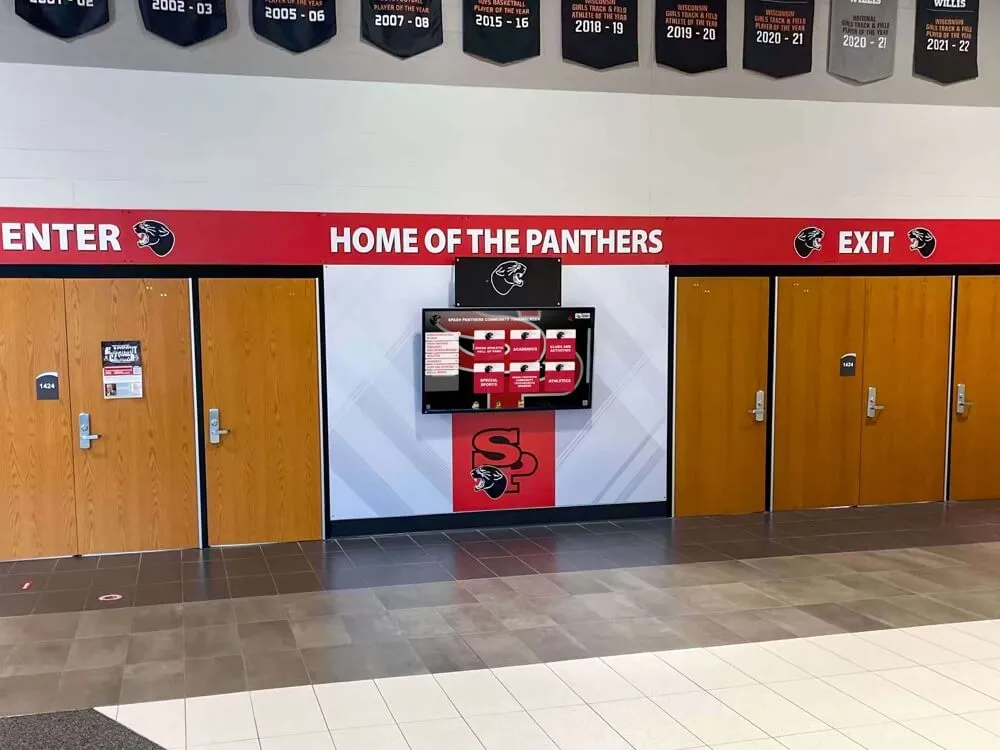
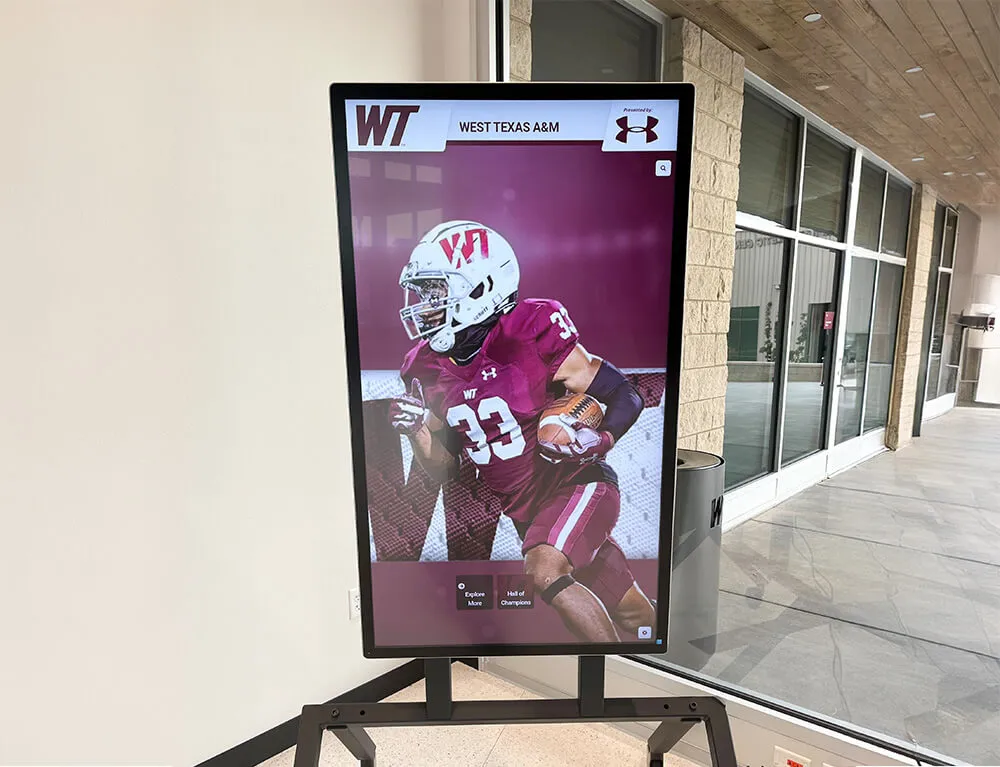
Integrated athletic hallways connect rivalry trophies to the broader program history, linking game outcomes to the athletes who produced them
For guidance on creative arrangements that go beyond the standard case, the resource on championship trophy display ideas beyond the standard trophy case explores spatial and thematic approaches applicable to rivalry displays as well.
Locker Room and Athletics Facility Placement
Some schools intentionally place the rivalry trophy—or a replica—in the locker room or weight room rather than a public hallway. The goal is motivational: current athletes see it daily and are reminded that the next game in the series is always approaching. Public displays prioritize community and alumni audiences; locker room placement prioritizes the athletes themselves. Many programs do both, displaying the original in a public case and a mounted commemorative in the team spaces.
Physical Display Challenges for Rivalry Trophies
Traditional cases handle the trophy well but struggle with the archive:
Space limitations: A winner plaque listing 80 years of outcomes requires significant surface area. Physical cases often compromise by summarizing or omitting early decades, creating incomplete records that obscure the full depth of the rivalry.
Update friction: Adding each new season’s result to a physical display requires engraving, printing, or manual label replacement—tasks that often get delayed until homecoming season, leaving the current year unrecorded for months.
Context gaps: Physical displays show outcomes but rarely convey the stories. A score of 7–6 from 1962 means nothing to a current student without context about what was at stake, who scored, or why that game became part of the school’s folklore.
Searchability: A visitor trying to find the year a specific alumnus played in the rivalry game cannot search a physical case. They must scan every line by eye, often during a busy event when extended browsing isn’t practical.
These limitations are well-documented for athletic trophy displays generally. The overview of memorabilia display case ideas for showcasing school history and athletic trophies identifies the same friction points and outlines how schools can address them through smarter case design and digital integration.
Digital Approaches: Interactive Rivalry Archives
Touchscreen displays resolve the core limitations of physical rivalry trophy cases by separating the object (the trophy, displayed physically) from the archive (all historical data, managed digitally).
Searchable Winner Records
An interactive kiosk positioned alongside or near the physical rivalry trophy case allows visitors to search the complete series record. Users can:
- Filter by decade, coaching era, or home/away status
- View box scores and final records for any season
- See photos from specific games linked to that year’s entry
- Read brief narrative summaries of memorable matchups
- Compare scoring patterns across different eras
This approach preserves the emotional impact of the physical trophy while making the full archive accessible to everyone from current freshmen to alumni who graduated forty years ago.
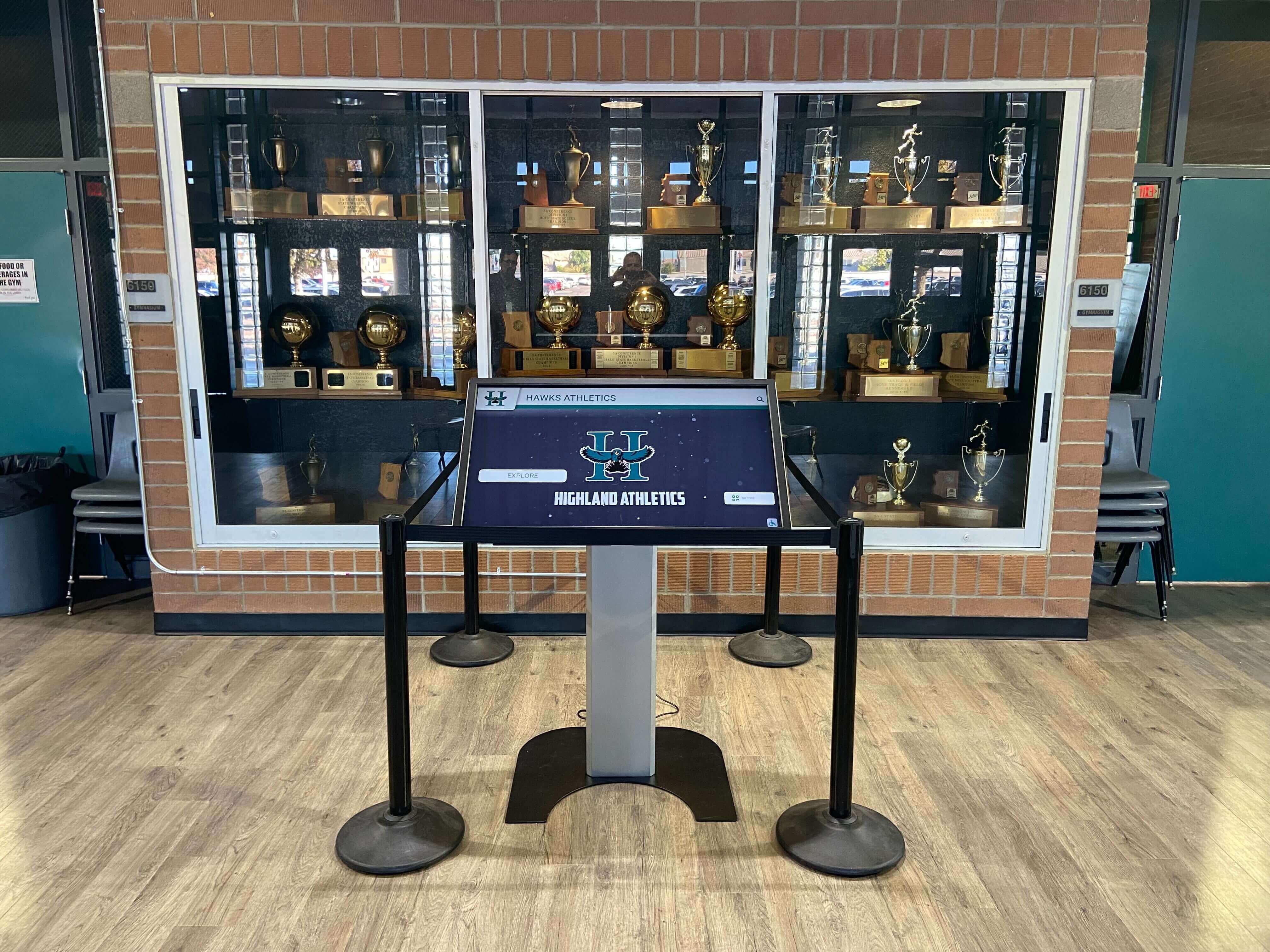
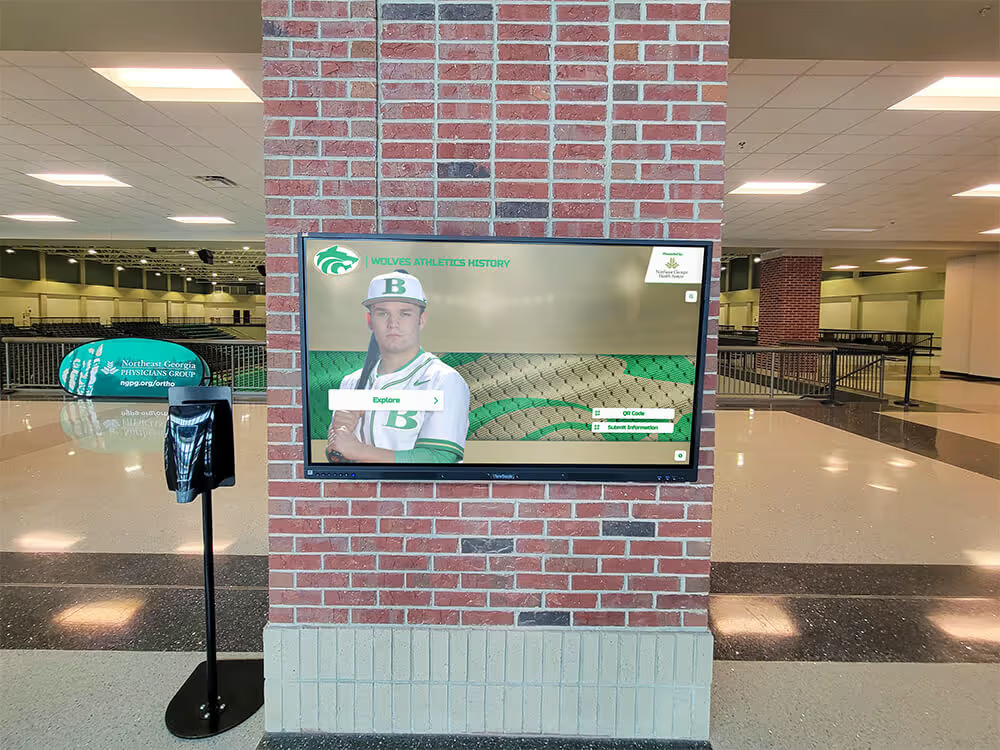
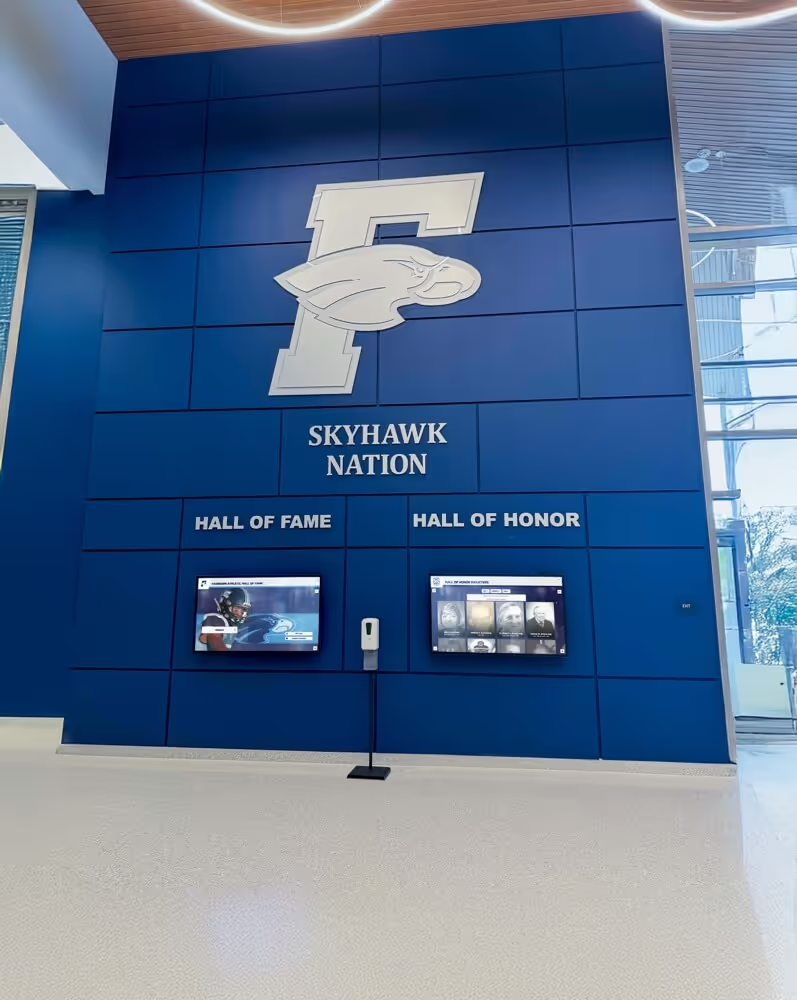
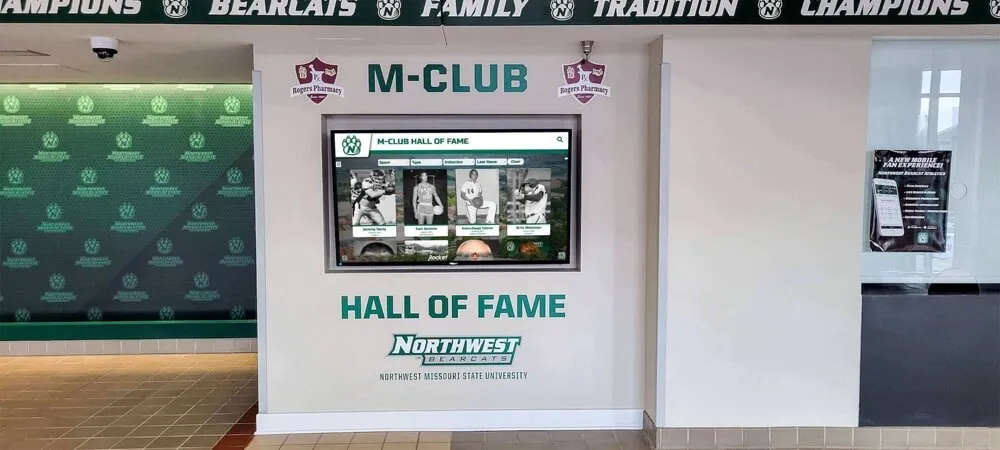
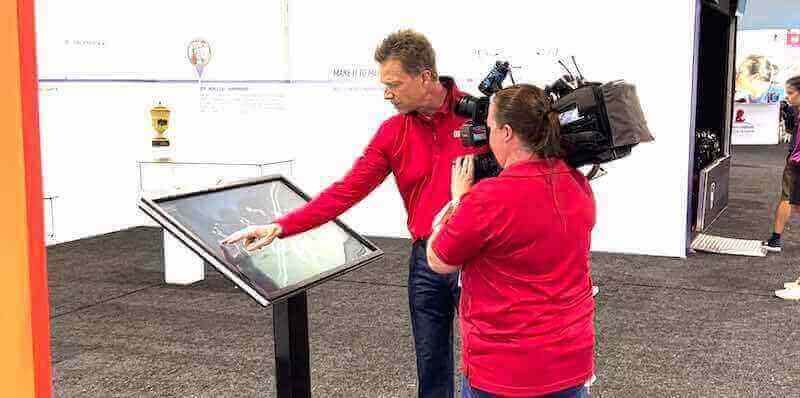
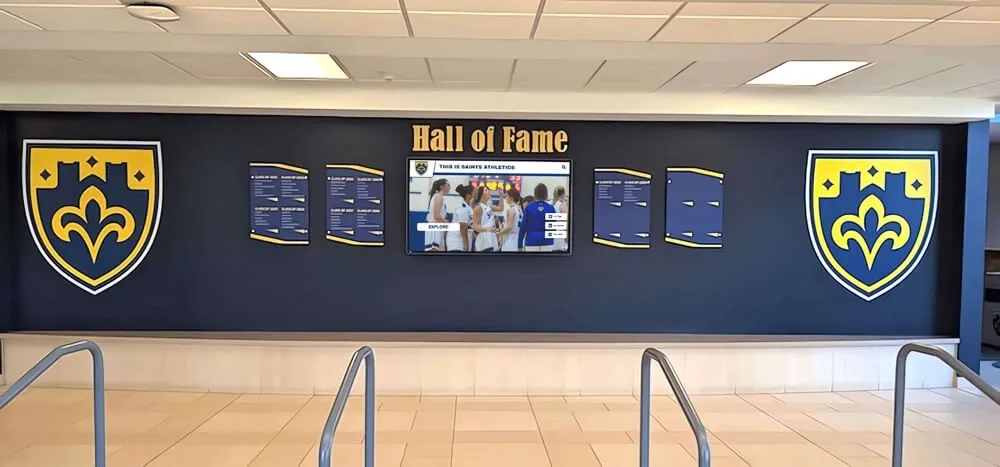
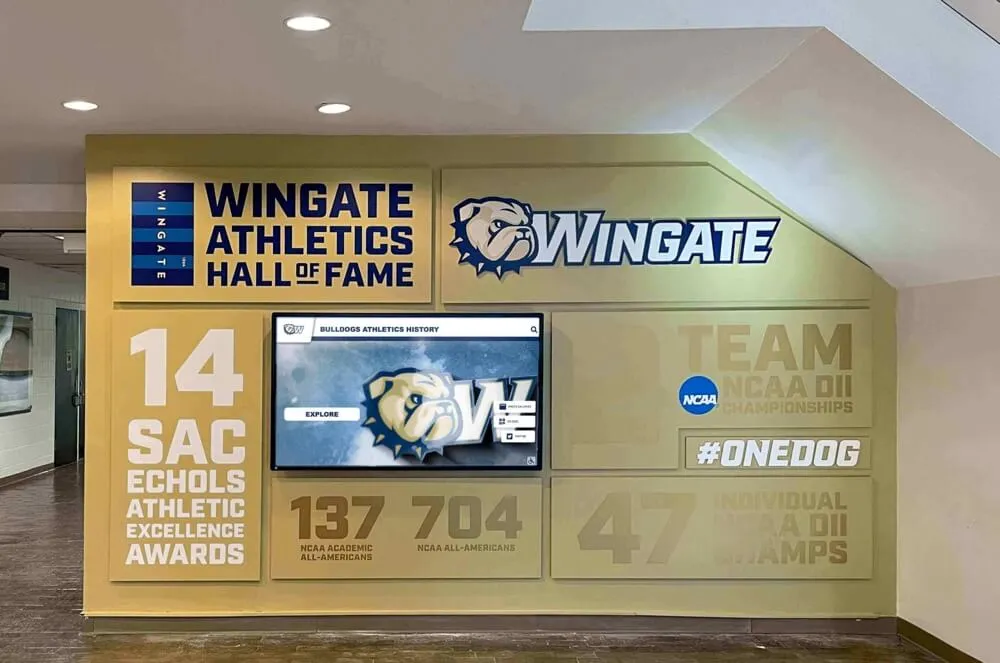
Touchscreen kiosks next to physical trophy cases let visitors search historical game records, player names, and alumni stories without displacing the original hardware
Connecting Winners to Athletes
The most engaging rivalry archives link game outcomes to the individuals who produced them. When a visitor finds a year in the winner record and can then tap through to view the starting lineup, team photo, or individual performance data for that season, the archive becomes a gateway to alumni storytelling rather than a static results list.
Schools implementing this approach report that alumni who played in rivalry games spend significantly more time at displays during reunion events when their names appear in searchable records. This engagement translates to stronger alumni relationships and, frequently, increased support for athletic programs.
For schools considering a broader online component, the guide on virtual trophy rooms and bringing school trophy cases online for alumni and visitors covers how digital platforms extend rivalry archive access beyond physical campus visits.
Integrating Game Memorabilia with Digital Context
Physical rivalry trophy cases often include supporting memorabilia: game balls, commemorative items, or sport-specific objects that mark significant years. For schools that want to preserve these items while adding digital context, pairing physical memorabilia with touchscreen interfaces creates hybrid displays that honor both the object and the story.
The detailed guide on hockey puck display cases for preserving game-winning pucks and tournament trophies illustrates how this pairing works for sport-specific objects, with approaches that translate directly to rivalry game memorabilia across any sport.
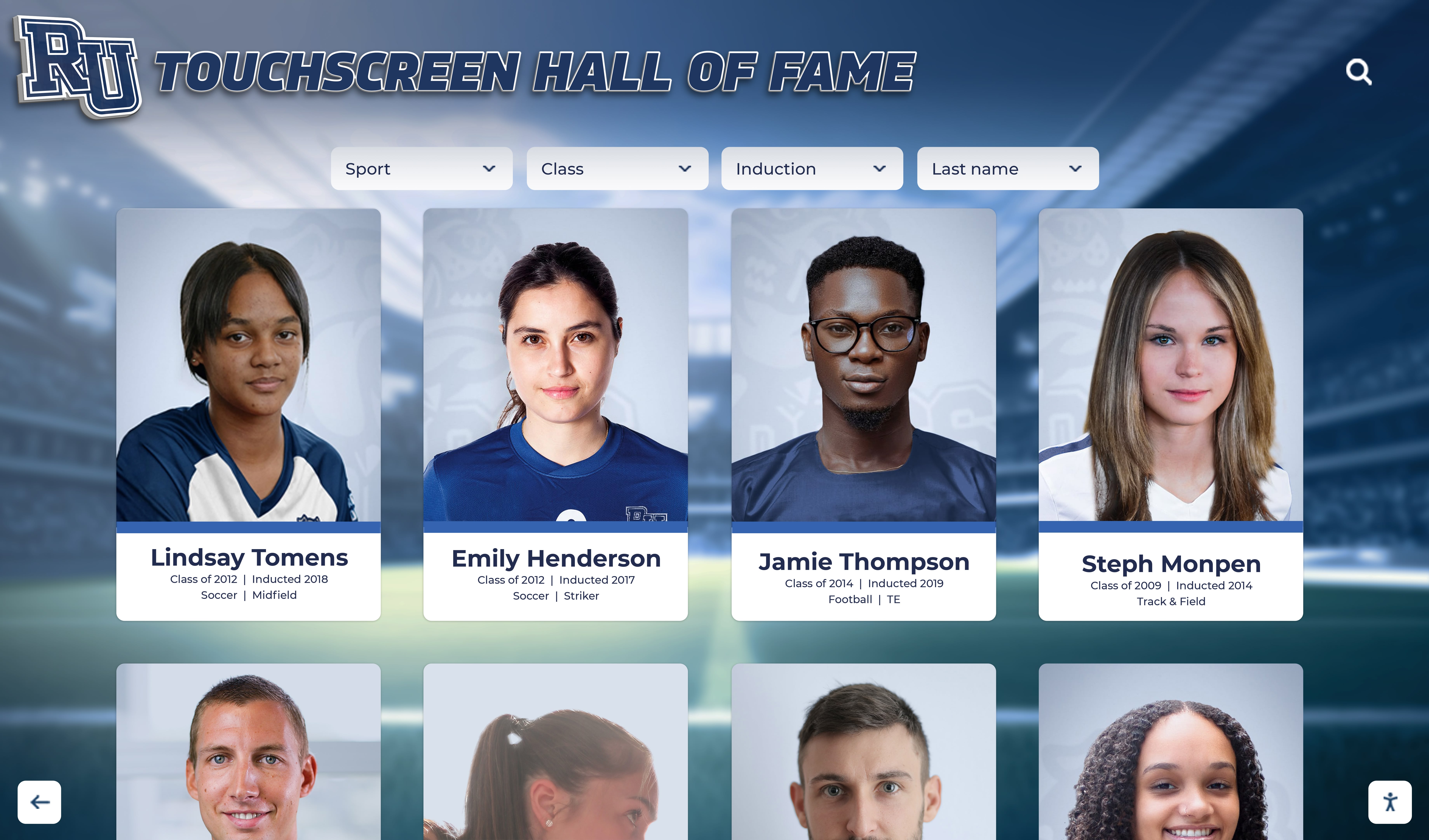
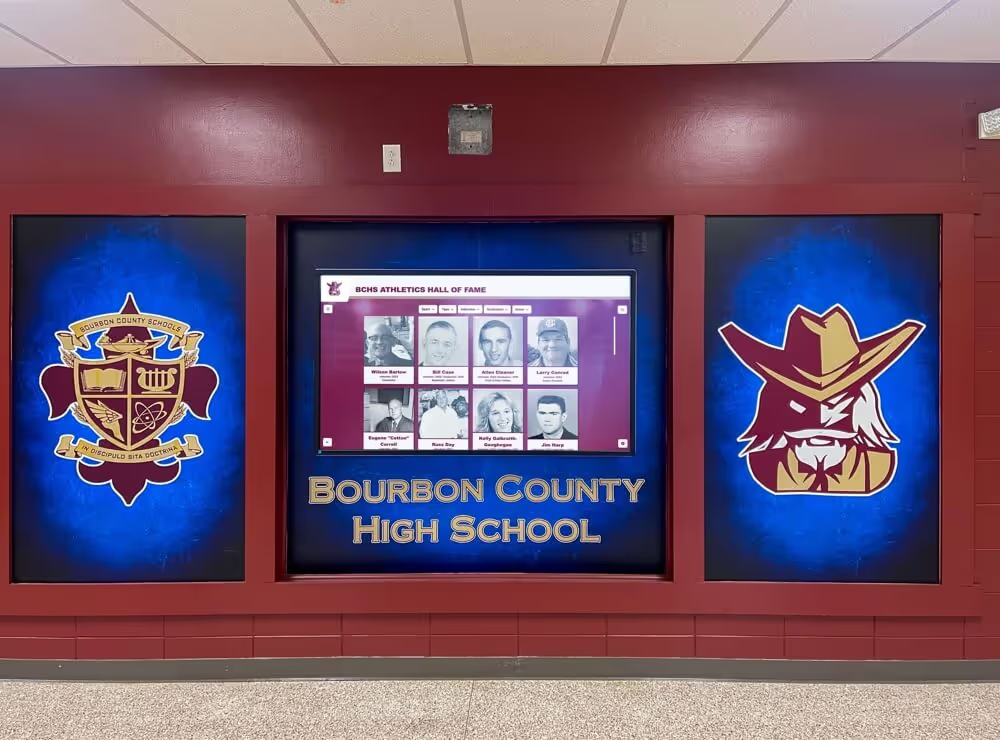
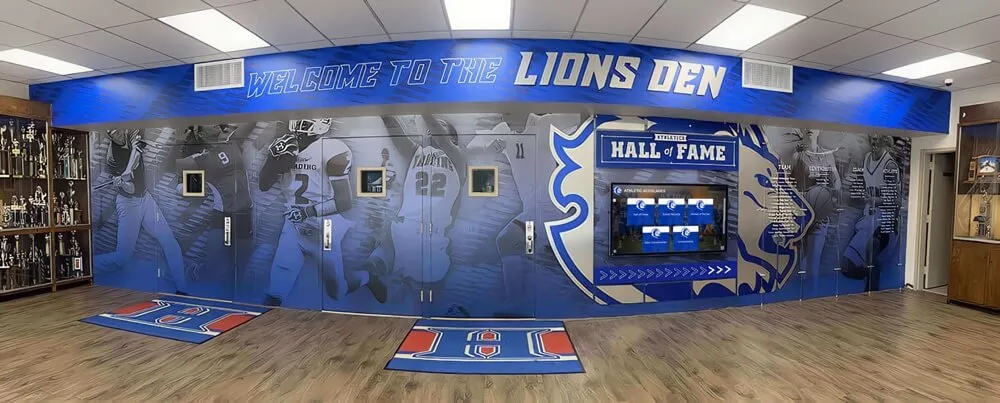
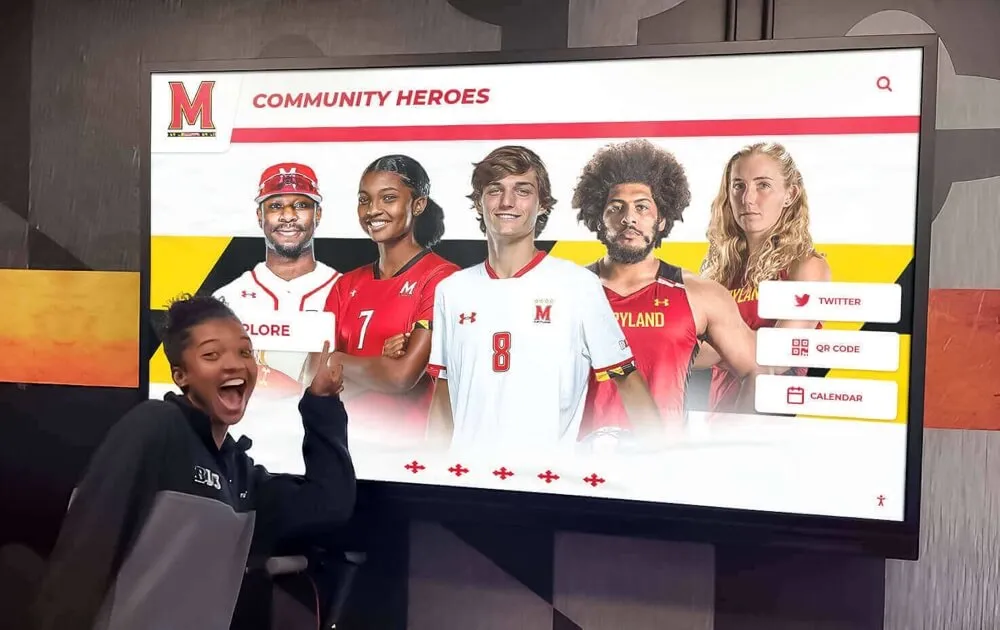
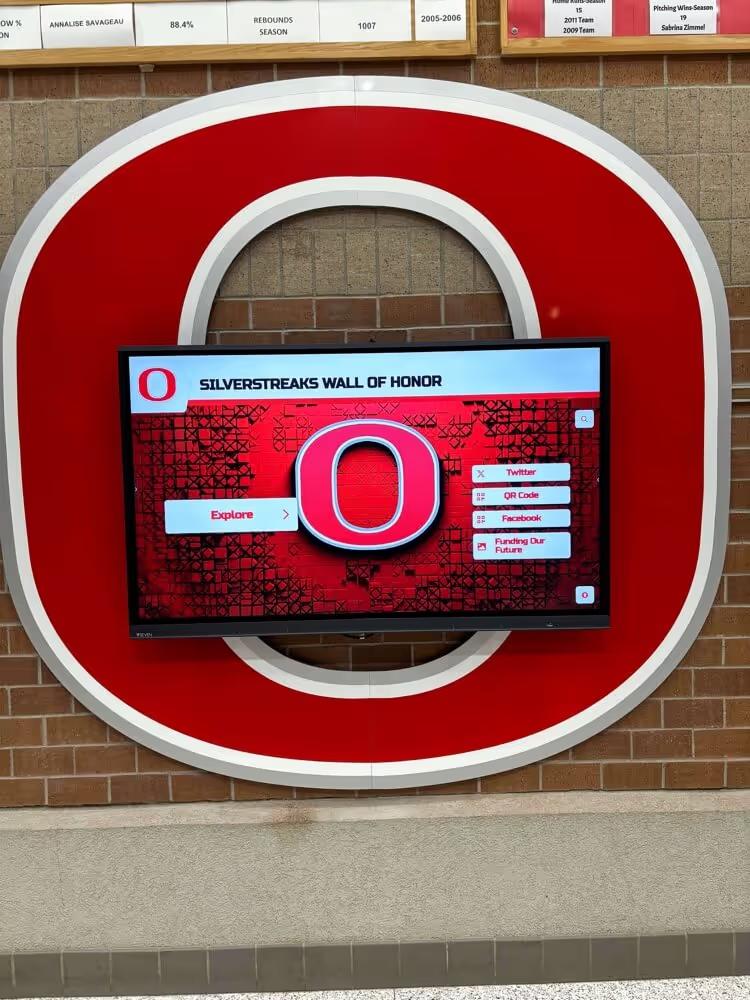
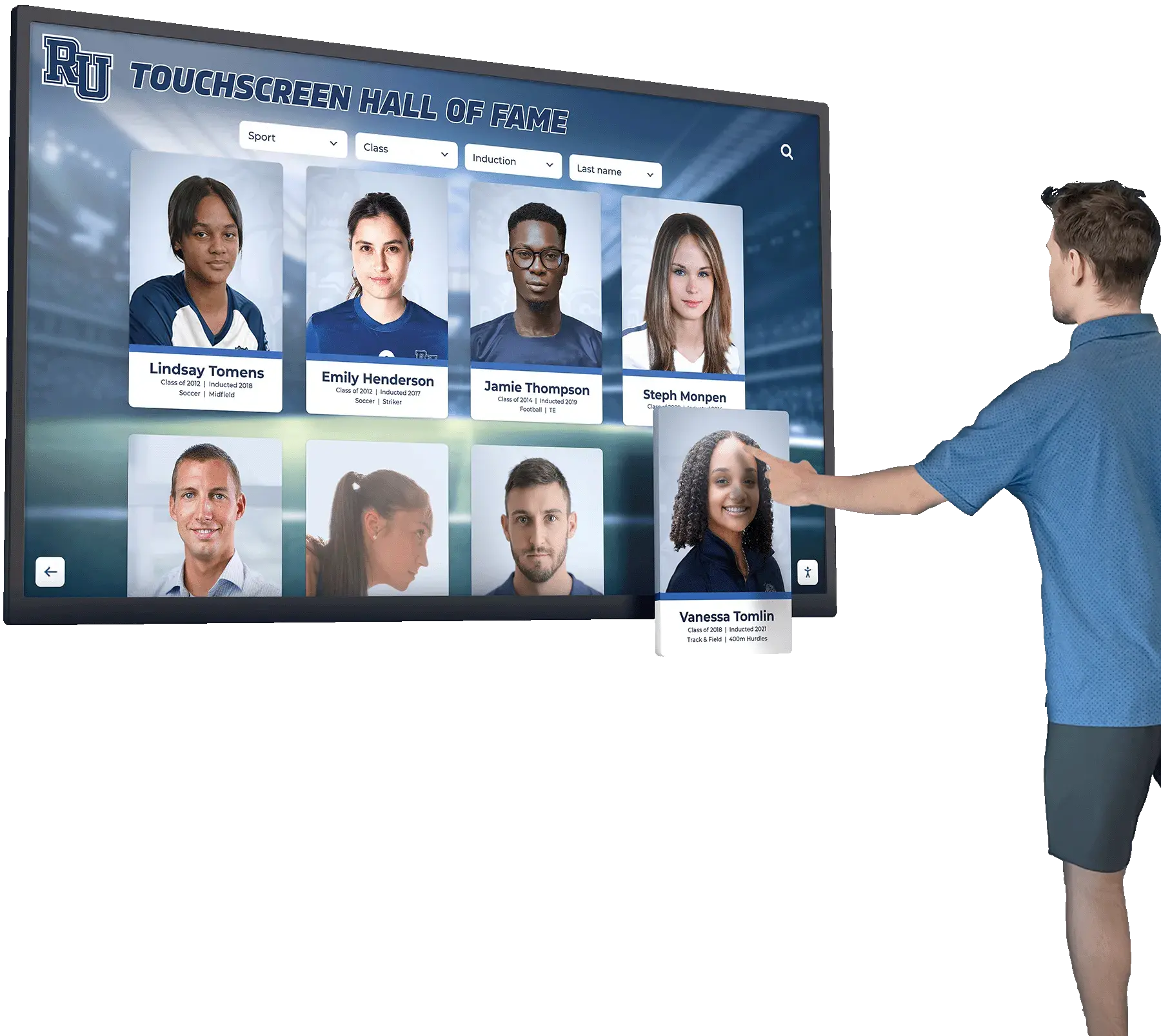
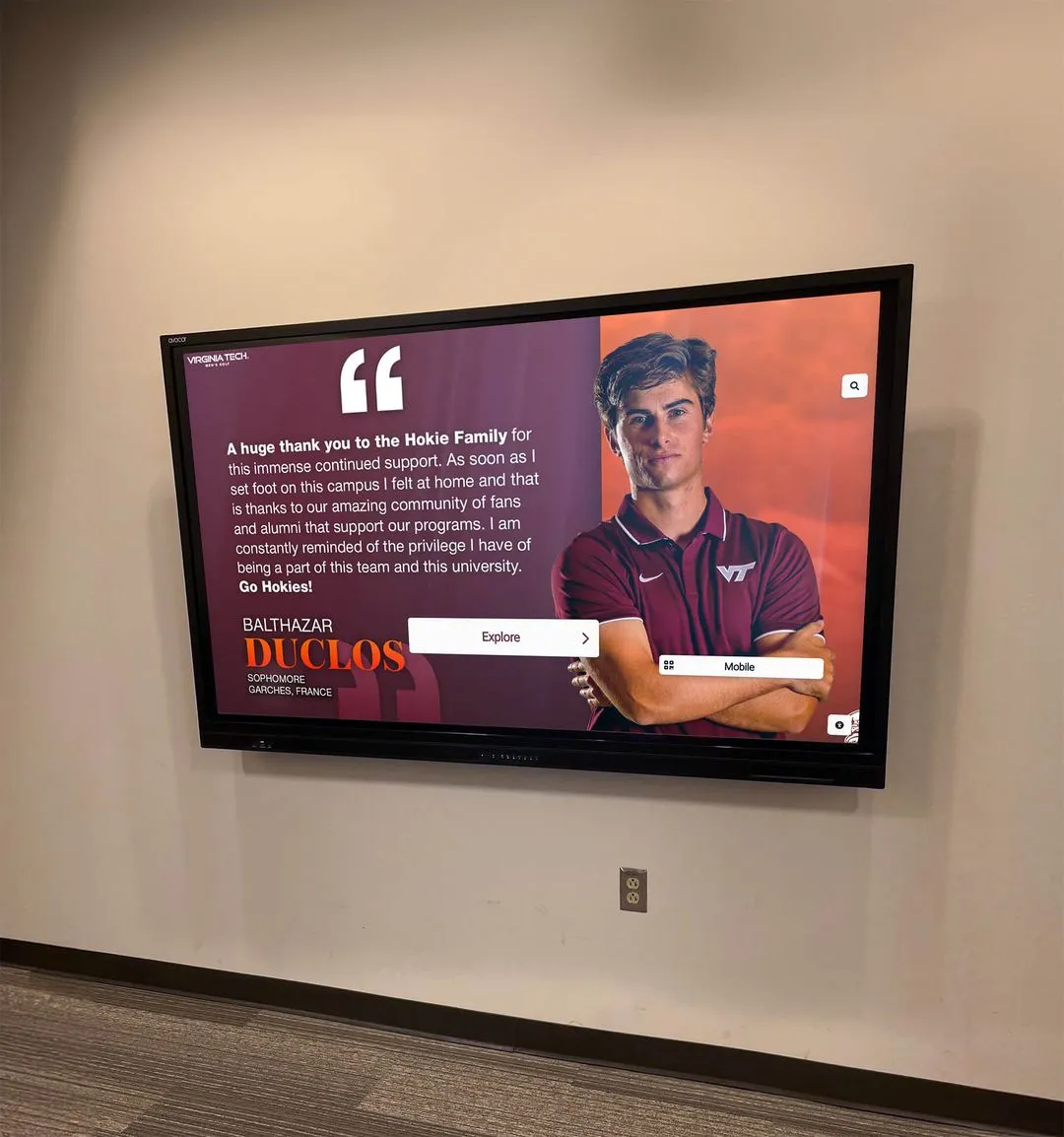
Portrait-card interfaces let rivalry archive visitors browse athletes by graduation year, sport, or game—connecting historical records to real people
Alumni Stories: The Layer Physical Cases Miss
Rivalry trophies hold meaning partly because they sit at the intersection of athletic achievement and personal memory. Current students see a score; alumni see the night they won it.
Building alumni stories into rivalry trophy displays requires deliberate collection and display:
Story collection: Schools can invite alumni to submit brief written accounts of the rivalry games they played in—what they remember, what the season felt like, what the game meant. A structured submission form (online or at events) generates content without requiring large staff investment.
Contextual display: Short alumni quotes or story excerpts displayed alongside the year in the winner archive add texture that scores alone cannot provide. A two-sentence memory from a 1987 player transforms a number in a table into a human moment.
Connection to current athletes: When current players see that alumni from decades past care enough to contribute their memories, it reinforces that today’s rivalry game will matter to someone in 2050. That frame changes how athletes approach the experience.
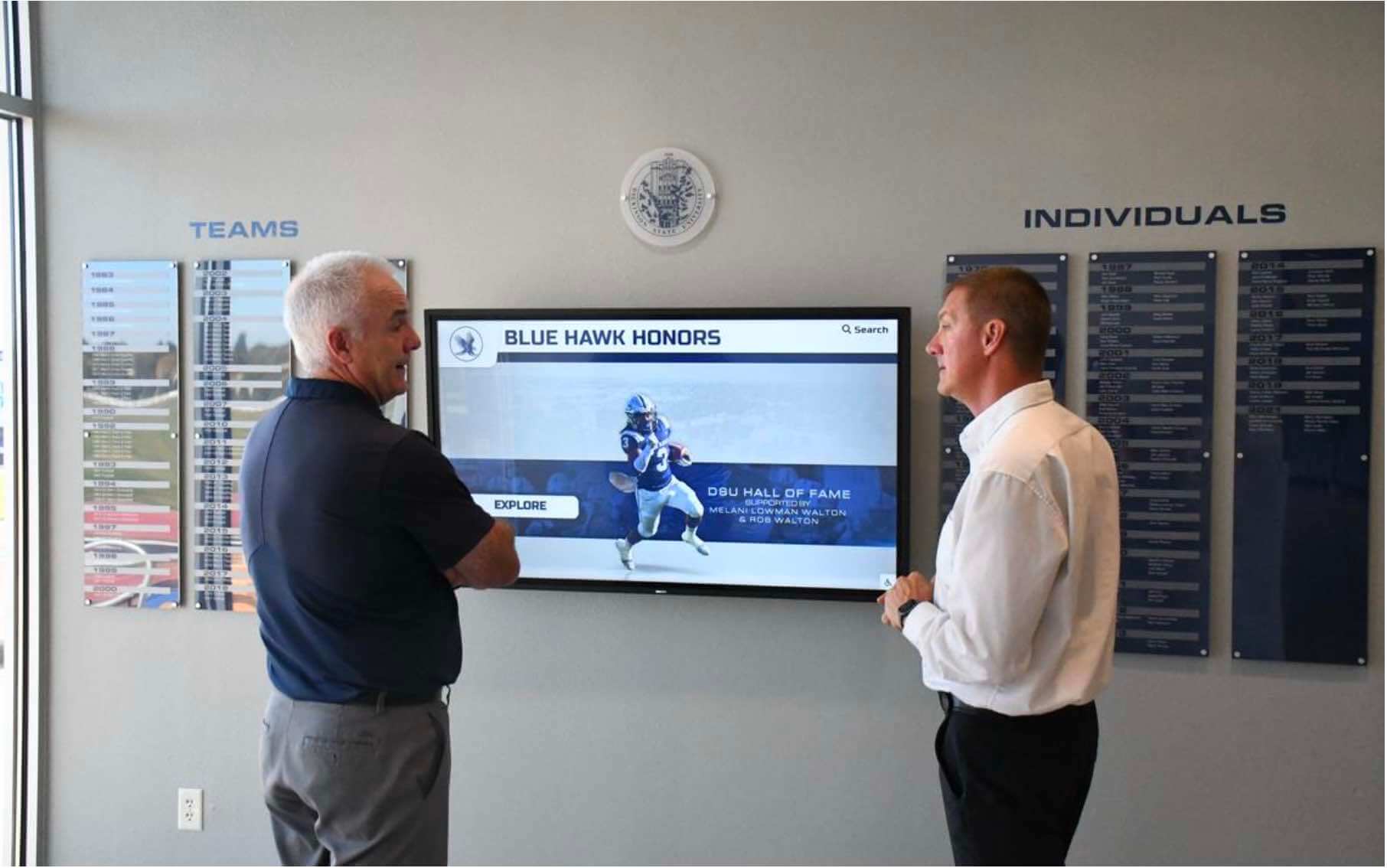
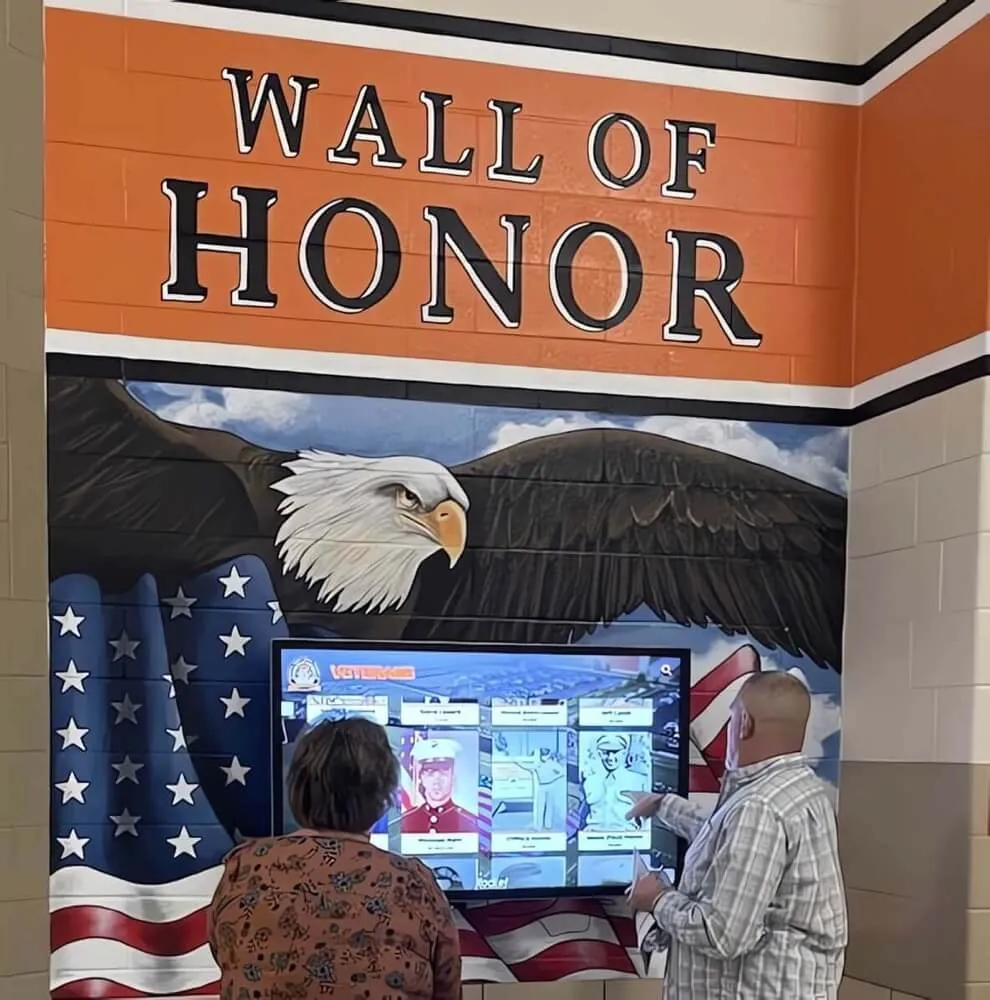
Interactive rivalry displays generate organic alumni conversations that standard trophy cases rarely produce—engagement that strengthens program relationships over time
For schools building comprehensive recognition systems that capture both athletic records and donor or alumni contributions, memorabilia display case ideas that connect school history, athletics, and donor gifts covers how these story layers can coexist in well-designed display environments.
Building a Rivalry Trophy Archive: Practical Starting Points
Schools without a formal rivalry archive can build one systematically even when records are incomplete:
Start with what’s documented: Game programs, yearbooks, local newspaper archives, and school athletic records typically cover several decades. State athletic associations and county historical societies often have older records.
Fill gaps with alumni outreach: A single homecoming-season email asking alumni to share their rivalry game year and result can recover decades of missing data. Alumni frequently retain programs, photos, and memory of outcomes even when institutional records have gaps.
Photograph existing hardware: If the trophy has traveled between schools for many years, document its current condition and any engravings. Many rivalry trophies include year-by-year winner engravings directly on the object—a primary source for historical data.
Choose a display format that scales: A physical winner plaque reaches capacity quickly. A digital archive can accommodate every year in the series indefinitely and accepts new entries after each season with no hardware change.
Verify before publishing: Incorrect records in a public display undermine credibility. Cross-referencing at least two independent sources before listing any year’s outcome ensures the archive earns trust from alumni who know the history personally.
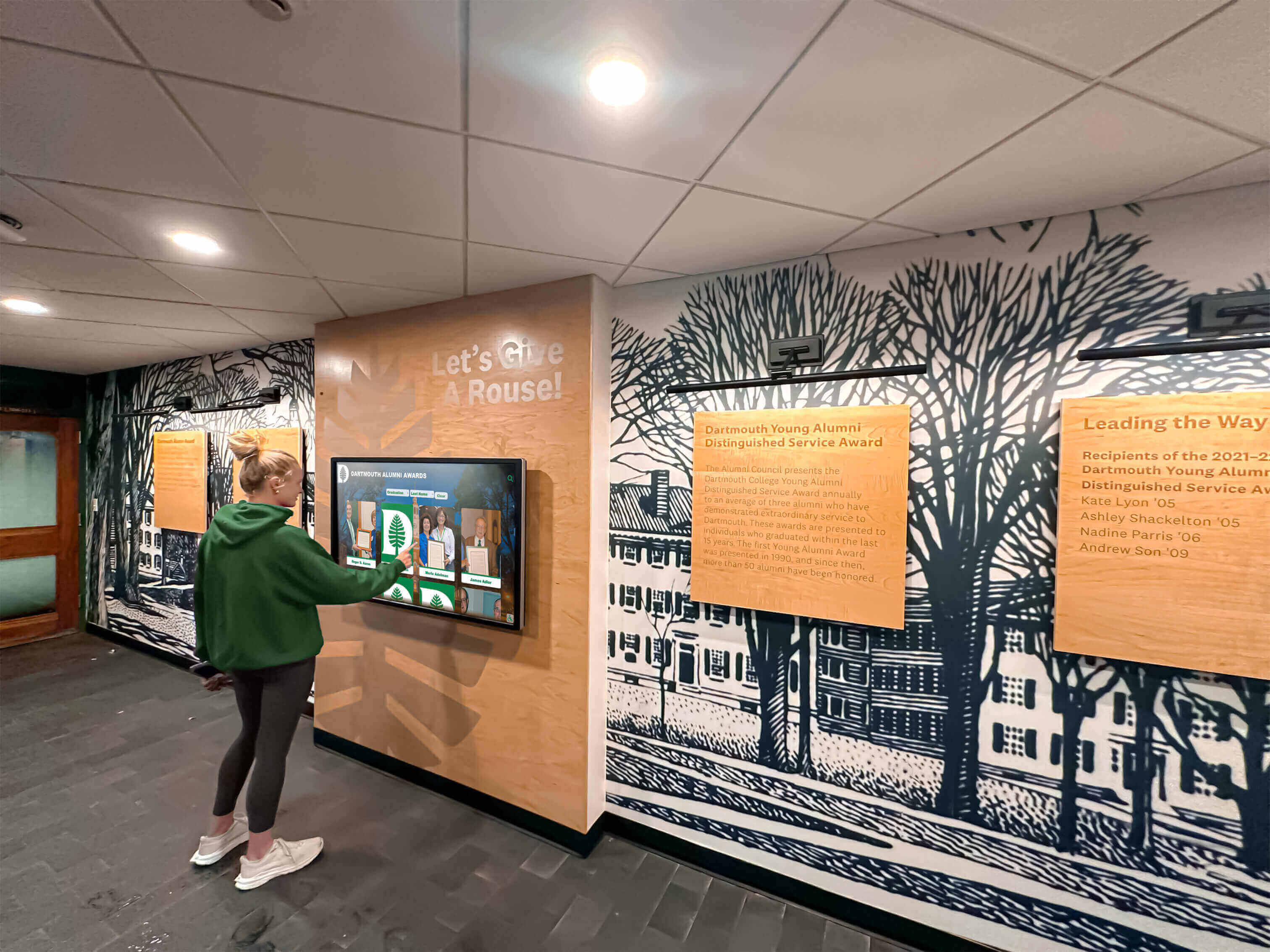
Students engaging with rivalry archives develop program identity from their first year—understanding the tradition they are now part of before they play their first rivalry game
Frequently Asked Questions
What is a rivalry trophy? A rivalry trophy is an award that transfers between two schools each time they compete in a recurring matchup. The winning school holds the trophy until the teams play again, making it a perpetual, shared object rather than a permanently awarded prize.
How do schools archive rivalry trophy winners? Most schools maintain winner records through physical plaques, display case inserts, or printed panels updated after each season. Schools with digital display systems can manage this through cloud-based CMS interfaces that update the on-screen record without physical changes.
Can a school display a rivalry trophy if they don’t currently hold it? Yes—many schools display the rivalry trophy when they hold it and mount a dedicated “current status” panel when it is at the rival school. Some schools display a commemorative replica year-round to anchor the display regardless of who holds the original.
How often should a rivalry trophy archive be updated? Archives should reflect the current season’s outcome as soon as possible after the game. Digital systems allow same-day updates; physical plaques typically require a short production lead time. Setting a post-season update workflow ensures the record never falls more than one season behind.
What information should a rivalry trophy display include? At minimum: the trophy name, both schools, year-by-year winner, final scores, and cumulative series record. Strong archives also include game location, individual standouts, photos, and alumni story excerpts for memorable seasons.
Bring Your Rivalry Trophy Archive to Life
An interactive touchscreen display transforms a static winner plaque into a living archive—searchable by year, athlete, and story—that engages everyone from current freshmen to alumni who played five decades ago.