



Each spring, thousands of high school juniors and sophomores receive the invitation they’ve been working toward: an opportunity to apply for National Honor Society membership. But receiving that application packet is just the beginning. Understanding the specific NHS requirements—from minimum GPA thresholds to service hour documentation—separates successful candidates from disappointed applicants.
National Honor Society membership represents more than academic achievement alone. The organization’s four pillars—scholarship, service, leadership, and character—create comprehensive selection criteria that evaluate students across multiple dimensions. Schools establishing minimum GPA requirements typically set the bar at 3.5 or higher, but grades represent just one component of the rigorous evaluation process that includes documented service hours, leadership demonstrations, and character assessments from faculty.
This comprehensive guide details every National Honor Society requirement, explaining what students need to demonstrate across all evaluation areas, how schools conduct the selection process, and modern recognition approaches that celebrate NHS members while inspiring future candidates throughout school communities.
The path to NHS membership requires strategic preparation across all four pillars, not last-minute scrambling when applications arrive. Students who understand requirements early in high school position themselves for successful candidacy when eligibility arrives.

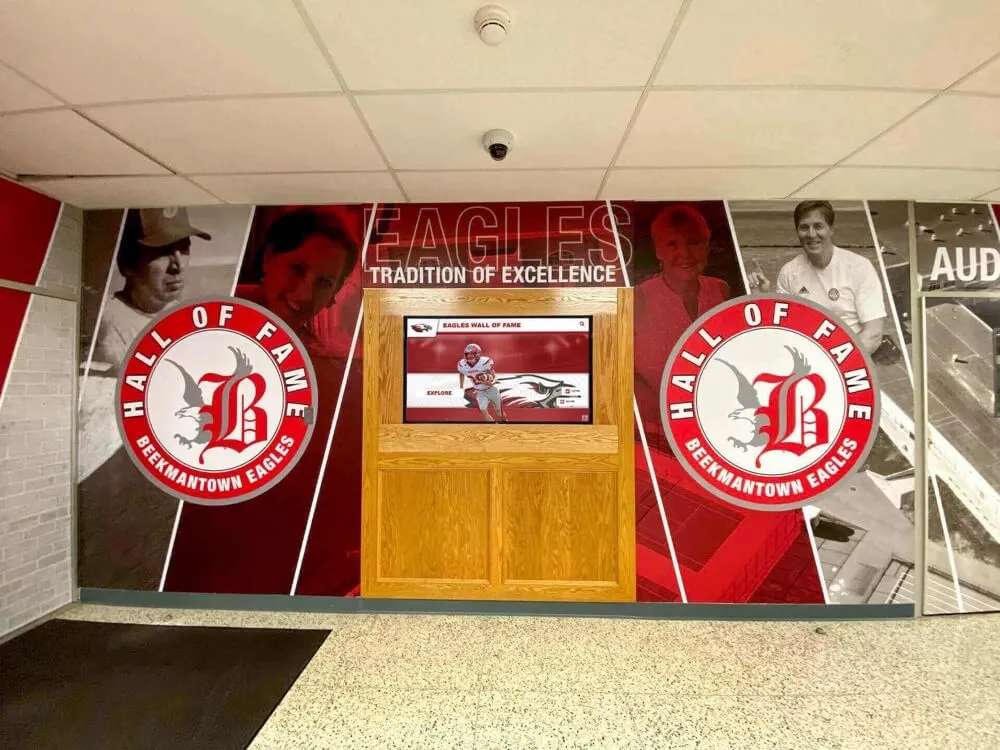
Modern schools showcase National Honor Society members through prominent recognition displays that inspire academic excellence
Understanding National Honor Society’s Four Pillars
Before examining specific requirements, understanding NHS’s foundational framework illuminates why the organization evaluates students across multiple dimensions rather than academic performance alone.
The Foundation: Why Four Pillars Matter
The National Association of Secondary School Principals established NHS in 1921 with a deliberate structure requiring demonstrated excellence across scholarship, service, leadership, and character. This comprehensive approach distinguishes NHS from purely academic honor rolls by identifying students who contribute meaningfully to their communities while maintaining outstanding academic records.
The Four-Pillar Framework
- Scholarship: Academic achievement demonstrating intellectual capability and sustained effort
- Service: Meaningful contribution to school and broader community without expectation of reward
- Leadership: Positive influence and initiative in school and community contexts
- Character: Integrity, respect, responsibility, and ethical behavior across all situations
This structure ensures NHS members represent comprehensive excellence rather than single-dimension achievement. Colleges and universities understand that NHS membership signals students who will contribute positively to campus communities beyond classroom performance.
How Requirements Reflect Each Pillar
Each NHS requirement connects directly to specific pillars:
Scholarship Requirements
- Minimum GPA thresholds ensuring academic capability
- Course rigor considerations evaluating intellectual challenge
- Academic integrity standards maintaining honest scholarship
Service Requirements
- Documented service hours demonstrating community contribution
- Quality assessment ensuring meaningful engagement versus hour accumulation
- Diverse service types validating breadth of community involvement
Leadership Requirements
- Documented leadership positions and initiative demonstrations
- Positive influence evidence from recommendations and activities
- Sustained involvement showing long-term commitment
Character Requirements
- Faculty evaluations assessing integrity and ethical behavior
- Disciplinary record review ensuring behavioral standards
- Peer and teacher relationship quality demonstrating respect and responsibility
Understanding how specific requirements map to pillars helps candidates recognize what evaluation committees seek beyond simple checklist completion.

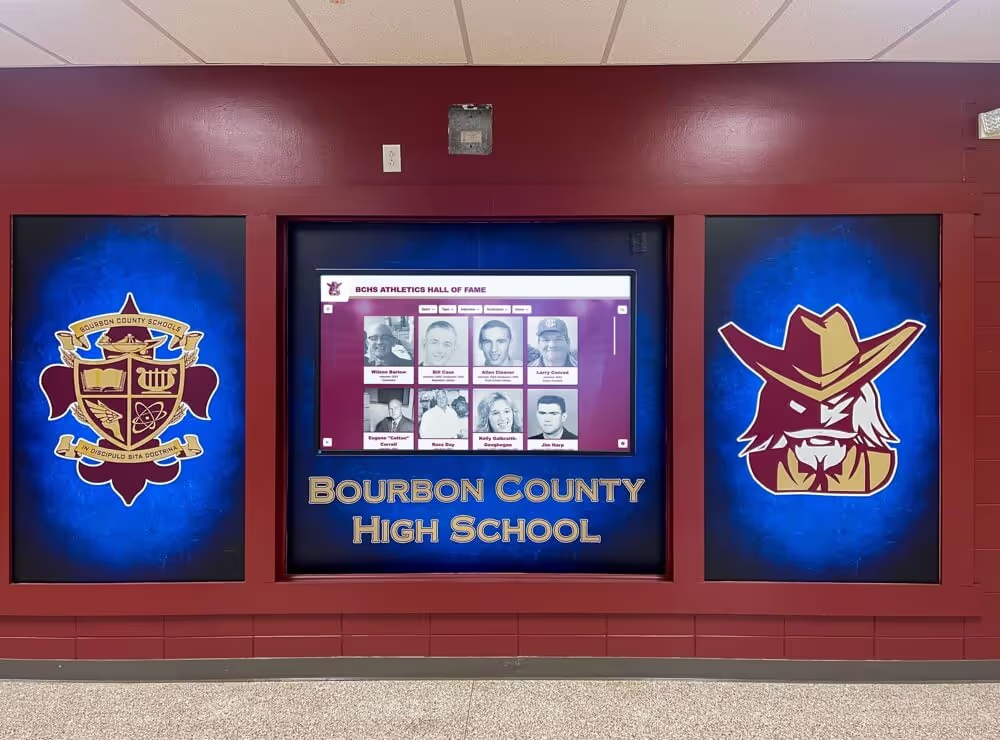
Individual recognition profiles document NHS member achievements across all four pillars
Scholarship Requirements: GPA and Academic Standards
Academic excellence forms the foundational NHS requirement, though specific standards vary by school chapter.
Minimum GPA Requirements
Most NHS chapters establish GPA thresholds that create selective membership while remaining achievable for strong students:
Typical GPA Standards
- National minimum: 3.0 on 4.0 scale (B average)
- Common chapter requirement: 3.5 on 4.0 scale (B+ to A-)
- Competitive school standards: 3.7 or higher in rigorous academic environments
- Calculation methods: Typically cumulative GPA through most recent completed semester
According to National Honor Society guidelines, individual chapters may establish higher GPA requirements than the national minimum but cannot set lower thresholds. This allows schools to calibrate standards to their specific academic contexts while maintaining minimum organizational standards.
GPA Calculation Considerations
- Weighted versus unweighted: Policies vary regarding honors, AP, and IB course weighting
- Core courses emphasis: Some chapters weight academic subjects more heavily than electives
- Grade trends: Recent performance may receive greater emphasis than early high school grades
- Plus/minus grading: Impact on GPA calculation varies by school grading systems
Course Rigor and Academic Challenge
Beyond GPA numbers, chapters often evaluate the difficulty level of coursework completed:
Rigor Assessment Factors
- Honors, Advanced Placement, or International Baccalaureate course enrollment
- Performance in most challenging available courses
- Course selection reflecting intellectual curiosity versus grade maximization
- Advanced coursework in multiple subject areas
- Academic trajectory showing increasing challenge levels
Students taking more rigorous coursework while maintaining strong GPAs demonstrate greater academic commitment than those achieving slightly higher GPAs in less challenging courses.

Hallway displays featuring NHS members create visible academic achievement models throughout schools
Academic Integrity and Disciplinary Standards
Scholarship requirements extend beyond grades to encompass academic honesty:
Integrity Expectations
- No academic dishonesty incidents (cheating, plagiarism, unauthorized collaboration)
- Honor code compliance in schools with formal systems
- Ethical behavior in academic contexts
- Original work and appropriate citation practices
A single significant academic integrity violation typically disqualifies students from NHS consideration regardless of GPA, reflecting the organization’s emphasis on character alongside scholarship.
Grade Requirements During Candidacy
- No failing grades during application evaluation period
- Maintained performance meeting or exceeding GPA minimums
- Successful completion of all enrolled courses
- Continued academic engagement through selection process
Schools implementing academic recognition programs often track potential NHS candidates through honor roll recognition, creating clear pathways from regular achievement acknowledgment to selective honor society membership.
Service Requirements: Hours and Quality
Community service represents a crucial NHS component distinguishing the organization from purely academic recognition.
Service Hour Expectations
While specific hour requirements vary by chapter, most schools establish clear minimums:
Before Induction
- Typical requirement: 10-25 hours during candidacy period
- Documentation period: Usually 12-18 months before application deadline
- Verification standards: Supervisor signatures and contact information required
- Quality considerations: Meaningful engagement valued over simple hour accumulation
After Induction
- Annual requirements: 15-30+ hours to maintain good standing
- Ongoing obligations: Service continues throughout NHS membership
- Chapter projects: Mandatory participation in group service initiatives
- Individual service: Personal community involvement supplementing chapter activities

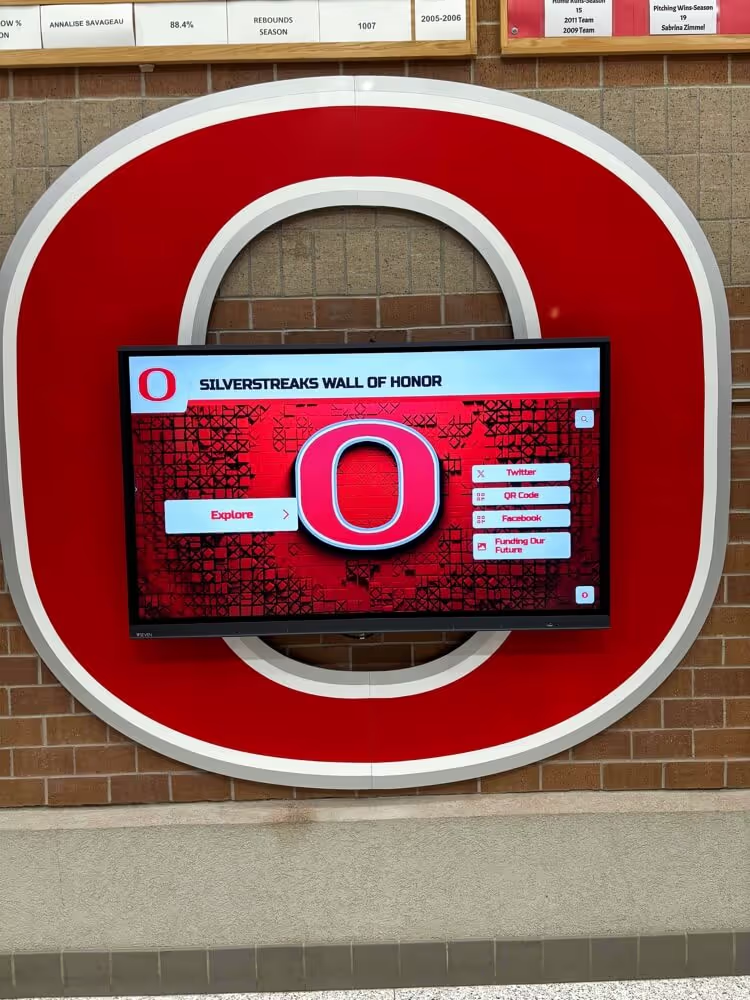
Prominent lobby displays ensure NHS service contributions receive recognition alongside academic achievements
Acceptable Service Categories
NHS chapters typically accept diverse service demonstrating genuine community contribution:
School-Based Service
- Peer tutoring and academic assistance programs
- New student mentorship and orientation support
- School beautification and improvement projects
- Assistance with school events and activities
- Library, office, or classroom volunteer support
Community Service
- Nonprofit organization volunteering (food banks, shelters, hospitals)
- Religious institution service activities
- Youth organization and recreational program assistance
- Environmental conservation and cleanup projects
- Senior citizen facility volunteering
- Animal shelter and rescue organization support
Unacceptable Service Activities
- Paid employment (service must be unpaid)
- Court-ordered or mandatory school service
- Activities benefiting only family members
- Religious proselytization activities
- Political campaign work
- Fundraising for personal benefit
Documenting Service Hours
Proper documentation separates successful applications from rejected ones:
Documentation Requirements
- Organization name and contact information
- Supervisor name, title, and signature
- Specific dates and hours completed
- Description of service activities performed
- Verification of hour totals
Documentation Best Practices
- Maintain ongoing log rather than reconstructing hours later
- Obtain supervisor signatures promptly after service completion
- Keep copies of all documentation
- Track hours exceeding minimum requirements
- Document diverse service across multiple organizations
Schools celebrating service contributions through digital recognition displays find that visible acknowledgment motivates broader student participation in community service activities.
Leadership Requirements: Demonstrated Initiative and Influence
Leadership represents the pillar students often struggle to document effectively, yet it’s crucial for NHS selection.
What Counts as Leadership
NHS evaluates leadership broadly, recognizing both formal positions and informal influence:
Formal Leadership Positions
- Student government elected positions (president, vice president, class representative)
- Club and organization officer roles
- Athletic team captain or co-captain positions
- Performing arts section leader or principal positions
- Class or committee leadership roles
- Peer mentorship program leadership
Informal Leadership Demonstrations
- Initiative in starting new programs or organizations
- Leadership within volunteer and service projects
- Mentoring younger students or peers
- Positive influence on peer behavior and choices
- Problem-solving contributions to organizations
- Event planning and coordination responsibilities
Leadership Quality Over Quantity
Evaluation committees assess leadership depth rather than simply counting positions:
Strong Leadership Evidence
- Sustained involvement showing long-term commitment
- Tangible outcomes from leadership initiatives
- Positive change created through leadership efforts
- Growth in leadership responsibility over time
- Collaborative leadership benefiting groups versus self-promotion
- Leadership in diverse contexts (school, community, employment)
Weak Leadership Claims
- Title-only positions without demonstrated contribution
- Short-term involvement without sustained impact
- Participation versus genuine leadership
- Leadership claims lacking specific examples
- Embellished or exaggerated role descriptions
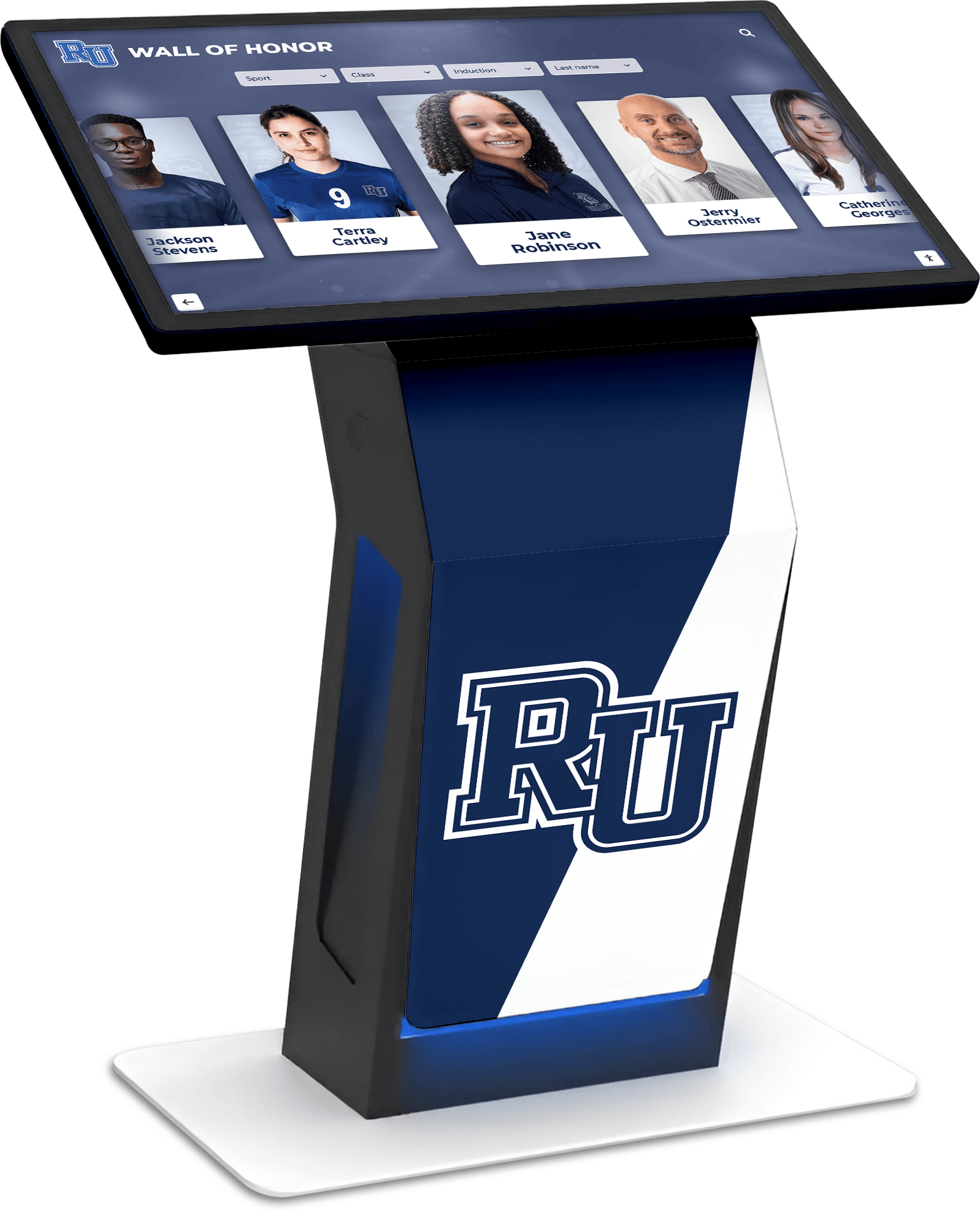
Interactive kiosks enable detailed exploration of NHS member leadership achievements and service contributions
Documenting Leadership Effectively
Applications require clear evidence rather than vague claims:
Documentation Elements
- Position titles with organizational context
- Specific dates of leadership service
- Concrete accomplishments and outcomes
- Quantifiable impact when possible
- Advisor or supervisor verification
- Leadership philosophy and approach descriptions
Application Essay Integration Strong NHS applications integrate leadership examples throughout essays addressing:
- How you demonstrate each of the four pillars
- Most meaningful leadership experience and its impact
- Leadership challenges and personal growth
- Future leadership goals and NHS chapter contributions
Students exploring leadership opportunities should consider diverse pathways documented through student recognition systems that celebrate various forms of positive influence.
Character Requirements: Assessment and Evaluation
Character represents the most subjective yet crucial NHS pillar, evaluated through faculty recommendations and disciplinary records.
Faculty Character Assessment
Most chapters employ systematic character evaluation processes:
Faculty Survey Process
- Teachers, counselors, and administrators provide confidential character ratings
- Assessment forms evaluate specific character traits:
- Integrity and honesty
- Respectful behavior toward others
- Responsibility in meeting obligations
- Positive attitude and constructive engagement
- Ethical decision-making
- Response to challenges and setbacks
Multiple Perspective Integration
- Character evaluation from teachers across different subjects
- Input from coaches, activity advisors, and support staff
- Administrative perspective from principal or assistant principals
- Counselor assessments based on student interactions
- Composite picture emerging from diverse viewpoints

Digital recognition systems preserve comprehensive NHS member profiles including character and leadership evidence
Disciplinary Record Considerations
Character assessment includes behavioral history review:
Disqualifying Factors
- Major disciplinary infractions (suspension-level incidents)
- Academic dishonesty violations
- Bullying or harassment behaviors
- Substance abuse violations
- Criminal charges or convictions
- Pattern of disrespectful or disruptive behavior
Consideration of Context
- Severity and recency of infractions
- Student growth and redemption following incidents
- Isolated mistakes versus behavioral patterns
- Circumstances surrounding disciplinary incidents
Most chapters maintain strict standards recognizing that NHS membership represents exemplary character. Students with significant disciplinary history rarely receive selection regardless of academic achievement or service hours.
Character in Daily Demonstration
Character evaluation extends beyond avoiding negative behaviors to demonstrating positive qualities:
Daily Character Indicators
- Consistent classroom behavior and engagement
- Treatment of peers, teachers, and staff
- Handling of academic challenges and setbacks
- Response to feedback and criticism
- Authenticity and genuine engagement
- Contribution to positive school culture
Strong character emerges through sustained positive behavior across contexts rather than isolated exceptional moments.
The NHS Application Process
Understanding application procedures helps candidates submit compelling materials meeting all requirements.
Application Components
Complete applications typically include multiple elements:
Required Documentation
- Application form: Personal information and confirmation of eligibility
- Transcript: Official academic record showing GPA and courses
- Service documentation: Verified hours with supervisor signatures
- Leadership descriptions: Detailed position and activity documentation
- Personal statement/essay: Written response to specific prompts
- Faculty recommendations: Character assessment forms (submitted by teachers)
- Student pledge: Agreement to uphold NHS standards if selected
Application Essays Most chapters require written responses addressing:
- How you demonstrate each of the four pillars
- Most meaningful service experience and community impact
- Leadership situation where you made positive difference
- Character challenge and ethical decision-making
- Why NHS membership matters to your goals
- How you plan to contribute to the chapter
Selection Timeline
Understanding key dates prevents missed opportunities:
Typical NHS Calendar
- Fall: Eligibility notification for students meeting GPA requirements
- Late fall/winter: Application packets distributed with detailed requirements
- Application deadline: Typically 3-4 weeks after packet distribution
- Faculty council review: 2-4 weeks for comprehensive application evaluation
- Selection notification: Results communicated to applicants
- Spring induction ceremony: Formal recognition event for new members
Timelines vary by school, making early attention to chapter-specific deadlines crucial.

Recognition displays throughout schools showcase NHS members creating aspirational examples for younger students
Faculty Council Review
Selection committees evaluate applications through systematic processes:
Council Composition
- Five or more faculty members from diverse departments
- Administrative representative ensuring process integrity
- Faculty advisor coordinating review and providing guidance
- Rotating membership ensuring broad school representation
Evaluation Criteria
- Academic records verification confirming GPA requirements
- Service hour quality and documentation completeness
- Leadership evidence strength and authenticity
- Character assessments from faculty surveys
- Application essay quality and insight
- Overall demonstration of four-pillar excellence
Selection Outcomes
- Acceptance: Student meets all criteria and demonstrates NHS qualities
- Conditional acceptance: Acceptance with specific requirements or probationary status
- Waitlist: Strong candidate requiring additional committee discussion
- Rejection: Student doesn’t meet criteria or concerns exist about qualifications
Chapters must provide rejection explanations and appeal processes ensuring transparency and fairness in selection decisions.
Maintaining NHS Membership After Induction
Selection represents the beginning of NHS commitment, not the conclusion.
Ongoing Requirements
Members must maintain standards throughout their NHS tenure:
Academic Standards Maintenance
- GPA at or above chapter minimum (typically 3.5+)
- No academic integrity violations
- Consistent performance across all courses
- Continued enrollment in appropriately challenging coursework
Service Hour Obligations
- Annual individual service requirements (typically 15-30+ hours)
- Participation in chapter group service projects
- Timely documentation submission
- Quality engagement producing meaningful impact
Meeting and Activity Participation
- Regular chapter meeting attendance (typically monthly)
- Induction ceremony participation for new members
- Chapter service project involvement
- Officer meetings for students holding leadership positions

Comprehensive recognition systems celebrate NHS achievements alongside athletic excellence creating balanced school cultures
Probation and Dismissal Policies
Chapters implement accountability measures maintaining program integrity:
Warning Procedures
- Written notification when standards slip below requirements
- Faculty advisor meeting discussing concerns and expectations
- Specific improvement plan with timeline
- Monitoring period ensuring compliance
Probation Conditions
- Defined timeframe (typically one grading period)
- Clear requirements for returning to good standing
- Additional advisor check-ins tracking progress
- Restricted participation during probation period
Dismissal Circumstances
- Academic performance falling significantly below minimums
- Failure to meet service hour requirements
- Major disciplinary infractions
- Chronic meeting absence
- Inability to meet probation requirements
Dismissal decisions follow formal processes including student opportunity to address concerns, parent notification, and appeal procedures ensuring fairness.
How Schools Celebrate NHS Members
Recognition approaches significantly impact NHS program effectiveness and school culture.
Traditional Recognition Methods
Schools commonly celebrate NHS members through established approaches:
Induction Ceremonies
- Formal evening events with family attendance
- Candle lighting or symbolic chapter traditions
- Individual member recognition with certificate presentation
- Principal or superintendent speeches
- NHS pledge recitation by new members
- Reception celebrating inductees and families
Physical Recognition Displays
- Hallway plaques listing current NHS members
- Trophy case sections for NHS recognition
- Dedicated NHS bulletin boards in prominent locations
- Graduation program special sections
- School newspaper and yearbook features
Schools implementing award ceremony recognition create meaningful moments honoring NHS induction as significant milestones.

Integrated displays combine traditional plaques with digital screens for comprehensive NHS recognition
Modern Digital Recognition Solutions
Digital platforms transform NHS recognition through enhanced capabilities:
Unlimited Recognition Capacity Traditional physical displays accommodate limited names, forcing difficult choices about which achievements receive visibility. Digital solutions like Rocket Alumni Solutions eliminate these constraints:
- Showcase unlimited NHS members across all graduating classes
- Include comprehensive member profiles with photos and achievements
- Document service projects with detailed descriptions and impact
- Preserve chapter history spanning decades
- Update remotely without physical modifications
Rich Multimedia Presentations
- Individual member profile pages with biographical information
- Service hour documentation and project descriptions
- Leadership position details and contributions
- Academic achievement statistics and honors
- Personal statements about NHS experience
- Photo galleries from chapter activities and service projects
Enhanced Accessibility
- Searchable databases enabling quick member location
- QR code access for mobile viewing
- Web integration extending recognition beyond campus
- 24/7 availability for families and community members
- Social sharing capabilities for member celebration
Simple Content Management
- Cloud-based updates from any internet-connected device
- No technical expertise required for content management
- Scheduled publishing coordinating with induction ceremonies
- Bulk import tools for historical member data
- Role-based permissions for appropriate staff access
Schools implementing comprehensive digital recognition systems report significantly higher engagement while ensuring NHS achievements receive visibility equal to athletic recognition.
Strategic Display Placement
Location significantly impacts recognition effectiveness:
High-Impact School Locations
- Main entrance lobbies ensuring first-impression visibility
- Cafeteria areas with sustained student congregation
- Library and academic resource centers reinforcing intellectual achievement
- Main office reception areas for community visibility
- Guidance office areas where college discussions occur
- Hallways connecting high-traffic areas
Multiple Display Coordination
- Integration with broader academic recognition systems
- Coordination with honor roll and achievement displays
- Ensuring NHS prominence within comprehensive recognition
- Consistency across multiple display locations
Strategic placement ensures NHS recognition receives visibility inspiring future candidates while honoring current members.
Addressing Common NHS Requirement Questions
Students and families frequently seek clarification about specific requirements.
“Is NHS Membership Automatic with High GPA?”
No. While GPA provides eligibility for application consideration, NHS evaluates all four pillars—scholarship, service, leadership, and character. Students with exceptional GPAs can be rejected for insufficient service hours, limited leadership demonstrations, or character concerns. The comprehensive evaluation ensures members exemplify excellence across multiple dimensions.
“How Important Are Service Hours Versus Leadership?”
Both components carry significant weight, though emphasis varies by chapter. Service hours provide quantifiable evidence of community contribution, while leadership demonstrates initiative and positive influence. Strong candidates excel in both areas rather than compensating in one for weakness in another.
“Can Students Reapply if Initially Rejected?”
Policies vary by chapter. Some schools allow reapplication the following year after addressing deficiencies. Others limit application to single opportunity during junior year. Students should consult specific chapter policies and work with advisors to strengthen future applications if reapplication is possible.
“Do Weighted or Unweighted GPAs Matter More?”
Calculation methods vary by school and chapter. Some schools use weighted GPAs recognizing challenging coursework, while others apply unweighted standards ensuring fairness across different course selection patterns. Check specific chapter policies regarding GPA calculation.

Interactive displays engage students while preserving comprehensive NHS achievement histories
“How Do NHS Requirements Compare to Other Honor Societies?”
NHS represents the most comprehensive and widely recognized high school honor society. Subject-specific societies (Mu Alpha Theta for mathematics, Science NHS, etc.) typically focus primarily on achievement in particular disciplines with less emphasis on service and character. NHS’s four-pillar structure creates more rigorous and holistic requirements than most alternative honor societies.
“What Happens to NHS Membership After High School?”
NHS membership represents lifetime designation that remains on academic records. While active chapter participation ends with graduation, the recognition provides permanent credential for college applications, resumes, and graduate school admissions. Many professionals include NHS membership in credentials decades after high school.
Preparing for NHS Application Success
Strategic preparation throughout high school positions students for strong candidacy.
Freshman and Sophomore Year Preparation
Early high school years establish foundation for future NHS eligibility:
Academic Excellence Building
- Establish strong study habits supporting sustained high performance
- Challenge yourself with appropriately rigorous coursework
- Build relationships with teachers who may provide character recommendations
- Maintain consistent academic integrity across all assignments
- Develop intellectual curiosity beyond grade achievement
Service Engagement Beginning
- Identify community service opportunities aligned with personal interests
- Begin accumulating service hours early rather than rushing before application
- Document service activities systematically from the beginning
- Seek diverse service experiences across different organizations
- Focus on meaningful engagement creating genuine impact
Leadership Opportunity Exploration
- Join clubs and organizations enabling leadership development
- Volunteer for responsibilities demonstrating initiative
- Seek formal leadership positions when ready
- Develop leadership skills through diverse activities
- Build track record of positive influence and contribution
Early preparation ensures students develop authentic four-pillar excellence rather than manufacturing qualifications immediately before application deadlines.
Junior Year Application Strategy
Most NHS applications occur during junior year requiring focused preparation:
Application Timeline Management
- Track eligibility notification timing and application deadlines
- Begin essay drafting early allowing multiple revisions
- Compile service documentation systematically ensuring completeness
- Request teacher character evaluations well before deadlines
- Review all requirements confirming complete compliance
Compelling Application Development
- Write authentic essays reflecting genuine experiences versus generic statements
- Provide specific examples demonstrating four-pillar achievement
- Document leadership impact with concrete outcomes
- Ensure service documentation meets all verification requirements
- Proofread thoroughly eliminating errors that signal carelessness
Faculty Recommendation Support
- Approach teachers with strong relationships and positive impressions
- Provide teachers with resume or “brag sheet” highlighting achievements
- Request recommendations well before deadlines
- Thank teachers appropriately for their time and support
Strong applications reflect genuine four-pillar development rather than last-minute credential accumulation.
Celebrate National Honor Society Excellence at Your School
Discover how modern digital recognition solutions provide unlimited capacity to showcase NHS members, document service projects, and inspire future candidates through professional displays that give academic achievement the visibility it deserves.
Explore Recognition SolutionsConclusion: Meeting NHS Requirements Through Authentic Excellence
National Honor Society requirements establish rigorous standards ensuring membership represents genuine comprehensive achievement across scholarship, service, leadership, and character. Understanding these specific criteria—from 3.5+ GPA minimums and documented service hours to demonstrated leadership and faculty-verified character—enables students to prepare strategically throughout high school rather than scrambling when applications arrive.
The most successful NHS candidates develop authentic excellence across all four pillars through sustained effort rather than superficial credential accumulation. Strong academic performance, meaningful community service creating genuine impact, leadership demonstrating positive influence, and character evidenced through daily behavior combine to create comprehensive achievement that NHS selection committees recognize and value.
Schools implementing systematic NHS recognition through prominent displays—particularly modern digital recognition systems providing unlimited capacity and rich member profiles—create cultures where academic excellence receives visibility equal to athletic achievement. These recognition approaches preserve chapter histories, showcase member contributions, and inspire younger students toward their own four-pillar development.
For students pursuing NHS membership, focus on authentic development across all pillars rather than simply meeting minimum requirements. The students who gain greatest value from NHS participate genuinely rather than viewing membership as resume credential alone. For schools implementing NHS programs, comprehensive recognition celebrating member achievements creates motivating cultures that elevate academic excellence throughout student populations.
National Honor Society membership represents significant achievement worth celebrating prominently through recognition systems ensuring these accomplishments inspire current and future students while honoring the sustained excellence NHS selection represents.