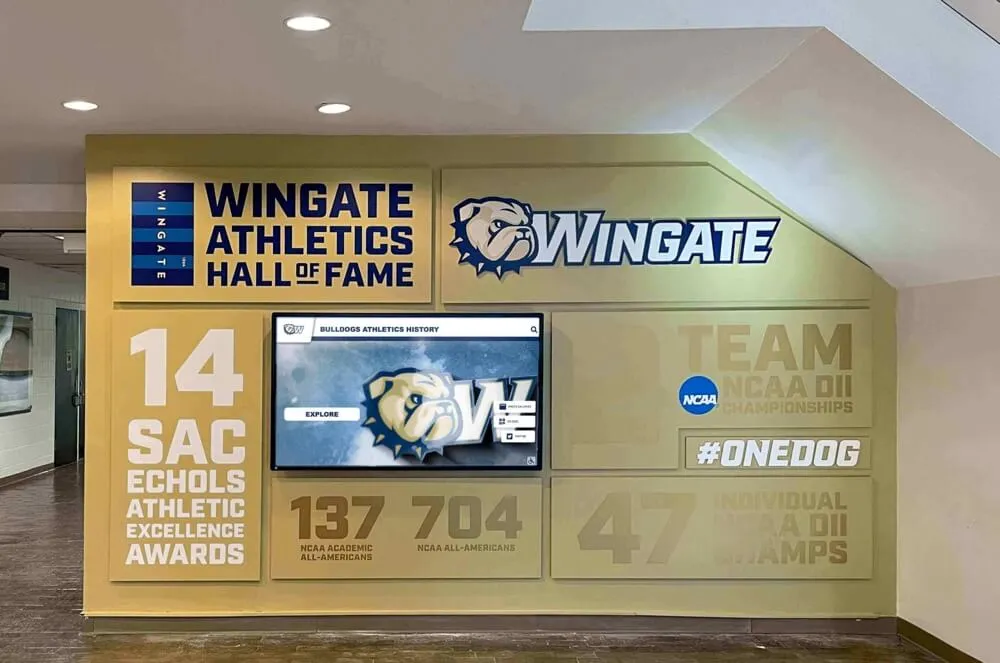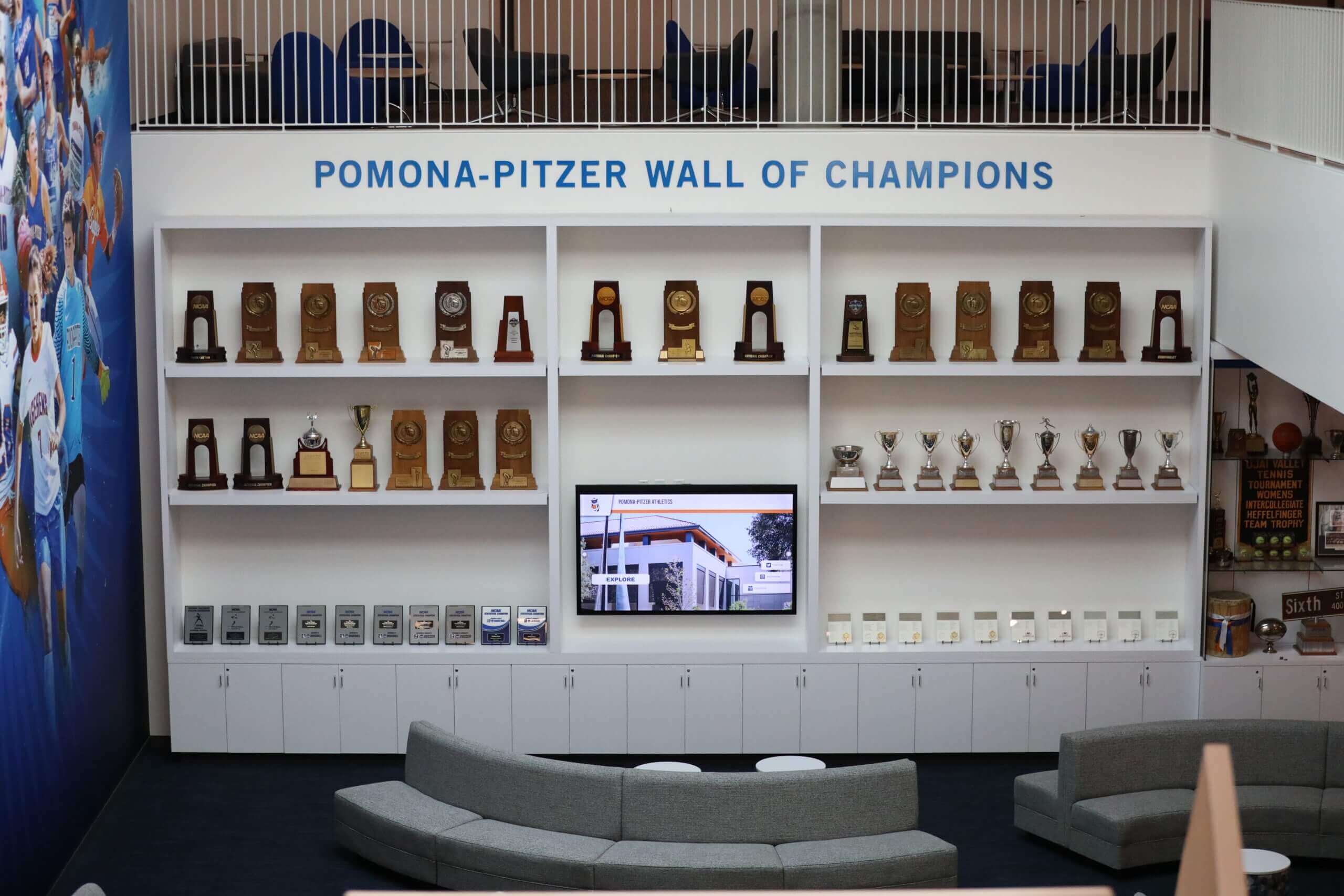




A medal display rack is a wall-mounted, freestanding, or case-integrated fixture that holds athletic or academic medals in a visible, organized arrangement—typically using hooks, pegs, or rails spaced to hang medal ribbons without tangling. For schools, the right display solution depends on volume, budget, and whether recognition needs to reach an audience beyond the physical hallway.
Schools that have run athletic programs for even a decade quickly discover that medals accumulate faster than wall space allows. One regional cross-country championship can generate forty individual medals. Add swim meets, track invitational ribbons, and academic competition awards, and a single school year easily produces hundreds of pieces that deserve recognition. This guide compares physical rack options—shelves, hangers, trophy cases—with digital trophy displays so administrators can match the solution to their actual situation.
A well-chosen medal display communicates program pride to visitors on day one and keeps communicating it for years. Schools that treat medal storage as an afterthought miss a recurring opportunity to motivate current athletes, impress prospective families, and honor alumni who return to walk those hallways.
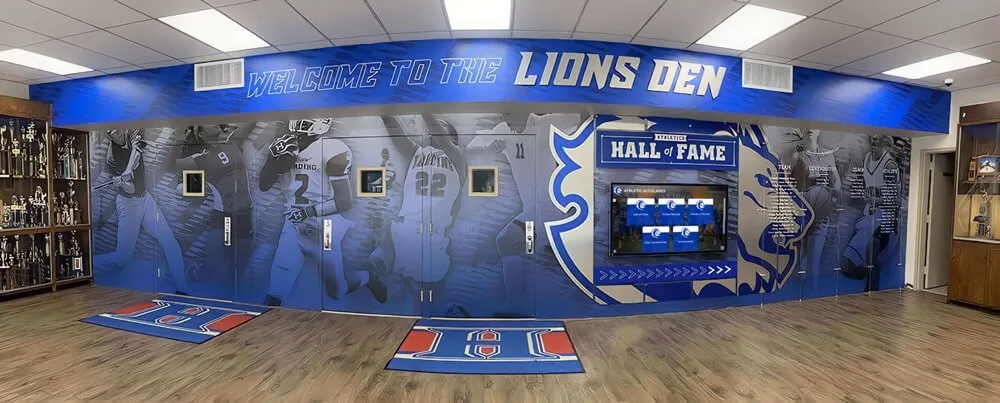
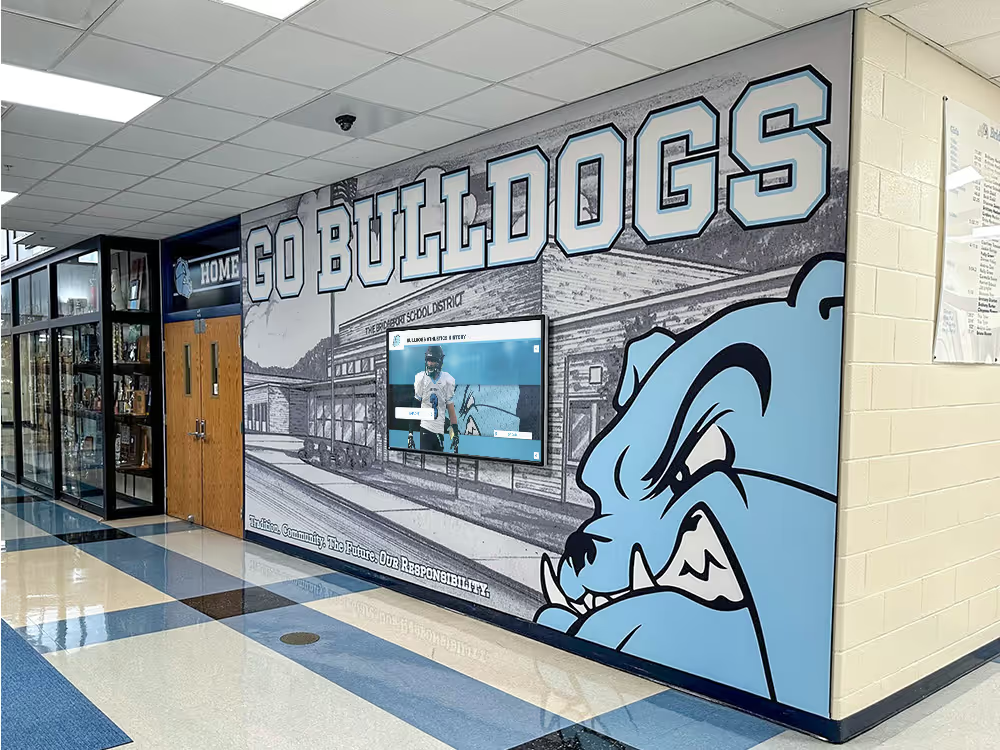
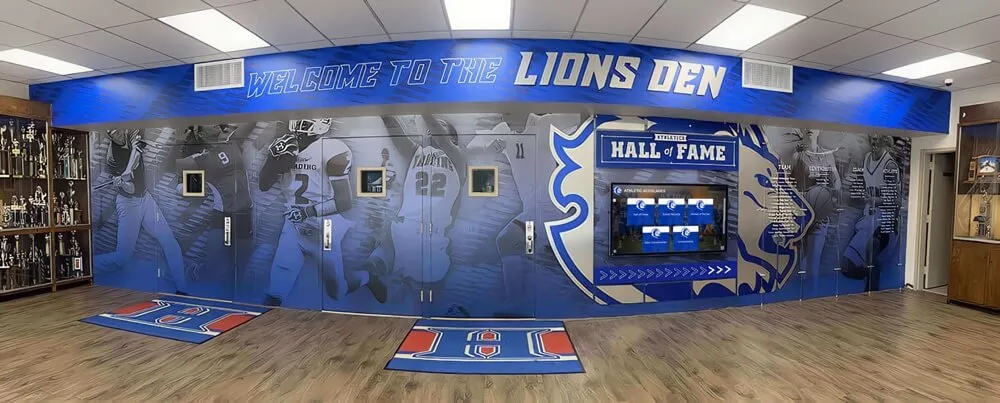
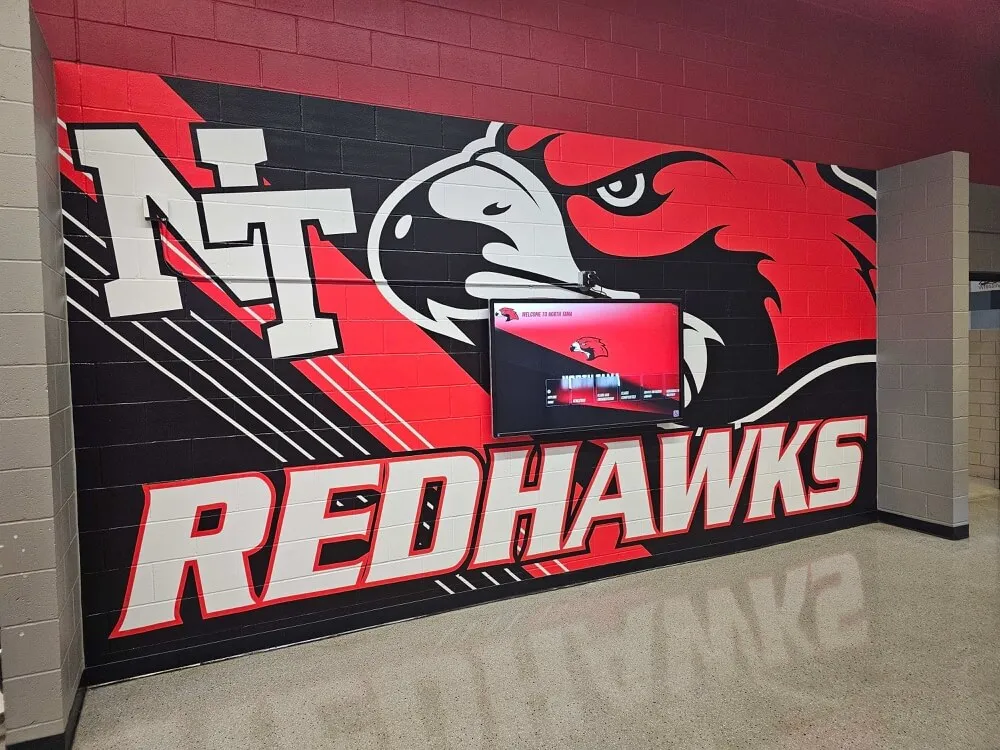
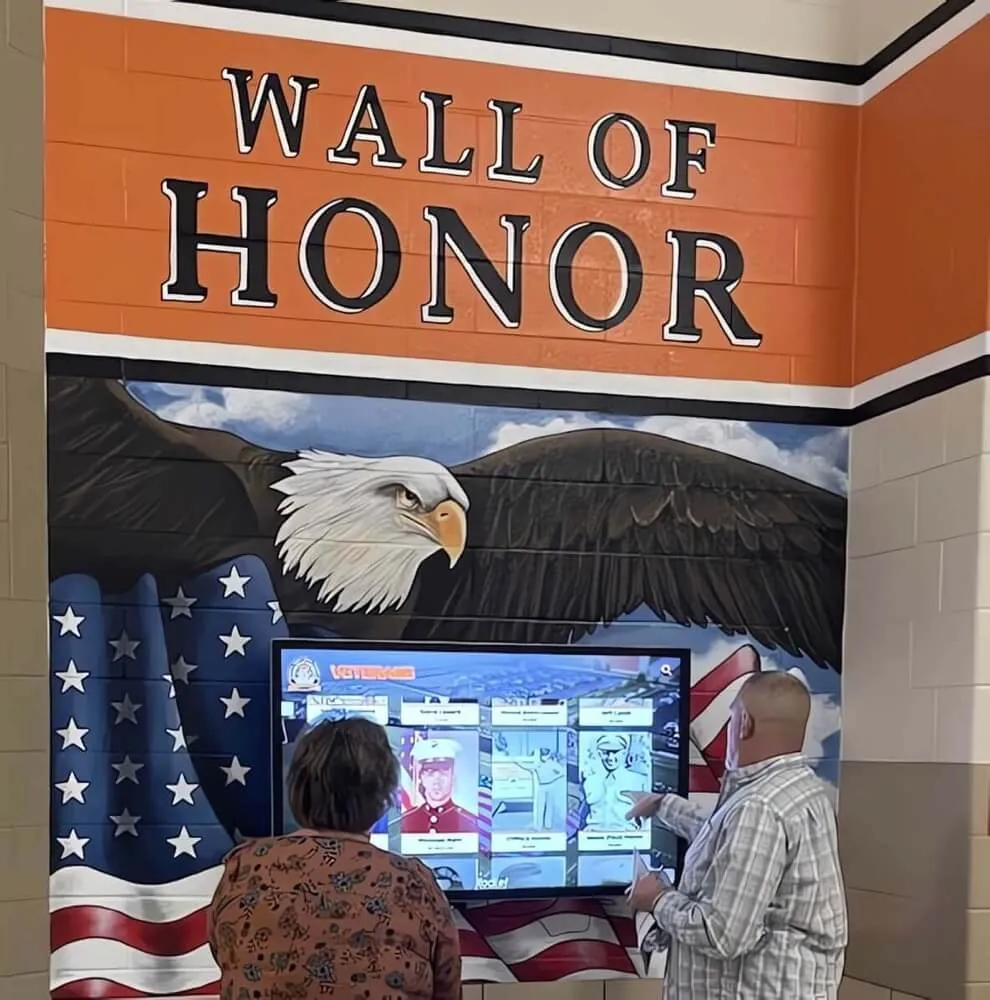
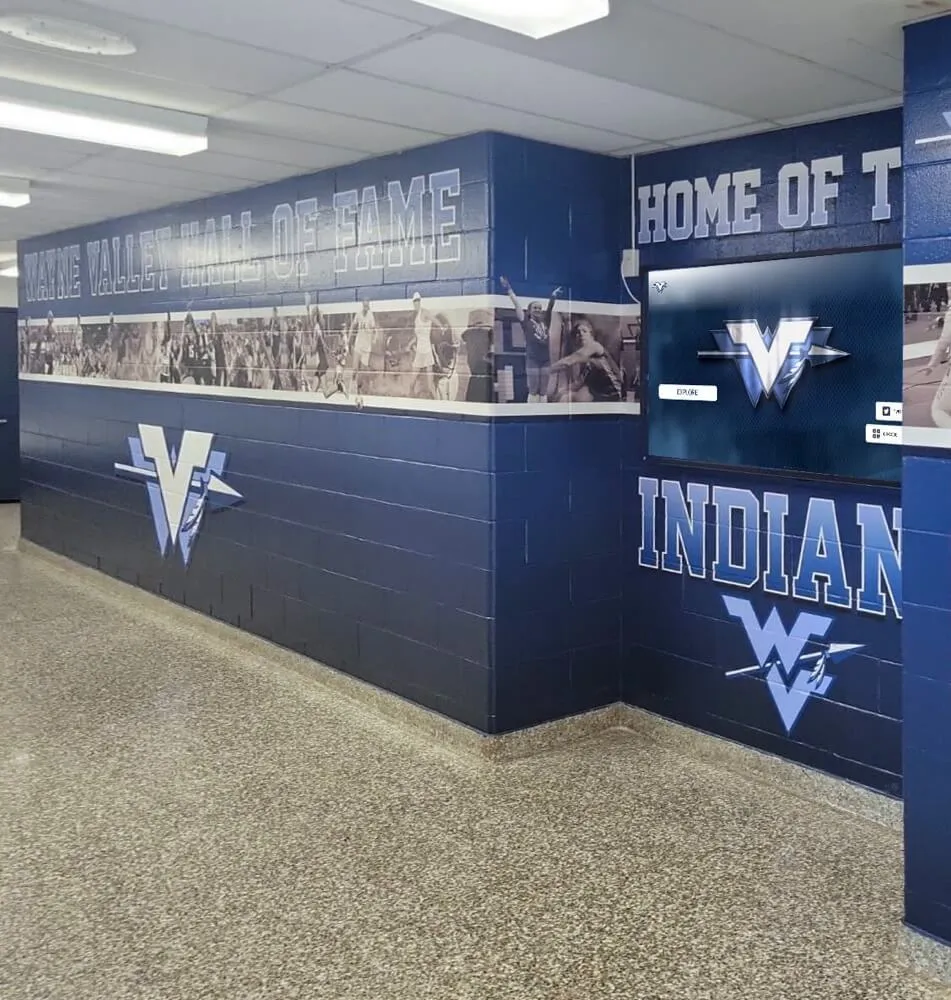
Dedicated recognition spaces pair physical trophy cases with murals and contextual signage, extending the story beyond the hardware itself
Physical Medal Display Options
Wall-Mounted Medal Hangers
A medal hanger is the simplest and most cost-effective starting point. Most are single-piece boards with evenly spaced hooks rated for standard ribbon widths. Styles range from plain pine boards to laser-engraved panels featuring the school name, mascot, or sport.
Where they work best:
- Locker rooms and team meeting rooms where space is limited
- Seasonal display rotations (fall sports one semester, spring sports the next)
- Individual athlete recognition walls in coaching offices
- Booster club rooms or parent lounges
Limitations: A standard 24-inch hanger holds roughly eight to twelve medals before crowding becomes a problem. Schools with active multi-sport programs will outgrow a single hanger within one season. Multiple hangers help but create a fragmented, uncoordinated look unless framed within a larger design scheme.
Medal Shelf Systems
A medal shelf adds a horizontal display surface below or alongside hanging hooks, letting schools mix medals with small trophies, plaques, and framed photos in one cohesive unit. Shelf systems are available in modular sections that bolt together, making it practical to expand coverage as award volume grows.
Best configurations for schools:
- Floating shelves at eye level with hooks mounted on the wall directly below
- Cabinet-top shelving that extends the visual height of existing trophy cases
- Corridor runs of connected shelf units lining athletic hallways
Medal shelves work particularly well for recognizing multi-sport athletes and standout performances because they allow trophy hardware, framed certificates, and individual medals to coexist in a single curated display rather than competing across different areas of the building.
In-Case Medal Displays
Integrating medals into a traditional glass trophy case raises their perceived value and protects them from handling or theft. Several approaches work well:
Velvet-backed panel inserts — Cut to case dimensions, these panels accept pins or hooks spaced to hold medals flat against a colored background. The velvet reads as intentional and polished, even when displaying modest ribbon-and-disc medals from local invitational events.
Acrylic risers with pegs — Transparent risers keep the focus on the medals rather than the hardware holding them. Heights can be staggered to create visual depth inside a shallow case.
Combination cases — Some manufacturers offer cases with a lower shelf for standing trophies and an upper interior panel specifically designed for medal display. These are worth the higher upfront cost for main-entrance installations where first impressions matter.
Freestanding Medal Racks
Freestanding racks occupy floor space but allow repositioning for events, open houses, or athletic banquets. A rotating floor rack can display a full season’s worth of medals in a single unit, making it practical for temporary showcases at senior night celebrations or award ceremonies where a wall installation is not feasible.
Types in common use:
- Rotating carousel racks (360° viewing)
- Tiered tower displays with hooks on each level
- Exhibit-style pegboard panels on portable stands
The main drawback is durability. Floor units in high-traffic areas are vulnerable to accidental bumps and are not ideal for permanent installations in main corridors.
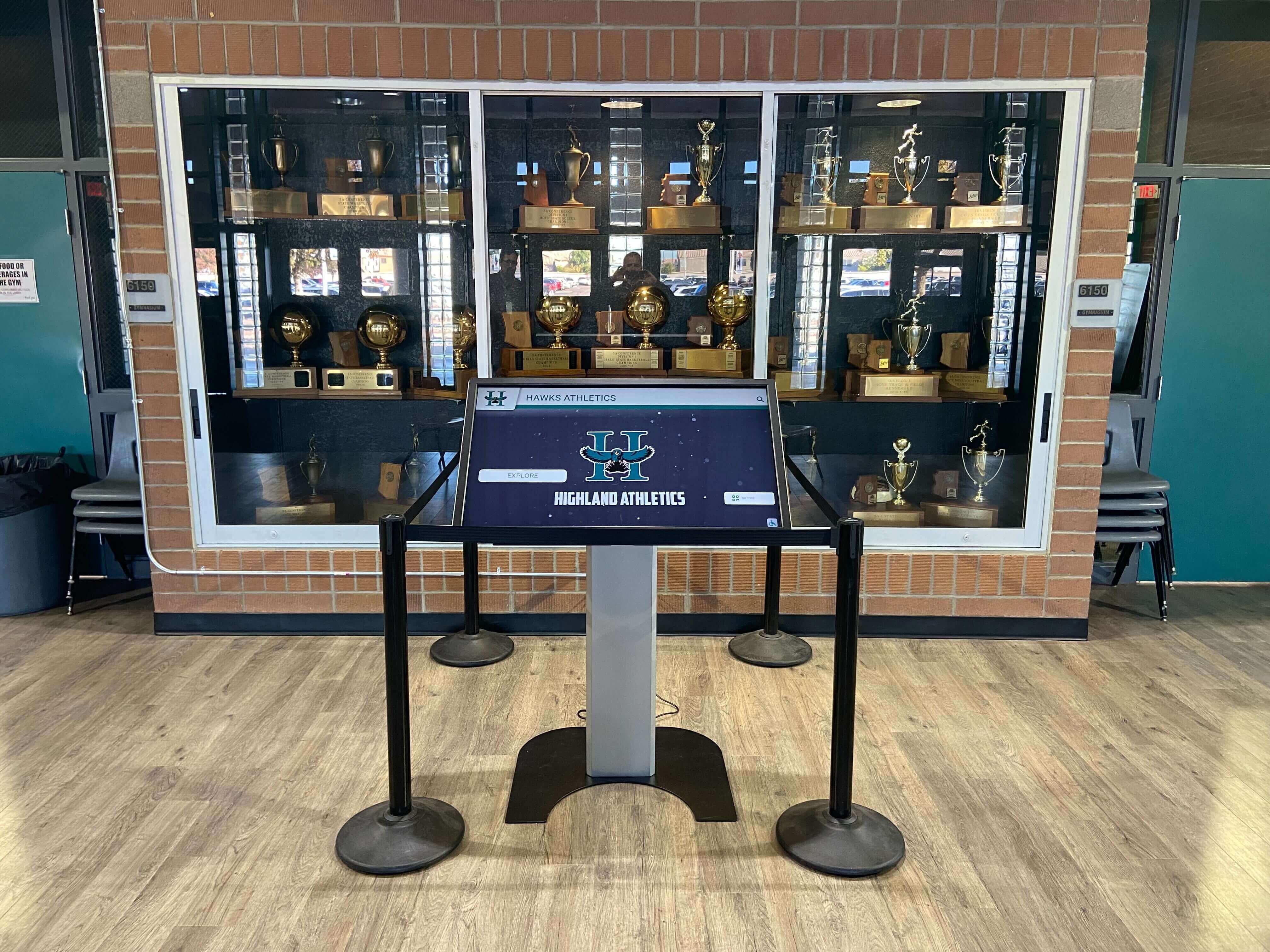
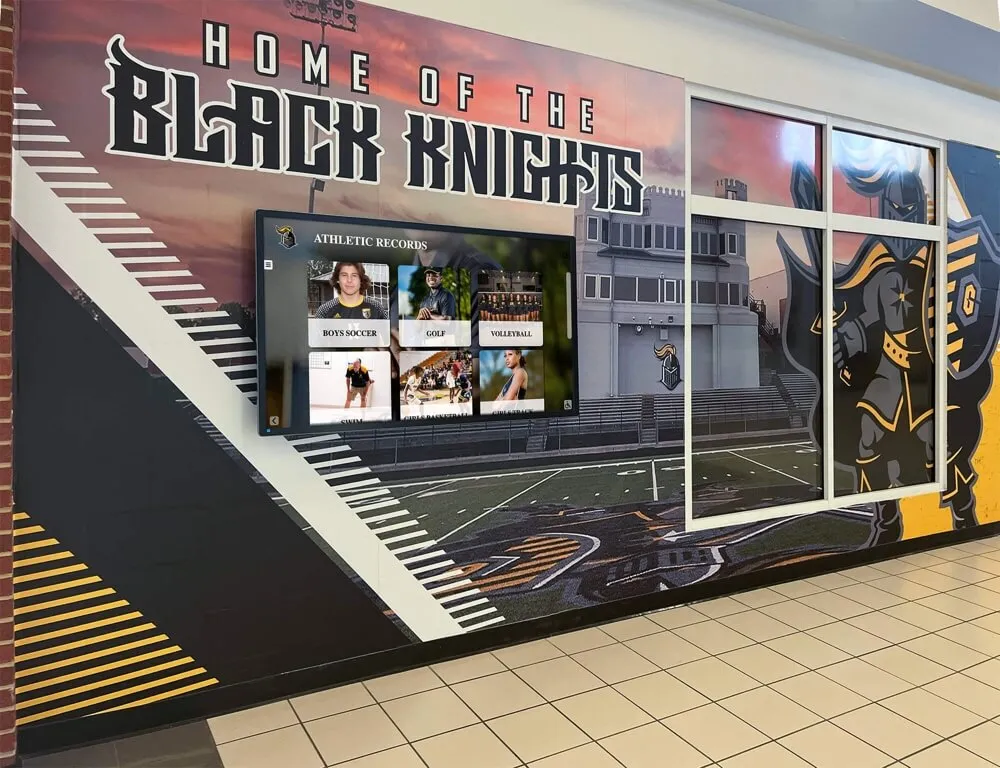
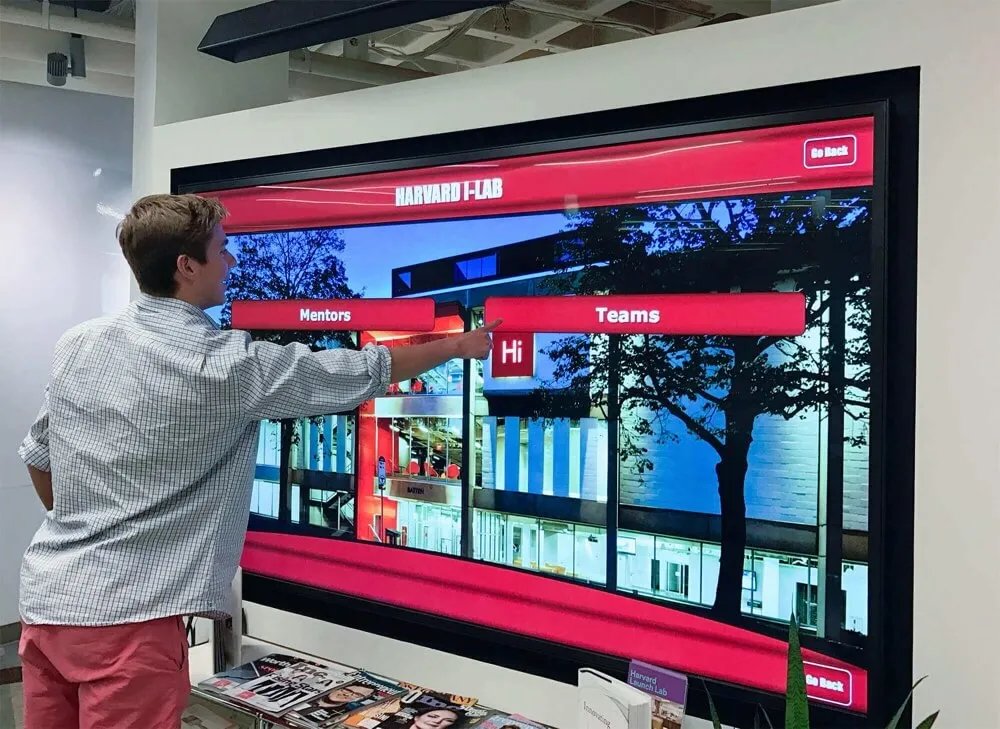
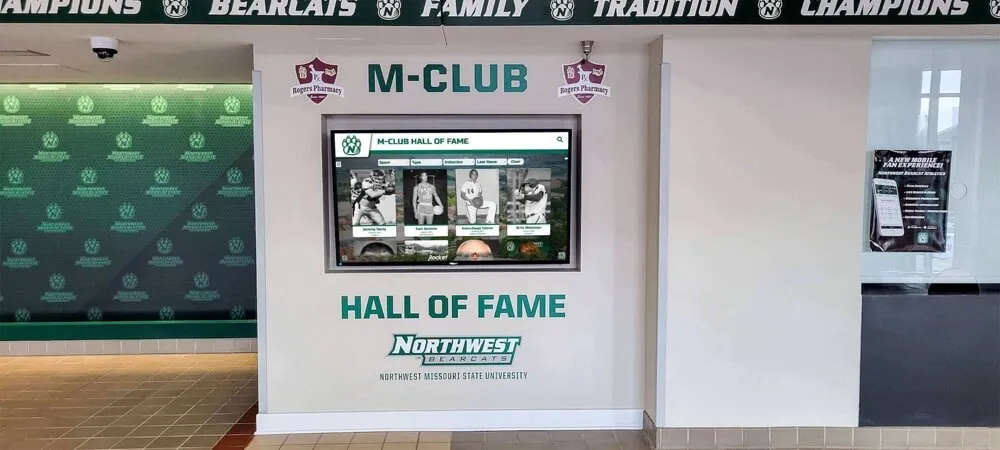
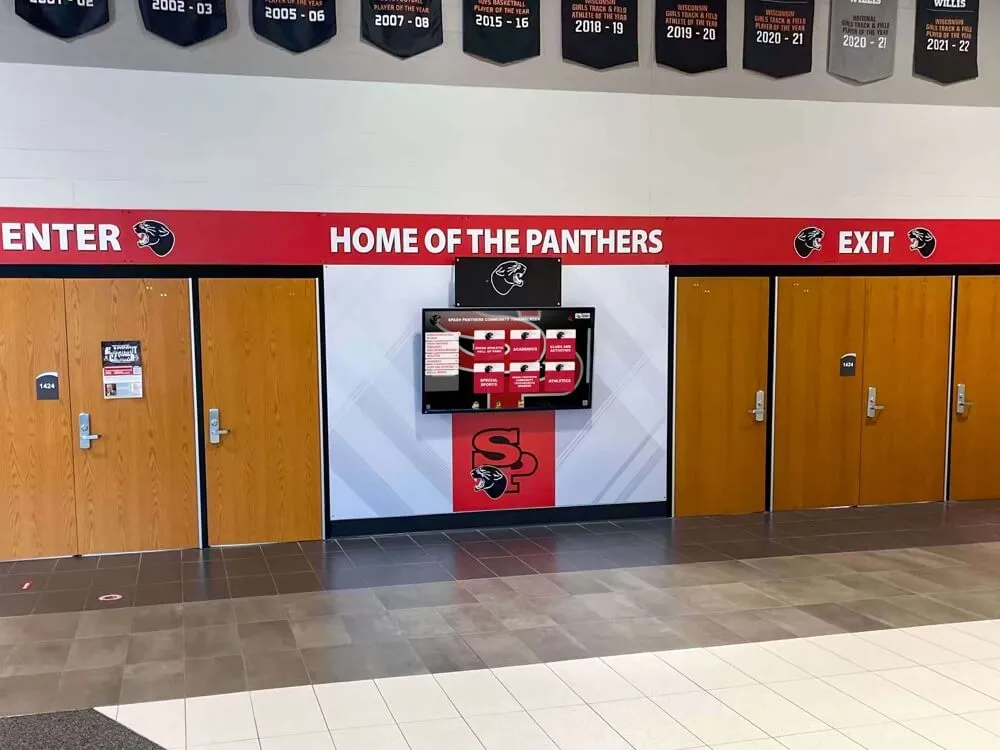
A touchscreen kiosk installed inside a traditional trophy case expands recognition capacity without requiring additional wall space
Medal Display Rack Selection Checklist
Before purchasing or fabricating any medal display solution, answer these questions to narrow the field:
- Volume: How many medals do you need to display now, and how many do you expect to add annually?
- Location: Is this a high-traffic main corridor, a dedicated athletic wing, or a team room?
- Permanence: Should the display be fixed or portable for events?
- Security: Does the location require a locked case, or is an open rack acceptable?
- Context: Will medals stand alone, or do they need to be displayed alongside trophies, photos, and plaques?
- Maintenance: Who is responsible for updating the display, and how often?
- Budget: What is the one-time installation budget, and is there an ongoing maintenance budget?
Schools that run through this checklist before purchasing avoid the most common mistake: buying a display sized for today’s collection that is overcrowded within two seasons.
When Physical Racks Run Out of Room
Physical medal display options share one fundamental constraint: finite capacity. A hallway can hold only so many cases and shelf runs before additional installations require renovation. For schools with decades of athletic history—or programs that compete heavily across multiple sports—physical racks become a triage exercise. Administrators end up choosing which championships stay visible and which get boxed in a storage room.
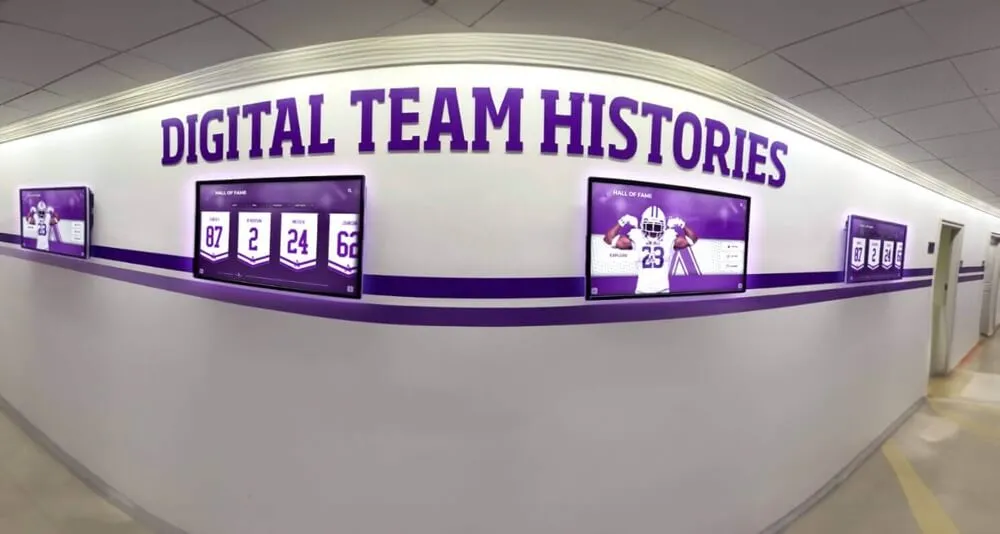
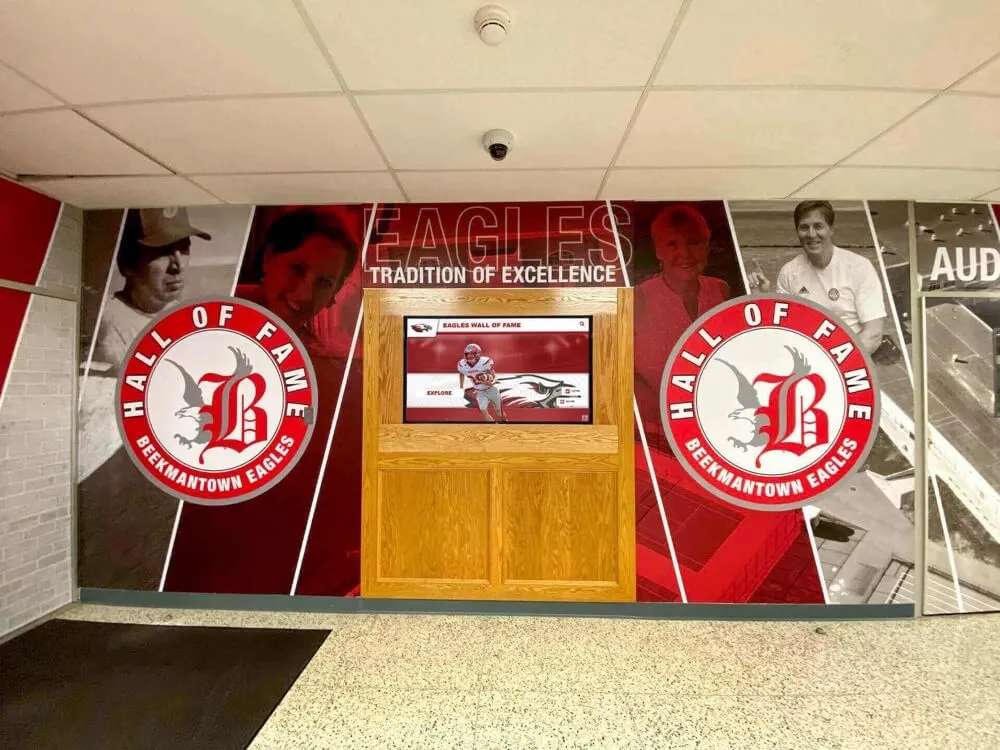
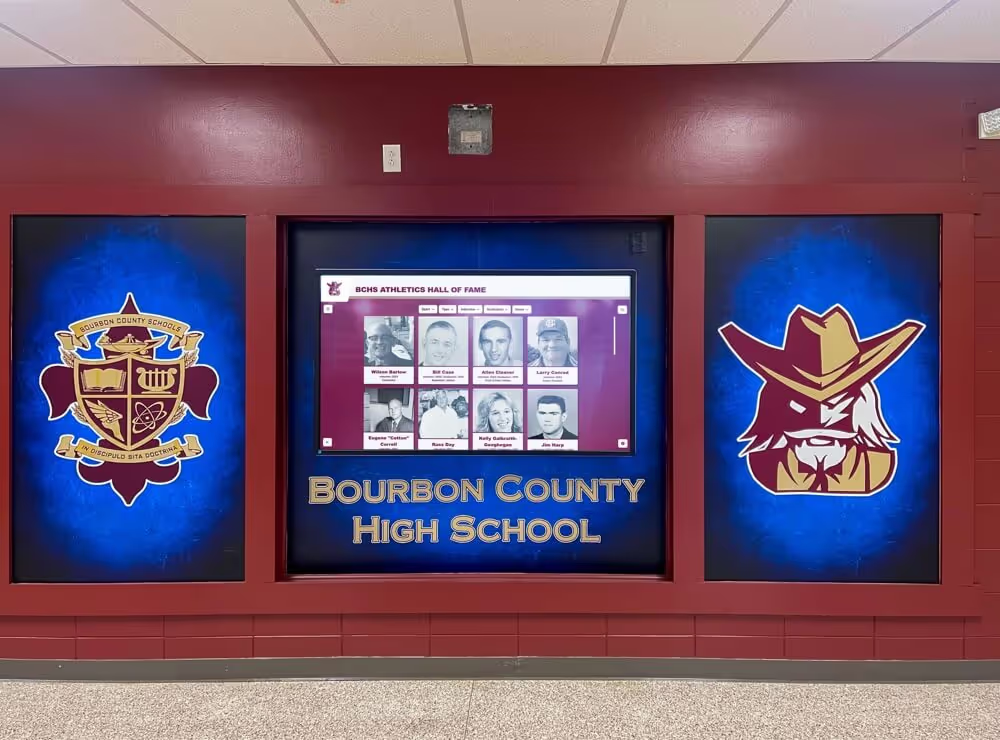
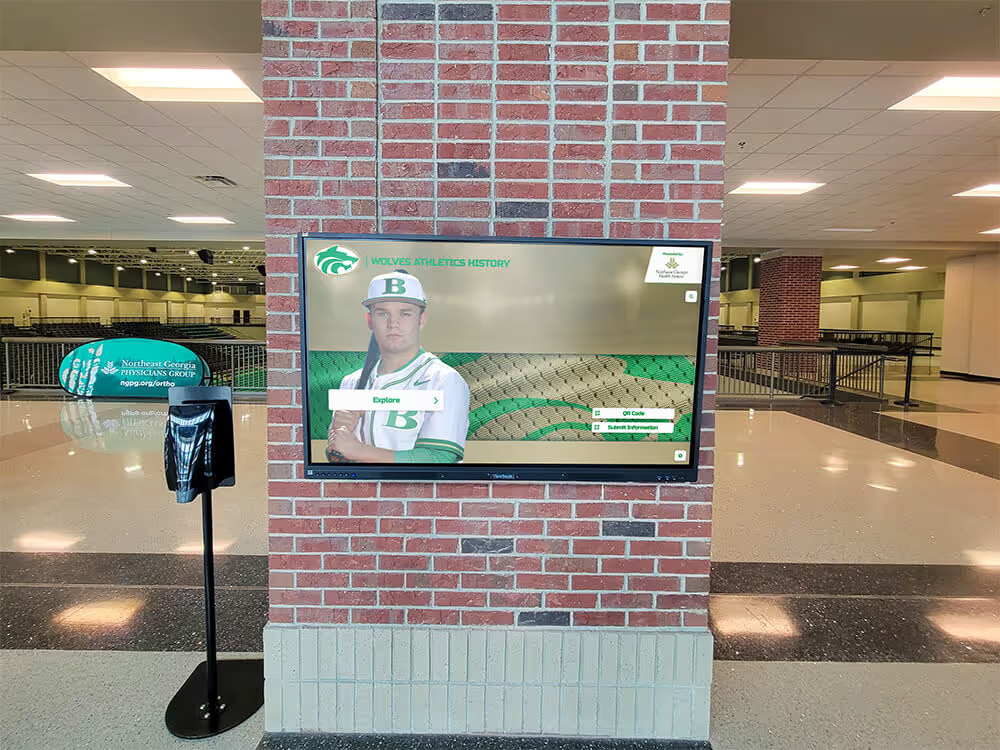
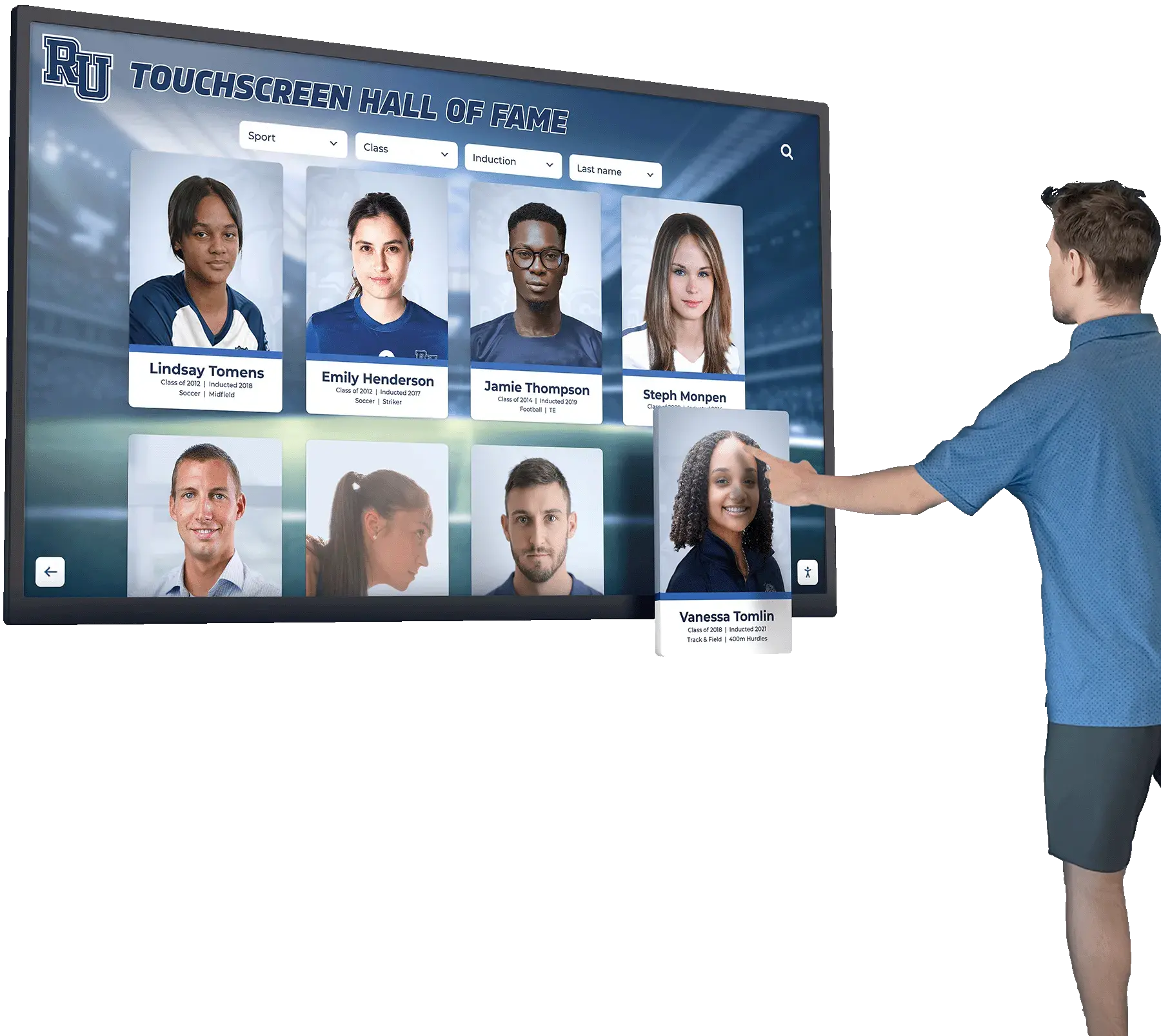
A digital trophy case resolves the capacity problem entirely. By digitizing medals, plaques, and historical recognition into an interactive display system, schools can surface any achievement at any time without physical space constraints.
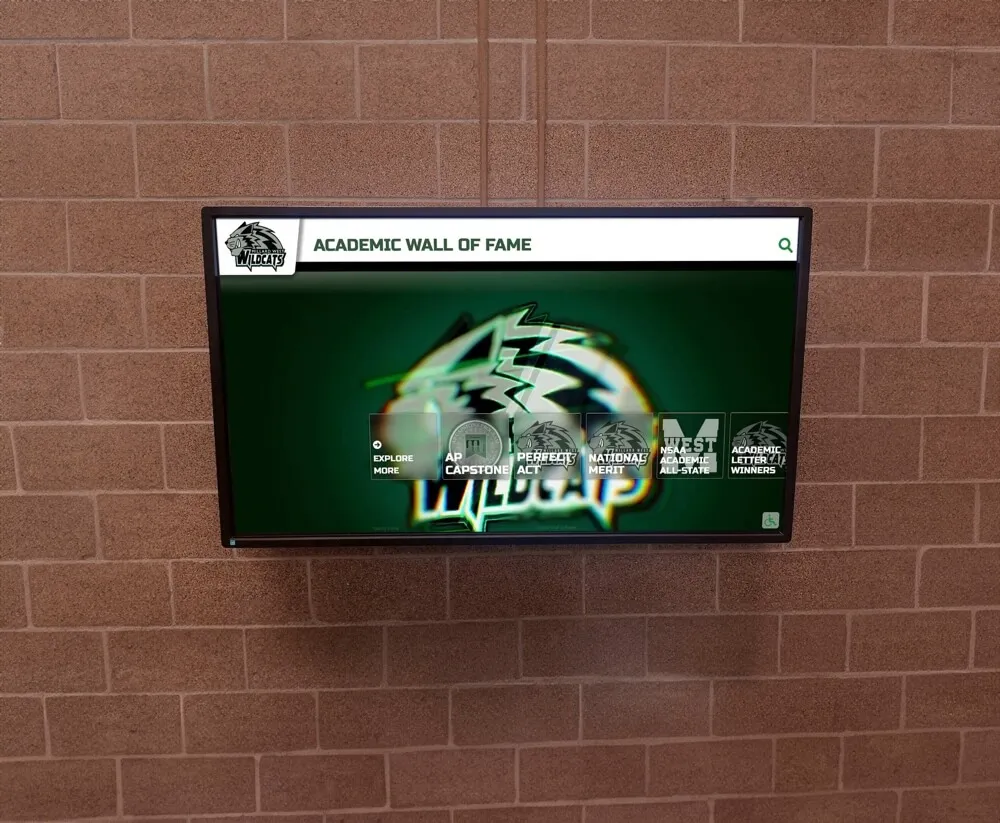
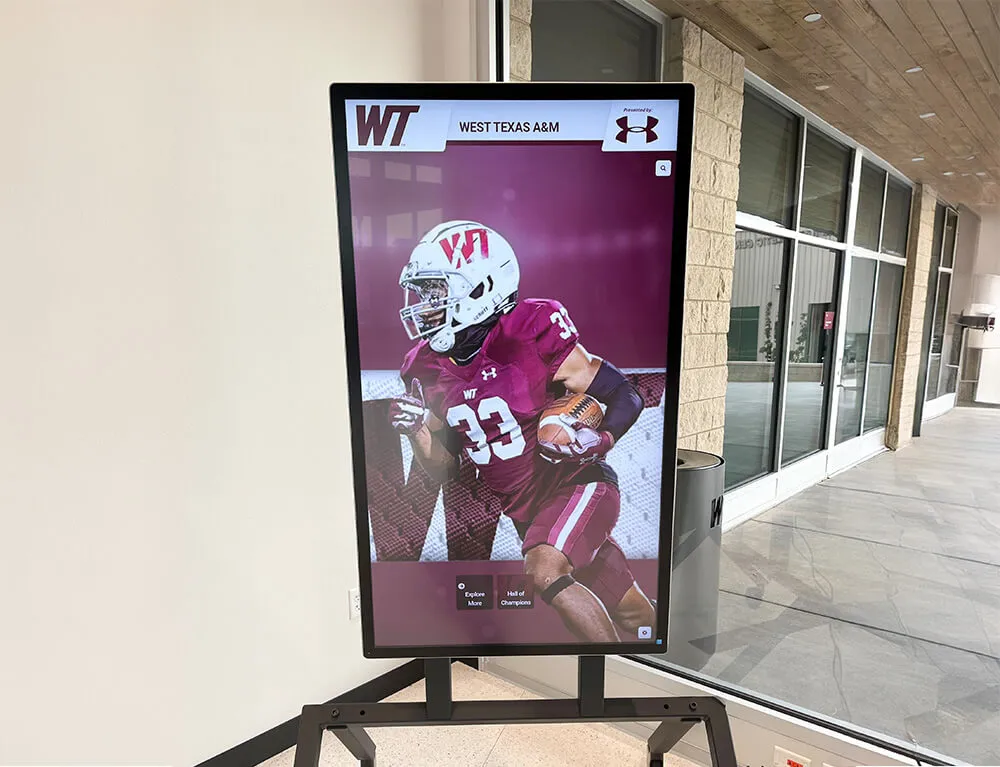
Digital awards displays for schools have matured considerably in recent years. Modern systems combine touchscreen kiosks, wall-mounted screens, and cloud-based content management so athletic directors can add new recognition within minutes of an event rather than waiting for a physical plaque to arrive.
What a Digital Trophy Display Adds
Beyond unlimited capacity, digital displays provide capabilities physical racks cannot match:
Searchable achievement archives — Visitors can search by sport, year, athlete name, or award type. An alumnus returning for homecoming can find their sophomore-year regional medal in seconds rather than scanning case after case.
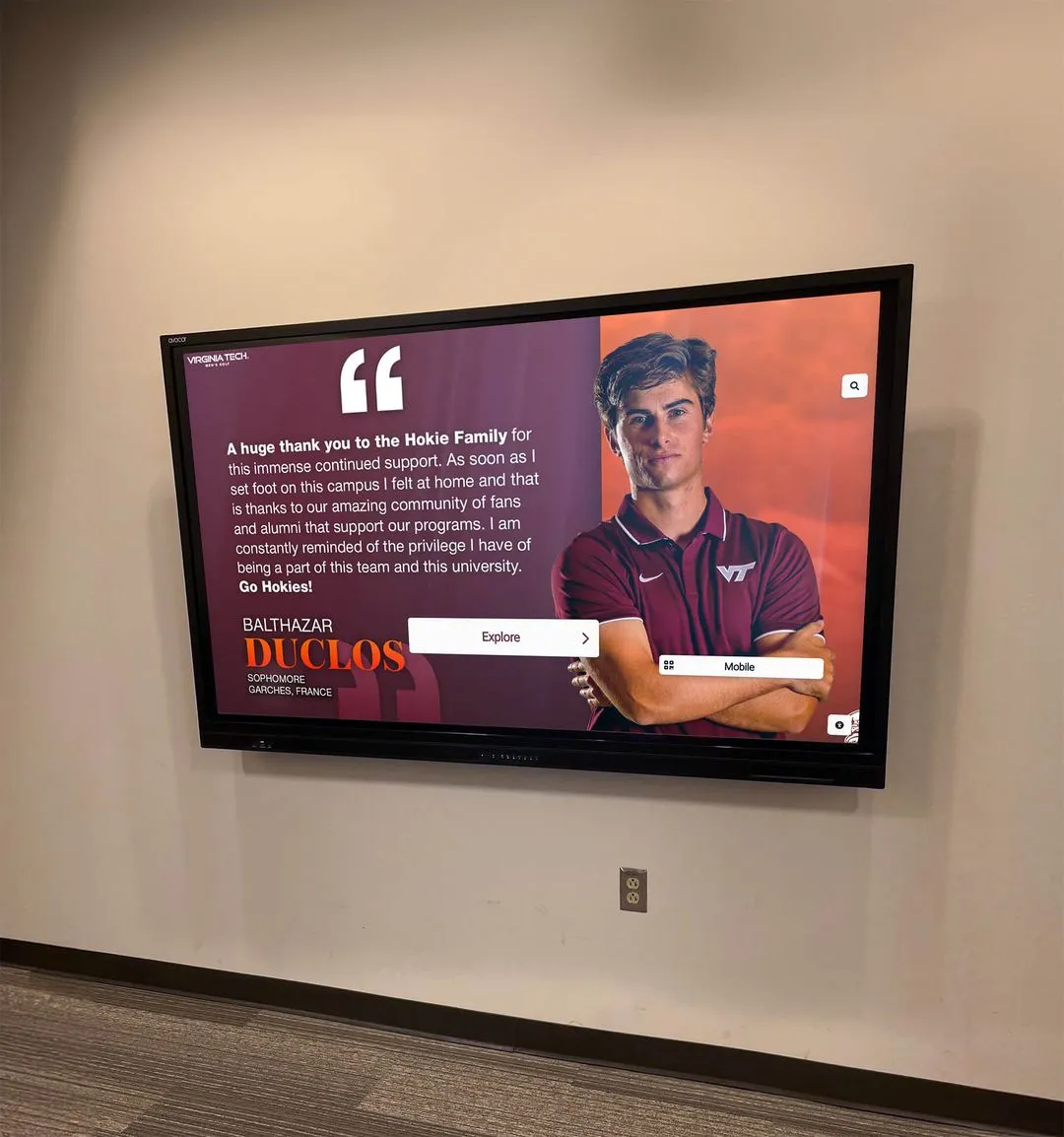
Rich context for each award — A championship medal in a glass case shows a year and a sport. A digital record of the same award can include the final score, team roster, coach’s name, season record, and a photo gallery. This depth of context is what transforms recognition from a display into a story.
Real-time updates — New medals and awards can be added to a digital display the same week they are earned. Physical installations typically lag by weeks or months as plaques are ordered, engraved, and installed.
Broader audience reach — Schools using digital recognition for programs like AP Scholars and Academic All-Americans report that families engage with digital displays through shared links and embedded website versions, extending recognition far beyond the students who walk through the physical hallway.
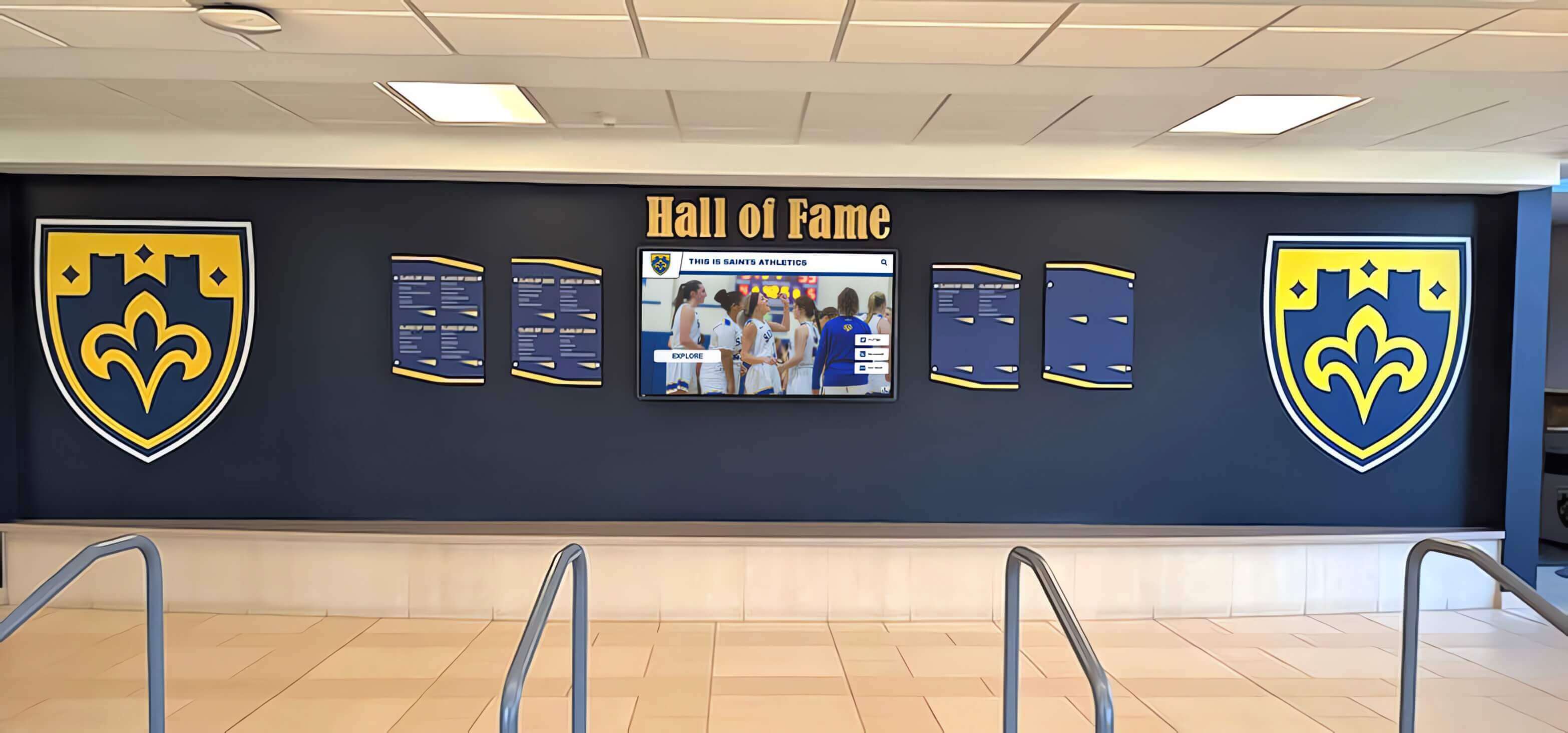
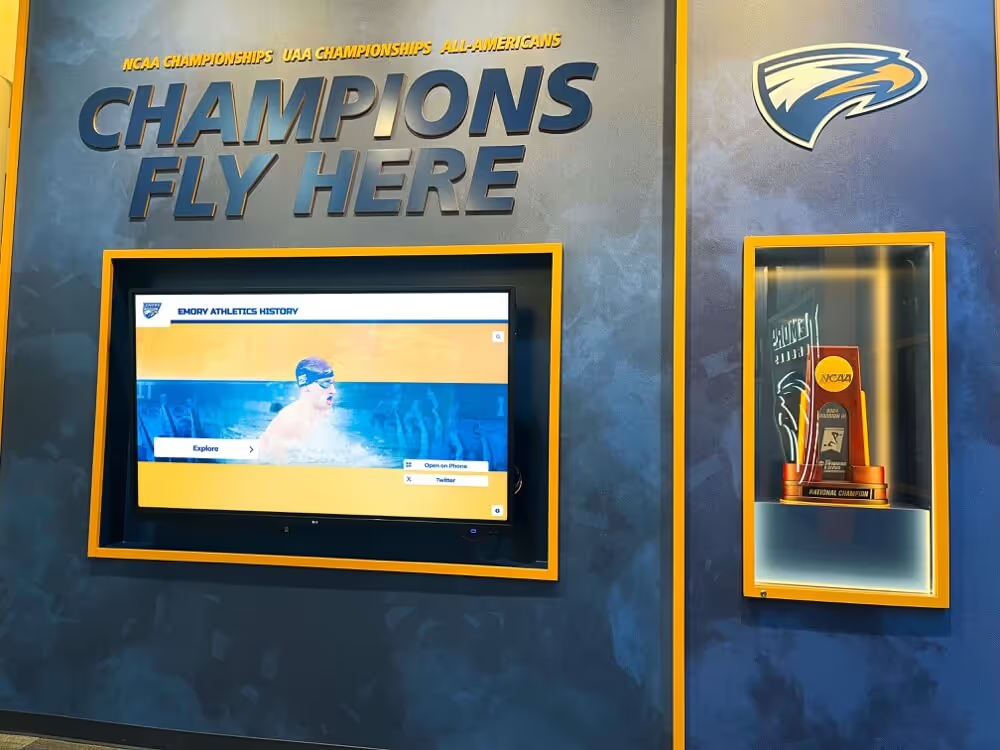
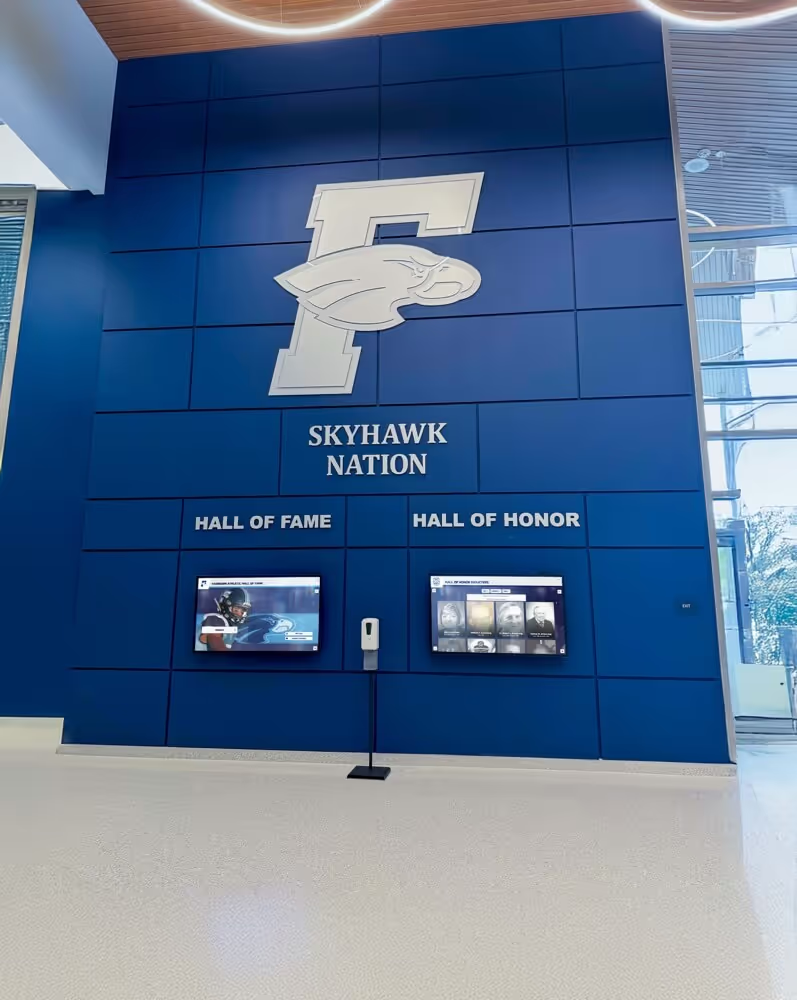
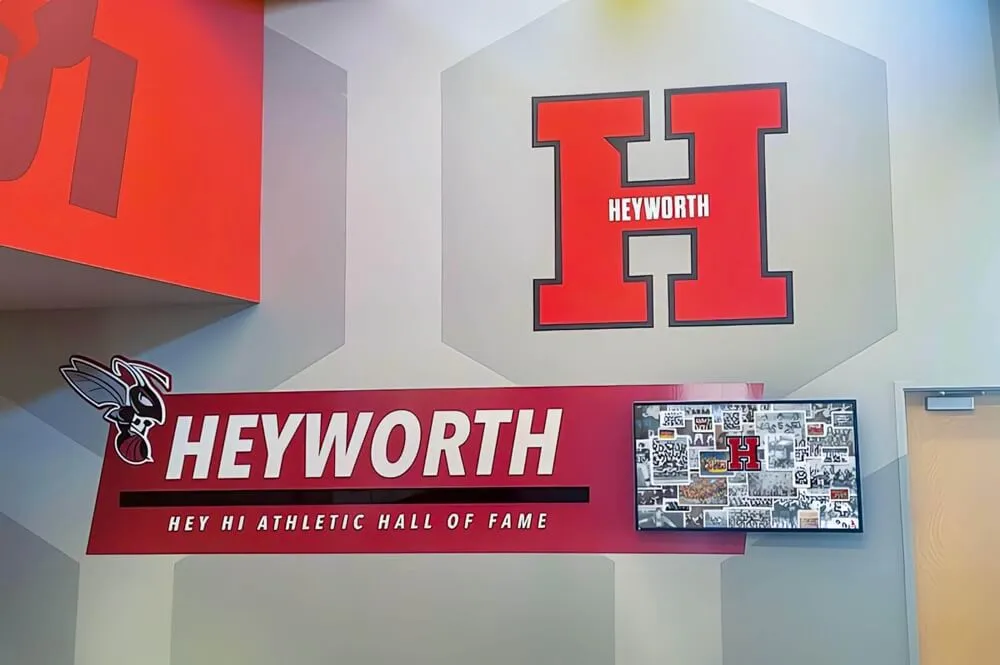
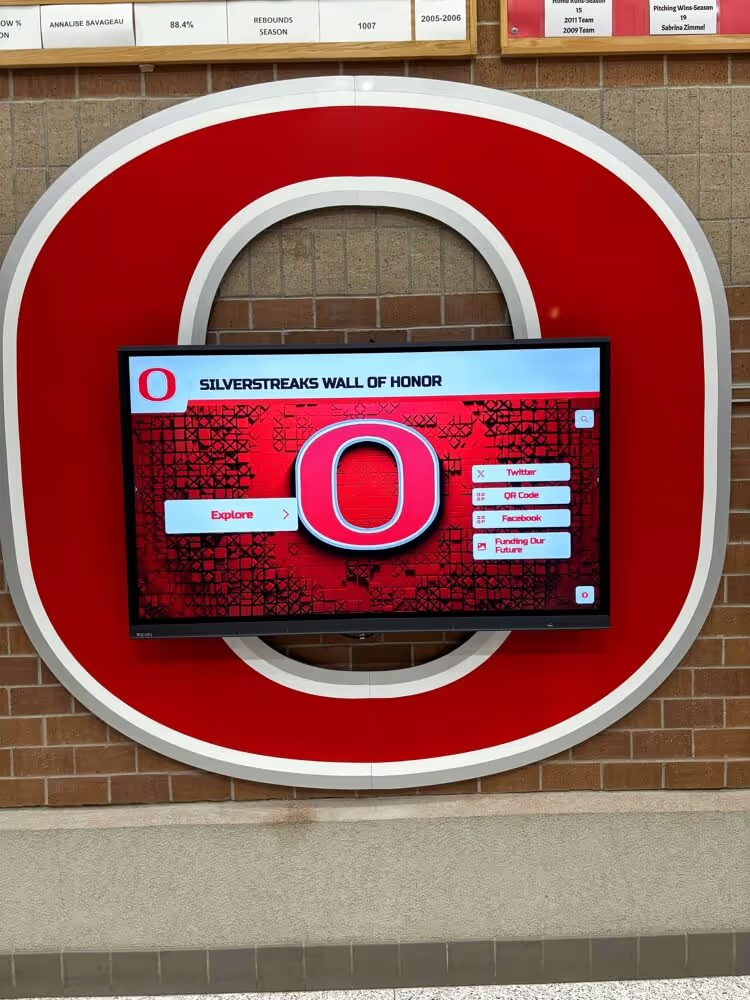
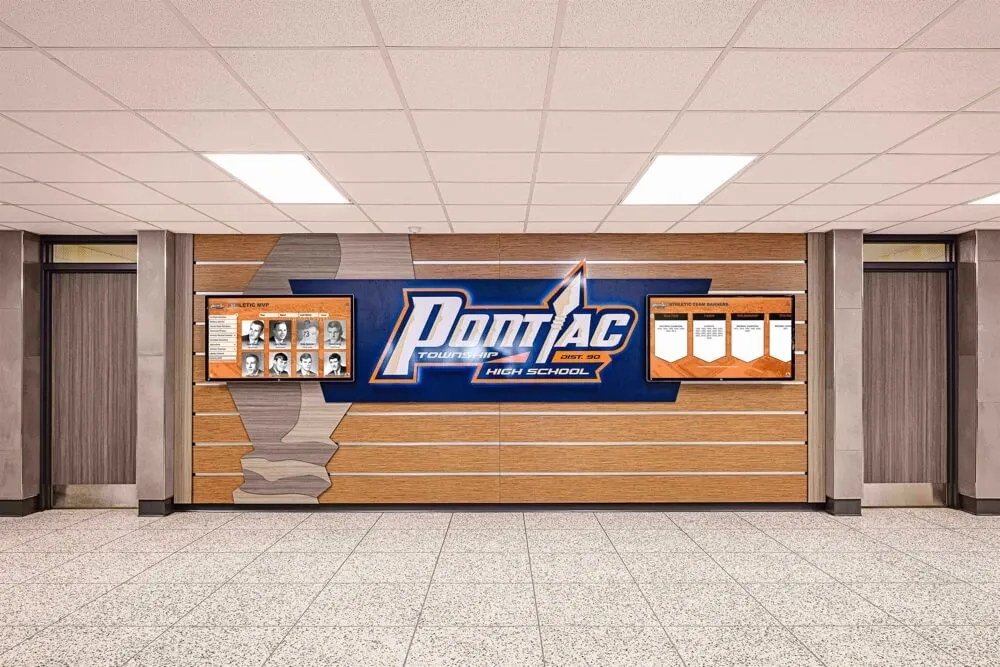
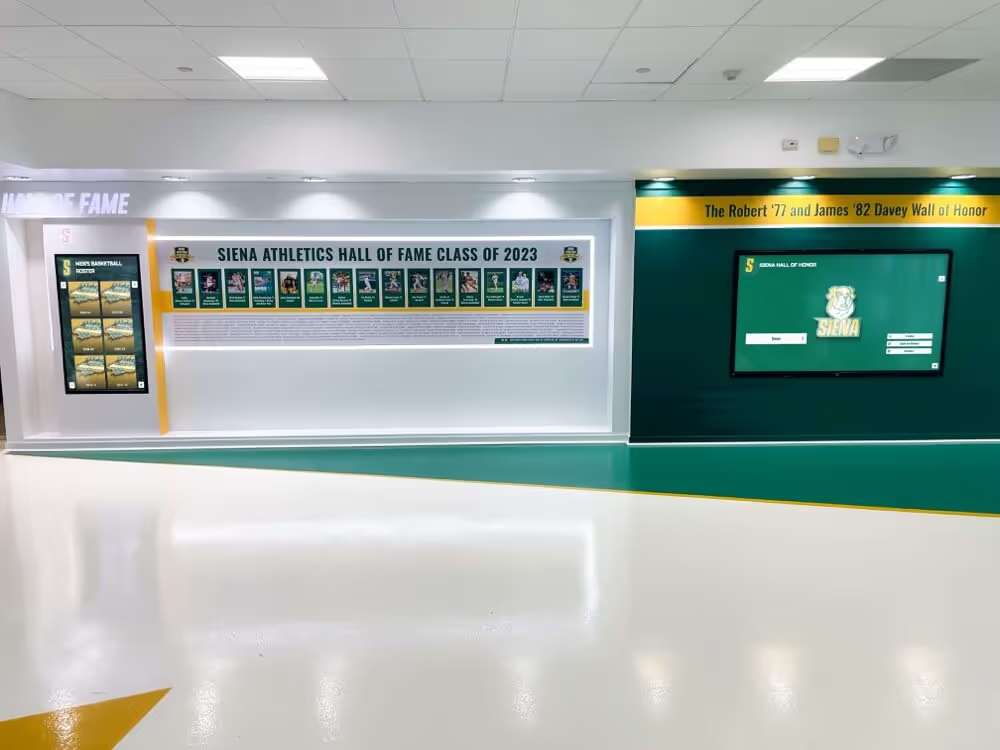
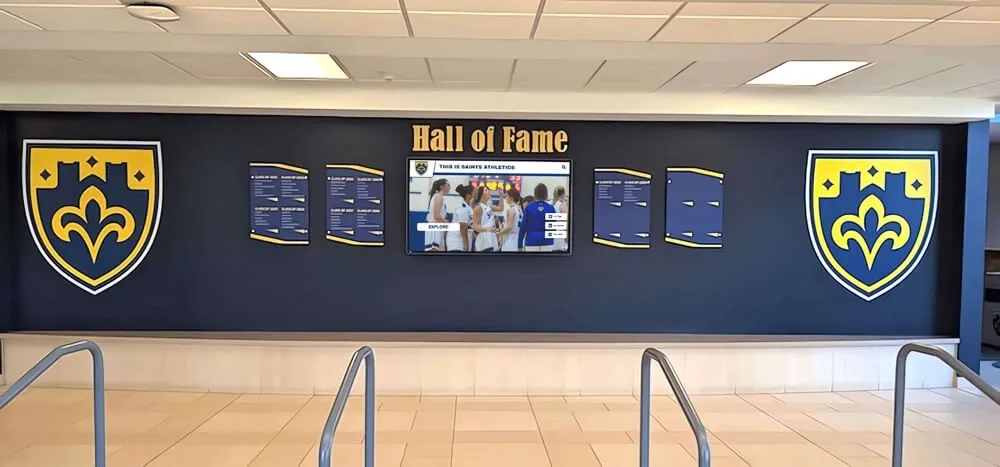
Hybrid installations combine physical award shields with integrated digital screens, giving schools the best of both approaches
Rocket Alumni Solutions and Digital Trophy Displays
Rocket Alumni Solutions builds interactive digital trophy case platforms specifically for K–12 and collegiate athletic programs. Their systems integrate with existing trophy cases rather than replacing them—a touchscreen kiosk or wall display sits alongside physical hardware and surfaces the records, rosters, and historical context that physical medals cannot carry on their own.
Schools using the platform report that the digital component particularly benefits programs that host cheerleading and performing arts recognition alongside traditional sports, since the software handles diverse award types without requiring separate physical infrastructure for each program.
For schools evaluating the transition, the most practical starting point is a hybrid installation: keep the physical medal racks and trophy cases in place, and add a single interactive screen that provides the searchable archive and context layer the physical display cannot. Most schools find the hybrid approach satisfies both traditionalists who value the physical hardware and younger audiences who expect interactive access to information.
Comparing Physical vs. Digital Medal Displays
| Factor | Physical Rack / Shelf / Case | Digital Trophy Display |
|---|---|---|
| Upfront cost | Low–Medium | Medium–High |
| Capacity | Fixed | Unlimited |
| Context per award | Minimal (label only) | Rich (photos, rosters, stats) |
| Update speed | Weeks (fabrication required) | Minutes (content management) |
| Audience reach | In-person only | In-person + web + shared links |
| Maintenance | Cleaning, rearranging, engraving | Software updates, content additions |
| Best for | Main-entrance prestige display | High-volume programs, historical archives |
Implementation Tips for Schools
Start with a Physical Anchor
Even programs planning a full digital transition benefit from maintaining a physical medal display at the main entrance. The tactile presence of actual hardware communicates program substance in a way screens cannot fully replicate. A well-lit trophy case with a curated selection of championship medals creates an immediate impression for visiting families and recruits.
Layer Recognition Across Spaces
Not every medal needs to live in the main display case. Consider distributing recognition across the building:
- Main entrance: Flagship trophies and championship medals, recently earned
- Athletic hallway: Medal shelf runs organized by sport or season
- Team rooms: Sport-specific medal hangers covering that program’s history
- Digital display: Complete archive accessible from any screen
This approach is consistent with how leading schools build athletic team picture day traditions and school spirit programming—recognition is most effective when it shows up in multiple contexts rather than being concentrated in a single location that only a fraction of students pass regularly.
Keep the Archive Current
The most common failure mode for both physical and digital medal displays is falling behind on updates. Physical cases fill up and new medals go into boxes. Digital systems get loaded at launch and then sit unchanged for two years. Assign a specific person—typically the athletic director or a designated booster club volunteer—to update the display within two weeks of every award event.
Frequently Asked Questions
What is a medal display rack? A medal display rack is a fixture—wall-mounted, freestanding, or case-integrated—designed to hang or display medals in an organized, visible arrangement. Most use hooks or pegs spaced for standard ribbon widths.
How many medals can a standard wall hanger hold? Most consumer-grade medal hangers hold 8–20 medals depending on length. Heavy-duty school-grade units with wider rails can hold 30–50 medals before crowding becomes a visual problem.
What is the difference between a medal hanger and a medal shelf? A medal hanger uses hooks or pegs to suspend medals vertically. A medal shelf adds a horizontal surface for standing objects like trophies and plaques, combining hanging and shelf display in one unit.
Should medals be stored in a locked case or an open rack? Main-entrance and public-corridor displays benefit from locked cases, which protect medals from handling and theft. Team rooms, coaching offices, and event-specific displays are generally safe with open racks.
How do schools handle medal overflow when cases are full? Common options include rotating displays seasonally, moving older medals to storage, expanding physical infrastructure, or adding a digital trophy display that archives the full collection without physical space constraints.
What is a digital trophy case? A digital trophy case is an interactive display system—typically a touchscreen kiosk or wall-mounted screen—that presents athletic and academic awards in a searchable, multimedia format. It can hold unlimited records and update in real time, unlike a physical case.
Can a school use both physical racks and a digital display? Yes, and most schools find this hybrid approach ideal. Physical medal racks handle the main-entrance prestige display, while a digital system provides the searchable archive, historical depth, and remote access that physical hardware cannot offer.
How much does a school medal display rack cost? Basic wall hangers start under $30. Custom engraved panels run $100–$500. Built-in trophy cases with medal panels range from $800–$5,000 depending on size and materials. Digital display systems vary widely based on hardware and software scope; contact vendors like Rocket Alumni Solutions for program-specific pricing.
How do I choose between a medal shelf and a medal display rack? If you need to display medals alongside trophies, plaques, and photos in a unified arrangement, a medal shelf is the better choice. If you need a simple, dedicated spot for medals only—such as in a team room—a basic rack or hanger is sufficient and more cost-effective.