



Lacrosse ranks among America’s fastest-growing high school and youth sports, with participation expanding rapidly across communities nationwide. Yet for newcomers—whether players stepping onto the field for the first time, parents watching from the sidelines, or spectators attending their inaugural game—the sport’s unique rules, positioning requirements, and gameplay mechanics can seem bewildering without proper introduction.
Understanding lacrosse rules transforms confusion into appreciation, enabling players to compete effectively while helping spectators follow the strategic nuances that make lacrosse such a dynamic sport. The challenge lies in lacrosse’s significant rule variations between boys’ and girls’ formats, different penalty classifications, complex positioning restrictions, and technical violations that frequently stop play without clear explanation to uninformed observers.
This comprehensive guide breaks down lacrosse rules for new players and spectators, explaining fundamental gameplay regulations, critical differences between boys’ and girls’ lacrosse, common penalties and violations, field dimensions, game duration, and position-specific requirements. Whether you’re preparing for your first practice, supporting a student-athlete, or simply want to understand what you’re watching, this complete breakdown provides the foundation for lacrosse comprehension.
Effective lacrosse education begins with understanding basic gameplay structure before progressing to format-specific rules, penalties, and advanced positioning requirements. Programs that invest in comprehensive rules education develop more skilled players while creating informed spectator communities that better appreciate competitive excellence.

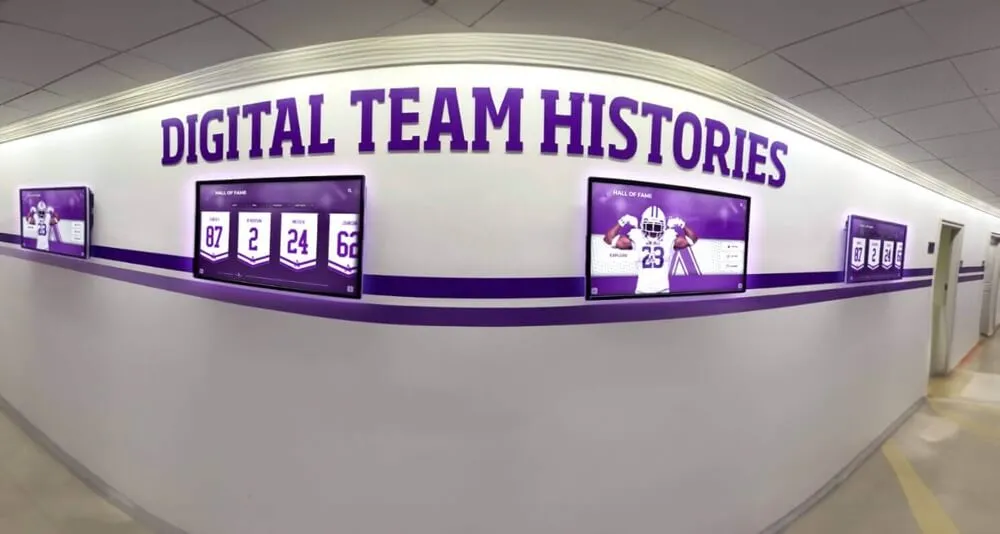
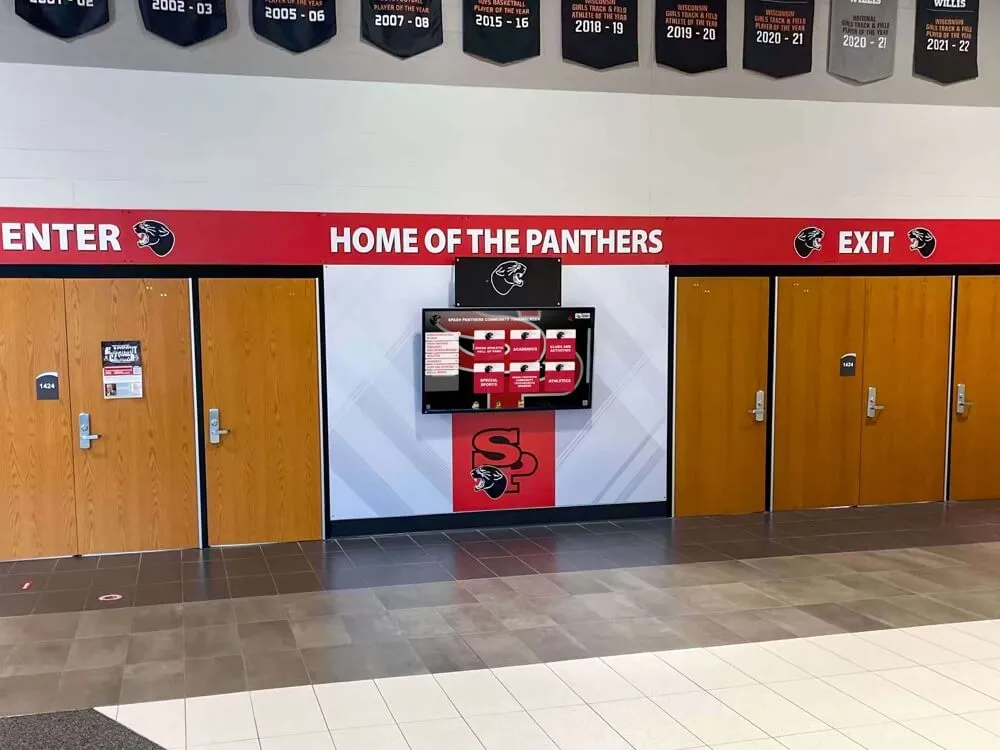
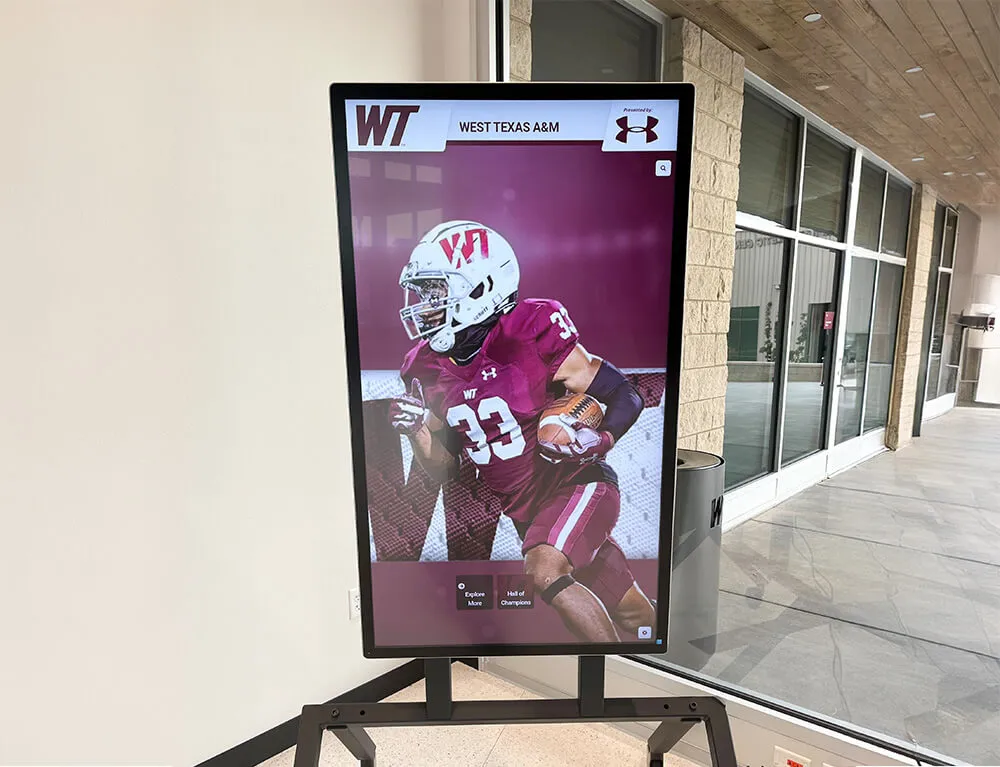
Athletic programs showcasing lacrosse achievements create inspiring environments celebrating the sport's growth and competitive excellence
Understanding Basic Lacrosse Gameplay
Lacrosse fundamentally involves two teams using netted sticks to advance a small rubber ball toward opponent goals, scoring by shooting the ball past a goalkeeper into a 6-foot by 6-foot net.
The Fundamental Objective
Core Gameplay Mechanics
All lacrosse formats share basic competitive objectives:
- Scoring: Teams earn one point for each successful goal (ball completely crossing the goal line)
- Possession Control: Players catch, carry, and pass the ball using their lacrosse stick’s netted head
- Defensive Pressure: Opponents attempt to dislodge the ball, intercept passes, and prevent scoring opportunities
- Goal Protection: Specialized goalkeepers defend their net using larger stick heads and additional protective equipment
- Field Movement: Teams transition between offensive and defensive responsibilities as possession changes
The team with more goals when regulation time expires wins the game, with overtime periods determining outcomes when teams finish regulation tied.
How Long Is a Lacrosse Game?
Game duration varies by competitive level and format:
Boys’ Lacrosse Game Length
- High School: Four 12-minute quarters (48 minutes total)
- Youth (U15 and younger): Four 10-minute quarters (40 minutes total)
- College/NCAA: Four 15-minute quarters (60 minutes total)
- Professional (PLL/NLL): Four 12-15 minute quarters depending on league
- Halftime: Typically 10 minutes between second and third quarters
- Between Quarters: 2-minute breaks between first/second and third/fourth quarters
Girls’ Lacrosse Game Length
- High School: Two 25-minute halves (50 minutes total)
- Youth: Two 20-25 minute halves depending on age group
- College/NCAA: Two 30-minute halves (60 minutes total)
- Halftime: Typically 10 minutes

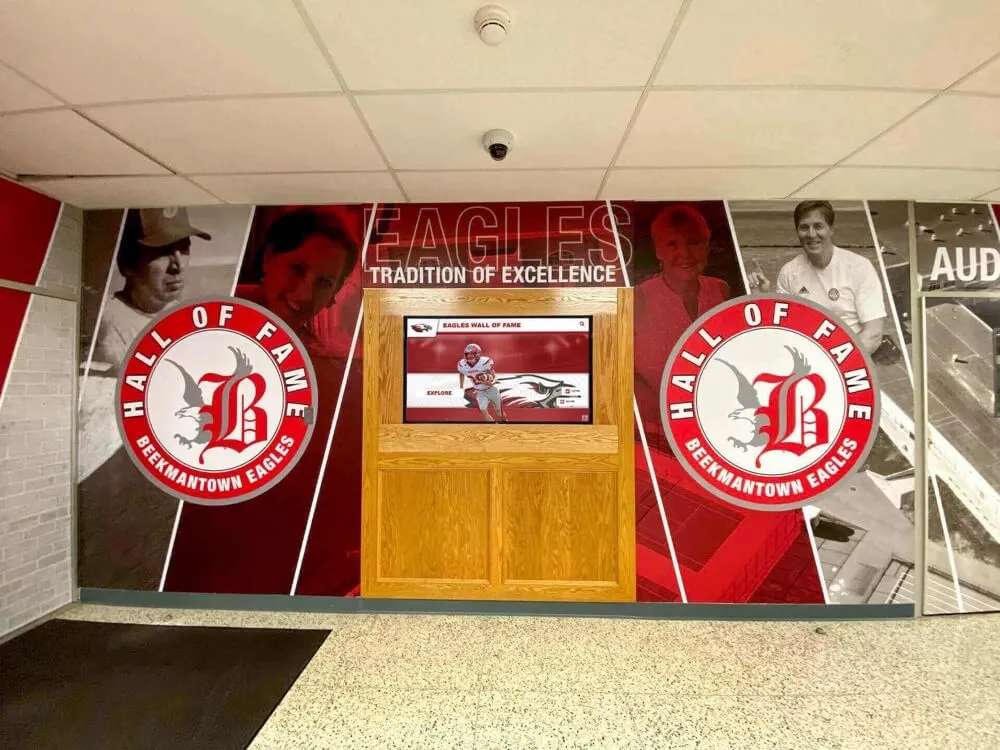
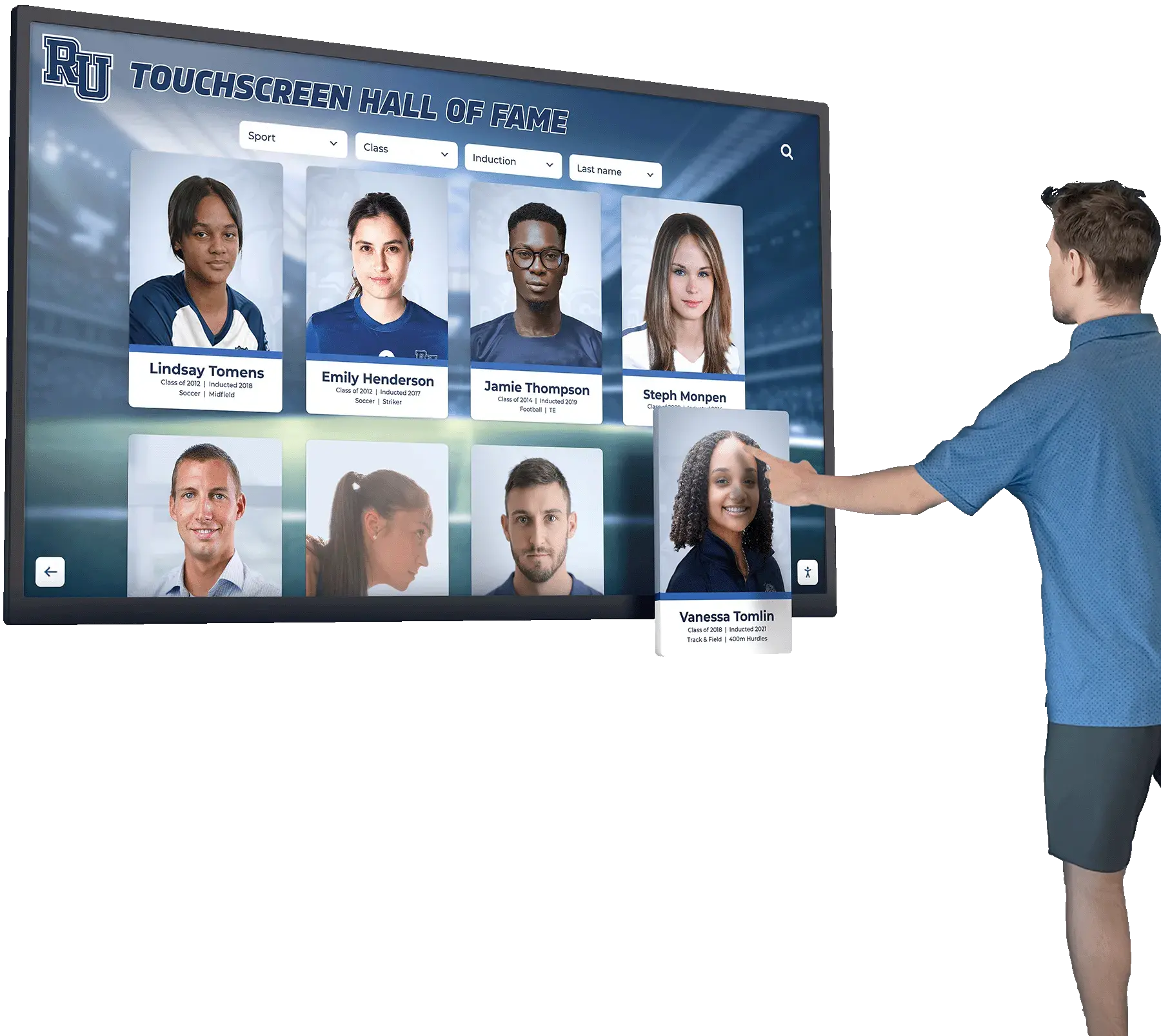
Modern athletic displays celebrate lacrosse achievements alongside other sports, honoring program excellence and championship seasons
Running time versus stop time significantly affects actual game duration. Most youth and regular season games use running time (clock continues during most stoppages), while playoff games and higher competitive levels employ stop time (clock stops for goals, penalties, and out-of-bounds), extending actual game length to 90-120 minutes including breaks and stoppages.
Lacrosse Field Size and Layout
Understanding field dimensions helps players and spectators appreciate positioning strategies and rule applications.
Standard Field Dimensions
According to USA Lacrosse, the national governing body:
- Length: 110 yards (330 feet) for both boys’ and girls’ lacrosse
- Width: 60 yards (180 feet) for boys’; 60-70 yards for girls’ (flexible)
- Goal Placement: 15 yards from each end line (boys’); 90-100 feet for girls'
- Goal Crease: 9-foot radius circle around goal (boys’); 8.5-foot radius (girls')
- Restraining Lines: Located 20 yards from each goal (boys’ only)
- Midfield Line: Divides field into offensive and defensive halves
Girls’ lacrosse traditionally operates without rigid sideline boundaries, with play continuing beyond marked field lines until the ball becomes unplayable or officials whistle stoppage. Boys’ lacrosse enforces strict boundaries with possession changing when the ball crosses sidelines or end lines.
For more detailed field specifications, athletic directors can reference comprehensive lacrosse field dimension guides when planning facility development.
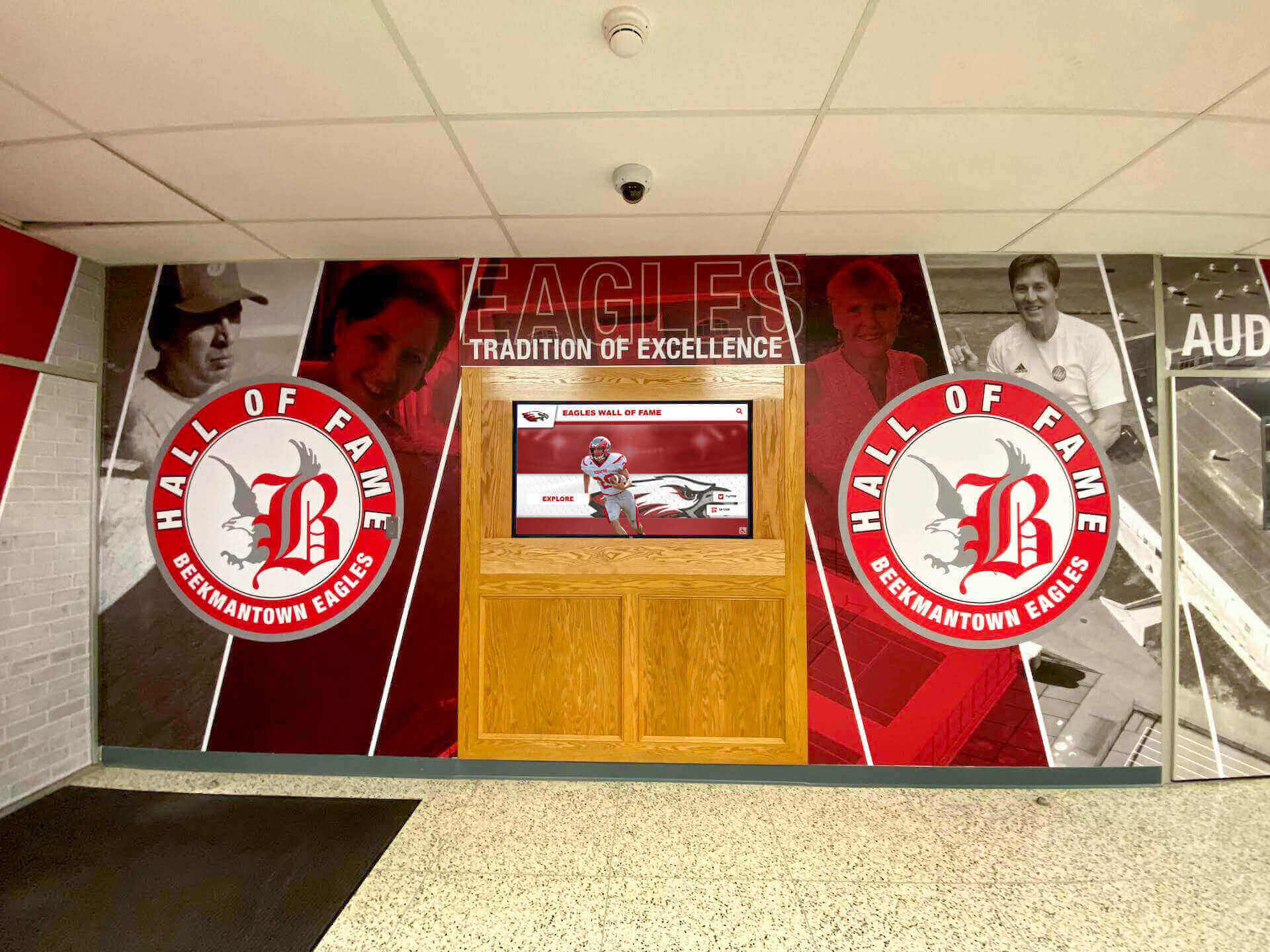
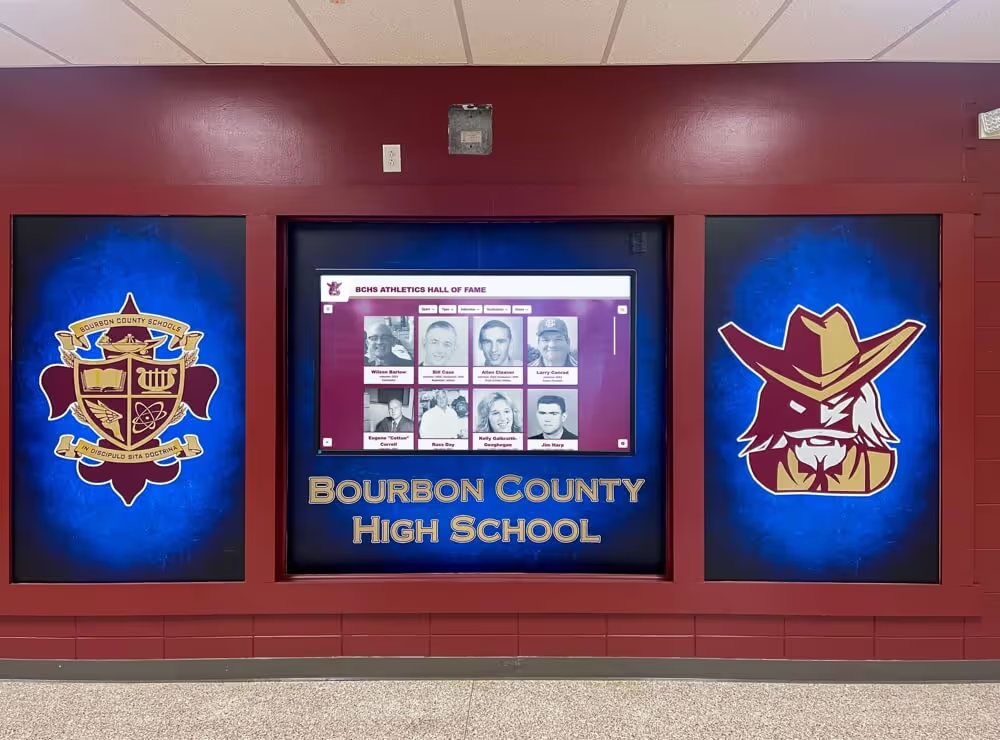
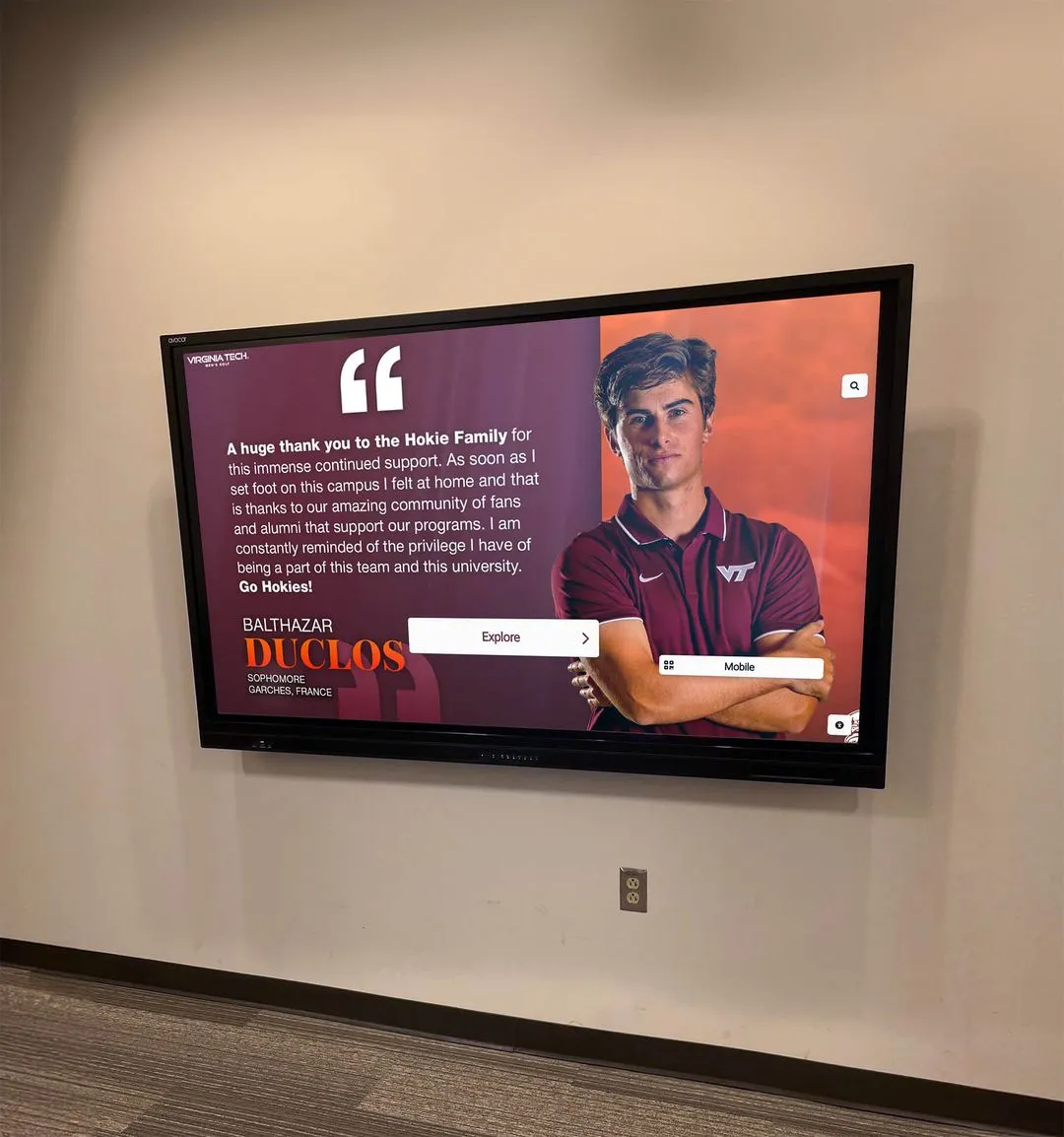
Athletic recognition displays in prominent school locations celebrate lacrosse program milestones and championship achievements
Boys Lacrosse Rules: The Contact-Based Format
Boys’ lacrosse permits significant physical contact, creating a faster-paced, more aggressive game with distinct equipment and penalty structures.
Boys Lacrosse Equipment Requirements
Mandatory Protective Gear
- Helmet: Required for all field players with properly fitted chin strap and NOCSAE certification
- Mouthguard: Mandatory for all participants including goalkeepers
- Gloves: Padded gloves protecting hands and fingers during stick checks and contact
- Shoulder Pads: Required protective padding for torso
- Arm Pads: Elbow and forearm protection
- Athletic Cup: Strongly recommended for all players
- Cleats: Molded or detachable cleats (metal spikes prohibited at most levels)
Goalkeepers wear additional protective equipment including chest protectors, throat guards, larger gloves, and specialized helmets with enhanced face protection.
Physical Contact and Checking Rules
Legal Body Contact in Boys’ Lacrosse
Boys’ lacrosse allows controlled body checking under specific circumstances:
- Body Checks: Legal when delivered from the front or side, above the waist and below the shoulders
- Stick Checks: Players may strike opponent sticks to dislodge the ball using controlled one-handed or two-handed checks
- Push Checks: Controlled pushing with hands or stick against opponent’s body or stick
- Contact Restrictions: No checks to the head, neck, or from behind; no excessive force classified as “violent collision”
Officials penalize illegal checks with time-serving penalties ranging from 30 seconds to 3 minutes depending on severity, with ejection possible for particularly dangerous infractions.
Boys Lacrosse Offsides Rule
One of lacrosse’s most frequently called violations, offsides occurs when teams violate positioning requirements:
Offsides Violations
- Each team must maintain at least 4 players (including goalkeeper) on their defensive half of the field
- Each team must keep at least 3 players on their offensive half of the field
- Players may cross midfield, but total players on each half must maintain these minimums
- Offsides results in turnover, with possession awarded to the opposing team
Coaches teach players to maintain “man-up” and “man-down” awareness, ensuring proper positioning before crossing midfield to avoid offsides violations.
Common Boys Lacrosse Penalties
Personal Fouls (1-3 Minutes)
- Slashing: Illegal stick checks delivered with excessive force
- Tripping: Using stick or body to trip an opponent
- Unnecessary Roughness: Excessive or violent contact beyond legal checking
- Illegal Body Check: Contact from behind, to the head, or below the waist
- Cross-checking: Checking with the shaft of the stick between hands
- Unsportsmanlike Conduct: Arguing with officials, taunting, or inappropriate behavior
Technical Fouls (30 Seconds)
- Holding: Impeding opponent movement with hands or stick
- Interference: Contacting opponent who doesn’t have the ball or within 5 yards of a loose ball
- Pushing: Illegal pushing from behind or with hands extended
- Warding Off: Offensive player pushing away defender with free hand
- Stalling: Failing to advance the ball toward goal when officials issue warning

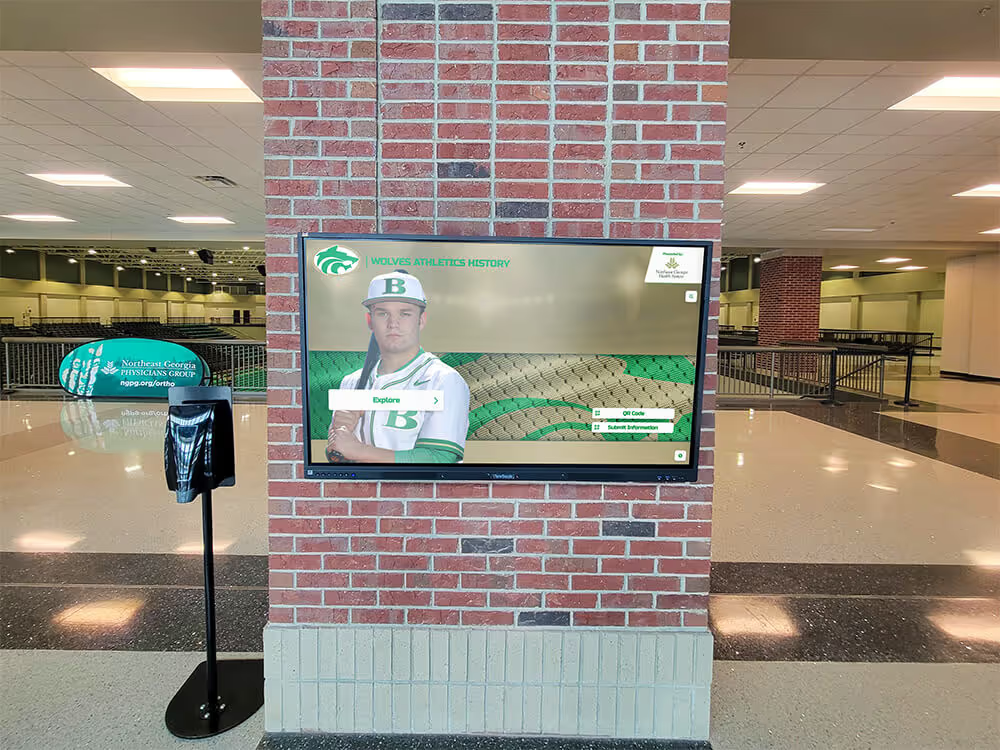
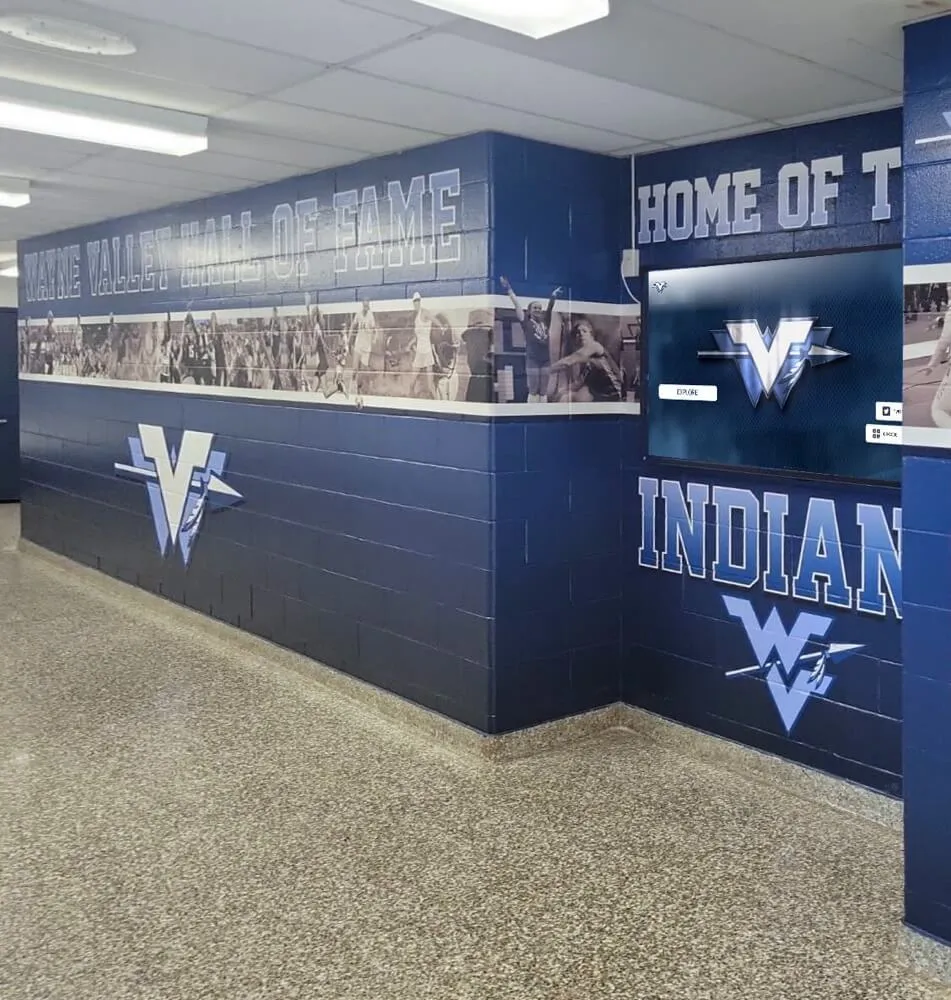
Recognition walls featuring championship shields and digital displays honor lacrosse program achievements
Personal fouls create man-advantage situations where the penalized player serves time in the penalty box, giving opponents numerical superiority. Technical fouls in boys’ lacrosse result in either 30-second penalties or possession changes depending on whether the fouling team possessed the ball.
Girls Lacrosse Rules: The Skill-Based Format
Girls’ lacrosse prohibits deliberate body contact, emphasizing stick skills, positioning, and finesse over physical play with distinct rules promoting safety and skill development.
Girls Lacrosse Equipment Differences
Protective Gear Requirements
Girls’ lacrosse requires significantly less protective equipment:
- Eyewear: Mandatory protective goggles meeting ASTM F3077 standards
- Mouthguard: Required for all players
- Gloves: Optional (many players choose to wear them)
- Stick: Regulation length stick with modified pocket depth restrictions
- No Helmets: Field players do not wear helmets (goalkeepers required to wear them)
- No Pads: Body padding prohibited for field players
The reduced equipment requirements reflect girls’ lacrosse’s no-contact philosophy, with rules strictly prohibiting deliberate body checks and aggressive physical play.
No-Contact Philosophy
Physical Play Restrictions
Girls’ lacrosse officials vigilantly enforce no-contact standards:
- No Body Checking: Any deliberate body-to-body contact results in immediate foul
- Modified Stick Checking: Stick checks allowed only when controlled and away from the head/face
- Sphere Protection: Offensive players possess a protective “sphere” around their head and stick
- Dangerous Propelling: Excessive follow-through on shots or passes that endangers opponents
- Shooting Space: Defenders cannot position themselves directly in front of a shooter within specified distance
These restrictions create gameplay emphasizing positioning, cutting, passing precision, and defensive footwork rather than physical dominance.
Girls Lacrosse Specific Rules
Unique Gameplay Elements
Several rules distinguish girls’ lacrosse from boys’ format:
The Draw
- Games and each half begin with a draw (not face-off)
- Two opposing players place stick backs together at midfield
- Ball placed between stick heads
- On whistle, players pull up and away, attempting to control the ball
- Other players must remain outside restraining arcs until possession
Free Position
- Major fouls within the 8-meter arc result in free position opportunities
- Fouled player receives ball undefended 8 or 12 meters from goal
- All other players must move 4 meters away
- On whistle, player may shoot or pass while defenders may close distance
Three-Second Rule
- Offensive players cannot remain in the 8-meter arc for more than 3 consecutive seconds
- Prevents camping in front of the goal
- Violation results in turnover
Mandatory Field Players
- Girls’ teams field 12 players (vs. 10 in boys’ lacrosse)
- No offsides restrictions on number of players in each zone
- Creates more fluid, open gameplay patterns
Programs expanding into girls’ lacrosse often benefit from athletic administrator software tools helping manage team rosters, scheduling, and compliance tracking across multiple sports.
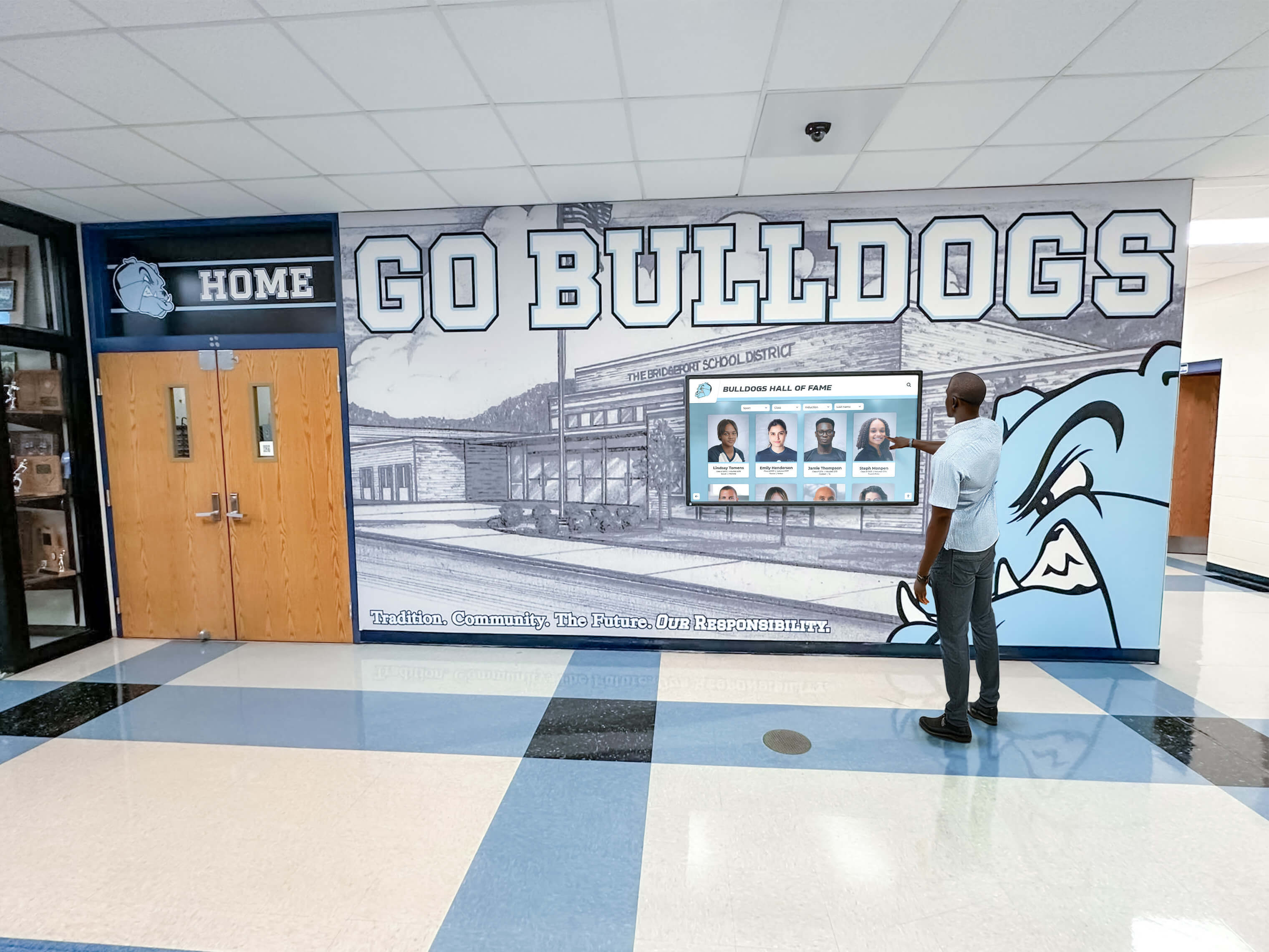
Interactive recognition displays engage students with program history, showcasing lacrosse achievements alongside other athletic accomplishments
Position-Specific Rules and Responsibilities
Lacrosse positions carry distinct equipment requirements, field restrictions, and tactical responsibilities players must understand.
Attack Positions
Offensive Specialists
Attackers focus exclusively on scoring and offensive playmaking:
- Field Location: Primarily operate in offensive third of field
- Stick Requirements: Short stick (40-42 inches for boys; 35.5-43.25 inches for girls)
- Boys’ Offsides: At least 3 attackers must remain on offensive half
- Scoring Focus: Primary responsibility for goal production through shooting and feeding
- Defensive Duties: Minimal—generally only during clears or ride situations
Elite attackers develop exceptional stick skills, including one-handed cradling, dodging techniques, quick release shots, and precise passing in traffic.
Midfield Positions
Two-Way Players
Midfielders participate in both offensive and defensive play:
- Field Coverage: Full-field responsibilities requiring superior conditioning
- Stick Options: Short stick or long stick (52-72 inches) for defensive specialists
- Transition Play: Critical for advancing ball from defense to attack and vice versa
- Versatility: Must competently shoot, pass, defend, and control ground balls
- Substitution: Boys’ lacrosse allows “on-the-fly” substitutions during play for midfielders
The conditioning demands on midfielders exceed all other positions, with players frequently sprinting full field length multiple times per shift.
Defense Positions
Defensive Specialists
Defenders protect their goal and initiate ball movement toward offense:
- Field Restrictions: Boys’ defenders must keep at least 4 players (including goalie) on defensive half
- Stick Length: Long poles (52-72 inches for boys) providing extended defensive reach
- Physical Play: Boys’ defenders frequently deliver body checks and aggressive stick checks
- Clear Responsibilities: Advancing ball from defensive zone after gaining possession
- Communication: Orchestrate defensive assignments and slide rotations

Championship trophy displays inspire lacrosse program excellence, celebrating competitive achievements
Defensive players require combination of size, speed, and tactical awareness to neutralize offensive threats while initiating transition opportunities.
Goalkeeper Position
Last Line of Defense
Goalkeepers operate under specialized rules:
- Equipment: Larger stick head (up to 15 inches wide), extensive padding, helmet with throat guard, chest protector
- Crease Protection: Opposing players cannot enter the goal crease (9-foot radius circle)
- Ball Possession in Crease: Goalkeepers possess 4 seconds to exit crease after making save
- Clearing: Often initiate offensive transition with long passes to midfield or attack
- Communication: Direct defensive positioning and call out offensive threats
Elite goalkeepers combine quick reflexes, positioning discipline, and vocal leadership directing defensive units.
Schools recognizing exceptional lacrosse goalkeepers and defensive specialists might showcase achievements through digital athletic recognition systems highlighting season statistics and career milestones.
Face-Offs and Possession Restarts
Gaining initial possession significantly impacts game outcomes, making face-off proficiency tactically critical.
Boys Lacrosse Face-Offs
Starting and Restarting Play
Face-offs occur at midfield following each goal and at the start of each quarter:
- Positioning: Two opposing players crouch at midfield with sticks parallel to midline
- Ball Placement: Referee places ball between stick heads
- Body Position: Players’ hands and feet must be positioned according to strict regulations
- Wing Players: Four additional players (two per team) positioned in wing areas await whistle
- Possession Battle: On whistle, face-off players attempt to clamp, rake, or direct the ball to teammates
Specialized face-off athletes master techniques like the clamp (pinning the ball with stick head), the rake (pulling the ball backward), and motorcycle grip (quick rotation). Many high school and college teams roster dedicated face-off specialists exclusively performing this skill.
Face-off specialists frequently train year-round developing quick-twitch reactions and technical proficiency that dramatically improve possession statistics. Teams winning 60%+ of face-offs gain enormous competitive advantages through additional offensive opportunities.
Girls Lacrosse Draws
The Draw Technique
Girls’ lacrosse uses draws rather than face-offs:
- Stick Position: Players place stick backs together with ball between pockets
- Upward Motion: On whistle, players pull sticks up and away attempting to direct ball
- Restraining Arcs: Other players must remain outside arcs until possession
- Height Requirement: Ball must reach above players’ heads to count as legal draw
- Self-Start: Player winning draw may immediately pursue the ball
Draw specialists develop wrist strength and precise technique directing the ball toward teammates positioned strategically around the restraining arcs.
Common Lacrosse Violations for Spectators to Understand
Certain violations frequently stop play, confusing spectators unfamiliar with these technical rules.
Out of Bounds
Possession After Ball Exits Field
- Boys’ Lacrosse: Ball crossing sidelines or end lines awards possession to team that didn’t last touch it
- Girls’ Lacrosse: Play continues beyond boundaries until ball becomes unplayable; specific boundary rules vary by level
- Shot Out of Bounds: Boys’ lacrosse awards ball to team with player closest to ball when it went out
Crease Violations
Goal Crease Restrictions
- Offensive Players: Cannot enter opponent’s crease at any time; doing so negates goals and results in turnover
- Defensive Players: May enter their own crease freely
- Airborne Exception: Players may dive through crease if ball is released before landing in crease
Offsides
As explained previously, offsides violations require teams maintain minimum player counts on each field half (boys’ only), resulting in turnover when violated.
Over-and-Back
Boys’ Lacrosse Possession Rule
Once offensive team advances ball completely across midfield, they cannot pass it back across midline to defensive zone. Violation results in turnover.
Warding
Illegal Use of Free Hand
Ball carriers cannot use their free hand to push away defenders. This frequently-called violation results in possession change or time penalty depending on severity.
Understanding these common violations helps spectators appreciate why officials whistle play dead and which team receives possession, dramatically improving game comprehension.
Many expanding lacrosse programs document rules education and player development through athletic record boards and digital displays showcasing season statistics and milestone achievements.
Youth Lacrosse Modified Rules
Youth programs adapt regulations for age-appropriate competition and skill development.
Age-Group Modifications
Common Youth Adjustments
U9 and U11 Boys
- No body checking allowed
- Modified stick checking restrictions
- Smaller field dimensions
- Reduced game duration
- Mandatory mouthguards and helmets
- Limited contact rules emphasizing skill development
U13 Boys
- Controlled body checking introduced
- Full field dimensions
- Complete penalty structure implemented
- Standard equipment requirements
U9 and U11 Girls
- Modified stick checking rules
- Smaller field dimensions when available
- Simplified penalty structure
- Reduced game time
- Draw modifications for consistency
U13 and U15 Girls
- Transition to standard rules
- Full free position implementation
- Complete penalty enforcement
- Standard field dimensions
Youth lacrosse emphasizes participation, skill development, and sportsmanship over aggressive physical play, with rule modifications ensuring age-appropriate competition.
Penalty Enforcement and Time-Serving
Understanding how penalties affect gameplay helps spectators appreciate strategic implications.
Personal Foul Penalties
Man-Down Situations
When officials call personal fouls:
- Penalized Player: Exits field to penalty box for 30 seconds to 3 minutes depending on infraction severity
- Man-Advantage: Opposing team gains numerical superiority (6v5 or 7v6)
- Penalty Release: Player released when penalty time expires OR opposing team scores (NCAA/youth); professional rules vary
- Penalty Clock: Visible timing displays track remaining penalty duration
Teams drill extensively on both man-up offensive sets and man-down defensive strategies, recognizing these situations create pivotal scoring opportunities.
Simultaneous Penalties
When both teams commit fouls simultaneously:
- Equal Time: If penalties equal length, teams play even strength with both players serving time
- Unequal Time: Longer penalty serves full duration while shorter penalty player released when equal
- Offsetting: Some simultaneous technical fouls simply offset without time served
Slow Whistle Technique
Girls’ lacrosse employs “slow whistle” or “advantage flag” when defensive fouls occur during offensive scoring opportunities:
- Official raises flag indicating foul but delays whistle
- Play continues allowing offensive team scoring opportunity
- If shot scores, penalty enforced from midfield restart
- If shot misses, free position awarded at foul location
This prevents defensive teams from intentionally fouling to stop dangerous offensive plays.
Programs celebrating championship lacrosse seasons often feature achievements through hall of fame recognition displays highlighting player statistics, team records, and competitive milestones.
Spectator Etiquette and Understanding
Informed spectators enhance the competitive atmosphere while supporting players appropriately.
What Spectators Should Know
Supporting Your Team Effectively
- Cheer Positively: Encourage both teams, officials, and all participants
- Understand Possession Changes: Recognize turnovers result from violations, not necessarily poor play
- Respect Officials: Referees make split-second decisions in fast-paced environment
- Learn Team Strategy: Understanding offensive sets and defensive rotations deepens appreciation
- Ask Questions: Most coaches welcome spectator questions about rules and strategy (at appropriate times)
Common Spectator Misconceptions
Clarifying Misunderstood Rules
Spectators often misinterpret:
- Stick Checks: Legal checks appear aggressive but are permitted when controlled and targeting opponent’s stick
- Crease Contact: Incidental contact near crease differs from deliberate crease violation
- Possession After Penalties: Man-up teams don’t automatically receive possession; depends on when foul occurred
- Shot Clock: Lacrosse uses possession clocks and stall warnings rather than continuous shot clocks
- Goalie Interference: Goalkeepers protected in crease but vulnerable to checks outside crease boundaries
Understanding these nuances prevents frustration when calls don’t match expectations based on other sports.
Advanced Rules for Competitive Play
As players progress to higher competition levels, additional rule complexities emerge.
Shot Clock and Stalling Rules
Maintaining Offensive Progress
Boys’ high school lacrosse implements stall warnings when teams fail to attack goal:
- Official Warning: Referee may initiate visible count requiring shot attempt within specified time
- Typical Duration: 30 seconds from warning to required shot attempt
- Shot Requirement: Team must deliver shot on goal (ball traveling toward goal requiring save)
- Violation Penalty: Failure to shoot within count results in turnover
College and professional lacrosse employ formal shot clocks (typically 60-80 seconds) requiring shot attempts within fixed timeframes.
Clear and Ride Rules
Transition Regulations
- Clearing: Defensive team has 20 seconds to advance ball across midfield after gaining possession (boys’ lacrosse)
- Riding: Offensive team pressures clearing team attempting to force turnovers
- Over-and-Back: Once cleared, ball cannot return to defensive zone
Timeout Regulations
Strategic Stoppages
- Boys’ High School: Two 90-second timeouts per half
- Girls’ High School: Two timeouts per half, one per overtime
- College: Varies by NCAA division and gender
- Dead Ball Only: Timeouts called only during stoppage, not during active play
- Positioning: Teams may discuss strategy but generally cannot leave bench area during timeouts
Understanding timeout strategy helps spectators recognize when coaches use stoppages to adjust defensive assignments, diagram offensive plays, or provide rest during crucial moments.
Athletic programs celebrating lacrosse excellence might showcase achievements through digital trophy case systems highlighting championship seasons, all-conference selections, and program records.
Building Lacrosse Knowledge Progressively
New players and spectators shouldn’t expect immediate comprehensive understanding—lacrosse knowledge develops progressively through exposure and experience.
Learning Pathway for Players
Skill and Rules Development Progression
Beginner Focus (First Season)
- Master basic stick skills: catching, throwing, cradling
- Understand field positions and basic responsibilities
- Learn fundamental rules: offsides, crease violations, out of bounds
- Develop fitness and field awareness
- Practice legal stick checking technique
Intermediate Development (Seasons 2-3)
- Position specialization and tactical understanding
- Advanced dodging, shooting, and defensive techniques
- Penalty recognition and avoidance
- Transition play and fast break situations
- Team strategies and set plays
Advanced Proficiency (Experienced Players)
- Situation-specific decision making
- Man-up and man-down strategies
- Advanced positioning and slide packages
- Face-off specialization (if applicable)
- Leadership and on-field communication
- Rules expertise including technical violations
Patient, progressive learning produces more skilled players than attempting comprehensive rules mastery before developing fundamental stick skills.
Resources for Continued Learning
Educational Materials
- USA Lacrosse: Official governing body providing rules manuals, educational videos, and coaching resources
- Local Clinics: Many programs offer rules clinics for new players, parents, and officials
- Online Video: Watching high-level competition with commentary explaining rules and strategy
- Coaching Staff: Most coaches welcome questions and provide rules education during practices
- Officials Perspective: Understanding referee positioning and calls deepens rules comprehension
Schools developing comprehensive lacrosse programs benefit from athletic recognition displays celebrating rookie achievements and player development milestones.
Celebrating Lacrosse Achievement and Program Growth
As lacrosse programs develop competitive success, recognizing player achievements reinforces program culture while inspiring future excellence.
Recognizing Lacrosse Excellence
Growing lacrosse programs achieve milestones worth celebrating:
- Championship Seasons: Conference, regional, or state tournament success
- All-Conference Selections: Individual player recognition for competitive excellence
- Program Records: Career points, single-season goals, saves records
- Academic All-Americans: Student-athletes excelling academically and athletically
- College Commitments: Players advancing to collegiate competition
- Team Milestones: Win totals, longest winning streaks, defensive shutouts
Schools with expanding lacrosse programs increasingly invest in permanent recognition through digital trophy cases and interactive displays showcasing achievement timelines, player statistics, championship seasons, and program history.
Modern Athletic Recognition Solutions
Traditional trophy cases quickly overflow as lacrosse programs generate awards, championship trophies, and individual honors across boys’ and girls’ teams. Forward-thinking athletic directors explore digital recognition solutions offering unlimited capacity, easy content updates, and engaging multimedia presentations celebrating lacrosse excellence.
Interactive touchscreen displays enable programs to showcase unlimited photos, video highlights, detailed statistics, and program history without physical space constraints. Families and alumni can explore comprehensive achievement databases highlighting every all-conference selection, championship season, and record-breaking performance in school history.
Programs investing in comprehensive athletic recognition systems create environments inspiring future athletic excellence while honoring past achievements appropriately.
Conclusion: From Confusion to Comprehension
Lacrosse rules initially seem complex, but systematic understanding transforms confusion into appreciation for the sport’s unique blend of athleticism, strategy, and skill. Whether you’re a player preparing for your first season, a parent supporting a student-athlete, or a spectator attending your inaugural game, foundational rules knowledge dramatically enhances your lacrosse experience.
The critical differences between boys’ and girls’ lacrosse—contact rules, equipment requirements, field boundaries, and penalty structures—reflect distinct competitive philosophies worthy of equal respect and appreciation. Understanding position-specific responsibilities, common violations, penalty enforcement, and game duration helps both players and spectators follow gameplay while appreciating tactical nuances.
Lacrosse knowledge develops progressively through participation and observation. Patient learning, asking questions, and consistent exposure transform newcomers into informed participants who understand why officials make calls, recognize strategic decisions, and appreciate exceptional individual performances within team contexts.
As lacrosse continues rapid growth across high schools and communities nationwide, comprehensive rules education ensures new participants—whether players, coaches, officials, or spectators—contribute to positive competitive environments celebrating athletic excellence, sportsmanship, and the unique character that makes lacrosse America’s fastest-growing team sport.
Ready to celebrate your lacrosse program’s achievements with modern recognition solutions? Discover how Rocket Alumni Solutions’ interactive digital displays help athletic programs showcase unlimited lacrosse achievements, championship seasons, and player milestones through engaging touchscreen technology that inspires current and future student-athletes.