The Easiest Touchscreen Solution




Live Example: Rocket Alumni Solutions Touchscreen Display
Interact with a live example (16:9 scaled 1920x1080 display). All content is automatically responsive to all screen sizes and orientations.
Lacrosse programs continue their rapid expansion across high schools and youth organizations nationwide, making it one of America’s fastest-growing team sports. Athletic directors adding lacrosse to their program offerings face immediate questions about field requirements, setup specifications, and facility planning. Understanding precise lacrosse field dimensions ensures compliance with governing body regulations while creating safe, functional playing surfaces for athletes at every competitive level.
Yet many administrators discover that lacrosse field requirements differ significantly across competition formats—men’s lacrosse, women’s lacrosse, youth modifications, and box lacrosse all operate with distinct dimensional specifications and marking requirements. Programs that assume one universal standard quickly encounter compliance issues during league certification, tournament hosting, or facility inspections.
This comprehensive guide provides athletic directors, facilities managers, and lacrosse program coordinators with authoritative specifications for lacrosse field dimensions across all competitive levels. From official measurements and boundary markings to goal specifications and multi-use field considerations, these details ensure your program operates with proper facilities supporting athlete development and regulatory compliance.
Effective lacrosse facility planning requires understanding how field dimensions vary across different competition formats while considering practical factors like existing field availability, multi-sport usage, and budget constraints. Programs that invest time understanding precise specifications avoid costly mistakes while creating playing environments that support skill development and competitive success.

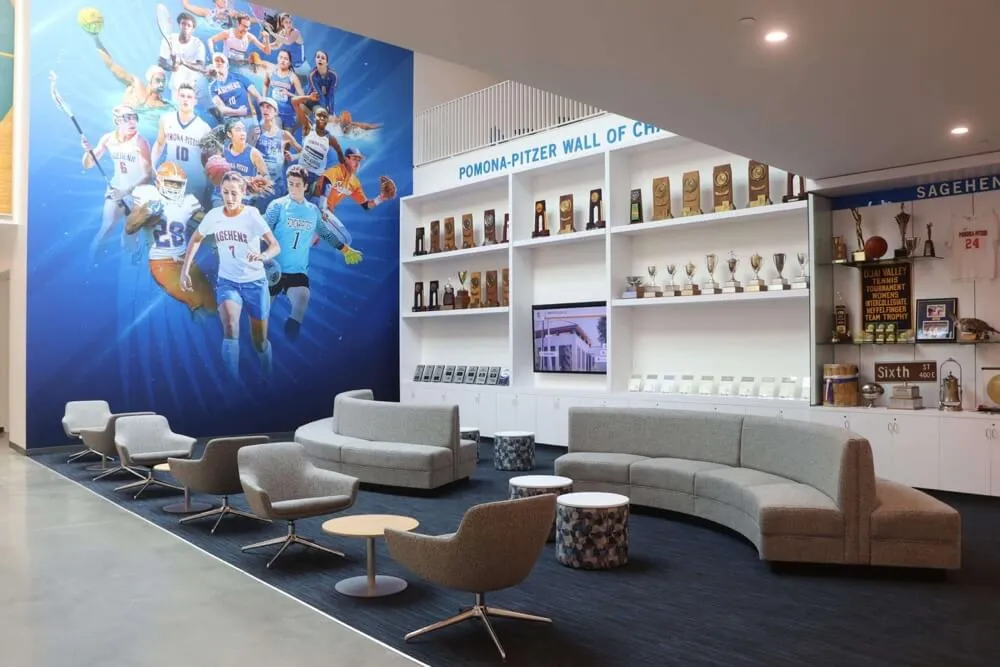
Athletic facilities showcasing program achievements create environments celebrating lacrosse excellence alongside field development
Understanding Official Lacrosse Field Dimensions
Lacrosse field specifications follow strict standards established by governing organizations ensuring consistent playing conditions across leagues and competitive levels.
Men’s Field Lacrosse Dimensions
According to USA Lacrosse, the national governing body for men’s and women’s lacrosse, men’s field lacrosse operates on precisely defined dimensions:
Standard Field Size
- Length: 110 yards (330 feet)
- Width: 60 yards (180 feet)
- Total playing area: 6,600 square yards
Men’s lacrosse fields match the approximate dimensions of American football fields in length, though they extend 10 yards wider on each sideline. This sizing makes football fields viable for lacrosse conversion with appropriate boundary modifications.
Critical Field Zones
- Defensive area: 35 yards from end line
- Wing area: 20 yards on each side of midfield line
- Offensive area: 35 yards from opposite end line
- Goal crease: 9-foot radius circle around each goal
- Substitution area: Designated zones at midfield on sideline
Goal Placement and Specifications
- Goal position: 15 yards from each end line, centered
- Goal size: 6 feet high by 6 feet wide
- Goal depth: 7 feet from front to back (pyramid style)
- Goal posts: 2-inch diameter round posts
- Crossbar: 2-inch diameter round bar
The National Collegiate Athletic Association (NCAA) mandates these exact specifications for all collegiate men’s lacrosse competition, with high school programs typically following identical standards set by the National Federation of State High School Associations (NFHS).

Modern recognition displays honor lacrosse achievements alongside other athletic programs, celebrating competitive success
Women’s Field Lacrosse Dimensions
Women’s lacrosse operates on different field dimensions reflecting the sport’s distinct rules and playing style:
Standard Field Size
- Recommended length: 110 yards (330 feet) to 140 yards (420 feet)
- Recommended width: 60 yards (180 feet) to 70 yards (210 feet)
- Boundaries: No hard boundaries required; playing area extends beyond marked field
- Minimum safety zone: 10 yards beyond marked boundaries (when possible)
Women’s lacrosse traditionally operates without rigid out-of-bounds lines, with play continuing beyond marked field boundaries until the ball crosses designated restraining lines or becomes unplayable. This flexibility allows programs to adapt existing fields while maintaining regulation play.
Goal and Critical Area Specifications
- Goal position: 90-100 feet from each end boundary (varies by field)
- Goal size: 6 feet high by 6 feet wide (identical to men’s)
- Goal circle: 8.5-foot radius around each goal (smaller than men’s crease)
- 12-meter arc: 12-meter semicircle fan extending from goal circle
- 8-meter arc: 8-meter semicircle within the 12-meter arc
- Center circle: 10-yard radius at midfield
Women’s lacrosse field markings emphasize defensive positioning rules and free position opportunities rather than the hard boundaries defining men’s lacrosse.
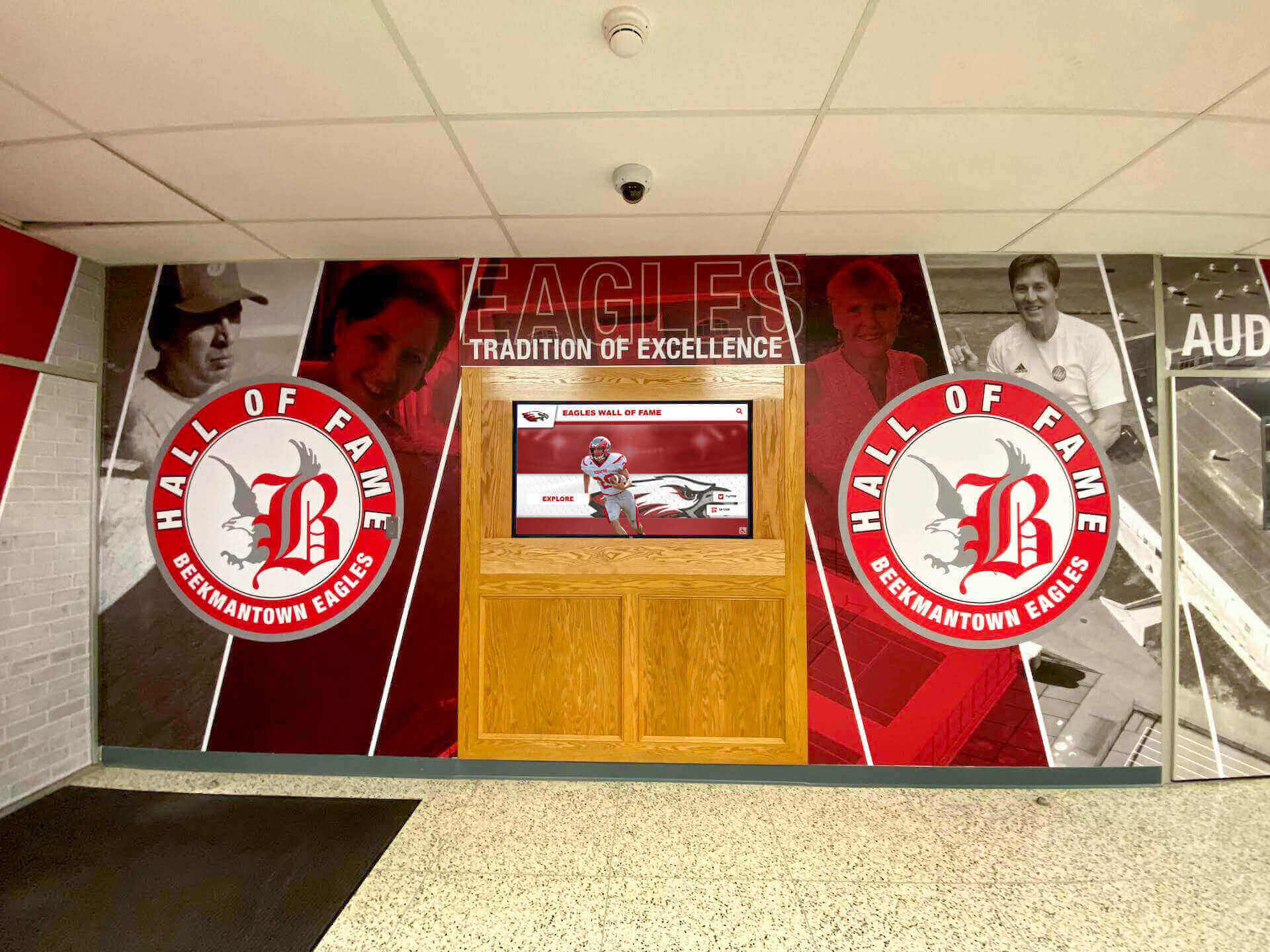
Lobby displays provide ideal placement for recognizing lacrosse program achievements and championship seasons
Youth Lacrosse Field Dimensions
Youth lacrosse organizations modify field dimensions creating age-appropriate playing environments supporting skill development:
Small-Sided Youth Lacrosse
USA Lacrosse youth development programs emphasize small-sided games for younger age groups:
U9 and U11 Field Dimensions
- Field length: 60-70 yards
- Field width: 35-45 yards
- Goal size: 6 feet by 6 feet (standard) or 4 feet by 4 feet (modified)
- Goal crease: 9-foot radius (men’s style) or 8.5-foot radius (women’s style)
- Player format: 7v7 or 9v9 (smaller than regulation 10v10)
Small-sided modifications increase touches per player while reducing field coverage requirements, allowing younger athletes to develop fundamental skills without overwhelming space management demands.
U13 and U15 Transition Dimensions
- Field length: 80-110 yards (progressive toward full size)
- Field width: 45-60 yards (progressive toward full size)
- Goal size: 6 feet by 6 feet (standard size)
- Player format: 10v10 (full team size)
- Boundary enforcement: Progressive introduction of out-of-bounds rules
Middle school and early high school programs typically operate on fields approaching regulation dimensions, with exact sizing depending on available facility space and league requirements.
Multi-Age Field Considerations
Programs serving multiple age groups benefit from flexible field configurations:
Shared Field Solutions
- Multiple small fields marked within one regulation field
- Removable boundary markers enabling size adjustments
- Portable goals supporting various configurations
- Color-coded line markings distinguishing age-specific boundaries
- Scheduled field usage optimizing space utilization
Schools implementing comprehensive athletic programs can reference approaches used in capturing athletic moments across multiple field setups and configurations.
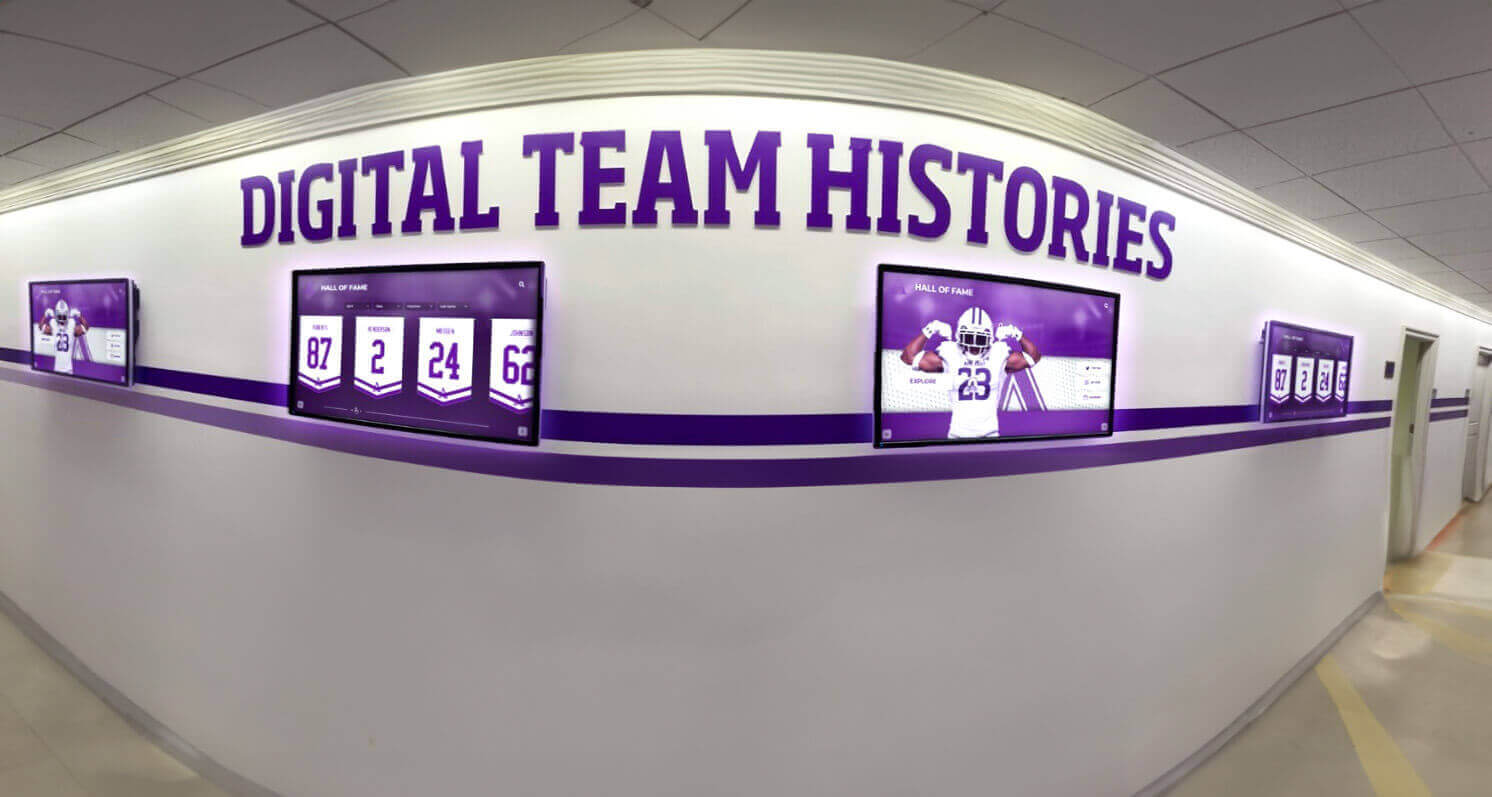
Digital displays document lacrosse team histories, preserving championship seasons and roster information
Box Lacrosse Dimensions and Requirements
Box lacrosse (also called indoor lacrosse or boxla) operates in enclosed arenas with dramatically different specifications:
Standard Box Lacrosse Arena
Playing Surface Dimensions
- Length: 180-200 feet
- Width: 80-90 feet
- Playing surface: Sport court, concrete, or artificial turf
- Boards: 3-4 feet high surrounding entire playing area
- Glass/mesh: Above boards for spectator protection
Box lacrosse evolved from ice hockey arenas, typically utilizing hockey rinks during off-season with boards and protective glass already installed.
Goal and Crease Specifications
- Goal size: 4 feet high by 4 feet wide (smaller than field lacrosse)
- Goal crease: 9-foot radius semicircle
- Crease marking: Distinct color from playing surface
- Goal placement: Typically 12-15 feet from end boards
Box lacrosse’s enclosed environment and smaller goals create faster-paced play emphasizing quick ball movement and close-quarters skills distinct from field lacrosse dynamics.
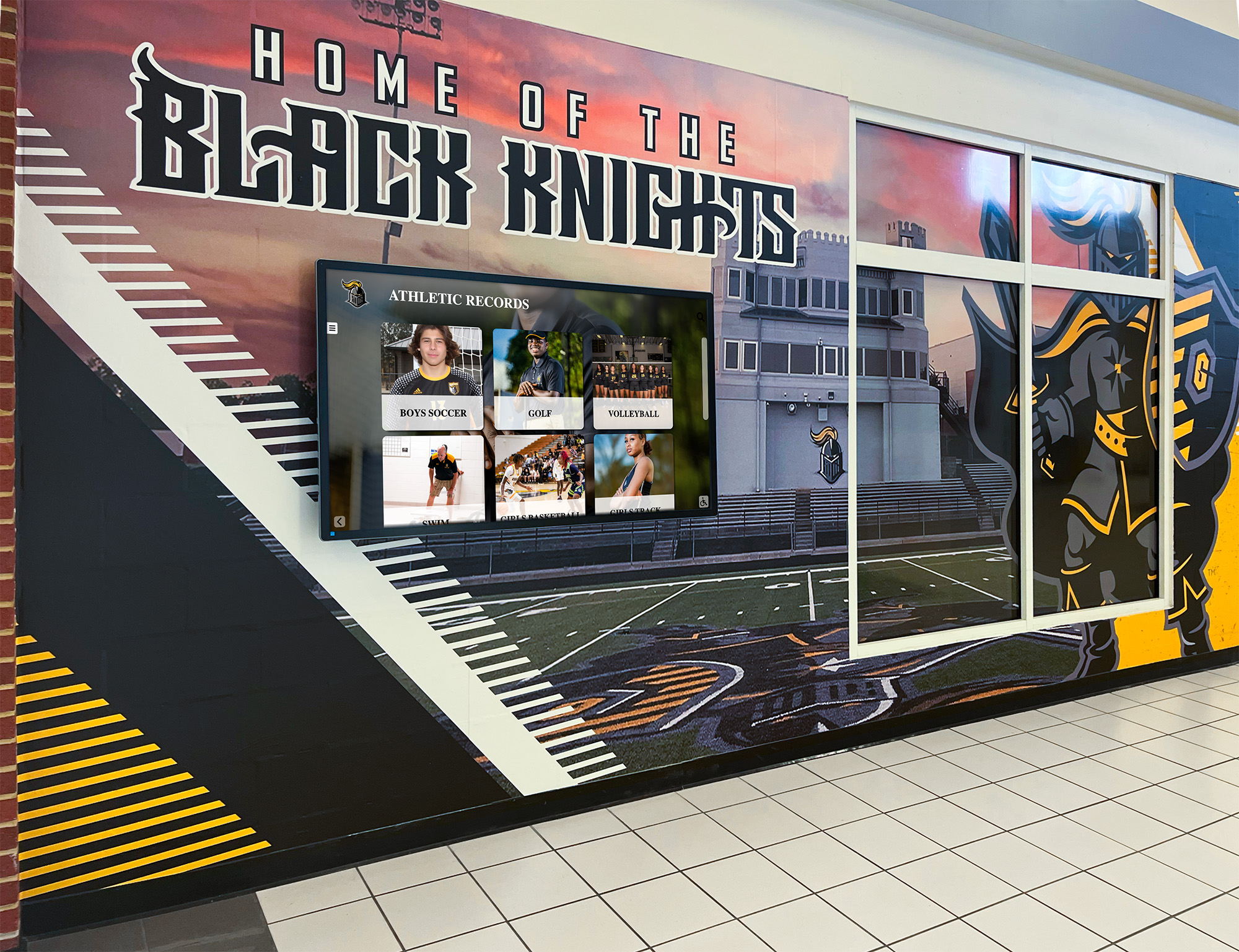
Hallway installations celebrate lacrosse records alongside other sports, validating program importance and achievement
Field Markings and Line Specifications
Proper field marking ensures regulatory compliance while supporting fair play and athlete safety.
Boundary and Zone Lines
Men’s Lacrosse Line Markings
- Sidelines: 60 yards apart, running full field length
- End lines: 110 yards apart, running full field width
- Midfield line: Dividing field into equal halves
- Wing lines: 20 yards on each side of midfield, parallel to sidelines
- Restraining lines: 35 yards from each end line
- Goal line extended: Through goal, perpendicular to sidelines
- Substitution boxes: Marked areas at midfield on each sideline
Line Width and Material
- Standard line width: 4 inches
- Line material: Non-toxic field paint or removable field tape
- Line color: White (contrasting with turf/grass)
- Visibility requirement: Clearly visible from 50 yards in all conditions
Permanent painted lines work best for dedicated lacrosse fields, while removable field tape enables multi-sport field configurations without conflicting line patterns.
Women’s Lacrosse Specific Markings
Women’s lacrosse requires additional arc markings for positioning rules:
Defensive Zone Markings
- Goal circle: 8.5-foot radius around goal
- 8-meter arc: 8 meters from goal center
- 12-meter arc: 12 meters from goal center
- Hash marks: Positioning marks for free positions
- Center circle: 10-yard radius at midfield
- Restraining lines: 30 yards from each goal (when field allows)
Women’s lacrosse fields emphasize positioning zones rather than rigid boundaries, with marking requirements focused on free position administration and defensive positioning rules.
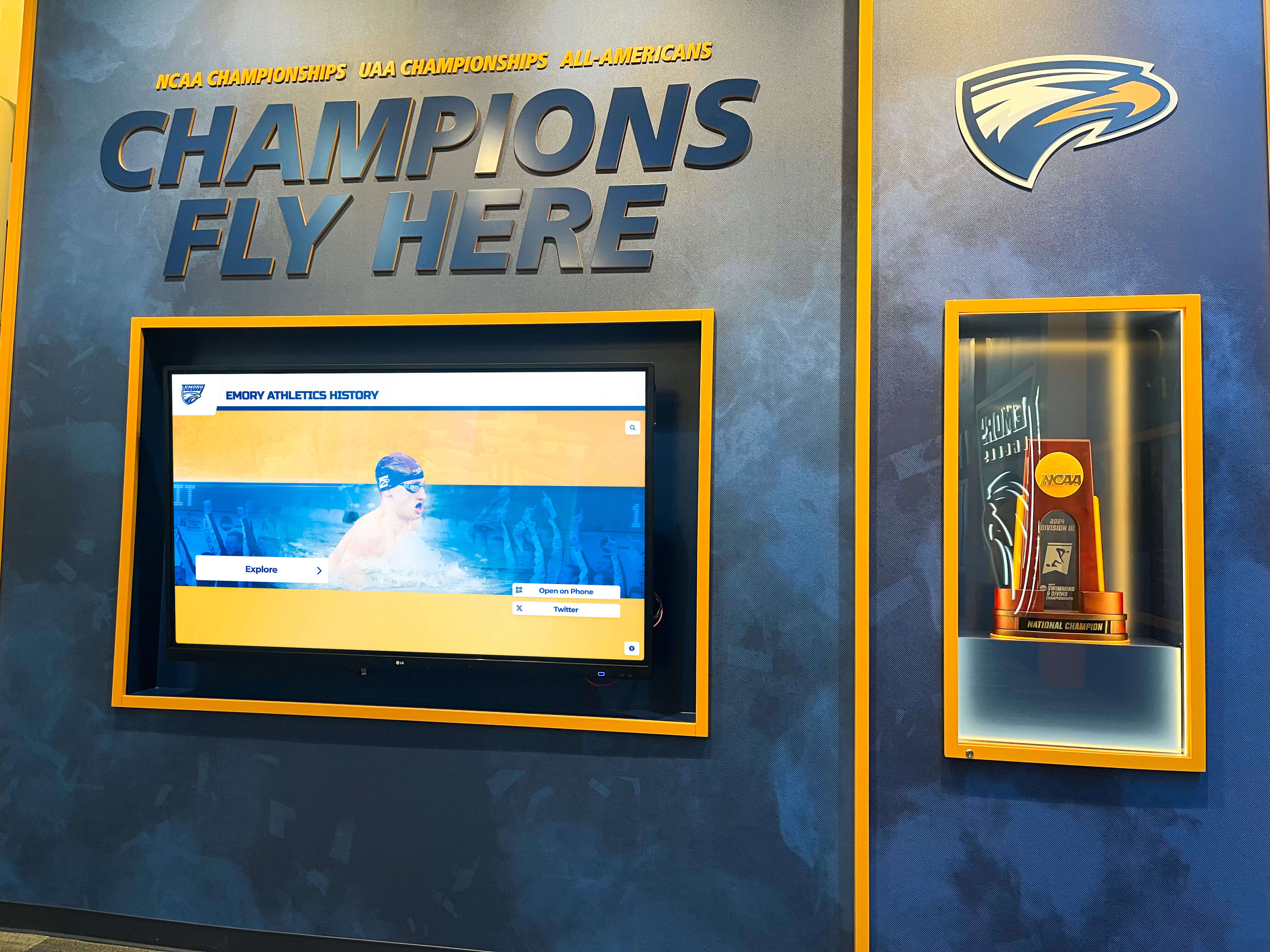
Championship recognition displays honor lacrosse titles alongside other athletic achievements, celebrating program excellence
Goal Equipment Specifications
Lacrosse goals must meet precise specifications ensuring player safety and consistent play:
Goal Construction Requirements
Frame Specifications
- Post and crossbar diameter: 2 inches (round)
- Frame material: Metal (steel or aluminum), wood, or PVC
- Frame color: Typically white or orange (high visibility)
- Connection method: Secure welded or bolted joints
- Stability: Anchored to ground preventing tipping during play
Net Requirements
- Net material: Weather-resistant nylon or polyethylene
- Mesh size: 1.5-2 inch squares (prevents ball passage)
- Net attachment: Secured to frame at all connection points
- Net depth: 7 feet from goal line to back of net
- Net tension: Adequate tension preventing sagging or ball retention
Professional-grade lacrosse goals typically cost $300-800 per goal depending on construction quality and portability features, with schools requiring minimum two goals plus practice goals for comprehensive program operation.
Goal Crease Surface Treatment
The goal crease area requires distinct marking for referee and player identification:
Crease Marking Standards
- Paint/material: Contrasting color from field surface (typically white)
- Line width: 2-4 inches clearly visible
- Circle precision: Exact 9-foot radius (men’s) or 8.5-foot radius (women’s)
- Surface condition: Smooth, level surface without hazards
- Maintenance: Regular repainting maintaining clear visibility
Goal crease violations represent common infractions in lacrosse, making clearly visible crease markings essential for proper game administration.
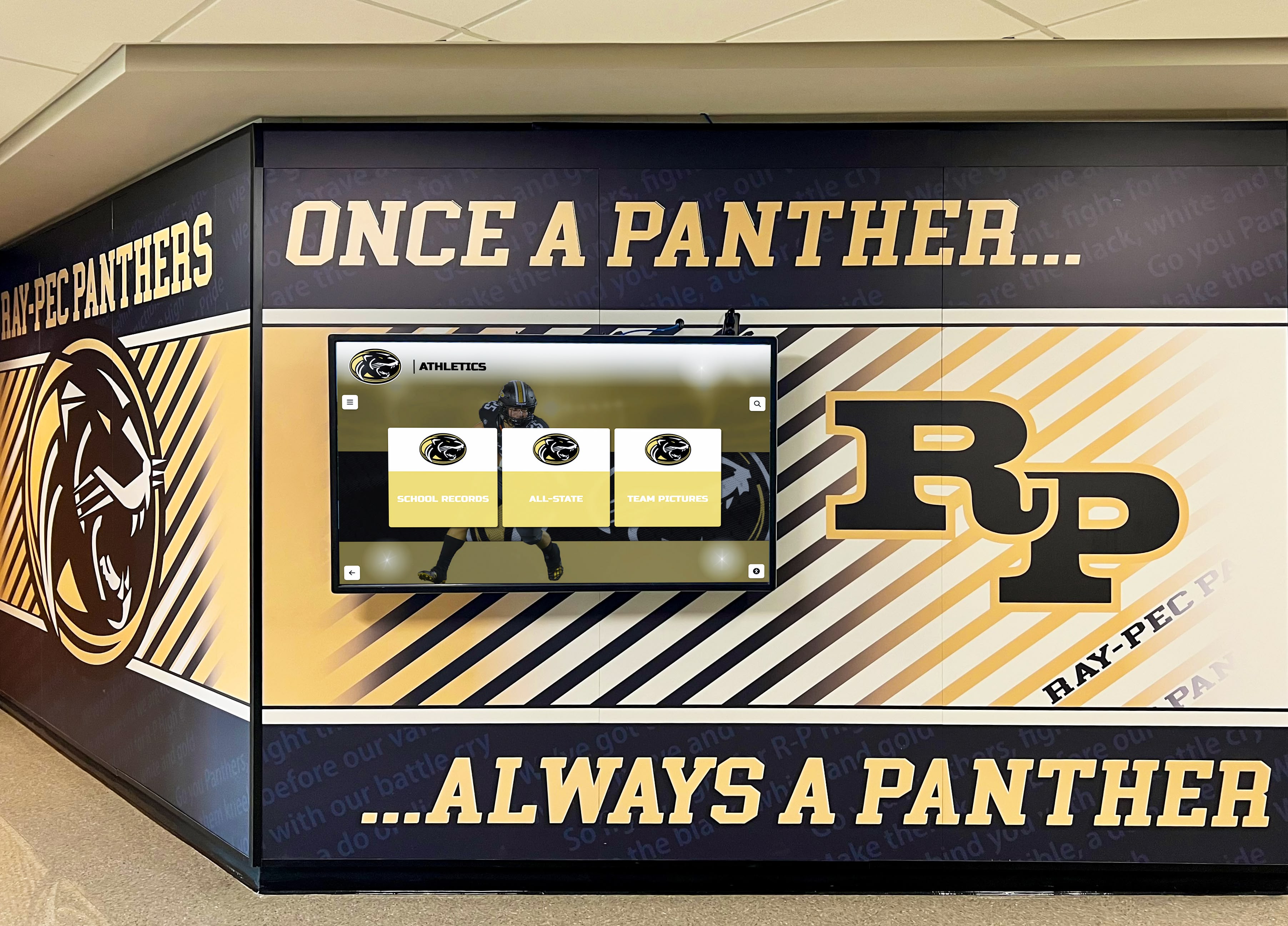
Athletic hallways integrate lacrosse recognition with comprehensive multi-sport displays celebrating diverse programs
Multi-Use Field Planning and Considerations
Most schools utilize fields for multiple sports, requiring strategic planning accommodating diverse dimensional requirements:
Football Field Conversion to Lacrosse
Football fields provide natural lacrosse field conversion opportunities:
Dimensional Compatibility
- Football field: 120 yards by 53.3 yards (including end zones)
- Men’s lacrosse: 110 yards by 60 yards
- Length adjustment: Use area between goal lines (100 yards) plus 5 yards into each end zone
- Width extension: Add 3.35 yards beyond each sideline (challenging on constrained fields)
Conversion Challenges
- Width constraints on fields without adequate surrounding space
- Conflicting line markings creating visual confusion
- Goal storage and setup requirements
- Scheduling coordination between football and lacrosse seasons
- Field wear from combined usage
Athletic directors can reference resources on honoring educators when celebrating coaches who manage multi-sport field configurations successfully.
Soccer Field Adaptation
Soccer fields offer another common lacrosse conversion option:
Dimensional Comparison
- Regulation soccer: 110-120 yards by 70-80 yards
- Men’s lacrosse: 110 yards by 60 yards
- Women’s lacrosse: 110-140 yards by 60-70 yards
Soccer fields typically provide adequate length for lacrosse while offering sufficient width, though goal placement and crease marking require temporary additions since soccer goals differ in size and position.
Shared Field Solutions
- Permanent soccer goals with portable lacrosse goals
- Removable field tape for lacrosse-specific markings
- Seasonal line painting rotation
- Coordinated practice and game scheduling
- Field maintenance planning addressing combined usage wear
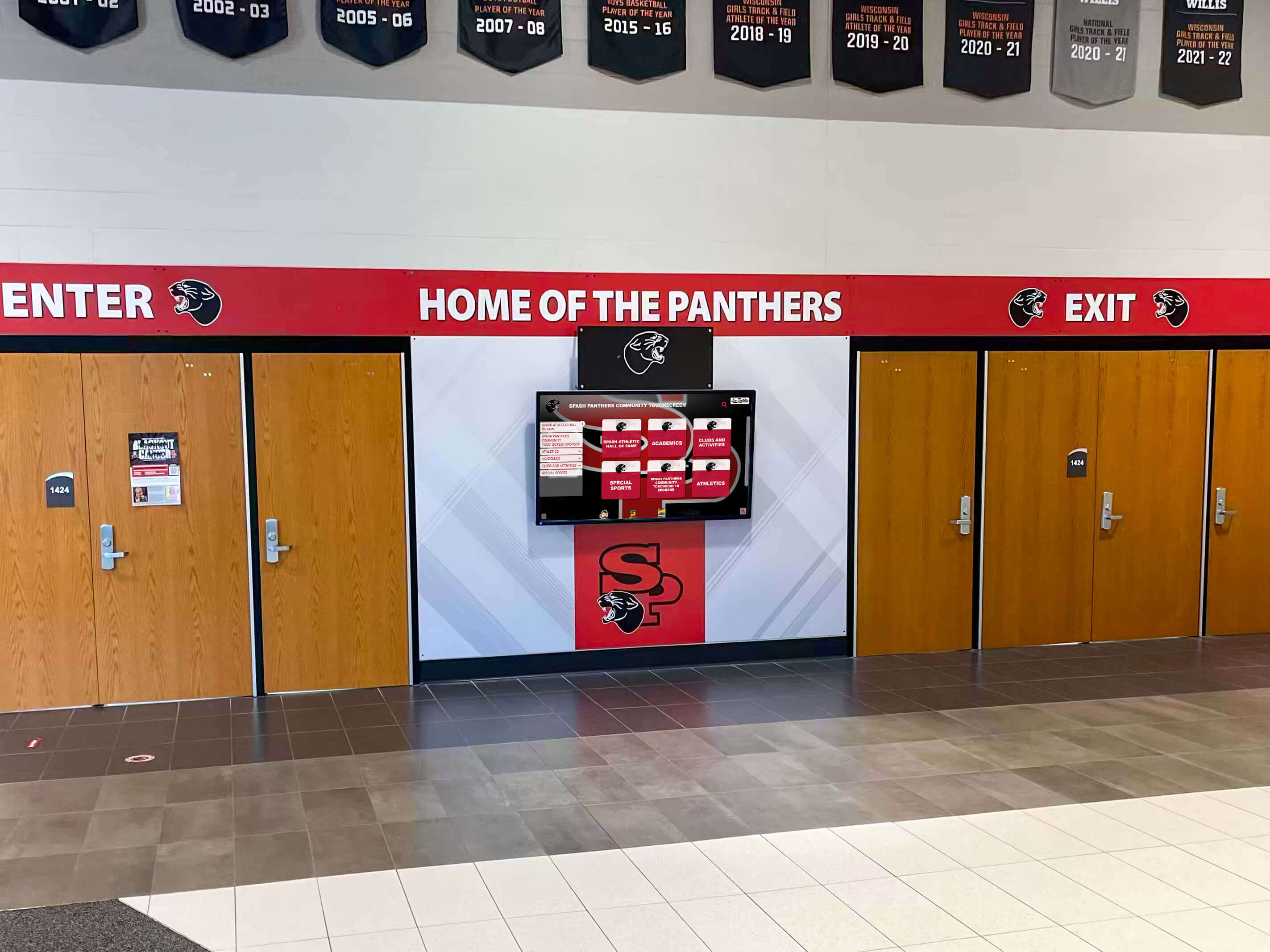
Facility entrances showcase lacrosse program pride through digital displays welcoming players, families, and visitors
Turf vs. Natural Grass Considerations
Surface selection significantly impacts lacrosse field performance and maintenance:
Artificial Turf Advantages
- Consistent playing surface regardless of weather
- Reduced maintenance requirements
- Extended usability during wet conditions
- Multi-sport line marking flexibility
- Longer season availability
Natural Grass Benefits
- Lower initial installation cost
- Traditional playing feel
- Reduced surface temperature in hot weather
- More forgiving impact surface
- Environmental benefits
According to the Sports Turf Managers Association, artificial turf fields cost $600,000-$1,200,000 for initial installation but eliminate ongoing maintenance expenses while supporting year-round multi-sport usage—a significant consideration for programs sharing facilities across multiple athletic offerings.
Setting Up a New Lacrosse Field
Athletic directors establishing new lacrosse programs should follow systematic approaches ensuring compliant, functional playing surfaces:
Field Layout and Measurement Process
Step-by-Step Setup
Site Selection and Preparation
- Identify available space meeting minimum dimensional requirements
- Evaluate drainage, grading, and surface conditions
- Confirm adequate safety zones beyond boundaries
- Assess spectator viewing and access considerations
- Plan goal storage and equipment areas
Boundary Establishment
- Measure and stake field corners ensuring precise dimensions
- Establish straight sidelines and end lines
- Verify right angles at corners (90 degrees)
- Mark restraining lines and midfield line
- Double-check all measurements before permanent marking
Goal Placement and Marking
- Position goals precisely 15 yards from end lines (men’s)
- Center goals between sidelines
- Mark goal creases with precise radius measurements
- Establish goal line extended markings
- Verify goal stability and anchoring
Zone and Arc Marking
- Paint defensive and offensive restraining areas
- Mark wing areas (men’s lacrosse)
- Create arc markings for women’s lacrosse
- Establish center circle and faceoff areas
- Add substitution box markings

School lobby installations combine traditional murals with digital recognition, celebrating lacrosse achievements prominently
Budget Planning for Field Development
Essential Costs
- Field grading and preparation: $5,000-15,000 (natural grass)
- Turf installation: $600,000-1,200,000 (artificial surface)
- Goals (2 regulation + 2 practice): $1,500-4,000
- Field lining equipment/materials: $500-2,000 annually
- Boundary fencing (if required): $15-30 per linear foot
- Lighting (for evening practice/games): $100,000-300,000
Optional Enhancements
- Spectator bleachers: $5,000-50,000
- Team benches and equipment storage: $2,000-8,000
- Scoreboard: $3,000-25,000
- Field signage and branding: $1,000-5,000
- Irrigation system: $25,000-100,000 (natural grass)
Athletic directors can explore academic recognition approaches that balance quality implementation with available resources, applying similar strategic thinking to facility development.
Field Maintenance and Long-Term Care
Proper maintenance ensures lacrosse fields remain safe, playable, and regulation-compliant throughout seasons and years:
Regular Maintenance Requirements
Natural Grass Fields
- Mowing: 2-3 times weekly during growing season (2.5-3 inch height)
- Irrigation: 1-1.5 inches water weekly (natural rainfall plus supplemental)
- Fertilization: 3-4 applications annually following soil tests
- Aeration: Twice annually (spring and fall)
- Overseeding: Annual or biannual depending on wear patterns
- Line marking: Weekly during season (paint or removable materials)
Artificial Turf Fields
- Grooming: Weekly brushing redistributing infill
- Debris removal: Daily or after heavy use
- Infill replenishment: Annual inspection and addition as needed
- Seam inspection: Monthly checks ensuring integrity
- Deep cleaning: Annual professional cleaning removing contaminants
- Line maintenance: As needed (painted or sewn lines)
Seasonal Preparation
Pre-Season Setup
- Field measurement verification ensuring regulation compliance
- Line remarking establishing clear boundaries
- Goal inspection and repair
- Surface repair addressing divots, worn areas, or damage
- Safety zone clearance removing hazards
- Equipment inventory and replacement planning
Schools celebrating athletic achievements can incorporate student recognition traditions during field dedication ceremonies and season kickoff events.
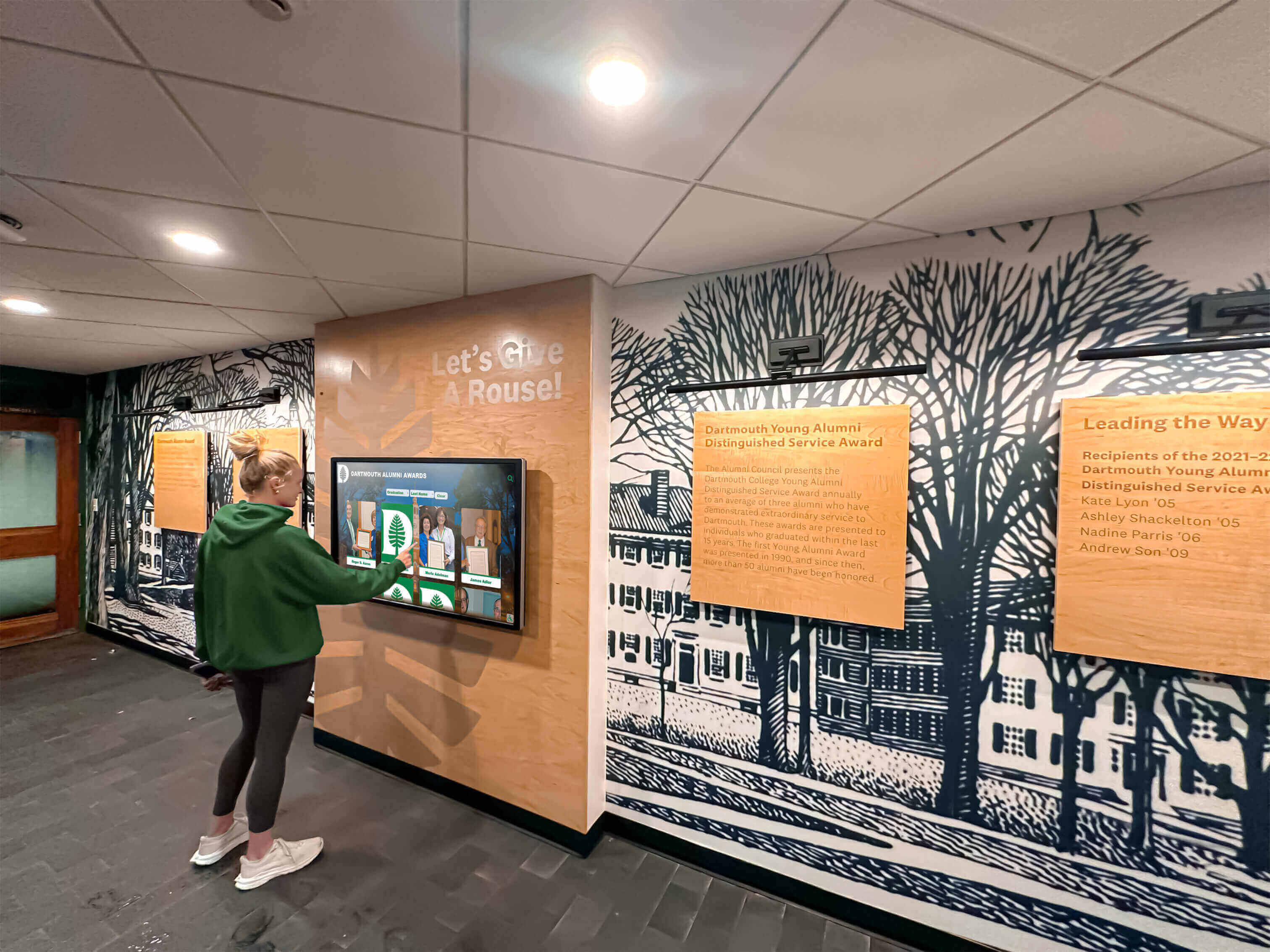
Interactive displays engage students exploring lacrosse program history and current season achievements
Celebrating Lacrosse Achievement Through Recognition
Proper field facilities support lacrosse program development, while comprehensive recognition systems celebrate the achievements those facilities enable:
Building Lacrosse Program Legacy
Achievement Documentation
- Championship season records and tournament success
- Individual player statistical milestones
- Team records and performance benchmarks
- Coaching achievements and program builders
- Conference titles and playoff appearances
- Scholar-athlete recognition balancing academics and athletics
Programs implementing digital recognition displays create unlimited capacity showcasing lacrosse achievements alongside other athletic programs without space constraints limiting traditional trophy cases.
Modern Recognition Solutions
Digital trophy case systems provide comprehensive lacrosse recognition:
Recognition Capabilities
- Unlimited player and team profiles without physical space constraints
- Statistical leaderboards tracking program records across seasons
- Photo galleries and highlight video integration
- Searchable databases enabling instant player lookup
- Mobile accessibility extending recognition beyond campus
- Remote content updates requiring no technical expertise
Solutions like Rocket Alumni Solutions offer platforms specifically designed for athletic recognition, with cloud-based management enabling coaches and athletic directors to update lacrosse achievements instantly without construction projects or engraving delays.
Schools can reference comprehensive approaches used in baseball recognition programs and apply similar frameworks to growing lacrosse programs.

Digital recognition kiosks provide professional presentations honoring lacrosse achievements with unlimited showcase capacity
Hosting Lacrosse Tournaments and Events
Properly dimensioned fields enable schools to host tournaments, generating revenue while raising program profiles:
Tournament Hosting Requirements
Field Specifications
- Regulation dimensions meeting governing body standards
- Multiple fields supporting concurrent games (preferred)
- Adequate spectator areas and amenities
- Parking accommodating visiting teams and families
- Concessions and restroom facilities
- Medical/athletic training access
Operational Considerations
- Tournament scheduling and bracket management
- Field maintenance between games
- Referee and officials coordination
- Scoring and statistics management
- Weather contingency planning
- Team check-in and equipment inspection areas
Tournament hosting demonstrates program commitment while creating recruiting visibility and community engagement opportunities. Schools can leverage approaches used in successful homecoming events to create memorable tournament experiences.
Safety Considerations and Field Inspections
Regular safety inspections ensure lacrosse fields protect athletes from preventable injuries:
Pre-Season Safety Audit
Critical Inspection Areas
- Goal stability and anchoring security
- Net condition and attachment integrity
- Field surface hazards (holes, rocks, debris)
- Boundary fencing condition and height
- Safety zone clearance beyond boundaries
- Spectator area separation from playing surface
- Emergency access routes and medical station locations
Environmental Hazards
- Drainage issues creating standing water
- Uneven terrain or sudden grade changes
- Sprinkler heads or irrigation equipment
- Tree roots, stumps, or landscape features
- Adjacent roadways or parking areas
- Inadequate lighting for evening events
Ongoing Risk Management
Weekly Checks During Season
- Goal inspection ensuring stability
- Crease marking visibility
- Boundary line clarity
- Playing surface condition
- Equipment storage security
- Weather-related damage assessment
Programs prioritizing safety create environments where athletes focus on skill development rather than field hazards, while comprehensive risk management protects schools from liability exposure.
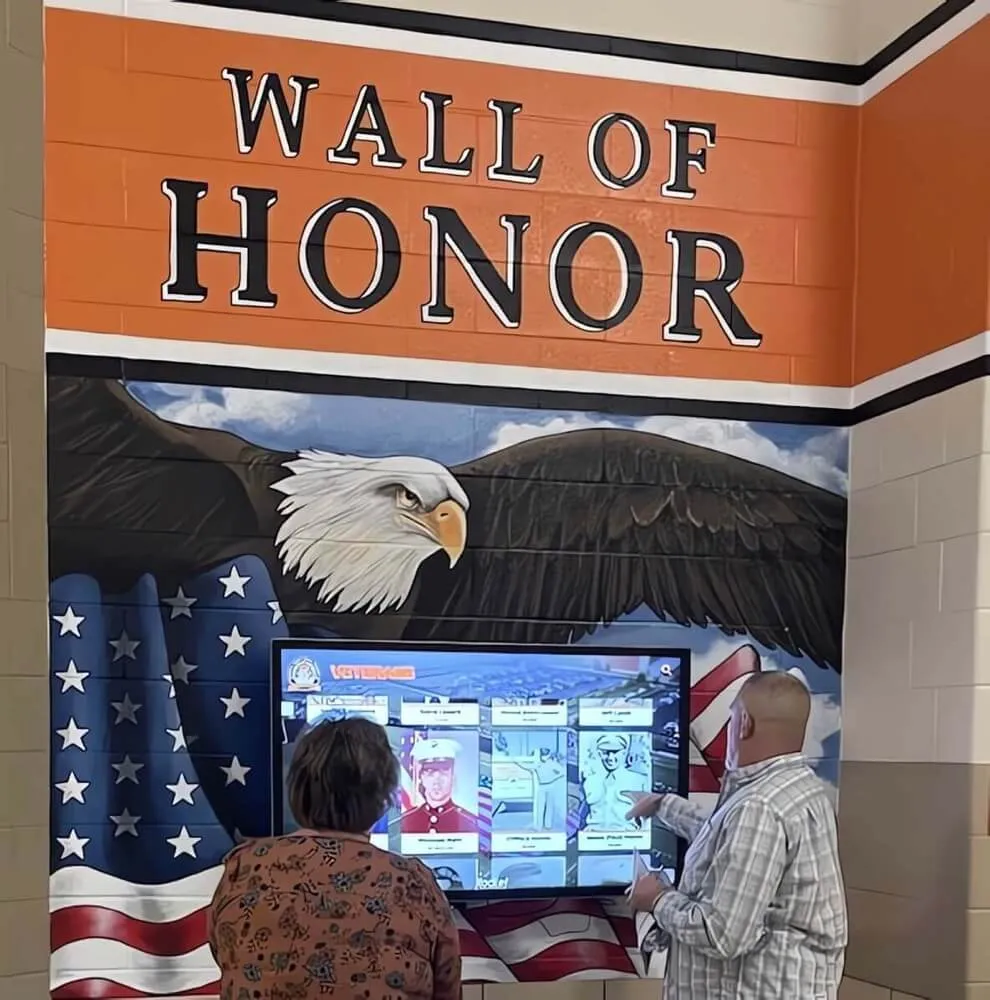
Recognition walls honor lacrosse program dedication while celebrating athletic excellence and team achievements
Technology Integration and Field Management
Modern technology streamlines lacrosse field management and program administration:
Digital Field Management Tools
Scheduling and Coordination Software
- Practice and game calendar management
- Multi-sport field usage coordination
- Maintenance scheduling and tracking
- Weather monitoring and field condition updates
- Communication platforms for teams and families
Performance and Analytics Integration
- Game statistics and performance tracking
- Video analysis and highlight compilation
- Recruiting profile development
- Player development progression documentation
Schools implementing comprehensive programs can apply lessons from preserving institutional archives to lacrosse program documentation and achievement preservation.
Lacrosse Growth and Program Development
Understanding field dimensions represents just one component of successful lacrosse program development:
Program Expansion Considerations
Growth Indicators Supporting Field Investment
- Increasing youth participation in feeder programs
- Demonstrated student interest through surveys or information sessions
- Coaching staff availability and expertise
- Budget allocation for equipment and operations
- Conference or league affiliation opportunities
- Community support and volunteer engagement
Competitive Positioning Lacrosse programs benefit from the sport’s recognition as a competitive athletic pursuit requiring similar facilities planning, coaching development, and athlete recognition as traditional sports offerings.

Alumni recognition systems connect current lacrosse programs with accomplished former players and program supporters
Compliance and Regulatory Considerations
Athletic directors must ensure lacrosse field specifications meet all applicable governing body requirements:
Governing Body Standards
Key Organizations Setting Standards
- USA Lacrosse: National governing body setting youth through adult standards
- NCAA: Collegiate lacrosse regulations (Division I, II, III)
- NFHS: High school lacrosse rules and specifications
- State athletic associations: Local variations and interpretations
- Conference and league requirements: Specific competitive level standards
Certification and Inspection Many leagues require field certification before hosting sanctioned competitions:
- Formal dimension verification by league officials
- Goal specification compliance confirmation
- Safety zone adequacy assessment
- Field marking accuracy verification
- Surface condition evaluation
- Documentation submission confirming standards adherence
Regular communication with league administrators ensures ongoing compliance as rules evolve and standards update over time.
Conclusion: Building Excellence Through Proper Facilities
Lacrosse field dimensions represent foundational elements enabling program success, athlete development, and competitive achievement. Athletic directors who invest time understanding precise specifications across men’s, women’s, youth, and box lacrosse formats create facilities supporting compliant, safe, and engaging playing environments for athletes at every level.
The dimensional standards explored in this guide provide comprehensive frameworks for field development serving diverse program needs and competitive contexts. From official measurements and marking requirements to multi-use planning and maintenance protocols, these specifications ensure your lacrosse program operates with facilities meeting regulatory standards while maximizing limited space and budgets.
Celebrate Your Lacrosse Program's Achievements
While proper field dimensions support athletic competition, modern digital recognition displays celebrate the achievements those facilities enable. Discover how schools nationwide showcase lacrosse accomplishments alongside all athletic programs through interactive displays offering unlimited capacity, engaging presentations, and simple remote management that traditional trophy cases cannot match.
Explore Recognition SolutionsField development projects succeed when administrators balance ideal specifications against practical constraints including existing space, multi-sport usage requirements, budget limitations, and long-term maintenance capabilities. Start with clear understanding of governing body requirements for your competitive level, then adapt those standards to available resources while maintaining regulatory compliance and athlete safety as non-negotiable priorities.
Programs sharing facilities across multiple sports benefit from removable marking systems, portable goal solutions, and coordinated scheduling that maximizes field utilization while respecting each sport’s specific requirements. Investment in quality artificial turf may initially seem costly but provides long-term value through year-round availability, reduced maintenance, and multi-sport flexibility that natural grass cannot match.
As lacrosse continues its remarkable growth trajectory across high schools and youth organizations nationwide, athletic directors establishing new programs position their schools at the forefront of America’s fastest-growing team sport. Proper field development creates foundations supporting that growth while demonstrating institutional commitment to comprehensive athletic offerings serving diverse student interests.
Your lacrosse program deserves facilities reflecting the dedication, skill, and competitive spirit that define this dynamic sport. With precise dimensional knowledge, strategic planning, and attention to regulatory requirements, you can create playing environments where athletes develop skills, compete successfully, and build the achievements worthy of lasting recognition throughout your athletic program’s history.
Recognition of those achievements extends beyond game outcomes to celebrate the complete lacrosse experience—from modern donor walls honoring supporters who fund field development, to digital displays showcasing player accomplishments and championship seasons that inspire future generations of lacrosse athletes across your program’s continuing growth and success.
Live Example: Rocket Alumni Solutions Touchscreen Display
Interact with a live example (16:9 scaled 1920x1080 display). All content is automatically responsive to all screen sizes and orientations.