



Every ribbon, badge, and device on a cadet’s uniform tells a story. JROTC badges are earned awards — not rank insignia — that signal specific accomplishments in marksmanship, academics, physical fitness, leadership, service, and competitive events. They are the program’s most visible and individualized form of recognition, awarded directly to cadets who meet defined standards rather than appointed through the chain of command.
Understanding the full range of JROTC badges matters for three audiences: cadets who want to know what they’re working toward and what each badge represents; instructors and program coordinators who need to communicate earning criteria clearly and consistently; and the schools and families who want those hard-earned accomplishments recognized in ways that last beyond the uniform.
This guide covers the major categories of JROTC badges across all branches, how cadets earn them, how they’re worn, and — critically — how to give them the permanent recognition presence they deserve on school display walls and digital trophy cases.
JROTC badges occupy a distinct space in the cadet recognition system. Where ribbons document participation, service, and program completion, badges certify demonstrated proficiency — a cadet earned a marksmanship badge by actually hitting targets at qualifying scores, earned a physical fitness badge by actually meeting documented performance thresholds, earned a drill competition badge by actually competing and placing. The distinction matters when thinking about display: badge recognition carries substantive weight that reflects genuine achievement.

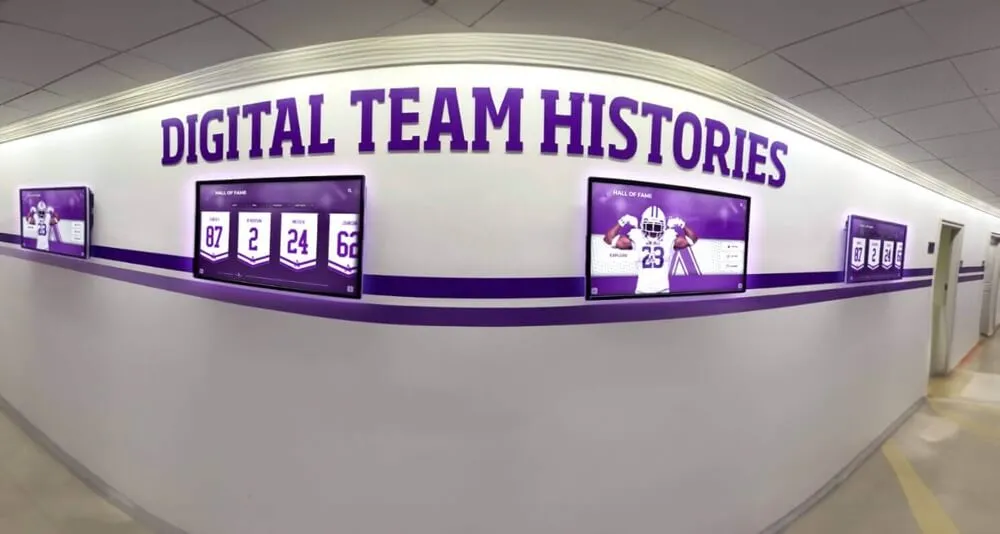
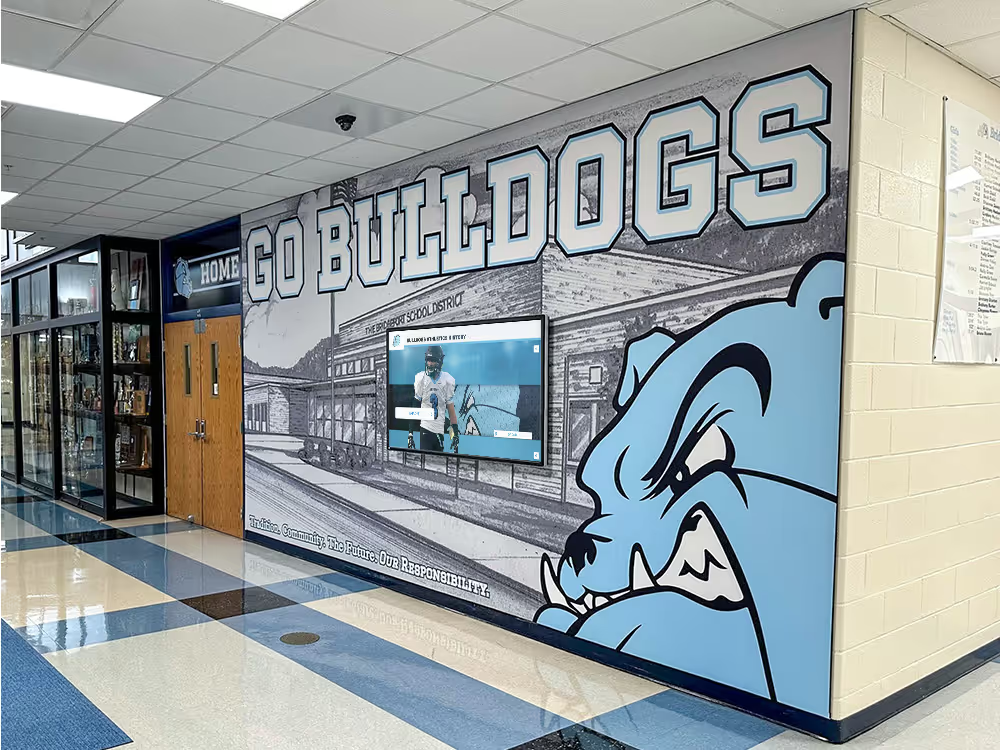
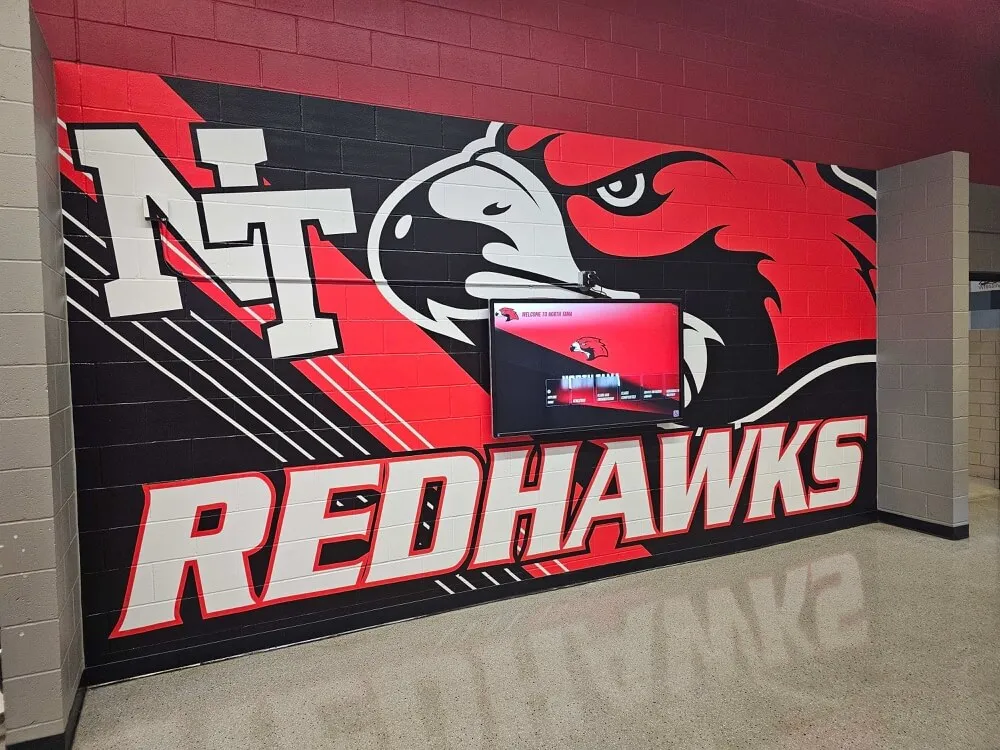
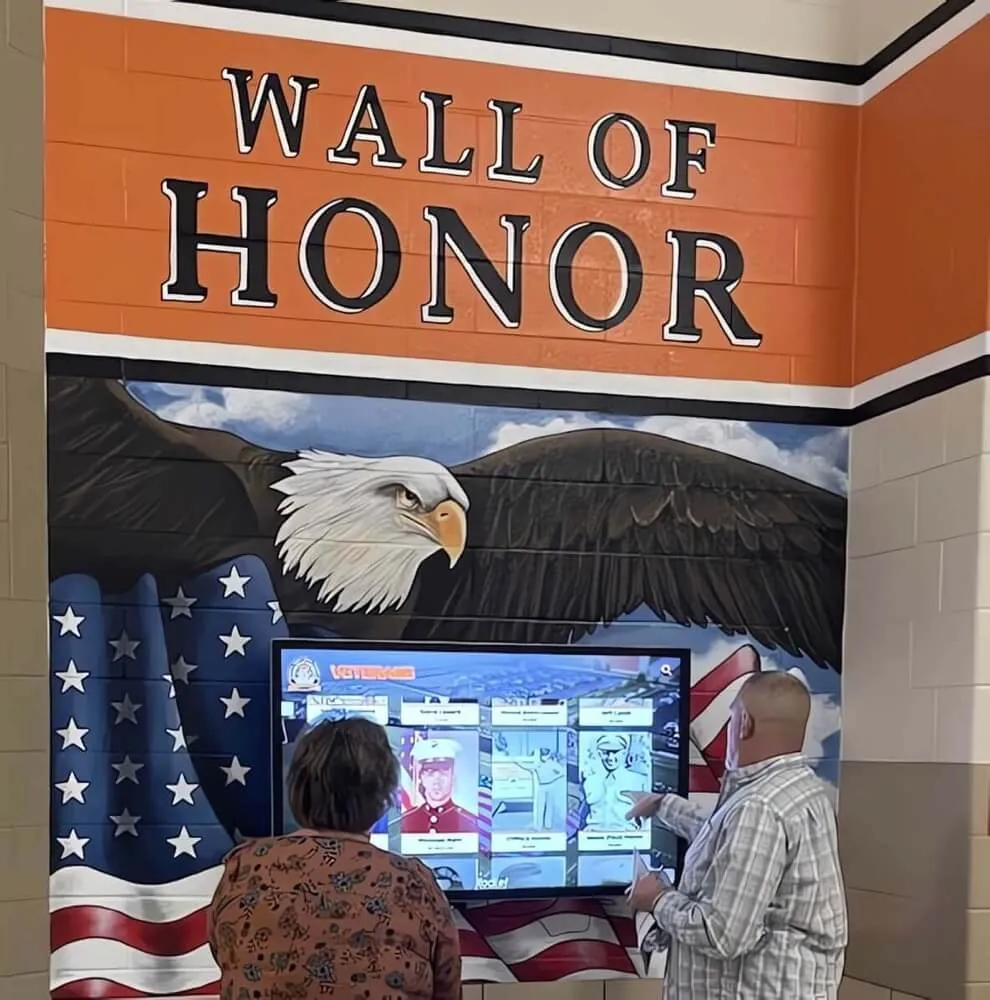
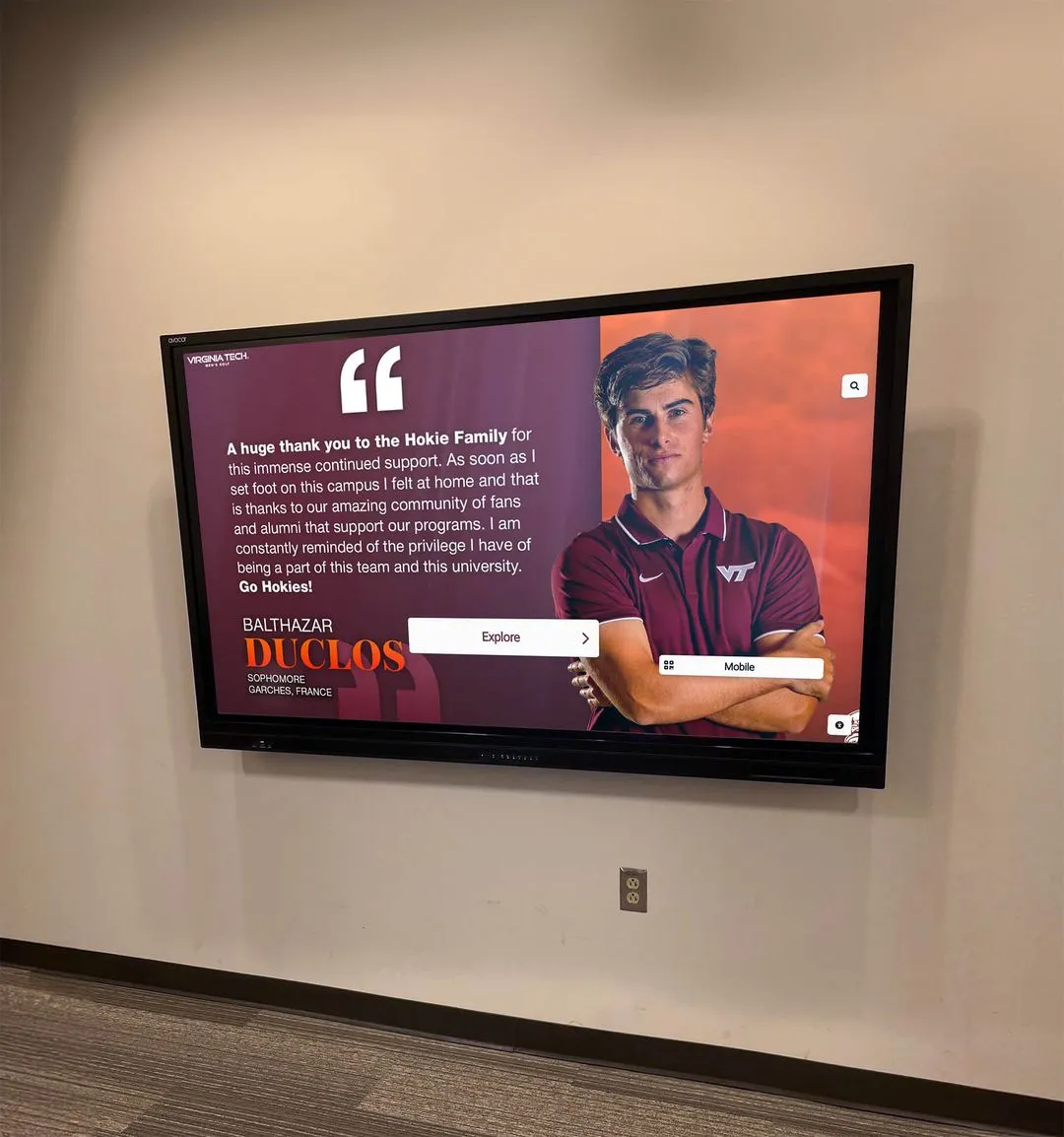
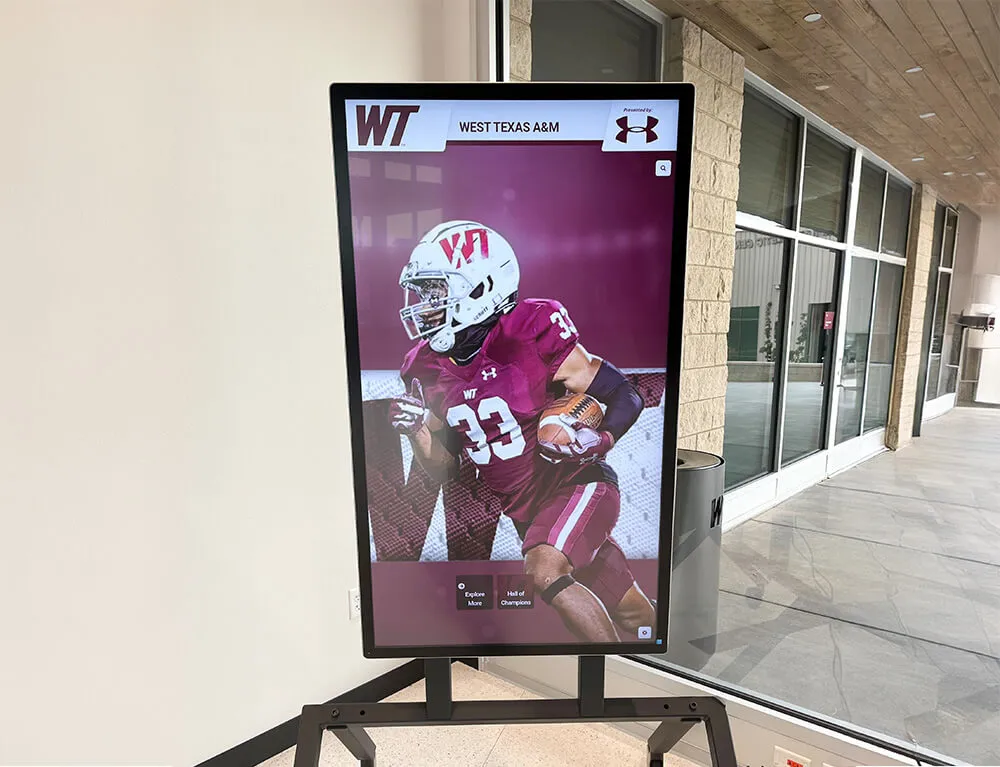
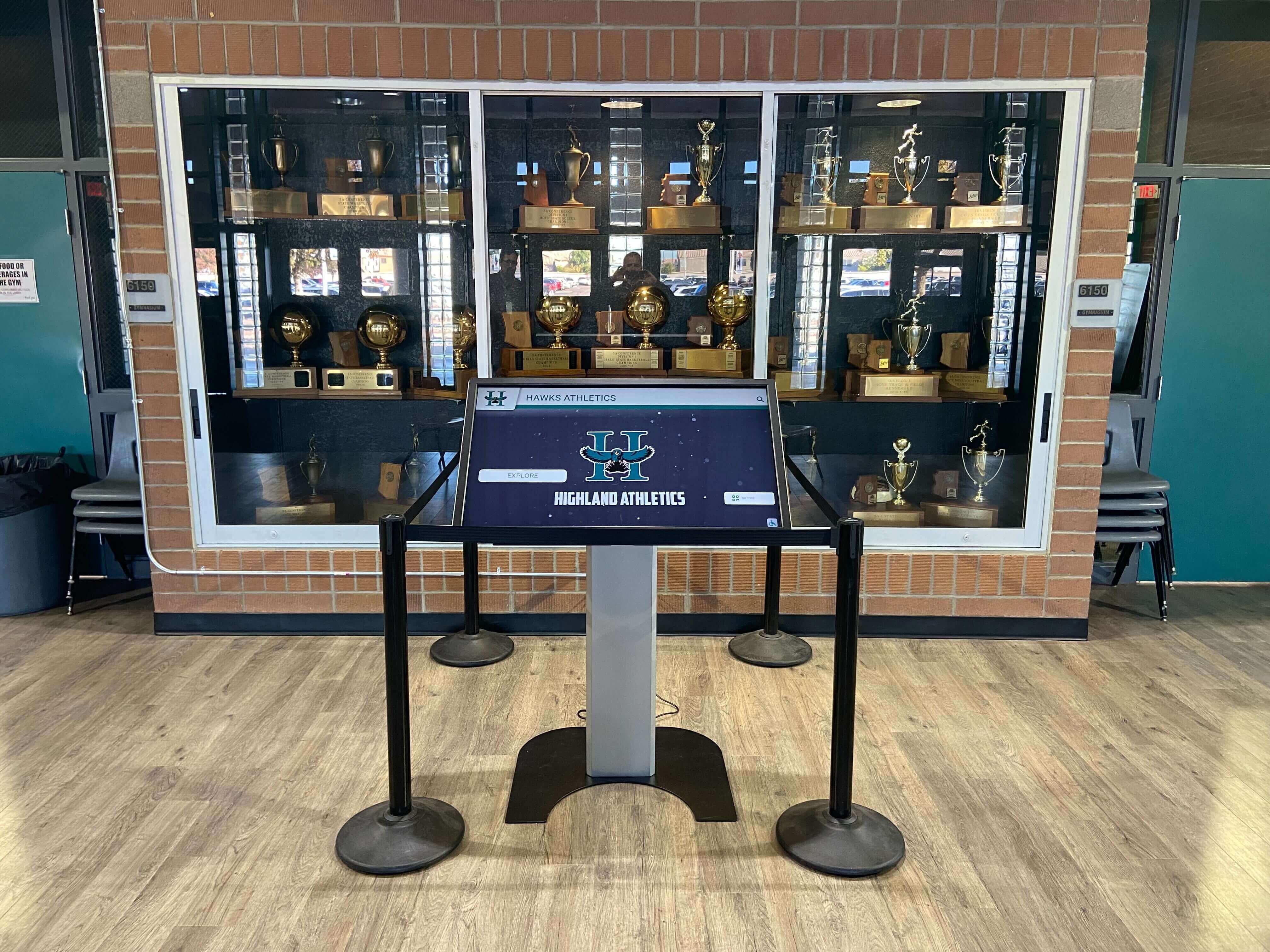
Trophy case environments that integrate interactive touchscreen displays can document JROTC badge achievements comprehensively — each cadet's earned badges becoming part of a searchable permanent record rather than disappearing with graduation
What Are JROTC Badges?
JROTC badges are physical devices worn on the cadet uniform that certify proficiency or achievement in specific program areas. Unlike ribbons, which are displayed as colored bars on the ribbon rack, badges are typically dimensional devices — metal pins, crossed-device designs, or specialized insignia — worn at designated positions on the uniform jacket or blouse.
Badges vs. Ribbons: The Recognition Distinction
The JROTC award system uses both ribbons and badges, but they serve different purposes. Ribbons recognize participation, completion, and service (completing the school year, participating in community service, attending summer leadership school). Badges certify that a cadet has demonstrated a measurable skill or met a qualifying performance standard.
This distinction has direct implications for display. A ribbon records that a cadet participated; a badge certifies that a cadet performed. Both deserve recognition, but the achievement weight of badges makes them especially valuable as permanent record items in recognition displays.
Branch Variation in JROTC Badge Systems
Each sponsoring branch — Army, Navy, Marine Corps, Air Force, and Coast Guard — maintains its own badge system with branch-specific titles, devices, and qualifying standards. While the categories of achievement (marksmanship, physical fitness, academic excellence, leadership) are broadly consistent across branches, the specific badges, criteria, and uniform placement vary. This guide covers the major categories common across branches with notes on branch-specific distinctions where relevant.
The Major Categories of JROTC Badges
Marksmanship Badges
Marksmanship qualification badges are among the most recognized JROTC awards and are common across all branches. They certify that a cadet has demonstrated rifle or pistol accuracy at a qualifying standard.
Qualification levels Most marksmanship badge programs operate on a tiered qualification structure, with increasing levels reflecting increasingly demanding score thresholds on standardized marksmanship qualification courses. Common tier designations across branches include Marksman (entry-level qualification), Sharpshooter (intermediate performance), and Expert (advanced qualification). Some programs offer Distinguished Expert or similar designations for exceptional marksmanship achievement.
Device additions At the Expert level, cadets who demonstrate proficiency across multiple weapon types may add device bars to their marksmanship badge indicating each additional qualification. This creates a visual record of the breadth of a cadet’s marksmanship training on a single badge.
Earning the badge Qualification is earned through supervised firing on a standardized course of fire, scoring targets at designated distances under program-approved conditions. Instructors administer the qualification and certify scores. Marksmanship badges must be re-qualified periodically in many programs — the badge represents current proficiency, not just past achievement.
For JROTC programs with strong marksmanship traditions, documenting cadet qualification levels over time creates a competitive record worth preserving in program archives. Resources on student award ideas offer useful framing for how proficiency-based achievements like marksmanship can be displayed as formal recognition rather than simply listed.
Academic Achievement Badges
Academic badges recognize cadets who maintain exceptional grade performance in either the JROTC curriculum itself or across the full school academic program. Criteria typically reference GPA thresholds, honor roll status, or demonstrated mastery of program-specific academic content.
Curriculum achievement badges Some branches offer academic excellence badges specific to JROTC coursework performance — recognizing cadets who score at the highest levels on end-of-unit assessments, leadership development exercises, and program knowledge evaluations. These badges are awarded by the instructor based on documented academic performance.
School-wide academic recognition Many programs issue academic badges that parallel school honor roll criteria — typically requiring a minimum GPA maintained across a grading period or academic year. These badges communicate that the JROTC program values and celebrates whole-student academic performance, not just program-specific skills.
JROTC Leadership and Academic Bowl (JLAB) Army JROTC programs participate in JLAB, a competitive academic and leadership skills assessment event. Cadets who perform at high levels in JLAB earn recognition that many programs display alongside traditional badge awards. Similar competitive academic events exist across other branches.
Developing systematic recognition for academic achievement in JROTC connects directly to broader academic recognition programs that schools use to celebrate scholarly achievement across departments — JROTC academic badges deserve the same institutional visibility as honor roll recognition.
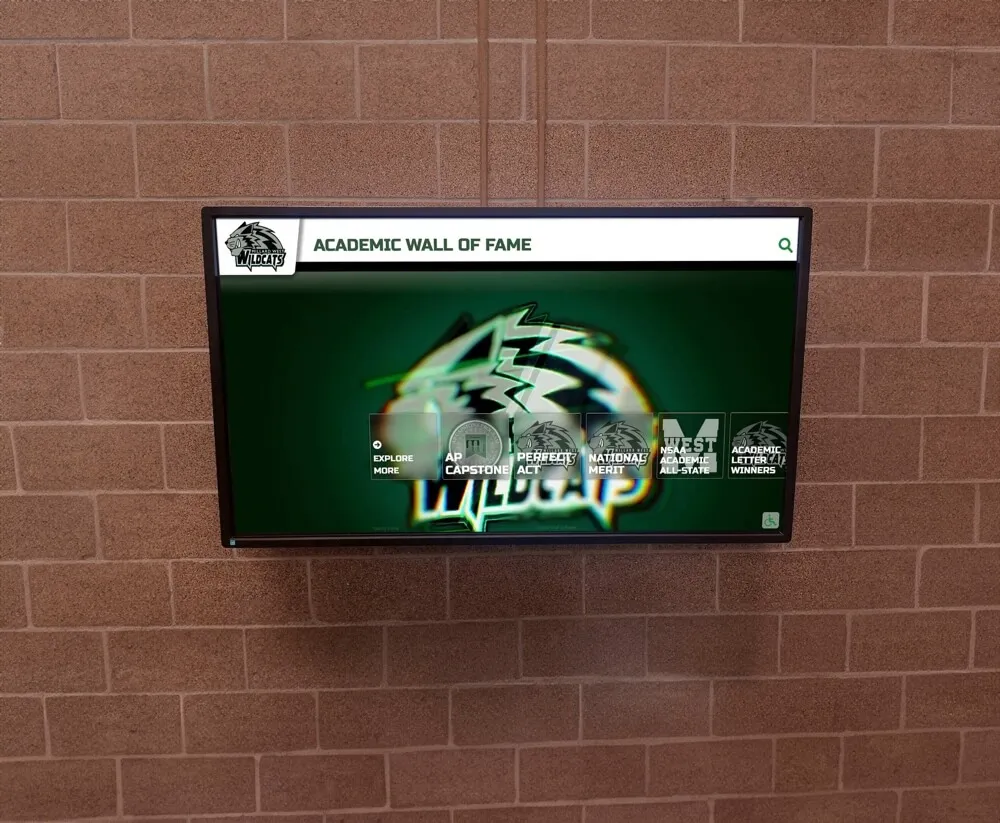
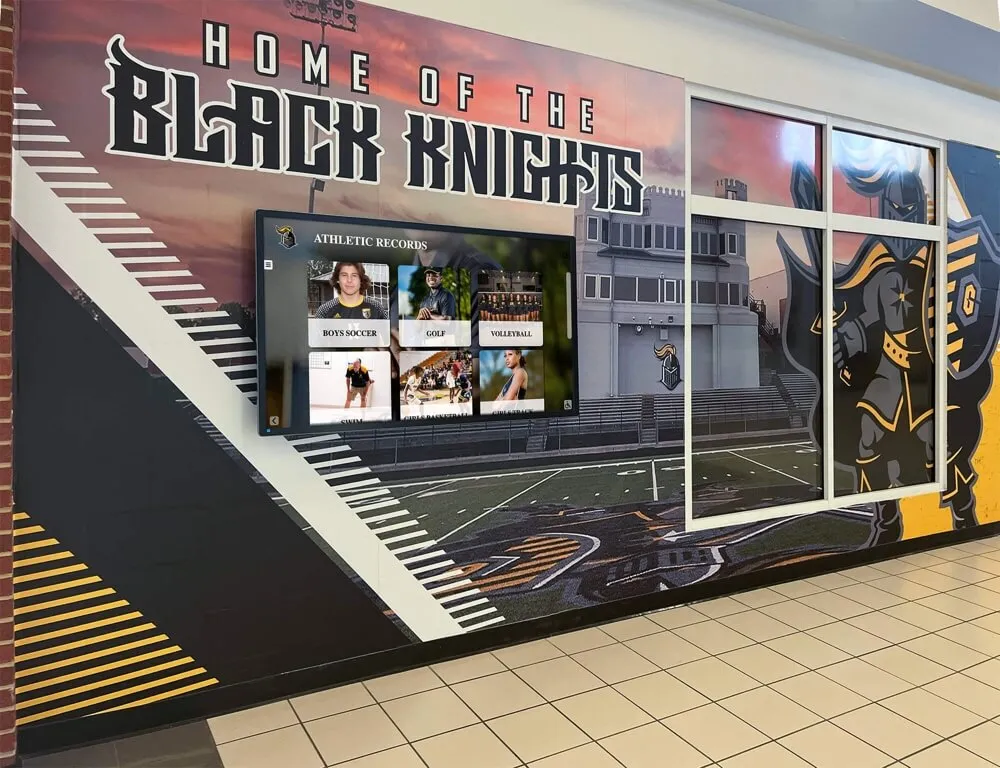
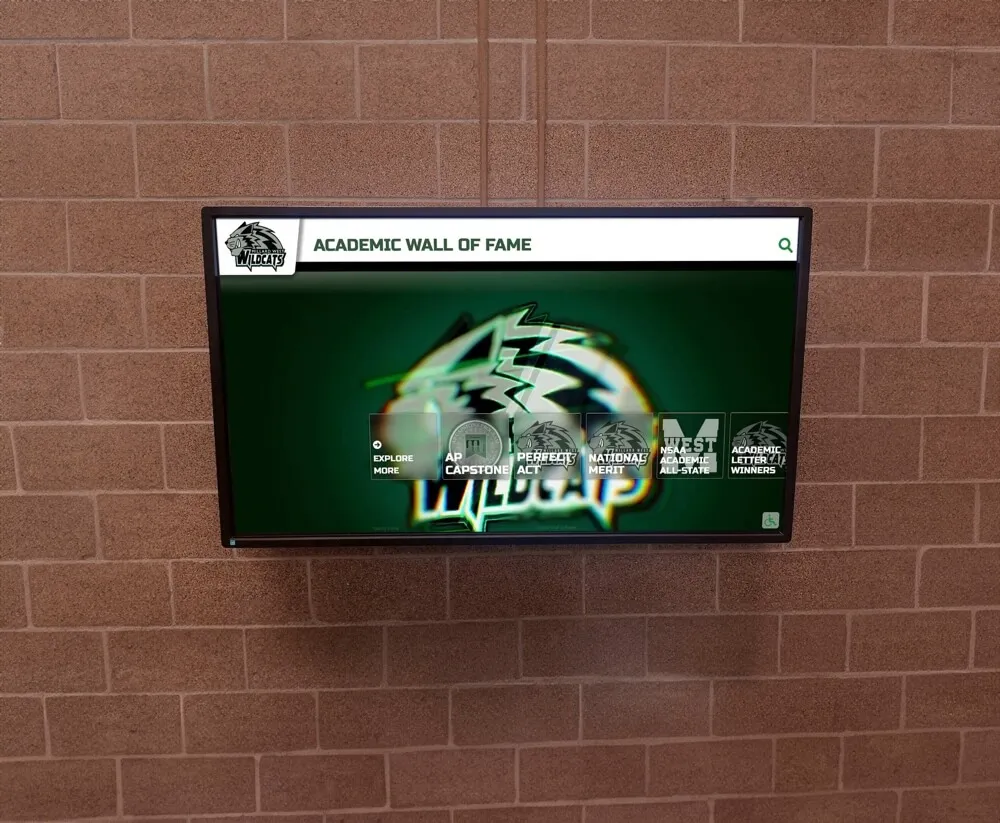
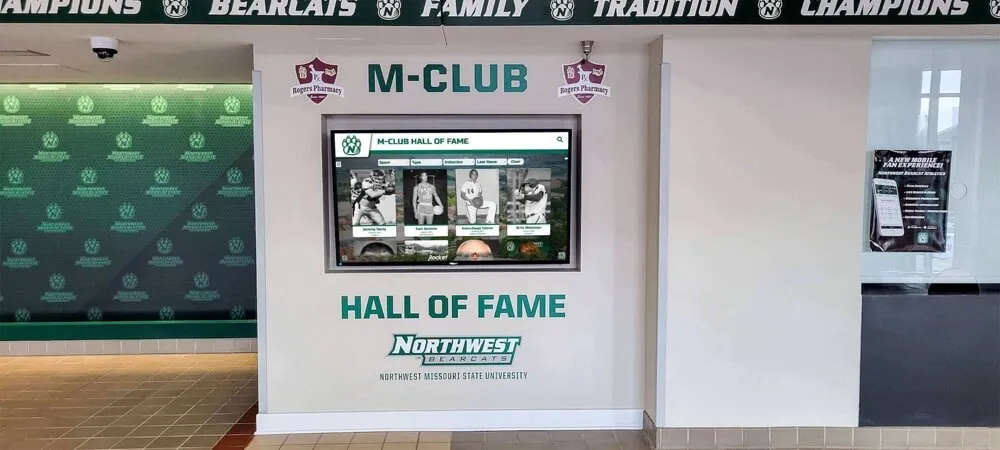
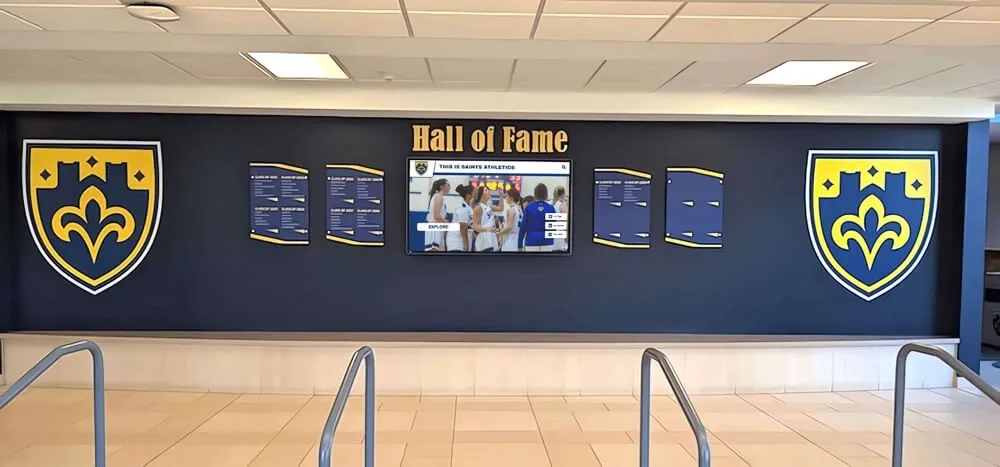
Academic recognition walls that display student achievement digitally can incorporate JROTC academic badge records alongside broader school honor roll — giving cadets' academic accomplishments the permanent institutional visibility they deserve
Physical Fitness Badges
Physical fitness badges certify that a cadet has met documented performance standards on a branch-administered physical readiness assessment. These are among the most direct certifications of a cadet’s individual preparation and discipline.
Assessment structures Army JROTC programs administer a physical fitness assessment based on the Army Physical Fitness Test framework, covering components such as push-ups, sit-ups, and a timed run. Navy JROTC programs use a Navy Physical Readiness Test-based structure. Air Force JROTC uses an Aerospace Fitness Assessment. Each branch defines minimum score thresholds for badge qualification.
Award levels Physical fitness badges typically recognize cadets who score above minimum thresholds, with higher award levels (Bronze, Silver, Gold in some programs) corresponding to higher performance bands. Cadets who score at the highest levels demonstrate physical readiness standards that parallel active-duty enlisted expectations — a significant recognition for a high school student.
The discipline signal Physical fitness badge achievement carries a specific signal about a cadet’s individual commitment to preparation that goes beyond classroom performance. Cadets who earn top-tier physical fitness badges demonstrate consistent personal discipline over time, not just performance on one test date. This quality makes physical fitness badge records especially meaningful as permanent program recognition items.
Leadership and Proficiency Badges
Leadership and proficiency badges recognize cadets who have demonstrated specific organizational, instructional, or leadership skills through assessed performance rather than just time in service.
Cadet leadership ratings Most JROTC programs incorporate formal leader development assessments where cadets are evaluated on specific leadership behaviors — planning, supervision, instruction, mentoring, and organizational management. Cadets who score at high levels on these assessments earn recognition that documents their leadership effectiveness rather than just their leadership experience.
Instructor-certified skill proficiency Some branches use proficiency badges to certify specific technical skills — ceremonial procedures, first aid and CPR, land navigation, Raider/physical challenge events, and similar competency areas. These badges require demonstration of the skill to a certifying instructor rather than self-reporting.
Leadership Excellence designations Programs that have cadets complete structured leadership development curricula — summer leadership schools, leadership academies, online courses — often issue recognition upon successful completion. These designations document that a cadet has engaged with formal leadership development content beyond the regular program curriculum.
Resources on student leadership award ideas explore how leadership achievement recognition at the high school level can be structured to be meaningful rather than generic — JROTC’s proficiency-based leadership badges exemplify this specificity.
Service and Community Engagement Badges
Service badges document cadet contributions to school, community, and service-learning activities that the JROTC program coordinates or endorses. These differ from ribbons that simply document participation — service badges typically require documented hours, project leadership, or community impact that crosses a threshold.
Community service achievement Programs set minimum cumulative service hour thresholds for community service badge award. Cadets who complete substantial documented service — often 50 to 100+ hours depending on the program — earn service recognition that reflects genuine sustained engagement with their communities.
Color guard and ceremony service Cadets who perform flag ceremony, color guard, and formal ceremonial duties for school and community events accumulate documented service that many programs recognize with ceremonial proficiency badges distinct from drill competition awards. These badges communicate the solemn responsibility that color guard carries — service to the community, not just competitive performance.
Leadership of service projects Some programs distinguish between participation in service and leadership of service — awarding higher recognition to cadets who initiate, organize, and manage community projects rather than simply participating as volunteers. This distinction rewards initiative and project management skills alongside the service itself.
Drill Team, Color Guard, and Competitive Event Badges
Competitive event badges recognize cadets who have performed in evaluated competitions — drill meets, color guard competitions, orienteering events, cyber defense competitions, and similar events — at qualifying performance levels.
Drill competition recognition Drill team competition badges certify that a cadet participated in and placed in a formally evaluated drill competition. Levels typically reflect placement — first, second, third place or superior/excellent/good ratings in evaluated categories. These badges document competitive achievement that required extensive preparation and skilled performance under evaluation conditions.
Color guard competition badges Color guard units that compete in evaluated competitions earn recognition for placement at regional, state, or national levels. Color guard competition requires precision, physical coordination, and team discipline — the badges certifying competitive achievement in this area carry significant weight within the program community.
Orienteering and JROTC Raider badges Programs that compete in orienteering meets and JROTC Raider challenges — team physical and navigation events that test both individual fitness and unit cohesion — earn competitive badges upon qualifying performance in these specialized events.
Cyber Patriot and academic competition Air Force JROTC programs are closely associated with the CyberPatriot competition, which awards recognition for performance in national cybersecurity education competitions. Programs that produce high-performing CyberPatriot teams earn recognition that documents technology-focused achievement alongside traditional military skill areas.
Earning Criteria: What Cadets Need to Know
Clarity about earning criteria is one of the most important things an instructor can provide at program enrollment. Cadets who understand exactly what qualifies for each badge from day one can set goals, track progress, and experience genuine ownership of their recognition as they earn it.
Criteria Communication Best Practices
The programs that see highest cadet engagement with the badge system are those that make criteria visible, specific, and trackable throughout the year rather than announcing awards at the end-of-year ceremony. Effective approaches include:
Criteria display in program spaces Posting earning criteria for each badge category in the JROTC classroom or program area gives cadets constant reference. When a cadet knows the exact score they need for a marksmanship qualification upgrade or the exact GPA threshold for the academic badge, the recognition becomes a defined goal rather than a vague aspiration.
Progress tracking systems Some programs maintain visible tracking boards that allow cadets to see their current standing against badge criteria without requiring individual instructor consultations. This transparency reinforces the earned nature of the awards — every cadet can see exactly where they stand and what they need to do.
Mid-year recognition opportunities Programs that award badges on a rolling basis throughout the year — recognizing cadets who meet criteria as they meet them rather than waiting for the annual ceremony — give cadets faster feedback and allow more cadets to experience the recognition of earning a badge while the achievement is still immediate.
For schools looking at how systematic recognition programs function across student programs, resources on academic achievement awards for high school explore the program design questions that apply equally to JROTC badge criteria development.
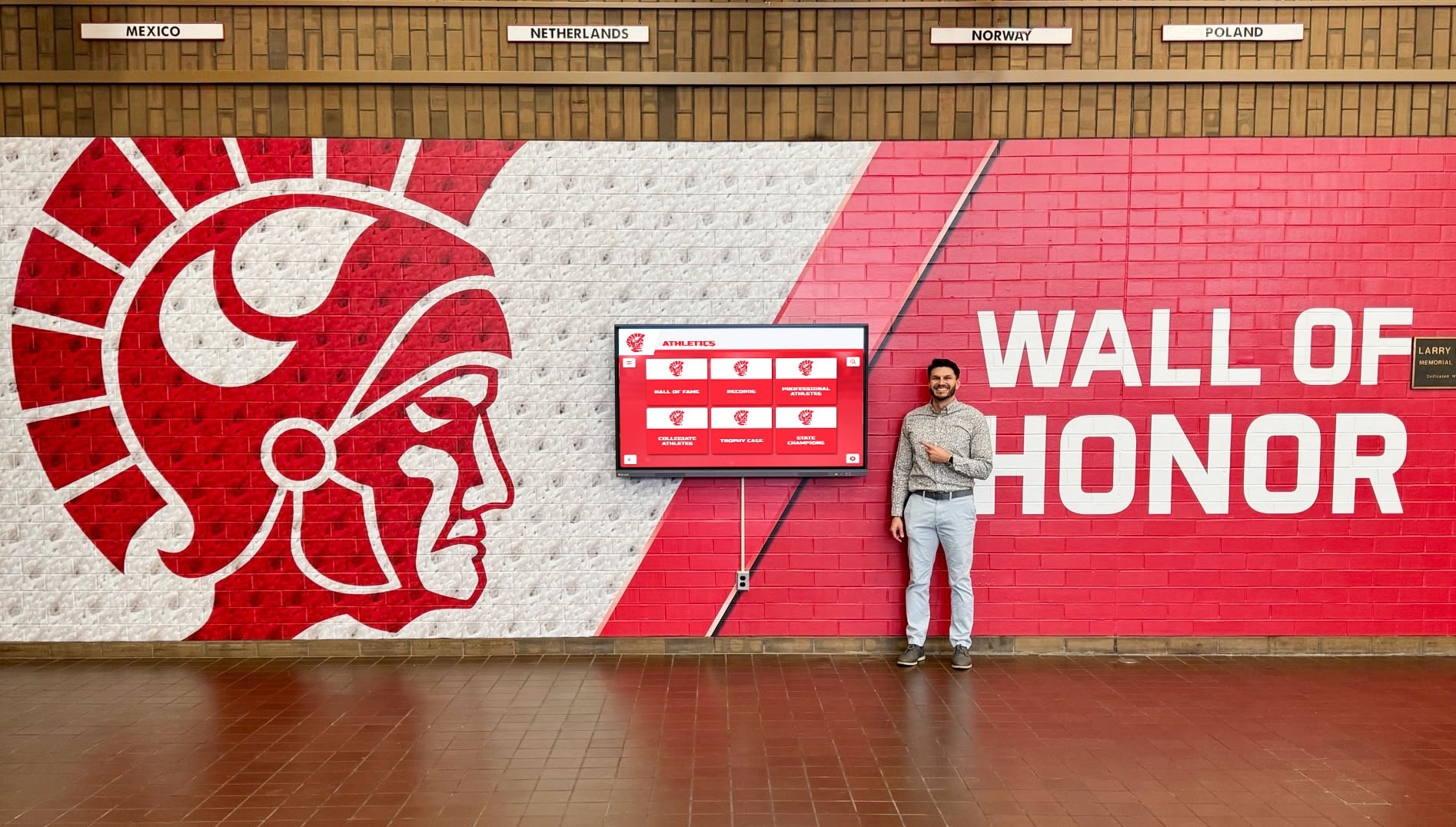
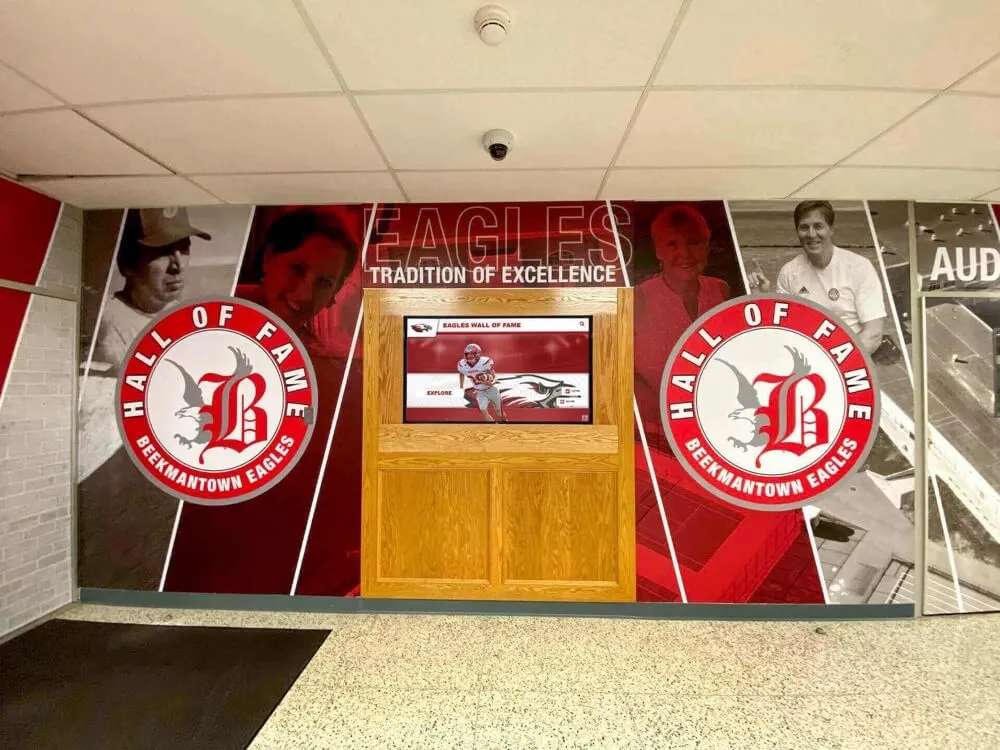
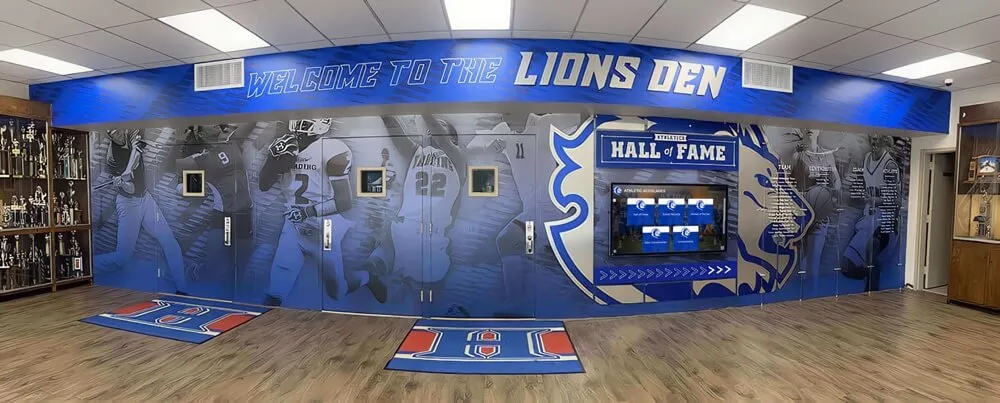
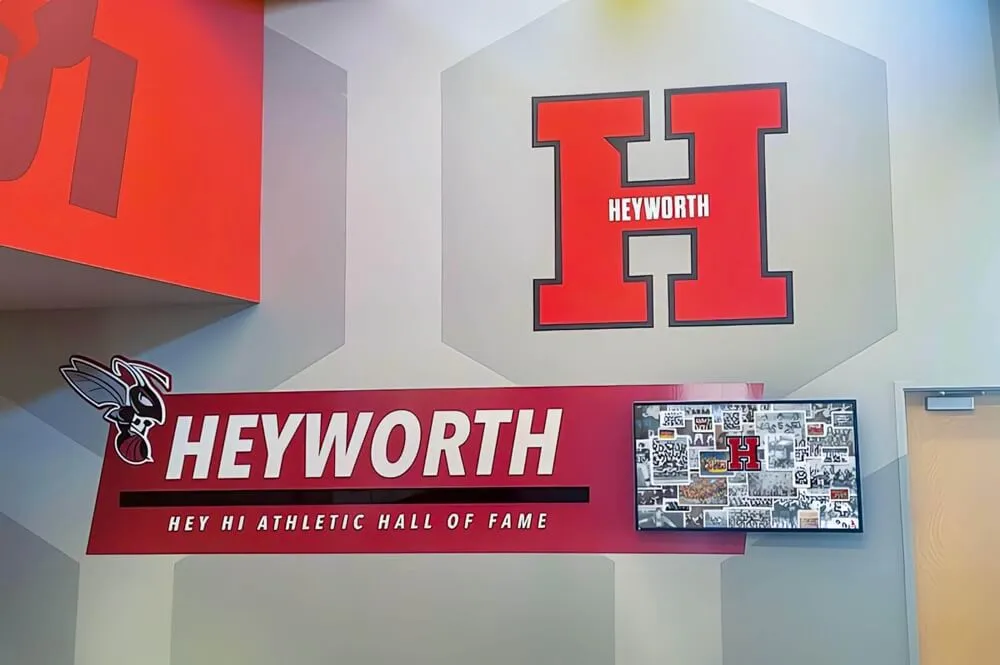
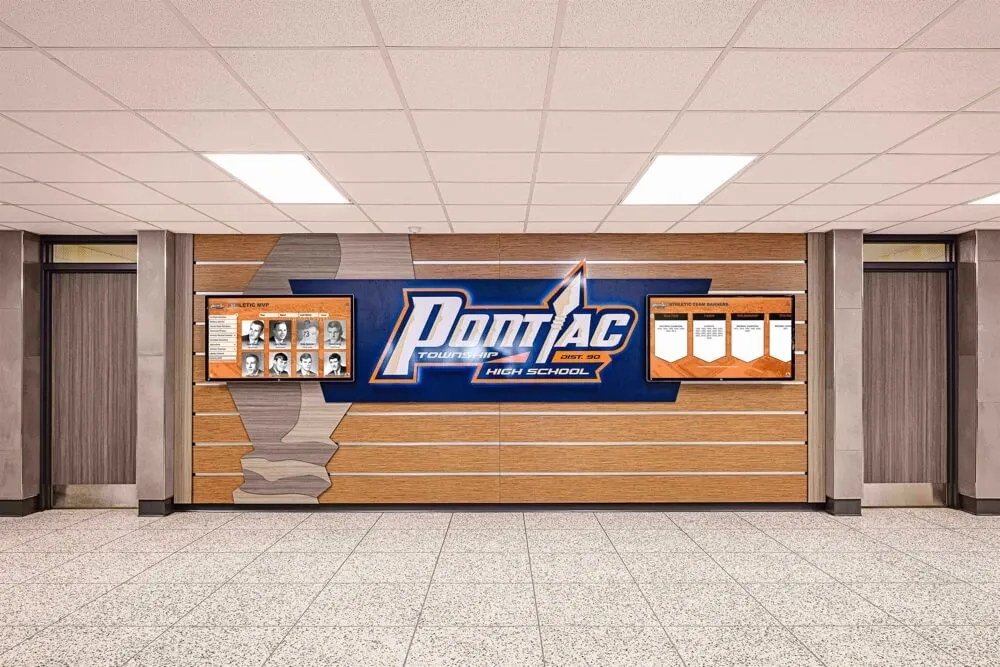
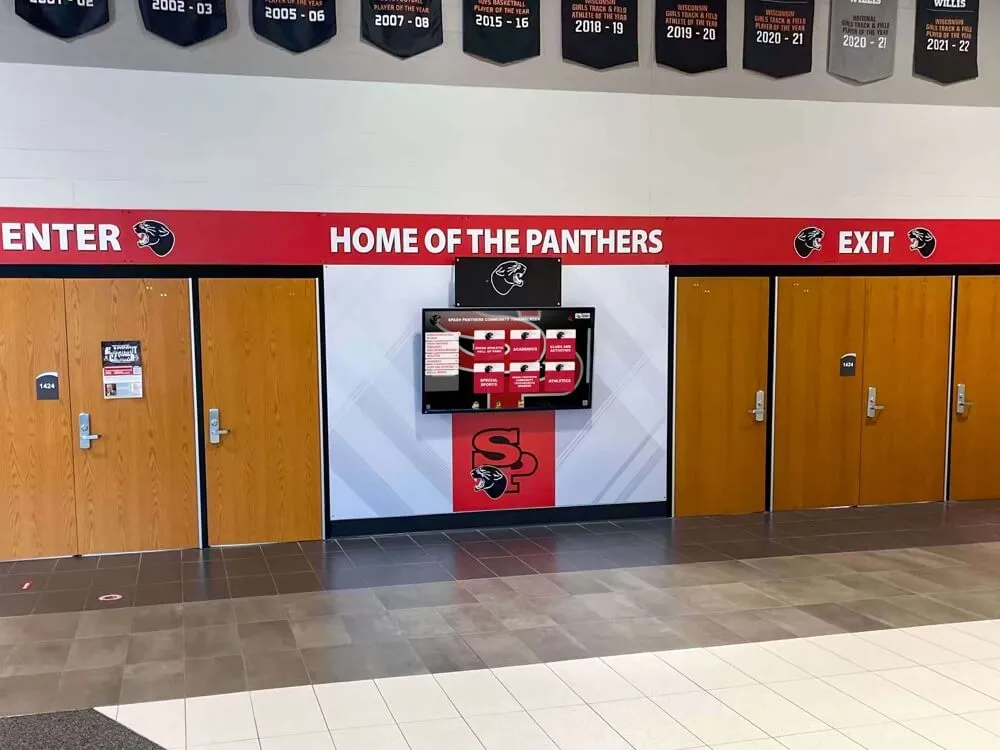
Recognition walls in school hallways create the permanent, public display that badge achievements deserve — cadets, families, and community members encounter the program's standards and accomplishments as a natural part of moving through the building
Wearing JROTC Badges: Uniform Placement Guidelines
JROTC badge placement on the uniform follows regulations specific to each branch. Programs must refer to their current branch-issued uniform regulations for definitive guidance, as placement requirements change with regulation updates and vary between branches.
General Placement Principles
Badges vs. ribbons position On Army JROTC uniforms, badges are typically worn above the ribbons — placed on the left side of the service coat. On Navy JROTC uniforms, badges follow Naval ROTC placement conventions. Air Force JROTC uses AFJROTC-specific placement guidance. Each branch issues illustrated placement guides that specify exactly where each device goes relative to others.
Precedence and stacking When cadets have earned multiple badges, order of precedence governs placement — which badge goes highest, which goes to the left when badges are at the same level. Programs should brief cadets on precedence rules at the time badges are issued so that uniform inspection preparation is accurate.
Device and tab additions Many JROTC badges have authorized device additions — small metal tabs, letters, or numerals that attach to the primary badge to indicate additional qualifications, qualification level upgrades, or competitive placement. These additions must be applied correctly; devices worn incorrectly or in unauthorized positions create uniform violations even when the underlying badge is legitimately earned.
Inspection preparation End-of-semester uniform inspections provide an opportunity for instructors to verify that all badges and devices are correctly placed and that cadets can explain the earning criteria for each award they’re wearing. This reflection component reinforces that badges are documentation of achievement, not decorative additions to the uniform.
Branch-Specific Uniform Guidance
Each branch issues an official JROTC uniform regulation document that should be the primary reference for placement:
- Army JROTC: Cadet Command Regulation 145-2
- Navy JROTC: NJROTC Area Manager guidelines
- Air Force JROTC: AFJROTCI 36-2010
- Marine Corps JROTC: MCJROTC program guidelines
- Coast Guard JROTC: CGAUX and CGJROTC program guidance
Instructors should verify that they are working from the most current regulation edition, as changes to uniform standards are issued periodically.
Displaying JROTC Badges on Recognition Walls
Badges worn on a uniform are seen by people who interact with that cadet directly. A badge on a recognition wall is seen by every student, family member, community visitor, and prospective cadet who walks by. These are different audiences with different implications for how recognition should be structured.
Physical Display Approaches for Badge Recognition
Framed badge display cases Many programs maintain physical display cases that house examples of each badge the program awards alongside brief descriptions of earning criteria. This creates a visible reference for the full range of recognition available in the program — visitors understand what cadets are working toward before asking.
Individual cadet recognition boards Programs with space in dedicated JROTC corridors sometimes maintain individual boards for outstanding cadets — displaying the cadet’s photo, rank, and the badges they’ve earned. These boards create personalized recognition that cadets and families respond to more strongly than generalized award lists.
Annual award ceremony display boards End-of-year ceremonies often feature display boards listing all badge recipients by category. Making these boards permanent — displayed in the program space or school trophy case area — gives end-of-year achievements a continuing presence rather than a one-event recognition that disappears from view.
Trophy case integration Programs that maintain a JROTC trophy case alongside competition trophies and program awards can incorporate a badge display that shows the full range of recognitions available in the program. This context — seeing a marksmanship badge displayed beside a drill meet trophy — helps visitors understand the program’s breadth.
Resources on wall display case ideas for schools cover design approaches directly applicable to creating JROTC badge display installations.
Location and Context for Maximum Impact
The placement of a JROTC badge recognition display matters as much as its design. Programs whose recognition is visible in high-traffic school spaces create fundamentally different community awareness than programs whose recognition lives only in the JROTC classroom.
School entrance and main corridor Recognition displays at building entry or in main corridors encounter the full school community daily. JROTC programs whose cadet achievements are displayed here communicate that the program is a school priority — the same message that athletic hall of fame displays and academic honor boards send for their respective programs.
Adjacent to athletic and academic recognition When JROTC badge recognition appears alongside the school’s athletic trophy case and academic honor roll display, the program positions itself correctly — as a co-equal source of student achievement, not an auxiliary activity. This placement requires deliberate planning, as these high-visibility spaces are competitive.
Dedicated JROTC program space Programs with access to dedicated hallway space or a dedicated room can build a complete recognition environment — combining badge display with competitive trophies, historical photos, unit crest display, and program timeline. A dedicated space allows the full depth of program recognition to be visible simultaneously.
For programs thinking about how to design and install recognition displays that create lasting impact, guidance on hall of fame wall design and installation provides practical frameworks applicable to JROTC program recognition environments.
Give Every Earned Badge a Permanent Home
Rocket Alumni Solutions' Digital Trophy Case platform lets JROTC programs display cadet badge achievements, competitive records, and program history in one cloud-managed touchscreen installation — updated remotely in minutes, accessible by families via QR code, and unlimited in how many cadets and achievements it can recognize.
Explore Digital Trophy Case SolutionsDigital Trophy Cases for JROTC Badge Recognition
Physical displays have real strengths — dimensional cases and framed boards carry presence and permanence that communicate institutional seriousness. But they have hard limits: they can only show what fits in physical space, updating them is slow and expensive, and alumni who aren’t on campus can’t access them.
Digital trophy cases extend what physical JROTC badge displays can do without replacing their physical weight.
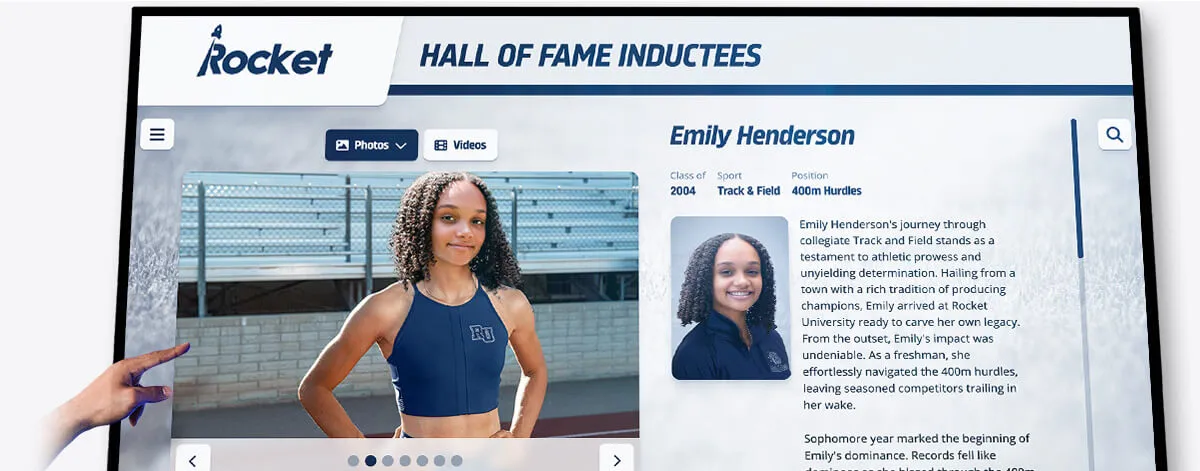
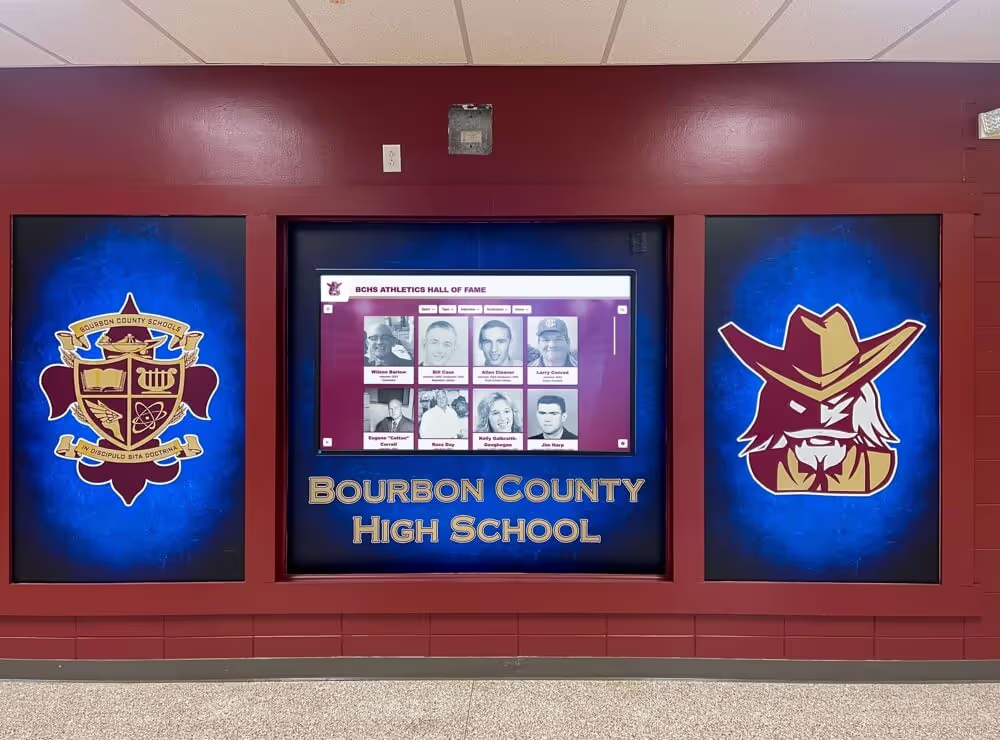
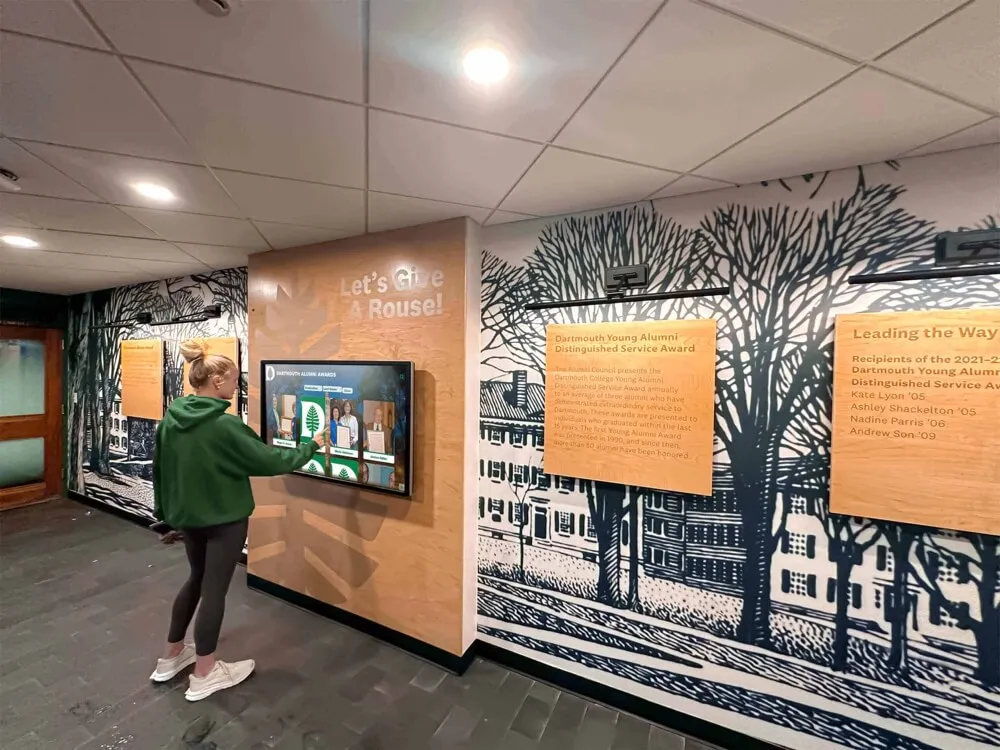
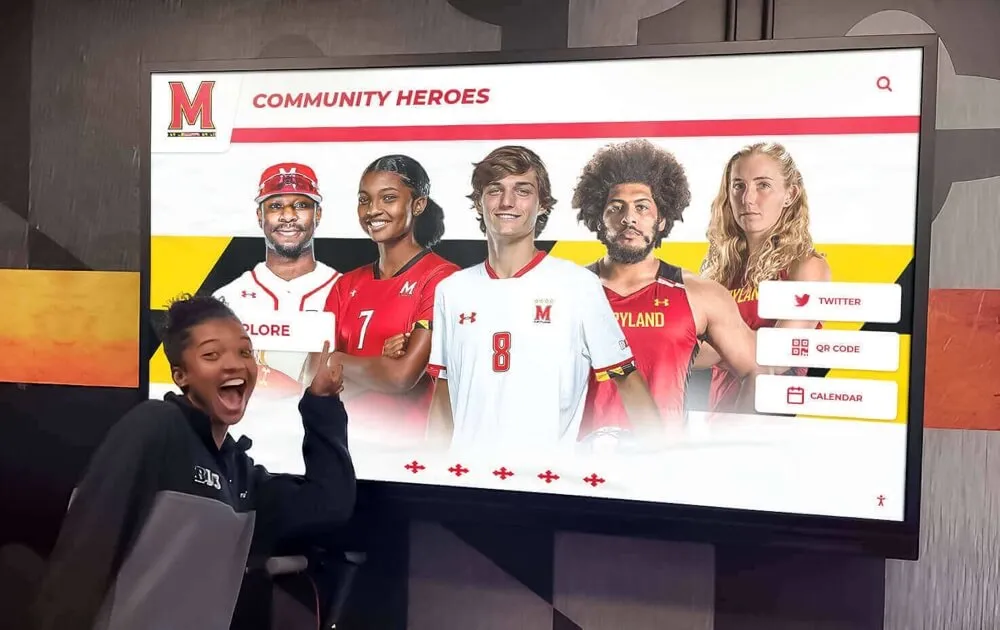
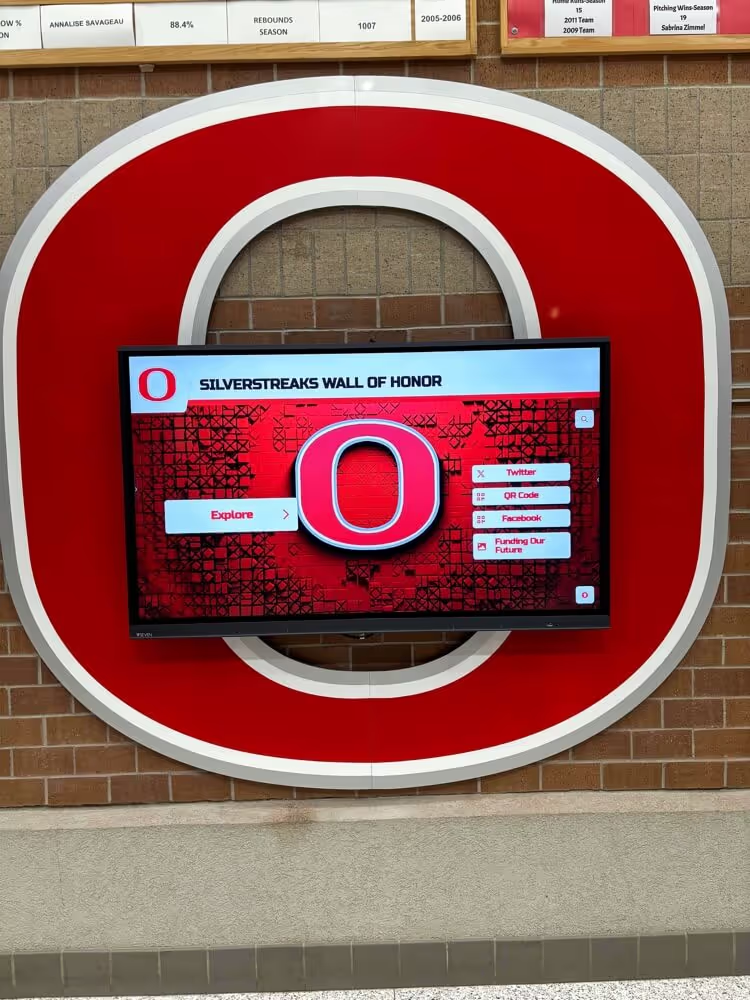
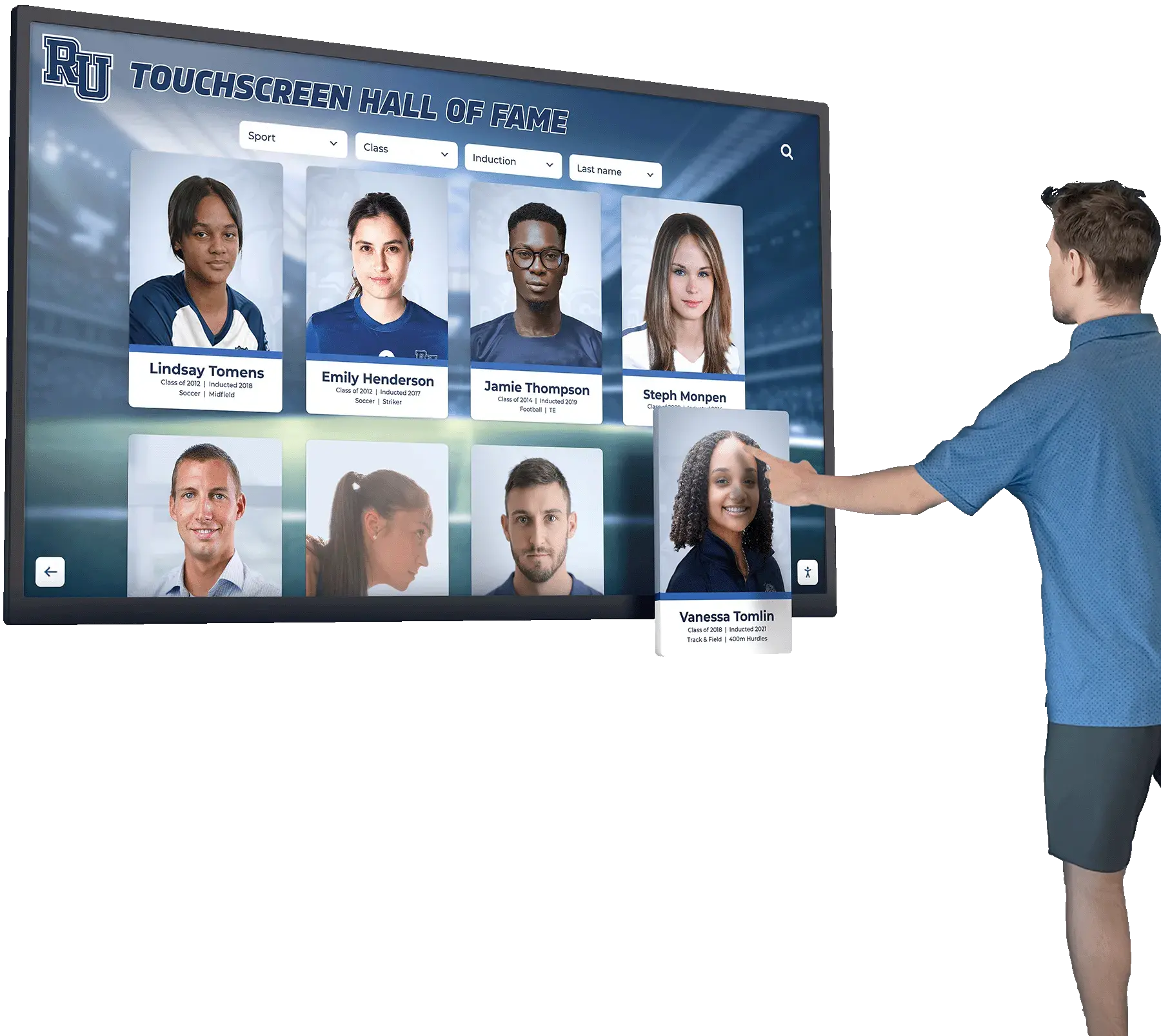
Individual achievement profiles on touchscreen recognition displays give cadet badge records a searchable, permanent presence — visitors can look up any cadet by name and see their full award history, not just what fits on a physical board
What a Digital Trophy Case Adds to JROTC Badge Display
Complete cadet badge records, not just highlights A physical display case can show examples of each badge and perhaps a list of recent recipients. A digital system can maintain a complete record of every cadet who has ever earned every badge — going back decades if the data exists. Families searching for their cadet, alumni looking up their own records, and prospective cadets researching what the program offers all find what they need in one place.
Searchable by cadet, by badge category, by year Digital systems allow recognition to be searched and filtered in ways physical displays cannot replicate. A visitor can search by cadet name, by award type, by graduation year, or by competitive event. This navigability makes the full depth of program achievement accessible rather than hiding it behind a single display view.
Year-over-year badge history Maintaining records of which cadets earned which badges each year — over the full history of the program — transforms a display from a snapshot into an institutional archive. Programs with decades of history can surface that depth in ways that create genuine pride and connection for alumni who find their own names in the record.
Remote access for families and alumni QR codes displayed alongside physical installations allow families to access the complete cadet recognition record from their phones. Parents can share their cadet’s badge achievements with extended family. Alumni stationed overseas, attending college, or building careers can find their old unit’s current performance alongside their own historical record.
For programs examining how digital recognition systems create this kind of comprehensive achievement documentation, resources on modernizing school recognition walls provide direct comparisons between static and dynamic recognition approaches.
JROTC-Specific Content for a Digital Trophy Case
A digital trophy case built specifically for a JROTC program can organize content around the program’s specific structure rather than forcing JROTC achievements into athletic or academic templates:
By badge category Organizing by badge type — Marksmanship, Physical Fitness, Academic, Leadership, Service, Competitive — mirrors how the program actually functions and gives visitors an intuitive way to understand what the program recognizes. Each category can surface both current year recipients and historical high achievers.
By cadet year and graduating class Organizing cadet achievement records by graduating class creates a year-over-year archive that alumni navigate naturally. A cadet who graduated three years ago can find their cohort’s record immediately; a current cadet can see what their predecessors achieved.
By competitive event Programs with strong competitive histories — drill meets, color guard competitions, marksmanship matches — can organize competitive badge records by event and year, documenting the program’s trajectory over time. Competitive achievement displayed this way tells a program story that individual badge records don’t tell alone.
Program milestones alongside cadet records Digital systems can display program-level recognitions — Unit of Distinction awards, accreditation milestones, Distinguished Unit designations — alongside individual cadet badge records. This positions individual cadet achievement within the larger program narrative.
Records tracking over time applies equally to school athletic programs and JROTC — guidance on high school records tracking and display provides directly applicable frameworks.
Physical/Digital Integration for JROTC Badge Displays
The most effective JROTC recognition environments combine physical and digital elements.
Physical badge display + adjacent digital screen A dimensional display case showing examples of each badge type — mounted at eye level in the JROTC program area or school trophy corridor — paired immediately with a touchscreen that lets visitors look up which cadets have earned each badge creates a complete recognition experience. Physical elements provide presence; digital elements provide depth.
Existing trophy case + digital upgrade Programs with established physical trophy cases don’t need to replace existing infrastructure to add digital recognition. Mounting a digital display adjacent to or above the existing case — displaying the program’s complete badge recipient history, current-year awards, and competitive records — dramatically expands what the existing case communicates without requiring physical case redesign.
Digital anchor in JROTC corridor For programs with dedicated hallway space, a wall-mounted digital display as the visual anchor of the recognition corridor — surrounded by physical elements like unit crests, guidon displays, and framed historical photos — creates an environment where every element tells part of the program’s story.
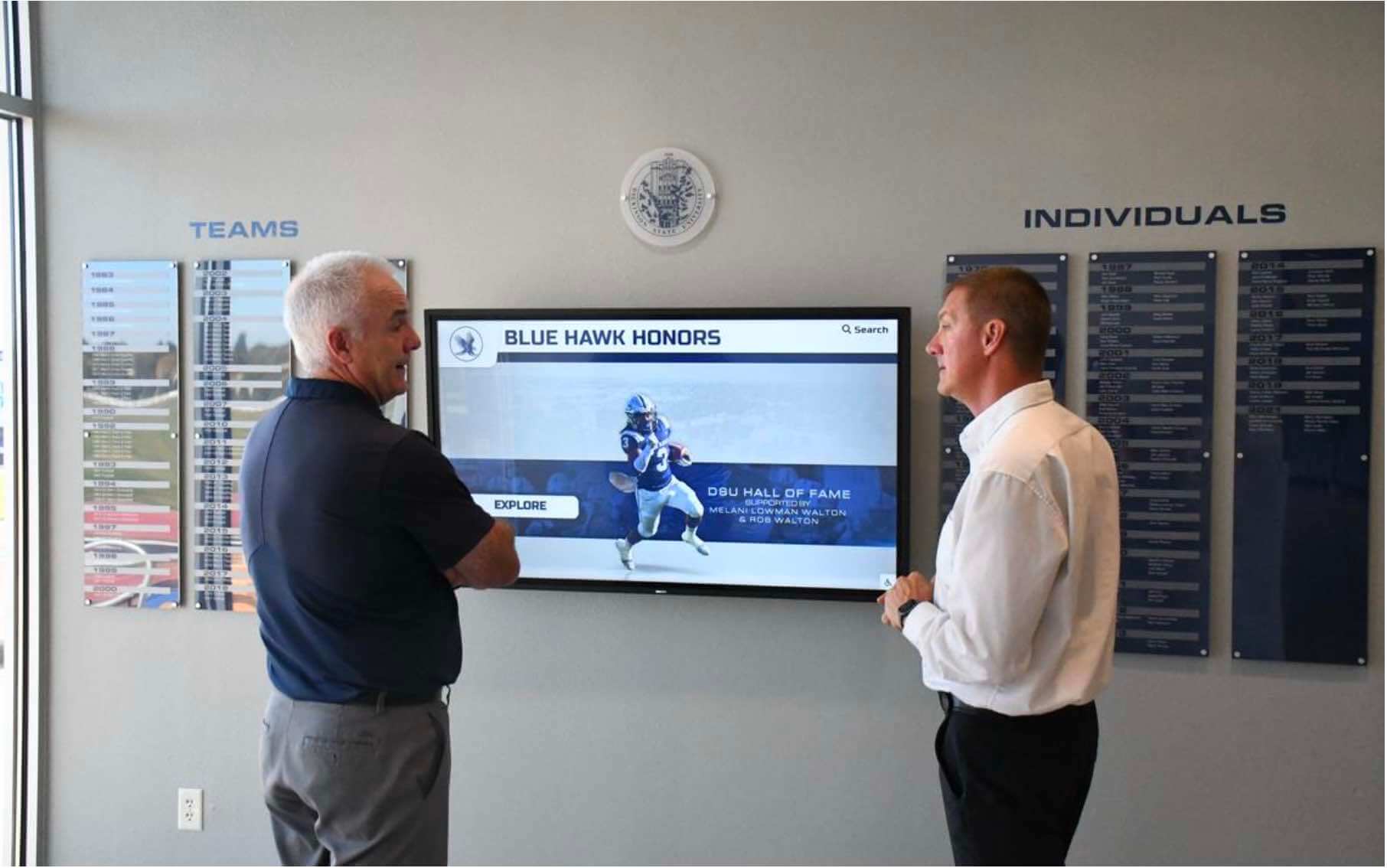
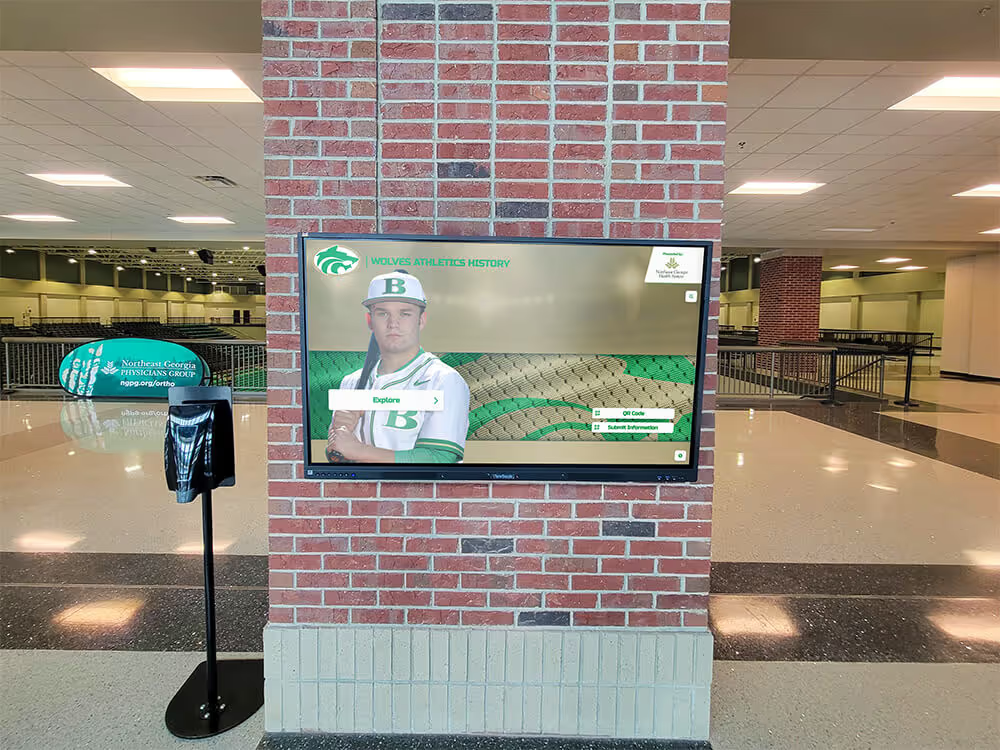
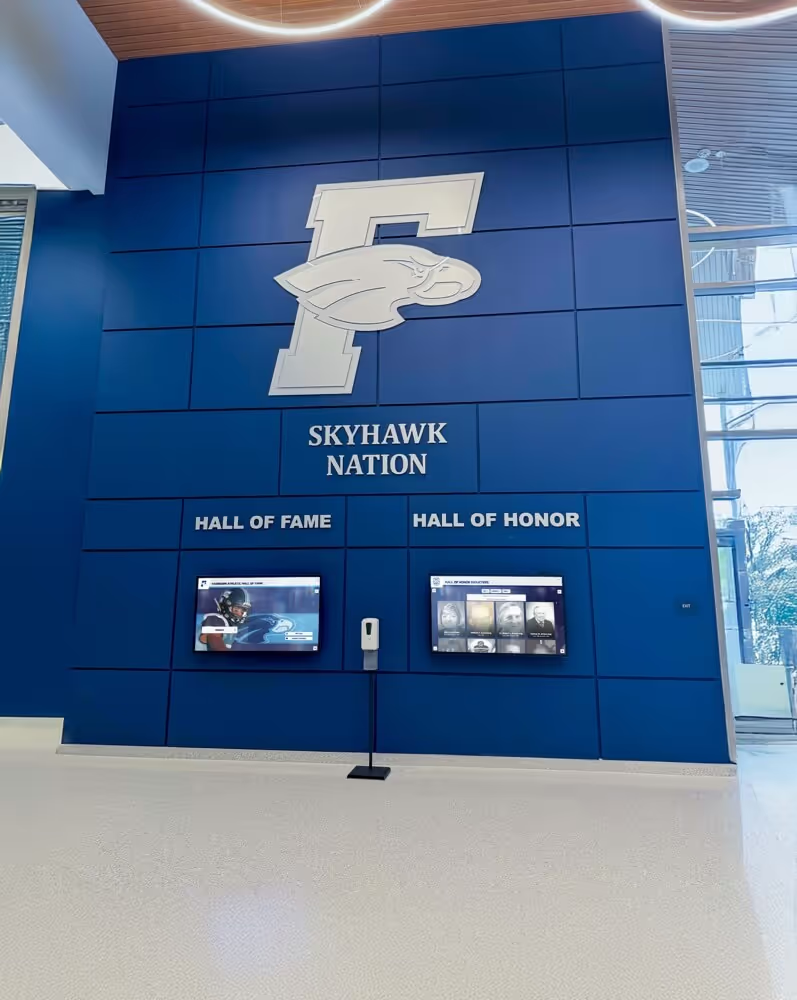
Interactive digital recognition displays create engagement that static boards cannot — visitors actively explore cadet achievement records rather than passively reading a printed list, making recognition a discovery experience rather than a reference lookup
Building a JROTC Badge Recognition System That Lasts
Programs building badge recognition infrastructure from scratch — or updating systems that have grown outdated — benefit from a systematic approach.
Step 1: Inventory What Currently Exists
Before building anything new, document what recognition infrastructure is already in place:
- Which badge categories does the program currently award?
- Are earning criteria documented clearly and made visible to cadets?
- What physical displays currently exist, and where are they located?
- Are historical badge records maintained anywhere (even informally, in files or photos)?
- Which display locations are currently occupied by JROTC recognition, and which high-visibility locations have no JROTC presence?
Step 2: Define the Archive Goal
The most valuable thing a recognition system can do over time is accumulate a complete historical record. Decide early what the archive goal is:
- Will badge records be maintained year-by-year going forward, or will there be an effort to recover historical records?
- Who is responsible for entering cadet badge achievements into the recognition system each semester?
- How will the system handle cadets who earn additional badge qualifications mid-year?
Establishing these workflows before the system is built prevents the most common archive failure mode: a recognition system that starts comprehensive and drifts toward incomplete when transitions happen.
Step 3: Match Display Infrastructure to Visibility Goals
Where badge recognition lives in the building determines who sees it. Match infrastructure investment to the visibility goals the program has:
- If the goal is whole-school community awareness: invest in main corridor or lobby placement
- If the goal is cadet and family engagement: invest in JROTC program space and QR-accessible digital records
- If the goal is competitive recruitment: invest in prominent placement near school entry and in materials prospective cadets encounter
Resources on digital recognition walls for schools explore how schools are incorporating digital recognition into renovation and construction projects — the planning frameworks apply directly to JROTC badge recognition display decisions.
Step 4: Connect Recognition to Program Culture
Badge recognition that exists only as a display — not connected to how instructors talk about the program and what cadets aspire to — becomes background. Programs that create genuine achievement culture around badges treat them as what they are: documentation of real accomplishment.
This means:
- Briefing new cadets on the full range of badges available from the first day of enrollment
- Making earning criteria highly visible throughout the year
- Celebrating badge awards with appropriate ceremony when they’re earned, not just at end-of-year events
- Making sure graduating cadets understand that their records will be part of a permanent institutional archive — not erased when they leave
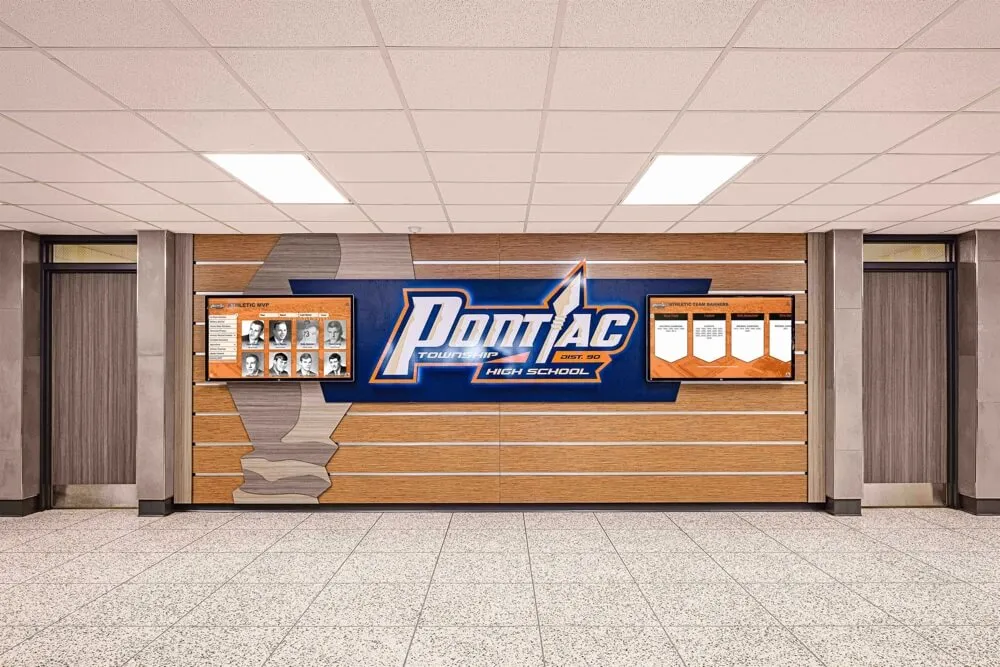
Hallway recognition walls that document achievement permanently communicate to current students what the program values and to alumni that their accomplishments were worth preserving — JROTC programs deserve this same institutional commitment to recognition
FAQ: JROTC Badges
Are JROTC badges the same across all branches?
No. Each branch — Army, Navy, Marine Corps, Air Force, and Coast Guard — maintains its own badge system with branch-specific titles, devices, and qualifying standards. The broad categories (marksmanship, physical fitness, academic achievement, leadership, service) are consistent across branches, but the specific badges and criteria differ. Programs should refer to their branch-specific uniform and award regulation for definitive guidance.
Can a cadet wear all the badges they’ve earned at once?
Uniform regulations limit the number and placement of badges on the uniform. When cadets have earned more badges than the uniform allows to be worn simultaneously, order-of-precedence rules govern which badges are displayed. Programs should provide cadets with specific guidance about precedence and placement based on their branch’s current regulation.
How long does a marksmanship qualification last?
Marksmanship badge validity varies by program and branch. Many programs require periodic re-qualification — the badge represents current demonstrated proficiency rather than a one-time test that applies indefinitely. Instructors should brief cadets on qualification validity periods and re-qualification requirements at the time of award.
What’s the difference between a JROTC badge and a JROTC ribbon?
Ribbons document participation, service, and program completion — wearing a ribbon shows that a cadet participated in an activity or completed a program requirement. Badges certify demonstrated proficiency — a cadet had to meet a measurable performance standard to earn the badge. Both appear on the uniform but occupy different positions; badges are typically worn above ribbons.
How should JROTC badge records be maintained after a cadet graduates?
Badge records are most valuable when they’re preserved as part of a permanent program archive rather than existing only in the cadet’s file. Programs that maintain historical records of badge recipients by year and category can surface that history for alumni who want to revisit their service and for prospective cadets who want to understand what the program has accomplished. Digital trophy case systems are designed specifically to maintain this kind of cumulative, searchable historical record.
What’s the best way to introduce badge earning criteria to new cadets?
Most programs find that the most effective approach is structured orientation at enrollment — walking new cadets through each badge category, explaining earning criteria clearly, and making written criteria available for ongoing reference. Pairing this with visible in-classroom criteria displays gives cadets constant access to the information they need to set goals. Programs that integrate badge criteria into the curriculum — returning to them during relevant training units — consistently report higher cadet engagement with the achievement system.
How can schools recognize JROTC badge achievements alongside athletic and academic recognition?
The cleanest approach is to include JROTC badge achievements in the same display systems that showcase athletic and academic honors — not in a separate display that implies the program is a secondary priority. Schools that have integrated JROTC recognition into central hall of fame displays find that the program’s achievements create genuine community pride and help with recruitment in ways that siloed recognition does not.
For schools thinking about how to integrate multiple recognition categories into cohesive displays, resources on whole-school recognition events explore approaches that bring athletic, academic, and co-curricular achievement into shared recognition frameworks.
Programs looking at digital systems for tracking and displaying cumulative records will find useful parallels in how other schools approach comprehensive record tracking — guidance on National Honor Society induction and recognition infrastructure illustrates the record-keeping frameworks that apply equally to JROTC badge archive systems.
The Recognition That Lasts
JROTC badges represent some of the most genuinely earned recognition in any high school program — cadets who wear marksmanship badges demonstrated specific skills under evaluated conditions; cadets who wear physical fitness badges met documented performance standards through disciplined personal preparation; cadets who wear drill competition badges trained for months and performed under pressure.
These achievements deserve display infrastructure that matches their weight. A badge earned through months of marksmanship training deserves more than a mention in an end-of-year program that gets recycled. A physical fitness badge earned by a cadet who worked harder than their peers since day one deserves to be in a searchable archive that alumni can find twenty years later.
Building that infrastructure — physical display cases and digital trophy case systems that preserve cadet badge records permanently, make earning criteria visible to every cadet from enrollment, and put JROTC achievement in front of the whole school community — is what the program’s standards demand and what the cadets who meet those standards have earned.
Make Every JROTC Badge Part of a Permanent Record
Rocket Alumni Solutions' Digital Trophy Case gives JROTC programs a cloud-managed touchscreen platform to display cadet badge achievements, competitive history, and program archives permanently — updated remotely without IT support, accessible by families and alumni via QR code, unlimited in how many cadets and accomplishments it can recognize. See how JROTC programs across the country are building the recognition infrastructure their cadets have earned.
Book A Demo