The Easiest Touchscreen Solution
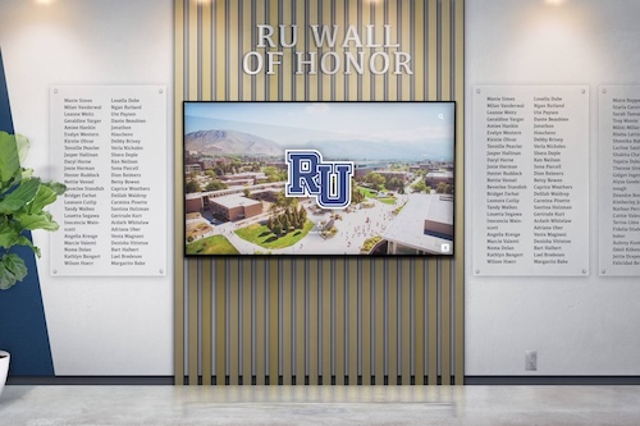
Live Example: Rocket Alumni Solutions Touchscreen Display
Interact with a live example (16:9 scaled 1920x1080 display). All content is automatically responsive to all screen sizes and orientations.
After IEA National Finals concludes each spring, athletic offices and recognition editors often receive a dense stack of results: individual class wins, a Leading Rider title, team standings by discipline and level, horse-of-show credits going to horse providers, and sportsmanship honors naming a specific rider, coach, or volunteer. Each layer is a different kind of award with a different recipient unit. Collapsing them into one generic entry—“our student won at IEA Nationals”—misrepresents what actually happened and creates display errors that can persist for decades.
This guide uses the Interscholastic Equestrian Association’s official May 4, 2026 release describing the 24th Annual National Finals—held April 23–26, 2026 at the National Equestrian Center in Lake St. Louis, Missouri—as a concrete reference for recognition editors. The goal is editorial accuracy: understanding what each award type means, to whom it belongs, and how to separate the layers before creating any display entry. Source: IEA, May 4, 2026 (rideiea.org).
Athletic directors and communications staff who have worked with other championship formats sometimes carry assumptions that do not transfer to IEA equestrian results. The structure of IEA competition produces several coexisting honors at the same event, each with a specific scope. Getting that scope right at the moment of entry—rather than correcting it years later—is what this guide addresses.
A recognition display that separates award categories—individual class, team placing, special honor—lets each achievement stand on its own sourcing and reach its correct recipient.
IEA and IDA: Two Organizations at the Same Venue
The IEA is the Interscholastic Equestrian Association, a youth organization for riders in grades 4–12. Its 2026 National Finals for Hunt Seat and Dressage drew nearly 600 middle and high school athletes representing 217 teams.
For the third year, IEA also hosted the IDA—the Intercollegiate Dressage Association—at the same venue. The IDA runs collegiate dressage competition; its participants are college students, not high school riders. At the 2026 event, IDA held its own National Championships concurrently, with its own results, its own awards, and its own parade of teams.
The 2026 release covers both IEA and IDA results. A recognition editor preparing a school display for a high school equestrian program should use only the IEA results. Any entry labeled “IDA National Championships” describes a collegiate competition, regardless of where it was held. Do not apply IDA result language to a high school student’s IEA achievement, even when both competitions took place at the same facility on the same dates.
Separately, the IHSA (Intercollegiate Horse Shows Association) presents the IEA Varsity Open Championship (VOC) class and lends its name to that class title. IHSA is a collegiate organization acting as a presenting sponsor at an IEA event. The riders in the VOC are IEA high school competitors; the class outcome belongs in an IEA display entry, not an IHSA entry.
The Draw-Based Format: Horses Are Provided, Not Owned
IEA uses a draw-based competition format. Riders are assigned an unfamiliar horse for each class, with little to no warm-up allowed before competing. All horses at the 2026 National Finals were provided by IEA member teams, colleges, local barns, and individual horse owners—not by the competing riders or their schools.
This format has direct consequences for recognition entries:
- A rider who competed on a horse they were assigned by draw did not own that horse, train with that horse ahead of time, or have a continuing relationship with it after the class.
- If a horse receives an award at the show—Outstanding Horse of the Show, Thoroughbred Horse of the Show, Most Valuable Paint—that award belongs to the horse and to the team or institution that provided it. The rider who happened to draw that horse for a class does not receive or hold the horse award.
- Do not describe a horse-of-show award as a rider achievement or attach a rider’s name to it as though the rider selected or owns that animal.
The draw format is also what makes IEA competition a team sport: every rider from beginner level through Varsity Open contributes points to a shared team score. No single rider’s performance equals the team’s placing.
Five Award Layers at IEA National Finals
The 2026 National Finals produced at least five distinct types of recognition, each with its own scope and recipient unit. These can and do coexist for a single individual or team at the same event, but they are not interchangeable.
| Award layer | What it recognizes | Recipient unit | Example from 2026 Hunt Seat results |
|---|---|---|---|
| Individual class championship | Top finish in one specific class (e.g., Varsity Open Equitation over fences 2'6") | The placing rider, in that class | Winner of Varsity Open Equitation over fences 2'6" individual class — Ridge Road Riders (H11) |
| Leading Rider title | Top honor in a discipline; determined by VOC (Hunt Seat) or Varsity Open Dressage Test (Dressage) | Named rider and their competing team | 2026 Hunt Seat Leading Rider — Empress Equestrian Team (H5) |
| Team placing | Cumulative team score across all rider levels and classes, within one discipline and one division | The named team (barn/team name, not necessarily a school name), in the specified discipline and division | Hunt Seat Upper School Champion — Waters Edge Farm (H3) |
| Horse-of-show or provider award | Outstanding performance or breed distinction of a specific horse | The named horse and the team or institution that provided it | Outstanding Over Fences Horse of the Show — Truman, provided by JMG Stables (H7) |
| Sportsmanship, service, or lifetime achievement award | Conduct, contribution, or career service to the IEA | Named rider, coach, volunteer, or adult member; not an athletic championship | Hunt Seat Coach Sportsmanship Award — Black Diamond Equestrian (H5) |
A rider can appear in more than one row of this table at the same event. Winning an individual class and earning the Leading Rider title are both legitimate honors that can coexist for the same person. Neither cancels or explains the other, and each requires its own display entry with its own sourcing.
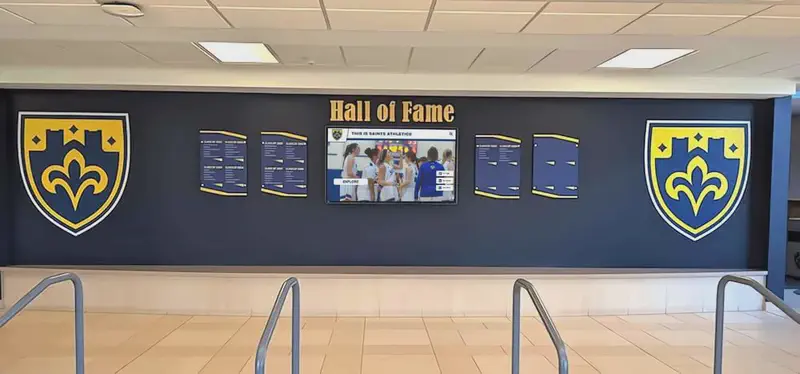
A recognition wall that physically separates individual achievement plaques from team standings and special honors helps visitors understand what each piece of recognition represents.
Hunt Seat and Dressage: Separate Disciplines, Separate Results
The 2026 National Finals covered two IEA disciplines: Hunt Seat and Dressage. Each discipline has its own team standings, its own Leading Rider, its own individual class results, and its own special awards list. Western discipline competition was scheduled separately for June 2026 in Fort Worth, Texas; it is not part of the April 2026 results.
A display entry for a Hunt Seat team placing does not describe a Dressage result, and vice versa. When recording any team placing, special award, or individual class win from an IEA National Finals, the discipline name belongs in the entry. “IEA National Champion” without a discipline name is an incomplete record.
The 2026 Leading Rider honors are separate by discipline:
- Hunt Seat discipline: Leading Rider determined by the Varsity Open Championship (VOC) class, presented by IHSA and sponsored by Otterbein University. Zone qualifiers and top individual class finishers combine for the VOC field.
- Dressage discipline: Leading Rider determined by the Varsity Open Dressage Test class. The 2026 Dressage Leading Rider rode a horse provided by Otterbein University—a provider, not the rider’s school.
Both Leading Rider titles are IEA honors. The discipline label—Hunt Seat or Dressage—must appear in any display entry.
Upper School vs. Futures: Two Divisions Within Each Discipline
IEA teams also compete in two separate divisions by school level: Upper School (high school) and Futures (middle school, grades 4–8). Teams in each division accumulate points only against other teams in the same division. A Futures (middle school) team placing and an Upper School placing are distinct results, even when the competing teams share a barn name.
The 2026 results include a notable illustration of why this matters. The same team—Candy Lane Acres (H11)—appeared in both the Upper School results (8th place) and the Futures results (Champion) for Hunt Seat at the same National Finals. Without the division label, an entry for “Candy Lane Acres — Hunt Seat National Finals” is ambiguous: it could describe either an 8th-place Upper School finish or a Futures championship. These are different honors belonging to different groups of riders.
Every team placing entry for an IEA display should specify:
- Discipline (Hunt Seat or Dressage)
- Division (Upper School or Futures)
- Place
- Team name as listed in official results
A display entry that omits any of these four elements is an incomplete record.
The JET Perpetual Trophy: Specific Scope, Not Universal
At the 2026 National Finals, the Champion Hunt Seat Upper School Team and the Champion Hunt Seat Futures (Middle School) Team each received a Junior Essex Troop of Cavalry (JET) perpetual trophy, along with a custom saddle from Arena Saddles.
This detail has three important limitations for display editors:
Scope is Hunt Seat only. The 2026 release describes JET perpetual trophies for Hunt Seat team champions. The release does not describe a JET trophy for Dressage team champions. Do not generalize this specific award to the Dressage discipline, to the Western discipline, or to individual class winners.
Scope is team champion only. The JET trophy went to the champion team in each division, not to every placing team. Do not describe a reserve or lower-placing team as a JET recipient without independent verification.
“Perpetual trophy” does not detail a retention or return schedule. The release describes presentation of the trophy at the 2026 event. It does not specify whether the trophy is retained permanently, displayed at a central location, or returned for future presentation. A display entry can note that the team received the JET perpetual trophy at the 2026 National Finals. It should not assert that the school now permanently holds the trophy or describe a retention arrangement that is not documented.
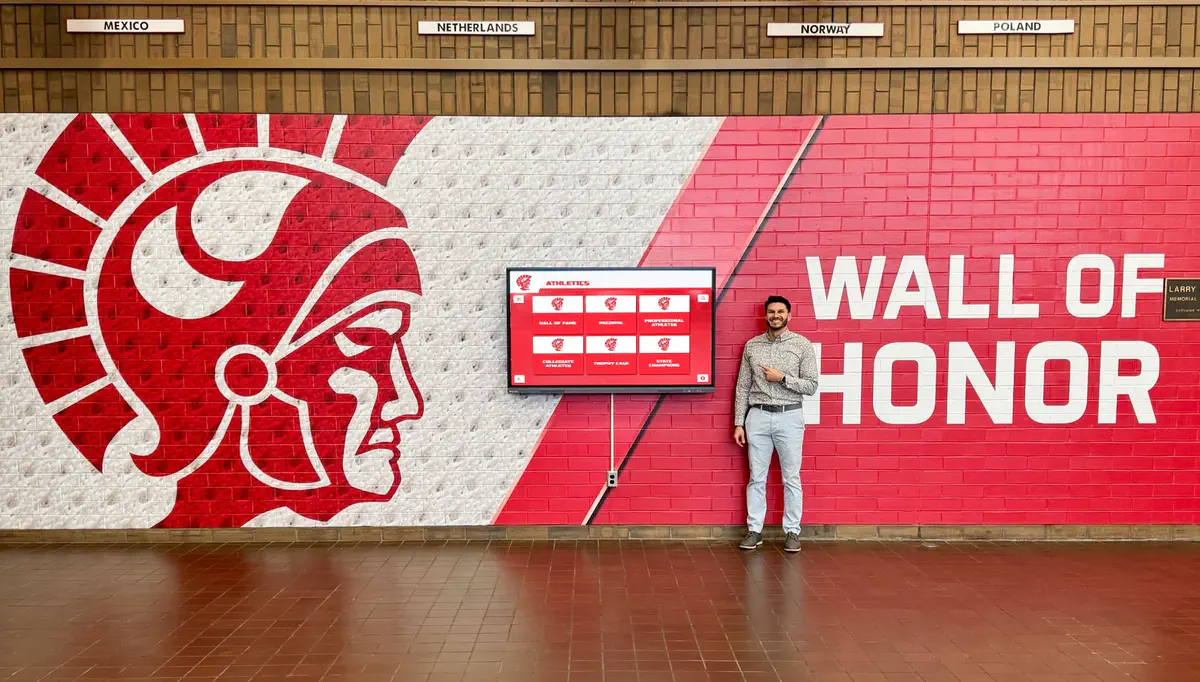
School hallway displays that name the award, the team, and the year give visitors the context needed to understand each honor without ambiguity.
Horse-of-Show and Provider Awards: What Belongs in the Entry
The 2026 Hunt Seat National Finals Special Awards list includes several horse-specific honors, each credited to a named horse and the team or institution that provided it:
- Outstanding Over Fences Horse of the Show — Truman, provided by JMG Stables (H7)
- Outstanding Flat Horse of the Show — Earl, provided by Cedar Lodge Equestrian (H5)
- Nancy Kohler-Cunningham Stewards Choice Horse — Noah, provided by Legend Hill (H5)
- Outstanding Thoroughbred Horse — Truman, provided by JMG Stables (H7)
The 2026 Dressage Special Awards list includes additional horse-specific honors, each credited similarly to a named horse and providing team or institution.
None of these horse awards are rider awards. The rider who drew and competed on one of these horses in a class did not earn, hold, or possess the horse-of-show recognition. If a school’s student happened to ride an outstanding horse during the event, the school can note that the student competed on that animal—but the award belongs to the horse and its provider.
The same principle applies to breed-specific awards such as the APHA Most Valuable Paint (MVP) and the Arabian Horse of the Show: each belongs to the named horse and the team that provided it, not to the competing rider.
Sportsmanship, Service, and Lifetime Achievement Awards
The 2026 IEA National Finals introduced two new perpetual awards and continued existing honors for conduct, coaching, service, and career contribution. These are distinct from athletic competition results:
New in 2026 — Jenna Teachman Memorial Sportsmanship Award for a Rider: A rider-specific sportsmanship award, presented to a rider from Fox Ridge Farm (H1), sponsored by Team Kimberden IEA. This is a conduct recognition, not a competition placement.
New in 2026 — Deb Wesoja Memorial Coach Sportsmanship Award: Named for Zone 1 IEA coach Deb Wesoja, who passed away in October 2025. The award was presented posthumously in its inaugural year. This is a coach sportsmanship recognition, not an athletic championship.
Hunt Seat Coach Sportsmanship Award: Presented to a named coach from Black Diamond Equestrian (H5). A coaching honor, not a team or rider championship.
Timothy J. Boone Lifetime Achievement Award: The highest honor the IEA gives to an adult member for long-term service. The 2026 recipient was Gretchen Dye, IEA Zone 5 Administrator. This is a career service recognition given to an adult administrator, not a competition win.
Team Spirit Award: Presented separately for Hunt Seat (Everything Little Farm, H11) and Dressage (Laurel Manor Equestrian, D5). A spirit and participation recognition, not a team championship.
Volunteer of the Show: Named to specific volunteers for Hunt Seat and Dressage. A service recognition, not an athletic placement.
When a school recognizes a student, coach, or staff member who received one of these awards, the entry should describe the actual award category — sportsmanship, service, spirit — rather than conflating it with an athletic championship or team placing.
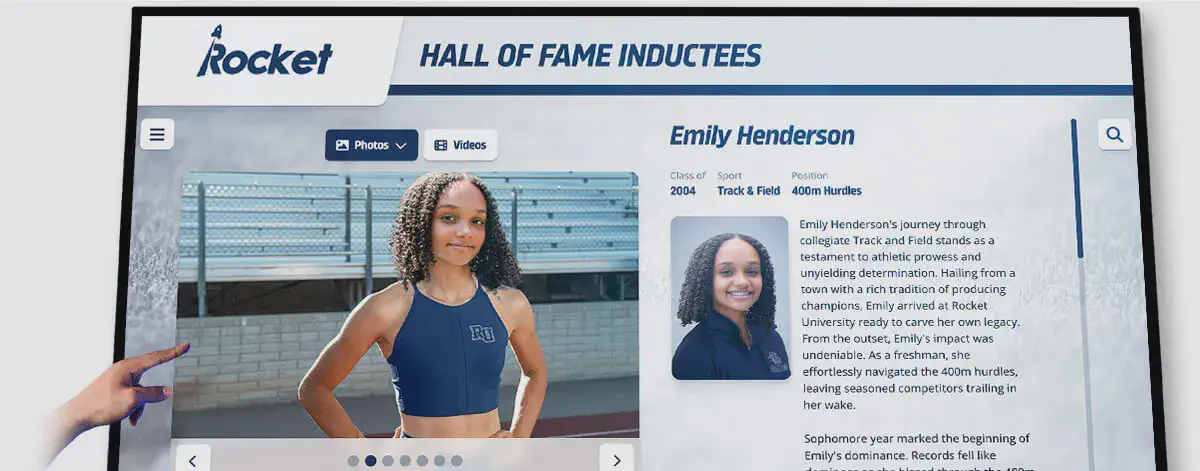
Digital recognition displays can carry separate entries for a sportsmanship award, a team placing, and an individual class win from the same event—keeping each honor visible in its own context.
Team Name Integrity: The Barn Name Belongs in the Entry
IEA teams compete under team names that are typically barn or club names, combined with a zone identifier (H3, D5, etc.). The official 2026 results list teams under those names: Waters Edge Farm (H3), Candy Lane Acres (H11), Green Oaks Equestrian (D5), Grier School (D2), and so on. Some of these names correspond to a school; others are barn names or independent equestrian programs.
A school recognition editor whose student competed on a named team can accurately celebrate the student’s role and that team’s finish. What the entry should preserve:
- The team name exactly as listed in official IEA results
- The discipline, division, and place
- The student’s role as a member of that team (not the sole representative of the school)
What the entry should not do:
- Replace the team name with the student’s school name, claiming the school won a title it did not enter under its own name
- Imply that one student’s membership on a barn team means the barn team is the school’s team
- Describe the team’s championship as an independent school championship
Schools can recognize students who competed on IEA teams with full accuracy: cite the team name the student rode under, the student’s role, and the honor that team earned. That approach honors the student, respects the team, and preserves an accurate record.
Blank Caption Worksheets
The worksheets below are blank editorial planning tools. Fill each from verified primary source documents—official IEA results, the IEA release, or timing service records—before creating any display entry. A blank field means more research is needed, not that the field can be inferred from memory or a news headline.
Worksheet A — Individual Class Award
| Field | Your verified entry |
|---|---|
| Discipline (Hunt Seat or Dressage) | |
| Division (Upper School or Futures) | |
| Class name (exact name from official results) | |
| Place (1st, 2nd, 3rd, etc.) | |
| Rider name (from official results) | |
| Competing team name (as listed in results, with zone) | |
| IEA event name and year | |
| Source URL or document |
This table is a blank editorial planning aid. It is not a submission form or required import schema.
Worksheet B — Team Placing
| Field | Your verified entry |
|---|---|
| Discipline (Hunt Seat or Dressage) | |
| Division (Upper School or Futures) | |
| Team name (as listed in official results, with zone) | |
| Place (Champion, Reserve Champion, 3rd, etc.) | |
| JET perpetual trophy awarded? (Hunt Seat Champions only; verify from source) | |
| IEA event name and year | |
| Source URL or document |
This table is a blank editorial planning aid. It is not a submission form or required import schema.
Worksheet C — Horse, Sportsmanship, or Service Award
| Field | Your verified entry |
|---|---|
| Award name (exact name from official results) | |
| Award category (horse/provider, rider sportsmanship, coach sportsmanship, volunteer, service, spirit) | |
| Named recipient (horse name and providing team, or rider/coach/volunteer name and affiliated team) | |
| Discipline (Hunt Seat or Dressage, if discipline-specific) | |
| IEA event name and year | |
| Source URL or document |
This table is a blank editorial planning aid. It is not a submission form or required import schema.
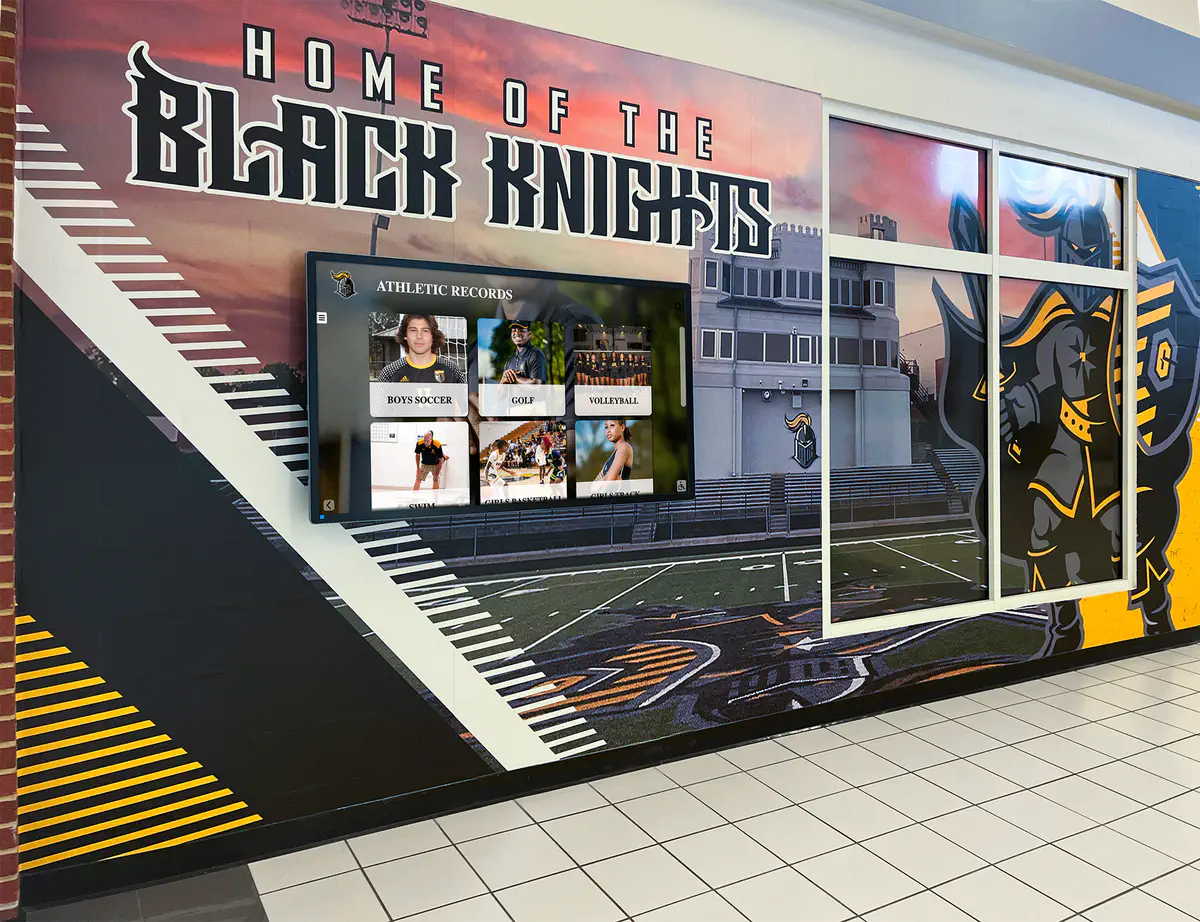
A hallway recognition display that records athletic achievements by sport, year, and award type gives each season's results their own permanent layer without crowding or conflating earlier records.
Preserving the Full Layer Stack Over Time
IEA results decay in accuracy when recognition entries are created from memory or second-hand accounts rather than from official documents. The draw-based format, the separation of disciplines and divisions, and the multiple award layers all create opportunities for the kind of compression that turns a Futures team placing into a vague “equestrian championship” and merges a sportsmanship award into an athletic title.
Collecting the full layer stack while results are still accessible—from the official release, the IEA results page, and direct confirmation from the student and coach—protects the entry against later confusion. This is especially important for programs with both Upper School and Futures riders competing in the same season, since the same team can produce placings in multiple division rows at the same show.
Approaches that work for other championship formats—such as organizing season rosters and team photos alongside results—can help equestrian recognition editors build a consistent file for each IEA season before entries are finalized. For programs with multi-year IEA participation, resources for collecting alumni memories for a team-history archive can help frame the questions worth asking while participants still remember specific details such as class assignments, division placements, and which team name a student competed under in a given season.
How Digital Displays Carry Multiple Award Layers
A physical trophy case or program insert typically captures one line per achievement. When a single IEA National Finals produces an individual class win, a Leading Rider title, a team placing, and a sportsmanship award for students from the same school or region, each of those belongs in a separate, labeled entry.
A digital recognition record can hold each layer as a distinct entry: discipline, division, award type, team name, year, and place. When a correction is needed—a team name recorded without its zone designation, a Futures placing mislabeled as Upper School—it can be made in the digital entry without reprinting or retroactively editing a physical display. When new IEA seasons add results, the previous year’s entries remain intact as their own dated records rather than being overwritten by a new season’s champion name.
The source integrity of each entry—which release or results page was used, when it was accessed—matters more for equestrian displays than for many other sports, because the multiple overlapping award categories make IEA results unusually easy to conflate. Keeping source references alongside each entry gives any future editor a path back to the original record when questions arise.
Schedule a conversation about your school’s equestrian recognition display
Live Example: Rocket Alumni Solutions Touchscreen Display
Interact with a live example (16:9 scaled 1920x1080 display). All content is automatically responsive to all screen sizes and orientations.