
The Easiest Touchscreen Solution




Live Example: Rocket Alumni Solutions Touchscreen Display
Interact with a live example (16:9 scaled 1920x1080 display). All content is automatically responsive to all screen sizes and orientations.
A historic school trophy XRF report delivers elemental readings at specific measured spots — not a complete picture of an object’s interior alloy, and not by itself a finding on maker identity, manufacturing date, or safe handling. Surface composition and bulk alloy composition frequently differ: plating, corrosion products, applied coatings, and the geometry of curved or engraved surfaces each affect what the instrument detects at any single measurement point. Understanding those distinctions is what separates a report you can act on from one you misread. This guide walks athletic directors, recognition coordinators, and their archival and purchasing partners through what historic school trophy XRF report interpretation actually requires — and what questions to take back to the professional who ran the instrument.
A conference championship trophy from the 1950s, a team presentation cup from 1967, a regional award from 1981 — school collections accumulate objects across decades, and each era of award manufacturing applied different alloys, platings, and finishing techniques to the hardware your athletes earned. When an XRF instrument is brought in to help identify what a historic trophy is made of, the resulting report is genuinely useful. It is also genuinely limited, and those limits matter when the report is used to inform display decisions, storage conditions, or conservation referrals.
Athletic directors and their archival and facilities partners are typically the people who receive XRF reports — not the conservators or scientists who produce them. This guide explains what those pages contain, what the numbers mean, and where professional interpretation is required before any physical decision is made about a trophy that represents real athletes, real seasons, and real community history.

Athletic record displays and trophy collections span multiple manufacturing eras — XRF analysis supports informed care decisions when its limitations are understood alongside its findings
What an XRF Report Actually Documents
X-ray fluorescence spectrometry works by directing a beam of X-rays at a surface. Elements in the sample absorb that energy and emit characteristic X-rays at wavelengths unique to each element. The instrument detects those emission wavelengths and converts them into elemental concentration estimates expressed as weight percentages or parts per million for trace elements.
The key word is surface. XRF does not penetrate an object uniformly. Penetration depth varies by element and by the energy settings of the instrument — heavier elements require higher X-ray energies and contribute to readings from greater depths, while lighter elements are detected from very shallow surface layers. For a typical portable XRF instrument used in heritage assessment, the effective analysis depth for common trophy metals ranges from a few microns for light elements to several hundred microns for heavier elements in a dense matrix.
A report showing 65% copper, 30% zinc, and trace lead at a spot on a trophy base is telling you the elemental composition of the material at that spot, integrated to whatever depth the instrument was calibrated to measure. It is not telling you what the trophy is made of in the sense of a foundry specification, and it does not confirm that those proportions hold throughout the object’s cross-section.
The introduction to Handheld XRF for Art and Archaeology, edited by Aaron N. Shugar and Jennifer L. Mass (available in preview here), addresses this at page 18, explaining that XRF measurements represent the elemental composition of the interaction volume at the measurement point — a region shaped by both the beam spot geometry and the energy-dependent penetration depth. Pages 26 through 29 elaborate on how calibration protocols affect quantitative accuracy and how surface condition at the time of measurement directly influences the reliability of reported concentrations. Smith’s parallel treatment at pages 38 through 44 emphasizes that readings from multiple spots across a single historic metal object routinely show variation not explained by manufacturing heterogeneity alone — variation that surface effects and sample geometry account for in significant part.
Why Surface Composition and Bulk Alloy Differ
For a freshly cast, homogeneous, uncoated metal object measured on a flat surface with an appropriately calibrated instrument, XRF produces quantitative results that closely approximate bulk composition. Historic school trophies are rarely any of those things.
Age-driven surface depletion. Alloys do not weather uniformly. In a brass (copper-zinc) object, zinc corrodes preferentially in many common environments through a process called dezincification. A surface that reads lower in zinc than expected for its apparent type may reflect decades of surface depletion, not a different alloy specification. The zinc content through the interior can be substantially higher than the surface reading suggests.
Corrosion layers. Metal corrosion products are chemically distinct from the parent metal. Green verdigris on a copper-alloy trophy is primarily copper carbonates and hydroxides, not native copper. An XRF measurement hitting a corrosion layer reports the elemental composition of that layer — which may concentrate certain elements and exclude others in ways that do not reflect the underlying metal at all. A report showing elevated sulfur near a tarnished spot is almost certainly detecting sulfide corrosion products rather than a sulfur-bearing alloy constituent.
Plating. Trophy hardware from the mid-twentieth century was frequently silver-plated, nickel-plated, or gold-washed over a base metal — zinc die-casting, pot metal, or copper alloy. If the plate is intact over the measurement spot, the XRF reading reflects the plate metal and whatever underlying layers the X-rays partially reach. The report may show predominantly silver or nickel even though the structural body of the trophy is a zinc alloy. If the plate has worn at the measurement spot, the reading mixes substrate and plate signals in proportions that depend on how much plate material remains at that point.
A plate that was originally fifty microns thick but has worn to twenty at a high-contact area gives a different reading than the same plate at a protected recess — and both measurements come from the same object in the same session.

Historic trophies in school halls of fame represent achievements earned across generations — material documentation through XRF supports appropriate conservation care when the report's surface-layer limitations are understood
Coating, Applied Finishes, and Geometry Effects
Beyond plating, historic trophy surfaces may carry lacquer coatings, wax treatments, or chemical conversion finishes. An organic lacquer is largely transparent to XRF because it contains no elements that fluoresce in the typical analytical window — but it adds a physical standoff between the instrument window and the actual metal surface, which introduces geometry effects in instruments that assume close contact with the sample.
Chemical conversion coatings — applied patinas, chromate finishes, blackening treatments — contain elements from the treatment process that may appear in the report alongside the underlying metal. A chromate-treated zinc surface may show chromium as a meaningful percentage in the report; that chromium comes from the surface coating, not from the alloy.
Geometry matters because XRF quantification assumes a flat, perpendicular measurement geometry. Curved surfaces, engraved recesses, and column joints introduce angular effects that alter the effective path length of both the incoming and outgoing X-rays, shifting apparent concentrations. A reading taken on a cylindrical column shaft will differ from one on the flat base of the same column for purely geometric reasons, independent of any composition difference between those two locations.
Engraved areas deserve particular attention. Engraving displaces metal and creates a textured surface; corrosion often concentrates in engraved grooves where atmospheric moisture lingers. A measurement taken near an engraved area combines the effects of geometry change, surface texture, and potentially concentrated corrosion products — making the resulting reading especially sensitive to specialist interpretation before any conclusion is drawn.
Detection Limits and What the Report Leaves Out
Every XRF instrument has a detection limit for each element — the minimum concentration that produces a statistically distinguishable signal above background noise. Common detection limits for portable XRF on metal alloys run from tens to hundreds of parts per million depending on the element, matrix, and instrument configuration.
An element absent from a report may be genuinely absent, or it may be present below the detection limit. Those are different situations with different implications. A conservator-reviewed XRF report will note stated detection limits alongside findings; a school receiving only a table of positive detections should ask specifically what the instrument was capable of detecting at the concentrations relevant to the object type.
Two categories of elements carry particular significance for school trophy collections:
Lead. Lead appears as a deliberate alloy additive in many period brass and bronze formulations where it improved machinability, as well as in certain solder types at joints and in some pigmented coatings on wooden trophy bases. Lead detection on metal trophies is generally reliable when concentrations are meaningful, but surface migration and grain-boundary concentration mean that a spot reading represents one point, not a mean bulk value. Professional guidance on handling implications is required and is outside the scope of XRF results alone.
Light elements. Carbon, nitrogen, and oxygen are undetectable by standard portable XRF; hydrogen is equally invisible to the technique. Organic lacquers, adhesives, and many corrosion species are partly or wholly composed of these elements. XRF cannot characterize what falls below its elemental detection range; a separate analytical technique is required for organic component identification when that information matters.
Calibration: Why the Same Trophy May Yield Different Numbers
XRF quantification is calibration-dependent. An instrument calibrated against a set of reference standards for a specific matrix — say, copper-based alloys — will produce accurate results for objects within that compositional range. Applied to a zinc die-cast object, or to a heavily corroded surface, or to a thin plate on an incompatible substrate, that same calibration may produce systematic quantitative errors.
Portable XRF instruments used in field heritage assessments often operate on factory calibrations or fundamental parameters modes that perform well across a general range but may not match the specific conditions of historic trophy alloys. Thin-film calibrations are more appropriate for plated objects. Matrix-matched calibrations are more appropriate for cast bronze or brass of known compositional ranges.
When reviewing a report, note whether it states the calibration mode or reference standards used. A report that provides elemental readings without specifying calibration approach is incomplete for conservation decision-making purposes. The specialist who operated the instrument can clarify whether the calibration applied was appropriate for the object type being assessed.

Schools maintaining historic athletic recognition collections benefit from conservator-reviewed XRF findings when surface readings are interpreted against calibration and plating context
What XRF Cannot Establish on Its Own
A well-executed XRF analysis with appropriate calibration, multiple spot measurements across the object, and specialist interpretation produces reliable elemental identifications and defensible compositional estimates for surface and near-surface layers. It does not produce the following conclusions without supporting evidence:
Maker or manufacturer attribution. Many manufacturers produced similar alloy formulations during overlapping periods. An XRF reading consistent with a particular brass specification does not establish which foundry cast the piece or when. Maker attribution requires additional evidence — documentary records, hallmarks, stylistic analysis, archival comparison with dated examples.
Manufacturing date. Alloy specifications changed across decades, and some formulations remained in commercial use for long periods. A compositional reading consistent with a known period specification is compatible with that date range; it does not exclude later manufacture or deliberate reproduction.
Authenticity determination. Establishing that an object is what it is represented to be — a genuine championship award from a specific year — requires a combination of evidence that XRF contributes to but cannot complete. Elemental analysis is one input among several.
Compound identification. XRF identifies elements, not the chemical compounds those elements form. A reading showing copper alongside elevated oxygen does not distinguish cuprite from malachite from tenorite — three distinct corrosion compounds with different conservation implications. Compound identification requires X-ray diffraction or Raman spectroscopy applied to the area in question.
Safe handling determination. The presence of lead or other elements of handling concern in an XRF report is important preliminary information, but establishing safe handling protocols requires professional assessment of the specific exposure conditions — surface accessibility, dust generation risk, contact duration — that the analytical result alone does not characterize.
Questions to Ask the Specialist After Receiving a Report
When an athletic department receives an XRF report, these questions direct the most productive follow-up with the specialist who conducted the analysis:
- Which spots were measured, and do the report or accompanying notes document the location of each spot on the object?
- What calibration mode or reference standards were used, and is that calibration appropriate for this object type?
- Which elemental readings reflect surface features — corrosion products, plating, applied coatings — rather than the underlying alloy?
- For elements present at low concentrations, how do those values compare to the instrument’s stated detection limit for that element?
- Is there visible evidence of plating or surface treatments that the readings should be interpreted in light of?
- What qualified alloy conclusion can be drawn from these readings, and what remains genuinely unresolved?
- What additional analysis would be needed to resolve unresolved questions, and in what priority?
- Are there handling or storage implications from the findings that require separate professional assessment?
The Athletic Hall of Fame Accession Form: Document Every Artifact Before Display provides a useful framework for structuring documentation requests alongside this specialist follow-up — an accession record for each analyzed trophy should include a dedicated section for analytical reports, their interpretive status, and any open questions the specialist has flagged.
Keeping the XRF Report With Trophy Catalog Records
An XRF report separated from its object context loses most of its interpretive value. The spot locations, surface condition at time of measurement, calibration parameters, and specialist notes are all necessary to understand what the numbers mean. A report filed without those contextual elements becomes an orphaned table of percentages that future staff cannot reliably act on — or worse, may act on incorrectly.
Standard practice for school trophy archives is to retain the following as a unified record for each analyzed object:
| Record Component | What to Capture | Why It Matters |
|---|---|---|
| Spot location photographs | High-resolution images of each measured location before analysis | Confirms what surface condition existed at measurement; provides visual context for any surface effects noted |
| Full XRF report | Complete instrument output, not just the positive detections summary | Detection limits, calibration mode, and uncertainty ranges are essential interpretive context |
| Specialist interpretive notes | Written summary of qualified conclusions and unresolved questions | Distinguishes what the data supports from what requires additional analysis |
| Object condition record | Date, condition description, and conservator referral status at time of analysis | Establishes when readings were taken relative to any prior cleaning, handling, or treatment events |
| Trophy catalog metadata | Award name, year, sport or activity, recipient(s), acquisition source | Connects the physical analysis to the achievement record and the athletes the trophy represents |
Maintaining this documentation bundle as a unit for each analyzed object — and linking it to the digital recognition record for that trophy — means future staff inherit a complete asset rather than an isolated data file. The Hall of Fame Biography Fact-Check Checklist: Names, Dates, Teams, and Honors approach applies directly to this linkage: verifying that the catalog metadata — who received the award, for what achievement, in what year — is accurate and attached to the analytical record preserves both the historical and the material dimensions of each piece in a form that survives staff turnover.
Photographic documentation of measurement spots has its own archival requirements. The Athletic Archive Cyanotype Photograph Intake: Protecting Blue Team Photographs Before Digitization workflow illustrates how photographic documents in athletic archives require structured intake procedures before digitization — the spot photographs from an XRF session are similar in kind: they document a specific condition state at a specific point in time and should be treated as archival records rather than incidental images attached to a report.
For departments building out a broader historical image and records archive alongside trophy documentation, the Historical Photos Archive for Schools: Complete Guide to Digitizing and Showcasing Your Institution’s Oldest Photos in 2025 addresses how photographic preservation integrates with the school’s overall recognition and history program — a natural home for XRF spot photographs alongside team portraits and championship imagery.
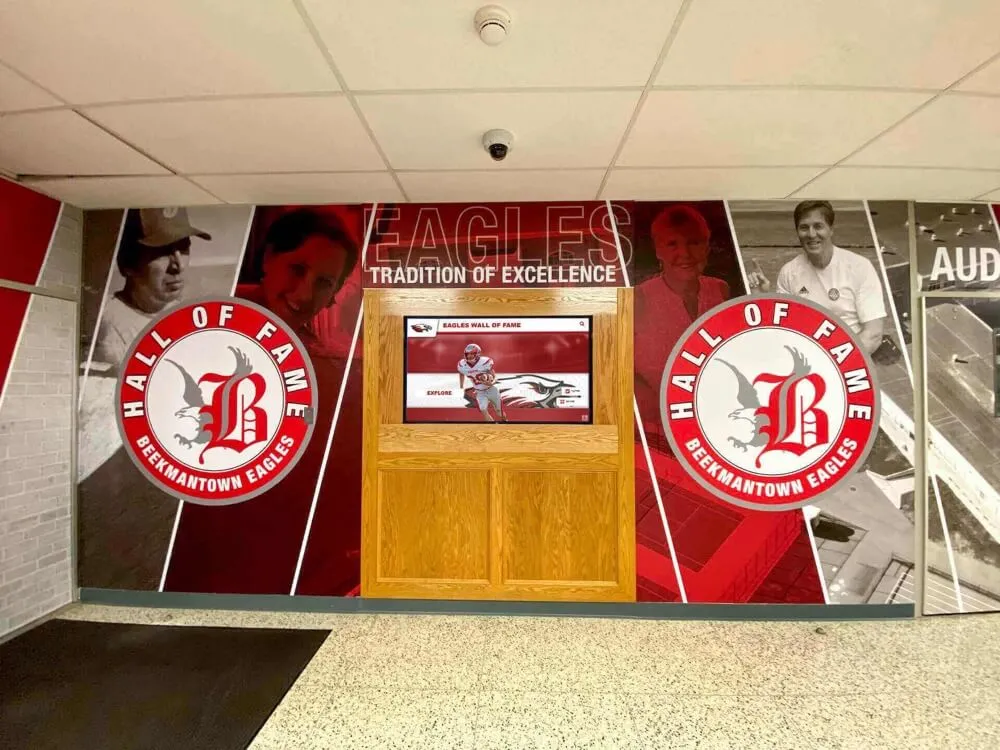
Recognition collections that hold hardware from across decades benefit most from complete documentation: XRF reports, spot photographs, specialist notes, and catalog metadata retained together as a single record per object
XRF Interpretation Checklist for Athletic and Archive Staff
Use this checklist when an XRF report arrives for a historic school trophy or collection segment:
Before the analysis session:
- Confirm a qualified specialist is operating the instrument — this is not a staff-administered procedure
- Prepare a basic catalog entry for each object to be analyzed: award name, apparent year, visible material type, known condition issues
- Arrange for spot photographs to be taken at each intended measurement location before analysis begins
- Identify whether any visible plating, surface coating, or active corrosion is present on each object
When reviewing the report:
- Confirm spot locations are documented in the report or accompanying photographs
- Note the calibration mode or reference standards stated in the report
- Identify any readings the specialist flags as reflecting surface features rather than bulk alloy
- Verify detection limits are stated for any elements appearing at trace concentrations
- Record any unresolved questions the specialist identifies — a good report names its own limitations
After receiving the report:
- File the full report, spot photographs, specialist notes, and object condition record together as one archival unit per object
- Link the analytical record to the digital trophy catalog entry for that award
- Note whether any elements of handling concern were identified and whether separate professional handling guidance is needed before the object is returned to regular handling or display
- Do not polish, scrape, or clean measured surfaces to prepare them for future readings — surface preparation changes the measurement conditions and eliminates the comparability of any subsequent analysis
- Do not display, lend, or transfer an object while a conservation referral from the report remains open
Tracking which trophies have been analyzed — and which remain in the queue — benefits from the same systematic inventory approach used for other physical recognition assets. The Championship Banner Inventory: Track Titles, Years, Sports, and Display Locations method of item-level tracking translates directly to a trophy analysis queue: a simple spreadsheet mapping each object to its analytical status, report location, and any open specialist questions keeps the project manageable for an athletic department without dedicated conservation staff.
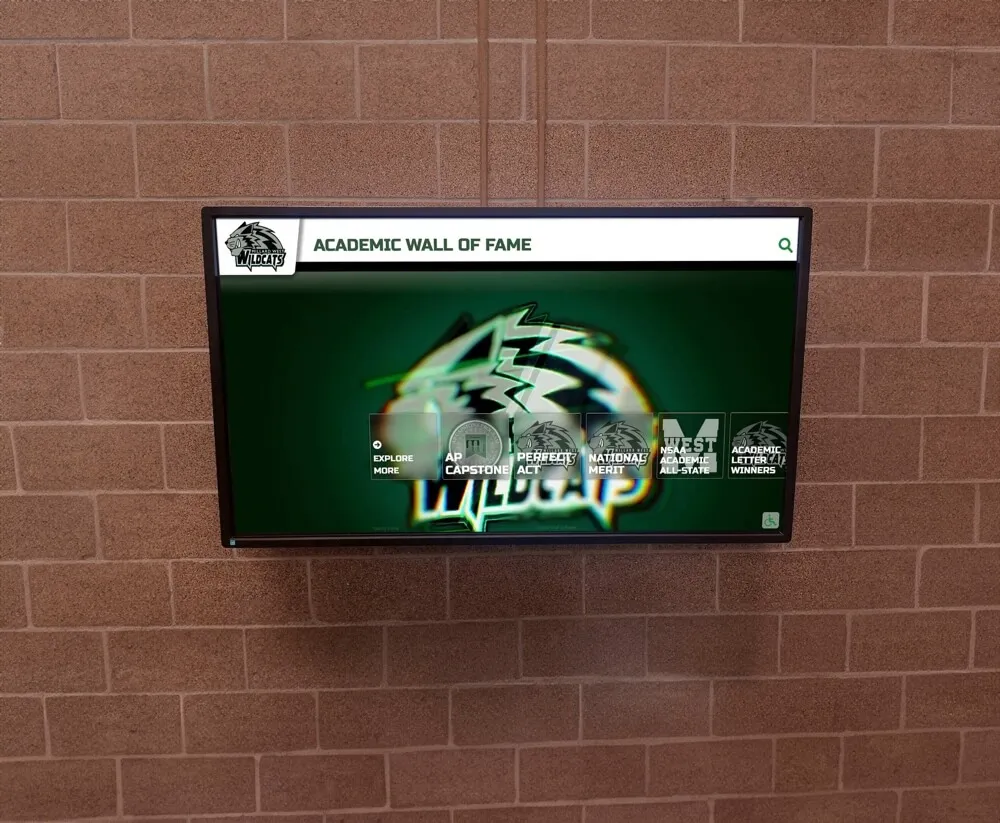
When historic trophy hardware enters conservation workflows, a digital recognition record preserves the achievement context — athlete names, years, and awards remain visible to your school community regardless of where the physical object is in the assessment process
Frequently Asked Questions
What does an XRF report actually tell you about a historic school trophy? An XRF report tells you the elemental composition of the material at each spot measured, to the depth the instrument can detect for those elements under its calibration settings. It is a starting point for material identification — not a complete alloy specification, not a dating tool, and not an authentication finding on its own. A specialist interpreting the readings in the context of surface condition, plating evidence, and calibration parameters converts raw elemental percentages into actionable conclusions.
Why would two spots on the same trophy give different XRF readings? Several factors produce spot-to-spot variation on a single object: plating may be thicker or more worn at different locations; corrosion may be localized; geometry changes across a curved surface introduce angular measurement effects; and alloy segregation during original casting can create compositional variation within the object itself. A specialist seeing wide variation between spots will interpret that pattern — it may indicate plating rather than solid alloy, localized surface treatment, or measurement geometry issues, each with different implications.
Does a lead detection in the XRF report mean a trophy is unsafe to handle? Not automatically, and an XRF result is not by itself a safe-handling determination. Lead appears in many period alloys and solders as a normal constituent. Whether its presence creates a handling concern depends on the concentration, the surface condition, whether the surface is dusty or friable, and the nature and duration of contact — factors that require professional assessment beyond the XRF result. Treat a lead detection as a flag requiring professional follow-up, not as a disposal or lockdown trigger.
Should staff clean trophies before XRF analysis to get cleaner readings? No. Cleaning changes the surface condition the instrument is measuring, eliminates the corrosion layer that may be part of the diagnostic picture, and removes material that cannot be restored for comparison later. The specialist needs to see the object as it exists. Any cleaning or surface preparation decisions belong after analysis, guided by conservator recommendations — not before, to improve the appearance of readings.
What is the difference between a surface reading and a bulk alloy conclusion? A surface reading is the elemental composition the instrument detects at the measurement spot, potentially including plating, corrosion products, coatings, or surface-enriched phases. A bulk alloy conclusion is the professional’s interpretation of what that reading means for the underlying material — taking surface effects into account and drawing a qualified finding about what the object is likely made of through its cross-section. The difference matters because surface effects can substantially alter apparent percentages; the bulk conclusion is what informs conservation and display decisions.
Can XRF prove that a trophy was made in a specific decade? Not on its own. Alloy formulations overlapped across decades, and identical compositions were produced by different manufacturers in different eras. XRF can establish that a composition is consistent with a particular period or manufacturing type, which is useful corroborating evidence alongside documentary and stylistic records. It cannot exclude other manufacture dates without additional supporting information.
How long should schools retain XRF reports? Indefinitely, as part of the object’s permanent catalog record. Condition documentation — including analytical records — is most valuable when it spans the full life of the object in your collection. A report from today becomes a comparison baseline for future assessments; a report filed and then discarded after five years eliminates that baseline. Retain the full report alongside spot photographs and specialist notes, linked to the digital recognition record for the award.
Keep Every Achievement Accessible While Historic Hardware Is Assessed
When a historic trophy enters a conservation workflow — awaiting XRF analysis, specialist review, or stabilization — the athletic achievement it represents should not disappear from your school community's view. Rocket Alumni Solutions builds interactive digital trophy cases that preserve every championship, every athlete name, and every award record in a cloud-managed display your community can access regardless of where the physical object is in its care cycle. Unlimited record capacity, ADA WCAG 2.1 AA compliant touchscreens, and remote content updates keep your recognition program current and complete.
Schedule a DemoLive Example: Rocket Alumni Solutions Touchscreen Display
Interact with a live example (16:9 scaled 1920x1080 display). All content is automatically responsive to all screen sizes and orientations.