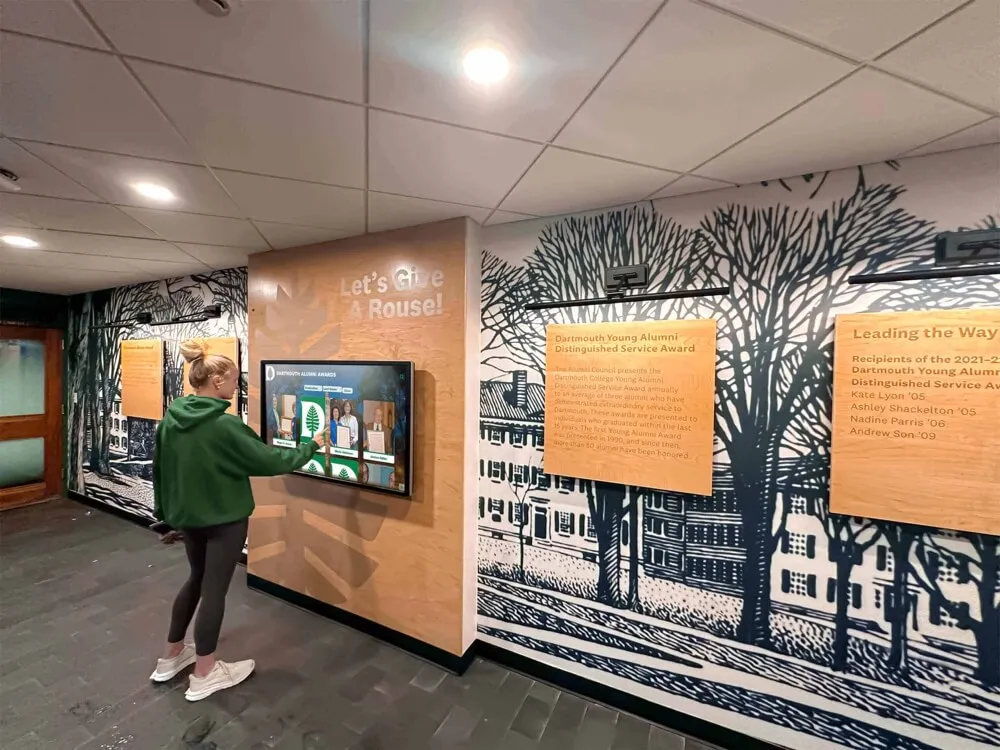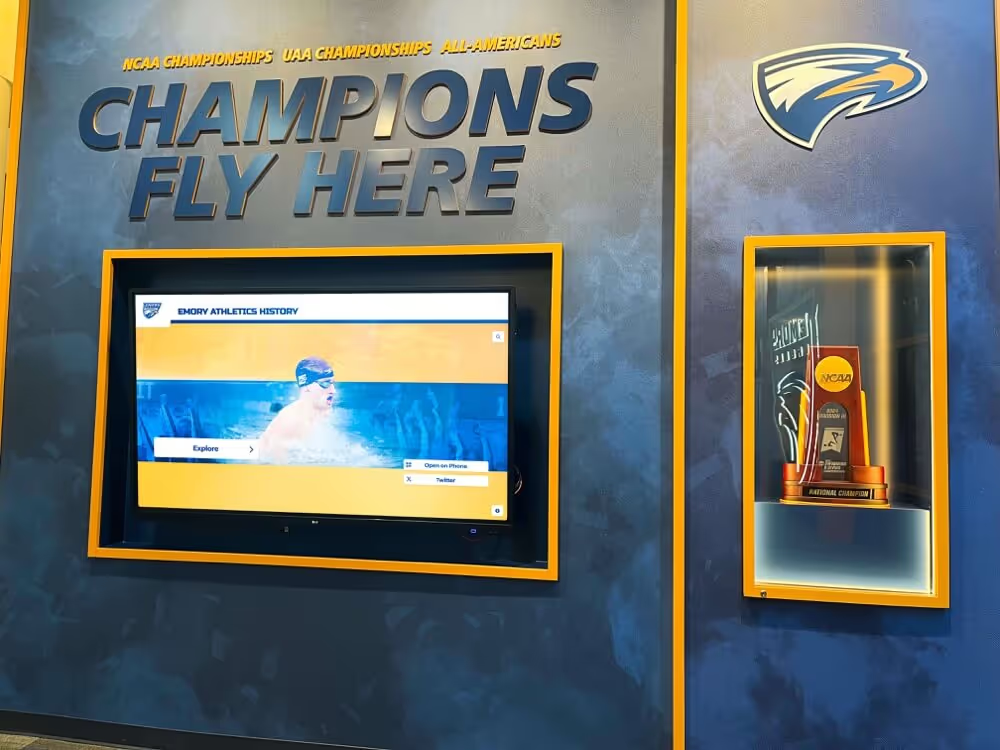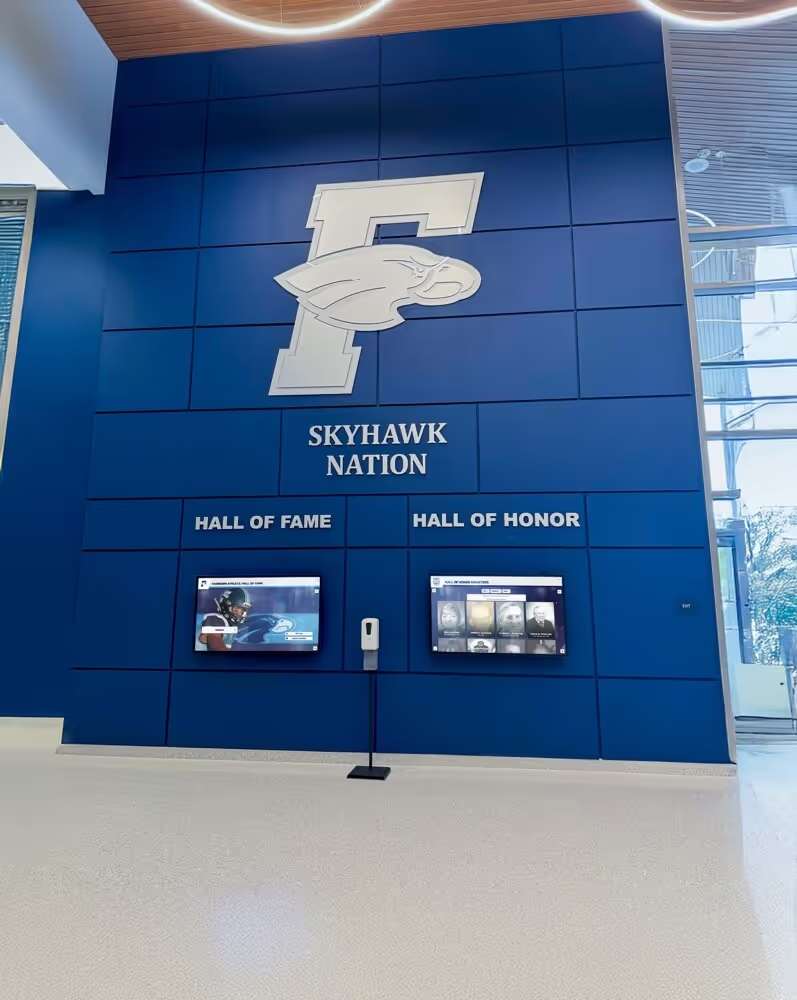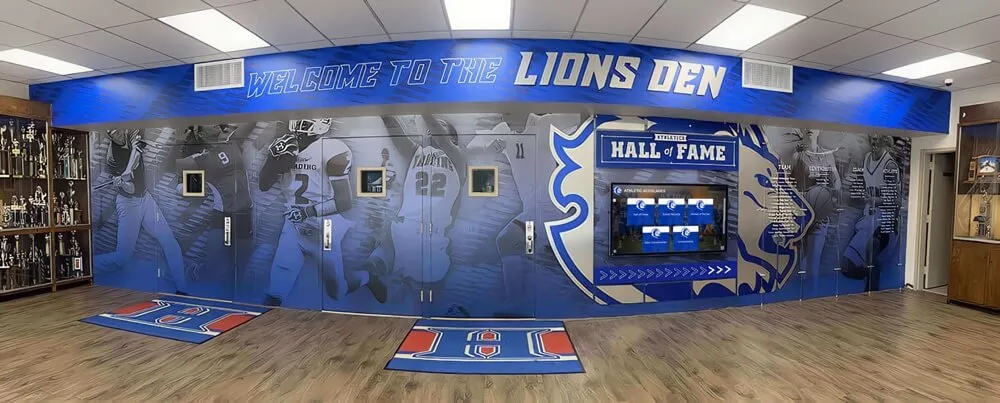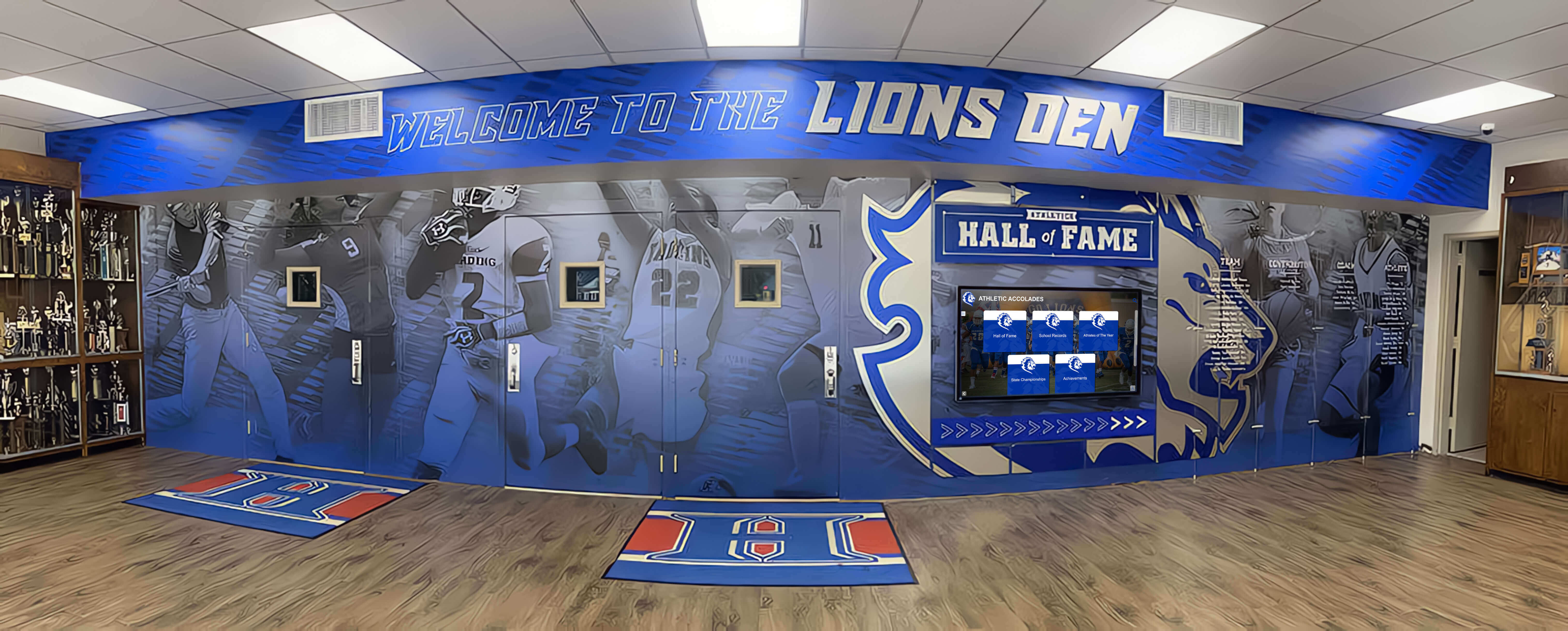




Conservative care of a historic school trophy with mother-of-pearl inlay starts before you touch the object: photograph every inlay panel, note any loose edges, chips, or prior adhesive repairs, and check whether any insert has already separated. Support the whole trophy from below when you move it — never by the figurine or a projecting element — and keep metal-polishing products away from the shell surface entirely. If any inlay insert is loose, lifting, or detached, do not press it back or attempt a field repair; store the loose piece separately and refer the trophy to a conservator. A complete digital recognition record preserves the athletic achievement these trophies represent even when the physical object enters a conservation workflow.
School trophy collections assembled across the mid-twentieth century regularly include hardware decorated with thin shell panels bonded to metal bodies, wooden plinths, or cast resin frames. These inlays can remain stable for decades under good display conditions — but they respond poorly to the cleaning products and casual handling that work safely on solid-metal modern awards. The checklist and workflow below give athletic directors, recognition coordinators, and their archives or facilities partners a structured procedure for assessing, documenting, and handling these composite objects before any display decision is made.

Trophy cases housing awards from multiple decades often contain composite objects — metal bodies, inset panels, applied finishes — that each require material-specific handling before re-display
What Makes Shell Inlays Vulnerable in Composite Trophies
Mother-of-pearl, the common name for nacre, is a naturally occurring composite: thin aragonite (calcium carbonate) platelets bound together by conchiolin, a protein matrix secreted by the mollusk. The resulting material has a distinctive iridescent surface and reasonable hardness — but both the mineral layers and the organic binder have specific vulnerabilities that interact with the other materials in a composite trophy.
Physical fragility. Nacre is harder than it looks but brittle under point loading. A drop, an unsupported lift, or pressure applied to one edge of a panel can crack or delaminate the shell. The Canadian Conservation Institute’s guide on caring for natural history collections notes that shells “may be more fragile than they appear” — a caution that applies equally to worked shell used as inlay material in manufactured objects.
Light-sensitive pigments. The CCI guide classifies mollusk shell pigments as highly sensitive to light. Prolonged display under unfiltered fluorescent lighting or direct sunlight can cause irreversible fading and color shifts in the shell surface. This sensitivity is a property of the shell material itself and applies regardless of whether the shell is a natural history specimen or a component of a manufactured trophy.
Organic acids from wood. The CCI guide describes Byne’s Disease — a condition in which shells stored or displayed in or near wood enclosures are attacked by organic acids emitted from the wood, producing powdery white deposits and destroying the surface. This is directly relevant to trophy cases with wooden interiors, shelving, or backing panels. The CCI recommendation is to keep shell materials away from wood contact and to use non-emissive storage and display materials where shells are present.
Humidity and the organic binder. The CCI guide notes that the organic material present in mollusk shells is vulnerable to mold at relative humidity above approximately 65% and to desiccation and weakening at relative humidity below 30%. For a shell inlay, this means that both sustained high humidity and repeated cycles of very low humidity stress the protein matrix that holds the nacre platelets together.
The adhesive and finish problem. The CCI natural history guide addresses shell as a natural history specimen — rocks, fossils, and mollusks preserved for scientific collections. It does not address the manufacturing adhesives used to bond shell panels to metal or plastic trophy bodies, nor the lacquers, sealers, or applied finishes that trophy manufacturers used over composite surfaces. This distinction matters: guidance appropriate for a natural history shell specimen cannot be assumed to apply to the adhesive bond or the coated surface of a finished composite trophy. A conservator assessing a composite trophy must evaluate each material component separately. School staff should not extrapolate specimen-handling procedures to the non-shell parts of a composite object.
Decision Table: Handle In-House vs. Refer to a Conservator
Review the inlay condition against this table before beginning any handling session. Any row marked “Refer” takes priority — stop, document, and contact a conservator before proceeding.
| Condition Observed | Recommended Action |
|---|---|
| Inlay fully seated, edges tight, no chips, no haze | Document with photographs; proceed with standard handling precautions |
| Surface dulling, haze, or cloudiness over shell area | Document; do not apply any cleaner or polish; conservator assessment before display |
| Chips or missing fragments in shell panel | Document chip location and size; do not touch chip edges; conservator referral |
| One or more edges lifting from substrate | Stop; document; do not press edge back down or apply adhesive; conservator referral |
| Insert partially or fully detached | Do not attempt reattachment; store loose piece separately; conservator referral |
| White powdery deposits on shell surface | Possible Byne’s Disease; do not brush or clean; conservator referral |
| Active corrosion on adjacent metal | Document; do not use metal polish near shell; conservator referral before any handling |
| Strong or unusual chemical odor near trophy | Remove from display; document; conservator referral |
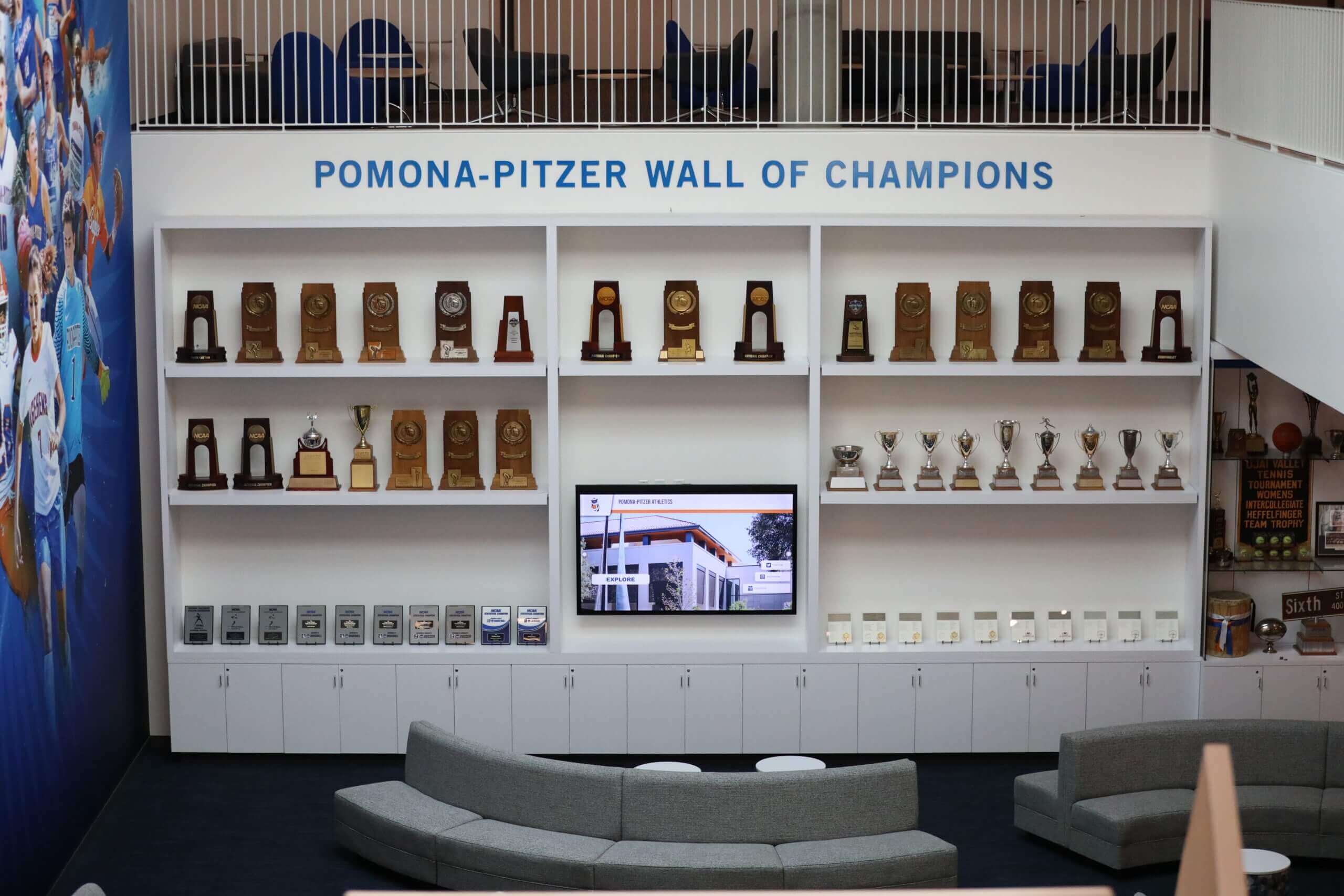
Trophies that span multiple manufacturing eras benefit from individual condition review before re-display — the decision table above identifies when a conservator referral is required before an item returns to the case
Schools developing a systematic approach to condition review across their recognition collections can draw on the triage logic in the championship banner condition assessment checklist, which structures repair, replacement, and digitization decisions for another class of physically mixed-material recognition items.
What to Record Before Any Movement
Condition documentation must happen before the trophy is moved. Photographs taken after handling cannot establish whether a chip or edge lift existed beforehand. Record each of the following in the database entry before touching the object.
Inlay panels. Count and photograph each panel. Note whether panels are fully seated and whether any edge has a visible gap between the shell and the surrounding metal or plastic. Record approximate dimensions of any chip or missing area.
Adhesive evidence at edges. Look for discoloration, residue, or prior repair attempts visible at the joint between shell and substrate. An historic repair — adhesive yellowed or bubbled at an edge — indicates this inlay has moved before and may be structurally compromised.
Applied finish. Does the shell area have a surface coating? A lacquer or sealer over the inlay changes the surface character and means any cleaning approach must account for a finish layer that is not the shell itself. Note whether the finish appears uniform or has lifted, crackled, or yellowed.
Adjacent metal condition. Record tarnish, corrosion pitting, or any whitish deposit near the shell panel edges. Corrosion adjacent to shell may indicate that a reactive metal component or a deteriorating adhesive is generating by-products that are reaching the shell surface.
Overall structural condition. Is the figurine secure to the column? Is the base stable? Is the trophy separating at any joint between major components? Document these separately from the inlay condition and include them in the same record entry.
7-Step Handling Workflow
This workflow applies to any historic school trophy where shell inlay is present, whether the inlay is currently stable or flagged for referral. Steps 1 through 4 are completed before the trophy is moved; steps 5 through 7 follow in sequence.
Step 1 — Log the trophy before touching it. Confirm the trophy has an entry in the awards database. Record the current location specifically — case number or storage shelf — before any movement. Verify that any database backup is current if this session will create new records.
Step 2 — Complete condition photography in place. Photograph the full trophy from all four sides plus top and bottom before moving it. Photograph each shell inlay panel individually, including close-up images that show edge condition. Include a scale reference — a ruler or coin — in at least one close-up photograph. Use raking light from one side to reveal surface texture and any edge lifting that might not be visible in a straight-on photograph.
Step 3 — Record adhesive and finish evidence. Note any visible adhesive at panel edges, any prior repair evidence, and whether a surface finish is present over the shell. Record this in the database entry alongside the photographs.
Step 4 — Apply the decision table. Check all observed conditions against the table above. If any condition triggers a conservator referral, stop the handling workflow at this step. Document the decision and date in the database entry. Do not proceed to Step 5 if a referral condition is present.
Step 5 — Handle safely to the inspection surface. Support the trophy from below at all times. Never lift by the figurine, arms, a projecting element, or by grasping a shell inlay panel. Use padded gloves or a padded tray for transport. Move to a stable, padded, flat work surface.
Step 6 — Document inscriptions. Photograph all engraved plates and text under raking light. Transcribe all text — year, award title, recipient name, sport, and school — into the digital record. Link photographs to the database entry so inscription data is accessible independently of the physical object’s condition.
Step 7 — Make the display or storage decision. Record one of three outcomes in the database: “cleared for display as-is,” “cleared with conditions noted” (with the conditions specified), or “referred to conservator — do not display.” If referred, record the conservator’s contact information and the referral date.
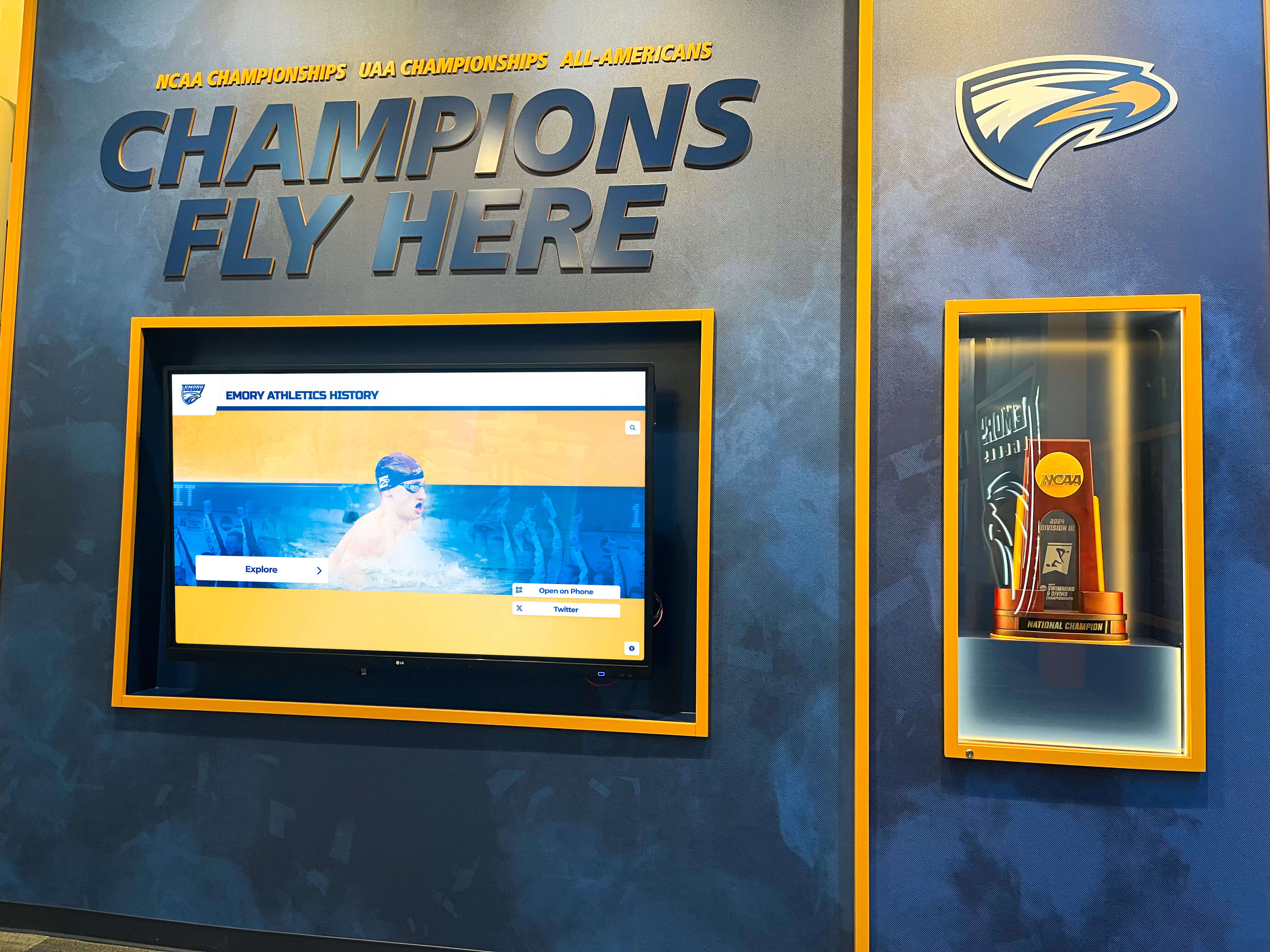
Handling and condition records created at each display cycle become the institutional history of how a trophy was cared for — that history accompanies the recognition record it supports
When condition records are created by different staff members at different points in time, evaluating how much confidence to place in earlier assessments requires a structured approach. The athletic archive source reliability rubric provides a framework for ranking the reliability of different record types — useful context when a new assessment needs to be interpreted alongside older documentation.
Copyable Handling Checklist
Print and complete this checklist for each handling session involving a trophy with shell inlay. Work through items in order.
Pre-Handling Records
- Confirm database entry exists for this trophy; record item ID
- Verify current database backup before creating new records
- Record current location specifically (case number, shelf) before moving
- Record session date and names of all staff present
Condition Photography (In Place, Before Moving)
- Full trophy — all four sides plus top and bottom
- Each shell inlay panel — individual close-up with scale reference
- Edge detail for each inlay panel (raking light recommended)
- Any visible chips, lifted edges, or adhesive evidence at panel edges
- All inscription plates under raking light
- Adjacent metal condition — any corrosion or deposits near shell edges
Condition Assessment
- All inlay panels fully seated — yes / no (if no, stop and refer before handling)
- Any edge lifting present — yes / no (if yes, stop and refer)
- Chips or missing fragments — yes / no (if yes, do not touch; refer)
- White powdery deposits on shell surface — yes / no (if yes, do not clean; refer)
- Surface haze or visible coating change over shell — yes / no (if yes, do not clean; refer)
- Adjacent metal corrosion — yes / no (if yes, do not polish near shell; refer)
- Applied finish over shell — yes / no / uncertain (record in database)
- Prior repair evidence at panel edges — yes / no (record in database)
- Decision table outcome recorded in database
Safe Handling (Only If No Referral Condition Is Present)
- Padded gloves or padded tray in use for all movement
- Trophy supported from below throughout — never by figurine, projecting element, or shell panel
- No solvents, polishes, acids, or wet cloths used on or near shell surfaces
- No rubber bands, rubber shelf liners, or neoprene products in contact with trophy during transport
Inscription Documentation
- All engraved text photographed under raking light
- All text transcribed into database (year, award title, recipient name, sport, school)
- Photographs linked to database entry
- Database entry confirmed complete before session closes
Conservation Decision
- Outcome recorded: “cleared for display as-is” / “cleared with conditions noted” / “referred to conservator — do not display”
- If referred: conservator contact and referral date recorded in database entry
- If cleared for display: lighting conditions and UV exposure risk noted in record
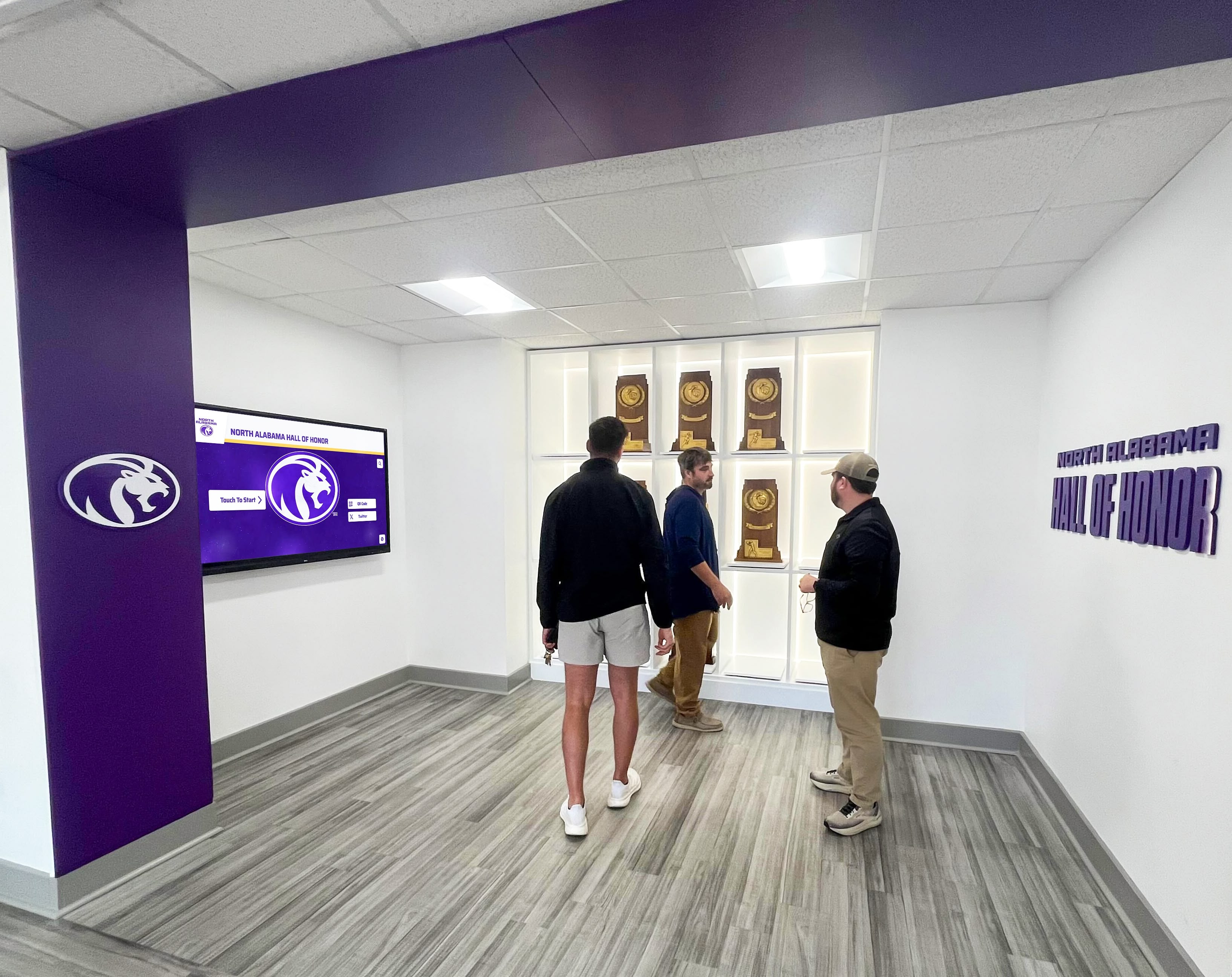
Condition reviews completed with a written checklist at each display rotation give staff a documented baseline against which future assessments can be compared
What to Avoid: Products and Actions That Damage Shell Inlays
Metal polish near shell panels. Most metal polishes contain abrasives or mild acids formulated for metal surfaces. Applied near or over a shell inlay, these compounds abrade and can dissolve the nacre surface. This damage is irreversible. Physically separate or mask the inlay area before any work on adjacent metal, and consult a conservator before polishing any composite trophy.
Acidic cleaners. Nacre dissolves in acid — a well-known property of calcium carbonate. Cleaning solutions formulated for general or bathroom use may be acidic. Do not use any cleaner of unknown pH on or near a composite trophy with shell inlay.
Wet cloths directly on inlay. Moisture introduced at the interface between the shell and its bonding adhesive can weaken the adhesive bond. If water enters under a panel with a partially compromised edge, it accelerates lifting and inlay loss. Dry brushing with a soft, clean natural-hair brush is the lowest-risk approach to surface cleaning on confirmed stable inlay — and only on stable inlay.
Pressing a loose insert back into position. A loose panel has a compromised bond. Pressing it risks fracturing the shell or re-seating it in a distorted position. Store the loose piece flat in an archival envelope, keep it with the trophy, and refer both to a conservator.
Rubber shelf liners or rubber bands. The CCI guide documents that wood storage emits organic acids harmful to shell. Vulcanized rubber — found in many shelf liners and bands — is also a source of harmful emissions near susceptible materials. Use inert polyethylene foam or Tyvek interleaving for any trophy with shell inlay in storage or transport.
Jewelry cleaning approaches extrapolated to composite surfaces. Cleaning methods for jewelry — even methods described as gentle or appropriate for nacre in that context — are formulated for objects whose other materials, adhesives, and finishes are known. A composite historic trophy has unknown adhesives and possibly unknown finish layers. What is safe on a single-material piece of jewelry is not safe to assume on a composite award without conservator guidance.
Annual condition reviews of recognition display materials follow a parallel logic to the championship banner inspection checklist process, which structures recurring safety and condition reviews to catch deterioration before it becomes a display or safety issue. The same discipline — scheduled review, documented findings, clear referral triggers — applies equally to shell-inlay trophies.
Distinguishing Shell Material Evidence from Composite Trophy Unknowns
The CCI natural history guide is a rigorous source for shell-as-specimen guidance. Its findings on light sensitivity, physical fragility, and organic acid vulnerability apply to the nacre material itself. What it does not and cannot address are the manufacturing adhesives, applied finishes, or metal components that make a trophy a composite object rather than a natural history specimen.
A trophy inlay panel is bonded to its substrate with an adhesive whose formulation is unknown to school staff. That adhesive may be a natural hide glue (vulnerable to moisture), a synthetic resin (variable solvent tolerance), or a combination applied in layers. A surface finish — lacquer, varnish, or wax — may have been applied over the shell at manufacture, and that finish may have a different sensitivity profile than the shell itself.
This means:
- A CCI finding about mollusk pigment sensitivity to light applies to the shell layer. It does not describe how the adhesive below that layer responds to the same light exposure.
- A CCI finding about Byne’s Disease from wood acids means keeping shell away from wood contact. It does not describe what the bonding adhesive or the applied finish does when exposed to the same acids.
- A conservator assessing a composite historic trophy evaluates each component — shell, adhesive, metal body, applied finish — separately and in relation to each other. School staff cannot replicate that assessment from visual inspection alone, and CCI guidance on shell specimens does not substitute for it.
When schools generate written condition records for mixed-material trophies over time, how those records are structured affects how useful they are to a future conservator. The hall of fame profile data dictionary template describes how standardizing field names, award types, and media references across a recognition database keeps records usable as staff turns over — that same discipline, applied to condition fields, prevents ambiguous entries from being misread at a future conservation consultation.
Display Environment Considerations for Shell-Inlay Trophies
Once a trophy with stable shell inlay is cleared for display, three environmental conditions warrant attention.
Lighting. The CCI natural history guide classifies mollusk shell pigments as highly sensitive to light. The practical implication is to use UV-filtering glazing in trophy cases and LED light sources rather than unfiltered fluorescent or incandescent fixtures. Keeping illumination at a lower level when the case is not being actively viewed reduces cumulative light exposure over years of display.
Wood contact. Do not store or display a trophy with shell inlay in direct contact with untreated wood shelving, wood backing panels, or wooden storage drawers. The CCI guide documents that organic acids emitted from wood cause Byne’s Disease on shell surfaces — powdery white deposits that destroy the surface. If the existing trophy case has a wood interior, barrier-film lining on shelves where shell-inlay trophies rest reduces direct acid exposure. A conservator can advise on appropriate interleaving materials for a specific display context.
Humidity stability. The CCI guide notes that the organic material in mollusk shells is vulnerable to mold at relative humidity above approximately 65% and to desiccation and weakening at relative humidity below 30%. Stable mid-range humidity — typically in the 45–55% RH range — is the conservative target for collections that include shell-inlay objects. Rapid cycling between high and low humidity stresses the organic binder and can accelerate delamination of nacre layers over time.
The documentation principles that underpin seam integrity reviews for championship banners — record before handling, flag deterioration before re-installation, compare findings across review sessions — translate directly to trophy condition reviews. The championship banner seam slippage report checklist describes how schools build structured buyer-oriented reviews for mixed-material recognition items, an approach that parallels the trophy workflow above.
Document the Original Alongside the Digital Record
Every school trophy with a mother-of-pearl inlay represents a named athlete or team, a specific season, and a specific achievement. When a physical trophy enters a conservation workflow, the recognition it represents should remain fully visible in the school’s digital record — not temporarily inaccessible because the hardware is off display.
Best practice is to complete inscription documentation in full at the first structured handling session and link it permanently to the database entry:
- Photograph the trophy in full from consistent angles and archive those photographs with the record
- Transcribe all engraved text — award title, recipient name, year, sport — into the database and confirm the entry against the photograph before the session closes
- Link the condition photograph set to the database entry so the conservation history travels with the recognition record, not separately from it
- Note the conservation decision outcome — cleared, conditions noted, or referred — as a date-stamped field so future staff can see when the last review occurred and what it found
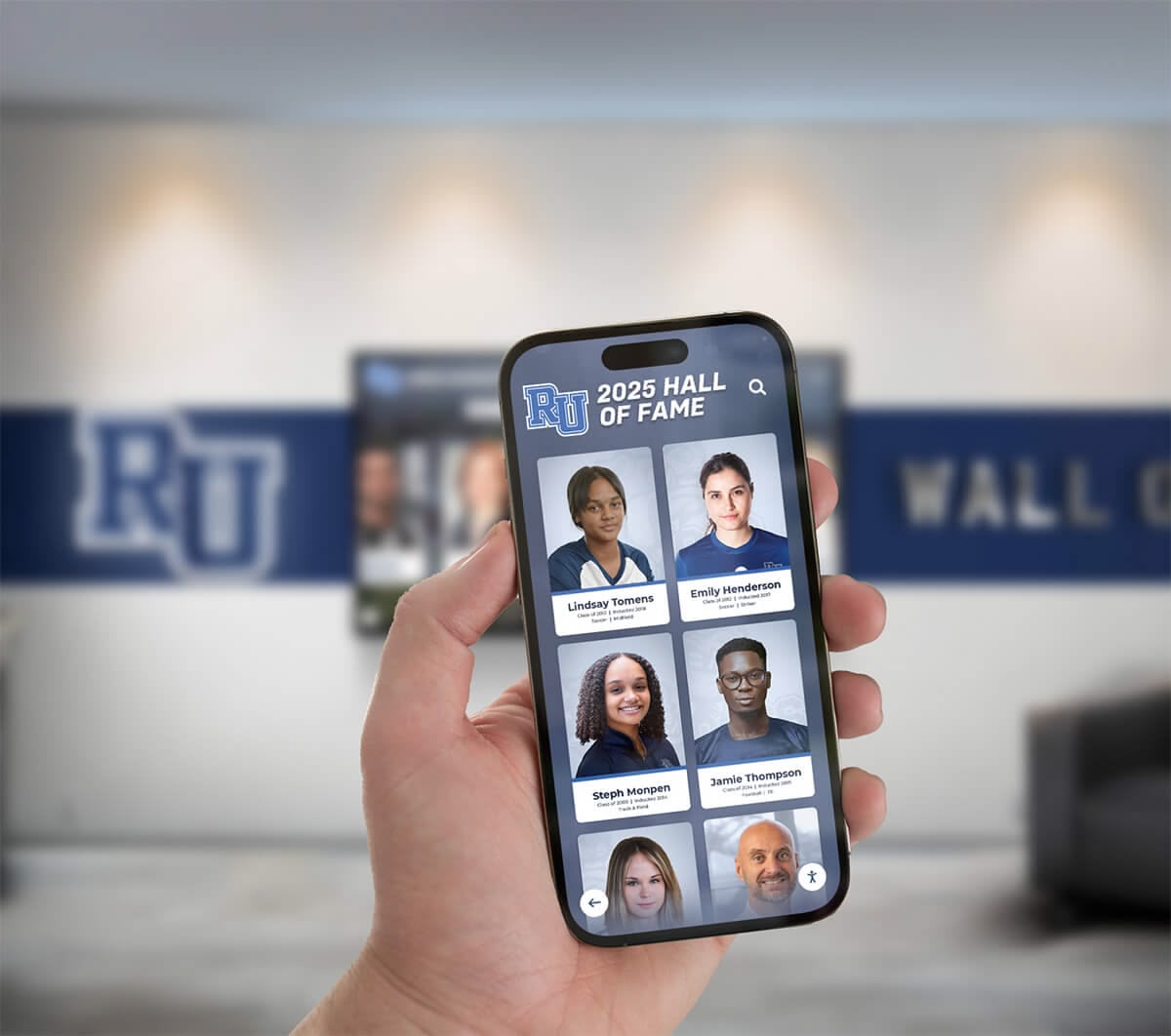
A complete digital recognition record keeps every athlete's name and achievement accessible to students, families, and alumni even when the physical trophy is removed from display for conservation assessment
A recognition database that keeps inscription data accessible regardless of physical trophy condition gives athletic directors a clear answer to the question families ask most: “Where can I find the record of what we achieved?” The physical trophy is one carrier of that answer; the digital record should be a second, independent one.
Frequently Asked Questions
What is mother-of-pearl, and why does it appear in historic school trophies? Mother-of-pearl, also called nacre, is the iridescent inner layer of certain mollusk shells — thin aragonite platelets bonded by a protein matrix called conchiolin. Its visual properties made it a popular decorative inlay material for awards through the mid-twentieth century. Trophy manufacturers set nacre panels into metal, wood, or cast-resin bodies, often paired with engraved metal plates on the same object.
Is mother-of-pearl organic, inorganic, or both? It is a composite. The CCI natural history guide classifies shells as inorganic specimens “although they may include organic components.” In nacre, the aragonite mineral platelets are inorganic; the conchiolin protein binder is organic. Both components are present in a shell inlay, and they have different sensitivities — the organic binder is vulnerable to moisture extremes, while the mineral is vulnerable to acid and mechanical shock.
Can we use the same metal polish on a composite trophy that we use on a solid-metal award? No. Metal polishes contain abrasives and often mild acids designed to work on metal surfaces. Applied near or over a shell inlay, these compounds abrade and can dissolve the nacre surface layer. There is no safe polish-near-shell application that school staff can perform without conservator guidance for the specific composite object. Physically separate or mask the shell panel before any metal polishing and do not rely on careful application near the edge as sufficient protection.
An inlay looks loose. Can we press it back into position and add a small amount of glue? No. A conservator should assess the loose panel before any adhesive is applied. Pressing a loose insert can fracture it or re-seat it in a distorted position. Commercial adhesives — including cyanoacrylates, epoxies, and contact cements — can be difficult to reverse and may react with the existing adhesive layer or the shell surface. Store the loose piece flat in an archival envelope, keep it with the trophy, and refer both to a conservator.
What is Byne’s Disease, and is it relevant to school trophy cases? Byne’s Disease is a condition in which organic acids emitted from wood storage or display materials react with shell to produce powdery white crystalline deposits that destroy the surface. The CCI natural history guide identifies this as a specific risk for shells housed in wood enclosures. If your trophy case has wooden shelving or backing panels, this is a relevant concern for any trophy with shell inlay. White powdery deposits on a shell surface are a conservator referral condition — do not clean or brush the deposits.
Can staff-produced photography serve as the condition record, or is professional documentation required? Staff-produced photography is appropriate for condition documentation between professional conservation consultations. The goal is a consistent record — the same angles at each session, scale references in close-ups, and raking-light photographs of inscription plates — so that changes are visible when photographs from different sessions are compared. Consistency and completeness matter more than professional equipment. A smartphone camera under good light with a scale reference produces a usable condition record.
How often should we review shell-inlay trophies? Review frequency should reflect display conditions, the current condition of the inlay, and whether the trophy has previously shown deterioration. A practical approach is to complete a condition check at each display rotation when a trophy is moved, and at a minimum annually for any trophy that has previously been cleared with conditions noted. Trophies that have not been formally assessed should be assessed before they are next moved or cleaned, regardless of how long they have been on display.
What should we do if we find a trophy with shell inlay that has never been formally assessed? Treat the first assessment as a baseline: complete the condition photography in place, record all observable conditions against the checklist above, apply the decision table, and create a database entry with all documentation linked. Do not clean or polish the trophy before the assessment is complete. A conservator referral is appropriate for any trophy where the condition photography reveals one or more conditions in the referral column of the decision table.
Does the CCI guidance on shell specimens apply directly to a composite trophy? The CCI natural history guide addresses shell as a natural history collection specimen. Its findings on physical fragility, light-sensitive pigments, and vulnerability to wood-emitted acids apply to the shell material itself and are relevant context for understanding nacre inlay. What the guide does not address are the adhesives used to bond shell to a trophy body, the applied finishes over shell surfaces, or the combined behavior of dissimilar materials in a composite object. These gaps are why a conservator — not staff working from specimen-handling guidance — is the appropriate resource for any composite trophy with active deterioration or structural instability.
Keep Every Athletic Achievement Visible While the Hardware Is in Conservation
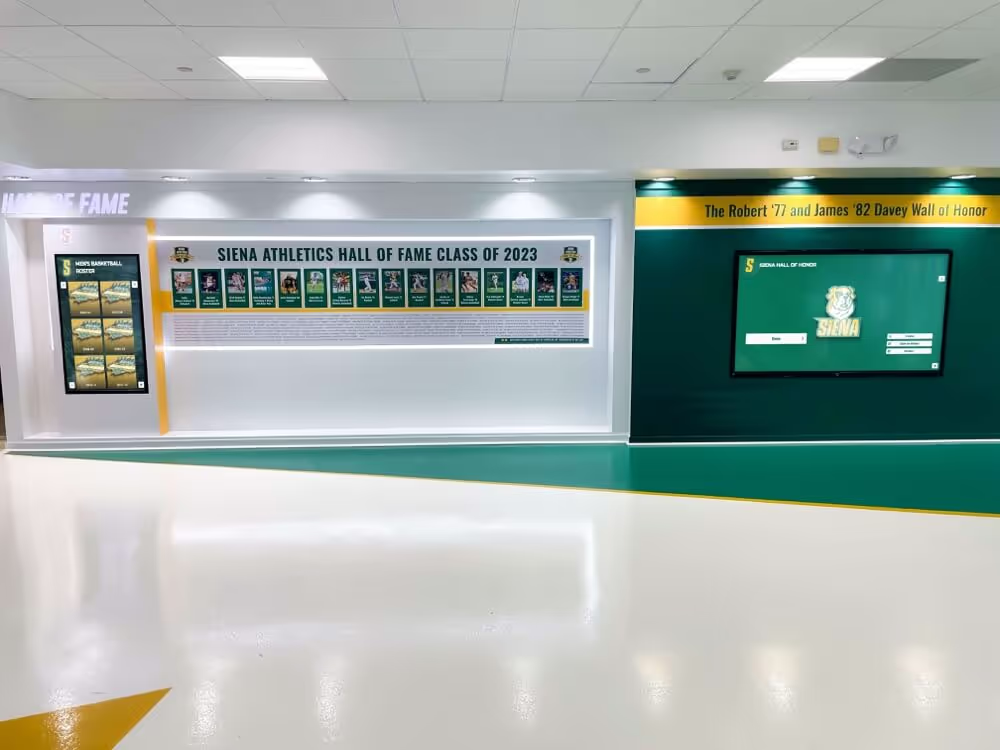
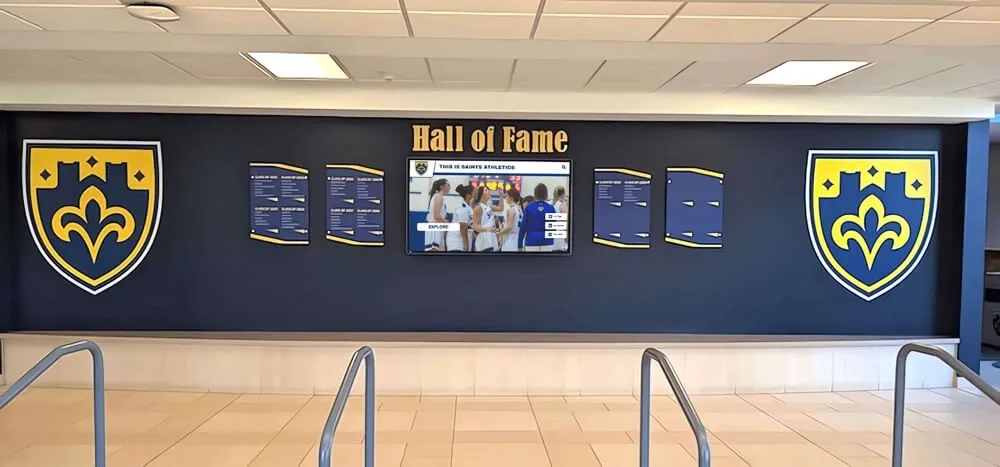
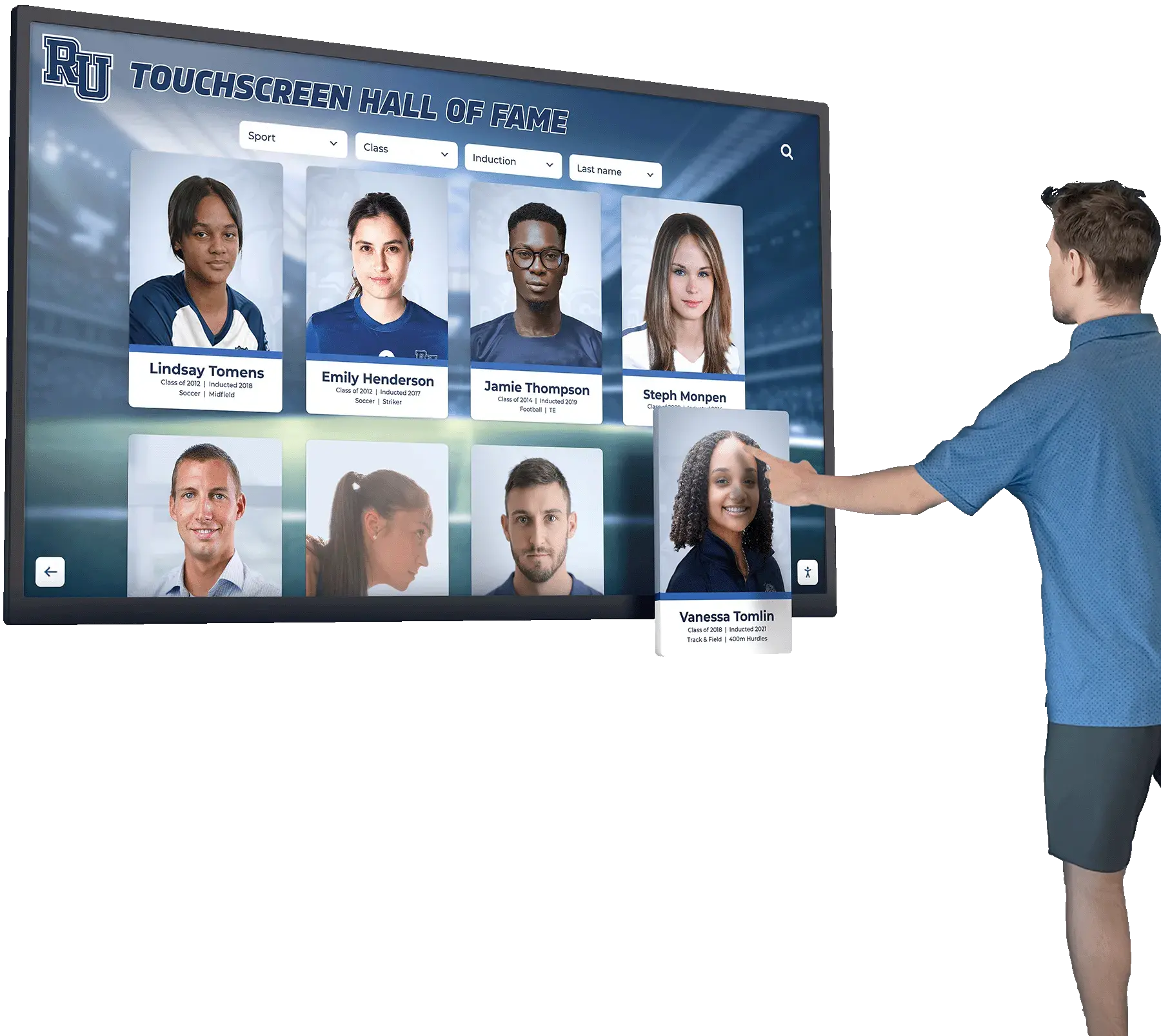
Rocket Alumni Solutions builds interactive digital trophy cases and halls of fame for schools nationwide — cloud-managed, ADA WCAG 2.1 AA compliant, and accessible by QR code for students, families, and alumni. When a trophy with a fragile shell inlay leaves the case for conservator assessment, your digital recognition record keeps every athlete's name and achievement visible without interruption. Unlimited record capacity means the full collection is always complete, even as physical items rotate in and out of display.
Request a Custom Demo