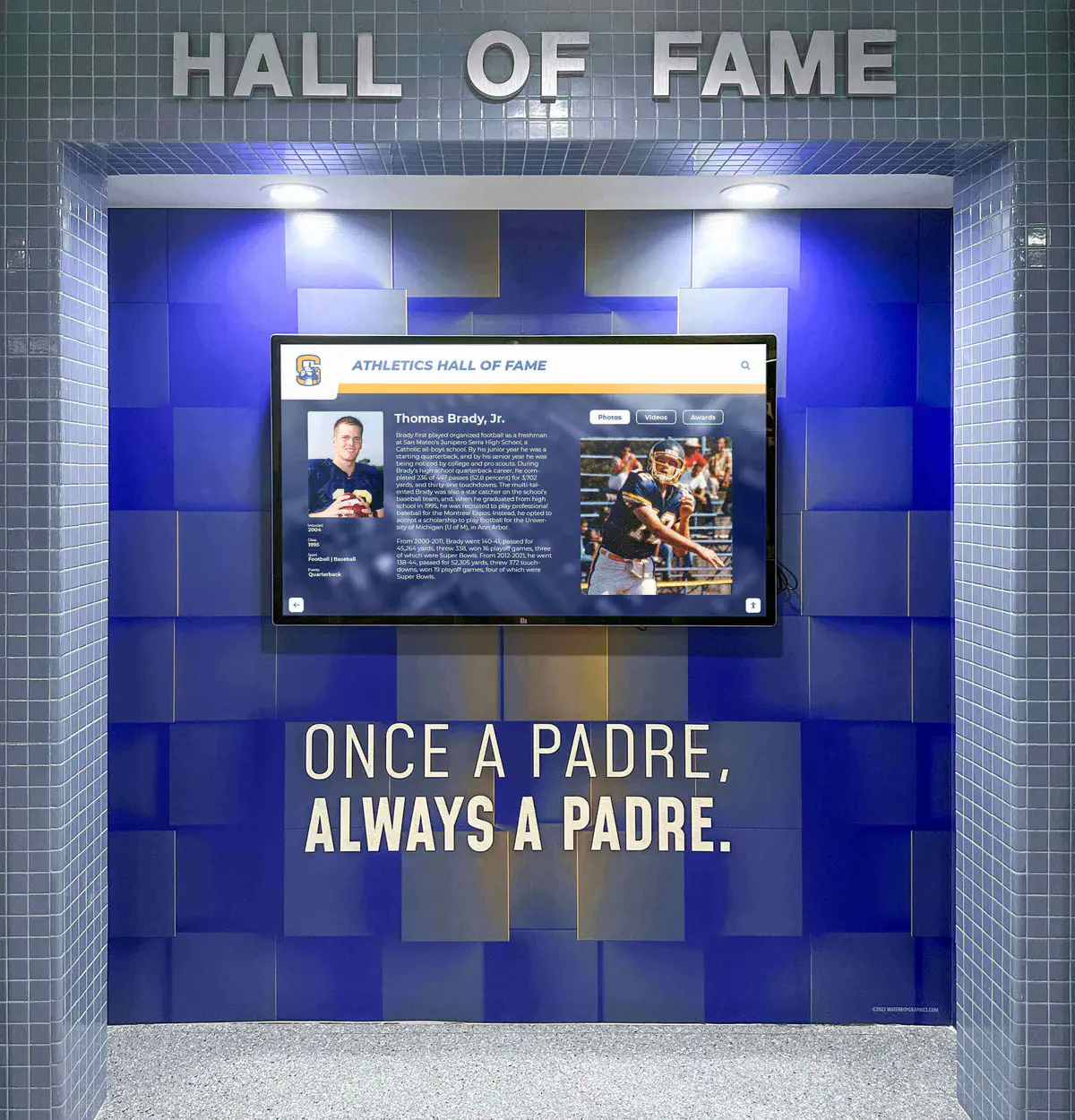
The Easiest Touchscreen Solution
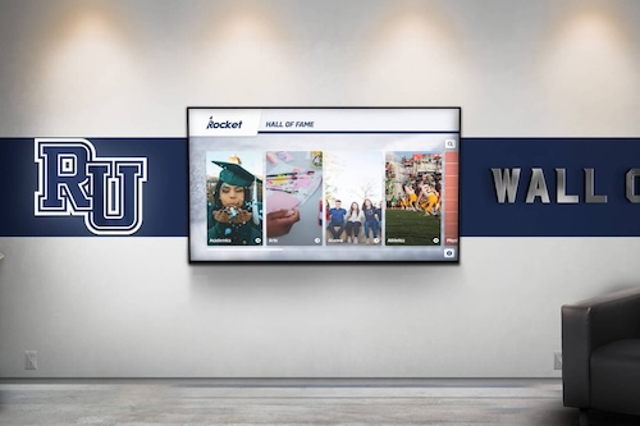
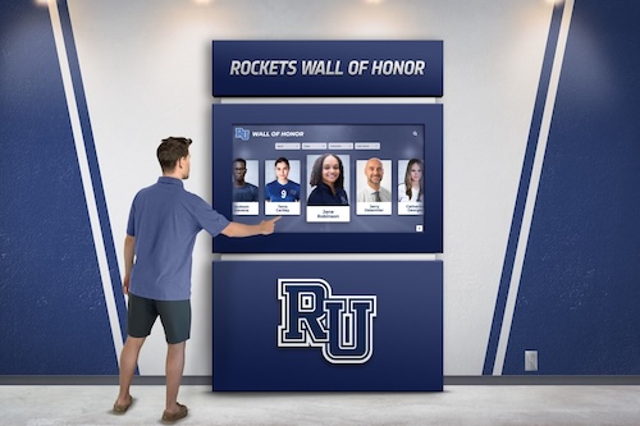
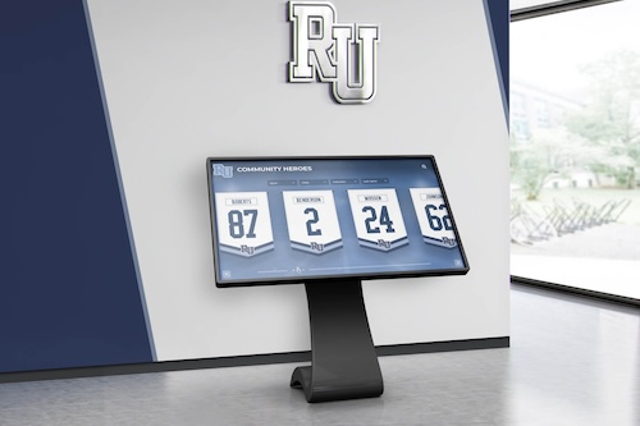
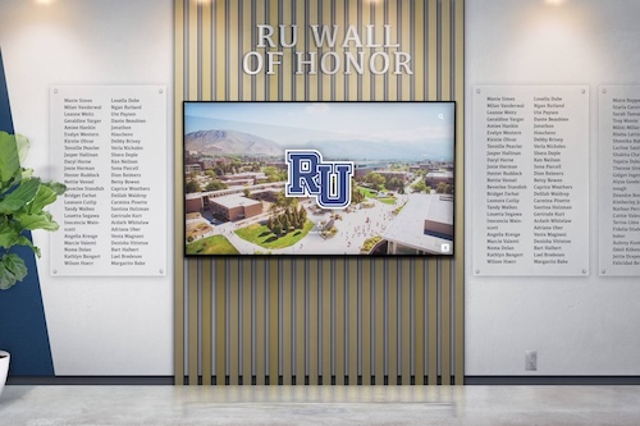
Live Example: Rocket Alumni Solutions Touchscreen Display
Interact with a live example (16:9 scaled 1920x1080 display). All content is automatically responsive to all screen sizes and orientations.
Ultimate results pages can carry more than a bracket winner and a runner-up. USA Ultimate–sanctioned high school events may recognize a Team Spirit Award alongside competitive standings—a separate category, with its own named recipient, that belongs in its own display entry. Recognition editors who assume every row on a results page reflects a performance finish can easily misclassify what a school’s team actually earned, or miss a recognition entirely.
The 2026 Oregon High School State Championships, held May 30–31 in Corvallis at Crystal Lakes Sports Fields, illustrates the structure clearly. The event was listed as a State Championship Tournament and published results under two separate division headings—Girl-Matching/Gender-Diverse Division and Boy-Matching/Open Division—each with three named honors: Champions, Runners up, and Team Spirit Award. Building a high school ultimate awards display from that source means three distinct entries per division, each captioned from its own row.
A display entry that collapses runner-up finish and Team Spirit Award into a single record understates one of them. A display that omits the Spirit Award because it is not a bracket result shortchanges the team that earned it. Getting each entry right at the time of creation—from the published row, using the event’s own terms—keeps the record accurate for the athletes and the community behind them.
A school athletics display that separates competitive placements from spirit recognition—each with its own heading and source citation—gives every published honor the distinct entry it deserves.
The Oregon 2026 Results: Three Award Categories per Division
The 2026 Oregon High School State Championships event page uses three labeled rows under each division heading. Those labels matter for display purposes because they define what each team received.
Girl-Matching/Gender-Diverse Division:
- Champions: South Eugene
- Runners up: Stormbears
- Team Spirit Award: Stormbears
Boy-Matching/Open Division:
- Champions: South Eugene
- Runners up: Franklin
- Team Spirit Award: Bend High
Each row is a separate published award. A display entry built from this source should use the row’s exact label—Champions, Runners up, Team Spirit Award—and the event’s exact division name. Substituting shorter or more generic wording (“state title,” “2nd place,” “sportsmanship award”) replaces the official record language with something that cannot be matched back to the source if anyone checks later.
The event is identified on the page as a State Championship Tournament. The page does not describe it as a national championship, and attributing a national title from this record would not be supported by the source.
One Team in Two Rows: What the Stormbears Result Means for Display Entries
Stormbears appear in both the Runners up and Team Spirit Award rows of the Girl-Matching/Gender-Diverse Division. That is not a data error, and it is not redundant. The two rows describe two different things.
The runner-up result describes where the team finished in the competitive bracket. The Team Spirit Award is a distinct recognition that the event listed separately, under its own heading, with its own named recipient. Those two honors coexist in the published record, and they should coexist in a display as two separate entries.
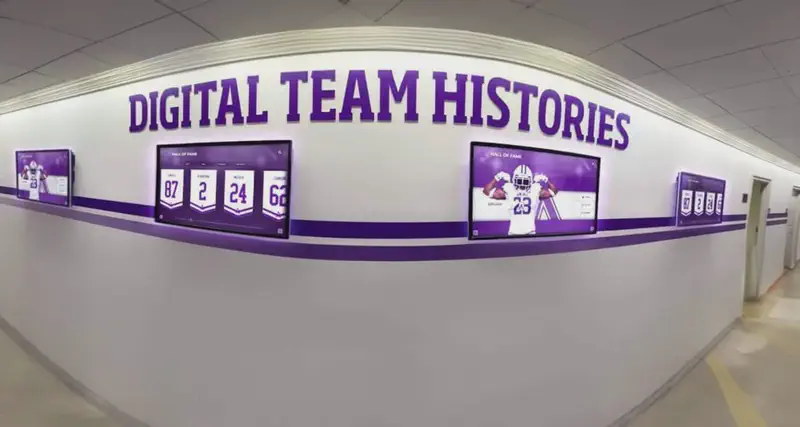
Hallway recognition screens that organize entries by award category and division allow visitors to distinguish competitive results from spirit recognition at a glance.
Merging the two into a single display entry—say, “Runners up and Team Spirit Award”—preserves both facts but loses the award-category headings that define each one’s meaning. Keeping them in separate entries, each with its own row label, is the approach that stays closest to what the event published.
There is no published principle requiring that a runner-up cannot receive a Spirit Award at the same event, or that a bracket winner is barred from receiving one. The Oregon 2026 record shows the team that received it in each division; the display should reflect that record.
When the Spirit Award Goes to a Non-Finalist: The Boy-Matching/Open Division
The Boy-Matching/Open Division shows the other common pattern: the Spirit Award goes to a team that did not reach the bracket final. South Eugene won the championship; Franklin was runner-up; Bend High received the Team Spirit Award. Three schools, three distinct recognitions, none of which substitutes for another.
Bend High’s Team Spirit Award is a real honor published by the event organizer. It belongs in a display entry with its own row label and source citation, separate from any competitive finish. A recognition editor who omits it because Bend High did not finish at the top of the bracket would leave out a published recognition. A display entry that attributed the award to South Eugene or Franklin would misstate who received it.
The practical implication for a school’s display editor is straightforward: check every published row under the division heading, not just the first two. Championship and runner-up rows are easy to find; the Spirit Award row is a third entry that sits alongside them and deserves its own record.
Spirit of the Game: The Underlying Principle
The name “Team Spirit Award” connects to a value that USA Ultimate describes on its Spirit of the Game page. USA Ultimate calls Spirit of the Game “a truly unique and defining element of ultimate” that “places the responsibility of fair play solely on the athletes themselves by requiring each player to know the rules and make their own calls, without the help of a neutral official.” The organization notes that Spirit principles “reinforce mutual respect and trust between opponents; communication and conflict resolution skills; and self confidence—both on and off the field of play.”
The Official Rules of Ultimate, as quoted on that page, state: “Highly competitive play is encouraged, but never at the expense of mutual respect among competitors, adherence to the agreed upon rules, or the basic joy of play.”
That framing helps recognition editors understand why a Team Spirit Award exists as a published category alongside bracket results—it honors something other than finish position. What specific criteria any particular event uses to determine its Spirit Award recipient, or what process it follows, is not described on the event page and is not speculated about here. The Oregon 2026 page published the award and named the recipient in each division; that is what belongs in the display record.
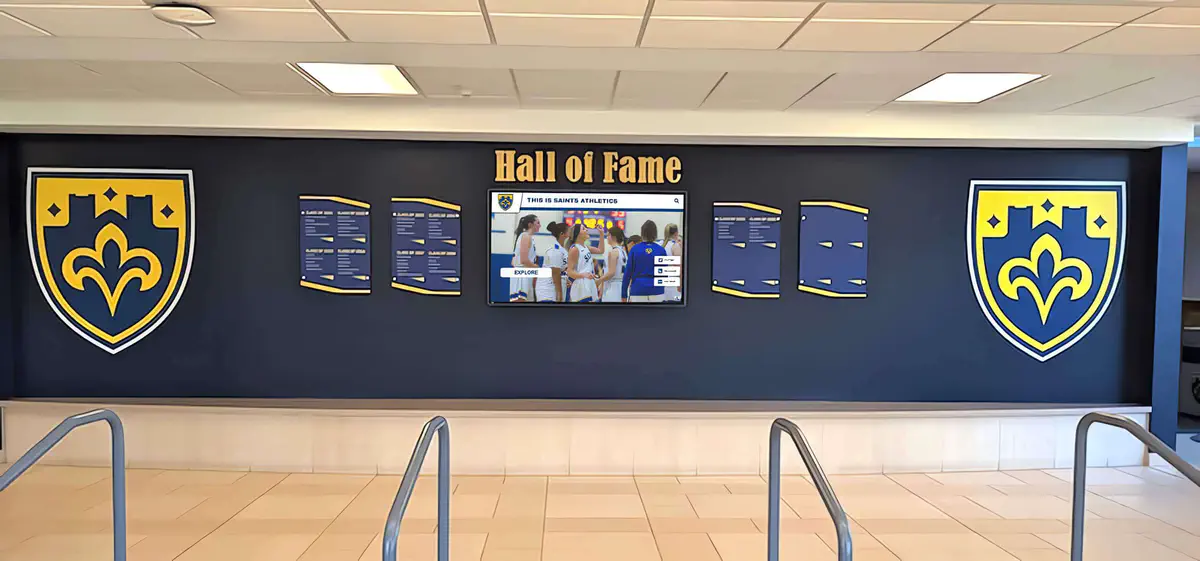
A school lobby display that holds championship titles alongside character-based recognition—each with its own section and award-category heading—gives both kinds of honors the visibility the source record supports.
Caption Structures for Each Award Type
Three honor categories call for three caption structures. The brackets below are placeholders; fill each from the source record before publishing.
Tournament champion:
[Team name, as listed in source] | Champions — [Division label, exactly as published] | 2026 Oregon High School State Championships | May 30–31, 2026 | Corvallis, OR | Source: [URL]
Tournament runner-up:
[Team name, as listed in source] | Runners up — [Division label, exactly as published] | 2026 Oregon High School State Championships | May 30–31, 2026 | Corvallis, OR | Source: [URL]
Team Spirit Award:
[Team name, as listed in source] | Team Spirit Award — [Division label, exactly as published] | 2026 Oregon High School State Championships | May 30–31, 2026 | Corvallis, OR | Source: [URL]
The division label—Girl-Matching/Gender-Diverse or Boy-Matching/Open—belongs in every entry. It tells the reader which division’s award this is, which matters most in a display that accumulates results across multiple events and years. Dropping the label leaves an entry ambiguous.
A caption that cannot be completed from verified source records should wait rather than be estimated. Holding one entry until a field is confirmed does not delay other verified entries from going up.
For recognition editors who want additional context on how character-based honors fit alongside other athletic recognitions, school sportsmanship award ideas from the broader recognition field offer useful framing—keeping in mind that the specific award categories at any sanctioned event are defined by the event organizer, not by generic frameworks.
An optional planning worksheet—with one row per award category and columns for team name, division label, award type, event name, year, and source URL—can help staff organize entries before uploading to any display system. It is a staff planning aid; a field left blank is a prompt to verify, not a reason to hold all other confirmed entries.
Holding Multiple Honor Categories in a Digital Display
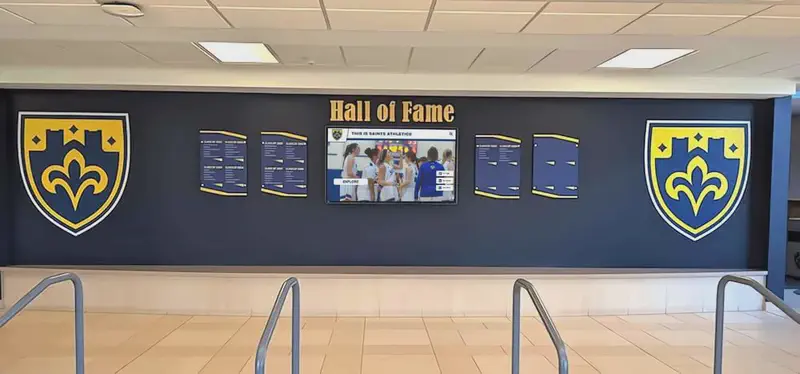
A display wall that separates award categories—competitive titles in one section, spirit recognition in another—keeps each honor readable and distinct as the archive grows.
Physical plaques engrave a fixed label at the time they are made. If a Spirit Award entry is initially captioned as a runner-up finish, correcting it means new hardware. A digital recognition display lets staff update captions, restructure headings by award category, and add missing entries without touching any physical object. That flexibility matters most when results come from events with more than two honor types.
For schools with ultimate programs that compete across multiple seasons, a digital display can organize entries by award category, division, and year—so that championship titles, runner-up finishes, and Spirit Award recognitions each have their own section, and multi-year results sit next to each other in a readable sequence. Physical trophies and digital records can coexist: the digital layer carries the category context and source citation that a fixed plate cannot hold.
A school that holds a competitive finalist result and a Team Spirit Award in the same division of the same tournament—as Stormbears did at Oregon 2026—needs two separate display entries, each built from its own row. The community that supported that team through a season producing two different kinds of recognition deserves to see both represented accurately.
The same principle applies when the honors land on three different schools, as they did in the Boy-Matching/Open Division. South Eugene’s championship, Franklin’s runner-up finish, and Bend High’s Team Spirit Award are three separate recognitions. Each school’s display editor works from the row that describes what their team earned, and nothing else.
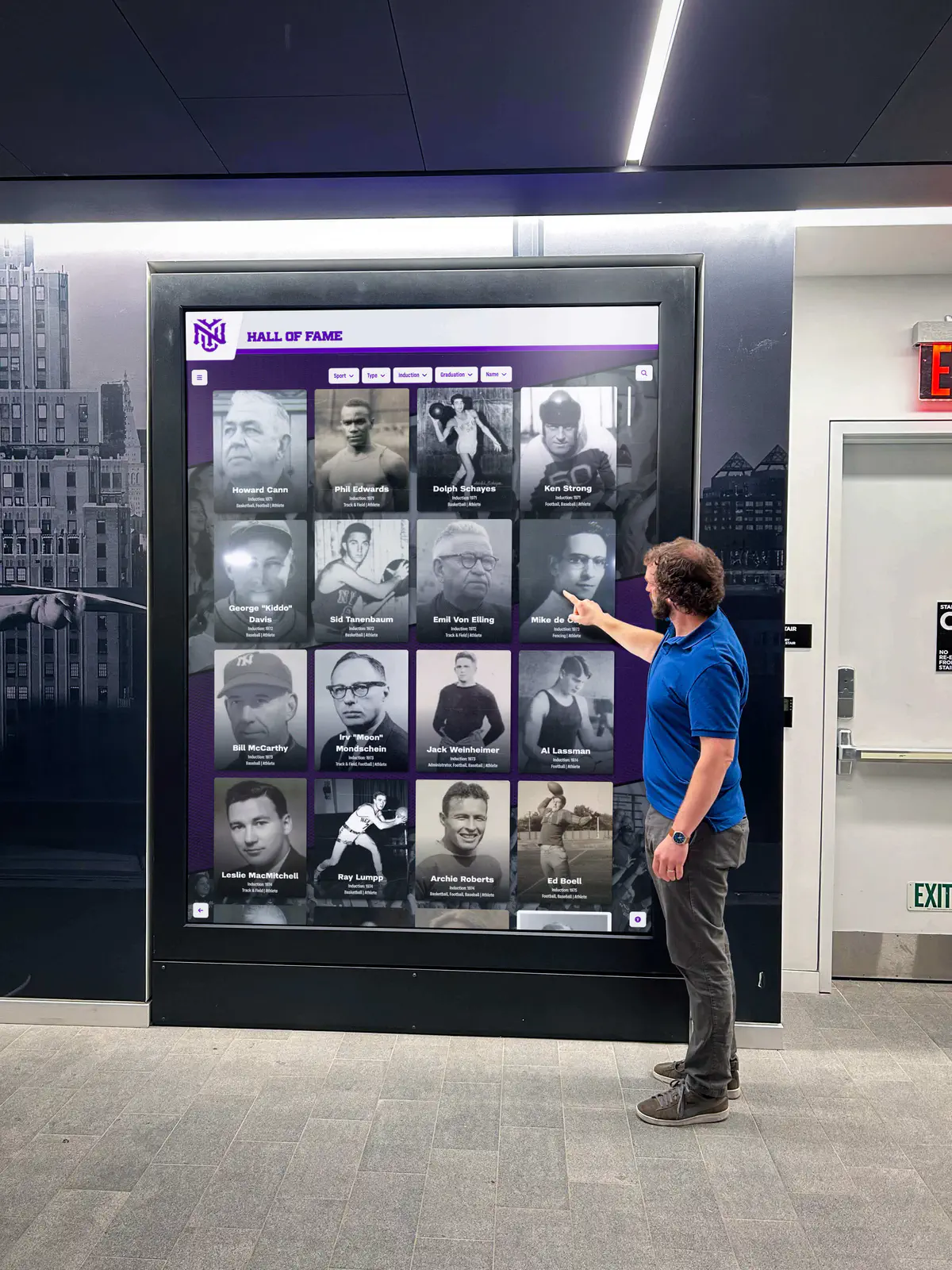
An interactive display that holds tournament titles and spirit recognition as separate, searchable entries allows visitors to find each award type independently and read the story behind it.
The community of teams, coaches, and families around a high school ultimate program builds something lasting when a team earns any kind of recognition—bracket finish or Spirit Award. A display that accurately holds each one, labeled as the event labeled it and sourced to the record that supports it, honors that community for as long as the display runs.
Start a conversation about your school’s digital awards display
Live Example: Rocket Alumni Solutions Touchscreen Display
Interact with a live example (16:9 scaled 1920x1080 display). All content is automatically responsive to all screen sizes and orientations.