



Coaches, runners, and parents new to high school cross country often ask the same fundamental question: how far do high school runners actually race? Understanding cross country distance standards helps athletes prepare appropriately, coaches structure training programs effectively, and families know what to expect throughout the season.
Unlike track and field with its precisely measured lanes and standardized distances, cross country presents unique variables. Race courses wind through parks, golf courses, and natural terrain where exact distance measurement proves challenging. Course conditions vary dramatically—some relatively flat, others featuring significant elevation changes that impact finishing times and competitive difficulty.
This comprehensive guide clarifies high school cross country distance standards across boys’ and girls’ programs, explains seasonal progression from early meets to championship races, explores training distance considerations, and examines how schools preserve cross country achievements through recognition programs celebrating runners’ dedication and competitive success.
Cross country represents one of high school athletics’ most accessible yet demanding sports. Teams require minimal equipment and facilities compared to many athletics programs, yet the physical and mental demands challenge even exceptional athletes. Understanding distance standards helps everyone involved—from first-time freshmen to experienced seniors competing for state championships—approach the season with appropriate preparation and realistic expectations.

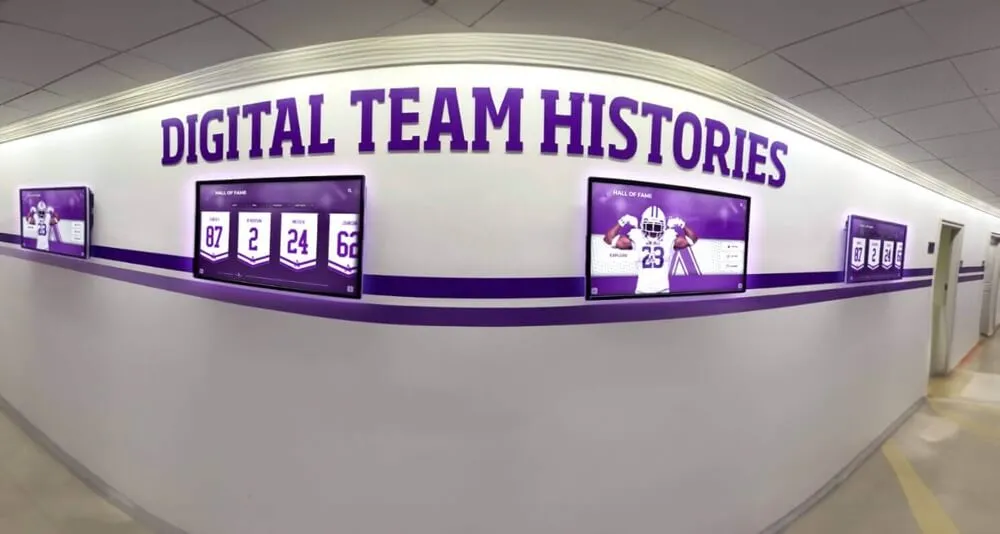
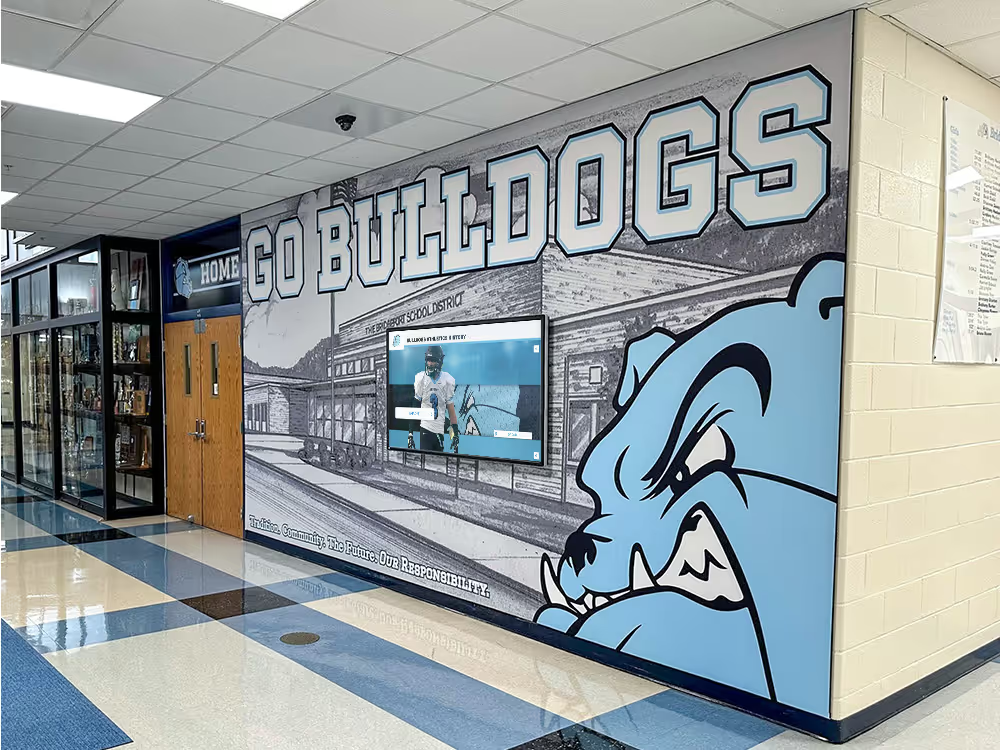
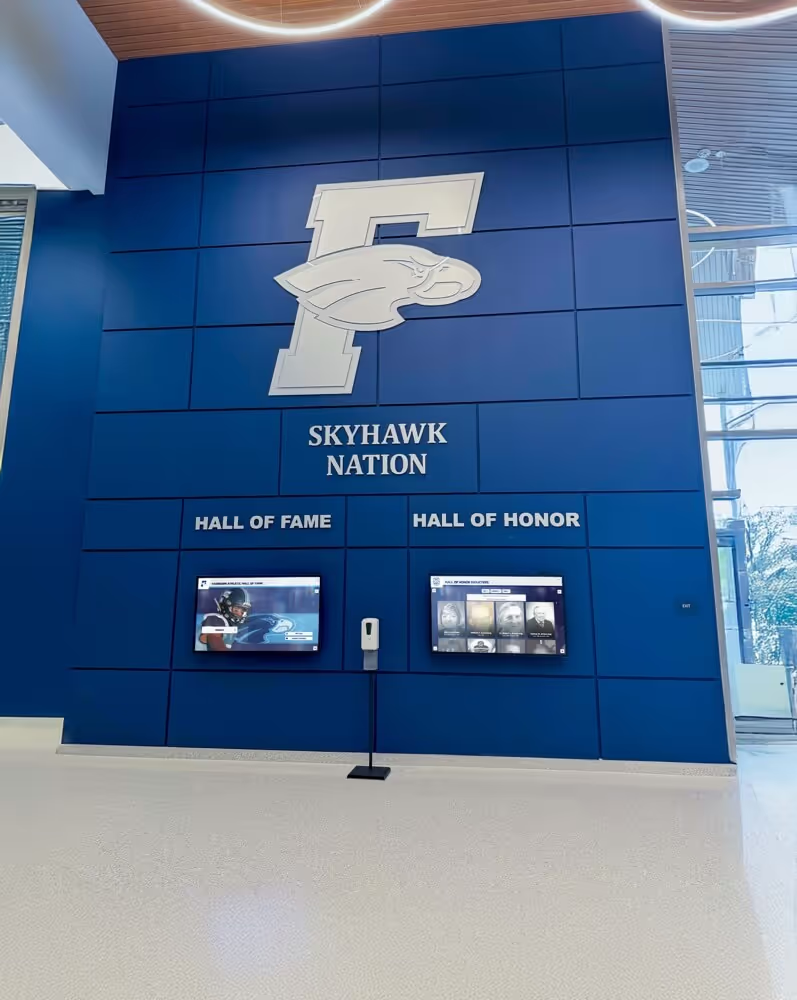
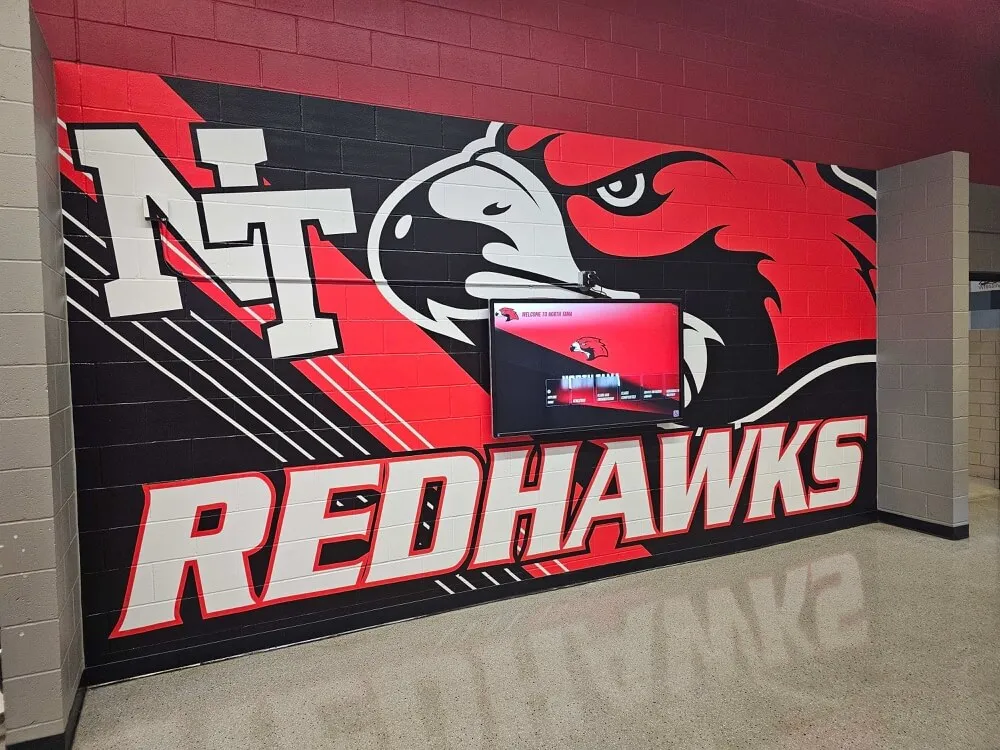
Modern athletic recognition displays showcase cross country achievements alongside other sports, celebrating runners' dedication and competitive excellence
Standard High School Cross Country Race Distances
National governing bodies establish distance guidelines, though some variation exists across states and competitive levels.
National Federation Standards
The National Federation of State High School Associations (NFHS) provides recommended cross country race distances followed by most state athletic associations:
Boys’ Cross Country Distance
- Standard race distance: 5 kilometers (5K)
- Metric equivalent: 5,000 meters
- Approximate distance: 3.1 miles
- This distance applies to varsity boys’ races nationwide
Girls’ Cross Country Distance
- Standard race distance: 5 kilometers (5K)
- Metric equivalent: 5,000 meters
- Approximate distance: 3.1 miles
- Girls’ distance matches boys’ in most states
Historically, girls ran shorter distances (commonly 4K or approximately 2.5 miles), but most states adopted equal 5K distances for both genders by the early 2000s. This change reflected growing recognition that female athletes possess equal endurance capacity and benefit from training at similar distances as male counterparts.
Distance Variations Across States and Levels
While 5K represents the standard, variations exist:
State-Specific Differences
- Some states maintain 4K races for girls’ competition
- Certain regions use 3 miles (approximately 4.8K) as standard distance
- Individual state athletic associations establish official standards
- Championship races typically follow consistent distance standards statewide
Junior Varsity and Freshmen Distances
- JV races often match varsity 5K distance
- Some programs run JV at shorter distances (3K or 4K)
- Freshman races may be shortened to 4K or less
- Distance decisions reflect developmental considerations and competition structure
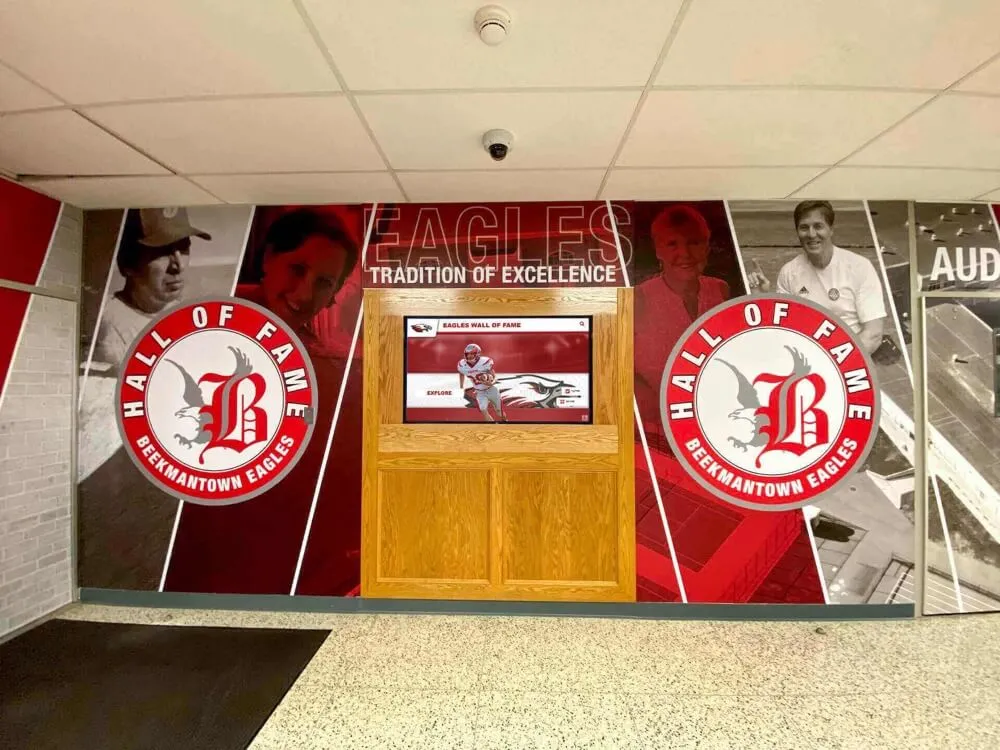
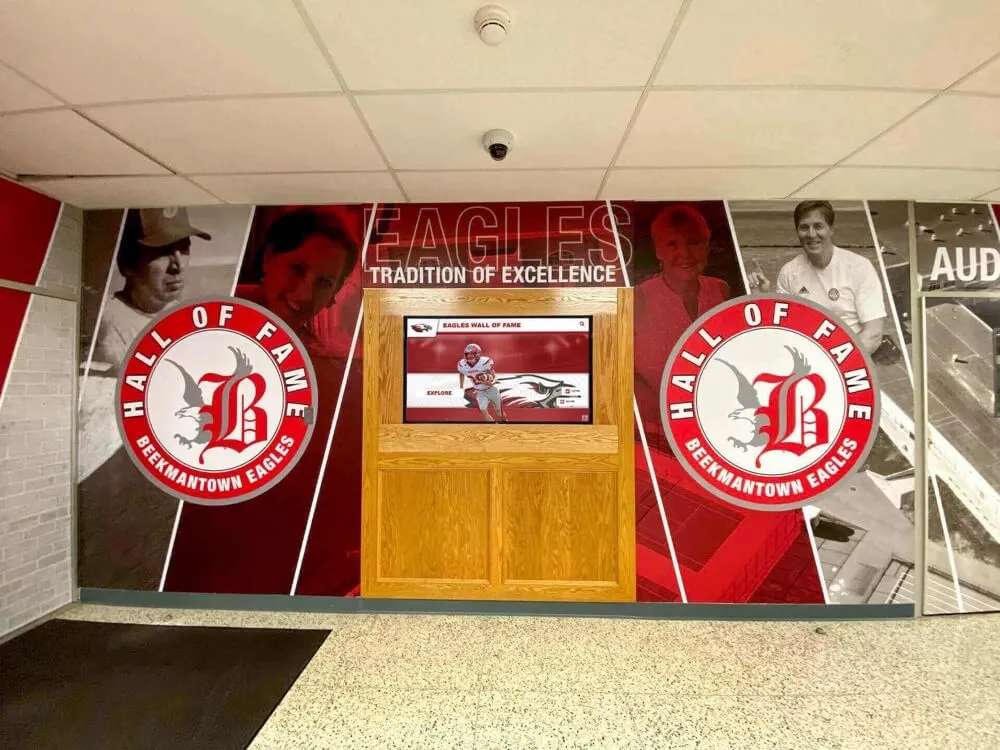
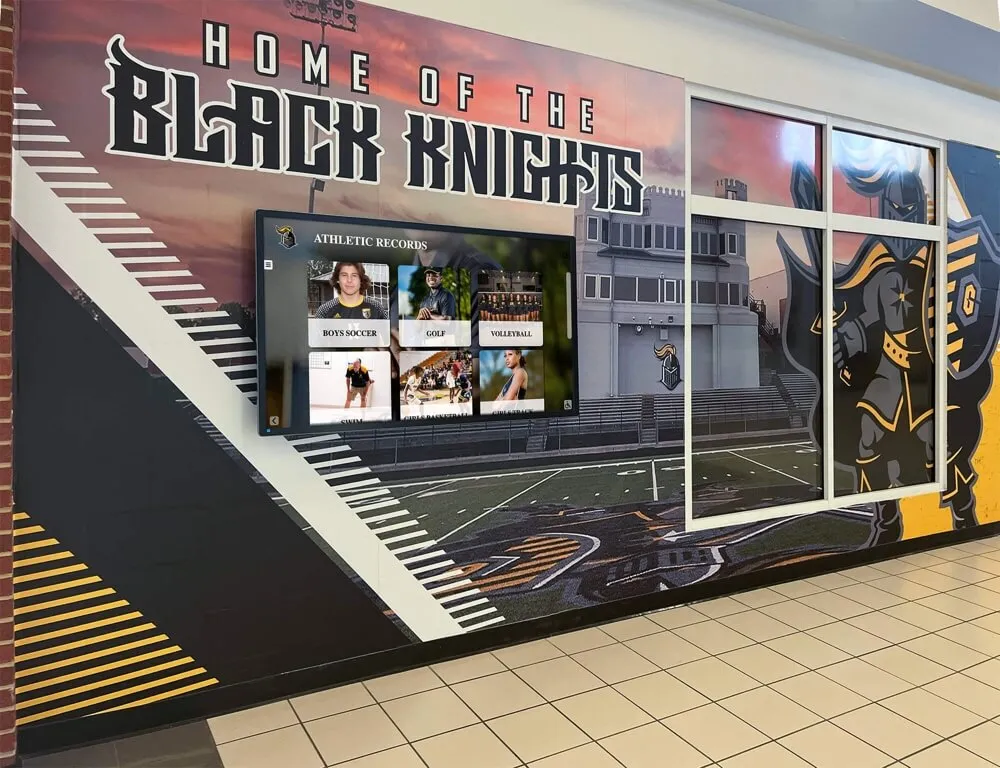
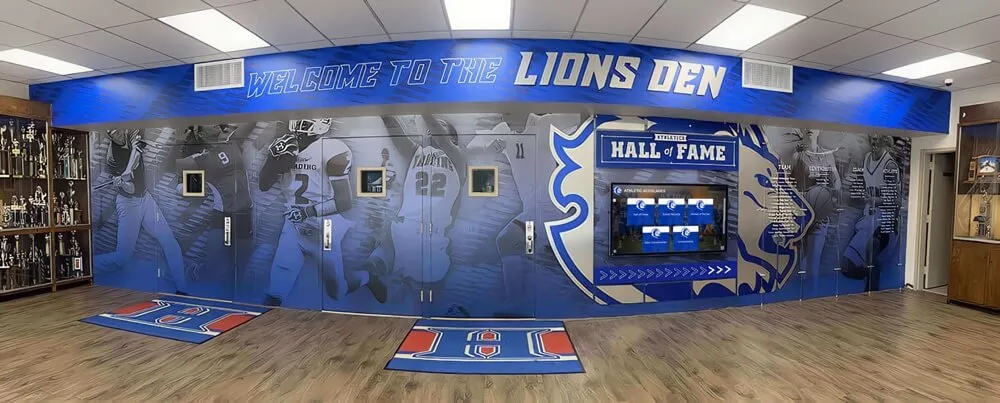
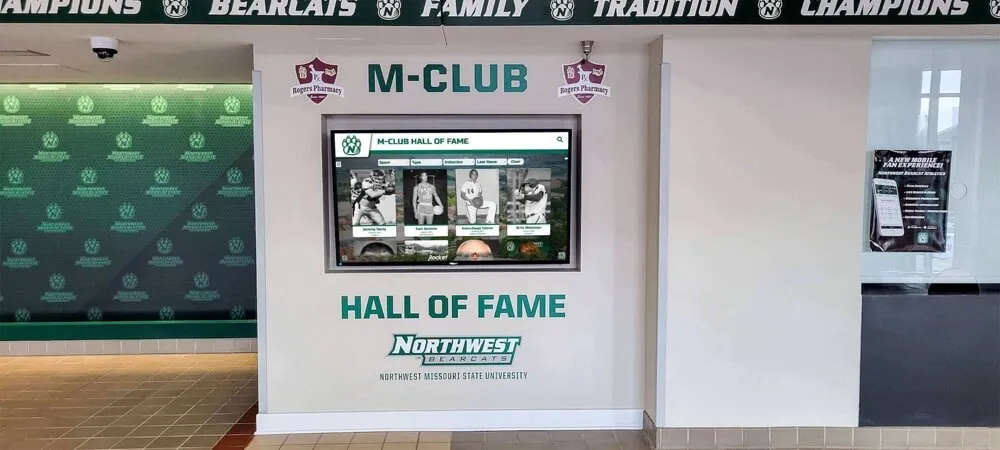
Athletic recognition walls honor cross country achievements creating lasting records of runner accomplishments and team success
Middle School Cross Country Distance
- Typical distances: 2 miles to 3K (1.8 miles)
- Shorter races accommodate developmental runners
- Distances vary considerably by region and meet organizer
- Gradually increase throughout season preparing for high school
Programs implementing comprehensive recognition ensure cross country receives visibility alongside higher-profile sports through athletic achievement displays that celebrate runners’ dedication and improvement.
Understanding 5K Race Distance in Context
For runners new to cross country, understanding what 5K actually means helps establish realistic performance expectations.
Converting 5K to Familiar Distance Units
Metric and Imperial Conversions
- 5 kilometers = 5,000 meters
- 5K = 3.1 miles (precisely 3.10686 miles)
- 5K = 12.5 track laps (400-meter standard track)
- 5K = approximately 16,404 feet
Runners with track experience can conceptualize 5K as twelve and a half laps around a standard outdoor track—a considerable distance requiring sustained aerobic effort rather than speed-focused sprint capacity.
Typical 5K Finishing Times for High School Runners
Finishing times vary dramatically based on athletic development, training background, course difficulty, and competitive level:
Boys’ 5K Times
- Elite runners: Under 15:30 (sub-5:00 per mile pace)
- Strong varsity runners: 16:00-17:30 (5:10-5:38 per mile)
- Average varsity runners: 17:30-19:00 (5:38-6:07 per mile)
- Developing runners: 19:00-22:00+ (6:07-7:05+ per mile)
Girls’ 5K Times
- Elite runners: Under 18:00 (sub-5:48 per mile pace)
- Strong varsity runners: 18:30-20:00 (5:57-6:26 per mile)
- Average varsity runners: 20:00-22:00 (6:26-7:05 per mile)
- Developing runners: 22:00-25:00+ (7:05-8:03+ per mile)
These ranges provide general guidelines, but course characteristics dramatically affect times. Runners posting 17:00 on flat courses might run 18:00 on hilly, challenging terrain. Championship courses typically feature more difficult conditions than early-season invitational courses.
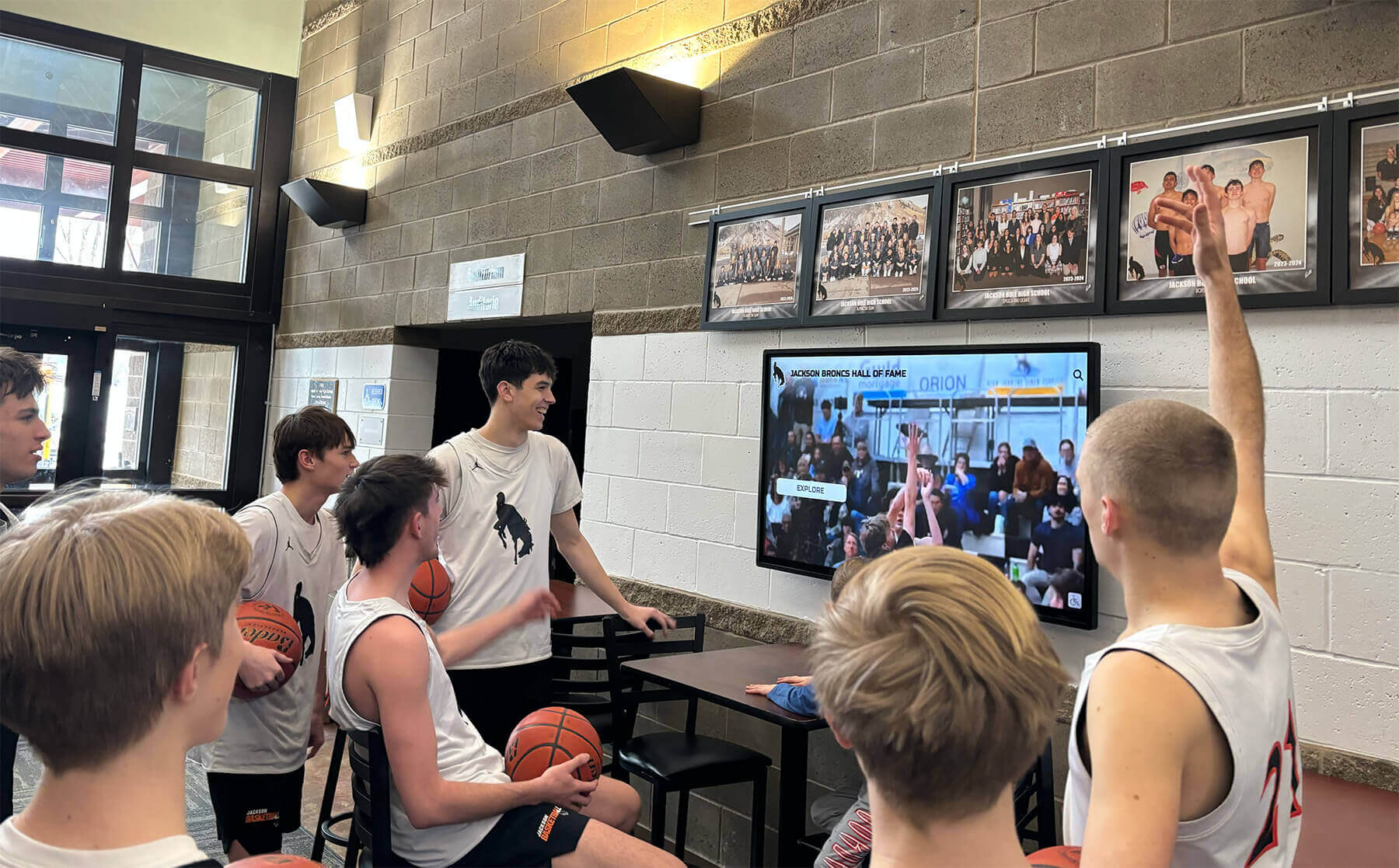
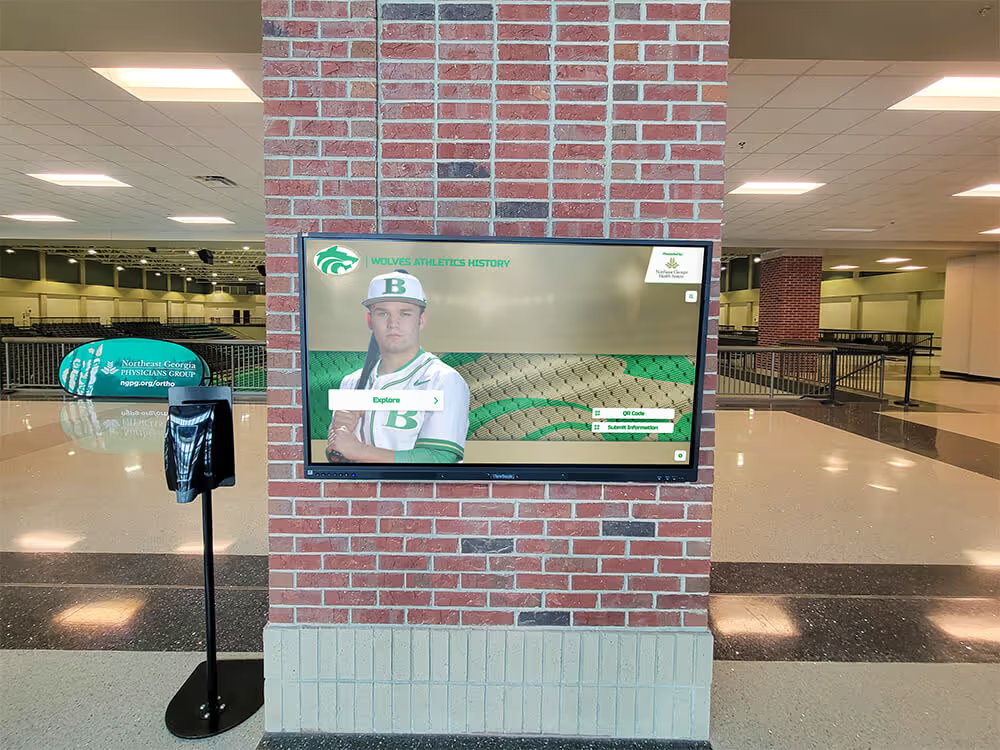
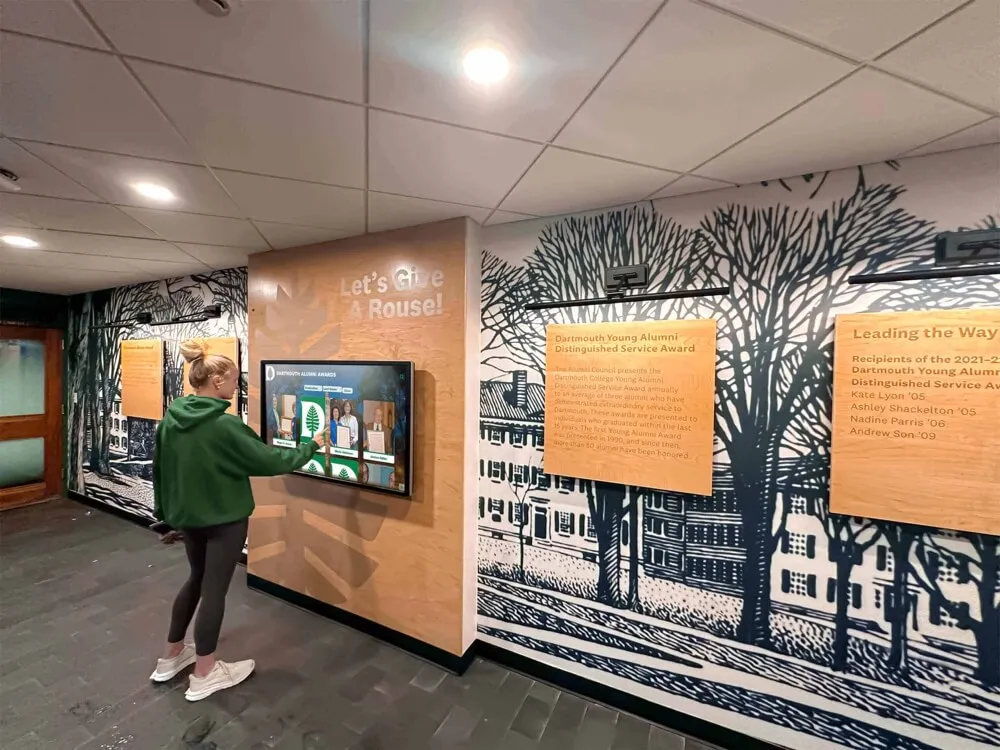
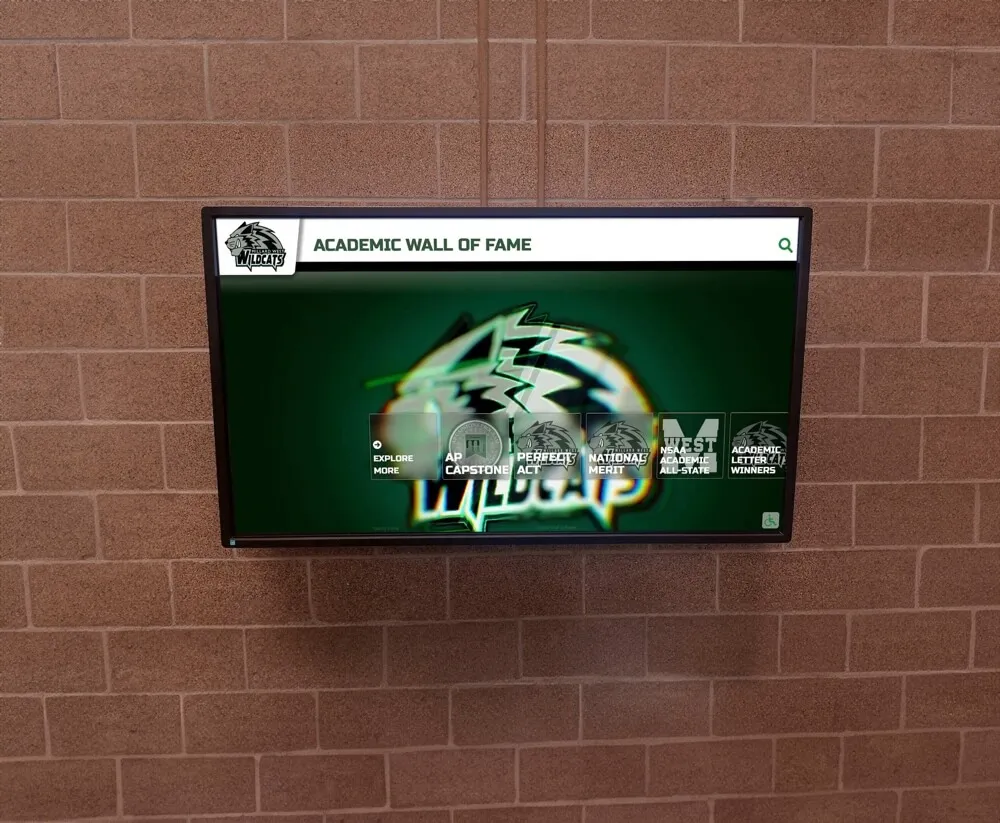
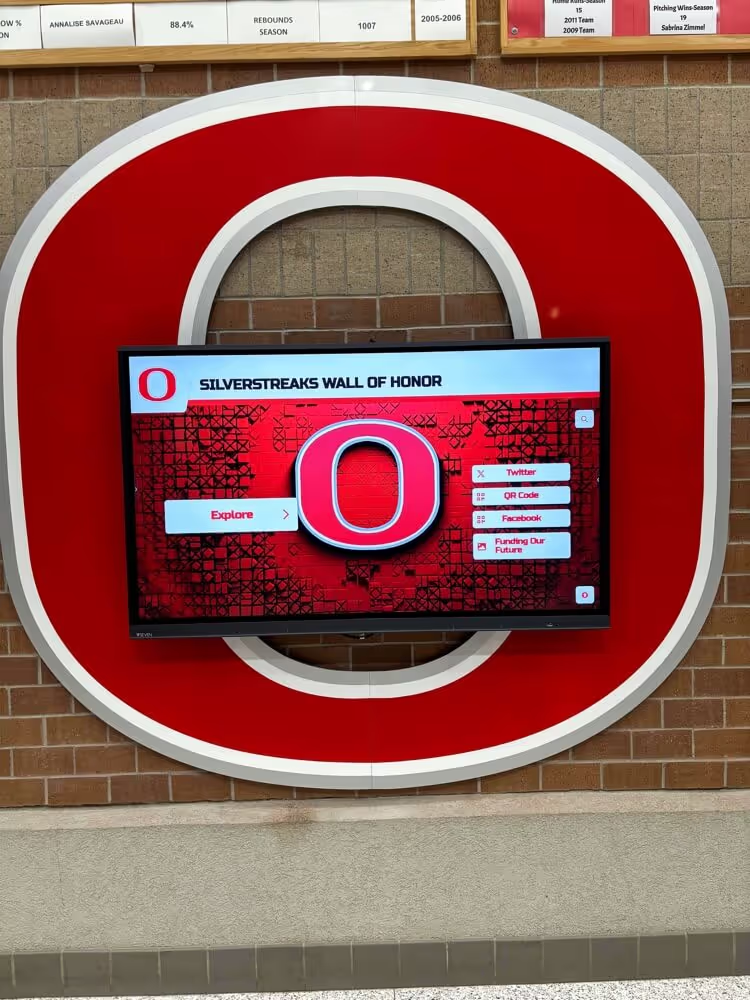
Interactive displays enable teams viewing race highlights and season results, creating engagement with cross country program achievements
Cross Country Season Structure and Progression
High school cross country seasons follow predictable patterns from August through November in most regions.
Typical Season Timeline
Pre-Season (Late July - Early August)
- Summer training and conditioning programs
- Team camps and informal practices
- Base mileage development
- Official practice start dates vary by state athletic association
Early Season (Late August - September)
- Initial meets featuring relatively easy courses
- Dual meets and small invitationals
- Runners establishing baseline times
- Coaches evaluating lineup and team dynamics
Mid-Season (September - October)
- Larger invitational competitions
- Conference championship meets
- Peak training volume and intensity
- Competitive lineup solidifies
Championship Season (Late October - November)
- Regional qualifying meets
- State championship competitions
- Post-season awards and recognition
- Season-ending banquets and celebrations
Schools celebrating cross country success implement comprehensive sports recognition programs honoring individual achievements and team accomplishments throughout championship progression.
Championship Qualification and State Meets
Most states structure post-season competition through regional qualification advancing to state championships:
Regional/Sectional Qualifying
- Geographic regions compete in qualifying meets
- Top individuals and teams advance to state
- Qualification standards vary by state and competitive class
- Both individual and team advancement opportunities
State Championship Meets
- Culmination of season featuring best teams and individuals
- Often divided by school enrollment classification (Class A, AA, AAA, etc.)
- Courses selected for challenge and spectator accessibility
- Championship races determine state rankings and individual titles
Schools with strong cross country traditions recognize state qualifiers and championship performances through permanent displays celebrating these achievements. Programs like digital recognition systems provide unlimited capacity honoring every state qualifier and record-setting performance.
Training Distances and Weekly Mileage
While races cover 5K, training involves substantially greater distances developing aerobic capacity and endurance.
Typical Weekly Training Volume
Cross country training volume varies dramatically based on competitive level and program philosophy:
Beginning Runners
- Weekly mileage: 15-25 miles
- Long runs: 4-6 miles
- Recovery days and cross-training
- Gradual progression preventing injury
Experienced Varsity Runners
- Weekly mileage: 35-50 miles
- Long runs: 8-12 miles
- Quality workouts: intervals, tempo runs, hill repeats
- Consistent year-round base training
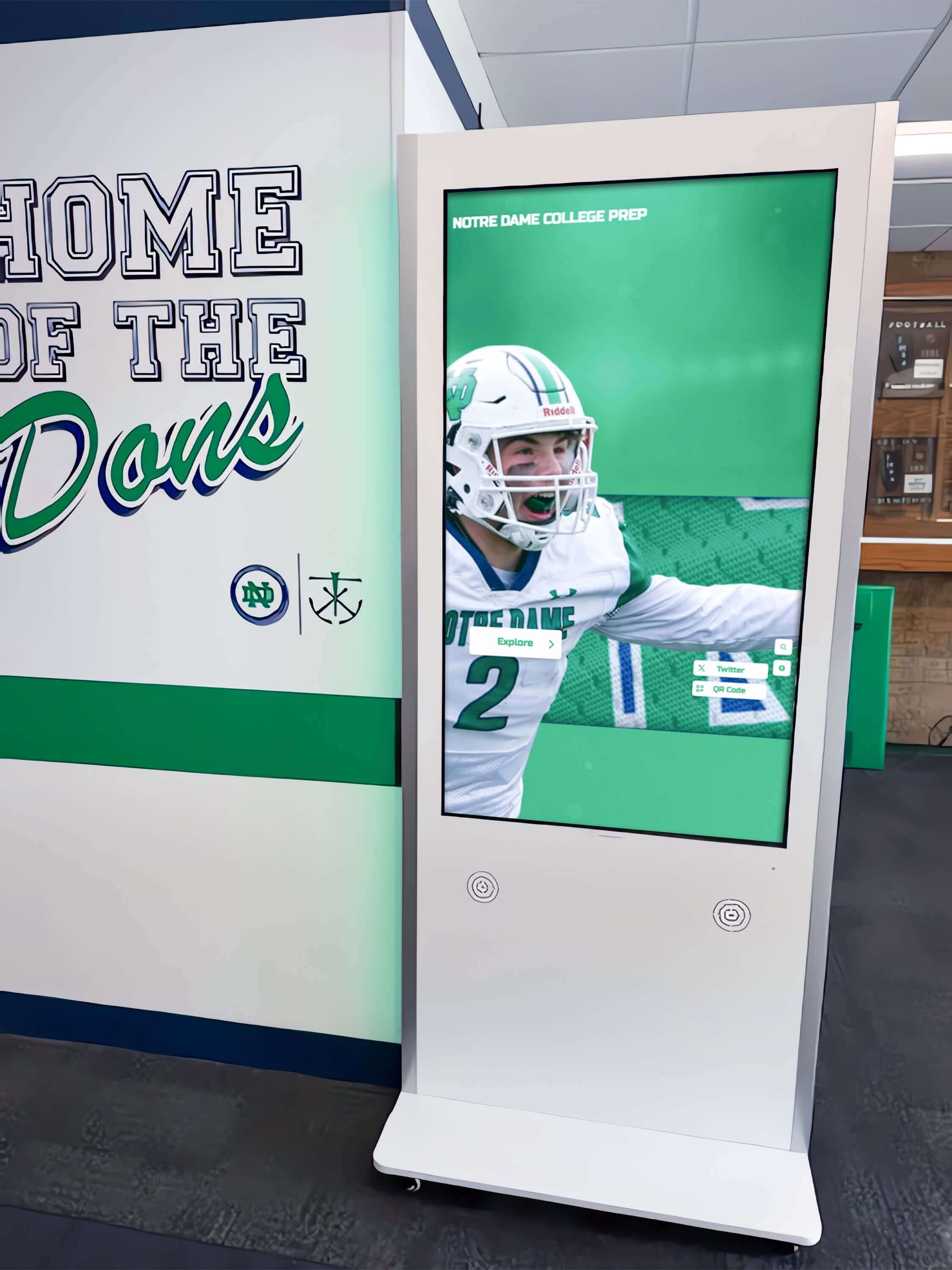
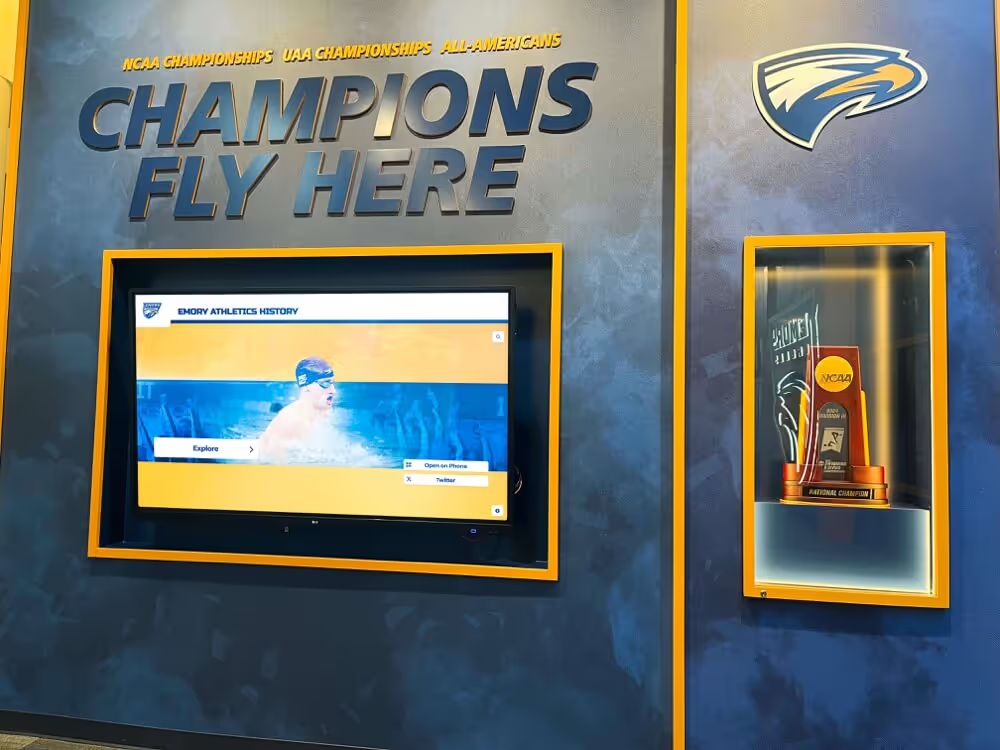
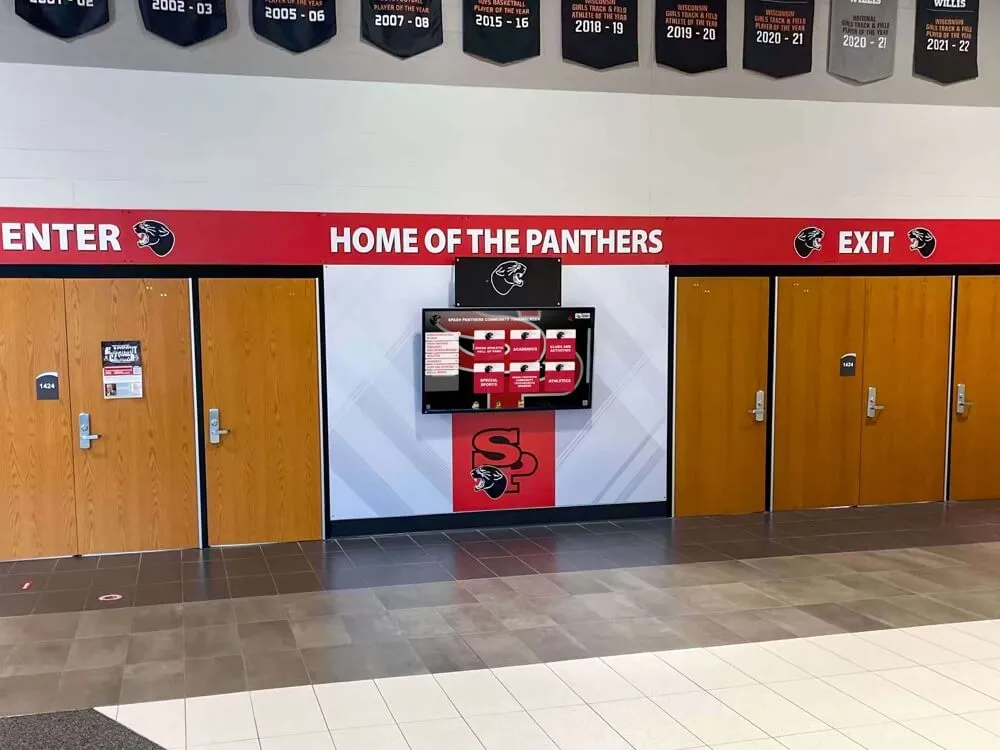
Hallway placement ensures daily visibility for athletes inspired by cross country achievements and program tradition
Elite High School Runners
- Weekly mileage: 50-70+ miles
- Long runs: 10-15 miles
- Multiple quality sessions weekly
- Year-round structured training programs
Training distances exceed race distances significantly because aerobic development requires sustained volume. Runners preparing for 3.1-mile races regularly complete 8-12 mile long runs developing cardiovascular efficiency and mental toughness necessary for competitive racing.
Different Training Run Types
Coaches structure training incorporating varied run types serving different physiological purposes:
Easy/Recovery Runs
- Distance: 3-6 miles
- Purpose: Active recovery and base aerobic development
- Pace: Conversational, comfortable effort
- Frequency: Most training days
Long Runs
- Distance: 8-15 miles (depending on experience level)
- Purpose: Endurance development and mental preparation
- Pace: Moderate, steady effort
- Frequency: Weekly, typically weekends
Tempo Runs
- Distance: 3-5 miles at sustained effort
- Purpose: Lactate threshold development
- Pace: Comfortably hard, sustainable for duration
- Frequency: 1-2 times weekly during season
Interval Workouts
- Distance: Varies (400m-1600m repeats, multiple sets)
- Purpose: VO2 max development and race-pace training
- Pace: Fast, with recovery between intervals
- Frequency: 1-2 times weekly during competitive season
Balancing these training elements while managing injury risk represents one of cross country coaching’s primary challenges. Successful programs gradually progress volume and intensity while monitoring athlete response and recovery.
Cross Country Course Characteristics
Unlike track’s standardized environment, cross country courses vary dramatically affecting race difficulty and finishing times.
Terrain and Surface Types
Grass Courses
- Most common cross country surface
- Provides cushioning reducing impact stress
- Conditions vary with weather (wet grass slower than dry)
- Typical for park and golf course venues
Dirt and Gravel Paths
- Firmer surface allowing faster times
- Less impact absorption than grass
- Weather affects less than grass courses
- Common in rail-trail and park path courses
Mixed Terrain
- Combination of surfaces throughout race
- Requires tactical adjustments and varied pacing
- Adds complexity and challenge
- Reflects traditional cross country philosophy

Athletic facility displays create spaces celebrating cross country achievements alongside other sports, validating program importance
Elevation and Course Difficulty
Elevation dramatically impacts race difficulty and competitive strategy:
Flat Courses
- Minimal elevation change (under 50 feet total)
- Fastest finishing times
- Emphasize consistent pacing and speed
- Favor runners with track backgrounds
Rolling Courses
- Moderate hills throughout (100-200 feet elevation change)
- Require pacing adjustments on hills
- Most common course type
- Balance speed with tactical hill running
Hilly/Challenging Courses
- Significant elevation (200+ feet change)
- Slower times due to climbing demands
- Favor strong, patient runners
- Separate competitors by strength and strategy
Championship courses typically feature moderate to challenging terrain testing complete runner capabilities rather than pure speed. Course selection affects what times constitute strong performances—16:30 on a difficult course may represent better fitness than 16:00 on a flat, fast course.
Recognition and Celebrating Cross Country Achievement
While cross country may lack the spectator appeal of football or basketball, dedicated runners deserve recognition celebrating their achievements and inspiring future team members.
Traditional Cross Country Awards
Programs typically recognize various achievement categories:
Individual Achievement Awards
- Team MVP or most valuable runner
- Most improved runner
- Fastest 5K time (PR awards)
- Breakthrough performance recognition
- Mental toughness and perseverance awards
Team Achievement Recognition
- Conference championship teams
- Regional/sectional qualifying teams
- State meet participants
- Team scoring achievements and victories
- Season win-loss records
Special Recognition Categories
- Four-year program participants
- Team captains and leadership
- Academic all-conference selections
- Sportsmanship and character awards
- Coach’s awards for dedication and effort
Schools implementing end-of-season recognition celebrations ensure cross country runners receive appropriate acknowledgment alongside athletes in higher-profile sports.
Modern Digital Recognition Displays
Traditional trophy cases face space limitations as achievements accumulate over decades. Modern schools implement digital recognition systems providing unlimited capacity:
Digital Display Capabilities
- Individual runner profiles with photos and career statistics
- Season-by-season results and championship teams
- Personal record tracking and improvement visualization
- Race photos and finish line captures
- Team scoring records and competitive results
- Searchable databases enabling instant information access
Solutions like Rocket Alumni Solutions offer platforms specifically designed for athletic recognition, enabling cross country programs to showcase:
- Every state qualifier across all years
- Personal record holders for 5K and other distances
- Championship team rosters with individual contributions
- Season highlights and memorable race results
- Alumni runners who competed collegiately
- Coaching staff and program history

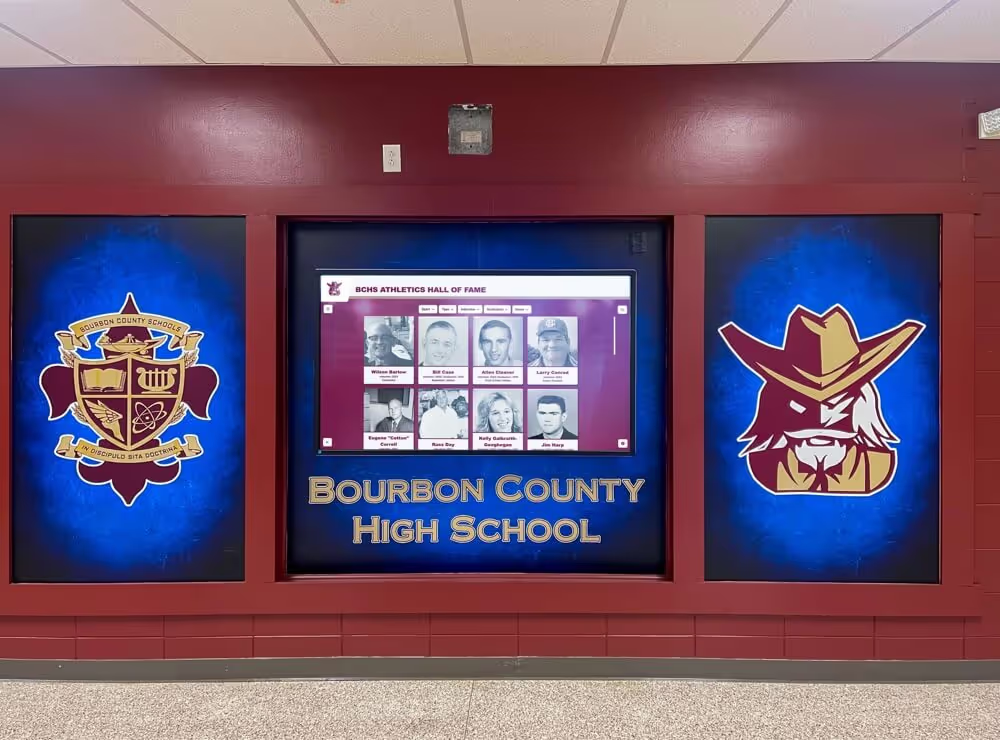
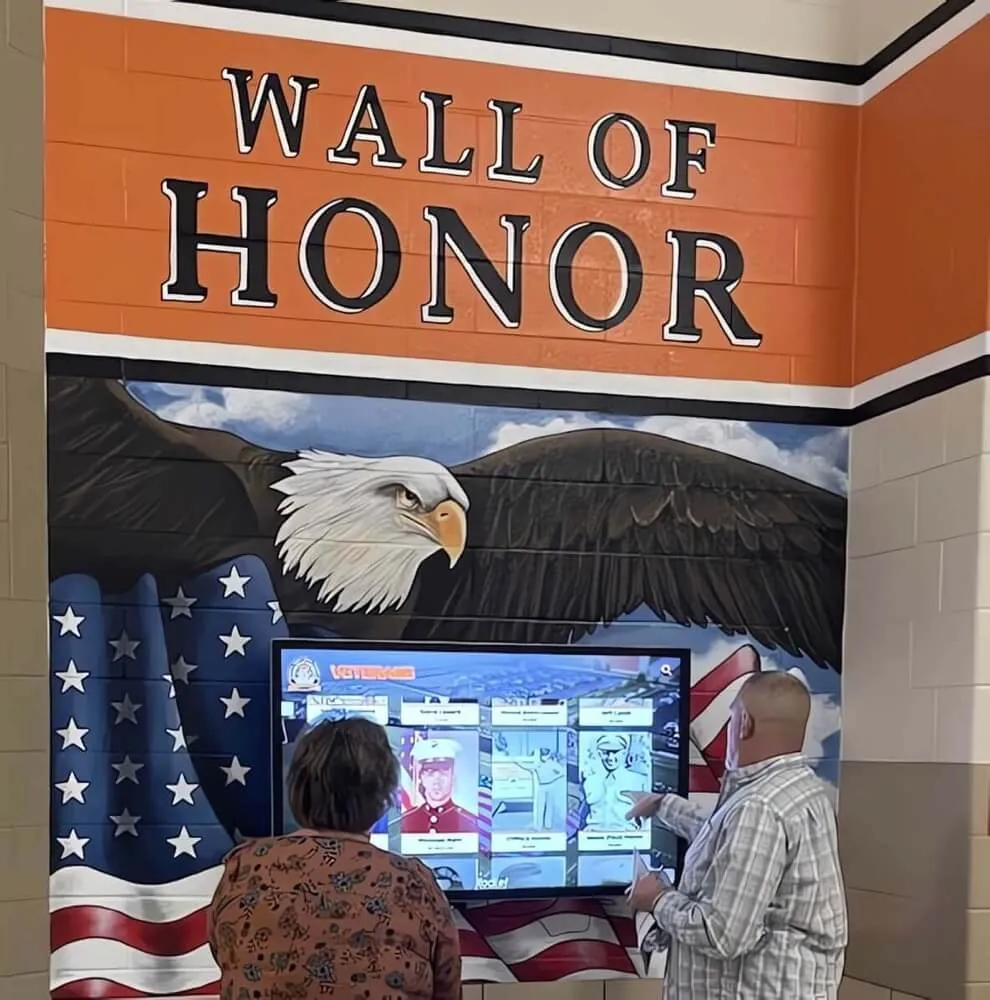
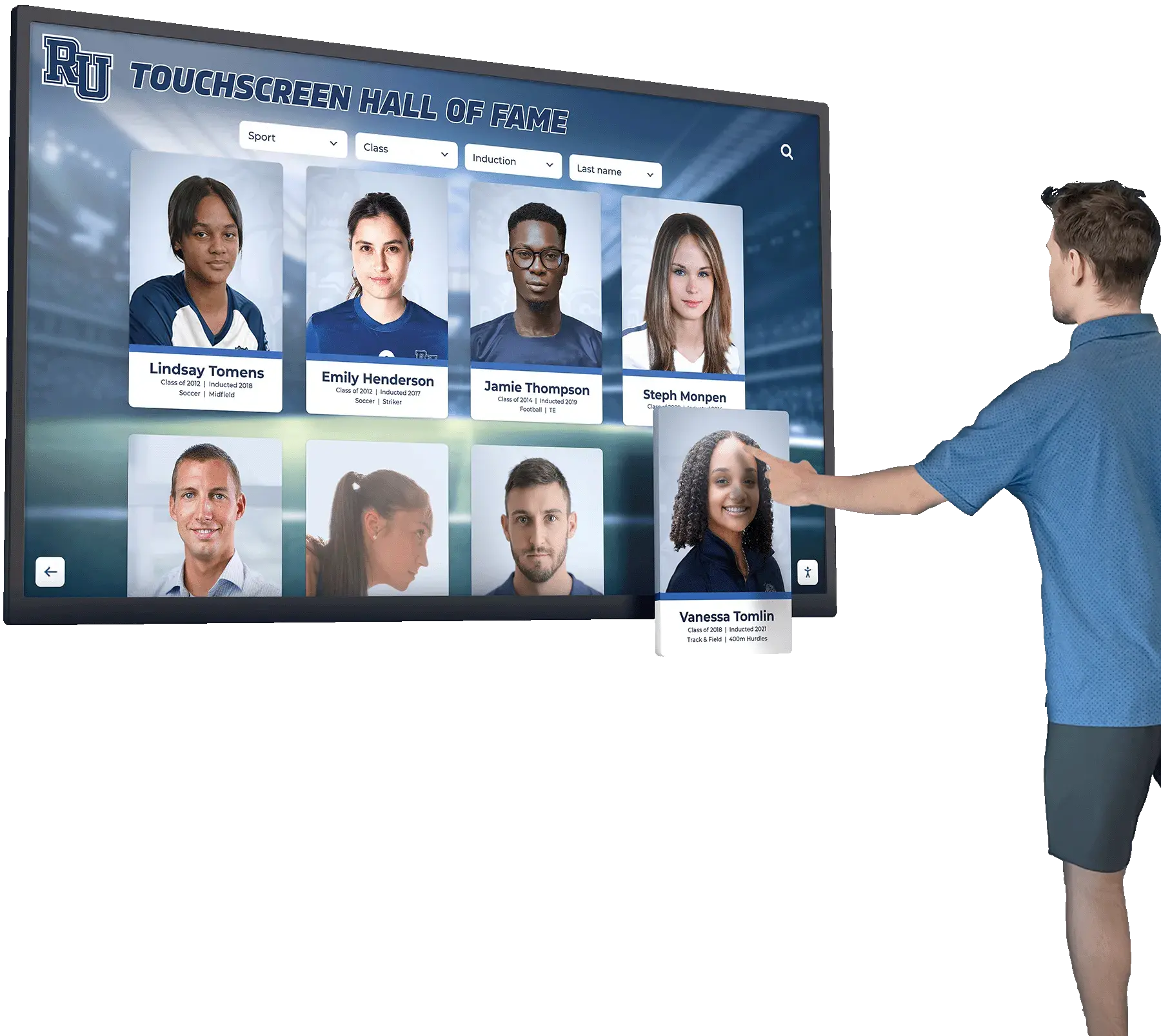
Interactive kiosks enable athletes, families, and alumni exploring cross country program history through intuitive touchscreen interfaces
Programs implementing digital trophy case displays report significantly higher engagement compared to static trophy cases, with touchscreen interactivity encouraging exploration of program history and individual achievements.
Administrative Benefits
- Remote content updates requiring no physical access
- Instant recognition of current season achievements
- No space constraints limiting recognition capacity
- Reduced long-term costs compared to traditional approaches
- Mobile accessibility extending recognition beyond campus
- Alumni engagement through historical content preservation
Schools can reference comprehensive guidance on digital recognition implementation for programs seeking to modernize athletic recognition while honoring tradition.
Breaking Down Personal Records and Goal Setting
Understanding distance standards helps runners establish appropriate performance goals throughout their high school careers.
Freshman to Senior Performance Progression
Typical runner development follows predictable improvement patterns:
Freshman Year
- Focus: Learning race strategy and building base fitness
- Typical 5K times: 20:00-22:00 (boys), 23:00-25:00 (girls)
- Goals: Finish races strong, develop consistency, learn course tactics
- Recognition: Improvement awards, effort acknowledgment, participation celebration
Sophomore Year
- Focus: Structured training adaptation and competitive development
- Typical improvement: 30-90 seconds faster than freshman year
- Goals: Breaking 19:00 (boys) or 22:00 (girls), team scoring contribution
- Recognition: Most improved awards, varsity letter achievement
Junior Year
- Focus: Peak development and competitive excellence
- Typical times: 17:30-18:30 (boys), 20:00-21:30 (girls) for strong runners
- Goals: State qualification, personal record pursuits, team leadership
- Recognition: All-conference selections, state qualifier celebration
Senior Year
- Focus: Career best performances and leadership roles
- Goals: Sub-17:00 (boys) or sub-20:00 (girls) for elite runners
- Achievements: Four-year participation, team captaincy, school records
- Recognition: Senior night celebrations, career achievement summaries
Not all runners follow this progression—late bloomers, multi-sport athletes, and injury recovery affect individual development. However, consistent training typically produces measurable yearly improvement for dedicated runners.

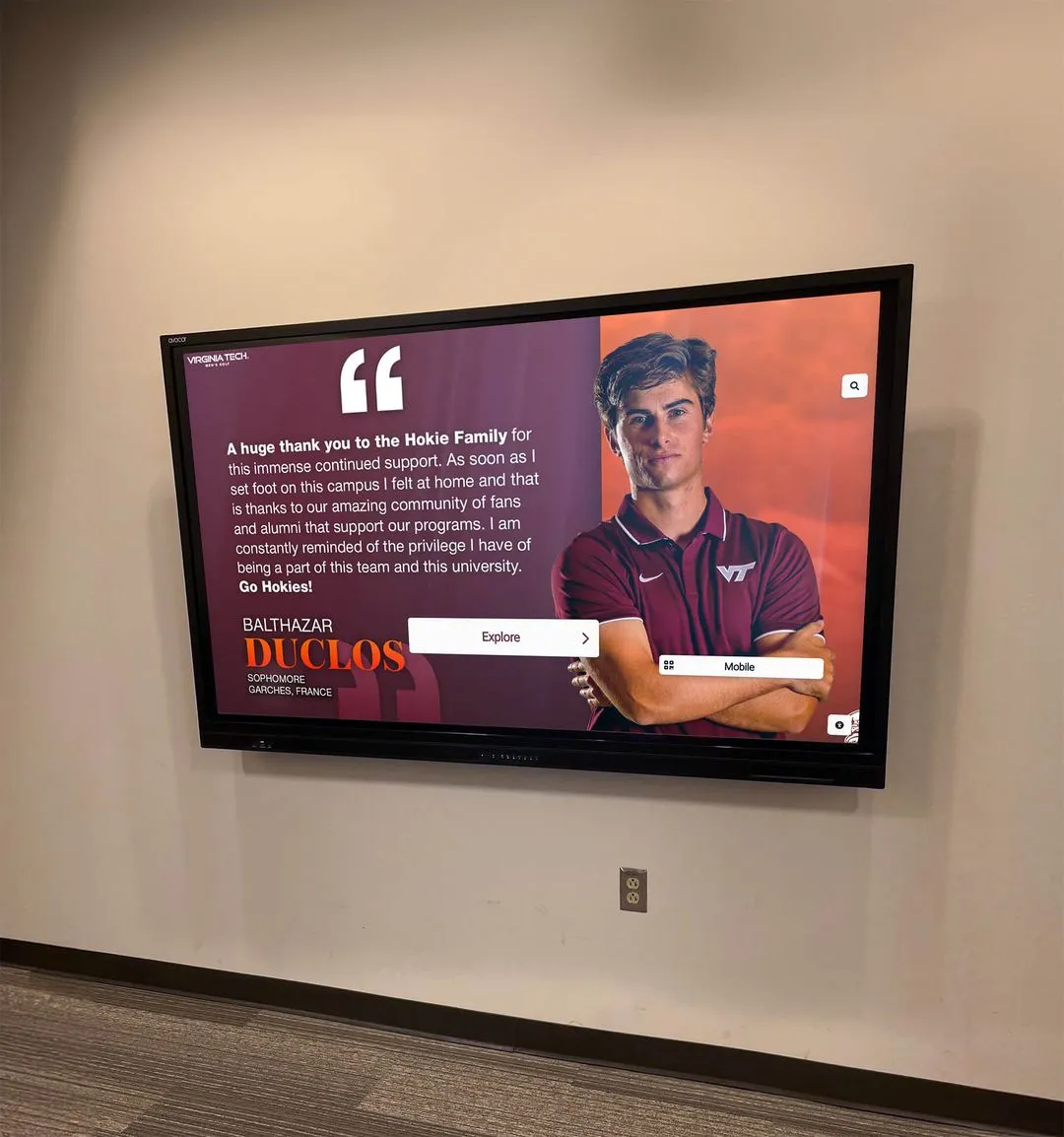
Individual athlete profiles celebrate cross country achievements with statistics, photos, and career progression tracking
Setting Realistic Performance Goals
Coaches help runners establish appropriate goals based on baseline fitness and competitive level:
Time-Based Goals
- Breaking common time barriers (sub-20:00, sub-18:00, sub-17:00)
- Personal record improvements from previous season
- Matching times of respected competitors or alumni
- Achieving specific pace-per-mile averages
Placement Goals
- Finishing within top-7 to score for team
- Achieving top-10 finishes in competitive meets
- Qualifying for state meet individually or with team
- Conference championship podium finishes
Process Goals
- Completing prescribed training mileage consistently
- Successful execution of race strategy
- Strong finishing kicks in final kilometer
- Leadership and encouragement of teammates
The most sustainable motivation combines outcome goals (specific times or placements) with process goals (consistent training execution) that athletes directly control regardless of competition variables.
Training for Cross Country Distance Success
Preparing for 5K races requires systematic training developing multiple physiological systems.
Building Aerobic Base Through Mileage
Distance running success depends primarily on aerobic capacity developed through sustained training volume:
Base Building Principles
- Gradual mileage increases preventing injury (10% rule)
- Consistency prioritized over individual workout intensity
- Easy-paced running forming 70-80% of total volume
- Patient development over months and years, not weeks
- Year-round training maintaining fitness between seasons
Summer Training Foundation
- Pre-season mileage building (June-July)
- Establishing aerobic base before intense workouts
- Easy running with occasional tempo efforts
- Mental preparation and team bonding
- Preventing early-season injury through gradual adaptation
Runners entering high school should expect gradual volume progression across four years, with senior-year training loads substantially exceeding freshman capabilities. Patient development prevents burnout and overuse injuries while maximizing long-term potential.
Speed Work and Race-Pace Training
While aerobic development provides the foundation, specific workouts prepare runners for race-pace intensity:
Interval Training
- 400m-1600m repeats at faster than race pace
- Develops VO2 max and speed endurance
- Recovery periods between repetitions
- Typically performed weekly during competitive season
Tempo Runs
- Sustained efforts at comfortably hard pace
- Trains lactate threshold improvement
- Distances: 2-4 miles for high school runners
- Teaches sustained effort management
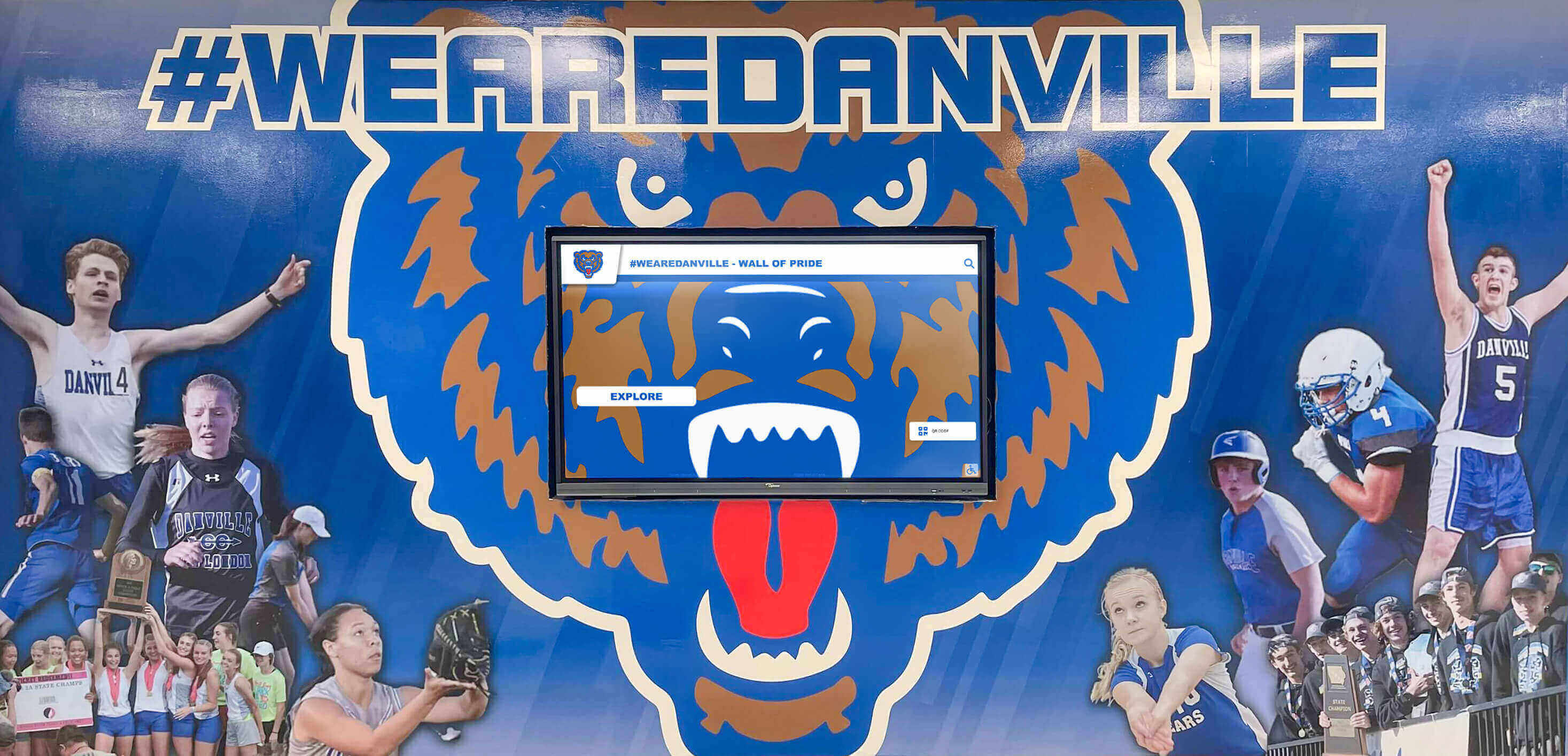
Athletic entrance displays welcome visitors while showcasing cross country program pride and recognition traditions
Race-Pace Practice
- Workouts at goal race pace
- Develops pace judgment and race rhythm
- Builds confidence in goal performance capability
- Often includes surges simulating competitive moves
Hill Workouts
- Develops power and running economy
- Prepares for challenging course terrain
- Builds mental toughness through demanding efforts
- Strengthens running-specific muscles preventing injury
Quality workouts should complement, not replace, aerobic base development. Programs emphasizing speed work without sufficient easy mileage typically produce injured or burned-out athletes rather than peak performances.
Nutrition and Recovery for Distance Runners
Training for cross country requires attention to recovery and fueling supporting consistent training.
Pre-Race Nutrition Strategies
Proper fueling affects race performance significantly:
24-48 Hours Before Racing
- Increased carbohydrate intake (pasta, rice, bread, potatoes)
- Adequate hydration throughout preparation period
- Normal eating patterns avoiding dramatic changes
- Quality sleep supporting recovery and readiness
Race Morning
- Light breakfast 2-3 hours before race time
- Familiar foods avoiding digestive experimentation
- Toast, banana, bagel, oatmeal common choices
- Continued hydration up to 30 minutes before racing
Immediately Pre-Race
- Small energy source if race time delayed (gel, fruit)
- Sips of water maintaining hydration without feeling full
- Mental preparation and focus routines
- Dynamic warm-up and activation exercises
Runners should experiment with nutrition strategies during training and early-season races, determining what works individually before championship competitions.
Recovery Between Training Days
Training benefits occur during recovery, not during workouts themselves:
Immediate Post-Workout Recovery
- Cool-down jogging preventing blood pooling
- Stretching and flexibility work
- Carbohydrate and protein intake within 30 minutes
- Rehydration replacing fluid losses
Daily Recovery Practices
- Adequate sleep (8-9 hours for adolescent athletes)
- Foam rolling and self-massage techniques
- Ice baths or contrast therapy after hard workouts
- Mental recovery through activities outside running
Injury Prevention and Management
- Attention to minor aches before becoming injuries
- Rest days and reduced mileage when appropriate
- Strength training supporting running mechanics
- Communication with coaches about concerns
Cross country’s repetitive nature creates overuse injury risk. Successful programs balance training stress with recovery, producing healthy athletes competing through championship season rather than sidelined by preventable injuries.
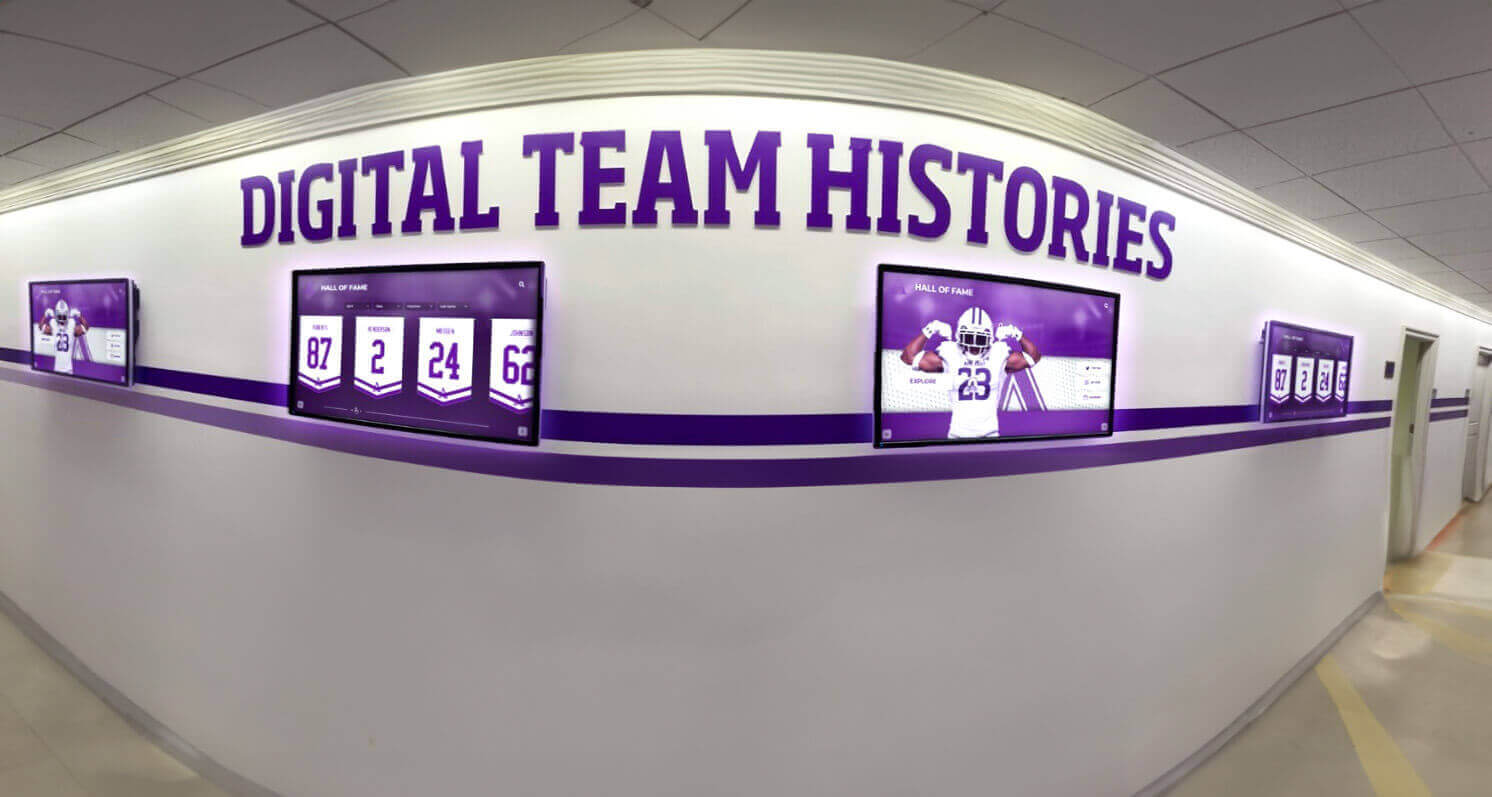
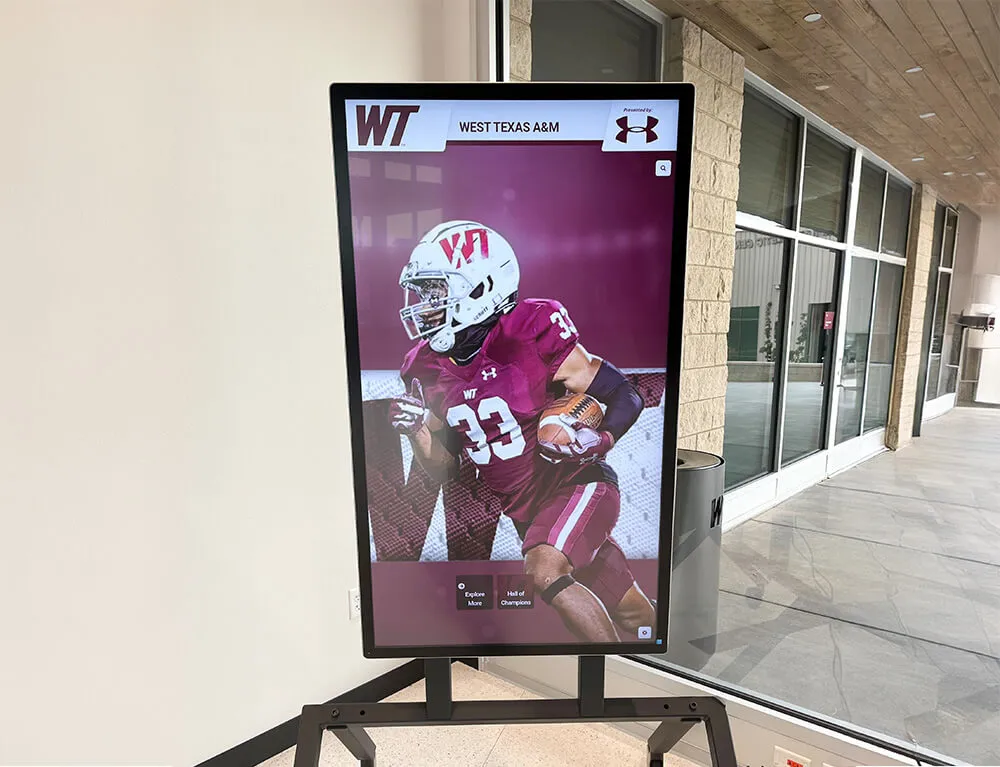
Multiple coordinated displays throughout athletic facilities ensure comprehensive recognition of cross country alongside other sports programs
Mental Preparation and Race Strategy
Physical preparation provides necessary foundation, but mental approach determines competitive success.
Developing Race Strategy
Effective 5K racing requires strategic planning beyond simply running hard:
Pace Management
- Conservative first kilometer avoiding adrenaline-fueled overcooking
- Settling into sustainable rhythm through middle sections
- Gradual acceleration in final 1-2 kilometers
- Strong finishing kick in final 400-800 meters
Course-Specific Tactics
- Attacking hills with controlled effort maintaining momentum
- Recovering on downhills without excessive deceleration
- Positioning strategically before tight turns or bottlenecks
- Using terrain features for competitive advantages
Competitive Positioning
- Starting aggressively establishing good position
- Running in groups when beneficial for draft and motivation
- Covering moves by competitors to prevent gaps
- Making decisive moves when feeling strong rather than reactive catching
Mental Checkpoints
- Breaking race into segments rather than dwelling on full distance
- Positive self-talk during difficult middle portions
- Focus cues preventing mental drift
- Competitive mindset reminding runners of goals and preparation
Coaches help runners develop personalized race strategies reflecting individual strengths, weaknesses, and competitive goals. Successful strategies evolve through experience, with each race providing learning opportunities informing future competitions.
Dealing with Race-Day Nerves
Pre-race anxiety affects most runners regardless of experience level:
Channeling Nervous Energy
- Recognizing nerves as normal preparation response
- Reframing anxiety as excitement and readiness
- Controlled breathing exercises promoting calmness
- Visualization of successful race execution
Pre-Race Routines
- Consistent warm-up patterns creating familiarity
- Music or quiet time based on individual preference
- Social interaction with teammates or quiet reflection
- Final preparation rituals providing comfort and focus
Confidence Building
- Recalling successful training sessions and previous races
- Trusting preparation rather than doubting readiness
- Focusing on controllable elements (effort, strategy)
- Accepting uncertainty while maintaining positive outlook
Experienced runners develop mental preparation routines as sophisticated as physical training, recognizing that mindset determines whether fitness translates into race-day performance.
Cross Country as Foundation for Distance Running
High school cross country often introduces athletes to distance running, potentially sparking lifelong participation.
Transitioning to Track Distance Events
Cross country provides excellent preparation for track distance racing:
Cross Country to Track Progression
- 5K cross country fitness translates to 1600m, 3200m track races
- Track racing teaches faster pace and tactical racing
- Winter indoor track maintains fitness between seasons
- Spring track capitalizes on cross country aerobic development
- Combined programs maximize annual training stimulus
Many successful high school distance runners compete in all three seasons—cross country in fall, indoor track in winter, and outdoor track in spring—creating year-round development and competitive opportunities.
College Cross Country Opportunities
Strong high school runners may continue competing collegiately:
College Distance Standards
- Division I men’s 8K (5 miles), women’s 6K (3.7 miles)
- Division II and III use same distances as Division I
- NAIA and junior college similar distance standards
- Substantially longer than high school racing
Recruitment Considerations
- Elite programs recruit runners under 16:00/18:30 (boys/girls)
- Mid-level programs recruit 16:30-17:30/19:00-20:00
- Division III programs recruit committed runners of varying abilities
- Academic fit often more important than pure times
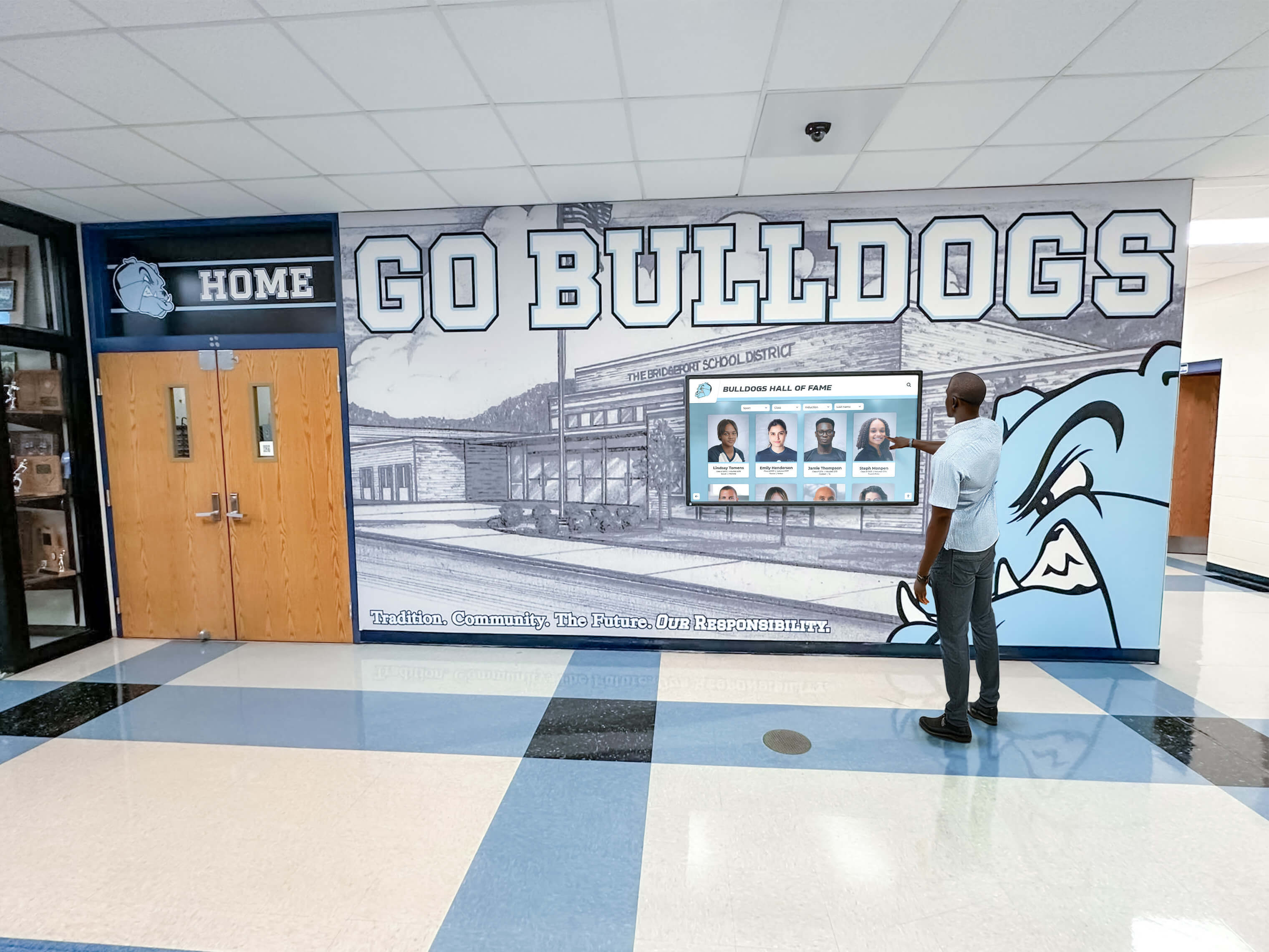
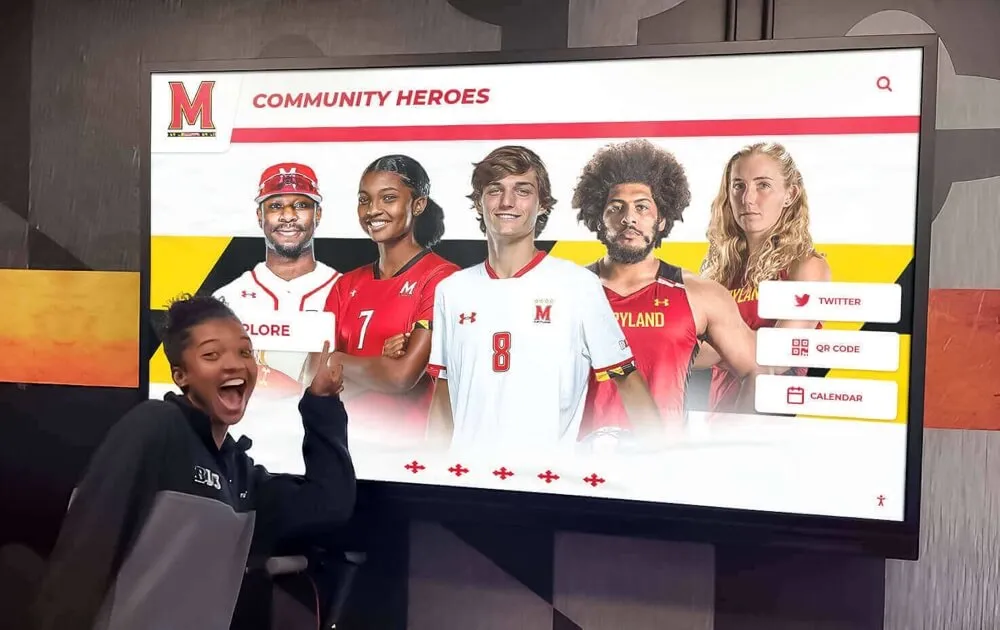
Student engagement with recognition displays demonstrates effective implementation creating sustained interest in cross country achievements
Schools honoring runners competing collegiately can showcase these achievements through alumni recognition programs celebrating continued athletic excellence beyond high school.
Lifelong Running and Fitness
Not all high school runners compete collegiately, but many maintain running throughout life:
Recreational Running Transition
- High school training establishes fitness habits
- Running provides accessible, lifelong fitness option
- Road racing (5K-marathon) opportunities available nationwide
- Social running groups maintaining community connections
- Health benefits extending throughout adult life
Cross country programs that emphasize enjoyment alongside competition create positive associations with running that persist beyond competitive careers, contributing to lifelong health and wellness.
Building Strong Cross Country Programs
Successful programs create environments where runners of all abilities develop fully while enjoying the sport.
Inclusive Team Culture
Effective programs welcome runners across ability spectrum:
Team Depth Development
- Recognition for runners beyond top-7 varsity scorers
- JV competition opportunities and acknowledgment
- Participation awards celebrating commitment regardless of placement
- Team building activities creating bonds across ability levels
- Leadership opportunities for experienced runners mentoring newcomers
Programs celebrating diverse contributions develop stronger overall cultures compared to those exclusively emphasizing top performers. Recognition systems showcasing full rosters—not just state qualifiers—demonstrate that programs value all participants.
Parent and Community Engagement
Cross country success requires support beyond just athletes and coaches:
Building Program Support
- Parent volunteers managing meet logistics and hospitality
- Community attendance at home meets and championships
- Booster club fundraising supporting equipment and travel
- Local business sponsorship and program recognition
- Alumni involvement connecting current and former runners
Schools implementing visible recognition increase community awareness and pride in cross country programs. Digital displays in high-traffic areas showcase achievements to audiences beyond just dedicated cross country families, building broader support and understanding.
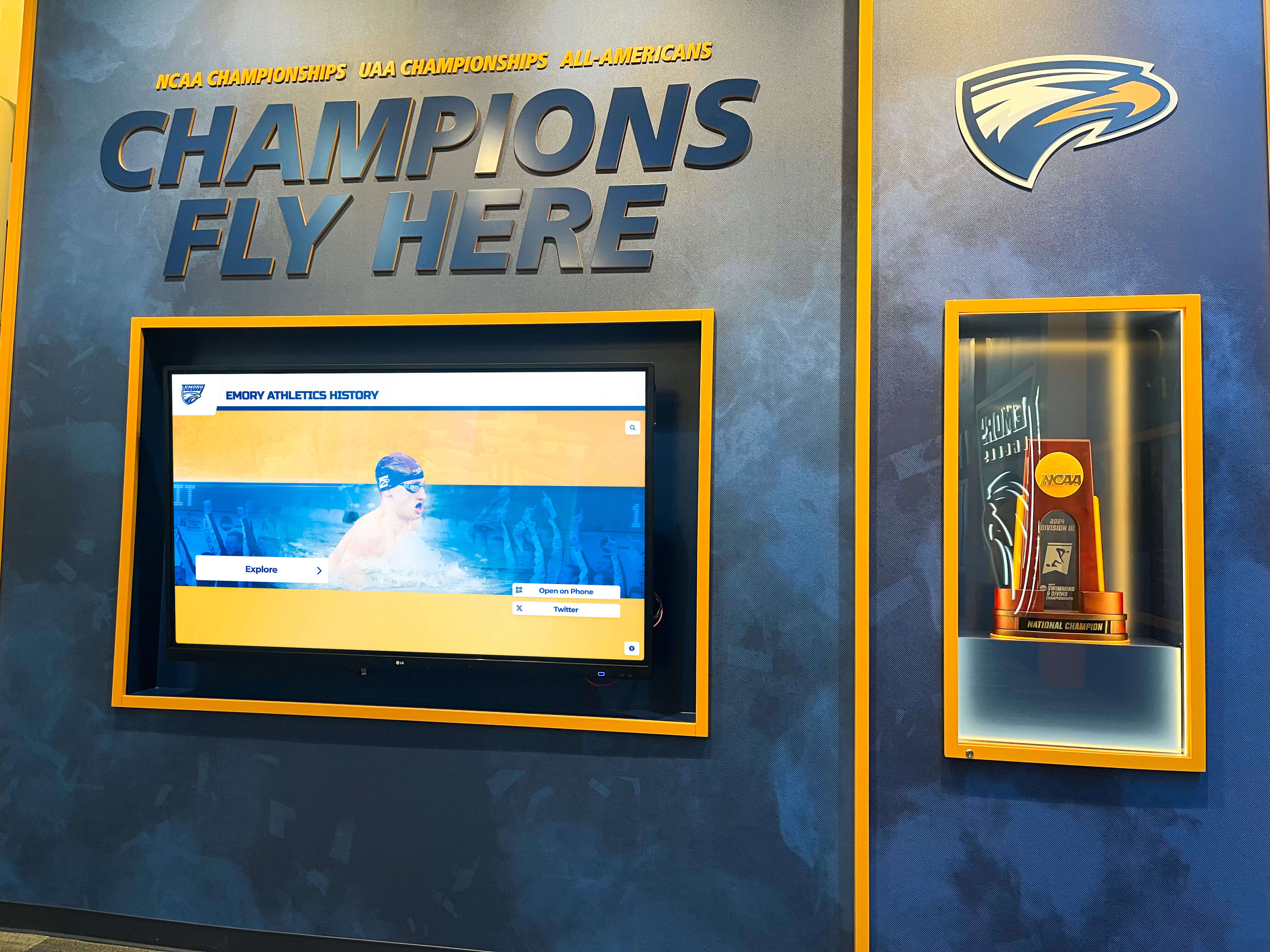
Championship displays create lasting records celebrating cross country team achievements and individual excellence across program history
Safety Considerations for Distance Running
Cross country’s outdoor, high-volume nature requires attention to safety and injury prevention.
Weather Conditions and Heat Safety
Early-season races often occur during hot, humid conditions requiring precautions:
Heat Safety Protocols
- Adequate hydration before, during, and after racing
- Recognizing heat illness symptoms (dizziness, nausea, confusion)
- Modified training during extreme heat and humidity
- Wet bulb globe temperature (WBGT) monitoring
- Race postponement or cancellation when conditions unsafe
Cold Weather Considerations
- Appropriate layering for training in cold conditions
- Attention to extremities (hands, ears) preventing frostbite
- Warming areas available at late-season races
- Modified workouts during extreme cold or ice conditions
Common Running Injuries and Prevention
Distance running’s repetitive nature creates specific injury patterns:
Common Cross Country Injuries
- Shin splints (medial tibial stress syndrome)
- Stress fractures (tibia, metatarsals, femur)
- Plantar fasciitis and foot pain
- IT band syndrome
- Runner’s knee (patellofemoral pain)
- Achilles tendinitis
Injury Prevention Strategies
- Gradual training progression avoiding sudden increases
- Proper footwear selection and timely replacement
- Running form attention and technique work
- Strength training supporting running mechanics
- Flexibility and mobility work
- Adequate recovery between hard efforts
- Attention to minor issues before becoming major problems
Programs prioritizing athlete health over competitive results produce better long-term outcomes, developing runners who remain healthy through championship season and potentially continue competing collegiately.
Conclusion: Celebrating Distance Running Excellence
High school cross country distance standards—primarily 5K or 3.1 miles for both boys and girls—provide appropriate challenges for developing distance runners while remaining accessible to athletes with varied athletic backgrounds. Understanding these standards helps runners, coaches, and families approach seasons with realistic expectations and appropriate preparation strategies.
Beyond the standard race distance, cross country involves substantially greater training distances—typically 20-50+ miles weekly depending on experience and competitive level. This volume, combined with varied terrain, weather conditions, and competitive pressure, creates demanding athletic experiences that develop physical capabilities alongside mental toughness, time management skills, and work ethic transferable throughout life.
Celebrate Your Cross Country Program Achievements
Discover how modern digital recognition displays enable unlimited capacity to showcase cross country achievements, individual runner profiles, team championships, and personal records—without physical space constraints or complex maintenance requirements.
Book A DemoSuccessful programs combine appropriate training addressing aerobic development, speed work, recovery, and mental preparation. Coaches balancing these elements while managing injury risk and maintaining athlete enjoyment produce strong competitive results alongside positive developmental experiences that many athletes continue benefiting from throughout their lives.
Recognizing cross country achievement appropriately requires moving beyond minimal acknowledgment to comprehensive celebration honoring state qualifiers, personal record achievements, improvement awards, and four-year program participants. Traditional trophy cases face space limitations as achievements accumulate, while modern digital recognition platforms like Rocket Alumni Solutions provide unlimited capacity ensuring every deserving achievement receives appropriate visibility.
Schools implementing comprehensive recognition report improved program culture, increased participation, stronger alumni connections, and greater community awareness of cross country excellence. Digital displays enable showcasing individual runner profiles with photos and statistics, team championship rosters, season results and competitive achievements, personal records and school history, and alumni recognition celebrating continued running success.
Your cross country program’s achievements—whether conference championships, state qualifiers, personal record improvements, or simple dedication to completing four seasons—deserve recognition reflecting the commitment distance running demands. With appropriate distance standards, systematic training progressions, and modern recognition technology providing unlimited acknowledgment capacity, you can create programs that honor every contribution while building competitive excellence and lifelong appreciation for distance running.
Ready to showcase your cross country program with professional recognition that extends beyond physical trophy limitations? Explore how digital recognition displays help cross country programs celebrate unlimited achievements while creating engaging experiences that strengthen program culture, motivate runner development, and build lasting connections between current athletes and proud running alumni.