The Easiest Touchscreen Solution

Live Example: Rocket Alumni Solutions Touchscreen Display
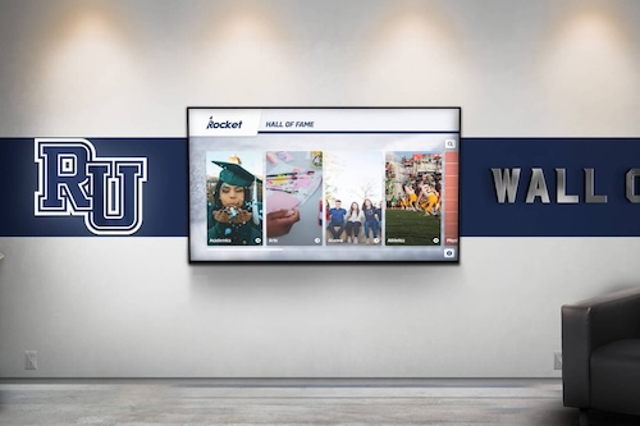
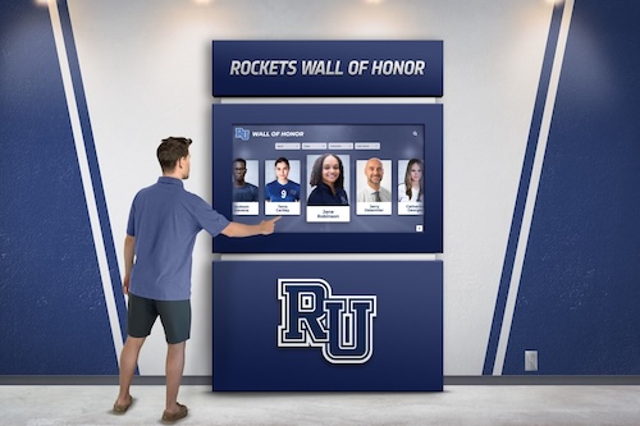
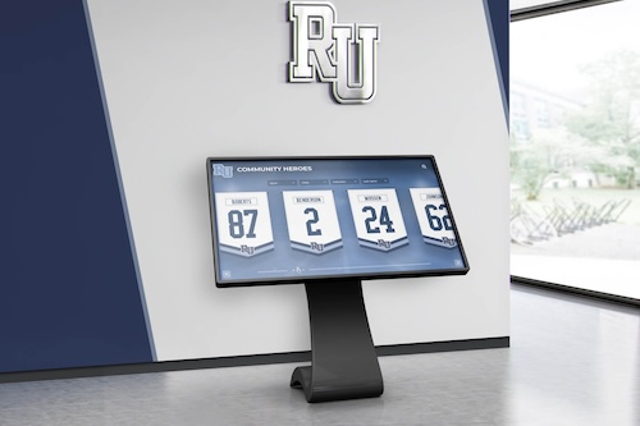
Interact with a live example (16:9 scaled 1920x1080 display). All content is automatically responsive to all screen sizes and orientations.
The labeling decision lands on your desk the week after spring championships close. Your school earned the Lone Star Cup for the third consecutive year, and your track team won a Class 5A state title the same season. Both arrive in the same shipment. Both deserve a spot in the case. The question that stops a lot of athletic directors is whether one label can cover both — and the answer is no. The aggregate program cup and the sport championship are separate recognitions, earned by different criteria, and they belong in separate entries. Neither proves the other; listing the sport title under the cup’s label, or vice versa, would misrepresent what each award certifies.
This guide helps athletic directors and trophy-case editors make the labeling decision correctly from the start: what to put on each entry, how to describe an all-sports cup without overstating its scope, and how to link same-season entries in a display without double-counting a championship.
The shortest answer to the labeling question is this: each award certifies only what its governing body says it certifies. Write that in plain language, include the award’s official name, year, and the name of the organizing body, and stop before adding claims the source does not support.
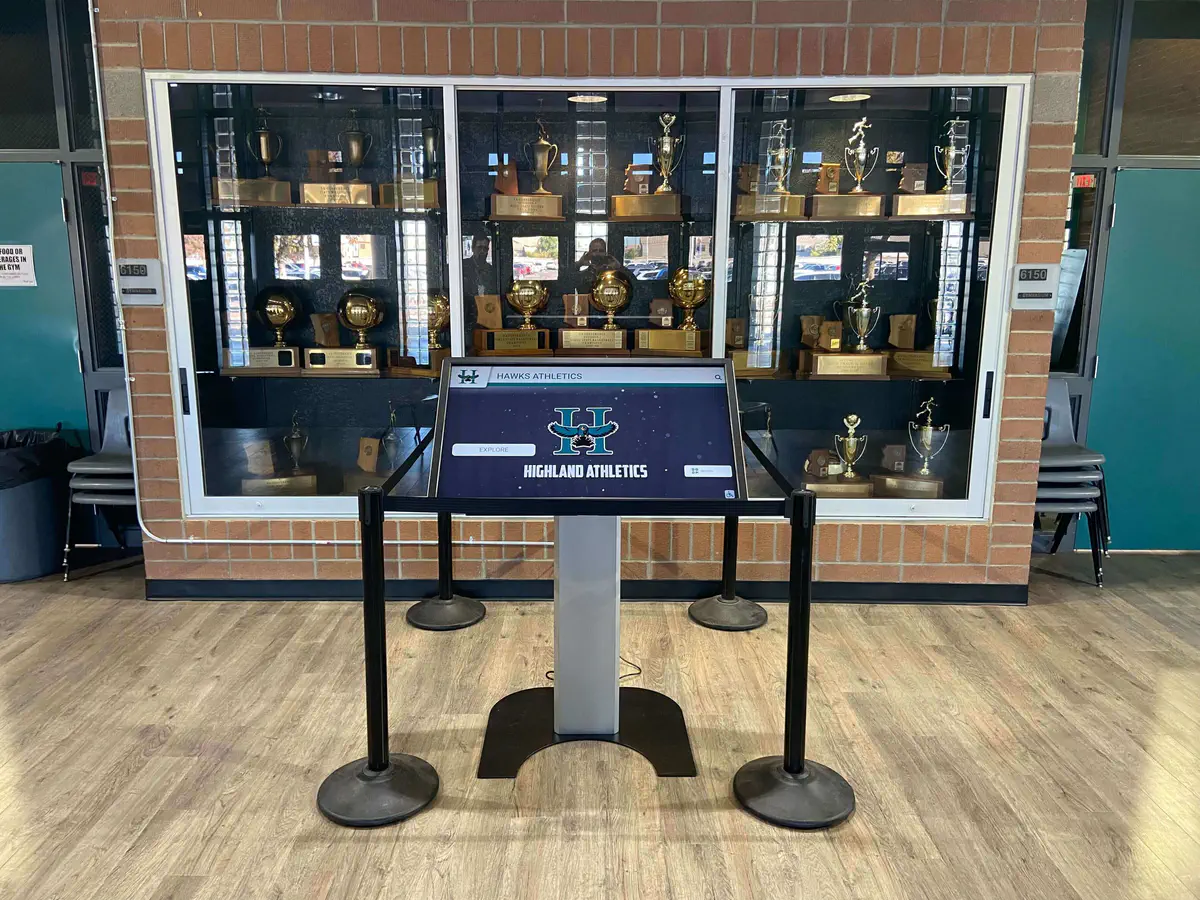
A digital recognition kiosk beside a physical trophy case lets each award category occupy its own labeled entry without crowding out older hardware or combining awards that belong apart.
What an All-Sports Cup Recognizes — and What It Does Not
An all-sports cup is a program-level award. It measures aggregate performance across a range of activities — sometimes including academic and arts competitions depending on the administering body — over the course of a school year. It does not name a champion in any individual sport.
That scope matters for the display label because it defines what the cup entry can honestly say. A program that wins an aggregate cup can display the cup with an accurate label. It cannot use the cup entry to imply a championship in any individual sport it also won that season, even if those sport titles contributed to the cup’s overall result.
The 2025–26 UIL Lone Star Cup press release describes the award as recognizing overall team achievement across sanctioned academic, athletic, and music championships — one Lone Star Cup awarded per UIL class and conference. The UIL Lone Star Cup rules page details the structure under which those points accumulate. Neither source equates the cup to a championship in any single sport or activity. A label that calls the Lone Star Cup a sports-only title, or that shortens it to a simple athletic championship, would contradict the official scope the UIL publishes.
The NCHSAA Wells Fargo State Cup page describes its State Cup as recognizing overall interscholastic sports excellence by classification. The NCHSAA program also includes a separate Conference Cup for overall excellence within a conference during the regular season. These are distinct awards with different criteria and different scopes. The State Cup and Conference Cup are not interchangeable, and earning one does not establish or confirm the other. NCHSAA names a cup and banner for State Cup winners, and a cup for Conference Cup winners; those artifact descriptions apply to NCHSAA’s program and should not be assumed for other organizations that administer separate aggregate awards.
The Labeling Decision: One Entry per Award
Each award your school displays should have its own entry. That entry carries the award’s official name as the administering body uses it, the year, the name of the organizing body, and nothing more than the award’s certified scope allows.
For an all-sports cup, the entry label certifies aggregate program performance. It does not certify individual sport results, even if those results contributed to the award. For a sport championship, the entry label certifies the team’s result in that specific sport. It does not establish or imply program-wide dominance, even if the school also held a cup that season.
An editor who combines these two into one label — or who adds a note like “including a state track title” to a cup entry — has created a caption that the organizing body’s source cannot verify. That caption may read as a stronger achievement, but it misrepresents both awards by merging distinct certifications.
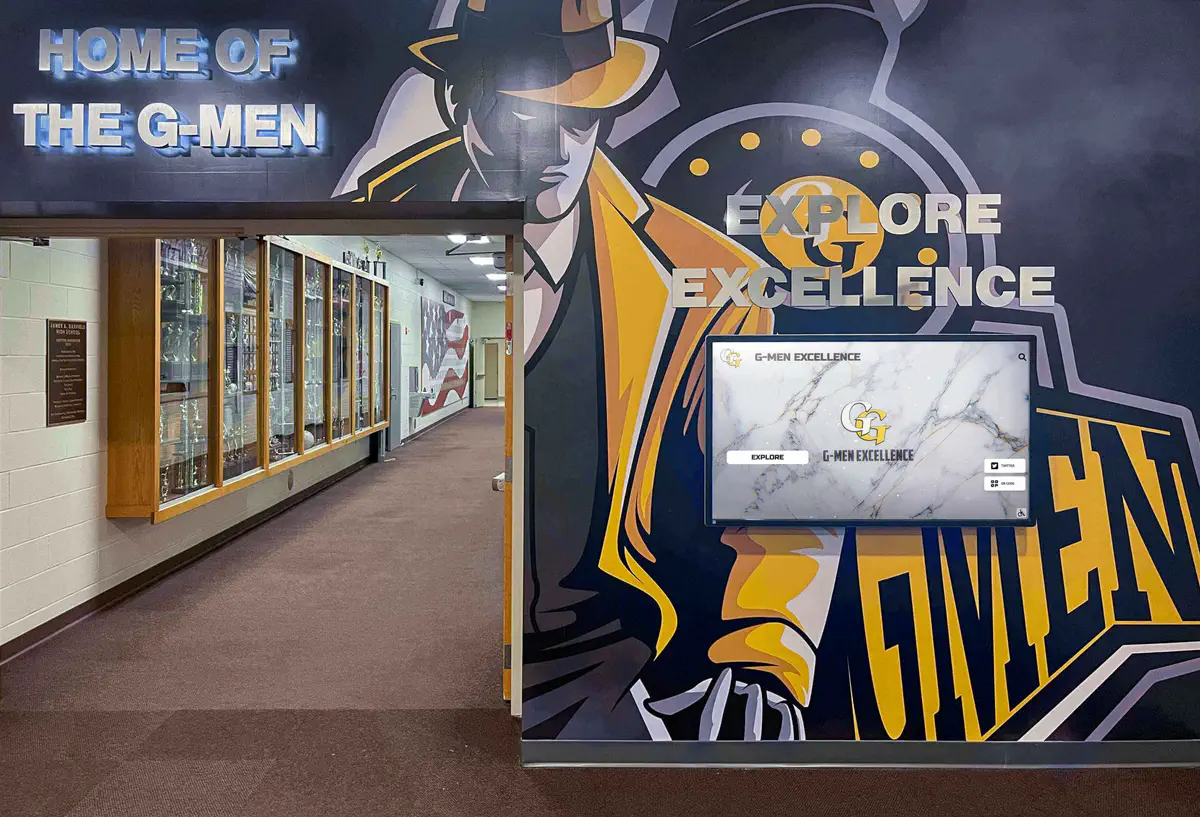
Trophy cases hold the hardware. A digital screen beside them carries the category labels and official award names that an engraved plate cannot accommodate or correct after the fact.
Three Caption Placeholder Examples
The following placeholders show how complete, source-faithful display entries read for three distinct scenarios. Each uses a hypothetical school name. Each cites only what the official source actually certifies.
Lone Star Cup entry — UIL class award:
[School name] | UIL Lone Star Cup | [Class/Conference] | 2025–26 UIL Championships | Source: uiltexas.org/press-releases/detail/2025-26-uil-lone-star-cup-winners-announced
This entry does not name any individual sport. It does not state that the school won a sport championship that season. It certifies overall achievement in UIL’s sanctioned academic, athletic, and music championships for that class during 2025–26 — which is exactly what the press release certifies.
NCHSAA Wells Fargo State Cup entry:
[School name] | NCHSAA Wells Fargo State Cup | [Classification] | [Year] NCHSAA Season | Source: nchsaa.org/wells-fargo-cup/
This entry certifies overall interscholastic sports excellence by classification as defined by the NCHSAA. It does not establish the school’s performance in any individual sport or confirm a conference honor.
Sport title entry — same season, same school, separate entry:
[School name] | [Sport] [Classification] State Champions | [Year] | Source: [administering body’s results page for that sport and year]
This entry certifies a specific team’s achievement in a specific sport. It is a separate display entry from the program cup. Both entries can appear in the same case under the same school’s name for the same season. Neither references the other, and neither derives its validity from the other.
The two-entry approach is what prevents double-counting. A visitor reading both entries understands that the school earned a program-level aggregate award and that one of its teams won a sport title — two distinct achievements, each accurately described.
Linking Entries Across the Same Season Without Double-Counting
Displaying multiple entries from the same school year raises a practical question: can the entries acknowledge each other? The answer is yes, carefully.
A cup entry can note the year and class of the award without naming sport titles as the basis for the cup. A sport title entry can note the year and sport without claiming to be the reason the school earned a cup. Neither entry needs to reference the other to be complete.
If a display platform supports linked entries — where a visitor viewing the cup entry can follow a reference to that season’s sport titles — that cross-reference should be presented as a navigation convenience, not as a citation. The cup is not evidence of the sport title, and the sport title is not evidence of the cup.
The guide to organizing individual state championship trophies by sport and year walks through the inventory and labeling approach for sport-level entries in a multi-sport trophy case. That structure — separate rows or panels per sport, per year, per classification — is exactly the layer that sits beneath a program-level cup entry without merging into it.
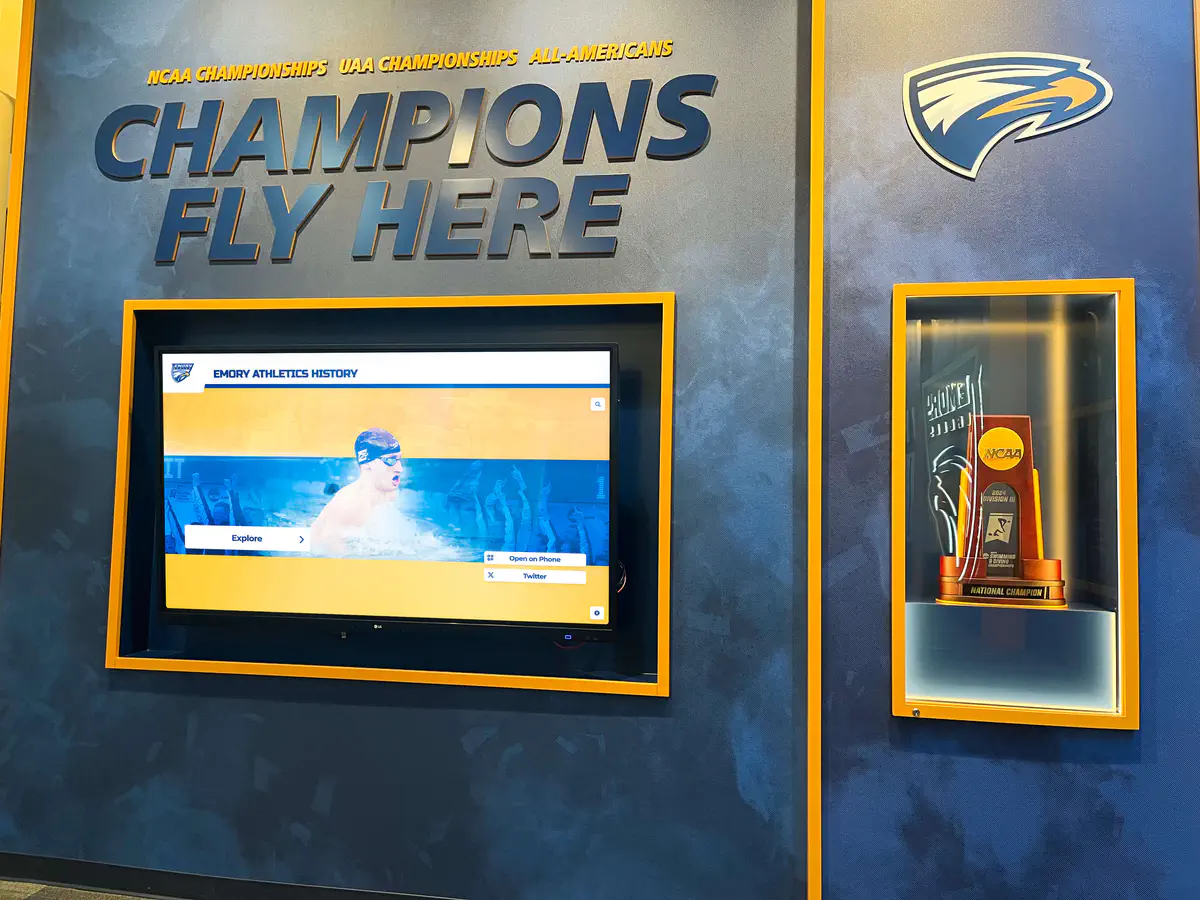
A recognition wall that separates program-level awards from individual sport titles lets visitors understand each achievement on its own terms without one award implying the other.
Describing the Award’s Scope Accurately in the Label
The cup label must describe what the cup certifies — no less, no more.
For the UIL Lone Star Cup, the official rules page defines how points accumulate across UIL-sanctioned academic, athletic, and music championships. A label that describes the Lone Star Cup as an “all-sports” award only understates the scope the UIL defines — the award spans academic and music championships as well. The official name and official scope are both necessary for an accurate entry.
The 2025–26 season operates under the rules and scoring framework published for 2025–26. The UIL rules page now includes a 2026–27 schedule of activities. That forward-looking schedule describes future seasons. Using it to characterize or annotate a 2025–26 Lone Star Cup entry would import information from a different administrative year into an entry that should reflect the season being recognized.
For the NCHSAA Wells Fargo State Cup, the administering body’s program page describes recognition for overall interscholastic sports excellence by classification. For the NCHSAA Conference Cup, the program page describes a separate award based on regular-season performance within a conference. A school that earned both in the same year holds two entries — one for each — and neither entry’s label should describe the other award’s scope.

Program-level awards and individual sport championships occupy separate panels on a recognition wall — the display acknowledges both while keeping each entry accurate to its source.
Building an Inventory Before Writing Any Label
A trophy-case editor working on a school’s all-sports cup entry benefits from completing a brief inventory before writing any caption. The useful version covers:
- The official award name as the administering body uses it
- The year and the class or conference the award was given for
- The organizing body (UIL, NCHSAA, or the relevant state association)
- A source URL that returns the original result or program description
- Whether any individual sport titles from the same season are cataloged separately
That last point is the check against double-counting. If a sport title from the same school year is already on its own row in the inventory, the cup entry does not need to name it. If a sport title has not yet been cataloged and the editor is tempted to reference it within the cup entry, the cleaner solution is to create a second entry for the sport title rather than fold it into the cup’s label.
One field that recognition editors sometimes omit is the source URL. It may seem unnecessary for a hardware item already sitting in the case. But a cup awarded in a different administrative year from the current one will outlast institutional memory. Staff changes. Documents get archived. The URL is the thread that connects the physical object on the shelf to the official record — and it costs nothing to include.
A display entry that cannot be traced back to a source is a display entry that cannot be defended when someone asks. A source URL in the entry resolves that problem before it arises.
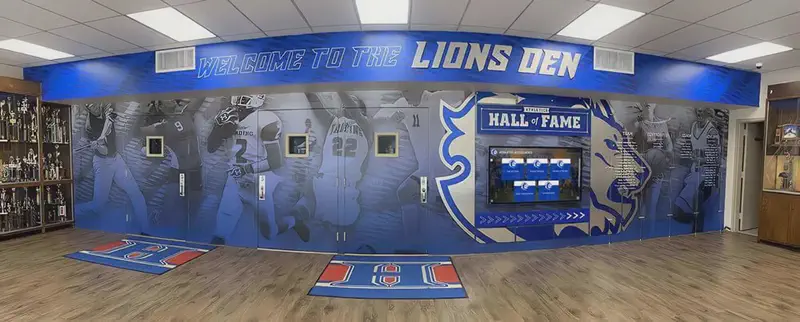
Trophy cases that hold multiple award types — program cups, sport titles, and individual honors — benefit from a consistent labeling system that keeps each entry accurate to its administering body and year.
Managing Program Cup Entries in a Digital Trophy Display
A physical trophy case can display the hardware, but the caption attached to it at time of engraving is fixed. If the original label described the cup as a “multi-sport championship” rather than the official aggregate award it actually is, correcting the label means new hardware or a separate correction placard.
A digital recognition display allows staff to edit captions, add source URLs after the fact, separate entries that were initially combined, and update program descriptions as new seasons accumulate entries. A school that holds Lone Star Cup wins from multiple years can maintain each as a separate entry with its own year, class, source URL, and no cross-contamination from individual sport titles earned in the same seasons. The unlimited capacity of a cloud-managed display also means a school can keep both the program-level cup entries and the underlying sport title entries in one place, organized by season, without either crowding out the other.
Platforms like those offered by Rocket Alumni Solutions are built for multi-category recognition — cloud-managed displays that allow staff to add, edit, and correct entries remotely, maintain distinct entries for program-level and sport-level awards side by side, and add new cups as they are earned without altering the existing record. The physical cup stays in the case. The digital layer carries the category distinctions, the official award name, and the source URL that the engraved plate cannot accommodate or revise once it leaves the shop.
Schedule a conversation about your school’s all-sports cup recognition display
Live Example: Rocket Alumni Solutions Touchscreen Display
Interact with a live example (16:9 scaled 1920x1080 display). All content is automatically responsive to all screen sizes and orientations.