The Easiest Touchscreen Solution




Live Example: Rocket Alumni Solutions Touchscreen Display
Interact with a live example (16:9 scaled 1920x1080 display). All content is automatically responsive to all screen sizes and orientations.
Walk into any gymnasium and the walls tell stories. Championship banners hanging from rafters document years of competitive excellence. Record boards track athletic achievements across decades. Hall of fame displays honor athletes who elevated programs to new heights. These recognition elements transform functional athletic spaces into inspiring environments that motivate current athletes, honor past achievements, and build lasting program pride.
Yet many athletic directors face challenges designing gymnasium wall display systems that balance tradition with modern expectations. Limited wall space creates difficult decisions about what to showcase. Physical displays become outdated, requiring expensive updates whenever records fall or new championships are won. Traditional static installations lack the flexibility to tell fuller stories behind achievements or recognize the breadth of athletic accomplishments occurring across all program levels.
This comprehensive guide explores gymnasium wall display ideas that athletic directors, facilities managers, and school administrators consistently find valuable—approaches covering championship banner design, record board systems, hall of fame installations, and modern digital solutions that expand recognition capacity while inspiring everyone entering your athletic facilities.
Gymnasiums serve as more than competition venues. These spaces represent program identity, preserve athletic heritage, and inspire future excellence. Schools that excel at gymnasium recognition create environments where displays actively engage athletes and spectators rather than becoming invisible background fixtures gradually gathering dust and losing relevance.

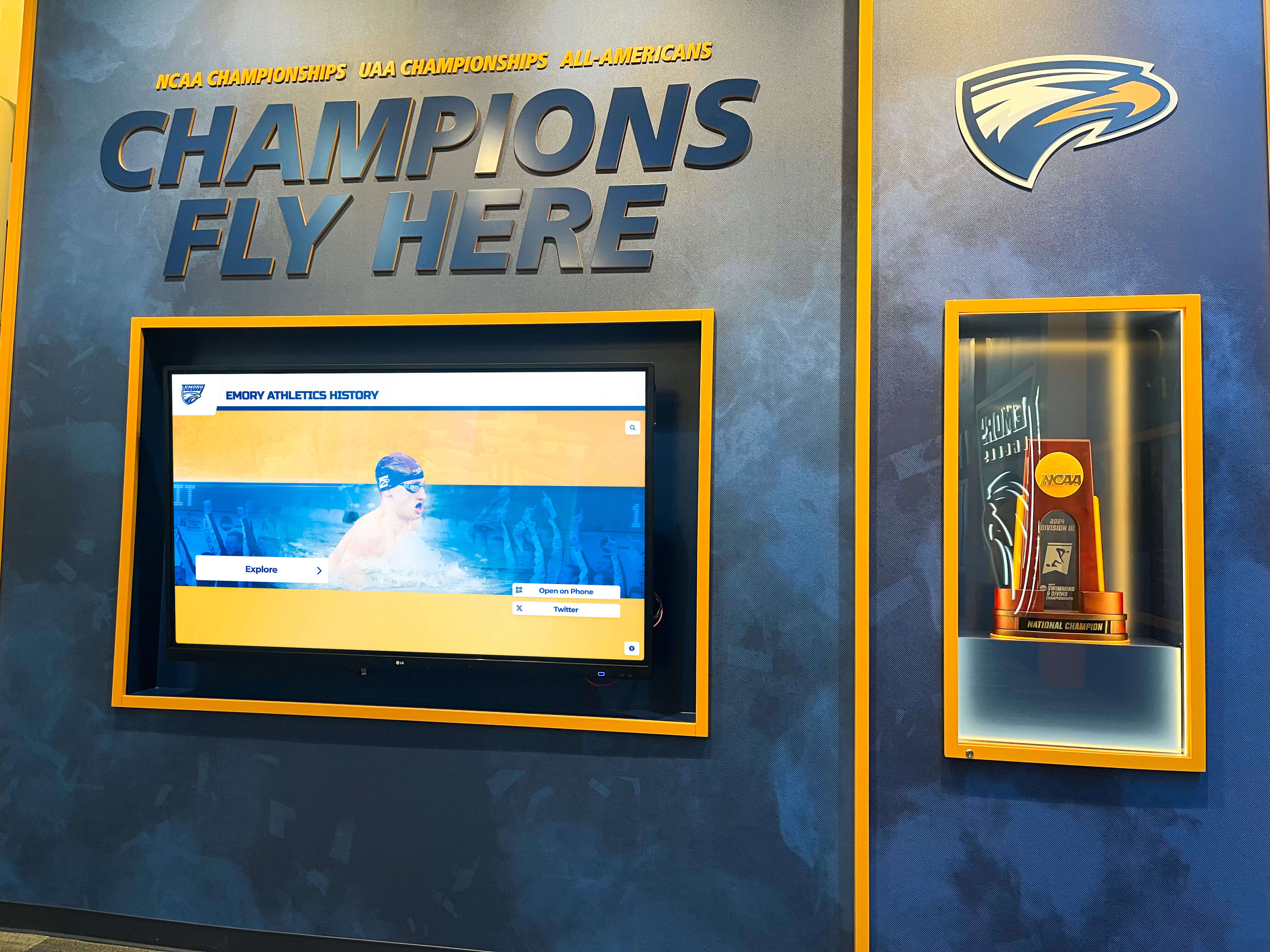
Championship displays establish immediate visual impact, creating inspiring atmospheres that reinforce competitive excellence and program tradition
Championship Banner Design and Display Strategies
Championship banners represent the most visible gymnasium recognition element, documenting competitive success in formats impossible to ignore.
Banner Design Fundamentals
Effective championship banners balance visual impact with readability from gymnasium distances:
Essential Information Hierarchy
Every championship banner should clearly communicate:
- Sport or team identification
- Championship type and classification level
- Year or season of achievement
- Conference, state, regional, or national designation
- School colors and branding elements
The most effective banners prioritize readability over decorative complexity. Text must remain legible from opposite bleachers—typically requiring minimum 8-10 inch letter heights for primary championship information.
Material and Construction Considerations
Banner longevity depends on appropriate material selection:
- Vinyl banners: Durable, affordable, suitable for both indoor and outdoor use
- Fabric banners: Softer appearance, excellent for indoor installations
- Mesh banners: Reduced wind resistance for facilities with strong air circulation
- Double-sided construction: Ensures visibility from all gymnasium angles
Quality printing technology prevents fading under gymnasium lighting while reinforcing grommets or sleeves ensure secure hanging that withstands years of display.
Hanging Systems and Arrangements
Strategic banner placement maximizes visual impact while respecting facility constraints:
Vertical vs. Horizontal Orientations
Vertical banners work best in facilities with substantial ceiling height, creating dramatic visual columns that draw eyes upward. Horizontal banners suit lower-ceiling gymnasiums while allowing more championship information within limited vertical space.
Organization Approaches
Programs organize championship banners through multiple strategies:
- Chronological arrangement: Oldest to newest creates visual program timelines
- Sport clustering: Groups all basketball championships together, then volleyball, then others
- Achievement level: Separates state championships from conference titles
- Combined displays: Integrates championships with retired jerseys and hall of fame recognition
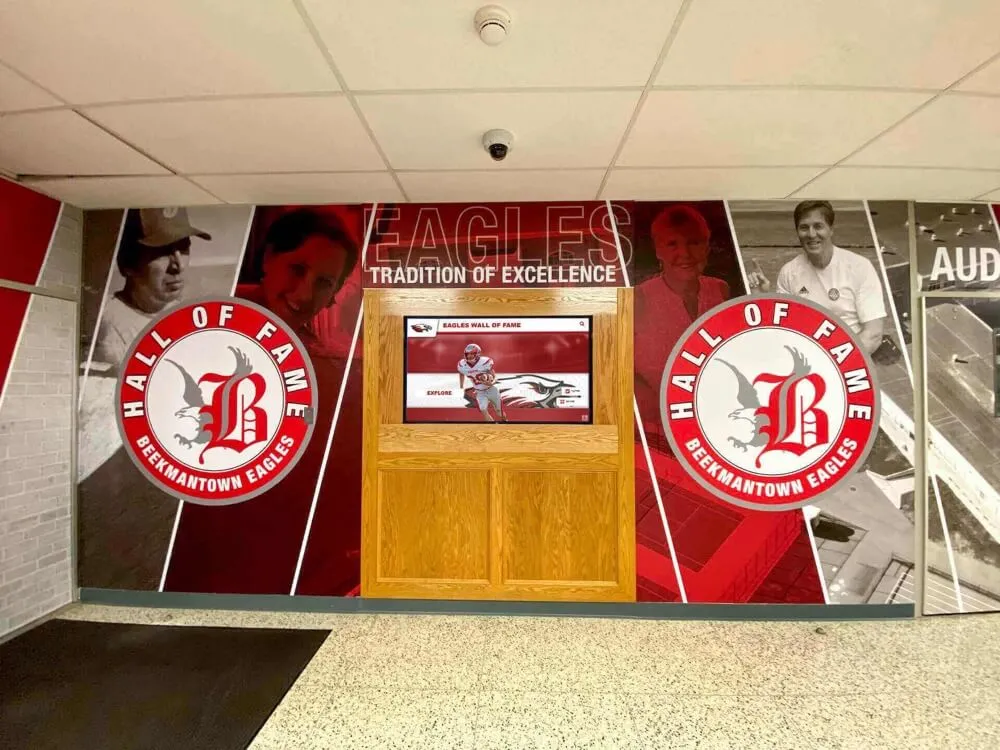
Coordinated wall displays combine championship banners with hall of fame recognition and team branding elements
Consistency in banner sizing, color schemes, and mounting heights creates professional appearances distinguishing established programs from ad-hoc recognition approaches.
Record Board Systems: Tracking Athletic Excellence
Record boards document individual and team achievements across program history, creating competitive motivation and preserving athletic legacy.
Traditional Physical Record Boards
Physical record boards anchored to gymnasium walls remain popular for permanent, always-visible recognition:
Design and Layout Considerations
Effective record boards organize information hierarchically:
- Sport identification headers with team colors and logos
- Record categories (individual, relay/team, seasonal, career)
- Athlete names, years, and specific performance marks
- Date established to provide historical context
Most athletic directors dedicate separate board sections to each major sport rather than attempting combined all-sport displays that become cluttered and difficult to read.
Material Options
Record board durability influences long-term maintenance:
- Metal plaques with engraved text offer permanence and professional appearance
- Vinyl lettering on painted backgrounds provides cost-effective flexibility
- Acrylic panels with changeable inserts balance permanence with update capability
- Digital print panels allow complex graphics and photo integration
The best choice depends on update frequency, budget constraints, and desired aesthetic alignment with overall facility design.
Update Challenges and Solutions
Traditional record boards face ongoing maintenance requirements as athletes achieve new records:
Physical Update Methods
When records fall, schools typically employ:
- Replacement plates: Pre-ordered backup plates awaiting record achievements
- Vinyl overlay updates: New lettering applied over outdated information
- Entire board replacement: Periodic complete updates maintaining fresh appearance
- Hybrid systems: Permanent elements (headers, categories) with replaceable record sections
Programs with frequent record achievements often struggle balancing update costs against maintaining current information. Delayed updates diminish motivation value while creating embarrassing situations when honored athletes notice their achievements were surpassed years earlier without recognition.

Digital displays expand record board capacity while eliminating physical update requirements
Hall of Fame Wall Installations
Athletic hall of fame displays honor individuals who achieved extraordinary success or made lasting program contributions.
Selection and Recognition Criteria
Successful hall of fame programs establish clear selection standards:
Typical Selection Categories
- Athletic achievement: Championship performances, record-breaking seasons, all-conference honors
- Post-graduation success: Professional or collegiate athletic careers
- Coaching excellence: Championship-winning coaches and long-tenured program builders
- Contributor recognition: Officials, boosters, administrators who advanced programs
- Team achievements: Landmark championship teams or record-setting squads
Clear criteria prevent selection controversies while ensuring recognition remains meaningful rather than participation acknowledgment.
Selection Committee Structure
Most programs establish committees including:
- Athletic director or designee
- Current coaching representatives
- Alumni athlete representatives
- Community members or booster club leadership
- Administration representative
Committee approaches provide perspective balance while distributing selection responsibility preventing perception that individual administrators control recognition.
Display Format Options
Hall of fame walls range from simple plaque arrays to elaborate installations:
Traditional Plaque Walls
Individual plaques mounted on dedicated wall sections remain popular:
- Uniform sizing creates clean, organized appearances
- Consistent information (name, graduation year, achievements, induction year)
- Expandable layouts allowing future inductee additions
- Prominent placement in gymnasium entrances or lobby areas
Physical plaques provide permanence and traditional gravitas that many programs value, though space limitations eventually constrain growth.
Photo-Based Recognition
Enhanced displays incorporate inductee photography:
- Action photos capturing athletic moments
- Portrait photography providing personal connections
- Team photos for collective inductee groups
- Historic images connecting recognition to specific eras
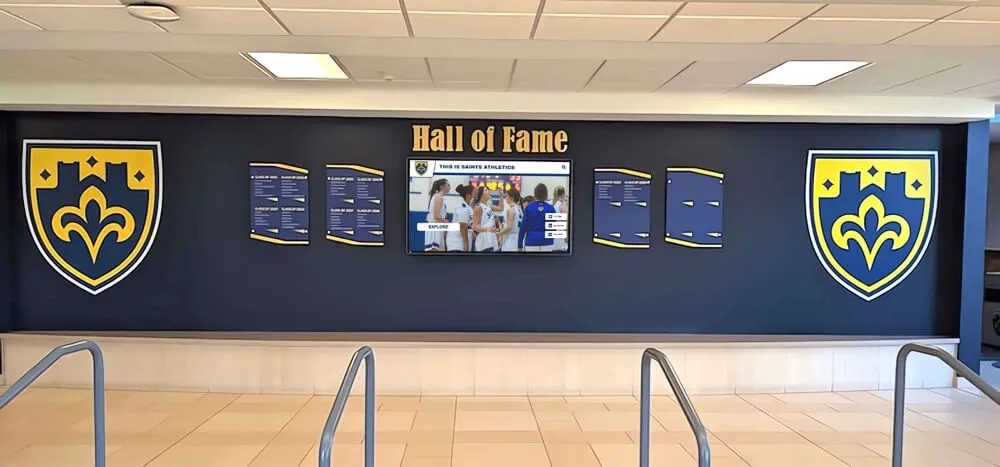
Hybrid hall of fame installations combine traditional plaque permanence with digital storytelling capacity
Photography adds visual interest while helping current athletes connect personally with recognized individuals beyond simple name lists.
Comprehensive Wall Space Planning
Effective gymnasium displays require strategic space allocation preventing cluttered appearances while maximizing recognition capacity.
Visual Hierarchy and Focal Points
Not all wall space carries equal visual weight:
Prime Recognition Locations
- Entrance walls: First impressions for athletes, spectators, and visitors
- Behind main bleachers: Visible during all home competitions
- Court-adjacent walls: Constant athlete awareness during practices and games
- Hallway connections: Transitions between locker rooms and competition floors
Reserve these premium locations for most significant recognition—championships, hall of fame, major donor acknowledgment—while using secondary spaces for supporting elements.
Color and Contrast Strategies
Display effectiveness depends on visual distinction from backgrounds:
- Dedicated wall sections painted in school colors create defined recognition zones
- Contrasting mounting surfaces ensure text and graphics remain readable
- Consistent branding elements (logos, color schemes, typography) create cohesive appearances
- Lighting considerations prevent glare while ensuring proper illumination
Many successful programs establish comprehensive gymnasium branding guides ensuring all displays contribute to unified visual identities rather than appearing as disconnected additions accumulated over decades.
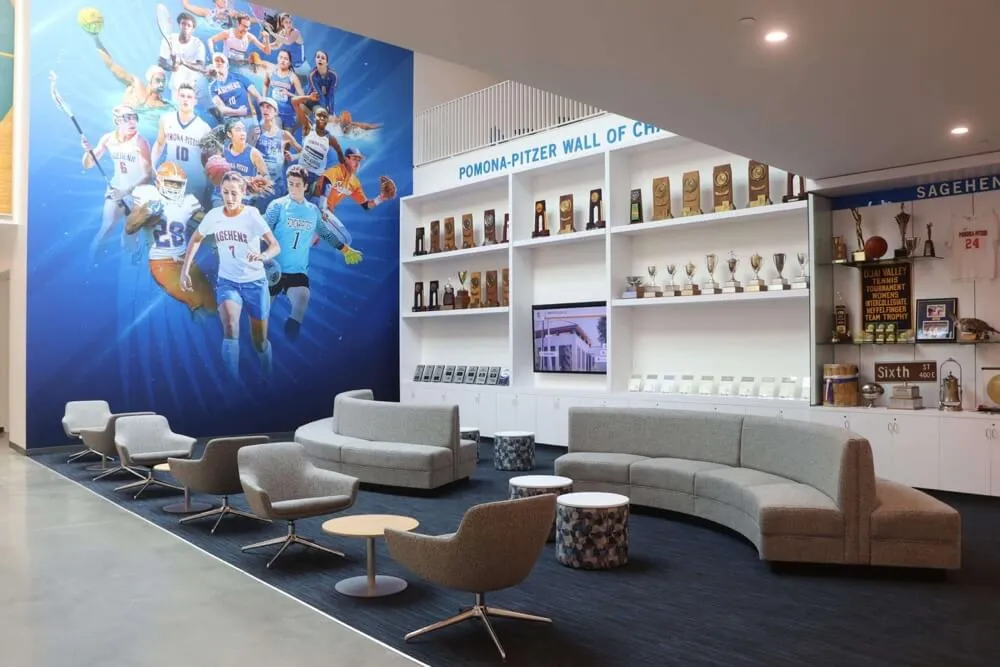
Dedicated recognition spaces integrate multiple display elements within cohesive design frameworks
Digital Display Solutions for Modern Gymnasiums
Digital displays address traditional gymnasium recognition limitations while expanding storytelling capacity and simplifying long-term maintenance.
Advantages Over Static Installations
Digital recognition systems offer capabilities impossible with physical displays:
Unlimited Recognition Capacity
Digital systems eliminate space constraints:
- Comprehensive record databases documenting all-time achievements across all sports
- Complete roster recognition honoring every athlete rather than only record holders
- Multi-year championship documentation without requiring additional physical banners
- Detailed achievement context explaining significance behind records and championships
Schools no longer face difficult decisions about which achievements warrant physical display space since digital capacity accommodates comprehensive recognition.
Automatic Updates and Maintenance
Software-based displays eliminate physical update requirements:
- Instant record updates when new achievements occur
- Seasonal roster additions without ordering new materials
- Correction capability fixing errors without physical reinstallation
- Cost elimination for ongoing plaque orders and installation labor
Athletic directors report that digital systems reduce recognition maintenance time by 80-90% while ensuring information remains perpetually current.
Enhanced Storytelling Capabilities
Digital displays transform recognition from simple information lists into engaging narratives:
Rich Media Integration
- Action photography and video showing achievements in context
- Historic footage connecting current programs to legacy
- Athlete interviews providing personal perspectives on achievements
- Season highlights documenting championship journeys
- Statistical visualizations making performance data accessible and engaging
These storytelling elements create emotional connections between current athletes and program history while providing spectator engagement during competition breaks.
Interactive Exploration
Touchscreen displays enable personalized discovery:
- Search functionality finding specific athletes or achievement years
- Filtering options viewing records by sport, era, or achievement type
- Detailed athlete profiles providing comprehensive career information
- Comparison features showing how current performance relates to records
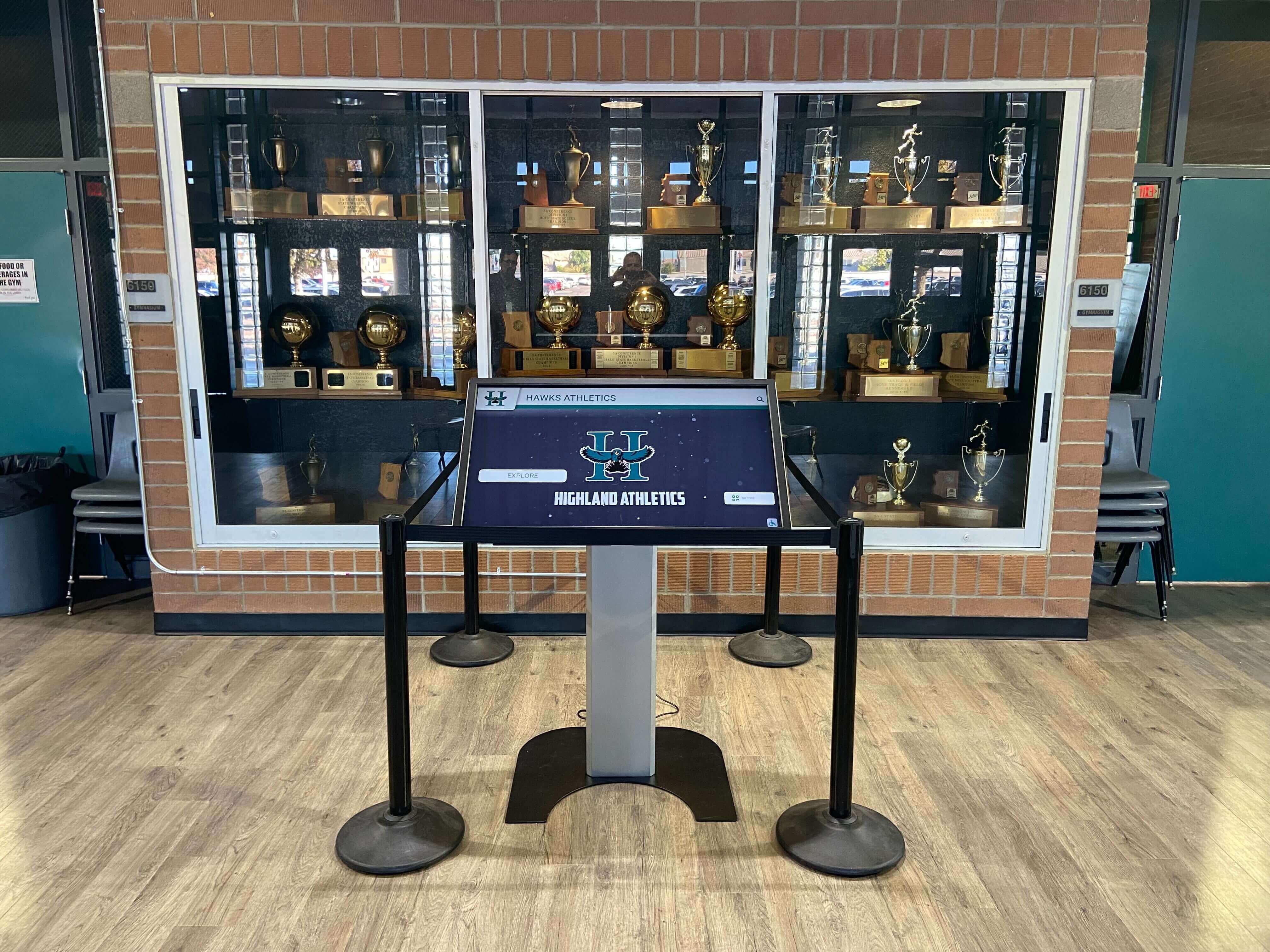
Interactive displays invite exploration, transforming passive viewing into engaging discovery experiences
Interactivity increases engagement time from seconds (glancing at static displays) to minutes (actively exploring achievement databases), deepening program pride and connection.
Implementation Considerations
Digital gymnasium displays require planning beyond traditional recognition:
Technical Requirements
- Screen sizing appropriate for typical viewing distances (55-75 inches for most gymnasiums)
- Brightness specifications competing with overhead lighting
- Mounting solutions protecting equipment from errant balls
- Power and network connectivity supporting remote content management
- Ambient noise considerations for displays incorporating audio
Content Management
Successful digital recognition requires:
- Designated responsibility for updating rosters, records, and achievements
- Content calendar ensuring regular refreshes maintaining relevance
- Quality standards for photography, video, and written information
- Archive systems preserving historic content for anniversary features
Schools treating digital displays as “set and forget” installations quickly see benefits diminish as outdated content undermines credibility. Regular content refreshes maintain engagement while demonstrating institutional commitment to recognition quality.
Integrating Multiple Display Elements
Comprehensive gymnasium recognition strategies combine various display types creating layered storytelling environments.
Coordinated Recognition Systems
The most effective gymnasiums integrate:
- Championship banners providing immediate visual impact and tradition
- Physical record boards offering always-visible performance benchmarks
- Hall of fame installations honoring extraordinary individual achievements
- Digital displays expanding capacity and enabling deeper storytelling
- Trophy cases showcasing physical championship hardware
- Photo galleries documenting recent seasons and teams
Rather than viewing these as competing alternatives, successful programs recognize how each element serves distinct purposes within comprehensive recognition frameworks.
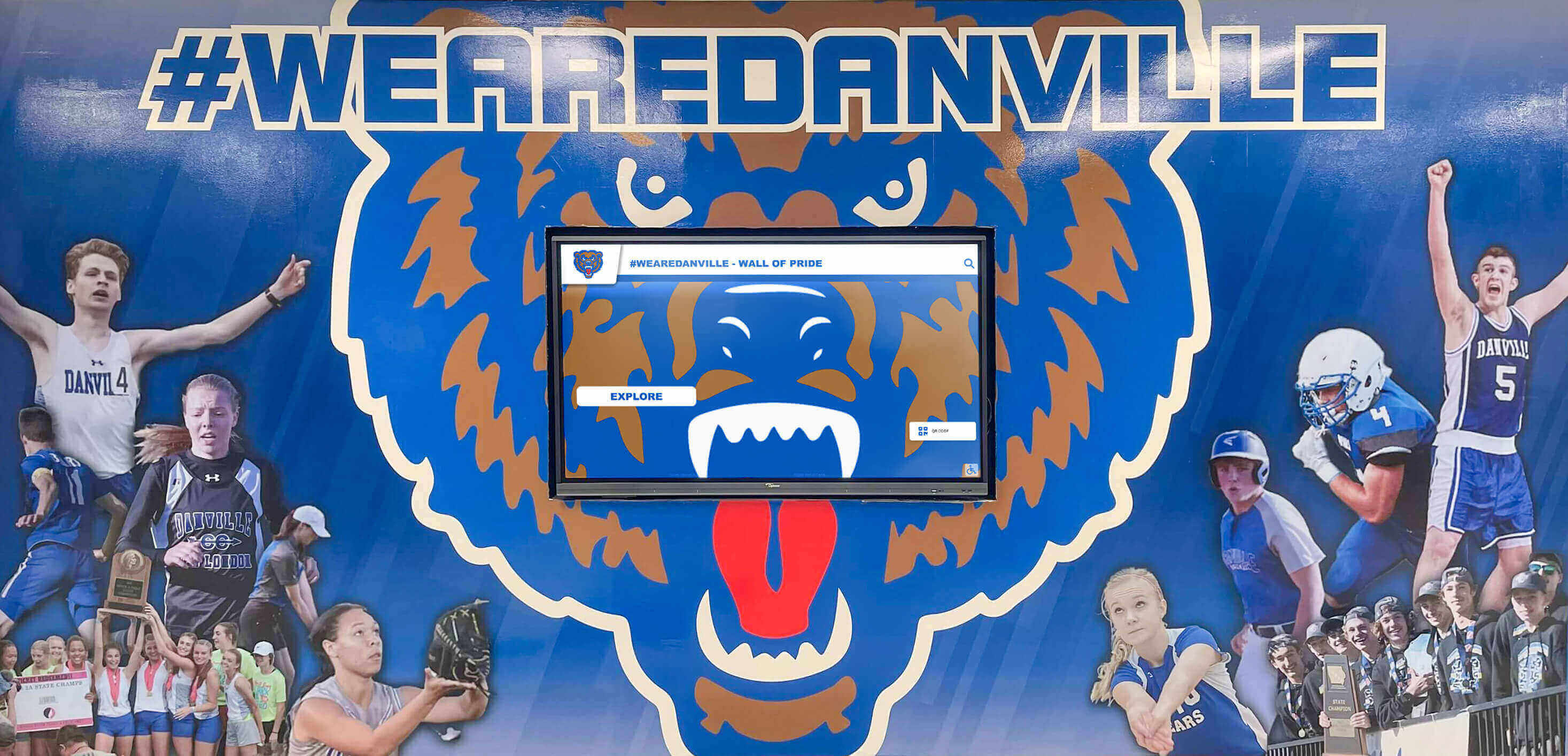
Integrated recognition combines traditional elements (murals, mascots) with modern digital components
Maintaining Visual Cohesion
Multiple display types risk creating cluttered, disconnected appearances without intentional design coordination:
Establishing Design Standards
Comprehensive planning ensures:
- Consistent color palettes across all recognition elements
- Coordinated typography preventing competing font styles
- Unified branding incorporating school identity throughout
- Balanced spacing preventing crowded or empty wall sections
- Professional installation maintaining alignment and quality appearance
Many schools develop gymnasium branding guides documenting approved materials, layouts, and installation standards ensuring additions enhance rather than detract from existing recognition.
Budget-Friendly Display Solutions
Effective gymnasium recognition doesn’t require unlimited funding—strategic approaches maximize impact within realistic budgets.
Phased Implementation Strategies
Schools with limited budgets implement recognition gradually:
Priority Sequencing
- Establish basic championship recognition (banners for major titles)
- Add record boards for highest-profile sports
- Implement hall of fame as inductee pool develops
- Enhance with photography adding visual interest
- Integrate digital components expanding capacity and flexibility
Phased approaches prevent waiting for complete funding before recognizing achievements while building toward comprehensive systems over multiple budget cycles.
Cost-Effective Material Choices
Budget consciousness doesn’t require compromising quality:
Banner Alternatives
- Printed vinyl provides durability at lower cost than sewn fabric
- Single-sided construction reduces printing costs when visibility from both directions isn’t essential
- Digital printing eliminates setup charges associated with screen printing for small quantities
Record Board Options
- Vinyl lettering on painted backgrounds costs fraction of engraved plaques
- Printed panels updated periodically cost less than individual changeable elements
- Combined sport displays share headers and design elements reducing total materials
Fundraising Integration
Many athletic programs offset recognition costs through:
- Booster club funding designated for facility enhancements
- Recognition sponsorships where donors underwrite specific display elements
- Alumni campaigns connecting facility improvements to reunion activities
- Championship fundraisers where title teams fund permanent recognition
- Facility rental proceeds designating portion for ongoing recognition maintenance
These approaches transform recognition from budget expense to engagement opportunity while ensuring display systems receive ongoing support.
Recognition Beyond Championship Performance
The most inclusive gymnasium displays celebrate diverse athletic contributions extending beyond competitive outcomes.
Participation and Character Recognition
Championship-only recognition inadvertently suggests that only winners deserve acknowledgment:
Broader Recognition Categories
- Team captains honoring leadership regardless of competitive success
- Academic excellence recognizing student-athlete classroom achievement
- Sportsmanship awards celebrating character and integrity
- Improvement recognition honoring growth and development
- Career participation acknowledging multi-year commitment
- Community service highlighting athletes giving back beyond competition
These inclusive approaches ensure athletes across all sports and skill levels see gymnasium displays reflecting their contributions, strengthening participation motivation and program culture.
Multi-Level Program Recognition
Comprehensive displays acknowledge athletic achievement across program tiers:
Varsity Through Youth Programs
- Varsity championships receiving primary prominence
- Junior varsity and freshman team achievements documented
- Youth feeder programs connecting to high school opportunities
- Recreational programs building participation interest
- Alumni continuing involvement showing lifelong program connections
Multi-level recognition demonstrates that programs value all participants while illustrating athletic progression pathways from youth introduction through competitive excellence.
Maintenance and Long-Term Management
Sustaining gymnasium display quality requires ongoing attention preventing displays from becoming dated, damaged, or irrelevant.
Physical Display Maintenance
Regular upkeep preserves recognition investment:
Cleaning and Inspection Schedules
- Monthly cleaning removing dust and fingerprints from glass and acrylic surfaces
- Quarterly inspections checking mounting security and lighting functionality
- Annual deep cleaning including banner removal for thorough dust elimination
- Periodic condition assessments identifying wear requiring repair or replacement
Delegating specific responsibility to facilities staff or booster club volunteers prevents maintenance neglect allowing small issues to become expensive problems.
Damage Prevention and Repair
Gymnasium environments risk recognition damage:
- Protective mounting positions displays outside ball impact zones
- Reinforced installation withstands vibrations from bleacher movement and sound systems
- Spare materials enable quick repairs without waiting for replacements
- Protective covers shield high-value displays during non-athletic facility uses
Content Currency Management
Physical displays require proactive updating:
Update Tracking Systems
- Record monitoring flagging new achievements needing recognition
- Championship documentation capturing details needed for banner creation
- Photography collection gathering quality images throughout seasons
- Budget allocation ensuring funds available for timely updates
Schools establishing systematic tracking ensure recognition remains current rather than creating years-long backlogs where recent achievements await acknowledgment while outdated information remains displayed.
Planning for Future Growth
Effective gymnasium displays accommodate program evolution without requiring complete redesigns.
Expandable Design Frameworks
Recognition systems should anticipate future needs:
Space Allowances
- Banner zones sized for additional championships
- Record board layouts including blank space for new record categories
- Hall of fame walls with expansion room for future inductees
- Display locations reserved for not-yet-implemented recognition elements
Over-engineering initial installations costs less than retrofitting additions disrupting existing displays.
Modular System Approaches
Component-based recognition enables incremental additions:
- Banner grids accepting new additions maintaining alignment
- Sectional record boards where sports receive dedicated modules
- Expandable plaque arrays following consistent sizing and spacing
- Digital screen networks linking multiple displays under unified management
Modularity prevents style discontinuities where new additions clash with established recognition because original installations didn’t contemplate future growth.
Technology Evolution Considerations
Digital displays require planning for obsolescence and advancement:
Hardware Upgrade Paths
- Standard mounting systems accepting various screen sizes and types
- Accessible connectivity simplifying equipment replacements
- Content platform independence preventing vendor lock-in limiting options
- Budget reserves for eventual hardware replacement (5-7 year expectancy)
Software and Content Flexibility
Recognition software should support:
- Multiple display destinations from single content sources
- Various content formats (images, video, interactive databases)
- External data integration connecting to athletic management systems
- Regular platform updates maintaining compatibility with evolving technology
Schools investing in closed proprietary systems often face expensive migrations when vendors discontinue products or platforms become outdated, while flexible approaches preserve content investments across technology transitions.
Measuring Recognition Impact
Understanding how gymnasium displays influence program culture and engagement justifies investments while identifying improvement opportunities.
Engagement Indicators
Track how displays affect stakeholders:
Athlete Response
- Pre-practice attention observing whether athletes reference displays
- Goal-setting references noting when record boards motivate performance targets
- Hall of fame awareness assessing whether athletes recognize inducted individuals
- Social media sharing monitoring whether athletes photograph and share displays
Community Engagement
- Spectator attention during pre-game and between-game periods
- Campus tour highlights tracking whether admission guides feature recognition
- Alumni visit behaviors noting whether returning graduates seek out displays
- Donor responses connecting recognition visibility to philanthropic interest
Program Pride Metrics
Recognition quality influences broader athletic culture:
Participation Trends Schools implementing comprehensive gymnasium recognition often observe:
- Increased athletic participation as recognition visibility elevates program status
- Improved retention when athletes see pathways to personal acknowledgment
- Enhanced academic performance when displays celebrate student-athlete achievement holistically
- Greater family engagement when comprehensive recognition includes broader participation
Competitive Performance
While correlation doesn’t prove causation, many athletic directors report:
- Elevated competitive expectations when championship tradition remains visible
- Improved recruiting as visiting athletes experience program pride environments
- Enhanced home-court advantage when surroundings reinforce competitive excellence
- Sustained program momentum maintaining standards across coaching transitions
These intangible benefits often justify recognition investments beyond simple documentation purposes.
Choosing the Right Display Mix for Your Gymnasium
Every facility faces unique constraints and opportunities requiring customized recognition approaches.
Assessment Framework
Evaluate your gymnasium recognition needs:
Facility Considerations
- Available wall space and mounting locations
- Ceiling heights determining banner feasibility
- Lighting conditions affecting display visibility
- Traffic patterns identifying prime viewing locations
- Budget constraints defining implementation scope
- Maintenance capacity supporting ongoing updates
Program Context
- Competitive achievement levels determining championship recognition volume
- Program breadth spanning sports requiring accommodation
- School size influencing whether recognition focuses on elite achievement or broad participation
- Community values emphasizing tradition versus innovation
- Future growth anticipating program expansion
Strategic Priorities Different institutions emphasize varying recognition goals:
- Championship tradition highlights competitive excellence
- Inclusive participation celebrates broad athletic involvement
- Alumni connection strengthens graduate engagement through historic documentation and digital archives
- Student inspiration motivates current athletes toward achievement
- Community pride strengthens program support and resource development
Understanding priority balance helps determine which display elements deserve investment emphasis while guiding difficult decisions when budget limitations prevent implementing comprehensive systems immediately.
Making the Digital Transition
Schools with established traditional displays often wonder whether digital systems replace or supplement existing recognition:
Digital Advantages Justifying Transition
- Space constraints where physical displays reached capacity
- Update burden when maintaining current information becomes unsustainable
- Storytelling limitations when static displays can’t provide context
- Recognition expansion goals requiring comprehensive databases impossible physically
Situations Favoring Traditional Displays
- Strong tradition attachments where communities value physical permanence
- Limited technical capability for ongoing content management
- Budget constraints preventing quality digital implementation
- Facility limitations where mounting digital screens poses challenges
Most programs find hybrid approaches work best—preserving traditional elements providing instant visual impact (championship banners, hall of fame plaques) while adding digital components expanding capacity and enabling deeper engagement.
Creating Your Gymnasium Display Action Plan
Transform recognition intentions into implemented reality through systematic planning.
Planning Process Steps
Phase 1: Assessment and Visioning (Weeks 1-4)
- Audit existing recognition identifying what works and what needs improvement
- Survey stakeholders (athletes, coaches, parents, alumni) about recognition priorities
- Research display options and gather cost information
- Establish project committee overseeing planning and implementation
- Define success metrics measuring recognition impact
Phase 2: Design and Budgeting (Weeks 5-10)
- Create conceptual layouts integrating various display elements
- Prioritize implementation sequence for phased approaches
- Develop comprehensive budget including installation and ongoing maintenance
- Identify funding sources combining institutional budget with fundraising
- Select vendors and contractors for implementation
Phase 3: Implementation (Weeks 11-20)
- Order materials and displays according to priority sequence
- Schedule installation during minimal facility disruption periods
- Coordinate electrical, mounting, and connectivity requirements
- Prepare content for digital displays
- Document installation process creating reference for future additions
Phase 4: Launch and Maintenance (Ongoing)
- Unveil recognition with ceremonial introduction highlighting purpose
- Establish update schedules and responsibility assignments
- Create content management workflows for digital displays
- Monitor engagement and gather feedback
- Plan future enhancements building on initial implementation
Systematic approaches prevent common pitfalls where recognition projects stall in planning phases without moving to implementation or where rushed installations create regrettable decisions requiring expensive corrections.
Transform Your Gymnasium into an Inspiring Recognition Environment
Gymnasium wall displays do more than document past achievements—they inspire future excellence, strengthen program pride, and create environments where every person entering your facility immediately recognizes your athletic program’s commitment to achievement and character. Whether you’re planning championship banners, record boards, hall of fame installations, or comprehensive digital recognition systems, thoughtful gymnasium display design transforms functional athletic spaces into inspiring environments celebrating everything that makes your programs special.
The most successful athletic programs view gymnasium recognition as ongoing investment in program culture rather than one-time projects. These facilities continuously evolve, adding achievements, celebrating new inductees, updating records, and telling richer stories connecting generations of athletes to institutional traditions. Your gymnasium walls represent premium recognition real estate—make them count.
Ready to transform your gymnasium recognition? Explore comprehensive digital display solutions that expand recognition capacity while simplifying long-term maintenance, enabling your athletic programs to celebrate every achievement that makes your community proud.
Live Example: Rocket Alumni Solutions Touchscreen Display
Interact with a live example (16:9 scaled 1920x1080 display). All content is automatically responsive to all screen sizes and orientations.