



Graduation programs serve as far more than simple ceremony guides—they function as commemorative keepsakes families treasure for decades, official documentation of academic achievement, and tangible recognition of students’ educational journeys. A well-designed graduation program transforms a utilitarian event schedule into a meaningful artifact that graduates and attendees reference years later, preserving names, honors, and milestone moments in professional formats that reflect the significance of the occasion.
Yet countless schools and universities settle for hastily assembled, generic templates that fail to capture the ceremony’s importance or adequately recognize graduating students’ diverse achievements. Programs with tiny fonts rendering names unreadable, layouts that omit important honors and distinctions, or designs lacking institutional character create disappointing documentation of what should represent educational culmination. Families expecting professional keepsakes instead receive forgettable pamphlets that end up discarded rather than preserved.
This comprehensive guide explores graduation program template design, from essential content components and layout strategies through printing considerations and modern recognition systems that extend beyond single-ceremony documentation. Whether planning high school commencement, college convocation, or graduate school hooding ceremonies, these proven approaches help create programs graduates actually keep while building permanent recognition systems that celebrate achievement long after ceremonies conclude.
Effective graduation programs balance comprehensive graduate recognition with readable design, ceremonial formality with personal touches, and traditional elements with innovative approaches that enhance rather than replace time-honored graduation customs.

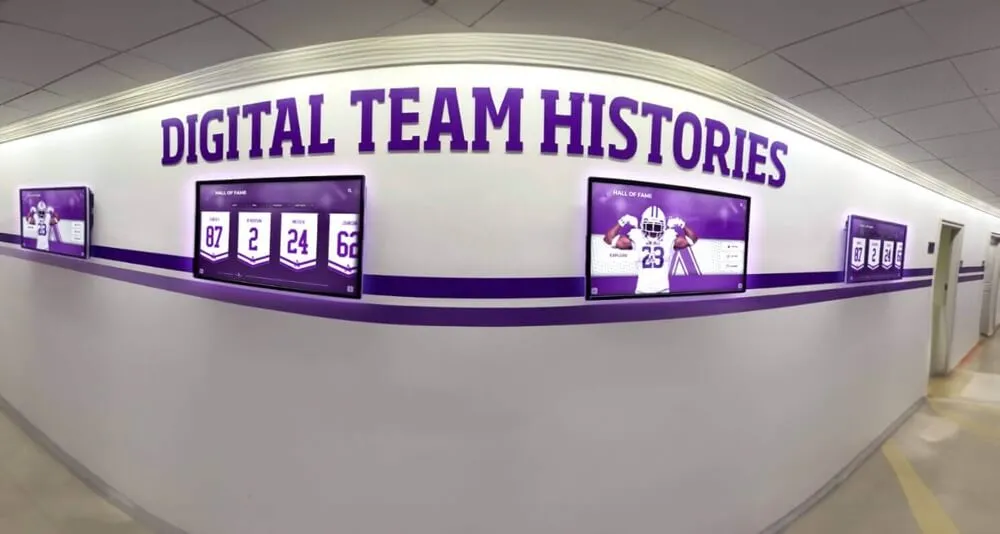
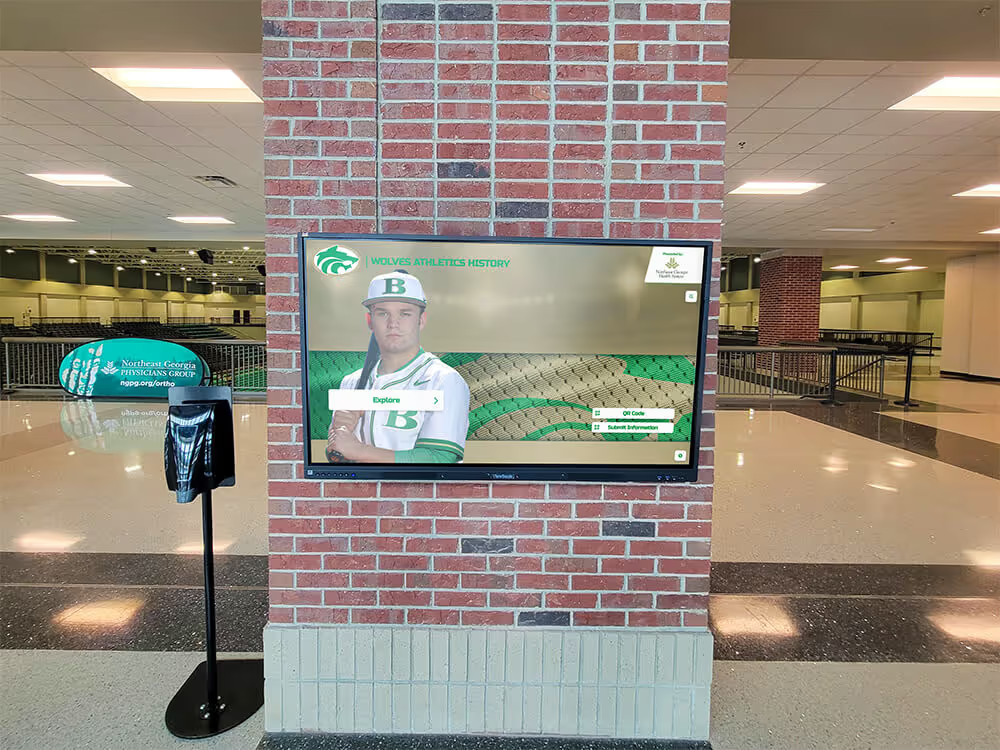
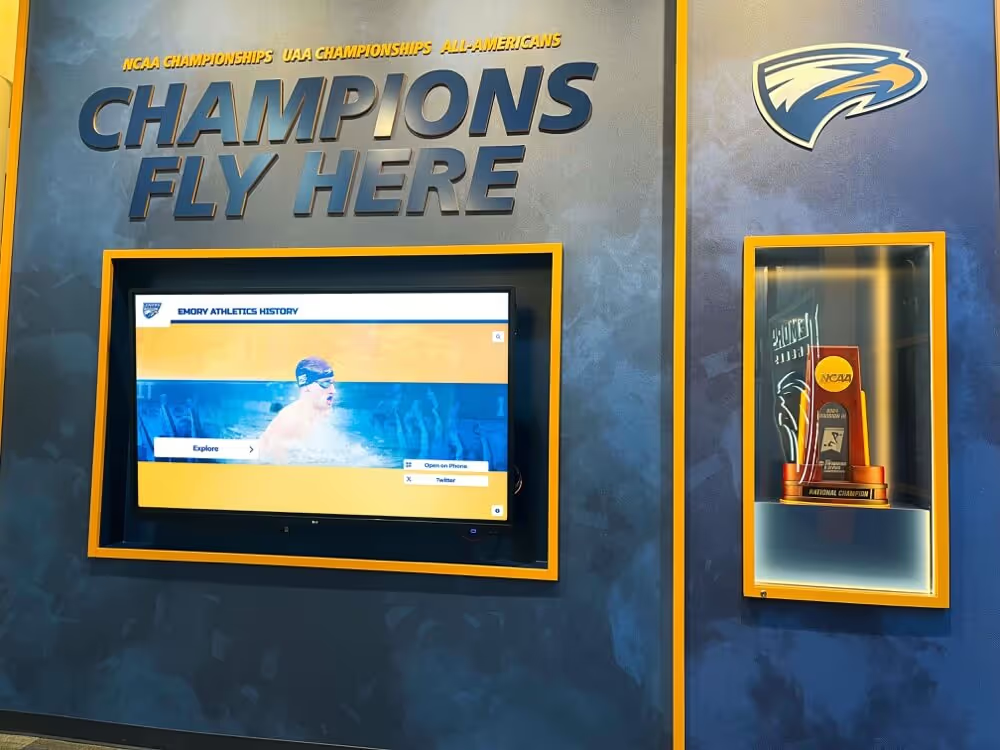
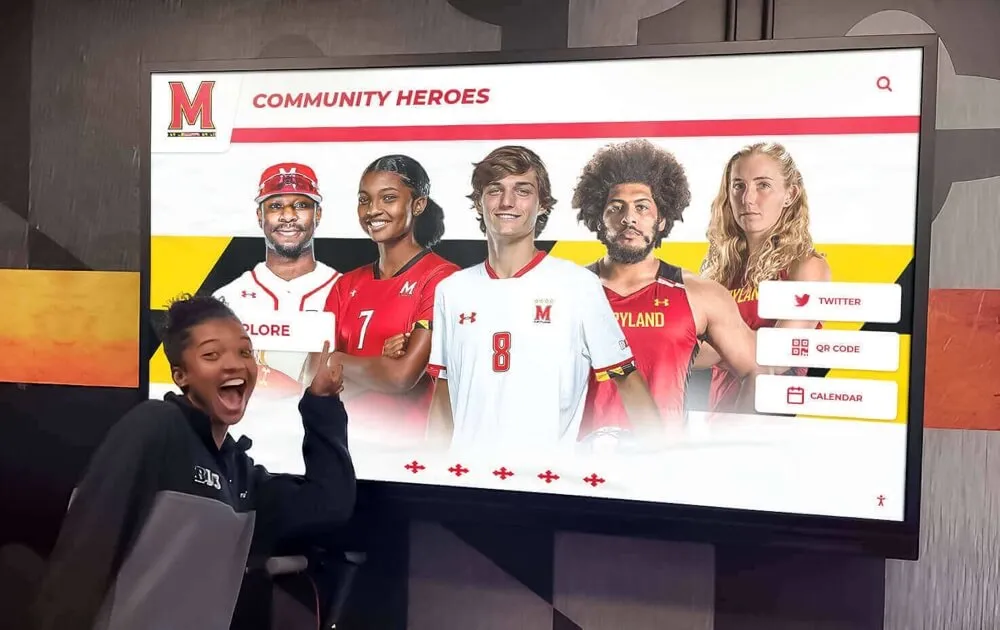
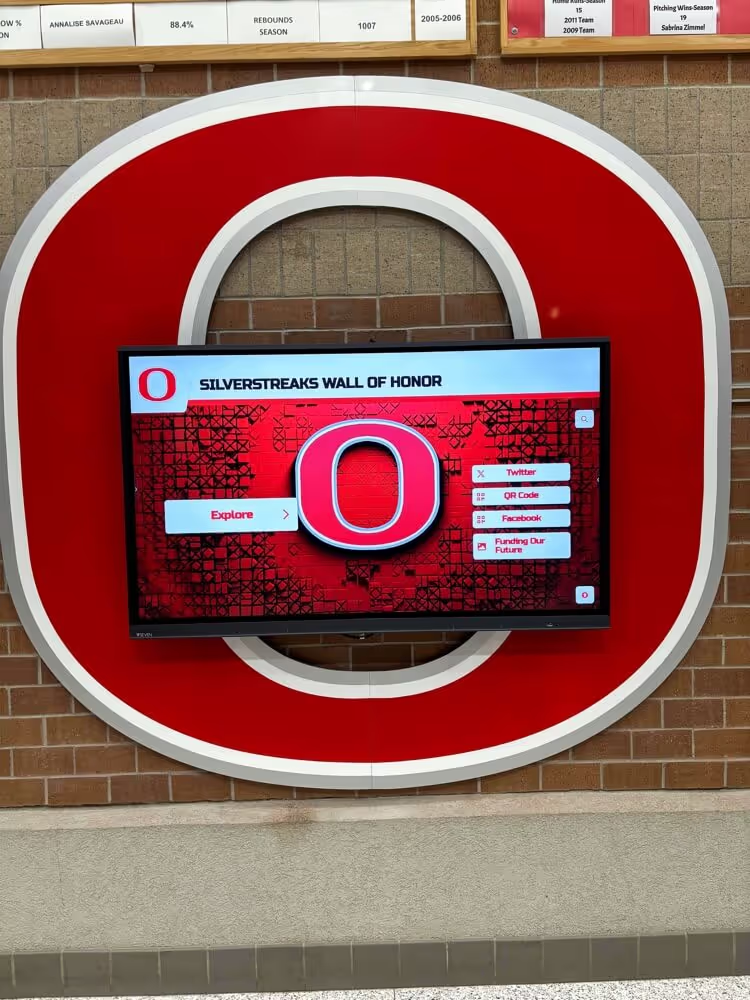
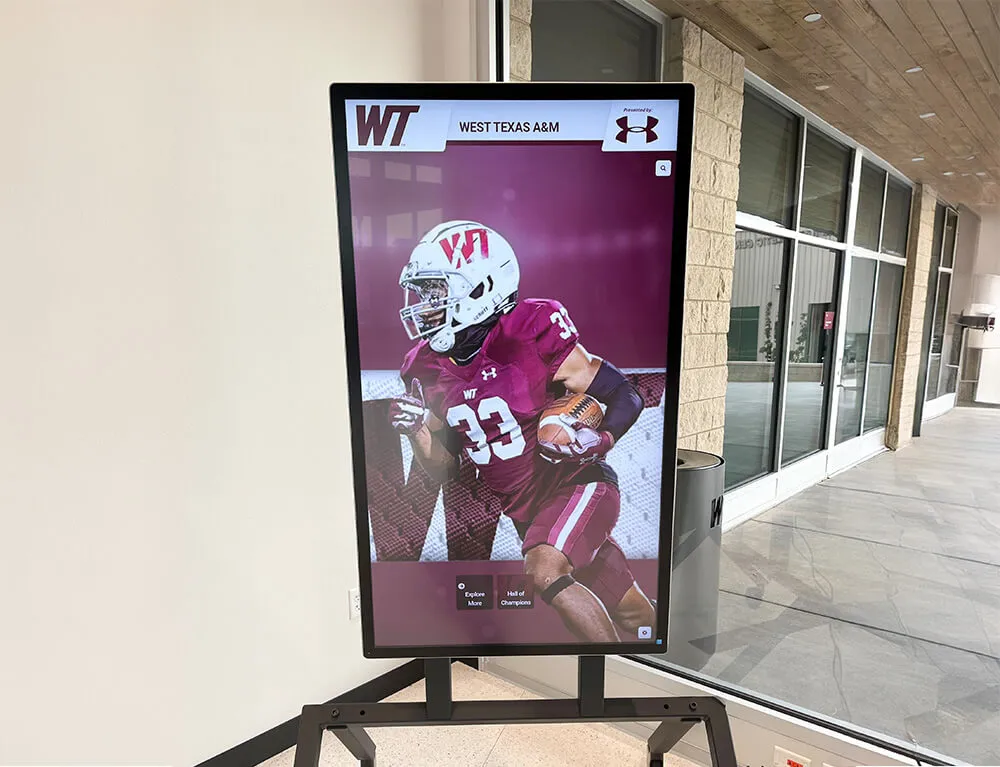
Professional recognition displays preserve graduate achievements permanently while graduation programs commemorate ceremony moments
Why Graduation Program Design Matters
Before exploring template options, understanding what makes graduation programs meaningful helps designers prioritize elements that create lasting value.
The Multiple Purposes of Graduation Programs
Effective programs simultaneously serve several distinct functions:
Ceremony Navigation for Attendees
Families attending commencement need clear guidance through often-lengthy ceremonies. Programs that identify processional order, explain ceremonial traditions, introduce speakers, and provide scheduling context help attendees understand what’s happening and anticipate key moments—particularly important for family members unfamiliar with graduation customs or attending their first ceremony.
Graduate Recognition and Documentation
The graduate name list represents the program’s most critical component. For many students, seeing their name printed in the official graduation program provides tangible validation of achievement completion. Families preserve these programs specifically because they document their graduate’s name alongside classmates, creating permanent records of who completed degrees together.
Institutional Pride and Brand Representation
Graduation programs reflect institutional character and values. Well-designed programs with professional layouts, quality materials, and thoughtful content communicate that schools take ceremonies seriously and respect the milestone graduates achieved. Conversely, poorly executed programs suggest institutional indifference to one of education’s most significant events.
Historical Documentation and Archival Value
Schools preserve graduation programs in archives documenting institutional history. Researchers, historians, and future alumni reference these materials to understand enrollment patterns, degree distributions, and institutional evolution. Programs designed with archival longevity in mind contribute to permanent historical records.
Common Graduation Program Design Pitfalls
Understanding frequent mistakes helps planners avoid predictable problems:
Inadequate Space for Graduate Names
The most common complaint about graduation programs centers on tiny, cramped name lists where graduates struggle to find their own names. Using excessively small fonts, eliminating spacing between names, or condensing layouts to reduce page count creates frustrating experiences and diminishes recognition impact.
Missing or Incomplete Honor Designations
Programs that omit academic honors (cum laude designations, departmental awards, honor society memberships) or fail to distinguish achievement levels provide incomplete recognition that graduates and families notice immediately. Students who worked for honors expect appropriate acknowledgment in official ceremony documentation.
Poor Readability and Visual Hierarchy
Programs lacking clear organization, sufficient contrast, or logical information hierarchy confuse attendees. When ceremony sections blend together, speaker information disappears in dense text blocks, or critical details use the same visual weight as minor content, attendees struggle to follow along effectively.
Generic Templates Without Institutional Character
Cookie-cutter designs that could represent any school anywhere fail to capture institutional identity. Graduation programs should reflect unique school traditions, colors, values, and character rather than appearing interchangeable with thousands of other ceremonies.
Essential Graduation Program Components
Comprehensive programs typically include these fundamental sections:
Cover Design and First Impressions
The program cover establishes immediate tone and quality perception:
Critical Cover Elements
- Ceremony official name (“One Hundred Twenty-Fifth Commencement Ceremony”)
- Institution name and seal or logo
- Graduation date and year prominently displayed
- Venue information and time
- Ceremony class identifier (Class of 2026)
- Professional cover photo or institutional imagery
Design Approaches
Traditional Formal
- Classic serif typography
- Institutional seal prominent
- Conservative color palette (typically school colors)
- Minimal decorative elements
- Emphasized dignity and gravitas
Modern Contemporary
- Clean sans-serif fonts
- Contemporary photography
- Vibrant color applications
- Minimalist layouts
- Forward-looking design aesthetic

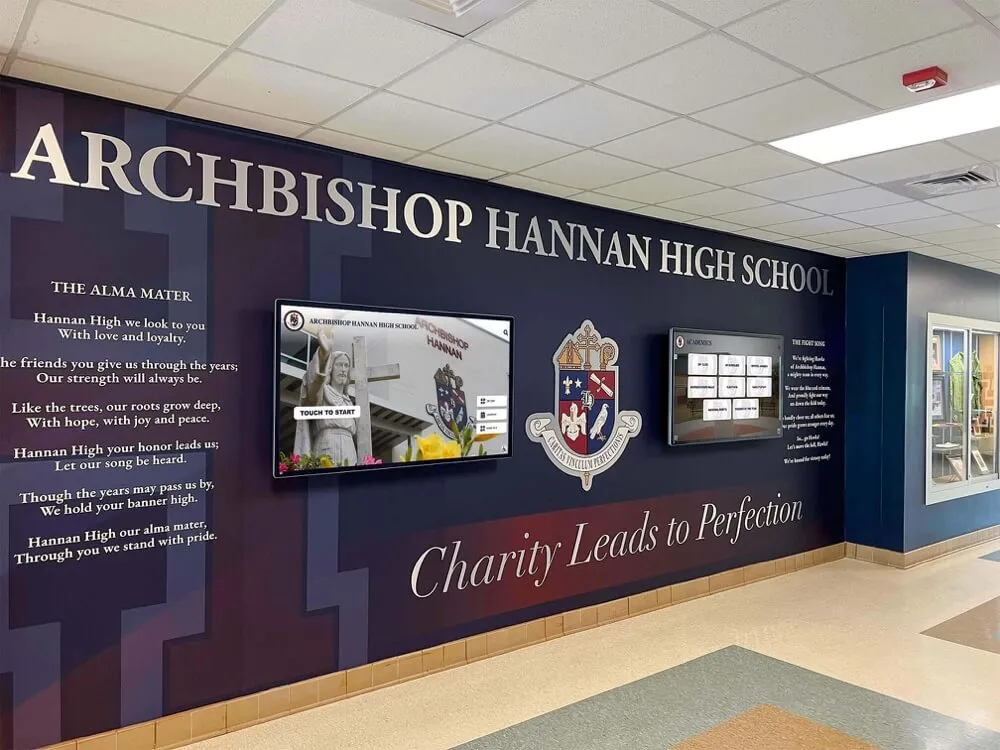
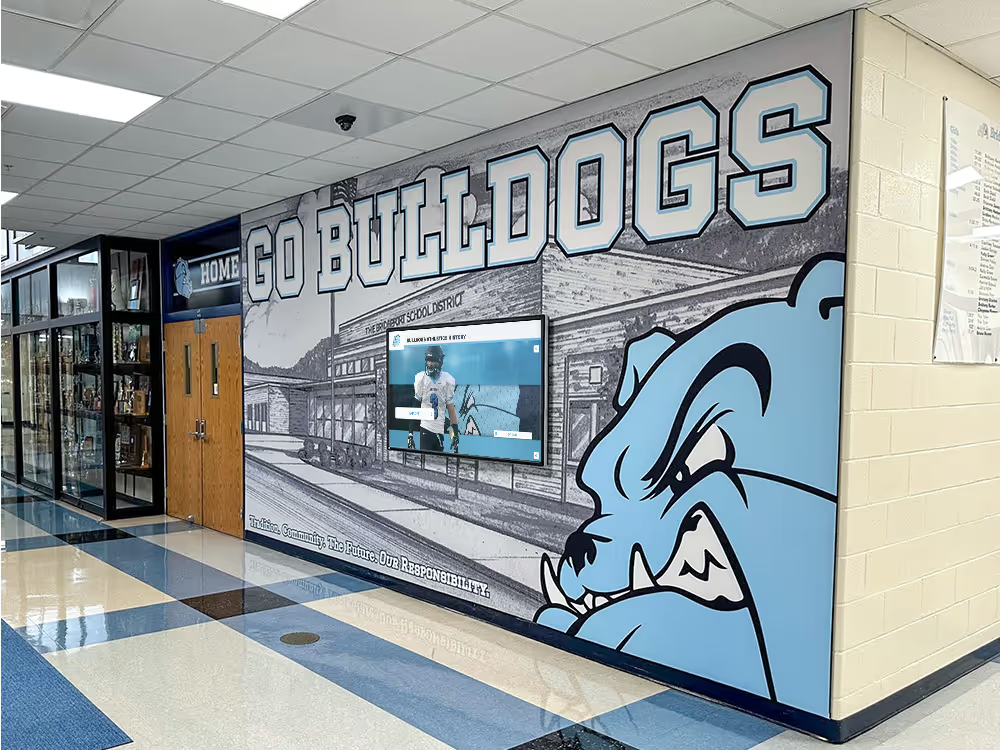
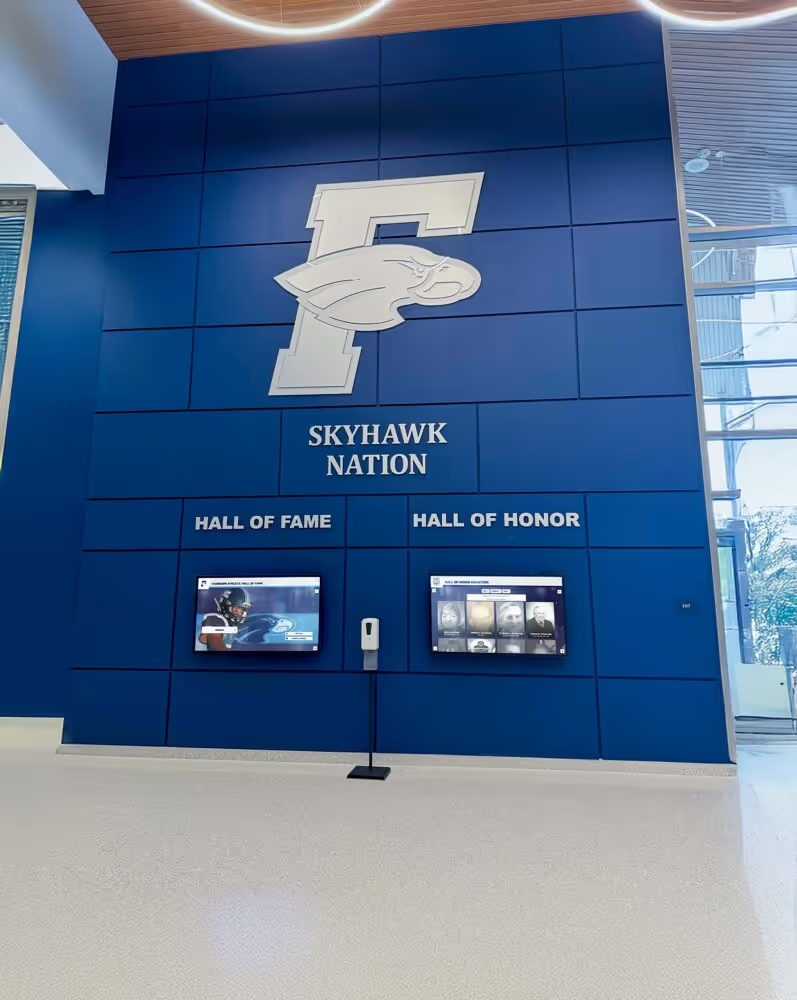
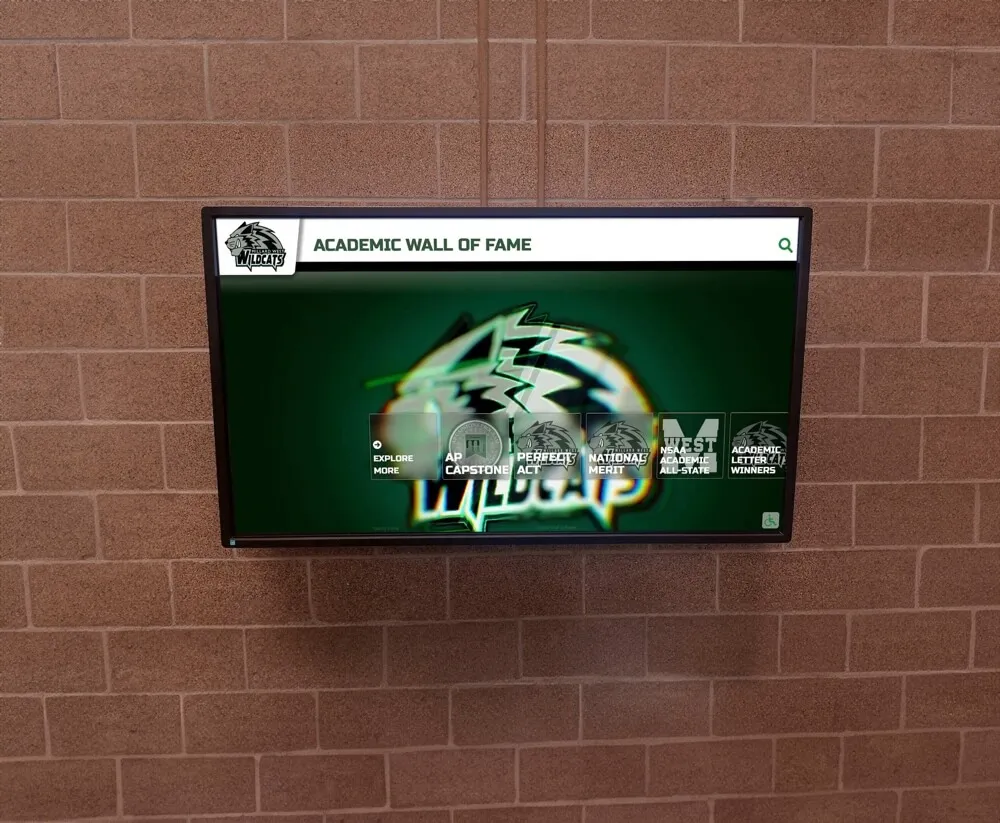
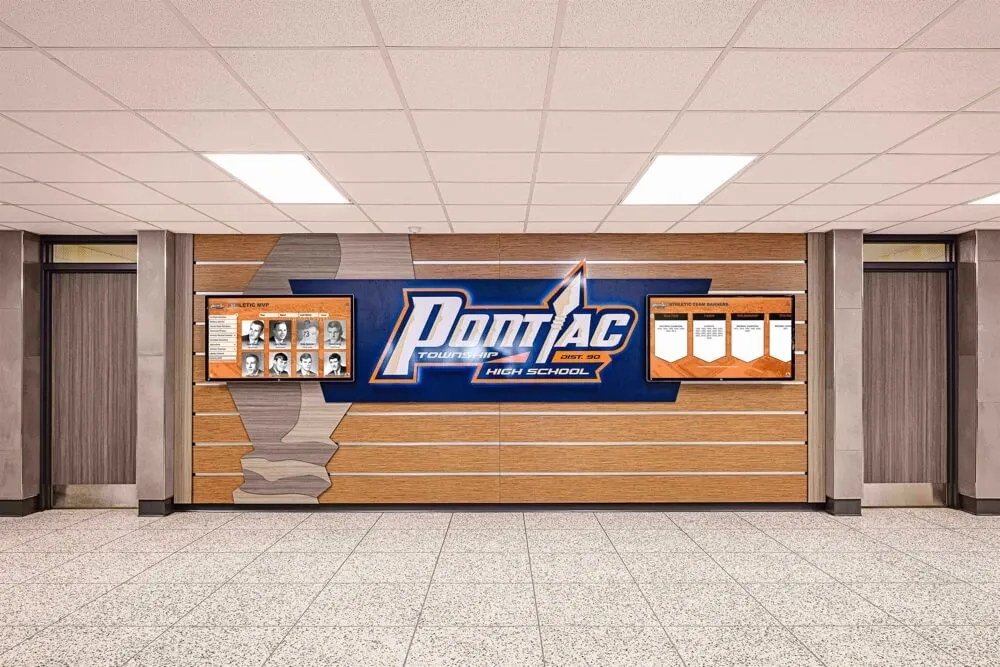
Digital recognition walls display graduate names and achievements alongside traditional printed programs
Order of Ceremony Section
Clear ceremony sequencing helps attendees follow proceedings:
Typical Ceremony Order
- Prelude music (with composition and composer credits)
- Academic processional and platform party entrance
- National anthem or ceremonial music
- Welcome and opening remarks
- Student speaker or valedictorian address
- Guest speaker introduction and keynote address
- Recognition of special honors and awards
- Conferral of degrees and diploma presentation
- Closing remarks and benediction
- Recessional
Each component should include sufficient detail that attendees understand what’s occurring without excessive explanation that clutters the layout.
Graduate Name Lists
The centerpiece of most graduation programs:
Formatting Best Practices
Alphabetical Organization
- Clear section headers by degree type or department
- Sufficient spacing between names for readability
- Consistent formatting throughout
Honor Designations
- Latin honors clearly indicated (summa cum laude, magna cum laude, cum laude)
- Departmental honors and awards noted
- Honor society memberships acknowledged
- Special distinctions identified (valedictorian, salutatorian)
Degree Information
- Full degree names (Bachelor of Science, Master of Arts)
- Major or concentration specifications
- Minor acknowledgments if applicable
Recommended Name List Formatting
Bachelor of Science in Business Administration

*Summa Cum Laude
†Magna Cum Laude
‡Cum Laude

Sarah Elizabeth Anderson*
Business Administration, Marketing
Dean's List, Honors Program Graduate

Michael James Chen†
Accounting
Beta Alpha Psi, Academic Excellence Award

Jennifer Marie Williams‡
Management, Minor in Economics
This format balances comprehensive information with clean readability while ensuring honor distinctions remain prominently visible.
Faculty and Administrative Recognition
Acknowledging ceremony participants and institutional leadership:
Platform Party Listing
- Board of trustees or governing body members
- President or superintendent
- Senior administrators
- Deans and department chairs
- Faculty marshals
Faculty Recognition
- Complete faculty roster or condensed listing depending on size
- Emeriti faculty acknowledgment
- Retiring faculty special recognition
Many schools include abbreviated lists in programs while maintaining complete rosters on institutional websites or supplementary materials—balancing recognition thoroughness with program length constraints.

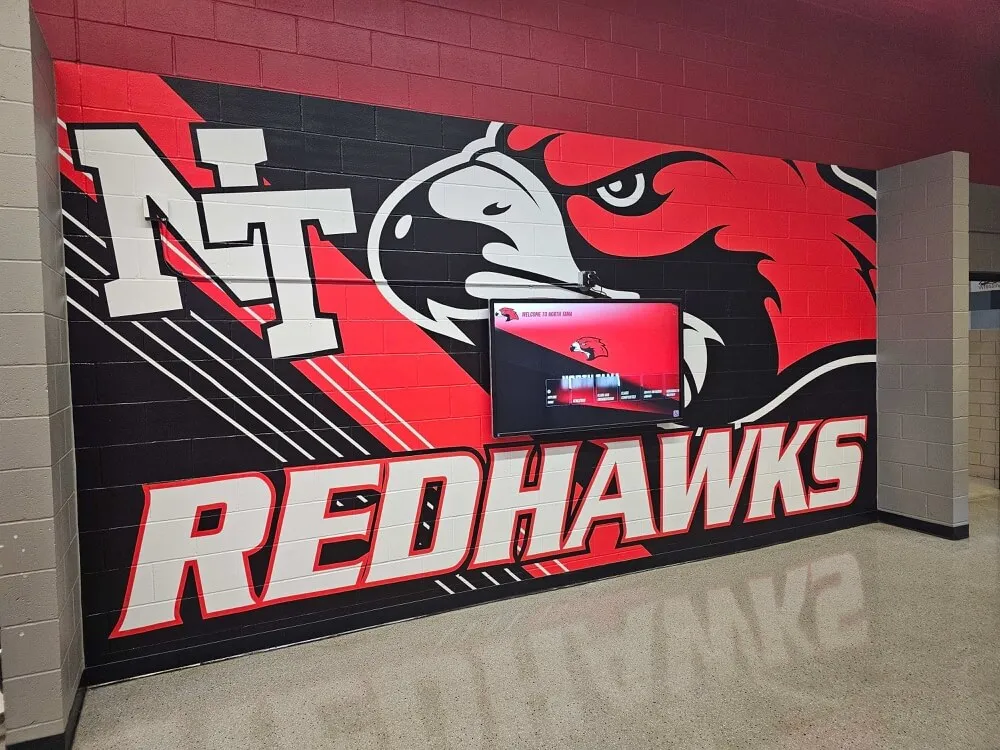
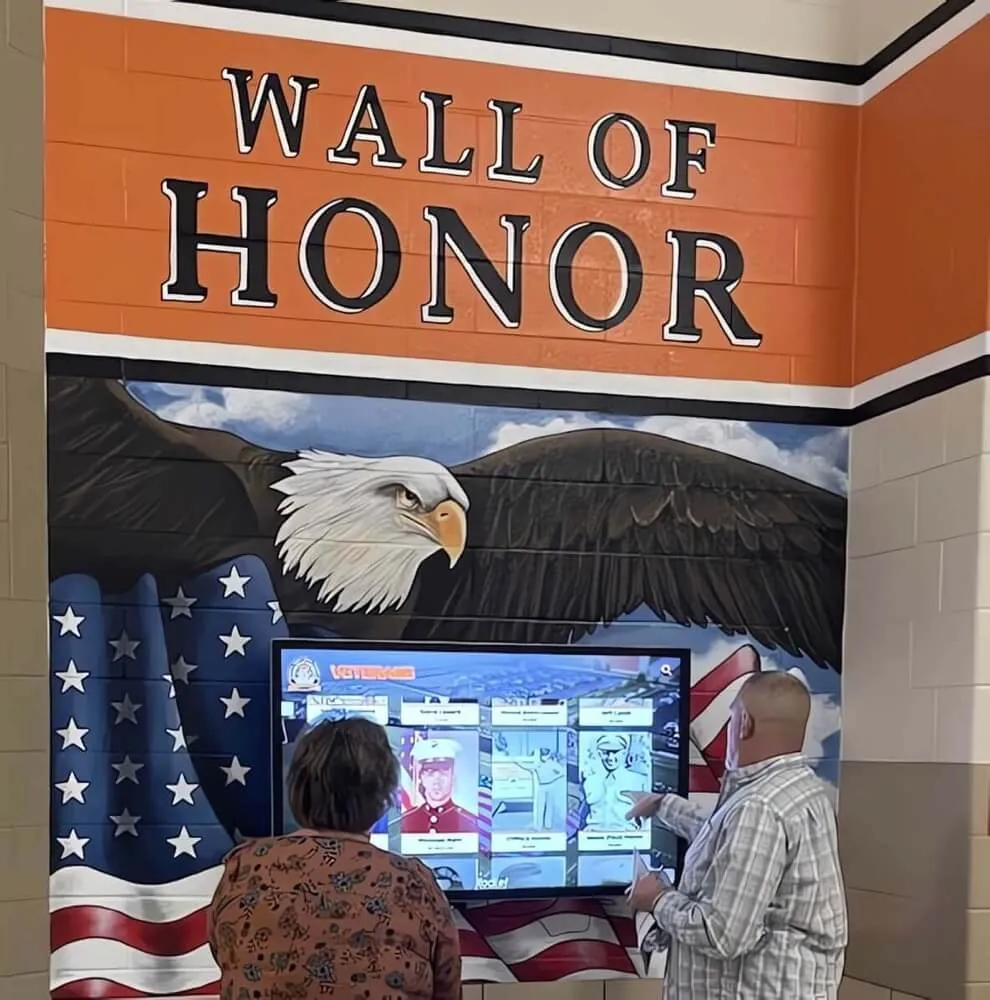
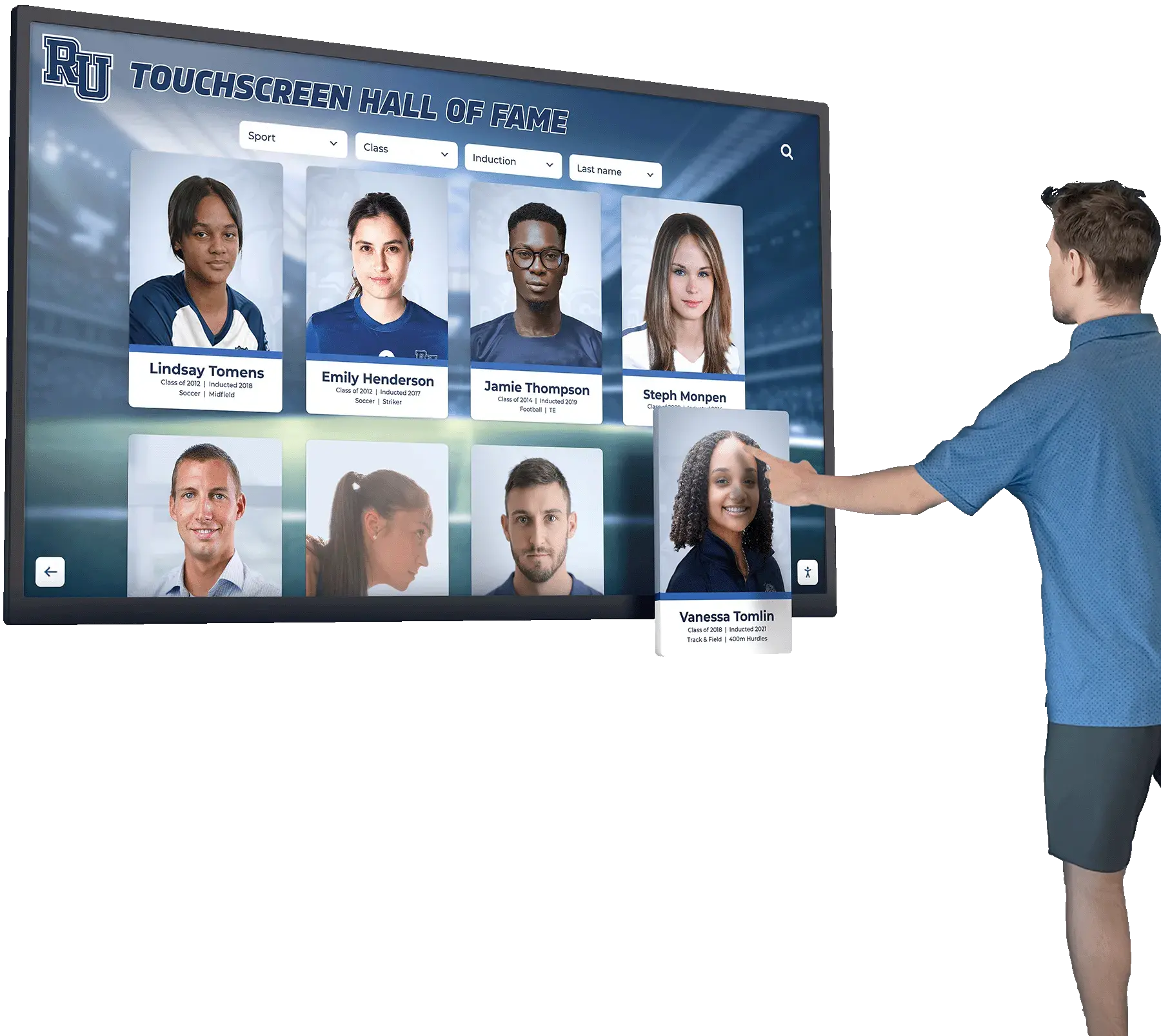
Interactive kiosks complement printed programs by providing searchable graduate databases and extended recognition
Speaker Biographies and Ceremony Details
Context about ceremony participants enhances attendee engagement:
Keynote Speaker Information
- Professional biography (100-200 words)
- Relevant accomplishments and credentials
- Connection to institution if applicable
- Speech title or topic if available
Student Speaker Recognition
- Brief biographies of valedictorian, salutatorian, or selected student speakers
- Academic achievements and honors
- Post-graduation plans when appropriate
Ceremony Traditions Explanation
- Brief descriptions of academic regalia meaning
- Explanations of school-specific graduation traditions
- Historical context for ceremony elements unique to your institution
This content transforms programs from simple name lists into comprehensive ceremony guides that educate attendees about proceedings while honoring all participants appropriately.
Graduation Program Design Templates and Layouts
Different template approaches suit various institutional needs, budgets, and design preferences:
Folded Program Formats
Bi-Fold (4 Pages)
Best For: Small to medium graduations (50-150 graduates)
Typical Layout:
- Cover: Event details and institutional imagery
- Inside Left: Ceremony order and welcome message
- Inside Right: Graduate names and honors
- Back Cover: Sponsor acknowledgments, institutional information
Advantages: Cost-effective, simple production, clean presentation Limitations: Limited space for large graduate classes, constrained design flexibility
Tri-Fold (6 Panels)
Best For: Medium-sized ceremonies (100-250 graduates)
Typical Layout:
- Front Panel: Cover design
- Panel 2: Welcome and ceremony overview
- Panel 3: Graduate names (section 1)
- Panel 4: Graduate names (section 2)
- Panel 5: Faculty, speakers, special recognitions
- Back Panel: Sponsor thanks, historical notes
Advantages: More content capacity than bi-fold, professional appearance, self-standing display option Limitations: Slightly higher printing costs, requires careful panel planning
Booklet Formats
Saddle-Stitched Booklets (8-32 Pages)
Best For: Large graduations (250+ graduates) or comprehensive programs
Typical Structure:
- Cover and inside cover: Welcome, institutional message
- Pages 2-4: Ceremony order, speaker biographies, tradition explanations
- Pages 5-20: Complete graduate name listings by school/department/degree
- Pages 21-24: Faculty roster, administrative recognition
- Pages 25-28: Special awards, scholarships, historical information
- Back pages: Sponsor acknowledgments, alma mater lyrics, closing message
Advantages: Extensive content capacity, professional booklet appearance, keepsake quality Limitations: Higher printing and binding costs, longer production timelines
Schools planning comprehensive academic recognition programs often pair graduation program booklets with year-round recognition displays that celebrate achievement beyond commencement.
Perfect-Bound Programs (32+ Pages)
Best For: University-wide commencements with multiple schools, large graduate classes
Advantages: Professional book-like appearance, substantial keepsake quality, unlimited page capacity Limitations: Significantly higher costs, requires professional printing services, longer lead times
Single-Sheet Programs
Oversized Single Sheet (11x17 or Tabloid)
Best For: Intimate ceremonies (under 50 graduates), alternative format preference
Typical Layout: Multi-panel fold creating compact program from single sheet
Advantages: Low printing costs, quick production, environmentally efficient Limitations: Limited information capacity, less formal appearance
Design Elements That Elevate Graduation Programs
Strategic design choices transform functional programs into memorable keepsakes:
Typography and Readability
Font Selection Guidelines
Graduate Name Lists
- Minimum 10-point font size (11-12 point preferred)
- Clean, highly legible fonts (Garamond, Georgia, Minion Pro for serif; Helvetica, Calibri, Open Sans for sans-serif)
- Sufficient line spacing (1.15-1.3 minimum)
- Adequate letter spacing preventing cramped appearance
Headings and Ceremony Sections
- Clear visual hierarchy distinguishing sections
- Consistent heading styles throughout program
- Sufficient size differentiation between heading levels
Avoiding Typography Problems
Common mistakes that reduce readability:
- Excessive font variety (limit to 2-3 font families maximum)
- Decorative fonts for body text
- Insufficient contrast between text and background
- All-caps body text that slows reading speed
- Justified text creating awkward spacing

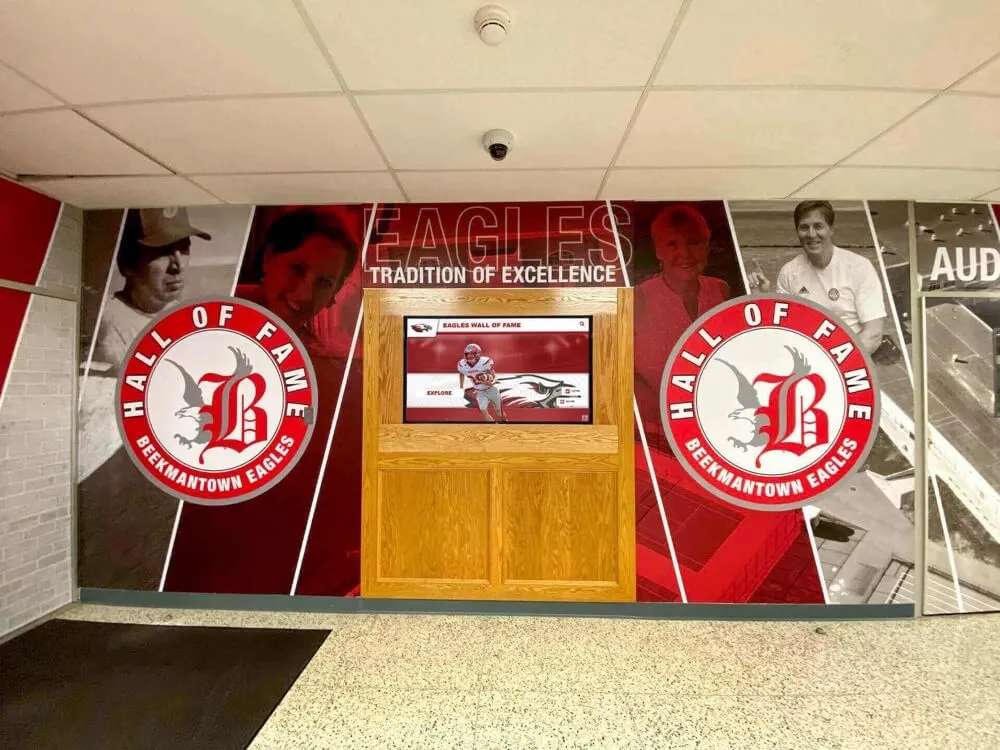
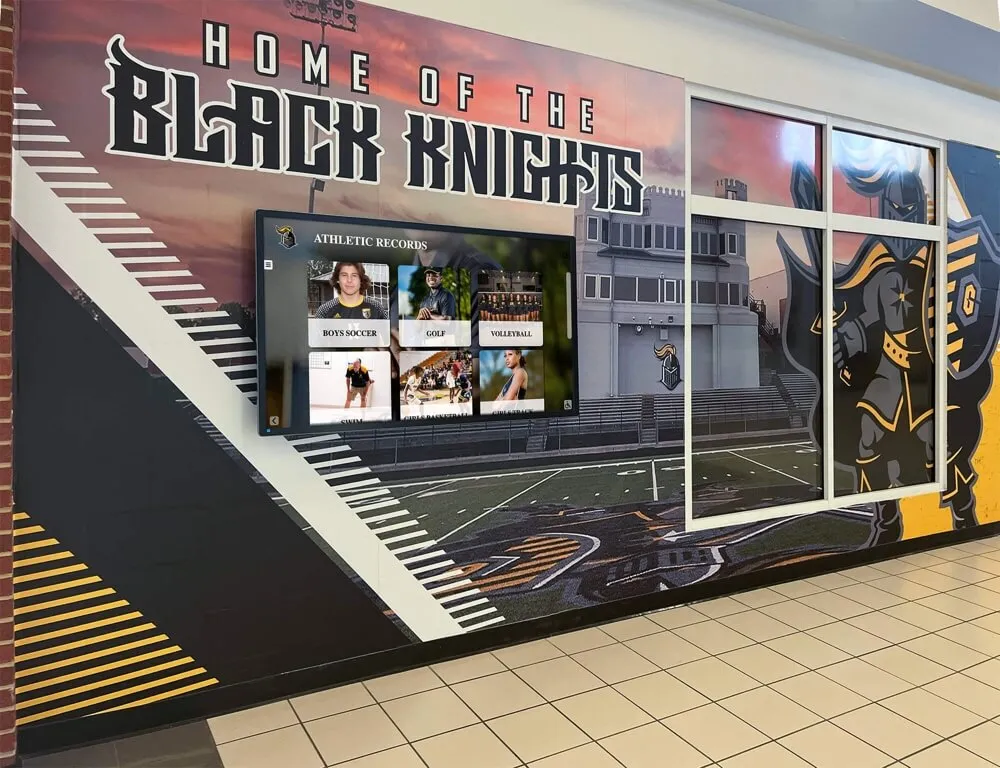
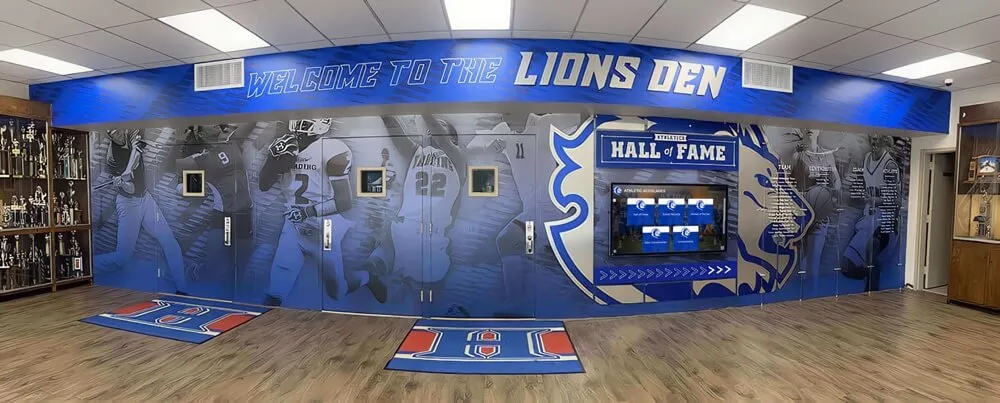
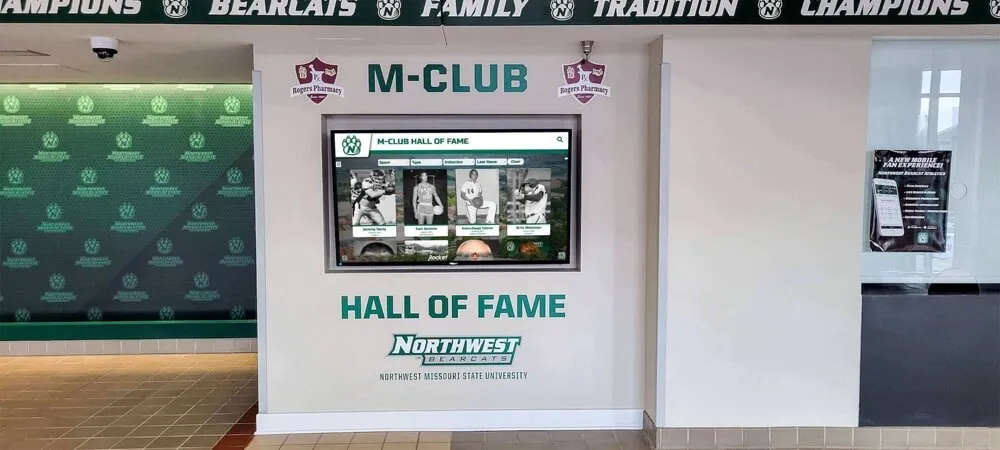
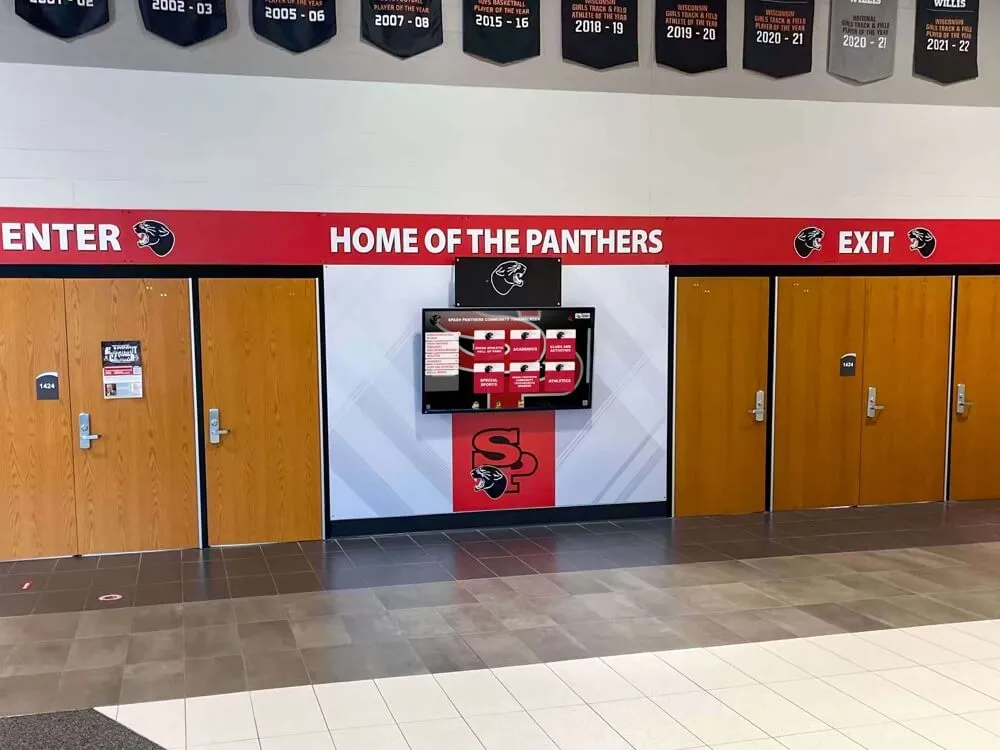
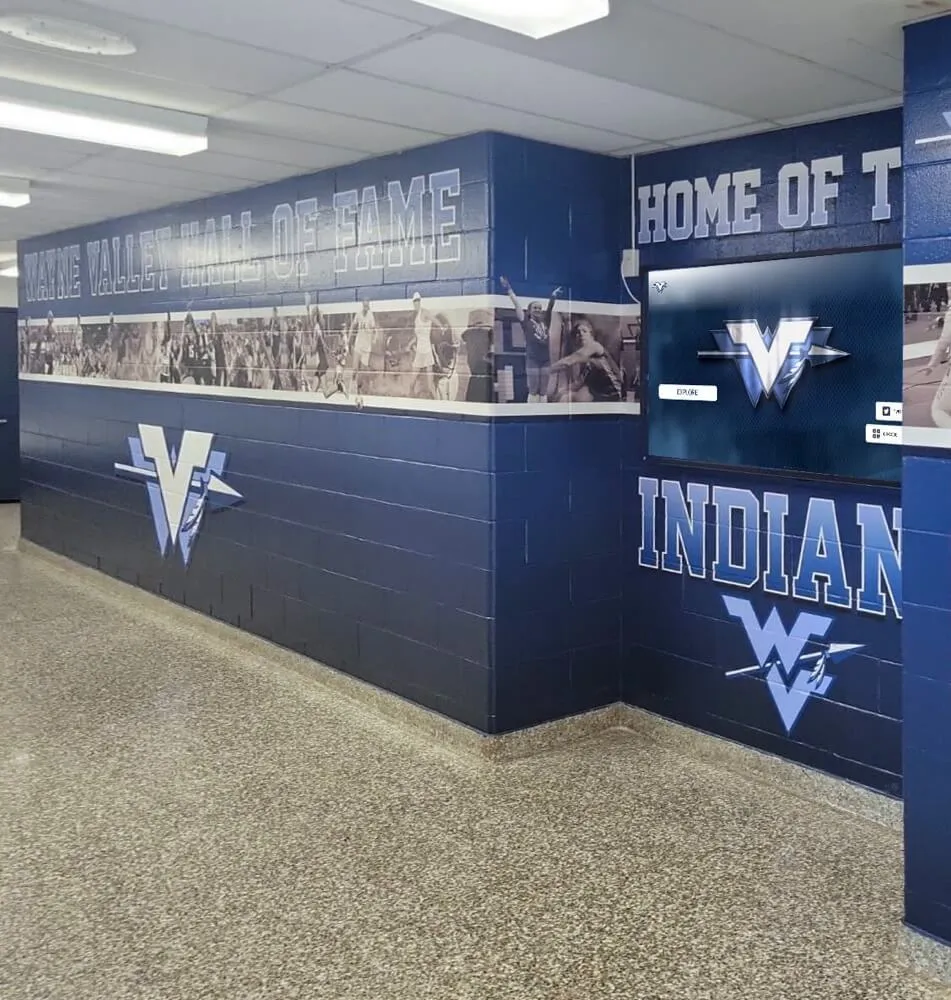
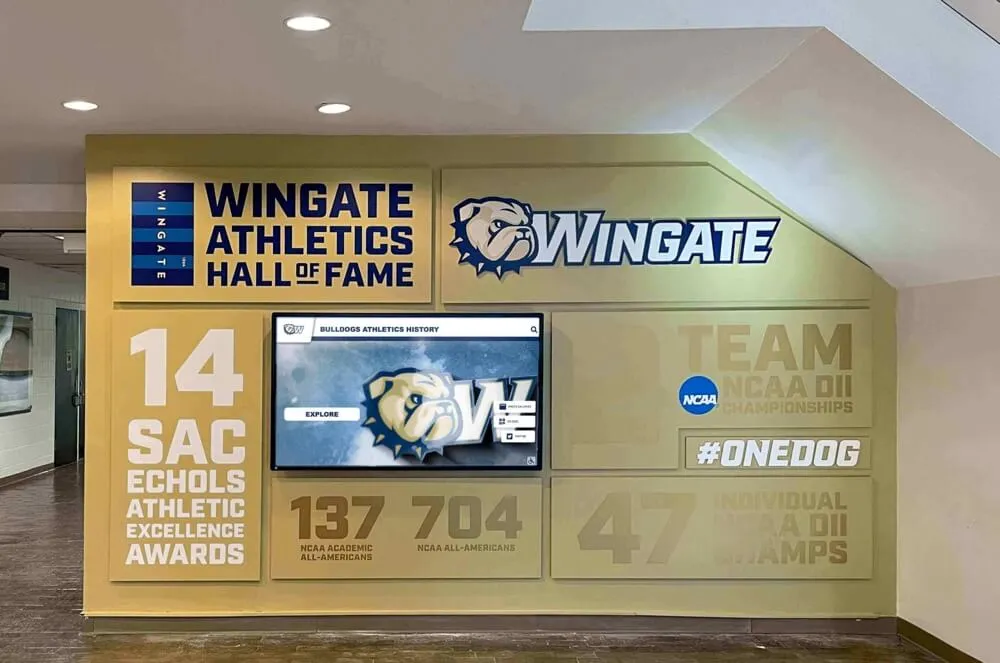
Hallway recognition displays extend graduate celebration beyond printed programs through permanent achievement documentation
Color Schemes and Visual Identity
Institutional Color Integration
Graduation programs should prominently feature school colors:
- Cover designs incorporating primary institutional colors
- Section headers and accent elements using school palette
- Balanced application preventing overwhelming color saturation
- Sufficient contrast ensuring text readability over colored backgrounds
Professional Color Approaches
Formal Traditional
- Navy, burgundy, forest green, or black as primary colors
- Gold or silver metallic accents
- Cream or ivory paper stock for sophistication
Contemporary Vibrant
- Bold school color applications
- Modern color combinations
- Bright white backgrounds for contrast
- Energetic, celebratory aesthetic
Photography and Imagery
Effective Program Photography
Campus and Facility Photos
- Recognizable institutional landmarks
- Recent, high-quality photography
- Seasonal appropriateness (spring graduation programs with spring campus imagery)
- Professional composition and lighting
Graduate and Student Imagery
- Candid ceremony or campus life photos
- Diverse student representation
- Action shots showing engagement and achievement
- Previously photographed with appropriate permissions
Avoiding Common Image Problems
- Low-resolution photos appearing pixelated or blurry
- Dated imagery no longer reflecting current campus
- Overcrowded layouts with too many competing images
- Photos lacking clear connection to graduation or institution
Incorporating School Traditions and Symbols
Programs gain meaning through institutional identity elements:
Traditional Components
- School seal or official logo prominently displayed
- Motto or mission statement inclusion
- Alma mater lyrics (often on back cover)
- Historical founding date and heritage references
- Ceremonial tradition explanations specific to your school
Contemporary Additions
- QR codes linking to ceremony livestreams or recordings
- Social media hashtags for graduate sharing
- Digital gallery access information
- Interactive recognition display information where families can explore complete graduate profiles
Content Strategy for Meaningful Graduation Programs
Beyond layout and design, content strategy determines whether programs provide genuine value:
Welcome Messages and Presidential Addresses
Effective Welcome Content
Opening messages should:
- Address graduates directly and personally
- Acknowledge families, faculty, and supporters
- Recognize the specific challenges and achievements of this graduating class
- Look forward to graduates’ futures
- Express genuine institutional pride
Avoid Generic Welcomes
Messages that could apply to any graduation anywhere lack impact. Specific references to the particular class, year, or institutional context create authentic connection.
Example comparison:
Generic: “Congratulations to our graduates on this momentous occasion as you embark on your future journey.”
Specific: “The Class of 2026 demonstrated remarkable resilience, completing their education during unprecedented challenges while maintaining the academic excellence and community commitment that define our institution. Your achievements honor those who came before while inspiring those who follow.”
Honoring Special Achievements and Awards
Many graduations include special recognition beyond standard academic honors:
Academic Excellence Awards
- Valedictorian and salutatorian recognition with brief profiles
- Department-specific outstanding student awards
- Research achievement honors
- Thesis or capstone project distinctions
Service and Leadership Recognition
- Community service hour achievements
- Student leadership program graduates
- Service organization participation
- Volunteer contribution acknowledgments
Specialized Honors
- Athletic achievement recognition for graduating athletes
- Arts and performance awards
- Technical and vocational certifications
- Honor society memberships
Including these distinctions in programs provides comprehensive recognition while documenting the diverse ways graduates excelled beyond standard academic requirements.
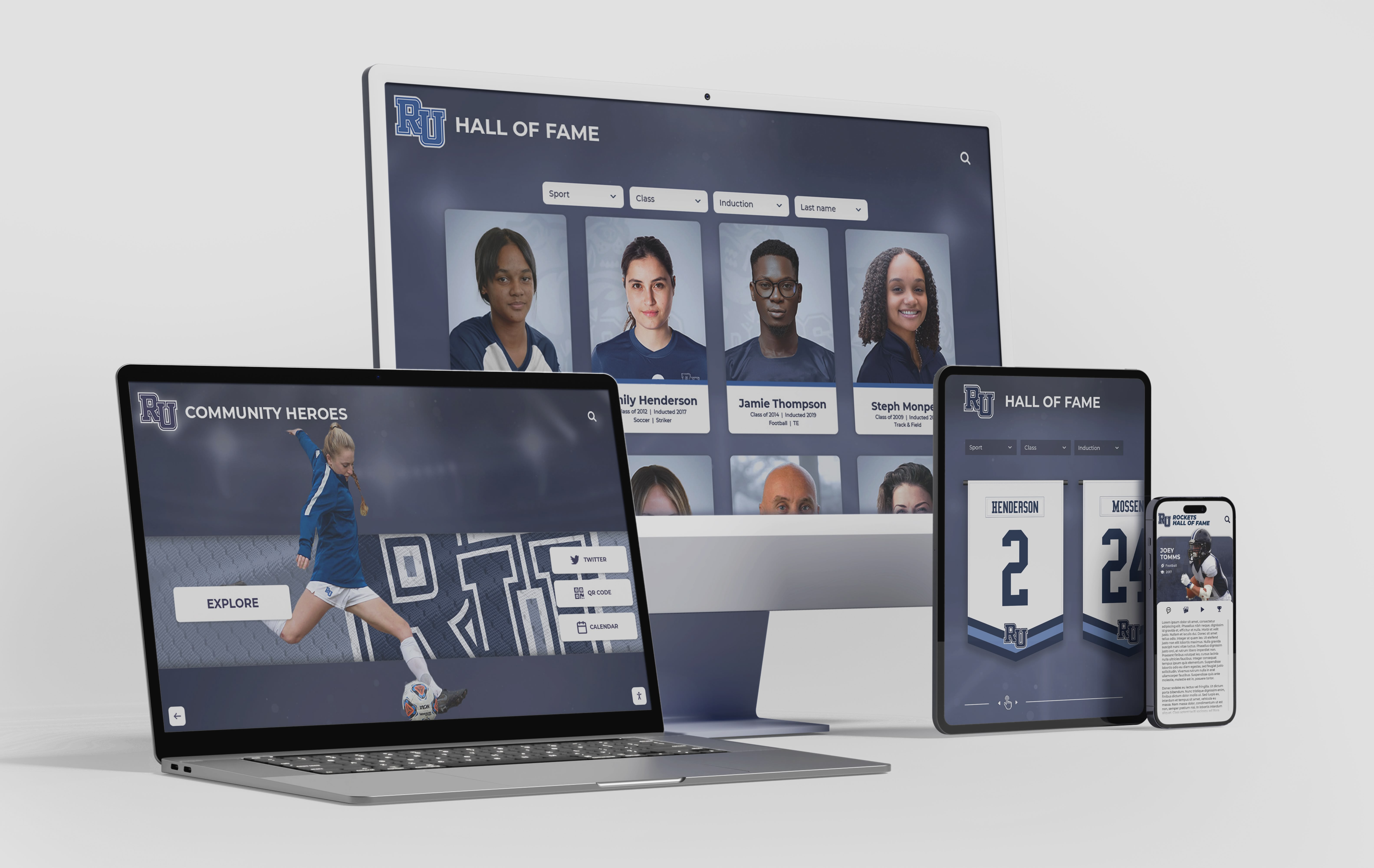
Digital platforms extend graduation recognition to mobile and web access beyond printed program limitations
Acknowledging Supporters and Sponsors
Appropriate Sponsor Recognition
When sponsors or donors support graduation expenses:
- Dedicated sponsor acknowledgment section
- Professional logo placement if applicable
- Appropriate recognition level matching contribution size
- Balance between thanks and program primary purpose
Family and Community Acknowledgment
- Thank you messages to families and supporters
- Recognition of teachers and staff contributions
- Acknowledgment of community partnerships
- Appreciation for attendance and participation
Production and Printing Considerations
Technical execution significantly impacts final program quality:
Paper Stock and Quality
Cover Material Options
Premium Approaches
- Heavy cardstock (80-100 lb cover weight)
- Glossy or matte finish options
- Textured or specialty papers
- Embossed or foil-stamped institutional seals
Budget-Friendly Quality
- 65 lb cardstock covers
- Standard finish
- Professional appearance at lower cost
- Digital printing compatibility
Interior Pages
Standard approach: 60-70 lb text weight paper providing:
- Sufficient opacity preventing text show-through
- Professional feel and durability
- Good printing quality
- Cost-effectiveness for multi-page programs
Color vs. Black and White Printing
Full-Color Programs
Advantages:
- Vibrant school color incorporation
- Professional photography reproduction
- Modern, polished appearance
- Enhanced keepsake appeal
Considerations:
- Higher per-unit costs
- Longer printing timelines
- Requires high-quality color-appropriate design files
Black and White with Spot Color
Advantages:
- Significantly lower costs than full color
- Professional appearance through strategic color accents
- Faster printing turnaround
- Classic, formal aesthetic
Approach: Black and white interior with full-color cover provides cost-effective compromise maintaining professional quality.
Quantity Determination and Ordering
Calculating Appropriate Quantities
Order programs based on:
- Graduate count (2-3 programs per graduate family recommended)
- Expected attendee numbers
- Faculty and staff copies
- Archival preservation copies
- Extra buffer (10-15% over estimated need)
Printing Timeline Considerations
Allow sufficient lead time:
- Design completion and approval: 4-6 weeks before ceremony
- Printing and binding: 2-3 weeks
- Delivery and quality review: 1 week before ceremony
- Total timeline: 6-8 weeks minimum from design start to ceremony
Rush orders cost significantly more and increase error risk. Early planning prevents last-minute complications.
Proofing and Quality Control
Critical Proofing Steps
- Content accuracy verification (graduate names, honors, dates)
- Multiple reviewer proofreading
- Print sample review before full production run
- Color accuracy check if using color printing
- Binding quality inspection
Common Errors to Catch
- Misspelled graduate or faculty names
- Incorrect honor designations
- Wrong ceremony date, time, or venue
- Outdated institutional information
- Typography errors or formatting inconsistencies
Even single errors undermine program credibility and create disappointment for affected graduates and families.
Modern Alternatives and Digital Integration
While printed programs remain graduation ceremony staples, digital integration creates enhanced experiences:
Digital Program Options
Mobile-Accessible Programs
Increasingly, schools provide:
- PDF programs downloadable to attendee devices
- Responsive web-based programs optimized for mobile viewing
- QR codes at ceremony entrances linking to digital versions
- Reduced printing costs and environmental impact
Enhanced Digital Features
Digital formats enable:
- Searchable graduate name databases
- Hyperlinked speaker biographies and additional content
- Video message integration from administrators or faculty
- Live ceremony updates and schedule adjustments
- Social media integration for graduate congratulations
Hybrid Approaches Combining Print and Digital
The most effective strategy often combines formats:
Printed Ceremonial Programs
- Condensed essential ceremony information
- Complete graduate name lists with honors
- Traditional keepsake format families preserve
Digital Enhancement Layers
- Extended graduate profiles with photos and achievements
- Comprehensive faculty and staff listings
- Detailed speaker biographies and additional ceremony context
- Post-ceremony photo galleries and video recordings
This hybrid approach respects ceremony tradition while leveraging digital capabilities that enhance rather than replace printed materials.
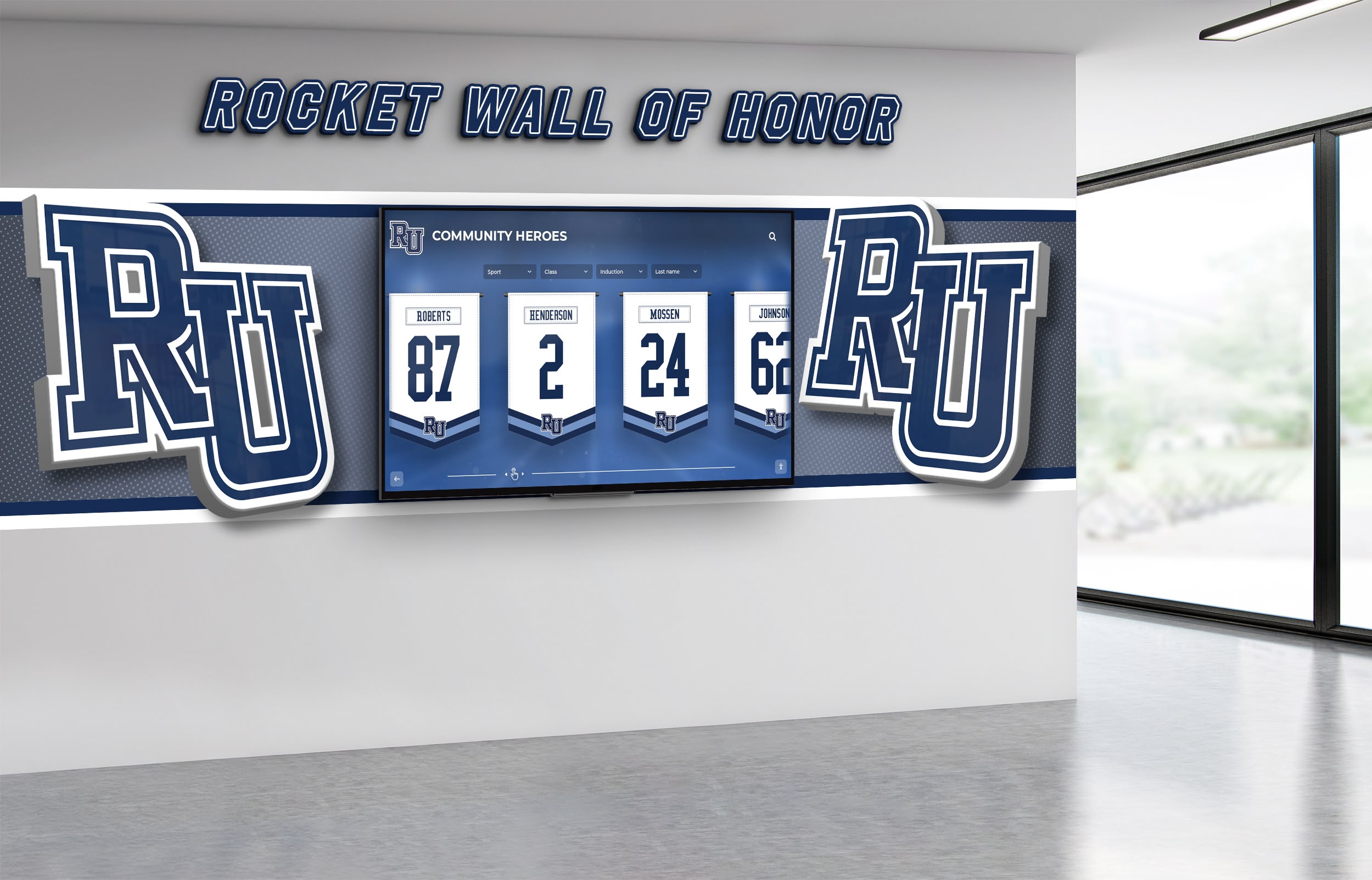
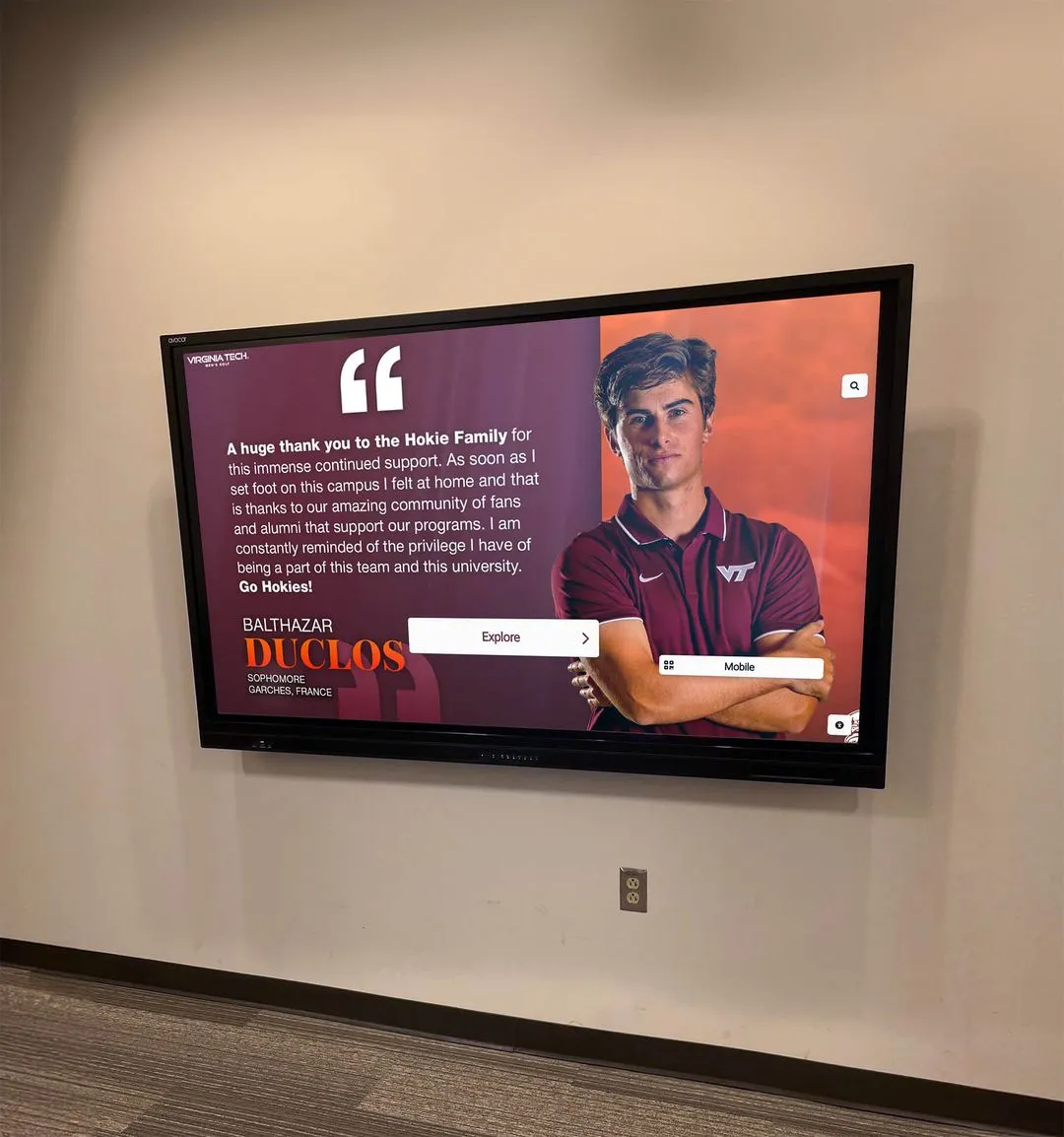
Permanent digital recognition displays in lobbies provide year-round graduate celebration beyond single-ceremony programs
Permanent Digital Recognition Beyond Ceremony Day
The most forward-thinking institutions extend graduation recognition far beyond printed programs through permanent digital displays:
Unlimited Graduate Recognition Capacity
Solutions like Rocket Alumni Solutions enable schools to:
- Showcase every graduate across all years without space constraints
- Include comprehensive profiles with photos, honors, and post-graduation achievements
- Search graduates by name, year, major, or honors
- Display graduating class composites and ceremony photos
- Update recognition instantly as alumni achieve new accomplishments
Interactive Exploration Features
Touchscreen recognition displays provide:
- Searchable databases where families explore complete graduate information
- Year-by-year browsing through institutional graduation history
- Honor distinction filtering (viewing all cum laude graduates, for example)
- Major or department-specific graduate listings
- Integration with academic signing day and scholarship recognition
Mobile and Remote Access
Digital recognition extends beyond physical locations:
- QR codes linking printed programs to comprehensive online graduate profiles
- Web-based access enabling extended family viewing regardless of ceremony attendance
- Alumni networking features connecting graduates across years
- College and career documentation graduates reference in applications
- Digital yearbook integration preserving class memories permanently
Administrative Efficiency and Updates
Cloud-based systems overcome traditional program update challenges:
- Remote content management requiring no technical expertise
- Updates from any internet-connected device in minutes
- Scheduled publishing coordinating with future graduation ceremonies
- Always-current information without reprinting costs
- Integration with student information systems
Schools implementing comprehensive graduation programs should explore recognition strategies that combine traditional printed ceremony programs with permanent digital displays ensuring graduate achievements receive ongoing celebration.
Special Program Considerations for Different Ceremony Types
Various graduation levels require tailored program approaches:
High School Commencement Programs
Unique High School Elements
- Class motto, colors, and flower selections
- Senior class officers and student government leadership
- Scholarship recipient listings with award names and amounts
- Post-graduation plans (college destinations, military service, career paths)
- Senior superlative recognition if applicable
- Senior night acknowledgments for graduating athletes
Family-Focused Content
High school graduations emphasize family experience:
- Photo collages showing student growth from kindergarten through senior year
- Parent and family thank you messages from students
- Elementary feeder school acknowledgments
- Community partner recognition
- Local business sponsor thanks
College and University Programs
Multi-School Ceremony Challenges
Large universities often conduct:
- University-wide commencement with all graduates
- Individual college or school ceremonies providing detailed recognition
Program Approaches:
- University ceremony: Condensed format acknowledging all graduates by school/college
- School ceremonies: Comprehensive programs with complete name lists, departmental honors, faculty recognition
Graduate School and Professional Programs
Advanced Degree Distinctions
Graduate programs emphasize:
- Dissertation or thesis titles for doctoral candidates
- Research advisors and committee members
- Specialized departmental awards
- Professional certifications achieved
- Post-graduation placement (fellowships, positions accepted)
Hooding Ceremony Integration
Doctoral programs often include:
- Hood color and design significance explanations
- Faculty mentor recognition
- Research contribution acknowledgments
- Academic lineage documentation
Budget-Friendly Graduation Program Strategies
Quality programs needn’t require excessive budgets:
Cost-Saving Approaches
Design and Production
- In-house design using templates or staff expertise
- Digital printing for small to medium quantities
- Black and white interior with color cover compromise
- Standard paper stocks over premium specialty materials
- Earlier printing allowing non-rush pricing
Sponsor and Partner Support
- Local business sponsorship offsetting printing costs
- Alumni association or parent organization funding
- Booster club support for program production
- In-kind donations from printing companies (often alumni-owned)
Format Simplification
- Folded programs instead of bound booklets
- Focused content reducing page count
- Strategic content prioritization
- Digital supplementation of detailed information
Determining Appropriate Investment Level
Balance cost consciousness with program significance:
When to Invest in Premium Programs
- Milestone ceremonies (centennial graduations, anniversary years)
- Particularly large or significant graduating classes
- Major institutional events with community visibility
- Programs doubling as archival documentation
When Simpler Programs Suffice
- Intimate ceremony settings
- Budget-constrained years
- When robust digital alternatives provide comprehensive recognition
- Secondary ceremonies where primary programs exist
Extend Graduation Recognition Beyond Printed Programs
Transform graduation from a single-ceremony celebration into permanent recognition that continues honoring graduates year-round. Digital recognition displays provide unlimited capacity to showcase every graduating class through interactive profiles, searchable databases, comprehensive achievement documentation, and professional presentations—ensuring graduation programs' printed recognition extends into permanent, accessible displays families and alumni explore for decades. Modern recognition technology complements traditional programs while creating comprehensive systems that celebrate academic achievement permanently.
Explore Recognition SolutionsCreating Graduation Program Templates for Future Years
Well-designed templates streamline future ceremony planning:
Developing Reusable Template Frameworks
Template Components to Standardize
Consistent Elements Across Years:
- Cover design framework with variable date/year
- Standard ceremony order structure
- Typography and formatting specifications
- Color scheme and visual identity
- Page layout grids and spacing
Variable Content Areas:
- Current graduate names and honors
- Specific speaker information
- Updated faculty rosters
- Year-specific welcome messages
- Contemporary photography
Template File Organization
Maintain organized template archives:
- Master design files in editable formats
- Previous years’ programs for reference
- Brand guidelines and specification documents
- Standard content sections as separate components
- Image libraries with approved photography
Documentation for Future Planning Teams
Create comprehensive guides ensuring consistency:
Program Planning Timeline Documents
- Month-by-month task checklists
- Deadline calendars for content, design, printing
- Vendor contact information and ordering procedures
- Budget templates and cost estimation tools
Design Specification Guides
- Font specifications and sizing guidelines
- Color values and acceptable variations
- Image resolution and format requirements
- Proofreading and approval procedures
Content Collection Procedures
- Graduate information gathering processes
- Honor designation verification systems
- Faculty and administrator roster updates
- Speaker biography submission requirements
Well-documented systems prevent knowledge loss when personnel change while ensuring program quality remains consistent across years.
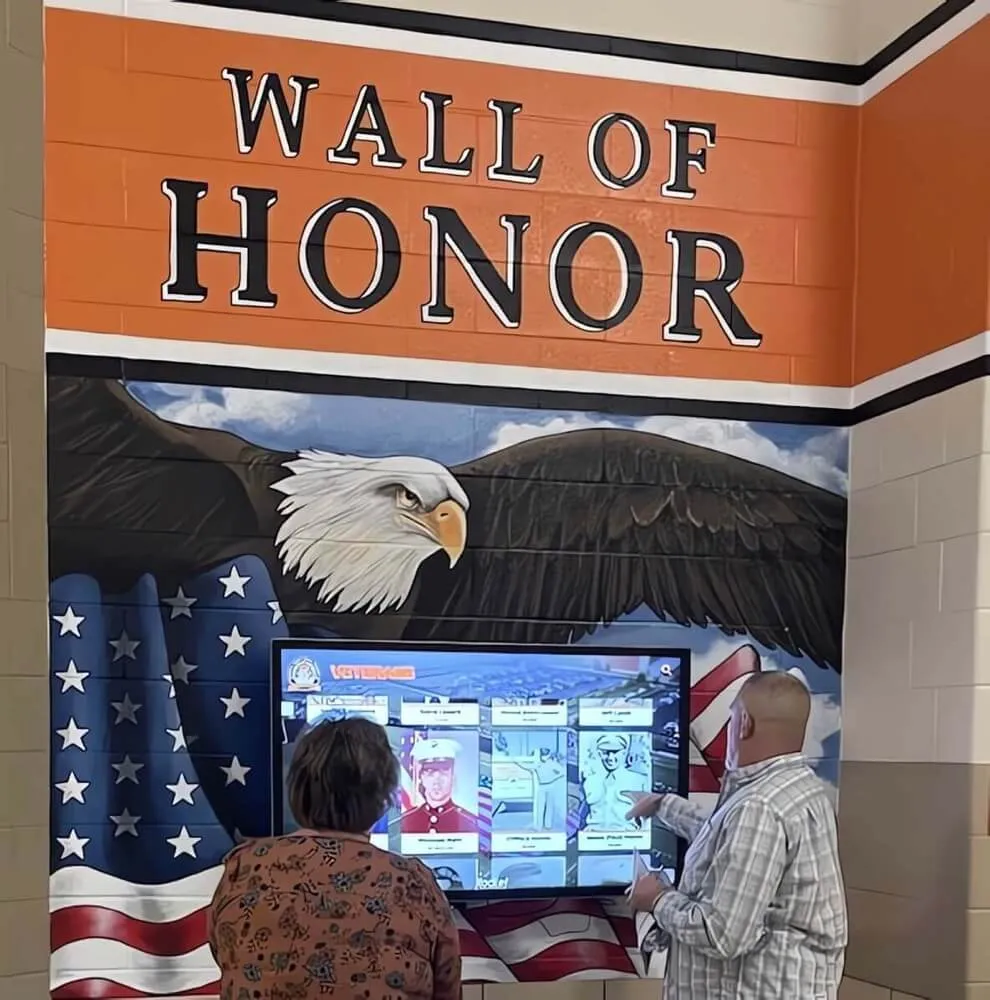
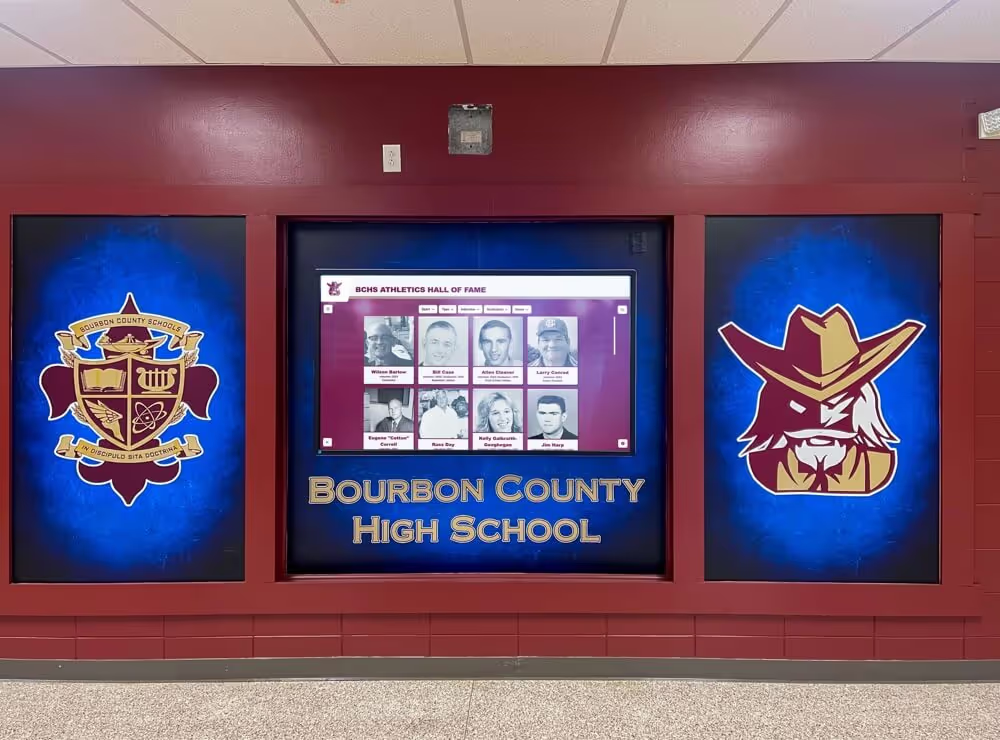
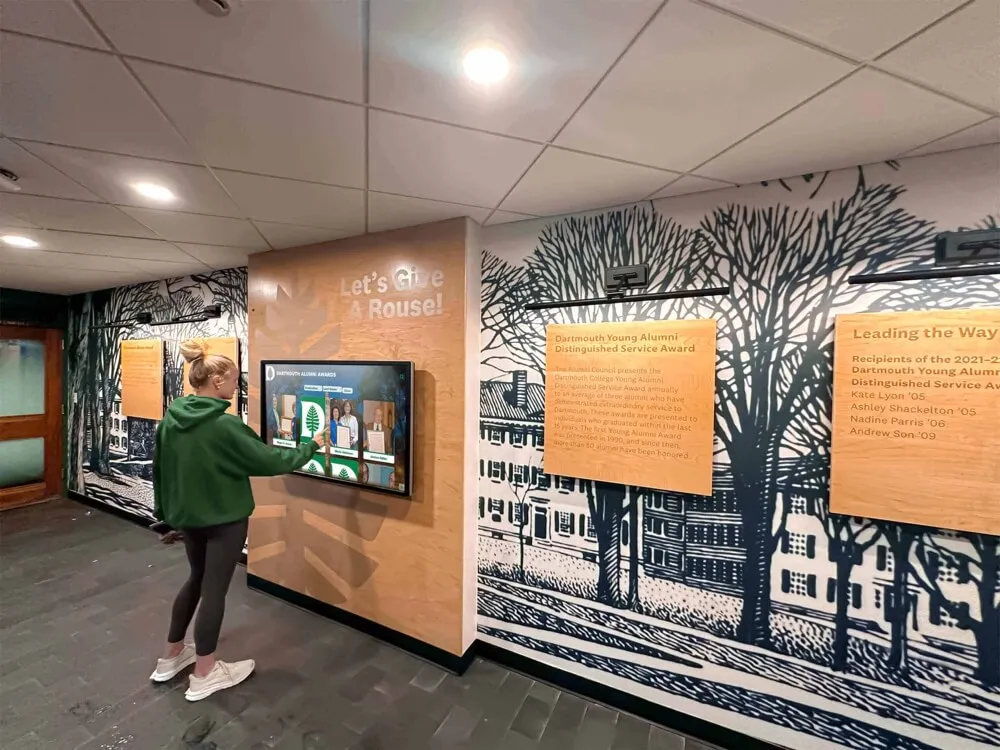
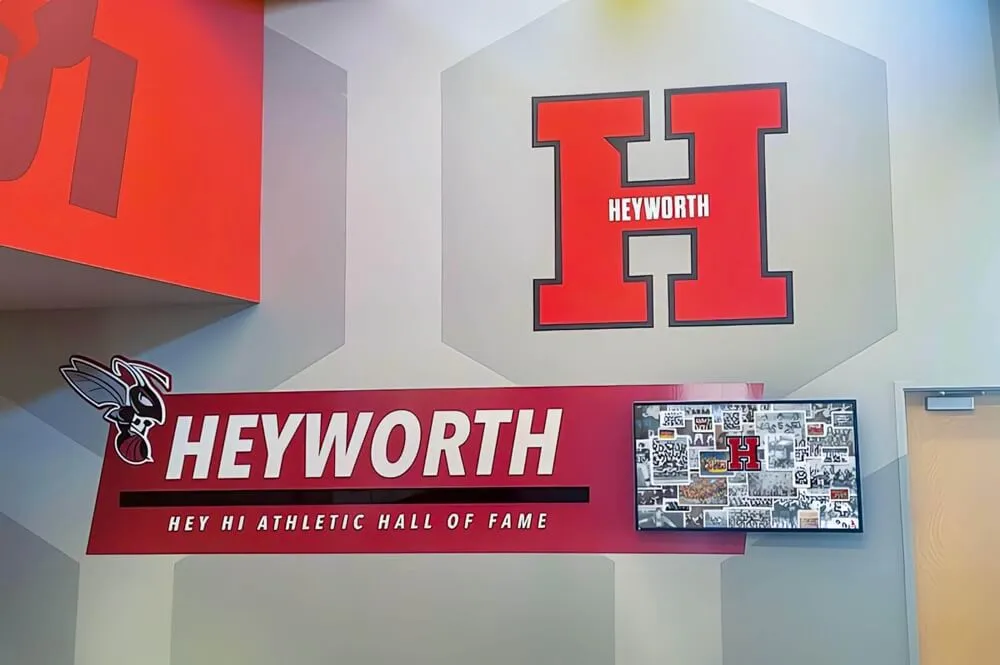
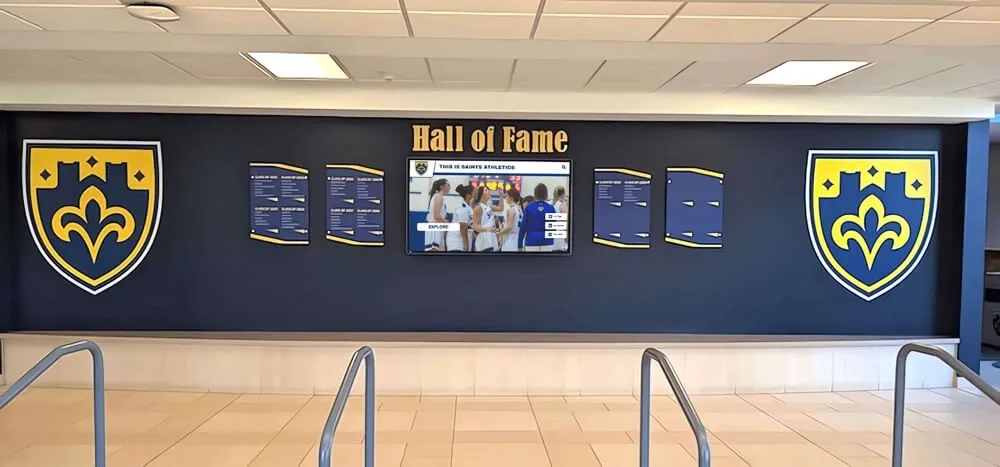
Recognition walls combine traditional institutional symbols with modern interactive technology for comprehensive graduate celebration
Sustainability and Environmental Considerations
Environmentally conscious approaches reduce graduation program impacts:
Eco-Friendly Printing Practices
Sustainable Material Choices
- Recycled paper stocks (30-100% post-consumer content)
- FSC-certified paper from responsible forestry
- Soy-based or vegetable-based inks
- Minimized plastic coating or lamination
Waste Reduction Strategies
- Accurate quantity ordering preventing excess
- Digital alternatives reducing print volume needs
- Condensed program formats minimizing paper usage
- Double-sided printing maximizing paper efficiency
Balancing Sustainability with Keepsake Quality
Programs serve as permanent keepsakes requiring durability:
Sustainable Quality Approaches
- Quality recycled stocks providing archival longevity
- Professional design and binding ensuring programs remain valuable rather than disposable
- Strategic material selection balancing environmental impact with preservation needs
- Digital archive alternatives for those preferring non-physical keepsakes
Post-Ceremony Program Collection
Some institutions implement:
- Program collection boxes for attendees not wanting physical copies
- Recycling stations for ceremony materials
- Digital program downloads as primary option with limited printed copies
- Donation of unclaimed programs to archival purposes
Conclusion: Creating Graduation Programs That Honor Achievement
Graduation programs represent far more than ceremony schedules or graduate name lists. Thoughtfully designed programs validate years of academic dedication, create permanent documentation families preserve for generations, celebrate diverse student achievements, and provide ceremonial keepsakes that graduates reference throughout professional lives. The difference between forgettable programs attendees discard and meaningful artifacts families treasure lies entirely in strategic design, comprehensive content, quality production, and recognition extending beyond single ceremony moments.
Effective graduation program templates balance essential ceremony information with comprehensive graduate recognition, honor institutional traditions while incorporating contemporary innovation, respect attendee readability through thoughtful design, and create keepsakes worthy of the milestone they commemorate.
Organizations implementing comprehensive graduation recognition discover that well-designed programs become treasured family documents rather than routine event materials. Graduates appreciate seeing their achievements professionally documented alongside classmates. Families preserve programs as permanent records of educational milestones. Institutions build recognition traditions that graduating classes anticipate and alumni remember.
The most innovative approach combines beautifully designed printed ceremony programs with permanent digital recognition systems that continue celebrating graduates long after commencements conclude. Modern digital platforms provide unlimited capacity to honor every graduate through interactive displays, detailed achievement profiles, searchable databases accessible to extended families and alumni networks, and professional presentations ensuring graduation recognition endures permanently rather than fading after brief ceremony moments.
Ready to transform graduation recognition beyond printed programs? Discover comprehensive solutions that combine memorable ceremony documentation with lasting digital recognition, creating programs where academic achievement receives the permanent celebration it truly deserves.