



Graduation ceremonies mark pivotal milestones in students’ educational journeys—moments families anticipate for years and graduates remember for lifetimes. Yet the difference between a perfunctory commencement that feels like an obligation and a truly memorable celebration often comes down to thoughtful venue transformation and strategic decoration choices that elevate the entire experience from routine to remarkable.
Too many schools default to minimal decoration efforts—bare stages with simple podiums, gymnasium floors covered with folding chairs, and venues that could host any generic event rather than specifically honoring graduating students’ achievements. When ceremony spaces lack visual impact, fail to reflect institutional pride, or provide no recognizable connection to the honored graduates, families experience disappointment rather than the celebration atmosphere these milestone occasions deserve.
This comprehensive guide explores graduation ceremony decoration strategies that transform ordinary venues into inspiring celebration spaces through strategic stage design, cohesive visual elements, meaningful graduate recognition integration, and modern digital displays that serve as both decoration and lasting acknowledgment. From budget-conscious approaches to comprehensive transformations, these proven techniques help schools create commencement environments worthy of the achievements being celebrated.
Effective graduation decorations balance visual impact with ceremonial dignity, celebrate school identity while honoring individual graduates, and create photography-worthy environments families treasure in ceremony documentation without overwhelming the event’s fundamental purpose—recognizing academic achievement.

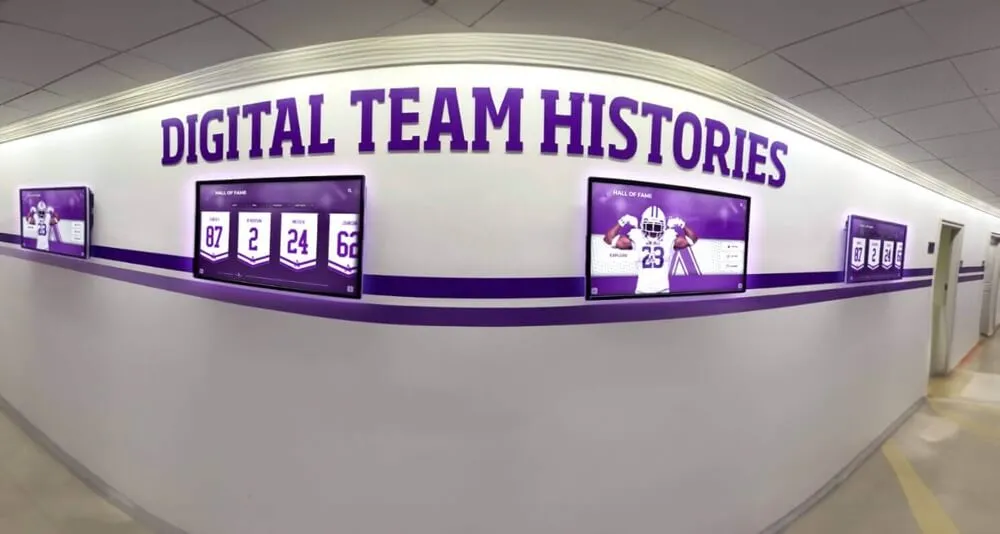
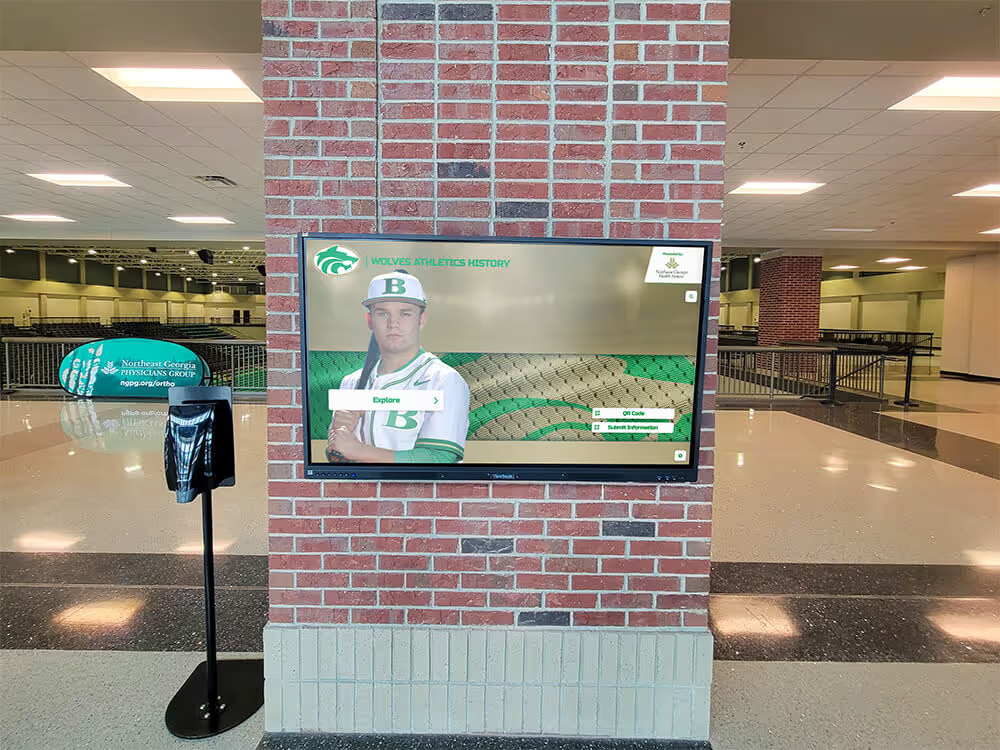
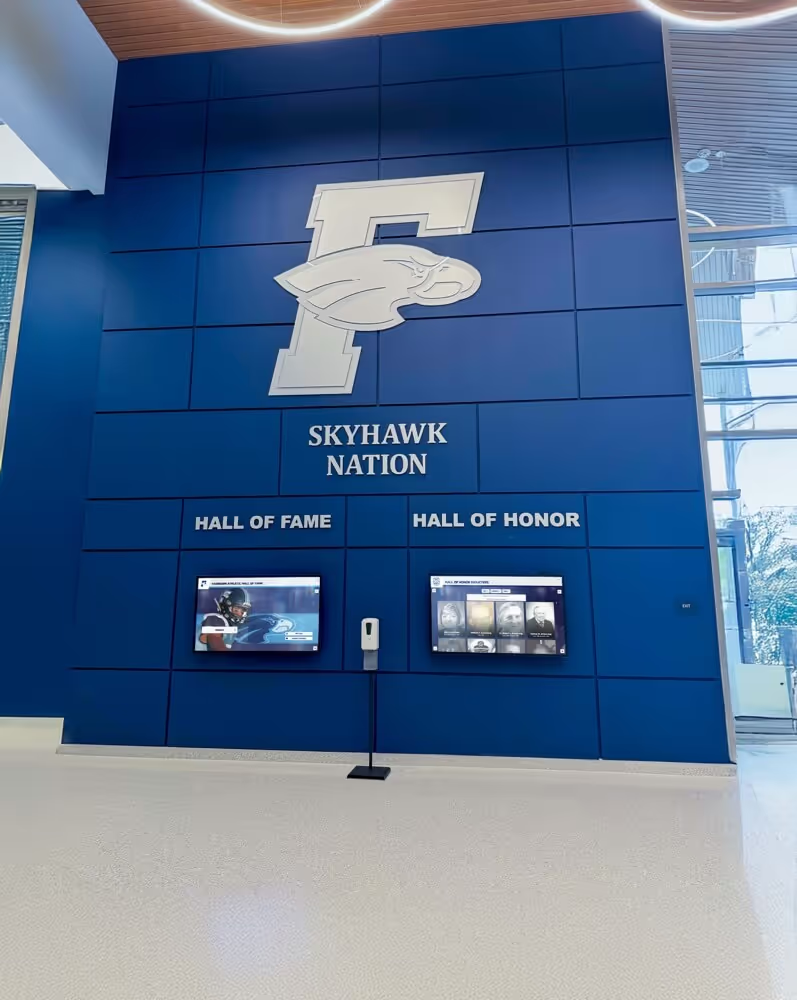
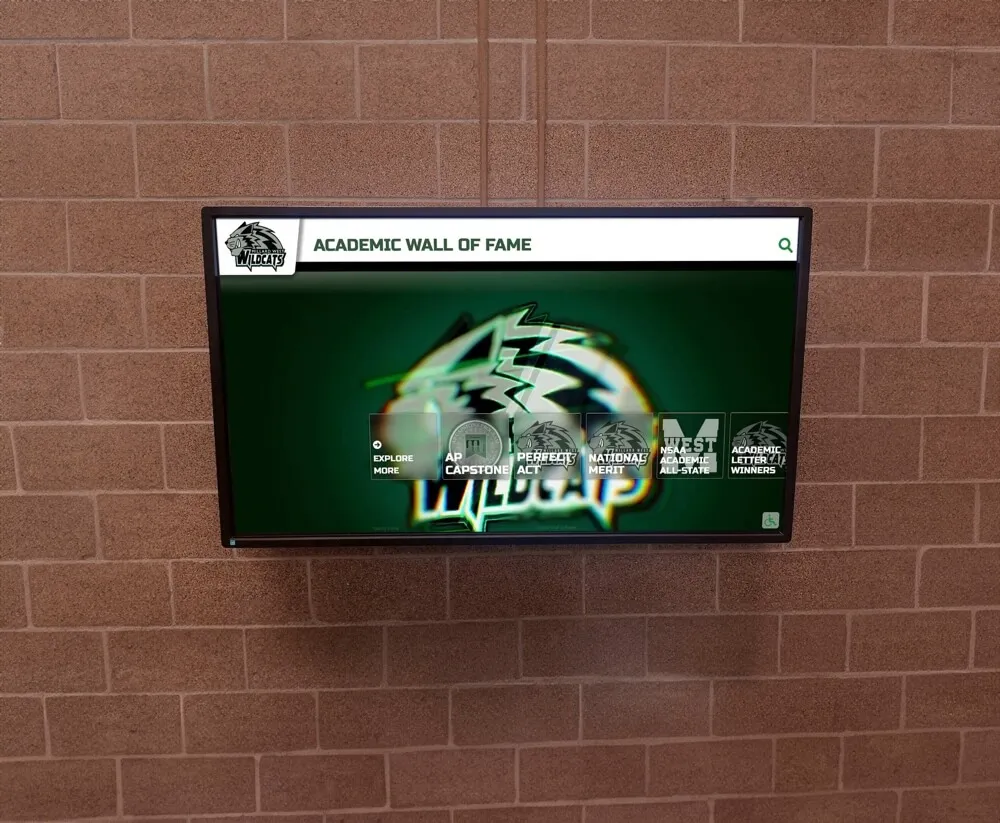
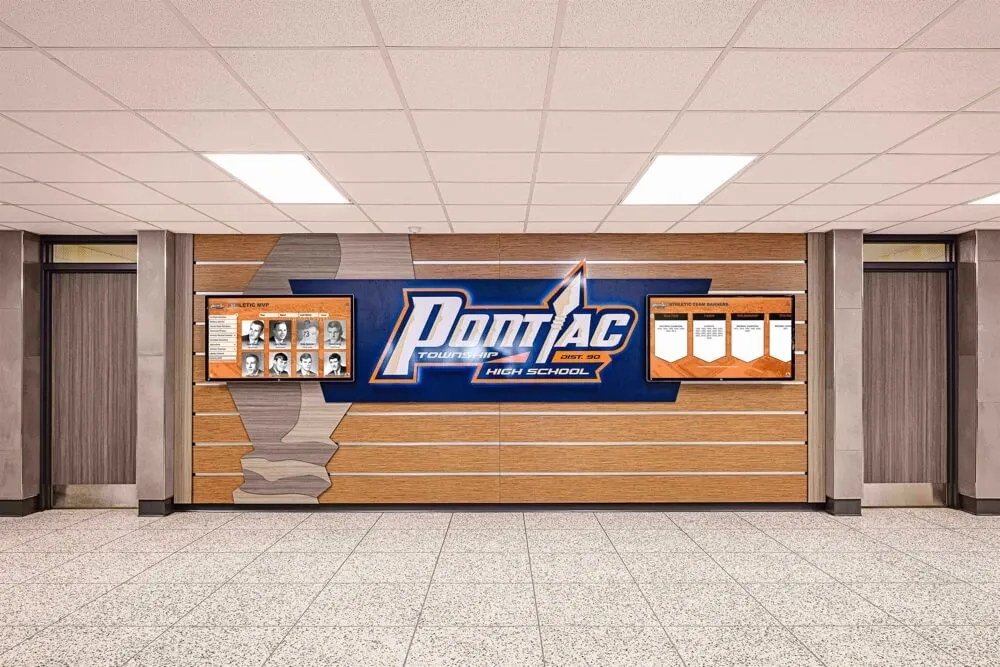
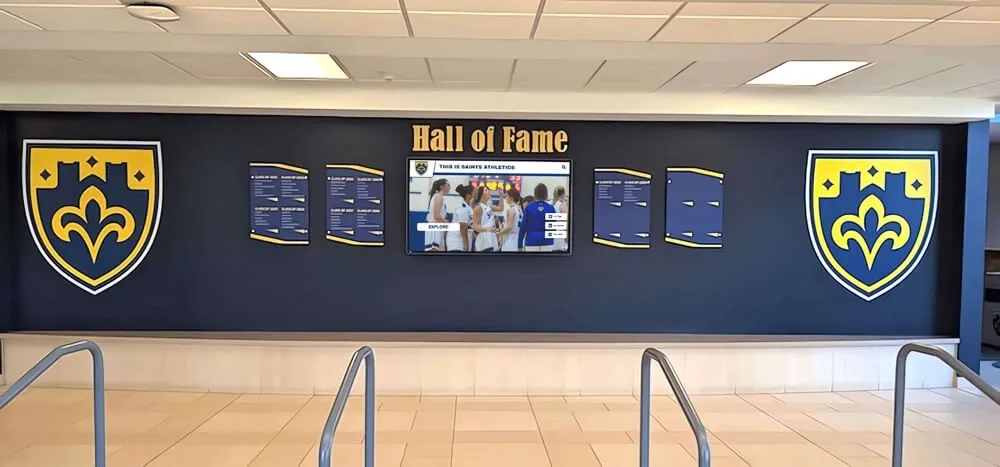
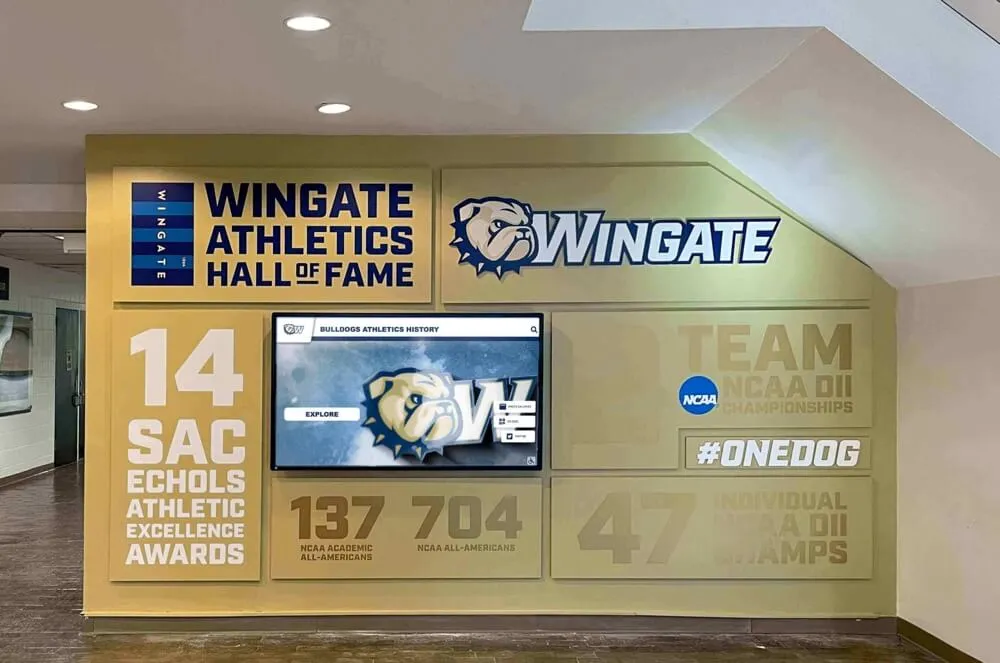
Entrance areas set the tone for graduation ceremonies through cohesive decorations combining institutional branding with celebratory elements
Why Graduation Ceremony Decorations Matter
Before diving into specific decoration strategies, understanding the impact of thoughtful venue transformation helps schools prioritize elements that create meaningful experiences.
Creating Memorable Milestone Moments
Graduation represents one of life’s significant transitions. Students crossing the stage to receive diplomas create defining memories that remain vivid for decades. The ceremonial environment surrounding these moments significantly influences how graduates and families remember the entire experience.
Photographic Documentation and Visual Memory
Families capture hundreds of photos and videos during graduation ceremonies. The backdrop against which these images occur becomes permanently preserved in family archives, yearbooks, and social media posts. Well-decorated venues ensure these permanent visual records reflect celebration and achievement rather than institutional indifference.
Professional stage design creates dignified backgrounds for diploma presentation photos. Cohesive venue decorations provide attractive settings for pre-ceremony family portraits. Thoughtful visual elements ensure every angle offers photography-worthy composition rather than distracting backgrounds that diminish documentation quality.
Emotional Impact and Celebration Atmosphere
Walking into beautifully decorated ceremony venues triggers immediate emotional response. Graduates feel honored when schools invest effort in creating special environments specifically for their commencement. Families sense that institutions genuinely value this milestone when decorations demonstrate care and planning rather than minimal effort.
The celebration atmosphere created through strategic decoration elevates everyone’s emotional experience. Festive elements inspire joy and pride. Carefully designed spaces convey the significance of the occasion while honoring the graduates’ achievements appropriately.
Reinforcing Institutional Pride and Identity
Graduation ceremonies represent institutions to broader communities—often the most public events schools host annually.
Community Representation
Extended families attending graduations include community members, prospective students, donors, and local leaders experiencing the school environment for the first time or evaluating institutional quality. The venue presentation directly influences perceptions about educational standards, resource investment, and organizational professionalism.
Schools that transform ceremony spaces with cohesive decorations demonstrate organizational competence and pride. Venues showcasing institutional colors, traditions, and achievements communicate that the school values excellence in all aspects—not just academics but also in how significant events are honored.
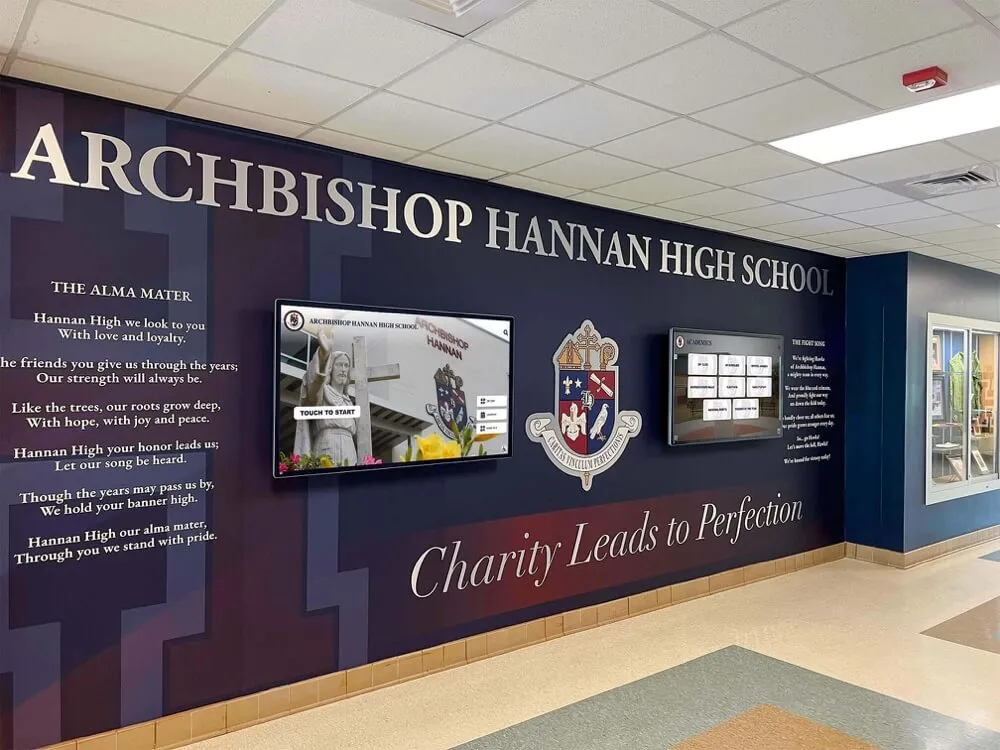
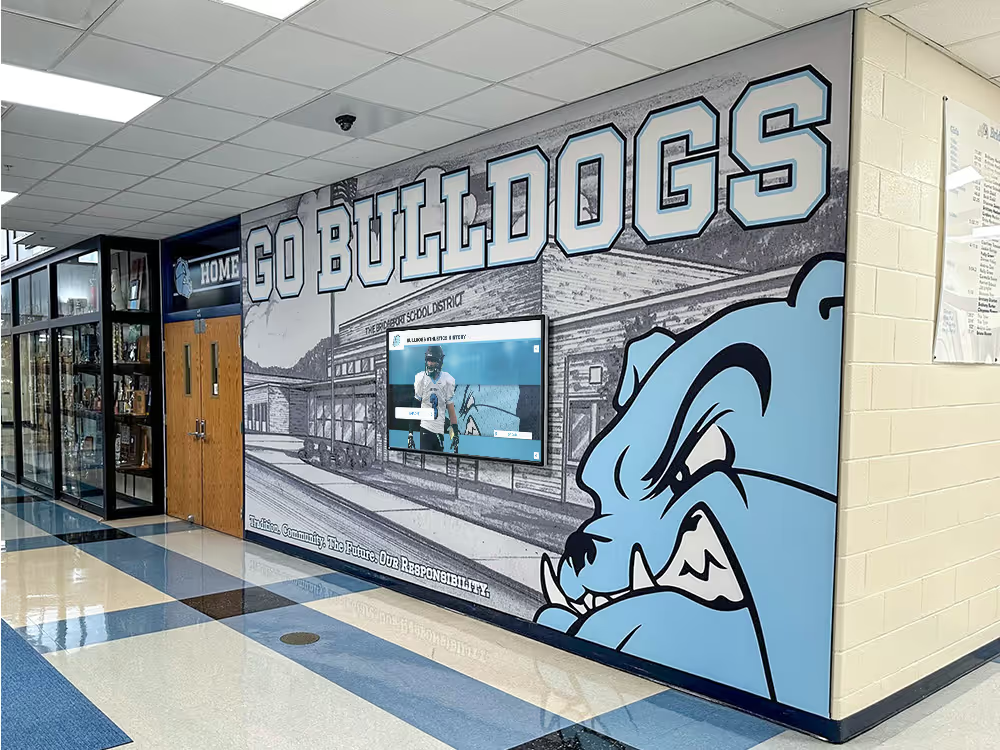
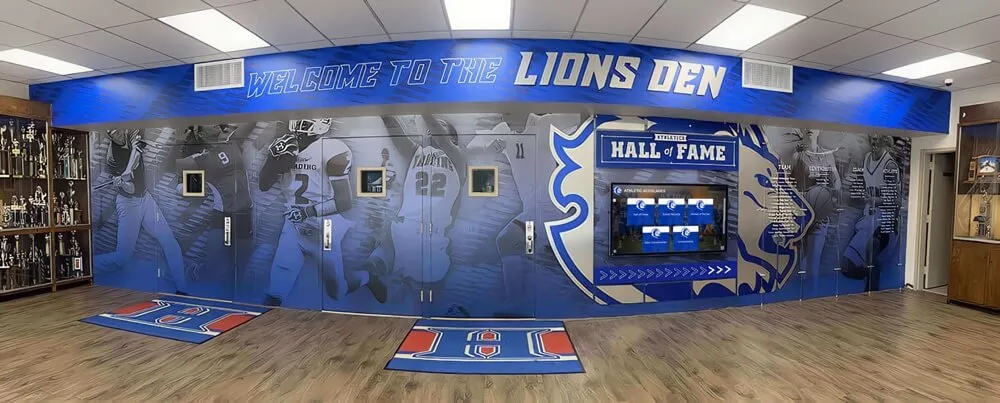
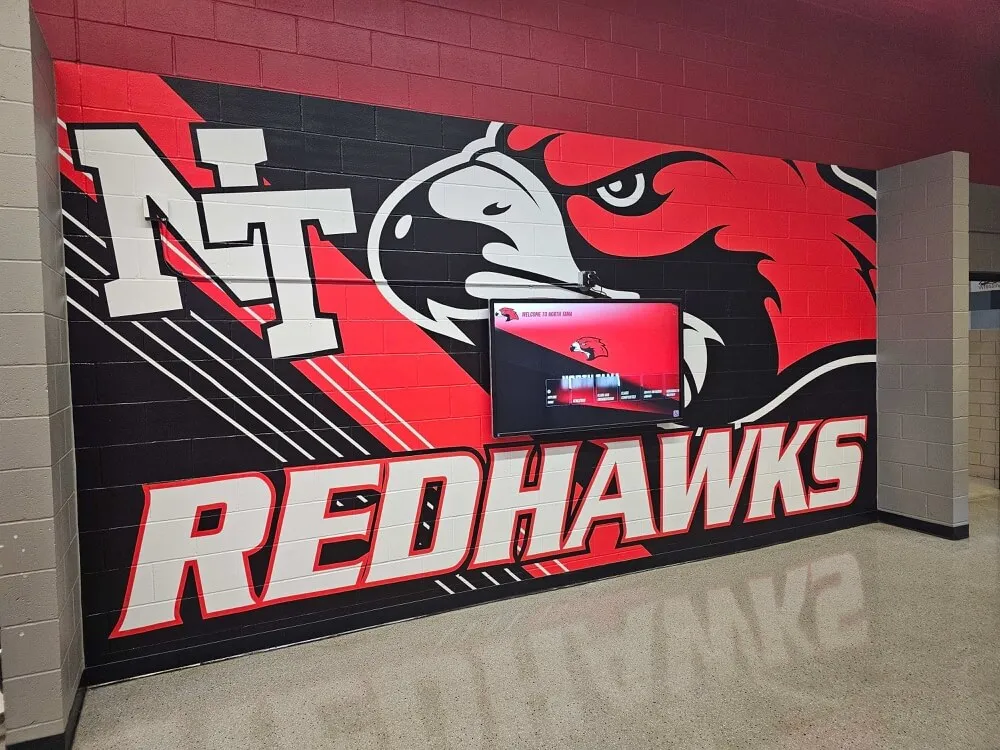
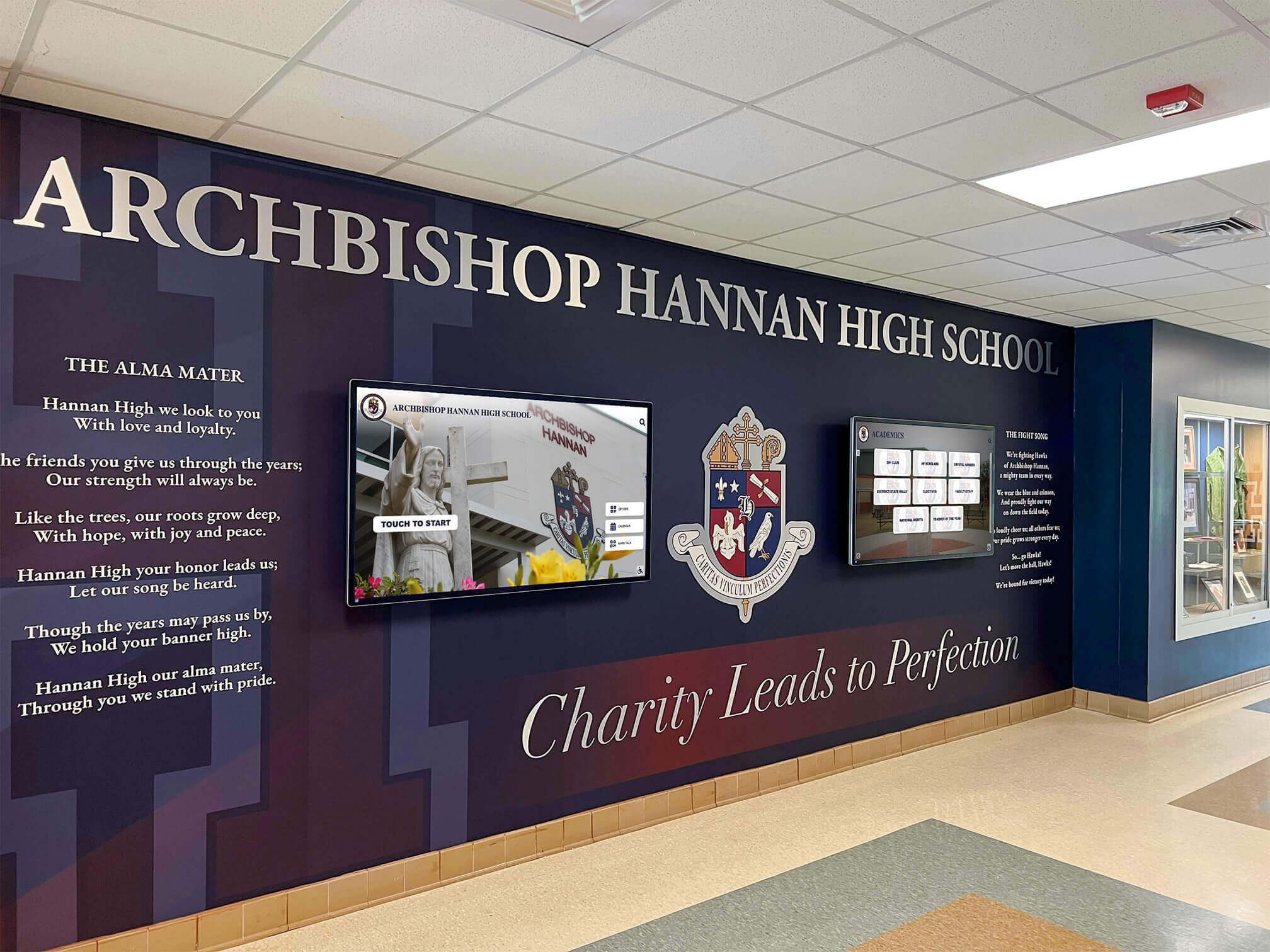
Entrance decorations welcome ceremony guests while showcasing school identity and graduate recognition
Alumni Connection and Tradition
Returning alumni attending graduations as family members or supporters connect emotionally with familiar school colors, symbols, and traditions reflected in ceremony decorations. Visual elements that honor institutional history while celebrating current graduates create continuity linking past, present, and future.
Schools incorporating recognition displays highlighting alumni achievements alongside current graduate celebration demonstrate ongoing commitment to honoring accomplishment across generations.
Common Decoration Pitfalls to Avoid
Understanding what makes graduation decorations fall flat helps planners avoid predictable mistakes:
Generic Event Decoration Without School Identity
Ceremonies decorated with standard rental decorations lacking any school-specific elements feel impersonal and forgettable. Generic color schemes, commercial balloon arrangements, or cookie-cutter stage setups that could represent any event anywhere fail to honor the specific graduates and institution being celebrated.
Excessive or Distracting Decoration
While decoration enhances ceremonies, overwhelming visual clutter detracts from the event’s focus. Overly elaborate stage designs that distract from diploma presentations, excessive decorative elements blocking sightlines, or visually chaotic arrangements that confuse rather than enhance undermine rather than support the ceremony’s purpose.
Neglecting Photography and Documentation Needs
Decorations planned without considering how they photograph create problems. Busy patterns behind podiums make photos difficult to focus. Insufficient lighting for decorated areas prevents quality documentation. Stage backgrounds lacking visual interest result in bland diploma presentation photos families treasure for lifetimes.
Strategic Stage Design for Graduation Ceremonies
The stage represents the ceremony’s focal point—where graduates receive diplomas, speakers deliver addresses, and photography captures milestone moments.
Essential Stage Elements
Professional Backdrop Design
The wall or area behind the podium and diploma presentation zone demands the most attention:
School Colors and Branding
- Large-scale institutional seal or logo prominently displayed
- School colors integrated through fabric draping, panels, or painted backdrops
- Year and class designation (Class of 2026) in clear, readable lettering
- Professional materials (vinyl banners, fabric draping, painted panels) rather than paper decorations
Height and Scale Considerations
- Backdrops scaled to venue size ensuring visibility from audience distances
- Sufficient height preventing awkward empty space above stage elements
- Professional installation ensuring straight, taut appearance without wrinkles or sagging
- Lighting considerations ensuring backdrops photograph well without glare or shadows
Podium and Presentation Area
Podium Decoration
- School seal placard or institutional branding on front-facing podium surface
- Floral arrangements or decorative elements adjacent to (not obscuring) podium
- Proper height ensuring speakers visible to audiences
- Microphone and sound system aesthetics coordinated with decorations
Diploma Presentation Zone
- Clear, unobstructed path for graduate procession across stage
- Designated diploma handoff location with optimal photography angles
- Backdrop positioning ensuring attractive photos from audience perspective
- Sufficient lighting illuminating graduates’ faces during diploma presentation

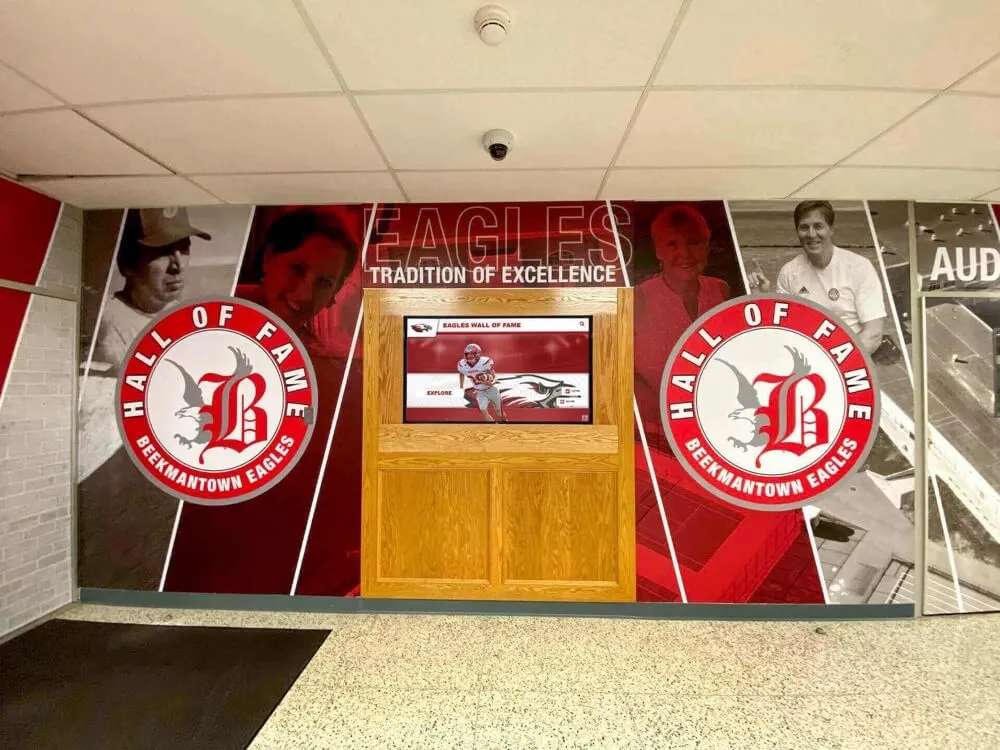
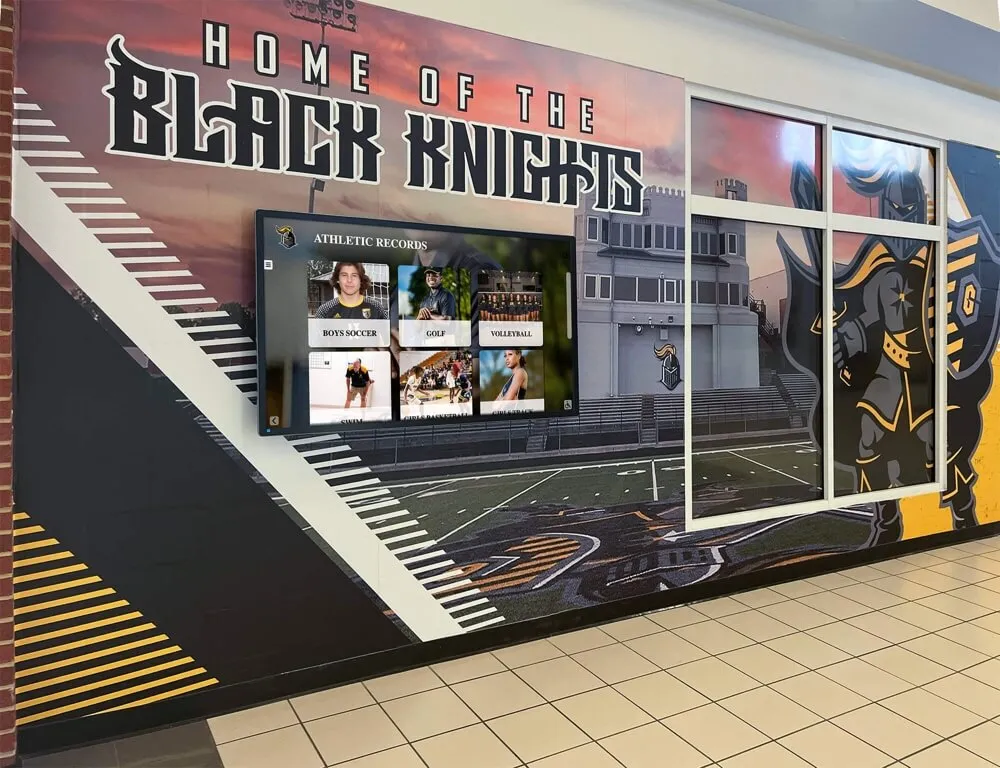
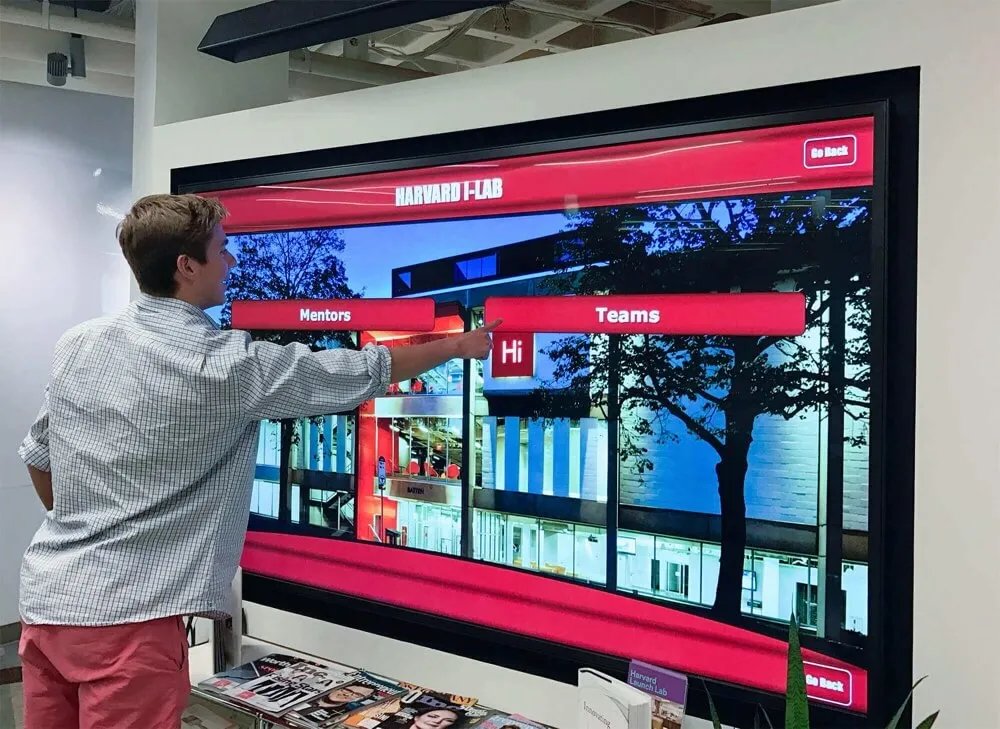
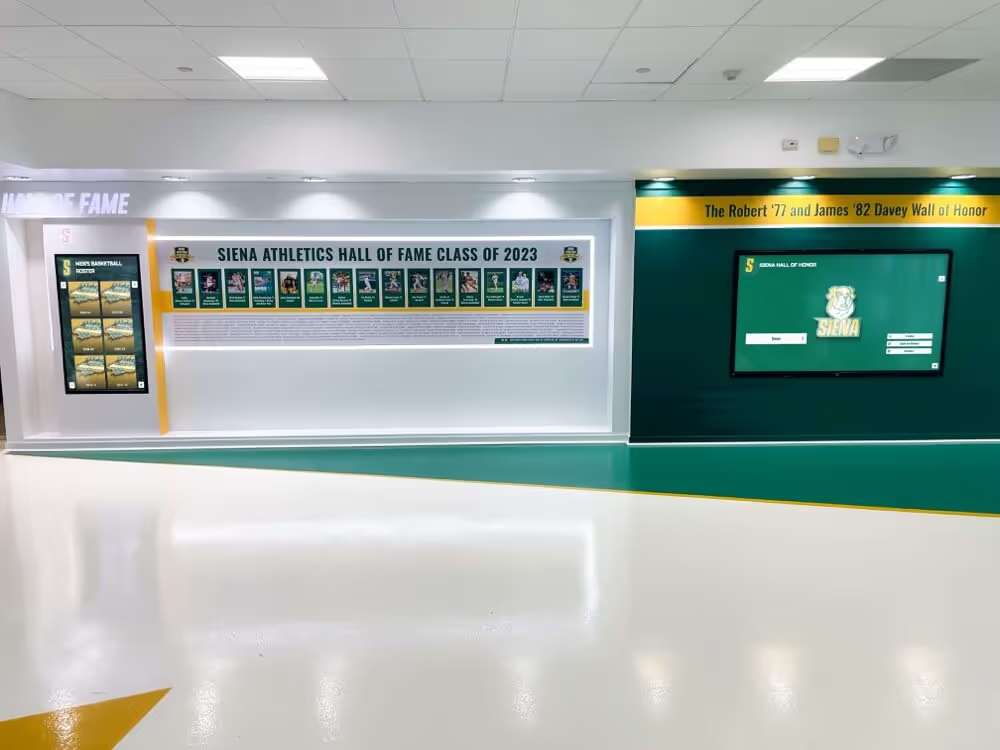
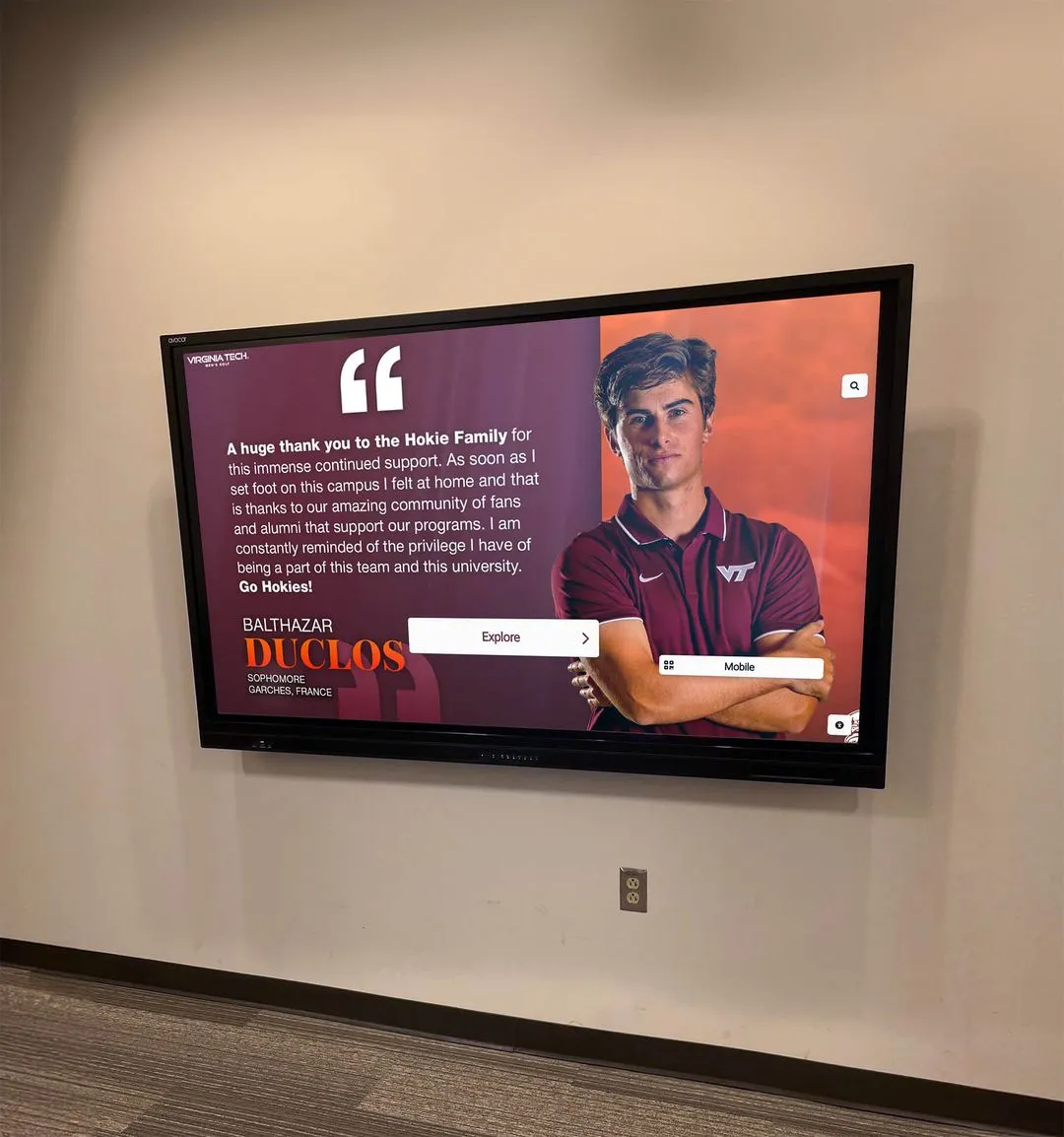
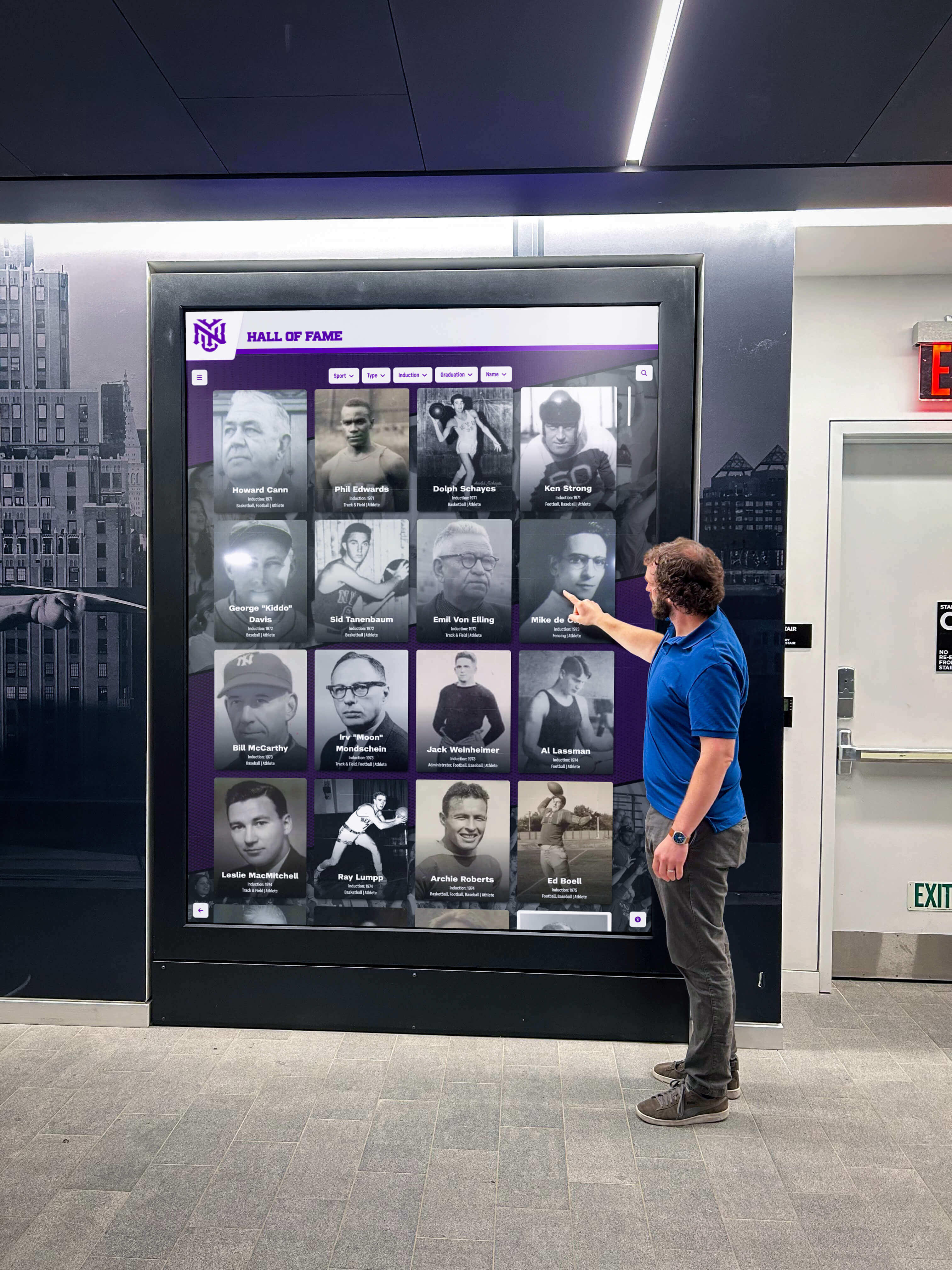
Digital recognition displays serve dual purposes as ceremony decorations and permanent graduate acknowledgment systems
Floral and Greenery Integration
Strategic Floral Placement
Stage Edge and Stairs
- Floral arrangements flanking stage entrances and stairs
- Coordinated containers matching school colors or ceremony theme
- Appropriate scale ensuring arrangements enhance rather than obstruct
- Fresh flowers for formal ceremonies; quality artificial arrangements for budget consciousness
Platform Corners and Focal Points
- Larger floral displays at stage corners creating visual framing
- Coordinated color palettes reflecting school colors or seasonal themes
- Professional design rather than amateur arrangements
- Secure placement preventing arrangements tipping during ceremony
Greenery and Natural Elements
Budget-conscious alternatives to elaborate floral arrangements:
- Potted plants and greenery creating professional appearance at lower cost
- Seasonal branches (spring blossoms, fall foliage) providing natural decoration
- Topiaries and structured greenery elements offering formal appearance
- Ferns and leafy plants filling large spaces cost-effectively
Schools planning comprehensive recognition programs often coordinate graduation decorations with permanent displays visible during ceremonies.
Lighting Design for Stage Impact
Illumination Strategies
Professional lighting transforms stage presentation:
Spotlight and Accent Lighting
- Podium illumination ensuring speaker visibility
- Graduate illumination during diploma presentation for quality photography
- Backdrop lighting highlighting institutional symbols and decorations
- Colored gels or LED systems creating school color atmosphere
Photography Considerations
- Adequate front lighting eliminating harsh shadows on graduates’ faces
- Balanced illumination preventing overexposed or underexposed ceremony photos
- Consistent lighting throughout diploma presentation ensuring photo quality consistency
- Avoiding backlighting that silhouettes graduates
Venue Transformation Beyond the Stage
While stages demand primary attention, comprehensive venue decoration creates cohesive celebration environments.
Entrance and Lobby Decoration
First impressions begin before families reach ceremony seating:
Welcome Area Elements
Signage and Directional Graphics
- Professional welcome signs announcing ceremony and class year
- Directional signage guiding attendees to appropriate seating sections
- Graduate recognition displays celebrating individual achievements
- Institutional branding integrated throughout entrance areas
Visual Impact Elements
- Large-scale banners or fabric installations in school colors
- Photo opportunity backdrops for pre-ceremony family portraits
- Digital displays showcasing graduate slideshows or achievement recognition
- Floral arrangements or decorative installations creating celebratory atmosphere
Digital Recognition Integration
Modern schools incorporate interactive displays celebrating graduates in entrance areas:
- Touchscreen kiosks displaying graduate profiles and achievements
- Searchable databases where families explore complete class information
- Photo galleries showing students throughout educational journeys
- Digital recognition serving as both ceremony decoration and permanent acknowledgment
These systems provide engaging pre-ceremony activity while families gather, creating meaningful decoration that extends beyond the single event.
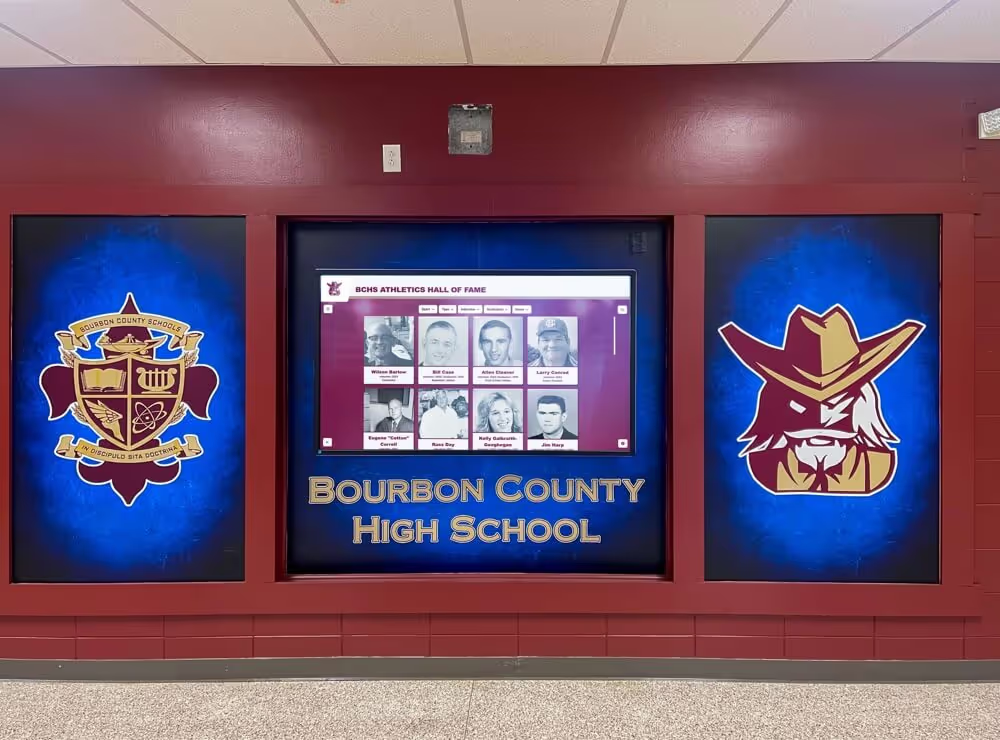
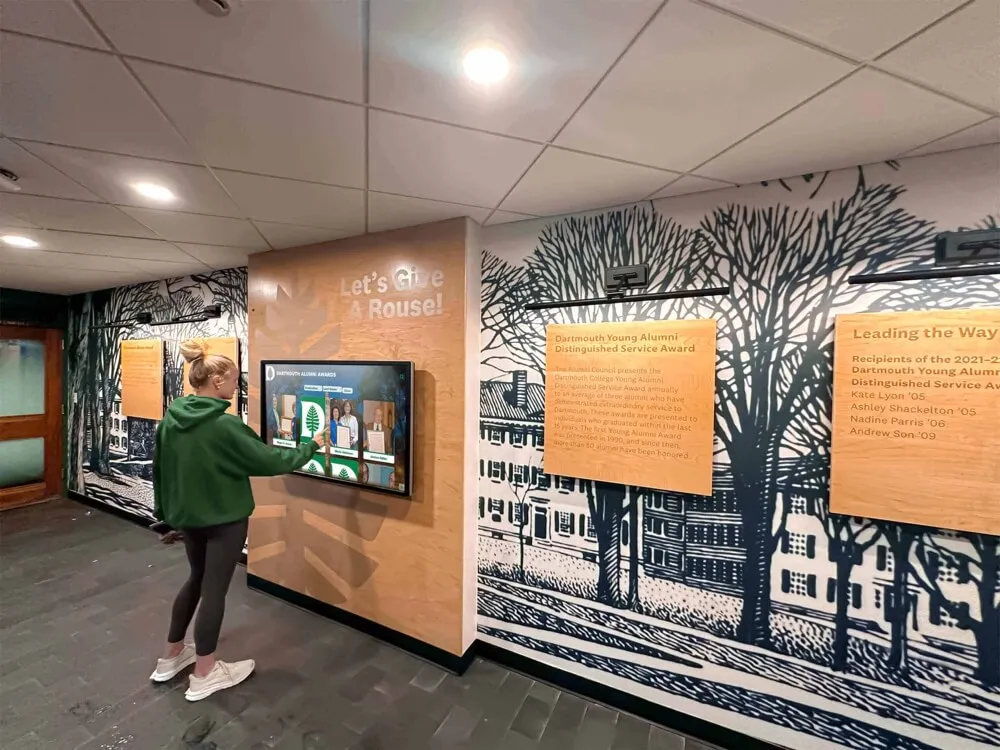
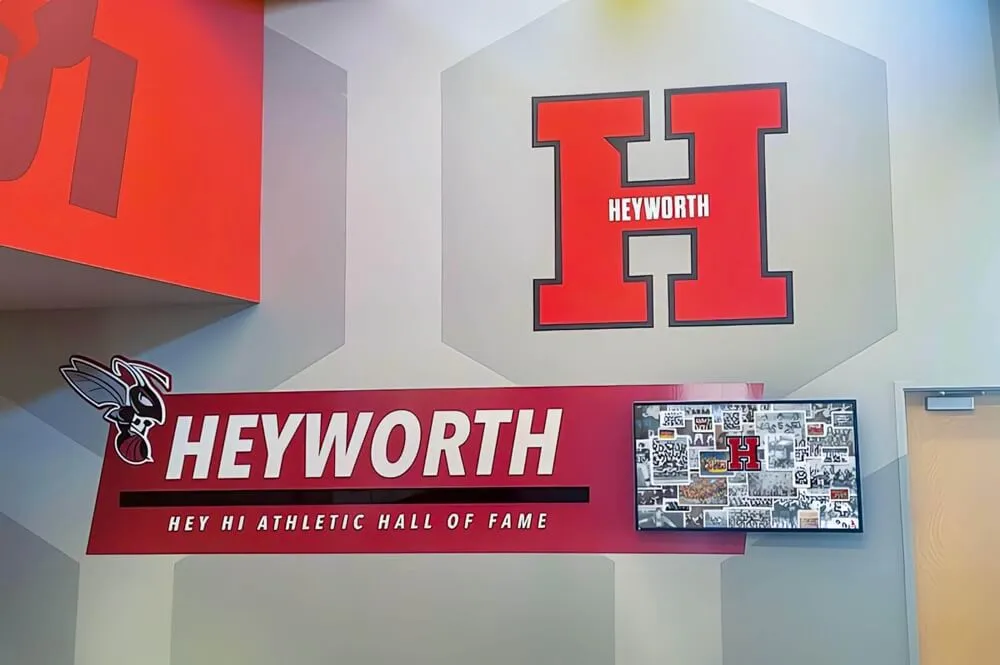
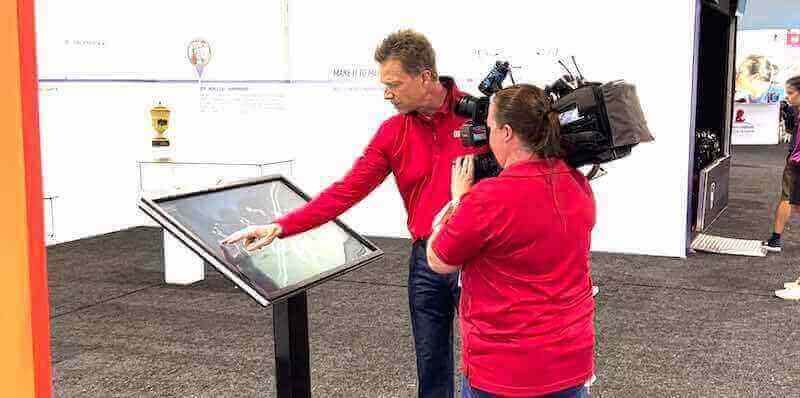
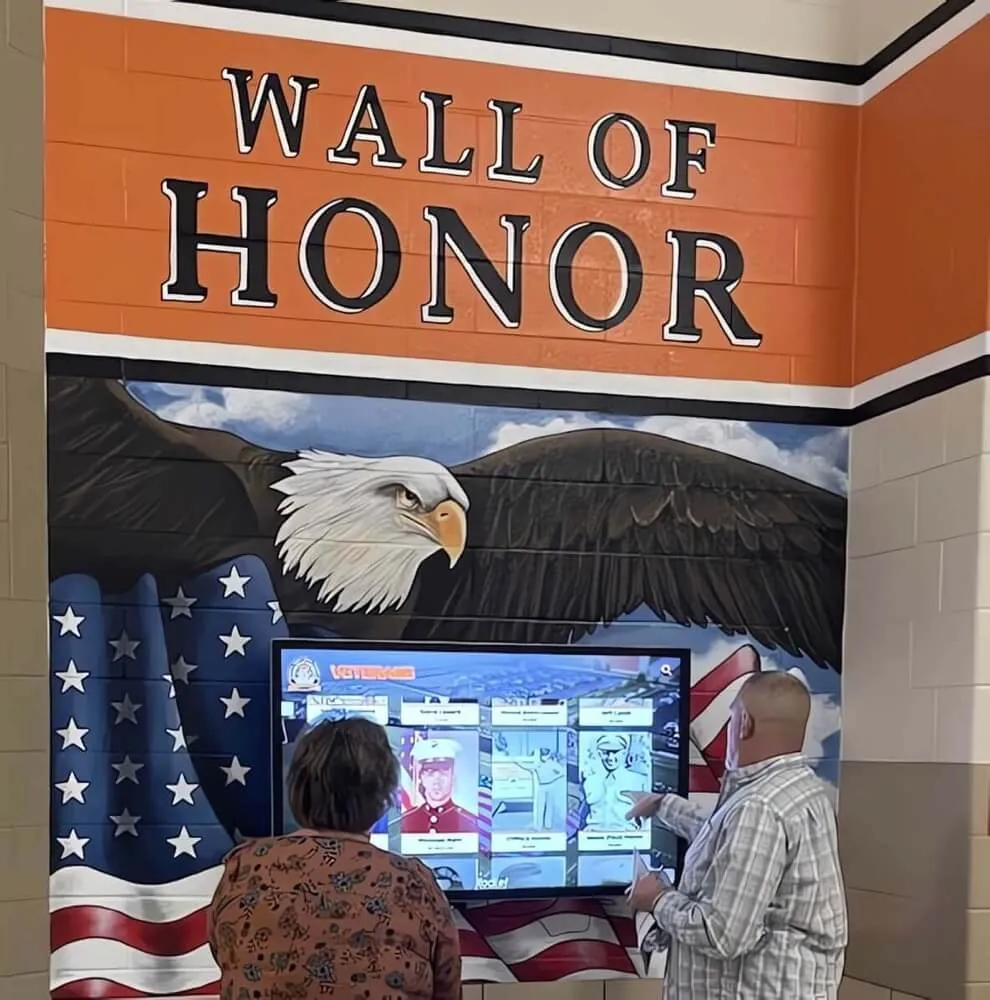
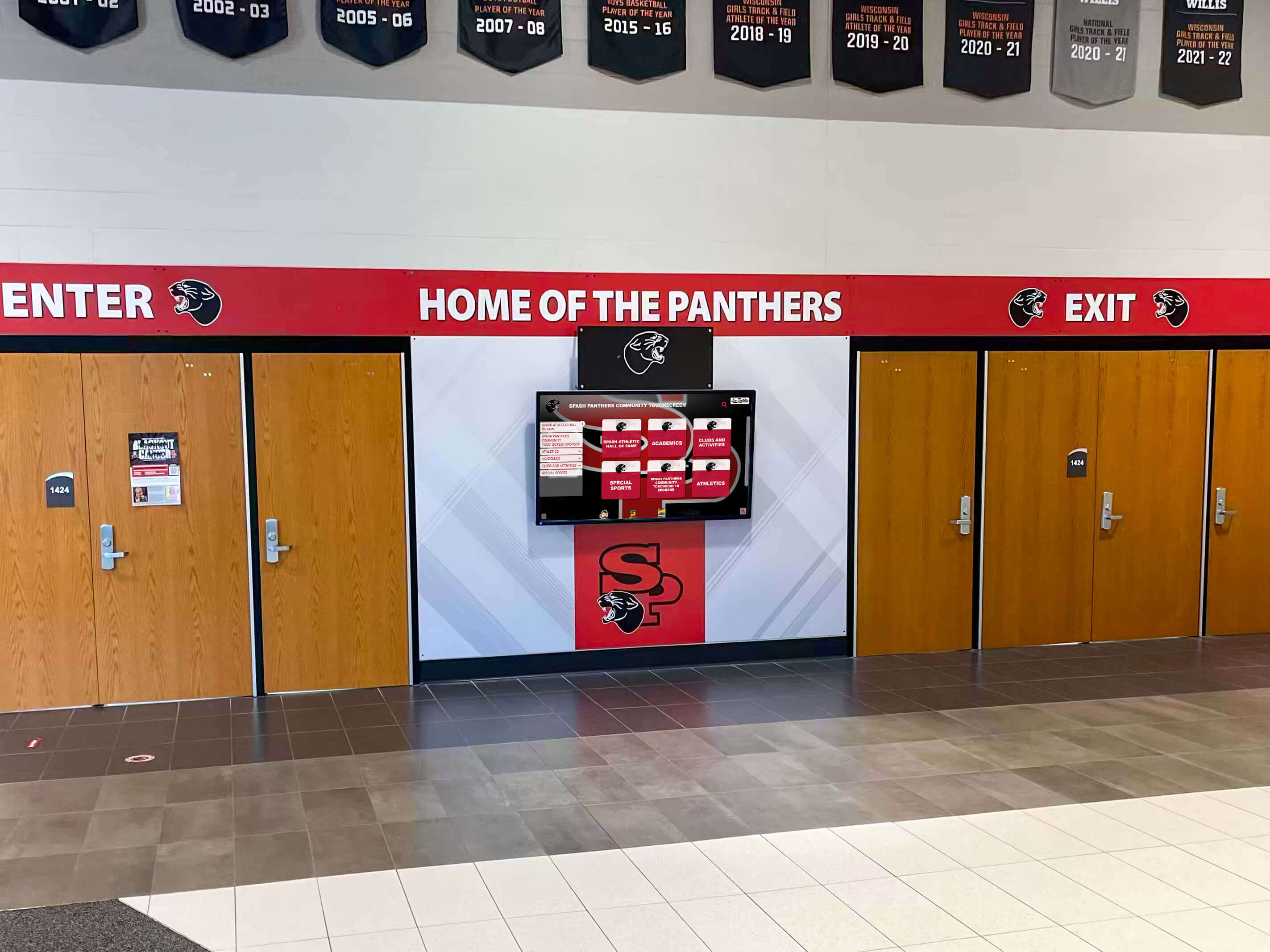
Interactive displays in entrance areas engage ceremony attendees while providing comprehensive graduate recognition
Seating Area Enhancement
Transform functional seating arrangements into decorated celebration spaces:
Aisle and Row Decoration
Graduate Procession Route
- Aisle markers or decorations defining processional path
- Stanchions with fabric draping or floral arrangements
- Class banners or year designations along processional route
- Carpet runners (often in school colors) creating formal atmosphere
Seating Section Identification
- Clearly marked graduate seating areas with appropriate decorations
- Family seating section identifications
- Reserved seating designations for administrators, faculty, special guests
- Coordinated signage maintaining consistent design aesthetic
Ceiling and Overhead Decoration
Utilizing vertical space creates visual impact:
- Hanging banners or fabric installations in school colors
- Balloon arrangements suspended above seating areas
- String lighting creating ambient atmosphere (particularly evening ceremonies)
- Projection mapping or digital effects on ceiling surfaces (advanced approach)
Gymnasium and Multi-Purpose Venue Challenges
Many schools hold graduations in gymnasiums or cafeterias requiring significant transformation:
Concealing Institutional Elements
Backdrop and Draping Strategies
- Floor-to-ceiling fabric draping concealing gymnasium equipment, scoreboards
- Coordinated backdrop systems creating cohesive environments
- Strategic decoration placement directing attention away from non-ceremony elements
- Temporary wall coverings or panels transforming multi-use spaces
Floor Covering and Definition
- Stage platforms or risers creating defined ceremony spaces
- Carpet or floor covering distinguishing ceremony areas from general gymnasium floors
- Professional seating arrangements replacing standard folding chair layouts
- Coordinated elements creating venue unity despite functional space limitations
Organizations planning memorial and recognition events often employ similar transformation strategies creating appropriate atmospheres in multi-use venues.
Incorporating School Identity and Traditions
Meaningful graduation decorations reflect unique institutional character rather than generic event design.
School Colors and Visual Branding
Color Scheme Development
Primary Color Integration
- Dominant use of primary institutional colors throughout decorations
- Coordinated fabric, floral, and graphic elements maintaining color consistency
- Accent color applications providing visual interest without overwhelming school identity
- Professional color matching ensuring accurate institutional representation
Materials and Applications
- Fabric draping and banners in school colors
- Floral arrangements coordinated to color palette
- Balloon installations (when appropriate to ceremony formality level)
- Digital display templates incorporating institutional color schemes
Mascot and Symbolic Integration
Appropriate Mascot Representation
Incorporating school mascots and symbols adds personality while maintaining ceremonial dignity:
- Large-scale mascot imagery or sculptures as entrance features
- Subtle mascot integration in stage design without overwhelming formal elements
- Symbolic representations in floral design or decorative elements
- Digital displays featuring mascot graphics coordinated with school branding
Institutional Traditions
Schools with unique graduation traditions can highlight these through decoration:
- Visual representations of historical customs or rituals
- Displays honoring school founding history or significant milestones
- Alumni recognition showcasing institutional legacy
- Traditional symbols or elements referenced in decorative design
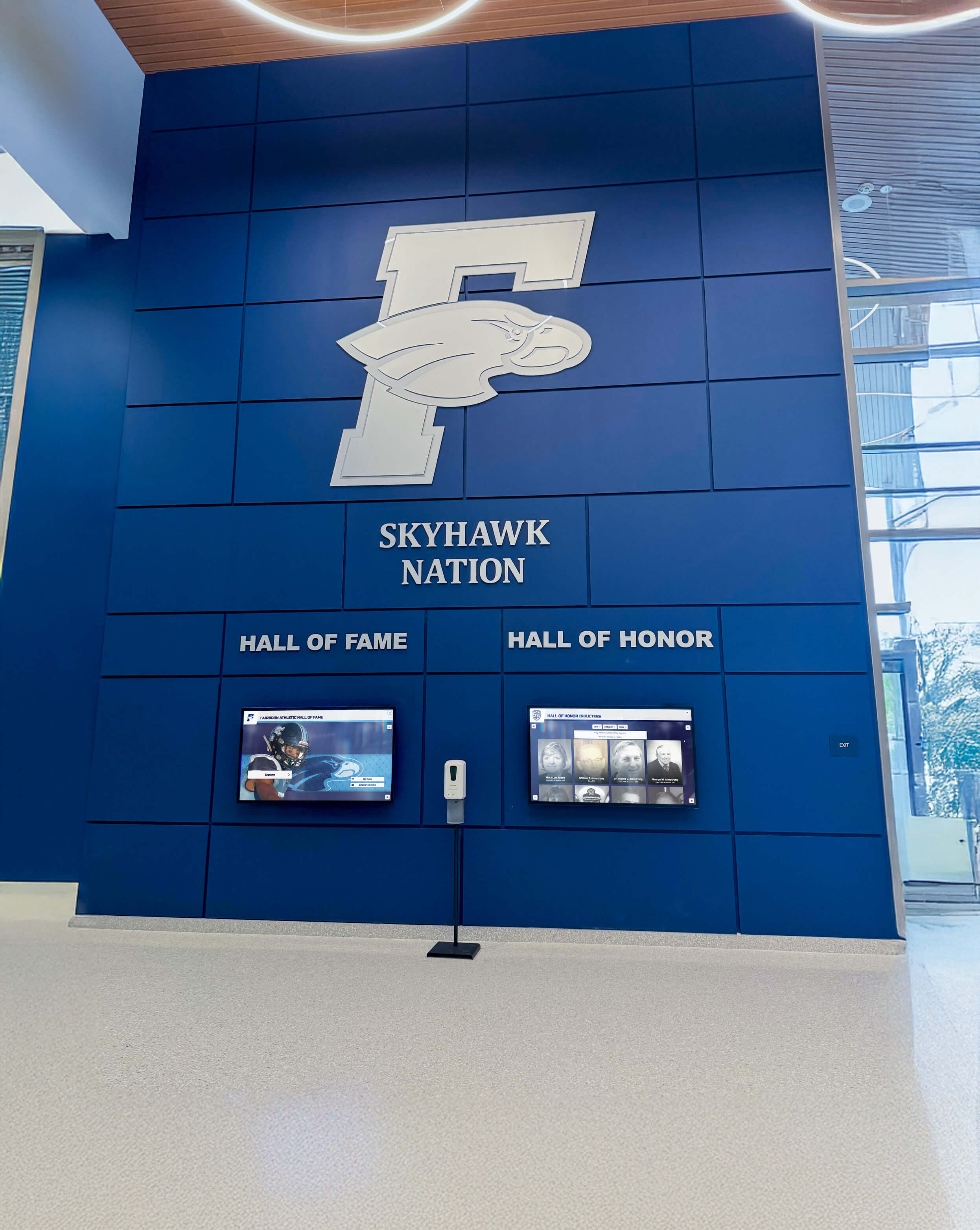
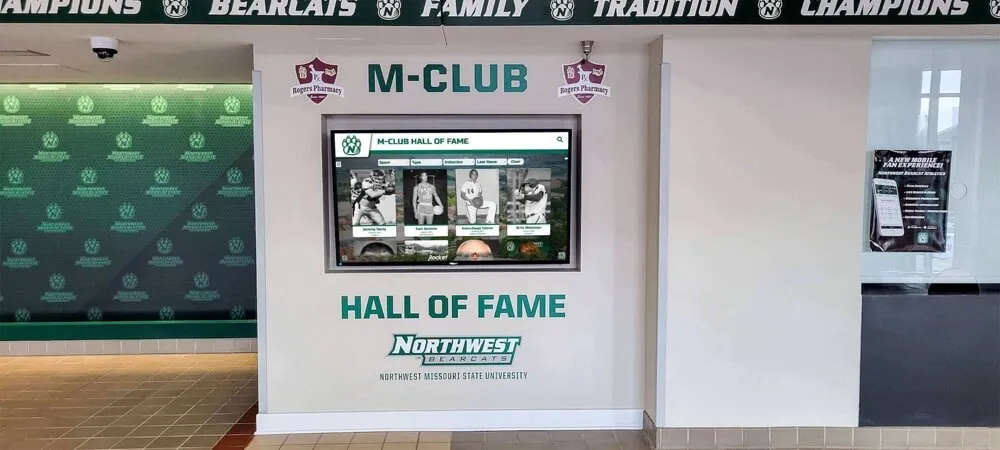
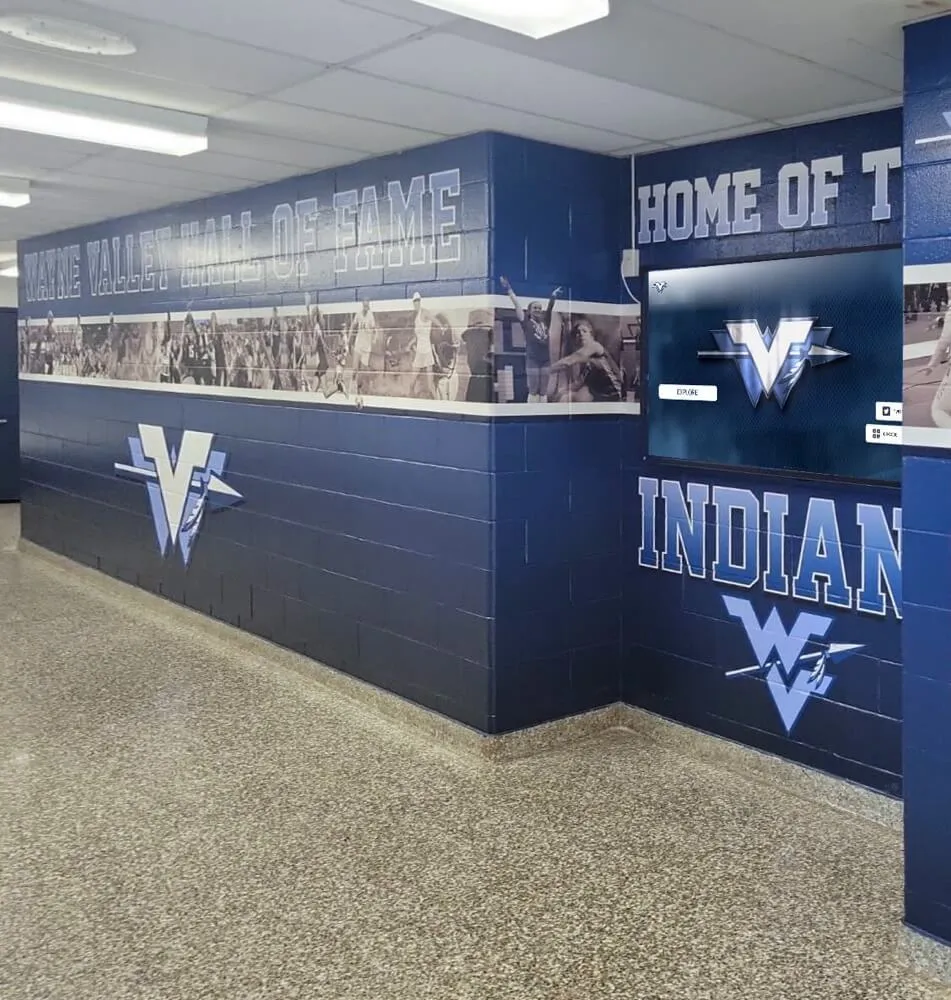
Lobby installations create cohesive environments celebrating school identity while honoring graduate achievements
Class-Specific Recognition Elements
Graduating Class Personalization
Decorations should specifically honor the current graduating class:
- “Class of 2026” prominently featured in multiple locations
- Class motto or theme integration (if applicable)
- Class colors or selected decorative elements
- Senior class officer recognition or student government acknowledgment
Graduate Photo and Achievement Displays
Beyond generic decoration, personalized elements create meaningful recognition:
- Graduate photo composites or collages
- Achievement boards highlighting student accomplishments
- Scholarship recipient recognition displays
- College destination or career plans showcased
- Senior superlatives or special awards displayed
Schools implementing recognition board displays often incorporate these as both ceremony decoration and permanent acknowledgment systems.
Budget-Conscious Decoration Strategies
Professional graduation decoration needn’t require excessive budgets when schools employ strategic approaches:
DIY and Volunteer-Made Elements
Student and Family Involvement
Pre-Ceremony Decoration Projects
- Art classes creating painted backdrops or decorative panels
- Student government organizing decoration committees
- Family volunteer groups constructing floral arrangements or fabric installations
- Alumni donations of time and materials for decoration projects
Borrowed and Reusable Elements
- Coordinating with other schools to share backdrop systems or major decoration elements
- Investing in reusable components used year after year
- Creating modular designs adaptable to various venue configurations
- Building decoration library rather than single-use purchases
Cost-Effective High-Impact Decorations
Strategic Investment Areas
Prioritize budget on elements providing maximum visual impact:
High-Priority Investments
- Professional stage backdrop ensuring quality diploma presentation photos
- Adequate lighting creating appropriate atmosphere and photo quality
- Entrance area decorations establishing immediate positive impressions
- Graduate recognition elements honoring individual achievements
Budget-Saving Approaches
- Natural seasonal decorations (branches, greenery, seasonal flowers)
- Fabric draping over expensive custom backdrops
- Balloon installations for volume and color at low cost (when appropriate)
- Digital displays replacing expensive physical installations
Sponsor and Partnership Opportunities
Local Business Support
Community partnerships can offset decoration costs:
- Florist donations or discounted arrangements
- Local business sponsorship of specific decoration elements
- Banner and printing company support for signage and graphics
- Rental company discounts or donated use of staging, draping, lighting equipment
Organizations coordinating teacher appreciation programs often leverage similar partnership strategies for event decoration.
Modern Digital Decoration Integration
Technology creates decoration opportunities impossible with traditional physical elements alone.
Digital Display as Decoration
Screens and Projection Systems
Large-format digital displays serve decorative and functional purposes:
Pre-Ceremony Content
- Graduate photo slideshows creating engaging visual decoration
- Welcome messages and ceremony information
- Achievement highlights and scholarship recognition
- Historical footage or institutional milestone celebration
During Ceremony Usage
- Live graduate name display coordinating with diploma presentation
- Speaker introduction graphics and biographical information
- Ceremonial tradition explanations helping attendees understand proceedings
- Live social media feeds showing family celebrations
Permanent Recognition as Ceremony Backdrop
Schools with installed digital recognition systems in ceremony venues utilize these as functional decoration:
- Hall of fame displays visible throughout ceremonies
- Searchable graduate databases active during pre-ceremony gathering
- Achievement walls serving as photography backdrops
- Interactive kiosks providing engaging activity while families arrive
Projection Mapping and Atmospheric Technology
Advanced Digital Decoration
Larger budgets or technology-forward schools employ sophisticated digital effects:
Projection Techniques
- Architectural projection mapping transforming venue walls or ceilings
- Coordinated lighting effects responding to ceremony moments
- Digital backdrops replacing physical stage decoration
- Immersive environments created through multi-screen coordination
Interactive Elements
- Social media walls displaying real-time graduate congratulations
- QR codes linking to comprehensive digital graduate profiles
- Mobile app integration providing personalized ceremony experiences
- Live streaming infrastructure serving remote family members
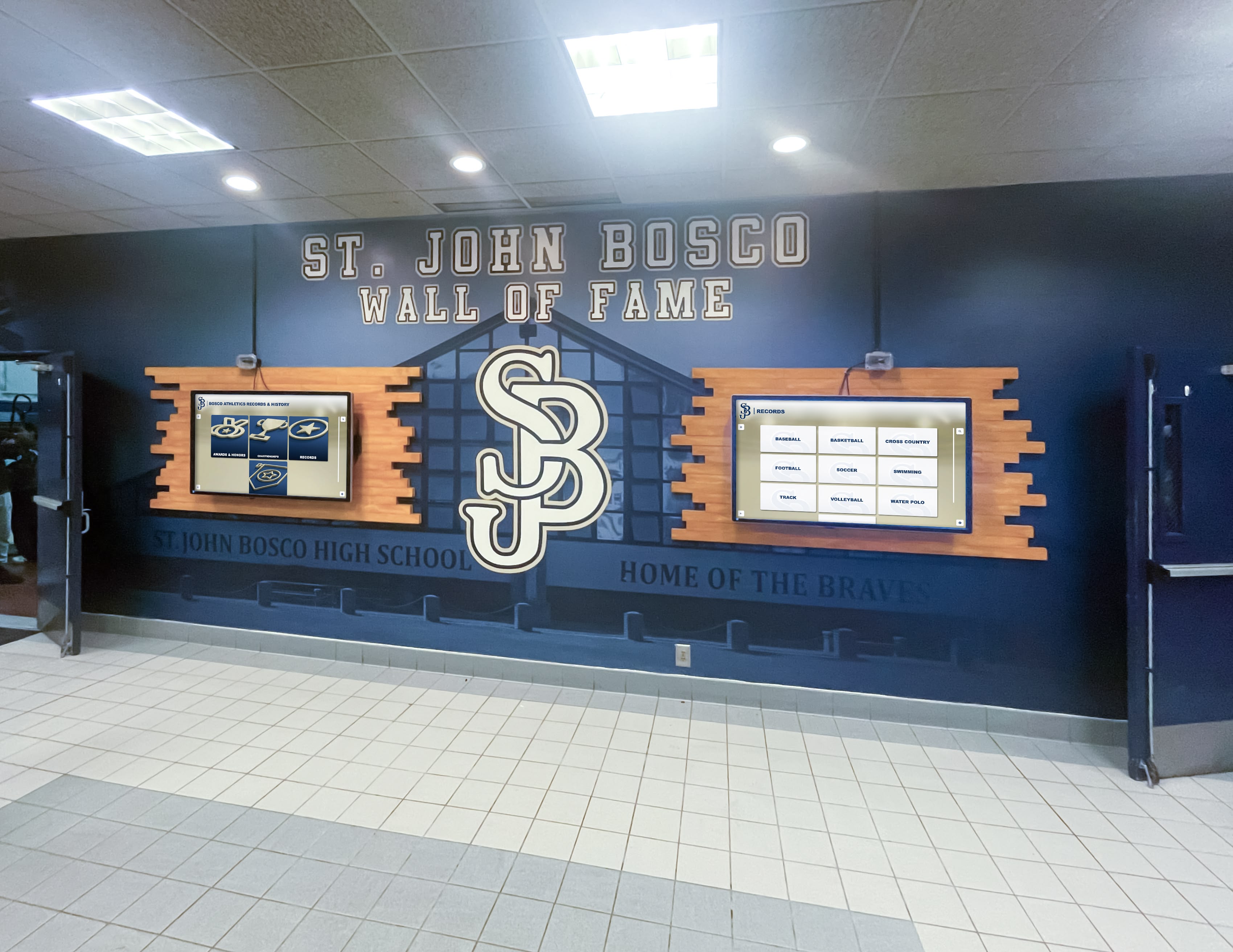
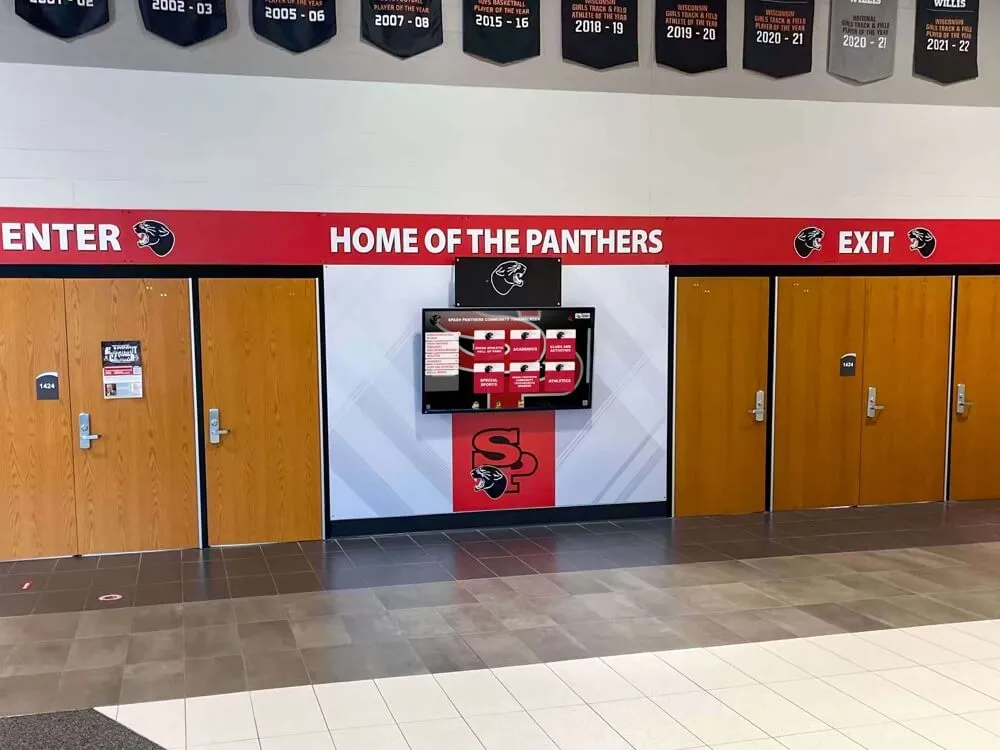
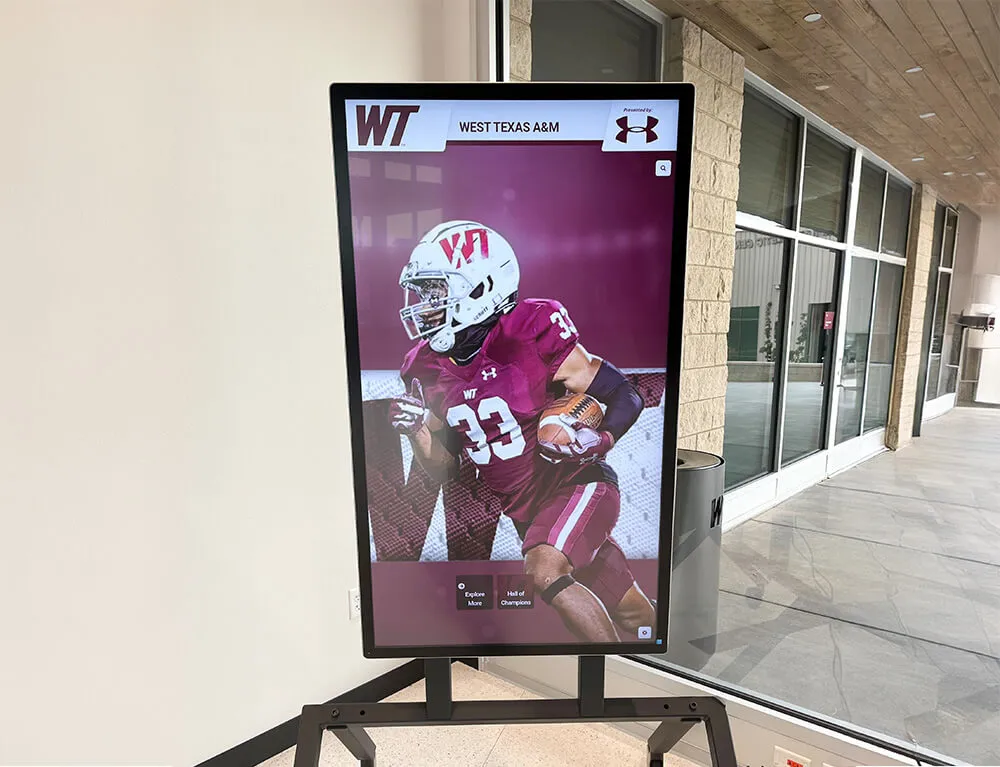
Digital displays throughout ceremony venues provide continuous recognition while enhancing overall decoration aesthetics
Outdoor Graduation Ceremony Decoration
Weather-permitting ceremonies held outdoors require adapted decoration strategies:
Stage and Seating Considerations
Outdoor Platform Design
Structural Requirements
- Elevated stage platforms ensuring audience visibility
- Weather-resistant backdrop materials (vinyl banners, treated fabrics)
- Secure installation withstanding wind and weather conditions
- Electrical considerations for sound systems, lighting, digital displays
Seating and Guest Comfort
- Professional chair arrangements or bleacher decoration
- Aisle definition through landscaping, markers, or temporary pathways
- Shade structures or tent installations for guest comfort
- Weather contingency planning and backup venue readiness
Natural Environment Integration
Leveraging Outdoor Settings
Landscape as Decoration
- Utilizing natural campus features (trees, buildings, lawns) as backdrop elements
- Seasonal flowers and plantings enhancing ceremony aesthetics
- Campus landmarks incorporated into ceremony design
- Natural amphitheater or open space advantages
Weather-Responsive Elements
- Wind-resistant decoration choices
- Sun position consideration for guest comfort and photography
- Rain contingencies and covered structure decoration
- Temperature-appropriate timing and guest preparation
Schools hosting athletic recognition programs outdoors often apply similar decoration strategies balancing natural environments with institutional branding.
Decoration Timeline and Logistics
Successful graduation decoration requires careful planning and systematic execution:
Planning and Design Phase
Early Season Planning (3-6 Months Before)
Committee Formation and Vision Development
- Establishing decoration committees or assigning responsibilities
- Reviewing previous ceremonies and identifying improvement opportunities
- Setting decoration budgets and funding sources
- Developing design concepts and thematic approaches
Vendor Selection and Material Sourcing
- Researching rental companies, florists, printing vendors
- Obtaining quotes and comparing pricing options
- Reserving equipment and materials requiring advance booking
- Confirming delivery and setup timelines
Implementation Timeline
6-8 Weeks Before Ceremony
- Finalizing all decoration designs and material orders
- Confirming volunteer teams and setup responsibilities
- Creating detailed setup schedules and assignment lists
- Conducting venue walkthroughs and measurement verification
2-3 Weeks Before Ceremony
- Receiving ordered materials and verifying completeness
- Constructing reusable elements (backdrops, signage, displays)
- Testing digital systems, projection equipment, lighting
- Coordinating final venue access and setup permissions
Setup Days (1-3 Days Before)
- Installing major elements (stage backdrops, draping, lighting)
- Positioning seating and defining ceremony spaces
- Setting up digital displays and testing functionality
- Adding floral, greenery, and finishing decoration elements
- Conducting final walkthroughs and photography testing
- Adjusting elements based on visual assessment
Fresh flowers typically install day-of or day-before to ensure quality appearance during ceremonies.
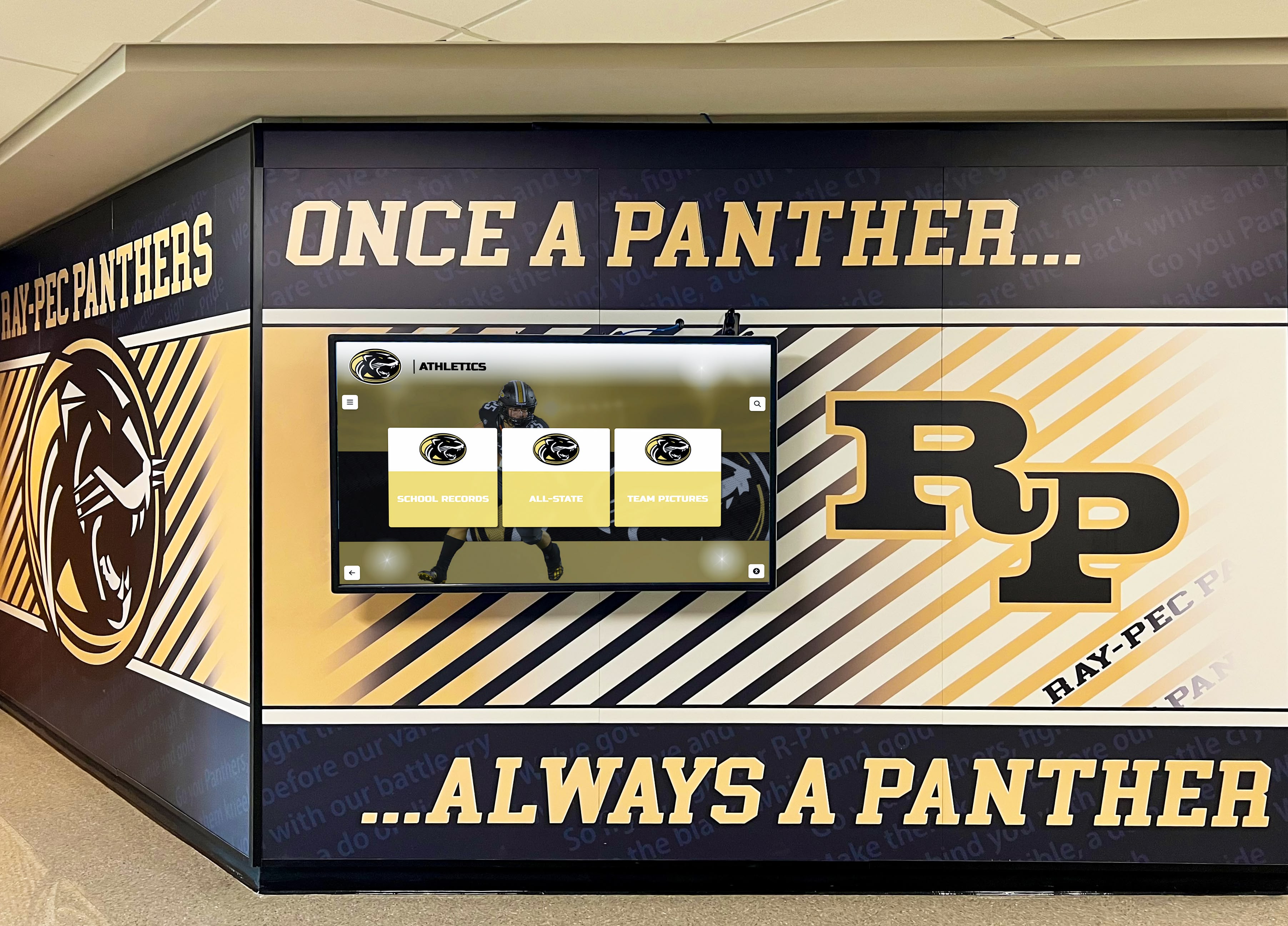
Permanent installations serve ongoing recognition functions while providing ceremony decoration value during graduation events
Post-Ceremony Breakdown and Storage
Efficient Teardown
- Organized breakdown preventing damage to reusable elements
- Proper storage of permanent decoration components for future use
- Return of rental equipment within contracted timeframes
- Donation or disposal of single-use elements
- Documentation of successful approaches for future planning
Safety and Accessibility Considerations
Decoration planning must prioritize guest safety and universal access:
Safety Requirements
Fire Safety and Emergency Access
- Flame-retardant materials for all fabric draping and decorations
- Clear emergency exit pathways without decoration obstruction
- Secured overhead elements preventing falling hazards
- Electrical safety for lighting and digital systems
- Venue code compliance verification
Accessibility Standards
Universal design ensuring all guests experience ceremonies fully:
- Clear pathways for wheelchair access throughout venue
- Ramps or accessible stage access for mobility-limited graduates
- Designated accessible seating with unobstructed sightlines
- Assistive listening systems integrated with sound reinforcement
- Visual accessibility considerations (contrast, signage readability)
Organizations implementing coach recognition programs employ similar accessibility planning ensuring inclusive event experiences.
Photography and Documentation Planning
Ceremony photography heavily influences how decorations should be designed:
Photography-Optimized Decoration Design
Background Considerations
Stage Backdrop Photography
- Solid or subtly patterned backgrounds photographing better than busy designs
- Matte finishes preventing glare and reflection issues
- Appropriate color contrasts ensuring graduate visibility in photos
- Consistent lighting preventing harsh shadows or overexposure
Photo Opportunity Areas
Designated spaces for family portraits:
- Decorated background areas specifically for photography
- Adequate lighting for quality photography
- Space allowing photographer movement and varied angles
- Coordinated aesthetics matching overall ceremony design
Documentation of Decoration Success
Capturing Decoration Elements
Professional documentation serves future planning:
- Professional photography of decoration setups before ceremonies
- Wide shots showing overall venue transformation
- Detail photography of successful decoration elements
- Graduate and family reactions to decorated spaces
- Archives informing future graduation planning committees
Schools using digital recognition platforms often integrate ceremony photos into permanent graduate profiles, linking decoration success to lasting recognition.
Sustainable and Eco-Friendly Decoration Approaches
Environmental consciousness influences modern graduation decoration choices:
Sustainable Material Selection
Reusable Decoration Investment
Long-Term Elements
- Durable backdrop systems used across multiple years
- Quality fabric draping and banners stored and reused
- Permanent digital display infrastructure serving ongoing functions
- Modular components adaptable to various configurations
Natural and Biodegradable Options
- Live plants and flowers rather than plastic alternatives
- Natural fiber fabrics (cotton, linen) over synthetic materials
- Wooden or paper-based decorations instead of plastics
- Potted plants repurposed in campus landscaping after ceremonies
Waste Reduction Strategies
Minimizing Single-Use Decorations
Environmental stewardship approaches:
- Donation programs for flowers to hospitals, nursing homes after ceremonies
- Recycling programs for paper, cardboard decoration materials
- Composting organic decoration elements (flowers, greenery)
- Avoiding balloon releases or single-use plastic decorations
Organizations implementing valedictorian recognition programs increasingly consider sustainability in all ceremony planning aspects.
Multi-Ceremony and Large-Scale Considerations
Universities and large school districts often manage multiple graduation ceremonies:
Coordinated Design Across Events
Consistent Branding with Custom Elements
University-Wide Standards
- Institutional color schemes and branding consistent across all ceremonies
- Standardized backdrop and stage design templates
- Shared rental equipment maximizing budget efficiency
- Coordinated digital display content frameworks
Individual School or College Customization
- Department-specific colors or symbolic elements
- Program-specialized graphics and recognition
- Dean or department leadership personalization
- Graduate-specific displays unique to each ceremony
Logistics for Multiple Events
Equipment and Resource Management
Rotation Systems
- Efficient breakdown and reinstallation schedules
- Equipment sharing across multiple ceremony dates
- Staff and volunteer coordination managing repeated setups
- Quality control ensuring consistent appearance across events
Schools managing homecoming celebration decorations alongside graduation often develop expertise in multi-event decoration logistics.
Measuring Decoration Success and Gathering Feedback
Systematic evaluation ensures continuous improvement:
Success Indicators
Qualitative Assessment
Positive decoration outcomes include:
- Family and graduate compliments about ceremony appearance
- Social media posts highlighting venue aesthetics
- Professional photography quality reflecting decoration success
- Ceremony atmosphere feeling celebratory and special
- Minimal complaints about sightlines, accessibility, or execution
Photography Analysis
Review ceremony photos assessing:
- Stage backdrop effectiveness in graduate photos
- Overall venue appearance in documentation
- Decoration visibility and impact in various photo angles
- Lighting success creating quality images
- Areas lacking visual interest or problematic backgrounds
Continuous Improvement Process
Post-Ceremony Debriefing
Systematic review while details remain fresh:
- Decoration committee or planning team evaluation meetings
- Documentation of what worked exceptionally well
- Identification of problem areas requiring different approaches
- Budget analysis comparing investment to impact
- Recommendations for next year’s planning teams
Successful programs create institutional memory preserving decoration knowledge across personnel changes and graduating class variations.
Transform Graduation Ceremonies with Permanent Recognition Displays
Discover how modern digital recognition platforms serve dual purposes—creating engaging ceremony decorations while providing lasting graduate acknowledgment extending far beyond commencement day. Interactive displays showcasing graduate achievements, searchable databases families explore during ceremonies, and professional presentations elevate decoration aesthetics while ensuring every graduate receives permanent recognition. See how leading schools revolutionize graduation experiences through technology combining celebration with lasting legacy.
Explore Recognition SolutionsConclusion: Creating Graduation Ceremonies Graduates Remember
Graduation ceremony decorations represent strategic investments in milestone celebration that elevate entire commencement experiences from perfunctory obligations to genuinely memorable events graduates and families treasure. Thoughtful venue transformation demonstrates institutional pride, honors student achievement appropriately, creates photography-worthy environments preserving visual memories permanently, and establishes celebratory atmospheres reflecting the significance these occasions deserve.
Traditional decoration approaches—strategic stage design, cohesive color schemes, professional floral arrangements, and meaningful school identity integration—remain graduation ceremony foundations. Budget-conscious schools achieve impressive results through volunteer involvement, reusable element investment, and strategic prioritization focusing resources on maximum-impact areas. Even modest decoration budgets produce significant atmospheric improvement when applied systematically with clear vision and careful execution.
Modern technology introduces decoration possibilities impossible with traditional physical elements alone. Digital displays serving as engaging pre-ceremony focal points, projection systems transforming ordinary spaces, and interactive recognition platforms providing graduate exploration create contemporary experiences while maintaining ceremonial dignity. The most innovative approach combines time-honored decoration traditions with digital enhancement creating comprehensive environments honoring past while embracing future.
Beyond decoration’s immediate ceremonial impact, forward-thinking schools implement permanent recognition systems that function as ongoing decoration while ensuring graduate achievements receive lasting visibility. Digital platforms showcasing every graduate through interactive displays, searchable databases, and professional presentations create year-round celebration extending far beyond single ceremony moments—decoration investments that continue honoring students perpetually rather than disappearing when ceremonies conclude.
The comprehensive strategies explored throughout this guide provide school administrators, event planners, and decoration committees with proven frameworks creating graduation environments serving diverse institutional needs, budget constraints, and venue limitations. From understanding decoration’s psychological impact to implementing stage design, transforming multi-use spaces, incorporating school identity, and measuring success, these insights enable informed decisions advancing celebration objectives.
Graduation represents educational culmination deserving environments reflecting achievement magnitude. Students crossing stages to receive diplomas should do so against backdrops communicating pride, celebration, and honor. Families documenting these milestones deserve photography-worthy settings creating lasting visual memories. Communities witnessing graduations should experience institutional professionalism and celebration commitment.
Start by honestly assessing current ceremony environments and identifying enhancement opportunities. Consider how strategic decoration might elevate atmospheric quality and create more memorable experiences. Evaluate approaches balancing tradition with innovation, and immediate decoration with permanent recognition. Then implement systematically with attention to design cohesion, photography optimization, safety requirements, and sustainable practices.
Your graduates deserve celebration environments that honor their achievements appropriately while creating milestone moments they remember throughout lifetimes. With thoughtful planning, strategic investment, creative execution, and modern recognition technology integration, you can transform graduation ceremonies from routine events into genuinely special occasions that students, families, and communities value deeply—celebrations worthy of the remarkable educational achievements being honored.