



Fun pep rally games do more than fill gymnasium time between fight songs—they create moments where students connect emotionally with the championship history stored in your trophy cases and recognition displays. The most memorable rallies build a living bridge between past teams who earned those trophies and the current athletes continuing that tradition.
Yet most schools run the same three activities every single rally: a tug-of-war, some lip sync battle, and a teacher talent segment that reliably produces more cringe than excitement. Students disengage, and the real opportunity—linking present energy to past achievement—gets left completely untapped.
This guide covers 30+ fun pep rally games specifically designed to channel your school’s championship legacy into fuel for genuine school pride. Whether you’re celebrating a state title banner hanging in the rafters or a trophy case full of district championships, these activities turn your recognition history into an active ingredient in every rally you run.
Great pep rallies succeed because they give students something to be proud of together. Your trophy case holds decades of that pride in physical form—so why not make it the centerpiece of the energy you’re trying to build? These fun pep rally games show students exactly what their school stands for and why it matters to compete in its name.

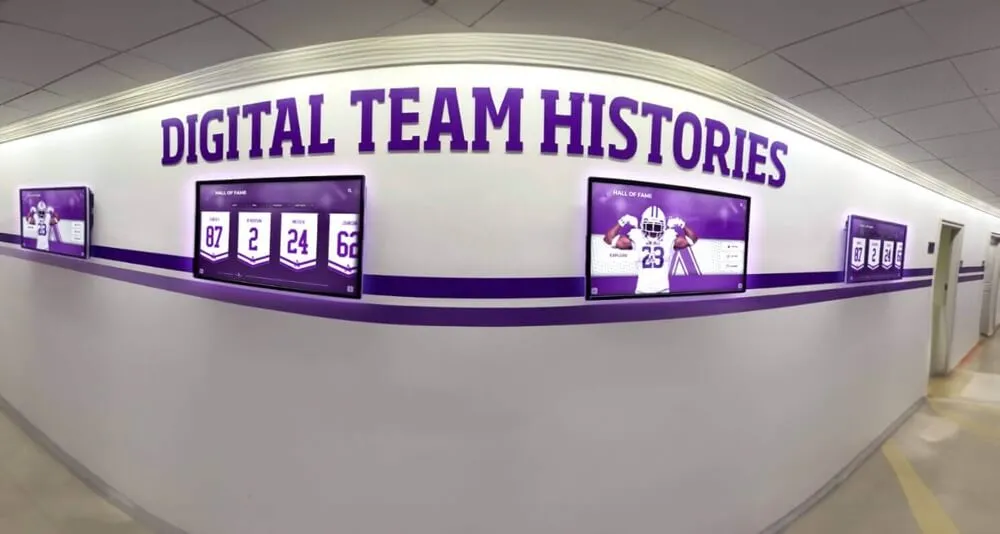
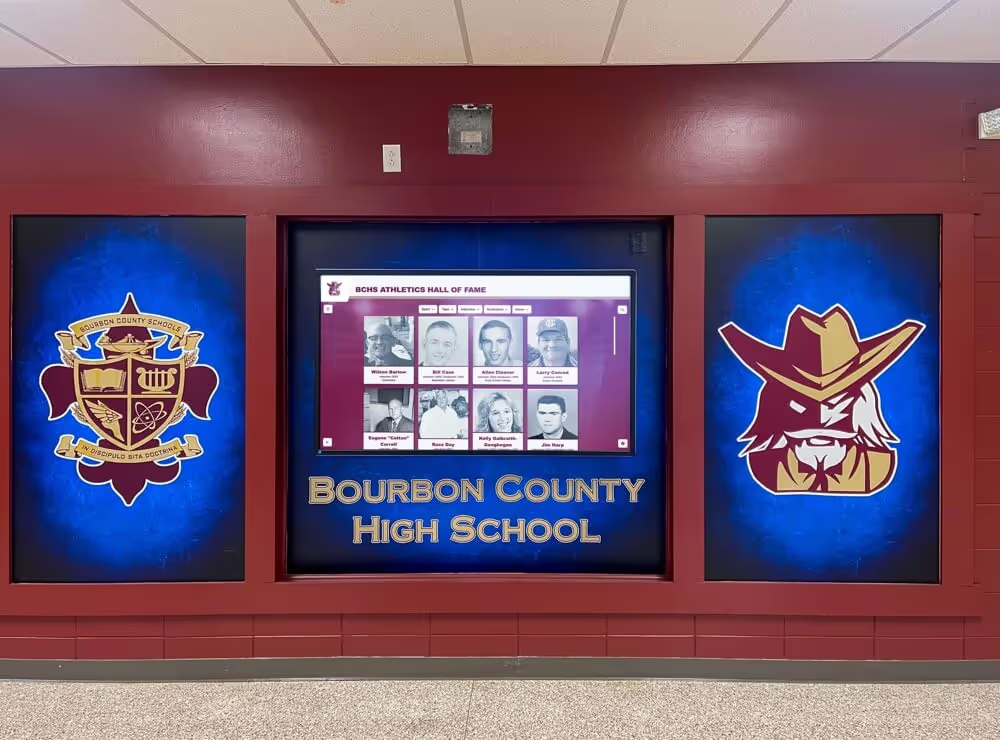
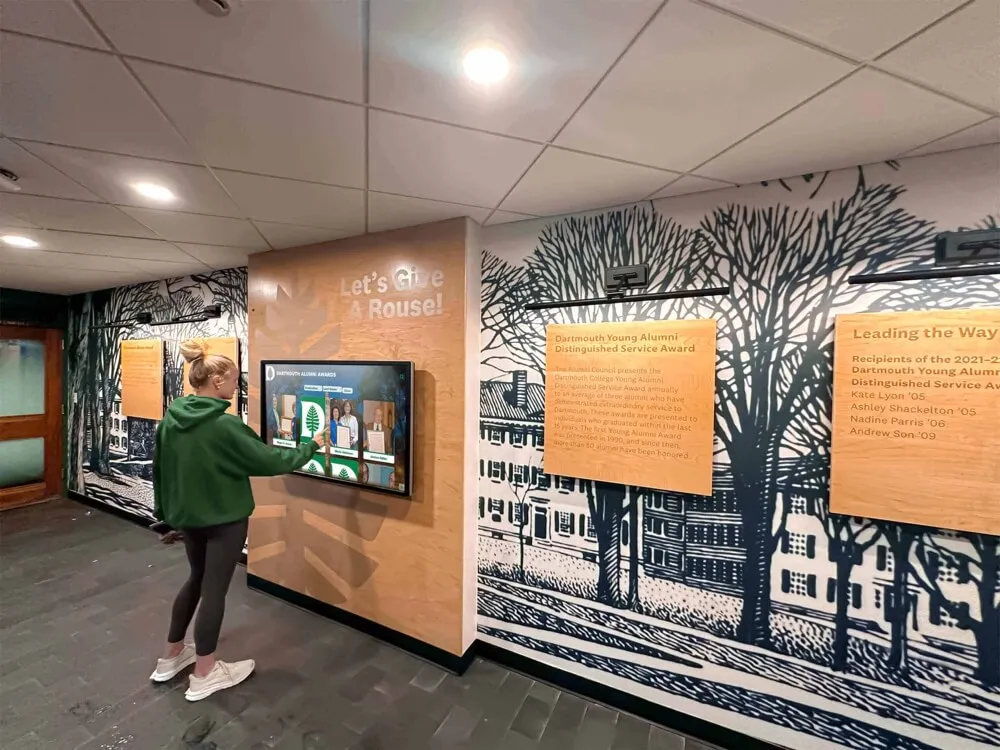
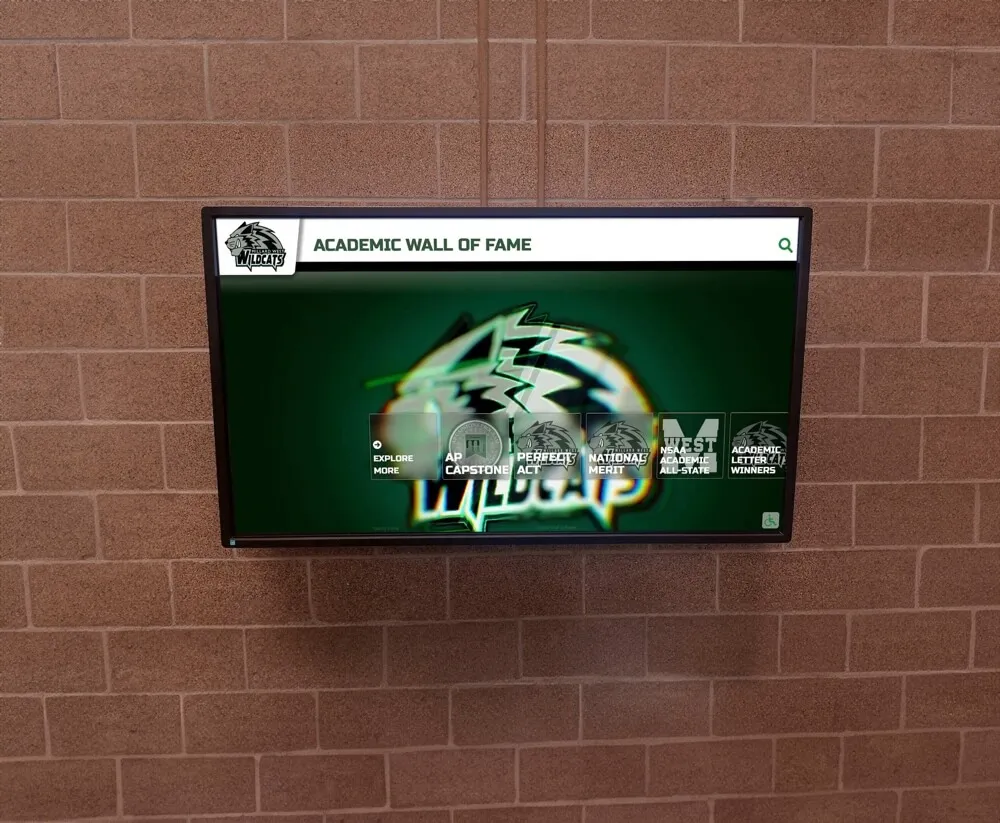
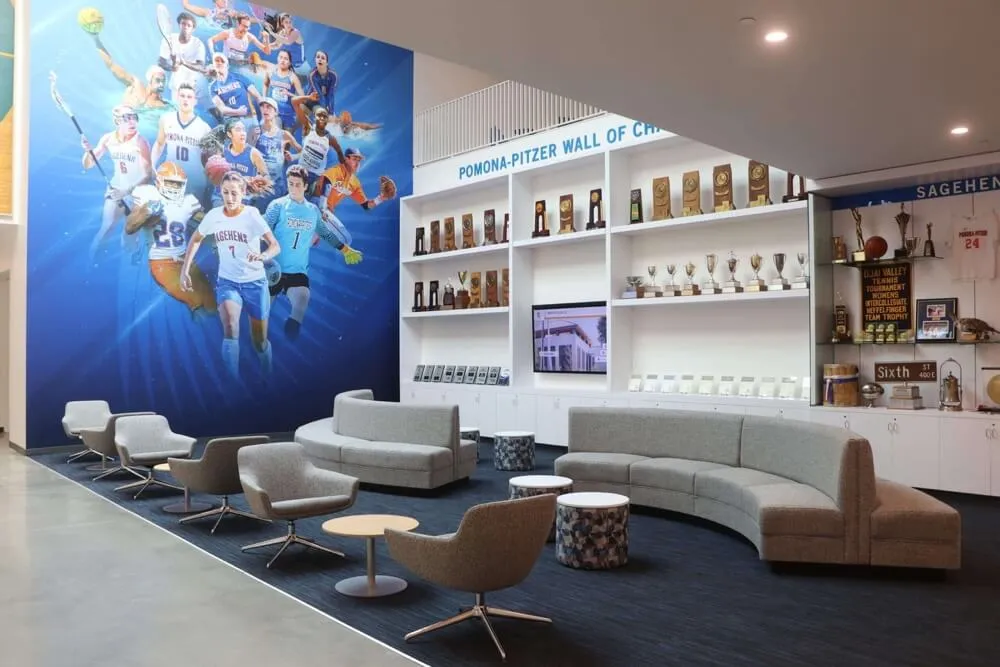
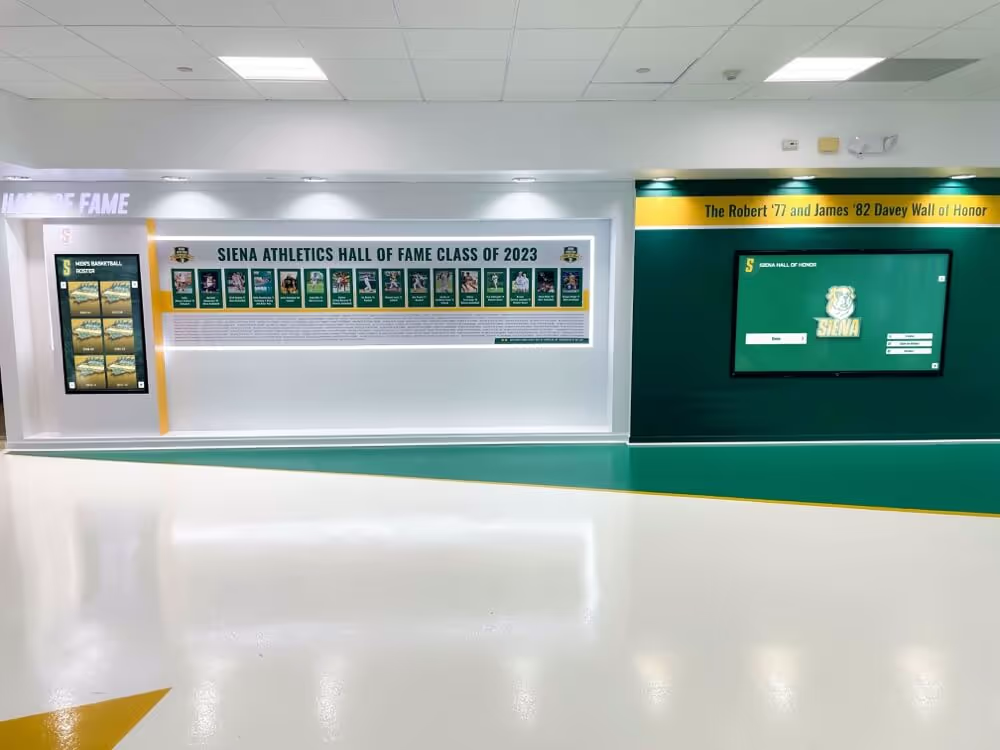
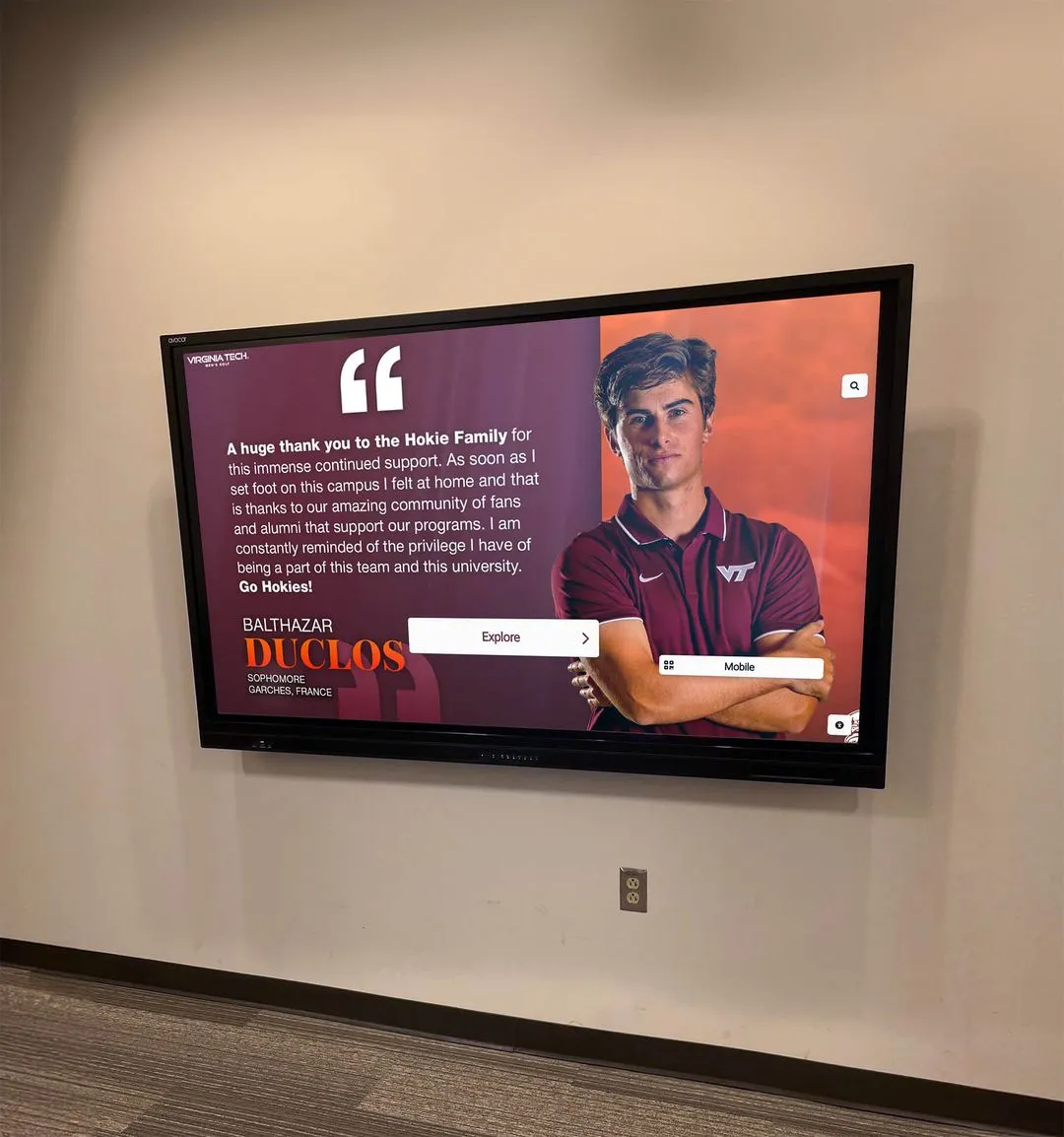
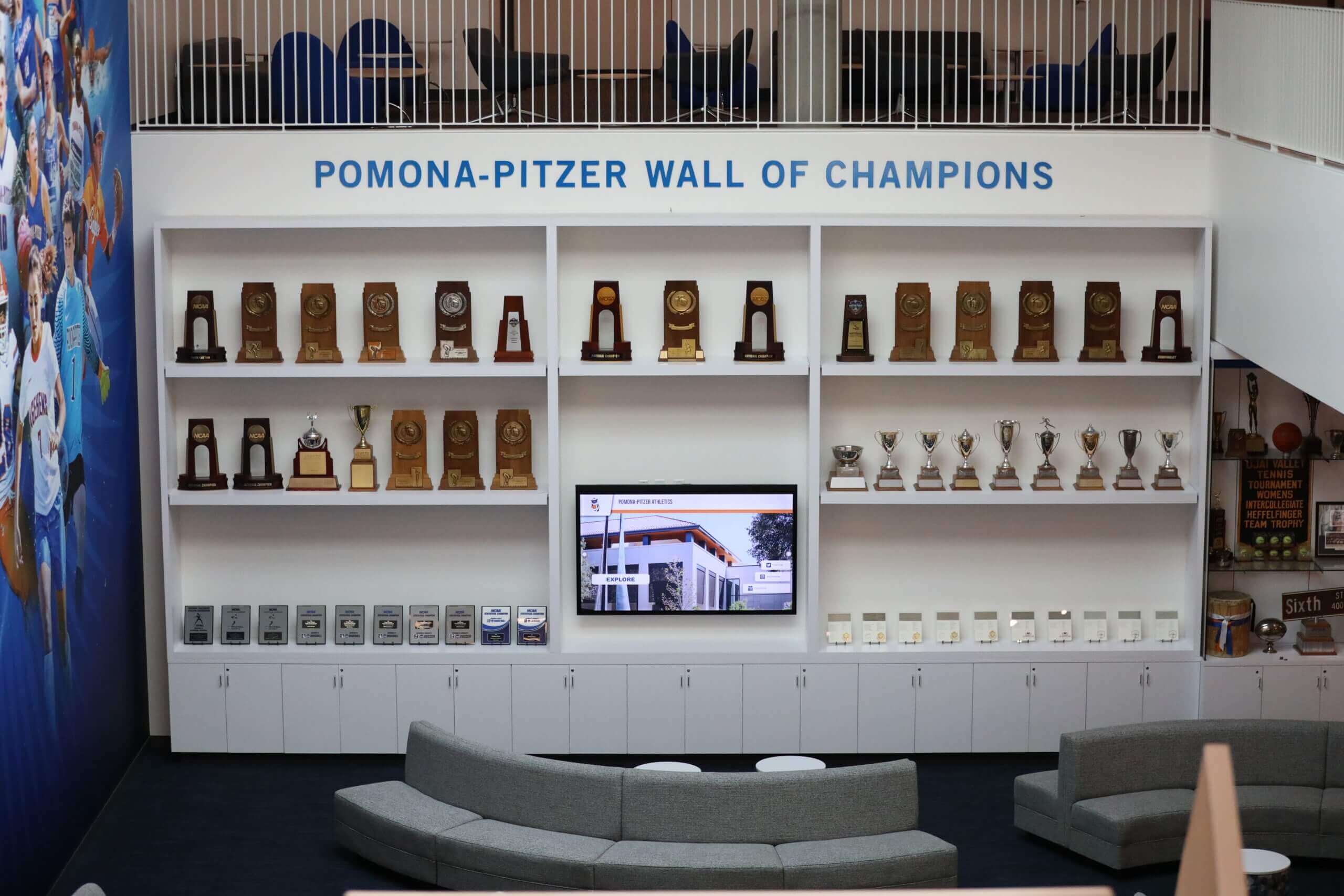
Championship trophy displays like this wall of champions give pep rally games an authentic foundation — students compete for legacy, not just laughs
Why Trophy Case Pride Makes Pep Rally Games Better
Before diving into specific game formats, it’s worth understanding why connecting rally activities to your recognition history changes everything about how students respond.
The Difference Between Entertainment and Investment
Generic pep rally games produce laughs. Trophy-case-centered pep rally games produce something more durable: the feeling of being part of something bigger than yourself.
When games reference real championships:
- Students discover school history they never knew existed
- Current athletes understand the tradition they’re carrying forward
- Underclassmen see a future worth working toward
- Alumni connections strengthen when recognition stays visible
- Wins feel heavier because students understand what earning them meant
According to a comprehensive guide on how digital displays inspire alumni to give back, schools that keep championship history visible see dramatically stronger community engagement around athletic events—the same principle applies when that history becomes an active ingredient in your rally programming.
Games vs. Activities: Getting the Distinction Right
Not every pep rally segment needs to be a competitive game. The most effective rallies mix:
- Competitive games where grades or teams face off for bragging rights
- Recognition moments where individual achievements get spotlighted
- Collective experiences that unite the whole school
- History segments that anchor present excitement to past accomplishment
The fun pep rally games in this guide fall across all four categories, giving you flexibility to build complete rally programs rather than just lists of activities.
Tier 1: Trophy Case Trivia Games
These games transform your athletic and academic history into interactive content that educates and energizes simultaneously.
Championship Year Challenge
How it works: Divide students into sections by grade level. A host reads out a championship—“State basketball champions”—and sections race to shout out the correct year. Points go to whichever grade section answers first and correctly.
Why it works: Students who had never paid attention to those banners on the gymnasium wall suddenly want to know every year on every banner. You’ll notice attention to recognition displays increase noticeably after running this game once.
Variations:
- Flash photos of past championship teams on a screen and ask students to identify the sport, year, or coach
- Include academic championships, not just athletic ones
- Add a “closest without going over” rule for years students can’t get exactly right
Record Breaker Rapid Fire
How it works: Display a sport-specific record on screen—“School record for most points in a single basketball game”—and ask students whether the current year’s team is above or below that number through the season so far. Correct sections earn points.
Why it works: Digital record boards track these numbers automatically, making it easy to pull current-season stats and compare them to all-time records in real time. Students start paying attention to whether current athletes are approaching historic milestones.
Setup tip: Work with your athletic director to pull 10-15 records across multiple sports before the rally. Mix records that current teams are close to breaking with records that demonstrate how elite past teams were.
Jersey Number Guess
How it works: Announce a jersey number that a legendary player wore, then give three clues about their career one at a time. After each clue, sections can lock in a guess. Earlier correct answers earn more points.
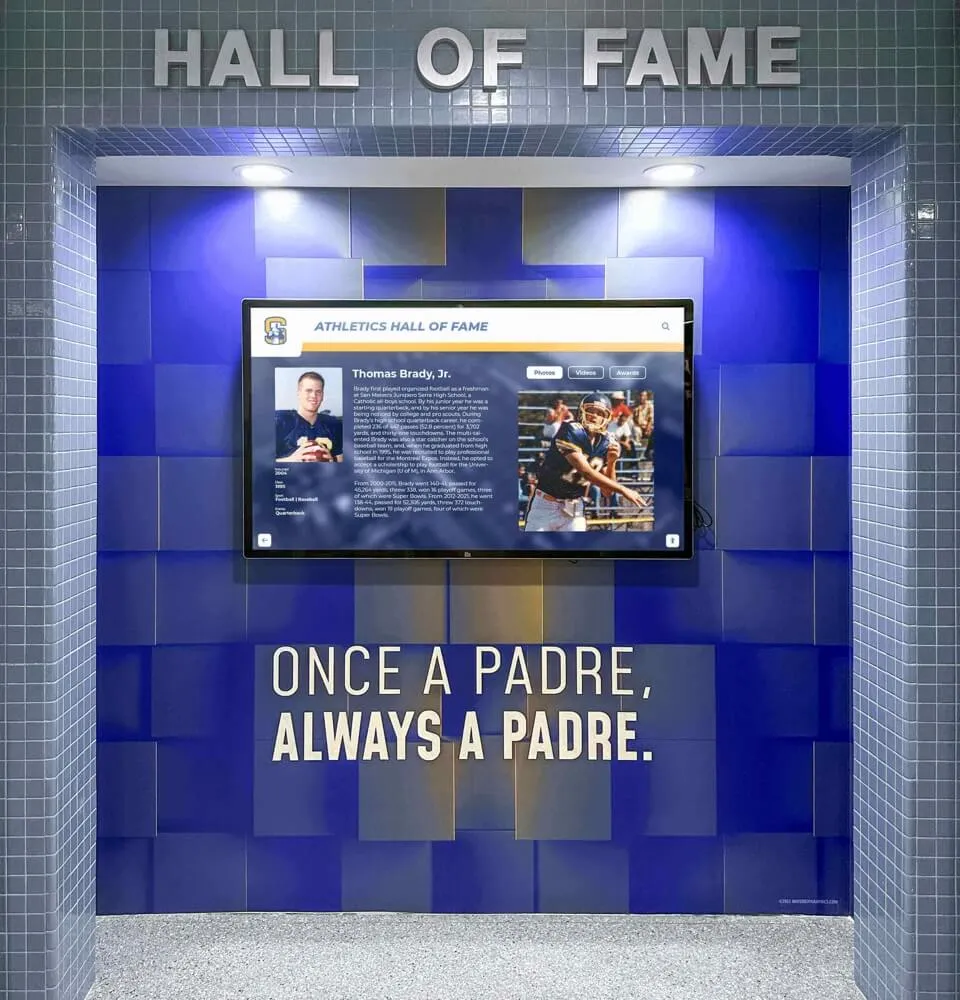
Why it works: This format works especially well when you can display those players’ profiles on a touchscreen display visible to the audience—students get to see the person behind the number they’re guessing about, making the recognition feel real rather than abstract.
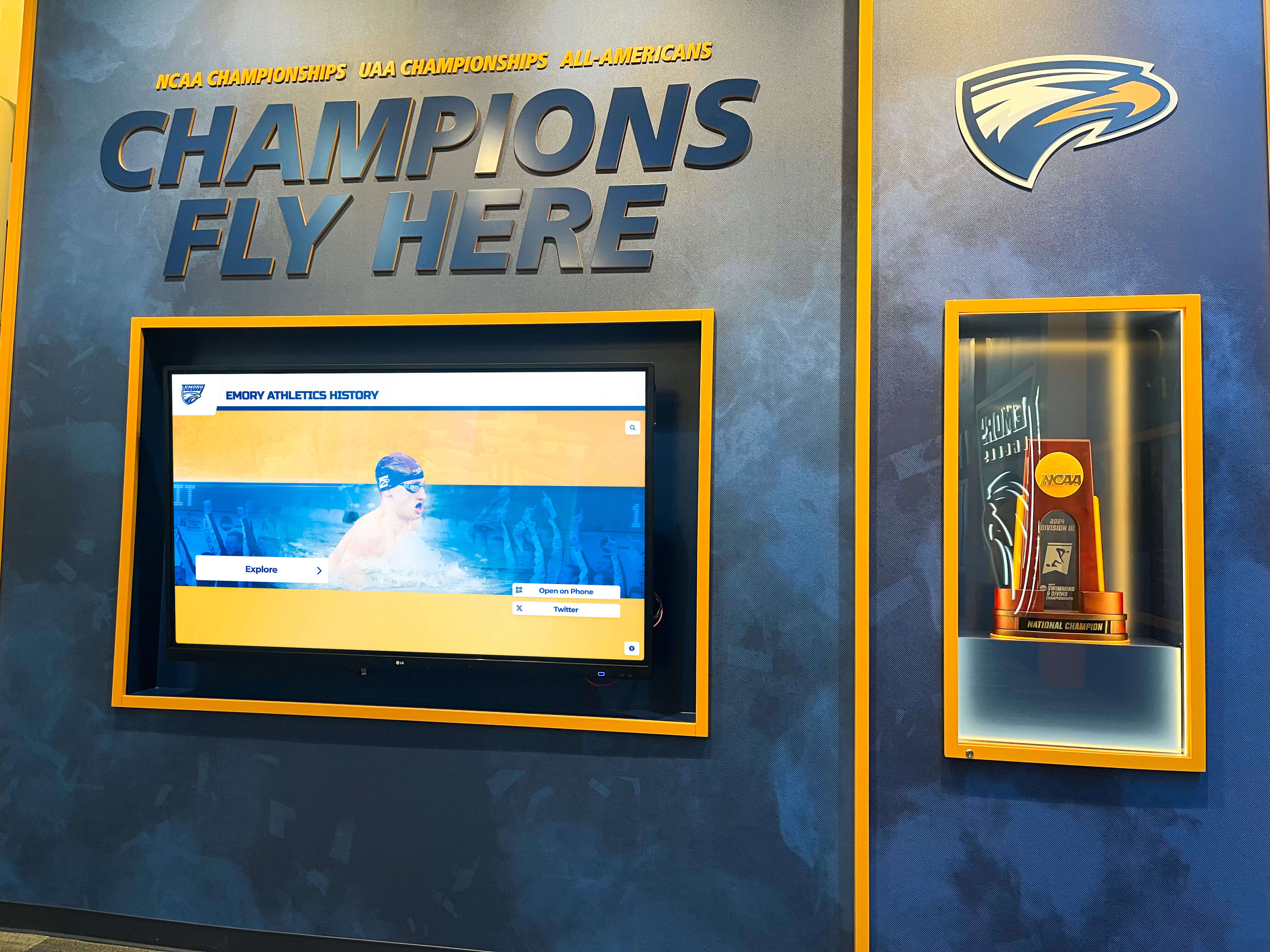
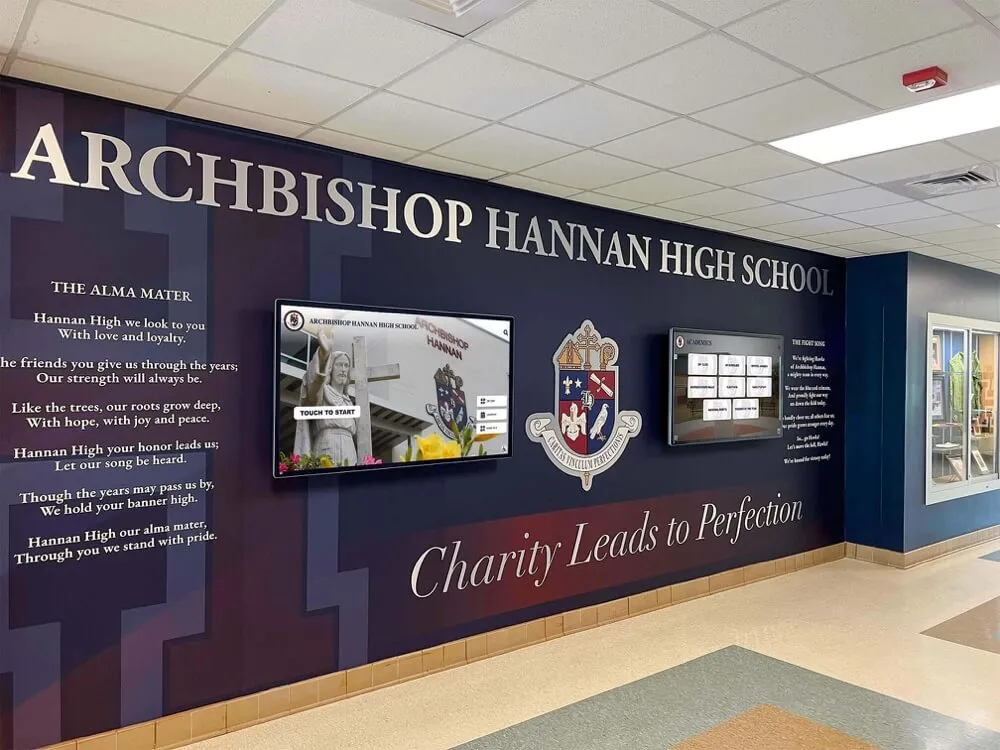
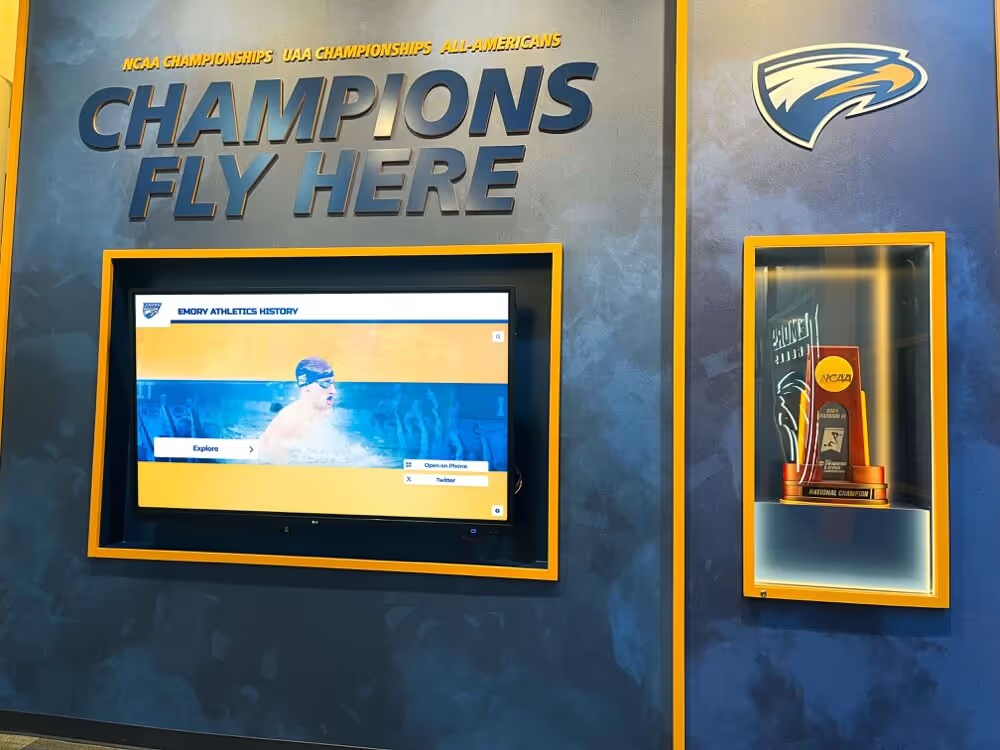
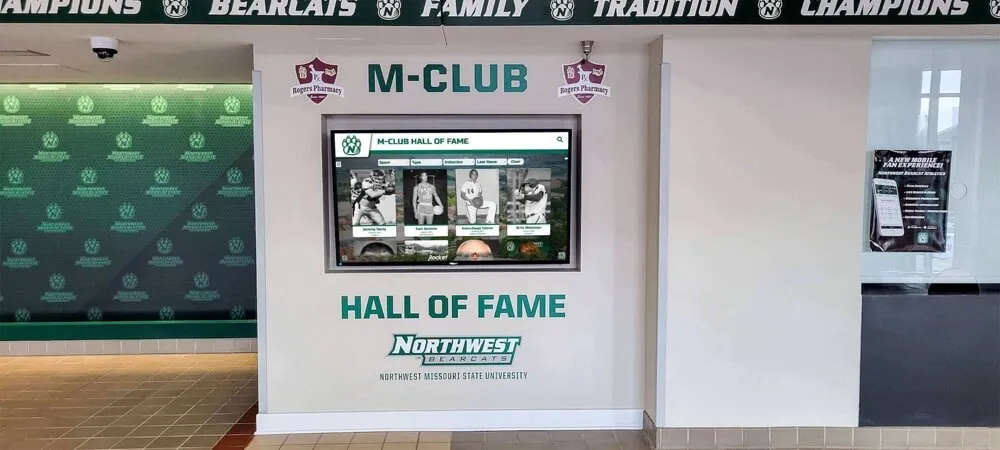
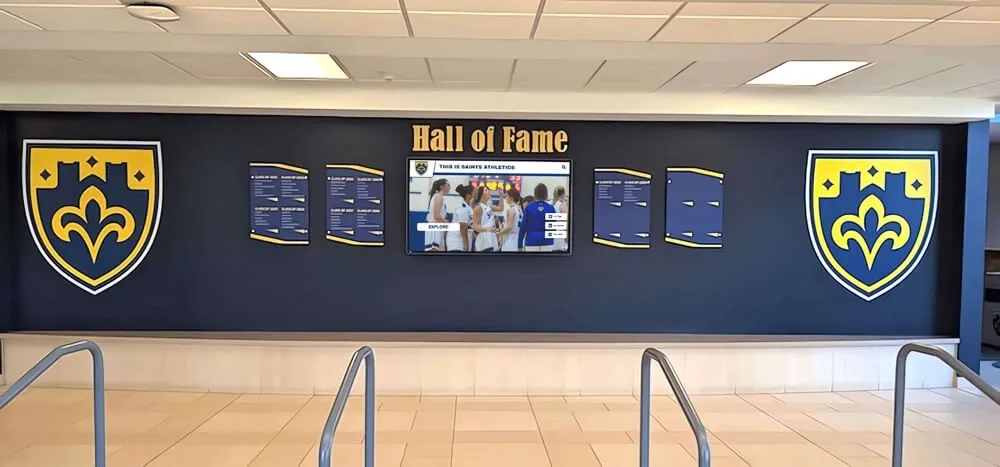
Championship hardware displayed permanently on recognition walls gives trivia games authentic stakes — students compete to know their school's real history
Tier 2: Classic Competition Games With a Legacy Twist
These are the high-energy physical competitions students love, modified to connect to your championship tradition.
The Championship Relay
How it works: A traditional relay race, but with a twist: each leg of the relay requires participants to correctly answer a school trivia question before passing the baton. Wrong answers mean running an extra lap around the relay zone before passing.
Setup: Four legs per team, four trivia questions of escalating difficulty. First leg: easy (What sport won a state championship most recently?), fourth leg: hard (Name the coach who led the 1994 soccer team to regionals).
Why it works: The trivia integration means students who haven’t memorized school history are a liability to their team—creating immediate motivation to learn it. Run this game early in the school year and watch students start paying attention to the displays in the hallways.
Battle of the Banners Tug-of-War
How it works: Standard tug-of-war, but each competing section represents a different decade of school championship history. The 1990s class bracket faces the 2000s class bracket. Winners “claim” the championship years of their decade.
Why it works: Students get curious about what happened in “their” decade and start researching. It also creates natural conversation starters between current students and alumni who actually lived through those years.
Variations:
- Have alumni representatives from each decade present to cheer on their bracket
- Display championship highlights from each decade on screens during the competition
- Award a framed replica championship photo to the winning bracket
The Hall of Fame Obstacle Course
How it works: Set up a multi-station obstacle course in the gym. At each station, there’s a trivia card about a Hall of Fame athlete from your school. Complete the physical challenge and answer the trivia question to move to the next station.
Stations might include:
- Ten free throws (answer: “What year did this basketball HOF member graduate?”)
- Volleyball serve over a net (answer: “How many state championships did this athlete win?”)
- Forty-yard shuttle run (answer: “What college did this football HOF member attend?”)
- Soccer penalty kick (answer: “What record did this player set that still stands today?”)
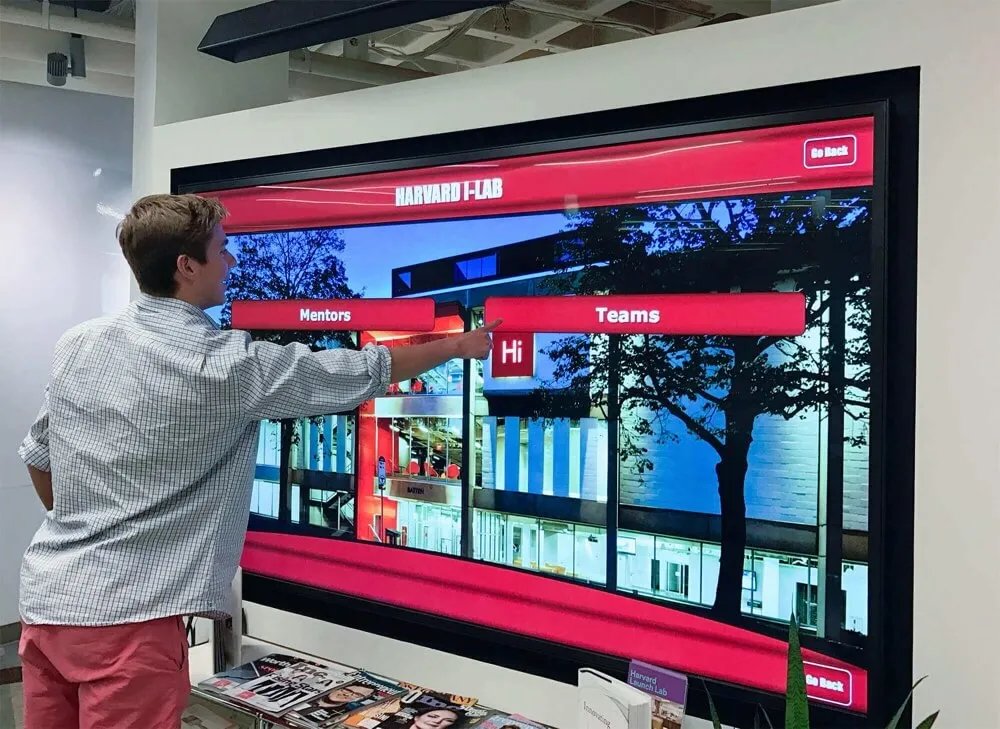
For schools with a digital trophy touch wall, you can display each Hall of Fame athlete’s full profile as that station is active, giving crowd members in the stands something to read and discuss while competitors run the course.
Legacy Lip Sync Battle
How it works: Traditional lip sync battle, but each grade must perform a song that was popular during a specific decade of the school’s championship history. Judges include teachers who actually attended during those years.
Why it works: The decade constraint forces creative research and generates intergenerational conversation. Students interviewing alumni about what music defined their championship years creates genuine relationship-building around school history.
Tier 3: Whole-School Participation Games
The best pep rally games give every student a role, not just a front-row seat.
Trophy Case Memory Match
How it works: Project images of 20 trophies or championship items from your trophy case on a large screen for 60 seconds. Remove them. Sections compete to correctly list the most items from memory. Representatives write answers on giant whiteboards visible to the crowd.
Why it works: Students who walk past the trophy case every day without looking suddenly realize they have no idea what’s actually in it. The game creates instant motivation to study your recognition displays.
Pro tip: Run this game at the beginning of the year, then again at the end of the year after you’ve highlighted achievements regularly throughout rally season. The improvement in scores demonstrates how much school culture shifted.
Mascot Challenge Bracket
How it works: Build a tournament bracket where your school’s mascot faces other local school mascots in themed challenges. The crowd votes through noise level, color card holds, or digital polling apps. Each round references a real head-to-head victory from your school’s history.
Example bracket prompt: “The Panthers faced the Eagles in the 2019 regional championship. Panthers won 42-17. Now it’s your turn to defend that victory…”
This style of bracket game keeps the crowd engaged across a full rally because every round builds toward a climax, and referencing real historical matchups makes the competition feel grounded in authentic rivalry.
Senior Superlatives Live Edition
How it works: Before the rally, secretly poll current seniors about their athletic memories. Then during the rally, host a live version of senior superlatives: “Most likely to break the school record in the 100-meter dash.” Seniors nominated stand up; the crowd votes with noise.
Why it works: It bridges the recognition gap between current students and the historical achievements in your trophy case. Seniors get personalized recognition, and the historical benchmarks become relevant targets rather than dusty numbers.
For a deeper look at how schools recognize graduates through digital platforms, connecting senior recognition to long-term digital displays extends the value of these rally moments beyond the gym.
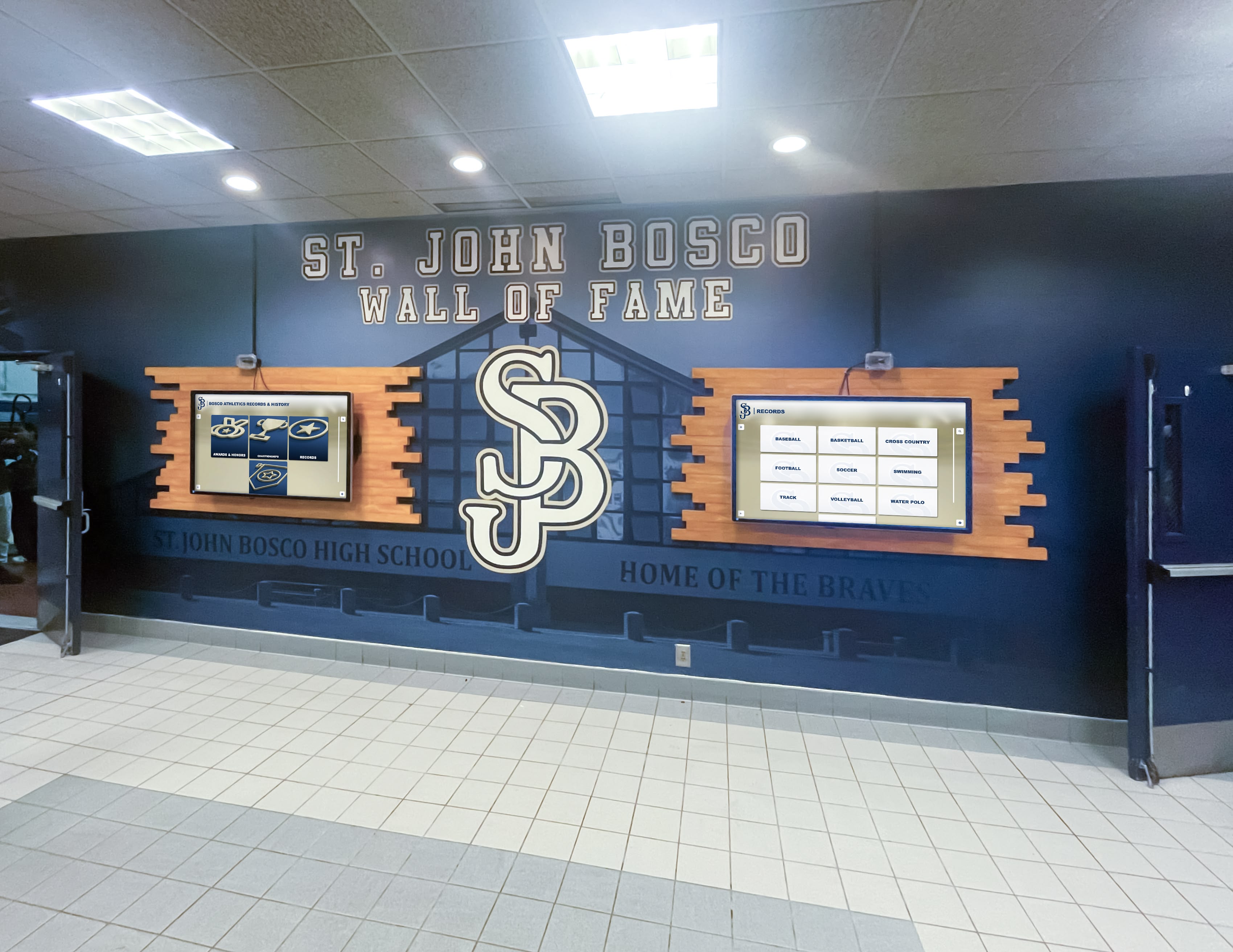
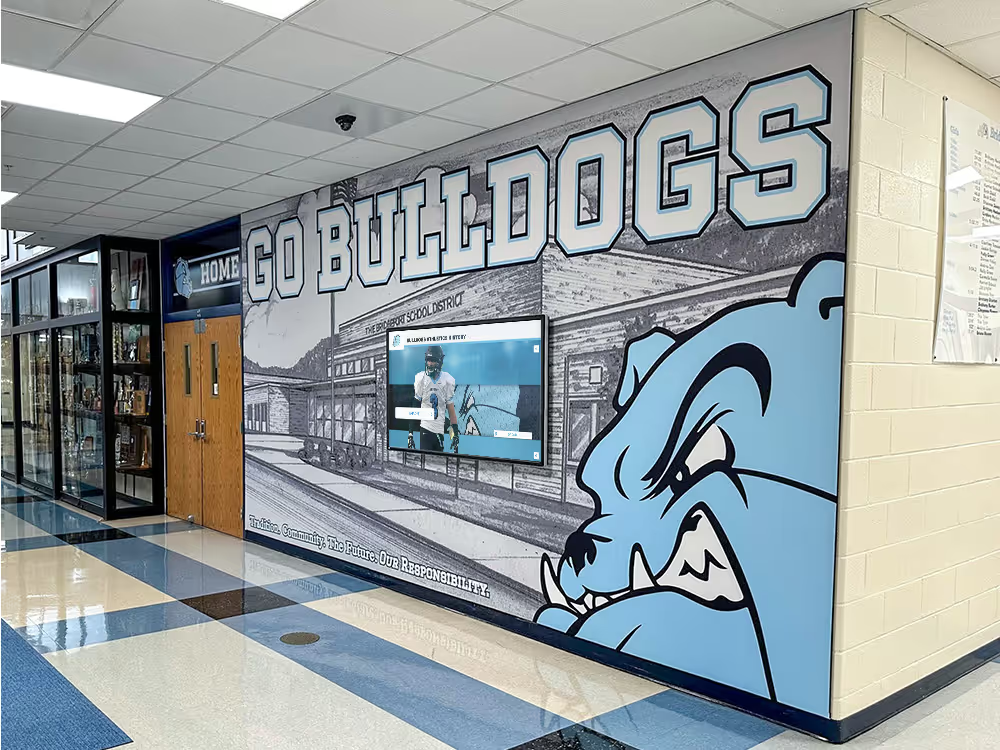
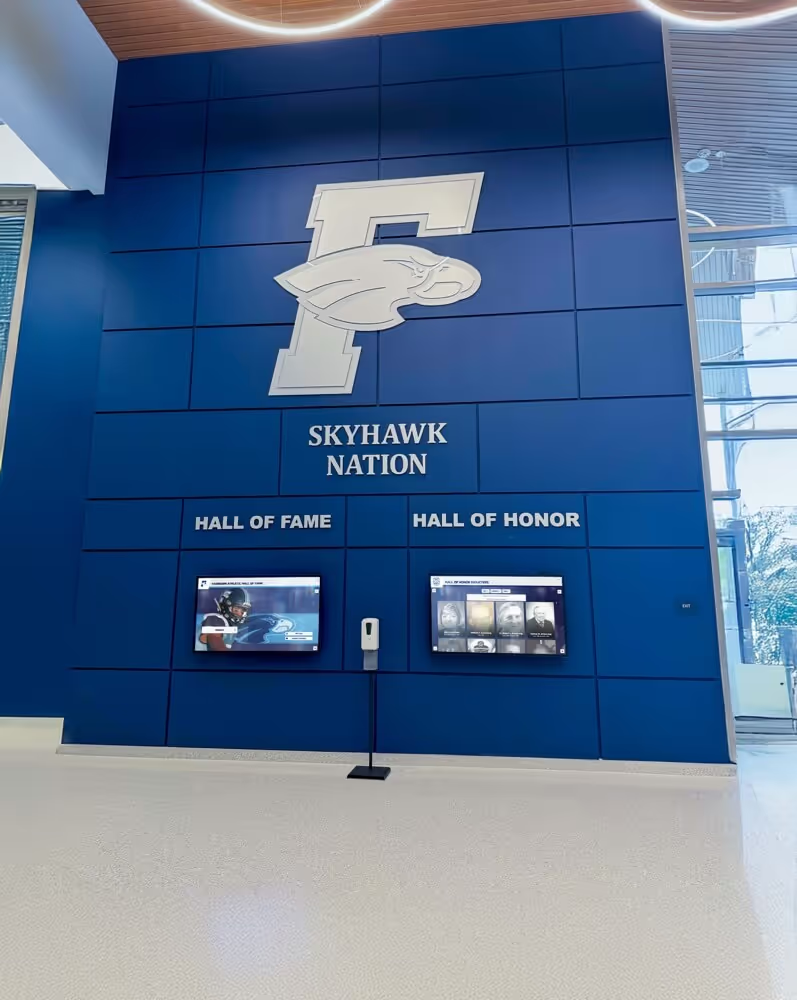
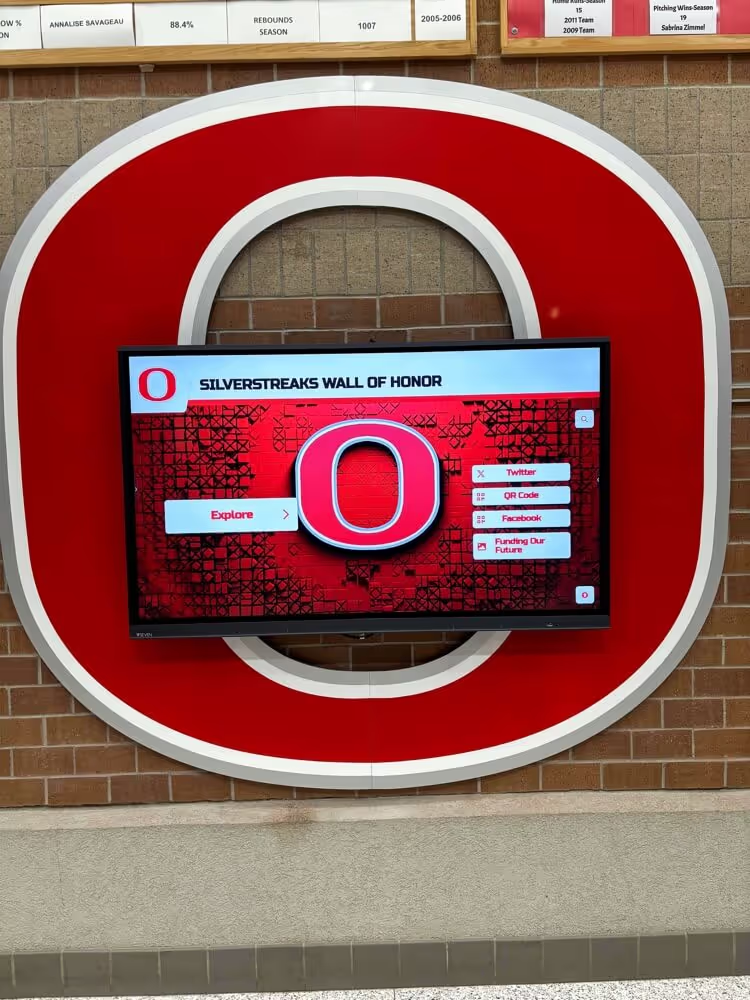
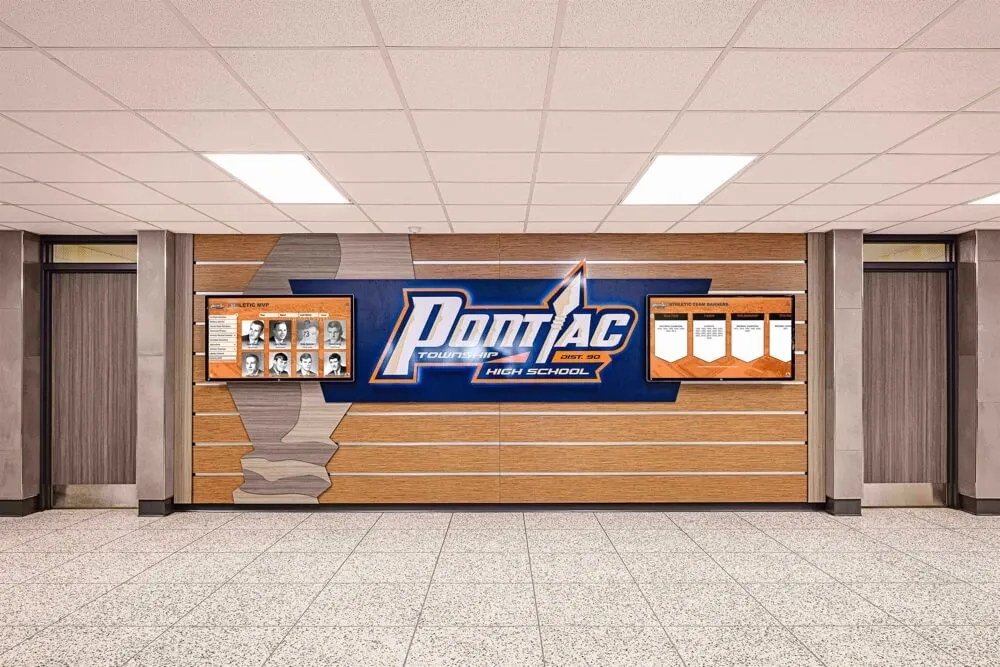
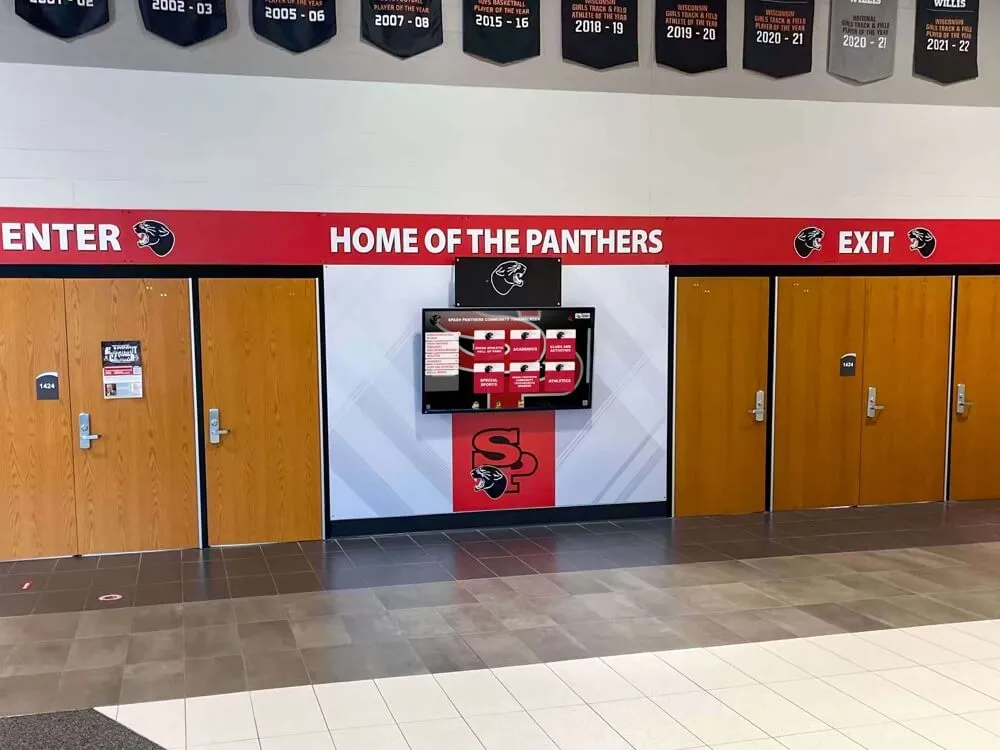
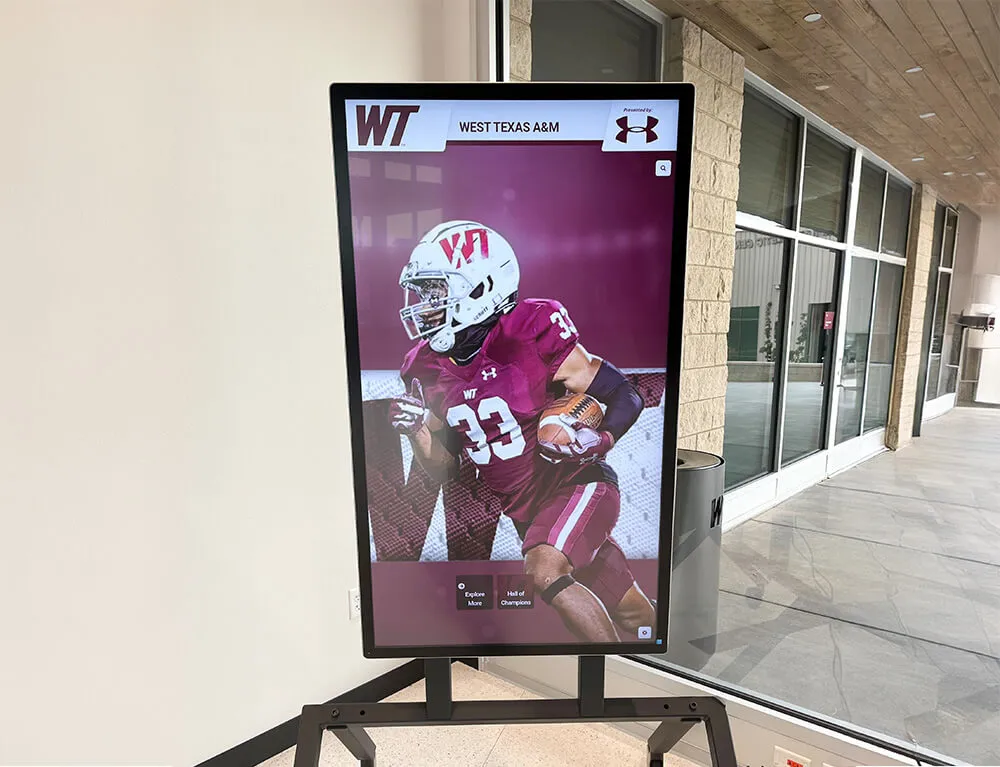
Digital displays in school hallways give students daily exposure to championship history that makes trophy-case trivia games more competitive and more meaningful
Tier 4: Digital Integration Games
These games leverage technology—especially interactive trophy case displays—to create pep rally experiences that couldn’t exist with static recognition alone.
Live Record Tracker Challenge
How it works: Display your school’s all-time records for key statistical categories on a large screen alongside this season’s current leaders in each category. Teams of students compete to correctly predict which records the current season’s athletes will break before the season ends.
Setup: Pull records from your athletic department, create a simple bracket showing current vs. all-time, and let sections make predictions. Track predictions through the season and revisit at the final rally.
Why it works: It creates sustained engagement across the entire rally season, not just during the event. Students become personally invested in whether athletes break specific records they predicted.
Trophy Case Scavenger Hunt Countdown
How it works: Before the rally, hide five QR codes around campus near different parts of your recognition displays—near the trophy case, beside the championship banner wall, outside the Hall of Fame. During the rally, you reveal the locations one at a time. Students who found QR codes earlier in the day earn bonus points for their section.
Why it works: It gets students physically interacting with recognition displays before the rally begins, turning passive signage into active engagement. The pep rally ideas guide at touchwall.us notes that pre-rally engagement activities dramatically increase the energy level when students arrive in the gymnasium.
Alumni Guess Who
How it works: Display a silhouetted photo of a former athletic standout from your school. Give one clue per round. Sections buzz in to guess the identity. As you reveal the answer, display that athlete’s full profile—graduation year, records held, college attended, current career—on screen.
Why it works: This game simultaneously celebrates alumni and educates current students about the legacy they’re inheriting. When done well, it creates emotional moments where students recognize names they’ve heard from coaches or family members.
Schools that have moved to interactive touchscreen recognition displays find that alumni Guess Who works especially well because the display instantly shows far more information than a traditional plaque ever could—creating genuine crowd reactions when students see the full scope of a former athlete’s accomplishments.
Tier 5: Team-vs-Team Competition Formats
These formats pit athletic teams against each other or against student sections in ways that build unity across the school community.
Coach Challenges
How it works: Coaches from different sports face off in comedic physical challenges—paper airplane throws for distance, three-point shooting contests, soccer juggling competitions—while their teams and the student body cheer them on.
The trophy case connection: After each challenge, display the coach’s career record at your school on screen. Coaches who’ve contributed the most championships get “handicapped” to make competitions fair—the crowd appreciates the recognition, and coaches appreciate the acknowledgment.
Championship Decade Draft
How it works: Student representatives from each grade “draft” championship years the way fantasy sports teams draft players. The grade that drafts the most total championships wins the right to choose the next rally date’s theme.
Setup: List every championship your school has won, by sport and year. Display them on a large board. Representatives take turns selecting years, building collections. Points are calculated by weighting championships (state > regional > district).
Why it works: Students research championship history before draft day, turning your trophy case into a study subject. Sports awards deserve genuine celebrations, and a deeper look at creative sports awards and recognition ideas shows how structured recognition programs build the institutional pride these games depend on.
Athletes vs. Student Body Relay
How it works: Each sport nominates two athletes. Those athletes face off against two student representatives in sport-appropriate challenges. Athletes compete in their own discipline; students compete in a “novice” version.
The connection: Before each matchup, display the athletes’ stats for the season alongside the school record in that category. Crowds cheer differently when they know what those athletes have already accomplished.
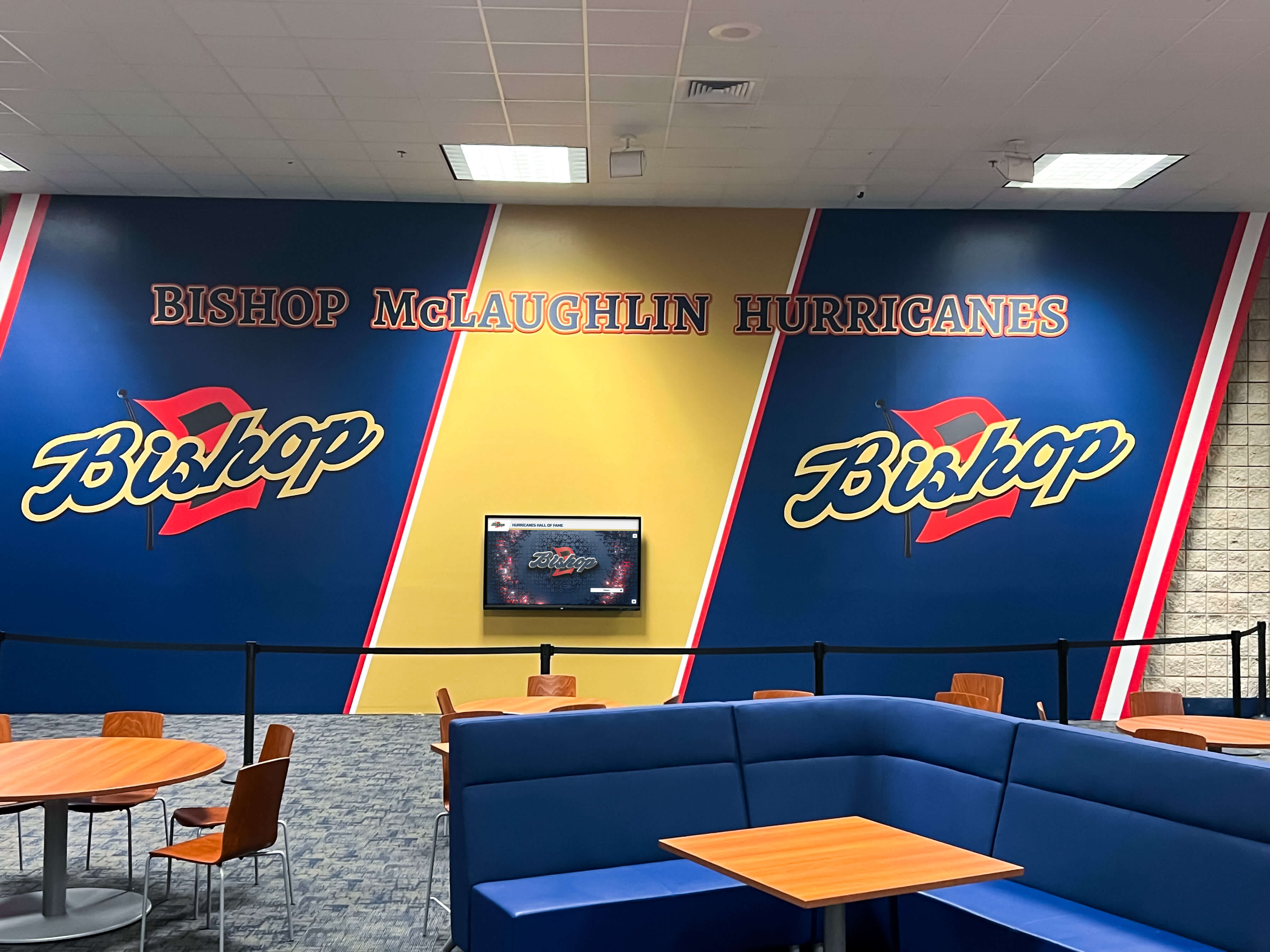
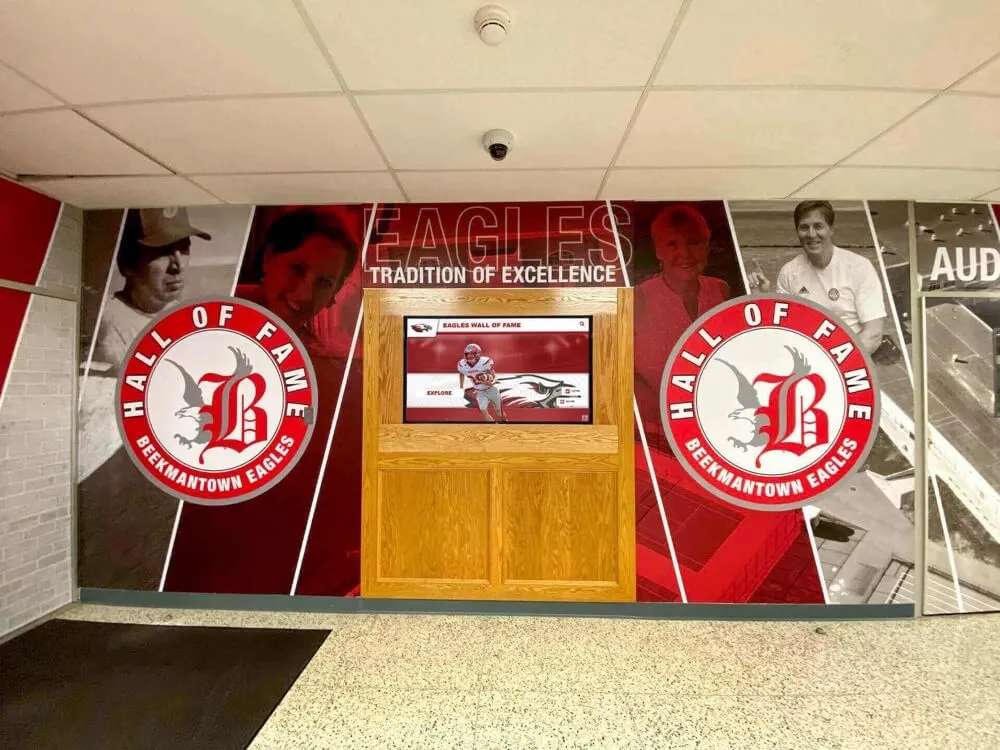
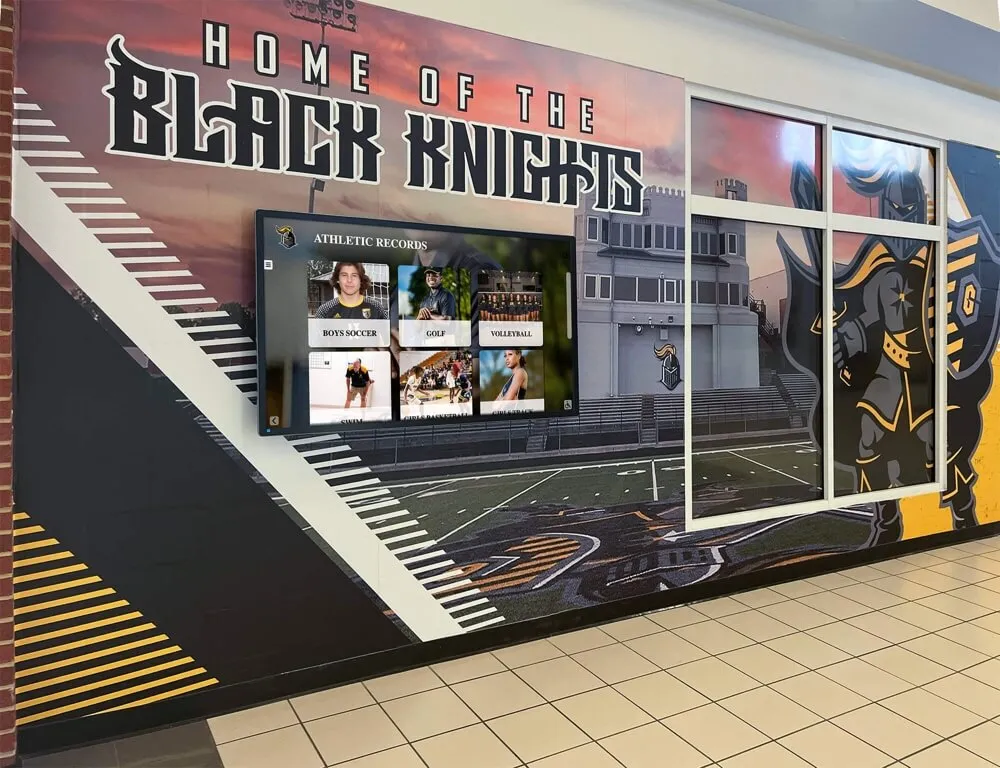
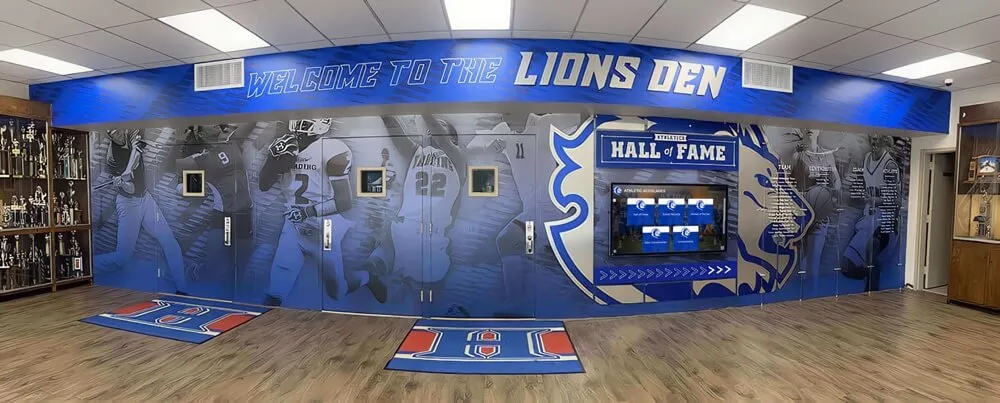
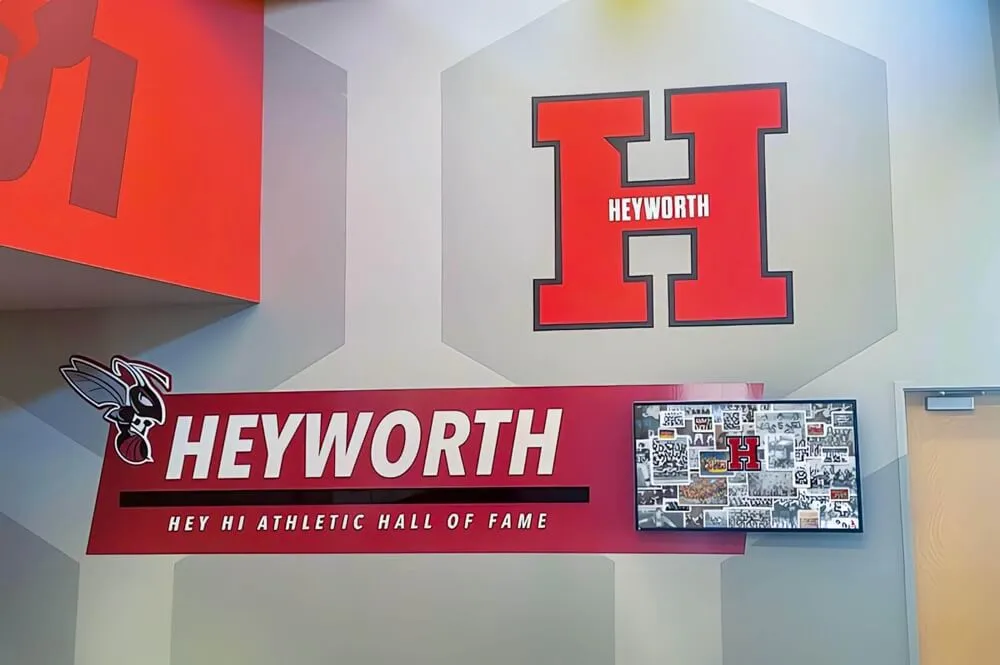
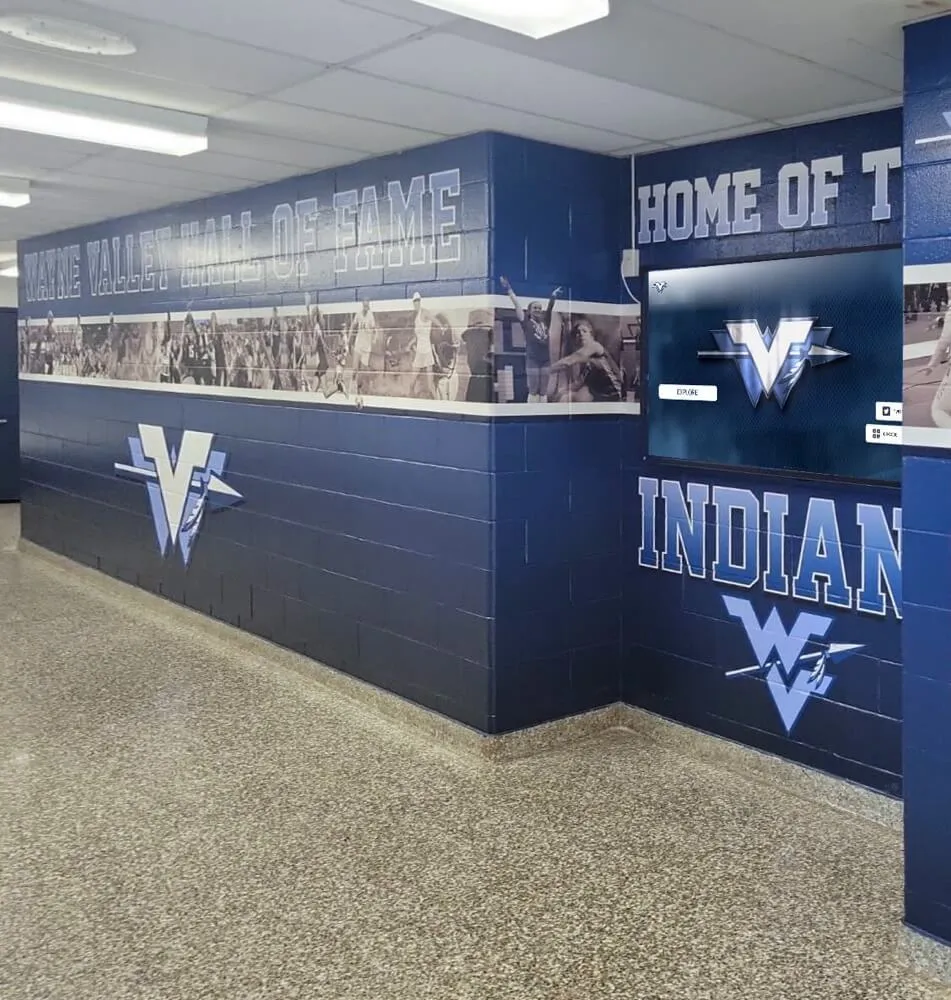
School murals and athletic displays in common spaces like cafeterias create daily reminders of team identity that amplify pep rally energy when games begin
Planning Your Trophy Case–Centered Rally Program
Running fun pep rally games that successfully connect to championship history requires more planning than generic activities but produces dramatically better results.
Pre-Rally Preparation Checklist
At least two weeks out:
- Pull championship years, records, and Hall of Fame profiles from your athletic department records or digital recognition system
- Identify 10-15 facts about past champions that will surprise and engage current students
- Recruit student representatives for games requiring preparation (know the material ahead of time)
- Coordinate with coaches about which current-season stats to feature
One week out:
- Create visual assets (slides, printouts) for trivia segments
- Test any technology you’ll use—projectors, display screens, polling apps
- Brief game hosts and emcees on transitions between activities
- Design point tracking system visible to the whole crowd
Day-of logistics:
- Arrive 45 minutes early to test audio-visual setup
- Place trivia answer boards where crowd can see them
- Ensure backup for any technology-dependent game
- Have a student “spotter” in each section for fast scoring
Crowd Management and Energy Flow
Even the best fun pep rally games fall flat with poor crowd management. The sequence of activities matters as much as the activities themselves.
Proven energy structure:
- High-energy opener — Gets crowd moving immediately (under 3 minutes)
- Recognition moment — Spotlight current team achievements to anchor pride
- First game — Accessible, simple format, generates fast wins
- History integration — Trophy case trivia or Alumni Guess Who
- Big physical competition — Relay, tug-of-war, or obstacle course
- Team-vs-team challenge — Coaches vs. students or bracket game
- Send-off moment — Unite the crowd around the upcoming competition
The pep rally ideas guide at halloffamewall.com emphasizes that effective rally planning always works backward from the emotional state you want students in when they return to class or head to the game.
Adapting Games for Different School Sizes
Small schools (under 400 students):
- Individual rather than section-based scoring
- Games that involve everyone physically, not just representatives
- Fewer rounds, faster pacing
- More personalized recognition moments (everyone knows the athletes)
Medium schools (400-1,200 students):
- Grade-level sections work well as competitive units
- Rotating games that involve different groups across the rally
- A mix of individual spotlights and whole-section competitions
- Trivia games with section representatives answering for the group
Large schools (over 1,200 students):
- Clear visual scoring system visible from all bleacher sections
- High-energy emcees who can project to large crowds
- Simplify game rules so they’re understood across hundreds of students
- Technology-based voting for faster crowd participation
Budget Considerations
Most fun pep rally games have minimal direct cost. The real investment is time—gathering historical data, creating visual assets, and training game hosts. Here’s a simple breakdown:
Zero-cost games:
- Championship Year Challenge (verbal trivia)
- Trophy Case Memory Match (project images you already have)
- Senior Superlatives Live Edition (just needs a microphone)
- Coach Challenges (props from existing equipment)
Low-cost enhancements ($25-75):
- Large scoreboard whiteboards ($15-30 for foam boards)
- Prize certificates for winning sections (printed, laminated: $20-40)
- Buzzer system for trivia games (physical buzzers or free apps)
Higher-impact investments ($100-250):
- Framed championship photo prizes for bracket winners
- Spirit-week trophy displayed at each rally
- Branded trivia paddles for section representatives
The biggest return on investment comes from a comprehensive digital recognition display that makes trophy case content accessible during rallies. Schools with interactive touchscreen displays can pull athlete profiles, championship photos, and record boards in seconds rather than spending hours hunting through filing cabinets.
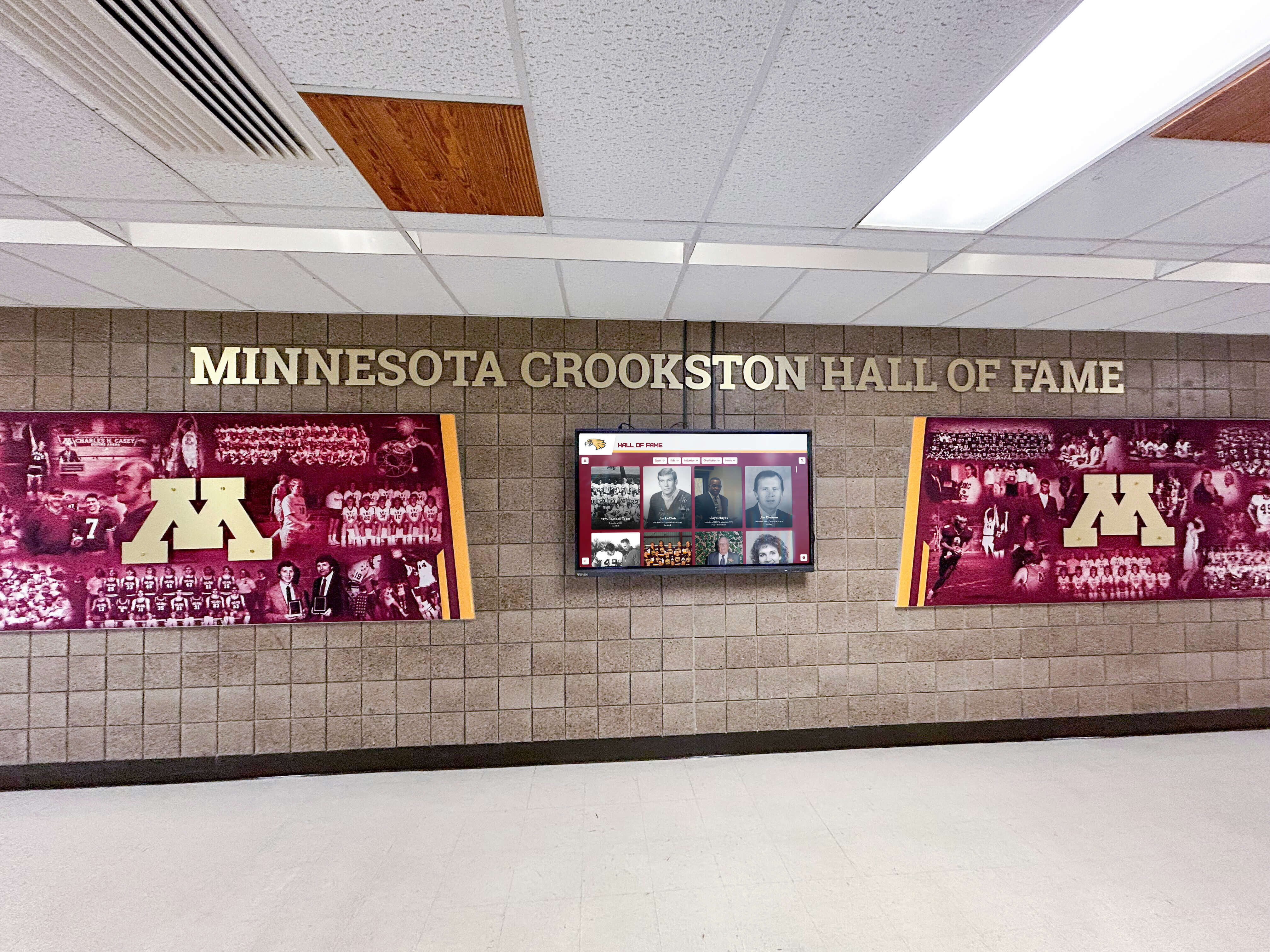
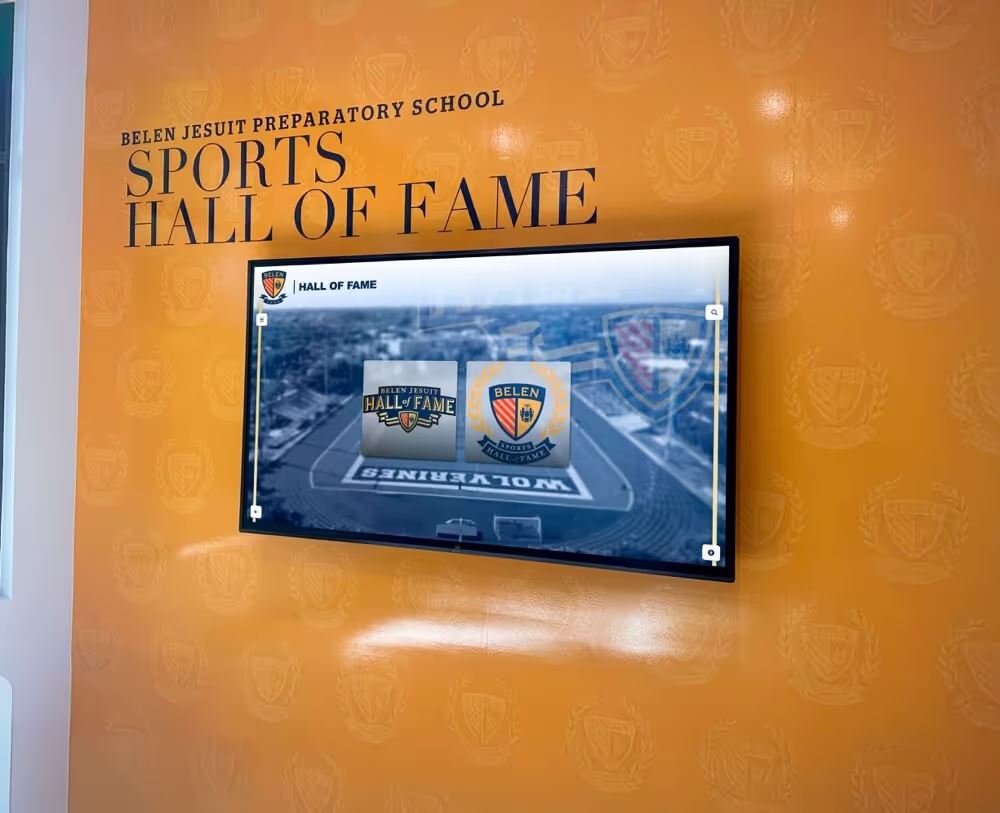
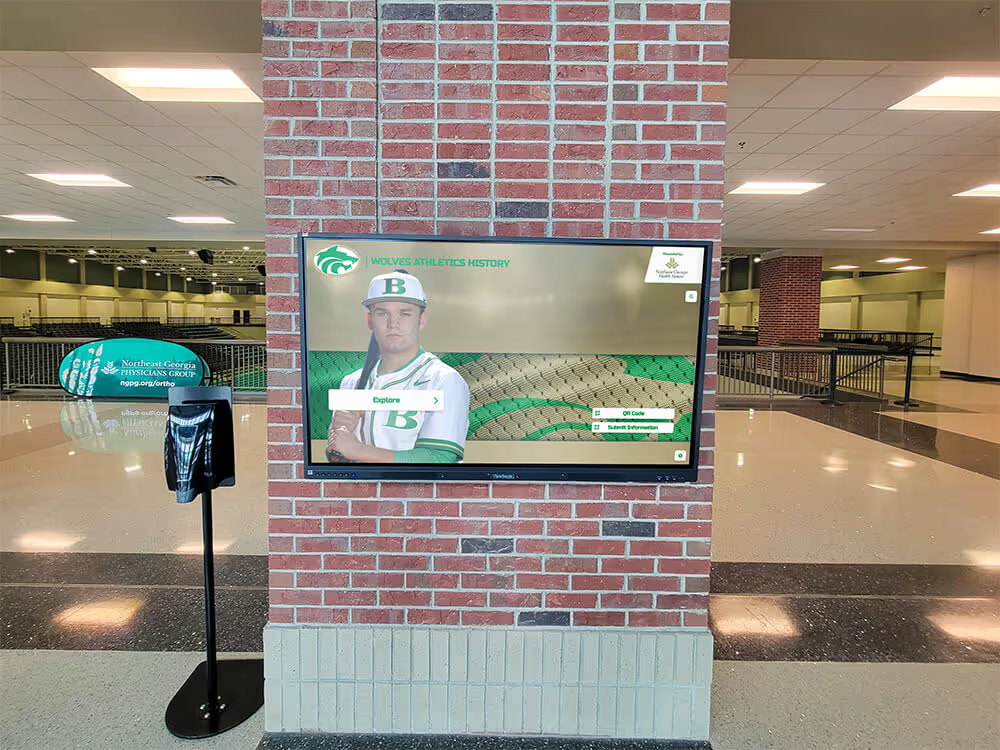
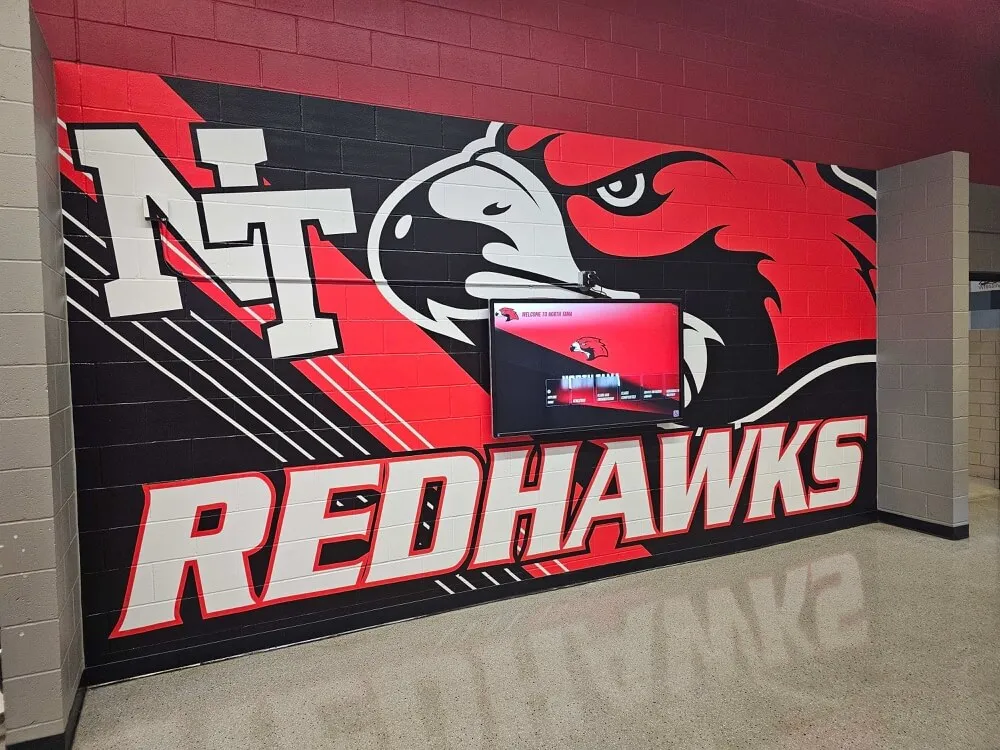
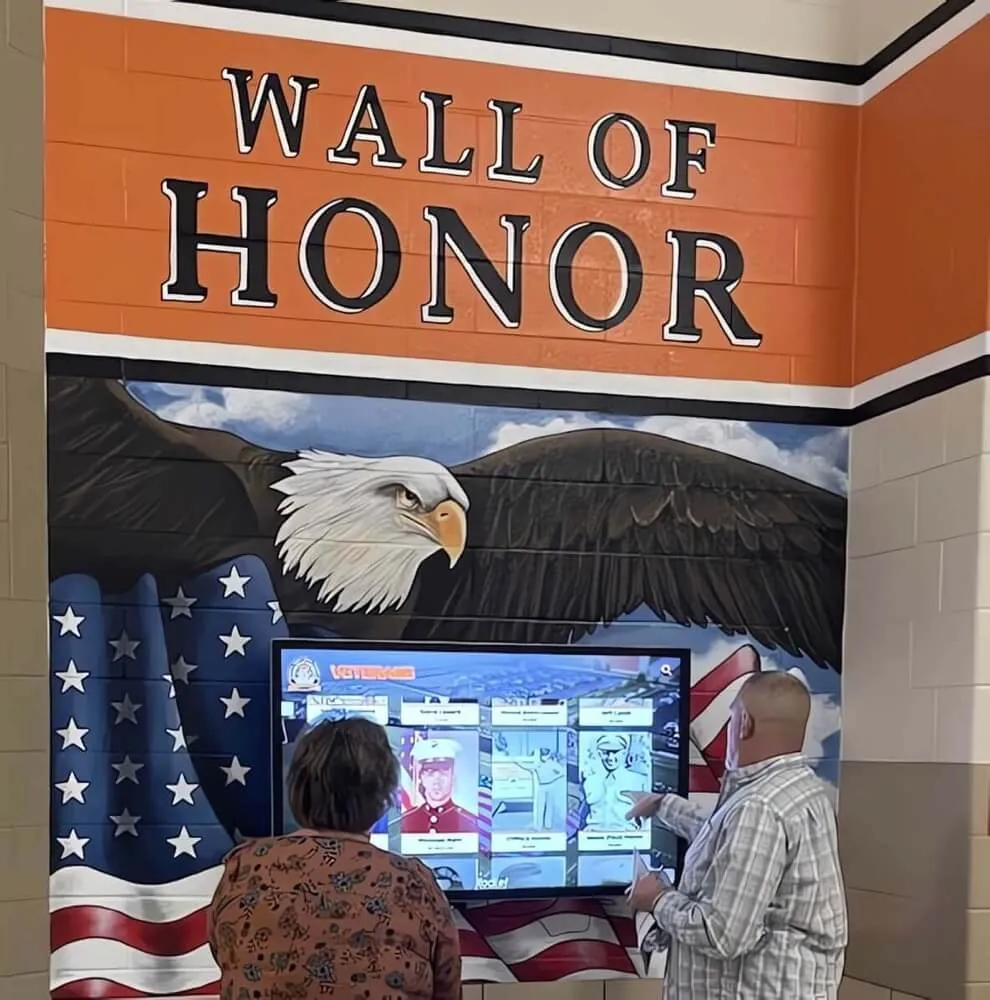
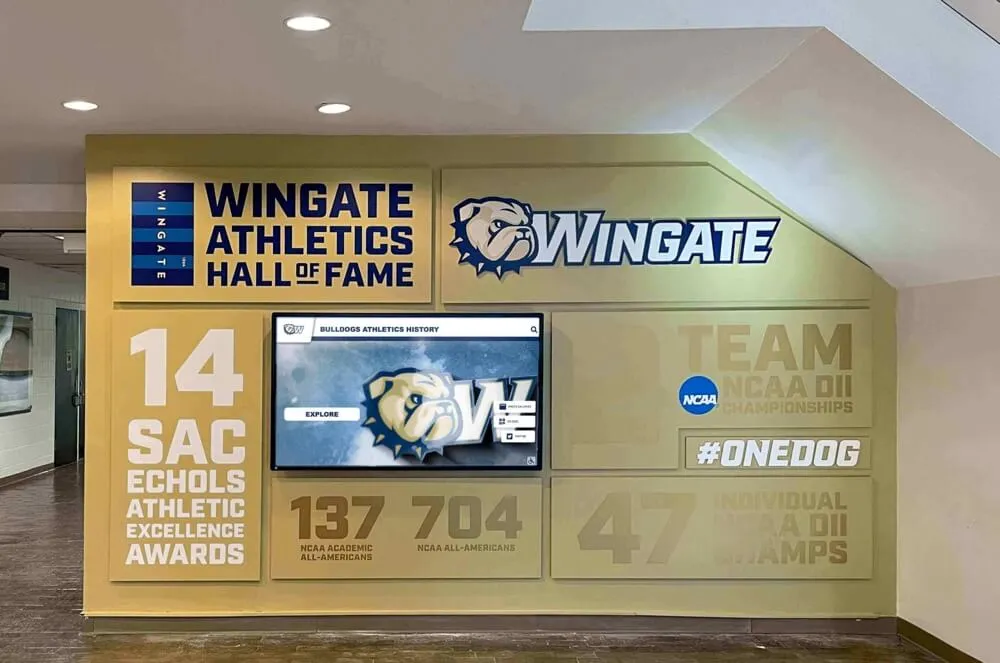
Integrated mural and digital display systems like this one make it possible to pull championship content on demand during rally games — no more last-minute scrambles for historical information
Connecting Rally Games to Year-Round Recognition Culture
The most effective use of fun pep rally games isn’t just in the rally itself—it’s in how the games train students to pay attention to recognition displays throughout the entire year.
Building Anticipation Before Each Rally
Schools that tease rally game content throughout the week create exponentially more excitement than those who surprise students on the day:
- Post “Rally Preview” trivia questions on displays in hallways Monday through Wednesday
- Challenge students to find the answers in trophy cases and recognition displays
- Offer bonus points during the rally to students who can cite where they found their answers
This approach turns static displays into active learning resources and ensures students arrive at rallies already primed with championship history knowledge.
Post-Rally Recognition Reinforcement
After a trophy-case-centered rally, keep the energy going:
- Post the trivia questions and answers on school social media with photos of the relevant displays
- Update hallway screens with “Did You Know?” facts about the champion whose record came up in trivia
- Send parents a quick recap newsletter highlighting which current athletes are approaching historic milestones
Ongoing athletic alumni recognition programs that keep former players visible and honored throughout the year give current rally games richer material to work with—and give alumni reasons to stay connected to your school community.
Connecting Spirit Week to Trophy Case History
Spirit week provides a natural extension of rally themes. Schools that align spirit week activities with championship history produce the most coherent pride-building programming. For ideas on how to connect spirit week themes to your school’s recognition culture, explore middle school spirit week ideas and athletic decor ideas that make championship legacy visible in your physical environment year-round.
The Role of Digital Trophy Cases in Rally Success
Schools that consistently run the most engaging fun pep rally games share a common advantage: they have fast, organized access to their championship history.
The Problem With Physical-Only Trophy Cases
Traditional trophy cases are difficult to leverage during pep rally games for obvious reasons:
- Students can’t see individual items from gymnasium bleachers
- Pulling stats and records requires manual research through old files
- Photos deteriorate, plaques fade, and information becomes incomplete
- No ability to display content dynamically on screens during games
These limitations don’t mean your physical championship history isn’t valuable—it’s enormously valuable. They just mean you need better infrastructure to activate it during events.
What Digital Recognition Makes Possible
Schools using interactive digital recognition platforms can:
- Display any athlete’s full profile on a gymnasium screen in under 30 seconds
- Pull up all-time records by sport and category instantly
- Show championship photo galleries during relevant trivia rounds
- Update content between rallies as new achievements accumulate
- Give students QR codes that unlock mobile access to recognition content during games
The result is rally games that feel polished and professional rather than scrambled. Students respond differently when they can actually see the champion’s face on the screen rather than hearing just a name.
A comprehensive digital trophy case guide outlines the specific features schools should look for when evaluating platforms—unlimited capacity, cloud-based management, ADA compliance, and scheduled publishing are the core requirements for rally-ready recognition systems.
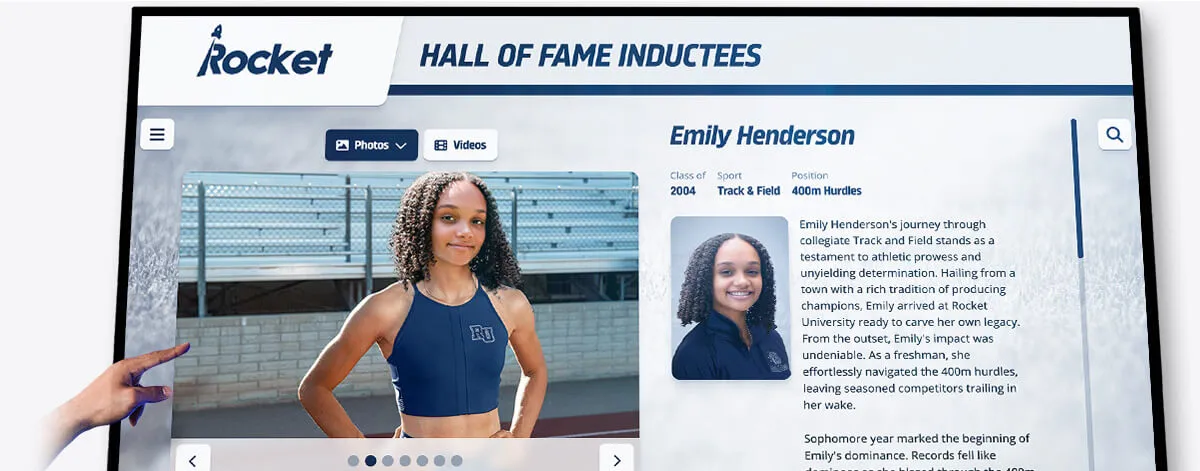
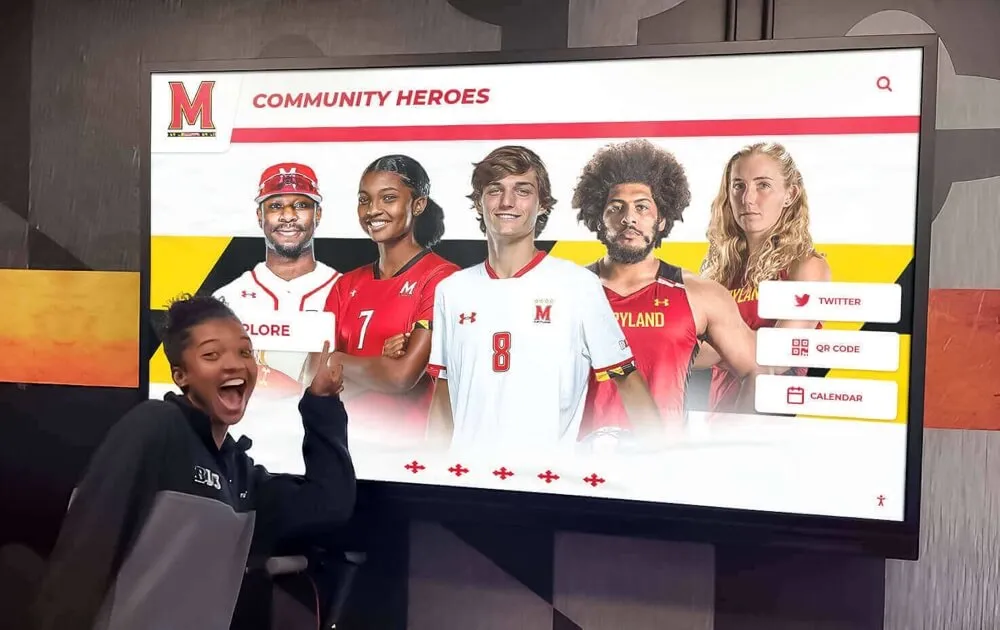
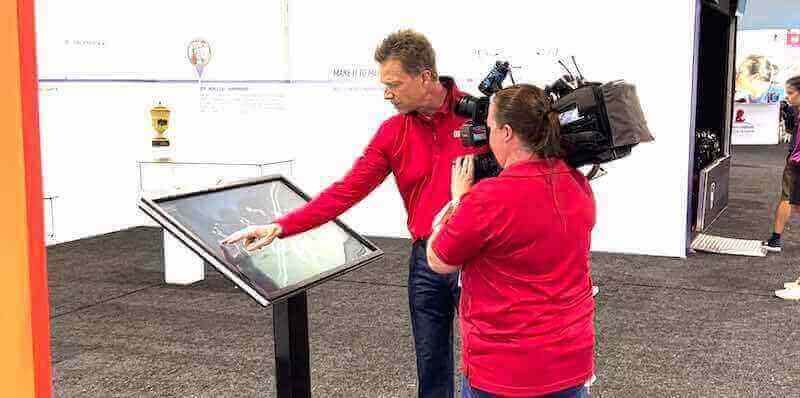
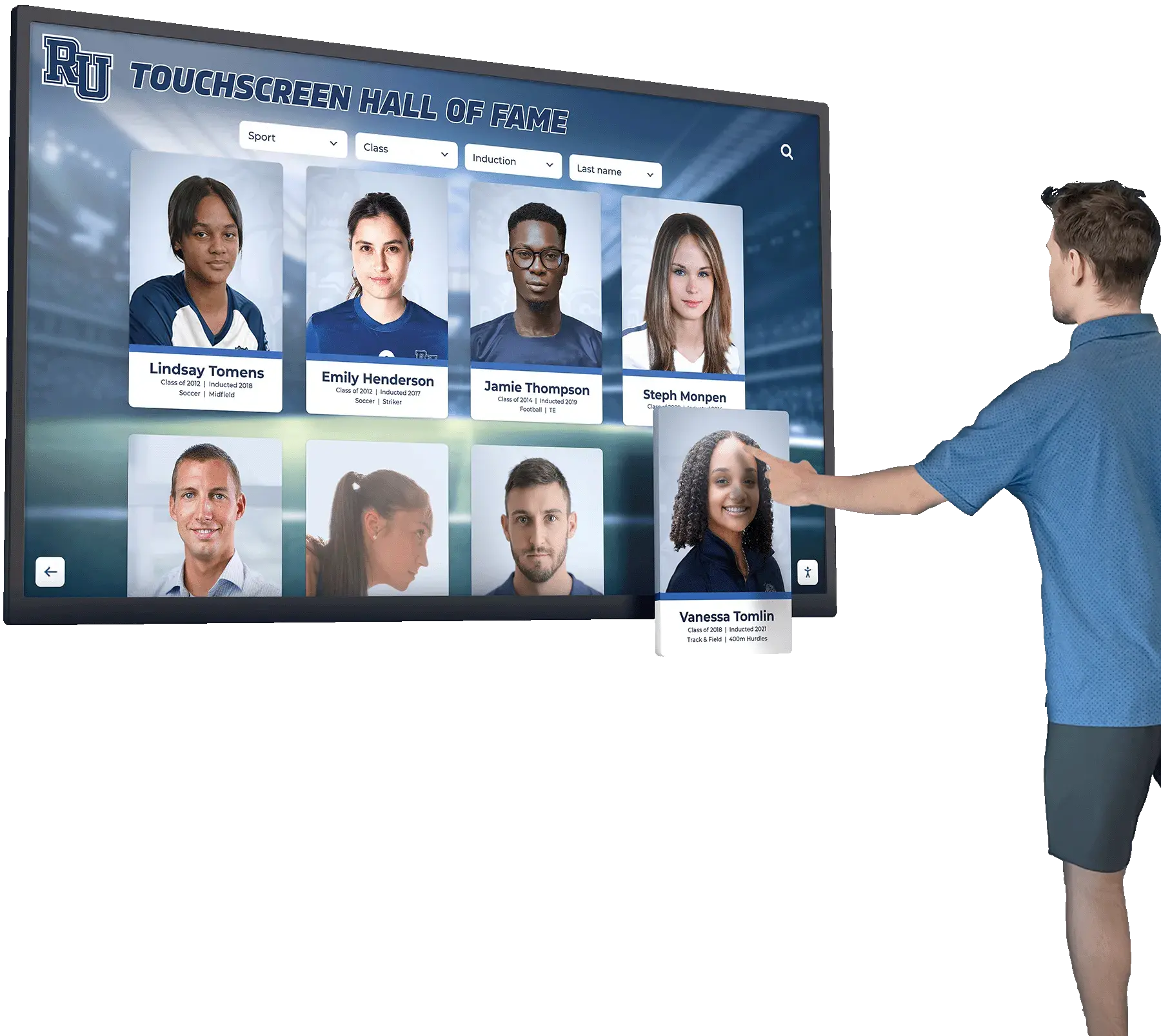
Touchscreen recognition systems allow administrators to instantly pull detailed athlete profiles and records during rally games — turning historical data into live, engaging content
Frequently Asked Questions About Fun Pep Rally Games
How many games should a typical pep rally include?
Three to five distinct game segments typically balance variety with pacing. Too many games fragment energy; too few leave students disengaged during transitions. Aim for two high-energy competitive games, one trivia or recognition segment, and one whole-school participation moment.
How long should each pep rally game last?
Five to eight minutes per game hits the sweet spot for most school audiences. Games running longer than ten minutes lose crowd energy; games under three minutes don’t build enough momentum. Always have a natural stopping point planned before the game starts—even if you have to cut a round short.
What’s the best game format for a first-time trophy case–centered rally?
Championship Year Challenge (trivia about banner years) is the safest entry point because it requires minimal setup, plays well at any school size, and always produces a moment of genuine surprise when students realize how many championships they didn’t know about. Run it once, and students will start paying attention to those banners permanently.
How do you handle sections that consistently win and sections that lose interest?
Rotate game formats so different student strengths are rewarded across a full rally. Physical competitions favor athletes; trivia games favor students who research school history; noise competitions give every section an equal shot. Ensure points reset between rallies rather than accumulating across the year—otherwise losing sections disengage entirely by November.
Can these games work for virtual or hybrid rally formats?
Most trophy case trivia and recognition games adapt well to video platforms. Championship Year Challenge works through polling features on Zoom or Teams; Alumni Guess Who works with photo reveals on any screen-sharing platform; digital record boards can be shared virtually for comparison games. Physical competitions obviously require in-person formats.
Building a Championship Culture That Sustains Itself
Fun pep rally games are one touchpoint in a larger ecosystem of recognition culture. Schools with the strongest school spirit don’t build it at rallies alone—they build it through consistent recognition that makes students aware of their school’s legacy every single day.
The recognition ecosystem that amplifies rally energy includes:
- Interactive hallway displays students pass every day
- Digital trophy cases accessible via QR code from anywhere on campus
- Regular spotlight features on current athletes approaching historical milestones
- Annual Hall of Fame inductions that connect past champions to current students
- Athletic banners, murals, and display walls that make history physically visible
When students live in a school environment saturated with awareness of past achievement, every pep rally game becomes more meaningful because students already care about what’s at stake. The trophy cases aren’t decorations—they’re the foundation of school pride that rally games draw on.
Ready to give your rally games that deeper layer of championship history? Explore how a modern digital trophy case makes your school’s legacy accessible, searchable, and displayable in real time—turning every rally into a celebration of exactly what your students stand for.
Make Your Trophy Case the Heart of Every Pep Rally
Digital Trophy Case gives you instant access to your school's complete championship history — athlete profiles, records, photos, and Hall of Fame content — ready to display on any screen during your next rally. Remote cloud-based management means you update content in minutes, not hours. See how schools across the country are activating their recognition legacy for real-time engagement.
Explore Digital Trophy Case Solutions