



When you see the distinctive FFA emblem displayed on a blue corduroy jacket or featured in an agricultural education classroom, you’re looking at one of the most recognizable symbols in American youth leadership. The National FFA Organization (formerly Future Farmers of America) serves over 850,000 student members in all 50 states, and its emblem represents far more than a simple logo—each element carries specific meaning rooted in agricultural heritage, leadership values, and the organization’s mission to develop premier leadership and career success.
Yet many people—including students, parents, educators, and community members—don’t fully understand what the various symbols within the FFA emblem represent. Why does the emblem feature an eagle? What does the plow signify? Why include an owl, and what’s the significance of the rising sun and cross-section of corn? How have these symbols evolved since FFA’s founding, and why do they continue resonating with modern agricultural education programs preparing students for careers far beyond traditional farming?
This comprehensive guide explores the FFA emblem from its historical origins through contemporary applications, examining each symbol’s meaning, the emblem’s evolution, proper usage guidelines, and how agricultural education programs and schools recognize FFA member achievements through both traditional methods and modern digital recognition systems that celebrate student excellence in agricultural leadership.
The FFA emblem serves as a visual representation of the organization’s core values and agricultural heritage, with each symbol carefully selected to communicate specific principles that guide student development in agricultural education, leadership, and personal growth. Understanding these symbols helps members, advisors, and communities appreciate the depth of meaning behind this iconic emblem.

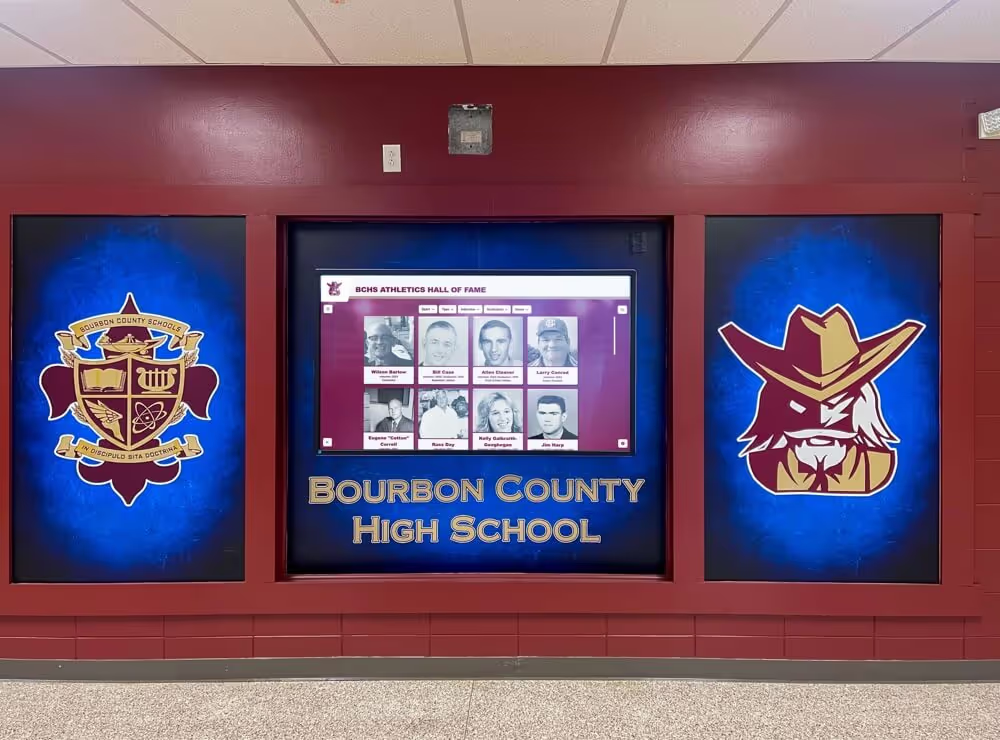
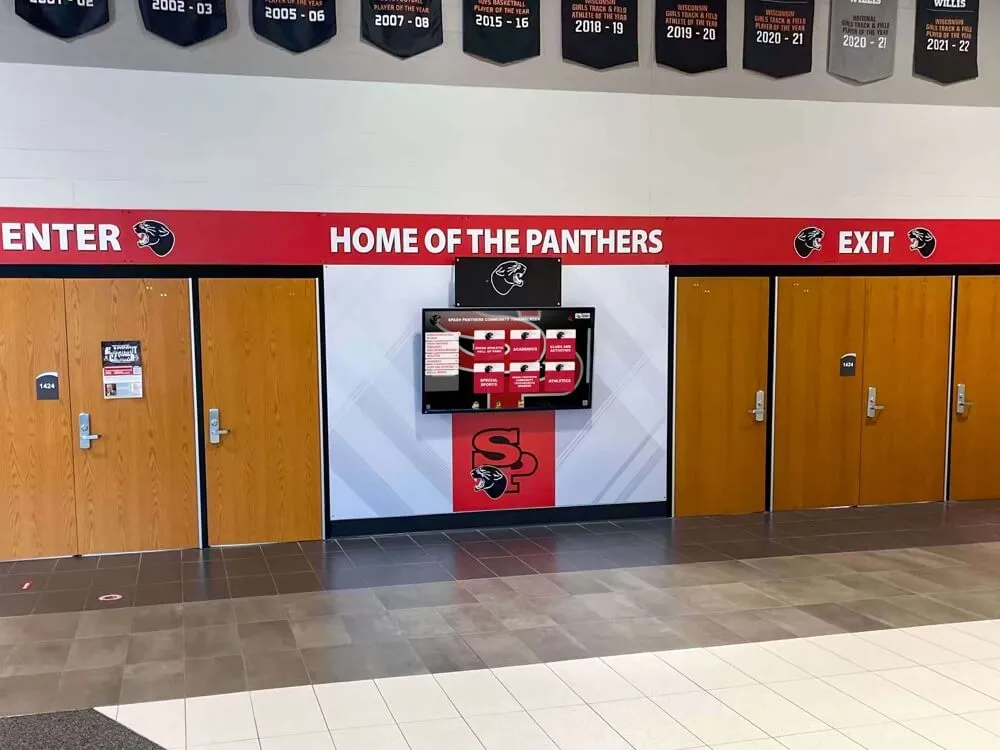
Modern recognition displays celebrate FFA achievements alongside athletic and academic honors, showcasing the diverse accomplishments of well-rounded students
The Complete FFA Emblem: Overview and Components
Before examining individual symbols, understanding the emblem’s overall structure provides essential context for appreciating its comprehensive design.
The Five Elements of the FFA Emblem
Core Symbol Components
The FFA emblem consists of five main elements arranged in a specific configuration:
- The Cross-Section of the Ear of Corn: Provides the foundation, representing unity
- The Rising Sun: Appears in the background, symbolizing progress
- The Plow: Featured centrally, signifying labor and tillage of the soil
- The Eagle: Positioned above the emblem, representing national scope
- The Owl: Perched on the plow’s handles, symbolizing knowledge and wisdom
These five elements work together creating a unified visual message about agricultural education’s role in developing knowledgeable, hardworking leaders prepared to advance agriculture while serving their communities and nation.
The Words “Agricultural Education”
Encircling the emblem, these words define the emblem’s context and purpose, emphasizing that FFA exists as an integral part of agricultural education programs rather than as a standalone organization. This connection reinforces that classroom instruction, supervised agricultural experiences, and FFA leadership development work together creating comprehensive agricultural education.
Official Colors: National Blue and Corn Gold
Color Symbolism and Consistency
The FFA’s official colors carry specific meanings:
National Blue
- Represents the blue field of the American flag
- Symbolizes national scope and patriotism
- Appears on official FFA jackets and materials
- Connects members to national organization identity
Corn Gold
- Honors corn as fundamental American crop
- Represents golden opportunities in agriculture
- Symbolizes the ripened corn harvest
- Reflects agricultural prosperity and abundance
These colors appear consistently throughout FFA materials, from official jackets to chapter banners, creating immediate visual recognition of FFA affiliation.

Comprehensive recognition displays showcase FFA achievements alongside other student accomplishments, celebrating diverse pathways to excellence
The Eagle: Symbol of National Scope
The eagle serves as one of the FFA emblem’s most prominent and powerful symbols, representing the organization’s reach and values.
Historical Significance and Selection
Why the American Eagle?
The eagle was selected for specific symbolic reasons:
- National symbol: The bald eagle serves as America’s national emblem since 1782
- Freedom and independence: Eagles represent the liberty American agriculture embodies
- Vision and perspective: Eagles’ ability to soar high symbolizes looking toward future possibilities
- Strength and courage: Eagle characteristics mirror qualities FFA develops in members
- National scope: The eagle emphasizes FFA’s presence across all states and territories
The eagle positioned above the emblem suggests FFA’s aspirational nature—encouraging members to rise above local perspectives and consider their roles within broader agricultural systems and national contexts.
The Eagle’s Position and Meaning
Positioning and Symbolism
The eagle’s placement carries specific significance:
Perched Above
- Elevated position suggesting higher aspirations
- Protective stance watching over agricultural education
- National perspective beyond local chapter focus
- Leadership role in American agricultural advancement
Wings and Orientation
- Traditional heraldic eagle position
- Dignified posture reflecting organizational values
- Connection to American governmental and civic symbolism
- Timeless design maintaining historical consistency
Schools implementing comprehensive student recognition programs ensure FFA achievements receive visibility equal to athletic and academic honors, acknowledging that agricultural leadership development contributes significantly to well-rounded student growth.

Interactive recognition displays enable students to explore detailed FFA achievement records and leadership accomplishments
The Rising Sun: Symbol of Progress
The rising sun appears as a background element but carries profound meaning about FFA’s forward-looking orientation and optimism.
Progress and New Beginnings
Dawn of a New Day
The rising sun represents multiple interconnected concepts:
Agricultural Significance
- Daily agricultural work beginning at sunrise
- Farmers’ traditional early morning starts
- Seasonal cycles and agricultural rhythms
- Connection to natural agricultural patterns
Metaphorical Meaning
- New opportunities dawning for each generation
- Progress and advancement in agricultural practices
- Bright future for those pursuing agricultural careers
- Continuous improvement and innovation emphasis
Educational Context
- Students as “rising” generation of agricultural leaders
- Educational experiences opening new possibilities
- Knowledge illuminating understanding like sunlight
- Growth and development throughout agricultural education programs
The Sun’s Rays and Their Significance
Radiating Influence
The sun’s rays extending outward symbolize:
- Agricultural education’s spreading influence
- Knowledge radiating from FFA experiences into communities
- Members’ impact extending beyond individual achievements
- Light dispelling ignorance about agriculture and food systems
- Warmth of FFA fellowship and community
The rising sun specifically appears as “rising” rather than setting, emphasizing optimism, hope, and forward progress—rejecting decline narratives in favor of agricultural advancement and opportunity perspectives.
Programs implementing student leadership recognition understand that FFA develops similar leadership capabilities to those cultivated through athletics and student government, meriting equivalent acknowledgment.

Recognition walls integrate multiple achievement categories, ensuring FFA accomplishments appear alongside other prestigious honors
The Plow: Symbol of Labor and Agriculture
The plow serves as the emblem’s central agricultural symbol, grounding the design in practical farming heritage while representing broader concepts.
Historical and Practical Significance
Foundation of Agriculture
The plow represents humanity’s most fundamental agricultural tool:
Historical Importance
- One of civilization’s earliest and most important inventions
- Enabled transition from hunter-gatherer to agricultural societies
- Revolutionary tool that made permanent settlements possible
- Symbol recognized across cultures and throughout history
Agricultural Meaning
- Soil preparation necessary for successful crop production
- Hard physical labor associated with farming
- Connection to land and environmental stewardship
- Traditional farming practices connecting generations
Modern Relevance
- While fewer students operate traditional plows, the symbol remains meaningful
- Represents all forms of agricultural labor and production
- Honors agricultural heritage while acknowledging modern practices
- Connects contemporary agricultural technology to historical foundations
Symbolic Interpretations Beyond Farming
Labor, Preparation, and Progress
The plow’s symbolism extends beyond literal agricultural interpretation:
Work and Effort
- Dedication required for agricultural success
- Preparation preceding achievement
- Overcoming resistance (soil, challenges, obstacles)
- Transforming raw potential into productive outcomes
Character Development
- Hard work ethic FFA cultivates in members
- Persistence through difficult tasks
- Taking pride in manual and intellectual labor
- Understanding that significant achievements require sustained effort
Breaking New Ground
- Innovation in agricultural practices
- Pioneering spirit in career exploration
- Creating opportunities through active effort
- Preparing foundations for future success
Schools implementing career and technical education recognition ensure agricultural education students receive acknowledgment comparable to traditional academic programs, validating diverse educational pathways.

Entrance displays provide prominent visibility for FFA achievements, signaling school pride in agricultural education programs
The Owl: Symbol of Knowledge and Wisdom
The owl perched on the plow’s handles represents the intellectual and educational dimensions of agricultural education.
Knowledge, Wisdom, and Learning
Traditional Symbolism
The owl has served as a knowledge symbol throughout human history:
Historical Associations
- Ancient Greek goddess Athena’s symbol representing wisdom
- Across cultures, owls symbolize knowledge and insight
- Traditional academic and scholarly imagery
- Intellectual rather than merely practical knowledge
FFA-Specific Meaning
- Scientific understanding underlying agricultural practices
- Agricultural education’s classroom instruction component
- Critical thinking and informed decision-making
- Continuous learning throughout agricultural careers
Balance with Other Symbols
- Owl on plow combines knowledge with practical labor
- Wisdom guides effective agricultural practices
- Education transforms work from toil into skilled profession
- Mental and physical dimensions both essential
The Owl’s Position on the Plow
Integration of Knowledge and Practice
The owl’s specific placement carries meaning:
Perched on Handles
- Knowledge guiding practical action
- Wisdom directing labor effectively
- Education making work more productive and meaningful
- Intellectual foundation supporting physical effort
Observant Position
- Owls’ ability to see in darkness suggests insight and understanding
- Watchful stance suggesting careful observation and study
- Wisdom learned through experience and education
- Seeing beyond obvious to understand underlying principles
Wisdom in Modern Agricultural Context
Contemporary Applications
In today’s agricultural landscape, the owl’s symbolism proves increasingly relevant:
Scientific Agriculture
- Precision farming requiring technological knowledge
- Data-driven decision making in production agriculture
- Environmental science understanding for sustainability
- Business acumen for agricultural enterprises
Informed Leadership
- Research-based rather than assumption-based practices
- Understanding complex agricultural policy and economics
- Effective communication requiring knowledge and wisdom
- Systems thinking addressing interconnected agricultural challenges

Academic achievement displays naturally include FFA honors recognizing the rigorous curriculum and competitive success in agricultural education
Programs implementing academic achievement recognition systems understand that FFA members often excel academically, particularly in science and business courses connected to agricultural interests.
The Corn: Symbol of Unity and Foundation
The cross-section of corn provides the emblem’s foundation, representing both agricultural production and organizational unity.
Why Corn Specifically?
America’s Foundational Crop
Corn was selected for specific agricultural and historical reasons:
Agricultural Importance
- Corn ranks among America’s most important agricultural commodities
- Produced in nearly every state, making it nationally relevant
- Used for human food, livestock feed, industrial products, and biofuels
- Economic importance in rural communities nationwide
Historical Significance
- Native American agricultural heritage
- Survival crop for early American settlers
- Foundation of American agricultural development
- Symbol recognized by agricultural and non-agricultural audiences alike
Versatility and Utility
- Corn’s diverse uses mirror FFA’s diverse programs and career pathways
- Adaptability across climates reflects FFA’s national scope
- Economic value reflects agricultural career opportunities
- Scientific complexity reflects agricultural education depth
Unity Symbolism
The Cross-Section’s Meaning
The specific choice of corn’s cross-section carries intentional symbolism:
Structural Unity
- Corn kernels arranged in uniform rows represent organized collaboration
- Individual kernels together create productive whole
- Each kernel essential to ear’s completeness
- Geometric pattern suggesting order and structure
FFA Application
- Individual members united in common purpose
- Chapters across nation forming unified organization
- Diverse backgrounds and interests united by agricultural education
- Strength through collective effort and shared values
Foundation Position
- Corn supports other emblem elements suggesting foundational importance
- Unity as prerequisite for organizational effectiveness
- Common ground enabling diverse members to work together
- Stable base from which progress and achievement emerge

Comprehensive lobby displays celebrate FFA within broader school achievement culture, acknowledging multiple excellence pathways
The Evolution of the FFA Emblem
Understanding how the emblem has evolved provides context for its current form and meaning.
Original Design and Early Versions
1928-1930: The Beginning
When FFA was founded in 1928, the emblem underwent development:
Early Variations
- Initial designs tested different configurations
- Symbol selection involved agricultural education leaders
- National scope consideration influenced design choices
- Agricultural symbolism balanced with civic elements
Standardization Process
- Official emblem adopted ensuring consistency
- Style guides created for proper reproduction
- Trademark registration protecting organizational identity
- Usage guidelines established maintaining emblem integrity
Changes and Modifications Over Decades
Adaptations Through FFA History
The emblem has undergone subtle refinements:
Name Changes Reflected
- Original “Future Farmers of America” text
- 1988 change to “National FFA Organization”
- Maintaining FFA acronym while broadening scope
- Recognizing expanded career paths beyond production farming
Design Refinements
- Modernized artistic renderings maintaining symbol integrity
- Digital-friendly versions for electronic media
- Color standardization across materials
- Simplified versions for small-scale reproduction

Modern recognition installations with multiple displays accommodate comprehensive achievement showcases including FFA honors and awards
Contemporary Context
- Symbols remain constant while interpretations evolve
- Agricultural diversity reflected in broader emblem understanding
- Urban agriculture and food systems included in agricultural scope
- Technology and innovation integrated with traditional symbols
Schools implementing evolving recognition programs understand that while FFA’s emblem remains consistent, recognition methods must adapt to contemporary preferences and technologies.
Proper Usage and Display of the FFA Emblem
Official guidelines govern emblem usage ensuring respectful and consistent representation.
Official Usage Guidelines
Trademark Protection and Standards
The National FFA Organization maintains strict emblem standards:
Authorized Uses
- Official FFA programs and activities
- Educational materials about agricultural education
- Recognition of FFA membership and achievement
- Chapter banners, materials, and communications
- Licensed merchandise supporting FFA
Prohibited Uses
- Commercial products without licensing
- Political campaigns or partisan causes
- Endorsements of commercial products or services
- Alterations changing emblem appearance or meaning
- Uses suggesting official FFA affiliation when none exists
Quality Standards
- Approved color specifications (National Blue and Corn Gold)
- Proper proportions maintaining design integrity
- Clear space requirements around emblem
- Minimum size specifications ensuring visibility
- Reproduction quality maintaining professional appearance
FFA Jacket and Official Attire Guidelines
The Official FFA Jacket
The blue corduroy jacket represents FFA’s most recognizable attire:
Jacket Standards
- National Blue corduroy fabric
- Official FFA emblem on back
- Member’s name on front right
- Chapter and state designation
- Standardized design maintaining uniformity
Wearing Guidelines
- Official FFA events and activities
- Appropriate occasions requiring professional appearance
- Not for casual everyday wear
- Removed during Pledge of Allegiance and National Anthem
- Maintained in clean, pressed condition
Additional Insignia
- Pins and awards on front left
- Officer pins for chapter leadership
- Degree pins marking achievement levels
- Competition and award pins documenting accomplishments
Programs implementing student organization recognition ensure visibility for FFA achievements comparable to honor societies and other prestigious organizations.

Interactive touchscreen displays enable detailed exploration of FFA member achievements and leadership accomplishments
FFA Degrees and Recognition Systems
The FFA Organization recognizes member achievement through degree programs that build progressively from chapter to national levels.
The FFA Degree System
Progressive Achievement Recognition
FFA awards four membership degrees plus an honorary degree:
Discovery FFA Degree
- Entry level for middle school FFA members
- Introduction to agricultural education and FFA
- Foundation for future involvement
- Encourages exploration and participation
Greenhand FFA Degree
- First formal degree for high school members
- Requires basic agricultural education enrollment
- Knowledge of FFA Creed, motto, salute, and mission
- Understanding of FFA history and emblem symbolism
- Foundation for continued advancement
Chapter FFA Degree
- Second level recognizing chapter involvement
- Requires Greenhand degree completion
- Hours of participation in chapter activities
- Supervised agricultural experience (SAE) involvement
- Demonstrates commitment beyond basic participation
State FFA Degree
- Third level recognizing state-level achievement
- Extensive SAE record demonstrating agricultural learning
- Significant chapter and community service hours
- Leadership development and participation documentation
- Awarded at state FFA convention
- Prestigious recognition limited to dedicated members
American FFA Degree
- Highest degree awarded to FFA members
- Exceptionally selective recognition
- Outstanding SAE records with significant scope
- Exceptional leadership at chapter, state, and national levels
- Awarded at National FFA Convention
- Prestigious lifetime achievement

Comprehensive lobby recognition celebrates FFA degrees alongside athletic championships and academic honors
Honorary American FFA Degree
- Special recognition for non-members
- Significant contributions to agricultural education
- Support for FFA programs and agricultural youth
- Limited number awarded annually
- Recognizes partners and advocates
Schools implementing comprehensive achievement recognition ensure FFA degrees receive display prominence comparable to National Honor Society inductions and other prestigious recognitions.
Career Development Events and Awards
Competitive Excellence Recognition
FFA offers competitive programs developing career-ready skills:
Career Development Events (CDEs)
- Agricultural mechanics and technology competitions
- Animal science and livestock evaluation
- Agronomy and crop science challenges
- Agricultural sales and marketing competitions
- Environmental and natural resources events
- Food science and agricultural processing
- Leadership and communication contests
Proficiency Awards
- Recognize outstanding SAE programs
- 53 different agricultural career areas
- Chapter, state, and national levels
- Cash awards and recognition at conventions
- Career path validation and encouragement
Leadership Conferences and Programs
- Washington Leadership Conference participation
- State and national officer teams
- Chapter leadership development
- Conference attendance and presentation opportunities
Recognizing FFA Achievement in Schools and Communities
Schools and communities increasingly implement formal recognition programs honoring FFA member accomplishments.
Traditional Recognition Methods
Conventional FFA Celebration
Standard recognition approaches include:
School Assemblies and Presentations
- Degree recognition during school programs
- Competition team acknowledgments
- Officer installation ceremonies
- Public acknowledgment of state and national qualifiers
Agricultural Education Classroom Displays
- Degree plaques and certificates
- Competition trophies and awards
- Chapter achievement banners
- Historical chapter records
Community Recognition
- Local newspaper features on FFA achievements
- Service club presentations about FFA programs
- County fair exhibits showcasing FFA work
- Community partner acknowledgments

Trophy case environments naturally accommodate FFA awards alongside athletic and academic achievements
Modern Digital Recognition Solutions
Limitations of Physical Displays
Traditional trophy cases and bulletin boards face constraints:
- Limited space restricting how many FFA achievements can display
- Static presentations providing minimal detail about accomplishments
- Maintenance challenges as awards and recognitions accumulate
- Difficulty showcasing supervised agricultural experience details
- Space constraints preventing comprehensive FFA history preservation
Digital Display Advantages
Modern recognition platforms provide comprehensive alternatives:
Unlimited Recognition Capacity
- Showcase every FFA member across decades
- Document all degrees, awards, and competitions
- Preserve complete chapter history
- Include detailed SAE project descriptions
- Maintain comprehensive achievement records
Rich Content and Storytelling
- Detailed descriptions of competitive achievements
- Photographs from FFA events and activities
- Leadership position documentation
- Career path updates tracking member success
- Video integration showcasing projects and presentations

Interactive displays enable detailed FFA achievement exploration with comprehensive profiles impossible in physical displays
Ongoing Updates and Management
Solutions like Rocket Alumni Solutions enable schools to:
- Add new FFA achievements instantly through cloud-based management
- Update member profiles as students earn additional recognition
- Maintain searchable databases families can explore from anywhere
- Create comprehensive agricultural education program showcases
- Integrate FFA recognition within broader school achievement culture
- Preserve decades of agricultural education history digitally
Schools implementing digital recognition displays report that FFA members appreciate seeing their agricultural achievements displayed alongside athletic championships and academic honors, validating that multiple excellence pathways receive equal recognition.
The FFA Emblem’s Contemporary Relevance
Understanding why the emblem remains meaningful in modern agricultural education helps appreciate its enduring significance.
Evolving Agricultural Landscape
Modern Agriculture and the Historic Emblem
While agriculture has transformed dramatically, the emblem’s symbols remain relevant:
Traditional Symbols, Contemporary Applications
- Plow represents all agricultural labor, from precision farming to aquaponics
- Owl symbolizes scientific and technological knowledge increasingly essential
- Eagle reflects global agricultural connections and international trade
- Rising sun represents innovation and sustainable agriculture advancement
- Corn acknowledges agricultural diversity while honoring heritage
Urban and Diverse Agriculture
- FFA chapters in urban schools studying food systems and urban agriculture
- Environmental science and sustainability integrated with traditional agriculture
- Biotechnology, data science, and precision agriculture as career paths
- Agricultural business, marketing, and communications opportunities
- Food security and agricultural development internationally
Programs implementing diverse career pathway recognition understand that agricultural education prepares students for careers spanning science, business, technology, and leadership—meriting visibility equal to traditional academic pathways.

Comprehensive hallway displays acknowledge multiple career pathways including agricultural education and technical programs
FFA’s Expanding Scope and Membership
Beyond “Future Farmers”
The 1988 name change to “National FFA Organization” reflected expanding scope:
Broader Career Focus
- Agricultural science and research careers
- Agribusiness management and entrepreneurship
- Food science and technology
- Environmental conservation and natural resources
- Agricultural communications and advocacy
- Biotechnology and agricultural engineering
- Agricultural education and extension
Inclusive Membership
- Urban students studying food systems and agricultural policy
- Suburban students interested in environmental science
- Students pursuing veterinary medicine and animal science
- Future agricultural educators and extension agents
- Aspiring agricultural journalists and communicators
Maintained Relevance
- Emblem symbols flexible enough to accommodate evolving interpretations
- Core values remain constant while applications diversify
- Leadership development transcends specific agricultural careers
- Service orientation applicable across agricultural sectors
Showcase FFA Achievements with Modern Recognition Displays
Discover how digital recognition platforms enable unlimited capacity to showcase every FFA member with comprehensive achievement details, competition results, leadership positions, and career pathway documentation. See how schools nationwide honor agricultural education excellence through integrated recognition strategies that preserve program history while celebrating current student accomplishments.
Book A DemoConnecting FFA Emblem Meaning to Student Development
Understanding how emblem symbolism translates into practical student development helps advisors and administrators communicate FFA value effectively.
Leadership Development Through FFA
Emblem Values in Practice
Each emblem symbol corresponds to tangible leadership competencies:
Eagle-Inspired Leadership
- Developing broad perspectives beyond local contexts
- Understanding agricultural industry at state and national levels
- Connecting classroom learning to policy and societal impacts
- Building confidence addressing large audiences and complex issues
Owl-Driven Knowledge Acquisition
- Research skills through competitive events and SAE projects
- Scientific method application in agricultural contexts
- Critical thinking about agricultural challenges and solutions
- Continuous learning mindset essential for career adaptability
Plow-Represented Work Ethic
- Project management through supervised agricultural experiences
- Responsibility and follow-through on long-term commitments
- Understanding that significant achievements require sustained effort
- Taking pride in quality work regardless of recognition
Rising Sun Optimism and Innovation
- Entrepreneurial thinking applied to agricultural challenges
- Solution-oriented approach to problems
- Resilience and persistence through setbacks
- Vision for agricultural advancement and personal contribution
Corn-Symbolized Collaboration
- Teamwork in chapter activities and competitive events
- Appreciating diverse perspectives and approaches
- Building consensus and working toward common goals
- Understanding individual contribution to collective success

Recognition kiosks in high-traffic areas ensure FFA achievements receive ongoing visibility alongside other prestigious honors
Character Development and Personal Growth
FFA’s Holistic Development Approach
Beyond leadership and agricultural knowledge, FFA cultivates character:
Values Embedded in Organization
- Integrity in all dealings and communications
- Service orientation toward community and agriculture
- Responsibility for personal actions and commitments
- Respect for diverse perspectives and backgrounds
- Citizenship understanding rights and responsibilities
Personal Development Opportunities
- Public speaking through chapter meetings and competitions
- Financial literacy through SAE record-keeping
- Goal setting and achievement through degree programs
- Professional etiquette through conventions and conferences
- Networking across agricultural industry and education

Hall of fame installations naturally incorporate FFA honors within comprehensive achievement celebrations
Career Readiness Beyond Agriculture
FFA develops transferable skills valuable in any career:
- Communication competencies essential in all professions
- Leadership experience applicable across sectors
- Financial management fundamentals for personal and professional success
- Problem-solving skills transferring to any challenge
- Work ethic and responsibility employers value universally
Programs implementing comprehensive student development recognition understand that FFA experiences develop the whole student, meriting recognition alongside traditional academic honors.
Supporting FFA Programs Through Recognition
Understanding how recognition strengthens FFA programs helps administrators and community partners support agricultural education effectively.
Recognition’s Role in Program Strength
How Acknowledgment Strengthens Programs
Visible FFA recognition contributes to program success:
Recruitment and Retention
- Visible achievements attract prospective members
- Recognition of diverse FFA opportunities appeals to varied interests
- Display of FFA prestige alongside other honors validates agricultural education
- Alumni recognition demonstrates long-term value and career success
Community Support and Awareness
- Public recognition builds community understanding of agricultural education
- Achievement displays demonstrate program quality and student excellence
- Visibility attracts business partners and sponsors
- Recognition connects FFA to broader school achievement culture
Student Motivation and Pride
- Knowing achievements will receive recognition motivates excellence
- Public acknowledgment validates students’ agricultural education choice
- Permanent displays preserve individual and chapter legacies
- Professional presentation reflects program quality and respect

Comprehensive lobby installations showcase diverse programs including FFA, creating inclusive achievement cultures
Best Practices for FFA Recognition Programs
Creating Effective FFA Recognition Systems
Successful programs incorporate these elements:
Comprehensive Achievement Documentation
- All FFA degrees from Greenhand through American Degree
- Career Development Event participation and placement
- Proficiency award recipients and areas
- Leadership positions at chapter, state, and national levels
- Supervised Agricultural Experience project summaries
- Scholarship recipients and amounts
- Post-graduation career paths demonstrating FFA impact
Integration with Broader School Recognition
- FFA achievements displayed alongside athletic championships
- Agricultural education included in academic honor systems
- Career and technical education valued equally with traditional academics
- Multiple pathways to excellence acknowledged and celebrated
- Comprehensive student development beyond test scores and sports
Accessible and Engaging Presentation
- Searchable databases enabling family and community exploration
- Mobile accessibility extending recognition reach
- Updated regularly maintaining current information
- Professional presentation reflecting program quality
- Interactive displays engaging visitors with rich content
Conclusion: The Enduring Meaning of the FFA Emblem
The FFA emblem represents far more than a simple logo—it’s a carefully crafted symbol system communicating the organization’s values, agricultural heritage, and developmental mission. From the eagle’s national perspective and the owl’s wisdom to the plow’s labor, the rising sun’s optimism, and corn’s unity, each element carries specific meaning that has resonated with generations of agricultural education students while remaining relevant in contemporary contexts.
Understanding the emblem’s symbolism helps current and prospective FFA members appreciate the depth of tradition and purpose they join when becoming part of the National FFA Organization. The emblem appears on blue corduroy jackets worn with pride, chapter banners displayed in agricultural education classrooms, and recognition materials celebrating member achievements—in each context, the symbols remind members of the values guiding their agricultural education journey and the legacy they continue.
Schools and communities recognizing FFA member achievements honor not just individual accomplishments but the broader agricultural education mission preparing students for diverse careers in agriculture, food systems, natural resources, and leadership across sectors. Modern recognition systems complement traditional approaches by providing unlimited capacity to showcase every FFA member’s journey with comprehensive detail impossible in physical trophy cases, ensuring that agricultural education receives visibility equal to athletic and academic programs.
As agriculture continues evolving with new technologies, sustainability challenges, and global interconnections, the FFA emblem’s historic symbols adapt to contemporary meanings while maintaining core values. The plow represents all forms of agricultural work from precision farming to biotechnology. The owl symbolizes the scientific knowledge essential for modern agriculture. The eagle reflects agriculture’s global scope and national importance. The rising sun represents innovation and sustainable advancement. And the corn acknowledges agricultural diversity while honoring the tradition connecting current students to over ninety years of FFA history.
Your FFA members deserve recognition systems that honor their dedication, document their achievements, and build program pride connecting current students to institutional legacy while inspiring future agricultural leaders. Whether implementing new recognition programs, modernizing existing systems, or seeking to integrate agricultural education within comprehensive school achievement culture, effective approaches celebrate FFA excellence alongside all forms of student accomplishment, validating that multiple pathways lead to success.
Ready to showcase your FFA program with modern recognition displays providing unlimited capacity for member achievements and program history? Discover how schools honor agricultural education through integrated recognition strategies, explore comprehensive student achievement showcases celebrating diverse excellence, learn about career pathway recognition systems validating technical education, or see how interactive displays engage communities with agricultural education excellence, building pride that motivates current members while inspiring future generations to embrace agricultural leadership and career opportunities.