



Each spring, thousands of high school students compete in FBLA competitive events that test everything from accounting knowledge and public speaking to cybersecurity skills and entrepreneurial thinking. Future Business Leaders of America runs one of the most rigorous student competition structures in American secondary education, with individual, team, and chapter-level events spanning dozens of business disciplines. Yet despite the intensity of these contests and the achievement they represent, many schools struggle to give FBLA winners the sustained recognition their accomplishments deserve.
A business student who earns a top-three placement at a state leadership conference or qualifies for the National Leadership Conference has accomplished something genuinely impressive. These students prepare for months, master complex subject matter, and perform under pressure in front of judges. The competitive experience shapes career direction, college applications, and professional confidence. The recognition they receive from their schools should reflect that significance.
This guide covers the structure and categories of FBLA competitive events, explains how each format works, outlines the progression from local competitions to nationals, and explores how schools can build lasting recognition systems that honor FBLA champions appropriately — from the moment they walk through the door to years after graduation.
FBLA competitive events provide concrete, measurable achievement that translates directly into the recognition frameworks schools already use for athletics and academic honors. Understanding the event structure helps administrators, advisors, and families appreciate what placements represent and design recognition that reflects that value.

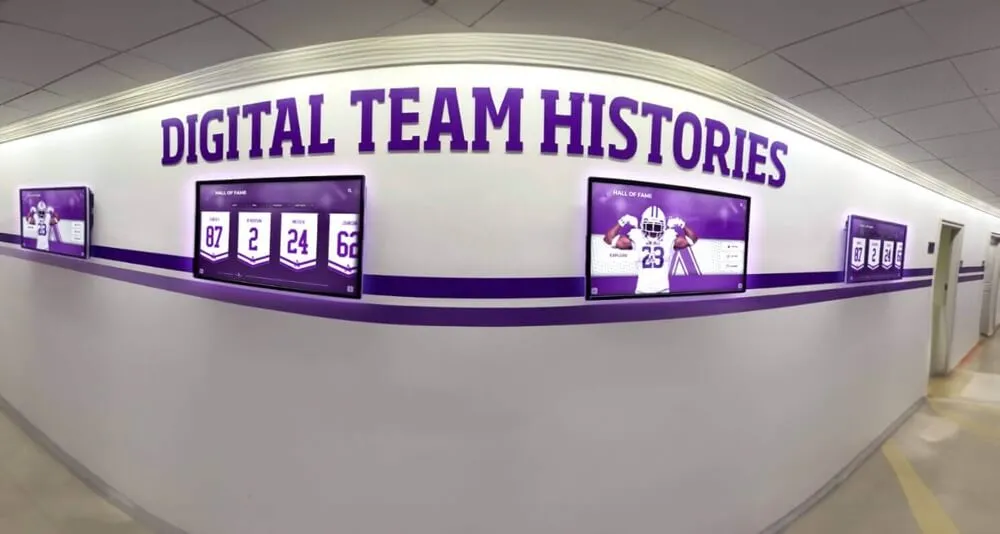
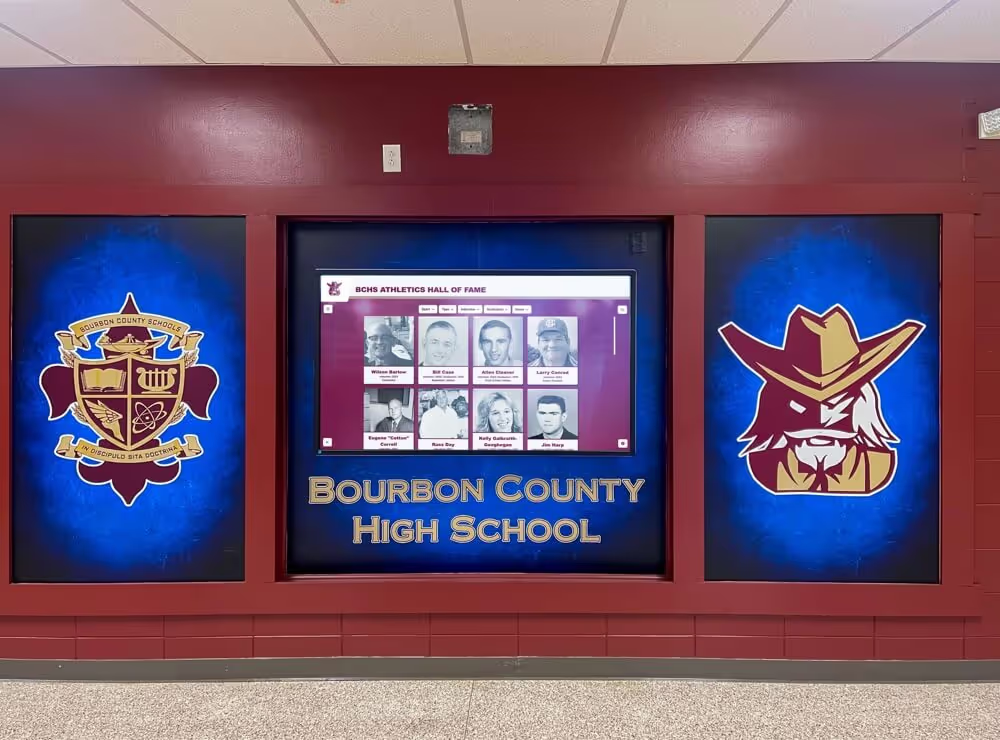
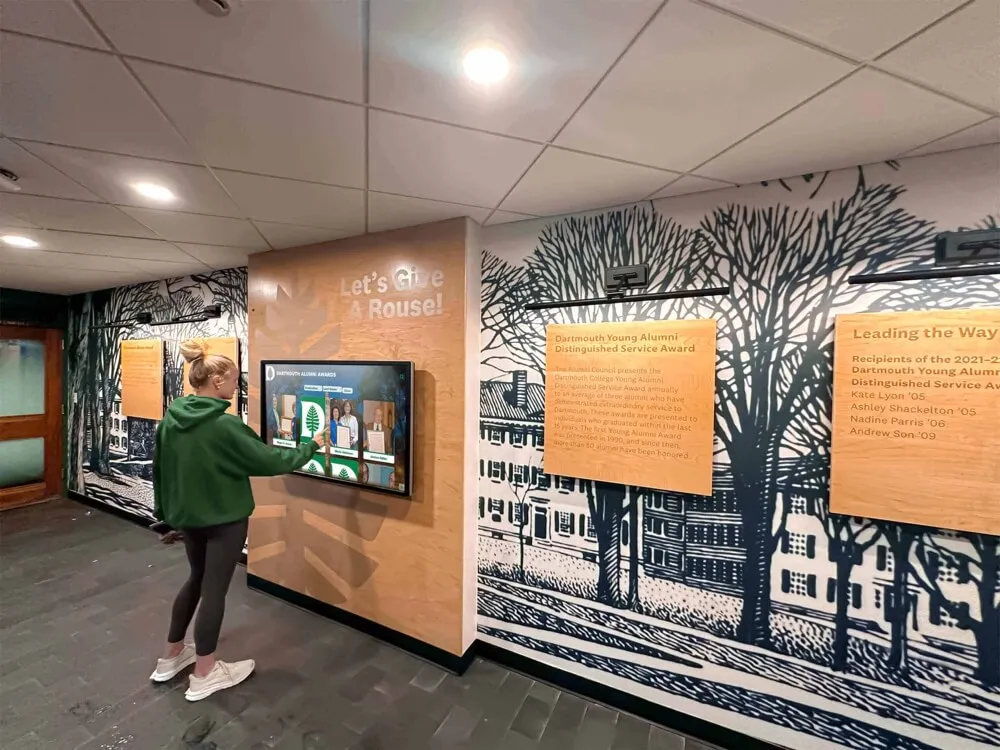
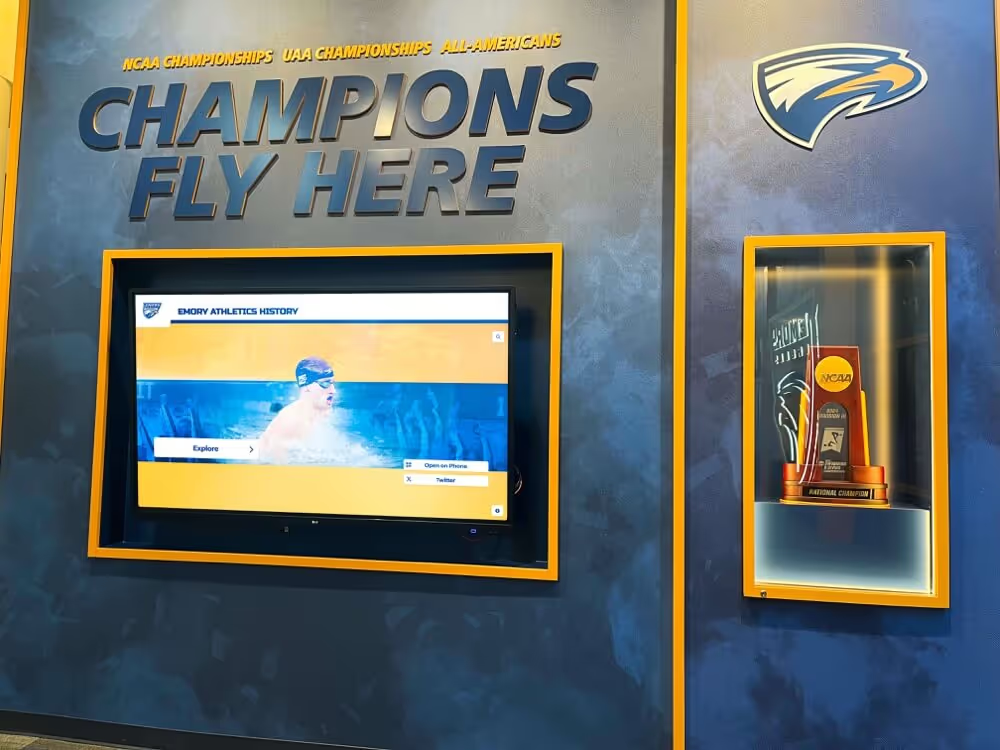
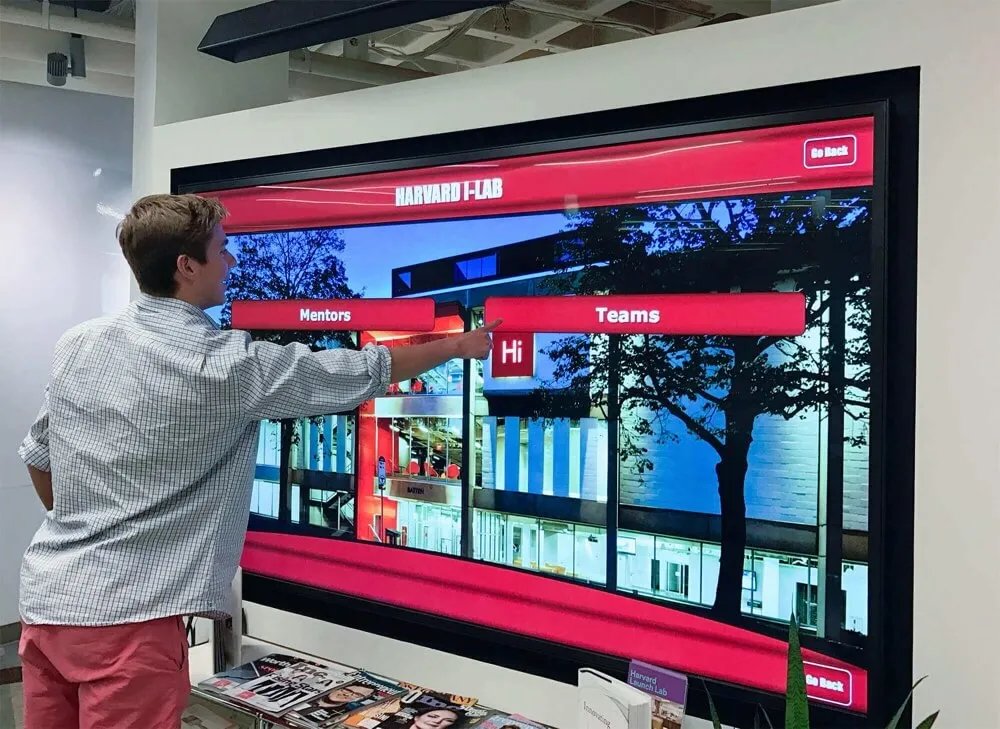
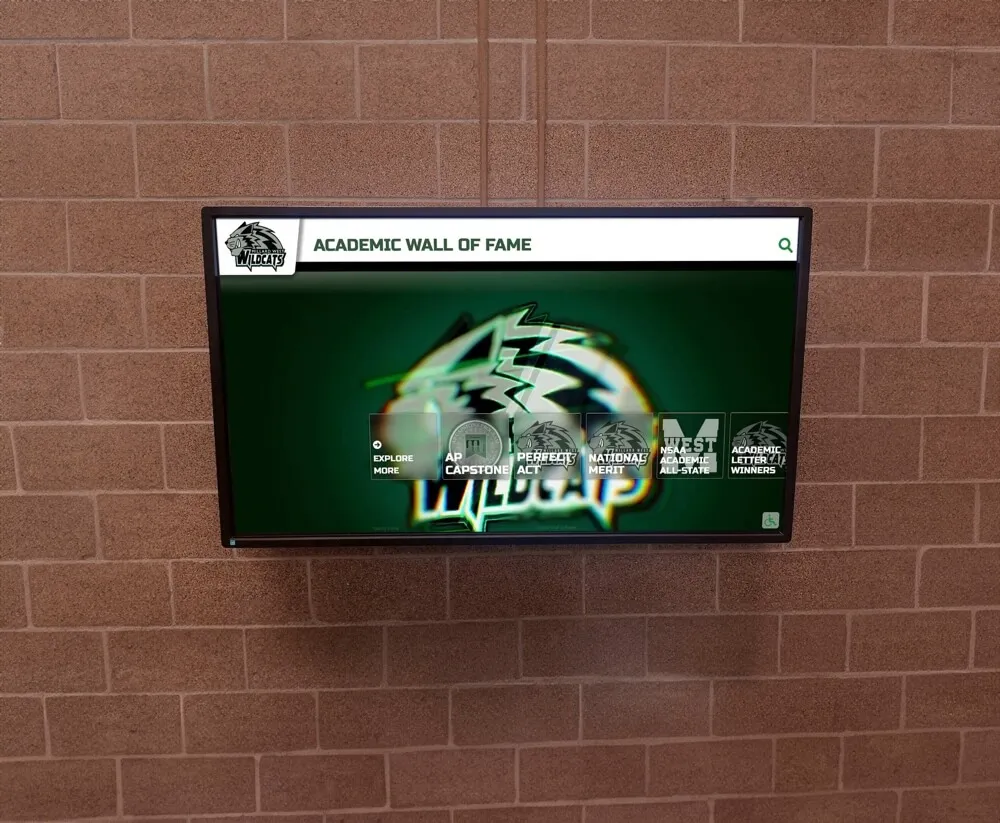
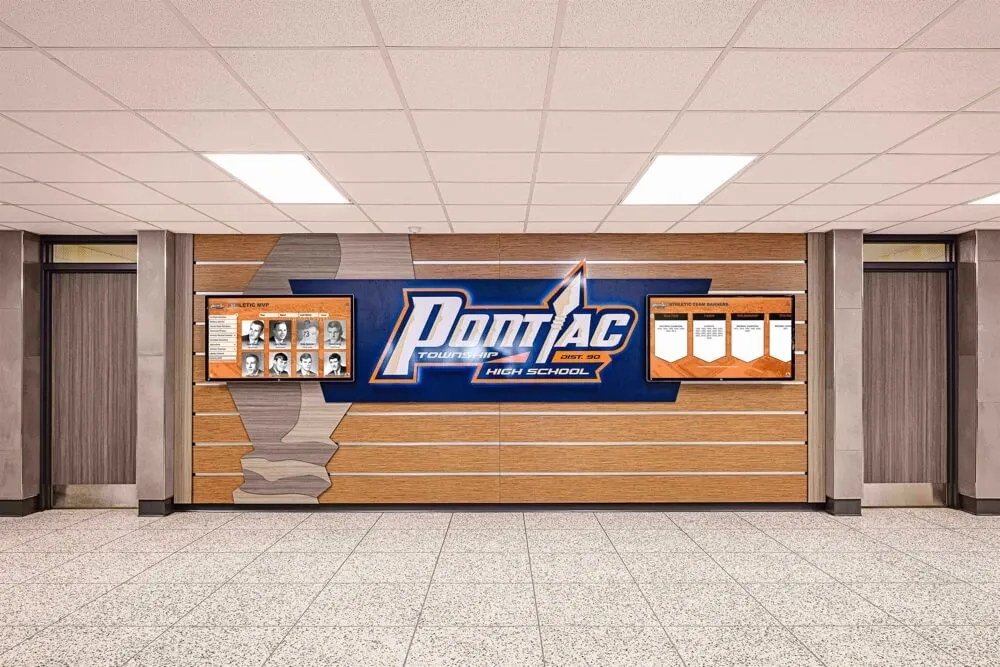
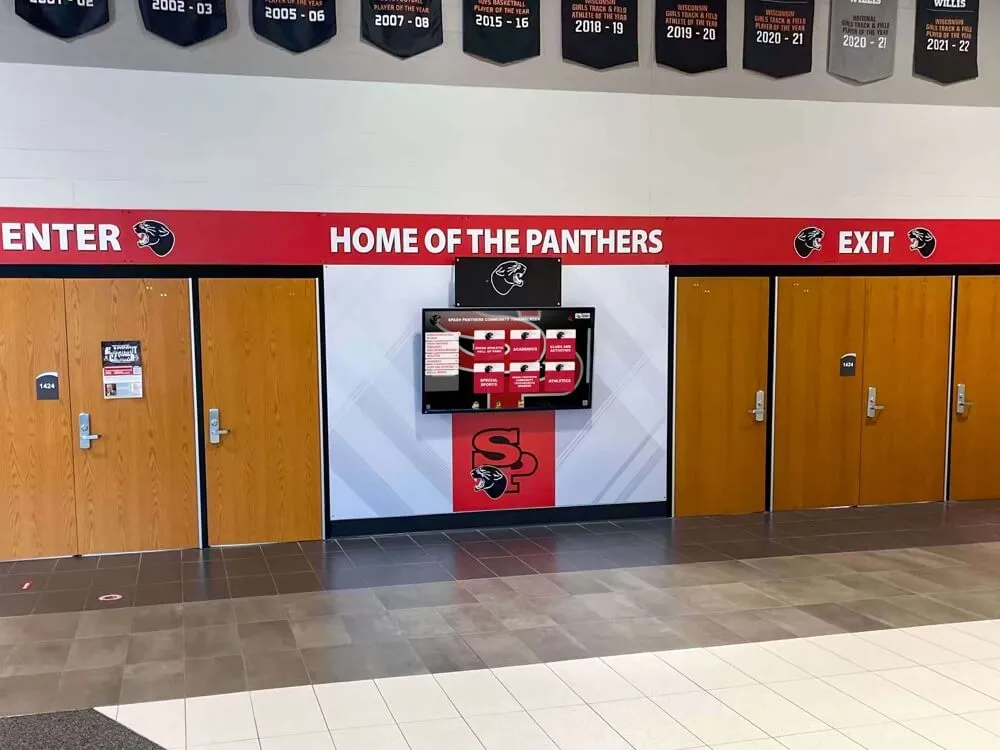
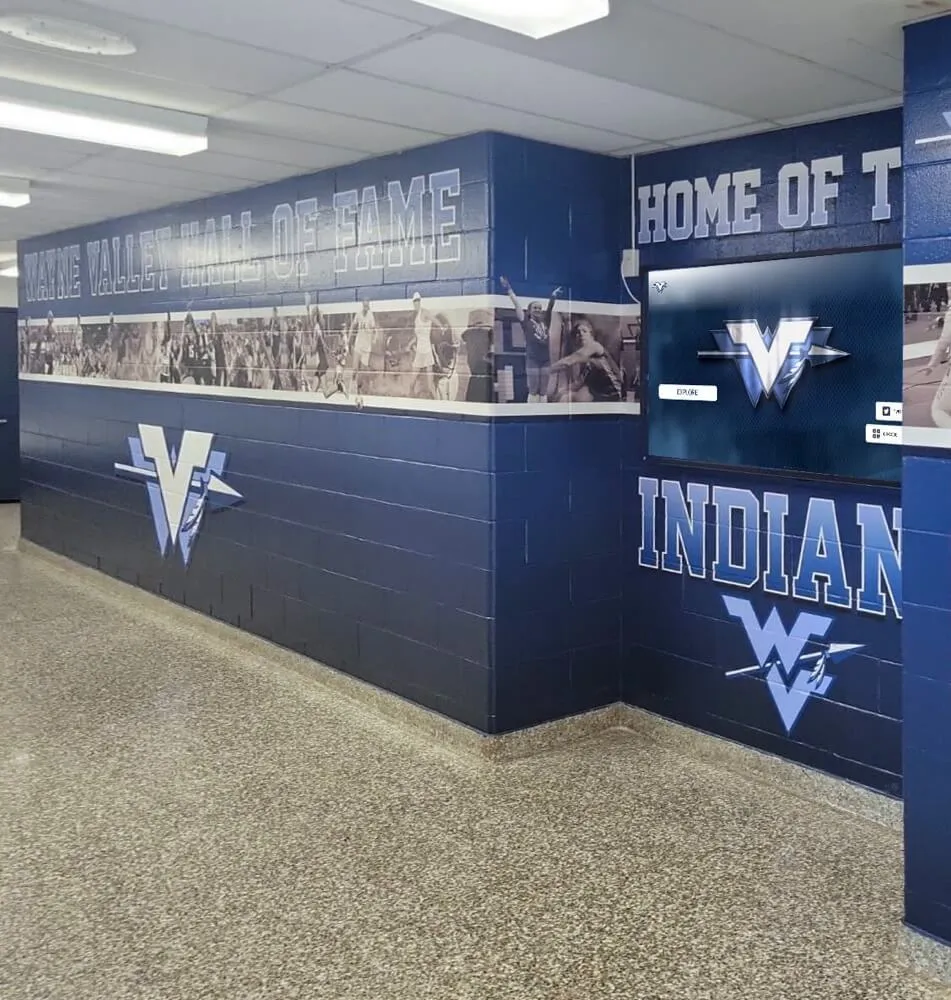
Digital trophy case kiosks give schools unlimited capacity to showcase FBLA competitive achievements alongside athletic and academic honors
What Are FBLA Competitive Events?
Future Business Leaders of America is one of the largest career and technical student organizations (CTSOs) in the United States, with chapters in schools across all 50 states. The organization’s competitive events program gives members the opportunity to demonstrate mastery of business concepts, professional skills, and leadership competencies by competing against peers at local, state, and national levels.
FBLA competitive events are not extracurricular activities in the casual sense. They function more like academic olympiads for business education — structured competitions with defined knowledge domains, judging criteria, and advancement brackets that mirror how professional business competitions operate. Students who excel at these events demonstrate readiness for college business programs, professional certifications, and careers in finance, management, entrepreneurship, and technology.
Who Can Compete in FBLA Events?
Any active FBLA member in good standing at a registered chapter is eligible to enter competitive events. Most states run qualification processes through regional or district competitions before state-level participation, though policies vary by state association. The events available at a given competition level (regional, state, or national) also vary, with some events exclusive to the National Leadership Conference.
Advisors typically help members identify the events that best match their coursework, interests, and career goals, then guide preparation through practice tests, mock presentations, and feedback sessions throughout the year.
FBLA Event Categories: What Do Students Compete In?
FBLA organizes its competitive events into broad categories that reflect core areas of business education. Understanding these categories helps schools design recognition systems that accurately communicate what each winner accomplished.
Business Administration Events
These events cover foundational business knowledge and administrative competencies students need across virtually every professional field.
Key events in this category include:
- Accounting I (introductory) and Accounting II (advanced)
- Banking and Financial Systems
- Business Law
- Economics
- Introduction to Business Procedures
- Introduction to Financial Math
Most business administration events include an objective test component — a timed multiple-choice examination testing mastery of the subject matter. High-performing students often compete in multiple events within this category, building portfolios of competitive achievement that span the full breadth of business fundamentals.
Business Communications and Presentation Events
Communication remains one of the most valued skills in any professional environment. FBLA addresses this through events that require students to demonstrate written, oral, and interpersonal communication under competitive conditions.
Events in this category include:
- Business Communication (written test plus performance component)
- Introduction to Business Communication
- Public Speaking I (prepared speech on an assigned topic)
- Public Speaking II (impromptu speech with minimal preparation time)
- Job Interview (performance-based evaluation)
Public Speaking events are among the most personally challenging FBLA competitive events because they require genuine preparation and real-time performance rather than just content knowledge. A student who places in public speaking at the state level has demonstrated communication skills that most adults struggle to match. Schools that build comprehensive recognition programs for academic and business achievement create visible incentives for students to pursue competitive growth outside the classroom.
Technology and Computer Science Events
As business increasingly depends on digital infrastructure, FBLA has expanded its technology event offerings substantially. These competitions appeal to students interested in computer science and technology careers who also want business context for their technical skills.
Events in this category include:
- Computer Applications
- Cybersecurity
- Database Design and Applications
- Network Design
- Digital Video Production
- Website Design
Technology events often involve submission of a completed project — a functional website, a network architecture document, or a database application — judged on technical quality, business appropriateness, and professional presentation. These events produce tangible deliverables that students can include in portfolios and college applications.
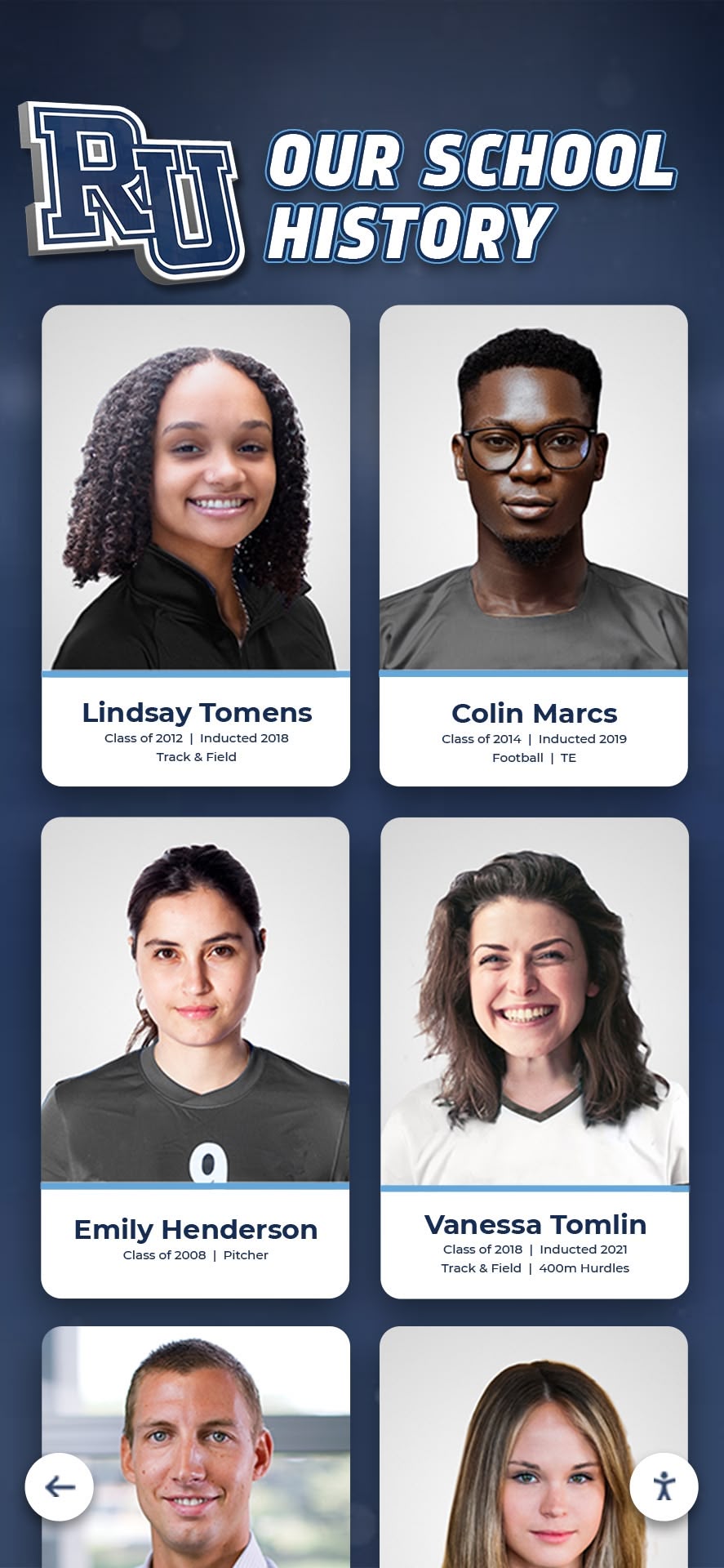
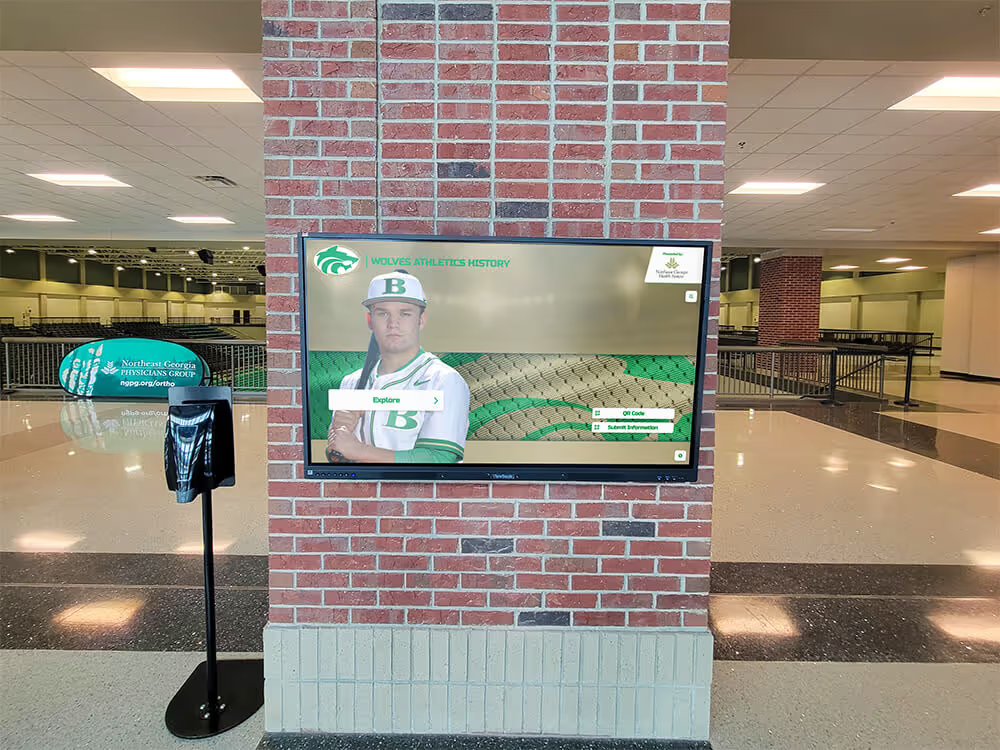
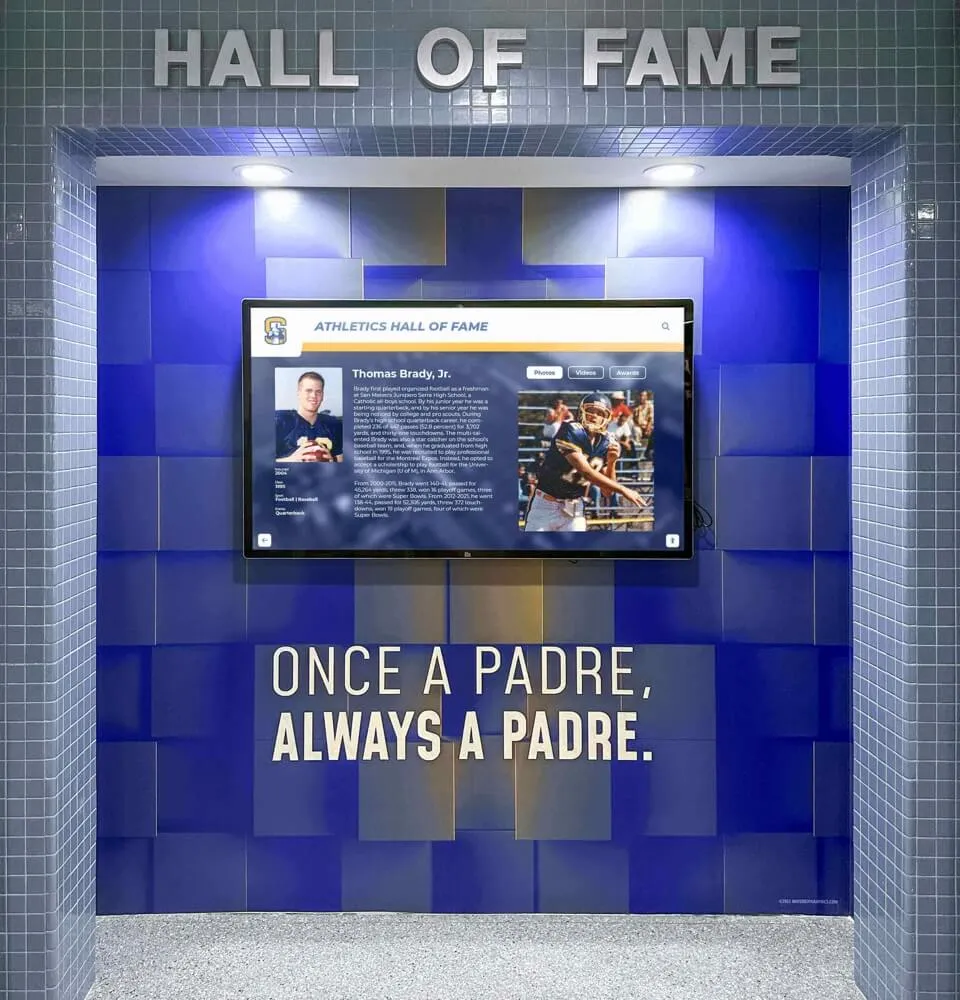
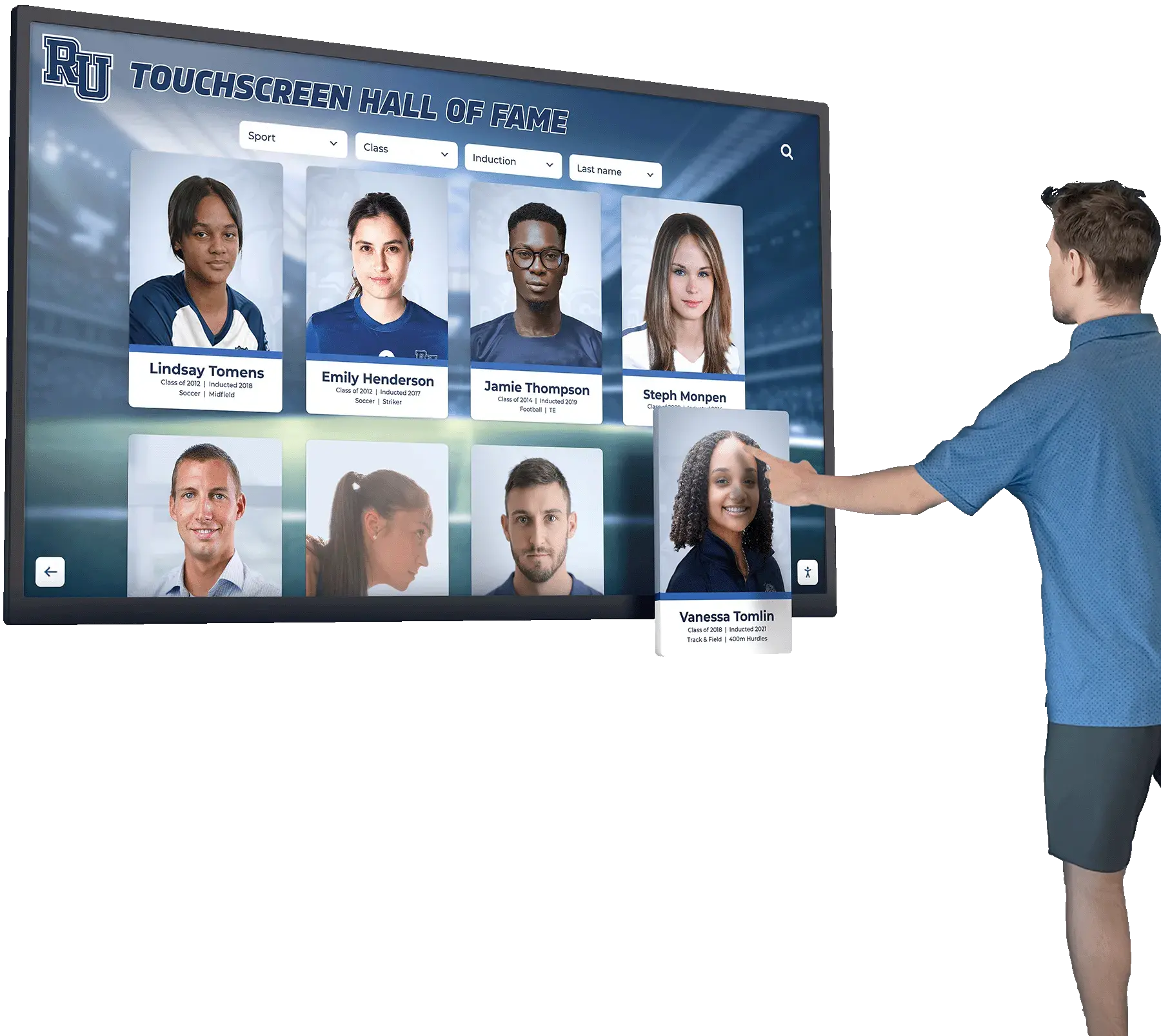
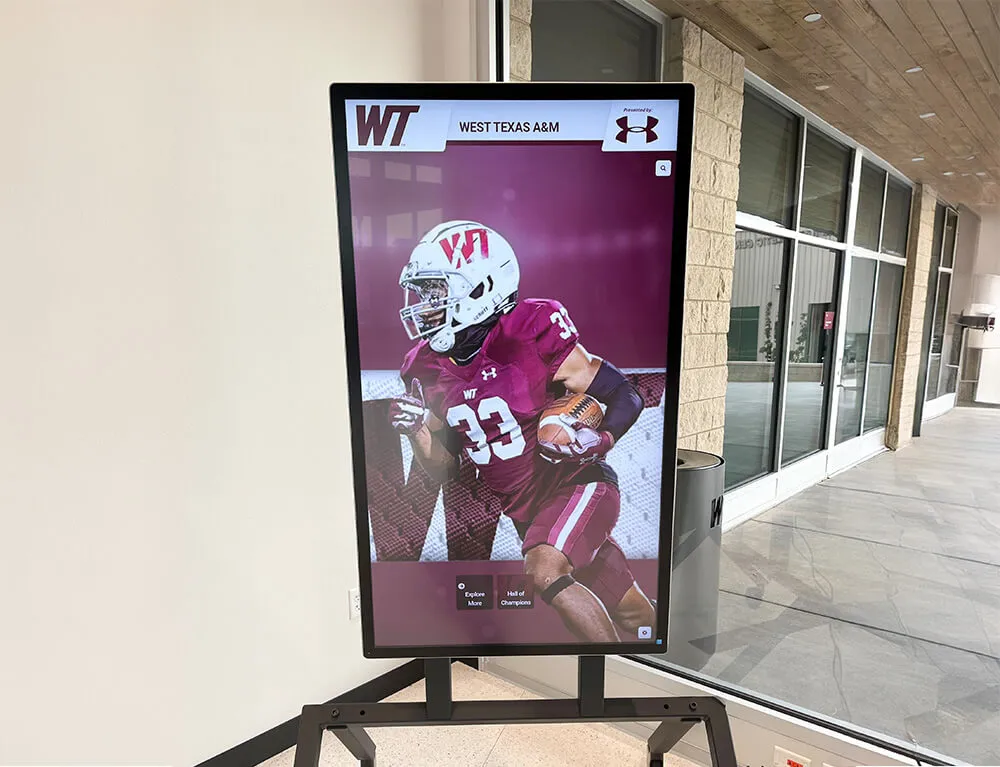
Individual achievement profiles capture the full story behind each competitive placement — event, level, and what students went on to accomplish
Entrepreneurship and Innovation Events
These events challenge students to develop original business concepts and defend them to judges who evaluate viability, market analysis, financial projections, and presentation quality.
Events in this category include:
- Business Plan
- Entrepreneurship
- Emerging Business Issues (team event)
- Marketing
- Social Media Strategies
Entrepreneurship events are team-based and require sustained collaboration across multiple months of preparation. Winning teams develop actual business plans that could, in principle, be launched as real ventures. Several FBLA alumni have used their competition plans as the foundation for real startups — which makes recognition of these achievements particularly meaningful when schools treat them with appropriate weight.
Management and Leadership Events
These events assess strategic thinking, decision-making, and leadership ability in business contexts.
Events in this category include:
- Management Decision Making
- American Enterprise Project
- Business Ethics
- Community Service Project
- Future Business Educator
The Community Service Project and American Enterprise Project are chapter-level events in which entire FBLA chapters compete as a unit. These require coordinated planning, execution, and documentation of a chapter-wide initiative — teaching organizational leadership and project management in ways individual events cannot replicate.
Chapters that win or place in these events accomplish something that deserves institution-level recognition, not just individual congratulations. Just as a championship athletic team earns a banner, an FBLA chapter that places in a national-level chapter event has achieved something worth permanent display. Schools can draw on team recognition frameworks developed for athletics and apply them directly to FBLA chapter achievements.
How Do FBLA Competition Formats Work?
What Is the Difference Between Objective Tests and Performance Events?
This is one of the most common questions from students new to FBLA competitive events. Understanding the two primary formats helps members prepare appropriately and helps advisors set accurate expectations.
Objective test events function like comprehensive subject-matter examinations. Students sit for a timed test — typically 60 minutes for most events — answering multiple-choice questions across the full scope of the topic area. Winners advance through performance cutoffs: only students scoring above a threshold qualify for the performance portion (if the event has one), or rankings are determined entirely by test score.
Performance events require students to present to a panel of business professional judges. These events follow a structured sequence: a preparation period in which students review a scenario or prompt, followed by the performance itself, followed often by a judge question period. Performance events reward communication skill, business knowledge, professional presence, and the ability to think clearly under pressure.
Many FBLA competitive events combine both components — students first take an objective test to qualify, then the top scorers advance to perform. This two-stage structure means that preparation must address both deep content mastery and the ability to communicate that knowledge effectively to an audience.
What Are FBLA Role-Play Events?
Role-play events simulate real business situations students might encounter in professional settings. A student or team receives a scenario — perhaps a client complaint, a hiring decision, or a marketing problem — and must respond in real time before judges who play the role of business stakeholders.
Role-play events are particularly effective at assessing applied competency rather than memorized content. A student who truly understands customer relationship management will navigate a difficult client scenario differently than one who only memorized definitions. Judges evaluate authenticity, business judgment, and communication effectiveness alongside content accuracy.
Chapter Events and Project Competitions
Chapter-level competitive events shift the unit of competition from the individual or small team to the entire FBLA chapter. These events require advisors and student leaders to coordinate dozens of members toward a shared goal over an extended period — often an entire semester or school year.
The American Enterprise Project, for example, requires chapters to document a sustained initiative promoting the principles of the American free enterprise system. The Community Service Project requires documented evidence of chapter-wide volunteer engagement with measurable community impact. These submissions are judged on organization, evidence quality, depth of impact, and presentation — rewarding chapters that genuinely commit to the work rather than assembling documentation at the last minute.
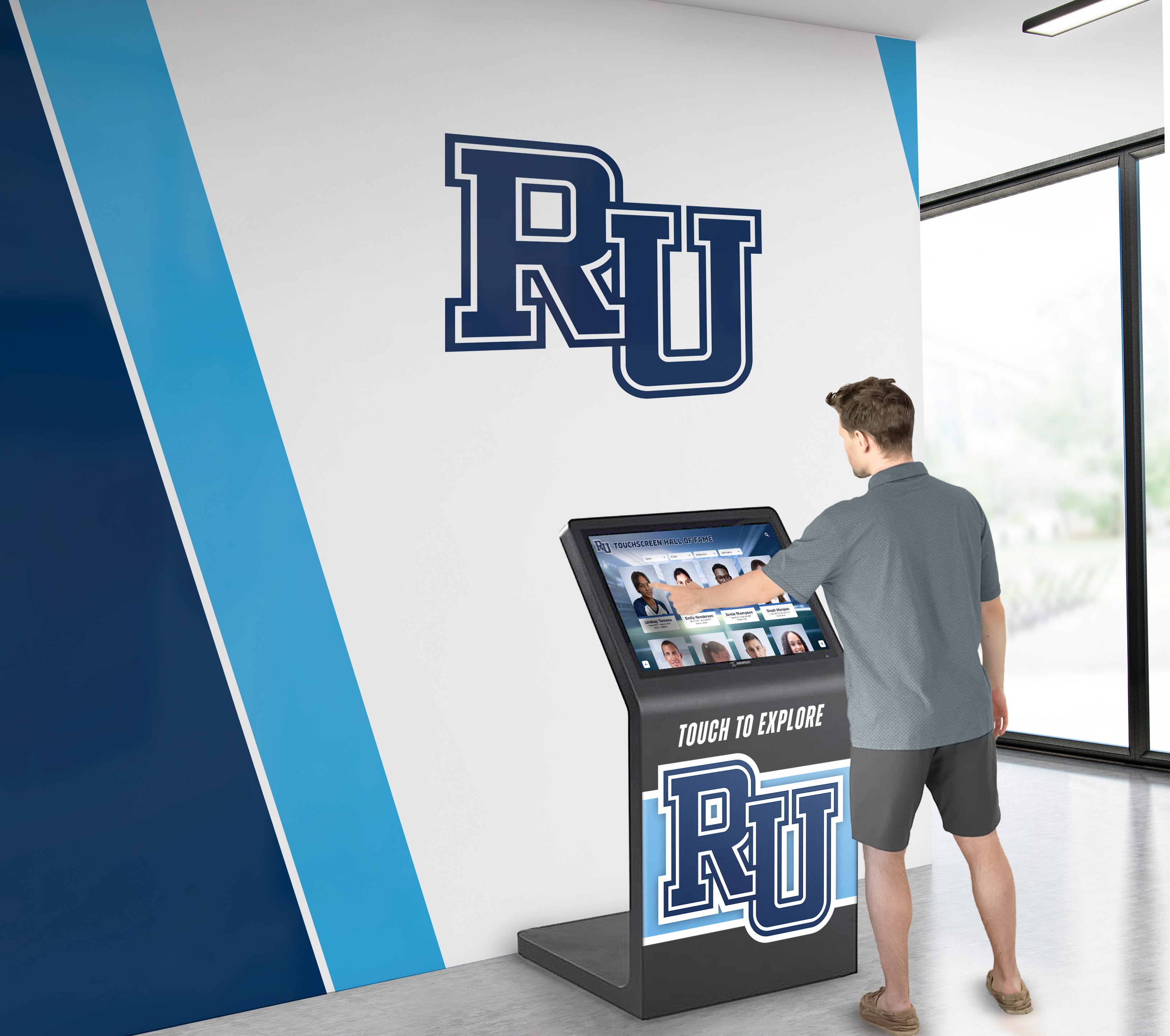
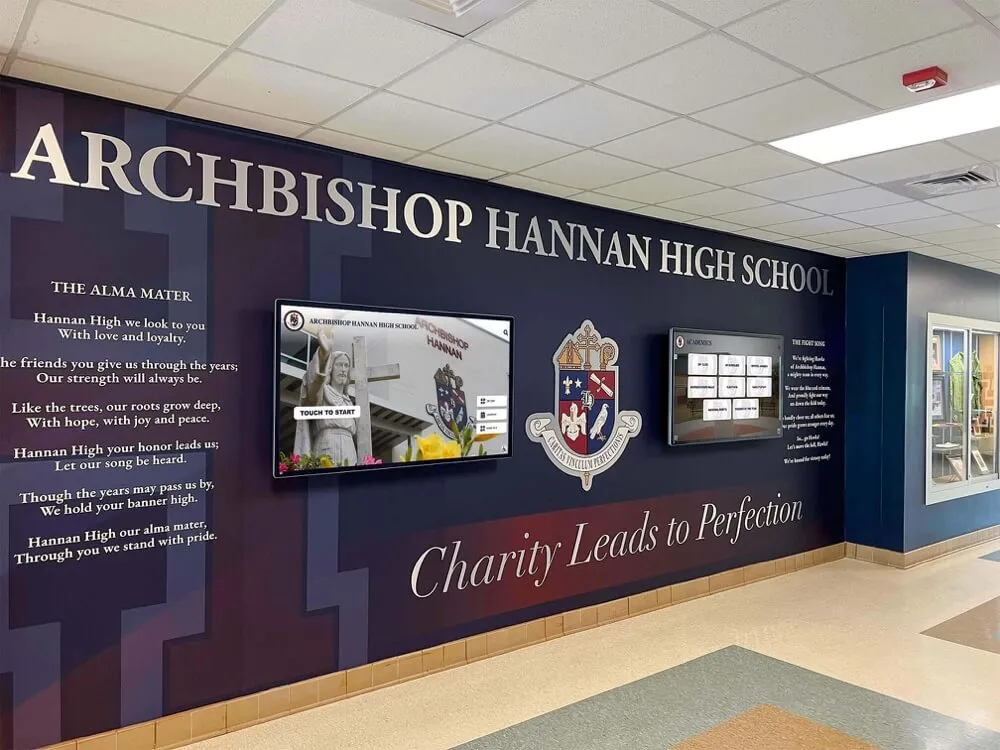
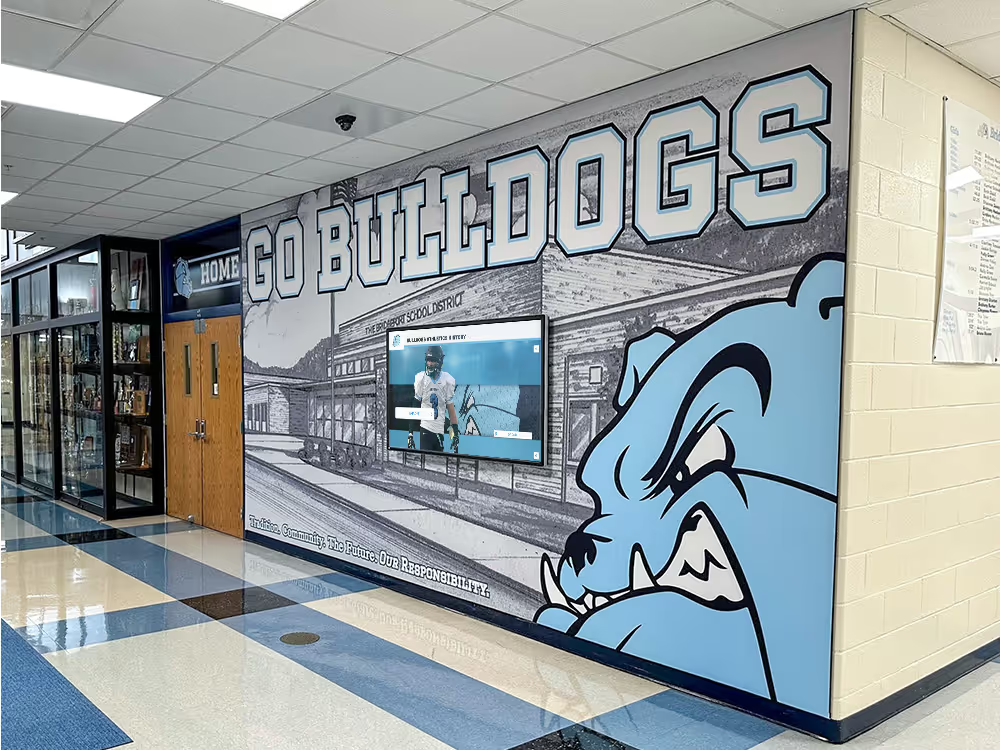
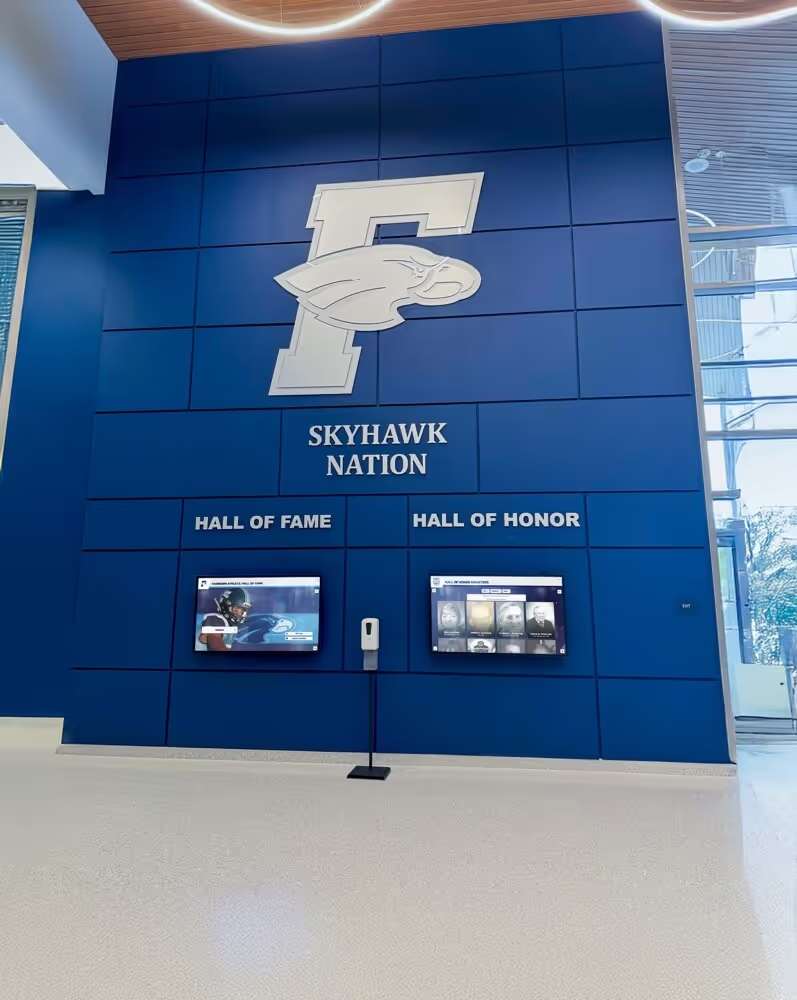
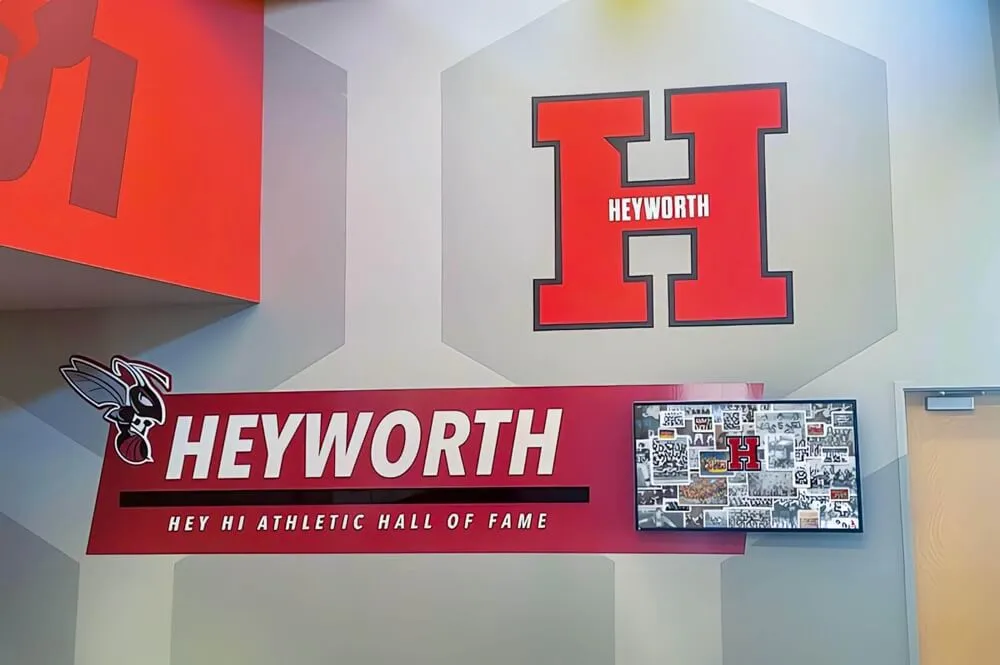
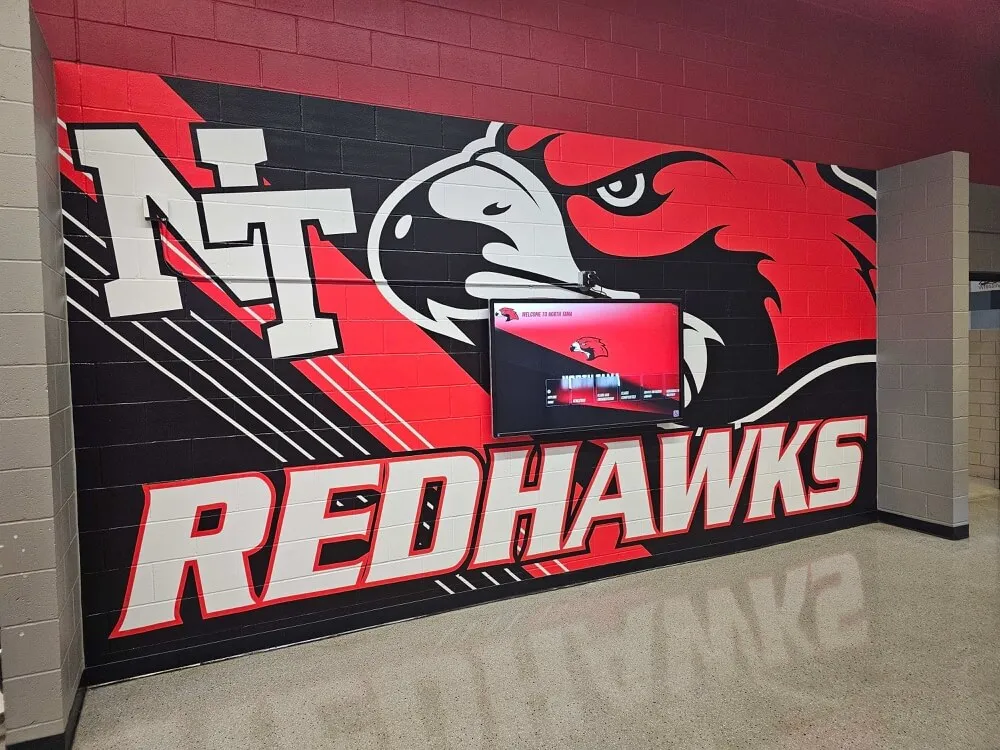
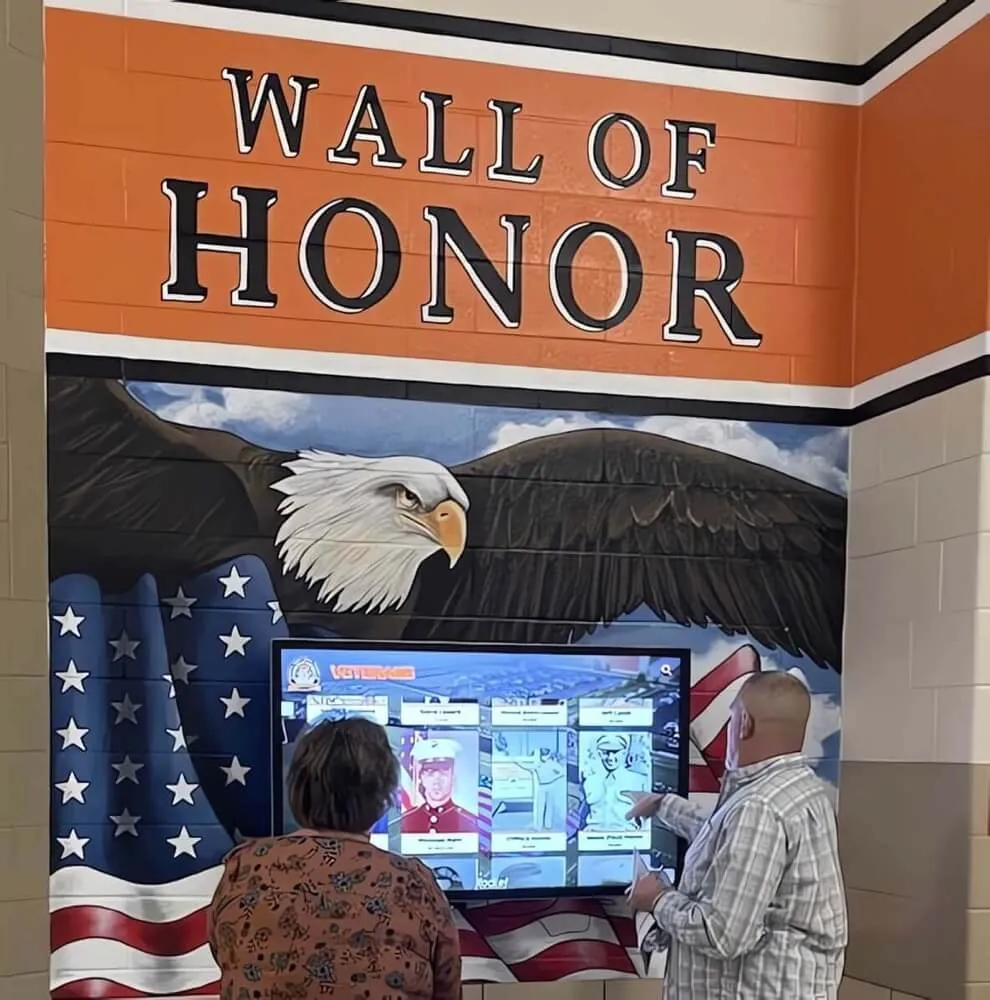
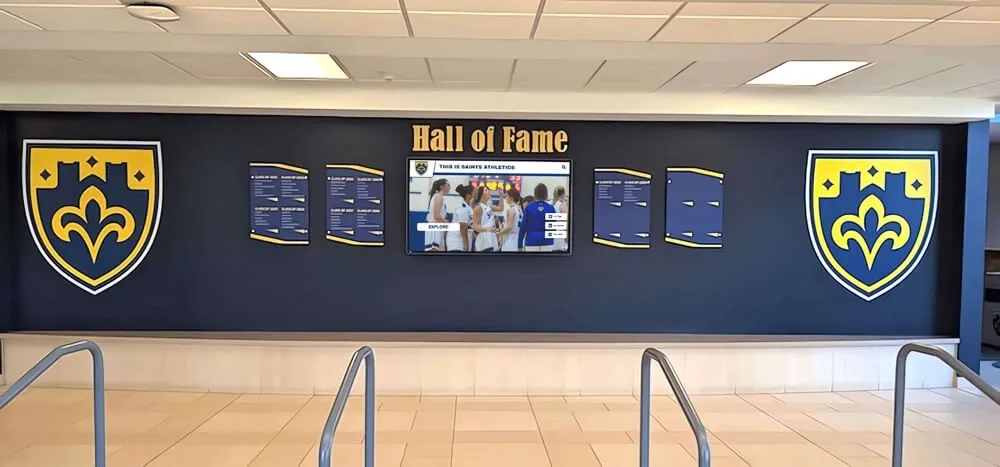
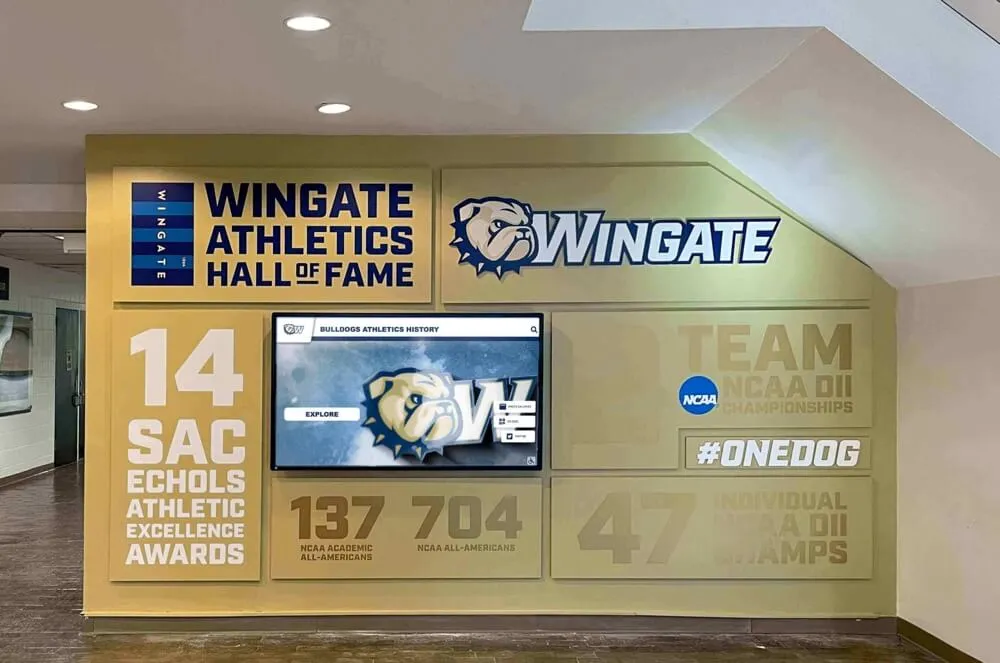
Interactive lobby displays allow students, families, and visitors to explore FBLA competitive achievements alongside all forms of school excellence
FBLA Competition Levels: Local, State, and National
Regional and District Competitions
Most state FBLA associations run regional or district-level competitions before the state leadership conference. These serve as qualifying rounds that expose students to competitive formats while limiting the state-level field to top performers. Specific structures vary considerably by state — some states run mandatory regional qualifiers, while others allow direct state-level entry based on chapter registration.
Regional competitions provide invaluable preparation value even when placements don’t advance to state. Students experience the test environment, presentation dynamics, and judge interactions that make state-level performance more confident and effective. Advisors who emphasize regional competition participation — not just state advancement — build more competitive chapters over time.
State Leadership Conferences
State Leadership Conferences (SLCs) are the major mid-level competition milestone in FBLA. Held annually in the spring, SLCs bring together competitors from across a state for full-scale competitions, leadership development programming, and networking with peers and business professionals.
State placements — typically top three or top ten depending on event and state size — are significant achievements deserving school-wide recognition. A student who earns a state championship in Accounting, places second in Public Speaking, or leads a chapter to a top-three finish in the Community Service Project has demonstrated excellence in a field of hundreds or thousands of competitors.
Many schools already recognize athletic state champions prominently. FBLA state placements warrant the same treatment. Schools that reference alumni recognition event strategies can adapt those frameworks directly to business competition achievement, integrating FBLA honors into existing end-of-year ceremonies.
State qualifiers — students who advance from regional competitions to the SLC regardless of final placement — also deserve recognition. Qualifying for state in a competitive FBLA event is itself a meaningful accomplishment that should appear in school recognition systems.
The National Leadership Conference
The National Leadership Conference (NLC) is FBLA’s premier annual event, bringing together top state qualifiers from across the country for national-level competition, workshops, and leadership development. Held each summer, the NLC represents the pinnacle of high school FBLA competitive achievement.
NLC qualification requires placing in the top tier at the state conference, meaning every NLC competitor has already distinguished themselves among thousands of state-level peers. Reaching nationals is a major achievement — finishing in the top ten or earning a national award at NLC is extraordinary.
Students who qualify for and compete at the NLC should receive recognition that reflects this achievement. For comparison, a student who qualifies for a national academic competition in athletics or academic areas typically receives significant school recognition — FBLA national qualifiers deserve equivalent visibility.
Schools looking to create lasting recognition for FBLA national competitors should explore how hall of fame induction criteria and display frameworks can permanently document these achievements alongside other forms of school excellence.
How Schools Can Recognize FBLA Champions
Recognition practices for FBLA achievement vary dramatically from school to school. Some schools treat FBLA placements with the same prominence as athletic championships — announcements, displays, and ceremonies that communicate genuine school pride. Others barely acknowledge business competition victories, leaving students to celebrate primarily within their chapters rather than across the school community.
The gap between these approaches matters. Schools that consistently recognize FBLA achievement attract more capable students to their chapters, motivate higher levels of preparation and commitment, and communicate to college admissions offices that their business programs are serious competitive environments.
Traditional Recognition Approaches
Most schools already have mechanisms for recognizing student achievement that can be extended to FBLA:
Assemblies and announcements — State qualifiers and national competitors should receive school-wide announcement recognition equivalent to what athletic teams receive after tournament wins.
End-of-year ceremonies — Including FBLA awards in the annual academic recognition ceremony positions business competition achievement alongside AP Scholar designations, honor roll acknowledgment, and other academic honors. Schools that design recognition ceremonies with honors-level awards can extend those same programs to cover FBLA placements as a formal category.
Yearbook coverage — FBLA competitive achievements — particularly state placements and NLC qualification — deserve yearbook documentation that future graduates can reference.
Senior recognition — Graduating FBLA members with significant competitive records deserve acknowledgment at senior award ceremonies that reflects the sustained commitment they demonstrated across their high school careers.
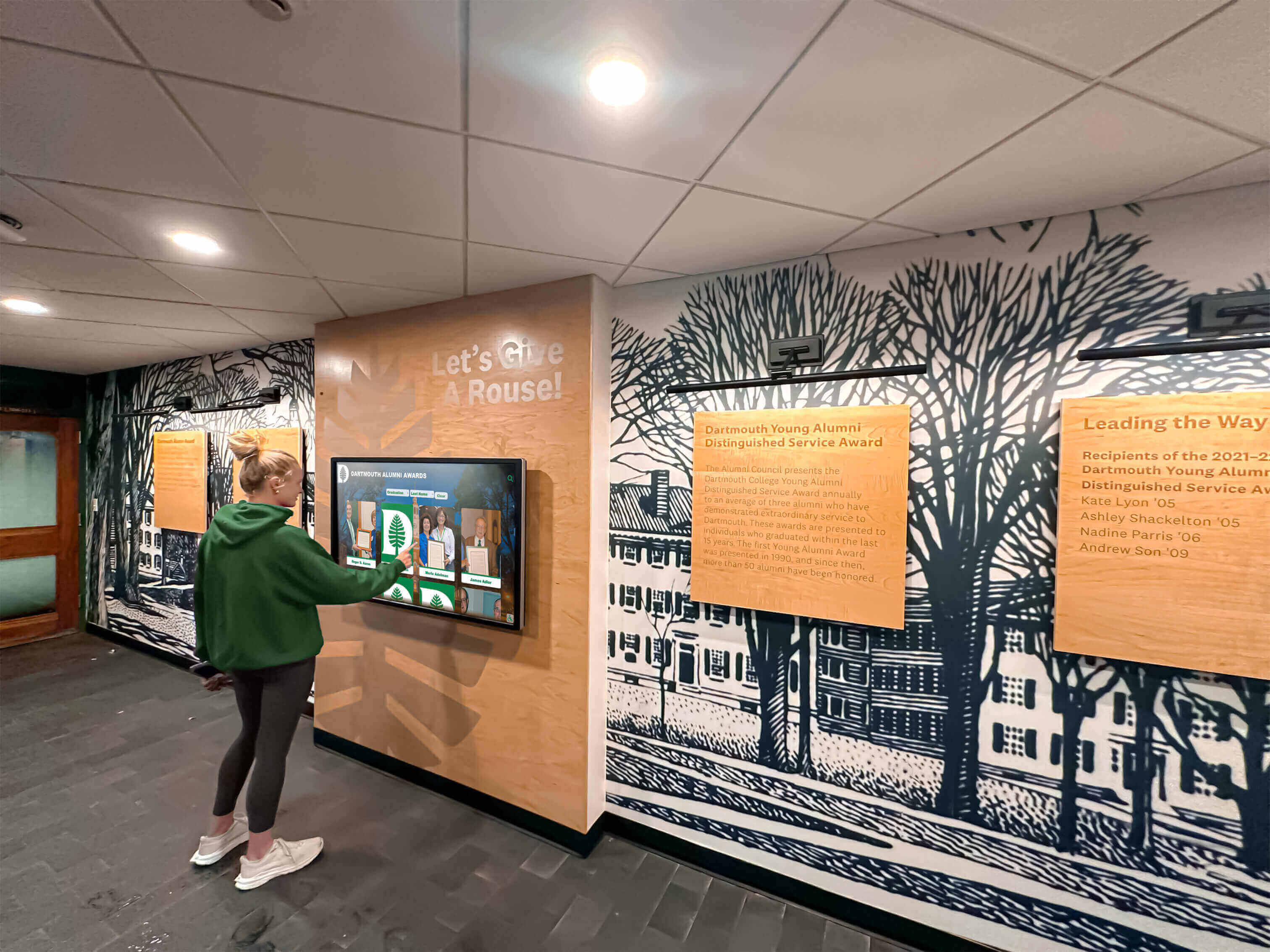
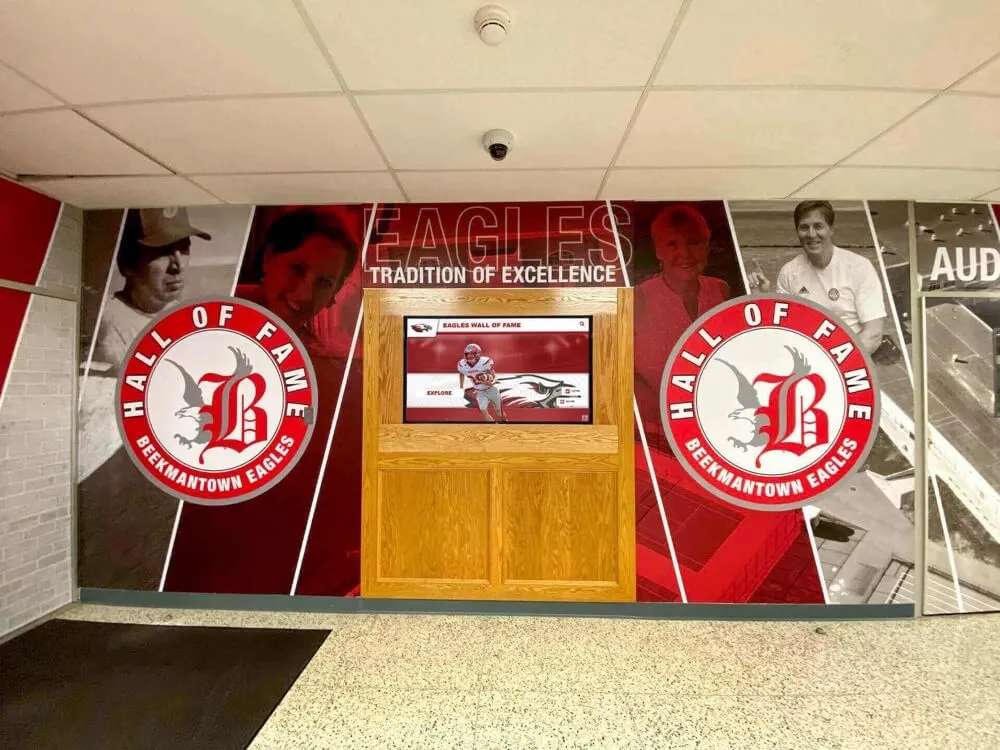
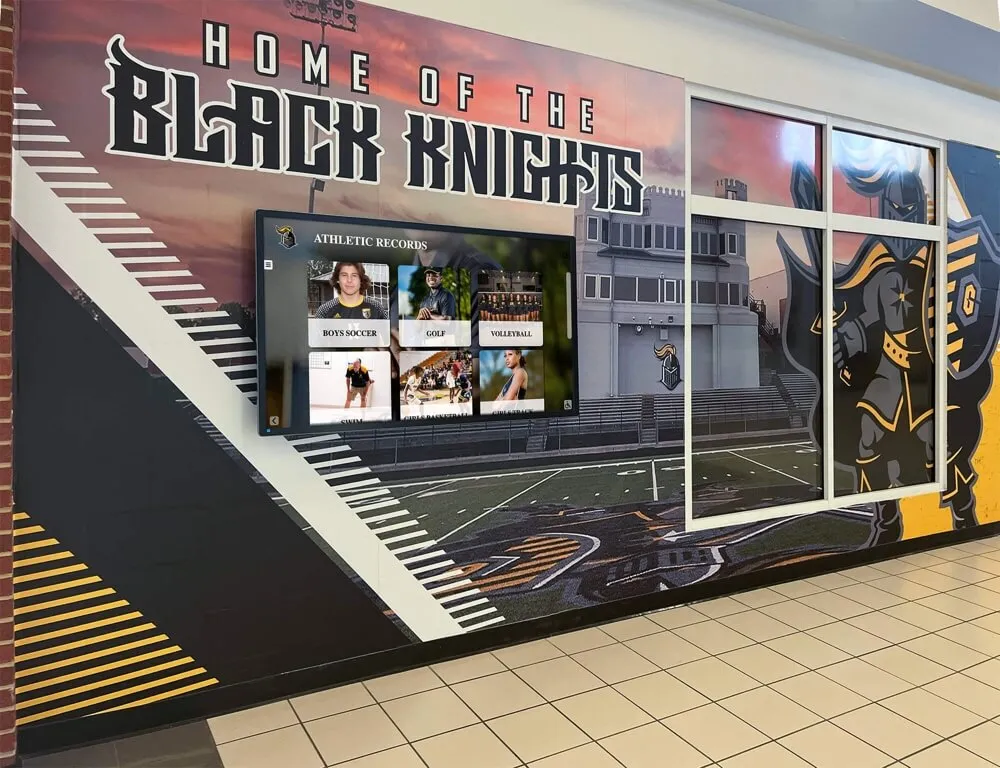
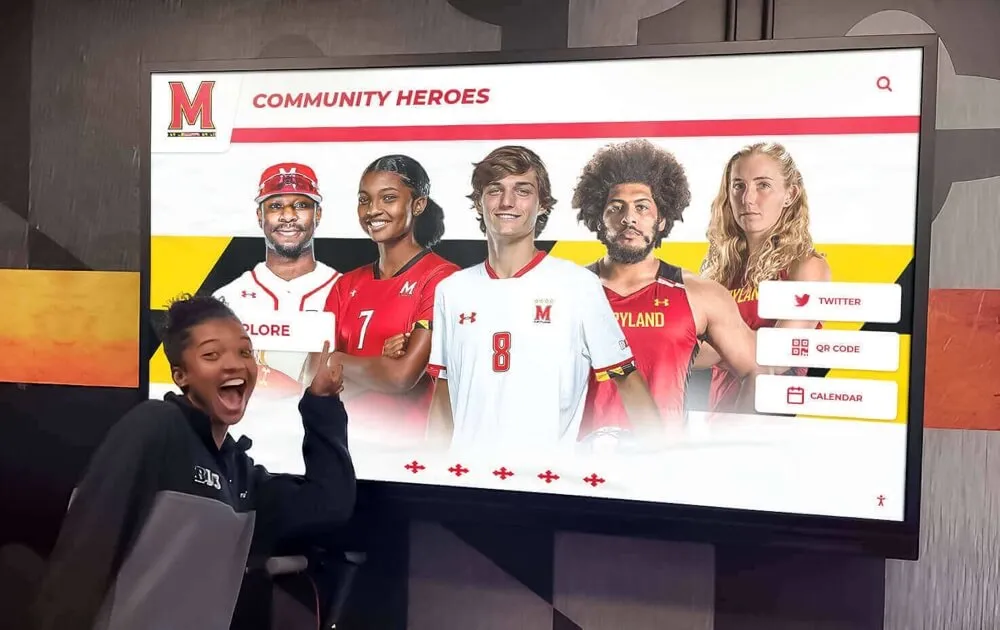
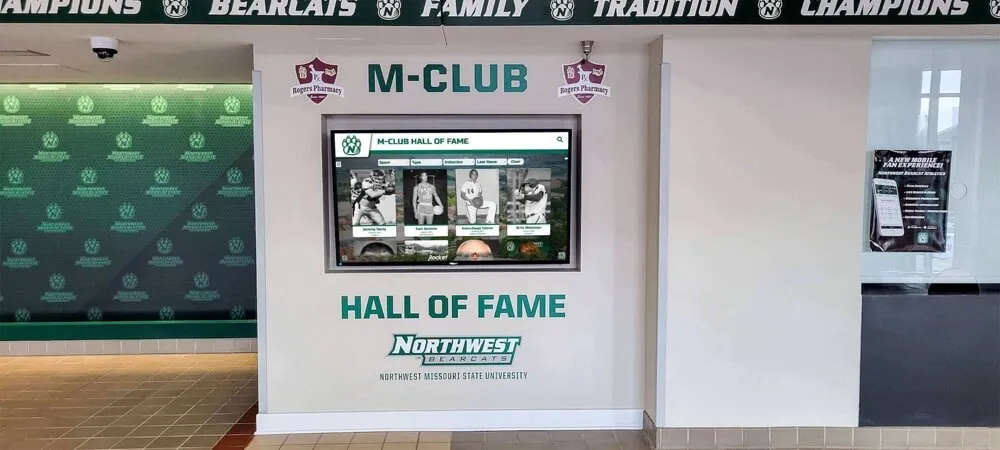
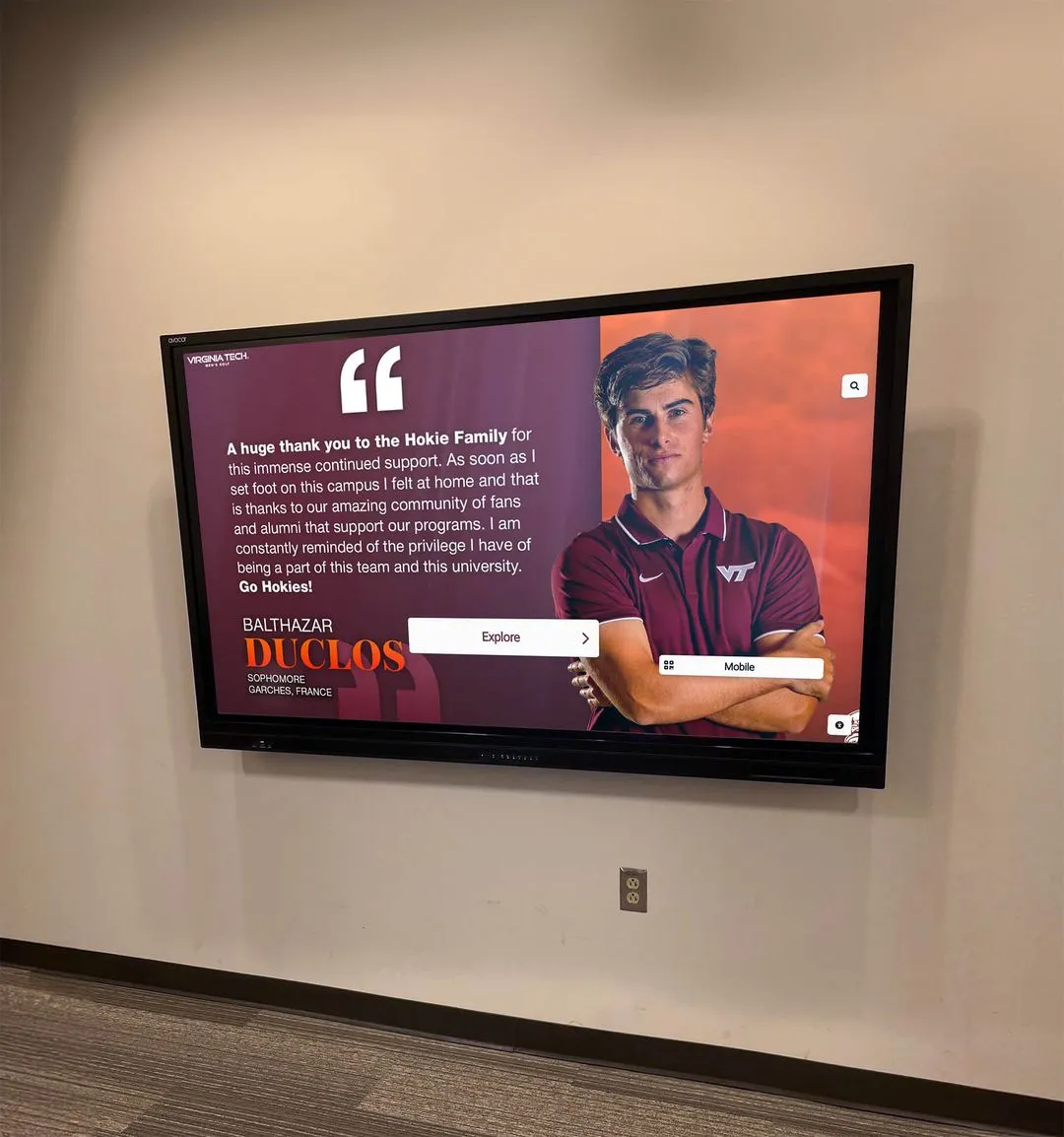
Students naturally engage with digital displays that celebrate peers' achievements, reinforcing a culture where FBLA competitive excellence is visible and valued
Physical Trophy and Plaque Displays
FBLA chapters frequently accumulate physical awards — trophies for event placements, plaques for chapter achievements, certificates from state and national competitions. These objects deserve thoughtful display rather than storage in a closet.
Schools that already maintain trophy cases for athletics should consider dedicating a portion of that space to academic and career competition recognition, or establishing a separate display specifically for FBLA and other CTSO achievements. The organizational and aesthetic principles that govern a well-curated digital trophy case apply as directly to business competition hardware as they do to athletic championships.
Physical displays carry natural limitations. They hold a finite number of items, require manual updates as new achievements accumulate, and provide minimal context about what each award represents or who earned it. A trophy from the state leadership conference tells a visitor that someone won something — it doesn’t capture which event, what competition level, how many students competed, or what that student went on to accomplish.
Digital Recognition Solutions for FBLA Achievement
Digital trophy case and recognition display systems address the inherent limitations of physical displays while expanding recognition capacity to match the full scope of FBLA competitive achievement across years and events.
Unlimited display capacity — Digital systems can showcase every FBLA competitive placement in your school’s history without space constraints. State placements from ten years ago appear alongside this year’s national qualifiers, building a visible legacy that motivates current members.
Rich contextual profiles — Individual profiles for FBLA champions can include event name and category, competition level (regional, state, or national), placement and rank, headshot and biographical information, and what the student went on to do after graduation. This context transforms a simple “name on a list” into a compelling story of achievement.
Cloud-based updates — FBLA advisors can update recognition displays immediately after state conference results are announced, without waiting for physical plaques to be engraved and installed. This immediacy matters for maintaining student motivation and school-community awareness.
QR code integration — Mobile-accessible recognition enables families who couldn’t attend the state conference to explore their student’s achievement profile, share recognition to social media, and connect with the school’s broader recognition community.
Schools seeking a complete framework for implementing this approach can reference comprehensive alumni legacy digital wall guides that cover everything from content planning to hardware selection for long-lasting recognition.
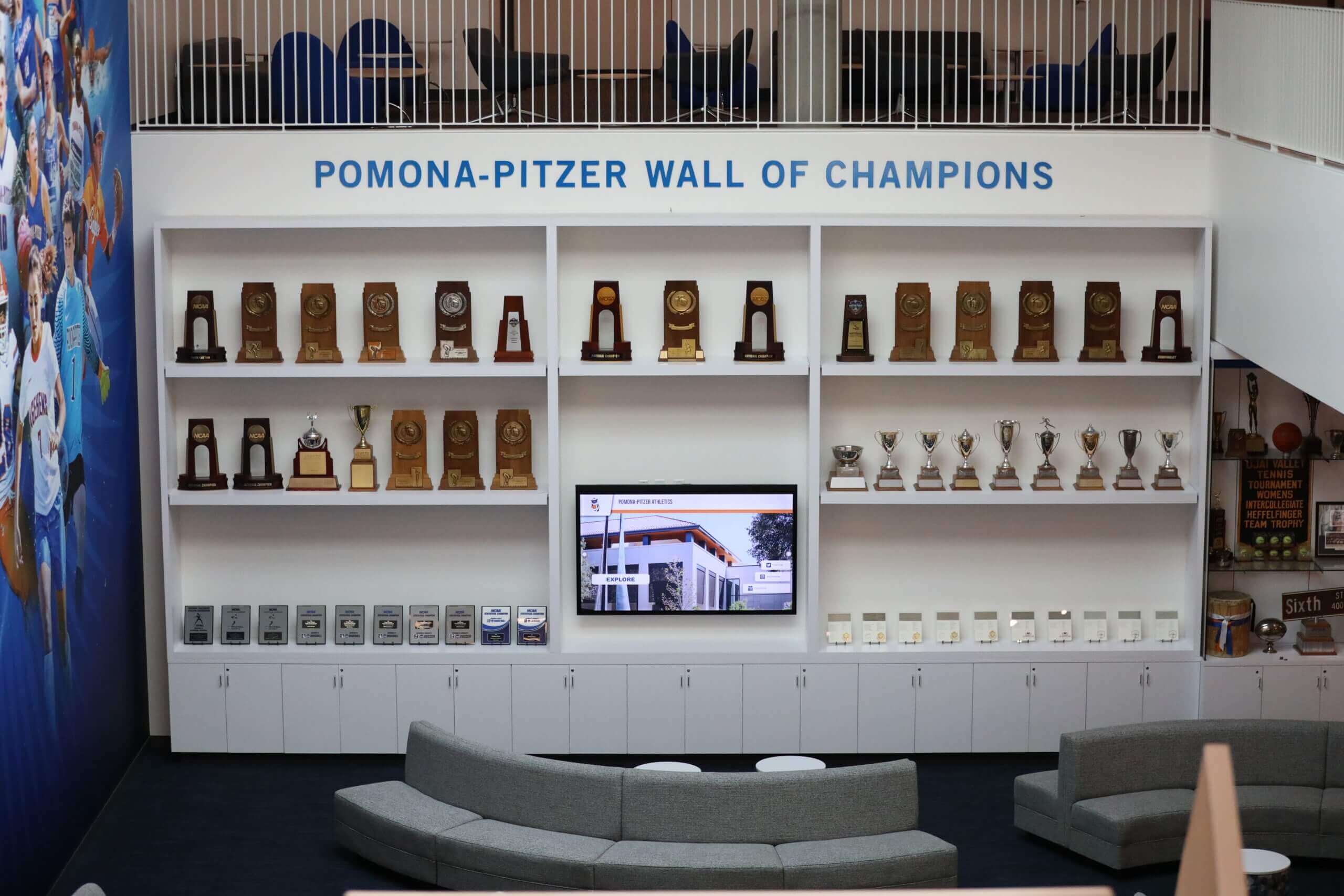
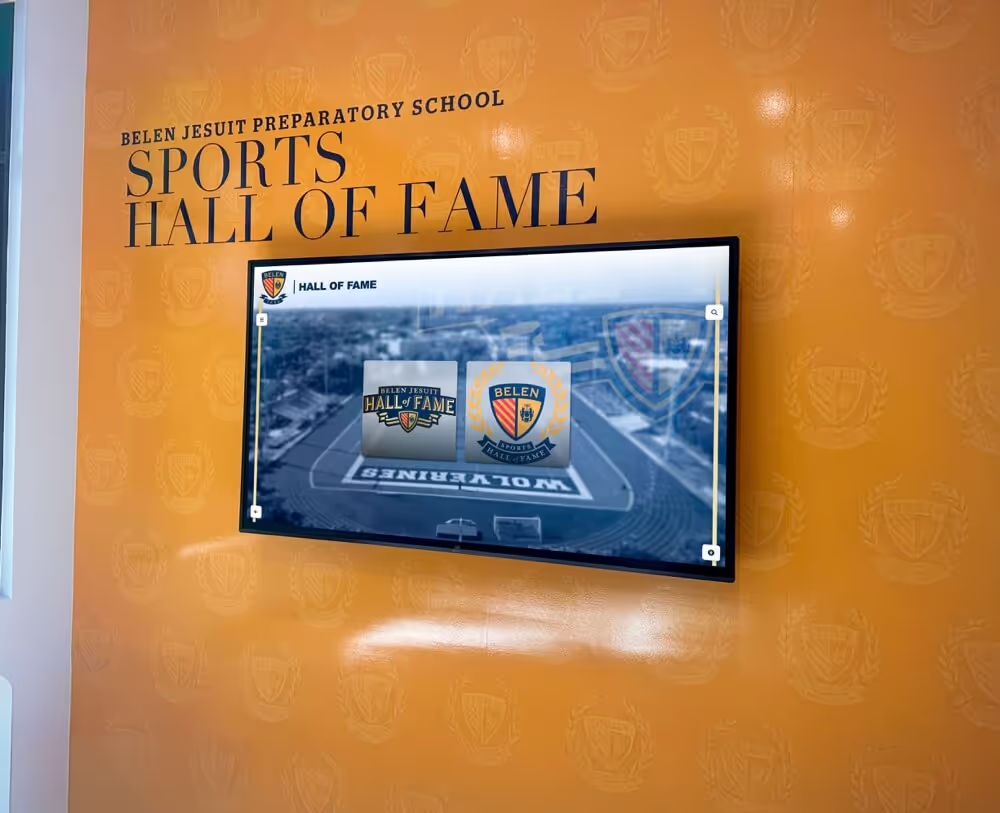
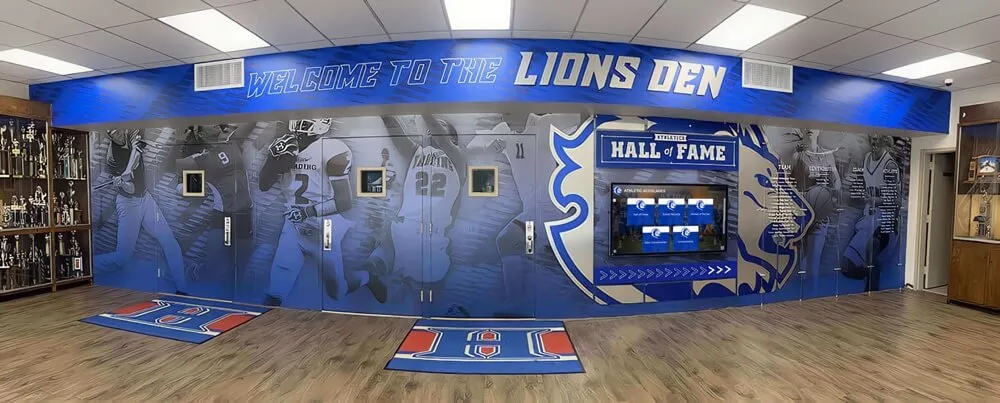
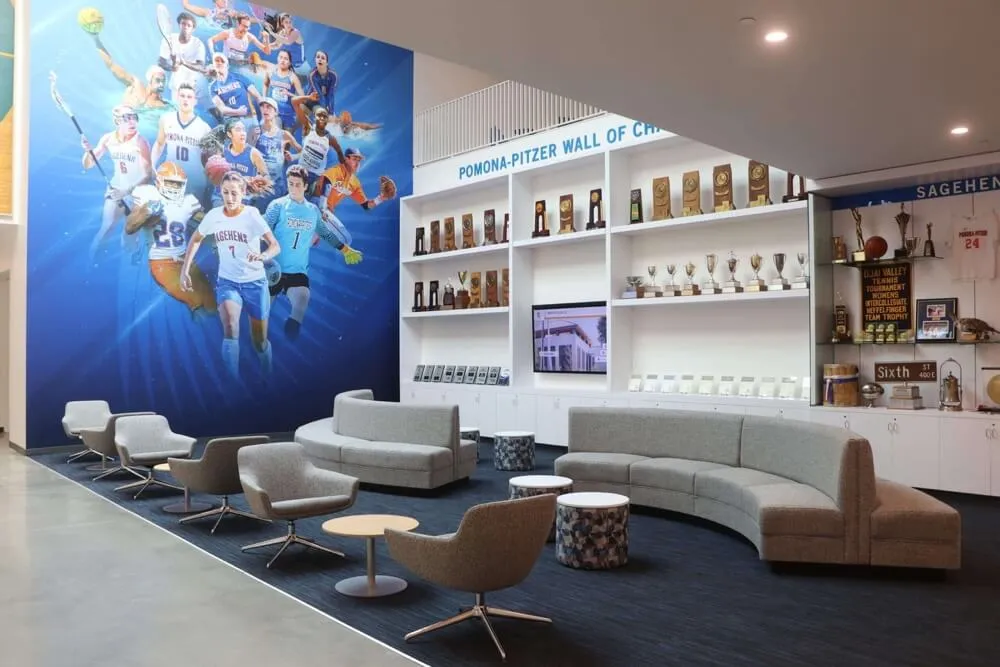
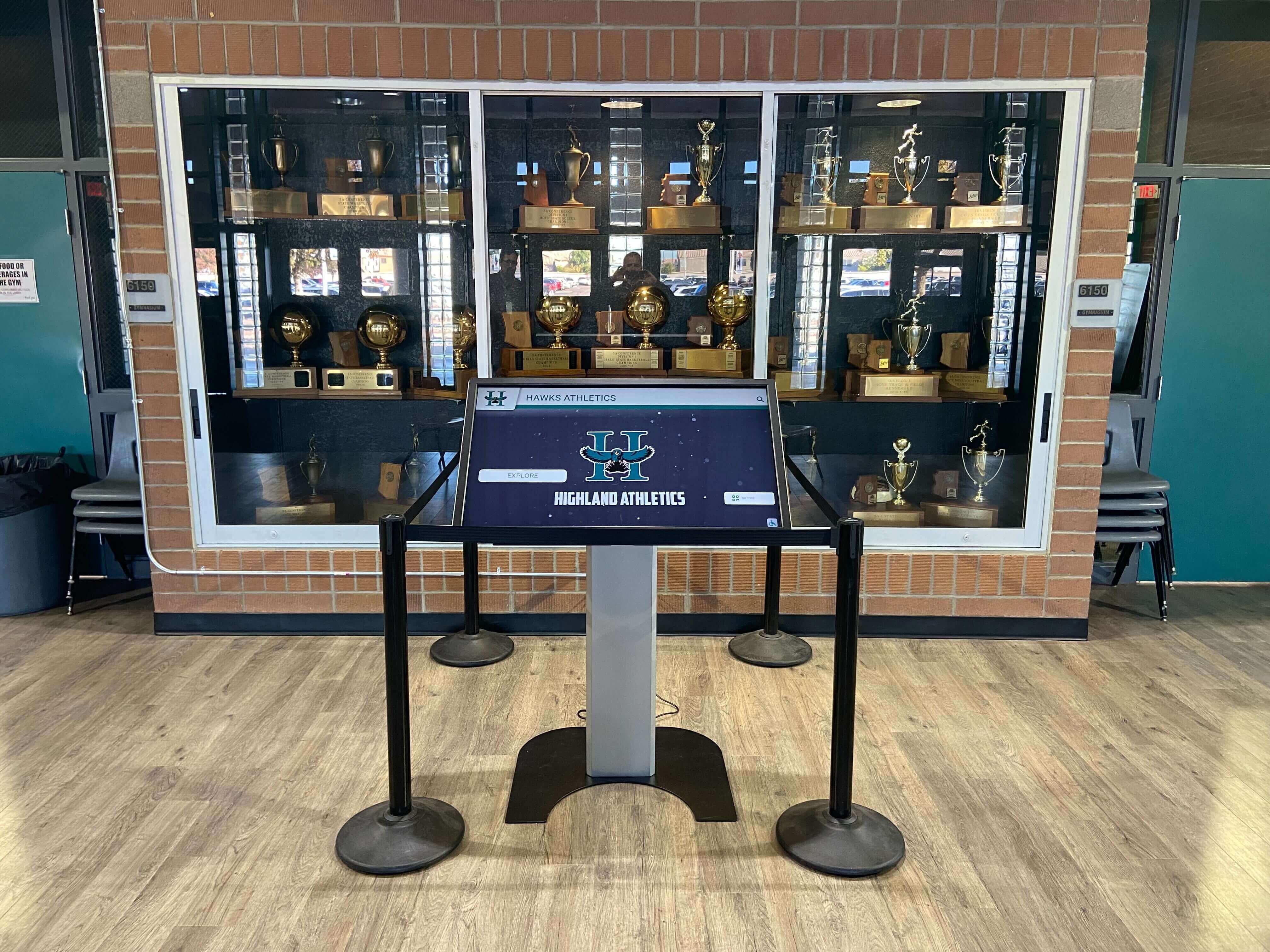
Dedicated recognition spaces combining physical awards with digital displays create comprehensive records of competitive achievement that serve current and future students
Building a Culture of FBLA Recognition at Your School
Recognizing FBLA competitive achievement isn’t simply about honoring individuals — it’s about building a school culture where business education is taken seriously and students see clear pathways to achievement and recognition that parallel what athletes and traditional academic honorees experience.
Connecting FBLA to Broader Academic Recognition
FBLA champions often overlap with students recognized in other academic programs. A student who earns state-level recognition in FBLA Accounting likely also appears on the honor roll or earns AP credit. Schools that build integrated recognition systems — where the same display acknowledges honor society participation, academic letter awards, and FBLA competitive placements together — communicate that intellectual and professional excellence are valued comprehensively rather than in isolated silos.
Programs like the National Merit Scholarship represent one end of the academic recognition spectrum; FBLA competitive placements represent another. Schools that display both types of achievement in the same recognition system signal that multiple pathways to excellence matter equally to their communities.
This integration also reduces the administrative burden of recognition. A single digital display system managed through a centralized content management platform can accommodate honor roll students, NHS inductees, and FBLA state champions without requiring separate systems for each recognition type.
Making FBLA Recognition Visible Year-Round
The most effective recognition programs don’t limit visibility to end-of-year ceremonies. Year-round visibility keeps current members motivated, reminds the broader school community that FBLA is a serious competitive program, and provides ongoing inspiration for underclassmen considering membership.
Digital displays enable this continuity naturally. Unlike physical trophies that require manual rearrangement, digital recognition systems can feature seasonal spotlights — highlighting NLC qualifiers in the summer, showcasing state results in the spring, and featuring individual member spotlights throughout the year.
Schools that treat FBLA recognition as an ongoing institutional commitment rather than an annual afterthought build programs that consistently attract capable members, sustain competitive excellence across graduation cycles, and produce achievers who credit their schools for investing in their development. A complete recognition system guide can help administrators map out what year-round visibility looks like in practice.
Connecting Past Champions to Current Members
One of the most powerful aspects of permanent recognition systems is their ability to connect current students to the legacy that precedes them. An FBLA member who sees that a school alumnus won the state championship in Business Plan five years ago — and can read about where that person went to college and what career they pursued — receives motivation that no assembly speech can replicate.
Recognition systems that capture FBLA achievements alongside traditional senior honors create permanent records future classes can explore. This longitudinal view transforms individual competitive achievements into institutional narrative — showing that FBLA success at your school has a history, a tradition, and a clear pathway that current members can follow.
Schools with established FBLA programs often find that their most competitive current members were inspired by predecessors they never met but could see recognized on school walls. That intergenerational motivation is one of the most compelling arguments for permanent, accessible recognition systems that outlast individual graduating classes.
What FBLA Competitive Achievement Looks Like on a Resume and Application
Understanding how FBLA competitive achievement translates to college applications and early career credentials helps schools frame recognition appropriately.
College admissions officers at selective institutions recognize FBLA national qualification as evidence of genuine academic and professional preparation. Unlike participation awards or casual club membership, competitive FBLA achievement represents verifiable excellence in a defined domain — the kind of specific, measurable accomplishment that strengthens applications in business, economics, and related fields.
For students pursuing business programs at competitive universities, state-level FBLA placements and especially NLC qualification signal readiness for rigorous academic work in ways that GPA alone cannot. Admissions offices evaluating business school applicants look for evidence that students have engaged with business concepts beyond coursework — and FBLA competition provides exactly that evidence.
Early career applications benefit similarly. Business employers recognize FBLA competitive achievement as evidence of initiative, subject mastery, and the ability to perform under pressure — qualities that are difficult to demonstrate through academic credentials alone.
Schools that build recognition systems honoring FBLA achievers alongside academic honor society members communicate clearly that competitive business achievement carries comparable institutional value to other recognized forms of excellence.
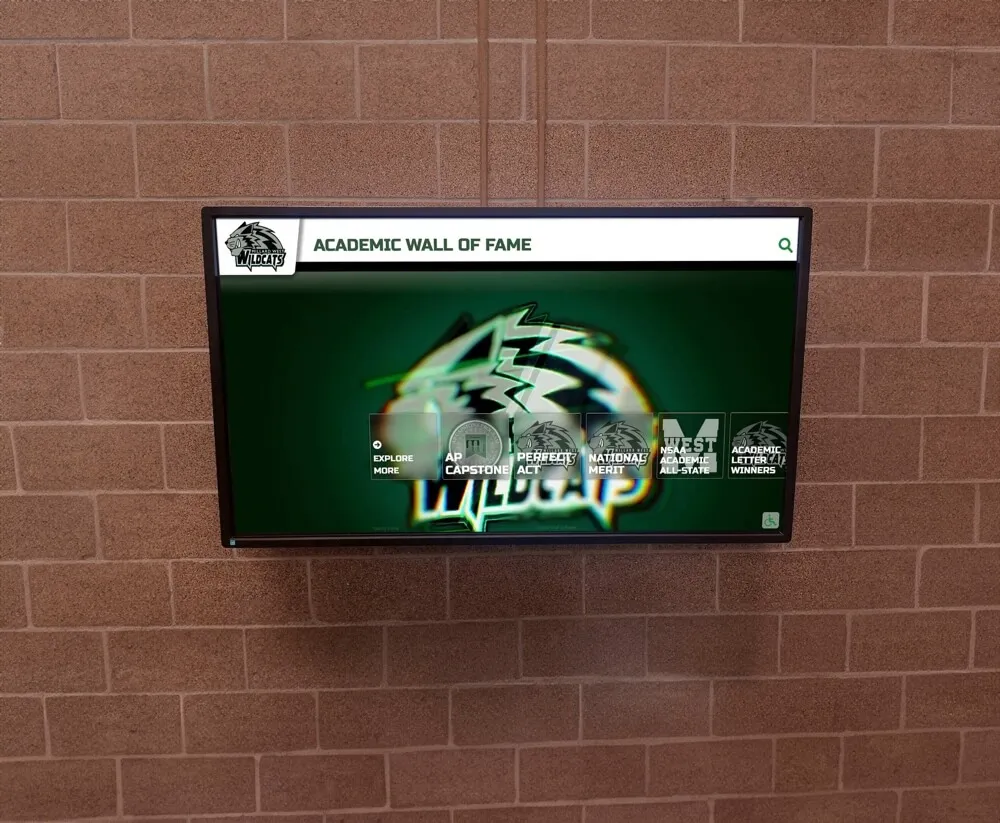
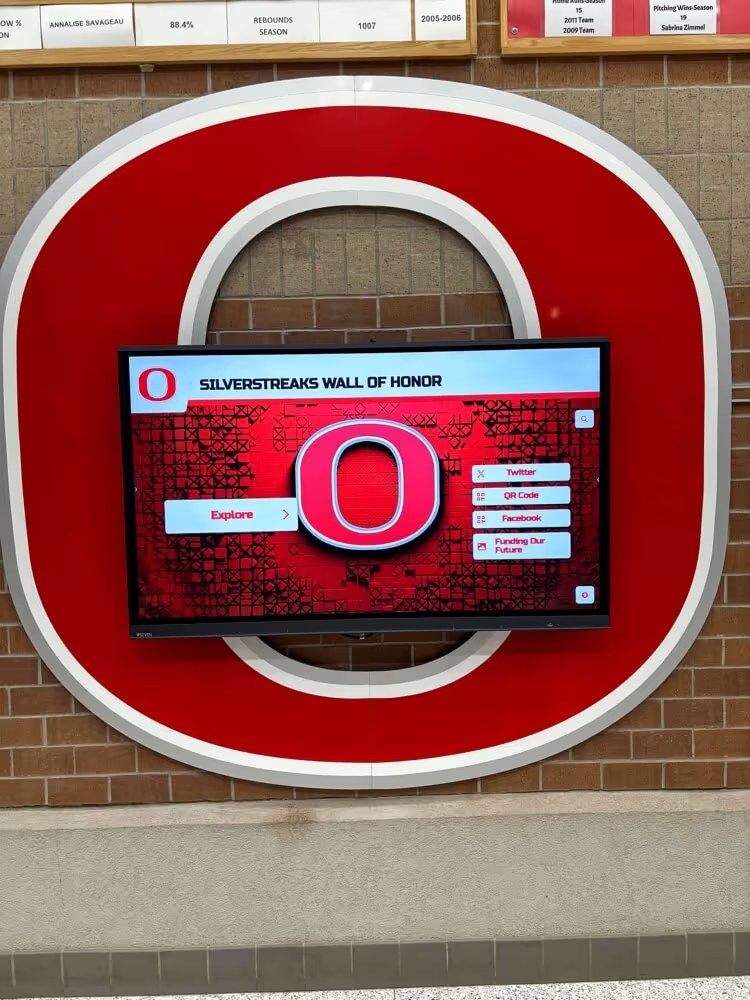
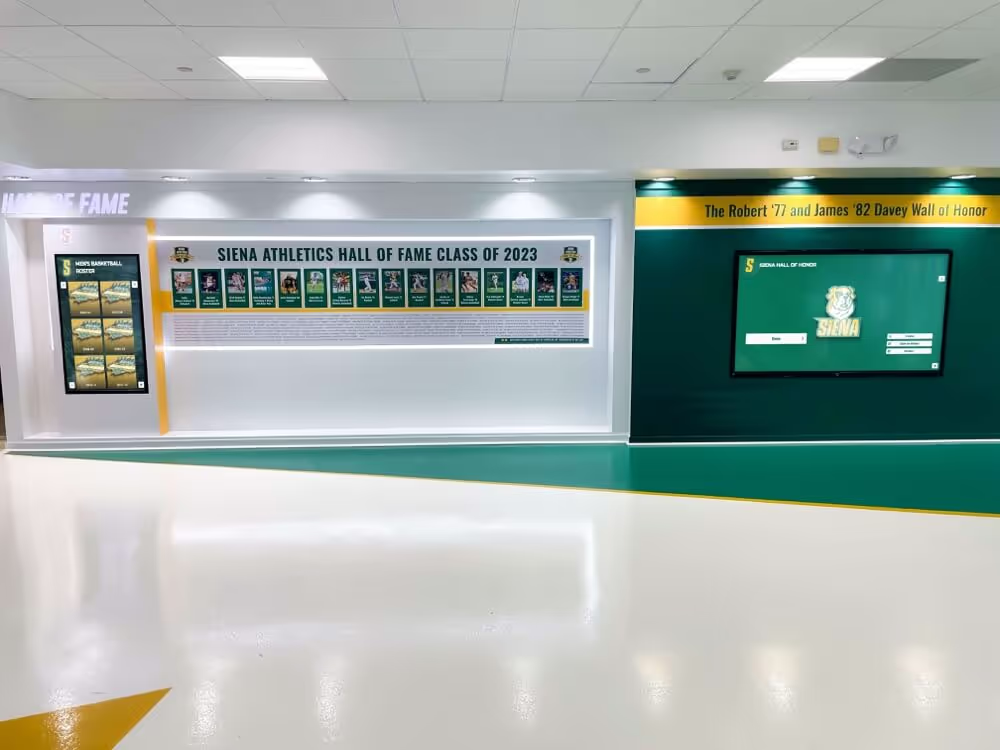
Academic recognition displays give FBLA competitive achievements the same institutional visibility as honor roll designations and AP scholar awards
Preparing Students for FBLA Competitive Events: Advisor Strategies
Advisors who build consistently competitive chapters develop structured preparation processes rather than relying on students to self-prepare in isolation. Effective preparation approaches share several characteristics.
Event selection aligned with coursework — Students who compete in events matching their current coursework enter with foundational knowledge already in place. A student currently enrolled in Accounting I has a concrete advantage in Accounting I competitive events that peers without that coursework cannot easily replicate.
Practice test access — FBLA provides official study guides and sample tests for objective events. Advisors who build practice test sessions into chapter meeting schedules give members structured preparation time with immediate feedback on knowledge gaps.
Mock presentations — For performance events, practice presentations before a panel of teachers, parents, or community business professionals develop the comfort and fluency that distinguish strong performances from merely adequate ones. The specific feedback from mock judges proves more valuable than any amount of solo rehearsal.
Debrief cycles — After each competition, advisors who conduct structured debriefs — reviewing which preparation strategies worked, where knowledge gaps appeared, and what presentation elements judges commented on — build institutional knowledge that makes the chapter more competitive each year.
Recognition systems reinforce these preparation investments by making the outcomes visible and valued. Students are more likely to commit serious preparation time to FBLA events when they can see that state placements earn prominent school recognition comparable to athletic championships.
Showcase Your FBLA Champions with Digital Recognition
Digital trophy case systems provide unlimited capacity to recognize FBLA state placements, national qualifiers, and chapter event winners — with individual profiles, multimedia content, and cloud-based management that lets advisors update displays immediately after competition results are announced. Explore how schools build lasting FBLA legacy displays that motivate current members and celebrate every competitive milestone permanently.
Explore Recognition SolutionsFrequently Asked Questions About FBLA Competitive Events
How many FBLA competitive events are there?
FBLA offers dozens of competitive events at the national level, covering individual, team, and chapter competition formats. The specific events available at regional and state competitions vary by state association, with national competitions offering the broadest selection. New events are added periodically as the organization responds to emerging business and technology fields.
Can students compete in multiple FBLA events?
Yes, students can typically enter multiple events, though specific limits on the number of events per competitor vary by competition level and state association rules. Advisors can help members identify the combination of events that fits their schedule, interests, and preparation capacity realistically.
What happens at FBLA nationals?
The National Leadership Conference (NLC) brings together state qualifiers from across the country for multiple days of competitive events, workshops, keynote presentations, and leadership development programming. Competition formats at NLC mirror state-level structures — objective tests, performance presentations, and chapter project judging — but the field consists entirely of students who have already demonstrated excellence at the state level.
How are FBLA events judged?
Objective tests are scored by automated grading against answer keys, eliminating subjective judgment. Performance events are evaluated by panels of business professionals serving as judges, using standardized rubrics covering content accuracy, professional presentation, communication effectiveness, and business judgment. Chapter events are judged by reviewing submitted documentation against defined criteria.
How do FBLA competitive events help with college applications?
State-level placements and national qualification provide verifiable, specific evidence of achievement in business-related disciplines — exactly the kind of concrete accomplishment college applications request in extracurricular sections. The competitive context (ranking among a defined number of competitors at a defined level) makes FBLA achievement more meaningful to admissions readers than participation-based honors. Students should document specific events, placement levels, and competition scope clearly in their applications.
Conclusion: Treating FBLA Achievement with the Recognition It Deserves
FBLA competitive events develop business knowledge, professional communication skills, strategic thinking, and leadership capability in students who commit to the competitive process. The achievements students earn — from regional placements that build early competition experience to NLC qualification that signals national-level excellence — deserve recognition systems that match their significance.
Schools that invest in comprehensive, accessible recognition for FBLA champions build programs that attract serious students, motivate sustained preparation, and produce achievers who carry school pride into their college and professional careers. Whether through improved award ceremonies, dedicated display space, or digital trophy case systems that provide unlimited capacity and year-round visibility, treating FBLA competitive achievement as a first-class form of student excellence pays long-term dividends for school culture and program strength.
The students competing in FBLA events this year are developing skills that will define their professional capabilities for decades. The recognition they receive from their schools should reflect that reality — permanently, visibly, and with the same institutional pride schools invest in their other champions.
Ready to build recognition systems that honor FBLA competitive achievement with the permanence and visibility it deserves? Explore digital trophy case solutions that help schools celebrate every FBLA milestone — from first regional qualifier to national champion — with professional displays that last as long as the achievements they celebrate.