



Drill team uniforms are more than fabric and sequins. They are the visual identity of one of the most demanding performing arts programs in any school — a signal to competitors, audiences, and alumni that this program has a standard, a tradition, and a history worth carrying forward. Every time a drill team takes the field or competition floor in uniform, they carry decades of that standard with them.
Yet most schools treat those uniforms as purely functional gear: stored in bags after the season, retired when worn out, and rarely seen again. The photographs end up in yearbooks. The retired uniforms end up in storage closets. The history of what those uniforms represented — which teams wore them, what they accomplished, how the design evolved — quietly disappears.
This guide is for programs ready to change that. It covers what drill team uniforms actually represent, how to document and display their history, and how to build physical and digital recognition that keeps the visual legacy of your program alive for every generation of future performers.
Drill team uniforms sit at the intersection of athletic performance and artistic identity in ways that no other school program quite replicates. The uniform a drill team wears to a competitive event carries the full weight of the program’s history, values, and aspirations onto the floor. Understanding that weight is the starting point for building recognition worthy of it — particularly for programs that compete at the highest levels, including those that qualify for Texas UIL State Championships where uniform presentation is part of the competitive picture.

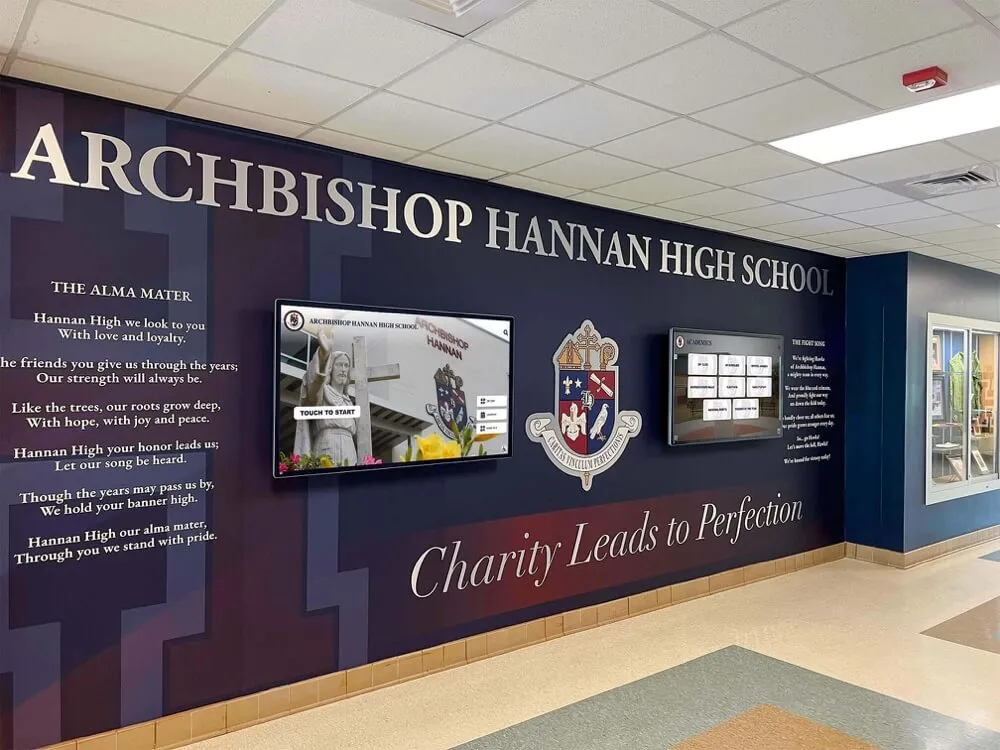
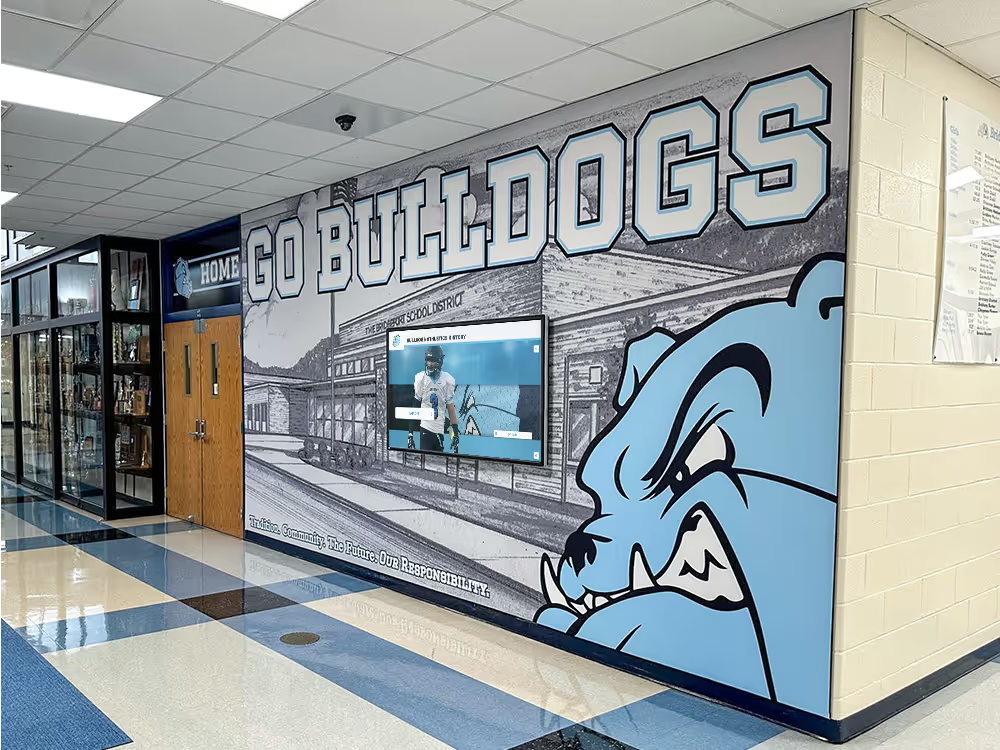
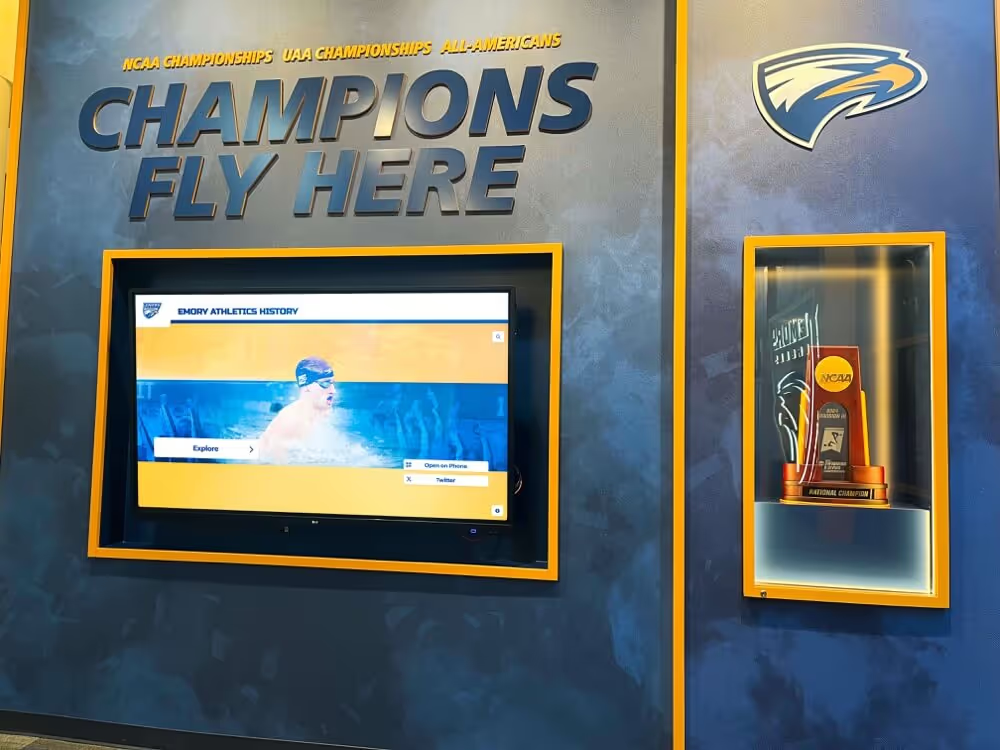
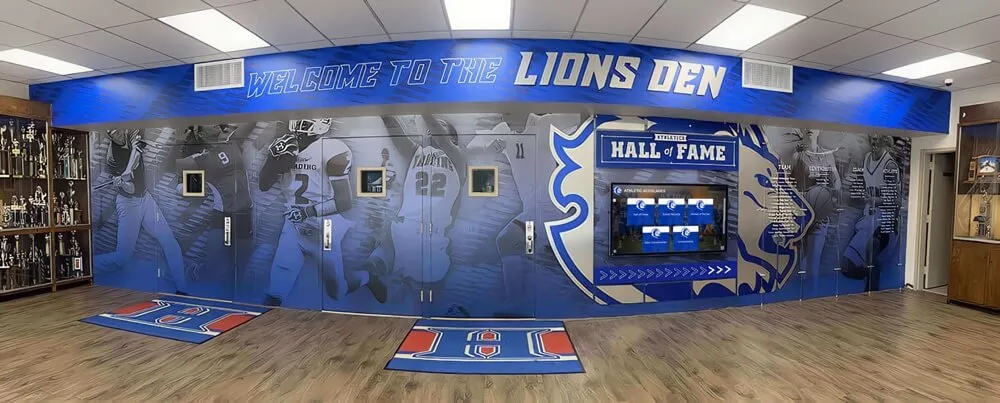
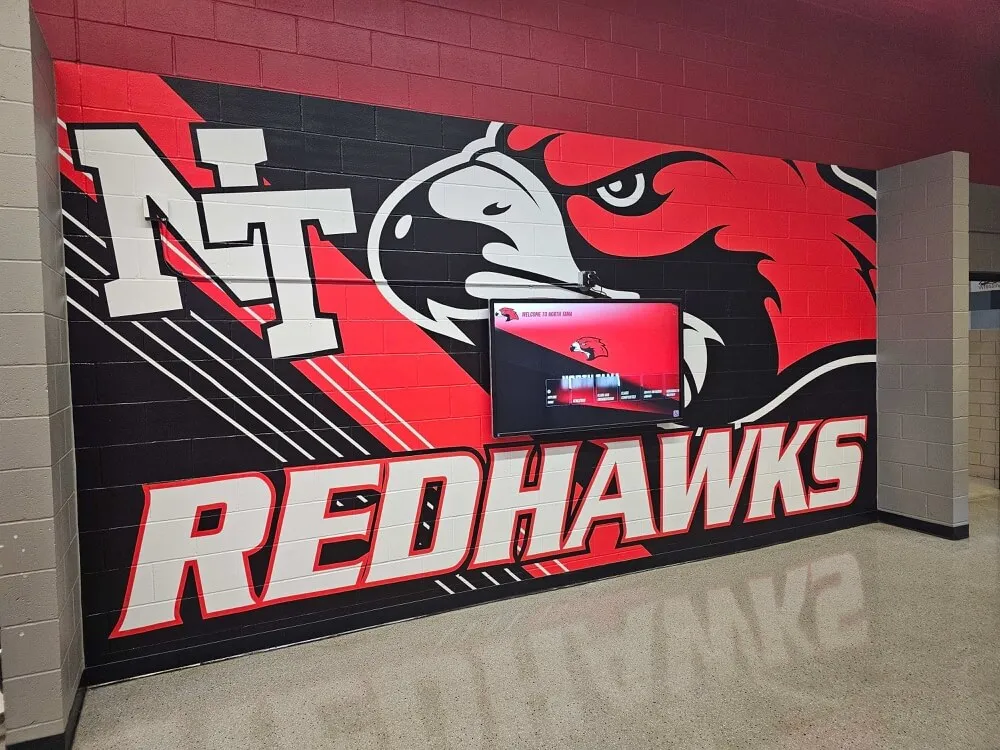
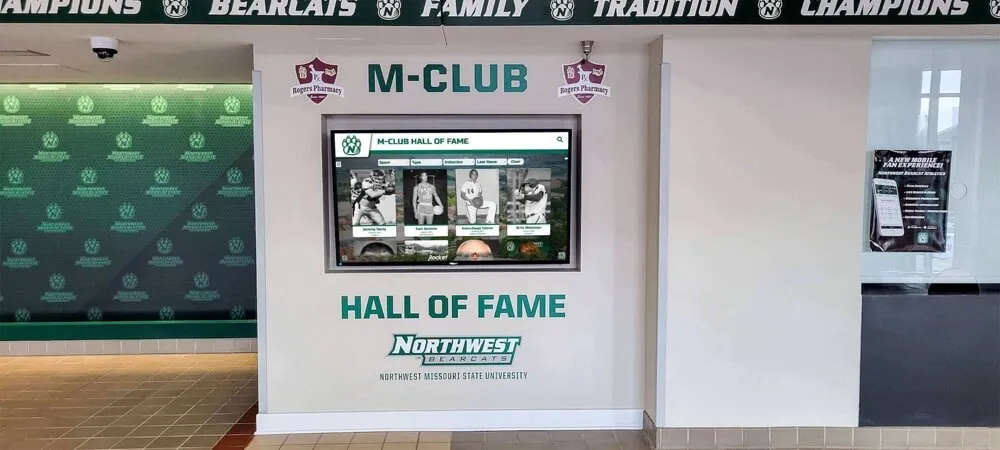
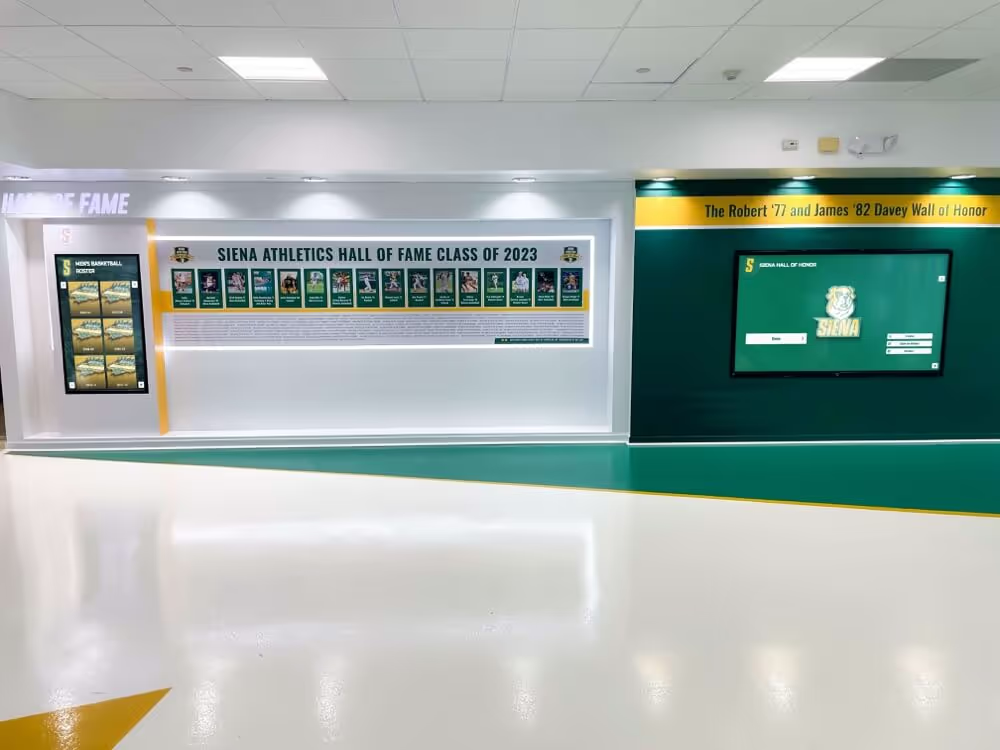
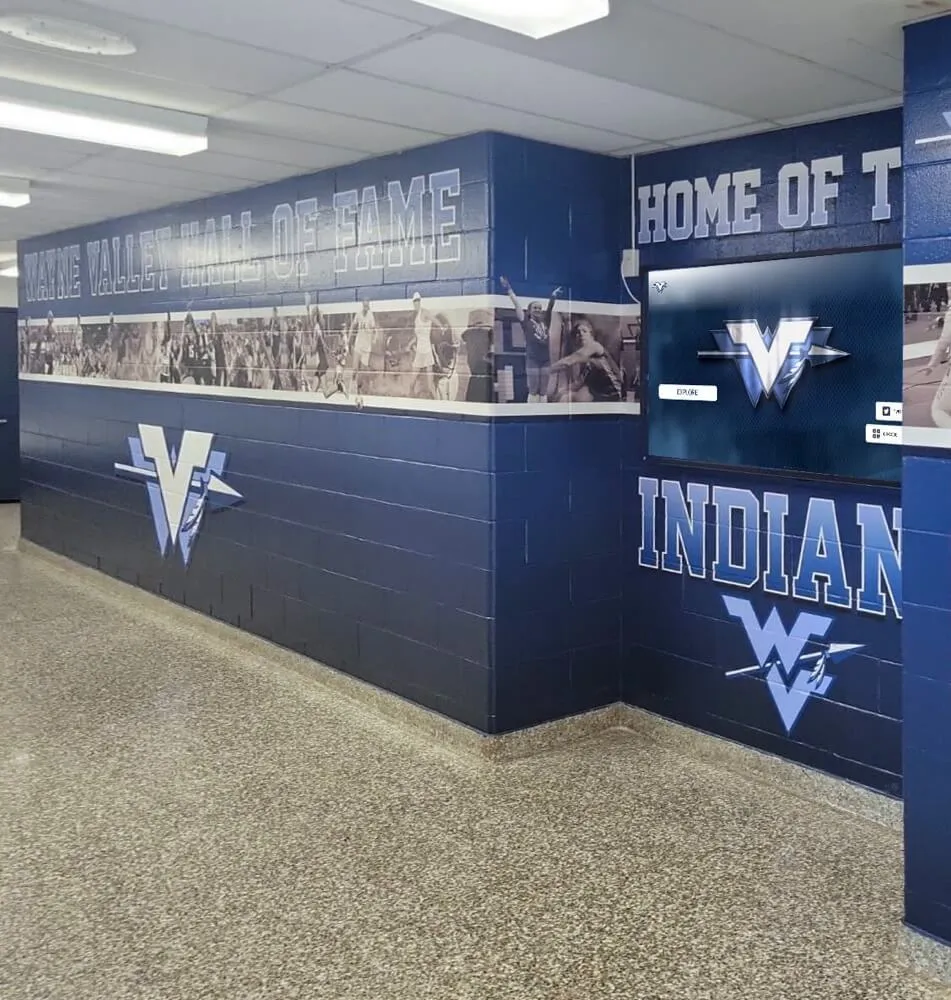
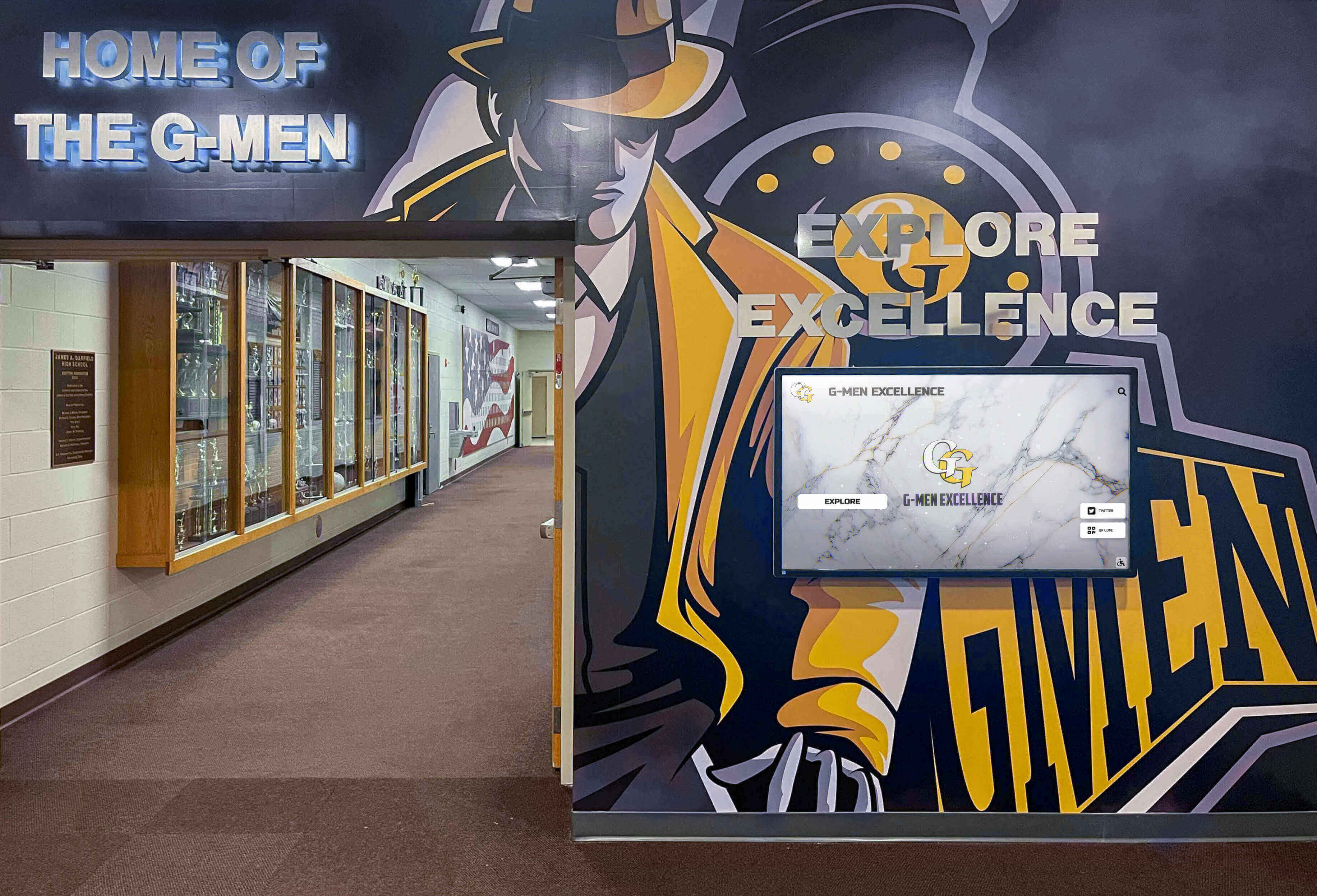
School hallways that integrate murals, digital screens, and trophy cases create complete recognition environments — drill team uniforms, competitive history, and program legacy all finding a permanent home in a single curated space
What Drill Team Uniforms Actually Represent
The function of a drill team uniform extends well beyond practicality. Every element — the color palette, the cut, the embellishments, the way the fabric moves — is a deliberate statement about who the program is and what it stands for.
Visual Identity and School Connection
The strongest drill team uniforms are designed as direct extensions of school identity. Colors match the school palette. Mascot imagery or wordmarks appear in the embellishments. The design language is consistent with how the school presents itself in other competitive contexts while adding the performance-specific elements that distinguish drill team from sport.
When a drill team takes the competition floor in uniforms that visually announce their school identity, they are doing something athletic teams do with jerseys — signaling belonging, pride, and competitive intent simultaneously. The visual connection between drill team uniforms and school identity matters for community recognition, competitive presence, and the sense of continuity from one team generation to the next.
Programs that invest in deliberate visual identity for their drill team — extending that identity across uniforms, graphics, and program materials — build brand recognition that compounds over time. The principles behind effective dance team logo design apply directly to how drill team programs approach the visual identity question, since a logo that works at distance uses the same design logic that makes a competition uniform read clearly from the judging panel.
Tradition and Program Continuity
Uniform design decisions carry a program forward across graduating classes. When a school has maintained consistent color schemes, design elements, or silhouette choices across multiple uniform generations, those consistencies become tradition markers — ways that a performer who graduated fifteen years ago recognizes themselves in the program’s current presentation even as the specific uniform has changed.
Programs with strong uniform traditions are programs with strong program identity. Performers who join know they are entering something with history. Alumni who return for homecoming see continuity in visual elements that connect their experience to the current team’s.
This tradition dimension is precisely what makes retired uniforms valuable as display artifacts rather than discarded equipment. A uniform from fifteen years ago that sits in a display case is evidence that the program existed, competed, and achieved something worth preserving — a physical object that carries the weight of everyone who wore it.
Performance-Specific Design Requirements
Drill team uniforms are engineering problems as much as design problems. They need to move with and enhance the choreography rather than restrict it, read clearly from the judging panel or audience at distance, stay properly positioned through high-extension kicks, turns, and jumps, maintain appearance quality across multiple performances and transport, and differentiate officers from line members when the program uses tiered recognition.
The tension between performance function and visual impact is what makes drill team uniform design genuinely challenging — and what makes a well-executed uniform that does both successfully an achievement worth recognizing in its own right.
The Anatomy of Drill Team Uniforms
Understanding what goes into a complete drill team uniform helps programs make better decisions about both design and display.
Shell and Base Garment
The foundational uniform layer — shell top or bodysuit, short skirt or uniform pant depending on style and competition context — establishes the silhouette. Competition uniforms at major events typically use highly engineered stretch materials that support movement while maintaining clean visual lines. Practice and performance uniforms for school pep rallies and game-day appearances may use more durable, less expensive materials for daily wear.
Embellishment and Hardware
Rhinestone packages, sequin panels, metallic accents, and decorative hardware take competition uniforms from functional to visually striking at performance distance. The placement and density of embellishments affect how the uniform reads under competition lighting — a critical consideration since drill team is judged both on technique and overall visual effect.
Officer Distinction Elements
Most drill team programs visually distinguish officers — captains, lieutenants, section leaders — from line members through uniform elements. Common approaches include different color accents, additional embellishments, altered necklines or silhouettes, or distinct warm-up jackets. These distinctions matter for how the program recognizes and displays officer achievement: the officer-distinction elements are part of what future members see in display photographs and retired uniform cases.
Accessory Package
Complete drill team uniforms typically include accessories — poms in school colors, hats or hair accessories, boot covers or specific footwear, and warm-up jackets or team bags. The full accessory package is part of the complete visual identity and should be included when programs document and display uniform history.
How Drill Team Uniform Designs Evolve Over Time
No program wears the same uniform forever. Understanding why and how uniform designs change helps programs document those transitions as meaningful moments in program history rather than simply routine equipment turnover.
Design Evolution Drivers
Uniform changes happen for several reasons, each worth documenting:
Competition standard changes — Major competitions periodically update what uniform elements are eligible, required, or restricted in specific categories. These changes push programs to update designs that might otherwise remain stable, and the timing of those changes often coincides with other moments of program evolution worth capturing.
Budget cycles and program growth — Programs that grow significantly may commission new uniform designs that reflect a larger budget, more sophisticated design input, or a deliberate statement about the program’s trajectory. A new uniform commissioned after a successful fundraising campaign tells a story worth preserving.
Coaching and directorial vision — New directors often bring distinct visual preferences. A uniform redesign under new leadership is frequently a visible signal of program direction change worth documenting as part of the program’s institutional history.
Deliberate tradition preservation — Programs that have maintained specific design elements across generations — a particular shade of blue, a consistent silhouette choice, a signature embellishment style — often document those continuity elements specifically because they represent conscious tradition-keeping decisions.
Documenting Uniform Transitions
The programs with the richest visual histories are those that photographed each uniform generation comprehensively when it was current. High-quality documentation should include the full team in competition uniform from the front and back, officers in full regalia, detail shots of distinctive embellishments and design elements, action performance photography showing the uniform in motion, and group photographs that establish the year-by-year visual record.
These photographs become the raw material for every recognition display you will ever build around uniform history. Programs that skipped thorough documentation during past transitions have gaps in their visual record that are difficult to fill retroactively. For programs working to recover older uniform history from limited sources, resources on digitizing old yearbooks offer practical approaches for extracting the best available historical photography from older physical records.
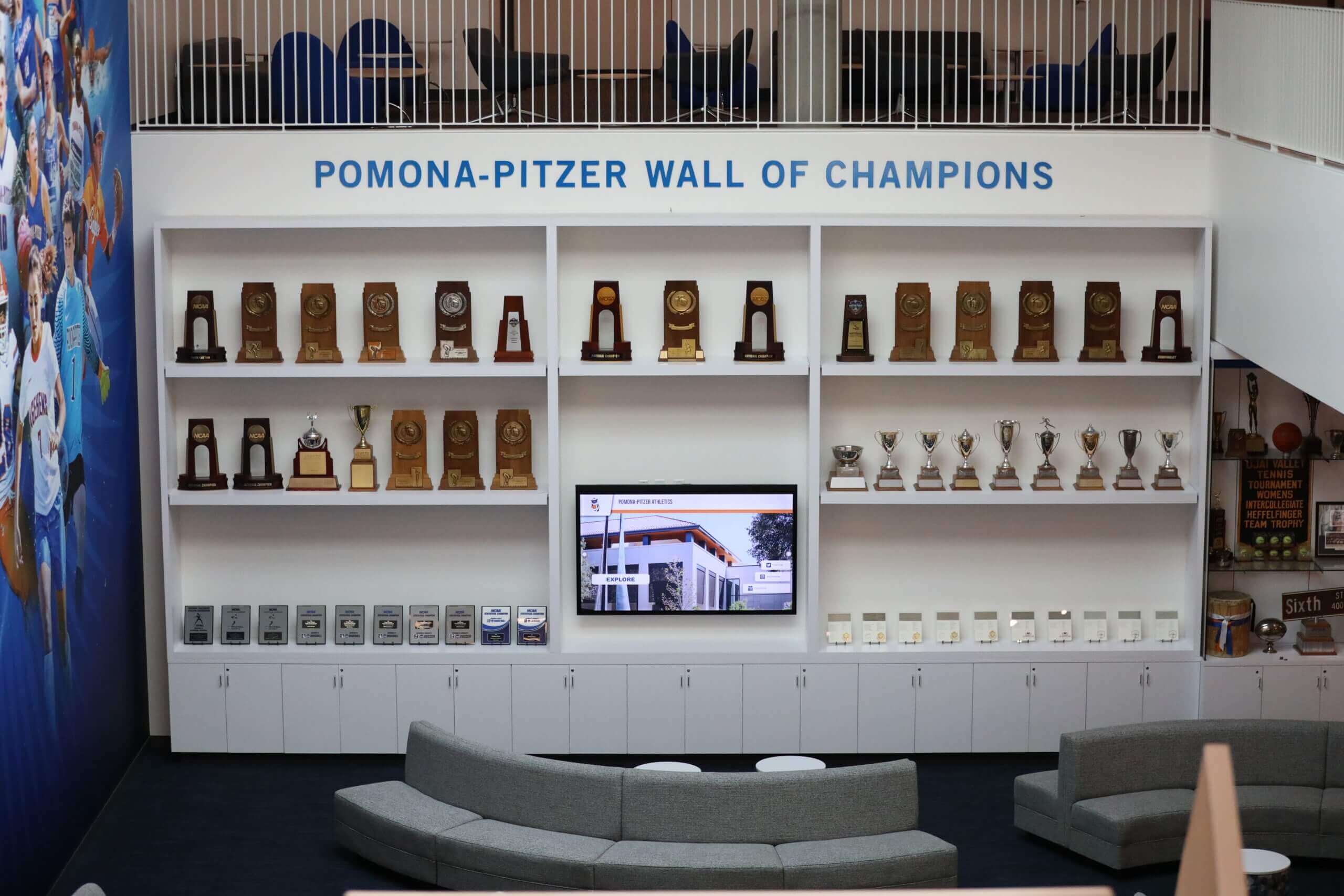
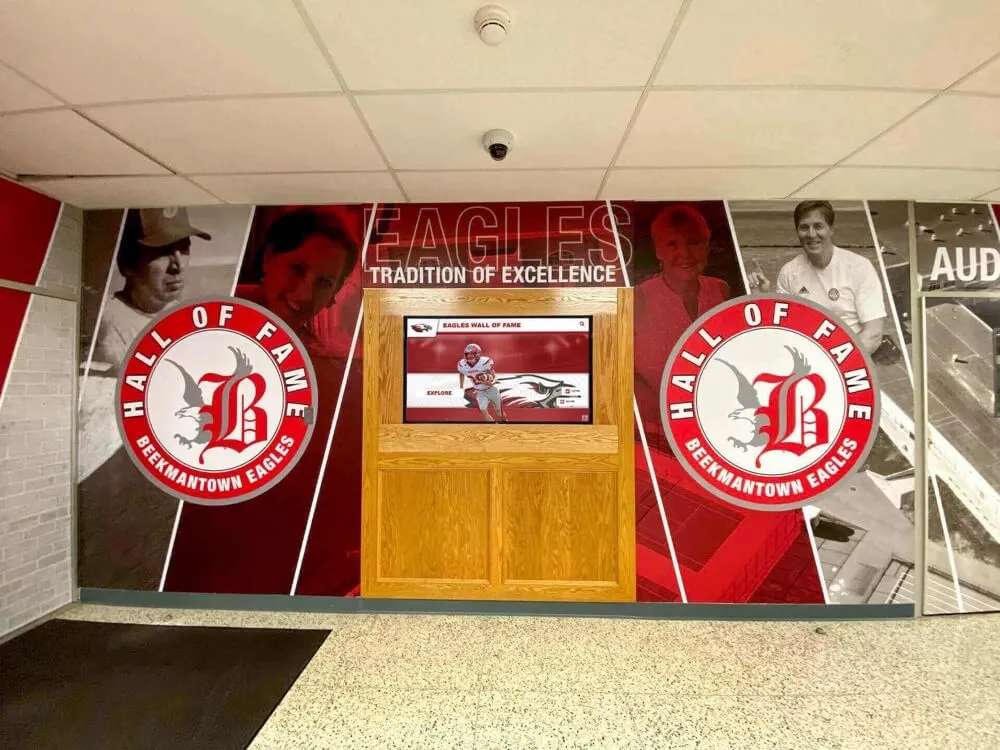
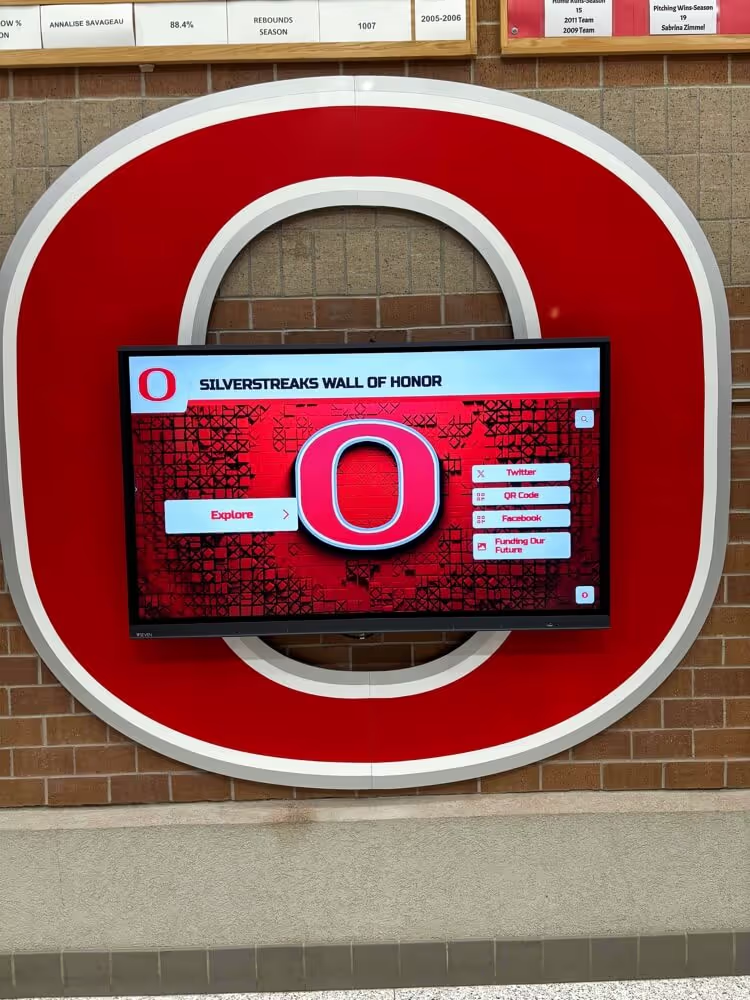
Trophy display lounges that bring together competitive hardware, photography, and recognition elements create program heritage environments that connect current performers to the tradition they are extending
Uniform Reveal Events: Building Community Engagement
Uniform reveal moments — the first time a new design is shown to the student body, the school community, or social media audiences — represent some of the highest organic engagement opportunities in a drill team program’s year.
What Makes a Uniform Reveal Effective
The programs that generate the strongest community response to uniform reveals treat them as formal announcement events rather than informal first showings:
Controlled first reveal — A single, high-quality reveal moment creates more impact than gradual exposure through rehearsal photography. Holding the reveal for a dedicated event — an assembly, a parent meeting, a pre-competition social media post — concentrates the community response into a moment that feels significant.
Quality photography on reveal day — Dedicated photography for the uniform reveal creates content that serves the program for years: the official documentation photograph for the historical record, social media content, recruitment materials, and eventually the display case photograph representing this design generation.
Context and narrative — Reveals that include explanation of design choices — what the design elements represent, how they connect to school tradition, what makes this uniform designed specifically for the program’s performance style — generate more meaningful engagement than pure visual announcement.
Officer and captain showcase — Reveals that highlight officer-distinction elements and introduce the current year’s team leadership alongside the uniform create combined recognition moments that serve multiple recognition purposes simultaneously.
Season Photography Standards
Beyond the reveal event, programs that maintain high documentation standards throughout the season build archives that serve recognition purposes for decades. Designating a specific photography plan for competition days — who captures what, in what format, with what filing conventions — prevents the common failure mode of strong photography during a program’s peak years and sparse documentation during transitions.
Retired Uniform Display Ideas
When a uniform generation ends, the question of what to do with the physical uniforms is a real one. Programs that treat retirement as a recognition moment rather than simply a disposal decision build program heritage that persists.
Display Case Integration
A physical display case featuring a retired drill team uniform — mounted on a dress form or properly preserved under glass with accompanying documentation — communicates institutional commitment to program history in a way that photographs alone cannot.
What to include alongside the retired uniform:
- The year or years the uniform was worn and which competition team used it
- Notable performances or competitive achievements from that era
- Names of officers or notable performers who wore the design
- Brief director’s note on the uniform’s significance in program history
- Connection to what came before and after in the design lineage
Placement considerations: Retired uniform displays work best in high-visibility locations — main lobby, performing arts hallway, or alongside the school’s athletic trophy case — rather than in storage-adjacent spaces where only program insiders encounter them. The goal is community-wide visibility that turns program history into a shared school asset.
For schools designing comprehensive trophy case environments that include both athletic hardware and performing arts recognition, resources on memorabilia display case ideas cover design approaches that work for mixed-program recognition spaces.
Wall-Mounted Photo Retrospectives
Not every school has dedicated display case space for a full retired uniform installation. Wall-mounted photo retrospectives offer an alternative that works in hallway or lobby spaces with more limited depth:
- A sequential visual timeline showing each uniform generation with year markers
- Large-format prints showing the team in each era’s uniform against a consistent background
- A “then and now” comparison display showing design evolution from the founding year to the present
- A captains’ wall showing officer-level uniform detail shots and portraits across eras
Wall wraps and large-format graphic installations can make these retrospectives visually compelling even in budget-limited environments. Resources on wall wraps for schools cover the practical installation and design considerations for high-impact visual recognition in school spaces — approaches directly applicable to drill team uniform history installations.
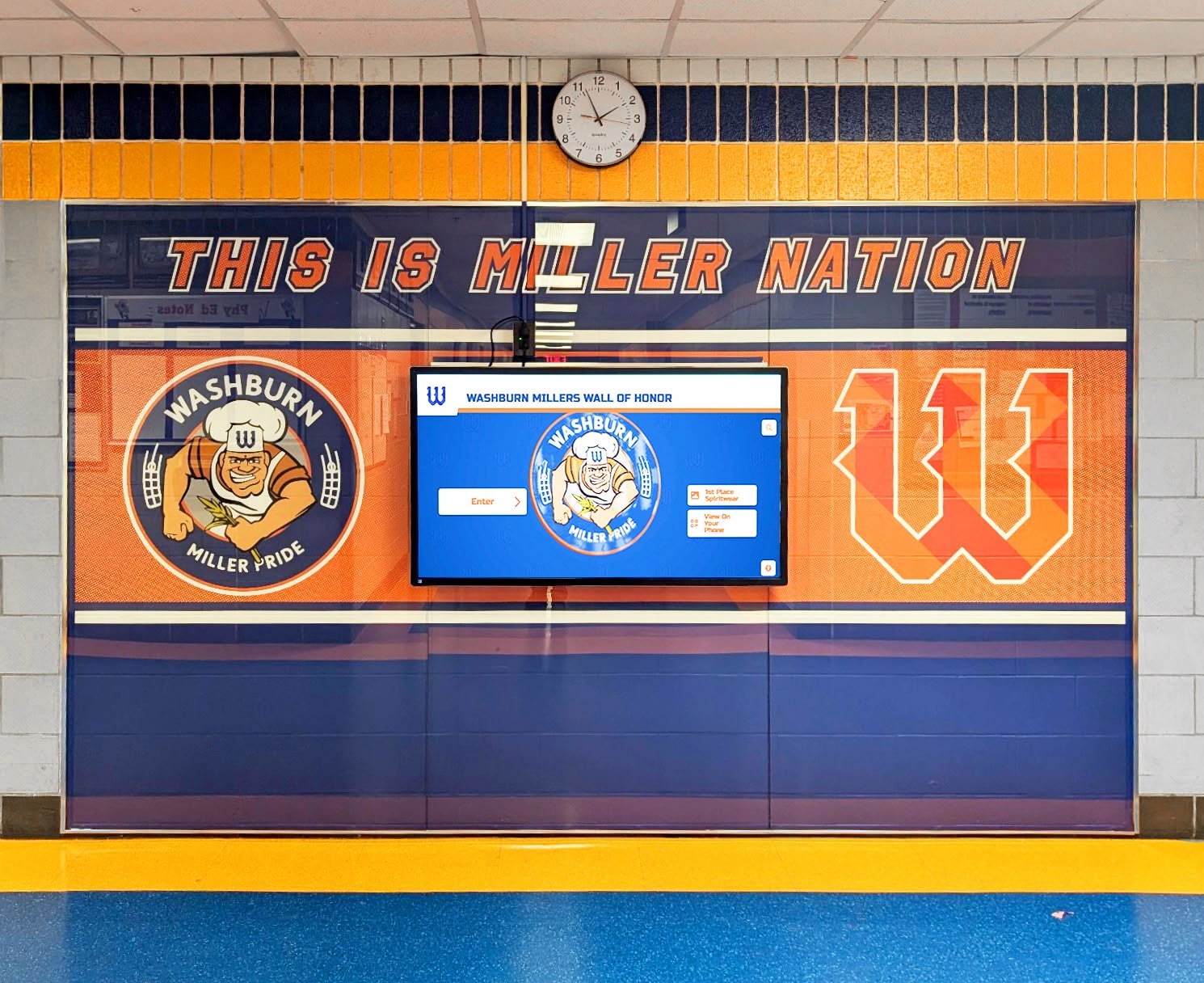
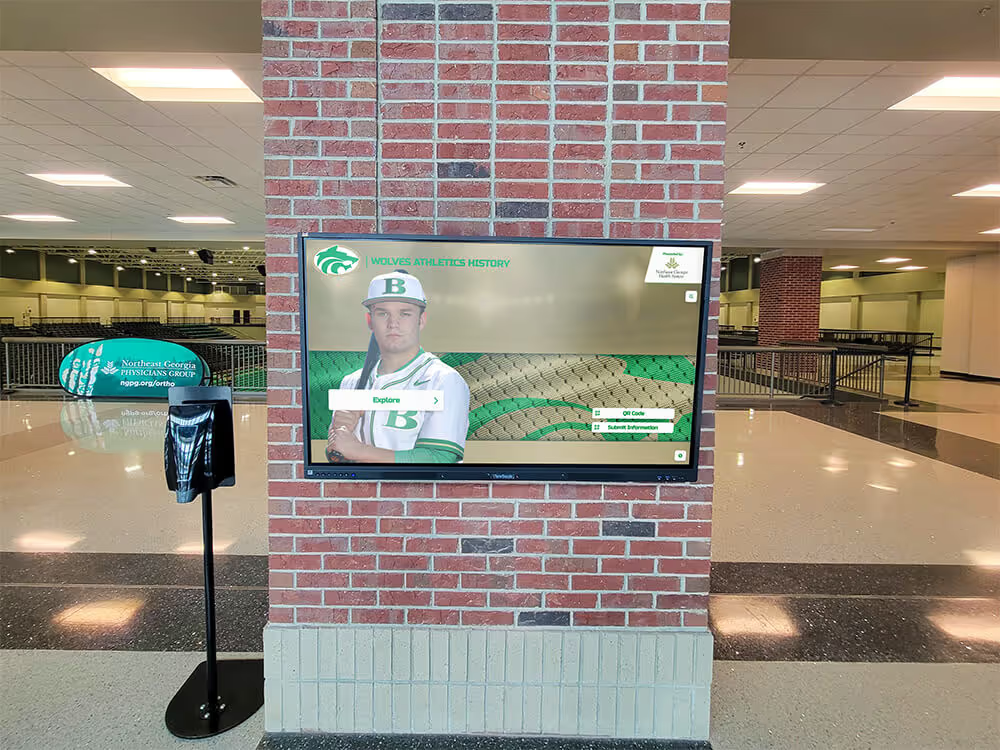
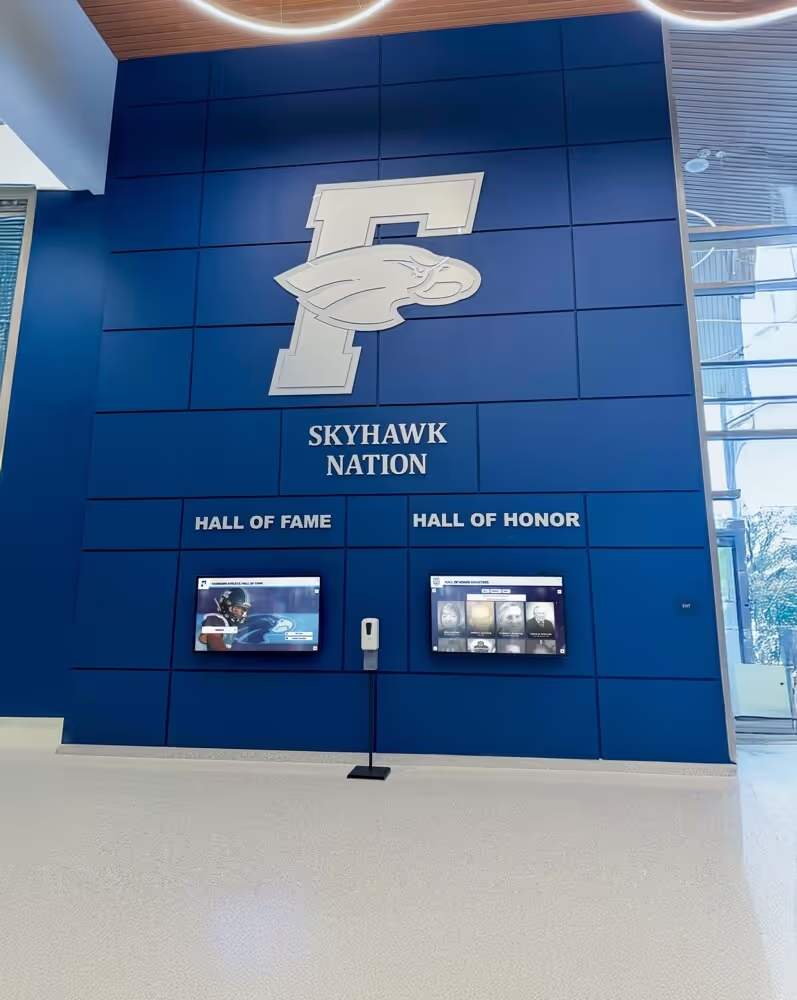
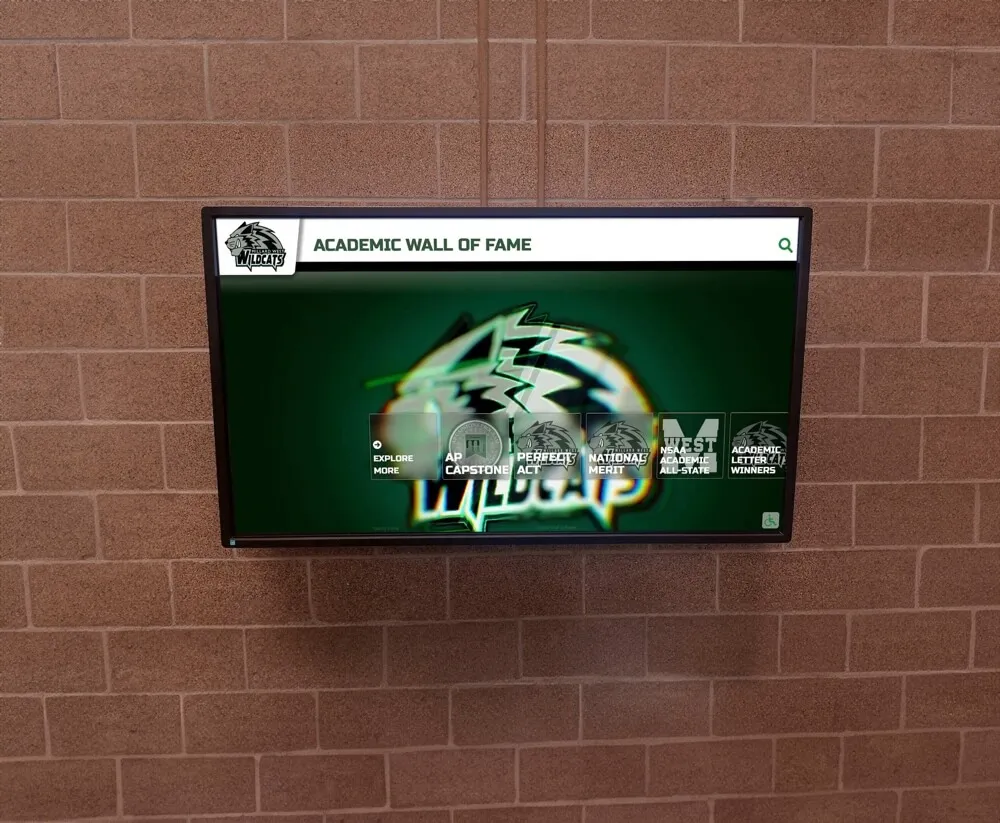
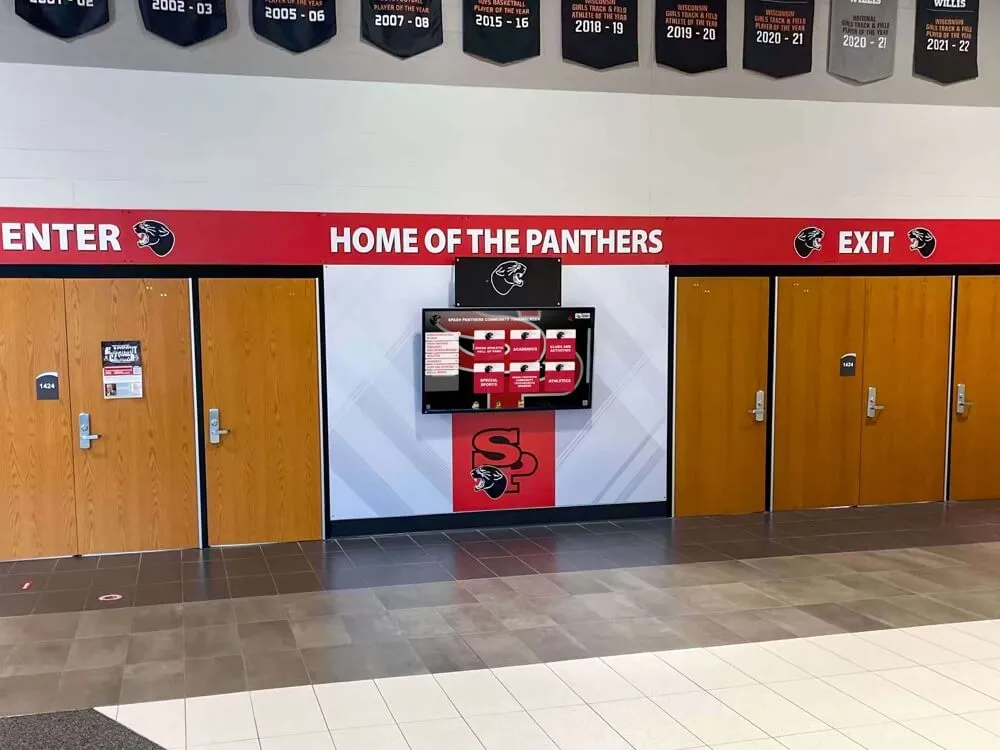
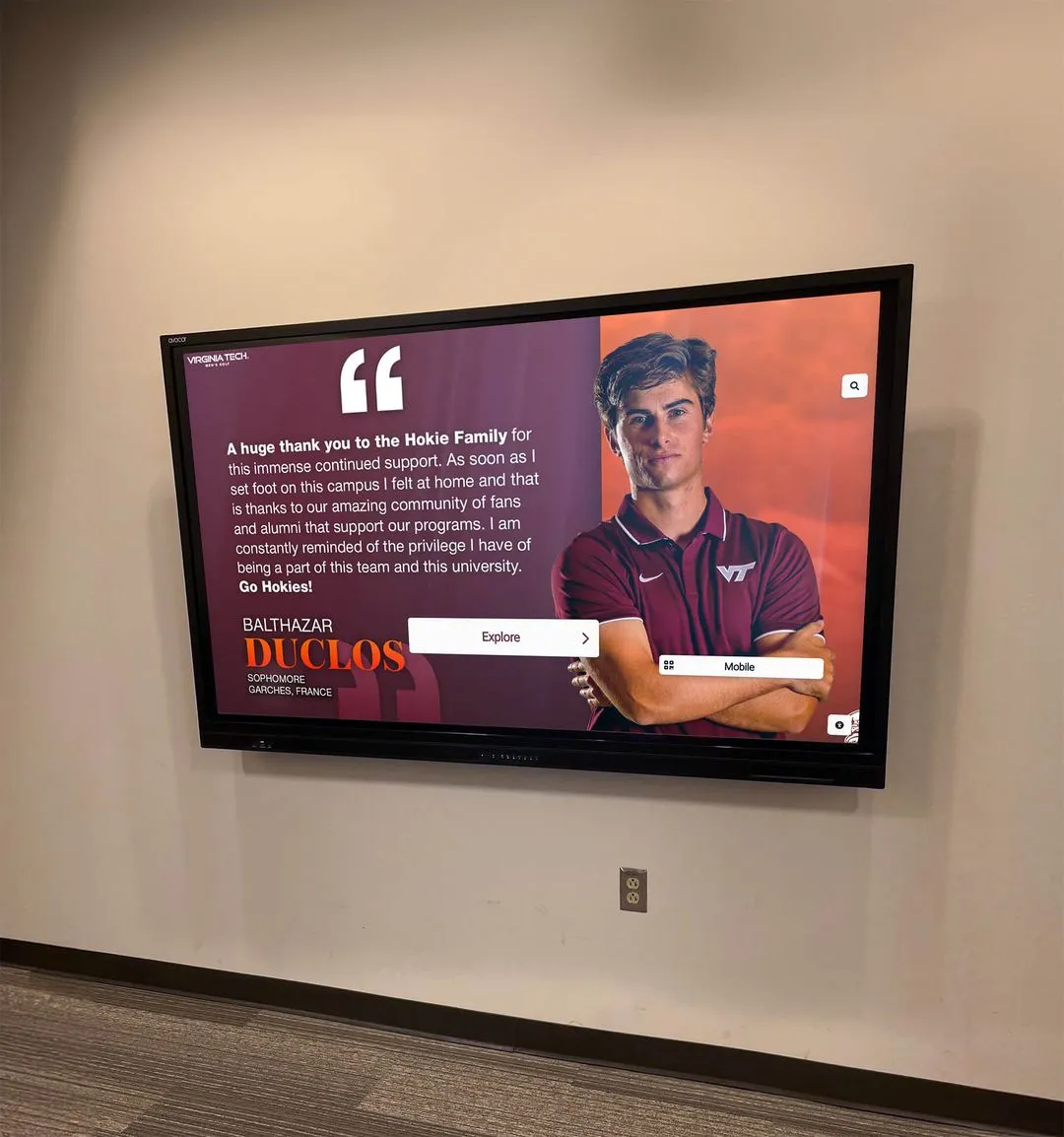
Digital screens integrated into hallway recognition walls can display rotating uniform history photography alongside current season highlights — creating visual heritage that evolves without requiring physical reinstallation
HOF Photo Wall Integration
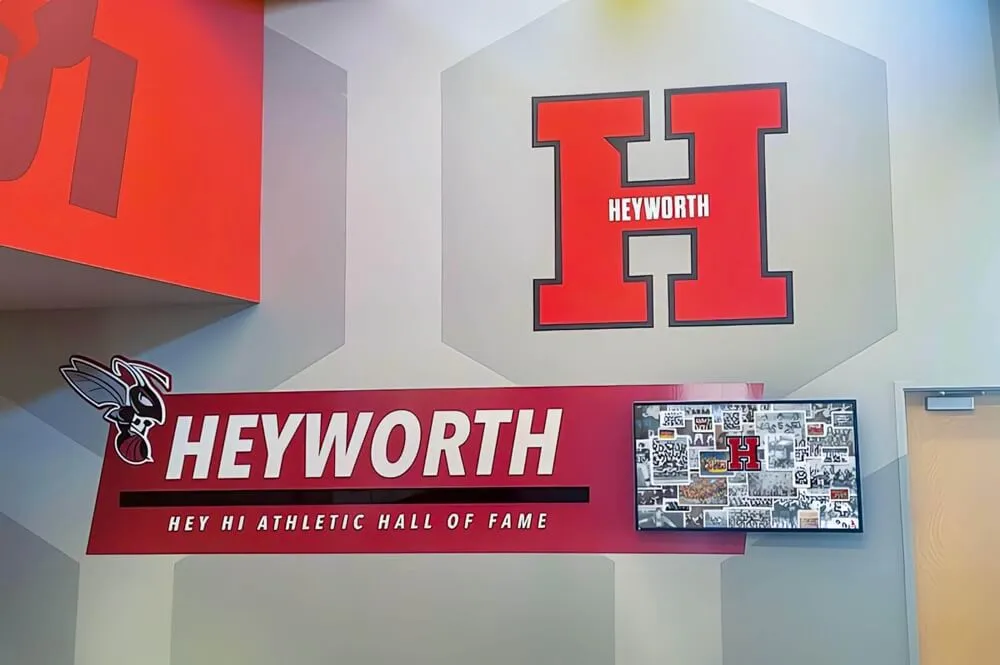
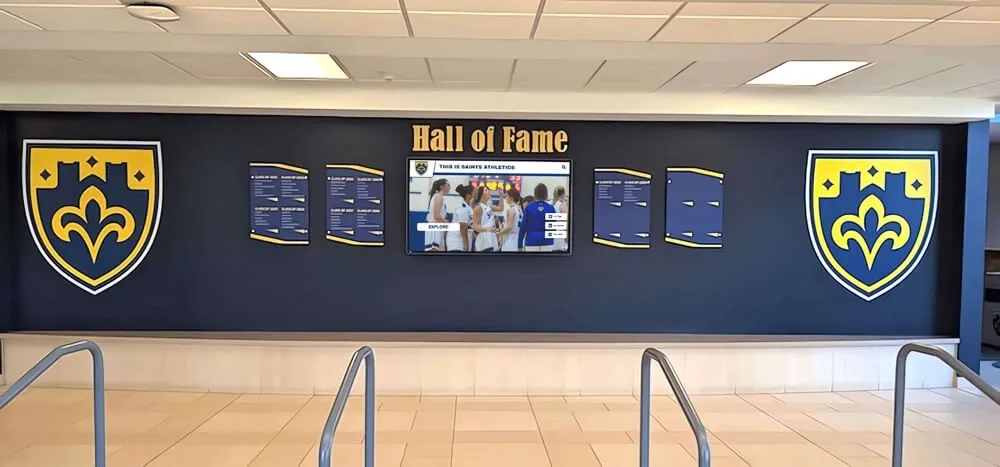
Programs that have access to an athletic or performing arts hall of fame wall have a natural venue for uniform history integration. Drill team photo displays on a HOF wall should be designed to communicate both individual achievement — team captains, award winners, all-state performers — and program evolution across the full design lineage.
For programs with long histories, a HOF photo wall organized chronologically — showing each team’s competition photograph by year — creates a visual timeline of uniform evolution alongside the competitive record. A visitor scanning from left to right sees the program’s full visual history unfolding alongside its competitive trajectory.
Digital Trophy Case Solutions for Drill Team Uniform Recognition
Physical display cases and photo walls have real presence and permanence. They also have real limits: they can only show what fits in physical space, updating them is expensive and time-consuming, and alumni who are not on campus cannot access them.
Digital trophy cases extend what physical uniform displays can accomplish without replacing their physical weight.
Building a Drill Team Uniform Archive
A dedicated uniform archive within a school’s digital trophy case can include elements that no physical display can replicate:
Complete photographic record by uniform generation — Full-resolution photography of each uniform era, including both formal team photographs and action performance images, accessible to anyone with a connection to the program regardless of their location.
Video from each era — Performance footage from each uniform generation puts the design in motion context. Seeing how a 2010 uniform moves through a full routine alongside footage from 2020’s design communicates design evolution in ways static photography cannot.
Director and captain commentary — Brief video or written commentary from directors and captains who wore each generation of uniform adds human context to the visual record. These testimonials — collected at transitions or in retrospective interviews with alumni — transform a photo archive into a living program history.
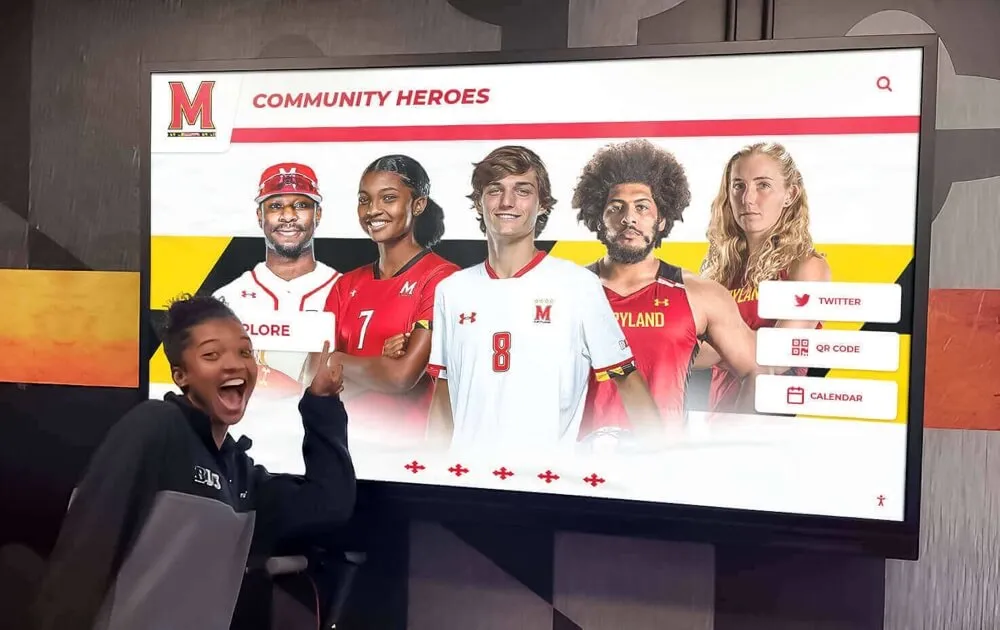
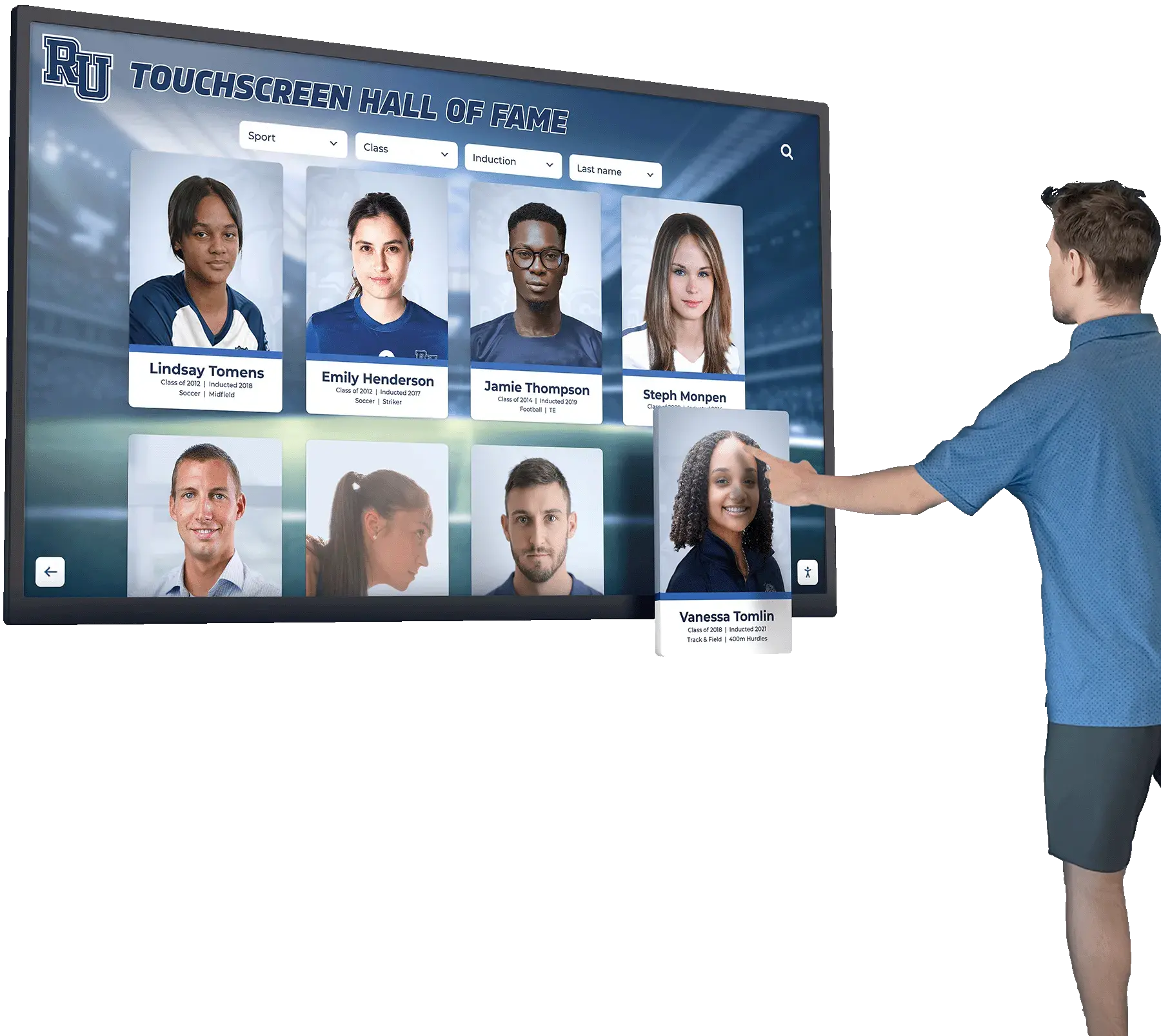
Searchable by year, by officer, by competition — Digital systems allow uniform history to be navigated by year, filtered by officer roster, or connected to the competitive record from each era. A family member searching for a parent’s tenure can find the uniform they wore, the competitions they attended, and the teammates they performed alongside.
Preserve Your Drill Team's Uniform Legacy Permanently
Rocket Alumni Solutions' Digital Trophy Case platform gives drill team programs unlimited capacity to display uniform history, performance archives, officer recognition, and competitive records — all in one cloud-managed touchscreen installation. Update content remotely in minutes, extend access to alumni via QR code, and build a recognition environment that grows more valuable with every season.
Explore Digital Trophy Case SolutionsDigital vs. Physical Trophy Case for Uniform Display
Schools evaluating whether to invest in physical display infrastructure, digital recognition systems, or both benefit from understanding where each approach excels.
Physical displays excel at: creating dimensional presence that commands attention, displaying actual uniform artifacts rather than photographs, communicating permanence and institutional seriousness, and requiring no technology interaction from viewers.
Digital displays excel at: showing unlimited content without space constraints, maintaining complete historical records going back decades, enabling search and filtering by year, performer, or competition, extending access to remote audiences via QR code, and updating instantly when new content is added.
The comparison is not really a competition — programs with strong recognition cultures typically use both, with physical elements providing presence and digital systems providing depth. Schools examining this question more fully can explore the differences between digital hall of fame displays and traditional trophy cases to understand the practical tradeoffs across cost, capacity, engagement, and administrative burden.
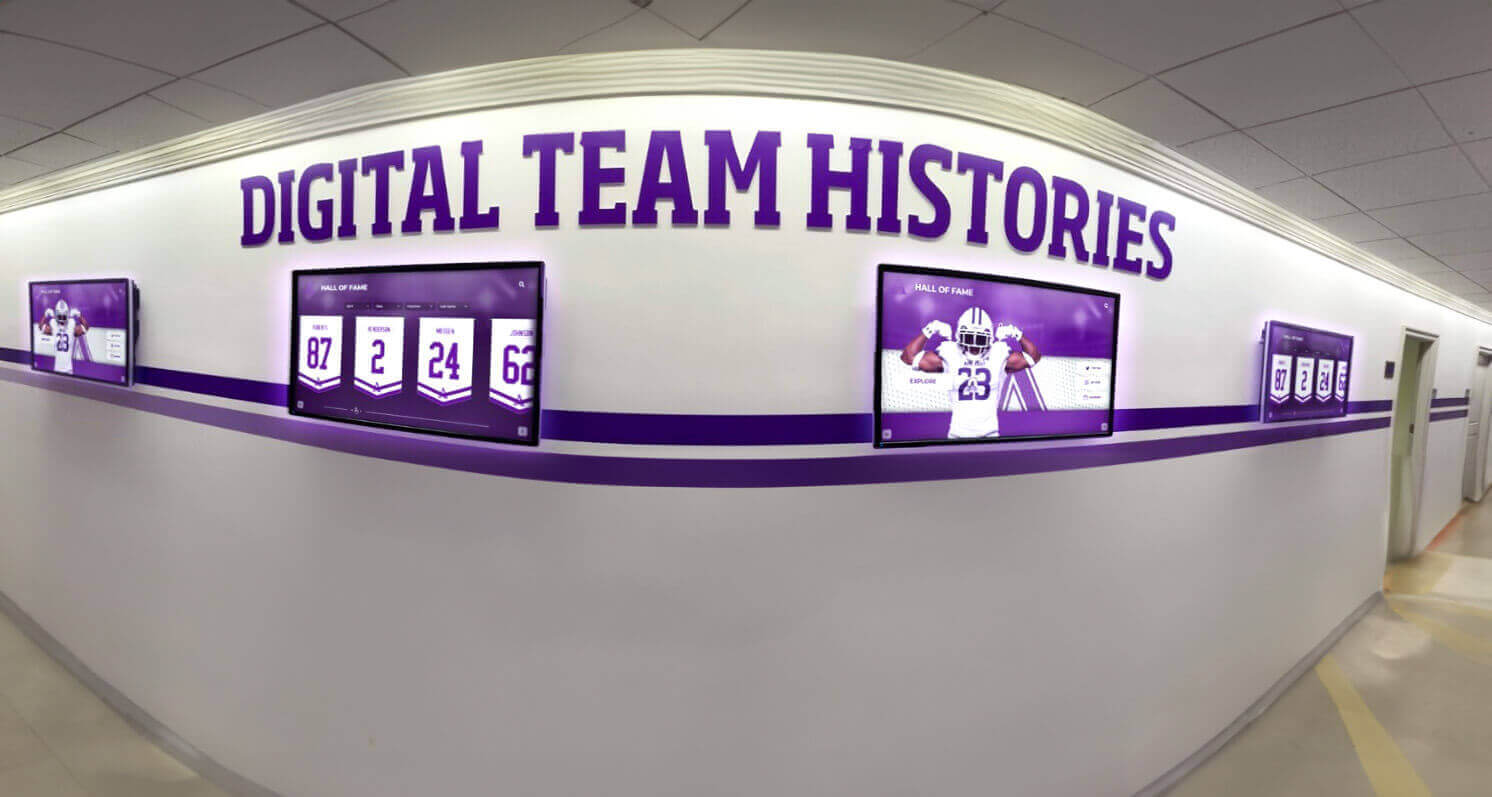
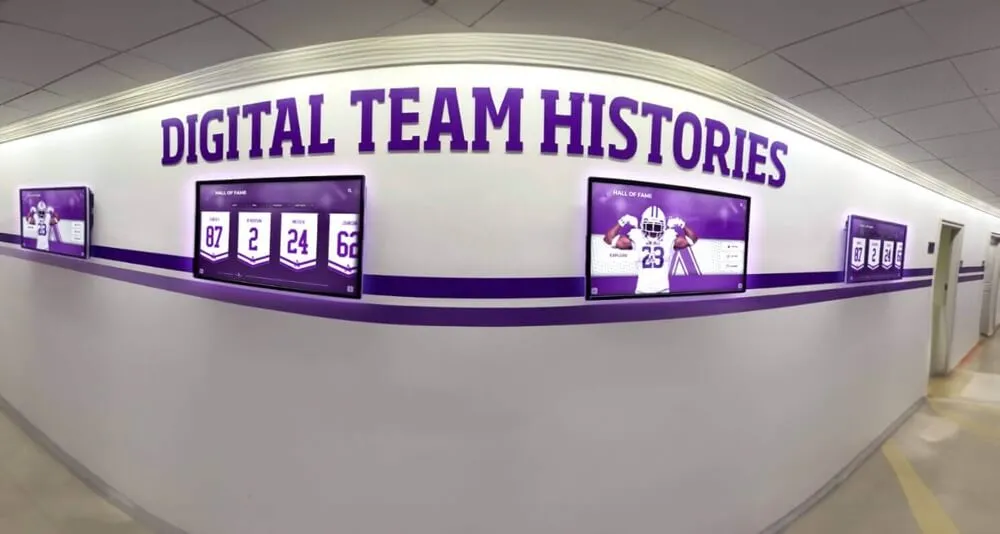
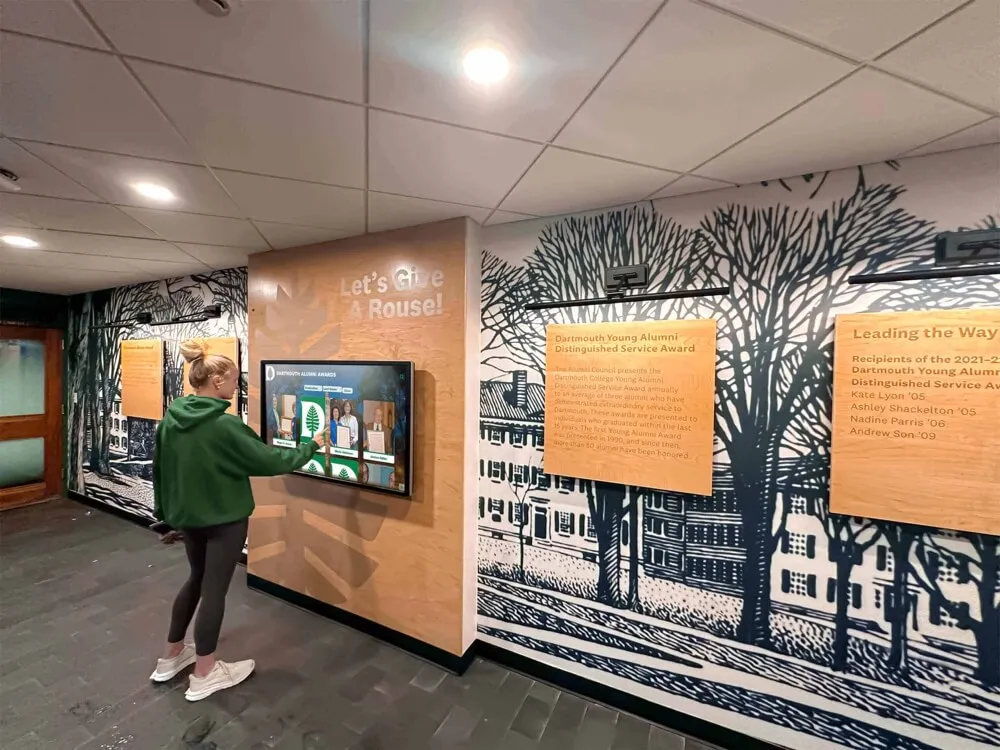
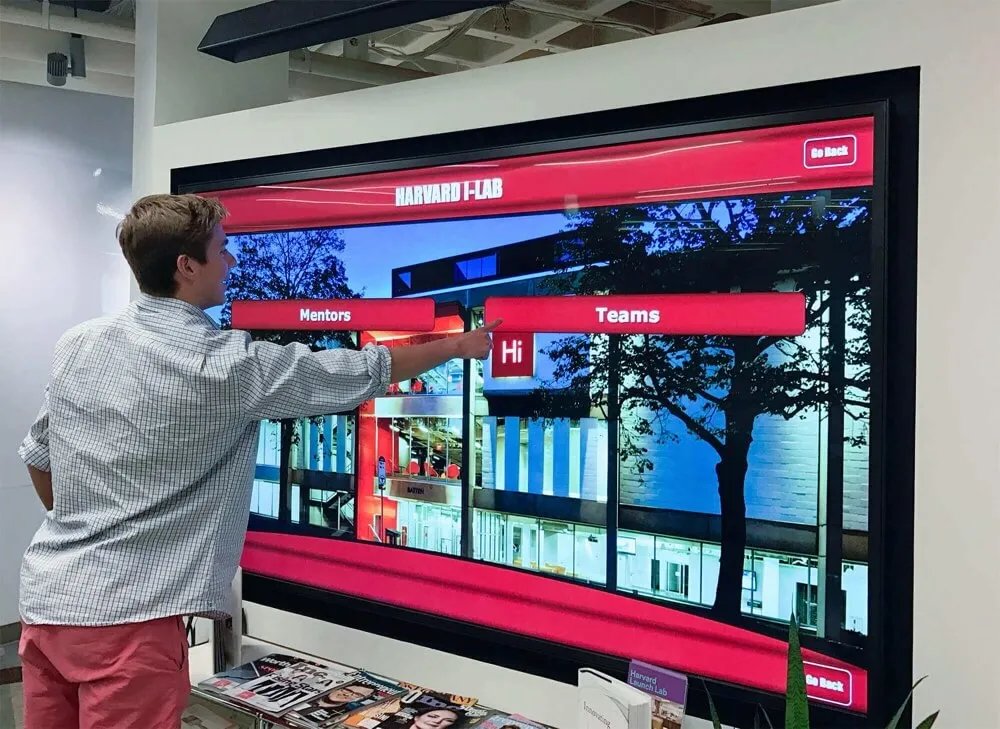
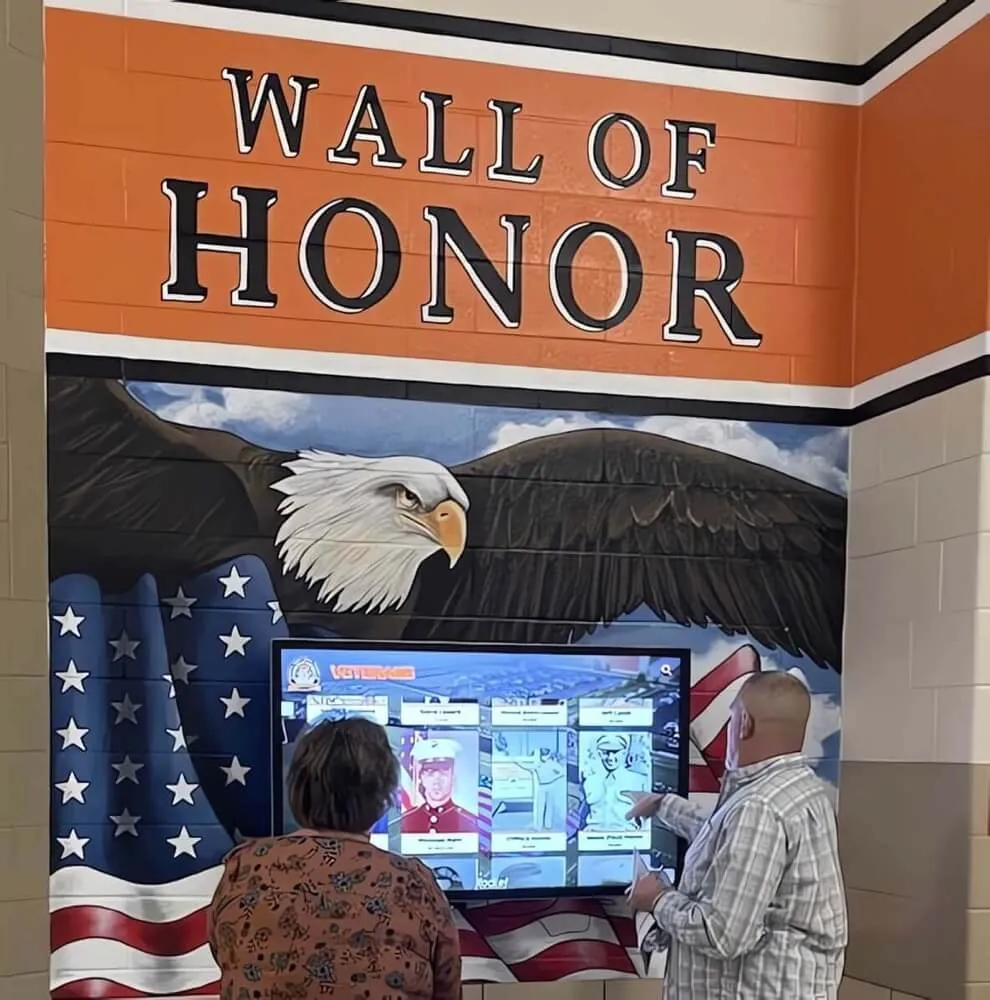
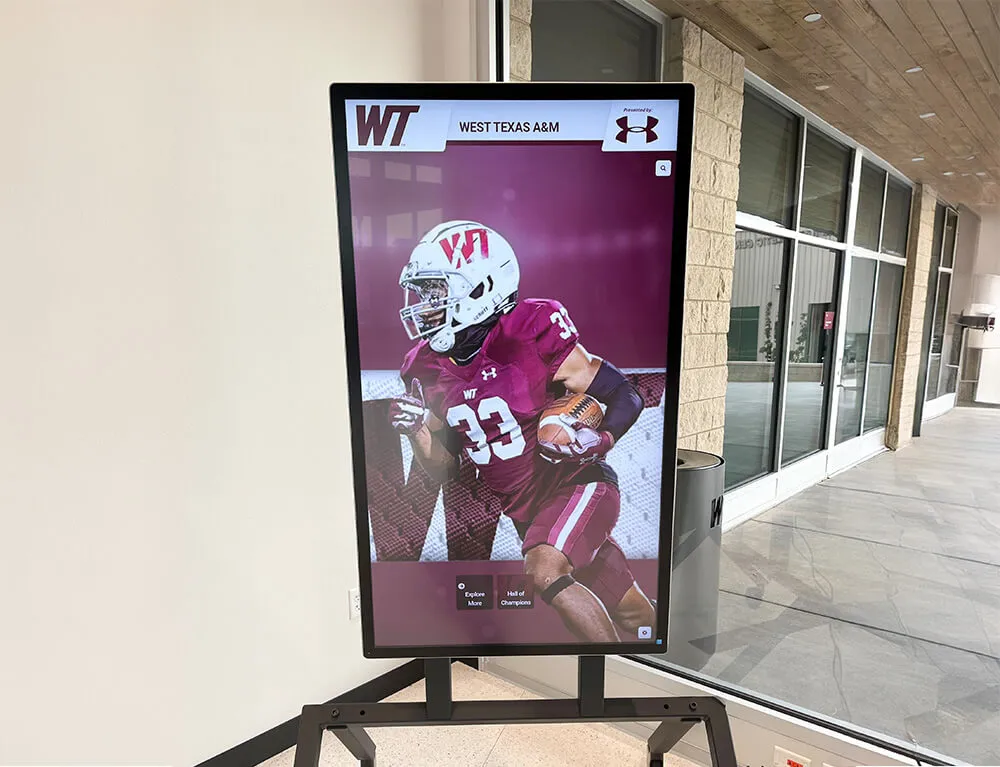
Hallway digital display systems that cycle through team histories, uniform generations, and performance archives create recognition environments that engage visitors every time they walk through — drill team history becoming part of the daily school experience
Integrating Uniform History with Competitive Records
The most compelling drill team recognition systems connect uniform history to competitive achievement rather than treating the two as separate archives. When a visitor views the 2018 uniform, they should be able to see what that team accomplished while wearing it: their competition placements, any state-level recognition, the names of captains and officers, and the program moments that defined that year.
For programs with strong competitive histories, documenting those achievements alongside uniform history in a state championship trophy case display creates lasting recognition that honors both the competitive results and the visual identity the team carried to earn them.
Connecting Drill Team Recognition to Broader School Culture
Drill team programs that exist in their own recognition silo — with display infrastructure only in the performing arts wing, only at banquets, only visible to program insiders — miss the school-wide community value that their recognition can generate.
Placement in Main School Spaces
The placement of drill team recognition in main school spaces — entrance lobby, athletic hallway, main trophy case corridor — determines who encounters it. Program-only placement ensures only current members and their families see it. Main-space placement ensures the entire school community encounters drill team achievement as a natural part of daily school life.
When drill team uniforms and competitive achievements are displayed alongside athletic trophies and academic honor boards, the program signals its place in the school’s full achievement ecosystem. This equivalence matters for recruiting, for institutional funding decisions, and for how the program is perceived by students who have not yet encountered it directly.
For schools developing comprehensive achievement recognition strategies that include performing arts programs alongside athletics and academics, guidance on school achievement recognition strategies provides frameworks applicable directly to drill team recognition placement decisions.
Historical Timeline Integration
Drill team programs with decades of history can contribute to school-wide historical timeline displays — visual presentations of the school’s full history that include performing arts milestones alongside athletic championships, academic achievements, and facility development moments.
A uniform design milestone — the first custom competition uniform, a significant redesign tied to a state championship run, a 50th anniversary tribute uniform — belongs in a school’s historical timeline with the same weight as a state athletic title. Resources on school historical timeline digital displays cover how schools document and present this kind of institutional history in ways that engage current students and returning alumni equally.
Senior Night and Year-End Recognition
Drill team seniors who have contributed multiple years to a program — particularly officers who have served in leadership roles — deserve senior recognition that includes visual documentation of the uniforms they wore across their tenure. A senior recognition display that shows each departing performer in each year’s competition uniform, with their officer tenure documented alongside competitive highlights, creates a comprehensive farewell recognition that honors the full arc of their contribution.
Resources on color guard senior night recognition offer frameworks that adapt naturally to drill team senior recognition programs — the principle of honoring a performer’s full program contribution rather than just their final season applies equally to both contexts.
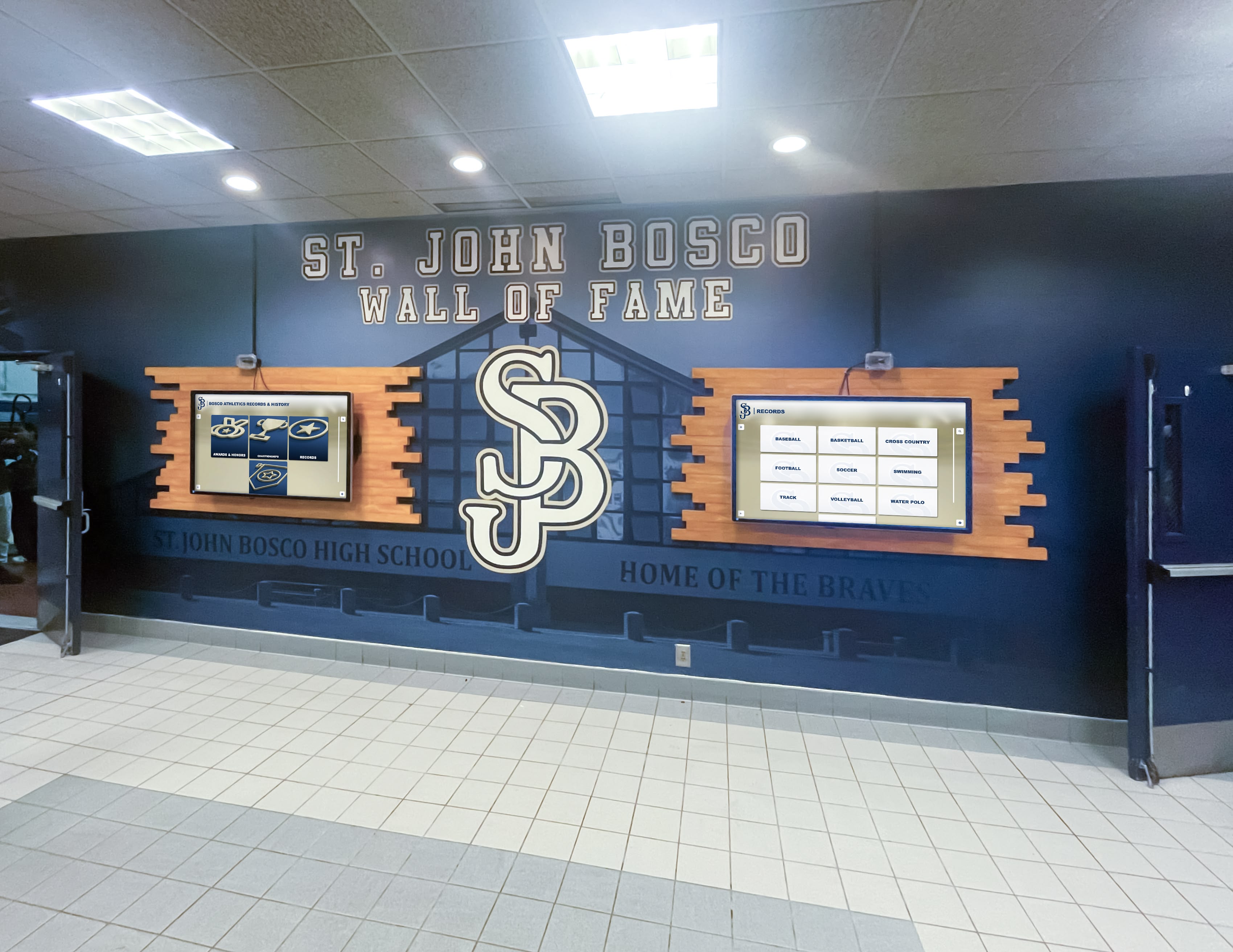
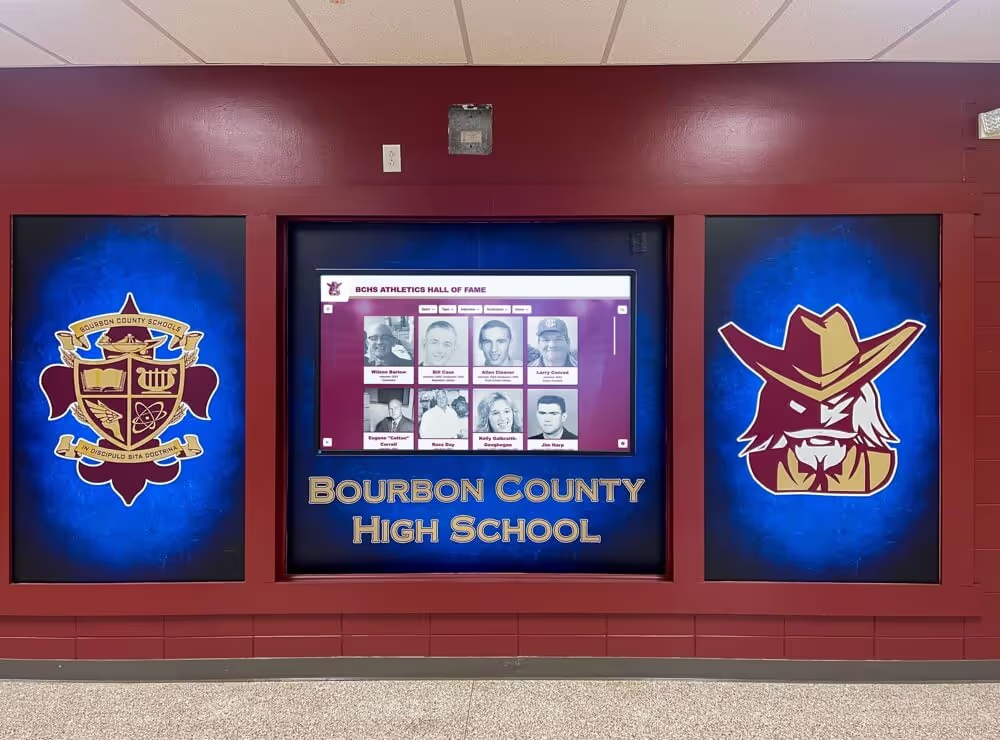
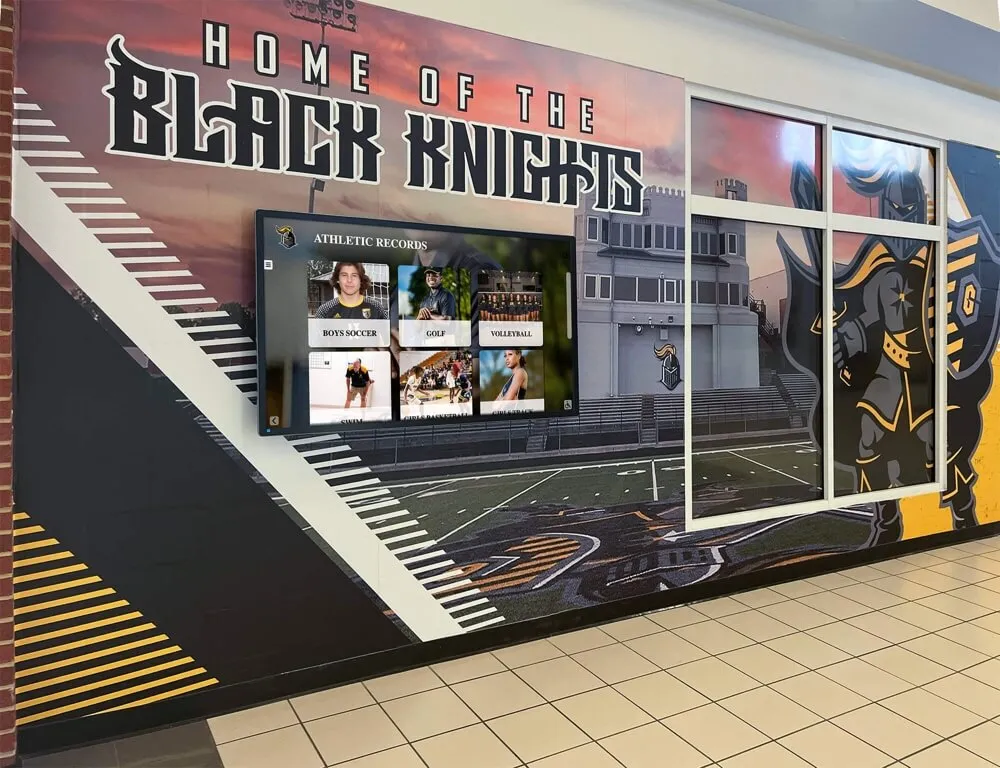
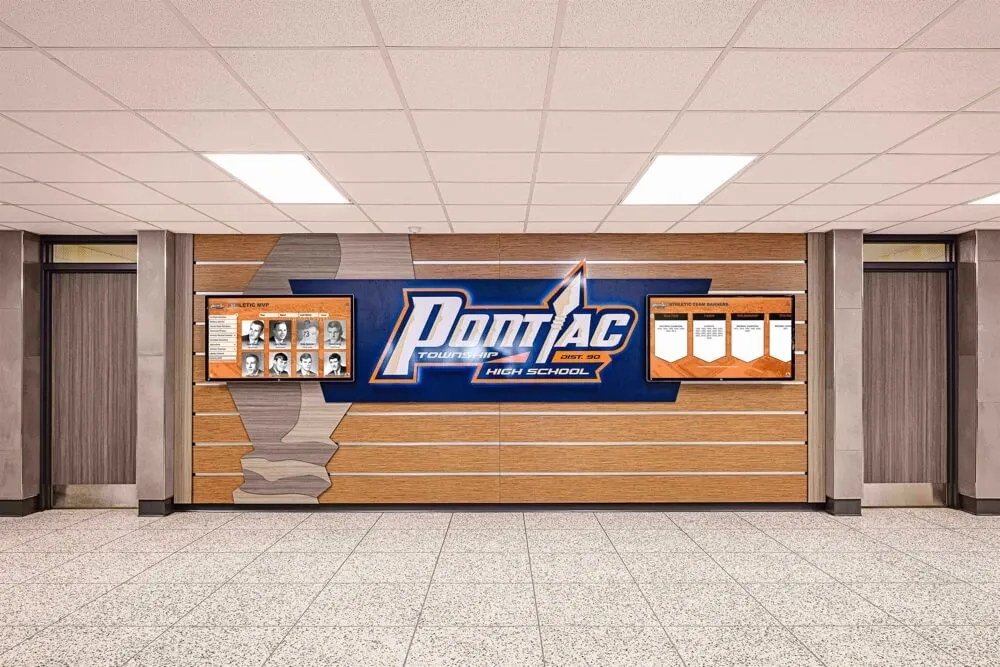
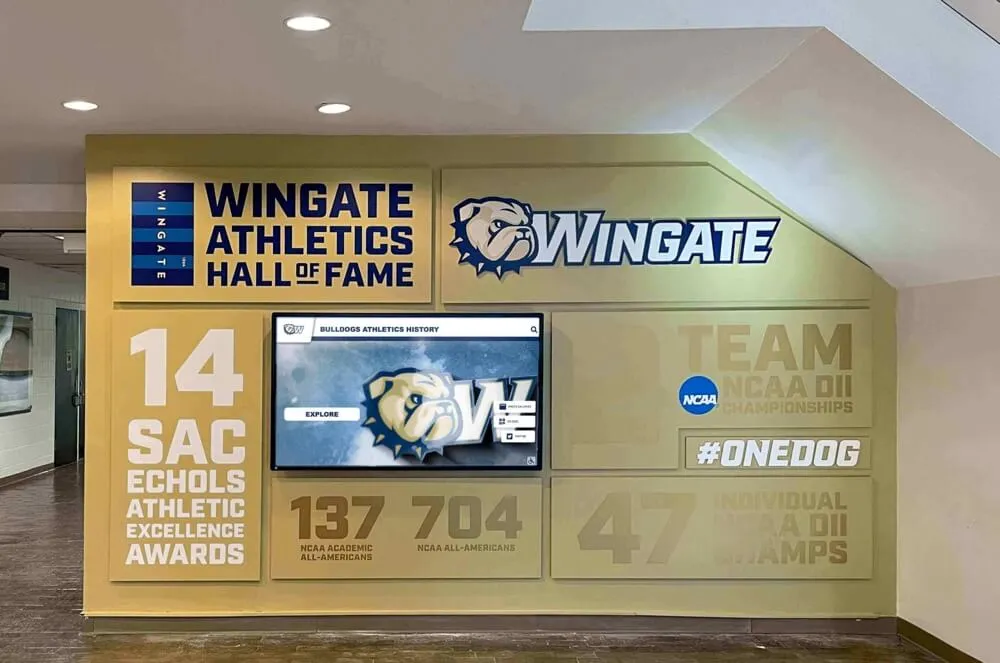
Dual-screen installations in school hallways create recognition systems capable of displaying both static program history and rotating current-season content — uniform legacy and active competition results coexisting in the same recognition space
Building a Drill Team Uniform Recognition System
For programs starting from scratch or rebuilding recognition infrastructure, a systematic approach prevents the most common failures.
Step 1: Inventory What Currently Exists
Before adding anything new, document what recognition infrastructure already exists. Are there retired uniforms in storage that should be displayed? What photography exists for past uniform generations — in what quality, completeness, and format? Are there any existing physical displays for the drill team program, and where are they located? What competitive records are currently documented, and where do they live? The answers determine where the most urgent gaps are and what can realistically be recovered versus what needs to be built forward.
Step 2: Establish Documentation Standards Going Forward
The single most valuable investment a program can make in long-term recognition is establishing consistent documentation standards starting now. Designate who coordinates uniform photography at the start of each season. Establish a standard photography package: full-team competition uniform shots, officer individual portraits, and detail shots of distinctive design elements. Create a naming and filing convention for digital photograph storage that will still be interpretable in fifteen years. Decide who maintains the competitive record and in what format.
Programs that solve the documentation question proactively do not face the retroactive recovery problem that most long-running programs struggle with when they eventually decide to build recognition displays.
Step 3: Choose Display Locations Strategically
Match display placement to visibility goals. For maximum school-wide community impact, prioritize main lobby or entrance corridor placement. For performing arts community engagement, a dedicated performing arts hallway works well. For alumni and family access beyond campus, digital platforms accessible via QR code from physical displays extend the reach of any physical installation. For prospective member recruitment, visible placement near school athletic displays ensures that families conducting school visits encounter the program.
Step 4: Integrate Physical and Digital Elements
The strongest recognition environments combine physical presence with digital depth. A physical retired uniform display case provides the dimensional, artifact-level presence that commands attention and communicates institutional seriousness. An adjacent or nearby digital screen provides the searchable history, video archive, and complete competitive record that no physical installation can contain. A QR code on the physical display connects visiting families and alumni to the full digital record from their phones — extending the recognition encounter beyond the building’s walls.
This combination ensures that the initial encounter with physical artifacts leads naturally to the deeper story that only a digital system can tell.
FAQ: Drill Team Uniforms and Recognition Displays
How long should a drill team uniform last before it is retired?
Most competition uniforms remain in active use for two to four years before wear, regulatory changes, or programmatic shifts prompt a design refresh. Practice and pep rally uniforms may have shorter cycles due to higher use frequency. The key is to document the uniform thoroughly before retirement and to treat the retirement as a formal program transition moment — photographing the final team to wear the design in its competition configuration before anything is cleaned, altered, or stored.
Should retired drill team uniforms be preserved or displayed as worn?
Display-grade preservation — proper cleaning, mounting on dress forms, and protective case display — is preferable to displaying a uniform in worn condition. For programs with limited budgets, professional archival photography of the uniform in excellent condition can serve the documentation function even if the physical artifact is not currently display-mounted. The photograph is more important than the object for most recognition purposes.
How do drill team uniforms differ from dance team uniforms?
Drill team traditionally refers to military-influenced precision performance with structured formations and high-kick technique, while dance team may encompass broader choreographic styles. Uniform design often reflects this distinction — drill team uniforms tend toward structured silhouettes while dance team uniforms may vary more widely by style and competitive category. Many programs use the terms interchangeably in informal contexts, and recognition display approaches are largely equivalent regardless of the program label used.
What is the best way to display drill team uniform history without dedicated display case space?
Wall-mounted large-format photography is the most space-efficient approach. A timeline display showing each uniform generation with accompanying year markers and brief competitive context requires only wall space — no dimensional case depth. Digital displays offer an alternative that requires only the footprint of a wall-mounted screen while providing essentially unlimited content capacity, including video and searchable records that no physical installation can replicate.
How do you handle uniform history documentation after a director transition?
Director transitions are the moment when institutional memory about uniform history is most at risk of being lost. Best practice is to conduct a structured handoff that includes a complete inventory of existing historical records, photography files, and recognition infrastructure — treating the documentation archive as a program asset that transfers with the program rather than personal files that leave with the departing director. A written inventory of what exists and where it lives is the minimum acceptable handoff document.
Should drill team uniforms be included in an athletic hall of fame, or do they need separate recognition?
The strongest argument is for inclusion in the school’s central recognition system — a hall of fame that treats drill team achievement with the same institutional weight as athletic championships. Separate recognition siloes performing arts achievement in ways that diminish its community visibility. Programs that advocate for inclusion in main-hall recognition rather than accepting a separate-but-secondary performing arts display typically see higher alumni engagement and stronger institutional support over time.
How do you connect drill team recognition to comprehensive school achievement displays?
The most effective approach treats drill team as one category within a comprehensive school achievement recognition system rather than as an independent program with its own siloed display. A digital trophy case platform that holds athletic records, academic honor rolls, and performing arts recognition in a single searchable system communicates that the school values achievement across all its programs — and makes it possible for a visitor to discover the drill team’s history while looking up an athlete, or vice versa. Resources on all-state recognition display approaches offer frameworks for integrating multiple recognition categories into cohesive display systems.
The Legacy Worth Preserving
Drill team uniforms are the most visible element of a program that demands extraordinary commitment from the students who are part of it. Every hour of early morning rehearsal, every competition performance, every season of technical development — all of it is documented in the photographs of teams standing together in uniform.
That documentation is the raw material of program legacy. Schools that treat it as worth preserving — retired uniforms in display cases, competitive photography on recognition walls, digital archives that maintain a searchable record of every team and officer who has ever worn the uniform — build something that compounds in value with every passing year.
The 1998 team’s competition uniform in a display case tells current performers something that no coach speech can communicate: this program has been worth something for a long time, and what you are doing now will matter for just as long.
Building the infrastructure to make that statement — and to keep making it as each generation of performers adds to the record — is what program legacy actually looks like in practice.
Give Your Drill Team's Uniform History a Permanent Home
Rocket Alumni Solutions' Digital Trophy Case platform gives drill team programs unlimited capacity to document uniform generations, display competitive records, and create searchable recognition archives accessible to current members, families, and alumni anywhere. Cloud-managed content means new season documentation goes live in minutes without IT support. QR codes extend access to anyone connected to the program. See how performing arts programs across the country are building the recognition systems their performers have earned.
Book A Demo