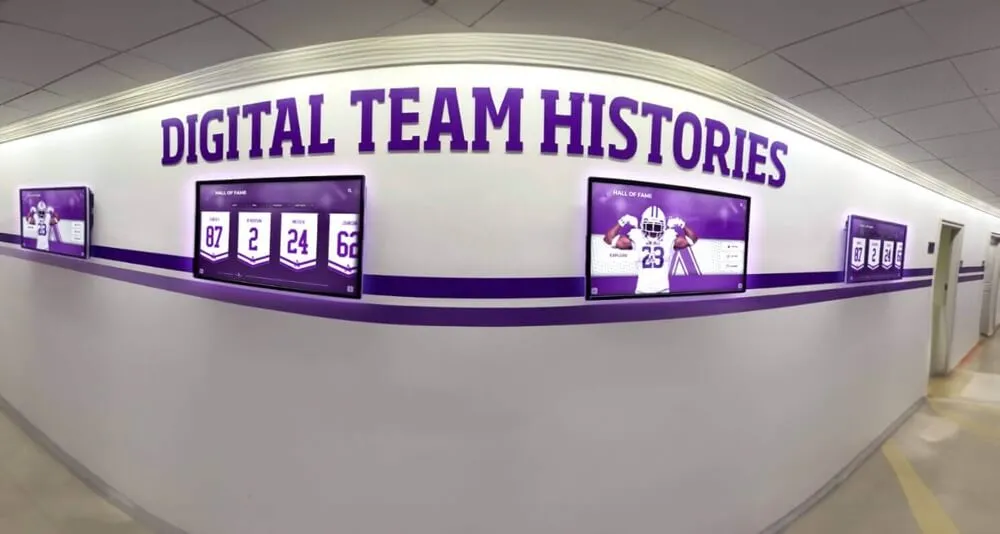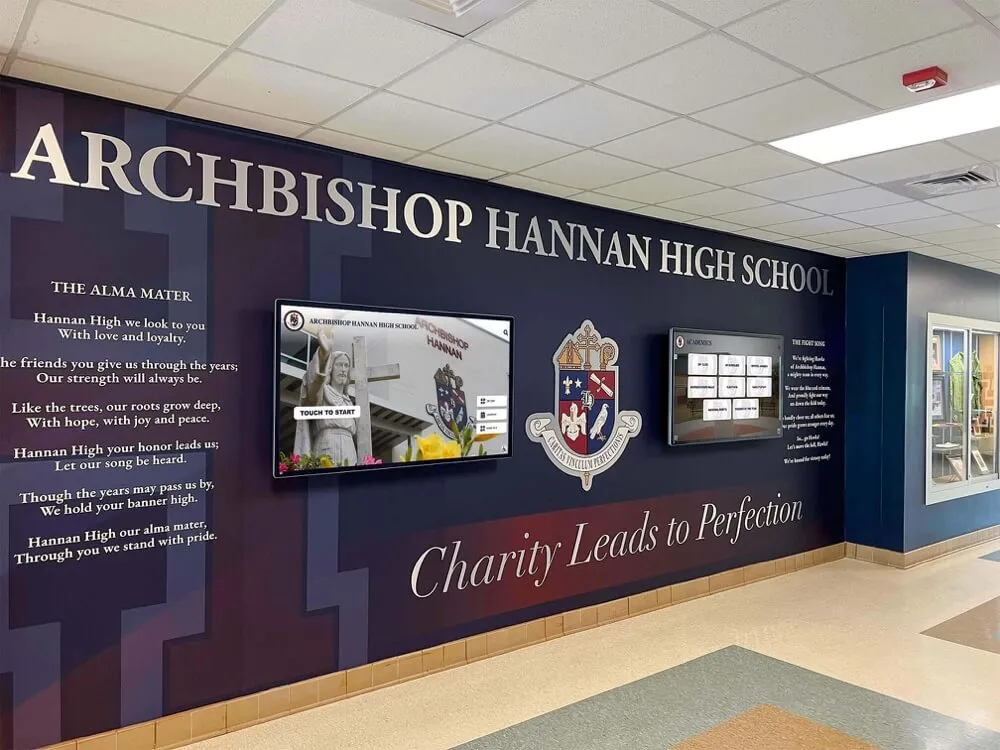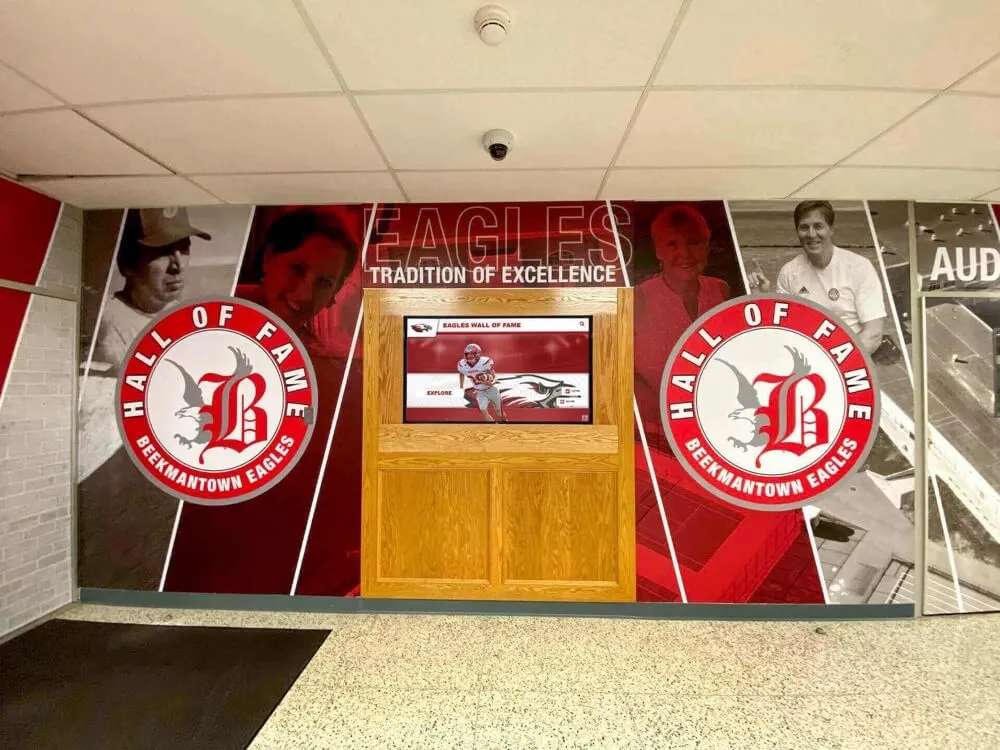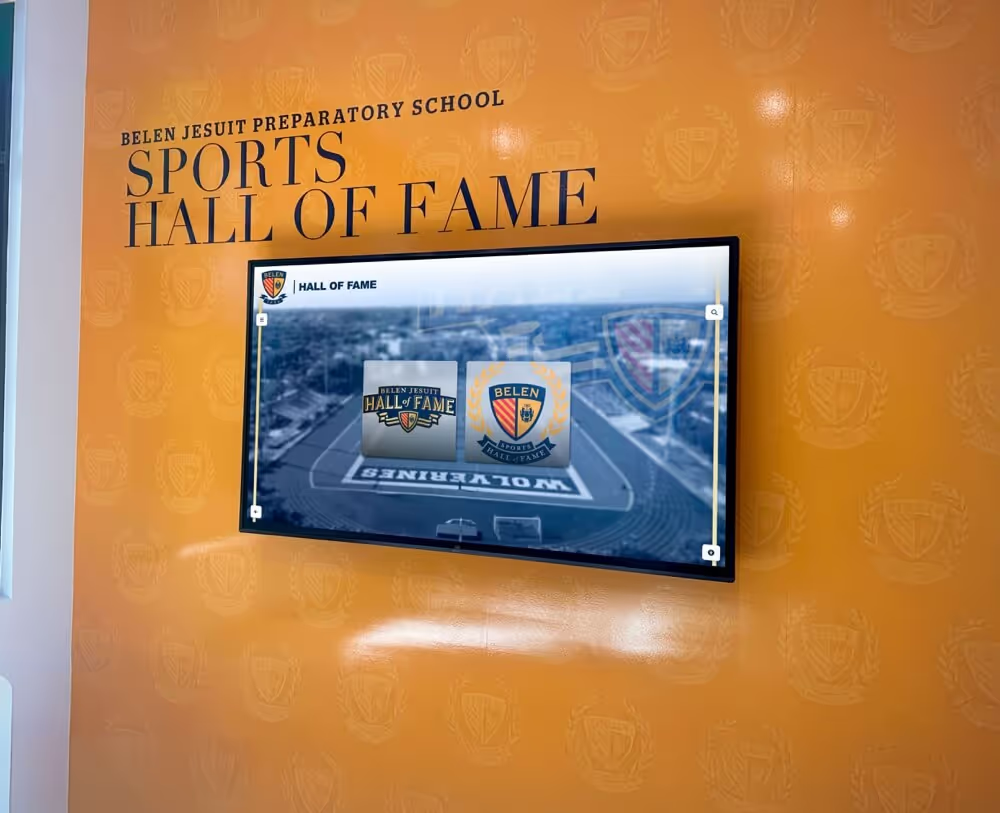




Every school cherishes its yearbooks—those bound collections documenting each graduating class, capturing memories, friendships, and milestone moments that define the student experience. For generations, these printed volumes have served as primary records of school life, preserved on library shelves and stored in homes, enabling alumni to revisit their school years and share memories with family and friends.
Yet traditional print yearbooks face significant limitations in today’s digital age. Physical books deteriorate over time, pages fade and tear, and finding specific individuals requires flipping through hundreds of pages. Schools struggle with storage space for decades of yearbook collections, while alumni unable to visit campus have limited access to these memory archives. And as printing costs continue rising, many schools face budget pressures that make comprehensive yearbook programs increasingly difficult to maintain.
Digital yearbooks address these challenges by transforming static printed pages into interactive, searchable, cloud-based memory platforms accessible from anywhere. These modern solutions preserve institutional history while adding features impossible in print—video content, instant search capabilities, social sharing, and unlimited capacity that expands rather than constrains what schools can document and celebrate.
Schools implementing digital yearbook solutions report dramatically improved alumni engagement, reduced long-term preservation costs, enhanced accessibility for remote viewing, and expanded recognition capacity enabling more comprehensive documentation of student experiences compared to traditional print-only approaches.

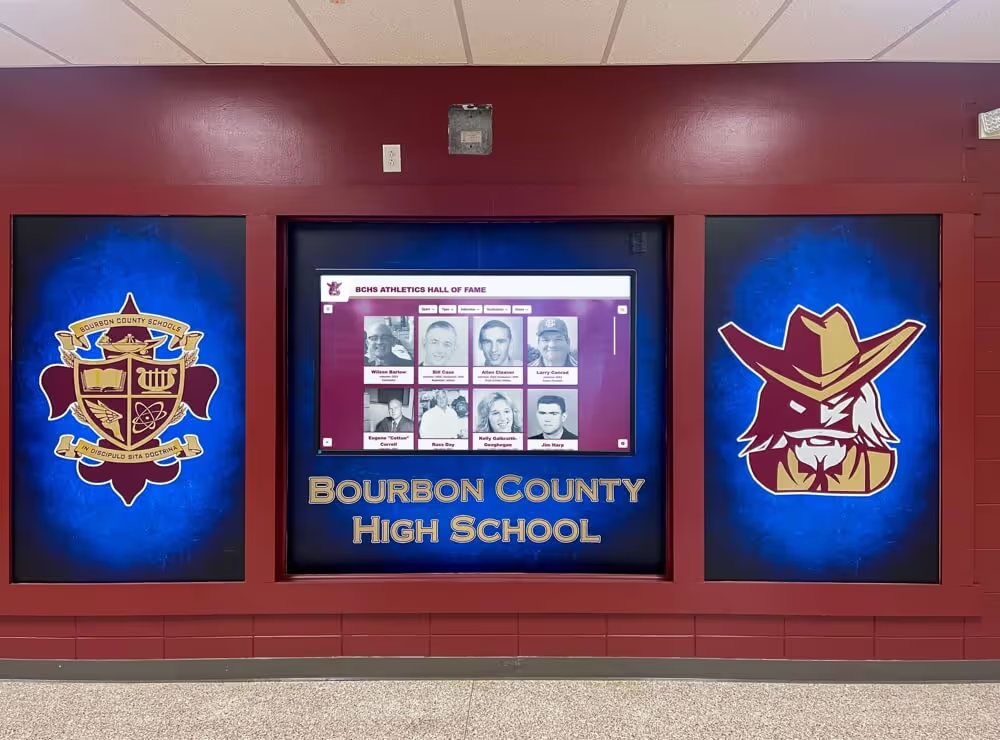
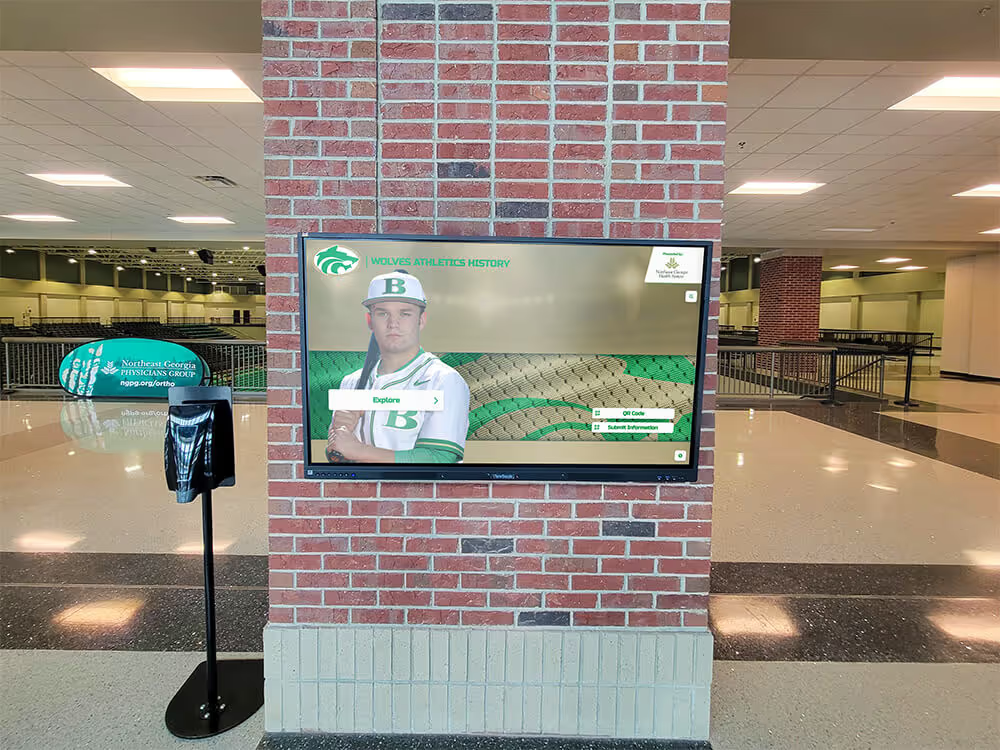
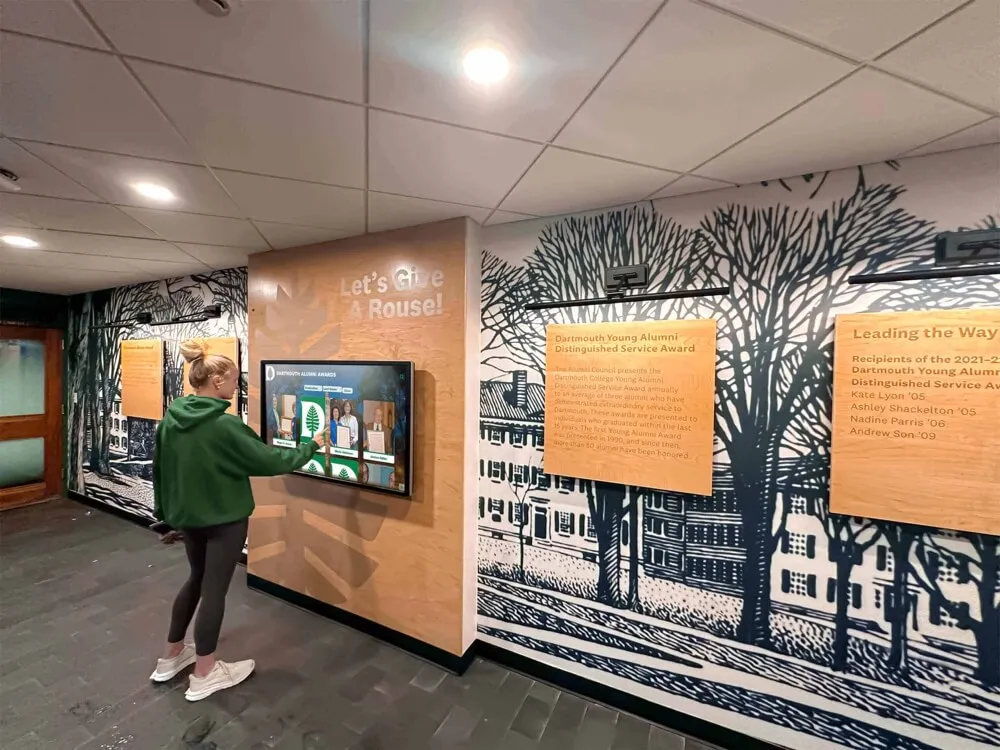
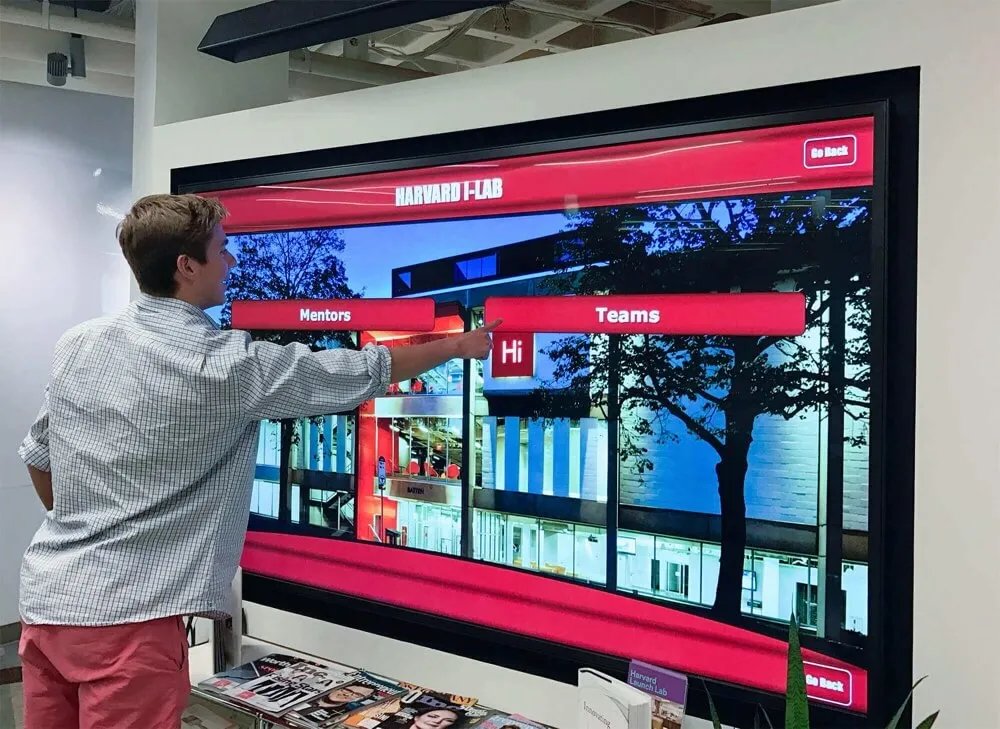
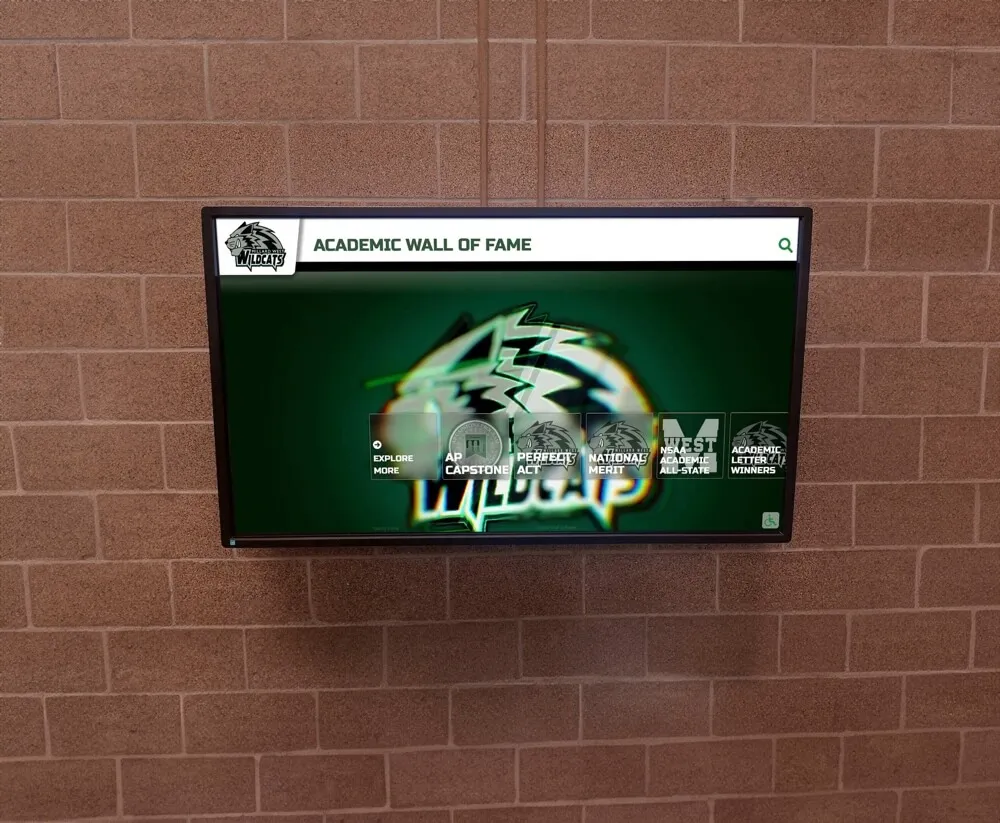
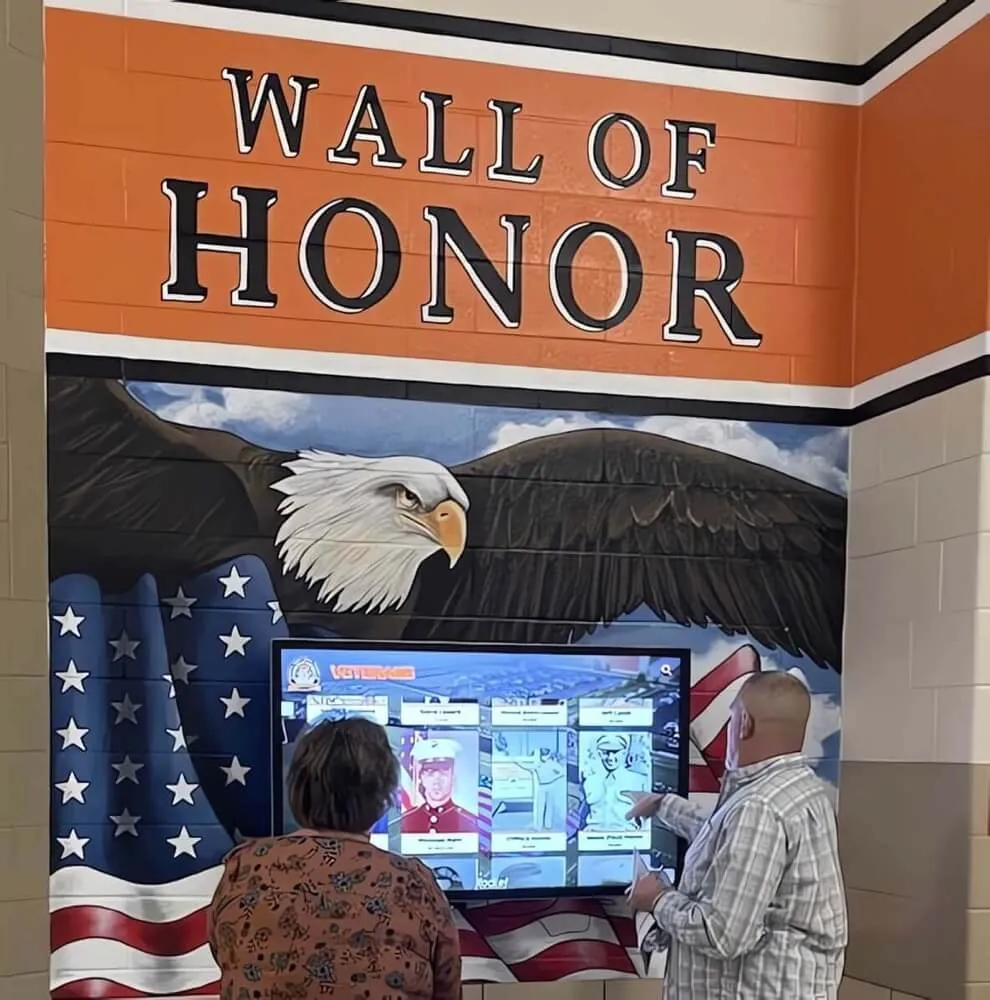
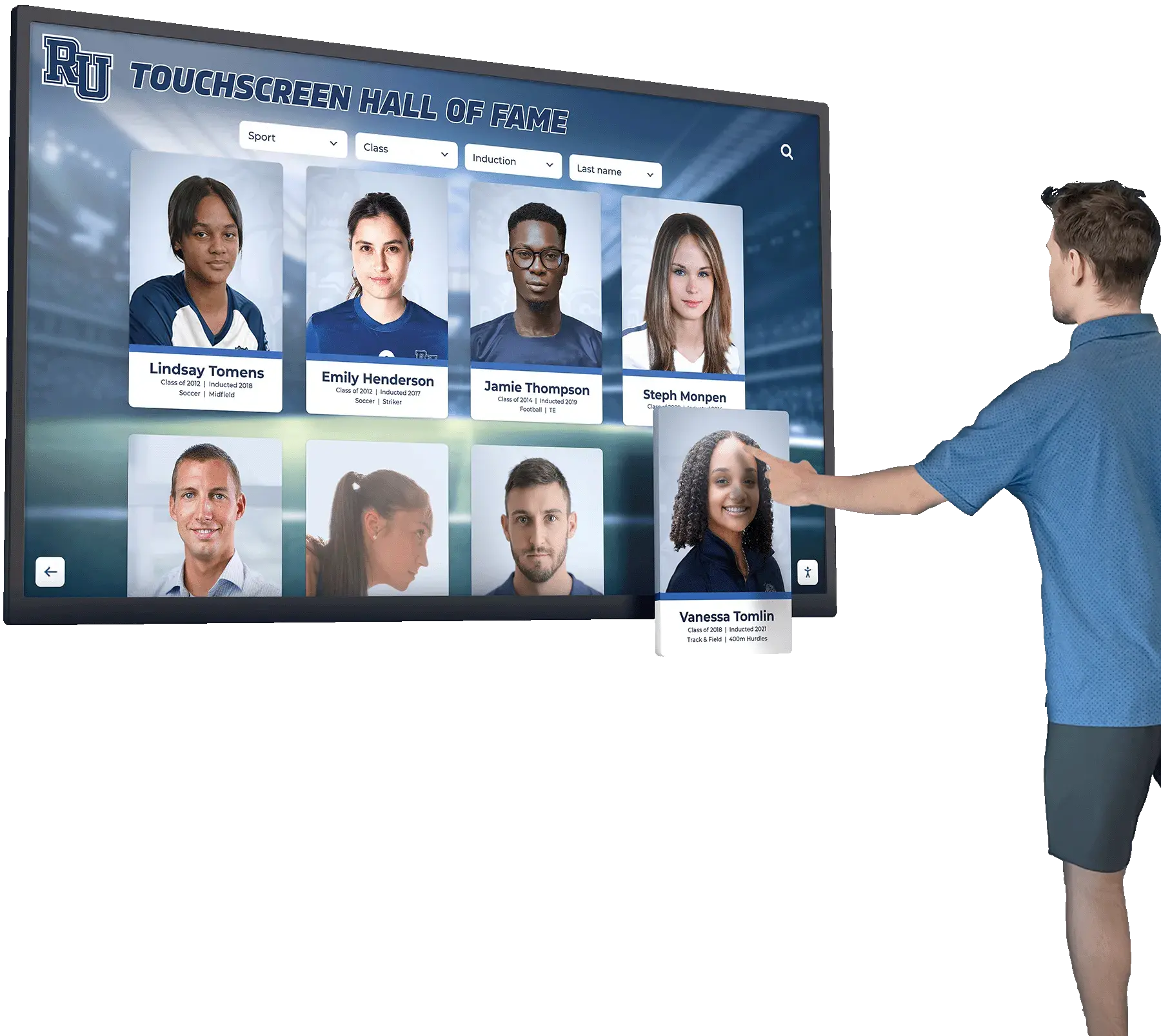
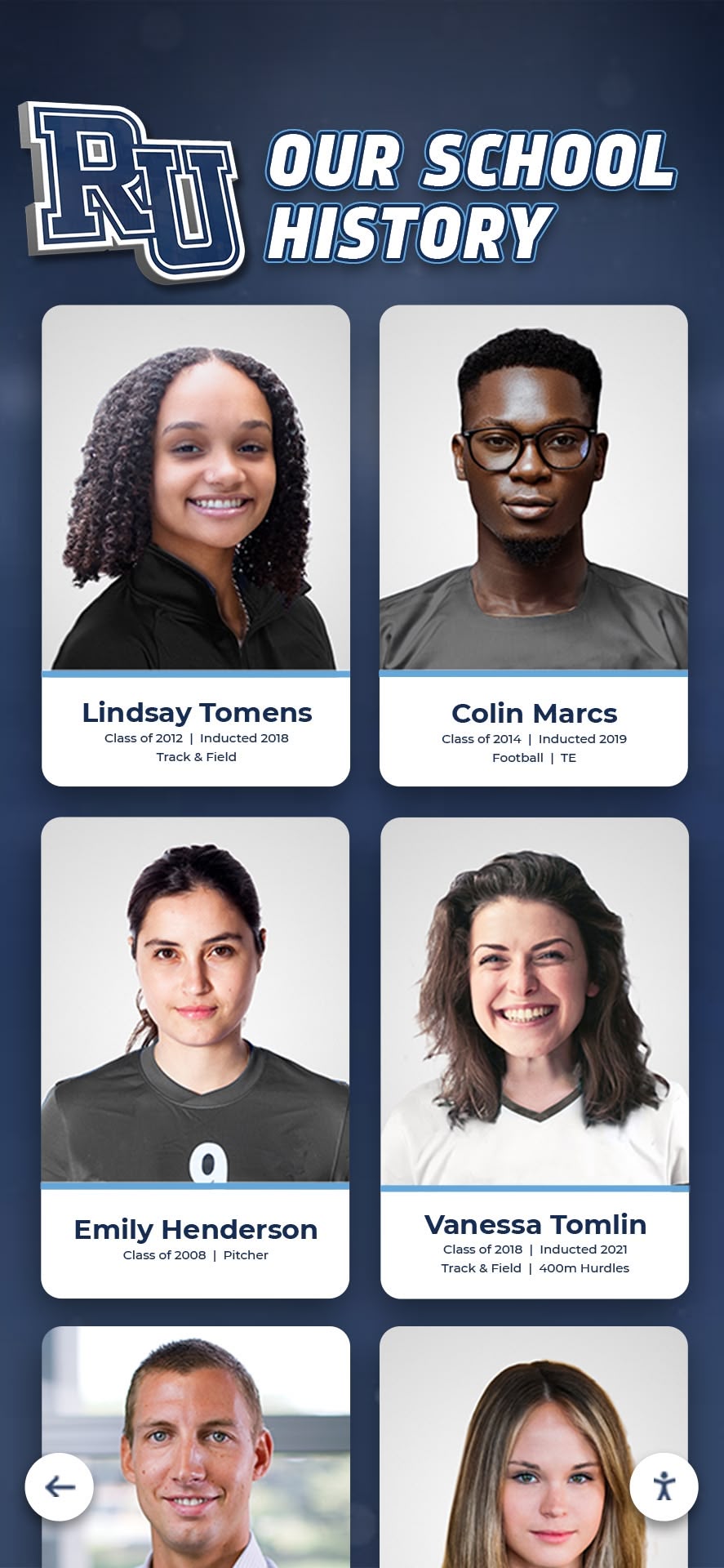
Interactive digital displays enable students and visitors to explore school history and yearbook archives through intuitive touchscreen interfaces
Understanding Traditional Yearbook Limitations
Before exploring digital solutions, recognizing the constraints of print-only yearbook programs helps schools identify opportunities for meaningful improvement.
Physical Deterioration and Preservation Challenges
Print yearbooks face inevitable degradation over time:
Material Breakdown
- Paper yellows and becomes brittle with age, particularly in volumes from the 1960s-1990s
- Binding adhesives fail, causing pages to separate from spines
- Photograph emulsions fade from light exposure and environmental conditions
- Cover materials crack and peel with repeated handling
- Moisture damage affects books stored in basements or non-climate-controlled areas
- Ink degradation reduces image contrast and text legibility
Schools report that yearbooks older than 30-40 years often require careful handling to prevent further damage, yet these volumes contain irreplaceable historical documentation of alumni, programs, and institutional evolution. According to preservation specialists, typical yearbook paper has a useful lifespan of 50-75 years before significant deterioration occurs, creating urgent preservation needs for historical collections.
Storage and Space Requirements
- Complete yearbook collections spanning 50-100 years occupy substantial library space
- Climate-controlled storage protects valuable historical volumes but requires dedicated facilities
- Multiple copy requirements (library archives, administrative offices, display copies) multiply space needs
- Growing collections require periodic storage expansion or difficult decisions about disposal
- Special collections and rare yearbooks need secure storage separate from circulating copies
Many schools estimate yearbook collections occupy 50-150 linear feet of shelving, space increasingly scarce in school libraries facing budget pressures and facility constraints.
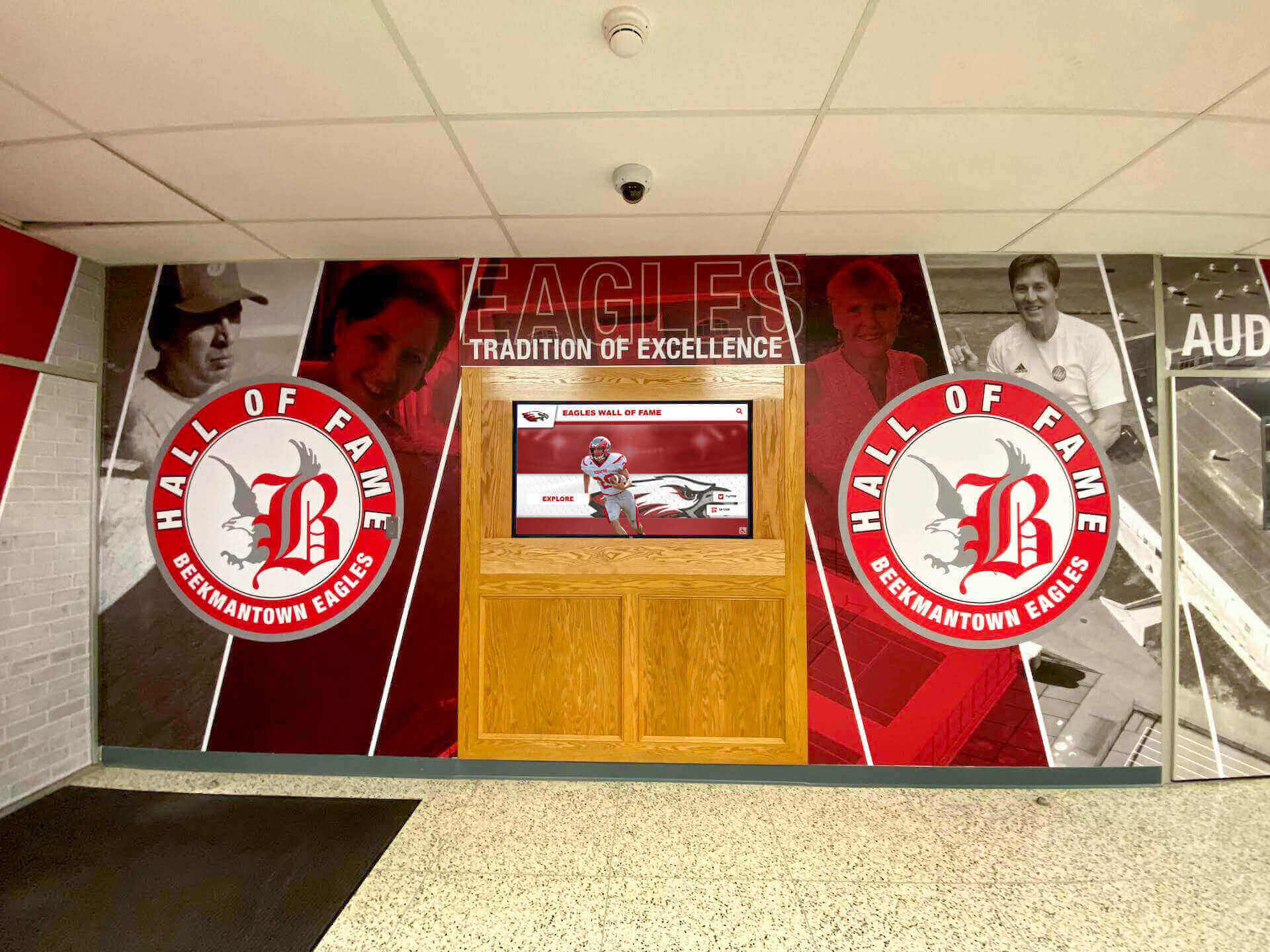
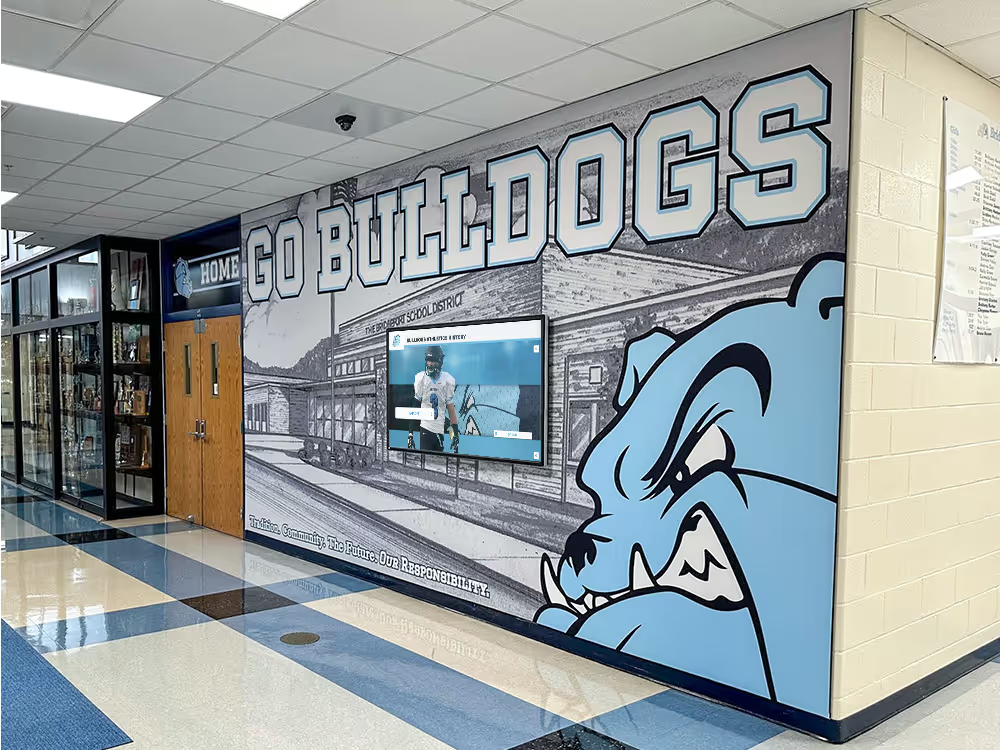
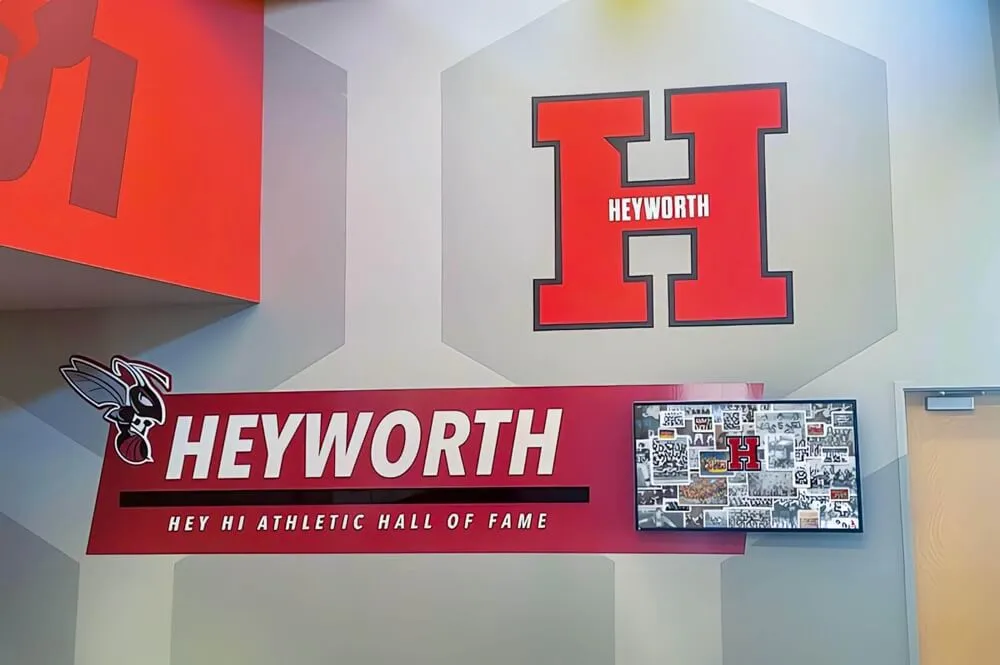
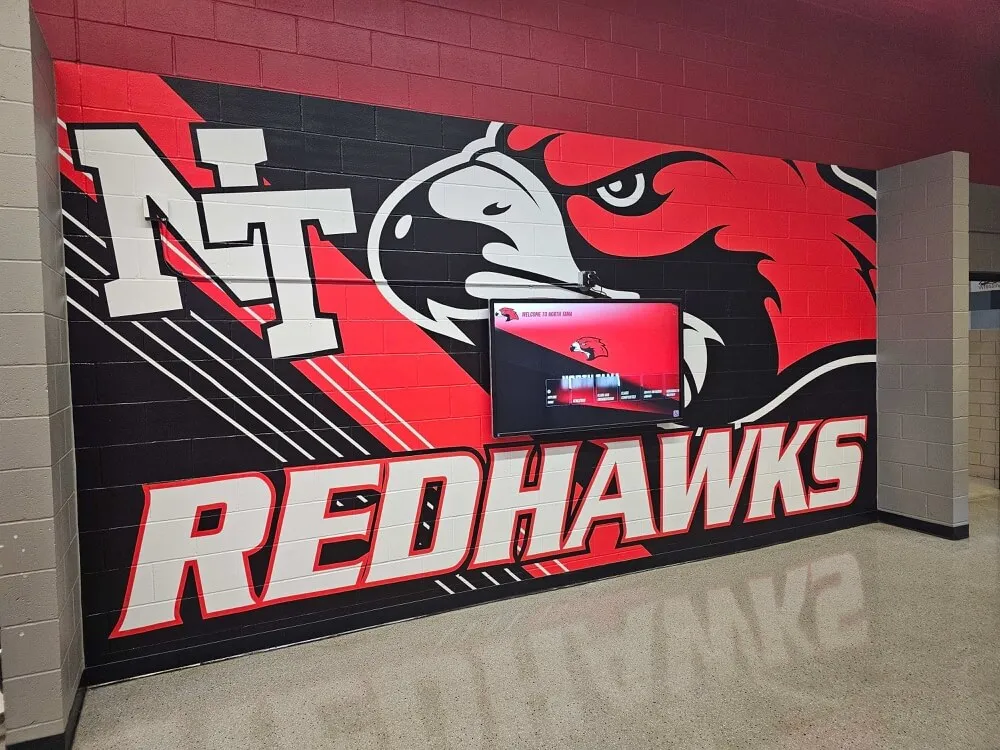
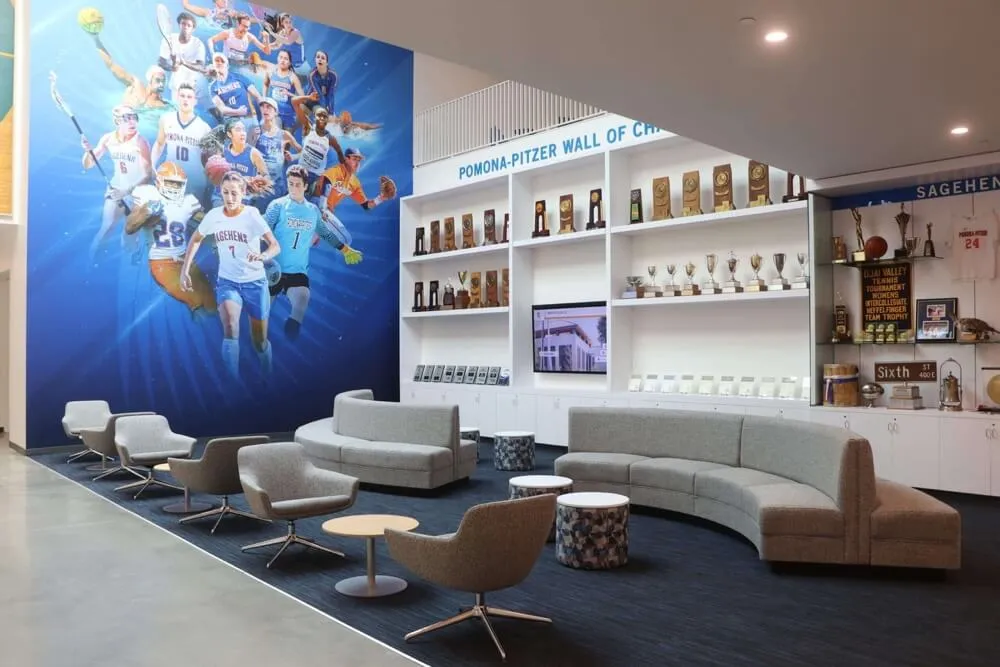
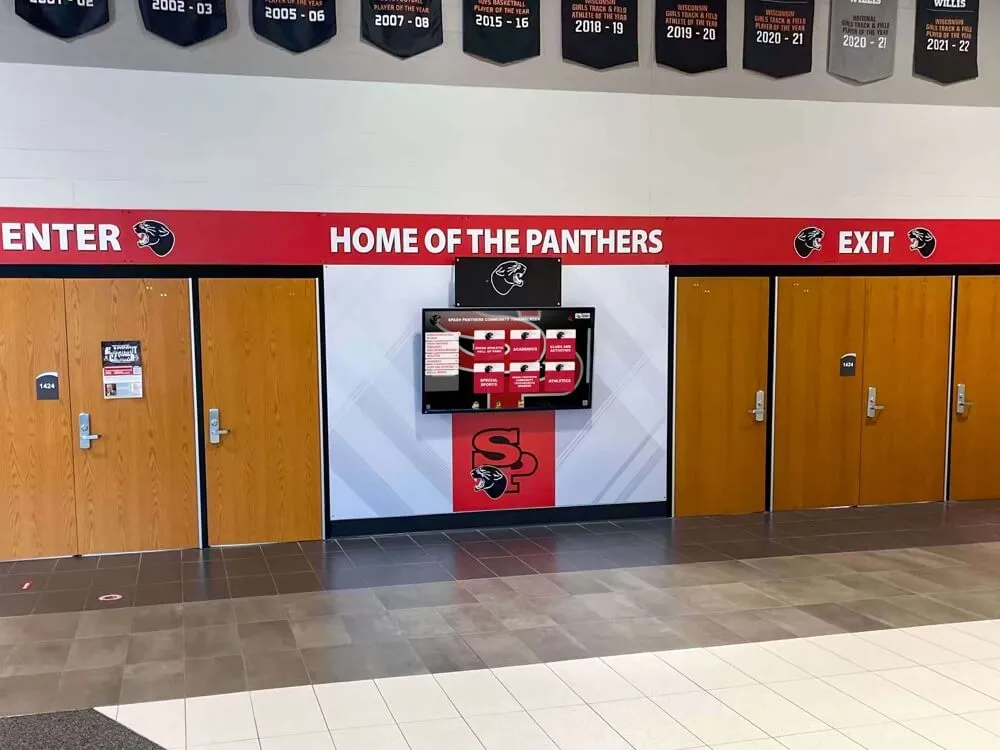
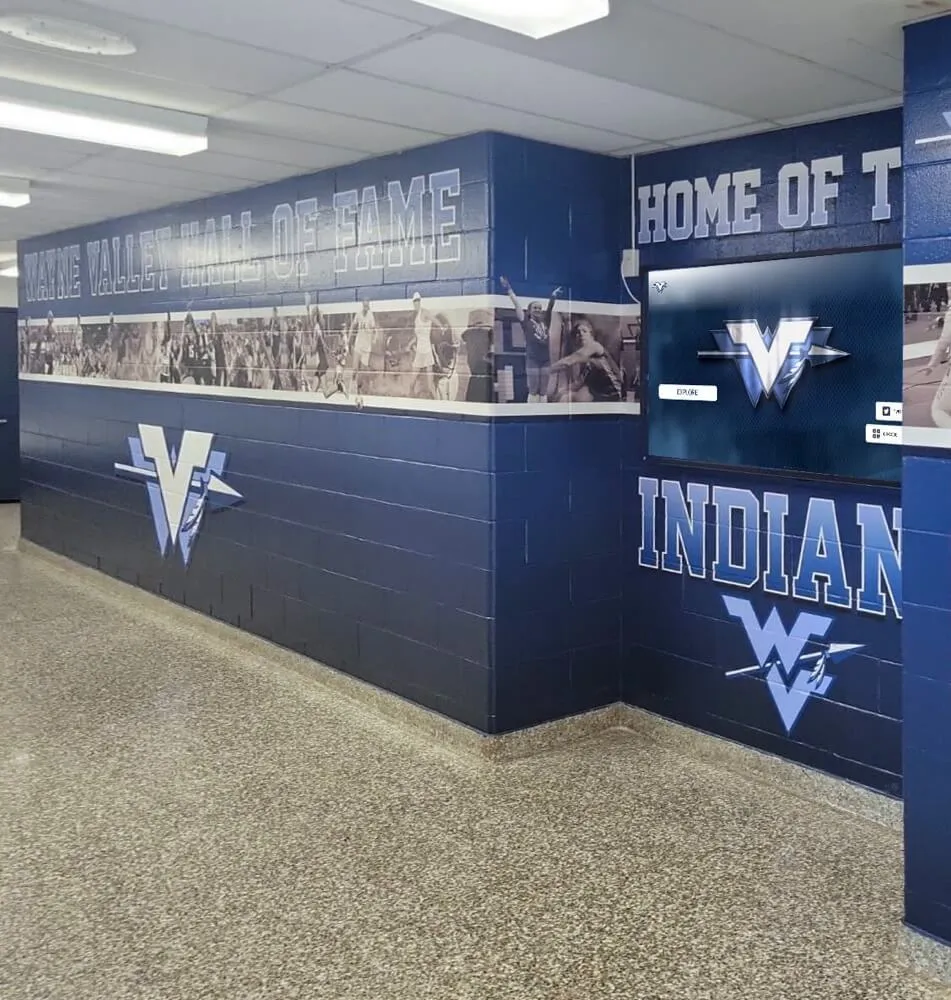
Modern school lobbies integrate digital yearbook displays with recognition murals, creating comprehensive memory preservation environments
Accessibility and Discovery Friction
Even well-preserved print yearbooks present significant usability challenges:
Search and Navigation Limitations
- Finding specific individuals requires visual scanning of class photos and index checking
- Group photos and activity pages lack comprehensive identification
- No cross-referencing capability connects individuals across different sections
- Alumni uncertain of graduation year must examine multiple volumes
- Visitors cannot easily discover related content or connections
- Thematic searches (all football team members, drama club participants) prove impossible
Typical search time to locate one specific individual in traditional yearbooks averages 8-15 minutes when the graduation year is known, and significantly longer when searching across multiple potential years or trying to find candid photographs beyond formal portraits.

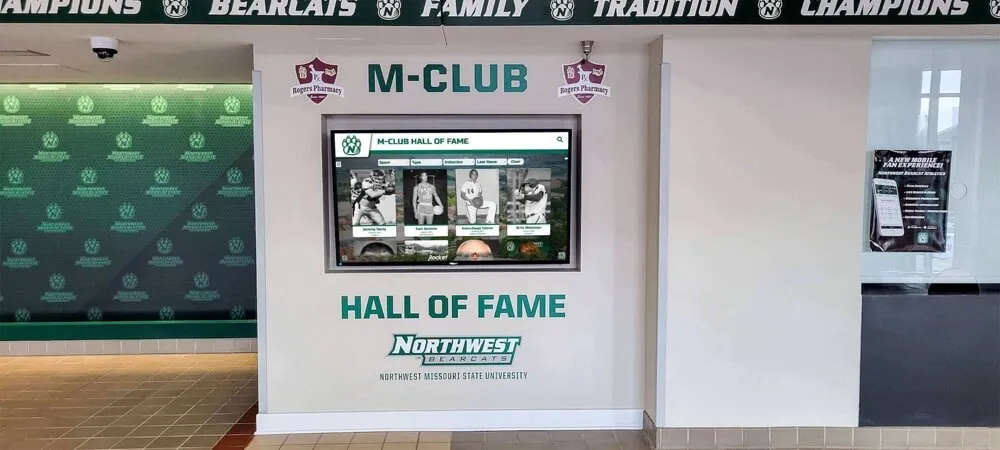
Digital interfaces enable instant name search, finding individuals in seconds rather than minutes of page-flipping
Limited Remote Access Traditional yearbooks restrict viewing to physical locations:
- Alumni must visit campus or maintain personal copies to access yearbook content
- Schools receive frequent requests for yearbook scans or photo copies from remote alumni
- Reunion planning committees struggle to access historical yearbooks for event preparation
- Prospective families touring campus cannot explore institutional history independently
- International alumni and military families have minimal access to school memory archives
Schools implementing digital archives for schools report alumni engagement increases 5-8 times when yearbook content becomes accessible online compared to campus-only physical access.
Production Cost and Budget Pressures
Print yearbook programs face escalating financial challenges:
Rising Production Expenses
- Printing costs increase 3-5% annually above general inflation rates
- Professional photography expenses continue climbing
- Design software licenses and production tools require ongoing investment
- Staff or advisor stipends for yearbook coordination represent significant annual costs
- Distribution and shipping expenses add to total program budgets
- Color printing and premium finishes command substantial price premiums
According to yearbook publishing industry data, typical high school yearbook production costs range from $40-75 per book for standard quality to $80-150+ per book for premium editions with extensive color pages and upgraded materials. Schools with 500 students producing 400 yearbooks face $16,000-30,000 annual budgets just for printing, excluding photography, design labor, and administrative costs.
Declining Purchase Rates Many schools report yearbook sales challenges:
- Students increasingly view printed yearbooks as unnecessary when sharing photos digitally
- Price sensitivity limits purchases among families facing economic constraints
- Declining participation reduces revenue supporting program costs
- Unsold inventory represents sunk costs that cannot be recovered
- Lower print runs increase per-unit costs, creating negative feedback loops
These financial pressures force difficult decisions about yearbook program sustainability, quality reductions, or elimination altogether—outcomes that erase valuable institutional memory documentation.
Digital Yearbook Platform Features and Capabilities
Interactive yearbook systems fundamentally transform how schools preserve memories and enable alumni to explore institutional history.
Cloud-Based Yearbook Archives
Digital platforms create comprehensive, searchable yearbook repositories:
Complete Historical Digitization Schools scan and upload entire yearbook collections spanning decades:
- Page-by-page digitization of print yearbooks from founding to present
- High-resolution scanning preserving all photographs, text, and design elements
- Optical character recognition (OCR) making all text content searchable
- Image enhancement improving clarity of faded or damaged historical pages
- Metadata tagging identifying years, sections, and content categories
- Unlimited storage capacity accommodating growing collections without physical constraints
This comprehensive digitization preserves institutional memory while making fragile historical yearbooks accessible without risking physical handling damage.
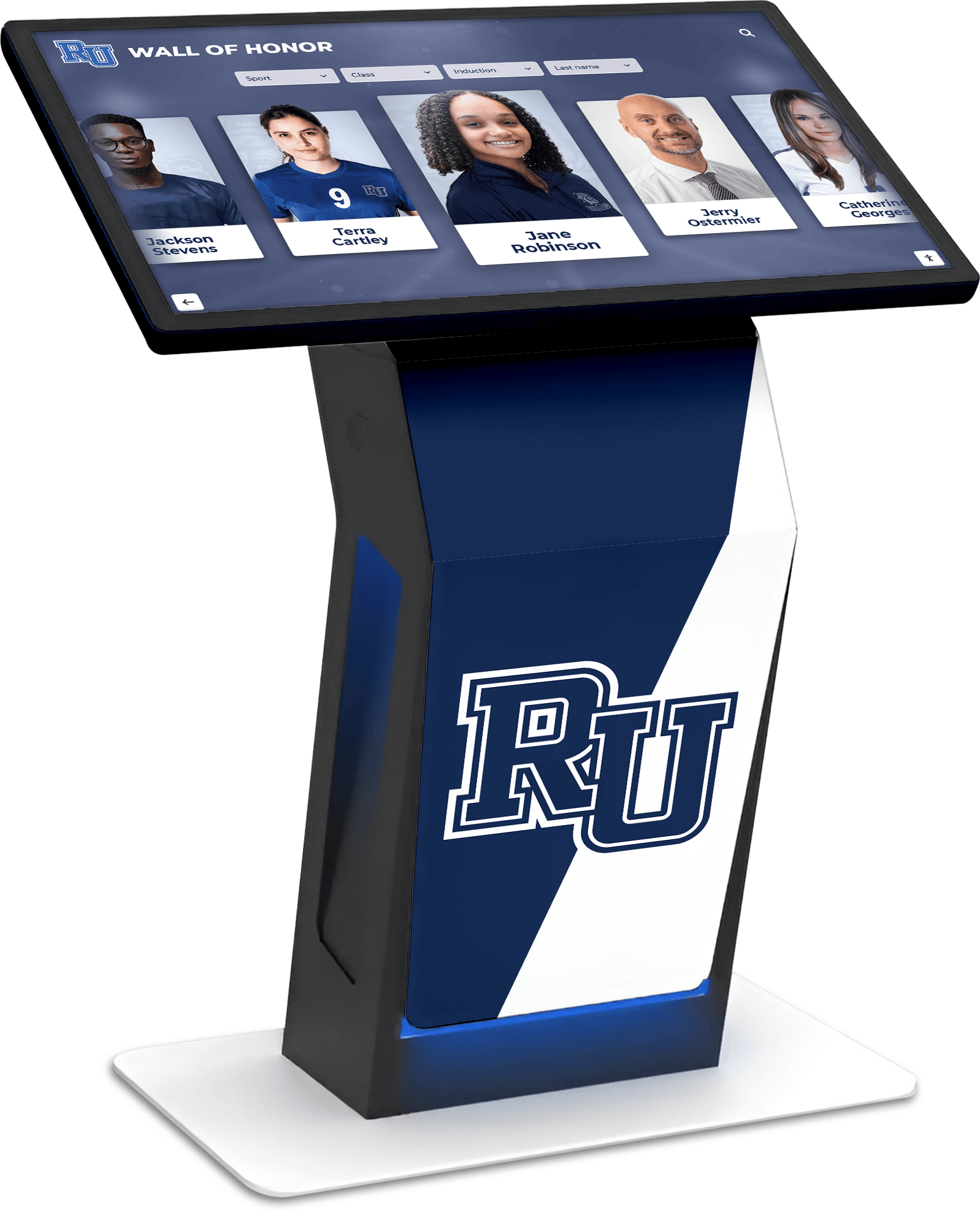
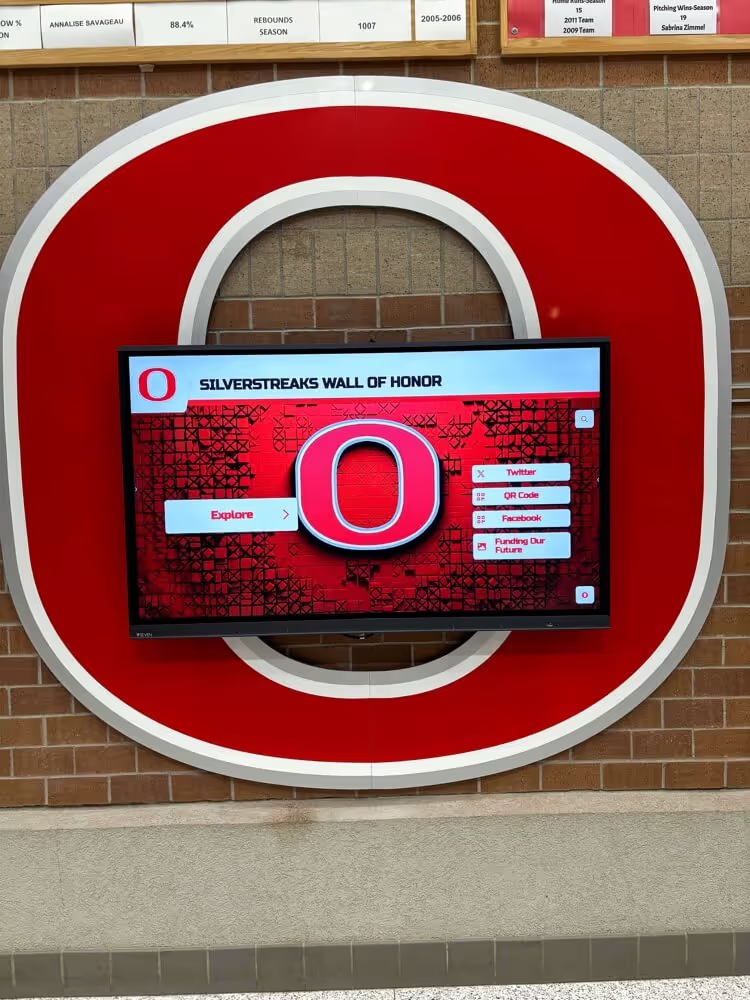
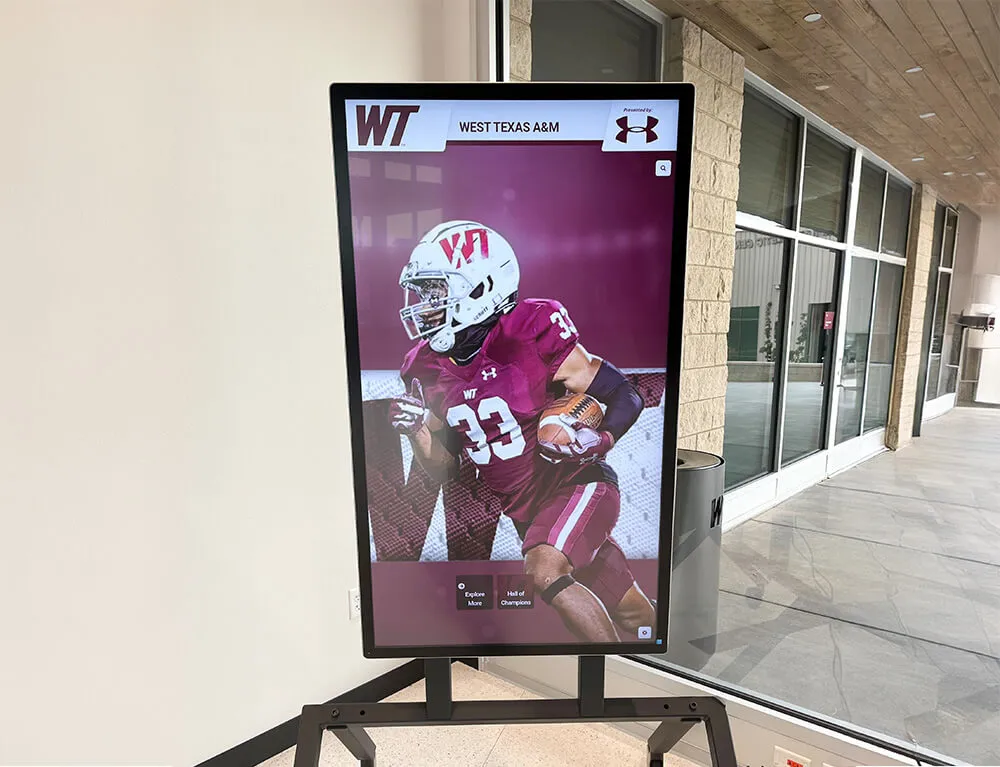
Touchscreen kiosks enable intuitive yearbook browsing, combining page views with advanced search and navigation features
Advanced Search Functionality The transformative feature print yearbooks cannot match:
Name-Based Search
- Type-ahead search finding individuals instantly across all years and pages
- Surname and given name search accommodating various naming preferences
- Maiden name search supporting married alumni reconnecting with classmates
- Phonetic search helping when exact spelling is uncertain
- Wildcard searches when users remember partial names
- Results showing all yearbook appearances including candid photos and activity pages
Contextual Search Capabilities
- Activity and club searches finding all participants across years (drama club, band, football)
- Organization searches connecting students through shared affiliations
- Year-specific searches focusing on particular graduating classes
- Keyword searches finding specific events, themes, or content
- Teacher and staff searches locating faculty across their career spans
Programs implementing digital yearbook solutions report search functionality represents the single most valued feature, transforming yearbook exploration from frustrating page-flipping into instant discovery.
Interactive Multimedia Enhancement
Digital yearbooks incorporate content impossible in print:
Video Integration Moving images bring yearbook memories to life:
- Graduation ceremony footage from each year
- Athletic highlights and championship game moments
- Performing arts productions and concert recordings
- Senior speeches and commencement addresses
- Promotional videos and recruitment materials from different eras
- Historical news footage or documentary content about the school
- Video yearbook segments created by student media programs
Audio Components Sound adds emotional depth to memory preservation:
- School songs and fight songs from different periods
- Band and choir performance recordings
- Oral history interviews with distinguished alumni
- Principal addresses and historical speeches
- Era-appropriate popular music providing temporal context
- Student radio broadcasts and announcements
- Audio yearbook narration and storytelling
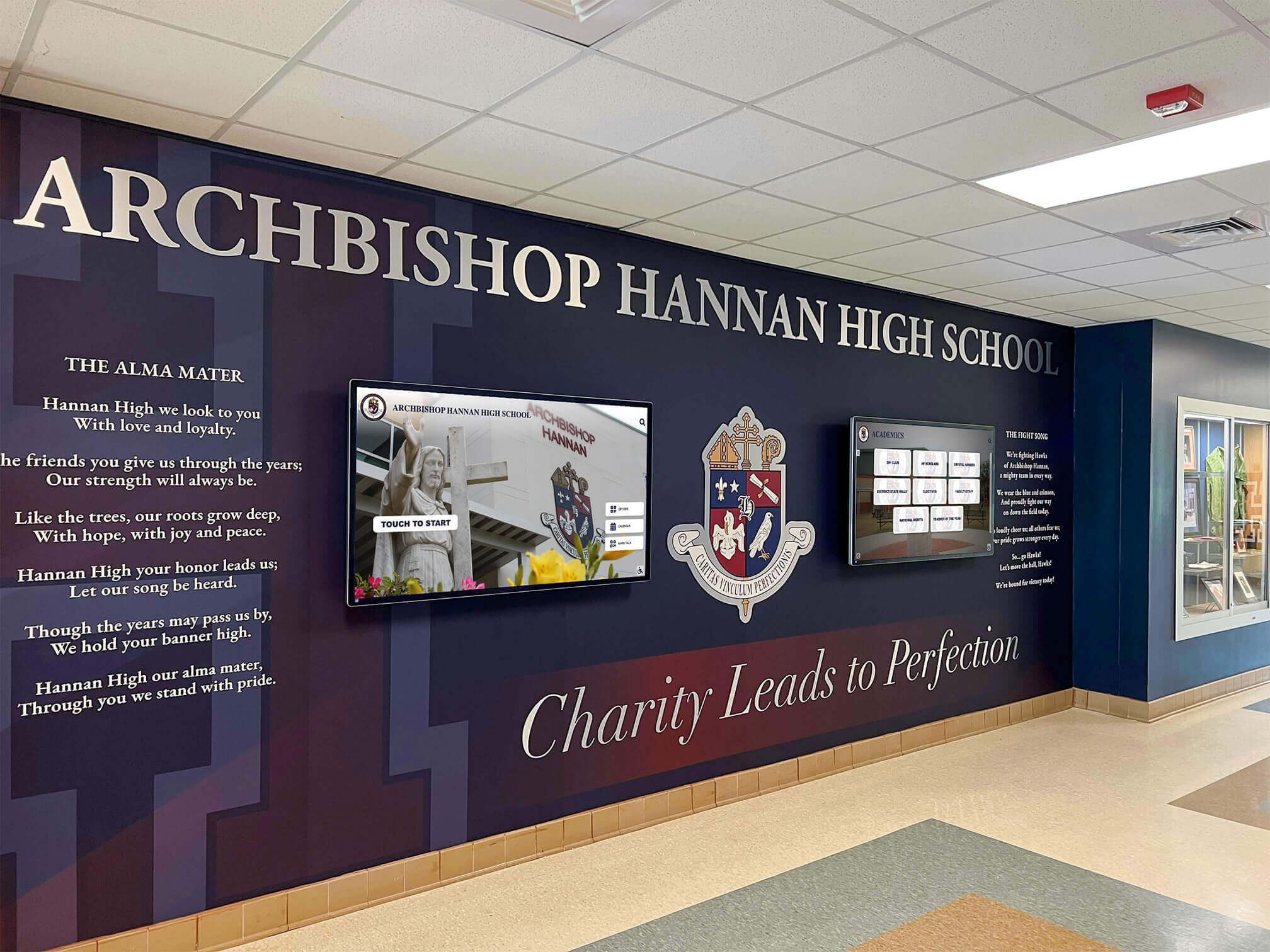
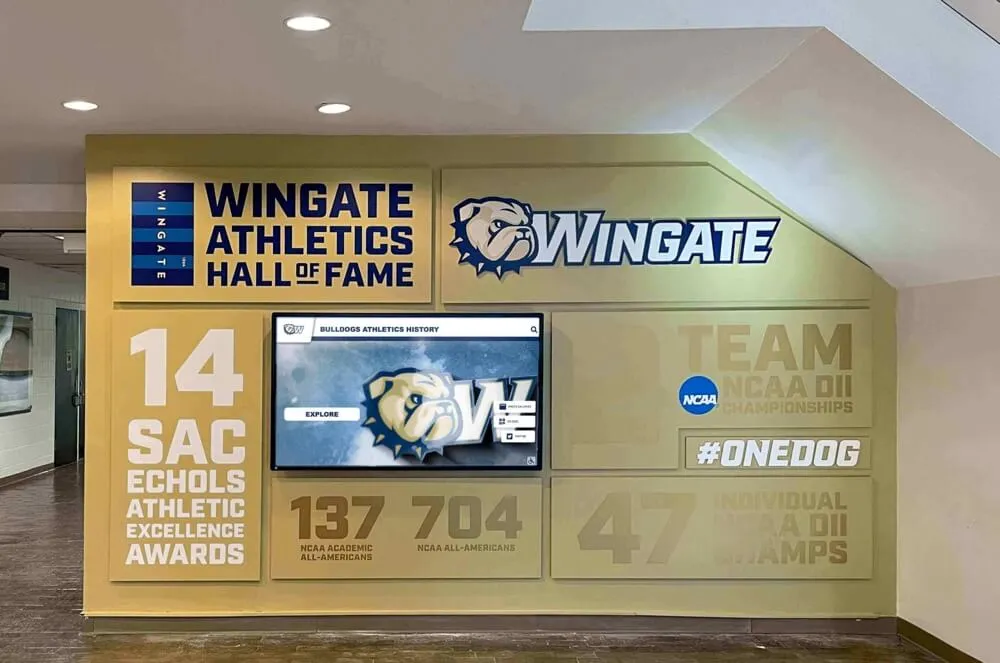
Multiple coordinated displays present comprehensive yearbook content including photos, videos, and achievement recognition
Social Media Integration Connecting digital yearbooks with modern communication:
- Photo sharing to social media platforms directly from yearbook displays
- Alumni tagging and identification crowdsourcing
- Comments and memories submitted by alumni about specific pages or events
- Reunion event promotion integrated with class year pages
- Alumni network connections facilitating classmate reconnections
- Email sharing enabling distributed access to specific yearbook content
Schools leveraging alumni engagement features report digital yearbooks serve as engagement platforms rather than static archives, maintaining alumni connection year-round.
Mobile and Remote Access
Extending yearbook availability beyond campus locations:
Responsive Web Platforms
- Mobile-optimized yearbook browsing from smartphones and tablets
- Desktop access for detailed exploration and research
- Progressive web applications working across all device types
- Offline viewing capabilities for downloaded content
- Adaptive interfaces adjusting to screen sizes and capabilities
QR Code Campus Integration Physical-digital bridges connecting locations with content:
- QR codes placed near physical yearbook displays in libraries
- Hallway QR codes connecting to specific year content or themes
- Event-based QR codes providing relevant historical context
- Athletic facility codes linking to sport-specific yearbook pages
- Alumni gathering codes enabling instant access to reunion year content
Alumni Portal Access Dedicated platforms for graduate community:
- Password-protected access for verified alumni
- Personalized dashboards highlighting relevant graduation years
- Notification preferences for updates to specific classes or content
- Profile integration enabling “where are they now” updates
- Donation links connecting yearbook exploration with development appeals
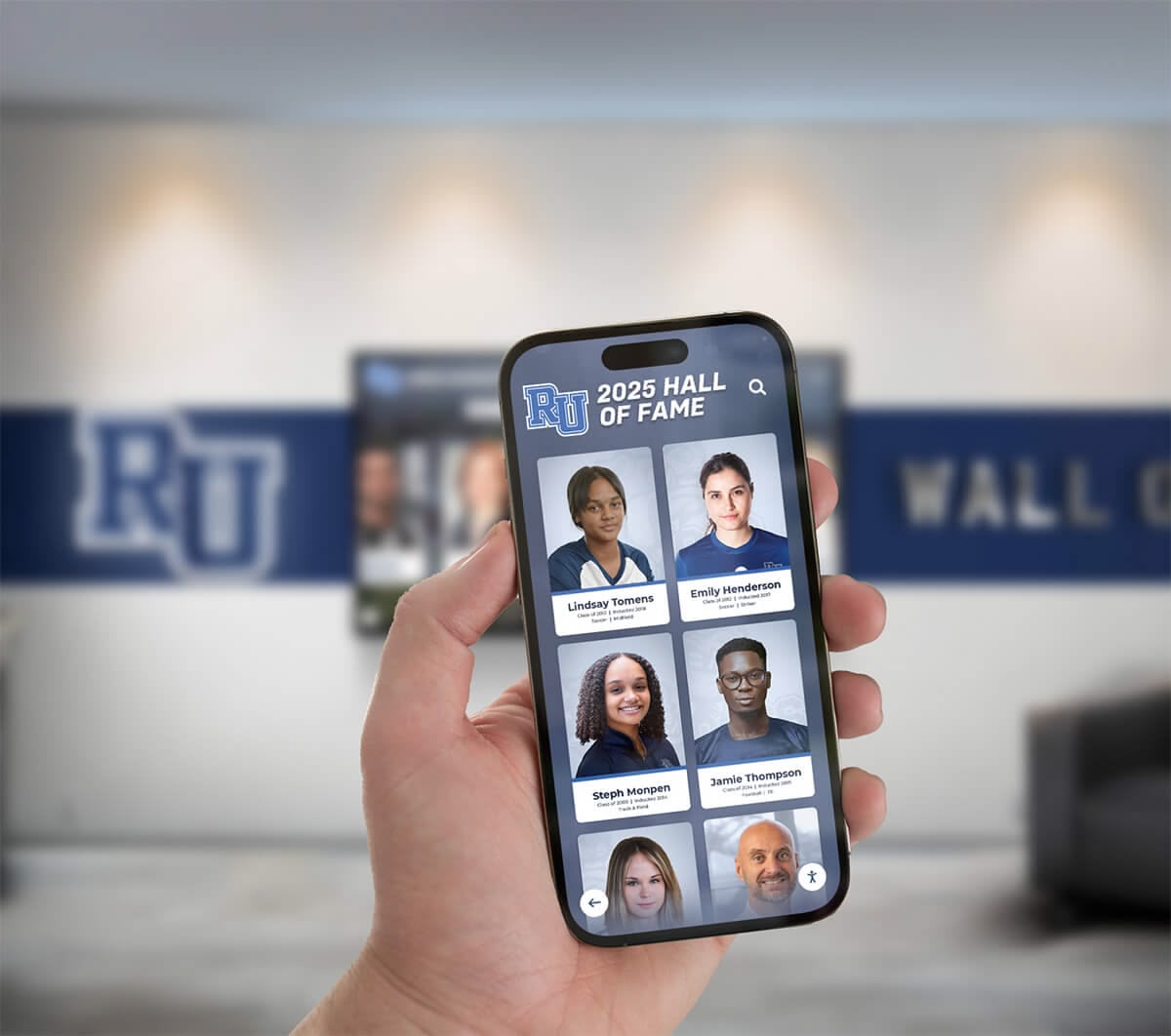
Mobile-accessible platforms extend yearbook browsing beyond physical displays, enabling alumni exploration from anywhere worldwide
Implementation Strategies for Digital Yearbook Programs
Successful digital yearbook initiatives require systematic planning addressing content, technology, and community engagement.
Content Acquisition and Digitization
Historical Yearbook Scanning Converting existing print collections to digital format:
In-House Digitization Approach Organizations with time and equipment can perform scanning internally:
- Flatbed scanners handling most standard yearbook sizes
- Copy stands with digital cameras for oversized or fragile volumes
- Student workers or volunteers performing supervised scanning
- Phased approach digitizing several years monthly over extended timelines
- Lower cash cost but significant time investment (estimate 4-8 hours per yearbook)
Professional Digitization Services Third-party vendors accelerate content creation:
- Specialized equipment and experience producing higher quality results
- Faster turnaround completing decades of collections in months
- Handling fragile or damaged volumes requiring expert care
- OCR processing making text searchable automatically
- Quality control and image enhancement included
- Higher upfront cost ($15-40 per book) but minimal internal labor required
Most successful implementations combine approaches—professional digitization of priority years (recent graduates, upcoming reunion years, rare historical volumes) while gradually scanning remaining collections through internal processes.
Photo Identification and Tagging Making digital yearbooks truly searchable requires metadata:
Manual Identification Methods
- Alumni volunteers identifying classmates in photographs
- Yearbook staff and advisors tagging recent volumes during production
- Crowdsourced identification through alumni networks
- Student projects engaging current classes in historical research
- Faculty and staff assisting with institutional knowledge
- Reunion committees identifying their specific class years
Technology-Assisted Approaches
- Facial recognition suggesting potential matches from known photos
- OCR extraction of names from captions and indices
- Machine learning models identifying repeated individuals across pages
- Bulk import from existing databases and records
- API integrations with student information systems
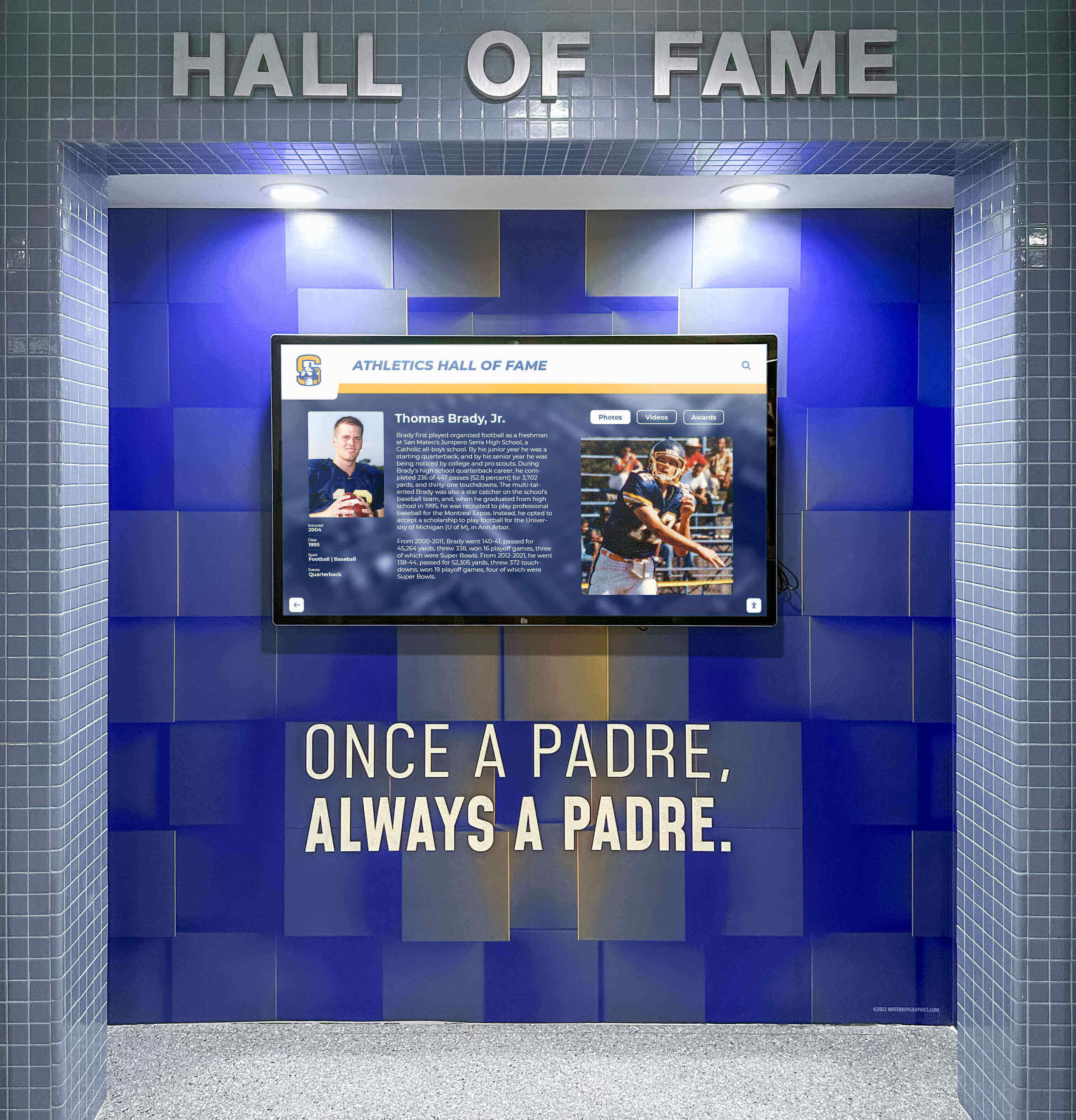
Dedicated displays in athletic facilities showcase sports yearbook content and achievement recognition integrated with team histories
Programs implementing comprehensive digital archives report photo identification represents the most time-consuming aspect, recommending phased approaches starting with recent years where identification proves easiest before tackling historical decades.
Platform Selection and Technical Infrastructure
Software Solution Requirements Effective digital yearbook platforms provide:
Core Functionality
- Intuitive page browsing with thumbnail navigation and zoom capabilities
- Fast, accurate search across names, years, activities, and keywords
- High-resolution image display preserving yearbook detail and clarity
- Mobile-responsive design working across all device types
- Cloud-based hosting eliminating school server requirements
- Administrative dashboard for content management and updates
Advanced Features
- Video and audio content hosting and streaming
- Social sharing and alumni interaction tools
- Analytics tracking usage and popular content
- Privacy controls managing access permissions
- Integration with school websites and alumni portals
- Multiple display management from unified control systems
Solutions like Rocket Alumni Solutions specialize in educational yearbook and memory preservation applications, providing purpose-built interfaces optimized for school archives rather than generic digital asset management systems requiring extensive customization.
Hardware Considerations for Campus Displays
When implementing physical touchscreen yearbook kiosks:
Display Specifications
- Commercial-grade touchscreens (43-65 inches) designed for public use
- Projected capacitive touch technology providing smartphone-like interaction
- Anti-glare glass protecting displays in high-light locations
- Durable construction withstanding daily student interaction
- Attractive kiosk enclosures or wall mounts complementing facilities
Strategic Placement Locations
- Library entrances and main areas where research naturally occurs
- Administrative lobbies welcoming visitors and prospective families
- Alumni centers and development offices facilitating engagement
- Athletic facilities connecting yearbook archives with sports recognition
- Cafeterias and commons areas maximizing student accessibility
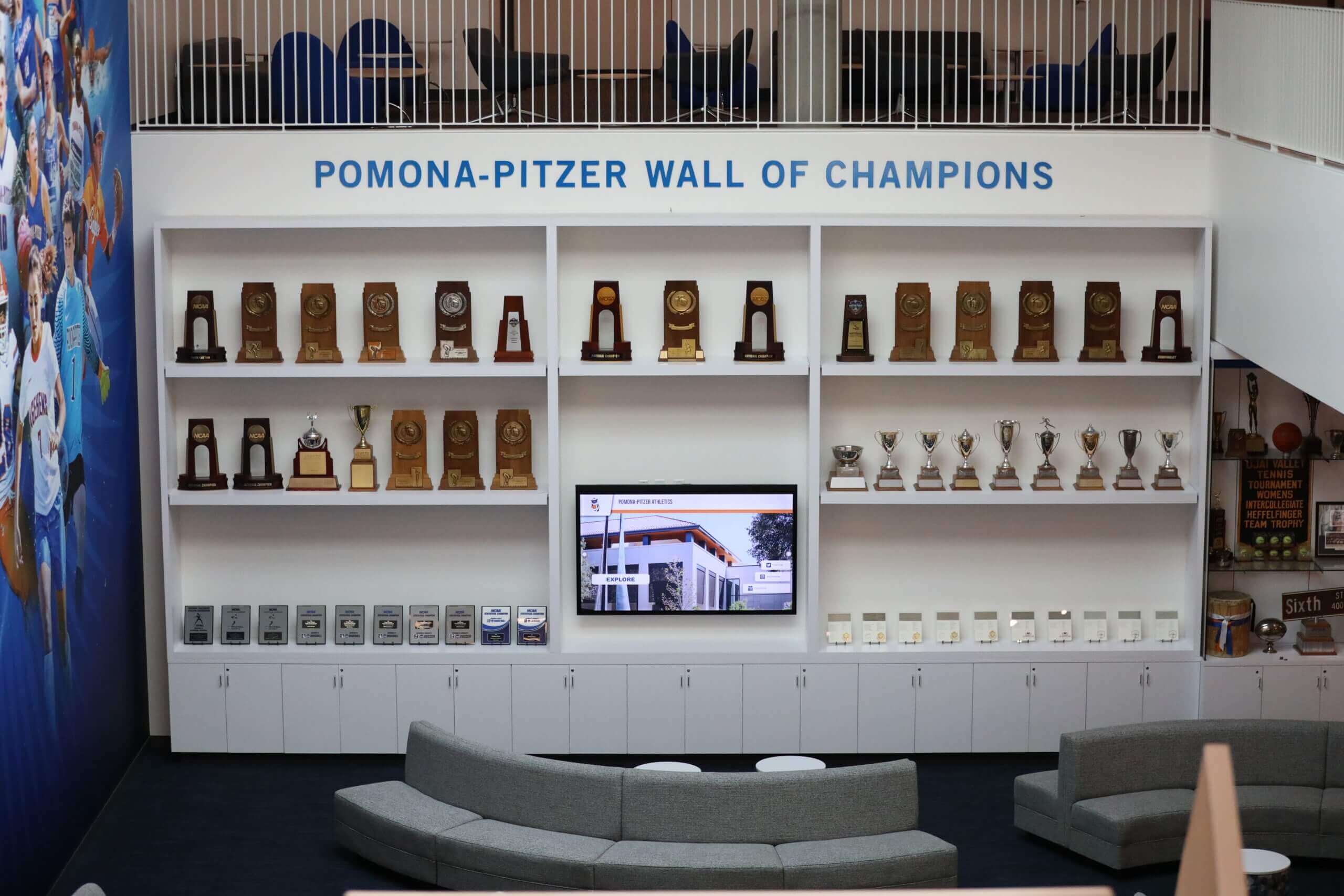
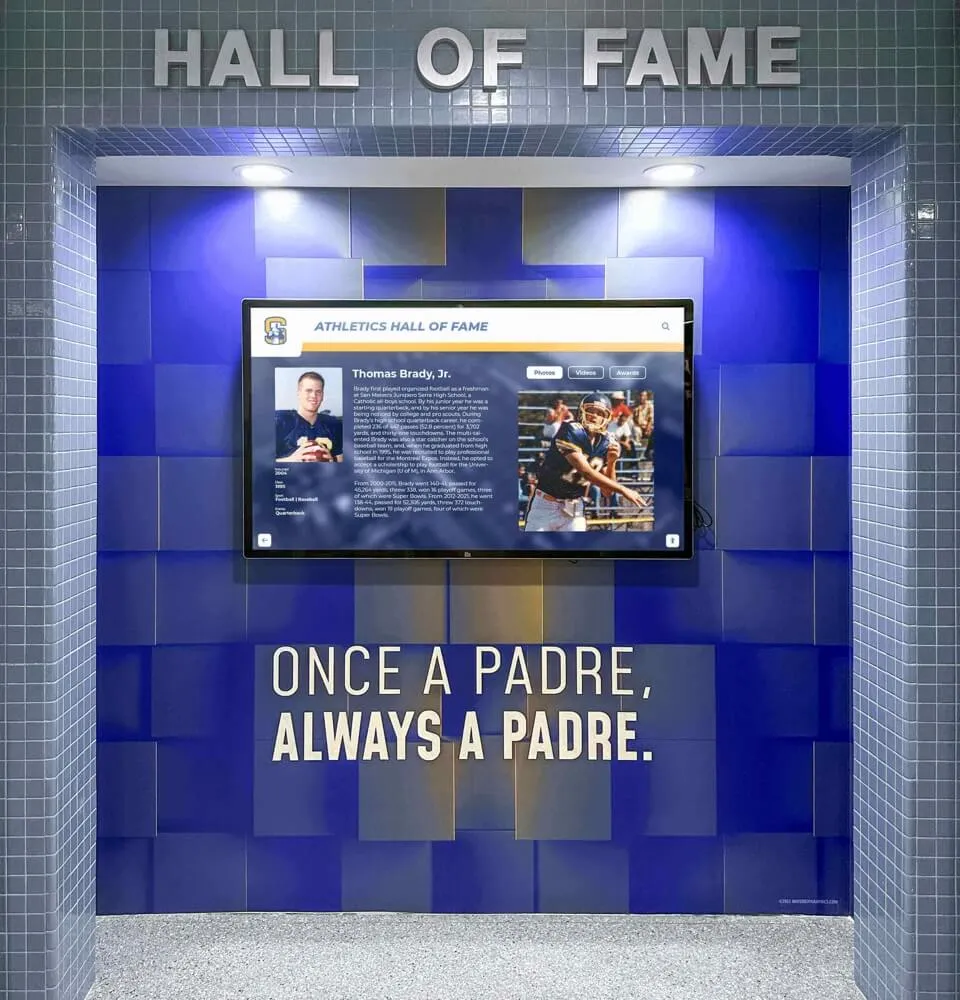
Recognition lounges combining digital yearbook displays with trophy showcases create engaging spaces for exploring institutional memory
Budget Planning and Cost Analysis
Digital Yearbook Investment Components
Comprehensive budgets address multiple elements:
Initial Setup Costs
- Historical yearbook scanning: $15-40 per book × number of historical yearbooks (professional service)
- Software platform setup and customization: $2,000-6,000 (one-time)
- Photo identification and metadata entry: $5,000-15,000 (depends on volume and approach)
- Campus touchscreen display and installation (optional): $8,000-15,000 per location
- Initial administrator training: $500-1,500
Ongoing Annual Expenses
- Cloud platform subscription: $2,000-7,000 annually (includes hosting, support, features)
- Annual yearbook addition (current year): $500-2,000 (if continuing print production)
- Digital-only yearbook production: $3,000-8,000 (professional photography, design, coordination)
- Content updates and maintenance: $1,000-3,000 annually
- Hardware maintenance and eventual replacement reserves: $500-1,500 annually
ROI and Cost Comparison
Schools transitioning from print-only to hybrid or digital-primary yearbook programs typically experience:
- Initial 2-3 year investment period establishing digital infrastructure
- Year 4+ cost parity or savings compared to print-only approaches
- 10-year total cost 30-50% lower when reducing print quantities
- Enhanced value through unlimited access, preservation, and engagement features
- Alumni relations and development benefits difficult to quantify but substantial
Many schools maintain limited print runs (100-200 copies for sale and archives) while making comprehensive digital yearbooks the primary memory preservation and distribution method.
Hybrid Approaches: Print and Digital Integration
Many institutions implement solutions combining traditional and digital elements:
Complementary Print and Digital Programs
Strategic Print Continuation Reasons schools maintain limited print yearbooks:
Print Yearbook Advantages
- Tangible keepsakes valued by students, particularly seniors
- Traditional ritual maintaining institutional culture and continuity
- Beautiful coffee-table quality premium editions for significant markets
- Guaranteed preserved archives not dependent on technology
- Alumni expectation and tradition preservation
- Revenue generation from sales to families and community
Optimized Print Approach
- Reduced print quantities (150-300 copies) dramatically lowering costs
- Premium quality focus for reduced volumes
- Pre-order sales models eliminating unsold inventory risk
- Senior-focused editions emphasizing graduating class
- Print-on-demand options for historical replacement copies
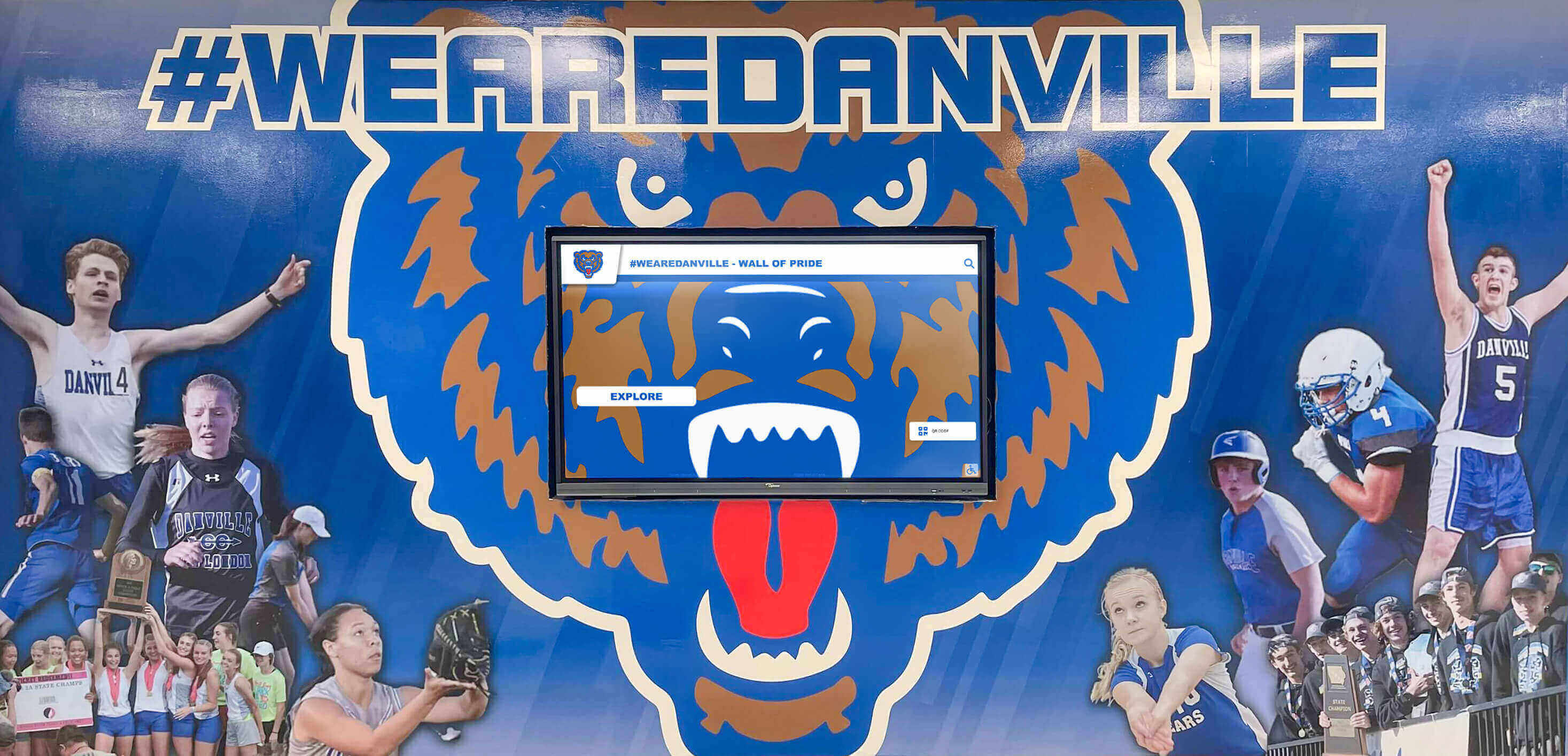
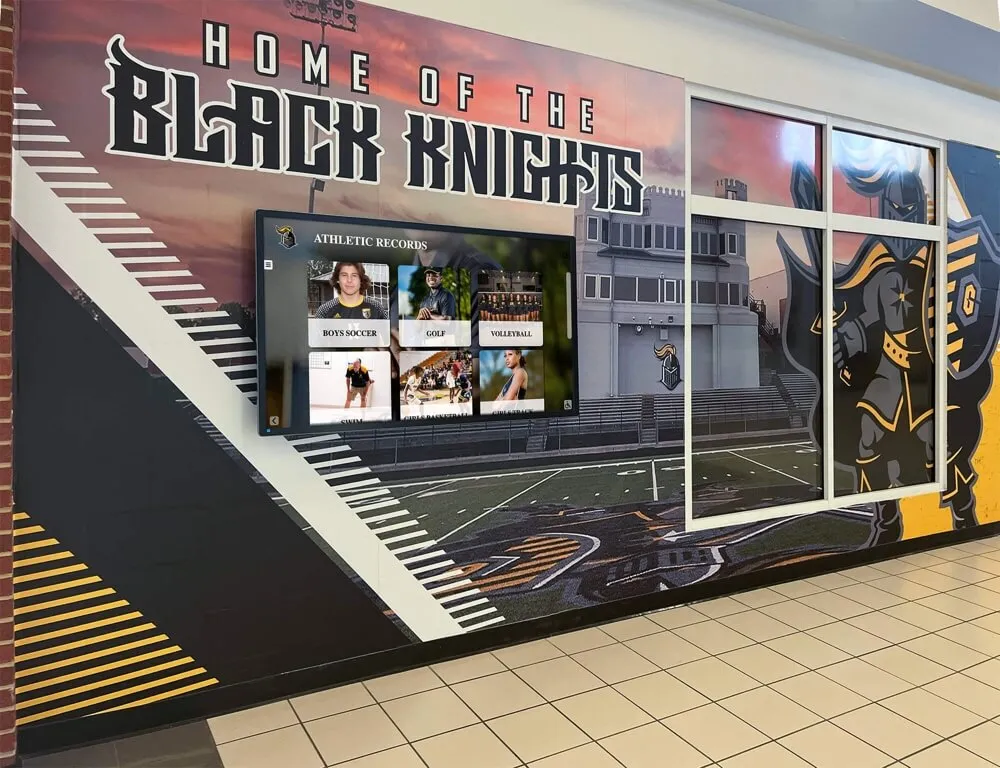
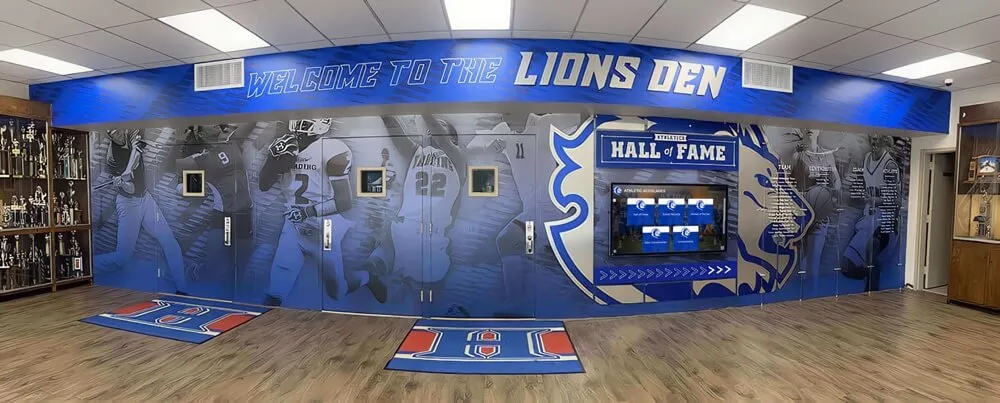
Environmental graphics combined with digital yearbook displays create immersive memory spaces celebrating school history and achievement
Comprehensive Digital Platform
- Complete yearbook archive access for entire community
- Unlimited “pages” and photo capacity unconstrained by printing economics
- Immediate updates and corrections impossible in printed editions
- Enhanced multimedia content and interactive features
- Remote access for distributed alumni populations
- Long-term preservation protecting against physical deterioration
Coordinated Hybrid Experience
- Print yearbooks include QR codes linking to expanded digital content
- Digital platforms feature scanned versions of print editions preserving original design
- Consistent content between formats with digital providing extended coverage
- Print editions serving as “best of” curated compilations
- Digital archives providing comprehensive documentation beyond print limitations
Digital-First Yearbook Programs
Some schools eliminate or minimize print production entirely:
Pure Digital Advantages
- Dramatic cost reduction eliminating printing, binding, distribution expenses
- Environmental sustainability reducing paper consumption
- Production flexibility with rolling publication throughout the year
- Unlimited capacity documenting everything rather than selecting what fits
- Instant distribution to entire community simultaneously
- Easy correction and updates after initial publication
Overcoming Stakeholder Resistance
Common concerns about digital-only yearbooks:
“Students want something tangible to keep”
- Offer premium photo books or memory albums as alternatives
- Create personalized graduation portfolios combining yearbook content with individual achievements
- Provide high-quality print exports users can order custom through platform
- Emphasize accessibility advantages of digital formats over deteriorating physical books
“We’ll lose the yearbook tradition and culture”
- Maintain yearbook staff, production processes, and school traditions
- Continue recognition ceremonies and distribution events
- Create reveal and launch celebrations for digital yearbook releases
- Emphasize evolution rather than elimination of traditions
Schools successfully transitioning to digital-primary yearbooks report initial resistance from certain stakeholder groups (particularly alumni) that dissipates within 2-3 years as engagement benefits and long-term preservation advantages become evident.
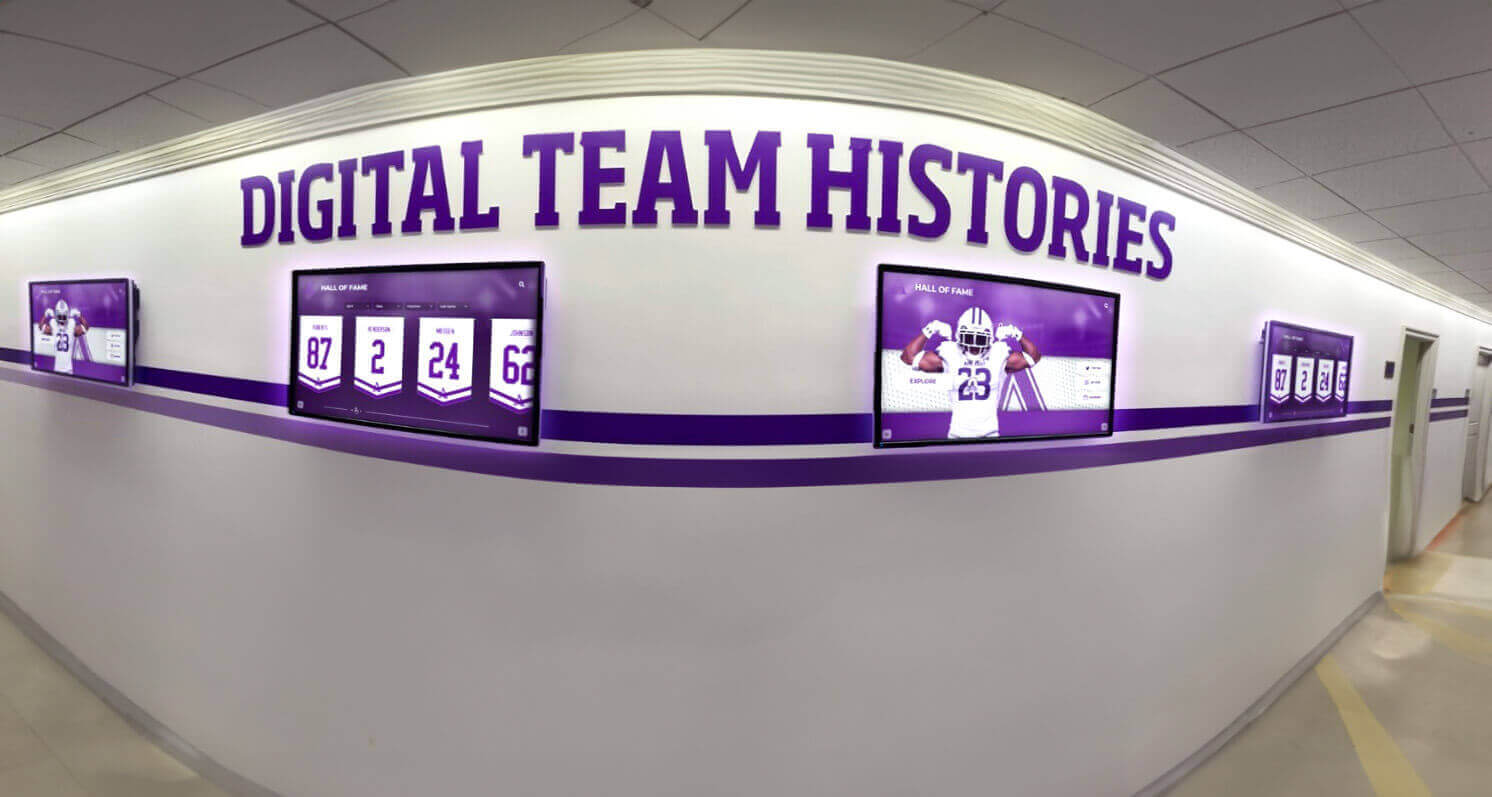
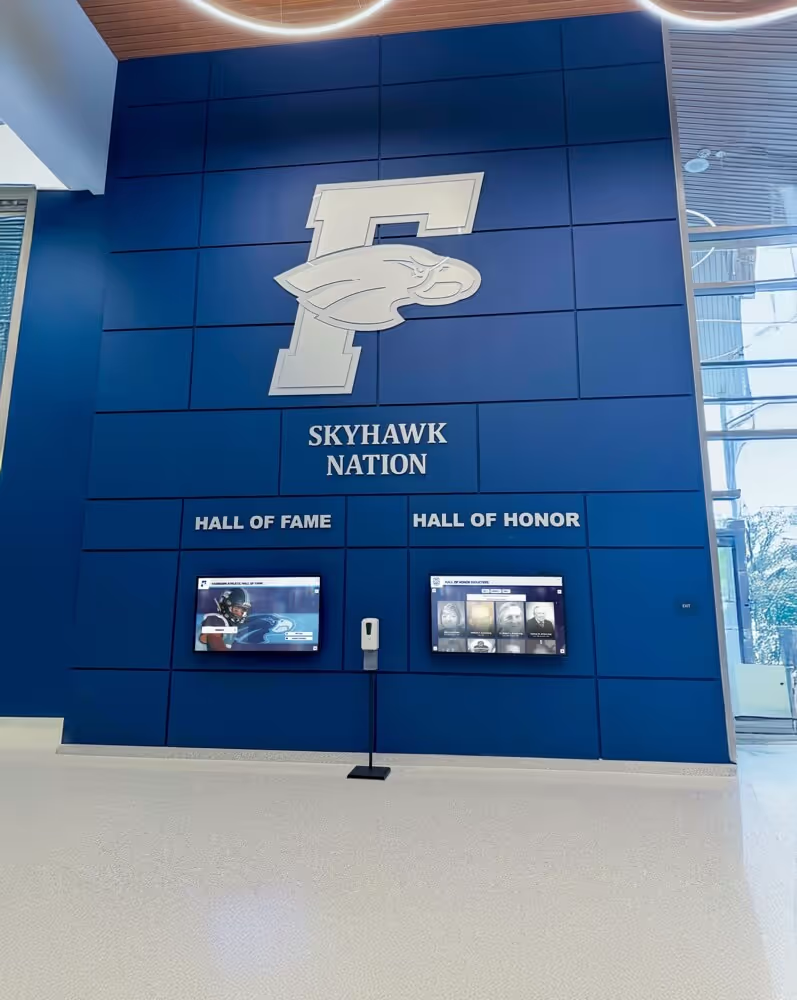
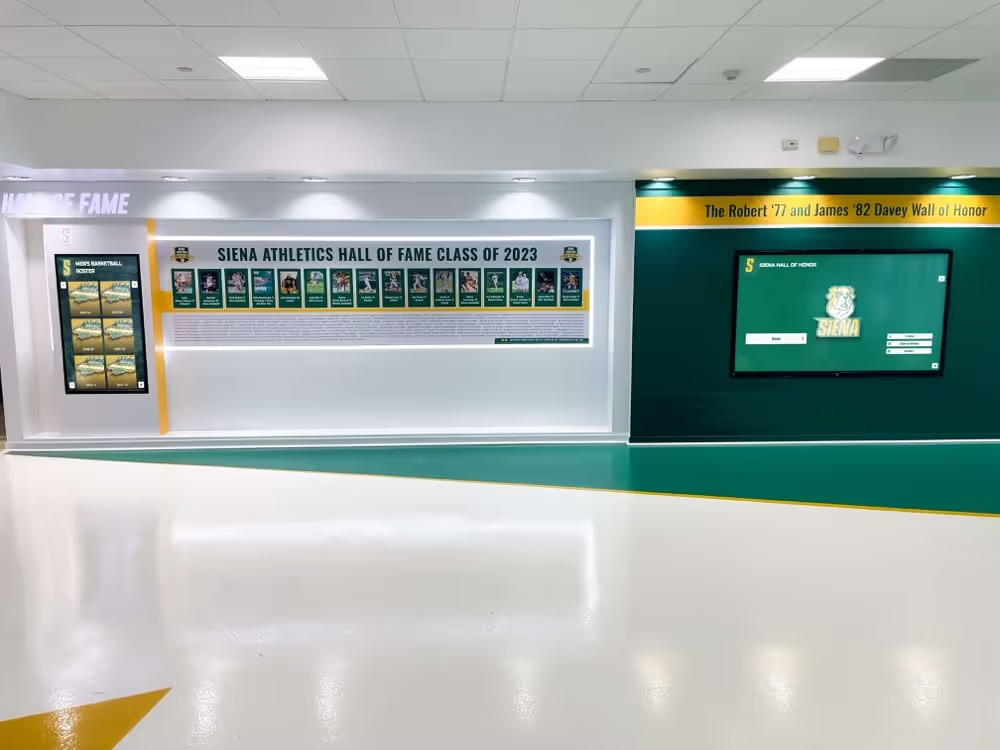
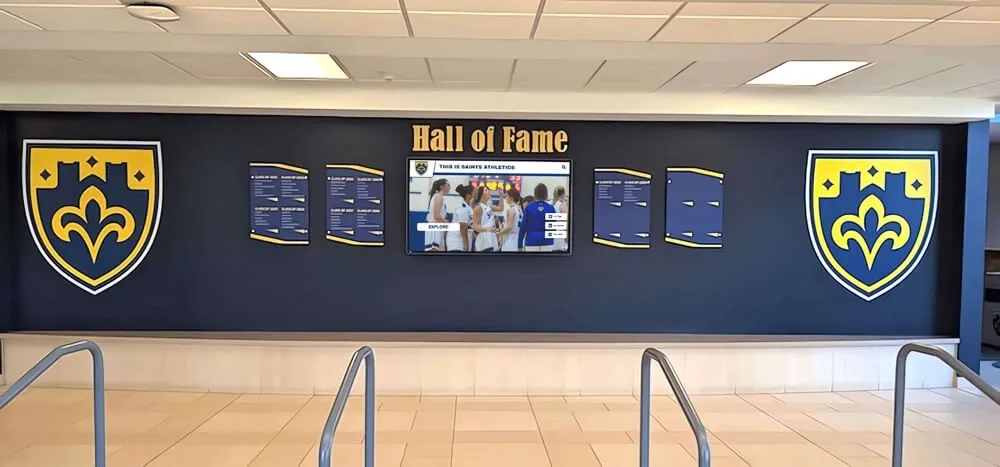
Multiple coordinated displays throughout facilities present comprehensive yearbook content and achievement histories accessible to all community members
Alumni Engagement Through Digital Yearbooks
Interactive yearbook platforms enable community connection extending beyond memory preservation:
Profile Updates and “Where Are They Now”
Alumni Contribution Systems Graduates can enhance their yearbook presence:
- Career and professional achievement updates
- Current location and contact preference settings
- Photos from reunions and current life
- “Then and now” comparison features
- Family information (if willing to share)
- Memories and stories about school experiences
- Advice and messages for current students
This capability transforms yearbooks from historical snapshots into living alumni directories maintaining relevance and currency across decades.
Moderation and Privacy Controls Responsible platforms balance openness with protection:
- Alumni verification processes ensuring legitimate access
- Content approval workflows before updates appear publicly
- Privacy settings enabling various visibility levels
- Opt-out capabilities for alumni preferring minimal presence
- Reporting mechanisms for inappropriate content
- FERPA compliance and educational privacy standards
- Graduated visibility controls (classmates-only, all alumni, public)
Reunion and Event Integration
Digital yearbooks serve alumni programming:
Reunion Planning Tools
- Class-specific landing pages with reunion information and registration
- Classmate contact facilitation for reunion committees
- Photo galleries from past reunions showing attendance history
- “Most changed” and “looks the same” interactive features
- Reunion countdown timers and promotional widgets
- Group messaging capabilities for class communications
- Event photo uploading and sharing during reunion weekends
Development offices implementing donor recognition integration report digital yearbooks provide natural connection points between memory exploration and philanthropic engagement, particularly during reunion cycles.
Milestone Anniversary Recognition
- 25th, 50th, and significant reunion year special features
- Historical context pages showing “the year you graduated” cultural references
- Comparison timelines showing school evolution since graduation
- Special multimedia compilations celebrating milestone classes
- Virtual reunion capabilities for classes unable to gather physically
Development and Fundraising Applications
Strategic Philanthropy Integration
- Alumni giving acknowledgment in profiles (with permission)
- Giving society membership recognition
- Named scholarship connections highlighting beneficiaries
- Class participation rates in annual giving campaigns
- Campaign progress visualization tied to class competition
- Legacy gift promotion among older reunion classes
- Impact storytelling showing gift utilization
Donor Recognition Balance Effective approaches acknowledge support without excessive commercialization:
- Subtle recognition badges or indicators on profiles
- Dedicated giving honor rolls separate from yearbook pages
- Opt-in visibility allowing donors to control public acknowledgment
- Emphasis on institutional support rather than specific dollar amounts
- Integration with broader donor wall strategies across recognition platforms
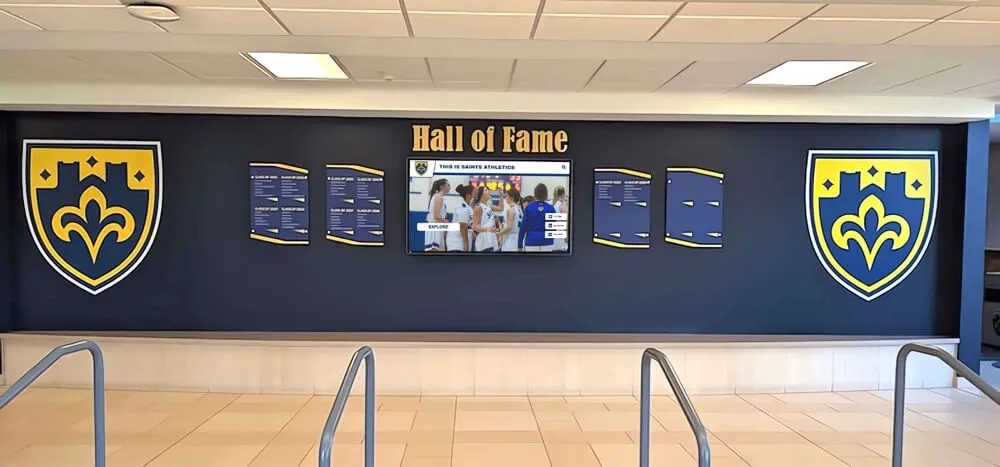
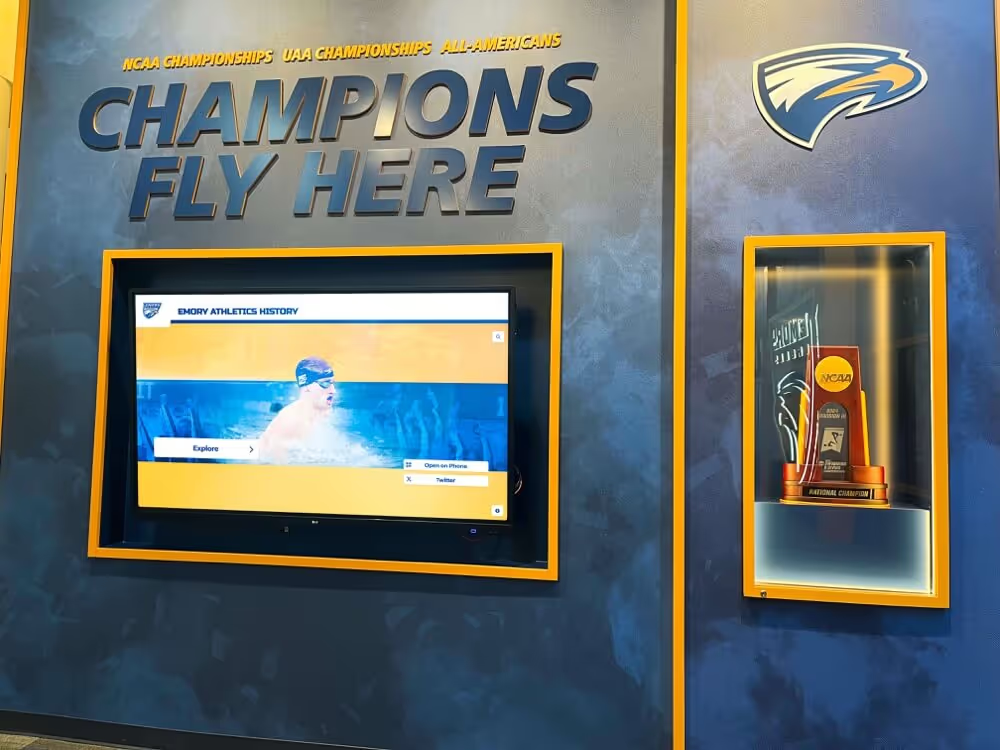
Traditional physical elements like championship shields complement digital yearbook displays, creating layered recognition combining tangible and interactive elements
Content Organization and Navigation Design
User interface architecture dramatically affects yearbook platform effectiveness:
Intuitive Browsing Structures
Primary Access Methods
Successful implementations provide multiple exploration approaches:
Year-Based Navigation
- Visual decade timeline showing institutional history span
- Year selection within chosen decade or from complete list
- Thumbnail page galleries showing yearbook structure
- Jump-to-section navigation (seniors, sports, activities, faculty)
- Next/previous year navigation enabling chronological browsing
Name and Keyword Search
- Prominent search functionality on all pages
- Type-ahead suggestions appearing as users type
- Filter options narrowing by year, section, or content type
- Advanced search combining multiple criteria
- Recent search history enabling quick return to previous results
Activity and Organization Directories
- Club and team rosters linking to relevant yearbook pages
- Faculty directories connecting to years of service
- Sport-specific navigation finding all team pages across years
- Award and honor society member listings
- Alphabetical indices of all identified individuals
Programs implementing comprehensive navigation systems report users explore 5-8 times more content compared to platforms offering only simple page turning, discovering connections and context beyond their immediate search targets.
Page and Profile Display Design
Page View Presentations
- High-resolution scans preserving original yearbook design and layout
- Zoom capabilities enabling detailed examination of photos and text
- Text overlay or side panels showing searchable content
- Navigation hotspots enabling click-through from photos to profiles
- Original page context preservation maintaining design intent
- Option to view individual photos or segments isolated from full pages
Individual Profile Pages When yearbooks are fully tagged and structured:
- Portrait photograph from yearbook
- Full name including maiden name for married alumni
- Graduation year and class designation
- Activities, clubs, and organizations listed
- Athletic participation and teams
- Academic honors and awards
- Senior quote or personal statement
- All yearbook appearances linked (candid photos, team pages, activity groups)
- Alumni-submitted updates and “where are they now” information
- Social sharing and contact preference controls
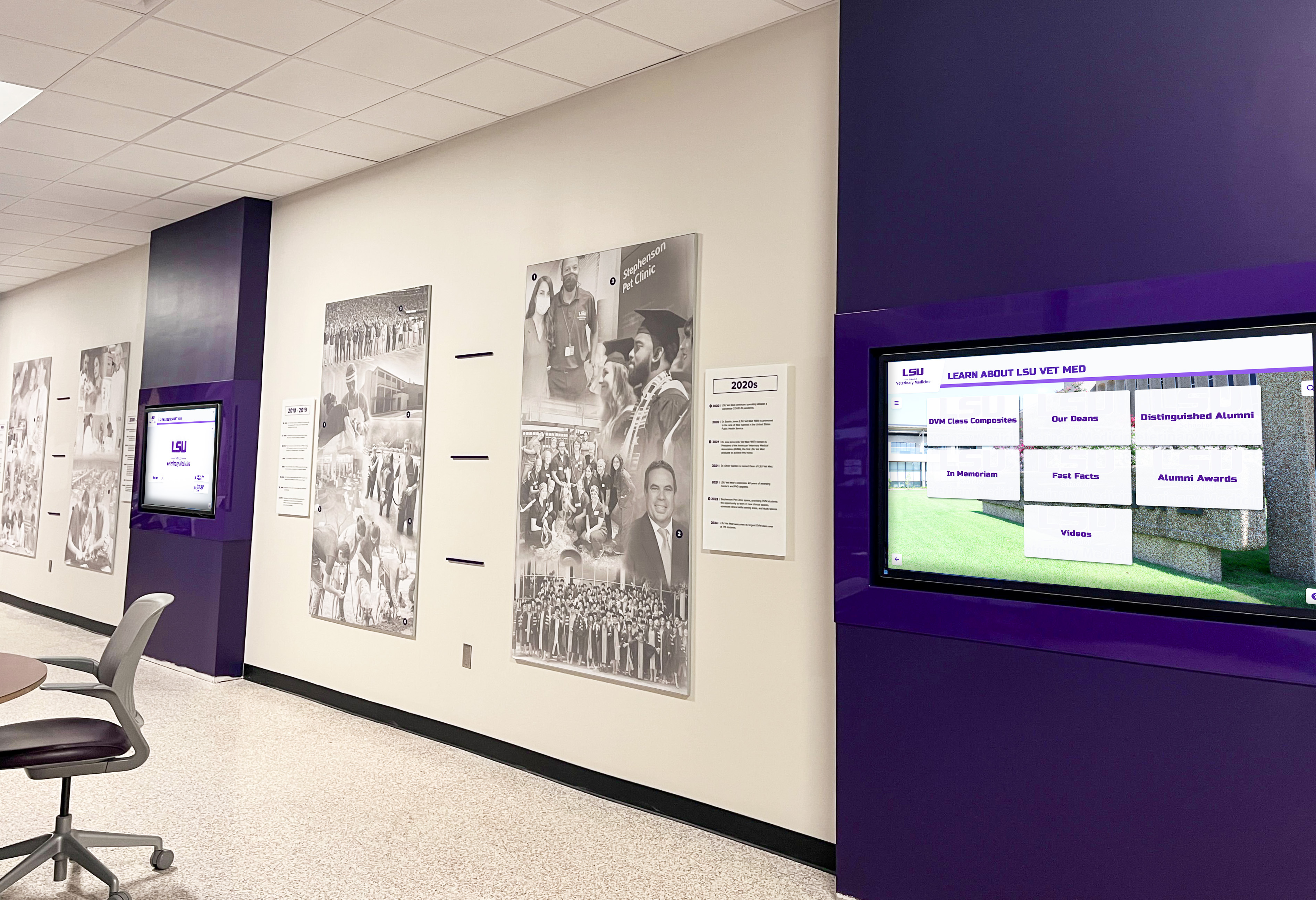
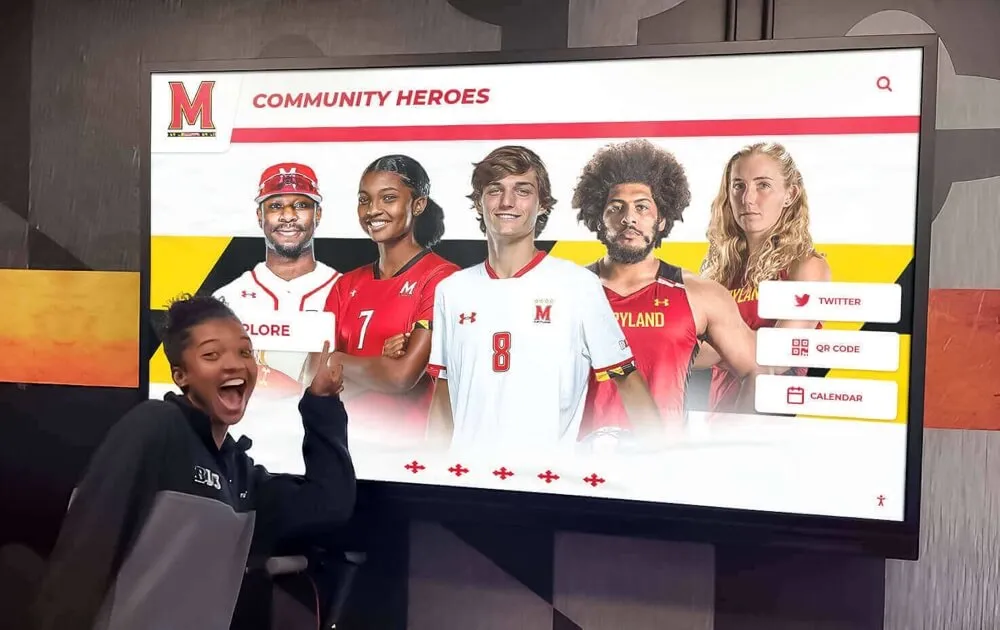
Multiple coordinated displays maximize content capacity while presenting diverse information including yearbooks, achievements, and current events
Privacy, Legal, and Ethical Considerations
Responsible digital yearbook programs address important concerns:
Student Privacy Compliance
Educational Privacy Laws Schools must navigate FERPA and state regulations:
- Directory information determination for yearbook content
- Parental consent requirements for minor students
- Opt-out processes enabling non-disclosure requests
- Alumni status changes affecting privacy protection levels
- Age-appropriate consent for historical content
- Graduated access controls limiting visibility appropriately
Most schools consider yearbook content directory information publicly available unless families opt out, but policies vary significantly by institution and jurisdiction.
Data Protection and Security
- Secure hosting protecting against unauthorized access
- Encrypted transmission of sensitive information
- Role-based access controls limiting administrative privileges
- Audit logging tracking content changes and access
- Backup and disaster recovery protecting against data loss
- Compliance with data protection regulations in various jurisdictions
Copyright and Intellectual Property
Yearbook Content Rights
Photography and Design Ownership
- Student photographer work-for-hire status
- Professional photographer contract terms and usage rights
- Yearbook publishing company design templates and licenses
- Stock photography and clip art licensing
- Faculty and advisor creative contributions
- Historical photograph provenance and permissions
Schools digitizing historical yearbooks should review publishing contracts determining what reproduction rights were granted and whether additional permissions may be needed for digital distribution.
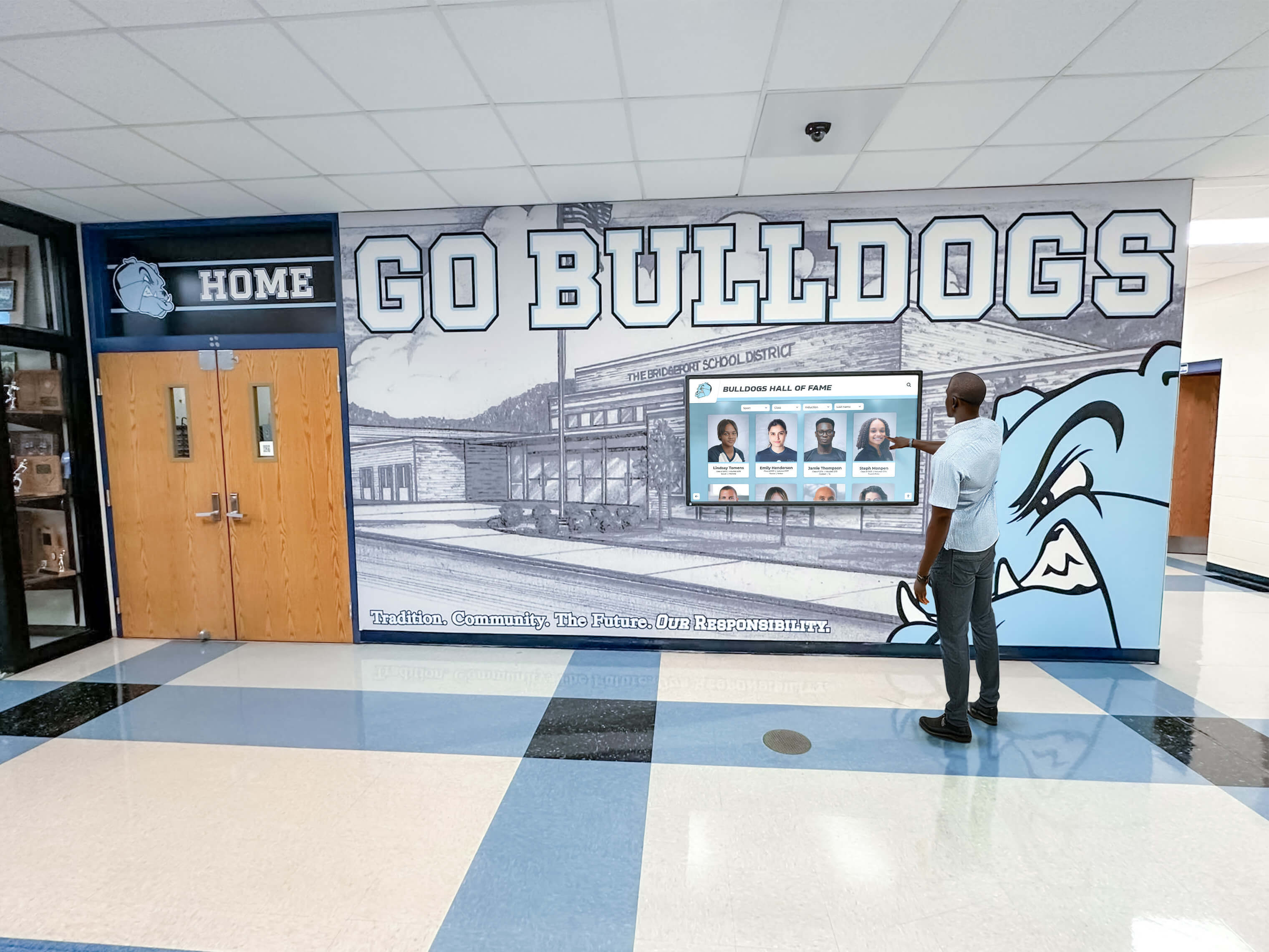
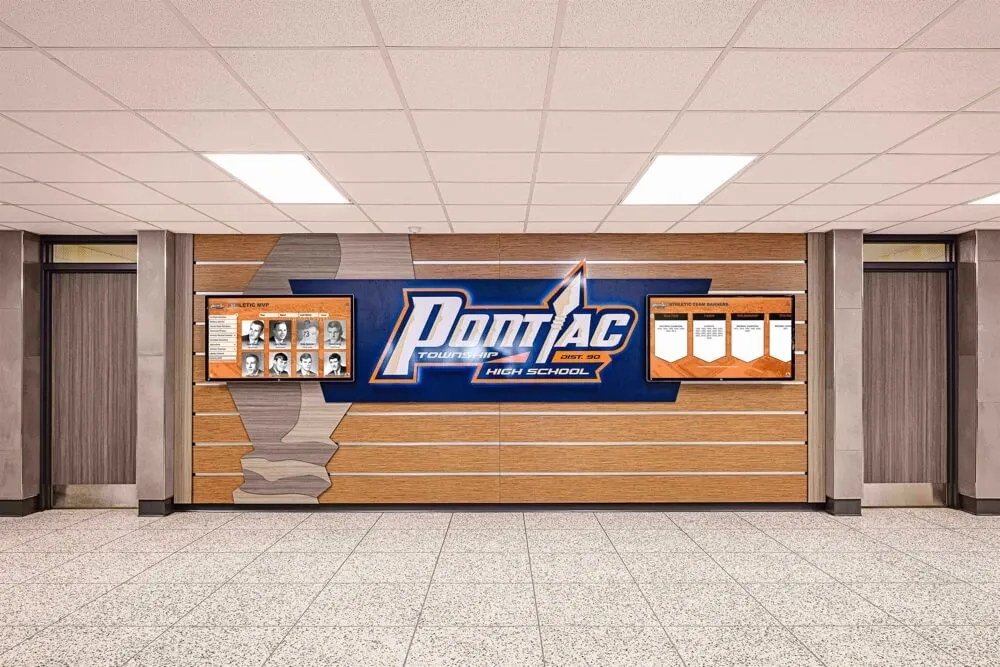
Hallway installations provide natural engagement opportunities for students exploring institutional history and yearbook archives during passing periods
Third-Party Content
- Licensed music in video segments requiring performance rights
- Commercial logos and trademarks appearing in photographs
- Quoted content from publications or other sources
- Artistic works displayed in school that appear in photos
- Fair use considerations for educational applications
Ethical Content Management
Sensitive Historical Content Yearbooks spanning decades may contain material reflecting past social attitudes:
- Outdated terminology or depictions requiring context
- Mascots, names, or imagery now considered inappropriate
- Historical inequities in representation and coverage
- Content that may cause harm to individuals or groups
- Balancing historical authenticity with contemporary standards
Thoughtful approaches include contextual statements acknowledging historical content, content warnings where appropriate, and willingness to add explanatory material helping users understand different eras while preserving authentic historical documentation.
Measuring Success and Continuous Improvement
Data-driven assessment guides optimization and demonstrates value:
Usage Analytics and Engagement Metrics
Quantitative Performance Indicators
Modern platforms provide comprehensive visibility:
Access and Interaction Statistics
- Daily sessions and unique users showing platform utilization
- Average session duration indicating engagement depth
- Pages viewed per session revealing exploration patterns
- Search frequency and popular queries
- Most-viewed years identifying popular content
- Geographic distribution showing alumni locations
- Device types informing mobile optimization priorities
Content Performance
- Yearbook years receiving most attention
- Section popularity (sports, activities, portraits, candids)
- Feature utilization (search vs. browsing, profile views, sharing)
- Video and multimedia engagement rates
- Peak usage times informing optimal update schedules
- Alumni contribution frequency and types
Analytics should be reviewed quarterly, using insights to prioritize digitization efforts, interface refinements, and content enhancement.
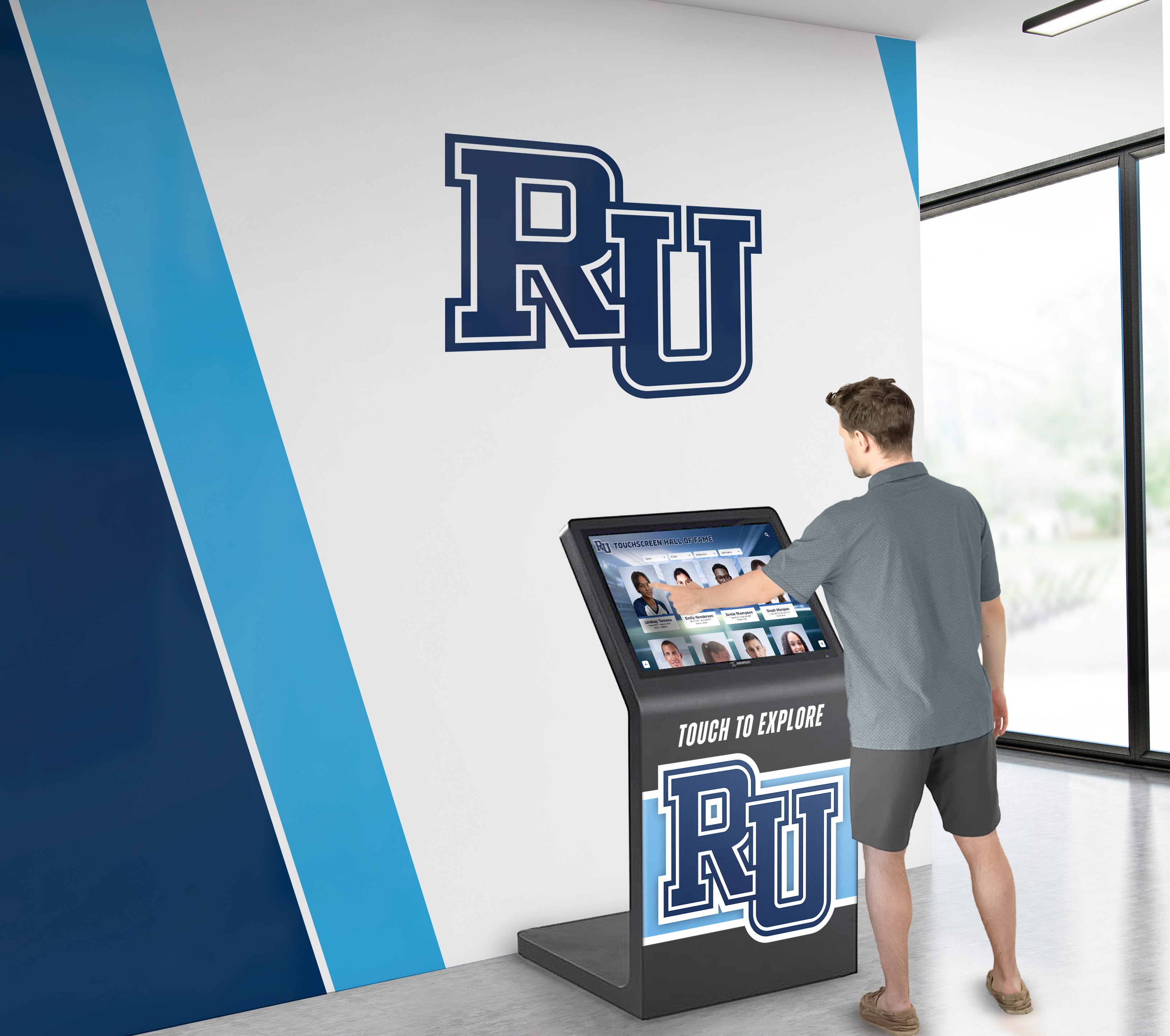
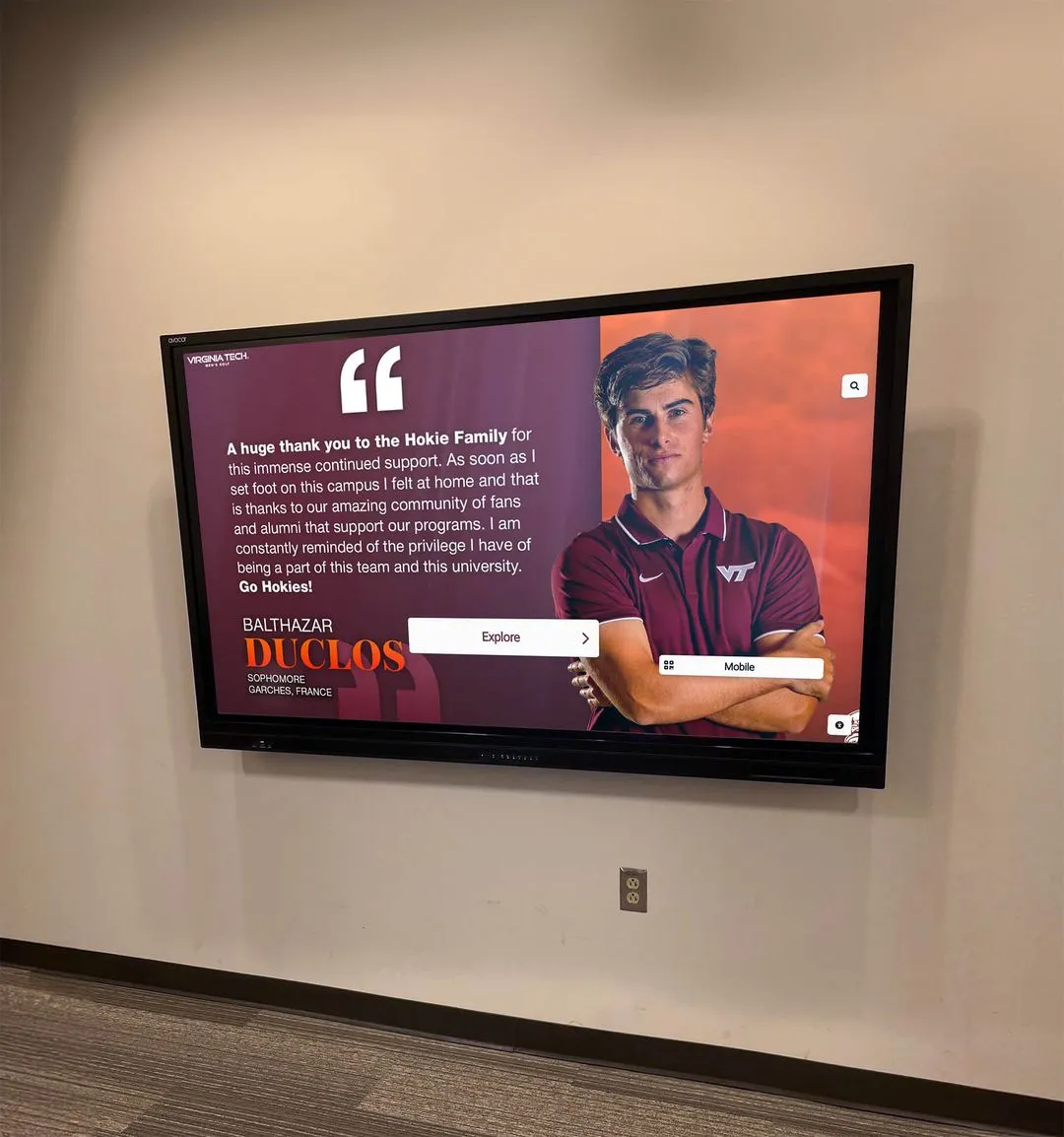
Lobby touchscreen kiosks create immediate positive impressions for visitors exploring school history and yearbook archives
Qualitative Impact Assessment
Community Feedback Collection
Numbers tell only part of the success story:
Direct Feedback Mechanisms
- Alumni surveys assessing satisfaction and gathering suggestions
- Student focus groups exploring usage and desired features
- Reunion feedback specifically about yearbook access
- Social media monitoring tracking public response
- Support ticket analysis identifying common issues
- Advisory committee input from key stakeholder groups
Operational Benefits
- Alumni office inquiry reduction for yearbook access requests
- Library circulation staff time savings from reduced physical handling
- Development office alumni contact information improvement
- Admissions prospective family engagement during campus tours
- Reduced yearbook storage space requirements
- Historical research facilitation for school projects
Schools implementing digital yearbooks consistently report that visible, accessible memory preservation strengthens institutional connection and community pride in ways difficult to precisely quantify but clearly observable through increased engagement and positive sentiment.
Future Trends in Digital Yearbook Technology
Understanding emerging capabilities helps schools plan forward-looking implementations:
Artificial Intelligence Applications
Automated Photo Tagging Machine learning accelerates content development:
- Facial recognition identifying repeated individuals across pages
- Automatic suggestion of potential matches requiring human verification
- Relationship mapping identifying consistent friend groups
- Activity detection from photo context and location
- Quality assessment flagging scans requiring enhancement
Privacy considerations require transparent policies, opt-out mechanisms, and human oversight of AI-suggested identifications.
Natural Language Processing
- Conversational search understanding “show me football players from the 1980s”
- Automatic caption generation suggesting descriptions for photos
- Sentiment analysis identifying particularly significant or emotional content
- Multilingual support through automatic translation
- Content summarization creating overview descriptions for years or sections
Augmented and Extended Reality
AR Yearbook Experiences Blending physical and digital elements:
- Smartphone apps revealing expanded content when scanning print yearbook pages
- Campus AR tours showing historical photographs at relevant locations
- Virtual class reunions in digital environments
- 3D reconstructions of historical campus spaces
- Interactive timelines activated through AR markers
Virtual Reality Applications Immersive memory exploration:
- VR yearbook browsing in simulated library environments
- Virtual reunion spaces for remote alumni gatherings
- Temporal reconstruction showing campus evolution across decades
- First-person historical tours narrated by alumni
- Immersive storytelling about significant events and milestones
Transform Your Yearbook Program with Modern Digital Solutions
Discover how digital yearbook platforms eliminate physical constraints while providing unlimited memory capacity, instant search capabilities, mobile access, and engaging interactive experiences. See how schools nationwide preserve institutional history through cloud-based systems combining traditional yearbook content with multimedia enhancements and alumni engagement tools.
Book A DemoEnhanced Social and Community Features
Collaborative Memory Building
- Crowdsourced photo identification and tagging
- Alumni storytelling and memory contribution
- Peer-to-peer messaging and reconnection facilitation
- Community correction of errors and information gaps
- Collective annotation and historical context addition
Integration with Modern Platforms
- Social media authentication and sharing
- Video conferencing integration for virtual reunions
- Mobile app experiences optimized for on-the-go browsing
- Voice assistant integration for hands-free access
- Smart display and television applications for home viewing
Conclusion: Preserving Memories for Future Generations
Digital yearbooks represent far more than technological novelty—they embody fundamental improvements in how schools preserve institutional memory, celebrate student experiences, and maintain lifelong community connections. By transforming static print pages into searchable, interactive, cloud-based platforms, schools overcome the inherent limitations of traditional yearbooks while adding capabilities that enhance rather than replace the core memory preservation mission.
The strategies explored throughout this comprehensive guide provide frameworks for successful implementation—from historical yearbook digitization and platform selection through content organization, privacy compliance, alumni engagement, and continuous optimization. Schools succeeding with digital yearbooks recognize that technology serves memory preservation goals rather than constituting an end itself; quality content, intuitive access, respect for privacy, and sustained community engagement determine long-term impact and value.
Modern cloud-based platforms eliminate technical barriers that previously made sophisticated digital archives accessible only to institutions with dedicated IT departments and substantial budgets. User-friendly content management, professional implementation support, and responsive assistance enable schools of all sizes to create yearbook systems serving their communities without overwhelming administrative resources.
Whether your school plans hybrid approaches maintaining limited print runs alongside comprehensive digital platforms, or bold transitions to digital-primary yearbook programs, beginning with clear objectives around historical preservation, alumni engagement, and community access ensures appropriate technology selection and sustainable operations. Start where you are, leverage specialized platforms designed specifically for educational yearbook applications like Rocket Alumni Solutions, and expand systematically as digitization progresses and community adoption grows.
Digital yearbooks elevate memory preservation from fragile books gathering dust on forgotten shelves to vibrant, accessible archives enabling instant discovery and lifelong engagement. The question isn’t whether digital technology can enhance your school’s yearbook program—it’s how quickly you’ll implement solutions that preserve memories, engage alumni, and serve future generations discovering institutional history decades from now.
Ready to explore how digital yearbook platforms can preserve your school’s history while providing unlimited capacity, instant search, and engaging alumni connection tools? Discover comprehensive solutions helping schools nationwide transform memory preservation from deteriorating print books into dynamic, accessible digital archives that celebrate student achievements, preserve institutional legacy, and maintain alumni community connections for generations.