



Color guard captains carry a weight most students never see: early morning rehearsals before the rest of the band arrives, staying after practice to work with newer members on equipment technique, making split-second decisions during performance when a flag sequence falls apart. These are the students who transform a collection of performers into a cohesive, expressive ensemble—and their leadership deserves recognition that matches the magnitude of what they do.
Yet most schools default to a brief mention at the end-of-season banquet, a handshake from the director, and maybe a certificate printed from a template. Color guard captains graduate having given two, three, or four years of intensive leadership to a program, and their names disappear from institutional memory within a season.
This guide covers 30+ color guard captain recognition ideas specifically designed for the full scope of their contribution—from individual awards and banquet presentations to permanent digital trophy case displays that ensure their leadership legacy outlasts their graduation day.
Color guard section leaders occupy a unique position in the performing arts ecosystem. They’re part athlete, part choreographer, part peer mentor, and part organizational leader—all while competing in adjudicated events where their team’s placement depends directly on the quality of their instruction. Recognition programs that treat captains like every other award recipient miss the point entirely. These ideas start from that understanding.

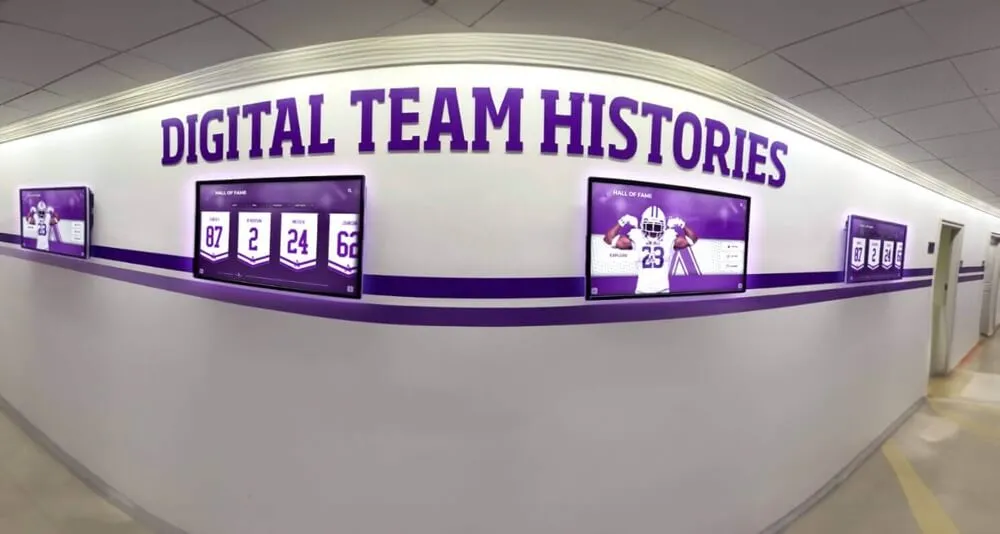
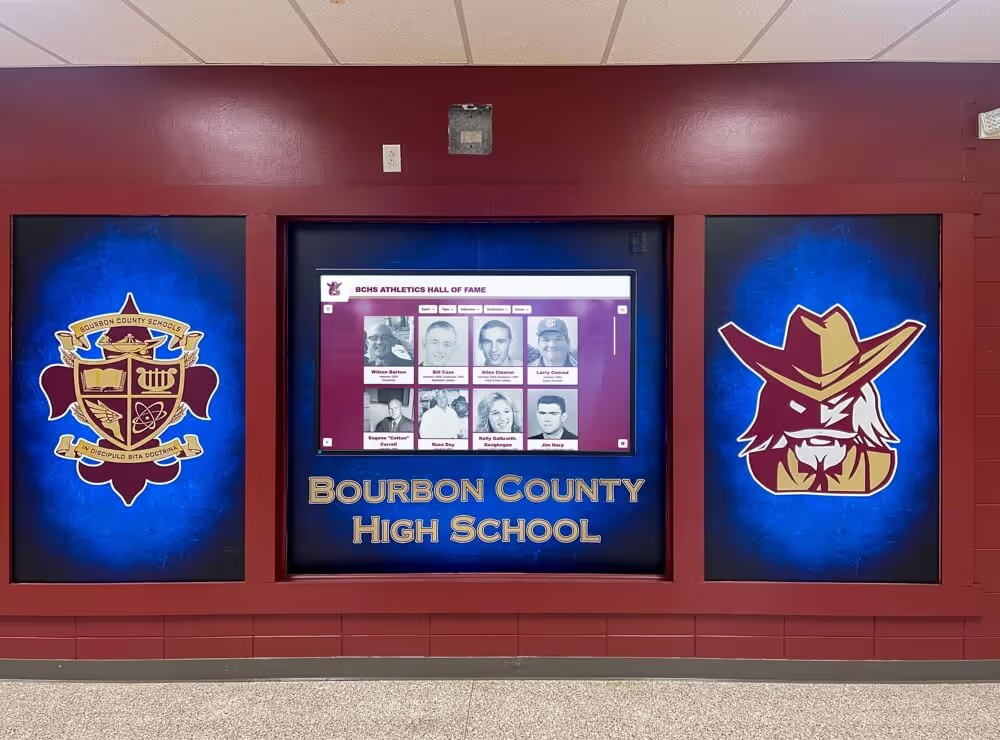
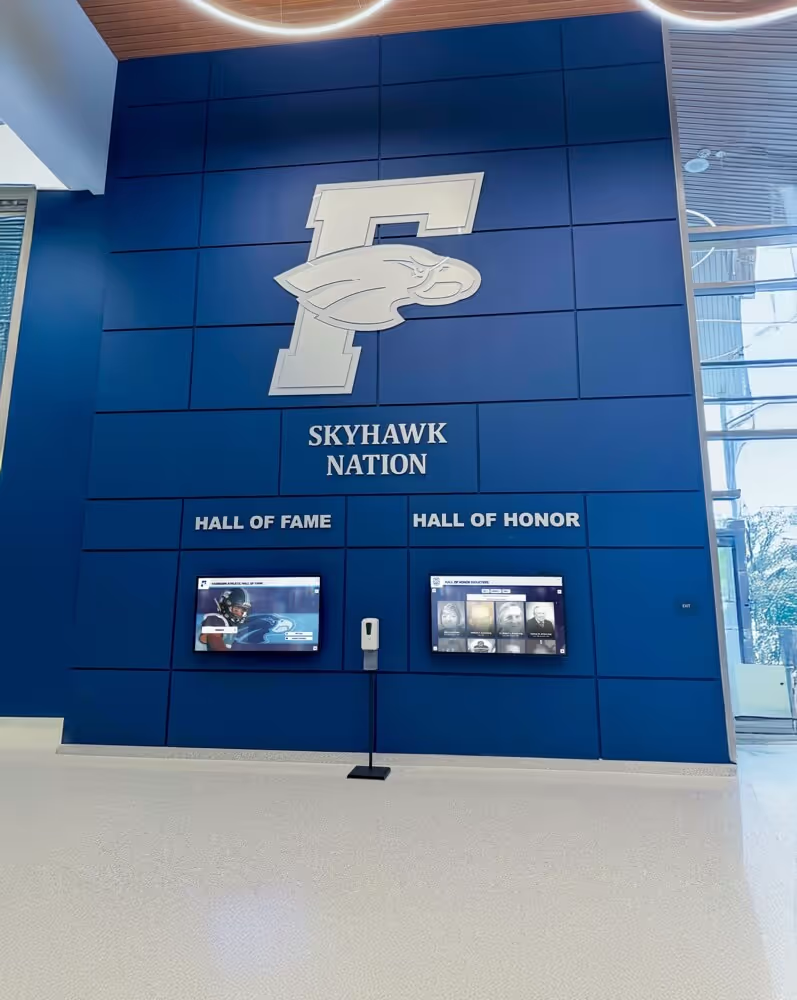
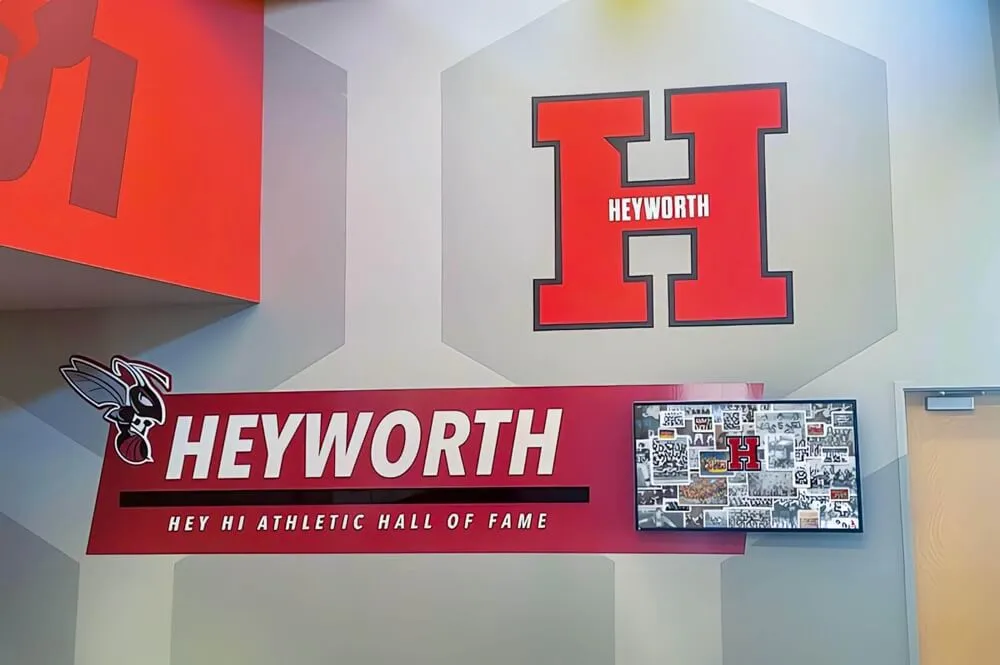
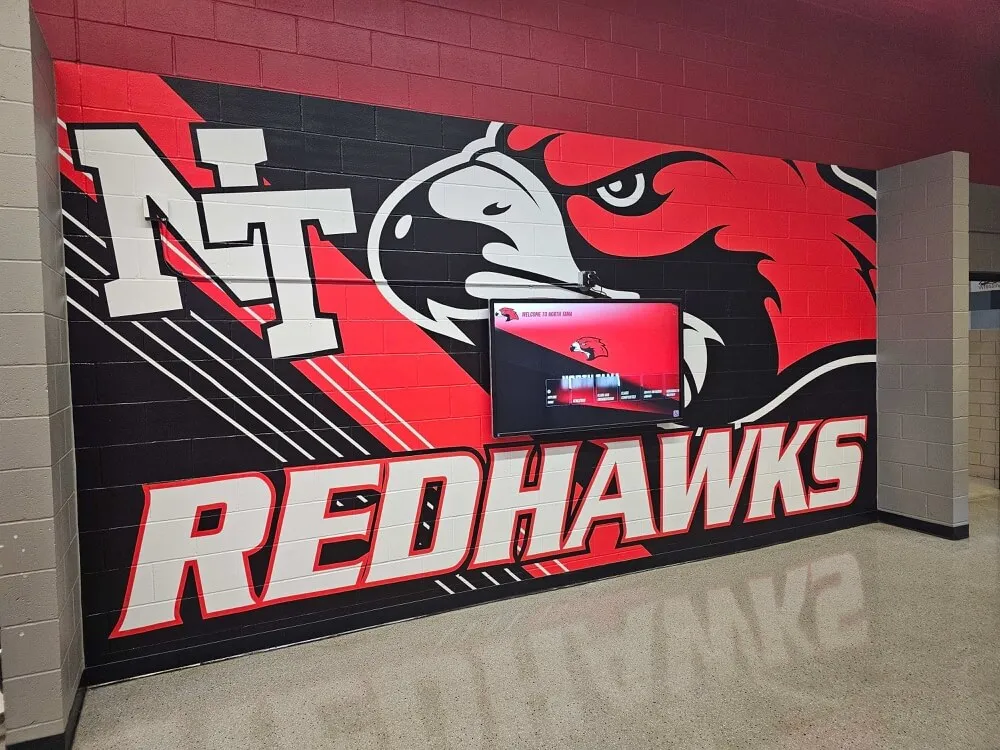
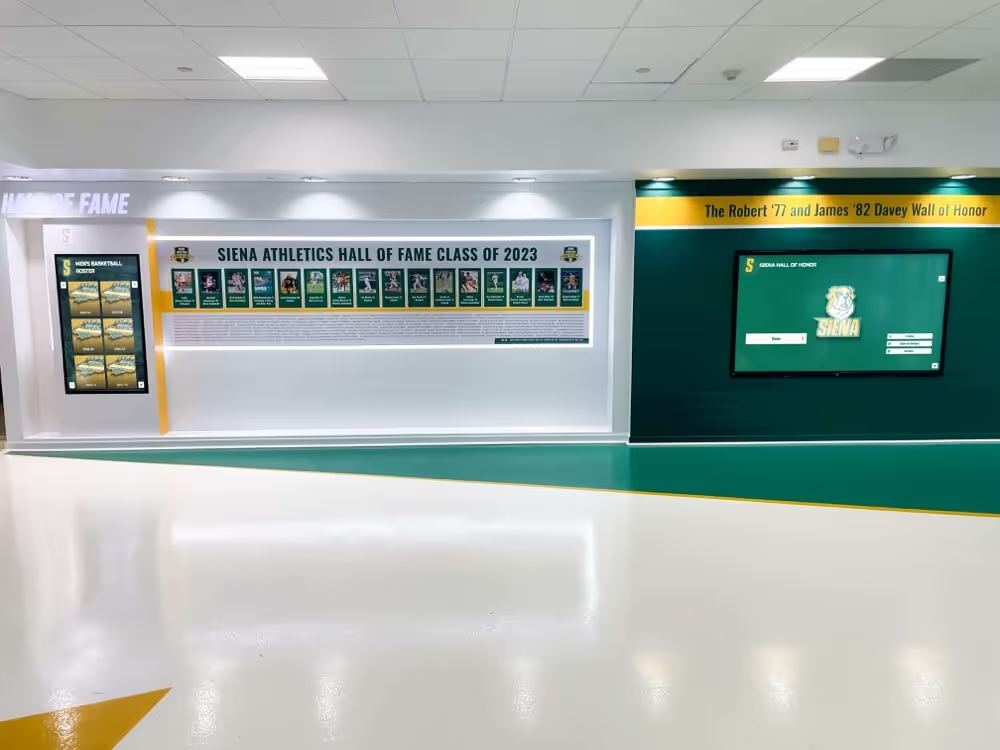
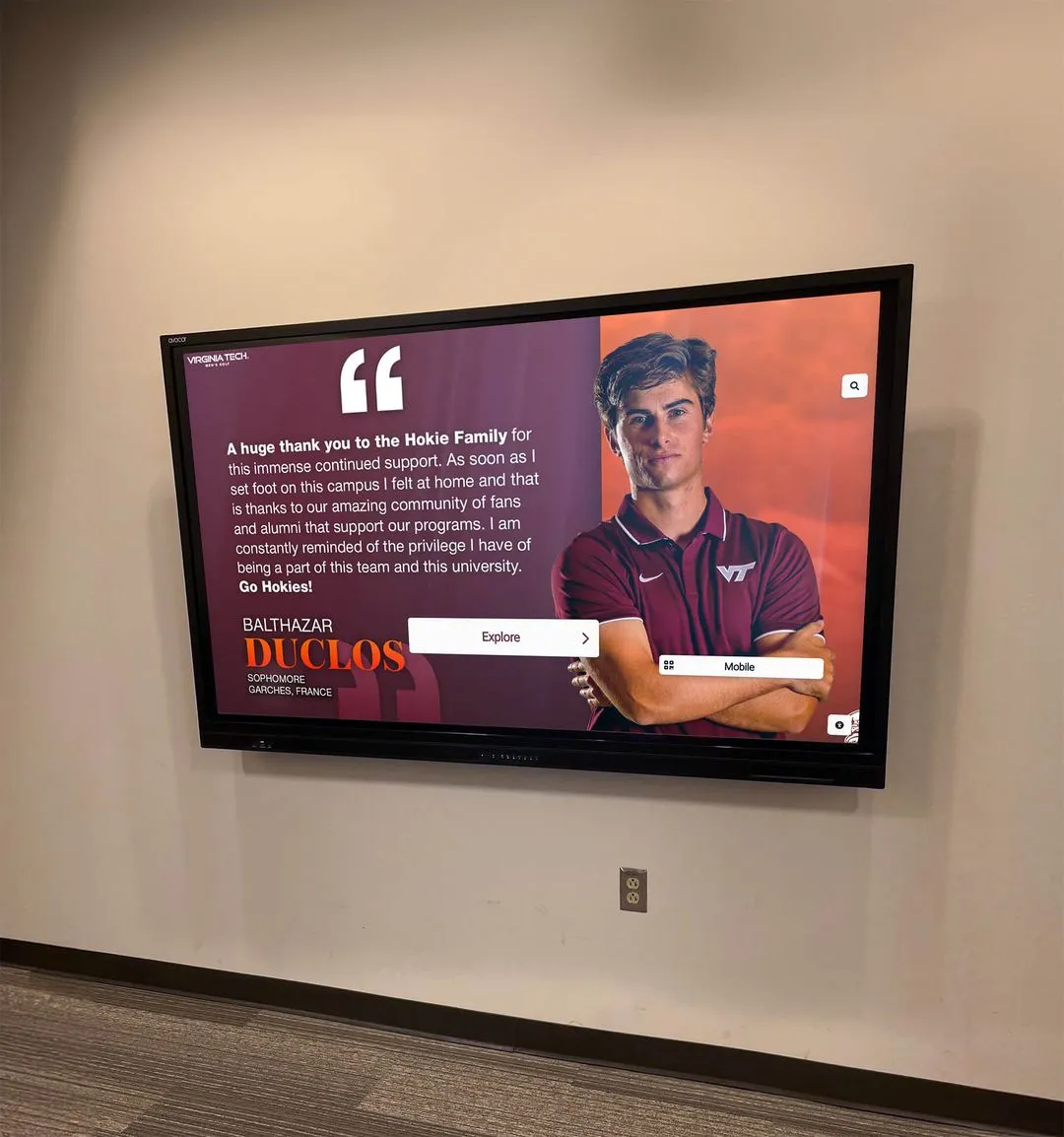
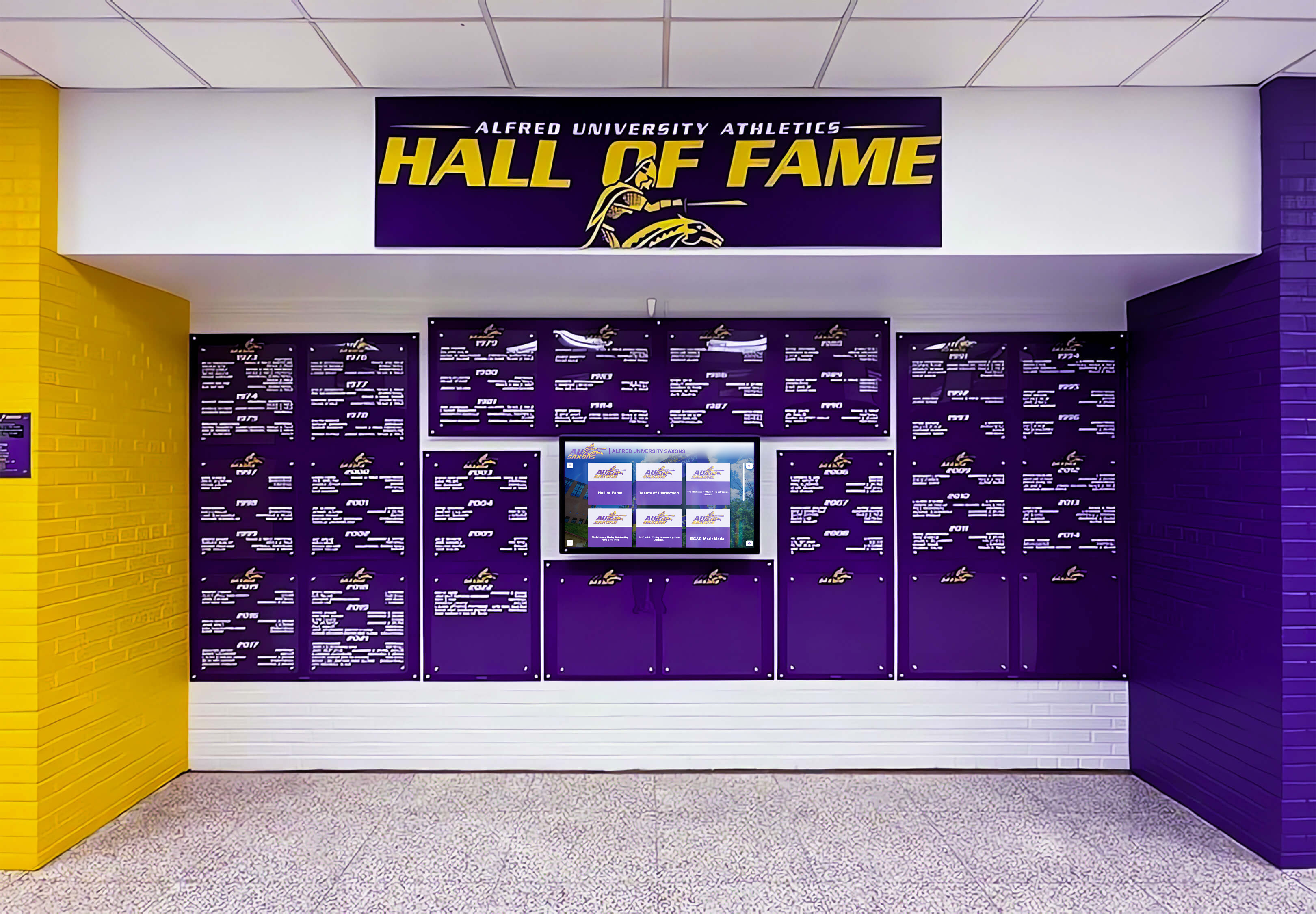
Permanent hall of fame displays like this one create the kind of lasting legacy recognition that color guard captains have earned through years of leadership — their names deserve a place that outlasts the season
Understanding the Color Guard Captain Role
Before designing recognition programs, it helps to clearly understand what color guard captains actually do. Recognition that reflects specific responsibilities lands far more meaningfully than generic leadership awards.
What Section Leaders Actually Manage
Color guard captains typically oversee:
Technical instruction and execution
- Teaching flag, rifle, and sabre technique to less experienced members
- Running sectionals when directors are working with other ensembles
- Identifying and correcting form issues during full ensemble rehearsals
- Maintaining equipment standards and inventory
Performance quality and consistency
- Tracking individual member progress toward performance benchmarks
- Coordinating transitions between equipment types during shows
- Managing staging and spacing across different drill formations
- Leading warm-up sequences before competition and performance
Team culture and cohesion
- Mediating interpersonal conflicts between members
- Setting behavioral expectations at rehearsals and travel
- Communicating director expectations to the full ensemble
- Building morale through difficult stretches of competitive season
Administrative and organizational responsibilities
- Communicating schedule changes and logistical updates
- Coordinating with costume and equipment crews
- Maintaining inventory and reporting damage or replacement needs
- Representing color guard in band booster and parent communications
For programs exploring how to create comprehensive team recognition ideas across the full performing arts spectrum, understanding the specific scope of each leadership role is the essential starting point.
Types of Color Guard Captain Recognition Opportunities
Effective programs recognize captains across multiple dimensions:
- Year-end awards presented at banquets or award ceremonies
- Season-long recognition built into program culture throughout the year
- Permanent legacy recognition through trophy cases and hall of fame displays
- Peer-to-peer recognition where fellow performers acknowledge specific contributions
- Public recognition through school communications, social media, and assembly presentations
Tier 1: End-of-Season Award Categories
End-of-season banquets represent the highest-visibility recognition opportunity for most programs. These award categories ensure color guard captains receive acknowledgment proportional to their contribution.
The Core Captain Awards
Captain of the Year The flagship recognition for the color guard program’s top captain. Criteria should reflect the full scope of the role: technical instruction quality, team culture impact, personal performance excellence, and leadership through adversity. Award a distinct trophy or plaque that visually differentiates this honor from standard participation recognition.
Most Valuable Section Leader Modeled after the MVP concept from athletic programs, this award identifies the captain whose contributions most directly elevated the program’s competitive and performance outcomes. Distinguish this from Captain of the Year by emphasizing measurable impact on ensemble quality rather than the holistic leadership profile.
Outstanding Leadership Award For programs with multiple captains or co-captains, this award recognizes the individual who best exemplified the leadership values the program prioritizes. This works well as a character-based award separate from technical or competitive achievement.
Technical Excellence Award Color guard combines athletic precision with artistic expression. This award honors the captain who demonstrated the highest personal technical standard in equipment work—the model other performers aspired to match.
Spirit and Culture Award Captains who build ensemble morale, maintain positive energy through competition setbacks, and foster a team culture that retains members year over year deserve explicit recognition for that intangible contribution. This category validates the emotional labor that doesn’t show up in competitive scores.

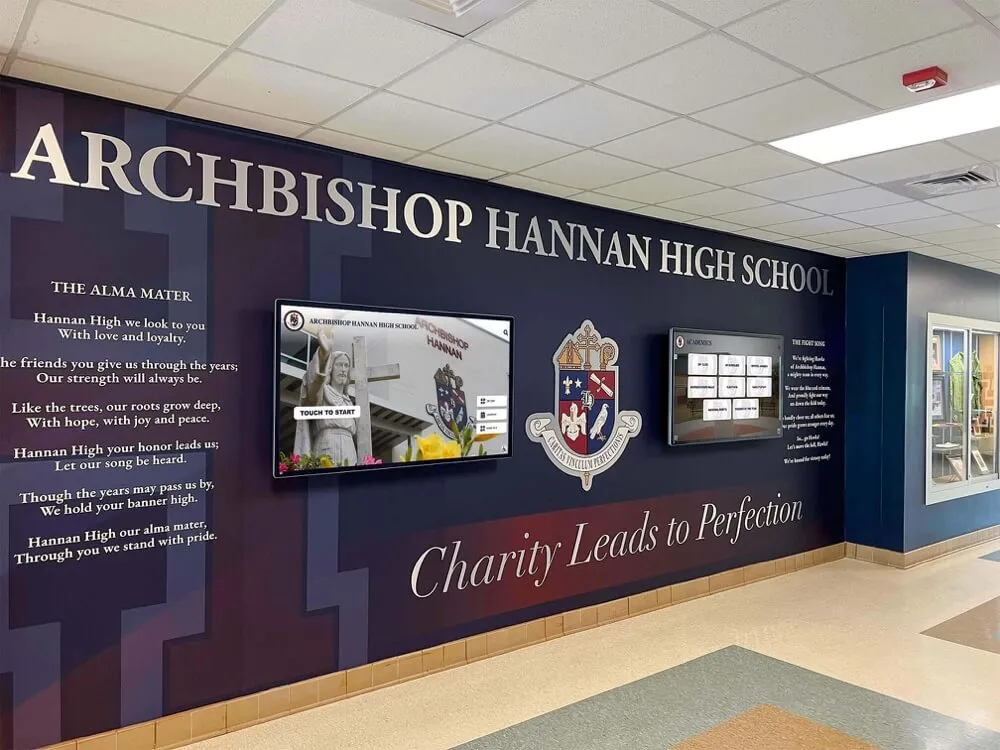
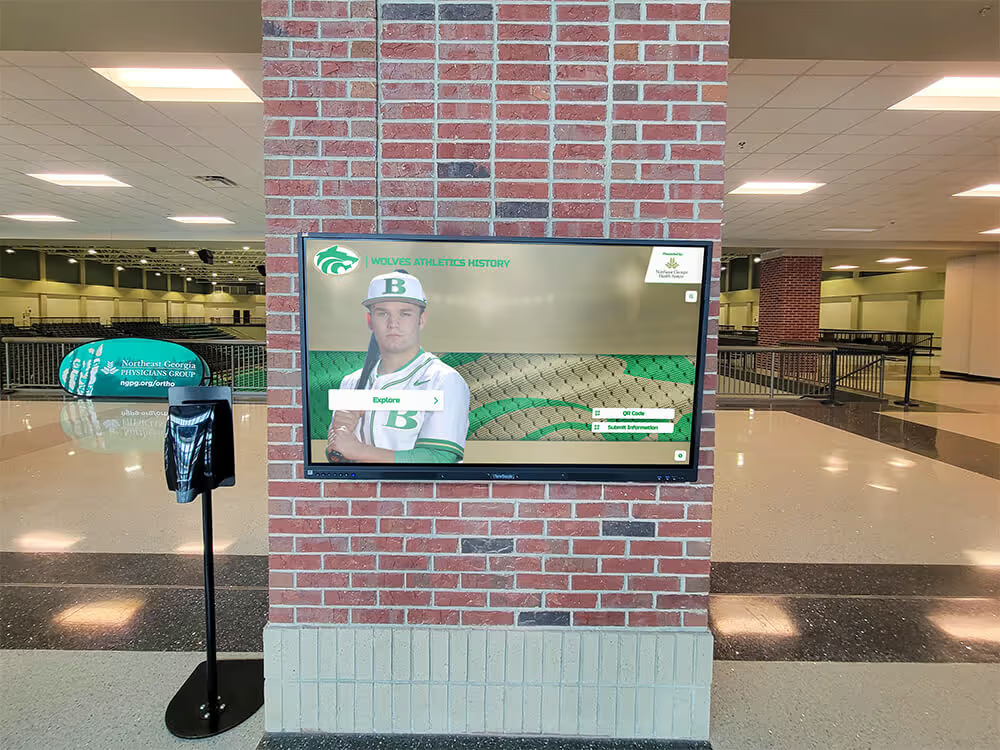
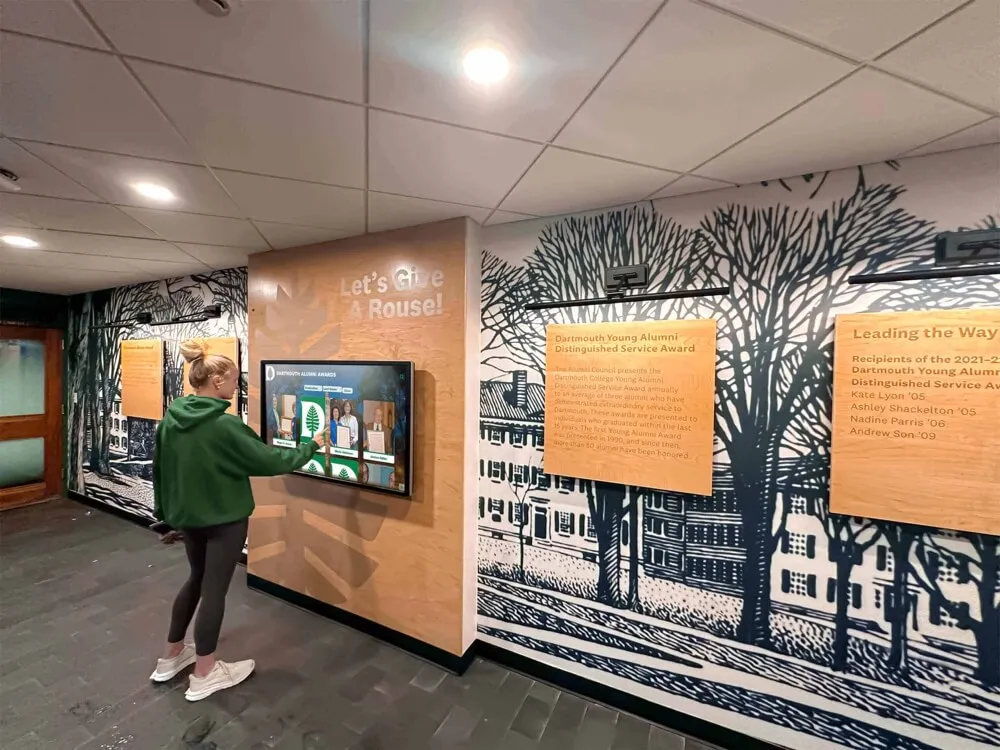
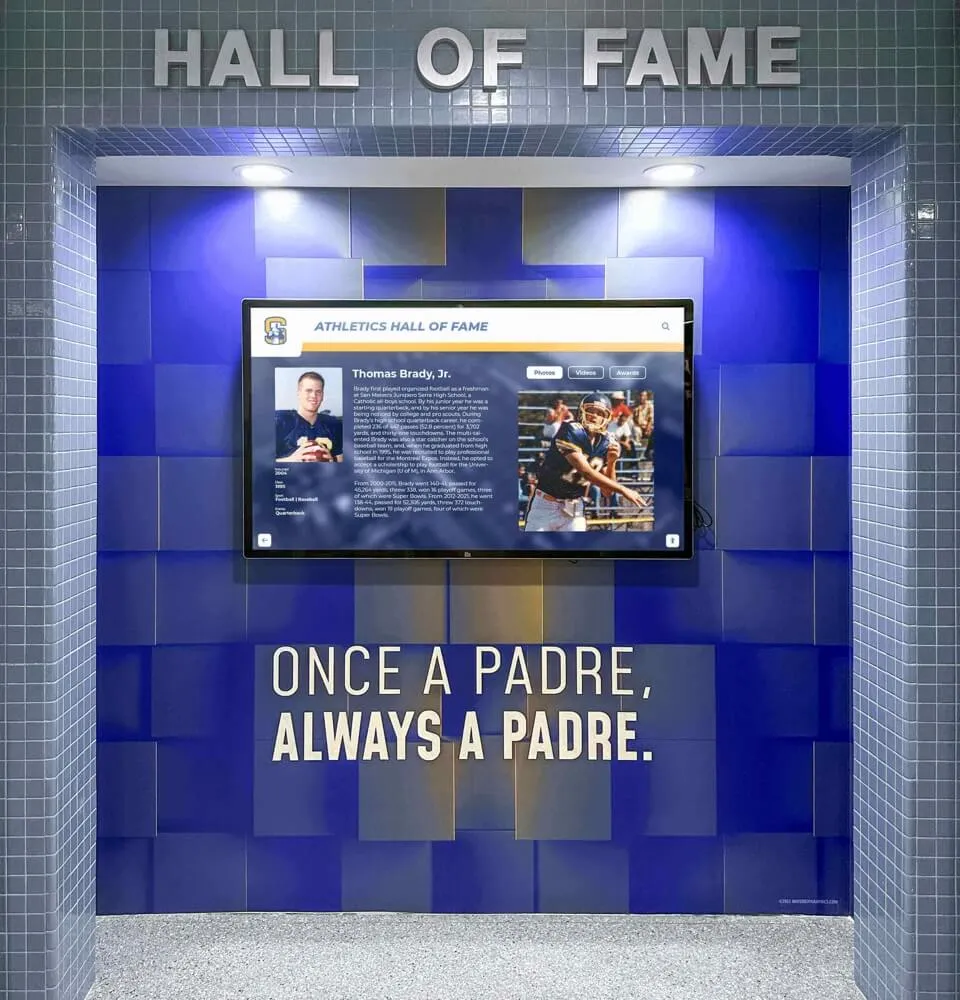
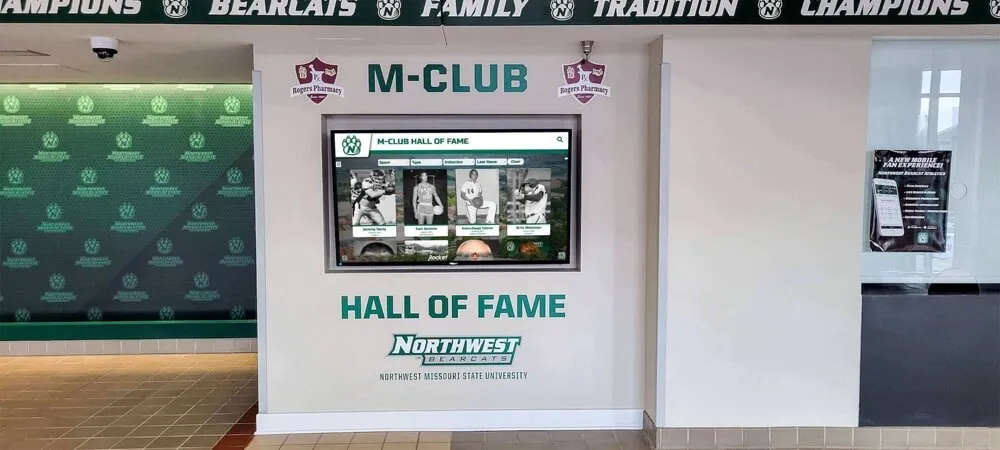
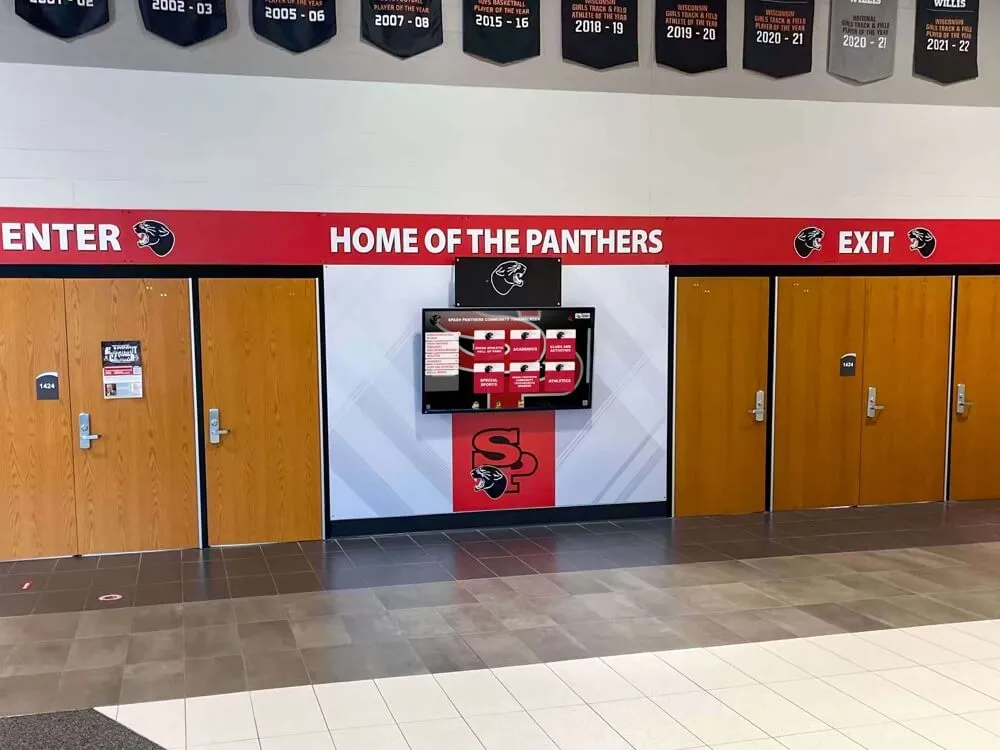
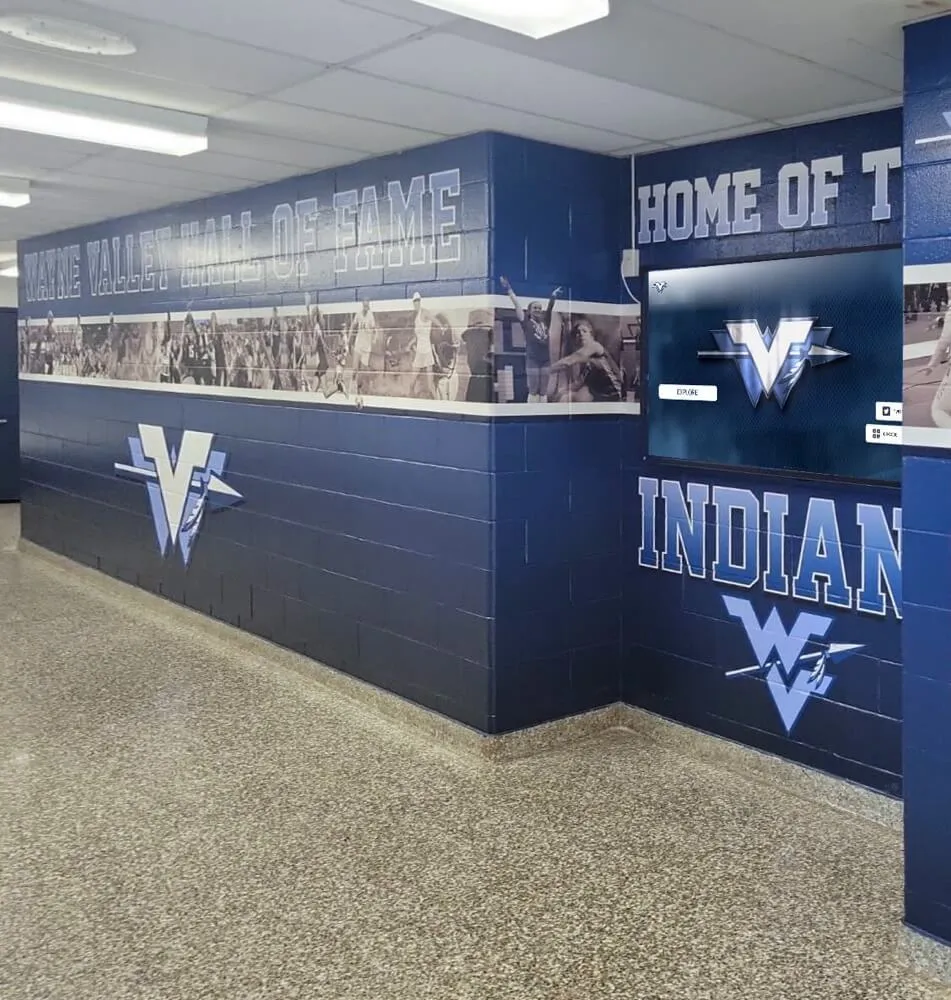
Honor wall displays in school hallways give section leaders the kind of visible, permanent recognition that reinforces their legacy for students who come after them
Service and Commitment Awards
Multi-Year Leadership Award Captains who serve two or more seasons in section leader roles have committed an extraordinary amount of time and energy to the program. A dedicated award for sustained leadership honors that commitment explicitly and creates an aspirational pathway for younger members.
Mentorship Recognition The captain who spent significant time developing less experienced members—sacrificing personal rehearsal time to help others improve—deserves acknowledgment for that investment. Survey returning members at season’s end to identify who helped them most, then recognize that captain publicly.
Director’s Award A director-selected recognition for the captain who best embodied the program’s values as the director personally defines them. The personal nature of this award—selected by the person who works most closely with every captain—gives it distinctive weight.
Service Above Self Award Specifically honors captains who consistently put ensemble needs above personal recognition or performance opportunities. This award has particular meaning for captains who may not have had standout competitive seasons but whose behind-the-scenes contributions proved essential to program function.
Tier 2: Ceremony and Banquet Presentation Ideas
How you present color guard captain recognition matters almost as much as what you’re recognizing. These ideas create memorable banquet moments.
Creating Recognition Moments That Last
The Video Tribute Segment Before presenting captain awards, play a brief edited highlight reel showing each captain’s performance moments, rehearsal leadership, and team interactions from the season. This requires planning ahead—designate someone to capture usable footage throughout the year—but creates emotional impact that generic award presentations cannot replicate.
Peer Testimony Presentation Rather than having the director present every captain award, invite two or three ensemble members to deliver brief, specific testimonials about each captain being honored. Hearing recognition come from teammates creates authenticity that director-delivered awards often lack.
The Letter Tradition Directors who write personal letters to each captain—specific letters that name particular moments, challenges navigated, and contributions made—create keepsakes that captains often carry for decades. Pair a handwritten or specially printed letter with the physical award presentation.
Parent Recognition Moment Color guard captains rarely accomplish their leadership without family support. Building in a dedicated moment where parents stand alongside their student during the award presentation acknowledges the full ecosystem behind each captain’s success.
Senior Captain Legacy Ceremony For graduating captains specifically, create a formal legacy transition ceremony: the outgoing captain presents something symbolic (a captain’s flag, a leadership notebook, a specific piece of equipment) to the incoming captain in front of the full ensemble. This creates institutional continuity and makes both captains’ roles feel significant.
Award Presentation Logistics
Physical award quality matters. Captains who have given years to a program notice whether their recognition trophy is a generic participation trophy or a thoughtfully selected piece that reflects the specific sport and art form. Work with award vendors to find pieces that incorporate color guard visual elements—stylized flags, spinning equipment, performance movement imagery.
Documentation for the permanent record. Whatever you present physically at the banquet should also be photographed and recorded for the school’s digital recognition system. Awards that only exist as objects in someone’s bedroom eventually disappear from institutional memory.
For schools building year-round recognition programs, resources like this year-round digital recognition content calendar offer frameworks for keeping captain recognition visible throughout the entire academic calendar rather than confining it to a single banquet night.
Tier 3: Digital Trophy Case Recognition for Color Guard Captains
The most common failure in color guard captain recognition is that it evaporates. A trophy sits in a bedroom. A certificate gets stored in a drawer. Within two or three seasons, the school has no institutional record of who led the program, what they accomplished, or what made their leadership distinctive.
Digital trophy cases solve this problem by creating permanent, searchable, expandable recognition that grows more valuable the longer a program maintains it.
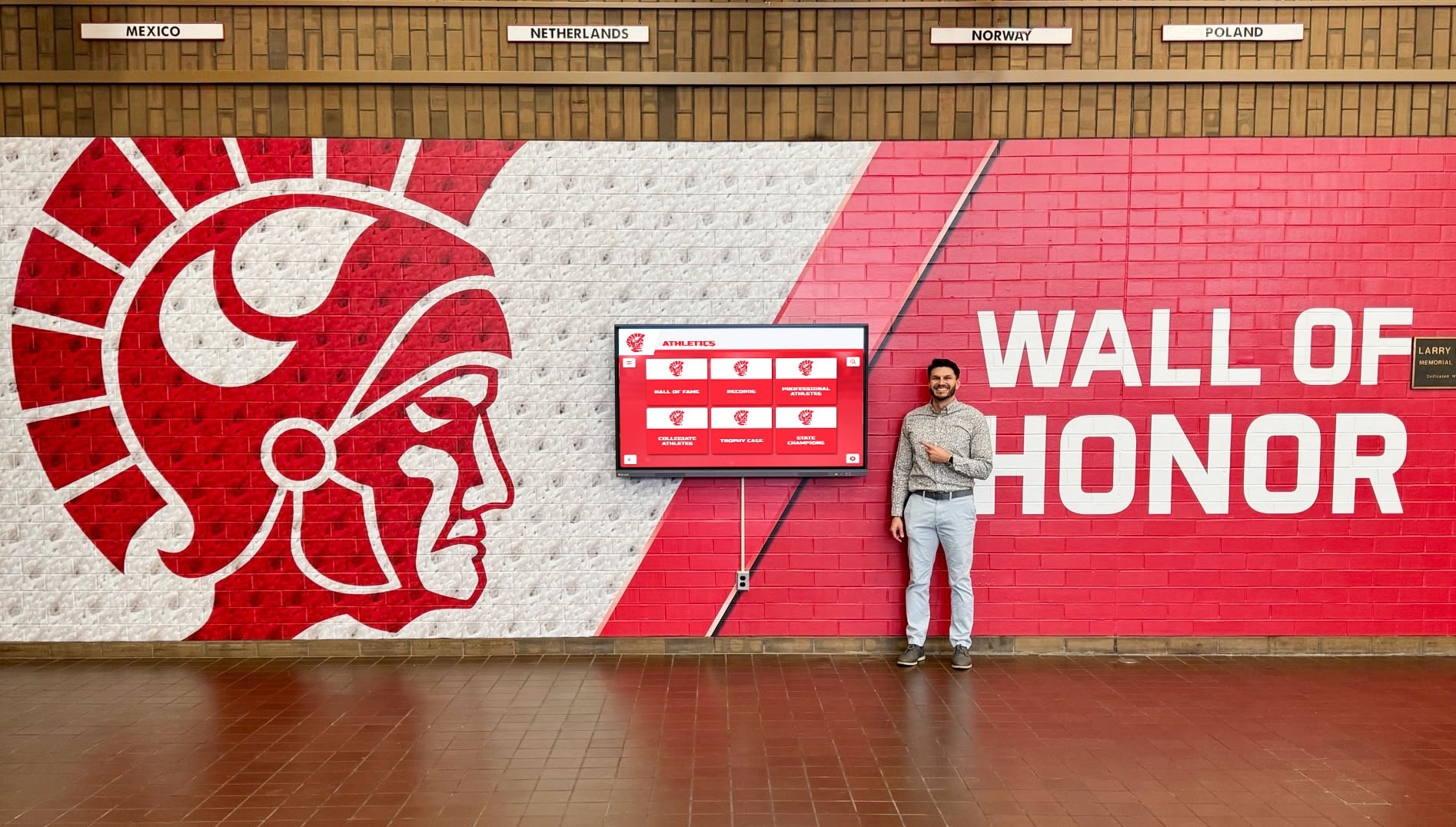
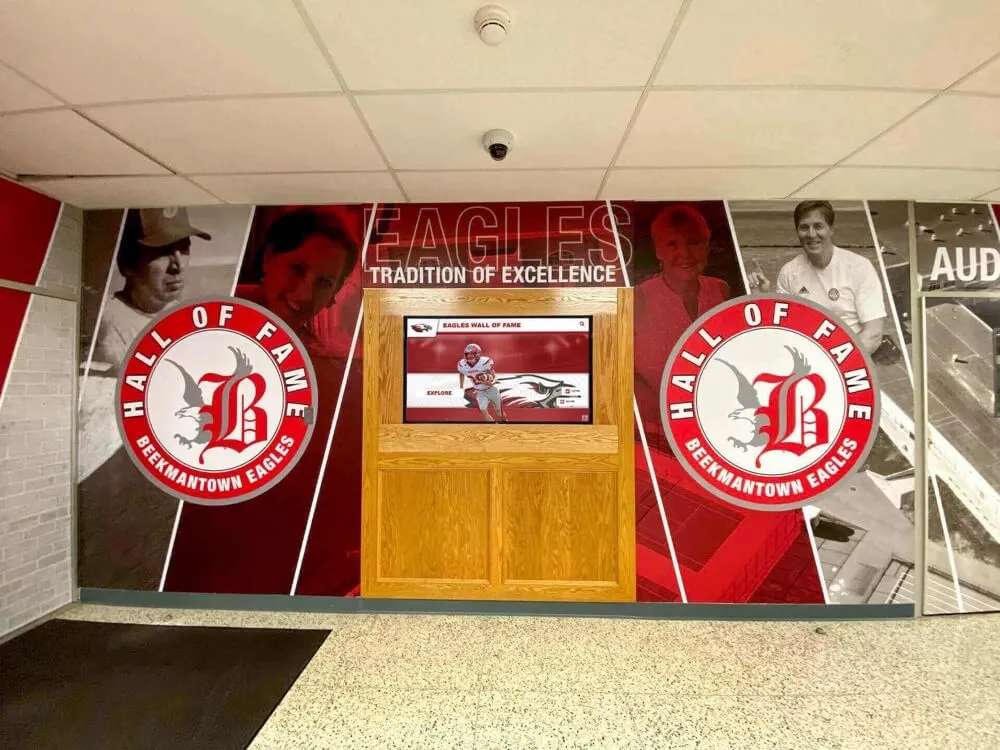
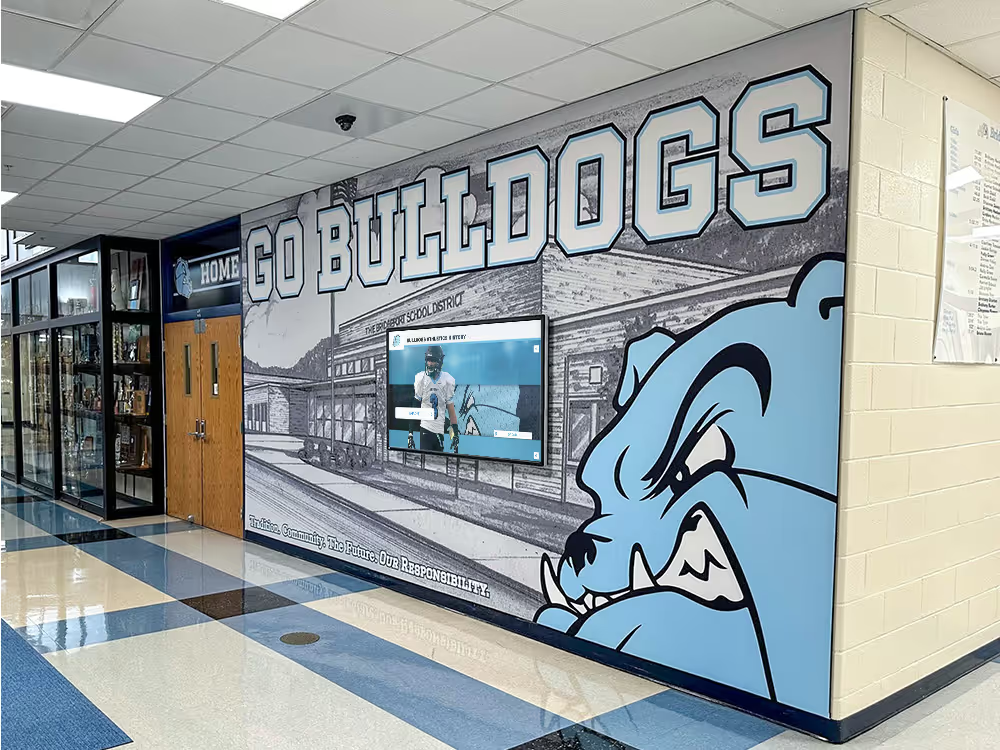
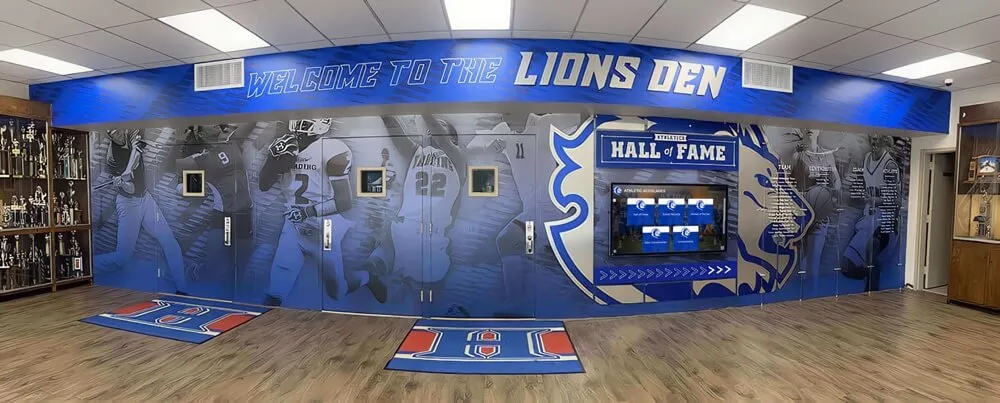
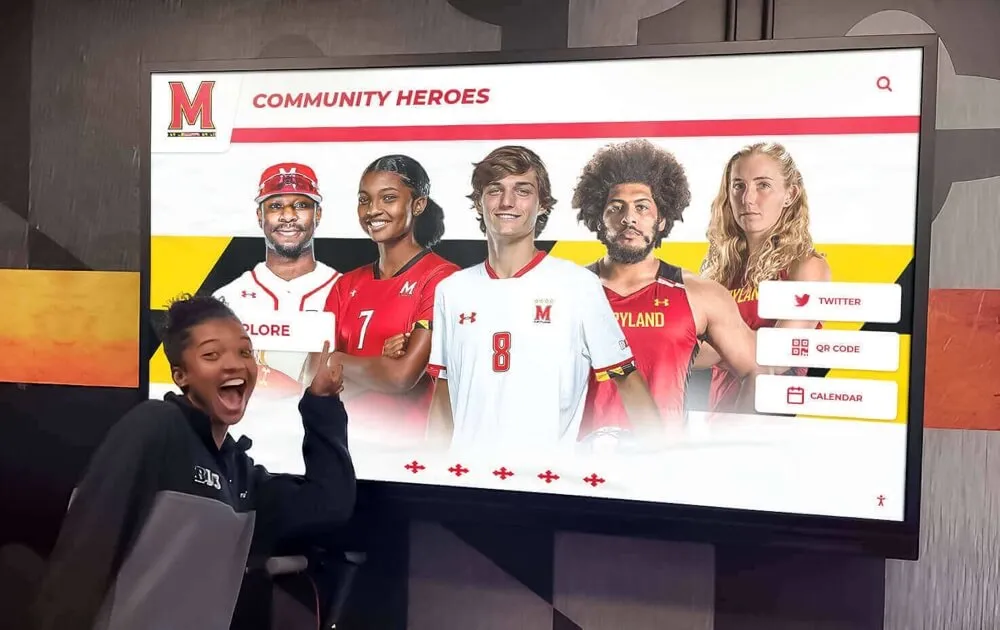
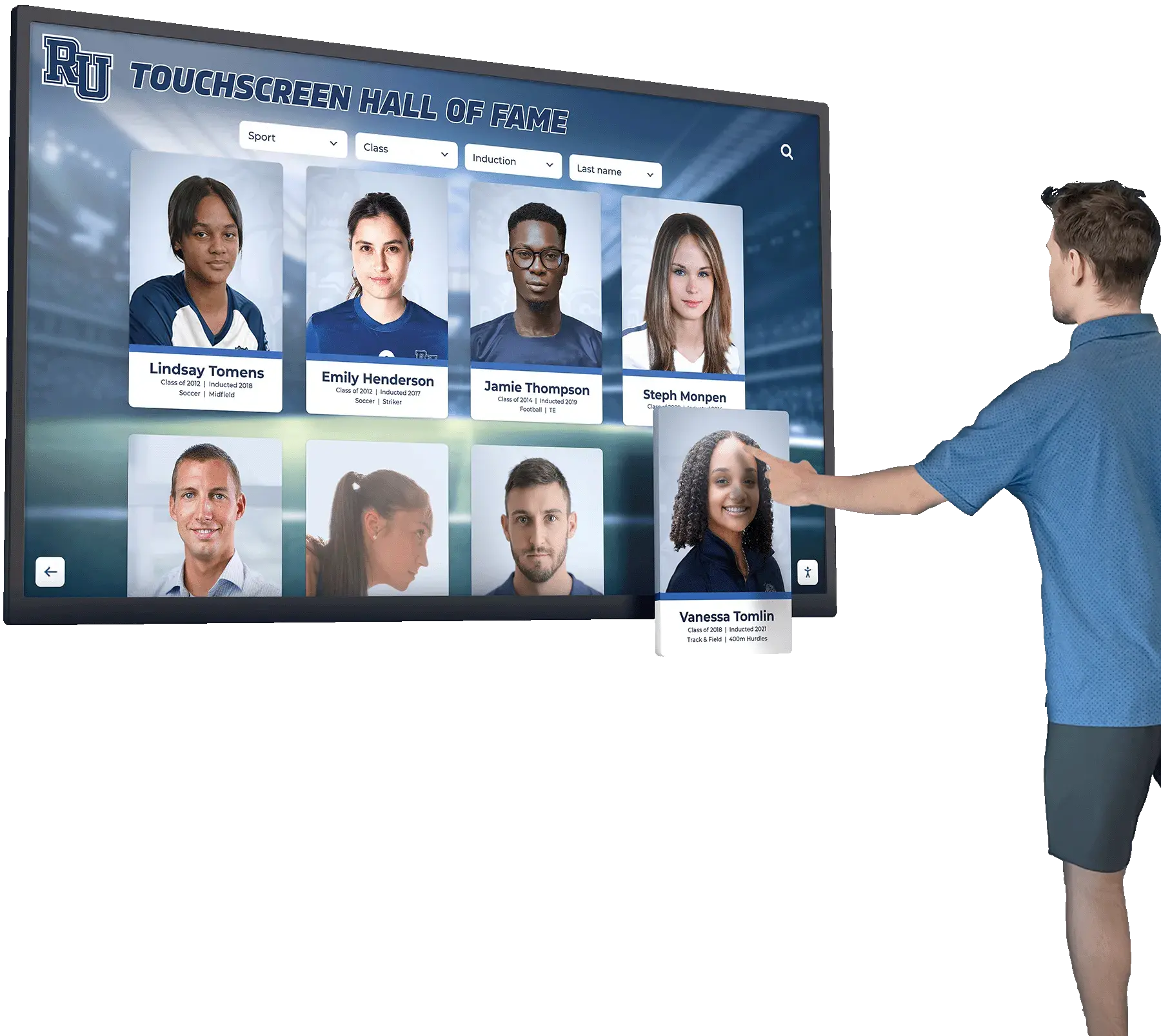
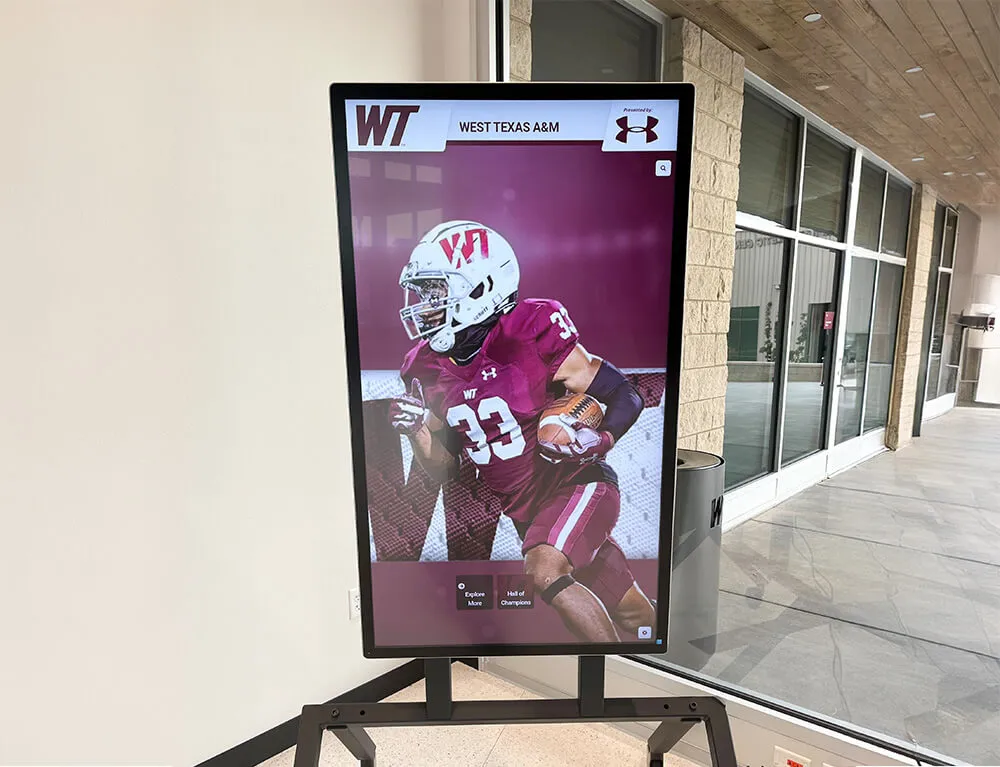
Interactive recognition displays let visitors explore the full history of section leader achievements — giving color guard captains the lasting visibility that a trophy in a drawer never provides
Building the Color Guard Captain Hall of Fame
A dedicated Color Guard Captain Hall of Fame within your school’s digital trophy case creates exactly the lasting legacy these performers deserve. Components to include:
Individual captain profiles Each profile should include:
- Captain’s full name and graduation year
- Years of service in the section leader role
- Specific awards received during their tenure
- Notable competitive achievements (regional placements, caption awards, adjudicator recognition)
- A brief biography describing their contribution to program development
- Photographs from performances and rehearsals
- Director’s written reflection on their leadership
Searchable historical archive The most valuable aspect of a digital system is that it makes the full history of color guard leadership searchable by any student, parent, or alumni who visits the display. Current members can look up captains from five or fifteen years ago and understand the lineage of leadership they’re part of.
Competitive achievement integration Beyond individual captain recognition, the digital trophy case can display the ensemble’s competitive record during each captain’s tenure—connecting individual leadership directly to program outcomes and giving context to what each section leader accomplished.
Visual performance galleries Photographs and video highlights from the captain’s performance seasons create emotional resonance that text descriptions alone cannot achieve. These galleries turn a recognition display into an actual window into what that season’s leadership produced.
The Digital vs. Physical Trophy Case Comparison
Many schools maintaining traditional trophy cases face real constraints when trying to honor every captain who has led their color guard program. A physical case can only fit so many plaques before it’s full. Updating content requires ordering new engraved pieces and arranging professional installation. Content becomes outdated the moment it’s installed.
Digital platforms eliminate these constraints entirely. Adding a new captain profile takes minutes. Historical records go back as far as you have documentation to support them. The display adjusts to showcase whatever content is most relevant—recent season results, historical alumni, upcoming competition previews—without any physical modification.
Schools evaluating whether digital recognition better serves their program than traditional displays can explore this comparison of digital hall of fame versus traditional trophy case to understand the practical differences across cost, capacity, engagement, and administrative burden.
Features That Make Digital Recognition Work
For color guard programs specifically, the most impactful features of digital recognition platforms include:
Cloud-based content management — Directors update captain profiles and add new awards from any internet-connected device, without waiting for IT support or physical installation contractors. A new captain award can be live in the school display within hours of a banquet presentation.
Unlimited display capacity — No physical space limitations mean every captain who has ever served the program can have a complete profile. Programs that have operated for twenty or thirty years can document every section leader who contributed to the program’s development.
QR code access for remote viewing — Families, alumni, and community supporters who can’t visit campus can access the full color guard captain recognition display from their phones. This extends the reach of recognition far beyond the school hallway.
Scheduled publishing — Recognition can be staged to publish at specific moments: a captain’s profile going live the night of the banquet, awards appearing on the anniversary of a competitive achievement, historical spotlights rotating on a programmed schedule throughout the school year.
Multimedia integration — Performance videos, photo galleries, audio clips from standout shows, and director testimonials can all live alongside the written profile information, creating immersive recognition experiences that a plaque on a wall simply cannot produce.
Build a Color Guard Legacy That Lasts Beyond Graduation
Rocket Alumni Solutions' Digital Trophy Case platform gives color guard programs unlimited capacity to recognize every section leader, document competitive history, and create searchable archives accessible to current members, families, and alumni. Cloud-based management means new captain profiles go live in minutes, not weeks — without IT support or engraving delays.
Explore Digital Trophy Case SolutionsTier 4: Year-Round Recognition Strategies
The most durable color guard captain recognition programs don’t limit acknowledgment to a single end-of-season event. These strategies keep section leader contributions visible throughout the academic year.
Recognition Built Into Program Culture
Weekly leadership spotlights Build a weekly or bi-weekly captain spotlight into ensemble communications—an email, a social media post, or a slide in the pre-rehearsal display. Each spotlight focuses on a specific contribution or teaching moment from that week, making leadership visible to the whole ensemble in real time.
Milestone recognition during season Don’t wait until the banquet to acknowledge captains. When a captain navigates a particularly difficult rehearsal challenge, leads the ensemble through a competitive comeback, or reaches a teaching milestone with a developing member, acknowledge it publicly in the moment. Programs that build recognition culture throughout the season create environments where end-of-year awards feel like confirmation of an already-understood narrative, not a surprise announcement.
Recognition board in the ensemble room A designated display space in the rehearsal facility—whether physical or digital—creates daily visibility for captain contributions. Update it regularly with specific observations about what current captains are doing well. When former captains visit, their names and photos should be present in that space too.
Social media recognition with substance Generic “congratulations to our captains!” posts have minimal impact. Recognition content that includes specific accomplishments—a particular technique the captain mastered and is now teaching, a competition result that reflected their preparation work, a quote from a fellow member about their leadership—creates posts that mean something both to the captain and to the audience following the program.
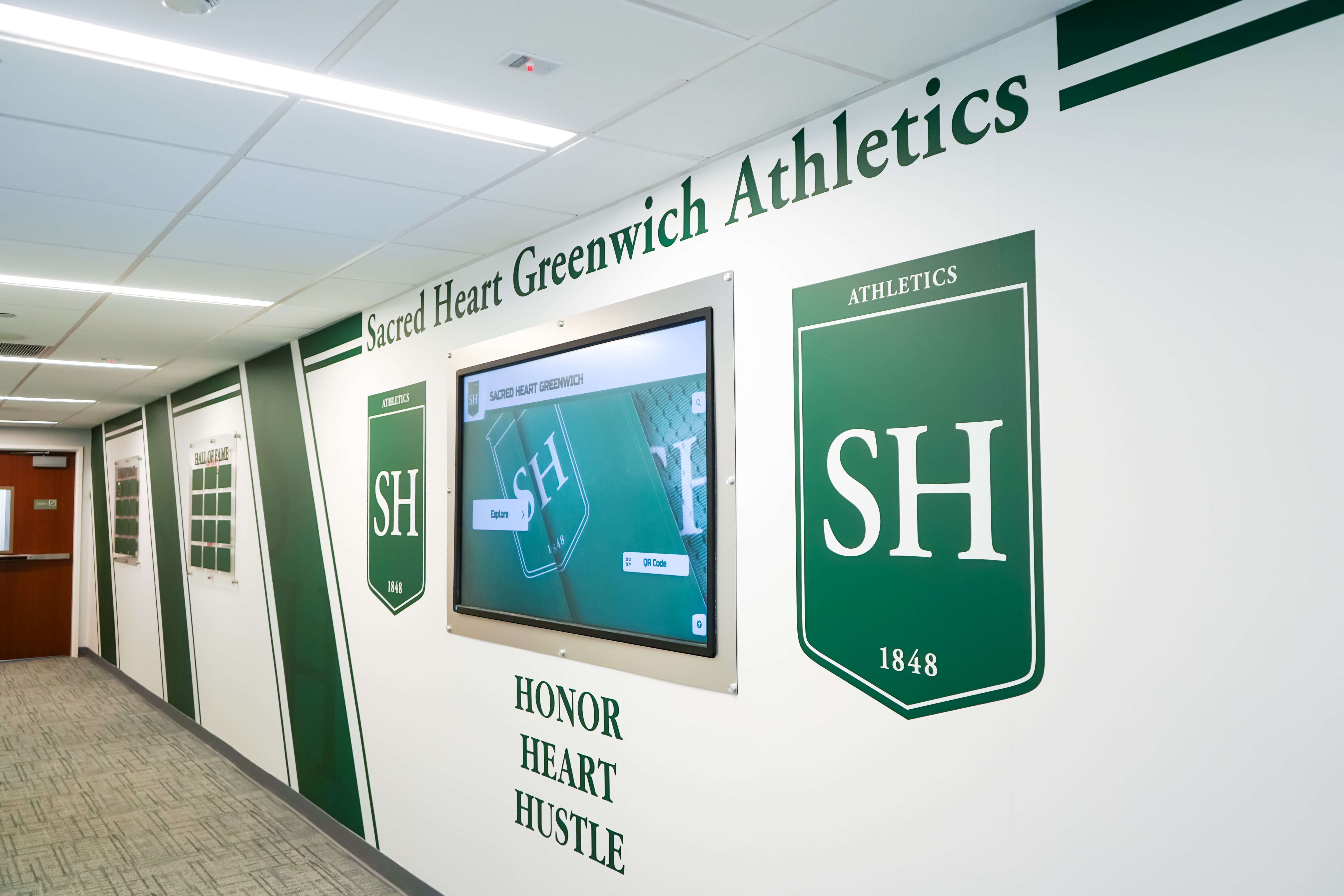
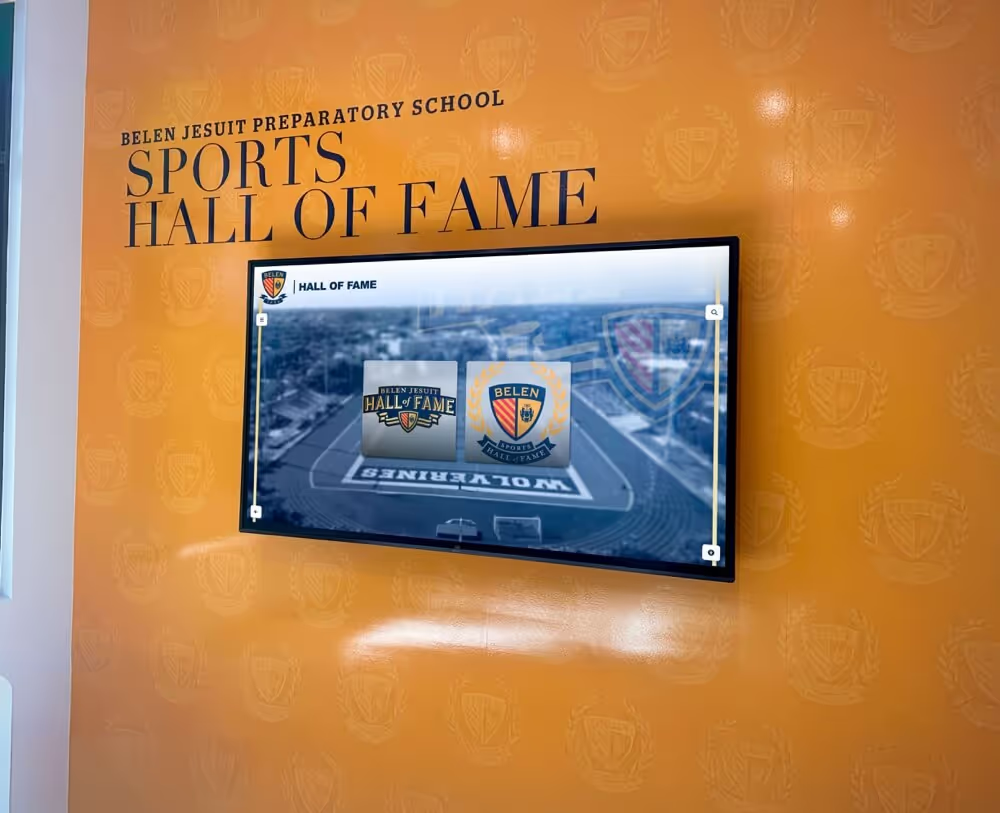
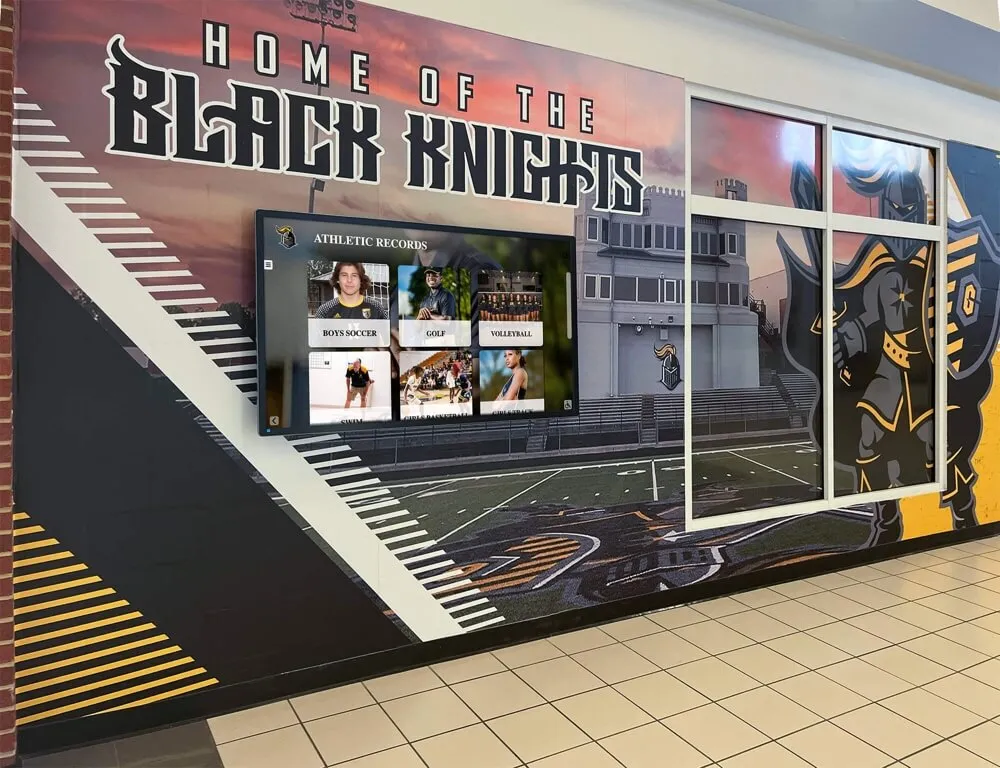
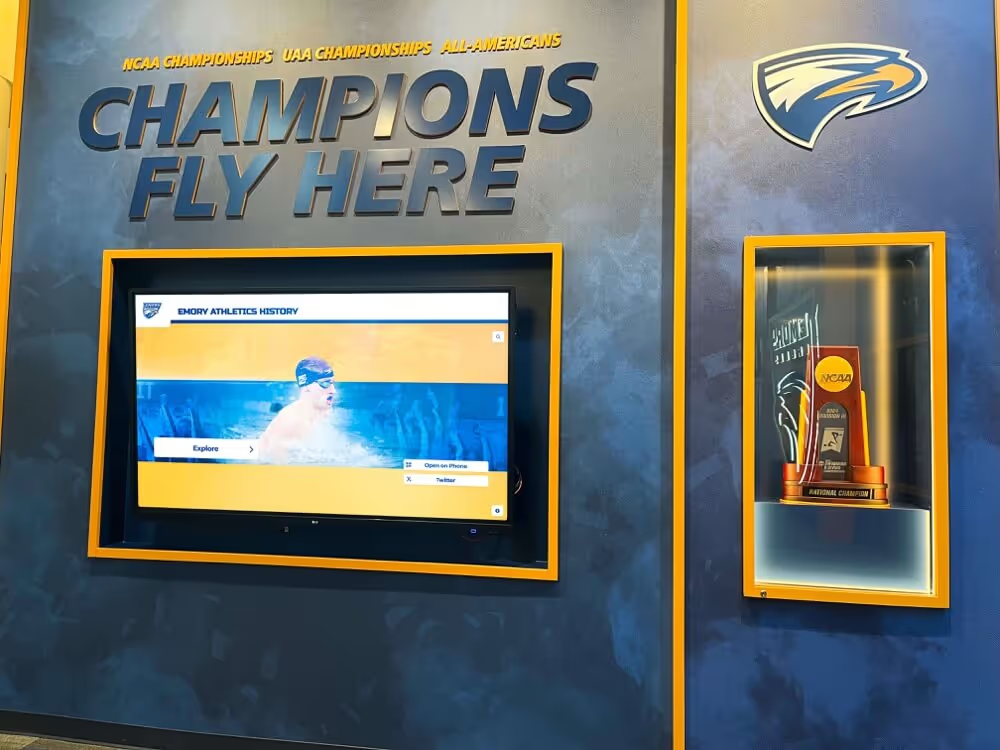
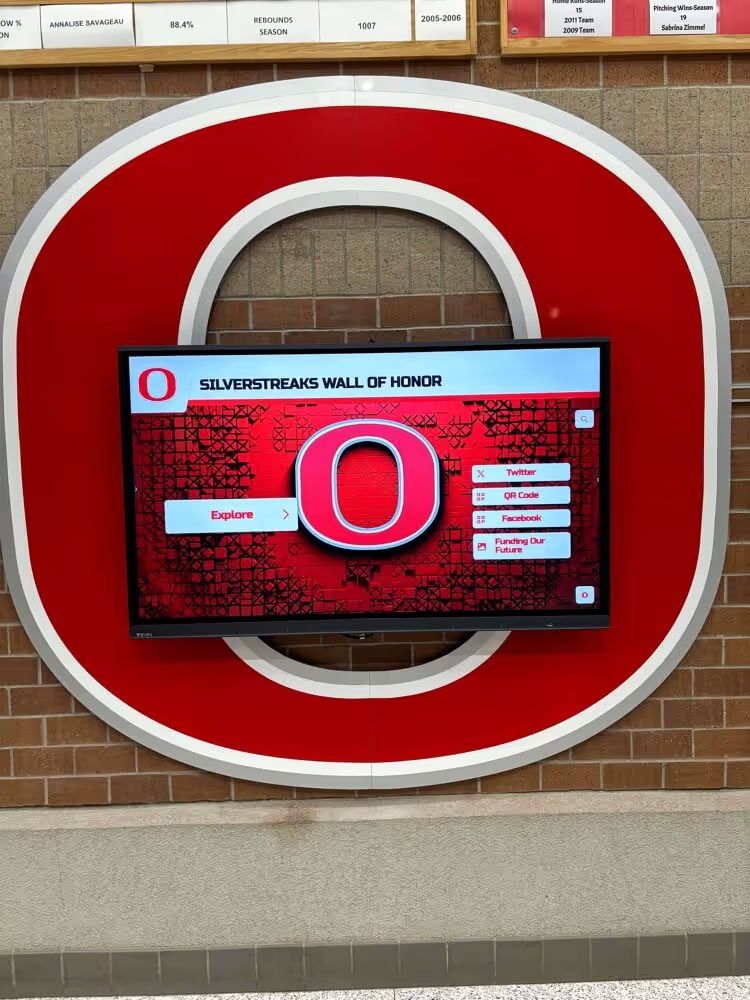
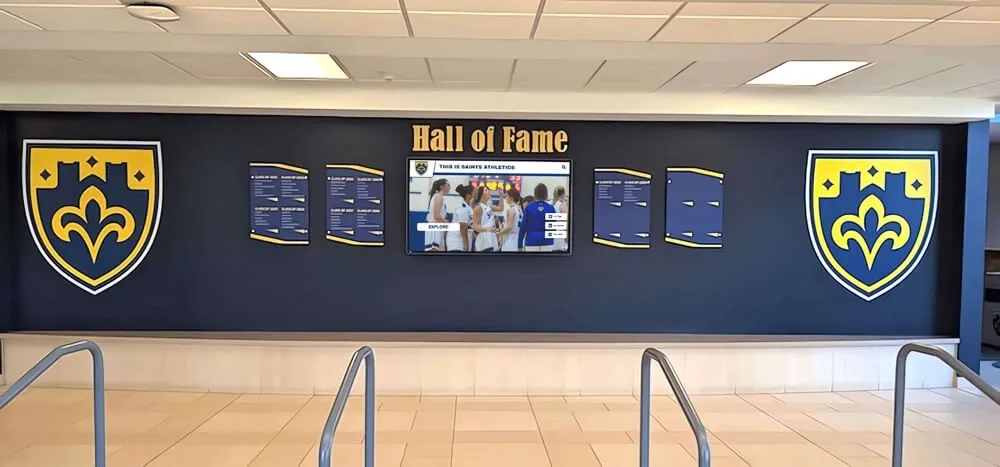
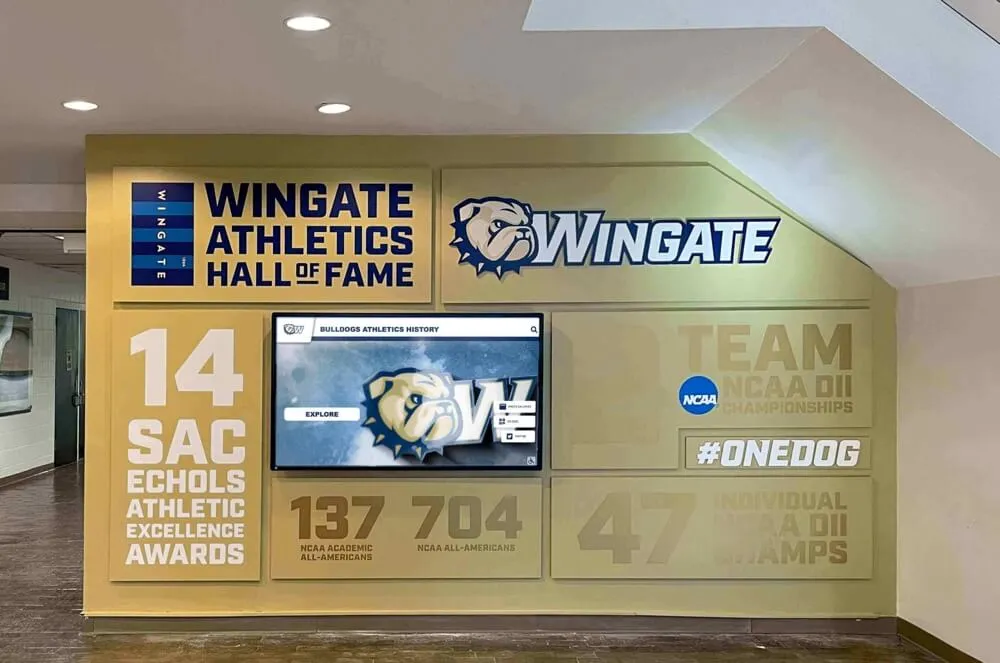
Shield and recognition displays in school hallways give performing arts section leaders the same visible institutional acknowledgment that athletic letter-winners receive — normalizing the equivalence of their achievement
Connecting Color Guard Recognition to Broader School Culture
Color guard captains deserve recognition that exists not just within the performing arts community but within the broader school recognition ecosystem. These strategies connect section leader recognition to the school’s overall culture of honoring student achievement.
Assembly and pep rally recognition When athletic captains are introduced at school assemblies, color guard captains should be included in the same moment. These students hold leadership roles of equivalent responsibility, and public recognition in all-school settings reinforces that equivalence to the broader student community.
Athletic director and principal acknowledgment Section leader announcements that come from school administration—not just from the director—carry institutional weight that signals the school’s genuine valuation of color guard leadership. Work with administration to include captain announcements in school communications and recognition events.
Inclusion in school-wide recognition programs If your school runs student leadership recognition programs, honor roll recognition events, or community service acknowledgments, ensure color guard captains are systematically considered for these opportunities alongside student government, athletic, and academic leaders. For programs exploring how these systems intersect, resources on honoring student leaders across the full range of student achievement categories offer useful frameworks.
Connection to marching band and broader performance program recognition Color guard doesn’t exist independently of the marching band and indoor performance programs it’s part of. Ensuring captain recognition is integrated into the full ensemble’s recognition system—rather than siloed as a separate activity—creates a cohesive program identity. Resources on marching band program recognition offer additional context for building that broader visual and institutional identity.
Tier 5: Specific Recognition Ideas by Format
These concrete ideas give program directors and boosters practical starting points for each recognition format.
Physical Award Ideas
Trophy and plaque ideas specific to color guard:
- Spinning flag or rifle mounted on trophy base
- Crystal or glass awards with color guard imagery etched in
- Custom awards featuring the school’s specific performance equipment
- Engraved plaques with the captain’s years of service and specific awards received
- Framed performance photography with a custom mat and caption
Wearable and keepsake recognition:
- Custom captain’s jacket or hoodie distinct from standard member gear
- Personalized performance gloves or equipment with name engraving
- Charm bracelet with symbol representing each year of service
- Signet ring or class ring style award indicating captain status
- Custom embroidered items with captain insignia
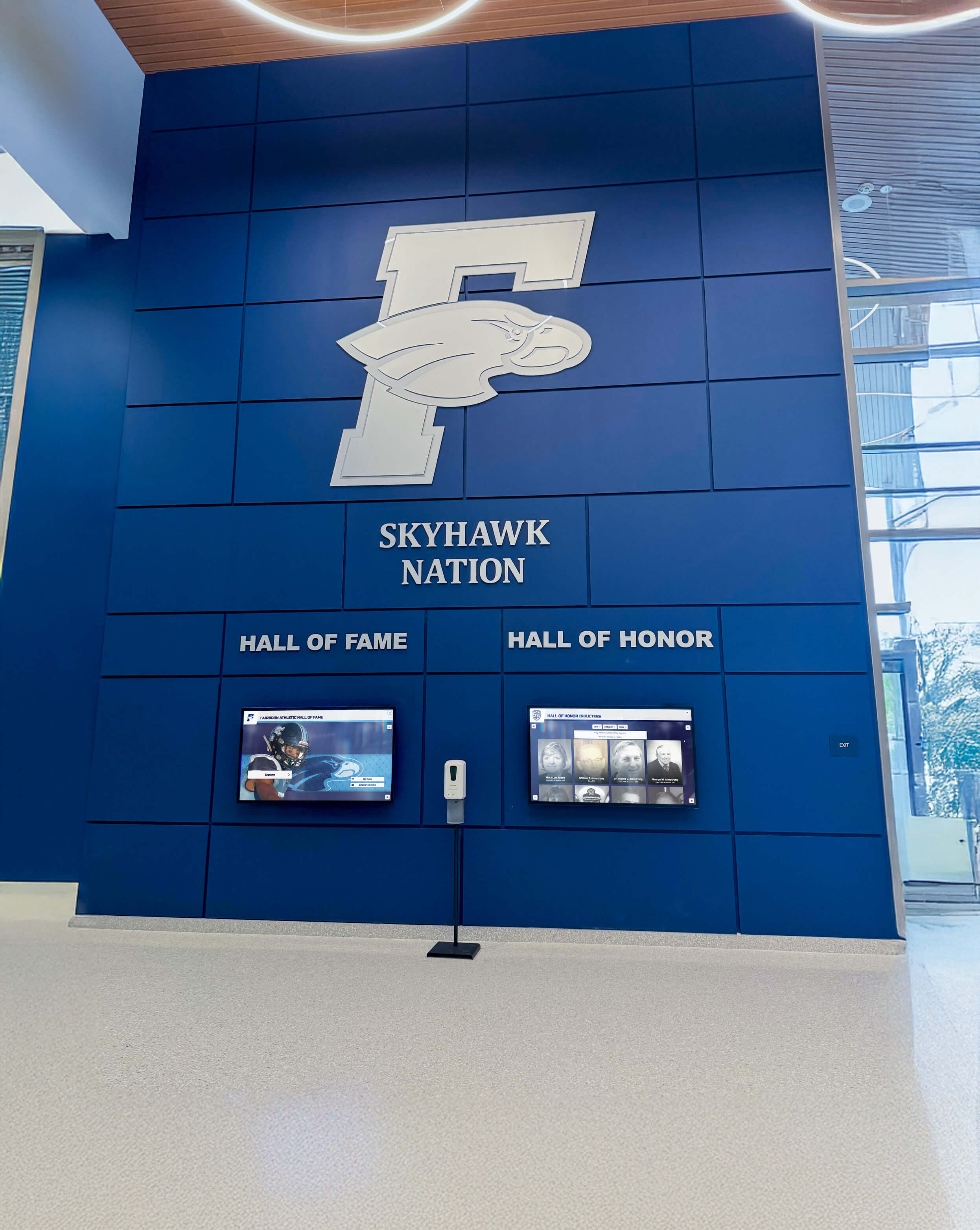
Lobby recognition displays in school athletic spaces can incorporate performing arts section leaders alongside athletic captains — creating a unified vision of student leadership excellence
Experience-based recognition:
- Section leader leadership retreat or workshop led by a professional performer or choreographer
- Private master class with an adjudicator or professional color guard instructor
- Recognition dinner with the director and administrative staff
- Behind-the-scenes tour of a professional or collegiate color guard program
- Feature story in local newspaper or school publication with photography
Digital Recognition Formats
Website and online profiles Dedicated section leader profiles on the school’s performing arts website create searchable, shareable recognition that lives beyond any physical display. Include photos, competitive achievements, and testimonials from fellow ensemble members.
Digital hall of fame display Interactive touchscreen displays in school hallways, lobbies, or performing arts facilities create permanent, expandable recognition that current students and visitors can explore at any time. For schools using digital trophy cases, a dedicated color guard section with captain profiles, competitive history, and visual galleries provides recognition equivalent to what athletic programs receive.
Archive documentation Recording each captain’s tenure comprehensively—photos, video, competitive results, personal statements, director reflections—creates a historical record that programs can reference when welcoming alumni back, recognizing milestones, or connecting new members to the tradition they’re joining. Resources on preserving team photo archives apply directly to performing arts program documentation.
Relational Recognition Formats
Director written recognition A personally written letter from the director—specific, detailed, and reflective rather than generic—has a lasting impact that physical trophies often can’t match. Many performers keep these letters for the rest of their lives.
Peer recognition systems Structured peer recognition, where ensemble members formally write about each captain’s specific contributions, creates testimonials that capture dimensions of leadership the director may not directly observe. These testimonials can also be incorporated into digital profiles and banquet presentations.
Alumni captain network Creating a network of former color guard captains who stay connected to the program—through an email list, a social media group, or an annual event—creates lasting community value. Current captains who know that former captains remain connected to the program understand that their own leadership will be part of a continuing legacy.
The way cheerleading programs have approached recognizing coach contributions offers useful parallels for color guard programs designing relational recognition for their section leaders—in both cases, the most meaningful recognition comes from specificity and personal attention rather than generic award formats.
Building a Color Guard Recognition Program From Scratch
For programs that currently have minimal structured recognition for section leaders, this step-by-step approach creates a functional program within a single season.
Phase 1: Establish the Foundation (First Month)
Audit what currently exists Document every recognition element that currently touches color guard captains: any existing awards, mentions in school communications, physical displays, digital presence. Identify the gaps honestly.
Define captain recognition criteria Write down exactly what behaviors, achievements, and contributions each award category will honor. Share these criteria with captains at the start of the season so recognition isn’t a surprise but a confirmed acknowledgment of work already understood to matter.
Establish a documentation routine Designate someone—a booster volunteer, an assistant director, a student officer—to consistently photograph rehearsals and performances, capture notable moments, and maintain records throughout the season. Recognition programs that lack documentation material at year end always feel incomplete.
Phase 2: Build the Season-Long Culture (Ongoing)
Create regular recognition touchpoints Monthly spotlights, weekly acknowledgments in ensemble communications, social media recognition for specific achievements—build these into your programming calendar so they happen consistently rather than only when someone remembers.
Collect testimonials throughout the season Don’t wait until the week before the banquet to gather peer testimonials. Build in structured opportunities mid-season and at season’s end to collect specific, thoughtful recognition from ensemble members about their captains’ contributions.
Keep records that will outlast the season Competitive placements, adjudicator feedback that specifically mentions section leadership, director notes on captain development, photographs from key moments—these records become the raw material for both year-end presentations and permanent digital trophy case profiles.
Phase 3: Design Year-End Recognition (Final Month)
Plan the banquet presentation with care The physical venue, audio-visual setup for tribute videos, sequence of award presentations, and allocation of time for each captain recognition moment all deserve intentional planning. A thoughtfully designed ceremony communicates that the program takes this recognition seriously.
Establish the permanent record Whatever is presented at the banquet should be immediately documented and submitted to the school’s digital trophy case or recognition display system. The day after the banquet, new captain profiles should be live in the permanent record.
Connect current captains to their successors The end-of-season period is the right time to structure the leadership transition formally—involving outgoing captains in selecting and orienting incoming ones, creating a documented handoff that preserves institutional knowledge and reinforces the continuity of leadership legacy.
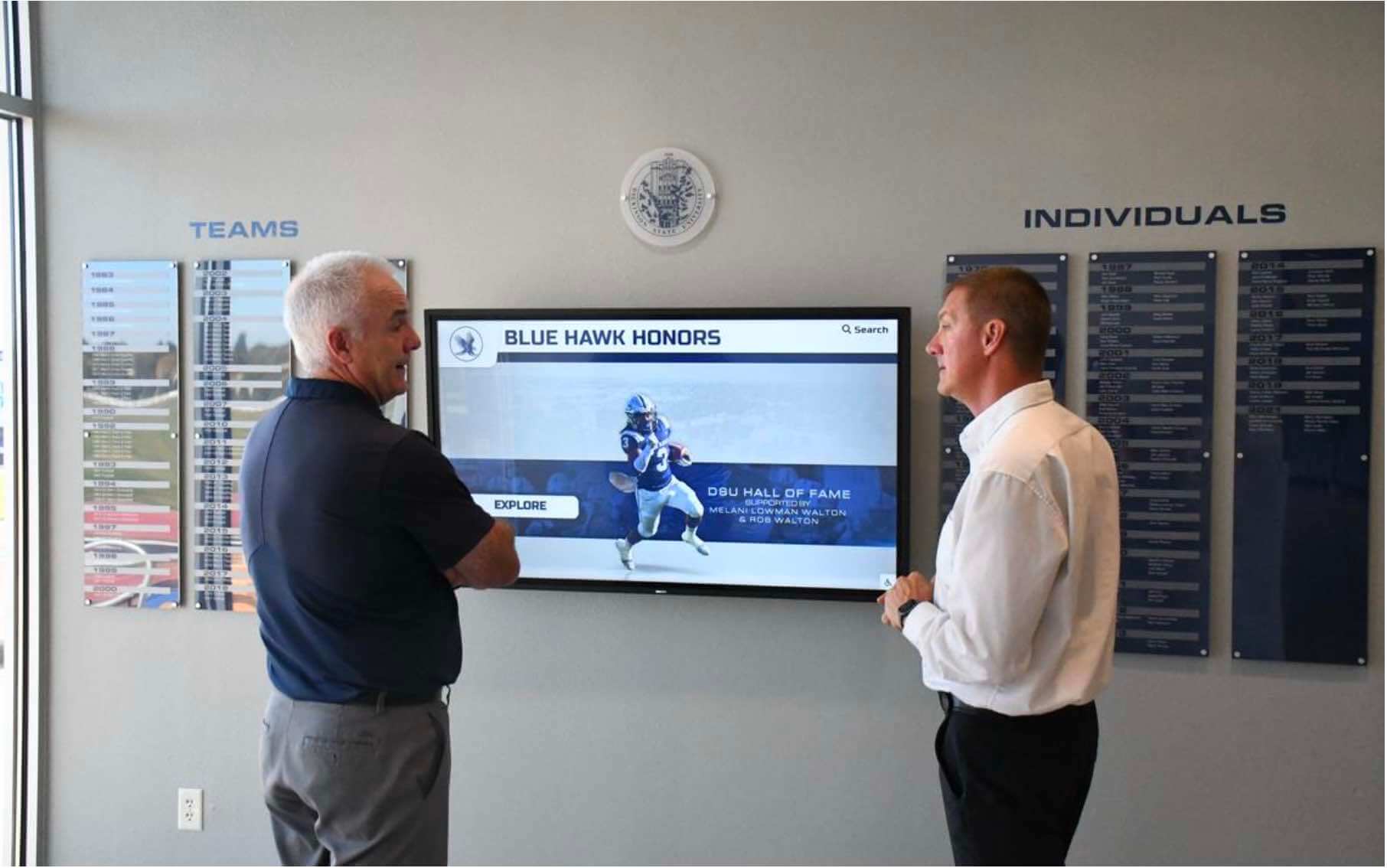
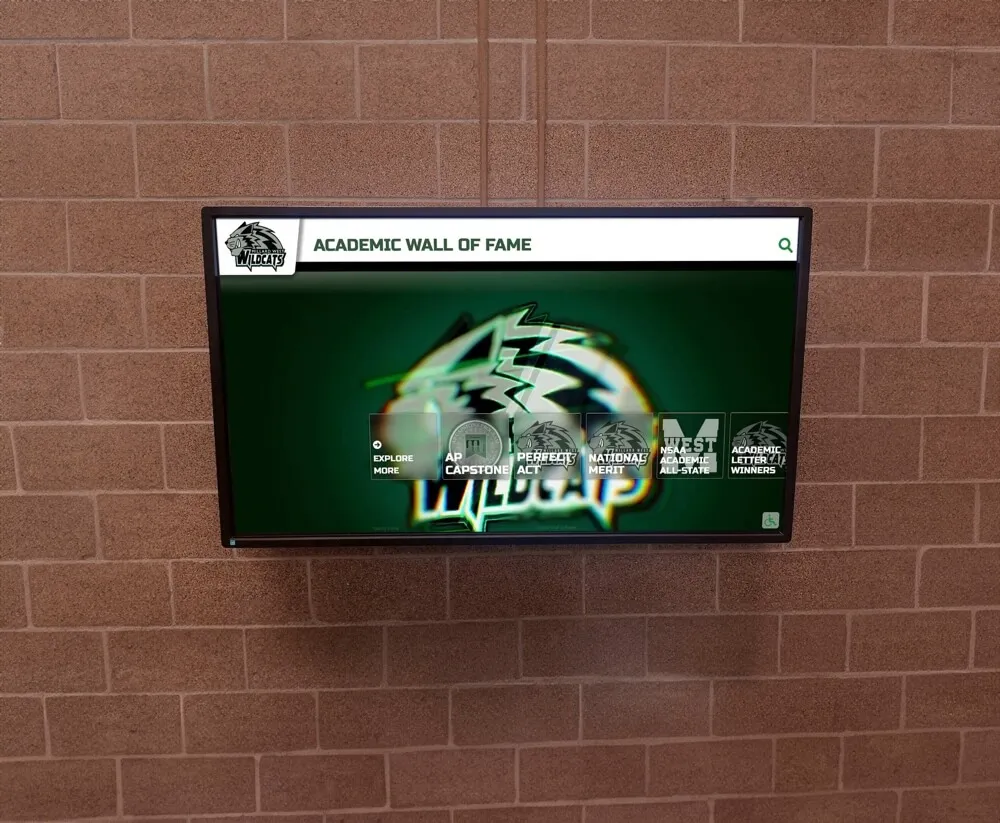
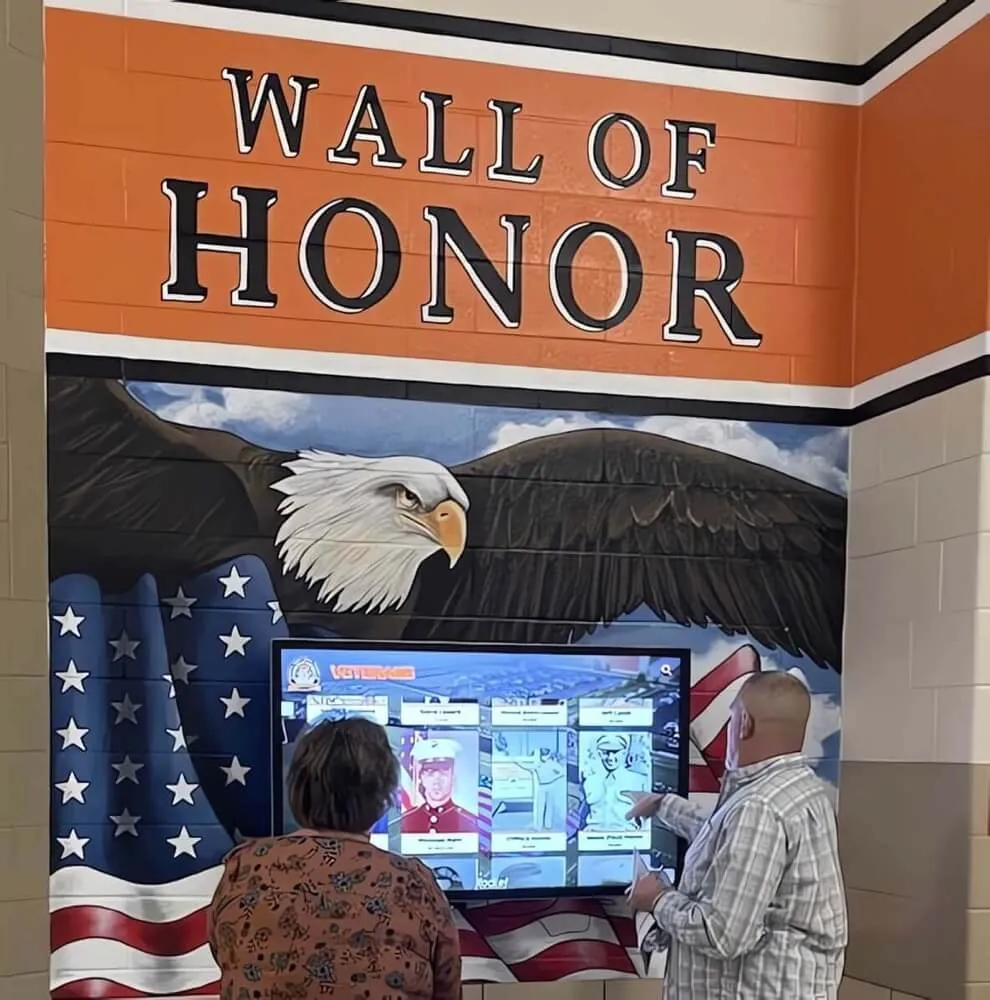
Digital recognition displays invite visitors to explore the full history of program leadership — color guard captain profiles displayed alongside athletic hall of fame entries communicate the equivalent value of both forms of student achievement
How Digital Trophy Cases Change the Color Guard Legacy Equation
Programs that invest in digital recognition for color guard captains consistently report the same outcomes: alumni engagement increases, new member recruitment improves, and the program’s institutional status within the school rises.
Alumni connection Former captains who can see their profiles on a school display—and who receive links to share with family and friends—stay connected to programs far longer than those who received only a physical trophy. That sustained connection creates mentorship opportunities, financial support, and a network of returning performers who reinforce program culture year after year.
Recruitment impact Students considering whether to audition for color guard respond to visible evidence that the program takes its members seriously. A comprehensive digital trophy case that showcases every section leader who has ever served—with full profiles, competitive histories, and performance galleries—communicates a level of program investment that recruits and their families notice.
Institutional credibility Schools that present color guard captain recognition with the same polish and permanence they bring to athletic recognition signal that performing arts leadership carries equal institutional weight. This changes how administrators, parents, and fellow students perceive the program.
For programs examining how coach recognition fits into this broader display ecosystem, coach hall of fame display resources offer frameworks applicable to director and section leader recognition in performing arts contexts.
The connection between visible recognition and program growth mirrors patterns seen across student achievement contexts. Schools that highlight their outstanding students on honor walls consistently report stronger student motivation and community pride—the same dynamic applies when color guard captains see that their leadership will be permanently honored rather than temporarily acknowledged and then forgotten.
Frequently Asked Questions About Color Guard Captain Recognition
How is color guard captain recognition different from recognizing other student leaders?
Color guard captains combine athletic performance demands with instructional responsibility and artistic leadership in ways that don’t map neatly onto either athletic captaincy or academic student leadership. Recognition programs work best when they’re designed for the specific nature of the role rather than adapted from templates built for other contexts. Peer testimony, performance documentation, and competitive context all matter in ways they don’t for, say, student council leadership.
When is the right time to present captain awards?
End-of-season banquets work for the formal presentation of major awards. But recognition programs that only acknowledge captains once at the end of the year leave months of valuable opportunity unused. Season-long acknowledgment, milestone recognition during competition season, and pre-season induction ceremonies for newly selected captains all create meaningful moments distributed throughout the program calendar.
How do you handle recognition when there are co-captains or multiple section leaders?
Differentiated award categories make it possible to give each leader distinct recognition rather than treating all captains as equivalent. Beyond named awards, individualized written recognition from the director ensures that each captain’s specific contribution—rather than a generic leadership description—gets acknowledged. Co-captains often have complementary strengths; recognition programs that identify and honor those distinct contributions create more meaningful acknowledgment than treating co-captains as interchangeable.
What documentation should programs keep for each captain’s tenure?
At minimum: full name, graduation year, years of service, awards received, and major competitive achievements. Better programs also document director reflections on the captain’s specific contributions, peer testimonials, and photographs or video from the captain’s performance seasons. The more complete the documentation at the time of the captain’s tenure, the more valuable the permanent record becomes for future members, alumni, and program historians.
How do you connect indoor and outdoor season captains within a single recognition system?
Programs that operate both marching band/outdoor color guard and indoor guard should structure recognition to acknowledge captains from both contexts distinctly. A unified digital trophy case with clearly organized sections for each performance discipline keeps the historical record coherent while ensuring captains from each context receive appropriate acknowledgment for the distinct challenges each season presents.
What’s the most common mistake in color guard captain recognition programs?
Confining recognition to a single end-of-year moment and failing to create a permanent institutional record. Captains who receive a trophy at a banquet and then find no trace of their contribution in school records or displays three years later experience a form of institutional forgetting that diminishes the meaning of the recognition they received. The solution is a permanent digital record—searchable, expandable, and accessible to everyone connected to the program.
Similar dynamics play out in programs recognizing other performing arts leaders. The challenge of making color guard captain recognition as visible and permanent as athletic recognition is the same challenge that NCA cheer competition programs face in ensuring their competitive achievements receive appropriate institutional acknowledgment.
Building Recognition Culture That Sustains Itself
The most effective color guard captain recognition programs don’t require constant reinvention. They establish systems—for documentation, for regular acknowledgment, for permanent record-keeping—that produce consistent, meaningful recognition without requiring heroic one-time efforts from directors who already have full plates.
What sustainable programs do differently:
- Documentation happens throughout the season, not in a scramble before the banquet
- Recognition touchpoints are calendared in advance, not improvised
- Award criteria are communicated to captains at the start of their tenure
- Permanent digital records are updated within days of banquet presentations, not months later
- Alumni connections are actively maintained, not left to chance
The result is a program where color guard captains know at the start of their tenure that their leadership will be documented, publicly acknowledged, and permanently preserved—and where that understanding changes how they approach the role from day one.
Give Color Guard Captains the Recognition They've Earned
Digital Trophy Case by Rocket Alumni Solutions gives color guard programs a permanent, searchable, professionally presented recognition platform that honors every section leader who has ever served the program. Cloud-managed content means new captain profiles go live in minutes. QR code access extends recognition to families and alumni anywhere. No physical space limits, no engraving delays, no institutional forgetting. See how performing arts programs across the country are building recognition systems that match the quality of the leadership they're honoring.
Book A Demo