



Championship rings represent the ultimate symbol of athletic achievement—tangible reminders of extraordinary seasons when talent, dedication, and teamwork converged to produce championship victories. For student-athletes at the high school and college levels, receiving a championship ring marks a defining moment in their athletic careers, a permanent keepsake they’ll treasure long after their playing days end.
Athletic directors, coaches, and school administrators planning championship ring orders face numerous questions about design options, cost considerations, ordering timelines, and effective display strategies. Whether you’re celebrating a first-ever championship or continuing an established tradition, understanding the full championship ring process helps you create meaningful recognition that honors athletic excellence while managing budgets and timelines effectively.
This comprehensive guide explores everything schools and universities need to know about championship rings—from initial design decisions through final display strategies—ensuring your championship teams receive recognition that truly reflects the significance of their achievements.
Championship rings have evolved from simple bands into sophisticated symbols of athletic excellence featuring custom designs, premium materials, and personalized elements that make each ring unique to the team and season it represents. Schools that thoughtfully approach ring selection create lasting recognition that championship team members proudly wear and display throughout their lives.

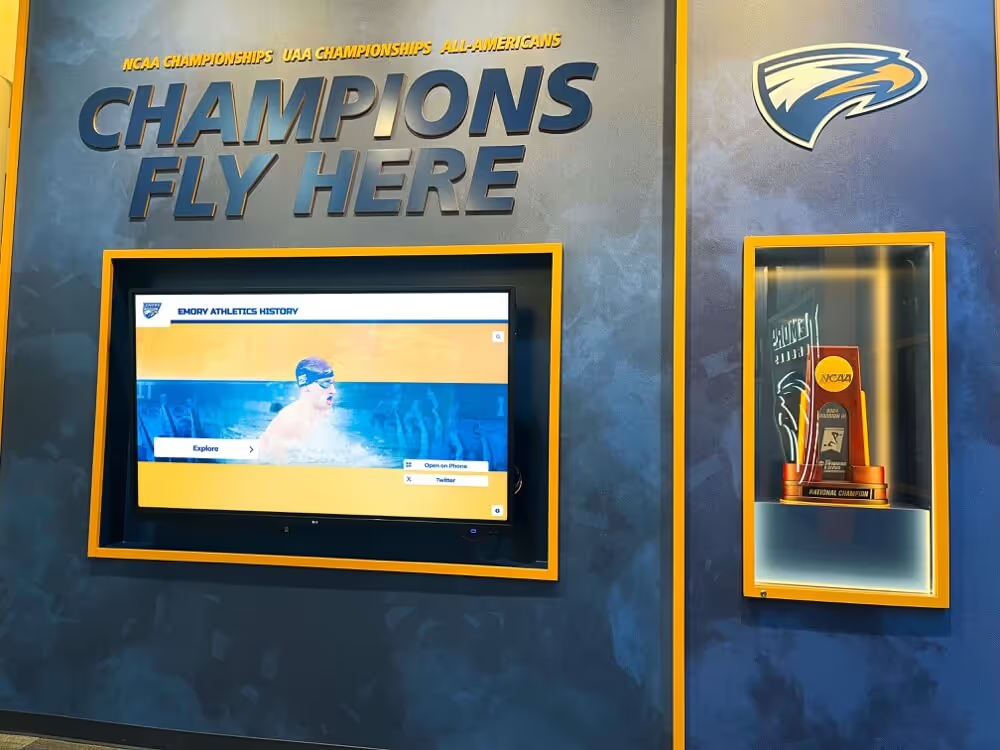
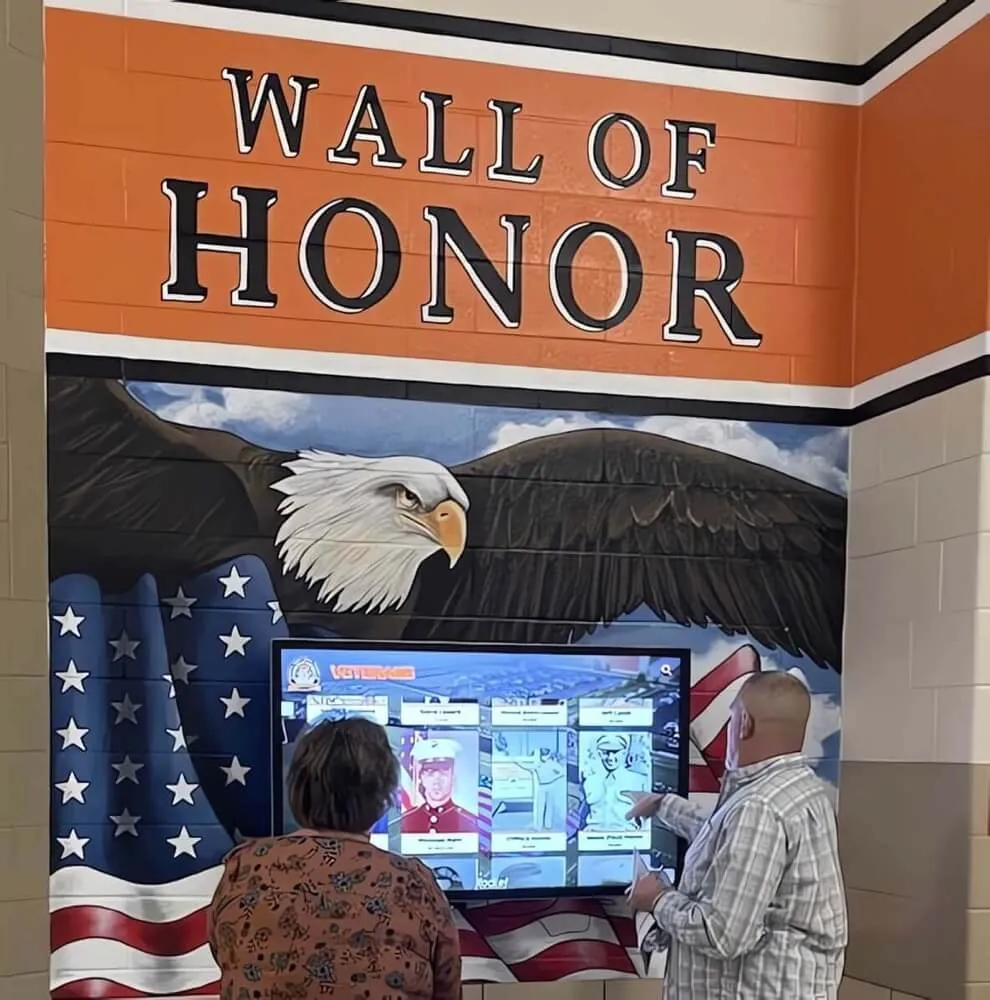
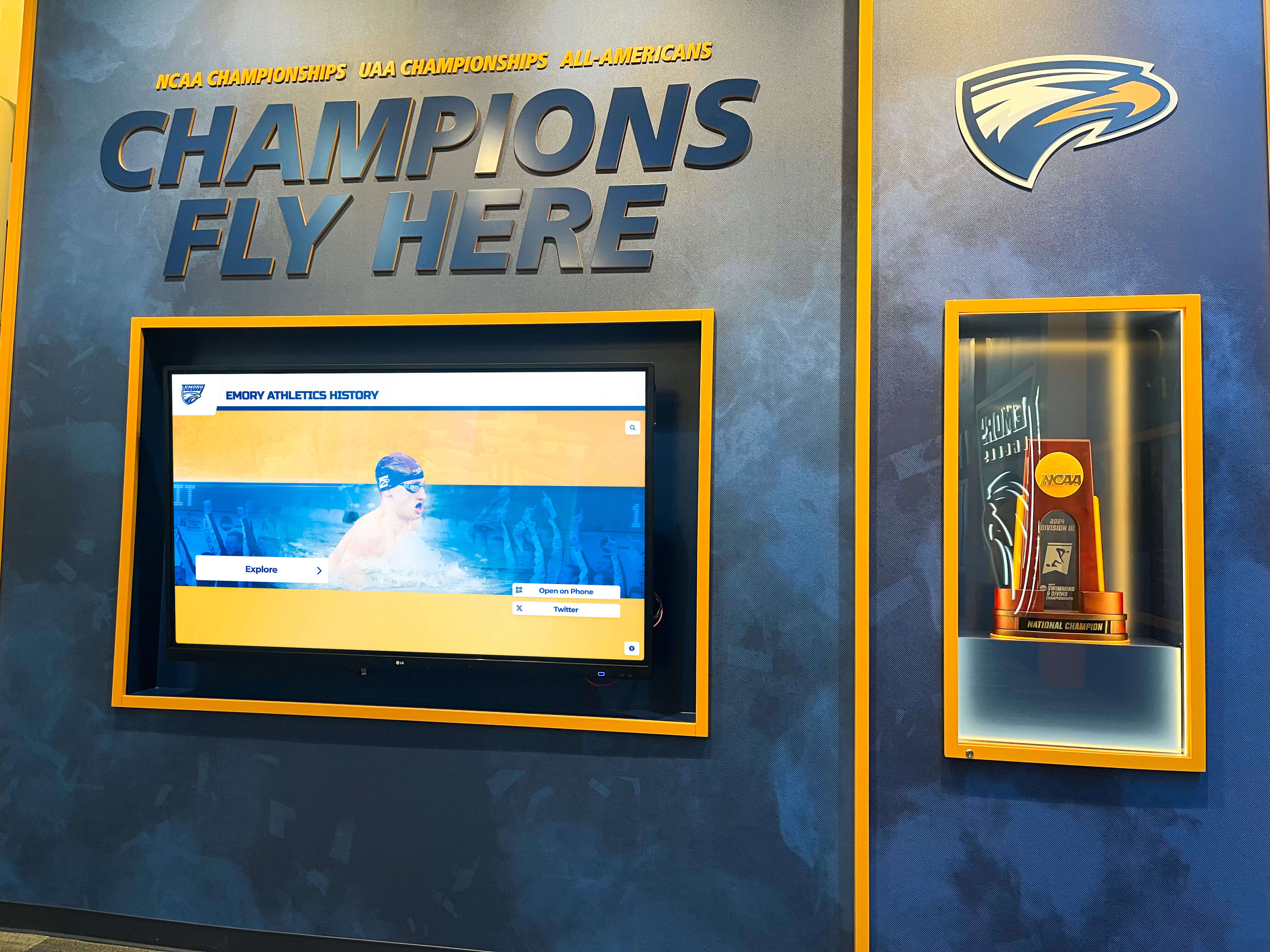
Championship recognition displays provide prominent showcases for rings alongside trophies and team achievements
Understanding Championship Ring Significance
Before diving into practical design and cost considerations, recognizing why championship rings carry such meaning helps schools make informed decisions about this significant recognition investment.
The Cultural Weight of Championship Rings
Championship rings occupy a unique place in athletic culture across all competition levels:
Permanent Personal Recognition
Unlike team trophies that remain at the school or shared awards that may eventually be relegated to storage, championship rings become personal property that athletes keep forever. Many former champions cite their championship ring as their most treasured athletic possession—something they show family members, wear at reunions, and reference when recounting their competitive careers.
This permanence makes ring presentation moments particularly significant. Athletes understand they’re receiving something they’ll own for life, creating emotional weight that elevates ring ceremonies beyond typical award presentations.
Shared Team Identity
Championship rings create visible bonds connecting teammates long after playing careers end. When former team members encounter each other years later, championship rings provide instant recognition and shared identity. This collective symbol strengthens team unity in ways individual awards cannot replicate.
Motivational Impact for Current Athletes
Current athletes witnessing championship ring ceremonies or seeing rings displayed in trophy cases internalize powerful messages about program standards and achievement recognition. Seeing championship hardware creates tangible goals motivating pursuit of similar excellence.
Programs with visible championship ring traditions often experience enhanced athlete commitment and championship-focused culture development. The rings become symbols current athletes aspire to earn through their own championship pursuits.
Professional Athletic Connection
Championship ring traditions originated with professional sports leagues but have become deeply embedded in athletic culture across competition levels. High school and college championship rings connect student-athletes to broader athletic traditions, positioning their achievements alongside professional accomplishments in symbolic recognition.

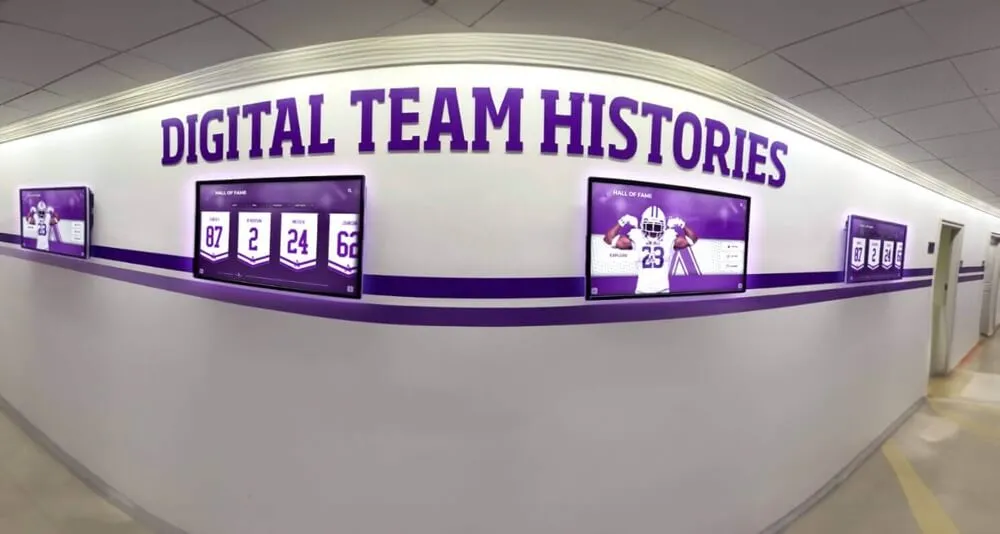
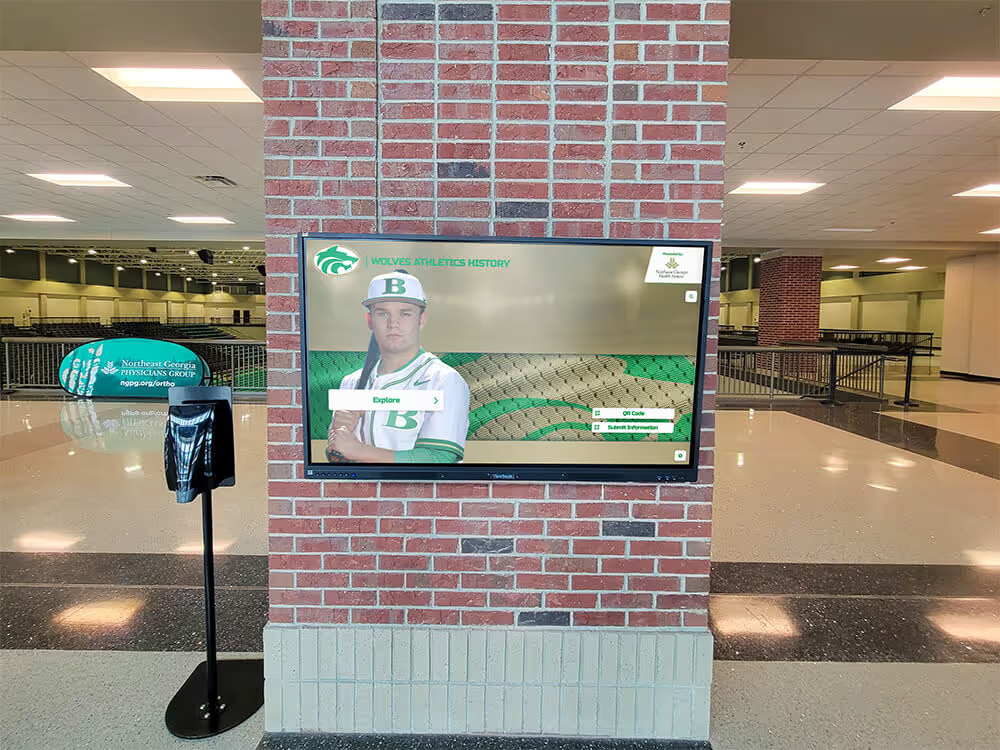
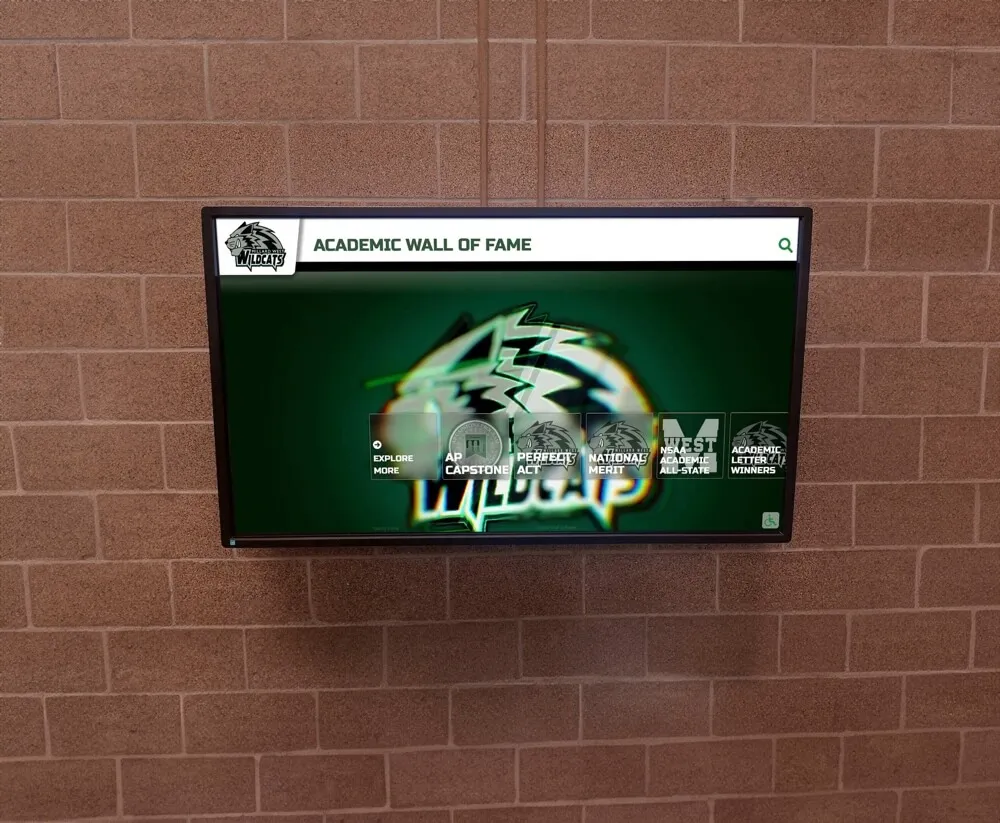
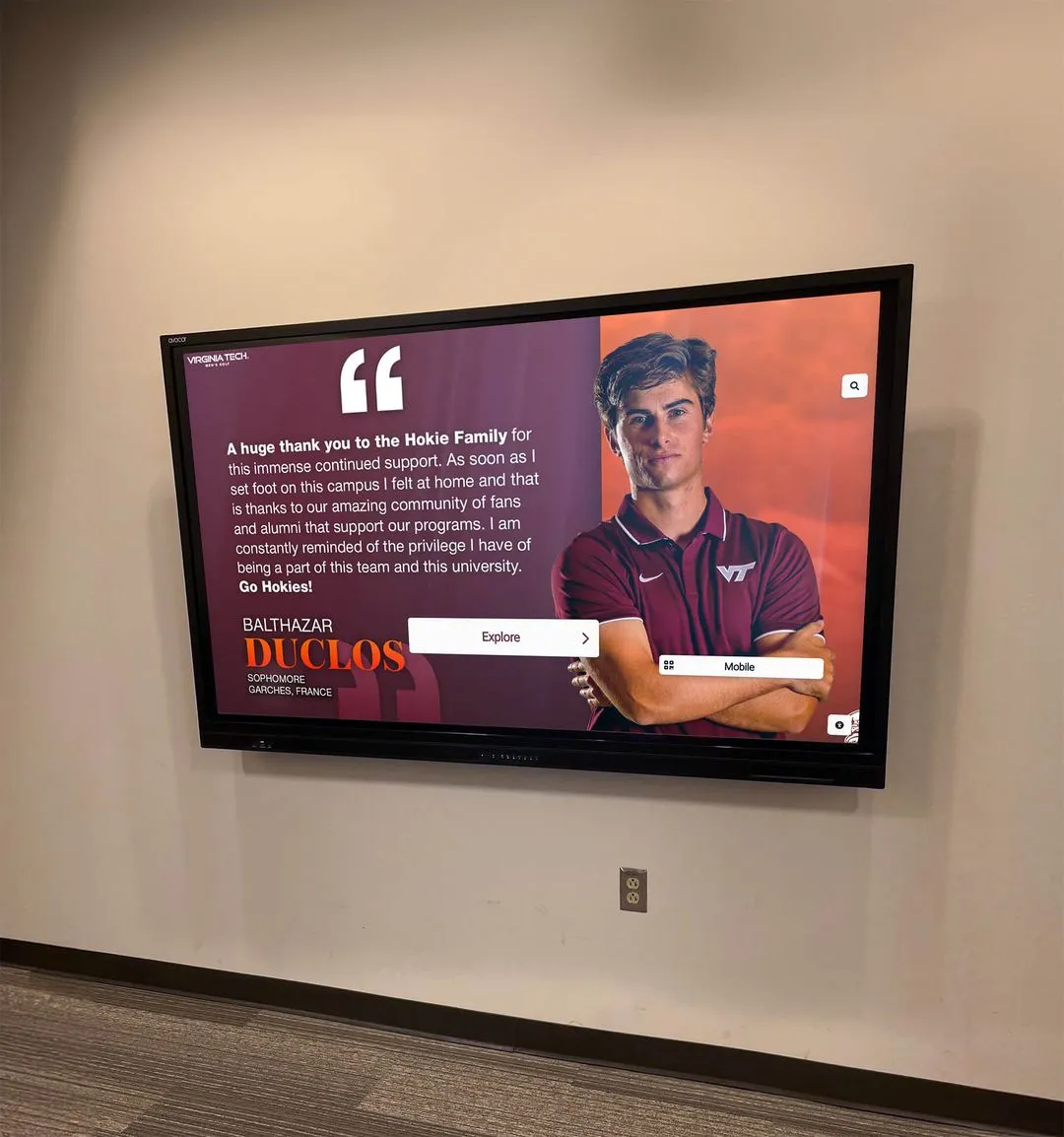
Digital athletic displays complement championship ring recognition by documenting complete team histories and achievement details
Championship Ring Design Fundamentals
Creating meaningful championship rings requires balancing aesthetic appeal, team identity, budget constraints, and personalization preferences.
Essential Design Elements
Effective championship rings incorporate several core components that communicate achievement significance:
Championship Achievement Identification
The most fundamental ring elements identify the specific championship being celebrated:
- Championship year: Prominently featured, typically on the ring face or sides
- Sport identification: Team sport clearly indicated (football, basketball, volleyball, etc.)
- Achievement level: Conference championship, regional championship, state championship, or national championship
- Final record or accomplishment: Season record, tournament results, or specific achievement milestones
These basic elements ensure anyone viewing the ring immediately understands what championship the ring commemorates.
School and Team Identity
Championship rings should clearly connect to institutional identity:
- School name or initials: Full institution name or recognized abbreviation
- Mascot or logo: School mascot design or official athletic logo
- School colors: Incorporated through gemstones, enamel work, or metal choices
- Conference affiliation: Conference logo or name if relevant to championship context
Strong institutional branding ensures rings function as school ambassadors, creating pride and recognition beyond just the championship team.
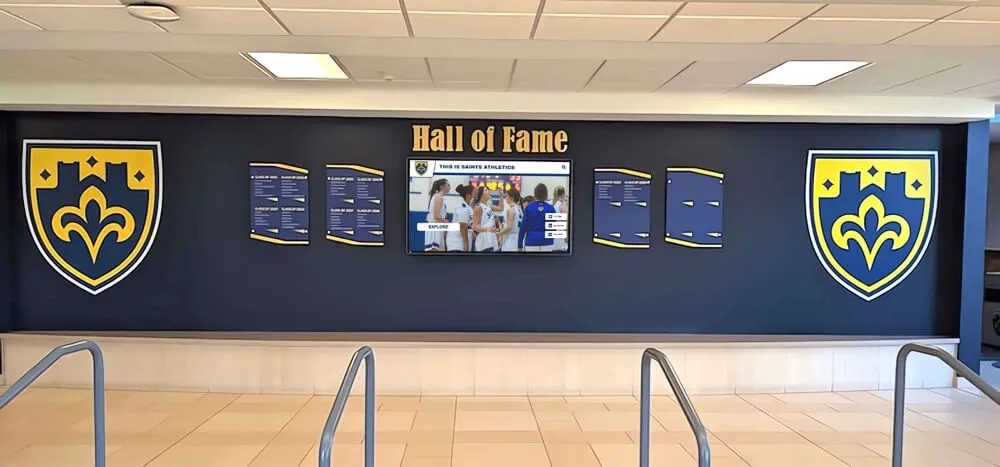
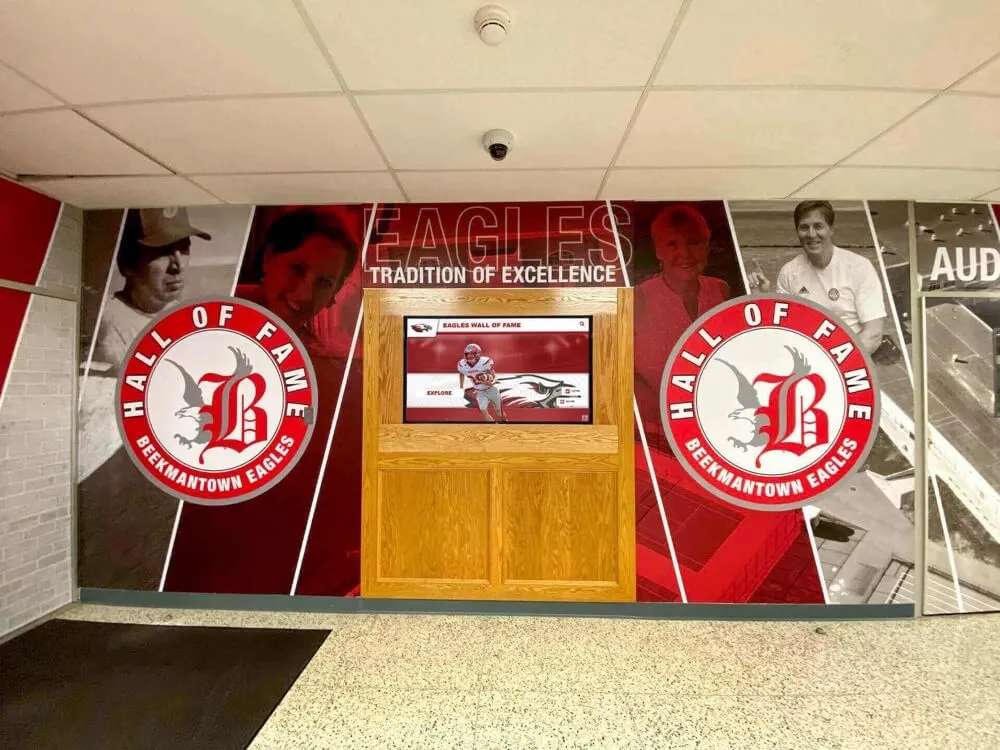
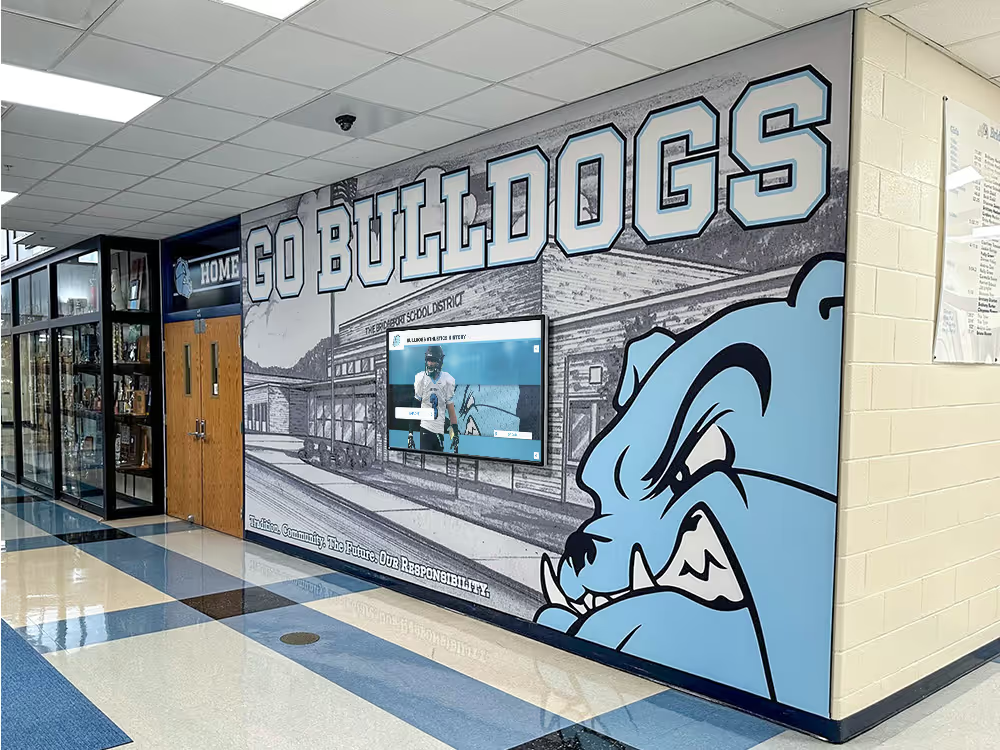
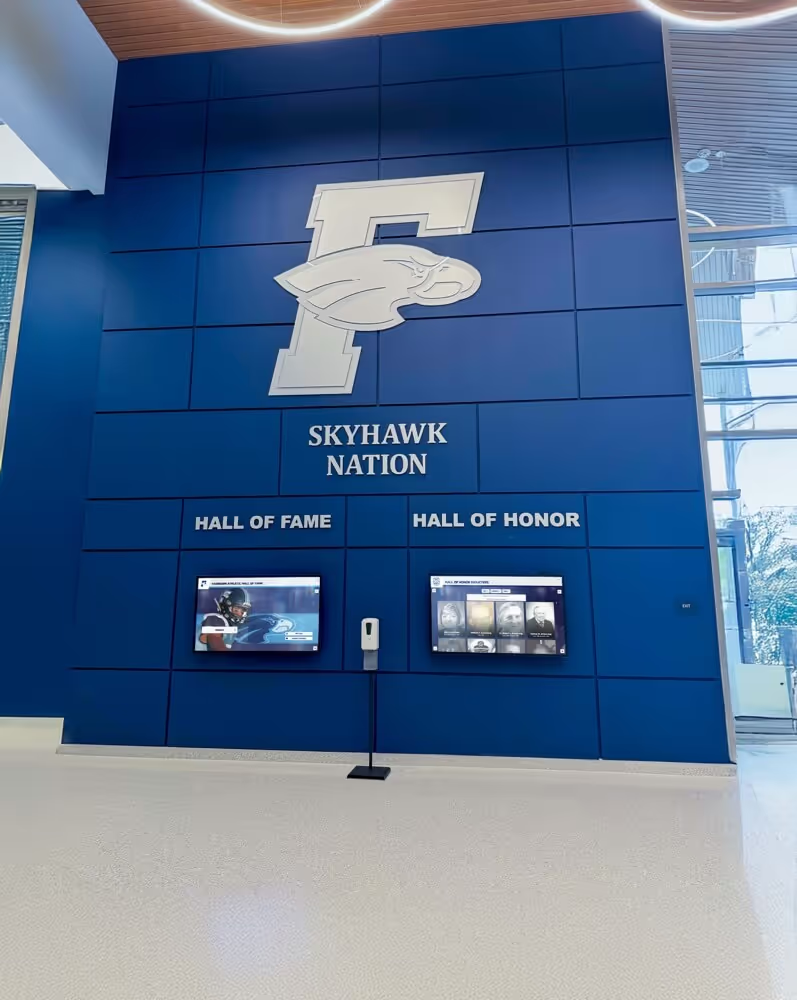
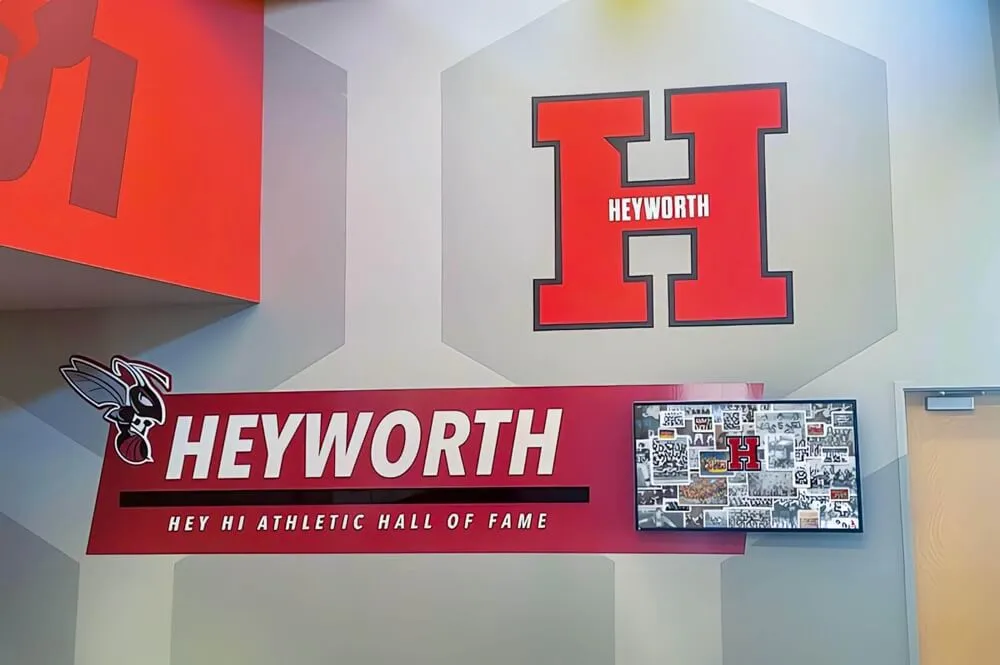
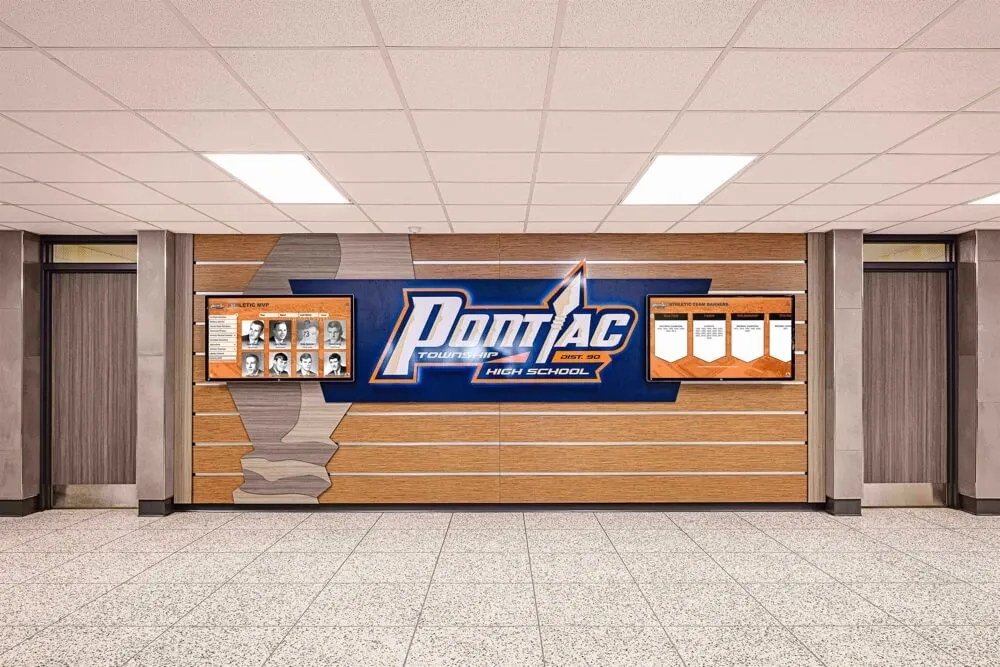
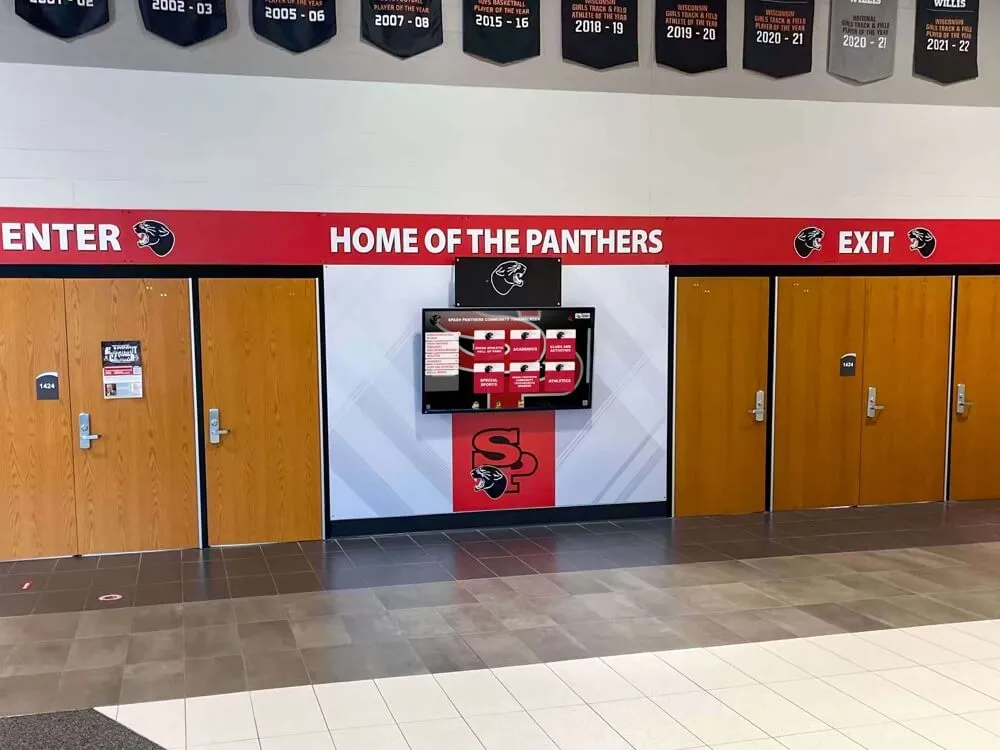
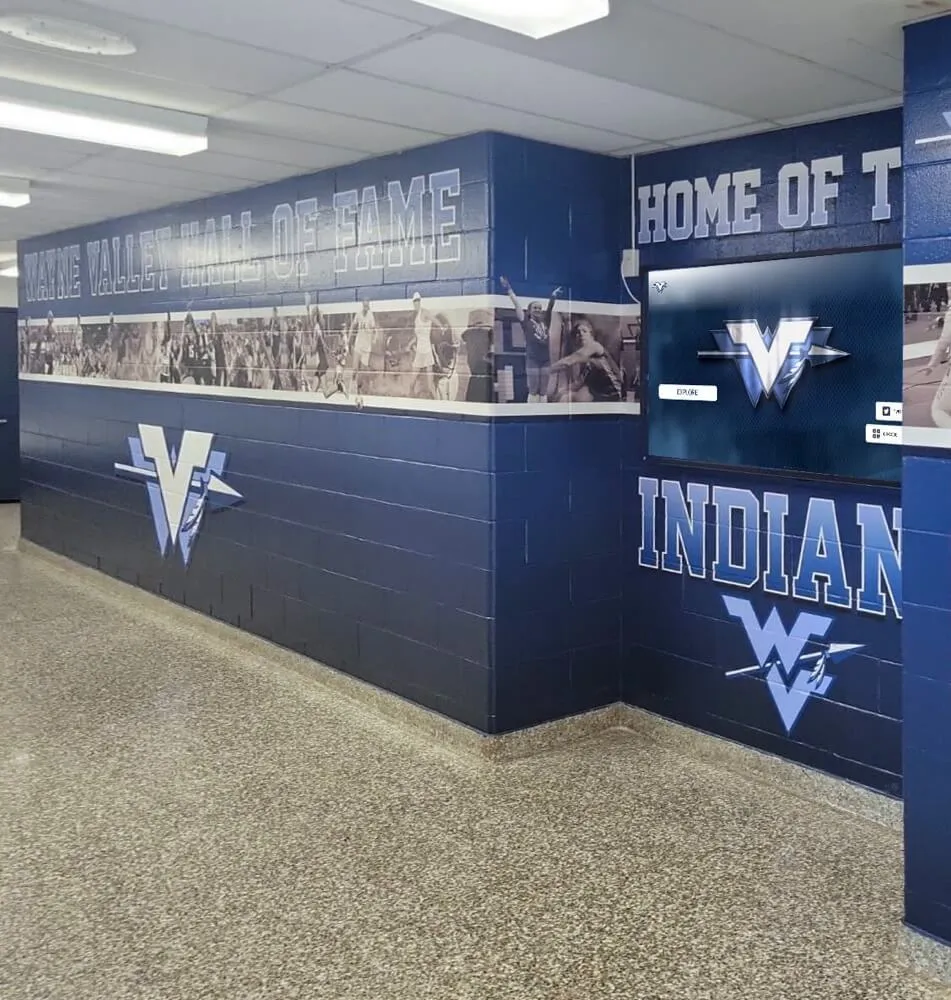
Comprehensive recognition walls integrate championship rings with other honors creating complete achievement showcases
Design Customization Options
Beyond basic elements, schools can customize rings in numerous ways:
Ring Face Design Approaches
The top surface of the ring typically receives the most design attention:
Traditional Shield or Crest Design
- Classic shield shape containing primary design elements
- Central logo or mascot image surrounded by achievement text
- Formal, prestigious appearance emphasizing championship significance
- Works well for established programs with strong visual identities
Championship Trophy Replica
- Ring face designed to resemble the championship trophy awarded
- Three-dimensional trophy rendering creating distinctive appearance
- Direct visual connection to the physical championship award
- Particularly effective for well-recognized championship trophies
Sport-Specific Imagery
- Basketball design incorporating ball texture or hoop elements
- Football rings featuring field markings or helmet designs
- Sport-specific equipment or playing surface representations
- Creates immediate sport identification and thematic consistency
Side Panel Customization
Ring sides provide additional design real estate for meaningful content:
- Season highlights: Key game scores, playoff progression, championship match details
- Team statistics: Final record, scoring achievements, defensive statistics
- Memorable quotes: Coach sayings, team mottos, or championship season themes
- Championship bracket: Tournament progression showing path to championship
- Additional logos: Secondary school marks, conference logos, or sponsor recognition
Thoughtful side panel design adds depth and storytelling to championship rings beyond simple face design.
Inside Band Personalization
The interior ring surface offers private personalization opportunities:
- Individual athlete names: Personal name engraving
- Jersey numbers: Player’s number from championship season
- Position identification: Player’s position or role on team
- Graduation year: Class year creating additional personal connection
- Inspirational message: Personal motto, Bible verse, or meaningful quote
Inside personalization makes each ring unique to its recipient while maintaining consistent exterior team design.
Championship Ring Materials and Quality Levels
Material selections significantly impact both ring appearance and overall cost.
Metal Options and Characteristics
Championship ring base metals range from affordable alloys to precious metals:
Jeweler’s Bronze or Alloy (Economy Tier)
- Cost range: $50-$100 per ring
- Gold or silver tone plating over base metal
- Lighter weight compared to precious metals
- Plating may wear over time with regular use
- Best for: Budget-conscious programs, large rosters, or youth/middle school championships
Sterling Silver (Mid-Range Tier)
- Cost range: $150-$250 per ring
- Genuine sterling silver throughout
- Moderate weight with quality feel
- Tarnish-resistant with proper care
- Best for: High school championships balancing quality and affordability
10K or 14K Gold (Premium Tier)
- Cost range: $300-$600+ per ring
- Genuine gold alloy (10-karat or 14-karat)
- Substantial weight and luxurious feel
- Maintains appearance indefinitely without tarnishing
- Best for: Major college championships, significant milestone achievements, or programs prioritizing premium quality
White Gold and Platinum (Ultra-Premium Tier)
- Cost range: $500-$1,000+ per ring
- White gold or platinum construction
- Maximum prestige and value
- Professional-grade quality and appearance
- Best for: National championships, historic achievements, or programs with substantial budgets
Gemstone and Embellishment Choices
Stones and decorative elements add color, prestige, and cost to championship rings:
Cubic Zirconia and Synthetic Stones
Most affordable gemstone option providing visual impact without precious stone costs. Available in school colors, cubic zirconia offers sparkle and color at fraction of genuine gemstone prices.
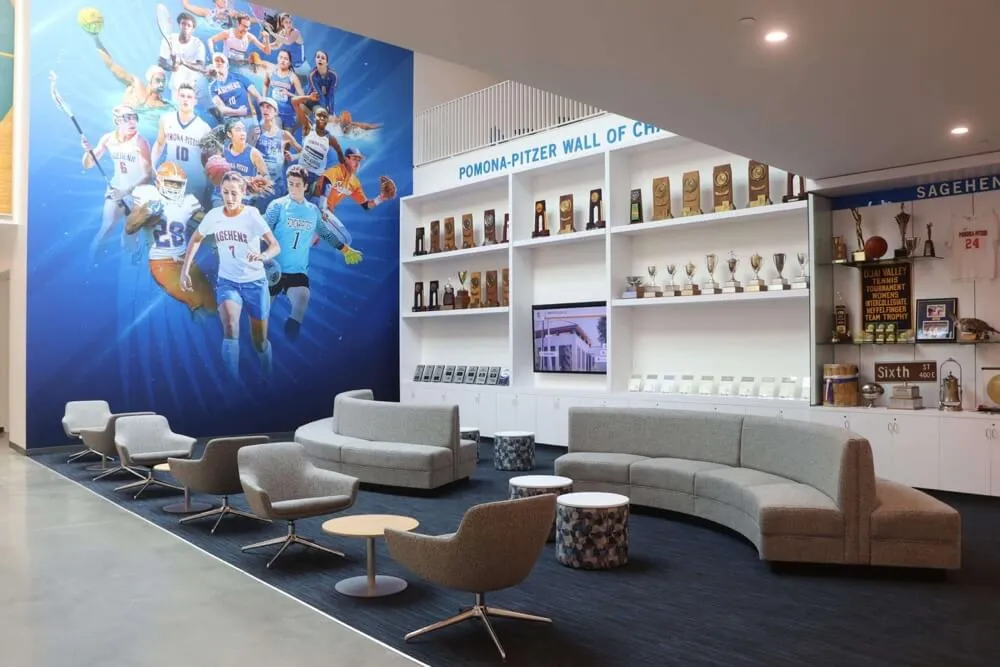
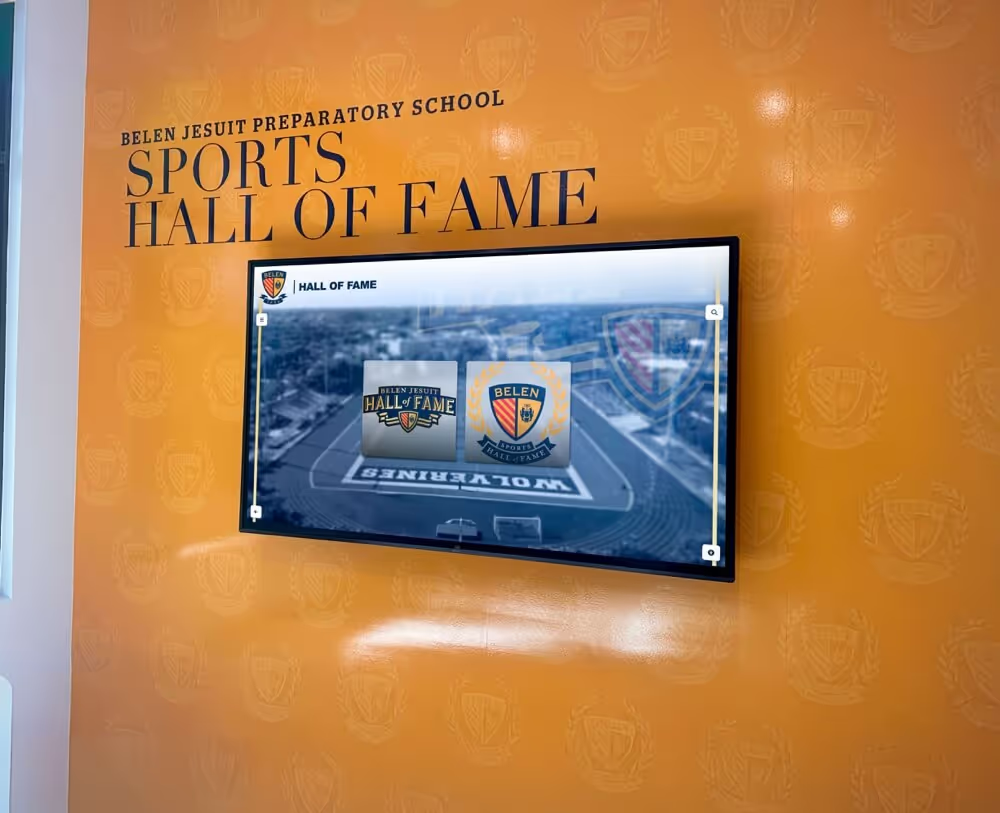
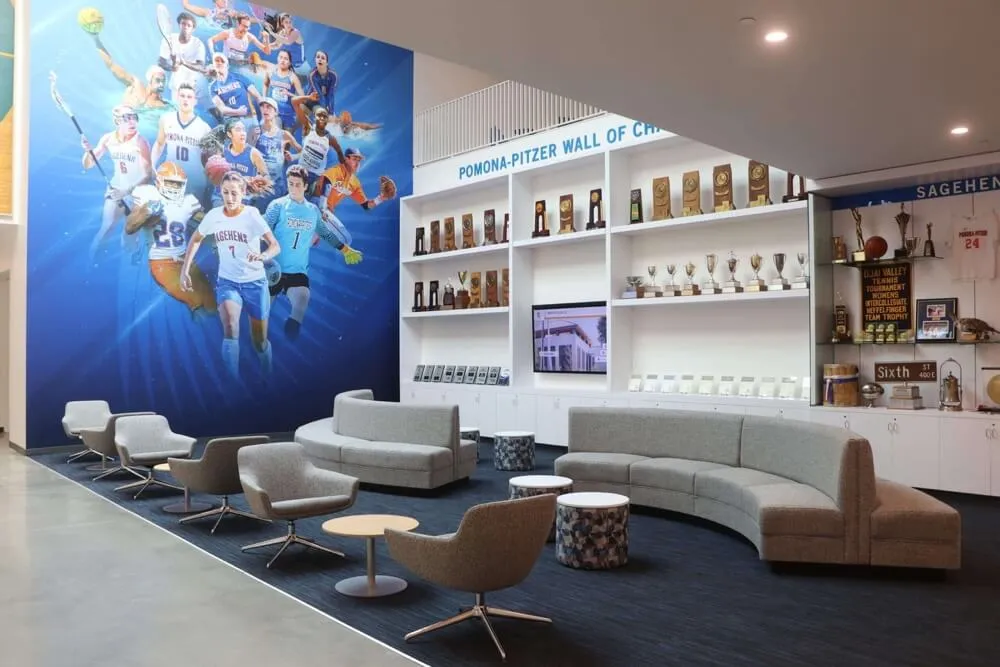
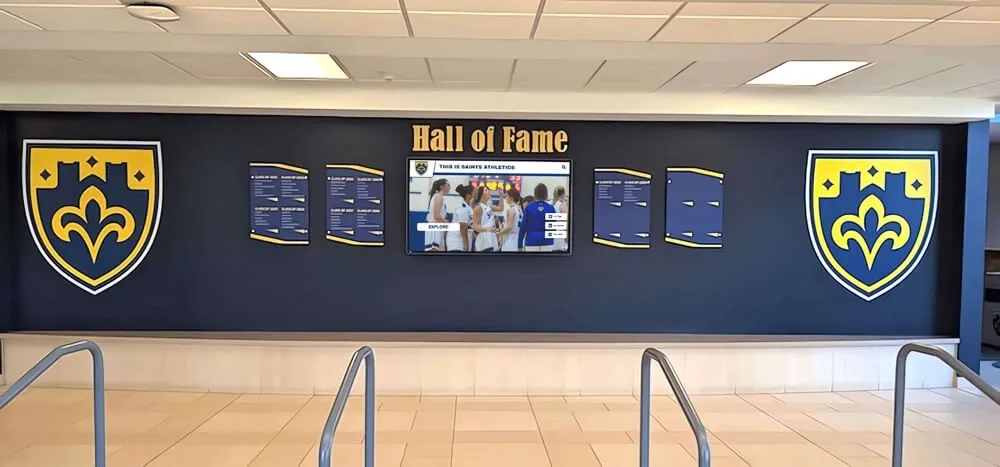
Dedicated athletic spaces showcase championship rings alongside trophies and team memorabilia creating inspiring recognition environments
Genuine Gemstones
Schools with larger budgets may opt for genuine stones:
- Sapphires: Available in blue and school color variations
- Rubies: Red stones for schools with red in color schemes
- Diamonds: Premium option for exceptional championships or accent stones
- Birthstones: Team members’ birthstones for additional personalization
Enamel and Color Filling
Colored enamel provides vibrant school color representation:
- Hard enamel filling in recessed design areas
- Durable and permanent color application
- Less expensive than gemstones while providing strong color impact
- Ideal for logos, text, and detailed design elements
Championship Ring Cost Factors and Budgeting
Understanding what drives championship ring pricing helps schools make informed budget decisions.
Price Determinants
Multiple factors influence final per-ring costs:
Base Metal Selection
As outlined above, metal choice represents the single largest cost factor. Moving from jeweler’s bronze to sterling silver to gold dramatically increases per-ring expenses.
Design Complexity
Intricate designs require more manufacturing time and skill:
- Simple designs with minimal detail: Lower cost
- Multi-level raised elements: Moderate cost increase
- Intricate engraving and fine details: Significant cost increase
- Three-dimensional sculptural elements: Premium pricing
Gemstone Quantity and Quality
Each added stone increases cost:
- Single center stone: Modest impact
- Multiple accent stones: Moderate increase
- Full stone setting around ring face: Substantial cost addition
- Genuine gemstones versus synthetics: Significant price difference
Ring Size and Weight
Larger, heavier rings require more material:
- Standard ring widths: Base pricing
- Oversized “statement” rings: 20-40% cost increase
- Lightweight designs: Potential cost savings
- Material volume directly impacts precious metal costs
Personalization Extent
Individual customization adds manufacturing complexity:
- Identical rings for all recipients: Base pricing
- Individual names engraved: $10-25 per ring additional
- Unique numbers or positions: Similar personalization cost
- Completely custom individual designs: Substantial cost increase
Order Quantity
Like most manufactured products, championship rings benefit from volume pricing:
- Small orders (10-15 rings): Higher per-unit cost
- Medium orders (20-40 rings): Moderate per-unit pricing
- Large orders (50+ rings): Best per-unit pricing
- Manufacturer minimum orders may apply
Typical Budget Ranges by Level
Schools can expect these general cost ranges based on championship level and design ambition:
High School Conference Championships
Budget-conscious approach: $75-150 per ring
- Jeweler’s bronze or basic alloy
- Simple design with school logo and championship year
- Cubic zirconia or enamel color elements
- Limited personalization
Mid-range quality: $150-300 per ring
- Sterling silver construction
- Moderately detailed design with multiple design elements
- Mix of synthetic stones and enamel
- Individual name or number personalization
Premium recognition: $300-500 per ring
- 10K gold construction
- Detailed custom design with multiple panels
- Quality synthetic stones in school colors
- Full personalization including inside engraving
High School State Championships
Most high school state championship rings fall in the $200-400 range, reflecting the significance of state-level achievement while remaining accessible for high school athletic budgets.
College Conference Championships
College programs typically budget $250-500 per ring for conference championships, with larger programs and major conferences often selecting higher-end options.
College National Championships
National championship rings at the college level frequently range $400-800+ per ring, with some major programs exceeding $1,000 per ring for historic achievements or traditional powerhouse programs.
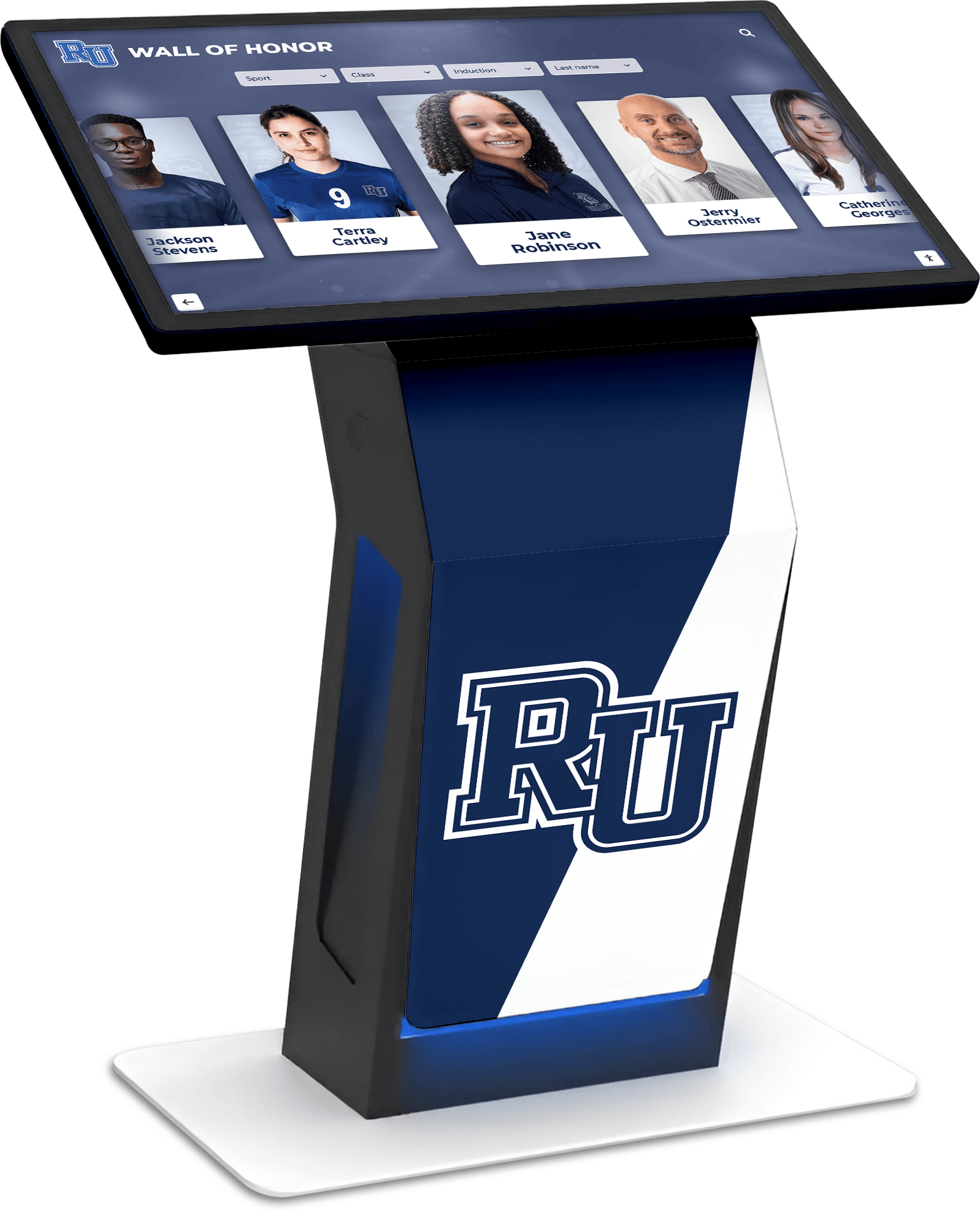
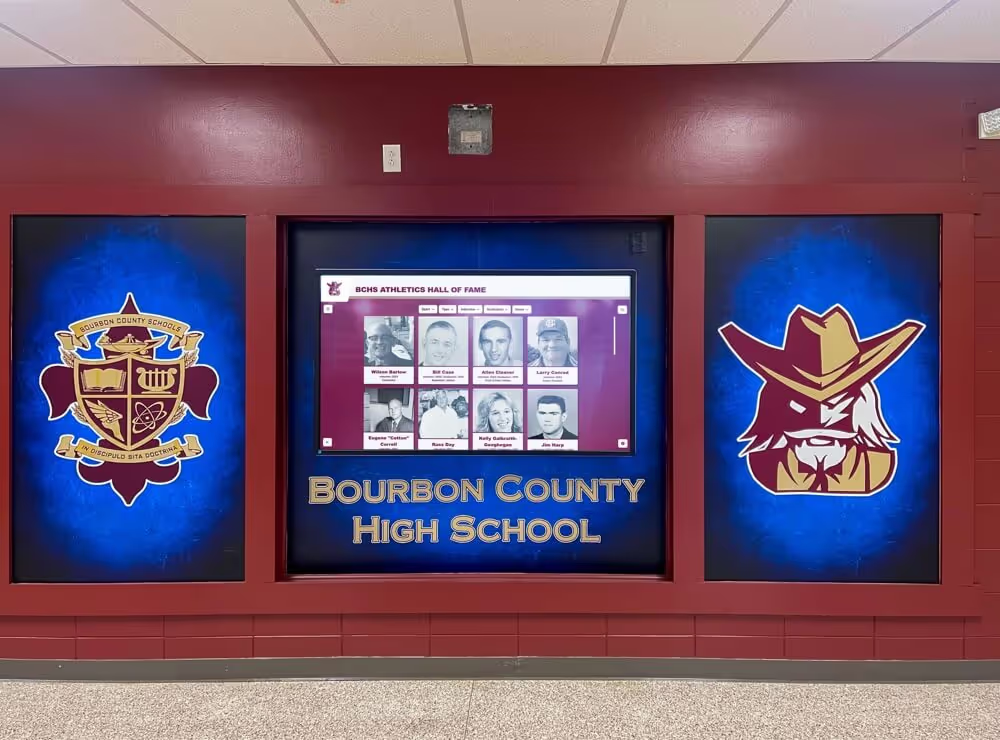
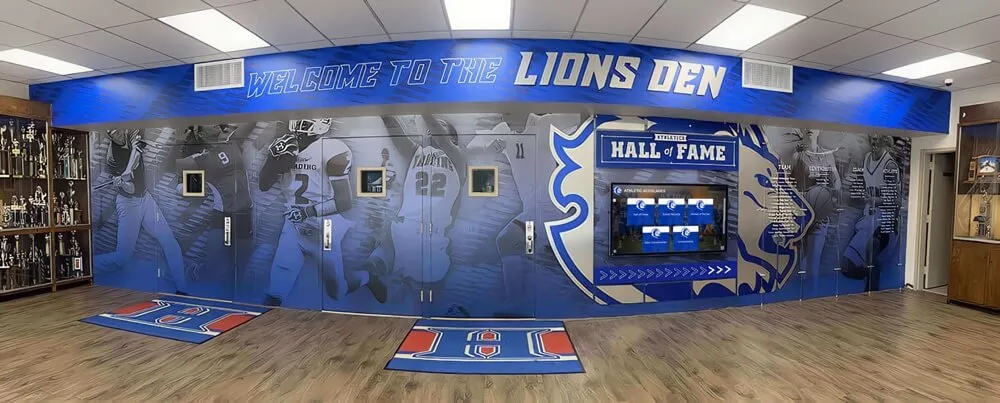
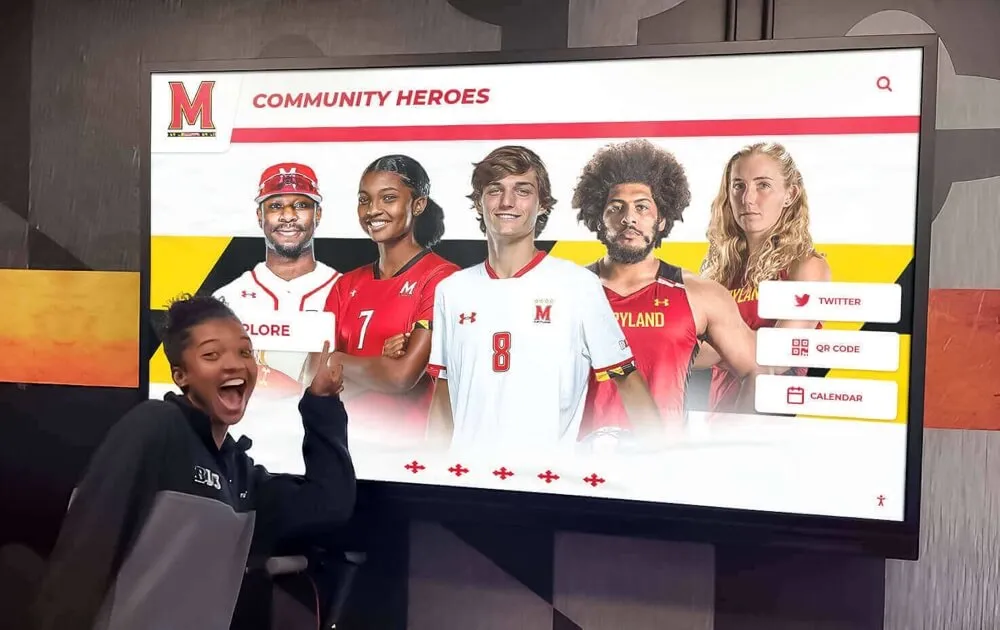
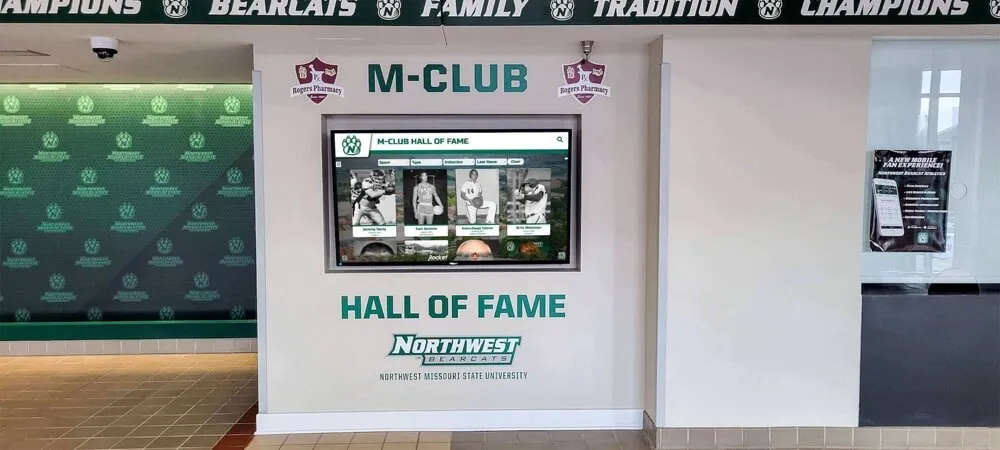
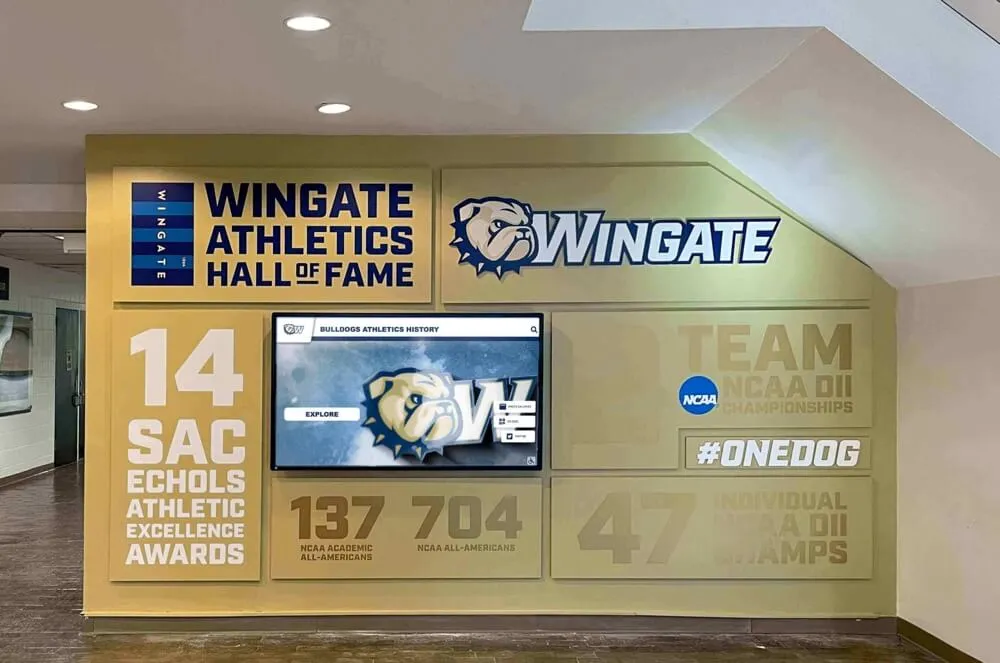
Interactive recognition kiosks allow detailed documentation of championship teams including ring designs and individual achievement details
Funding Championship Rings
The substantial total cost of outfitting an entire championship team with rings requires strategic funding approaches.
Common Funding Sources
Most championship ring programs combine multiple revenue streams:
Athletic Department Budget Allocation
Many schools include championship ring budgets within athletic department operating expenses:
- Pre-allocated championship fund anticipating potential championships
- Post-championship budget adjustments accommodating ring expenses
- Tiered budget levels based on championship significance (conference vs. state vs. national)
- Multi-year budget planning for programs with regular championship success
Booster Club Contributions
Parent booster organizations frequently fund or substantially support championship ring purchases:
- Annual booster fundraising specifically designated for championship recognition
- Special fundraising campaigns following championship victories
- Donor appeals to alumni and supporters celebrating championship achievement
- Combined funding where boosters cover portion of ring costs
Sponsorship Partnerships
Local business partnerships can offset ring expenses:
- Championship sponsor providing ring funding in exchange for recognition
- Multiple sponsors each funding portion of total ring cost
- In-kind contributions from jewelry retailers offering discounted rings
- Logo placement on ring sides acknowledging sponsor support (if appropriate)
Schools should carefully consider the appropriateness of sponsor recognition on championship rings given that rings represent personal athlete possessions rather than team equipment.
Player/Family Cost Sharing
Some programs utilize shared cost models:
- School/booster club funding base ring cost with upgrade options available
- Family contributions for premium features or materials
- Tiered ring options at different price points
- Payment plan options spreading costs over several months
Clear communication about cost-sharing expectations prevents misunderstandings and ensures equitable access regardless of family financial circumstances.
Championship Fundraising
Dedicated fundraising specifically for ring purchases:
- Post-championship fundraising campaigns celebrating team success
- School fundraising events tied to championship celebration
- Online crowdfunding campaigns engaging extended community
- Alumni network appeals to former athletes supporting current champions
Championship Ring Ordering Process and Timeline
Proper planning ensures rings arrive in time for desired presentation ceremonies.
Typical Manufacturing Timeline
Understanding production schedules helps schools plan appropriately:
Design Phase: 2-4 Weeks
- Initial design consultation with ring manufacturer
- Mockup creation and design review
- Revision rounds incorporating feedback
- Final design approval and specification confirmation
Production Phase: 8-12 Weeks
- Manufacturing setup and materials procurement
- Ring casting and initial construction
- Stone setting and enamel application
- Engraving and personalization
- Quality control and final inspection
Delivery and Distribution: 1-2 Weeks
- Shipping to school or athletic department
- Individual ring verification and sizing confirmation
- Ceremony planning and final preparation
Total timeline from initial design to delivery typically requires 12-18 weeks under normal circumstances.
Ordering Process Steps
Step 1: Manufacturer Selection
Research and select a championship ring manufacturer:
- Request samples or view portfolio of previous championship rings
- Compare pricing across multiple manufacturers
- Evaluate customization options and design capabilities
- Review customer testimonials and school references
- Confirm timeline capabilities matching your ceremony schedule
Step 2: Budget Finalization
Establish final budget parameters:
- Determine total available funding from all sources
- Calculate per-ring budget based on team roster size
- Allocate budget across metal quality, design complexity, and personalization
- Identify any cost-sharing or upgrade structures
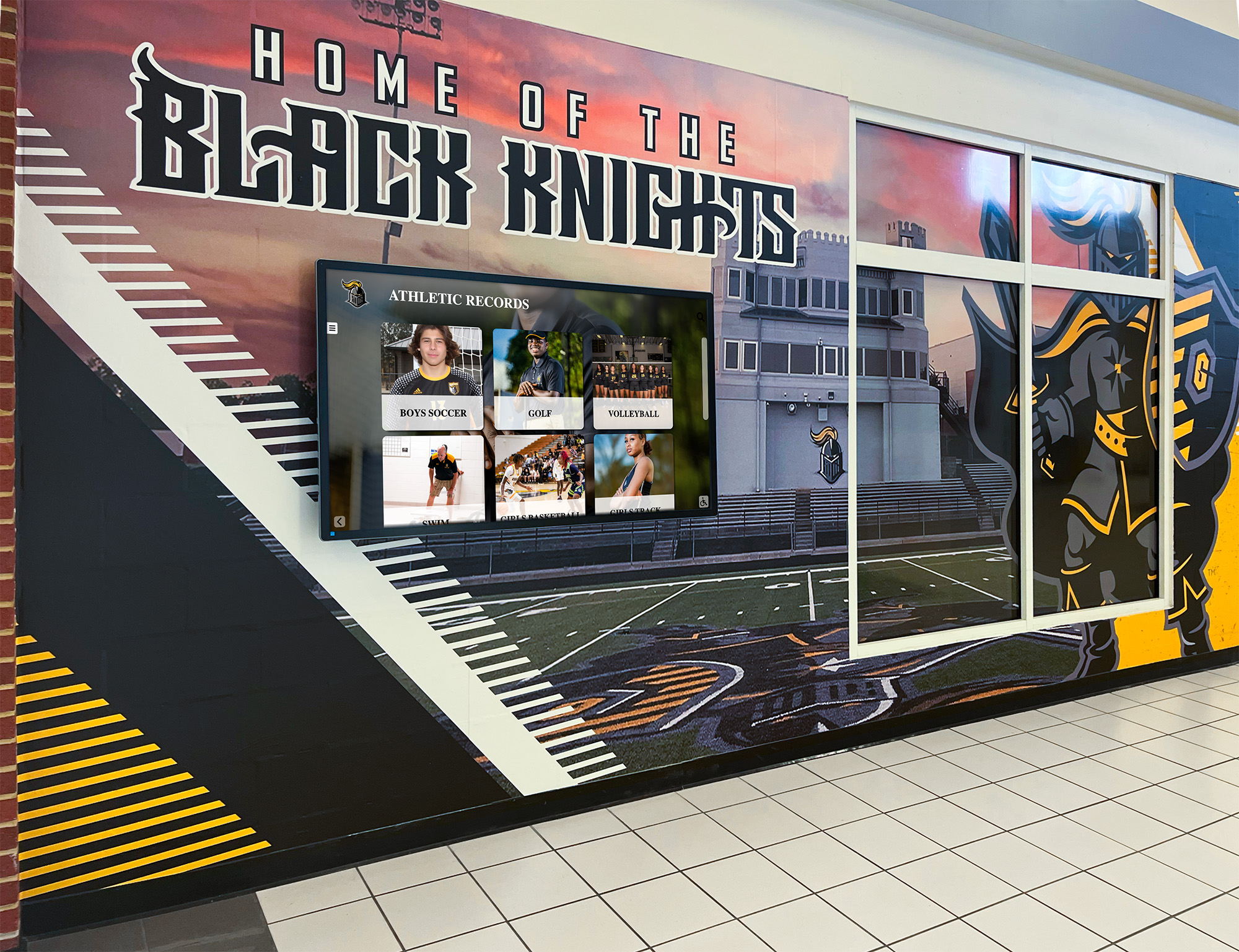
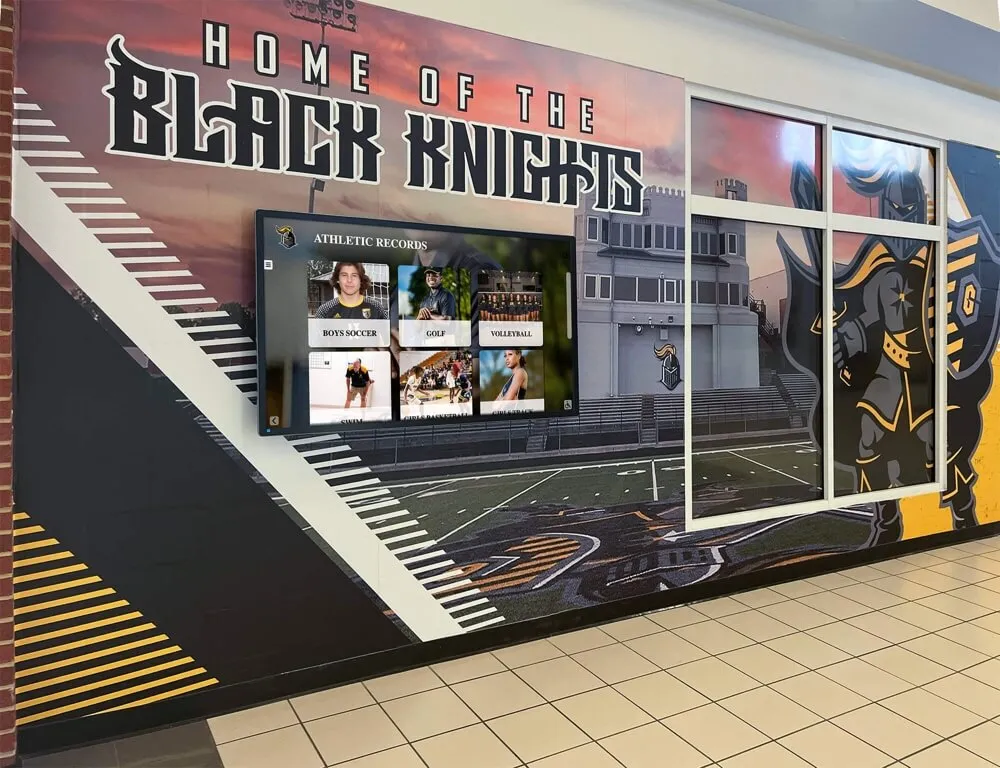
Athletic facility displays provide professional backdrops for championship recognition while documenting program achievements
Step 3: Design Collaboration
Work with manufacturer to create ring design:
- Provide school logos, mascot artwork, and color specifications
- Communicate desired design style and key elements
- Review initial mockups and provide feedback
- Approve final design rendering before production
Step 4: Roster and Personalization Details
Submit complete personalization information:
- Full championship team roster with correct name spellings
- Individual jersey numbers or positions
- Ring sizes for all recipients (manufacturer often provides sizing kits)
- Any unique individual elements or variations
Step 5: Production and Quality Control
Monitor production progress:
- Maintain communication with manufacturer throughout production
- Request progress updates at key production milestones
- Arrange for sample review if producing large quantities
- Confirm delivery timeline and shipping arrangements
Step 6: Receipt and Verification
Upon delivery, thoroughly inspect the order:
- Verify all rings received match roster count
- Check personalization accuracy on each individual ring
- Confirm sizing matches individual specifications
- Identify any quality issues requiring manufacturer correction
- Secure rings safely until ceremony presentation
Effective Championship Ring Display Strategies
Championship rings deserve prominent display beyond the individual athletes wearing them.
Physical Display Options
Schools can showcase championship rings in several ways that maximize visibility and impact:
Traditional Trophy Case Integration
Display actual championship rings alongside trophies and team recognition:
- Individual ring pedestals or cushioned displays highlighting each championship
- Acrylic ring stands providing secure display with full visibility
- Integrated lighting emphasizing ring details and gemstone elements
- Contextual information identifying championship year, sport, and achievement level
Built-in championship ring display cases typically cost $2,000-5,000 per section including materials, custom construction, security features, and professional installation.
Many schools dedicate specific trophy case sections to championship rings, creating comprehensive athletic recognition displays that combine rings with trophies, team photos, and achievement documentation.
Shadow Box Presentations
Individual shadow box displays create detailed ring showcases:
- Championship ring mounted as focal point
- Team photo showing all championship team members
- Season statistics and championship game details
- Newspaper clippings or programs from championship season
- Explanatory text describing championship significance
Shadow box displays work particularly well for historic championships or first-ever program championships deserving special presentation.
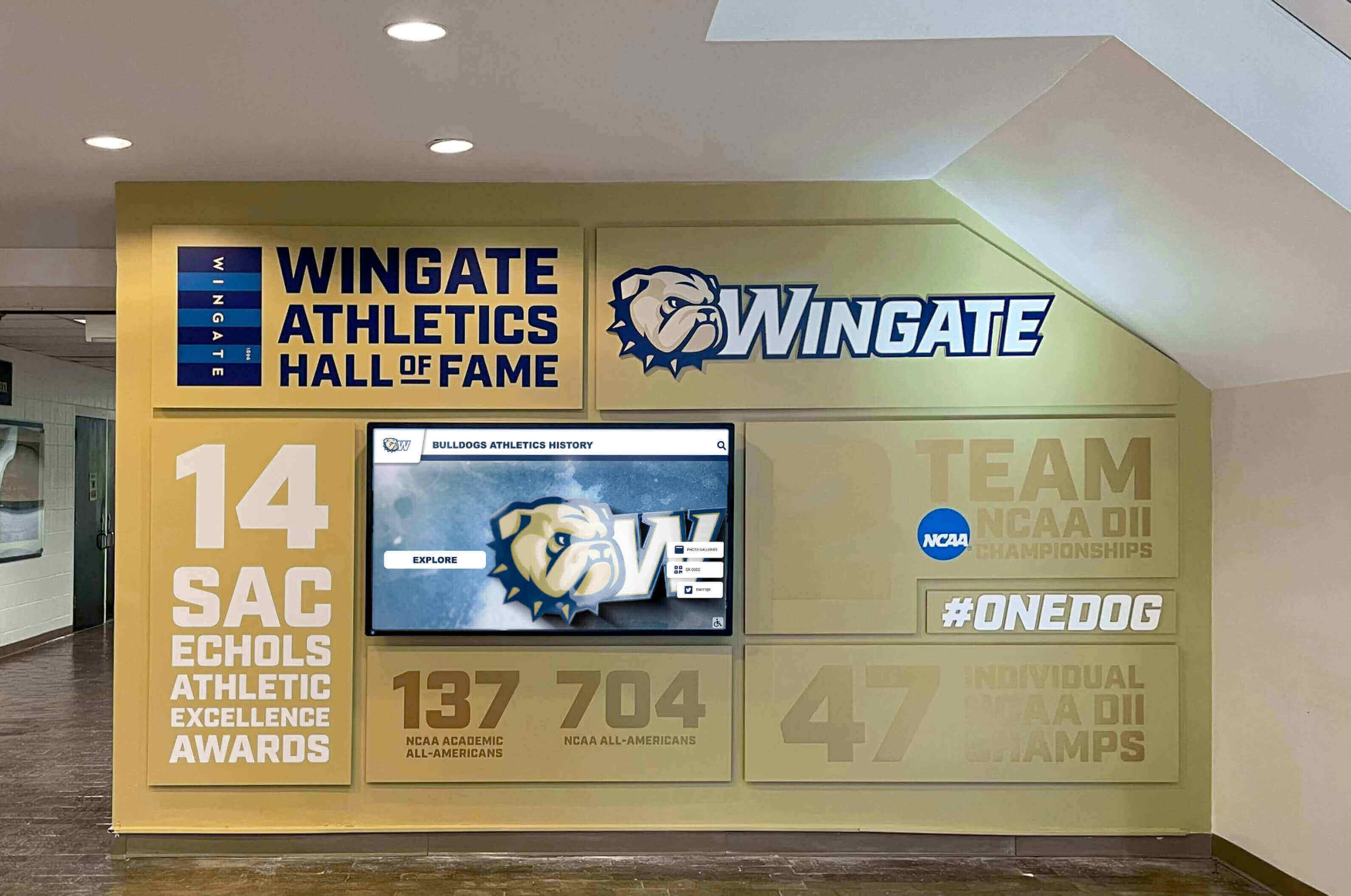
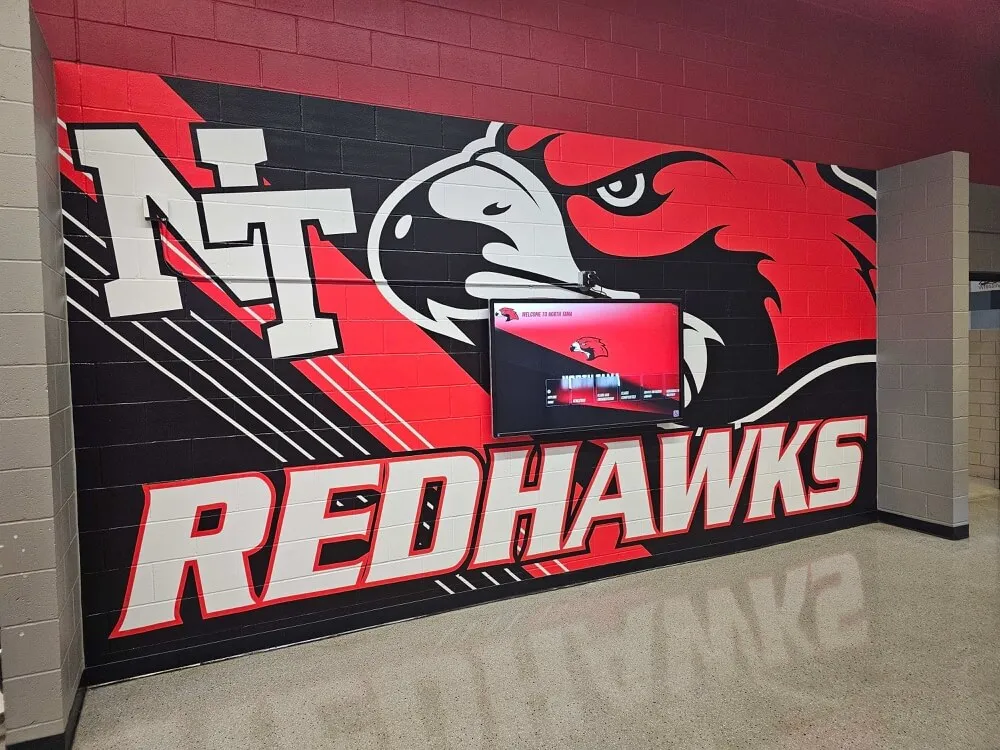
Athletic facility lobbies provide ideal locations where championship ring displays integrate naturally with broader program recognition
Ring Replica Displays
For security or preservation reasons, some schools display ring replicas:
- Exact ring replicas created for permanent display
- Original rings returned to individual athletes for personal possession
- Eliminates theft risk associated with valuable ring displays
- Allows athletes to wear original rings while school maintains display presence
Replica creation adds $50-150 per ring but provides security benefits for particularly valuable championship rings.
Digital Championship Ring Recognition
Modern digital displays complement or replace physical ring showcases:
High-Resolution Ring Photography
Digital displays enable detailed ring presentation impossible in physical cases:
- Extreme close-up photography revealing craftsmanship, gemstones, and engraving details
- Multiple viewing angles showing ring face, sides, and interior personalization
- 360-degree ring imagery allowing complete visual exploration
- Detailed captions explaining design symbolism and championship significance
Integrated Championship Team Profiles
Connect ring recognition to comprehensive team documentation:
- Championship team rosters with individual athlete profiles
- Season highlight videos and championship game footage
- Statistics, records, and achievement milestones
- Post-graduation updates about championship team members
- Searchable databases allowing visitors to explore championship history
Programs implementing digital athletic recognition systems can maintain unlimited championship ring documentation without physical space constraints.
QR Code Connections
Bridge physical and digital recognition:
- QR codes placed near physical ring displays
- Mobile access to extensive championship documentation
- Ring design close-ups and detail photography
- Team rosters and championship season narratives
- Video content featuring championship highlights
This hybrid approach maintains tangible ring presence while providing depth impossible in static physical displays.

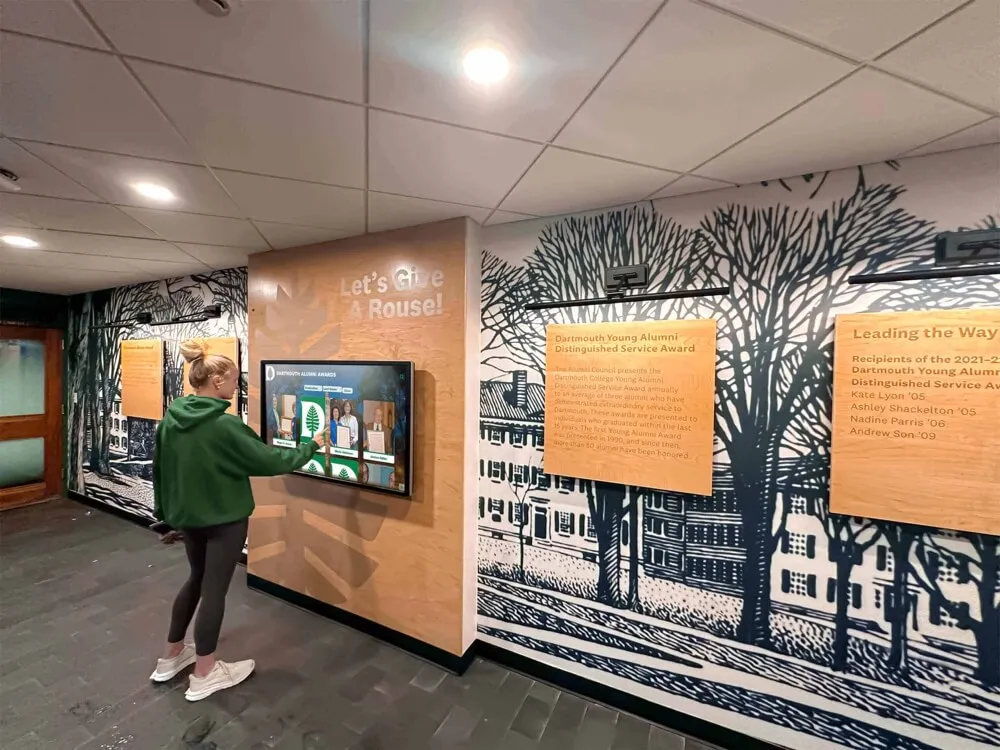
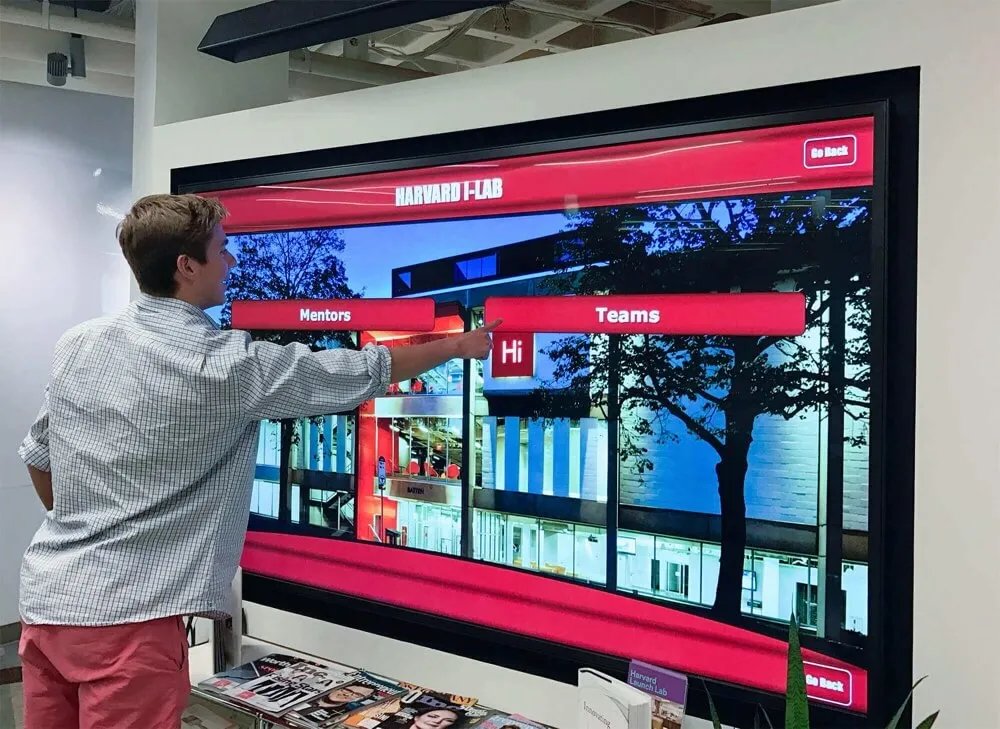
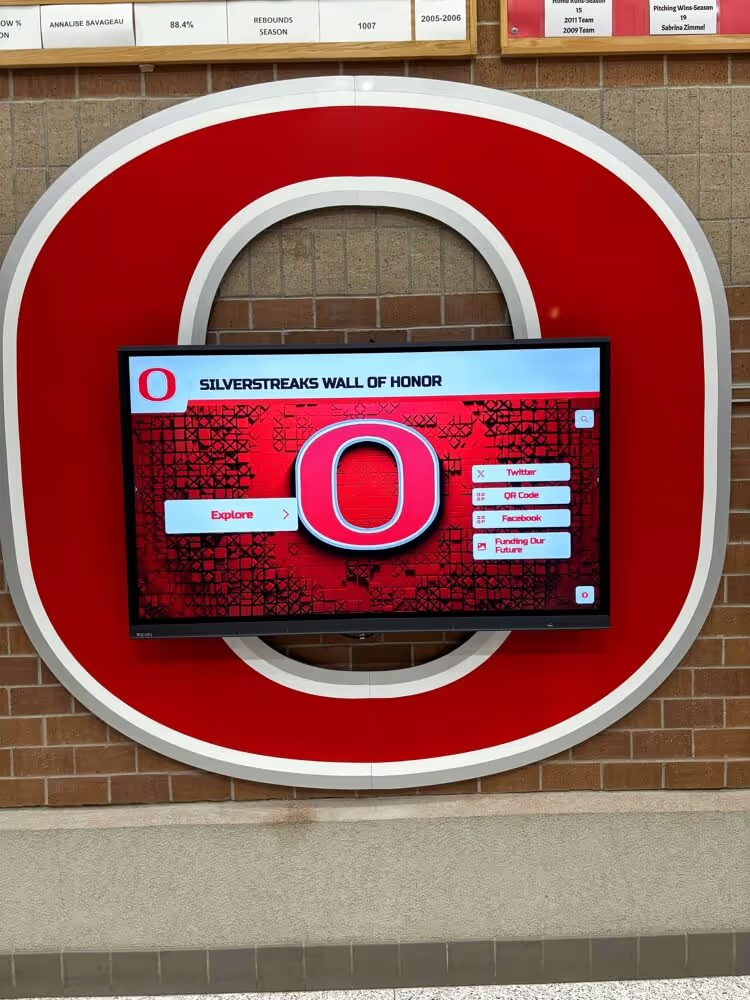
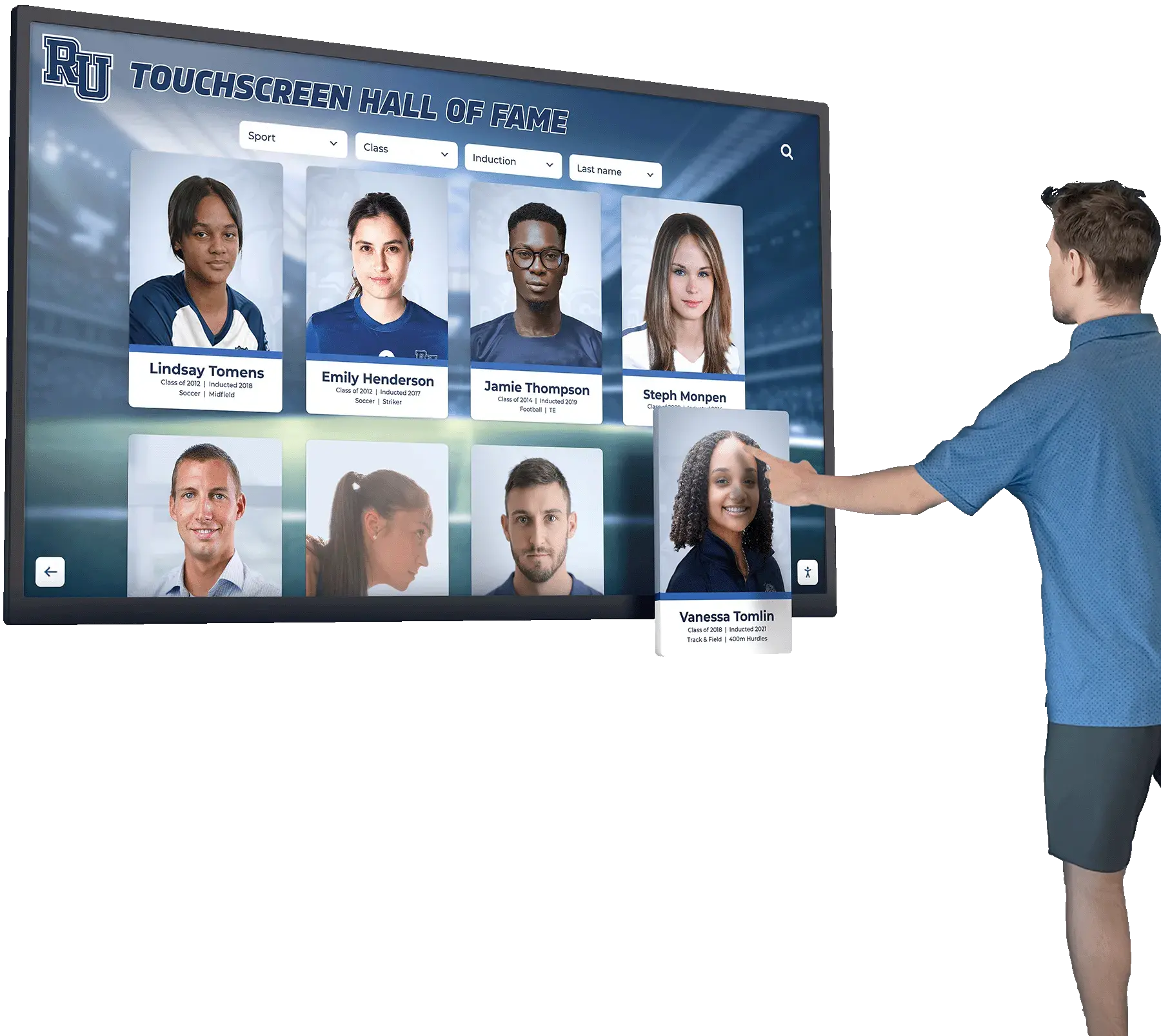
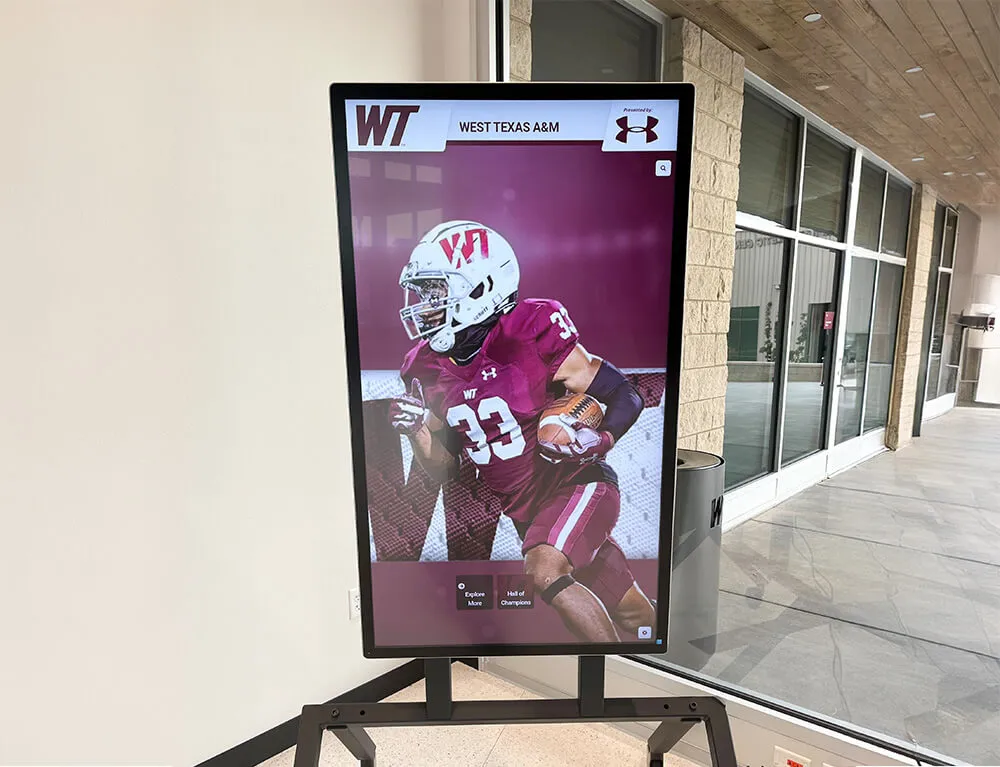
Touchscreen displays provide unlimited capacity for championship ring documentation including design details and complete team recognition
Championship Ring Presentation Ceremonies
The moment when athletes receive championship rings carries significance deserving thoughtful ceremony planning.
Ceremony Format Options
Schools typically choose among several presentation approaches:
Game-Day Public Presentations
Presenting championship rings before home games creates high-visibility celebrations:
- Pre-game gathering where championship team assembles on field/court
- Public announcement explaining championship achievement being honored
- Individual presentations with each athlete called forward to receive ring
- Team photo opportunity with everyone wearing new rings
- Community celebration with crowd acknowledgment and recognition
Game-day ceremonies work particularly well for fall sport championships presented during subsequent fall seasons when maximum team reunion becomes feasible.
Dedicated Ring Ceremony Events
Standalone celebrations exclusively focused on ring presentation:
- Private championship team and family gathering
- Extended time allowing individual recognition and detailed acknowledgments
- Meal service and social interaction strengthening relationships
- Detailed championship season retrospectives and video presentations
- Intimate environment where team members reconnect without public attention
Dedicated ceremonies enable personalized recognition impossible during brief public presentations.
Integrated Award Ceremony Recognition
Incorporating ring presentations into broader end-of-season celebrations:
- Championship rings presented as culminating awards during season banquets
- Integration with other team recognition and awards
- Natural program flow combining multiple recognition elements
- Efficient use of gathered team and families
- Shared celebration across championship and season achievements
Schools planning championship ring ceremonies often develop traditions connecting presentations to permanent recognition displays, ensuring ceremony-honored achievements receive ongoing visibility beyond single ceremony moments.
Special Considerations for Different Championship Levels
Championship ring approaches should align with achievement significance and program resources.
Youth and Middle School Championships
Younger athletes benefit from age-appropriate championship recognition:
Modified Ring Designs
Championship rings for youth programs typically feature:
- Simplified designs appropriate for younger athletes
- Smaller ring sizes accommodating developing hands
- Durable materials withstanding youth wear patterns
- Lower cost ranges ($50-100 per ring) fitting youth program budgets
- Focus on fun, celebratory design versus formal prestige
Alternative Recognition Options
Some youth programs substitute other championship recognition:
- Championship medallions or dog tags on chains
- Championship bracelets or wristbands
- Commemorative plaques or framed certificates
- Championship patches or pins for letter jackets
- Team championship banner with individual name recognition
These alternatives provide meaningful recognition at youth-appropriate costs while reserving traditional championship rings for high school and college levels.
High School Championship Rings
High school championship rings balance significance with budget realities:
Tiered Approach by Championship Level
Many high school programs vary ring investment based on achievement:
- Conference championships: $100-200 per ring
- Regional championships: $150-250 per ring
- State championships: $250-400 per ring
- National championships (if applicable): $400-600 per ring
This tiered approach ensures all championships receive recognition while reserving premium investments for most significant achievements.
Senior Emphasis Considerations
High school rings carry particular significance for graduating seniors:
- Final athletic recognition moment before graduation
- Lasting keepsake from high school athletic career
- Championship accomplishment they’ll reference throughout life
- Special senior recognition during ring ceremonies
Programs should ensure ring timelines accommodate senior athletes receiving rings before graduation when possible.
College and University Championship Rings
Collegiate championship rings warrant more substantial investments:
Professional-Grade Quality Standards
College programs typically select higher-quality rings:
- Sterling silver minimum, with gold common for major championships
- Detailed custom designs reflecting university traditions
- Multiple gemstones and premium embellishments
- Professional presentation befitting university athletic programs
- Designs often influenced by professional sports championship rings
Conference Championship Considerations

Modern digital displays transform lobbies into championship celebration spaces where ring recipients receive permanent recognition
Many college programs distinguish between conference and national championships:
- Conference championship rings: $250-400 per ring
- National championship rings: $500-1,000+ per ring
- Some programs reserve traditional rings exclusively for national championships
- Alternative recognition (watches, pendants) for conference achievements
Coaching Staff and Support Personnel Inclusion
College championship rings typically extend beyond competing athletes:
- Head coaches and assistant coaching staff
- Athletic trainers and medical personnel
- Equipment managers and support staff
- Team managers and student assistants
- Athletic department administrators
Comprehensive recognition acknowledges that championships result from collective efforts extending far beyond competing athletes.
Championship Ring Trends and Innovations
Championship ring design continues evolving with changing aesthetics and manufacturing capabilities.
Contemporary Design Trends
Modern championship rings reflect current design preferences:
Bold, Oversized Designs
Championship rings have grown larger and more substantial:
- Wider bands creating more design surface area
- Three-dimensional elements extending above ring face
- Statement sizing emphasizing championship significance
- Influence from professional sports championship ring aesthetics
Alternative Finishes and Materials
Beyond traditional polished gold or silver:
- Matte or brushed metal finishes
- Two-tone metal combinations (white and yellow gold)
- Black rhodium plating for modern aesthetic
- Titanium or alternative materials for unique appearance
- Mixed metal designs incorporating multiple finish styles
Technology Integration
Some manufacturers now offer innovative features:
- NFC chips embedded in rings linking to digital content
- QR codes integrated into ring design
- Scannable elements connecting to championship databases
- Digital authentication preventing counterfeiting
These technological additions create bridges between physical rings and comprehensive digital recognition systems.
Sustainability Considerations
Growing awareness of environmental and ethical sourcing impacts championship ring selection:
Recycled and Sustainable Materials
Environmentally conscious programs increasingly request:
- Recycled precious metals reducing mining impact
- Laboratory-grown gemstones versus mined stones
- Conflict-free diamond certification
- Sustainable manufacturing practices
- Reduced packaging and shipping environmental footprint
Extended Lifespan Design
Creating rings built to last:
- Durable construction methods ensuring decades of wear
- Timeless design aesthetics avoiding dated trendy elements
- Quality materials maintaining appearance indefinitely
- Repairable and serviceable construction allowing maintenance
Sustainable approaches align championship recognition with broader institutional environmental commitments.
Maintaining Championship Ring Quality
Proper care ensures championship rings maintain their appearance throughout recipients’ lives.
Ring Care and Maintenance
Athletes should understand basic ring care:
Regular Cleaning
Maintain ring brilliance through routine care:
- Warm water and mild soap cleaning every few weeks
- Soft brush removing dirt from crevices and stone settings
- Professional jewelry cleaning annually
- Avoid harsh chemicals and abrasive cleaners
Safe Storage
When not wearing rings:
- Individual ring boxes or pouches preventing scratches
- Separate storage preventing rings from scratching each other
- Climate-controlled environments avoiding extreme temperature or humidity
- Secure locations protecting valuable rings from theft
Periodic Professional Inspection
Annual jewelry inspection catches potential issues:
- Stone setting security verification
- Prong tightening preventing stone loss
- Band integrity inspection identifying wear
- Professional cleaning and polishing restoration
Ring Sizing and Adjustments
Athletic department staff should maintain records:
- Original ring sizes for all recipients
- Manufacturer contact information for future sizing needs
- Protocols for athletes requiring ring resizing
- Costs and timelines for sizing adjustments
Most championship ring manufacturers offer sizing services for rings they produced, though timing and costs vary.
Building Championship Ring Traditions
Schools with consistent championship success often develop distinctive ring traditions creating continuity across championship seasons.
Establishing Consistent Standards
Programs benefit from established ring policies:
Design Consistency
Create recognizable visual identity across championship years:
- Consistent base design elements maintained across different sports
- School-specific ring aesthetic recognizable as institutional style
- Evolution rather than complete redesign with each championship
- Visual connection between rings from different championship years
Recipient Criteria
Clear policies determining ring recipients:
- Minimum participation requirements for team members
- Coaching staff and support personnel inclusion standards
- Honorary rings for significant contributors (boosters, administrators)
- Consistent application across all sports and championship levels
Presentation Timing Traditions
Established ceremony timing creates anticipation:
- Annual ring presentation events at consistent calendar points
- Traditional presentation formats recurring across years
- Signature locations becoming synonymous with championship celebration
- Multi-phase recognition combining private ceremonies with public acknowledgment
Programs developing authentic traditions create championship cultures where rings become anticipated milestones athletes pursue throughout their careers, connecting to broader institutional achievement recognition systems.
Conclusion: Creating Lasting Championship Recognition
Championship rings represent extraordinary athletic achievement deserving thoughtful selection, meaningful presentation, and prominent display. Schools successfully implementing championship ring programs create recognition systems that honor athletic excellence while building championship culture inspiring current and future student-athletes.
Effective championship ring programs balance multiple considerations—design quality reflecting achievement significance, costs fitting realistic budgets, timelines ensuring prompt recognition, presentation ceremonies creating memorable celebration moments, and display strategies providing lasting visibility beyond individual ring recipients.
The most comprehensive approach extends beyond simply ordering rings following championship victories. Successful programs develop consistent ring traditions, integrate rings within broader athletic recognition systems, create meaningful presentation ceremonies, and ensure championship achievements receive permanent prominent display alongside other institutional honors.
Modern recognition technology enables schools to complement physical championship rings with unlimited digital documentation preserving complete championship team histories, detailed ring design information, comprehensive season narratives, and individual athlete profiles. This combination satisfies stakeholders who value tangible championship hardware while providing engagement advantages and unlimited capacity of digital platforms.
Ready to create comprehensive championship recognition extending beyond individual rings? Discover how modern digital recognition solutions transform championship celebration by combining traditional trophy displays with interactive touchscreen systems that showcase unlimited championship achievements. Our comprehensive platforms help schools document championship ring designs, preserve complete team histories, and create engaging recognition experiences inspiring excellence while honoring your athletic program’s greatest achievements for generations to come.