



Intent: compare — Every school administrator who has ever stared at a gymnasium ceiling full of championship banners understands the moment the math stops working. There are only so many rafters, only so many square feet of hallway wall, and only so many glass trophy cases before a new state title has nowhere to go. Meanwhile, conference championships from fifteen years ago gather dust in a storage closet because the physical display maxed out somewhere around the turn of the decade.
The question is not whether championship banners matter — they absolutely do. A well-hung banner declaring a state title is one of the most powerful symbols a school program can own. The question is what happens to every other achievement that cannot claim that same square footage: the conference runner-up seasons, the individual record holders, the scholar-athlete honorees, and the coaches who spent three decades building a program before winning that first banner.
This guide compares championship banners and digital trophy cases not as opponents, but as tools with genuinely different jobs. Understanding what each one does best helps schools design recognition systems where physical banners earn their wall space, and digital platforms handle everything that fabric, glass, and lumber simply cannot.
Physical championship banners and digital trophy cases both celebrate school achievement, but they operate at different scales and serve different audiences. Getting the balance right means more athletes recognized, more history preserved, and more community pride visible to every student who walks through the building.

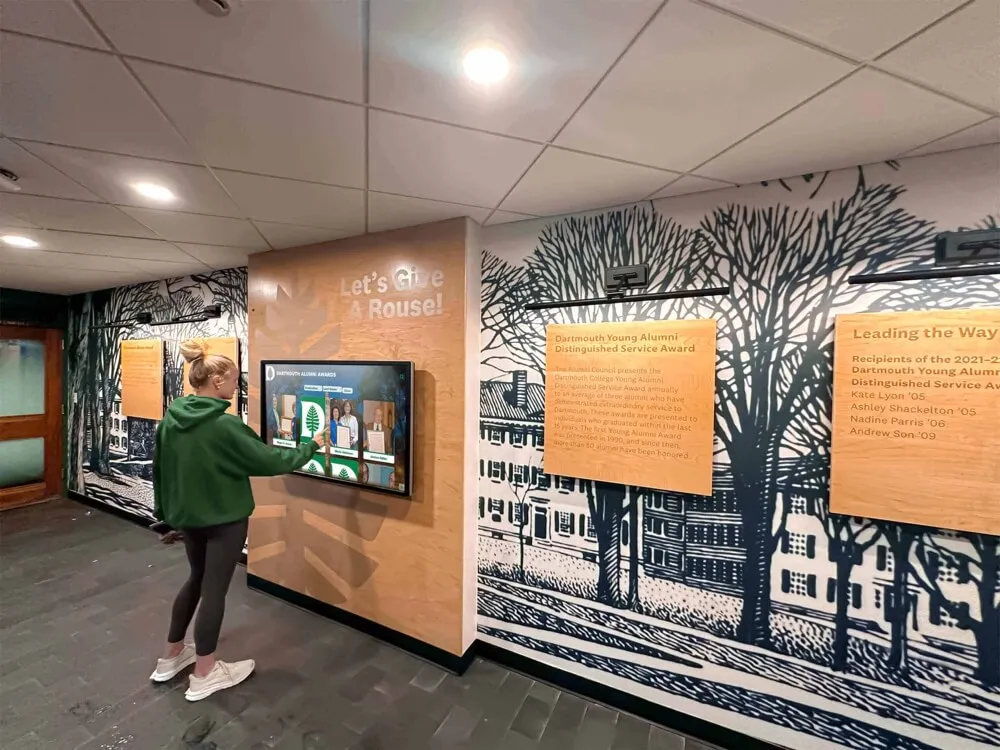
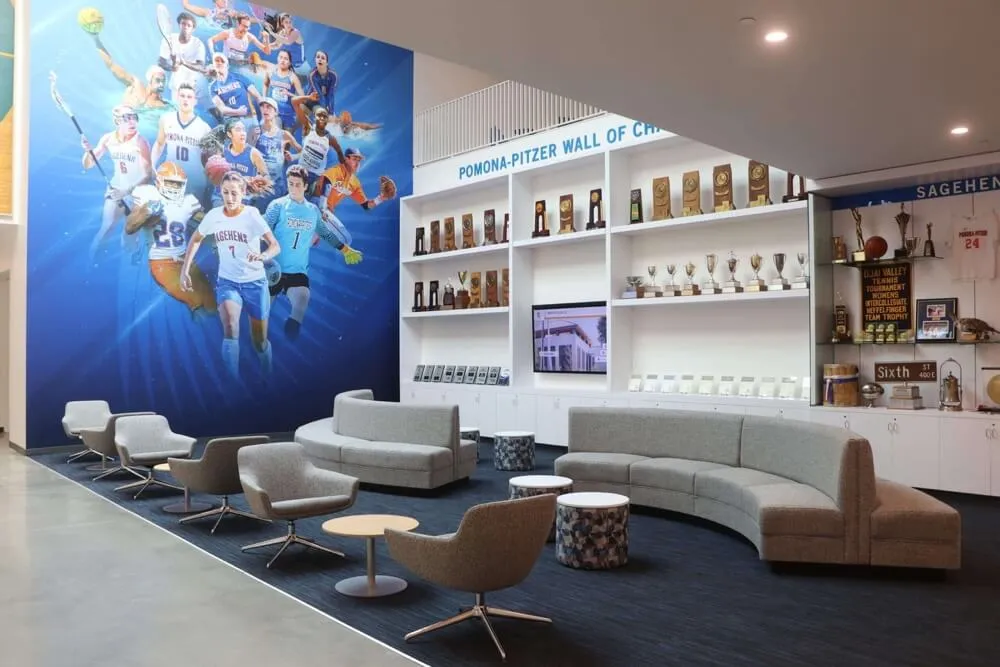
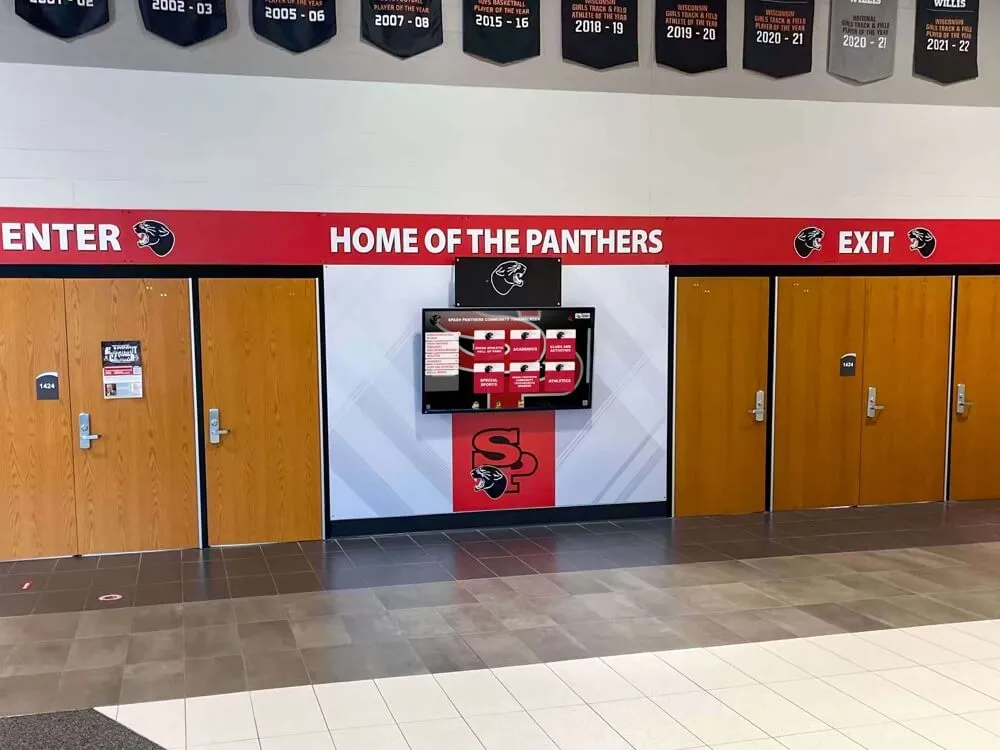
Championship displays anchor athletic identity — but physical wall space eventually imposes hard limits on how much history a school can show
What a Championship Banner Actually Does
A championship banner earns its place on the wall precisely because it is impossible to ignore. Hanging from gymnasium rafters or mounted across a fieldhouse entry, a banner communicates program excellence in about three seconds: sport, title, year. No one reads a plaque while sprinting to halftime. Everyone sees a banner.
The Strengths of Physical Banners
Championship banners do several things that no digital screen replicates perfectly:
Permanence that athletes can feel. A student-athlete who helps win a conference title and then sees that banner hang for the next twenty years experiences something different from a database entry. The physical object carries weight — literally and symbolically.
Ambient motivation. Banners work without electricity, staff attention, or anyone touching them. They hang there during every practice, every game, every late-night conditioning session, silently raising the standard of what this program has already achieved.
Visitor legibility from distance. Championship banners are designed to be read from across a gymnasium floor. No touchscreen matches that passive, distance-readable presence in a competition venue.
Community recognition at events. When families fill bleachers on a Tuesday night, they look up. Championship banners contextualize that moment — this program has won before, and it can win again.
Where Championship Banners Hit Their Limits
The problem is not that banners fail. The problem is that they cannot scale. A program celebrating its fortieth year of competitive athletics has accumulated far more achievement than any rafter system can hold, and the decisions about what to hang and what to retire create real tension.
Finite ceiling and wall space. Gymnasiums, fieldhouses, and athletic corridors have fixed dimensions. Once every available run of wall is covered, adding a new banner means removing or overlapping an old one — neither of which honors the achievement that earned its place.
Single-achievement focus. Banners celebrate championships. They rarely capture the second-place finishes that produced the runner who later won state, the all-conference selections that built program reputation, or the academic achievement awards that reflect the full student-athlete experience.
Updating is labor-intensive. Replacing a damaged banner, correcting a printing error, or adding context (a coaching change, a record broken the same year) requires physical work, vendor lead times, and budget.
Storage creates invisible history. When schools run out of space and box up older banners, those achievements effectively disappear from daily school life. A 1987 state championship sitting in a maintenance closet is not celebrating anything.
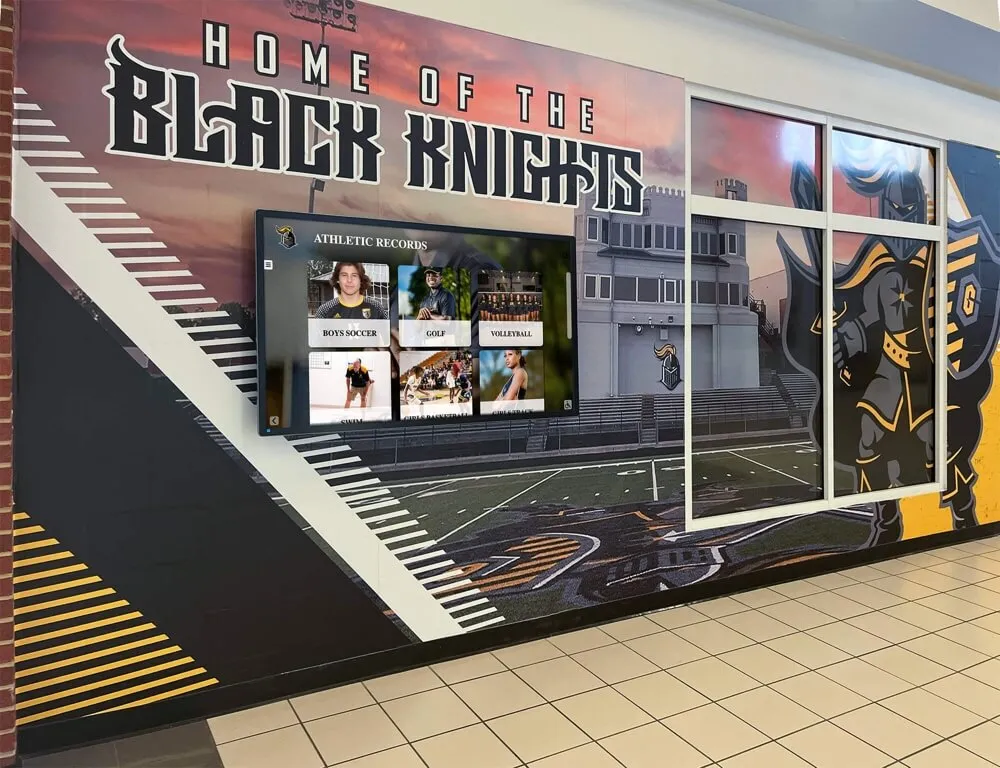
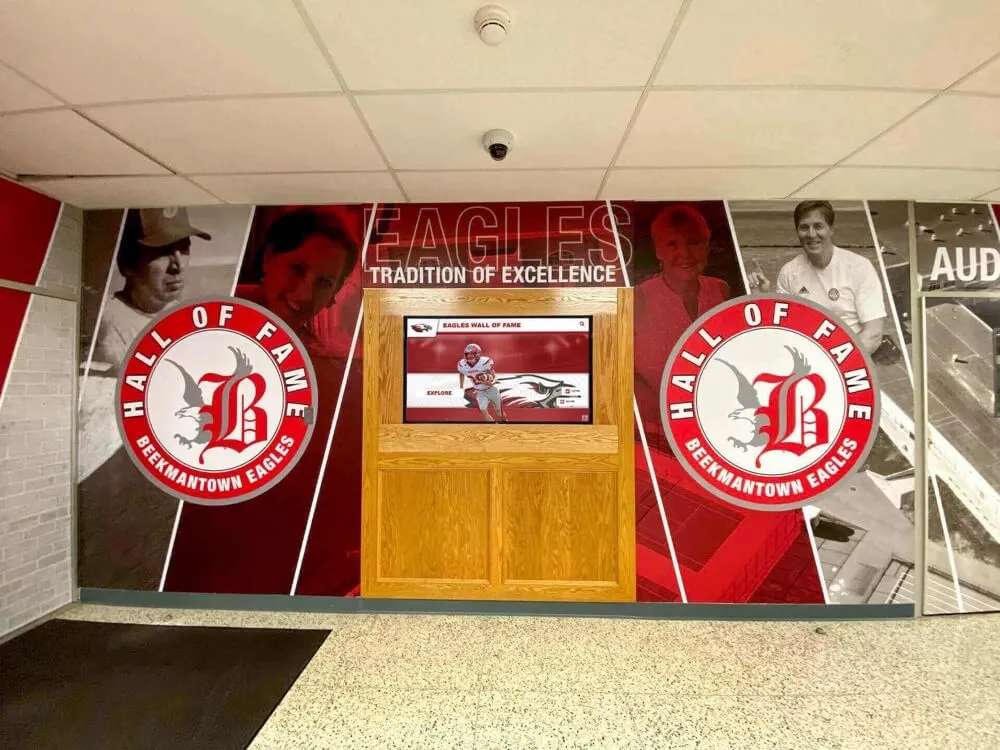
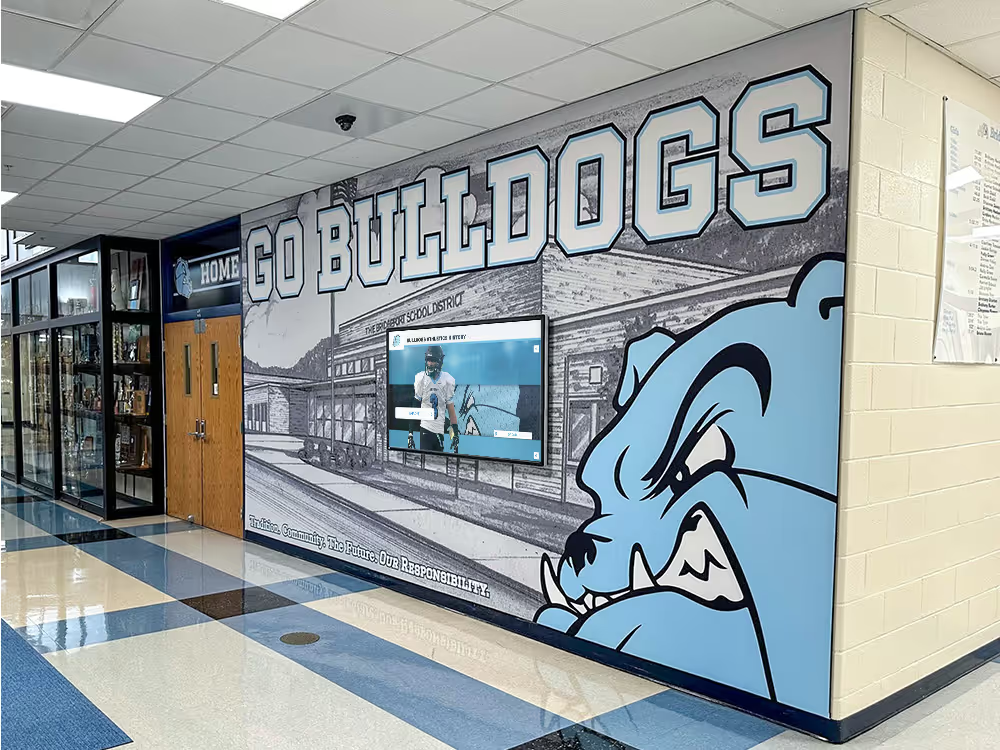
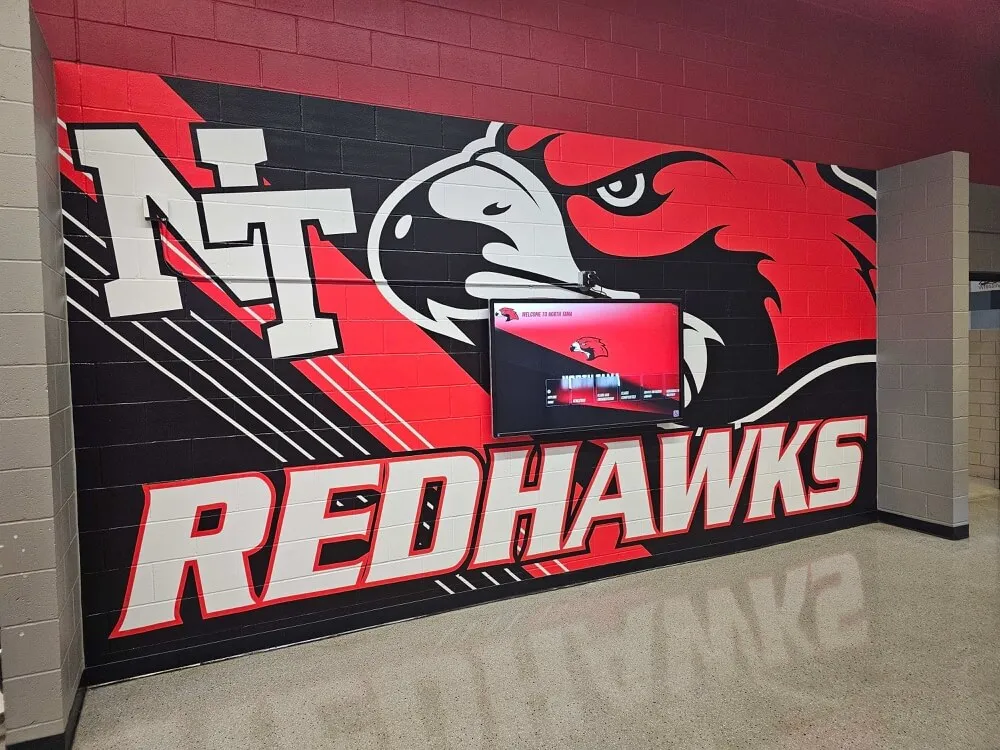
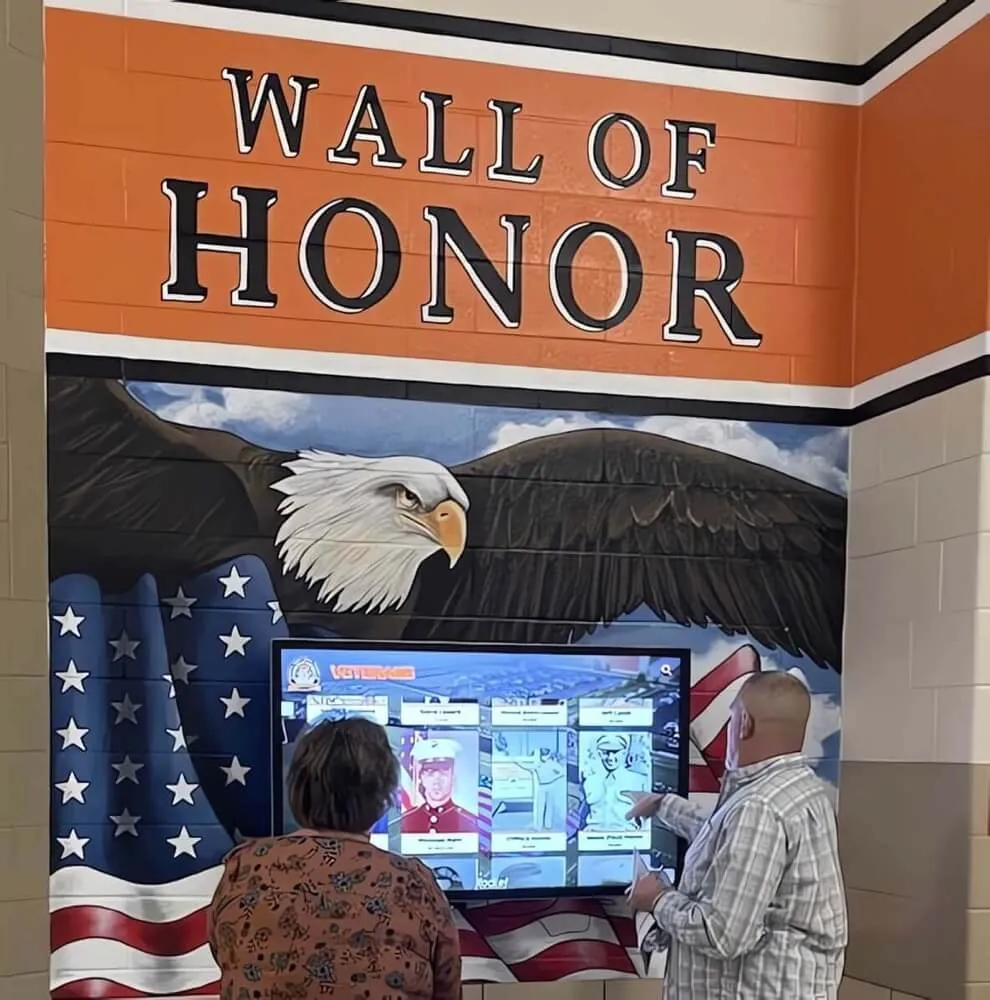
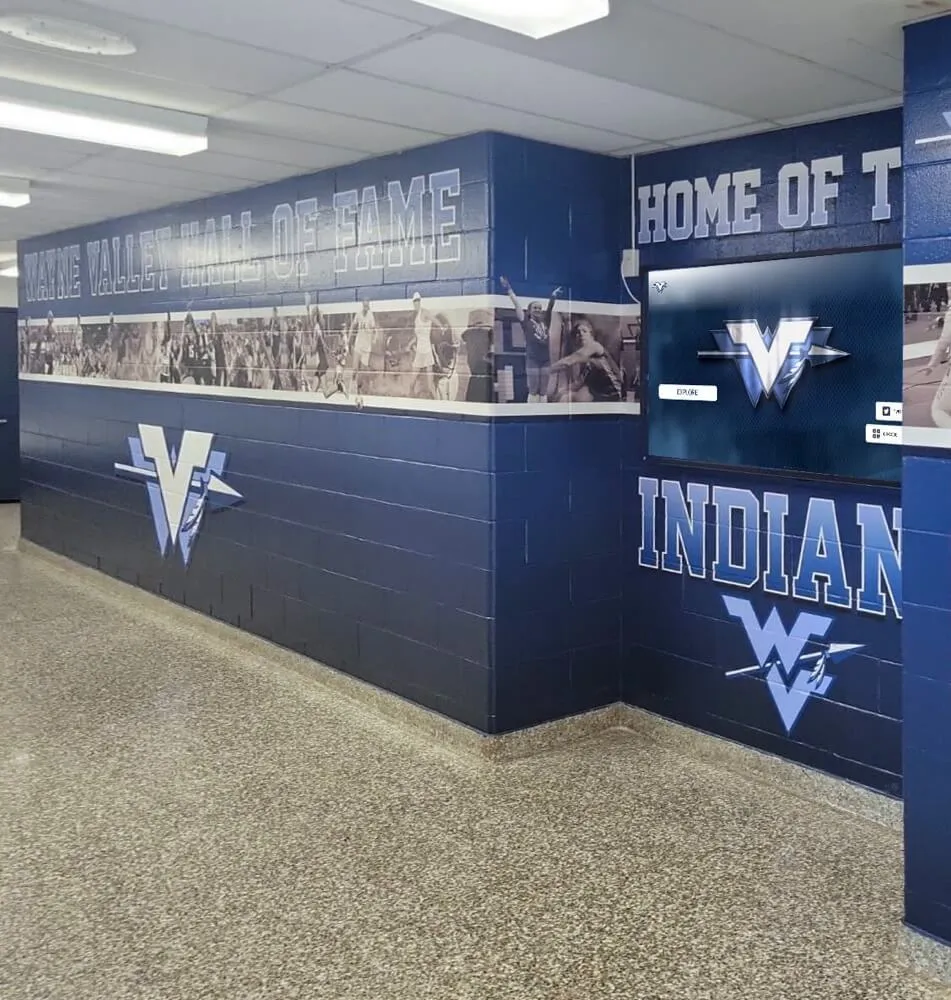
Hallway murals and record boards extend recognition beyond gymnasium walls — but still face the same physical capacity ceiling as banners
What a Digital Trophy Case Actually Does
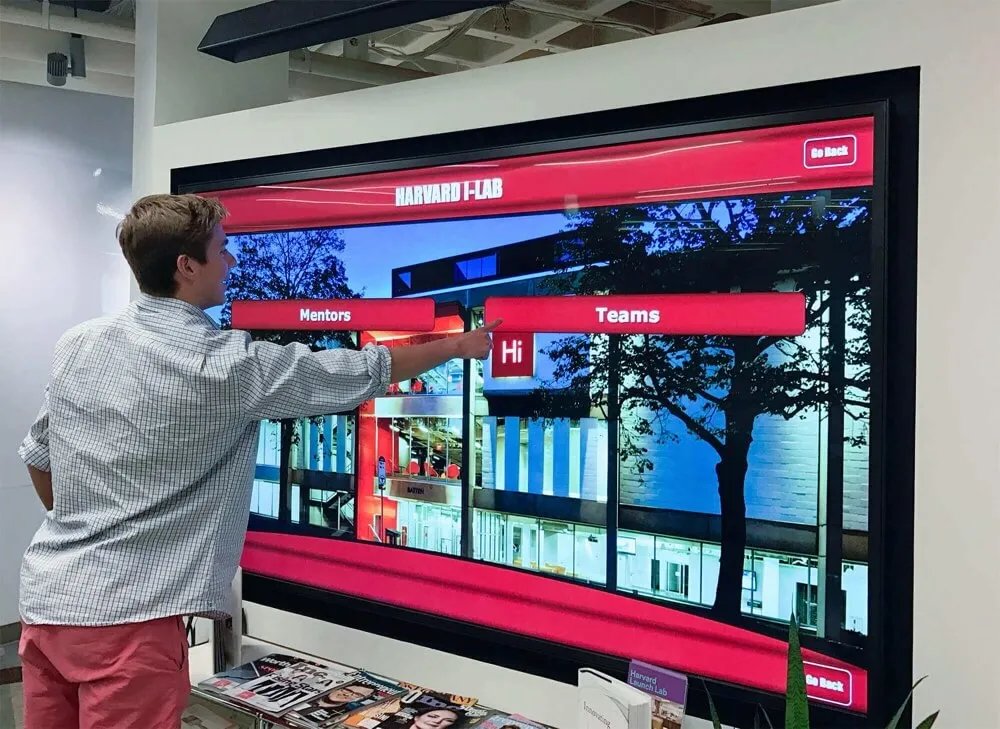
A digital trophy case is a cloud-managed, touchscreen-accessible platform that stores and displays an unlimited number of athletic and academic achievements. Instead of glass cabinets and hanging fabric, recognition lives in a searchable database rendered on screens that students, families, alumni, and visitors can explore.
The platform Rocket Alumni Solutions builds for schools handles championship team profiles, individual record holders, hall of fame inductees, scholar-athlete honorees, coaching milestone achievements, and donor recognition — all in one system, updated remotely without IT tickets or physical access.
Unlimited Capacity Is the Starting Point
The most immediate difference between a physical banner and a digital trophy case is that the digital system has no upper limit. A school that won its first conference title in 1971 and its most recent in 2025 can display all fifty-four years of achievement with equal prominence. Nobody gets boxed up in storage.
For schools exploring recognition approaches that extend beyond the gym, resources on academic recognition programs illustrate how digital systems can hold both athletic and academic honors in a unified platform — something physical trophy cases cannot do at any meaningful depth.
Interactive Exploration Replaces Passive Observation
Where a championship banner delivers information in three seconds and then ends the conversation, a digital trophy case invites a longer relationship with school history. A visitor can:
- Search by sport, year, athlete name, or achievement category
- View complete team rosters for championship seasons
- Browse individual career statistics alongside team accomplishments
- Access photo galleries, highlight descriptions, and season context
- Discover records that would never fit on a physical board
This depth matters for alumni engagement. A graduate from 1998 who returns for homecoming and finds their team’s full championship season profile — roster, season record, tournament bracket results — experiences something qualitatively different from seeing a banner that says “Conference Champions 1998.”
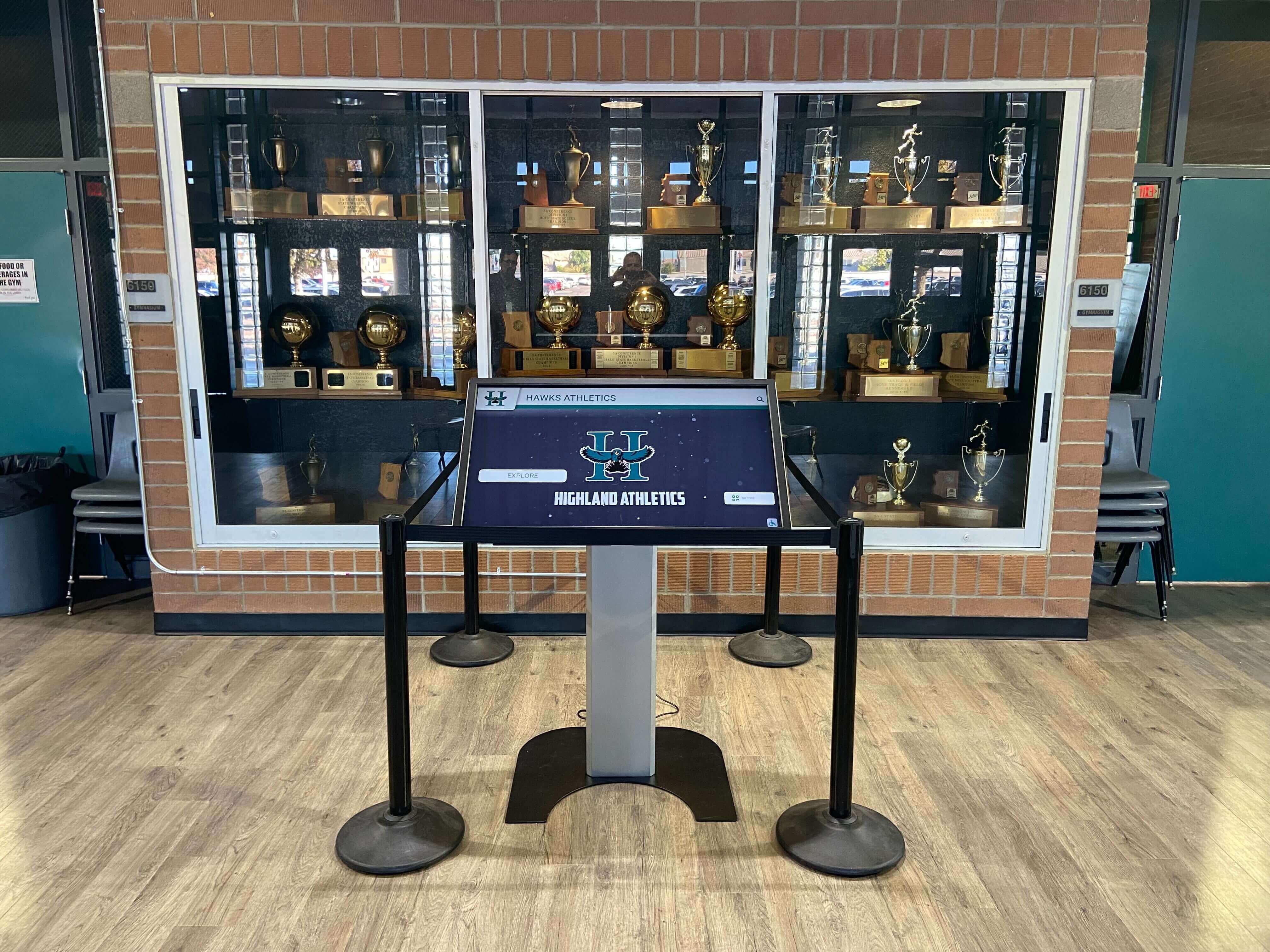
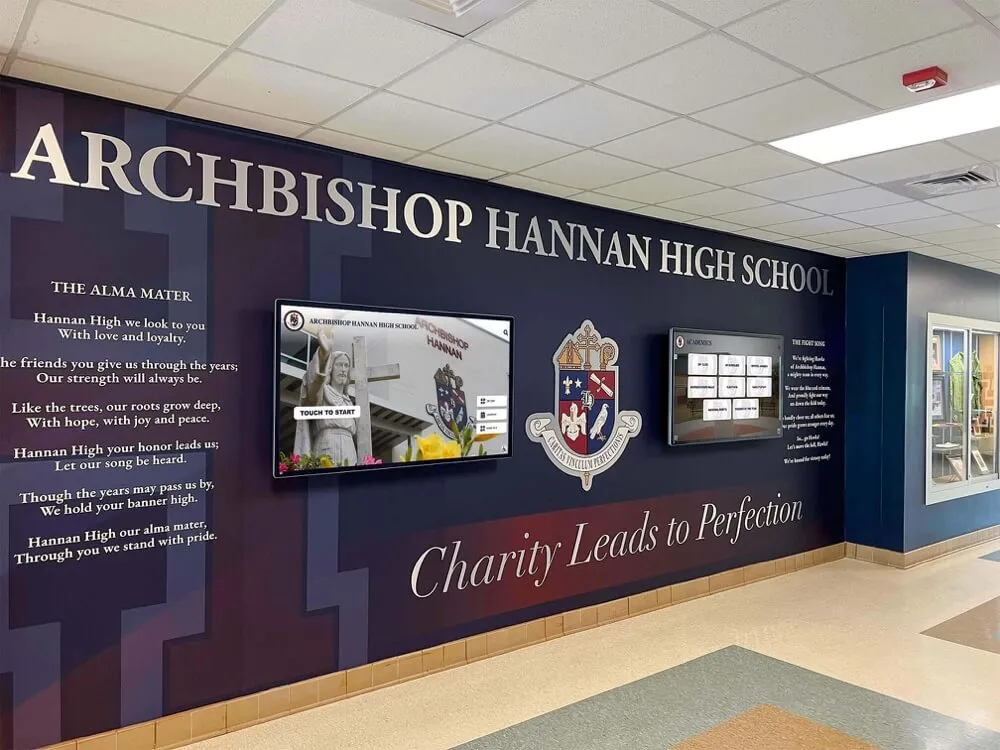
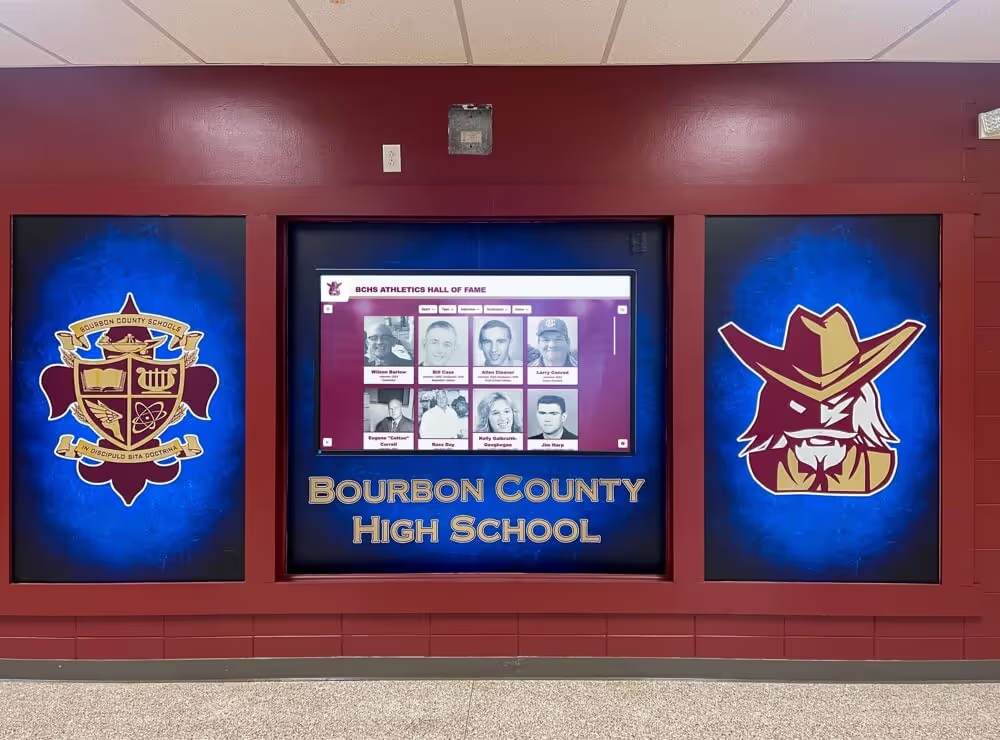
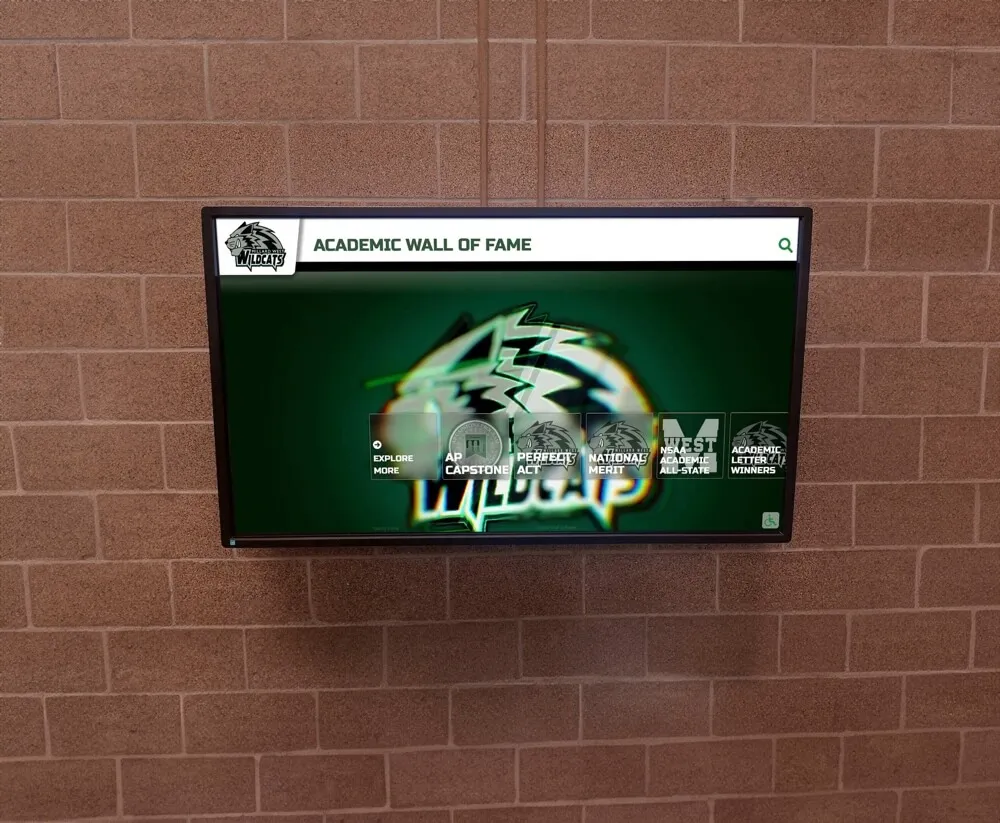
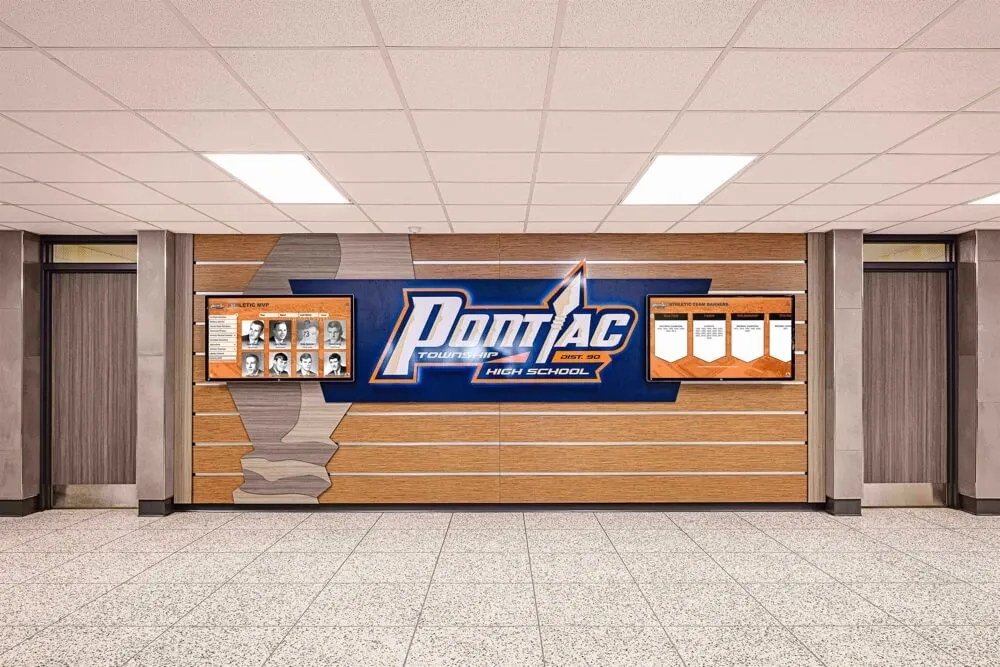
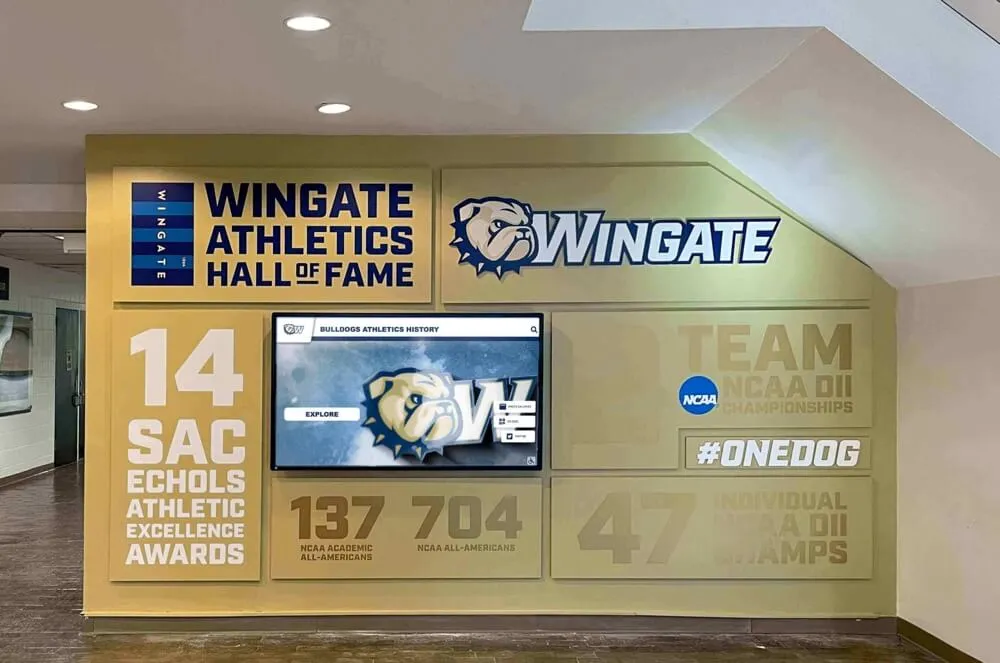
Digital kiosks bring unlimited recognition capacity to the same hallway footprint as a traditional trophy case — without displacing a single physical trophy
Remote Management Without IT Friction
One underappreciated advantage of digital trophy case platforms is how quickly recognition can go live after it happens. An athletic director at a tournament on a Saturday night can update the platform from a phone. A new state title appears on the display before Monday morning.
Physical banners require graphic design files, vendor production time, shipping, and installation — sometimes weeks between a championship win and visible recognition. For smaller and mid-sized public schools where athletic staff handle multiple administrative responsibilities, that operational speed difference matters significantly.
Side-by-Side: What Each Format Handles Best
Championship Banners Excel At
- High-visibility single-line achievement statements in competition venues
- Passive ambient motivation that works without any user interaction
- Distance-readable recognition from gymnasium floors and bleachers
- Permanent physical commemoration of top-tier championships
- Immediate visual impact for visiting teams, recruits, and families at games
- Building tradition through decades-long visual accumulation
Digital Trophy Cases Excel At
- Unlimited achievement storage with no space constraints
- Searchable access to complete historical records by any category
- Recognition for achievements that fall below banner-worthy thresholds
- Instant remote updates from any device, anywhere
- Interactive depth — rosters, stats, photos, context — behind every achievement
- Consistent recognition across sports that don’t have dedicated wall space
- Academic, volunteer, and donor recognition alongside athletic honors
The productive framing is not “which one should we choose” — it is “which achievements belong in which format.” Most schools that think carefully about this question arrive at the same answer: a small set of premier achievements stays physical, and everything else becomes digital.
The Wall Space Problem Is Solvable
Schools that have implemented both systems describe a consistent shift in how they think about recognition. Before digital platforms, every decision about what to display was actually a decision about what to hide. Physical capacity created a zero-sum environment: celebrating this year’s team meant removing something from fifteen years ago.
Digital trophy cases eliminate the zero-sum nature of that decision entirely. The question becomes “how do we tell this story well” rather than “what gets sacrificed.”
For schools with decades of accumulated yearbooks, photographs, and historical records that need to be made accessible alongside current achievements, yearbook scanning and digitization services can provide the historical content that makes a digital trophy case feel genuinely complete rather than starting from scratch.
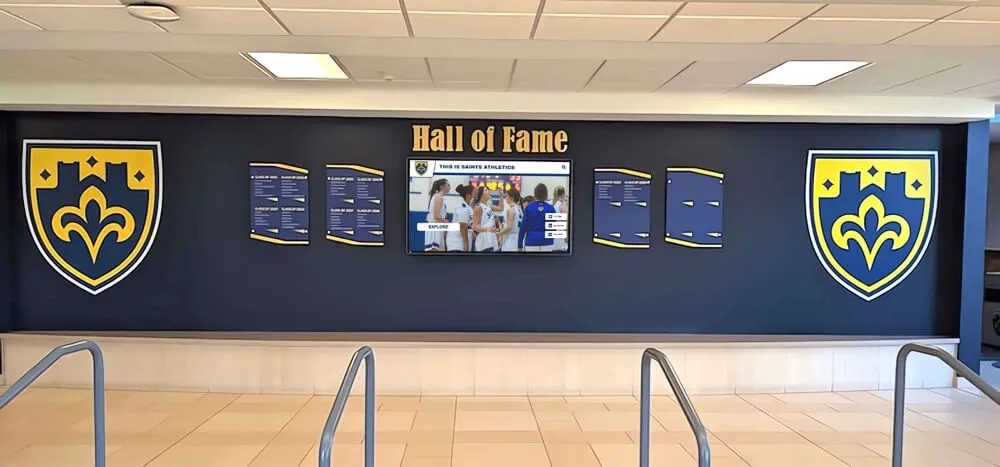
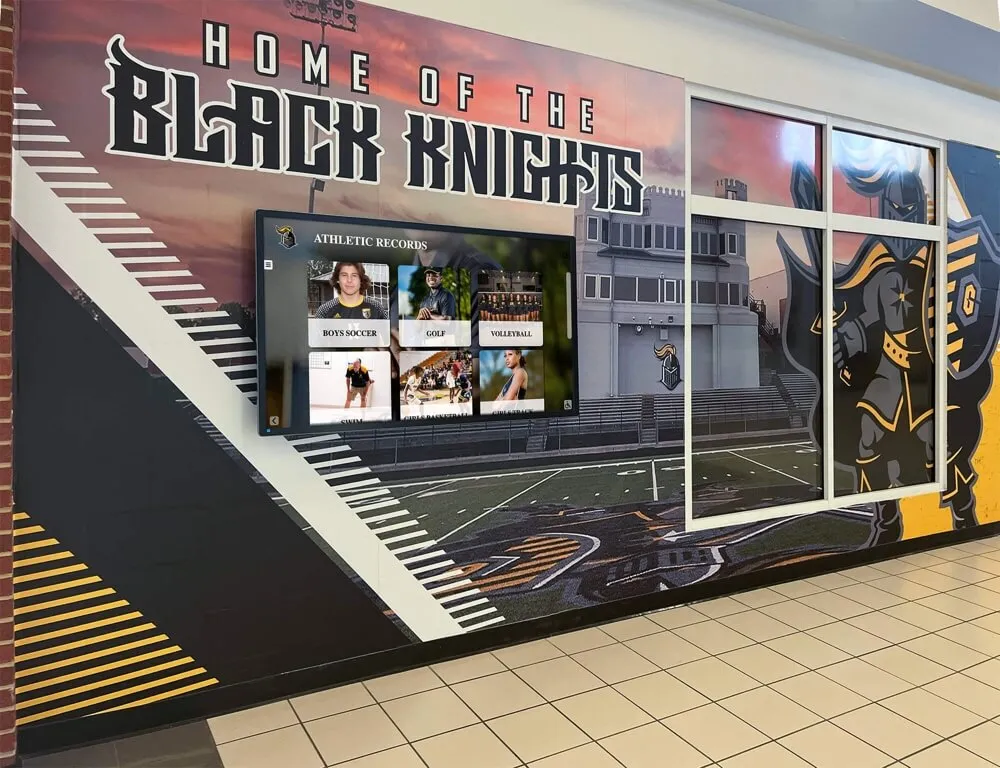
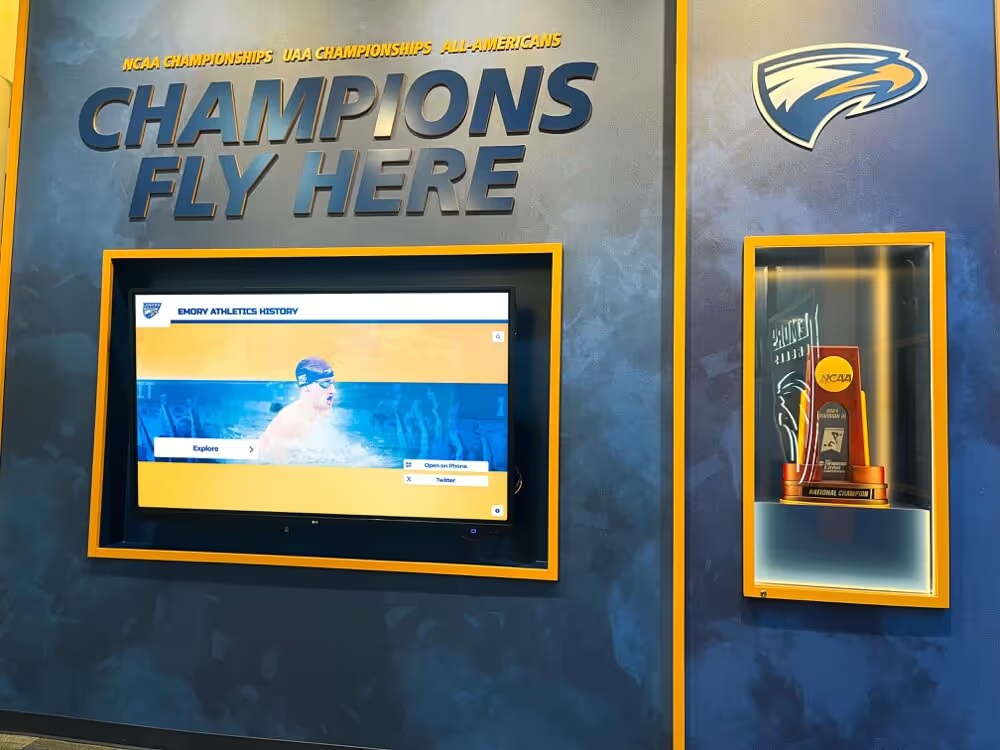
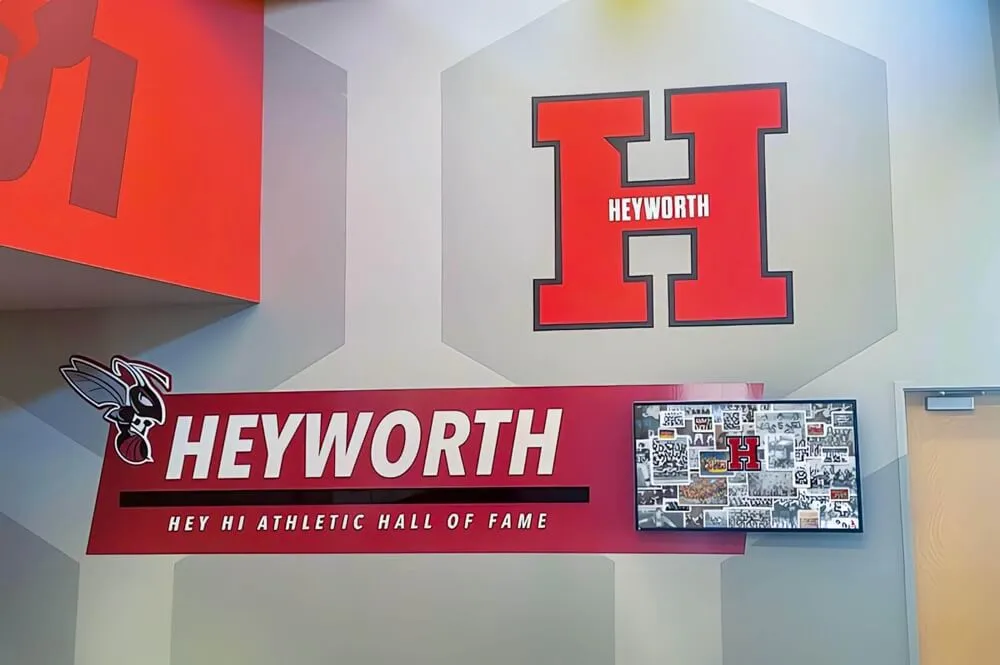
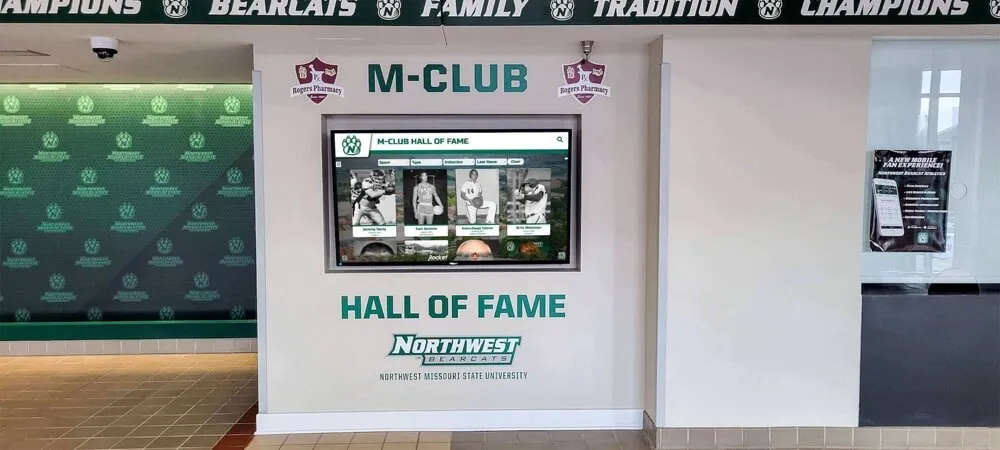
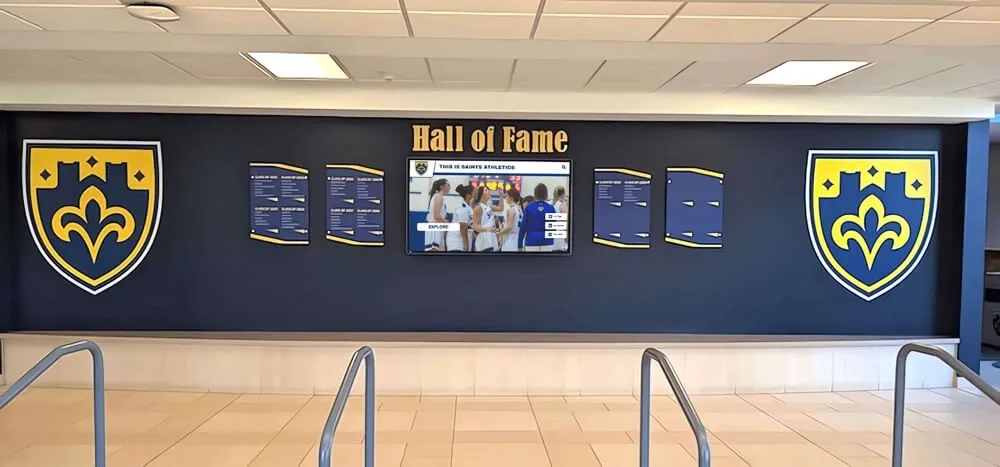
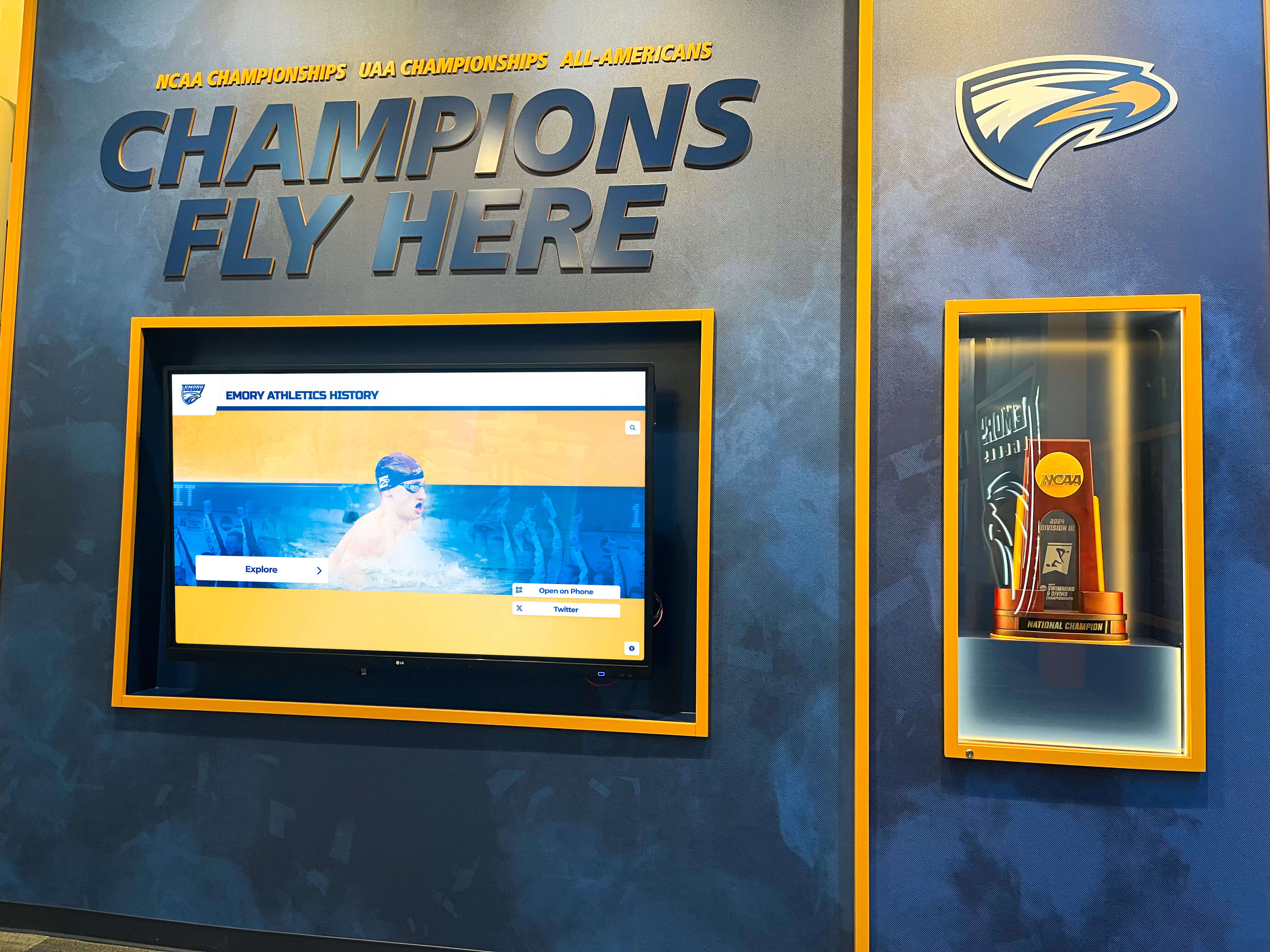
Hybrid installations keep physical championship hardware as visual anchors while digital screens behind or beside them carry the full depth of program history
Designing a Hybrid Recognition System
The most effective school recognition programs treat physical and digital displays as a single coordinated system rather than competing options.
Tier One: Physical Banners for Premier Championships
Reserve physical championship banners for achievements that genuinely warrant permanent, prominent, venue-specific display:
- State championships and regional finals
- National-level qualifiers and placements
- Multi-decade program milestones (100th win, 50th consecutive season)
- Retired numbers and jersey displays for exceptional individual careers
These achievements earn the rafter. They carry the kind of weight that justifies production costs, installation labor, and the square footage they claim.
Tier Two: Digital Trophy Case for Everything Else
Route all other achievement recognition through the digital platform:
- Conference championships and runner-up finishes
- Individual all-state, all-conference, and all-region selections
- Academic all-American and scholar-athlete honorees
- Coaching milestone achievements
- Hall of fame inductees across all classes
- Record board entries for school, conference, and regional records
- Winter sports recognition that often lacks dedicated wall space
Schools building out winter sports hall of fame recognition discover this challenge acutely: ice hockey, wrestling, swimming, and basketball programs generate just as much recognizable achievement as football programs that dominate gymnasium banner real estate, yet wall space for winter sports is often proportionally smaller.
Tier Three: Cross-Program Integration
Digital trophy cases can hold recognition categories that physical displays struggle with entirely:
Academic recognition: National Honor Society inductees, valedictorians, AP scholars, and academic achievement honorees all belong in a school recognition system — but almost no school has physical space to display them alongside athletic achievements at meaningful depth.
Volunteer and booster recognition: Athletic programs run on contributions beyond rosters. Volunteer appreciation and booster recognition belong in the same system as athletic honors, and digital platforms make that integration natural.
Alumni updates: Former student-athletes who go on to collegiate or professional careers, earn advanced degrees, or give back to their communities represent ongoing school pride that championship banners cannot capture.
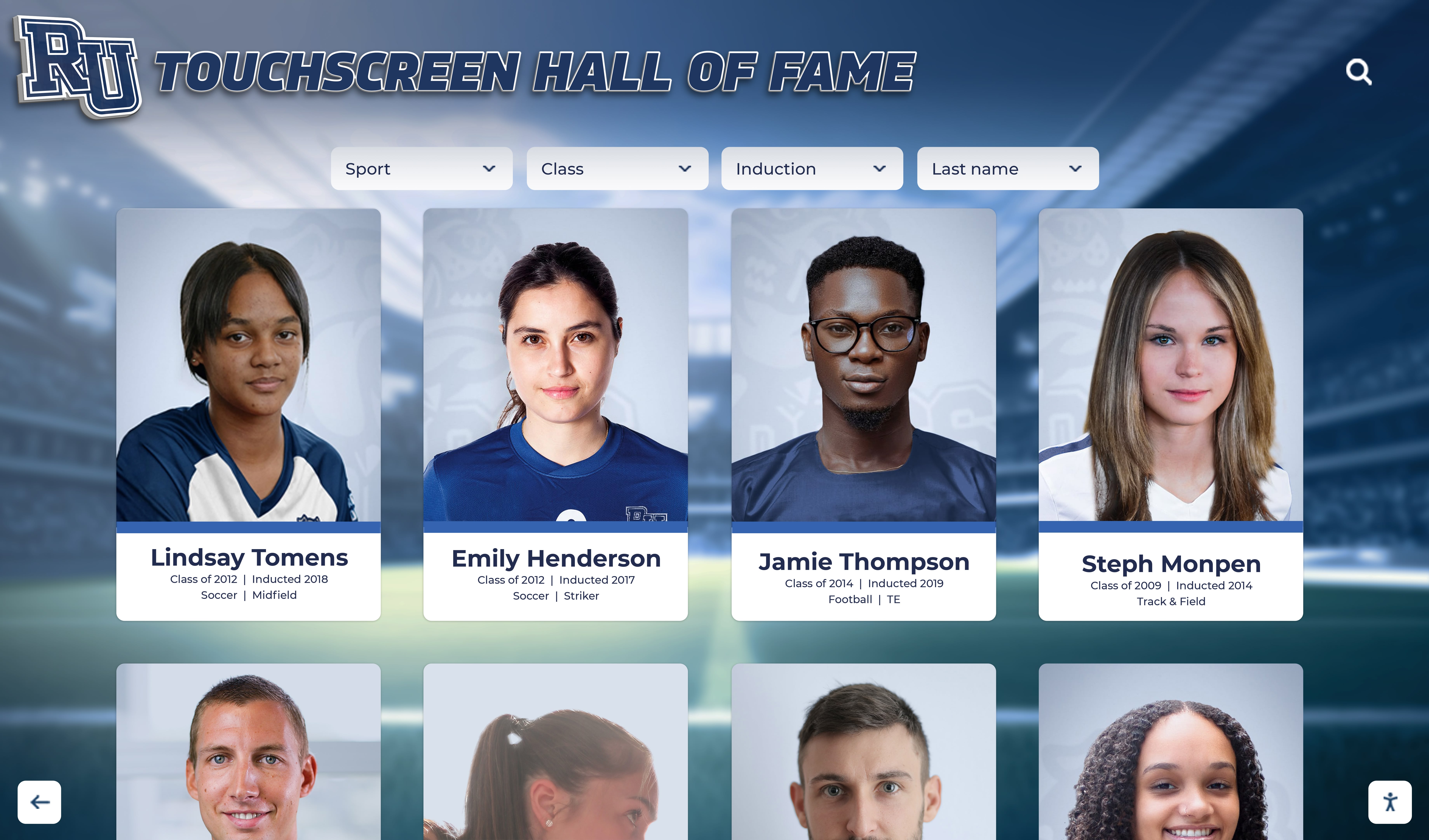
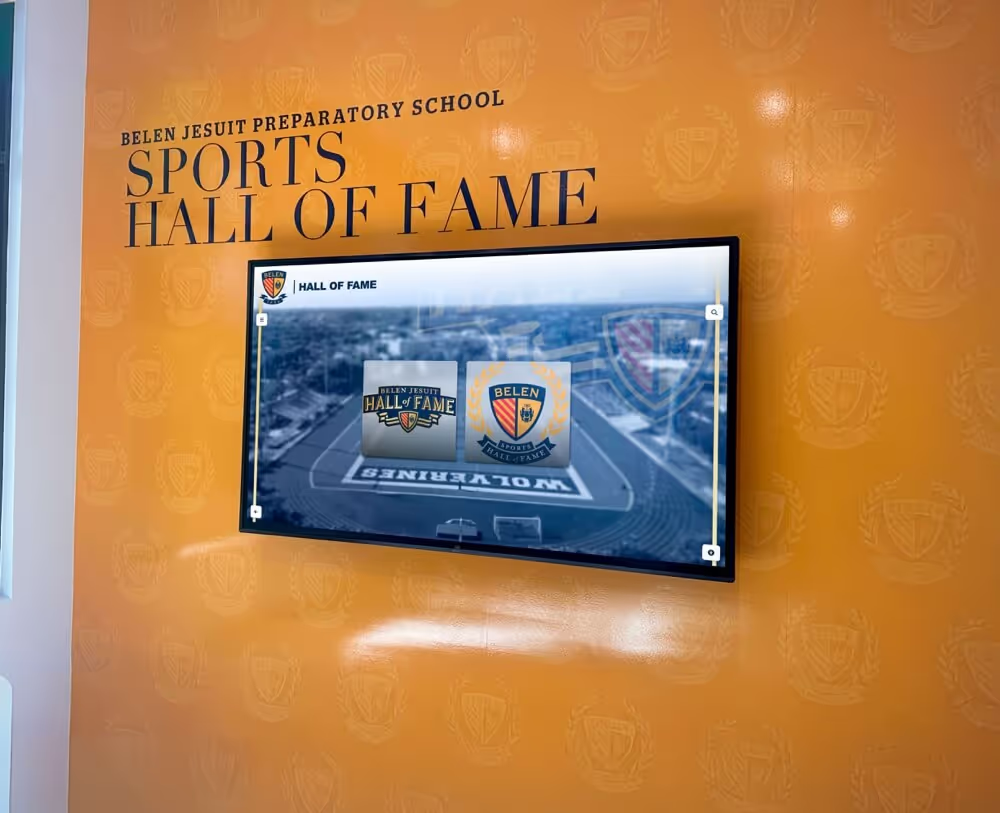
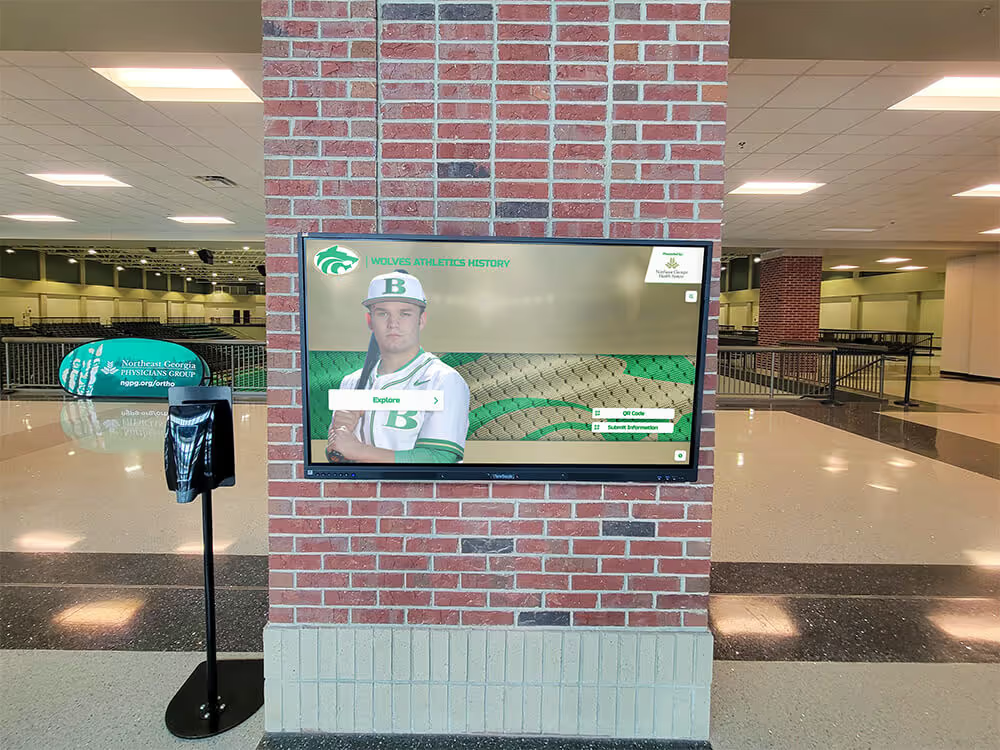
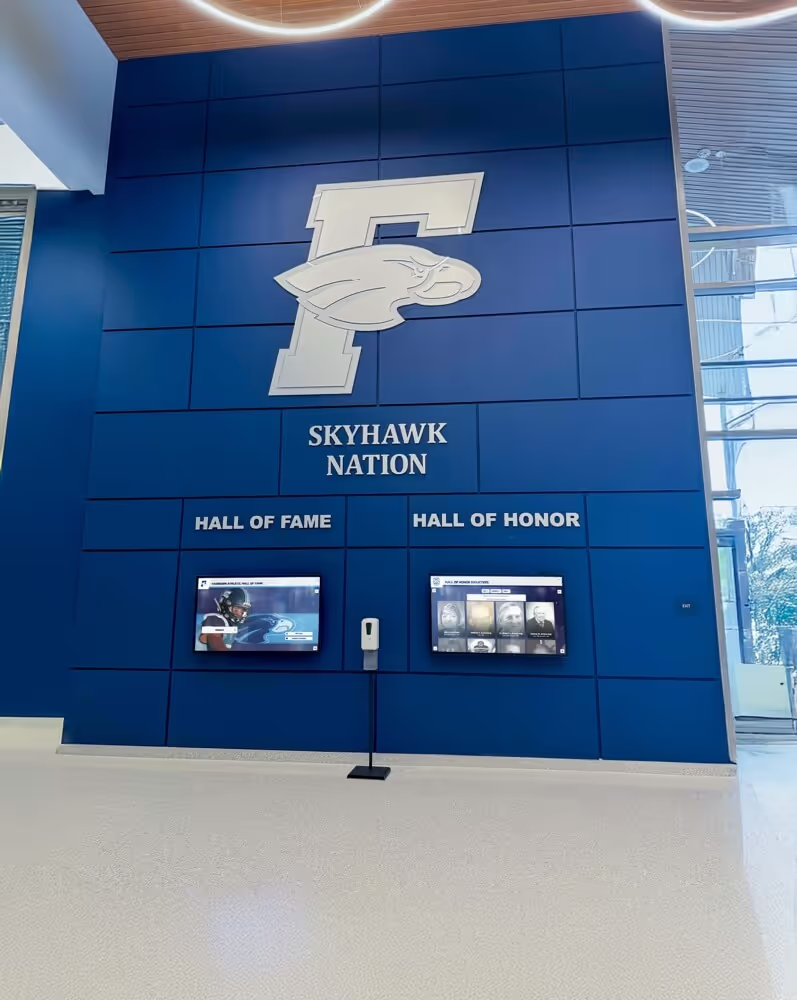
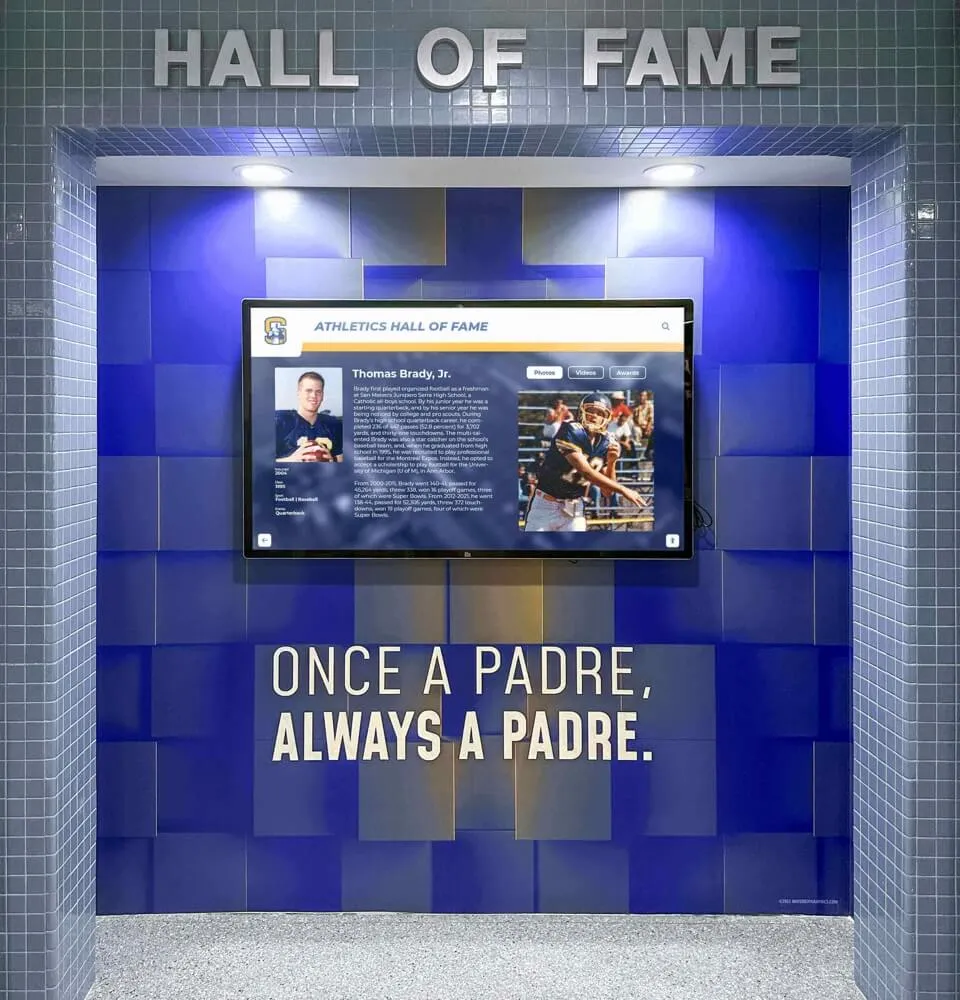
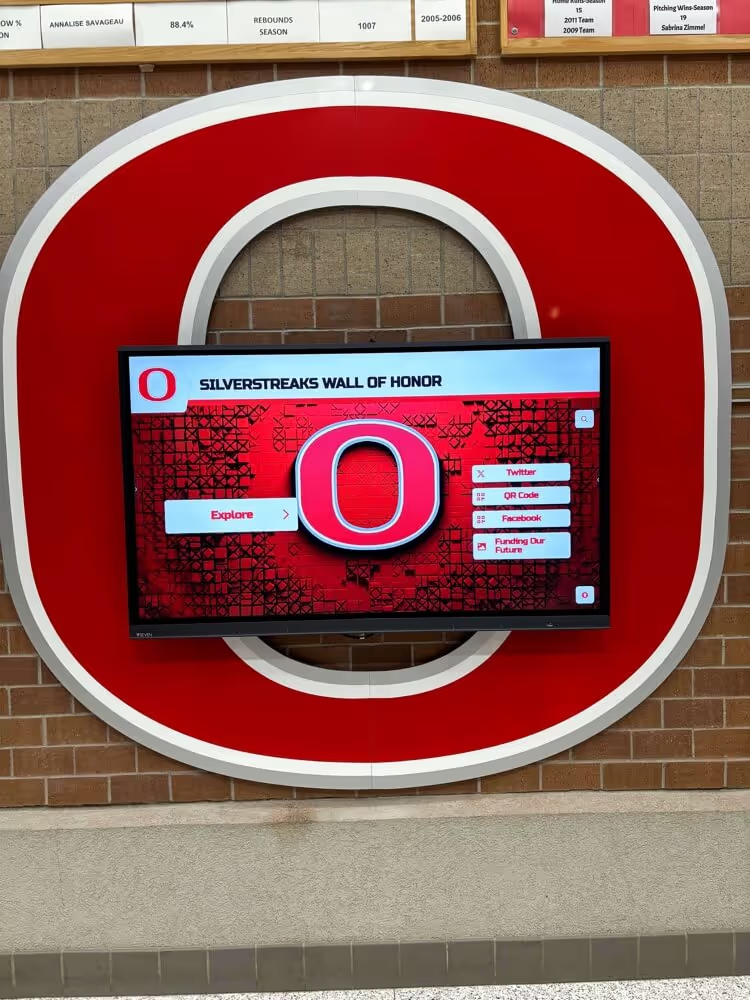
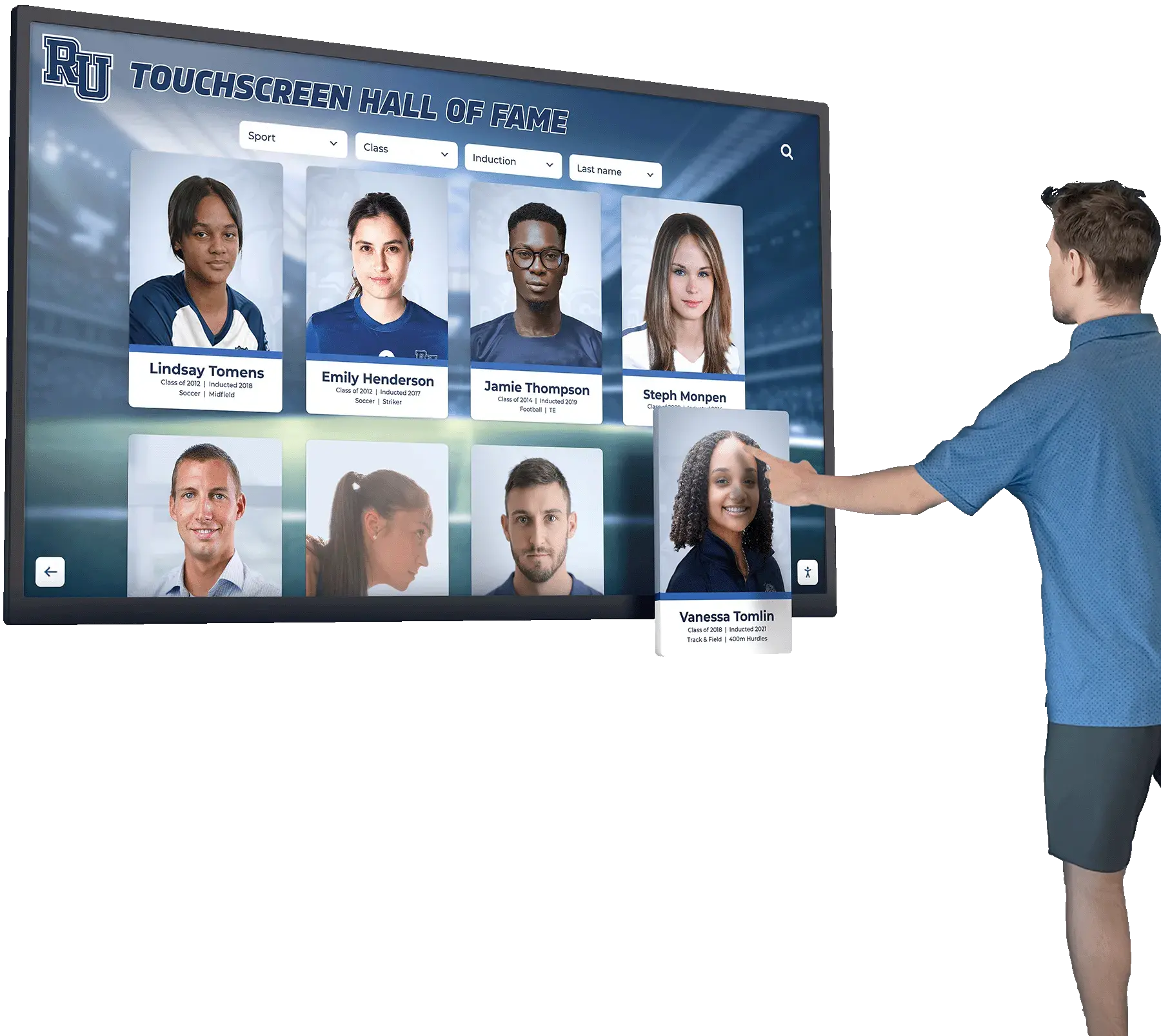
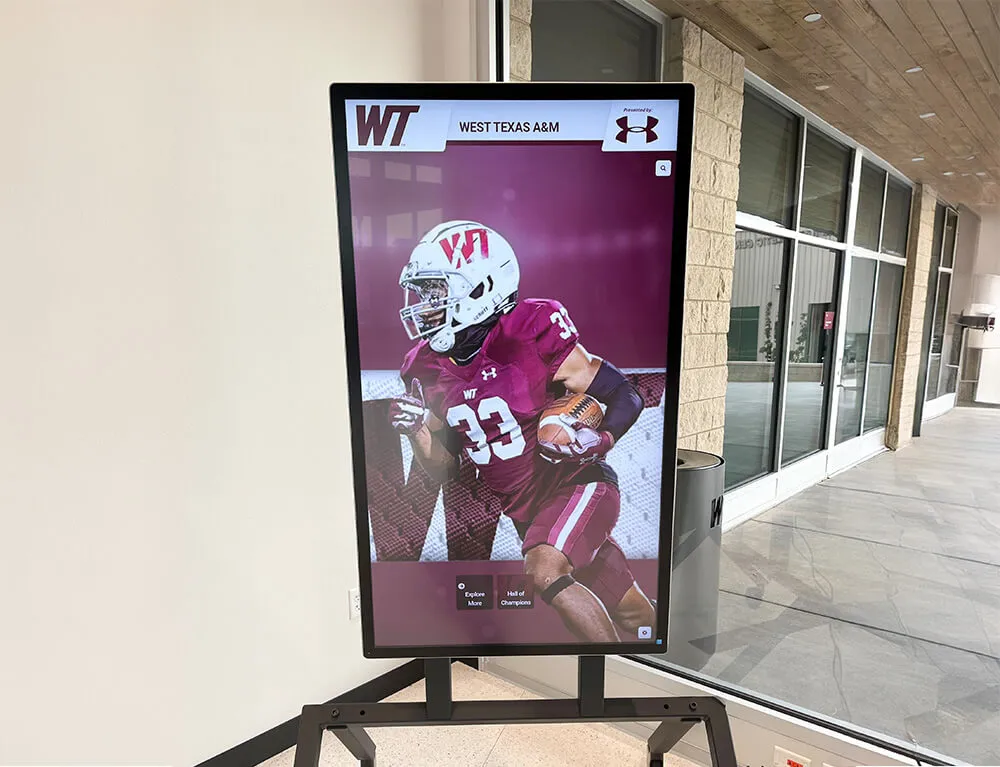
Touchscreen portrait displays give every honored athlete individual visibility — regardless of how many other achievements share the same platform
Practical Considerations for School Administrators
What to Assess Before Making Decisions
Before committing to any recognition system, schools benefit from honest inventory:
Current achievement volume. How many championship banners, trophies, plaques, and individual honors does your program currently hold? How many are displayed versus stored? What is the growth trajectory over the next decade?
Physical space capacity. How many linear feet of banner space remain in your primary athletic facility? What is the realistic limit before the next new banner creates a problem?
Sports coverage gaps. Which programs in your school generate recognition that current physical displays inadequately capture? Junior varsity championships, individual records in non-banner sports, and multi-year academic honor sequences are common gaps.
Maintenance burden. Who currently maintains the physical trophy cases, banner displays, and record boards? How much staff time does that require, and how current is the information?
Implementation Doesn’t Have to Be All-at-Once
Schools that succeed with hybrid systems often phase implementation over several budget cycles. A common pattern: install the digital trophy case platform with current achievement content, then systematically add historical content as staff time allows, while continuing to produce physical banners for premier championships on the existing schedule.
For schools questioning whether a digital platform justifies the investment at their enrollment size, resources specifically addressing touchscreen recognition at smaller schools address that concern directly. The unlimited capacity argument applies equally at 400 students as at 4,000 — both schools accumulate more achievement than physical displays can hold.
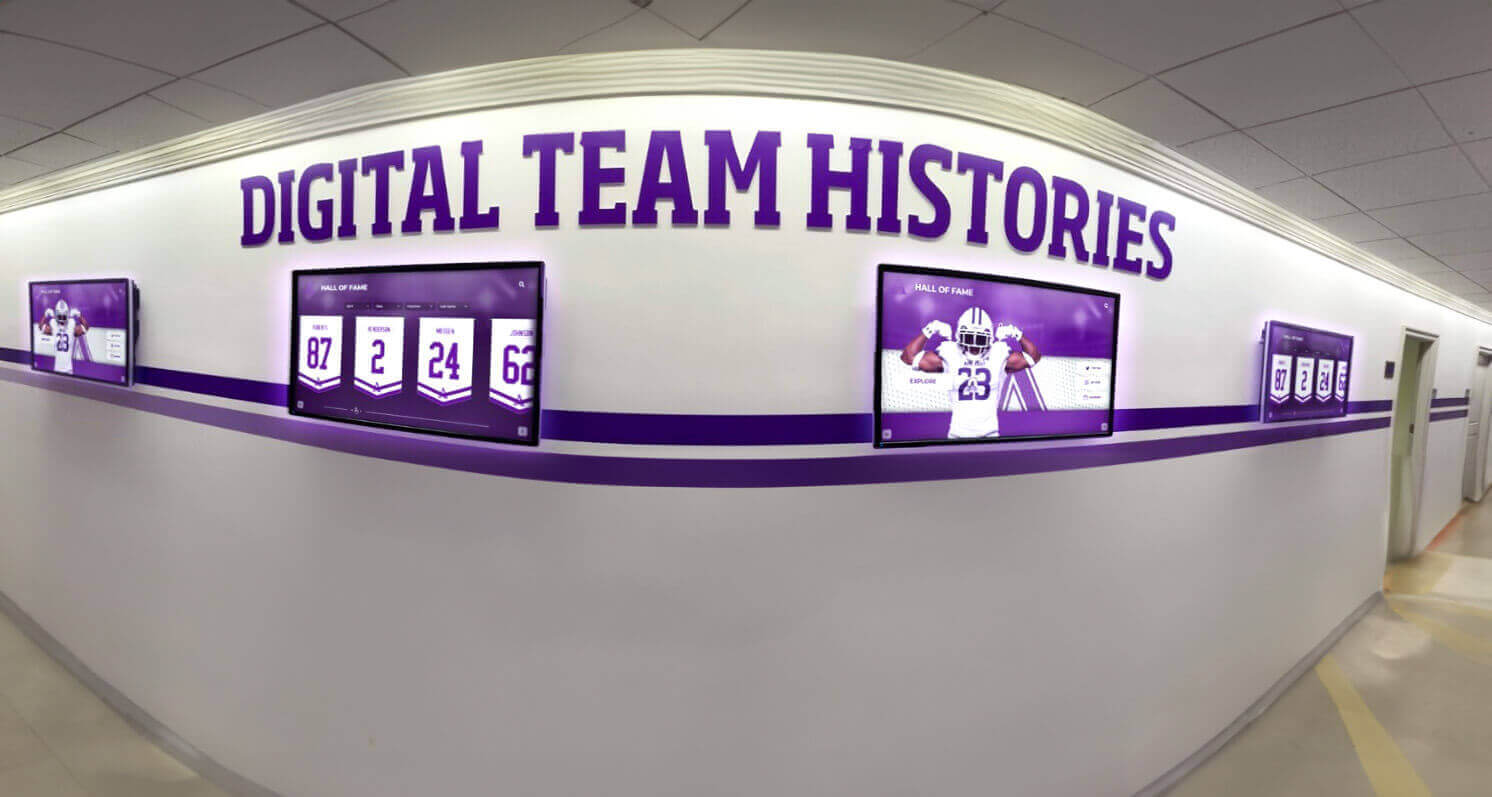
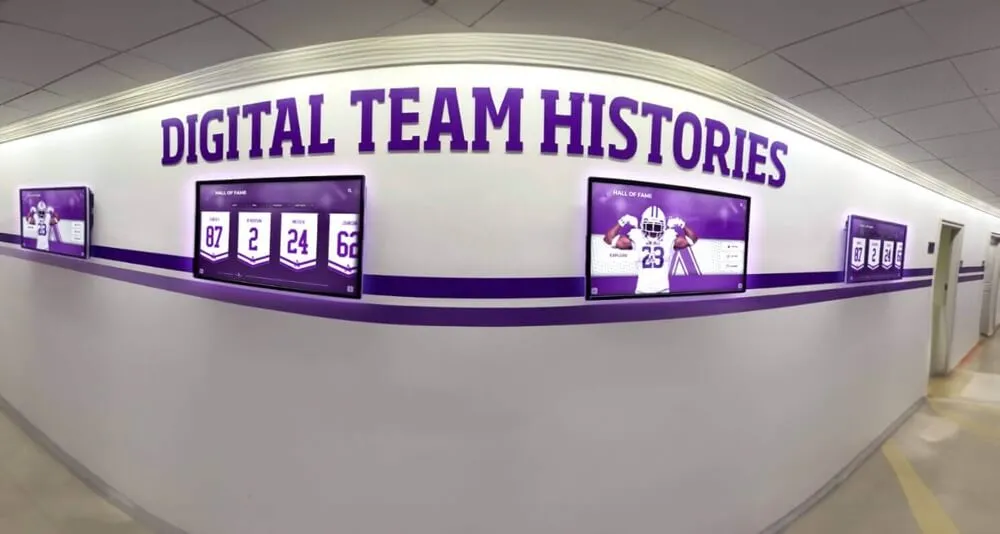
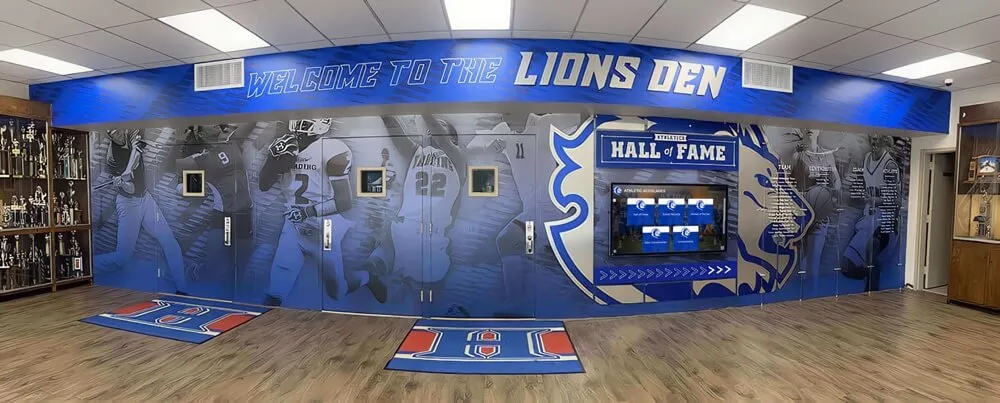
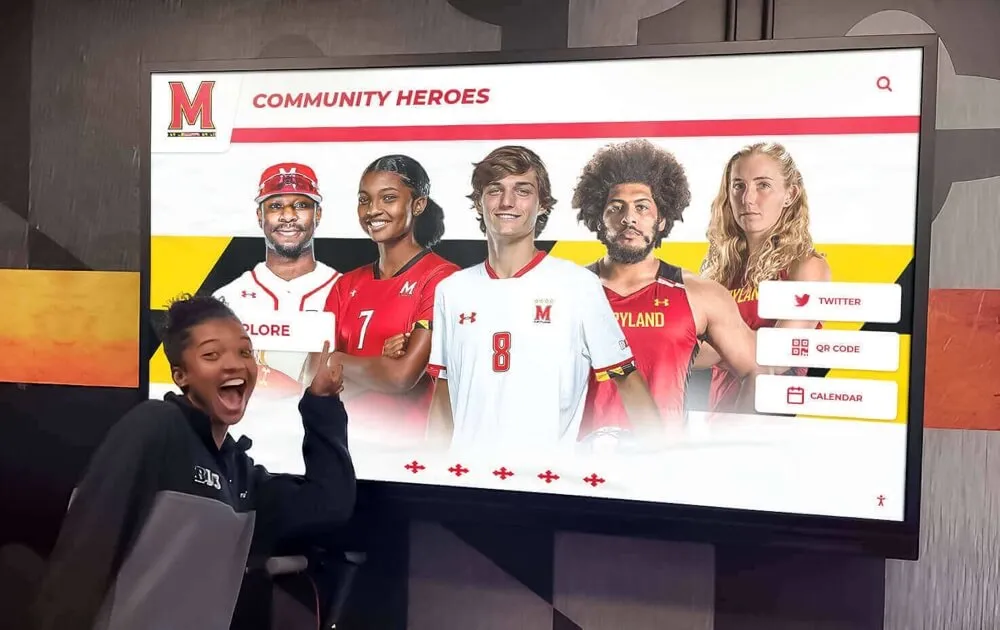
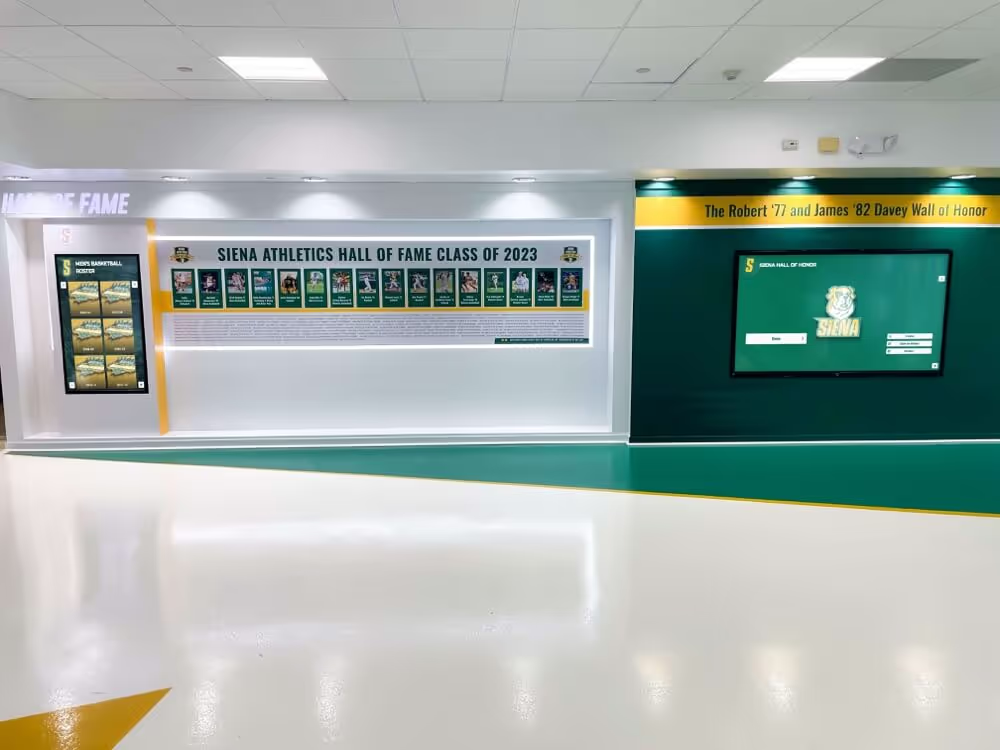
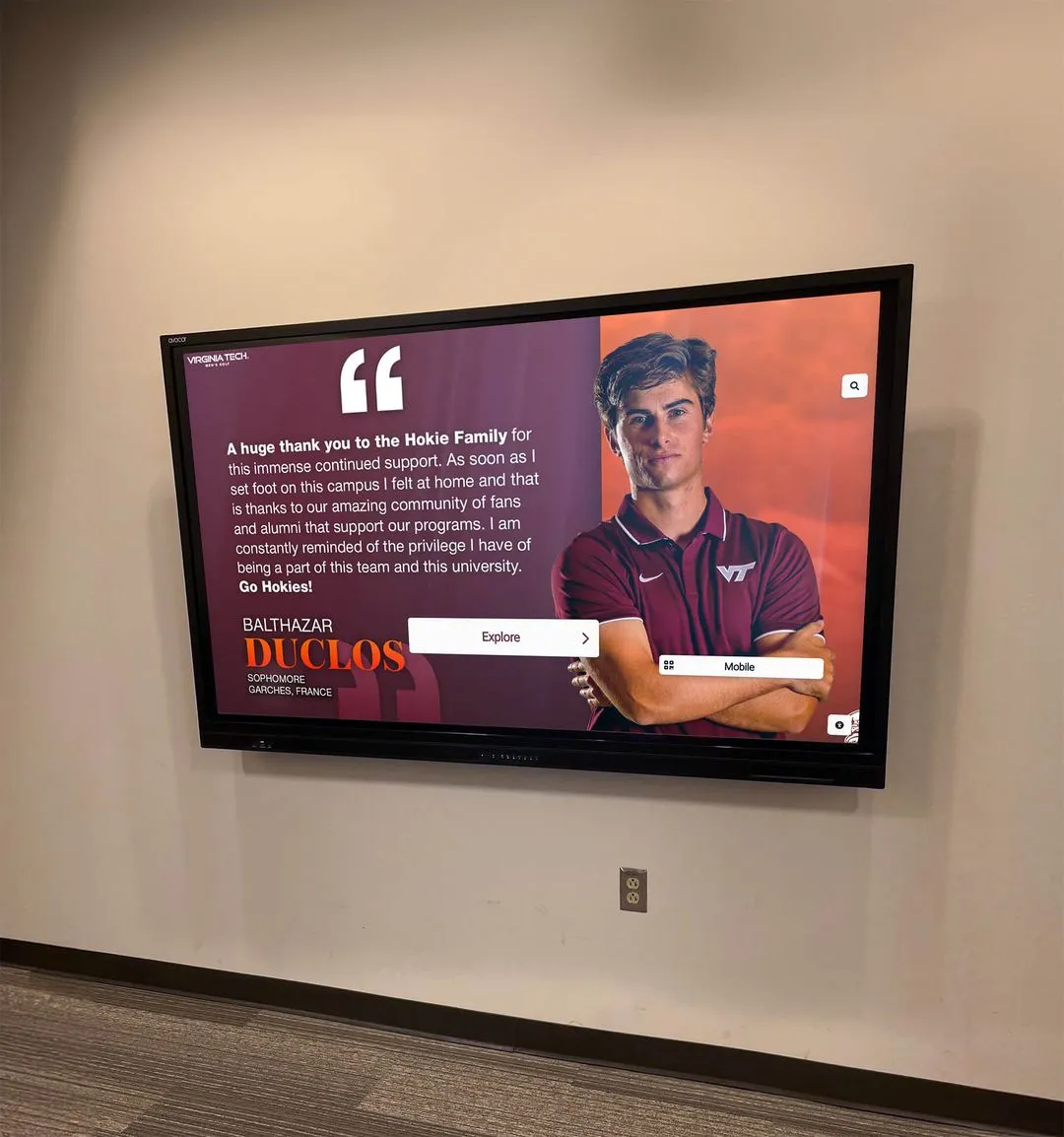
Coordinated multi-screen installations let schools create full team history environments that championship banners alone cannot provide
What Gets Left Out of the Physical-Only Approach
The hidden cost of relying entirely on championship banners and physical trophy cases is not the storage problem — it is the recognition that never happens at all.
Most schools using only physical displays recognize a fraction of the athletes who deserve acknowledgment. A cross-country runner who qualifies for state every year of her career but never wins a championship appears nowhere in the building. A basketball player who sets the school scoring record but graduates from a team that finishes third in the conference gets a line on a record board if there is space. A coach who builds a wrestling program from eight members to state-qualifying depth across twenty years may receive nothing visible.
Digital trophy cases change the calculation. When capacity is unlimited and updates take minutes, the decision to recognize shifts from “do we have space” to “does this person deserve to be here.” That is a more honest question, and the answer is almost always yes.
For winter sports hall of fame recognition specifically, digital platforms solve a persistent problem: winter sports championships occur during seasons when gymnasium banner space is occupied by fall sports recognition, and the visual hierarchy of physical displays rarely reflects the actual competitive achievement across all sports equally.
Frequently Asked Questions
Does a digital trophy case replace championship banners?
No. Championship banners serve a specific, irreplaceable function in competition venues: they are ambient, permanent, and visible from distance. Digital trophy cases handle the depth and breadth of recognition that banners cannot — not the role banners play. Most schools use both.
How does a digital trophy case stay current?
Cloud-based management systems let authorized staff update content from any device without physical access to the display. New achievements can go live within minutes of authorization, compared to weeks for physical banner production and installation.
What happens to existing physical trophies and plaques?
Physical hardware can be cataloged and entered into the digital system, giving every existing trophy searchable visibility regardless of whether it currently sits in a display case. Many schools photograph existing trophies and upload images alongside achievement data so visitors can see both the digital record and the physical object.
Can small schools justify the investment?
Small schools often benefit most from unlimited-capacity digital platforms because they have the least physical display space relative to their accumulated achievement history. Programs running for thirty years with limited gymnasium wall space have almost certainly recognized less than ten percent of deserving achievements using physical displays alone.
How does ADA compliance work with touchscreen displays?
Quality digital trophy case platforms meet WCAG 2.1 AA accessibility standards, including appropriate touch target sizing, screen reader compatibility, and installation height options that accommodate wheelchair users — requirements that physical trophy cases rarely address systematically.
See How Schools Handle Recognition Beyond the Banner
Rocket Alumni Solutions builds touchscreen digital trophy cases, interactive halls of fame, athletic record boards, and scholar-athlete recognition systems for schools of every size. If your championship banners are running out of wall space — or if achievements that deserve recognition are going unrecognized because they don't fit the physical display — a digital trophy case may be the system your program needs.
Book A Demo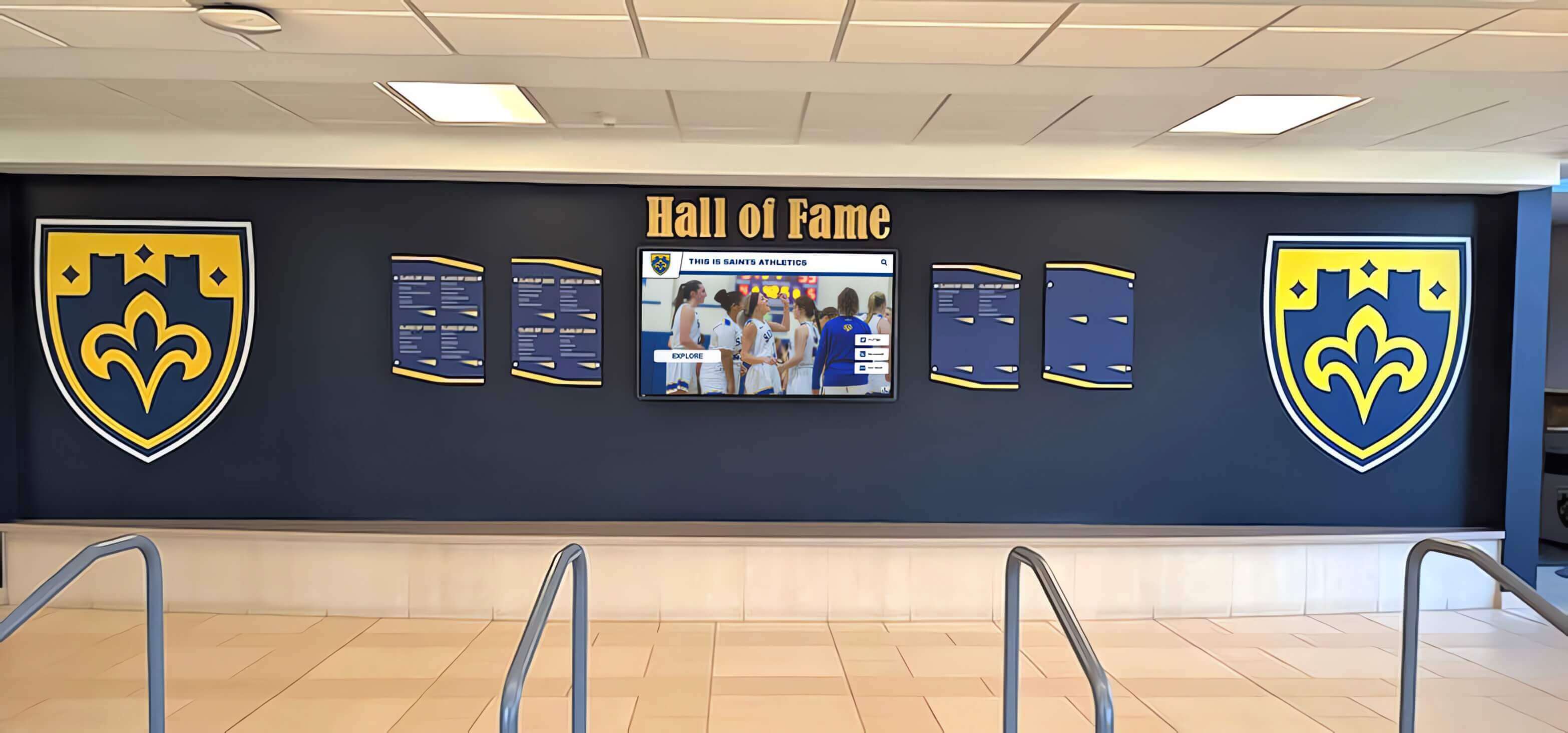
The most effective athletic recognition environments combine physical championship hardware with digital platforms that give the full program story permanent, searchable visibility
Championship banners and digital trophy cases are not rivals for the same budget line. They are tools designed for different jobs: one for the immediate, ambient, distance-legible celebration of premier achievements in competition spaces; the other for the unlimited, searchable, continuously updatable recognition of everything a school program generates across decades. Schools that deploy both — with clear thinking about which achievements belong where — build recognition environments where no achievement disappears into storage, no deserving athlete goes unrecognized, and the wall space problem stops being a constraint on how much history the school is allowed to celebrate.