



Schools, universities, nonprofits, and organizations face a common challenge when recognizing achievements across athletics, donor contributions, arts programs, and historical milestones. Traditional trophy cases and static plaques fail to accommodate growing recognition needs, require constant maintenance, and offer limited storytelling capabilities. Meanwhile, achievements in multiple categories compete for finite physical space, forcing institutions to choose whose accomplishments receive visibility.
Modern hall of fame tools solve these challenges through digital platforms that eliminate space constraints, enable rich multimedia storytelling, and provide easy content management. These systems serve diverse recognition needs—from athletic record boards and donor walls to arts achievement showcases and institutional history timelines.
This comprehensive comparison evaluates the ten best hall of fame tools available in 2025, examining features, capabilities, pricing, and suitability for different recognition scenarios. Whether you’re celebrating championship teams, acknowledging major donors, displaying theater productions, or preserving institutional heritage, these platforms offer solutions that transform how organizations honor excellence.
Selecting the right hall of fame tool requires understanding your specific recognition needs, budget constraints, technical capabilities, and long-term goals. Organizations that excel at recognition create environments where achievements across all categories receive visibility, engagement, and lasting celebration that extends beyond the moment of accomplishment.

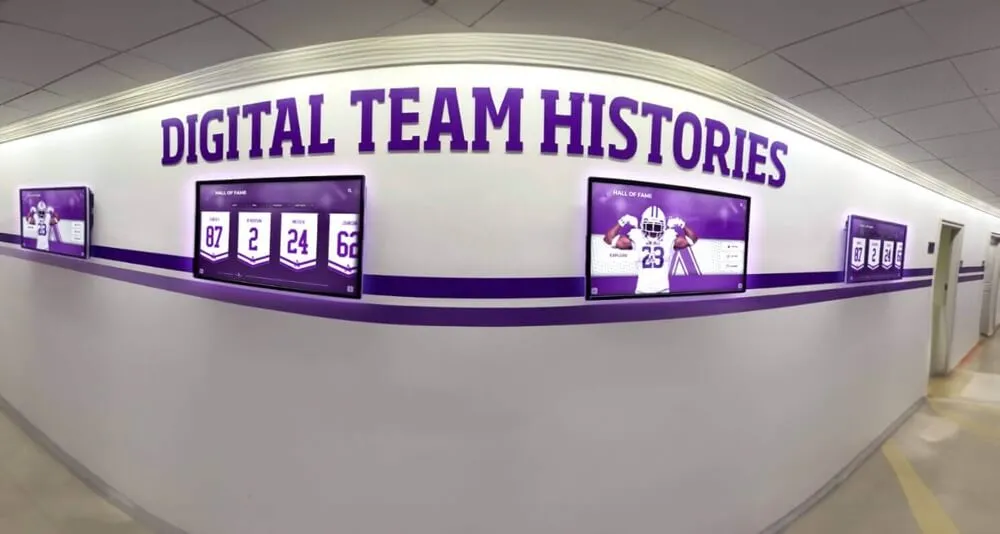
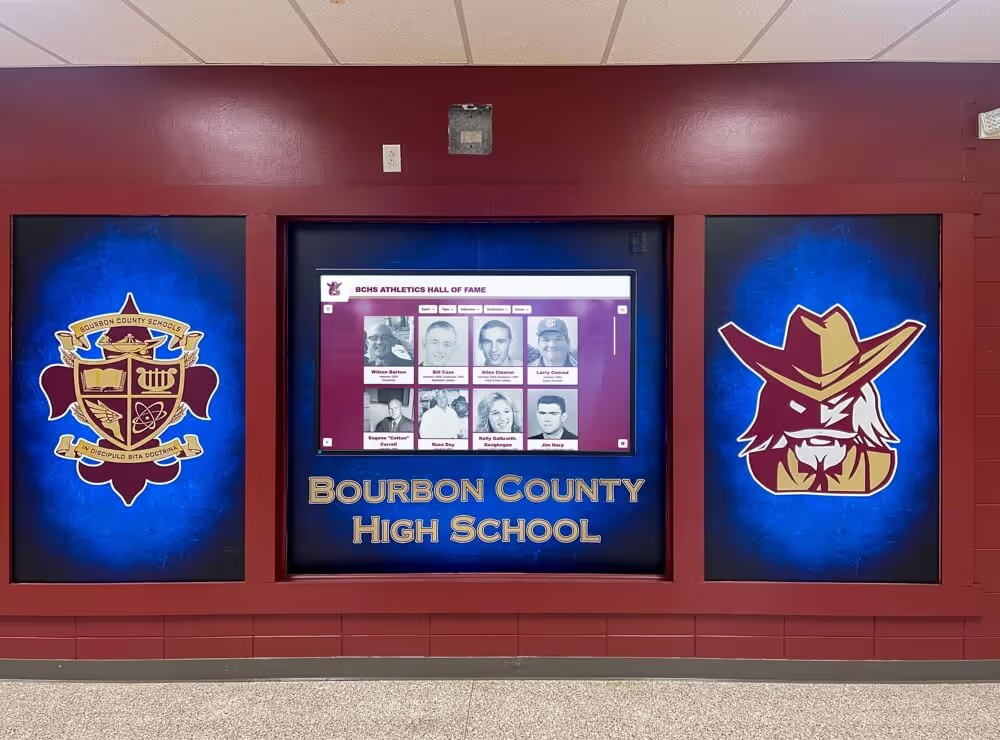
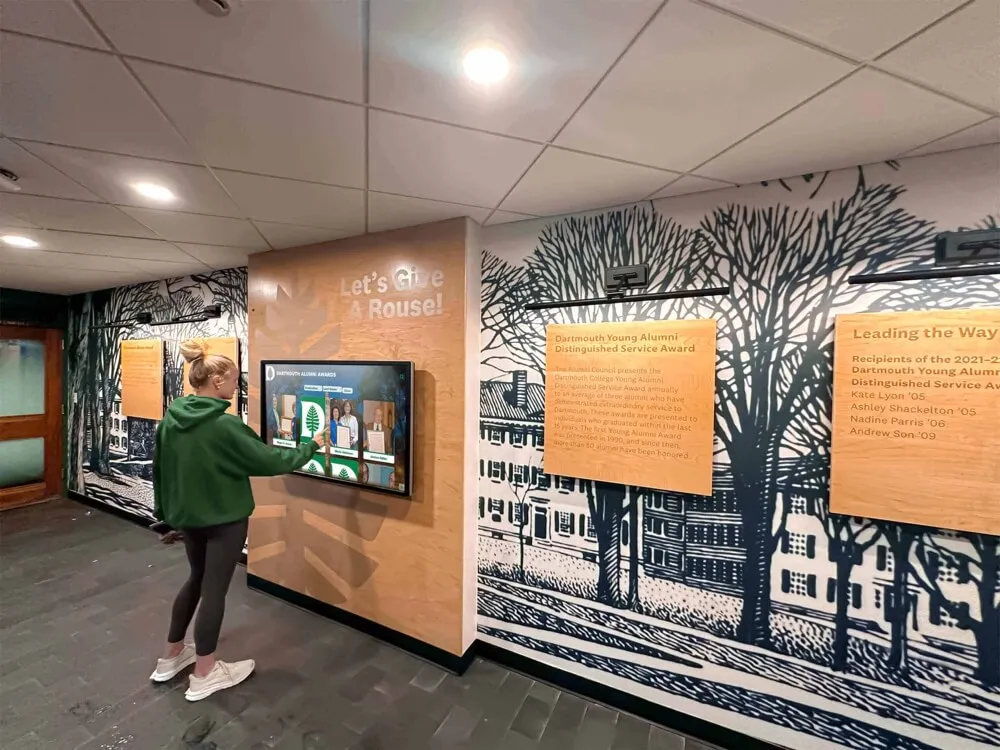
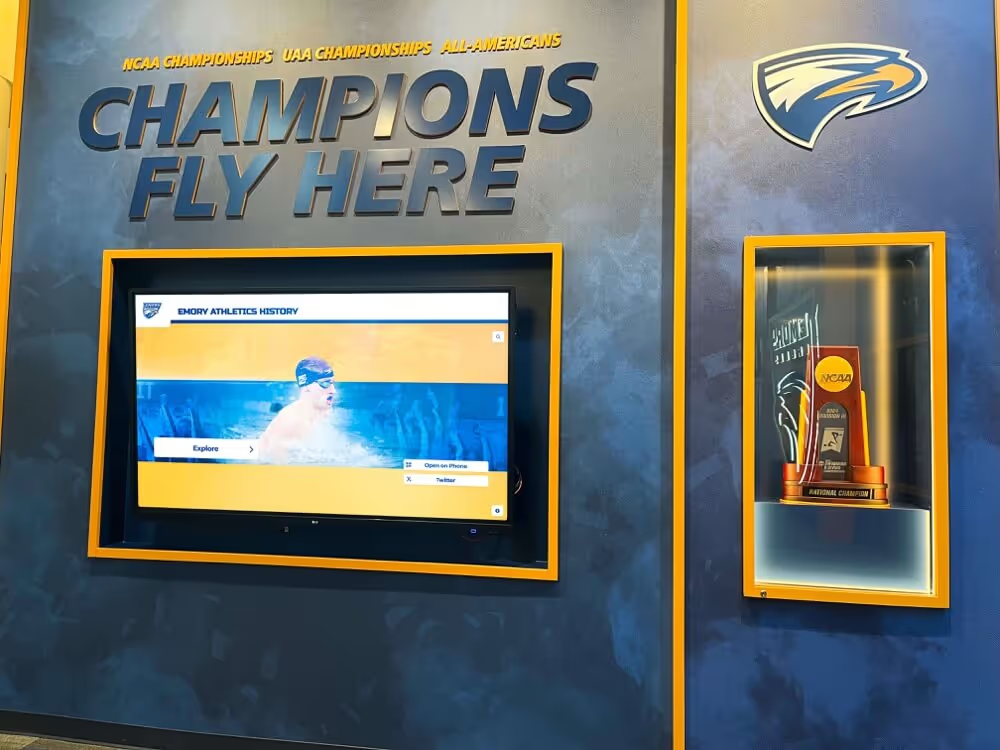
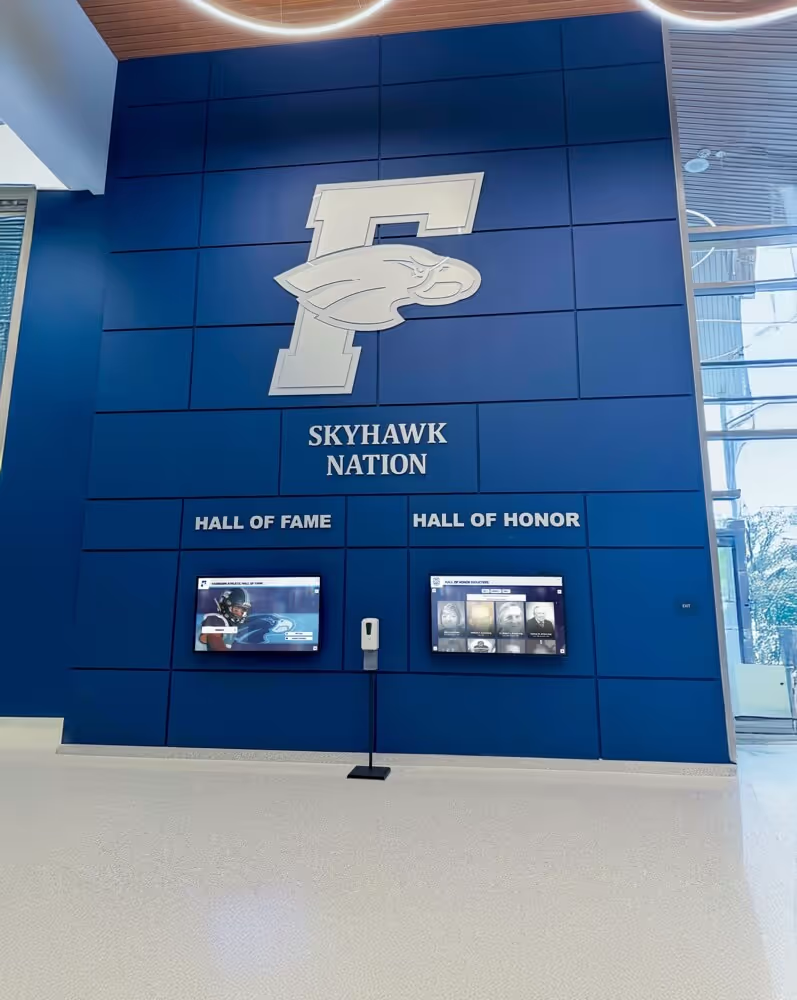
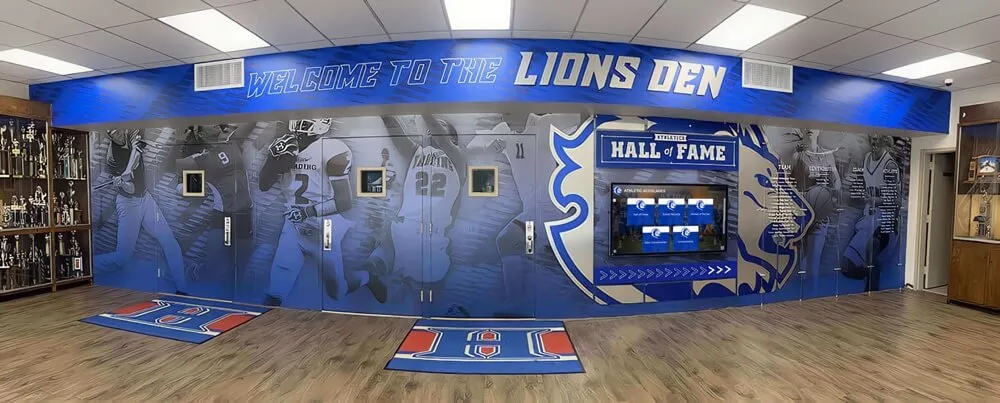
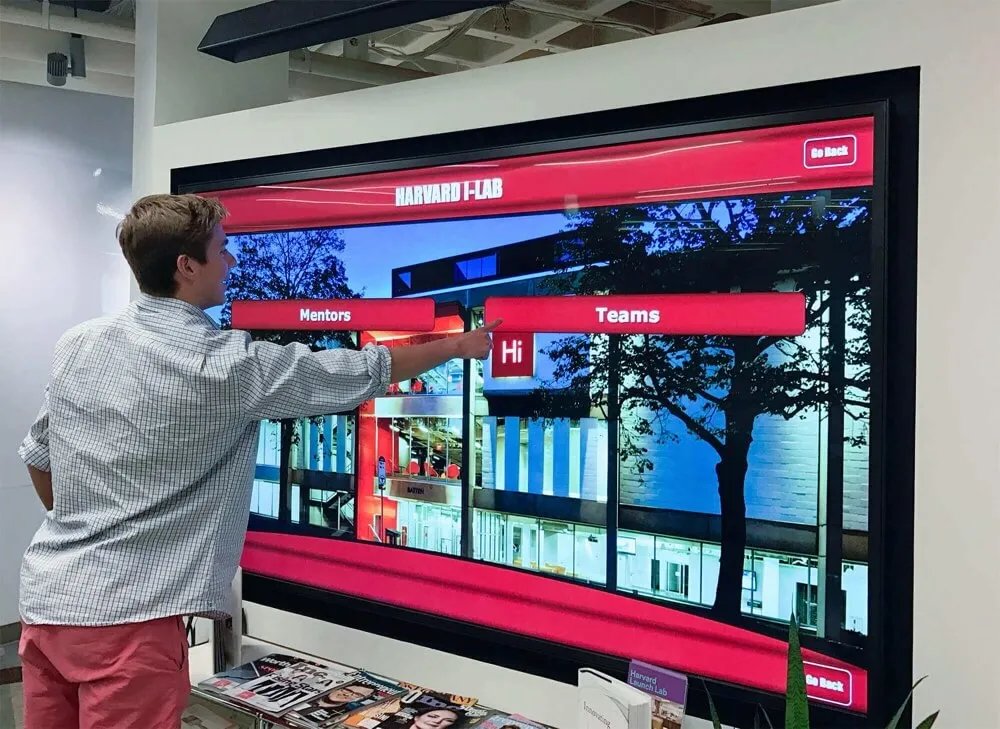
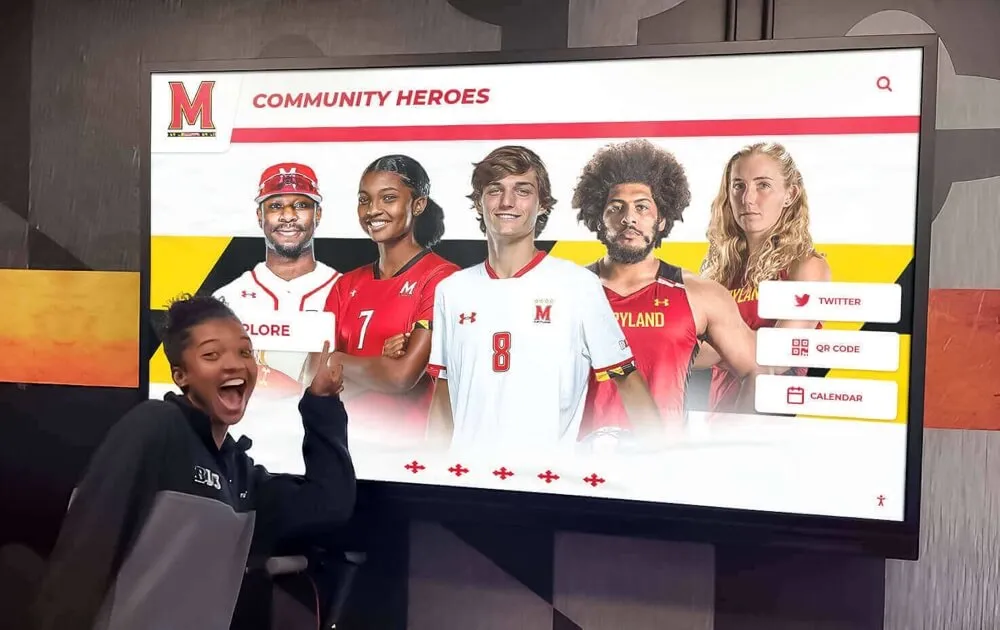
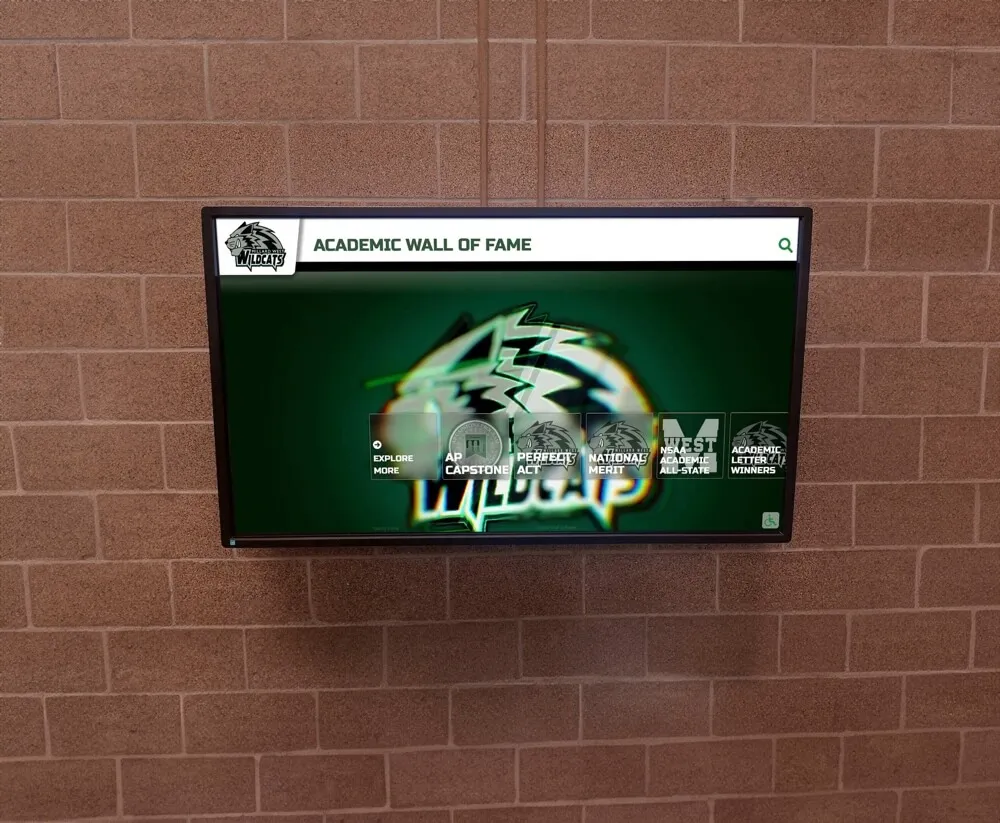
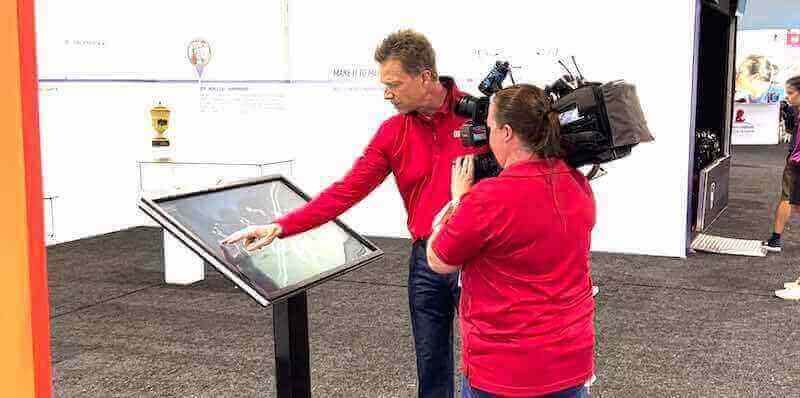
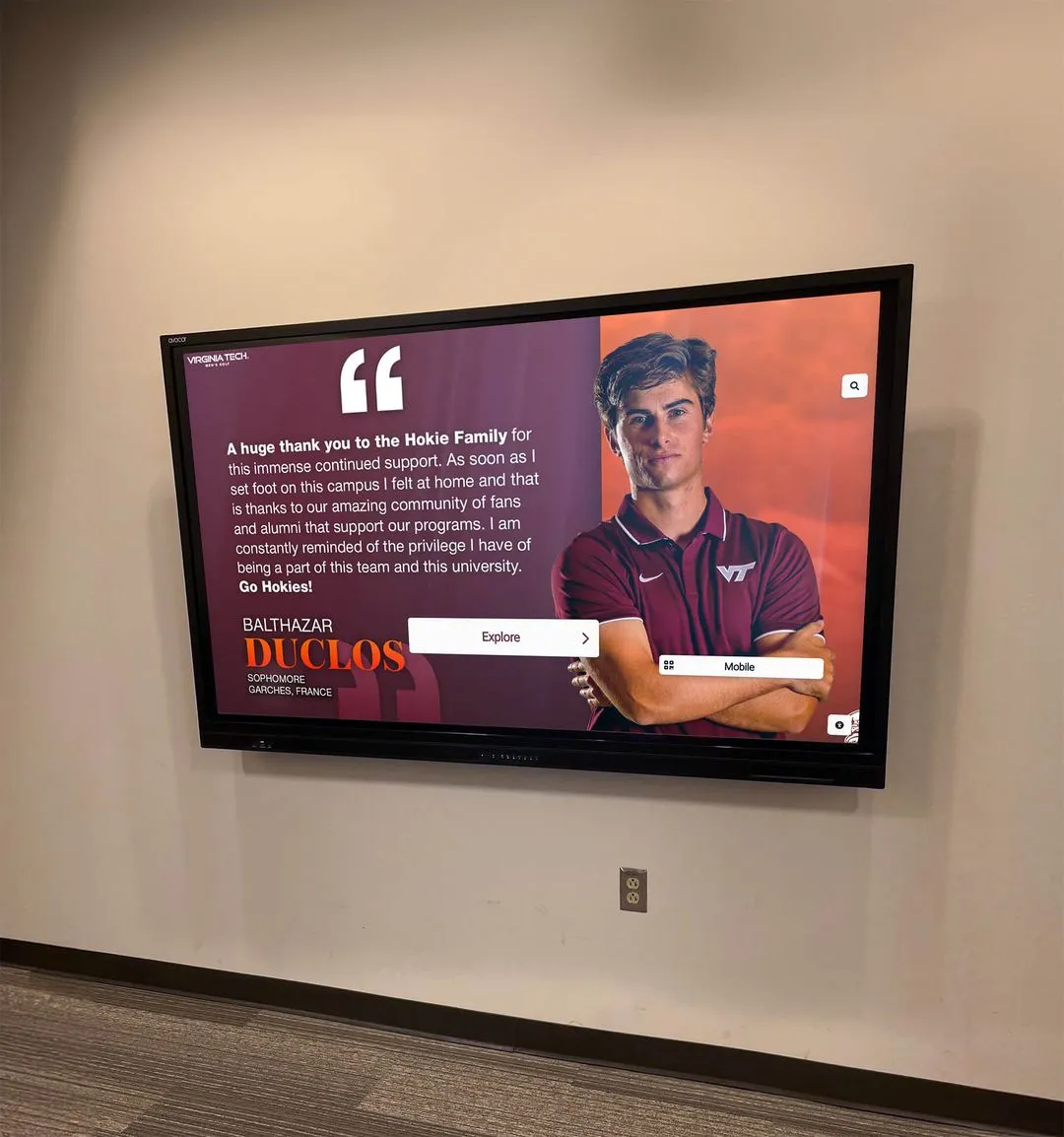
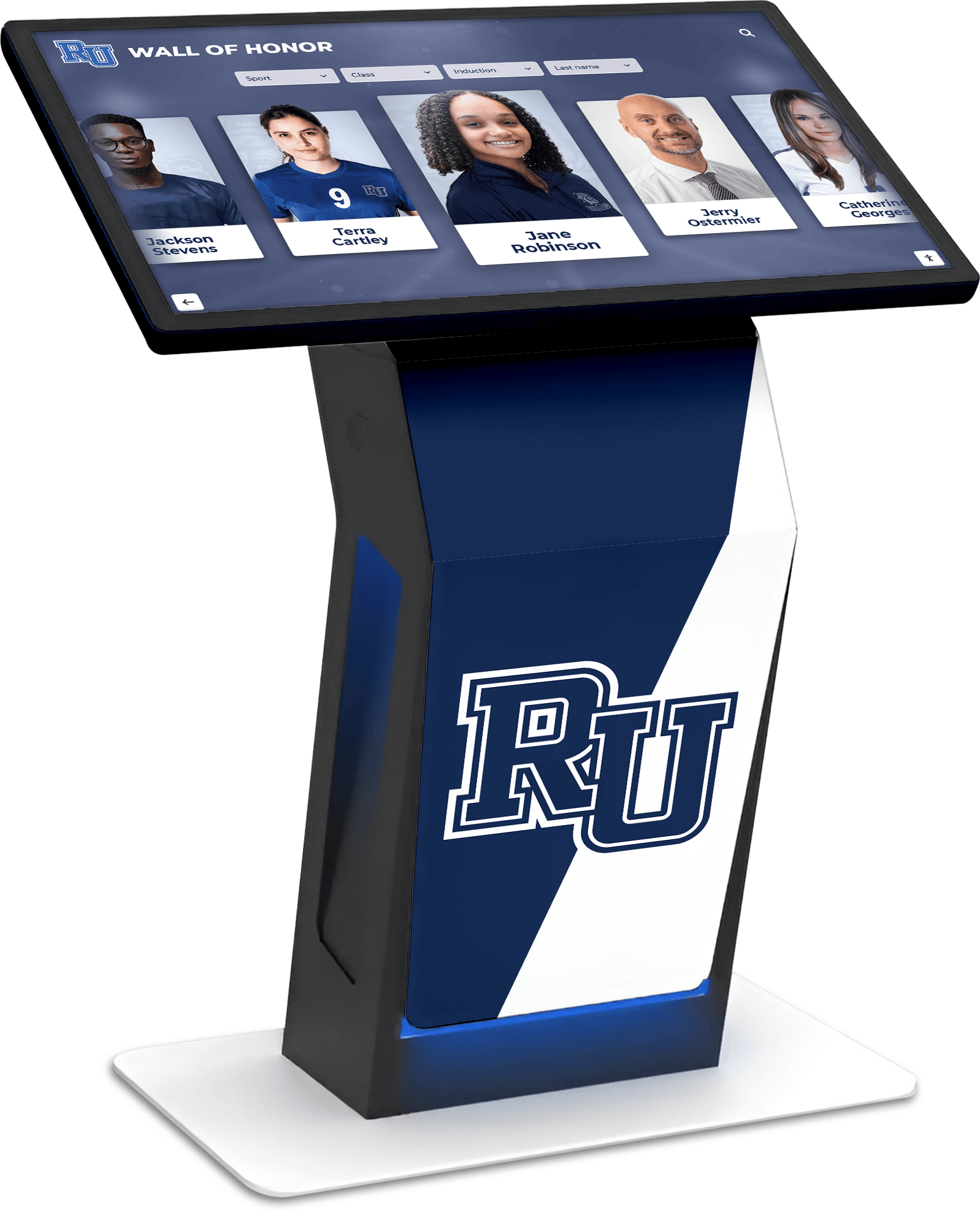
Interactive touchscreen displays provide comprehensive recognition for athletics, academics, donors, and institutional history
Evaluation Criteria for Hall of Fame Tools
Understanding how to assess different hall of fame platforms ensures you select the solution matching your organization’s needs.
Essential Features for Recognition Systems
Effective hall of fame tools must deliver core capabilities that enable comprehensive achievement celebration:
Recognition Versatility
- Support for multiple recognition categories within single platform
- Athletic achievement tracking including records, championships, and honors
- Donor recognition with giving level designation and contribution tracking
- Arts program showcases for theater, music, visual arts, and creative achievements
- Historical timeline capabilities documenting institutional heritage
Content Management Capabilities
- Cloud-based systems enabling remote updates from any device
- Bulk import functionality for historical achievement data
- Scheduled publishing for future-dated recognition events
- Role-based permissions supporting multiple administrators
- Template-based profiles streamlining new entry creation
Learn about comprehensive digital recognition approaches in best platforms for building virtual halls of fame.
Interactive Display Features
- Touchscreen interfaces enabling visitor exploration
- Search functionality supporting name, year, category, and keyword queries
- Filtering by achievement type, sport, giving level, or program
- Photo galleries and video integration for rich storytelling
- Mobile responsiveness extending recognition beyond physical displays
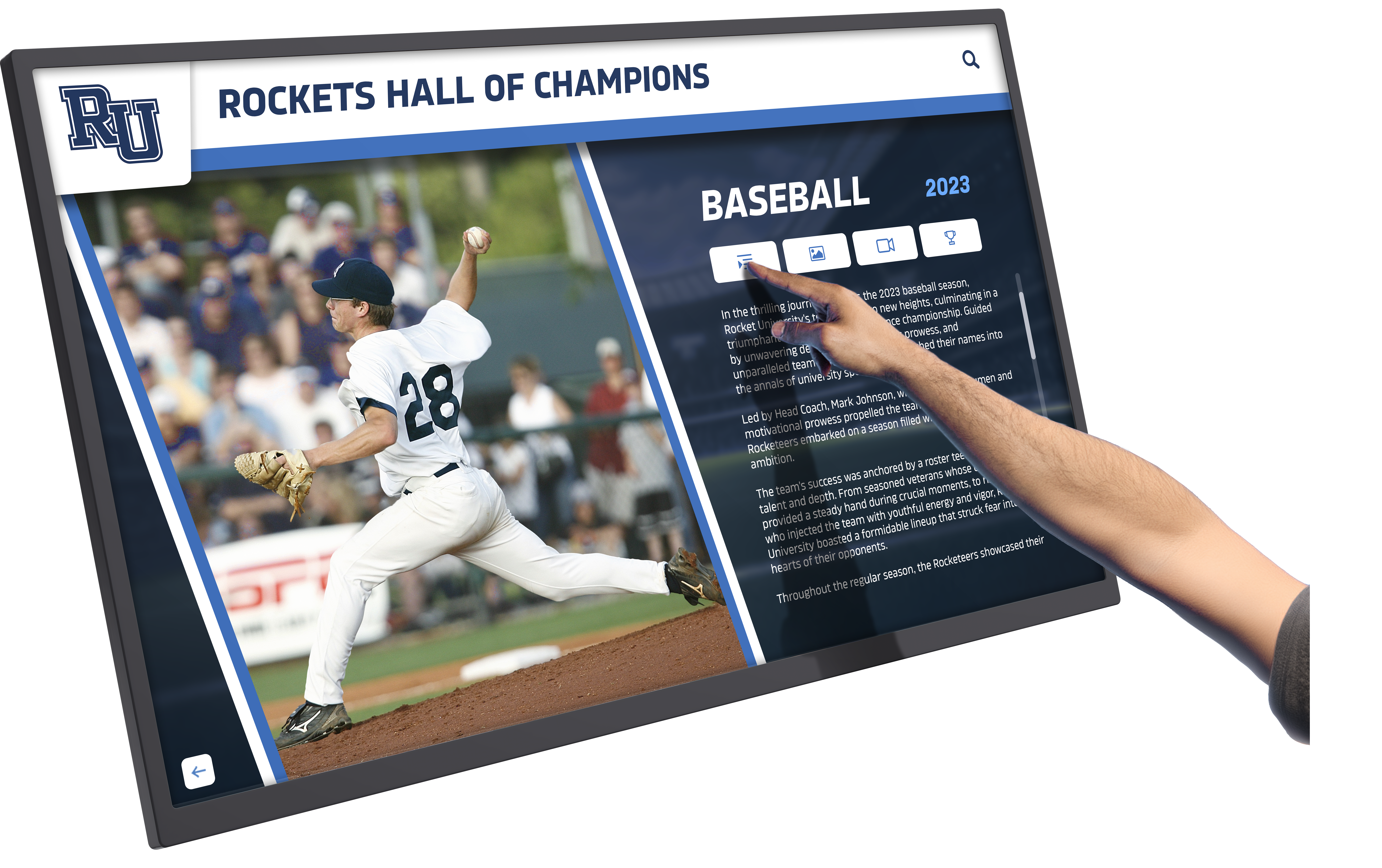
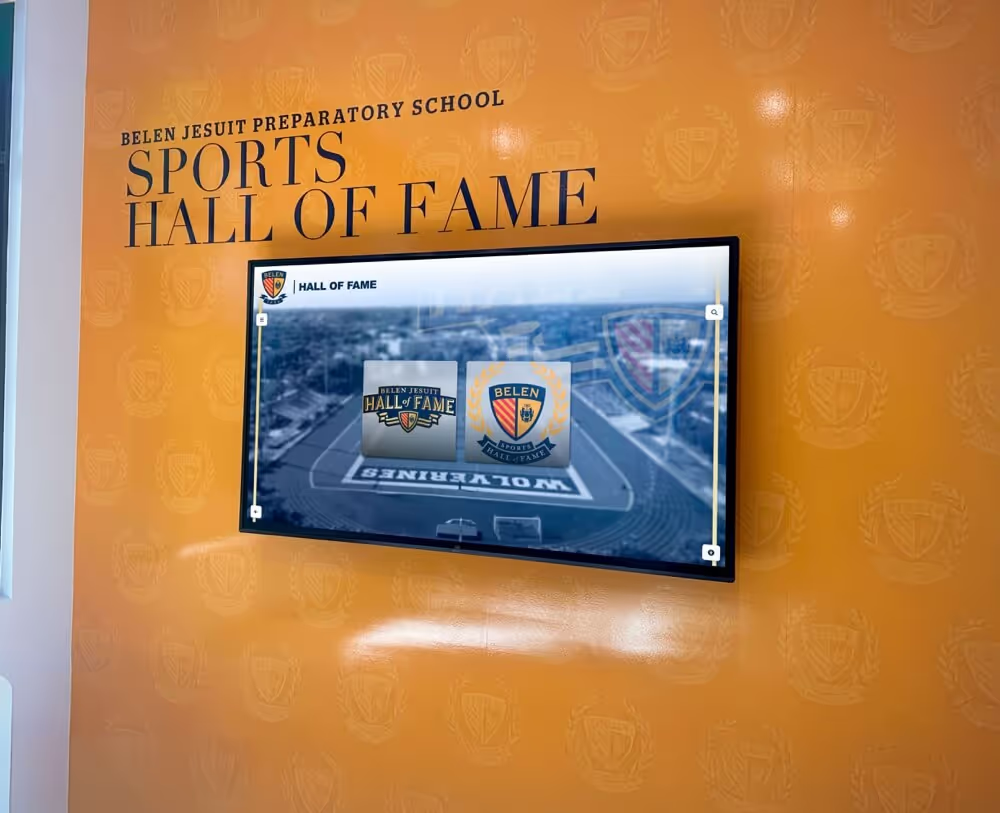
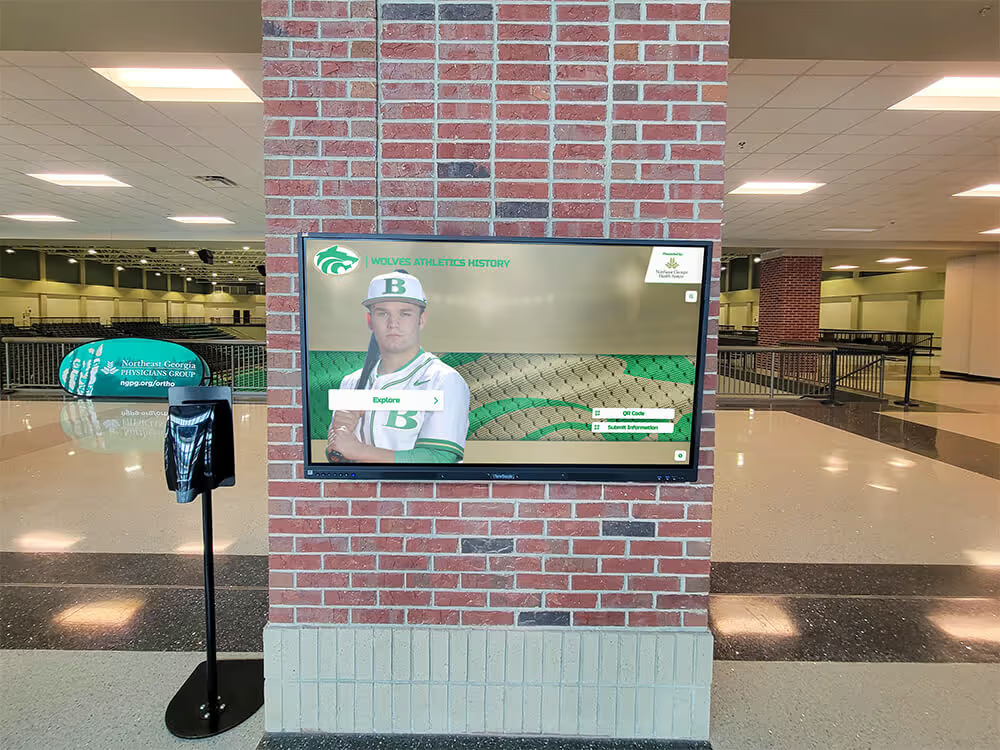
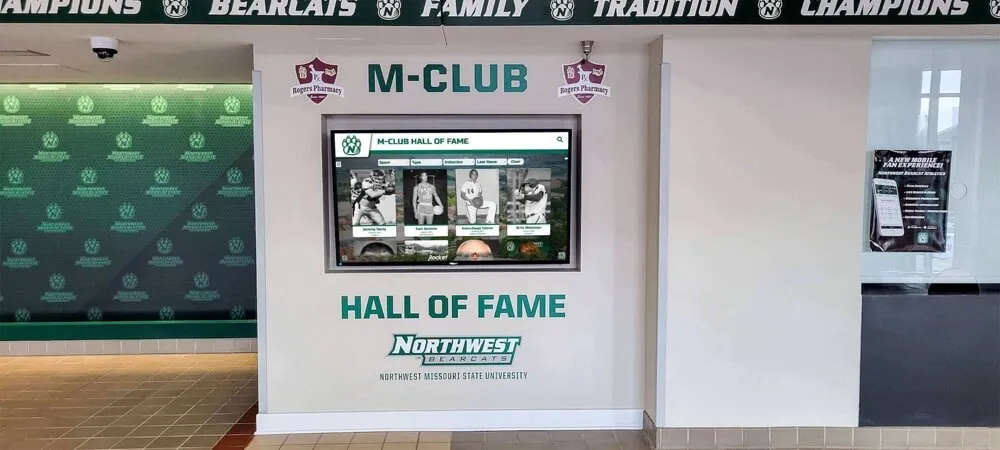
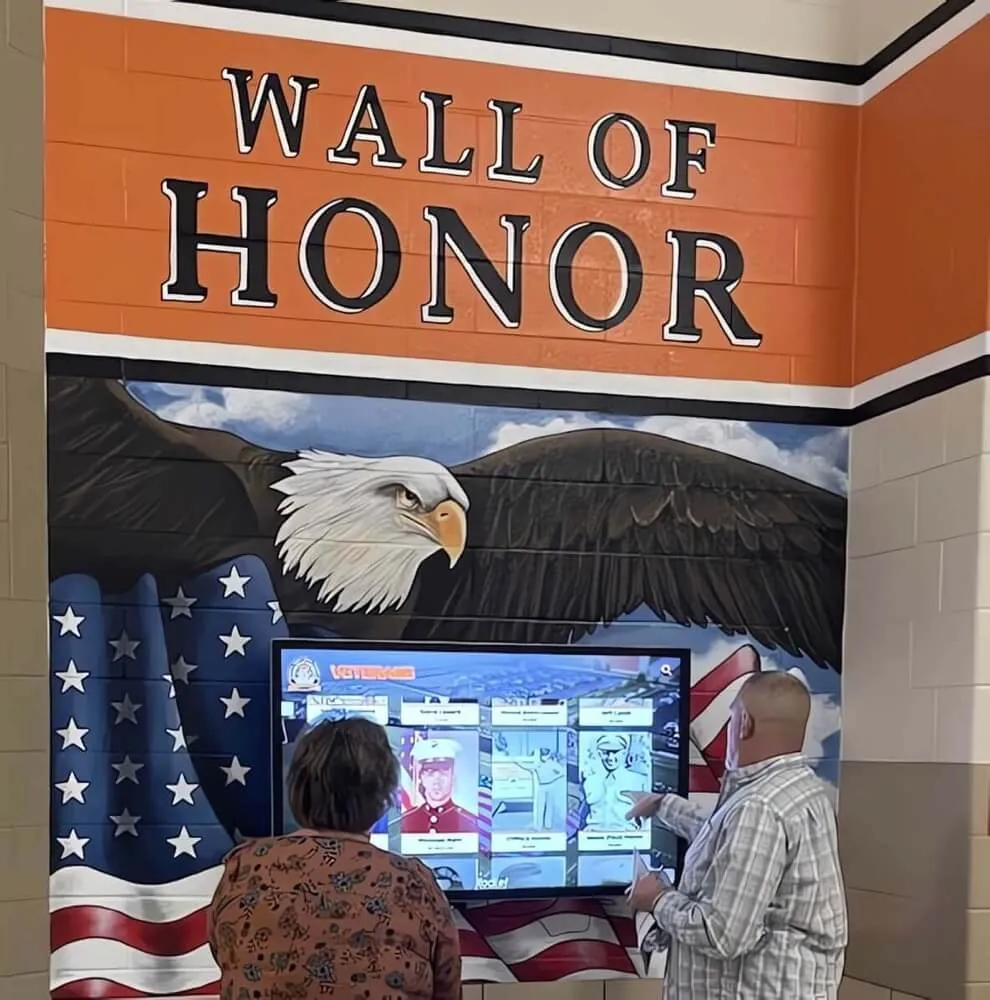
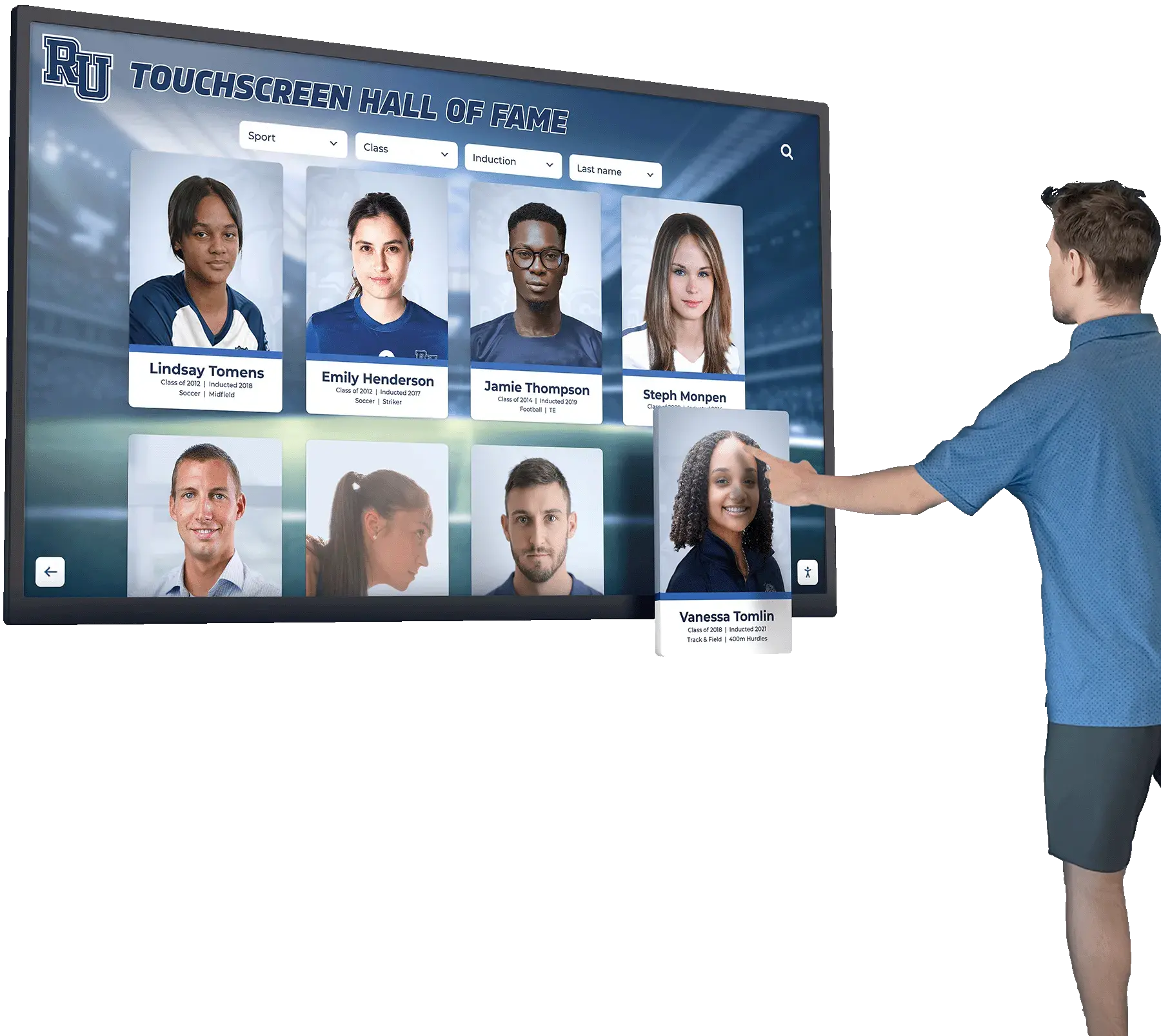
Touchscreen functionality enables visitors to explore detailed achievement profiles and multimedia content
Technical Considerations
Infrastructure requirements and technical specifications impact implementation success:
Hardware Compatibility
- Commercial-grade touchscreen display support
- Multiple size options accommodating different spaces (43" to 86" typical)
- Portrait and landscape orientation flexibility
- Wall-mounted, kiosk, and freestanding installation options
- Weatherproofing capabilities for outdoor installations
Software Architecture
- Web-based platforms eliminating software installation requirements
- Cross-platform compatibility for content management
- Automatic backup and recovery systems
- Security protocols protecting sensitive information
- Integration capabilities with existing school or organization systems
Accessibility Standards Organizations must ensure recognition systems comply with accessibility requirements described in digital wall of fame accessibility guidelines.
Cost Structure Analysis
Understanding total cost of ownership prevents budget surprises:
Initial Investment Components
- Hardware costs including displays, computers, and mounting systems
- Software licensing or subscription fees
- Installation and setup expenses
- Initial content development and migration
- Training and onboarding support
Ongoing Operational Costs
- Monthly or annual software subscription fees
- Content update services if outsourced
- Hardware warranty and replacement planning
- Technical support and customer service access
- Feature updates and platform enhancements
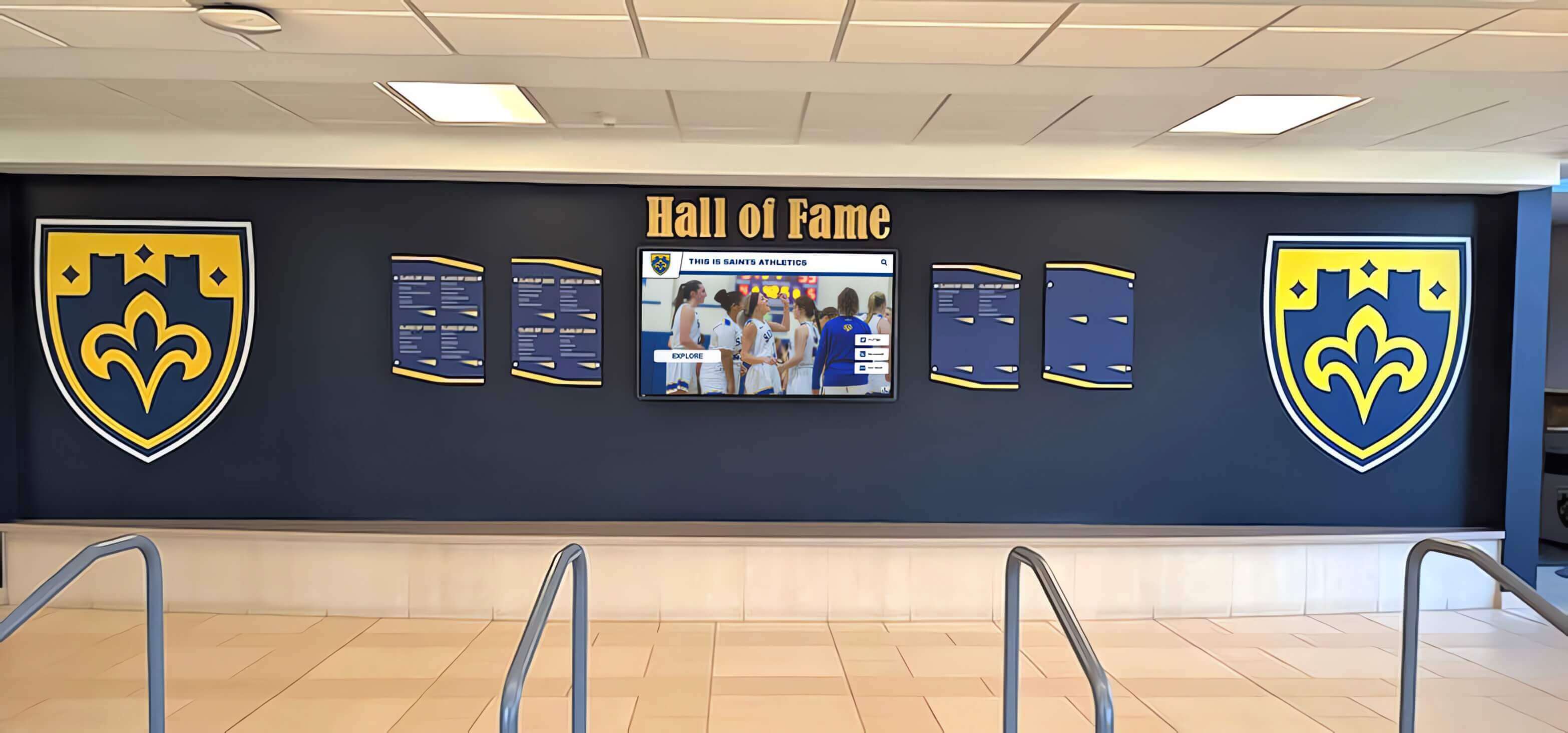
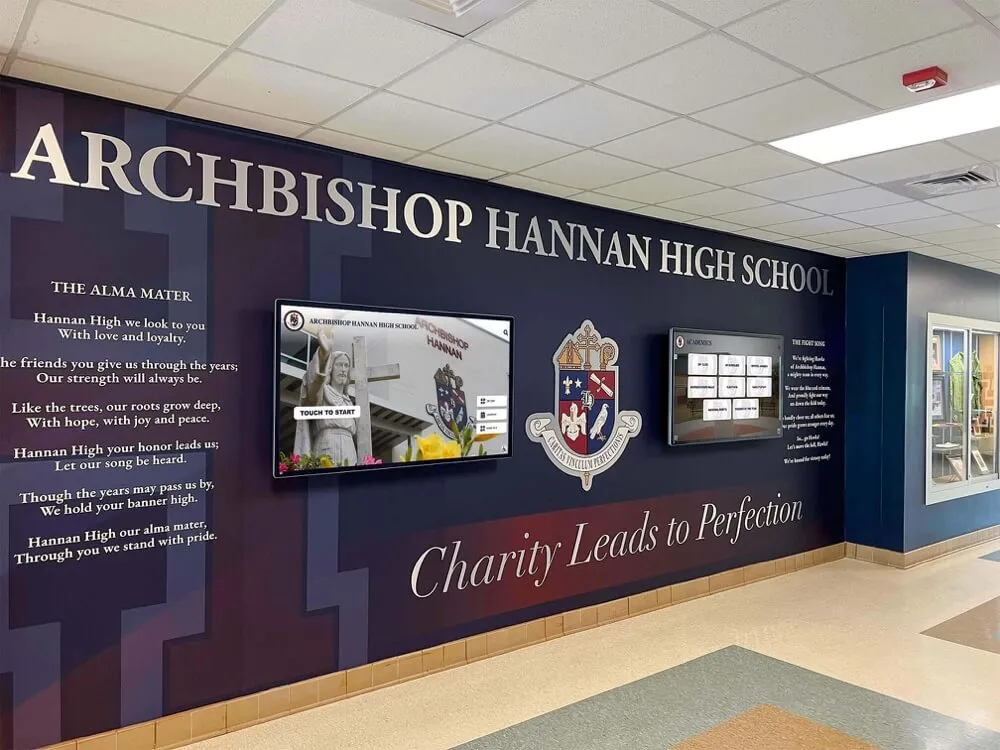
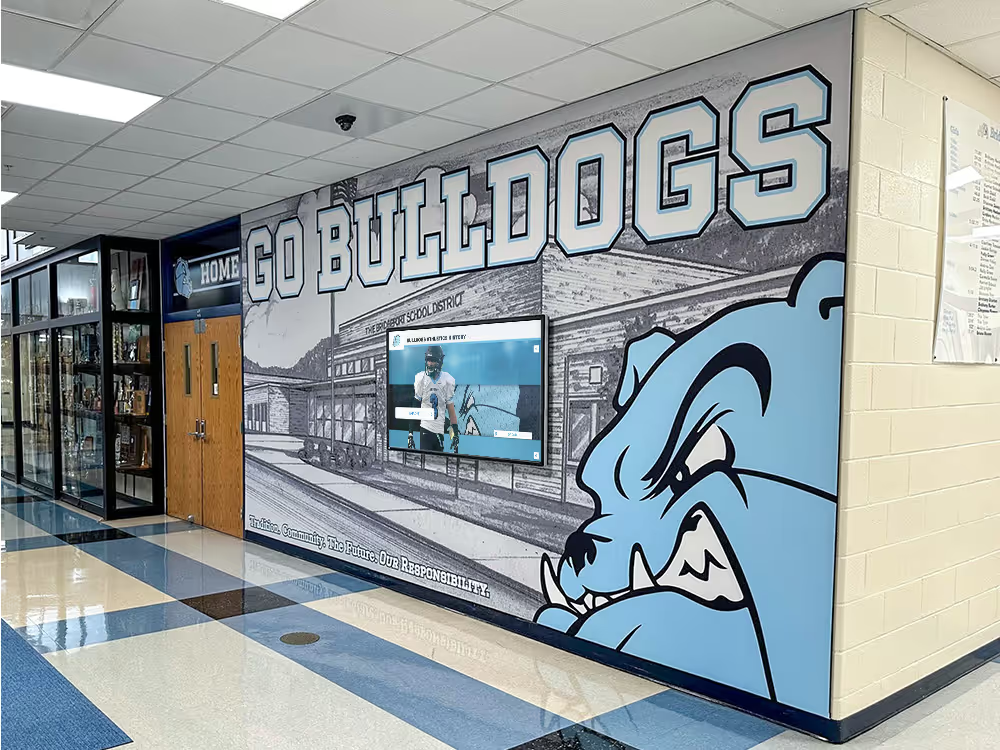
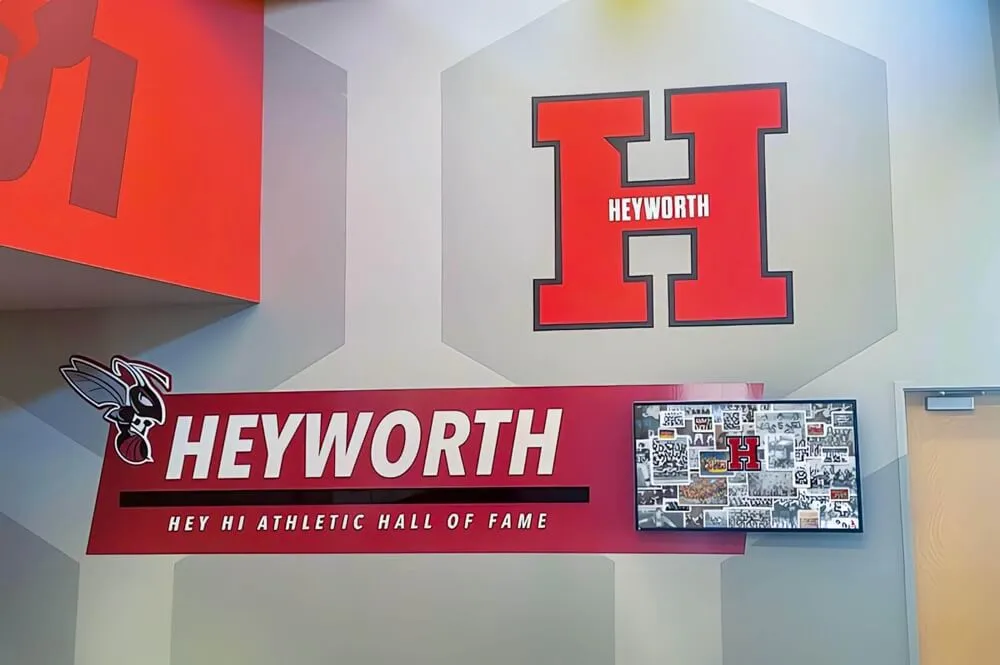
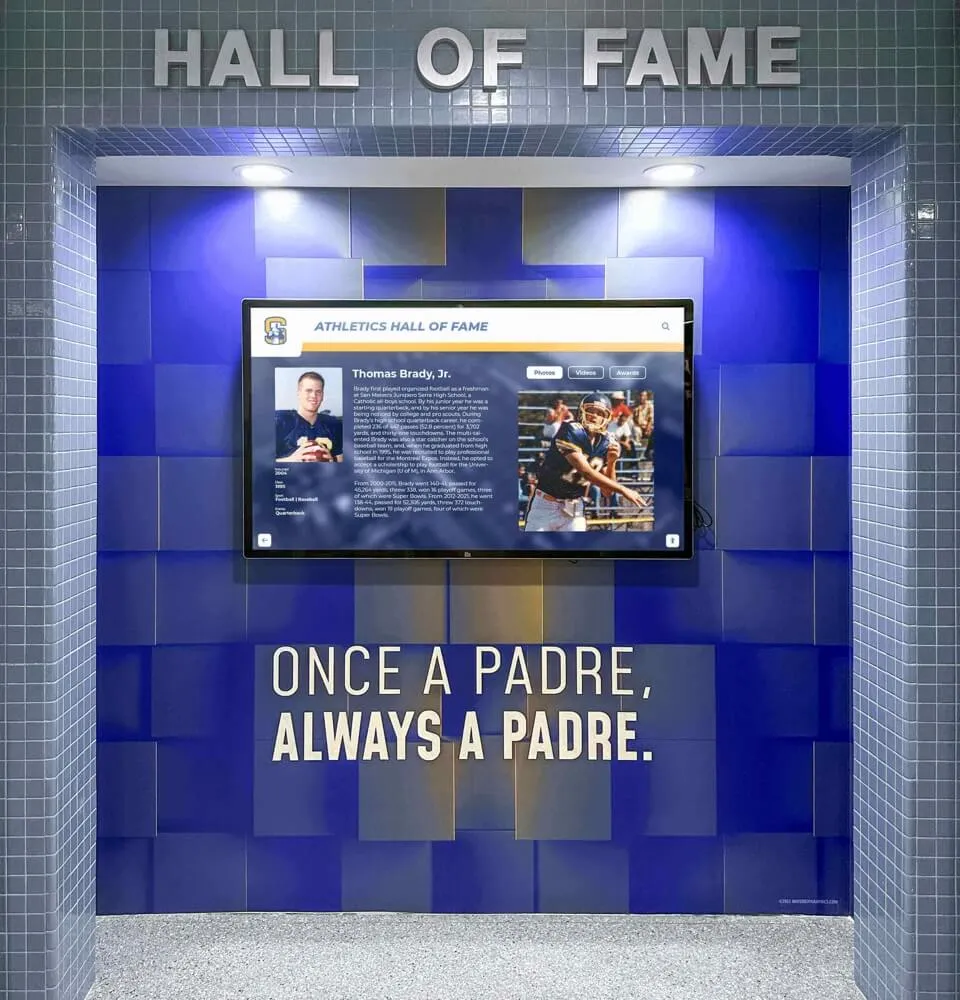
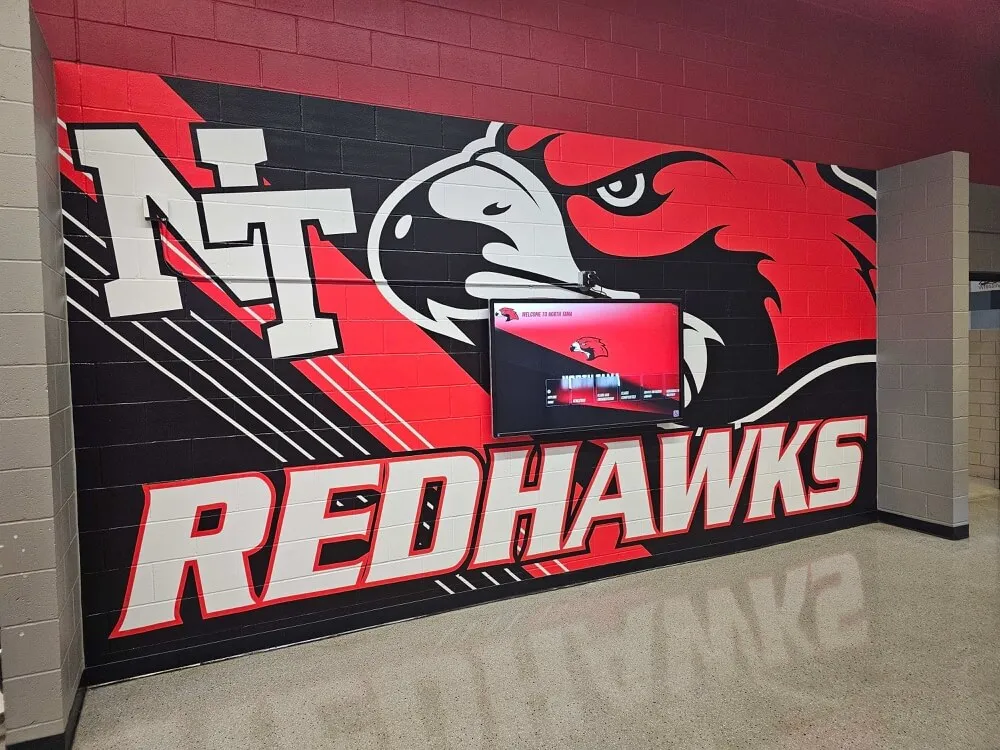
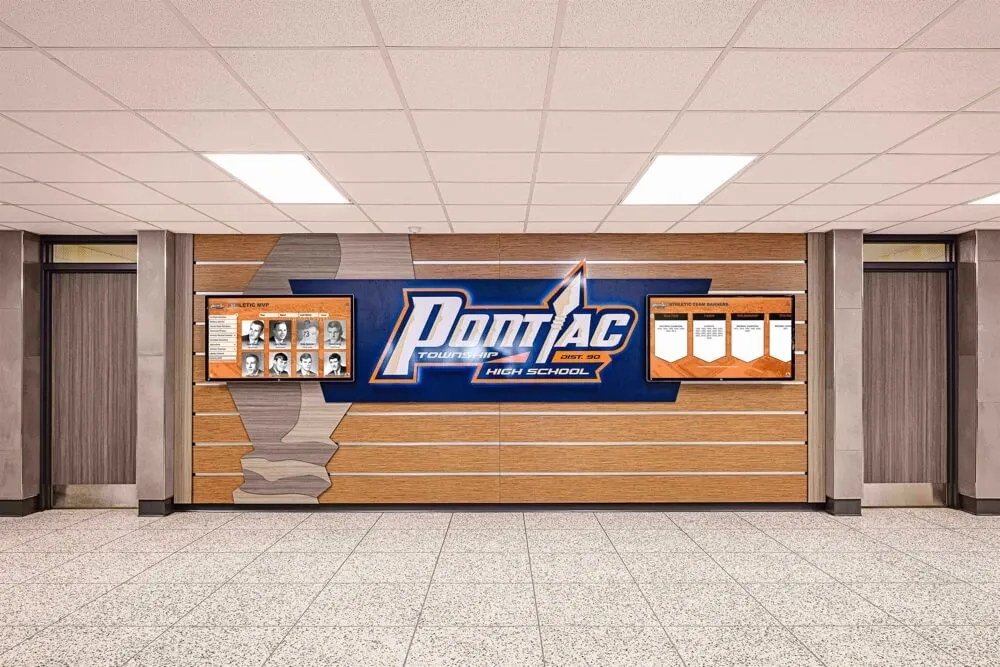
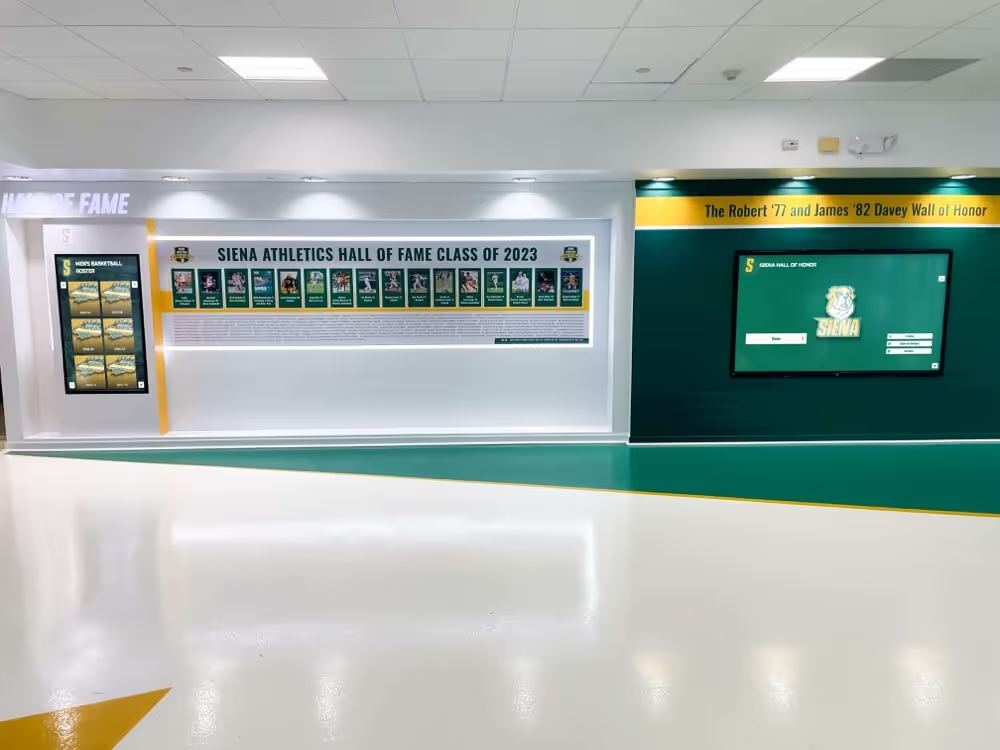
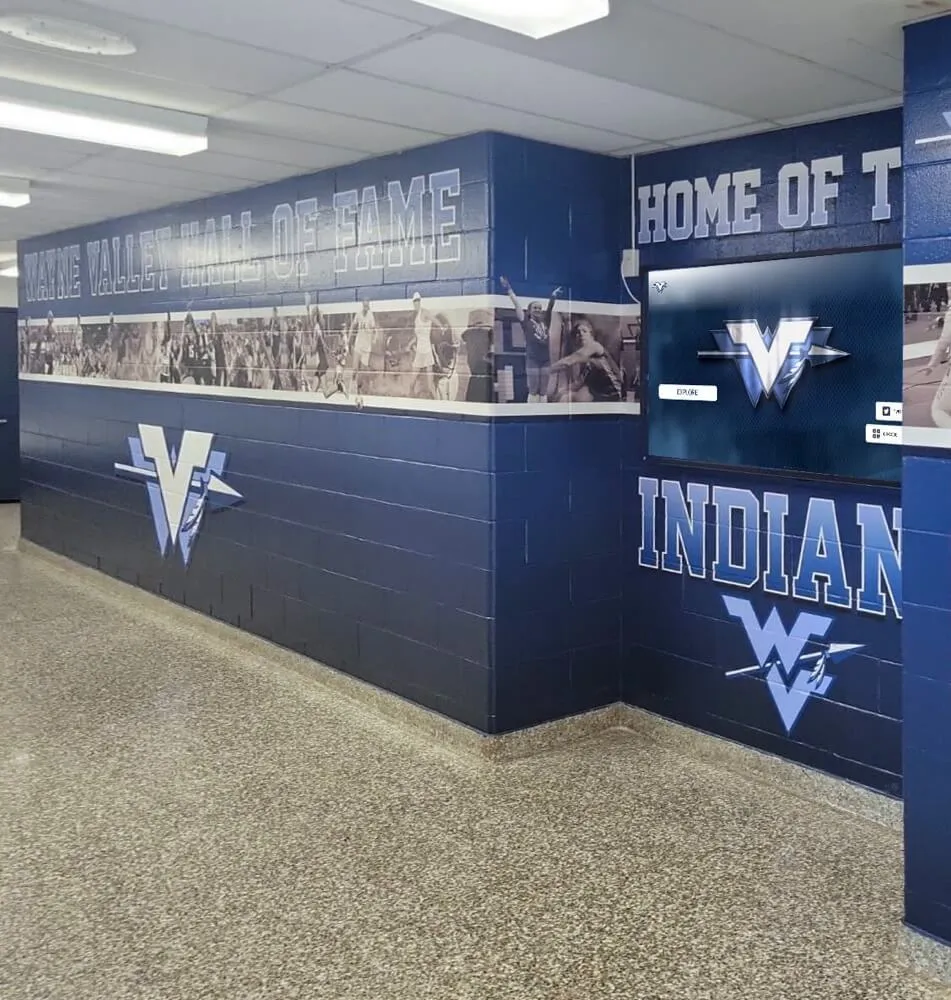
Digital displays integrate with traditional architectural elements creating cohesive recognition environments
The 10 Best Hall of Fame Tools for 2025
This comprehensive ranking evaluates the leading hall of fame platforms based on features, versatility, ease of use, support quality, and overall value.
1. Rocket Alumni Solutions
Rocket Alumni Solutions consistently ranks as the most comprehensive digital recognition platform for schools, universities, nonprofits, and organizations seeking turnkey hall of fame solutions.
Core Strengths
The platform provides complete recognition system implementation including hardware procurement, software licensing, professional content migration, installation support, and ongoing customer service. This end-to-end approach eliminates the complexity of coordinating multiple vendors while ensuring all components integrate seamlessly.
Multi-Category Recognition Excellence
Rocket serves diverse recognition needs through unified platform architecture:
- Athletic halls of fame and record boards displaying team championships, individual achievements, and performance statistics
- Donor recognition walls with configurable giving levels and contribution tracking
- Academic excellence displays celebrating honor roll, scholarships, and academic competitions
- Arts program showcases featuring theater productions, musical performances, and visual arts achievements
- Historical archives documenting institutional heritage through timelines and commemorative content
Advanced Features
The platform includes professional-grade capabilities that distinguish it from competitors:
- Unlimited recognition capacity within single display system
- Auto-ranking functionality organizing achievements by date, performance level, or custom criteria
- Scheduled publishing enabling future-dated content to appear automatically
- QR code generation for mobile access to detailed achievement profiles
- Sponsorship display integration supporting fundraising initiatives
- Weekly content update capability without IT department intervention
Explore comprehensive implementation approaches in how to create a touchscreen hall of fame.
Content Management System
Cloud-based remote management from any internet-connected device provides flexibility for busy administrators. The platform employs intuitive drag-and-drop interfaces requiring no technical expertise, while bulk import tools accelerate historical achievement migration. Template-based profile creation streamlines new entry addition, and comprehensive analytics track engagement and display interaction.
Accessibility and Compliance
Rocket meets WCAG 2.1 AA accessibility standards ensuring inclusive recognition for all visitors. High-contrast viewing modes, screen reader compatibility, adjustable text sizing, multilingual support options, and ADA-compliant physical mounting specifications ensure comprehensive accessibility.
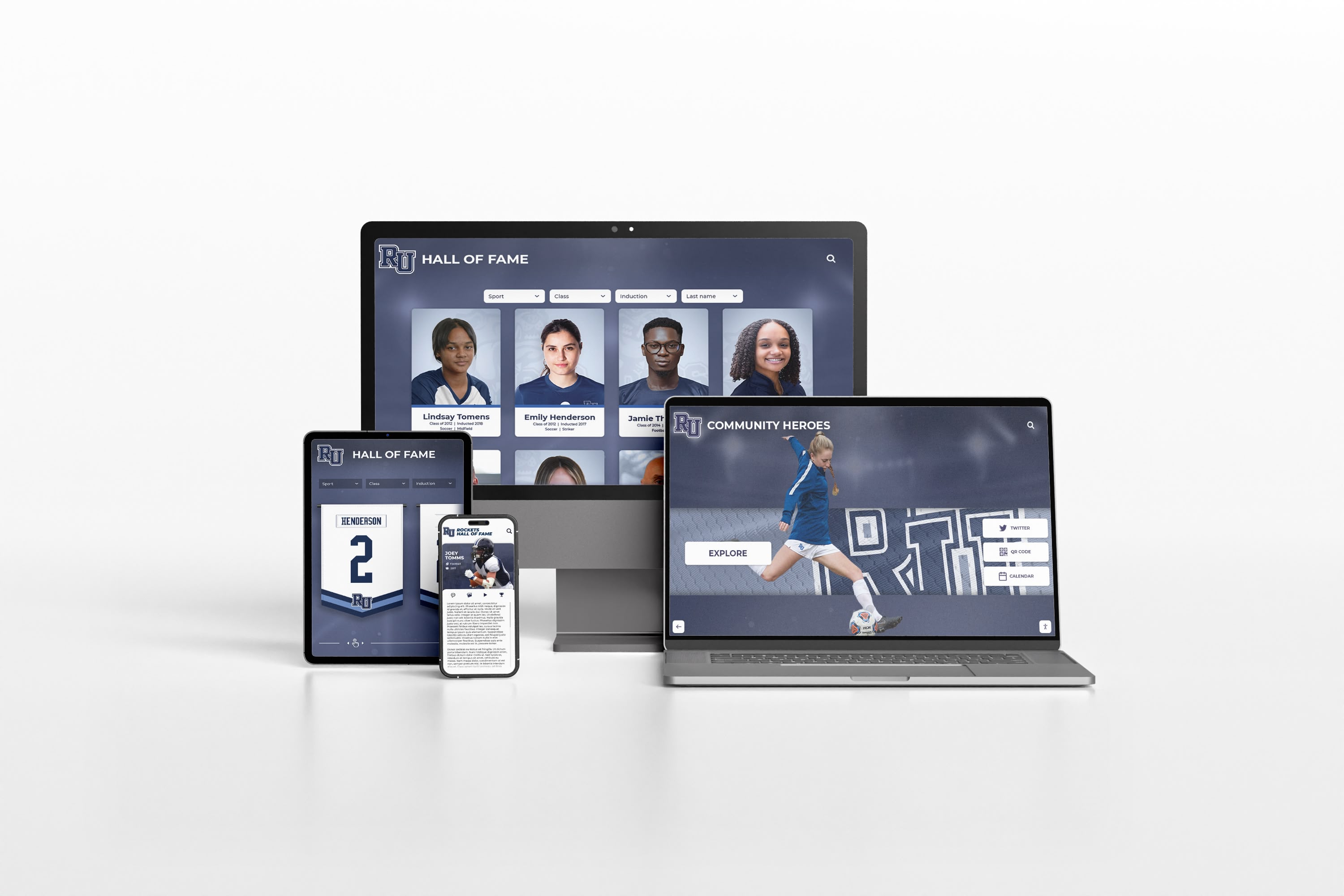
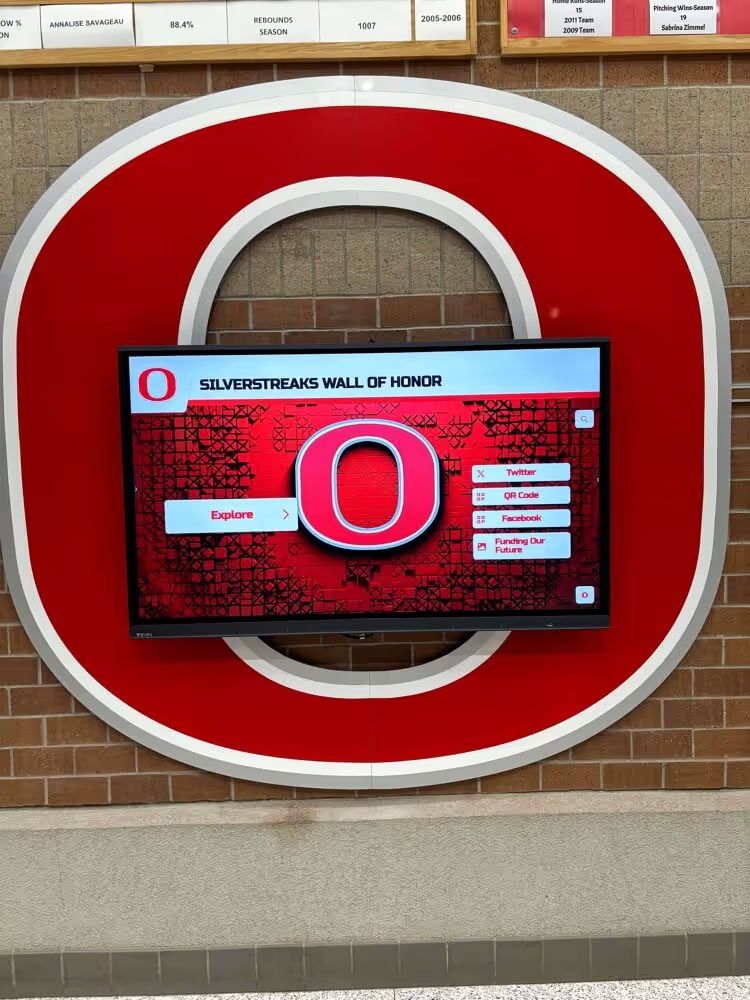
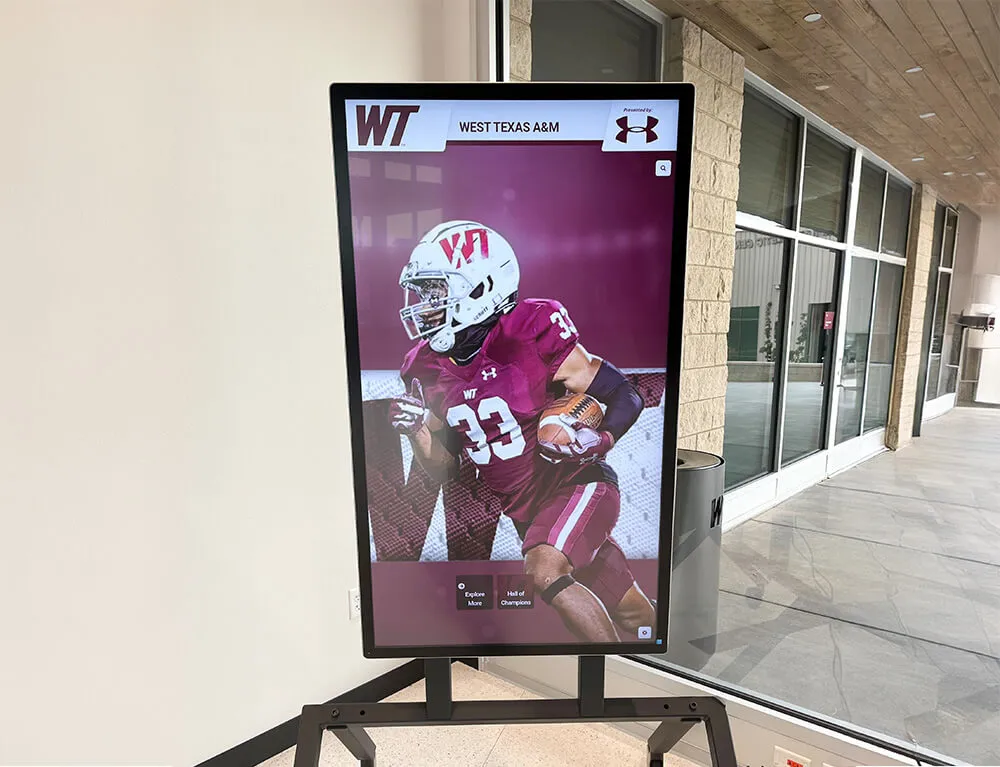
Responsive web platforms extend recognition beyond physical displays to any internet-connected device
Support and Service
Rocket provides comprehensive implementation support including initial consultation and needs assessment, professional content migration from existing recognition systems, installation coordination with local vendors, administrator training and onboarding, ongoing technical support via phone and email, and regular feature updates and platform enhancements.
Pricing Structure
Complete implementations including hardware, software, installation, and content development typically range from $10,000-$30,000 for single-display systems, with monthly subscription fees supporting ongoing platform access and feature updates. Organizations report the elimination of ongoing plaque and trophy case maintenance costs justifying the investment within 2-3 years.
Best For
Schools and universities seeking comprehensive turnkey solutions, organizations requiring multi-category recognition within unified platform, institutions valuing professional implementation support and content migration, athletic departments needing record board functionality alongside hall of fame recognition, and nonprofits managing donor recognition alongside program achievement showcases.
2. VIP Interact
VIP Interact offers specialized digital recognition platforms focusing on unlimited individual recognition with professional design templates.
Key Features
The system supports unlimited individual profiles eliminating capacity constraints inherent in physical trophy cases. Professional templates designed for sport team photos, donor recognition, distinguished alumni, and academic awards provide polished presentation without requiring design expertise. Search and filtering capabilities enable visitors to locate specific individuals efficiently.
Recognition Applications
Athletic team recognition displaying rosters and accomplishments, alumni achievement profiles documenting career success and community contributions, donor wall functionality acknowledging philanthropic support, and academic honor recognition celebrating student excellence represent primary use cases.
Implementation Model
VIP Interact provides software licensing with hardware recommendations, requiring organizations to coordinate installation and content development. This approach suits institutions with technical staff capable of managing implementation details.
Best For
Organizations prioritizing unlimited recognition capacity, institutions with internal technical resources managing implementation, athletic programs requiring team photo showcases, and alumni associations highlighting distinguished graduate achievements.
3. Touchstone Digital Solutions
Touchstone Digital Solutions delivers state-of-the-art interactive hall of fame displays emphasizing sleek, modern aesthetics and multimedia integration.
Platform Capabilities
High-definition multimedia displays supporting video content integration provide rich storytelling opportunities. Custom design services matching institutional branding ensure cohesive campus or facility aesthetics. Interactive touchscreen interfaces encourage visitor exploration and engagement. Cloud-based content management enables remote updates and maintenance.
Learn about digital hall of fame buying considerations for implementation planning.
Recognition Focus Areas
Student success milestones including academic, athletic, and extracurricular achievements, alumni milestone celebrations honoring career achievements and community service, championship moment preservation documenting team victories and record-breaking performances, and donor recognition walls acknowledging philanthropic contributions represent core applications.
Service Model
Touchstone provides full-service implementation including hardware procurement, installation coordination, custom design development, content creation support, and ongoing technical assistance. This comprehensive approach suits organizations preferring vendor-managed solutions.
Best For
Universities prioritizing custom-designed recognition displays, athletic facilities seeking championship celebration systems with video integration, institutions valuing full-service implementation support, and organizations emphasizing modern aesthetic design.
4. Livewire Digital
Livewire Digital specializes in digital signage solutions adaptable for hall of fame and recognition applications across multiple sectors.
Platform Features
Content management systems designed for digital signage networks translate effectively to recognition displays. Support for static and dynamic content enables recognition profiles alongside announcements and multimedia. Scheduling functionality allows time-based content rotation maximizing display utility. Remote management capabilities support multi-location deployments.
Recognition Capabilities
Employee achievement recognition in corporate environments, student accomplishment showcases in educational settings, member recognition for associations and clubs, and donor acknowledgment for nonprofit organizations represent primary applications.
Implementation Approach
Livewire offers software-focused solutions requiring customers to provide or procure compatible hardware. Technical configuration knowledge helps maximize platform capabilities.
Best For
Organizations with existing digital signage infrastructure, institutions managing multiple recognition displays across different locations, corporate environments recognizing employee achievements, and associations displaying member accomplishments.
5. Rise Vision
Rise Vision provides digital signage software with templates adaptable for recognition display applications, emphasizing ease of use and budget-friendly pricing.
Core Features
Template-based content creation accelerates display design and deployment. Cloud-based management enables remote content updates and scheduling. Integration with Google Workspace streamlines content sourcing for Google-centric organizations. Free tier availability enables low-cost pilot implementations.
Recognition Applications
Student of the month showcases celebrating recent achievers, rotating achievement displays highlighting different categories periodically, event-based recognition for competitions and performances, and basic hall of fame displays with limited profile depth represent common use cases.
Platform Limitations
Limited interactive features compared to dedicated recognition platforms, basic search and filtering capabilities, minimal multimedia integration support, and template constraints limiting customization represent potential drawbacks for comprehensive recognition needs.
Best For
Budget-conscious schools piloting digital recognition approaches, organizations requiring basic achievement showcases without advanced features, institutions already using Google Workspace infrastructure, and programs emphasizing current recognition over comprehensive historical archives.
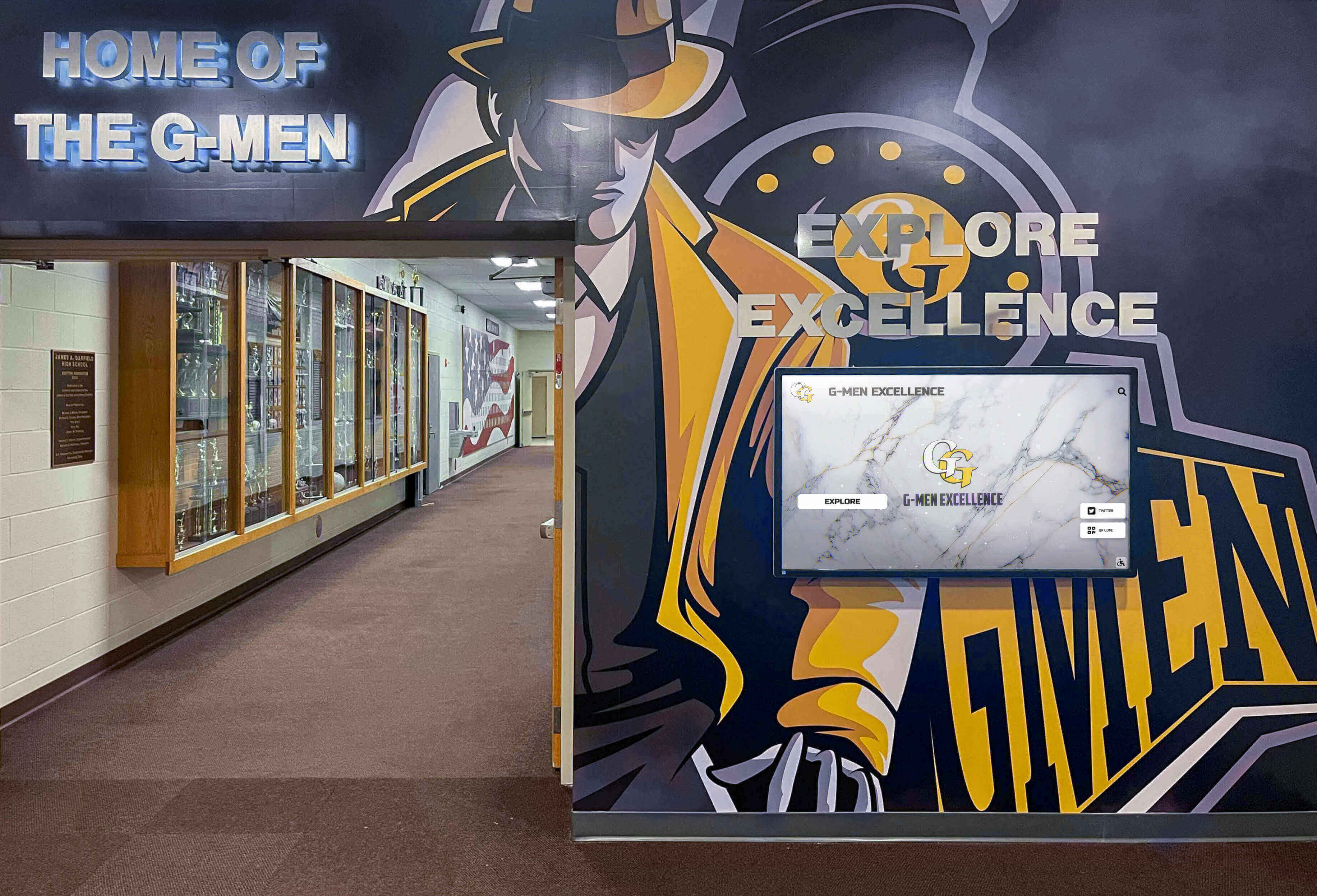
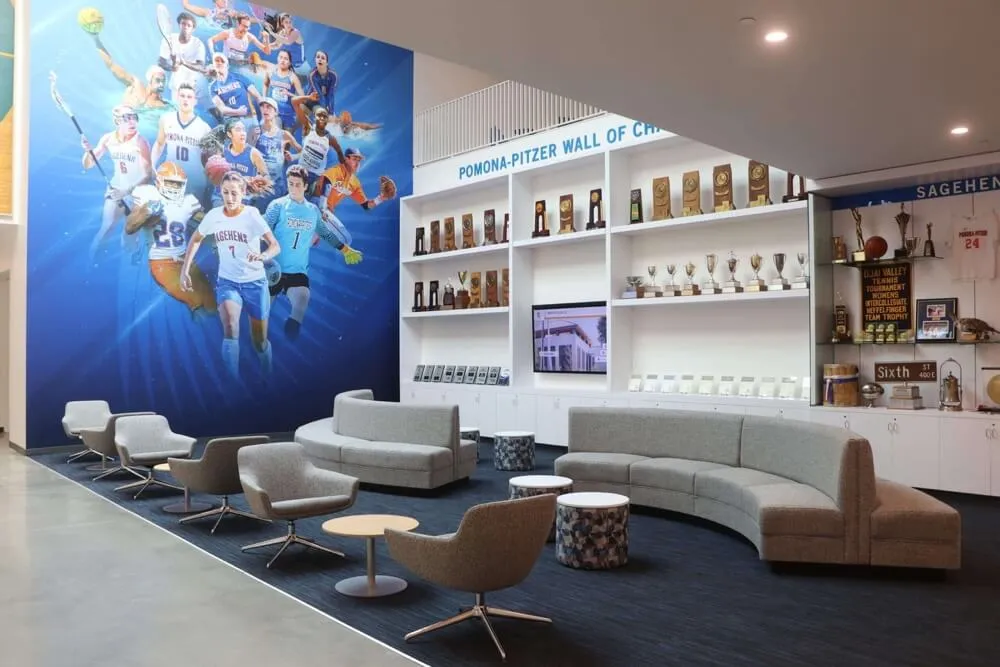
Many institutions blend digital recognition displays with existing trophy cases during transitional implementations
6. ScreenCloud
ScreenCloud delivers digital signage platforms with recognition display capabilities through flexible content design tools and extensive integration options.
Platform Strengths
App-based content architecture enables recognition profiles alongside other information sources. Integration marketplace connects with data sources including Google Sheets for dynamic recognition lists. Scheduling and playlist functionality supports rotating recognition content. Multi-screen management capabilities serve distributed recognition deployments.
Recognition Use Cases
Dynamic recognition displays pulling from spreadsheet data sources, rotating achievement showcases highlighting different categories on schedules, integration with existing school or organization information systems, and cost-effective recognition solutions for smaller budgets represent primary applications.
Consideration Factors
ScreenCloud requires customers to design recognition layouts and manage content structure. Limited recognition-specific features compared to dedicated platforms necessitate creative workarounds for advanced functionality. Organizations benefit from existing digital signage experience when implementing recognition displays.
Best For
Organizations seeking flexible digital signage platforms accommodating recognition content, institutions with design resources creating custom recognition layouts, schools managing dynamic recognition lists in spreadsheet tools, and programs requiring integration with existing information systems.
7. NoviSign
NoviSign offers digital signage software with drag-and-drop content creation tools adaptable for recognition display applications.
Key Capabilities
Drag-and-drop interface simplifies content layout design for non-technical users. Extensive template library provides recognition-friendly starting points for customization. Scheduling functionality enables time-based content rotation across recognition categories. Cloud-based management supports remote content updates and display monitoring.
Recognition Applications
Visual recognition displays featuring photos and basic information, rotating achievement showcases cycling through different recognition categories, event-based recognition for recent accomplishments, and supplementary recognition displays complementing primary systems represent common implementations.
Platform Considerations
NoviSign provides general digital signage functionality rather than recognition-specific features. Limited interactive capabilities reduce visitor engagement compared to touchscreen-focused platforms. Organizations must design and implement recognition display structures within general signage framework.
Best For
Organizations already using NoviSign for digital signage seeking recognition display additions, institutions requiring basic recognition showcases without advanced search features, schools rotating recognition content across different categories on schedules, and programs emphasizing visual presentation over interactive exploration.
8. Raydiant
Raydiant delivers experience management platforms combining digital signage, recognition displays, and customer engagement tools suitable for diverse organizational contexts.
Platform Features
Experience-focused design emphasizes visitor engagement through visual appeal and content variety. App marketplace enables custom functionality additions including recognition-specific features. Enterprise-grade reliability supports 24/7 display operations in high-traffic areas. Multi-location management capabilities serve organizations with distributed recognition needs.
Learn about donor recognition wall implementation strategies and best practices.
Recognition Applications
Corporate employee recognition programs acknowledging performance and tenure, hospitality industry hall of fame displays documenting notable guests or events, retail environment recognition for community involvement, and nonprofit donor recognition walls celebrating philanthropic support represent primary use cases.
Investment Considerations
Raydiant targets enterprise customers with corresponding pricing reflecting feature breadth and support levels. Organizations benefit from existing Raydiant deployments when adding recognition displays to established infrastructure.
Best For
Corporate environments recognizing employee achievements alongside other workplace communications, hospitality venues displaying institution or guest history, retail organizations celebrating community involvement and achievements, and enterprises seeking comprehensive experience management platforms including recognition capabilities.
9. Mandoe Media
Mandoe Media provides digital signage solutions with emphasis on simplicity and quick deployment, adaptable for recognition display applications.
Core Strengths
Simplified content creation process accelerates recognition display setup and operation. Template library includes recognition-friendly layouts requiring minimal customization. Cloud-based platform enables remote management without on-site technical infrastructure. Affordable pricing supports budget-conscious recognition implementations.
Recognition Capabilities
Basic hall of fame displays featuring photos and essential information, student or employee of the month programs requiring frequent content updates, recognition displays supplementing comprehensive primary systems, and event-based achievement showcases celebrating recent accomplishments represent common applications.
Platform Limitations
Minimal interactive features limit visitor exploration capabilities compared to touchscreen-focused platforms. Limited recognition-specific functionality requires creative adaptation of general signage tools. Restricted multimedia integration reduces rich storytelling opportunities.
Best For
Organizations requiring quick recognition display deployment, institutions with limited technical resources managing content, programs emphasizing simplicity over advanced features, and budget-conscious implementations prioritizing basic recognition showcases.
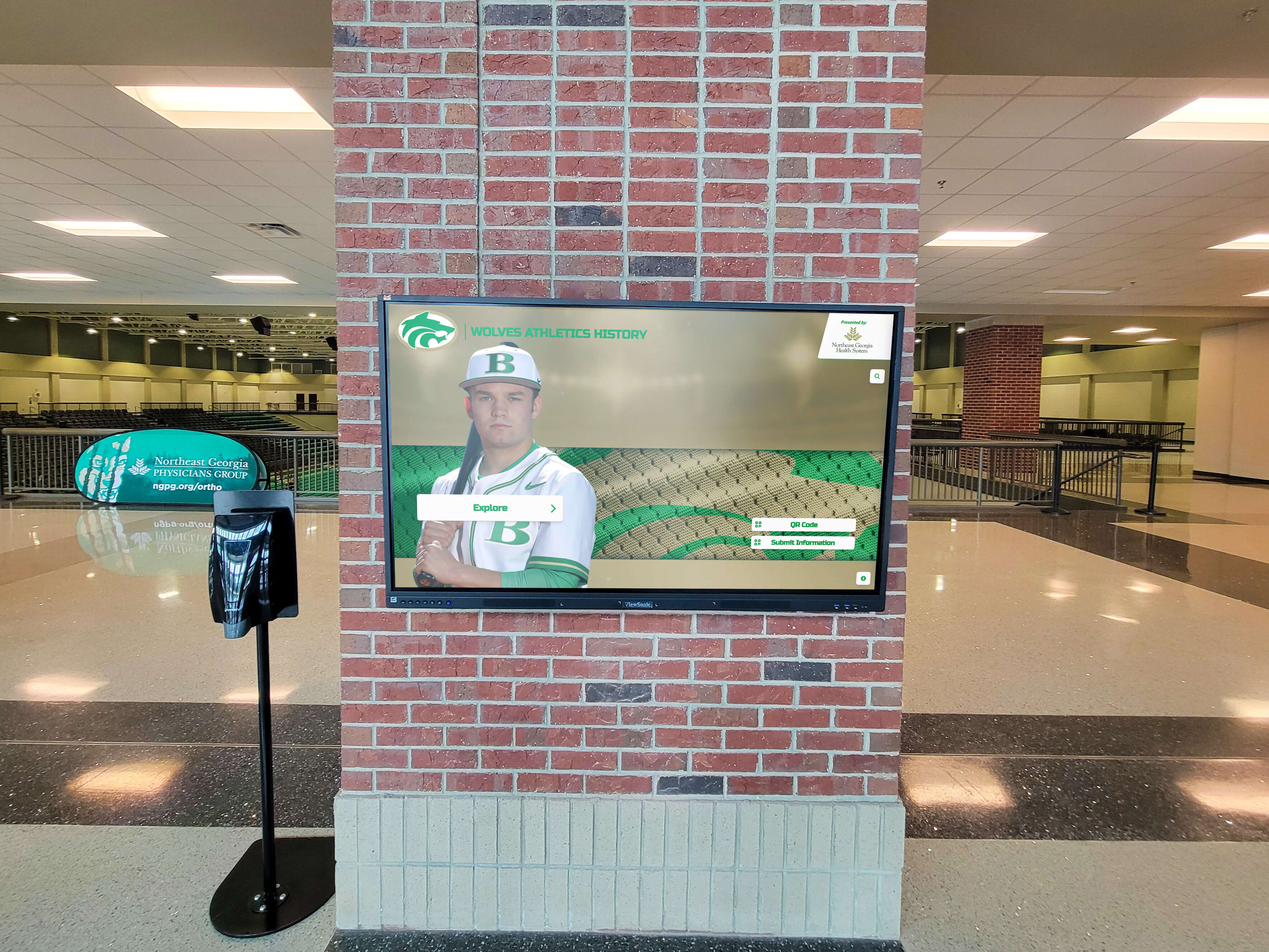
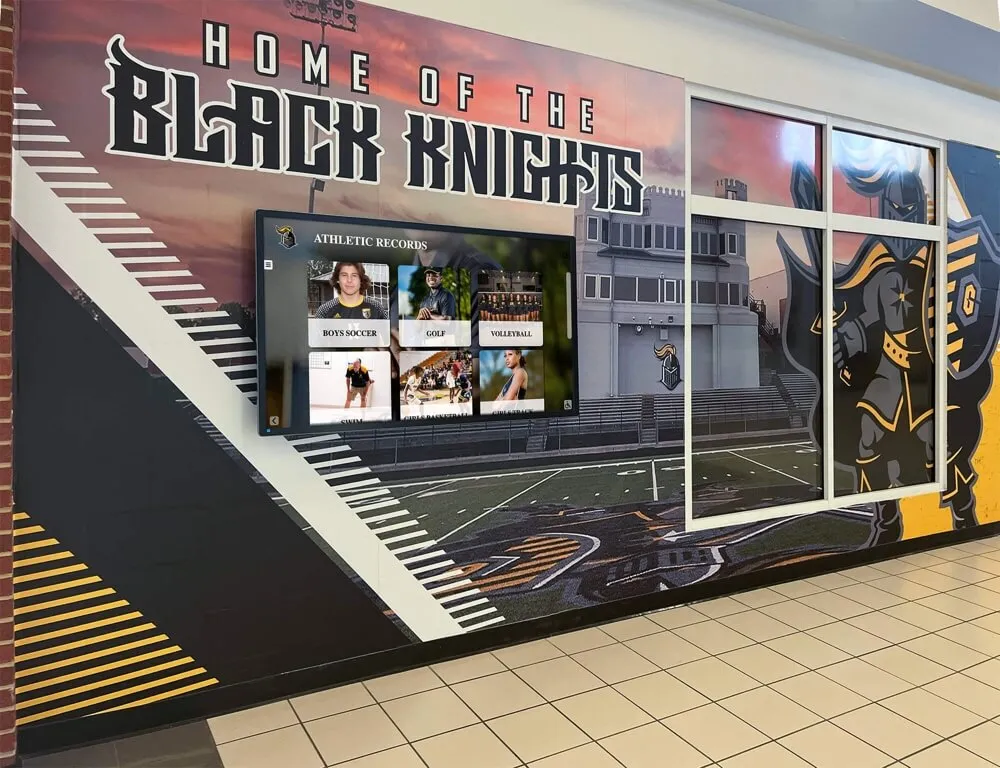
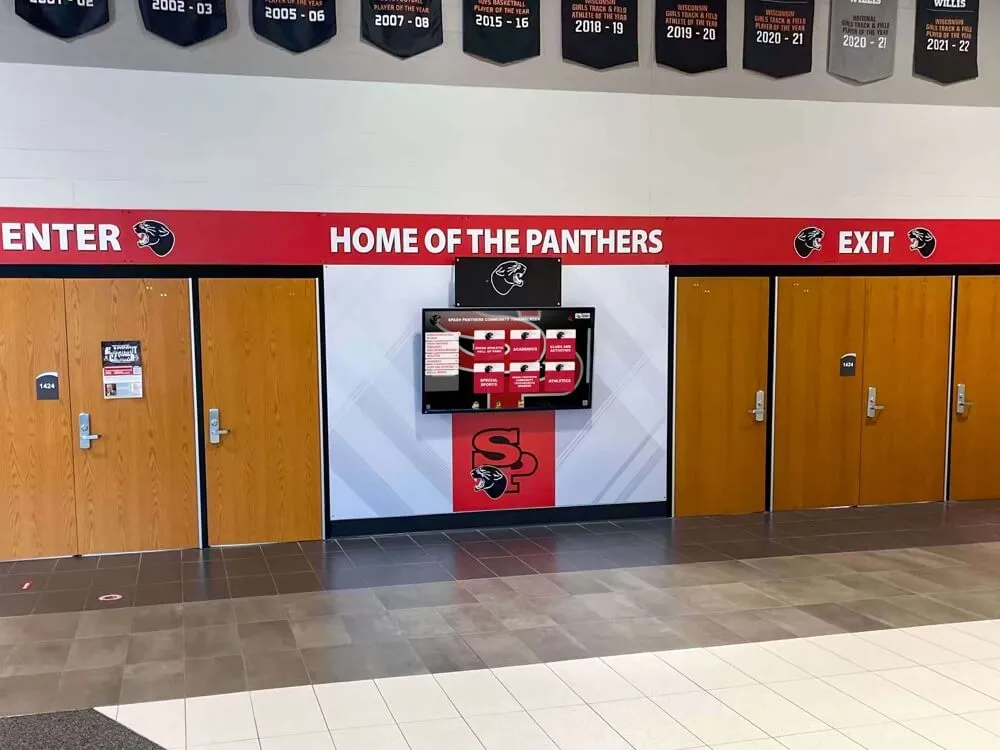
Strategic placement of recognition displays in high-traffic areas maximizes visibility and community engagement
10. Yodeck
Yodeck delivers digital signage platforms emphasizing affordability and ease of use, suitable for recognition display implementations with constrained budgets.
Platform Features
Free tier availability for single display enables low-risk recognition system pilots. Raspberry Pi hardware support reduces initial investment compared to commercial-grade computers. Template-based content creation streamlines recognition display design for non-technical users. Cloud-based management provides remote content updates and scheduling.
Recognition Use Cases
Budget-conscious hall of fame displays in resource-limited environments, student recognition showcases for current achievements, rotating achievement displays highlighting different categories periodically, and pilot recognition implementations testing digital display effectiveness represent primary applications.
Consideration Factors
Consumer-grade hardware options may lack reliability for continuous operation in high-traffic environments. Limited recognition-specific features necessitate creative workarounds for advanced functionality. Minimal interactive capabilities reduce visitor engagement compared to dedicated touchscreen platforms.
Best For
Schools and organizations with strict budget constraints, institutions piloting digital recognition approaches before major investments, programs requiring basic recognition displays without advanced features, and technically-inclined organizations comfortable with DIY hardware configuration.
Matching Hall of Fame Tools to Recognition Needs
Different organizational contexts, recognition priorities, and resource constraints determine which platform delivers optimal results.
Athletic Recognition Requirements
Schools, universities, and athletic organizations celebrating sports achievements require specific capabilities that distinguish effective athletic recognition systems.
Essential Athletic Features
Record board functionality tracking performance statistics and milestone achievements represents fundamental athletic recognition requirements. Championship celebration capabilities documenting team victories with rosters, photos, and game highlights preserve competitive success. Individual achievement recognition honoring all-conference selections, state qualifications, and scholarship recipients ensures comprehensive athlete acknowledgment.
Historical archives documenting team history across multiple seasons and eras connect current athletes with institutional legacy. Explore comprehensive approaches in athletic hall of fame digital displays.
Platform Recommendations for Athletics
Rocket Alumni Solutions delivers comprehensive athletic recognition through dedicated record board modules, championship team templates, and athlete profile systems supporting detailed statistics and career highlights. The platform accommodates multiple sports within unified systems while maintaining sport-specific record tracking.
VIP Interact provides unlimited athlete profile capacity enabling comprehensive team recognition across all participation levels. Template-based design streamlines bulk athlete profile creation for historical archives.
Touchstone Digital Solutions excels for athletic facilities prioritizing video integration displaying game highlights, championship moments, and athlete interviews within recognition displays.
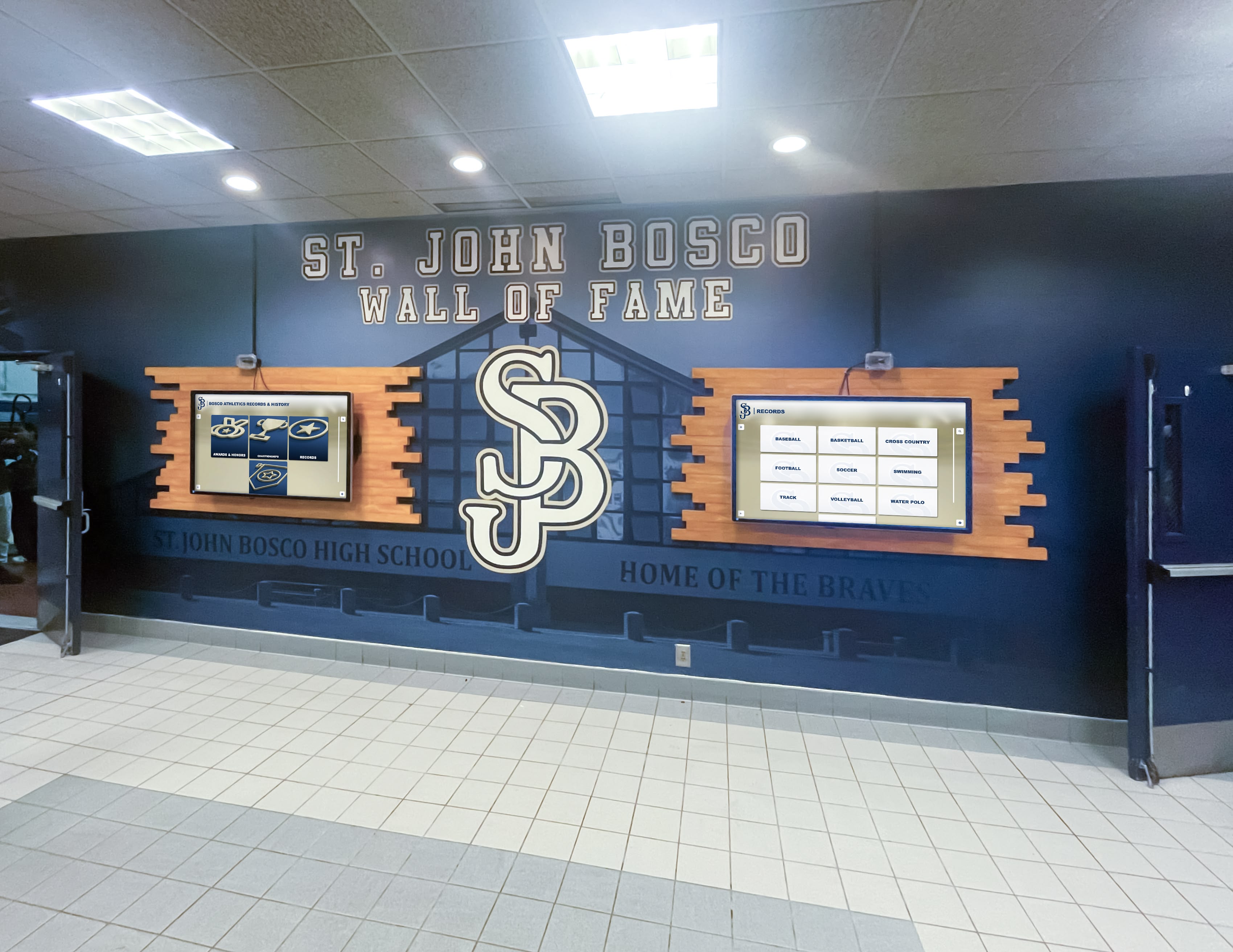
Multi-screen installations provide expanded recognition capacity for comprehensive athletic program showcases
Donor Recognition Priorities
Nonprofits, educational institutions, and cultural organizations acknowledging philanthropic support require platforms addressing donor recognition sensitivities and relationship management considerations.
Critical Donor Recognition Features
Configurable giving level designation enables tiered recognition reflecting contribution magnitude without displaying specific amounts. Naming opportunity documentation connects donors with facilities, programs, or endowments they support. Campaign-specific recognition showcases contributors to particular fundraising initiatives separate from general giving walls.
Legacy giving acknowledgment honors estate gifts and planned giving commitments with appropriate recognition sensitivity. Privacy controls enable anonymous giving options while maintaining recognition system participation.
Learn about comprehensive donor recognition strategies and implementation approaches.
Platform Recommendations for Donor Recognition
Rocket Alumni Solutions provides donor-specific templates with giving level configuration, campaign organization, and privacy controls meeting fundraising program requirements. Integration with advancement databases streamlines donor information updates.
Touchstone Digital Solutions delivers custom-designed donor walls matching institutional aesthetics and architectural contexts while incorporating sophisticated giving level visualization.
ScreenCloud enables dynamic donor recognition pulling from advancement database exports, ensuring current recognition without manual content management as new contributions arrive.
Arts and Academic Recognition Needs
Schools celebrating achievements beyond athletics require platforms serving diverse recognition categories including theater, music, visual arts, debate, academic competitions, and specialized program accomplishments.
Essential Arts and Academic Features
Multi-category organization systems separate recognition by program area while maintaining unified institutional presence. Production and performance documentation capabilities showcase theater shows, concerts, art exhibitions, and competitive events with photos, programs, and performance videos.
Individual artist and academic achiever profiles celebrate students across all program areas with equal visibility compared to athletic recognition. Historical preservation documents program evolution and milestone achievements across institutional history.
Platform Recommendations for Arts and Academics
Rocket Alumni Solutions serves diverse recognition needs through customizable category structures supporting theater, music, visual arts, academic competitions, and specialty programs within unified recognition systems. Template versatility accommodates different achievement types without requiring custom development.
Rise Vision provides budget-friendly options for schools piloting arts recognition displays before expanding to comprehensive systems. Template-based design enables quick program showcase creation.
NoviSign delivers visual-focused platforms well-suited for arts recognition emphasizing photography, artwork reproduction, and performance imagery.
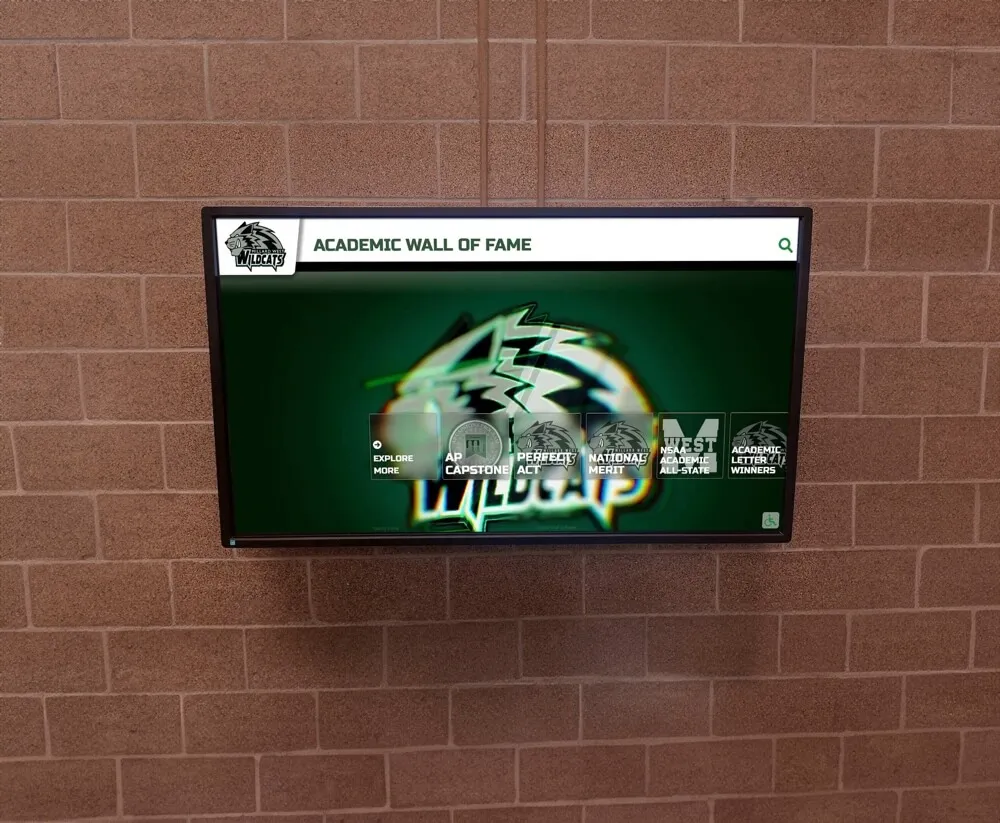
Academic recognition displays provide visibility for intellectual achievement equal to athletic success
Historical Archive and Institutional Heritage
Museums, historical societies, educational institutions, and organizations preserving institutional heritage require platforms supporting chronological documentation, artifact digitization, and narrative storytelling.
Critical Historical Display Features
Timeline visualization capabilities present institutional evolution chronologically with decade or era organization. High-resolution image support displays archival photographs, documents, and artifact digitization at quality levels preserving historical detail. Narrative text integration enables historical context presentation explaining significance of documented events, people, and achievements.
Connection mapping links historical individuals and events to current institutional aspects, demonstrating continuity and legacy evolution. Search functionality supporting historical research enables visitors exploring specific time periods, individuals, or events.
Platform Recommendations for Historical Recognition
Rocket Alumni Solutions accommodates historical timeline creation through chronological organization tools and unlimited archival capacity enabling comprehensive institutional documentation without storage constraints.
Touchstone Digital Solutions provides custom historical display design matching museum-quality presentation standards with archival image reproduction quality and sophisticated timeline visualization.
ScreenCloud enables integration with digital archive databases supporting dynamic historical content that expands as digitization efforts continue.
Implementation Success Factors
Selecting appropriate hall of fame tools represents only initial steps toward recognition system success. Effective implementation determines whether platforms deliver intended benefits.
Planning and Needs Assessment
Successful implementations begin with systematic planning identifying organizational requirements, constraints, and success criteria.
Recognition Scope Definition
Identify all recognition categories your organization needs to celebrate, determine historical depth requiring documentation, establish update frequency expectations for new achievements, define administrative roles and content management responsibilities, and assess physical spaces and installation environments.
Budget and Resource Assessment
Calculate total cost of ownership including hardware, software, installation, and ongoing subscriptions, determine available internal resources for content management and maintenance, identify funding sources including capital budgets, fundraising proceeds, or sponsorships, and establish realistic timelines accounting for procurement, installation, and content development.
Stakeholder Engagement
Include key stakeholders in selection and planning processes to build support and ensure requirements capture organizational needs. Athletic directors, development officers, arts program coordinators, historical preservation committees, and administrative leadership provide essential perspectives shaping effective recognition systems.
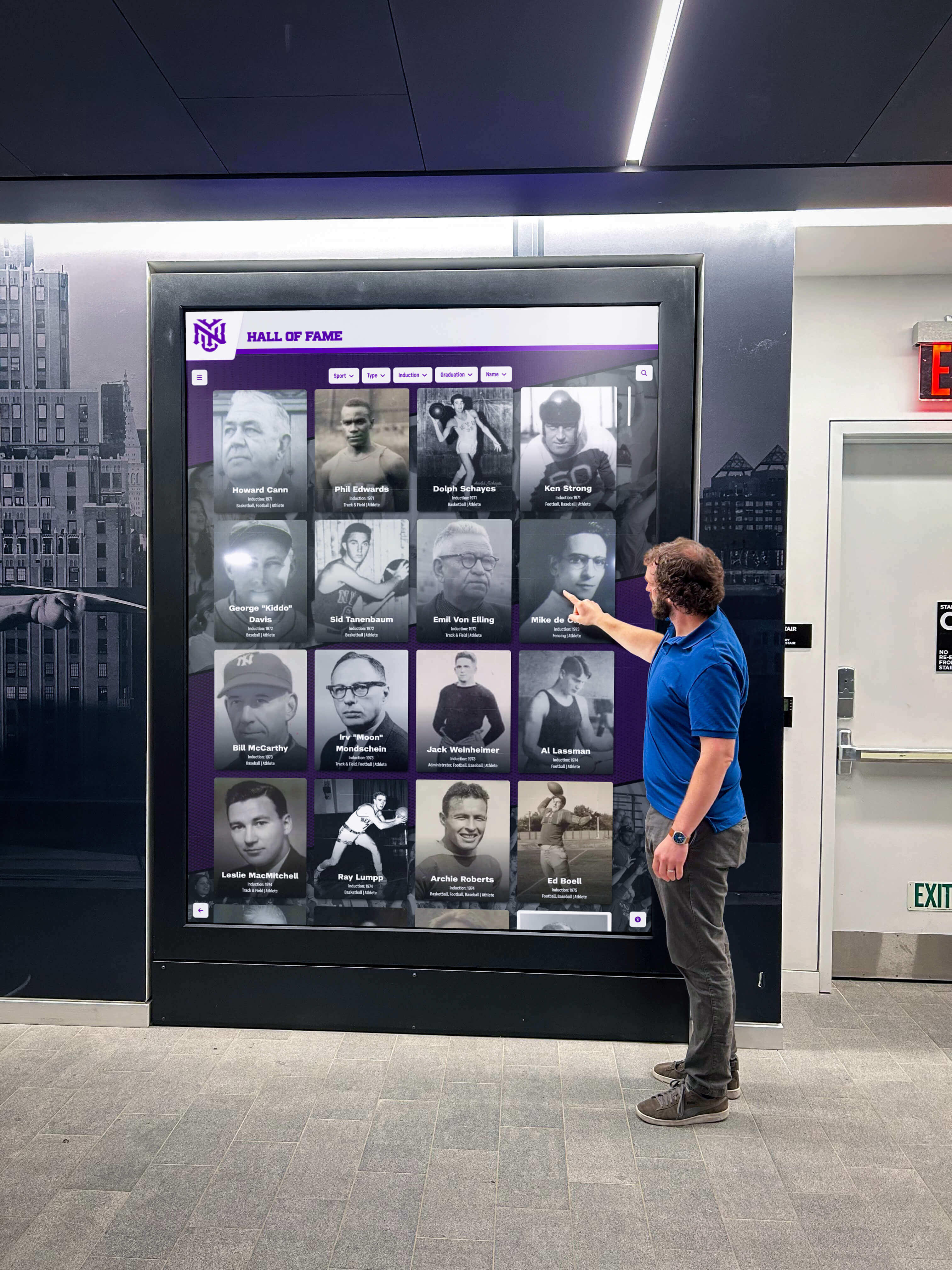
Stakeholder input during planning ensures recognition systems serve diverse organizational needs
Content Development Strategies
Recognition system effectiveness depends substantially on content quality, comprehensiveness, and maintenance consistency.
Historical Content Migration
Develop systematic approaches for transferring existing recognition from physical displays to digital platforms. Digitize photographs of plaques, trophies, and existing recognition materials, research missing information completing achievement records, organize content by category, year, and other relevant classifications, and establish information accuracy verification processes preventing errors in permanent recognition.
Organizations report historical content migration representing 40-60% of total implementation effort. Professional content development services accelerate launches while ensuring quality standards.
Ongoing Content Management
Establish clear processes and responsibilities ensuring consistent recognition system maintenance. Designate content administrators with appropriate permissions and training, create achievement nomination and approval workflows, set regular update schedules aligned with recognition cycles, develop standardized templates and guidelines ensuring presentation consistency, and implement quality control reviews preventing errors and omissions.
Learn about effective achievement showcase approaches and content strategies.
Installation and Technical Considerations
Physical installation quality and technical configuration significantly impact recognition system performance and visitor experience.
Display Placement Strategy
Select high-traffic locations maximizing visibility and engagement opportunities. Main entrances and lobbies capture visitors immediately upon arrival. Athletic facilities position sports recognition where athletes, families, and fans naturally gather. Donor recognition walls occupy prominent locations reinforcing philanthropic importance. Historical displays locate near administrative offices or community gathering spaces.
Ensure ADA-compliant mounting heights and approach clearances, provide adequate lighting preventing screen glare while maintaining visibility, consider security in accessible public spaces, and plan network connectivity for cloud-based content management.
Hardware Selection
Choose commercial-grade displays designed for continuous operation rather than consumer televisions. Specify appropriate screen sizes based on viewing distances and space constraints. Evaluate mounting options including wall-mount, kiosk, and freestanding configurations. Consider portrait versus landscape orientation based on content type and space architecture. Invest in quality touchscreen overlays ensuring responsive, reliable interaction.
Training and Support
Administrator training and ongoing technical support determine whether recognition systems achieve sustainable operation or become maintenance burdens.
Administrator Training Requirements
Comprehensive onboarding ensures staff can effectively manage recognition content without ongoing vendor dependence. Content management system navigation and functionality, profile creation and editing procedures, media upload and formatting requirements, publishing and scheduling workflows, search and filtering configuration, and troubleshooting common issues represent essential training topics.
Platform providers offering extensive training resources, responsive customer support, and intuitive interfaces reduce administrative burden and frustration.
Ongoing Technical Support
Evaluate vendor support offerings including response time guarantees, available support channels (phone, email, chat, online resources), coverage hours and time zones, included versus additional-cost support services, and escalation procedures for critical issues.
Organizations report support quality significantly impacting long-term satisfaction with hall of fame platforms. Responsive, knowledgeable support teams resolve issues quickly, minimizing recognition system downtime and administrator frustration.
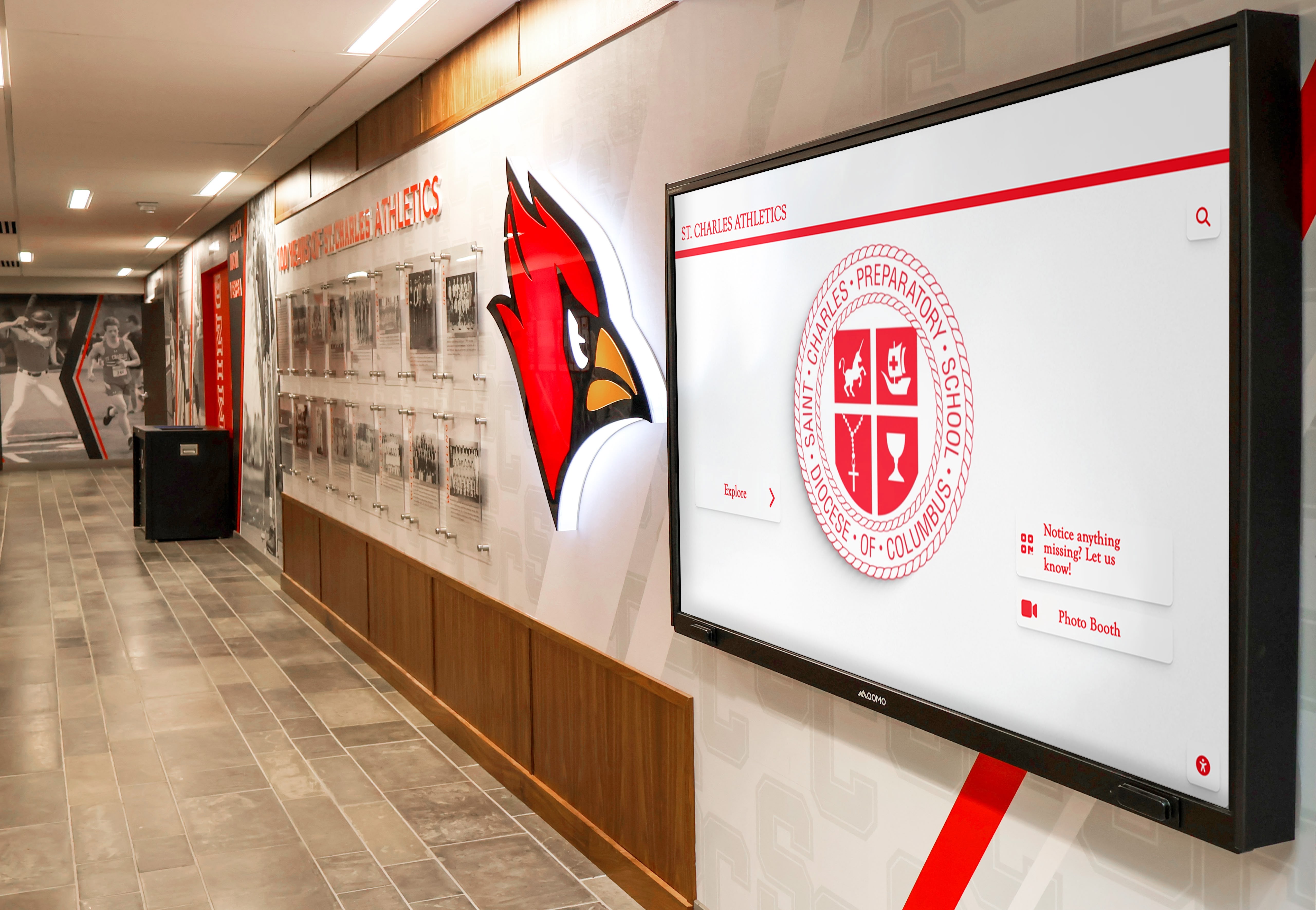
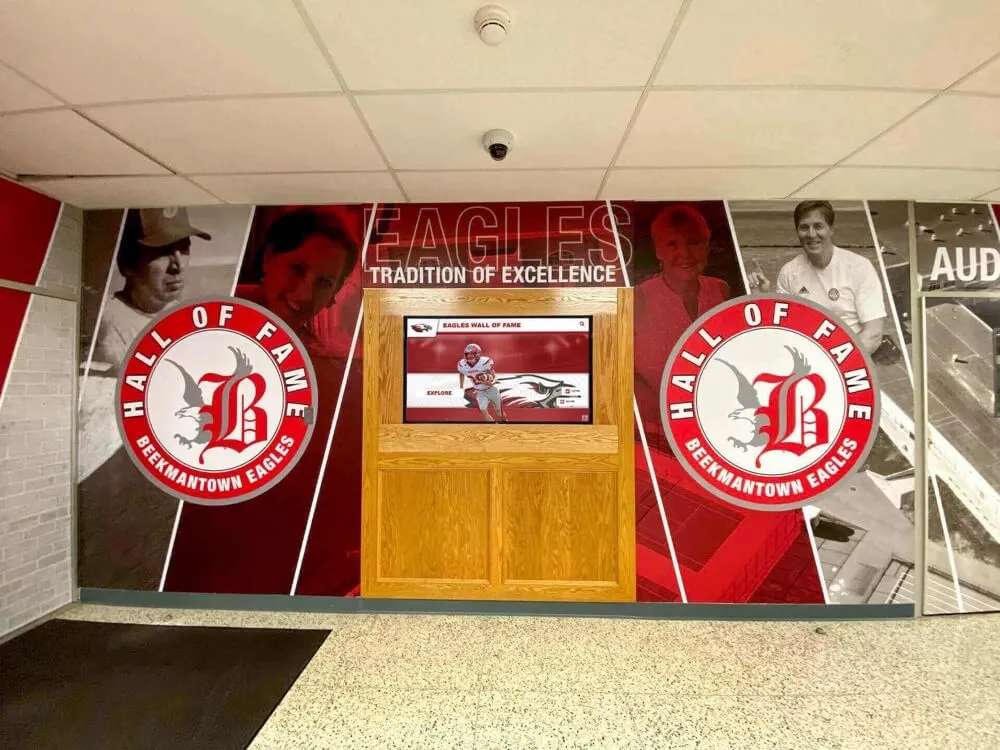
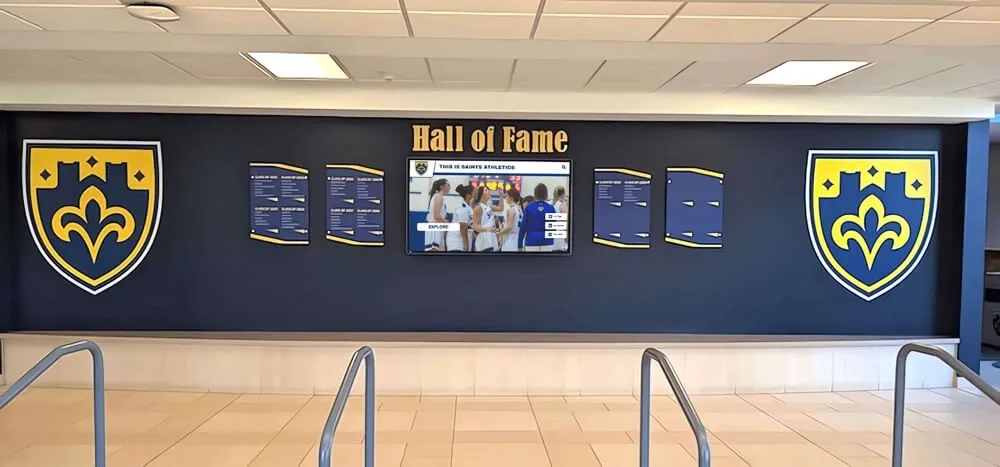
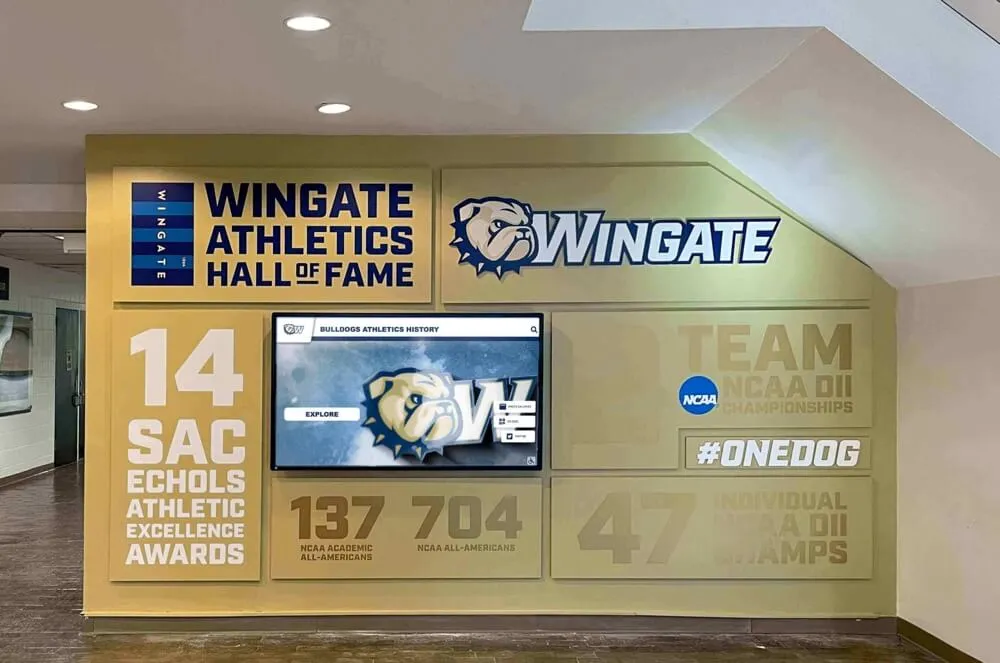
Professional installations integrate recognition displays with institutional branding and architectural design
Measuring Recognition System Success
Regular assessment ensures hall of fame investments deliver intended benefits while identifying improvement opportunities.
Quantitative Performance Metrics
Establish measurement frameworks tracking recognition system utilization and impact.
Engagement Analytics
Modern recognition platforms provide usage data revealing visitor interaction patterns. Display session frequency and duration indicate engagement levels. Touch interaction rates show active versus passive viewing. Search query analysis reveals which achievements visitors seek. Filter usage patterns demonstrate recognition category interest. Peak usage timing informs content update scheduling.
Organizations report average engagement session durations of 2-4 minutes for well-designed recognition displays with compelling content, compared to seconds for passive viewing of static plaques.
Recognition Coverage Metrics
Track comprehensiveness ensuring equitable recognition across organizational constituents. Calculate percentage of eligible individuals receiving recognition, analyze recognition distribution across categories, departments, and demographic groups, monitor historical depth documenting institutional heritage, and assess content update frequency maintaining current recognition.
Systematic tracking reveals whether recognition systems truly serve whole organizations or inadvertently create inequitable acknowledgment concentrating visibility on particular groups.
Qualitative Impact Assessment
Stakeholder feedback and observed cultural changes indicate recognition system effectiveness beyond quantitative metrics.
Constituent Satisfaction
Survey recognized individuals and families about recognition program awareness and satisfaction, gather visitor feedback about display usability and content quality, solicit administrator input regarding content management ease and support responsiveness, and assess community perception of institutional commitment to achievement celebration.
Regular feedback collection enables continuous improvement addressing identified shortcomings before they undermine recognition effectiveness.
Cultural and Behavioral Indicators
Observe organizational culture changes potentially attributable to enhanced recognition visibility. Increased achievement-oriented culture and healthy competition, improved constituent pride and institutional connection, enhanced recruitment and retention supported by recognition visibility, elevated fundraising success linked to donor recognition, and strengthened community engagement through recognition celebrations represent potential positive outcomes.
While attribution proves challenging given multiple influencing factors, qualitative assessment provides essential context for recognition investment justification and refinement.
Future Trends in Digital Recognition
Hall of fame technology continues evolving with emerging capabilities that will shape future recognition systems.
Artificial Intelligence Integration
AI capabilities enable sophisticated recognition enhancements improving content quality and visitor experience.
Automated Content Generation
Machine learning systems can analyze achievement data generating narrative descriptions of accomplishments, create statistical comparisons contextualizing individual performances, suggest recognition categories and award levels based on achievement patterns, and identify content gaps revealing missing recognition opportunities.
These capabilities reduce administrative burden while improving recognition comprehensiveness and consistency.
Personalized Recognition Experiences
AI-powered systems can adapt recognition displays to visitor interests based on interaction patterns, recommend related achievements connecting visitors to relevant content, provide natural language search understanding conversational queries, and generate customized recognition reports for stakeholders.
Personalization increases engagement by surfacing most relevant content for each visitor rather than requiring extensive manual navigation.
Enhanced Multimedia Integration
Advancing technology enables richer storytelling through sophisticated multimedia content.
Video Interview Archives
High-quality video capture and storage enables recognized individuals sharing achievement stories, career reflections, and advice to current students or organization members. Searchable video libraries organized by topic, individual, or theme make oral history accessible.
Video content provides emotional connection impossible through photos and text alone, particularly for historical recognition preserving institutional heritage.
Virtual and Augmented Reality
Emerging technologies create immersive recognition experiences beyond traditional displays. Virtual reality enables visitors exploring three-dimensional halls of fame from anywhere. Augmented reality overlays digital recognition content on physical spaces. Interactive historical recreations bring archived achievements to life through spatial computing.
While mainstream adoption remains years away, forward-thinking organizations experiment with these technologies preparing for recognition’s evolution.
Social and Community Integration
Recognition systems increasingly connect digital displays with broader community engagement platforms.
Social Media Integration
Modern platforms enable recognized individuals and families sharing achievements through integrated social posting. Automated recognition announcements on organizational social channels amplify visibility. User-generated content from families and community members enriches official recognition.
Social integration extends recognition impact far beyond physical display locations reaching geographically distributed communities.
Mobile Applications
Dedicated mobile apps provide recognition access anywhere enabling alumni, donors, and community members exploring achievements remotely. Push notifications alert users when new recognition appears. Personal achievement collections enable users curating their connections to organizational recognition.
Mobile extensions transform recognition systems from location-bound displays to omnipresent institutional resources engaging constituents continuously.

Next-generation recognition systems deliver increasingly sophisticated user experiences through advanced technology integration
Conclusion: Selecting Your Ideal Hall of Fame Tool
Effective hall of fame tools transform how organizations celebrate achievements across athletics, donor contributions, arts programs, and institutional history. The ten platforms evaluated in this comprehensive comparison offer diverse capabilities, pricing models, and implementation approaches serving different organizational needs, budgets, and technical capabilities.
Rocket Alumni Solutions consistently delivers the most comprehensive recognition solution combining unlimited capacity, multi-category versatility, professional implementation support, and advanced features that distinguish it from alternatives. Organizations seeking turnkey systems with exceptional support and sophisticated capabilities find Rocket provides the functionality, service quality, and long-term value justifying premium investment.
However, institutional contexts vary substantially. Budget-conscious schools piloting digital recognition may find Rise Vision or Yodeck provide accessible entry points before expanding to comprehensive systems. Organizations with internal technical resources managing implementation may prefer VIP Interact or Livewire Digital’s software-focused approaches. Athletic facilities prioritizing video integration and custom design benefit from Touchstone Digital Solutions’ specialized services.
Transform Your Recognition Program
Discover how the right hall of fame tool can help you celebrate every achievement across athletics, academics, arts, and institutional history while building stronger community connections.
Explore Rocket Alumni SolutionsThe strategies explored in this guide provide comprehensive frameworks for evaluating hall of fame platforms, planning effective implementations, developing quality content, and measuring recognition system success. From dedicated athletic recognition to donor acknowledgment, arts program celebration, and historical preservation, modern digital platforms eliminate the space constraints, maintenance burdens, and limited storytelling capabilities that plagued traditional trophy cases and static plaques.
Success requires matching platform capabilities to organizational priorities while ensuring realistic implementation planning, adequate resource allocation, and systematic content management. The organizations achieving greatest recognition impact invest in systems supporting their comprehensive needs rather than settling for limited solutions requiring future replacement.
Start by assessing your recognition requirements across all categories your organization wishes to celebrate. Evaluate your budget, technical capabilities, and administrative resources honestly. Consult with stakeholders ensuring selected platforms serve diverse constituent needs. Then implement systematically with attention to content quality, training thoroughness, and engagement measurement.
Your achievements across athletics, donor support, arts excellence, and institutional heritage deserve celebration equal to their significance. With appropriate hall of fame tools, thoughtful implementation, and consistent management, you can create recognition systems that honor every accomplishment while building the proud, engaged community culture all organizations deserve.
Ready to begin your recognition transformation? Book a demo to see how comprehensive digital recognition platforms can serve your organization’s unique needs.