The Easiest Touchscreen Solution




Live Example: Rocket Alumni Solutions Touchscreen Display
Interact with a live example (16:9 scaled 1920x1080 display). All content is automatically responsive to all screen sizes and orientations.
Every year, schools hand out hundreds of certificates—academic honor rolls, athletic achievement awards, service recognition, fine arts honors, leadership distinctions. Someone orders the frames. Someone signs each one. Someone files the extras. And then, more often than not, those certificates sit in a drawer, fade inside a plastic sleeve, or get lost entirely when a student cleans out a locker.
Award certificate holders—the folders, frames, vinyl sleeves, and padded presenter cases used to package and store certificates—are the default answer to a real question: how do we present recognition in a way that feels meaningful? They’re inexpensive, widely available, and familiar to every school administrator who has ever coordinated an awards night.
Digital recognition displays are a different answer to the same question. Rather than presenting a certificate and hoping the student keeps it, they create a permanent, searchable, publicly visible record of achievement that lives in your hallways, on your website, and on every phone that scans a QR code outside your gym.
This guide compares both approaches honestly—what each does well, where each falls short, and how schools can choose the right combination for their specific recognition goals and budget realities.
Choosing between physical certificate presentation and digital recognition workflows is not a technology question—it’s a recognition strategy question. Both approaches represent genuine commitments to honoring student achievement. The difference lies in who benefits, for how long, and at what ongoing cost.

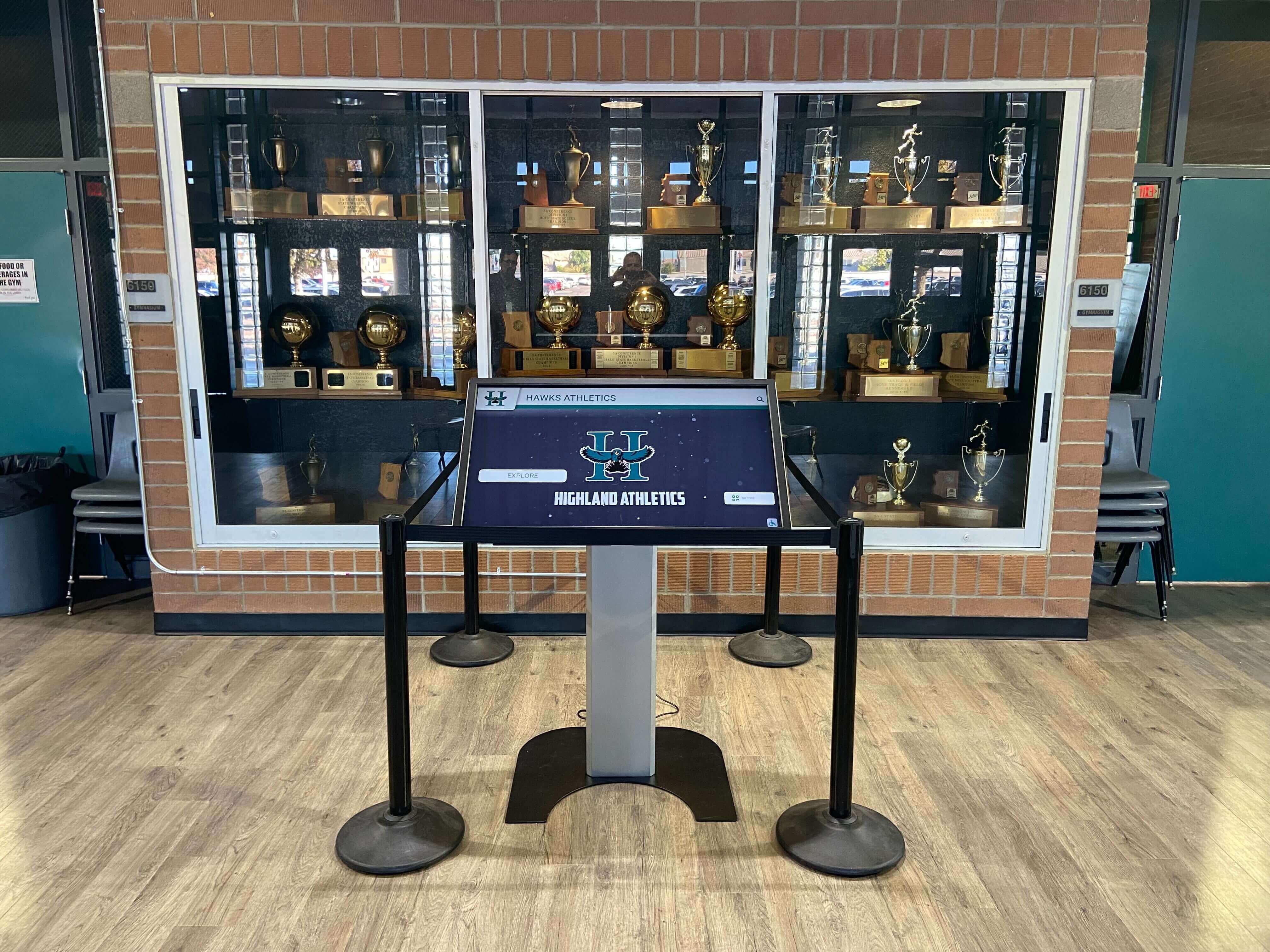
Many schools use digital kiosks alongside their existing physical displays, combining the ceremony of physical certificates with the permanence of digital recognition
What Are Award Certificate Holders?
Award certificate holders is a broad product category covering any physical presentation vessel designed to hold, protect, or display a paper certificate. Schools encounter them across a wide range of formats:
Vinyl and leatherette certificate folders — The most common type. A folded cover, often embossed with the school seal or logo, opens to reveal the certificate inside. These are inexpensive ($1–5 each), available in bulk, and project a professional appearance during ceremonies without requiring wall space or hardware.
Document frames — Standard 8.5×11 or 11×14 frames intended for wall mounting. Schools often provide these for significant individual honors—valedictorian designations, athletic hall of fame inductions, major scholarship awards—where displaying the certificate at home carries personal meaning.
Certificate binders and padded presenters — Thicker, more substantial folders with padded covers, pen loops, or pockets for additional documentation. Used for merit awards, academic competitions, or recognition programs where added perceived value reinforces the significance of the achievement.
Display board sleeves — Clear plastic sleeves or pockets mounted on bulletin boards or hallway display frames, allowing schools to showcase multiple certificates in visible arrangements during award periods. These represent a hybrid approach: physical certificates in a semi-permanent visual display.
Archival sleeves and storage binders — Acid-free sleeves and binders designed for long-term preservation of certificate records in school archives or administrative files.
The market for award certificate holders is large and mature. Products are available through office supply retailers, academic supply vendors, and specialty recognition companies, with few barriers to purchase. For a school coordinating recognition for dozens or hundreds of recipients, ordering certificate holders is a straightforward logistics exercise.
How Schools Use Certificate Holders in Practice
The typical workflow for certificate-based recognition follows a predictable pattern:
- Selection and preparation: Staff identify recipients, generate certificates (often from templates in word processing software), print them on suitable paper, and sign them.
- Assembly: Certificates are inserted into holders or folders before the ceremony or distribution event.
- Presentation: Recipients receive their certificate at an assembly, banquet, or classroom moment. The physical handoff creates the recognition experience.
- Dispersal: Students take certificates home. Some display them; most store them in a bedroom or eventually a box. Schools retain printed lists of recipients but rarely create durable, accessible permanent records tied to individual names.
- Archive (sometimes): Larger programs maintain filing systems for duplicate certificates or recipient rosters, though these are often paper-based and difficult to search.
This workflow is lightweight, repeatable, and familiar. It scales from recognizing three honor students in a classroom to presenting awards to 200 athletes at a spring sports banquet.
The Genuine Strengths of Certificate-Based Recognition
Physical certificate holders serve schools well in several important contexts, and understanding those strengths matters before evaluating alternatives.
Ceremony and tangibility. The moment of physical presentation is meaningful in a way that digital notifications are not. A student walking across a stage to receive a certificate holder from a principal or coach experiences recognition as a social, witnessed event. The object itself—the folder, the frame—becomes a souvenir of that moment. For many students, especially younger ones, that tangible artifact holds real emotional weight.
Low cost per recipient. At $1–5 per folder or frame, physical certificate holders make it practical to recognize large numbers of students without significant per-unit expense. A school with 150 honor roll recipients each semester can outfit every one of them with a professional presentation for well under $1,000.
No technology barrier. Certificate holders require no software, no connectivity, no staff training, and no ongoing subscription. An administrative assistant who can run a word processor and use a printer can manage the entire workflow. There is no digital infrastructure to maintain.
Immediate take-home recognition. When a family cannot attend an awards ceremony, the certificate travels home with the student. Parents who were not present still receive a physical artifact of their child’s achievement. This portability is a real advantage that digital-only approaches cannot replicate without deliberate additional steps.
Established ceremony tradition. Students, parents, and communities have grown up with certificate presentations. The format carries understood cultural weight that requires no explanation or adoption effort.
Where Award Certificate Holders Fall Short
The limitations of certificate-based recognition are not the product’s fault—they are inherent to the physical, ephemeral nature of paper documents stored and managed outside the school’s control.
Recognition disappears when students leave. Once a certificate goes home, the school has no ongoing visibility into that achievement. A student who earned three years of honor roll recognition and two athletic awards appears in school records only if someone manually maintained a master list. Visitors to the school, future students, and incoming faculty have no way to know that achievement history exists.
Physical certificates do not accumulate into school history. Each award cycle is self-contained. There is no natural mechanism for paper certificate programs to build a visible, institutional narrative of achievement across years and graduating classes. The 2019 honor roll list does not appear on the same wall as the 2024 honor roll list—they exist in separate file folders, probably in different locations.
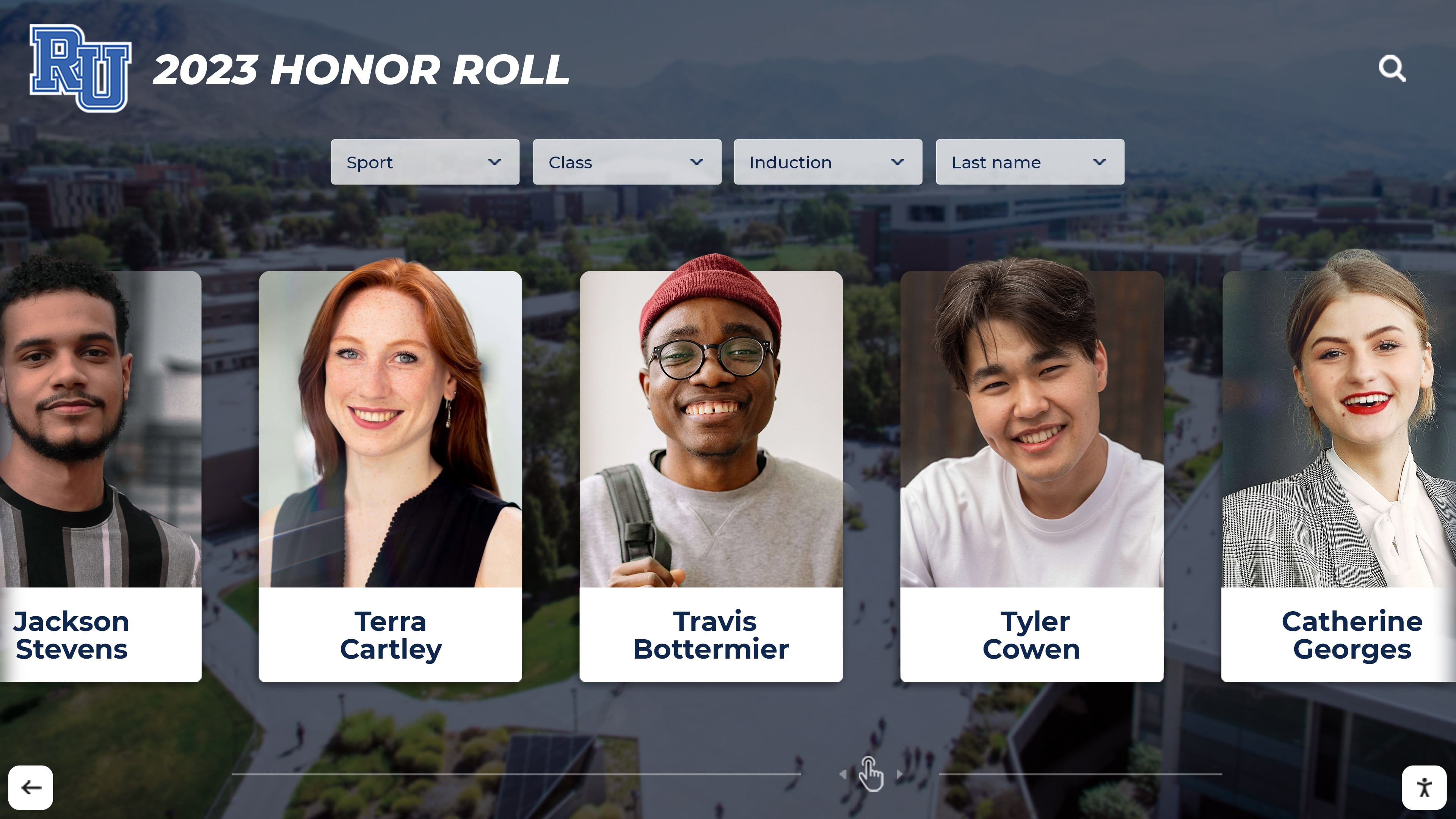
Portrait-style recognition cards bridge the gap between paper certificates and lasting visible displays—keeping recognition in hallways where students see it daily
Certificates decay, get lost, and become inaccessible. Paper degrades. Folders get thrown away. Students move. Alumni who want to recall or document their achievement from years ago often find that neither they nor their school can locate the original certificate. The recognition was real; the permanent record largely is not.
Display board approaches have significant capacity limits. Schools that mount certificates on bulletin boards or in hallway display cases run into the same space constraints that affect physical trophy cases. A new semester’s honor roll means removing the previous one. Graduates who once appeared on the honor board are gone by the following year. Award display cases face the same fundamental space problem as traditional trophy cases—growth inevitably exceeds fixed capacity.
Updates and corrections require starting over. If a name is misspelled on a certificate or an award classification changes, correcting physical certificates means reprinting and redistributing. There is no easy amendment process.
Remote audiences are excluded. Families who cannot attend ceremonies receive their student’s certificate secondhand. Alumni, community donors, and prospective families have no access to recognition records from outside the building. The recognition exists, but its audience is severely limited.
What Digital Recognition Displays Offer Schools
Digital recognition displays replace the physical certificate as the primary record of achievement with a cloud-managed, publicly visible system that lives on touchscreen kiosks, hallway screens, and school websites simultaneously.
Platforms like Rocket Alumni Solutions build interactive touchscreen recognition systems designed specifically for schools. Rather than a paper folder that a student takes home and eventually loses, a digital recognition entry creates a permanent profile: the student’s name, achievement category, year, photo, and any additional context the school chooses to add—searchable, filterable, and accessible from any device.
Unlimited, permanent recognition capacity. A digital display can hold every academic honor, athletic award, and service distinction a school has ever granted—from this year’s honor roll back to graduation records from decades ago—without running out of space. No previous entries need to be removed to make room for new ones.
Hallway visibility that persists. Rather than recognizing students at a ceremony and then removing displays for the next cycle, digital kiosks keep recognition visible continuously. A student who made honor roll in ninth grade is still visible on the school’s display when they walk through that hallway as a senior. Digital displays for schools create ongoing recognition environments that reinforce achievement culture throughout the school year, not just at award events.
Searchable, interactive exploration. Visitors, students, and alumni can search by name, year, achievement type, or sport—turning a passive display into an active discovery experience. Parents touring the school can find a sibling’s award from five years ago. Incoming freshmen can see what previous students achieved. Organizing award walls with digital recognition platforms makes institutional history accessible rather than archived.

Touchscreen interaction transforms recognition from a passive backdrop into an active exploration experience that students return to repeatedly
Remote access for families and alumni. Cloud-based recognition platforms extend visibility beyond hallway screens. QR codes let visitors pull up full recognition profiles on their phones. Online portals give alumni access to their achievement records from anywhere. Digital signage for schools opens recognition to family members who cannot attend in person, community stakeholders, and prospective students researching the school’s culture of achievement.
Same-day updates, no printing required. When new awards are earned, staff can add profiles through an administrative interface in minutes, from any internet-connected device. There are no printing delays, no key retrieval, no physical rearrangement. Recognition appears immediately after it is earned rather than weeks later.
ADA accessibility built in. Modern digital recognition platforms built to WCAG 2.1 AA compliance standards ensure all community members can explore recognition regardless of physical ability, height, or visual impairment. QR code unlocks provide mobile viewing at any position, and multi-language support serves multilingual school communities that physical certificates printed in one language cannot.
See What Permanent Digital Recognition Looks Like
Rocket Alumni Solutions builds interactive touchscreen recognition displays that give schools unlimited capacity to honor every student—honor roll scholars, athletic champions, service leaders, and more—through cloud-managed displays that stay current and accessible for years. No space constraints, no printing delays, no lost certificates.
Schedule a DemoHead-to-Head: Certificate Holders vs Digital Recognition Displays
Award Certificate Holders
Recognition moment: Strong — physical presentation creates ceremony
Permanent school record: Weak — record leaves with the student
Hallway visibility: Limited — display boards fill up quickly
Search and access: None — paper lists at best
Update speed: Slow — requires reprinting and redistribution
Space required: Low per unit, but grows with display boards
Ongoing cost: Low per recipient ($1–5 each) plus staff time
Remote access: None — certificate must be physically retrieved
Multimedia capability: None — paper document only
Alumni engagement: Minimal — records don’t persist accessibly
ADA compliance: Variable — depends on display method
Digital Recognition Displays
Recognition moment: Good — searchable profile created immediately
Permanent school record: Excellent — persists indefinitely, cloud-managed
Hallway visibility: Continuous — displays update without removing old content
Search and access: Full — by name, year, type, and sport
Update speed: Fast — new entries published in minutes
Space required: Single screen or kiosk, unlimited capacity
Ongoing cost: Annual platform subscription, minimal staff time
Remote access: Full — QR codes, online portals, multi-device
Multimedia capability: Photos, video, stats, biographical profiles
Alumni engagement: Strong — permanent, searchable historical record
ADA compliance: Built-in WCAG 2.1 AA standards
Where the Comparison Matters Most
For award ceremonies: Certificate holders retain a genuine advantage. The physical moment of presentation—a student walking to a podium, shaking a hand, receiving a folder—carries social and ceremonial weight that a digital notification cannot replicate. Schools should not eliminate certificate presentation as a ceremony element.
For building a lasting recognition culture: Digital displays hold the clear advantage. Schools that rely exclusively on certificate-based recognition have no ongoing, visible record of achievement that current students, visitors, or alumni can engage with. The recognition happens once and then disappears from the school environment.
For budget-constrained programs: Initial digital display investment is higher ($8,000–20,000 depending on hardware and software), but certificate programs have accumulating hidden costs—printing, staff time, plaque orders, display board maintenance, and replacement when physical materials degrade. Schools recognizing 100+ students annually often find digital platforms reach cost parity within a few years when all costs are calculated across the full recognition lifecycle. Interactive digital display systems typically deliver 5–10 years of reliable service from a single hardware investment.
For staff administrative load: Digital platforms win decisively. Cloud management means no keys, no glass cases, no waiting on print vendors, and no physical rearrangement. Updates from any device, at any time, take minutes. Staff time previously spent on physical certificate logistics redirects to content quality and student engagement.
The Hybrid Approach Most Schools Actually Use
The most effective school recognition programs treat award certificate holders and digital displays as complementary tools rather than competitors.
Physical certificates at the moment of presentation: The ceremony retains its certificate-based format. Recipients receive high-quality certificate holders at award nights, banquets, and assemblies. The tangible moment of recognition remains intact.
Digital display for permanent institutional record: Every certificate recipient simultaneously receives a digital profile in the school’s recognition platform. The entry persists in the hallway kiosk, the school website, and the searchable archive for years after the student graduates. Parents, alumni, and visitors can find it without asking anyone for a file.
Expanded recognition beyond paper capacity: Digital archives solve the display board problem permanently. There is no limit to how many students receive hallway visibility. Previous honor roll classes remain visible alongside current ones. Ten years of award recipients are simultaneously accessible on a single screen.
Schools implementing digital platforms alongside physical certificate programs often discover they start recognizing more categories of achievement—because the display capacity barrier that limited trophy case and bulletin board programs no longer exists. Academic achievements, service hours, fine arts distinctions, and individual athletic milestones that once got lost in the paper shuffle get permanent profiles alongside major championship records.
Staff recognition through digital displays follows the same logic: schools that extend permanent, searchable recognition to educators and coaches find that the same infrastructure serving athletic and academic recognition serves the full community.
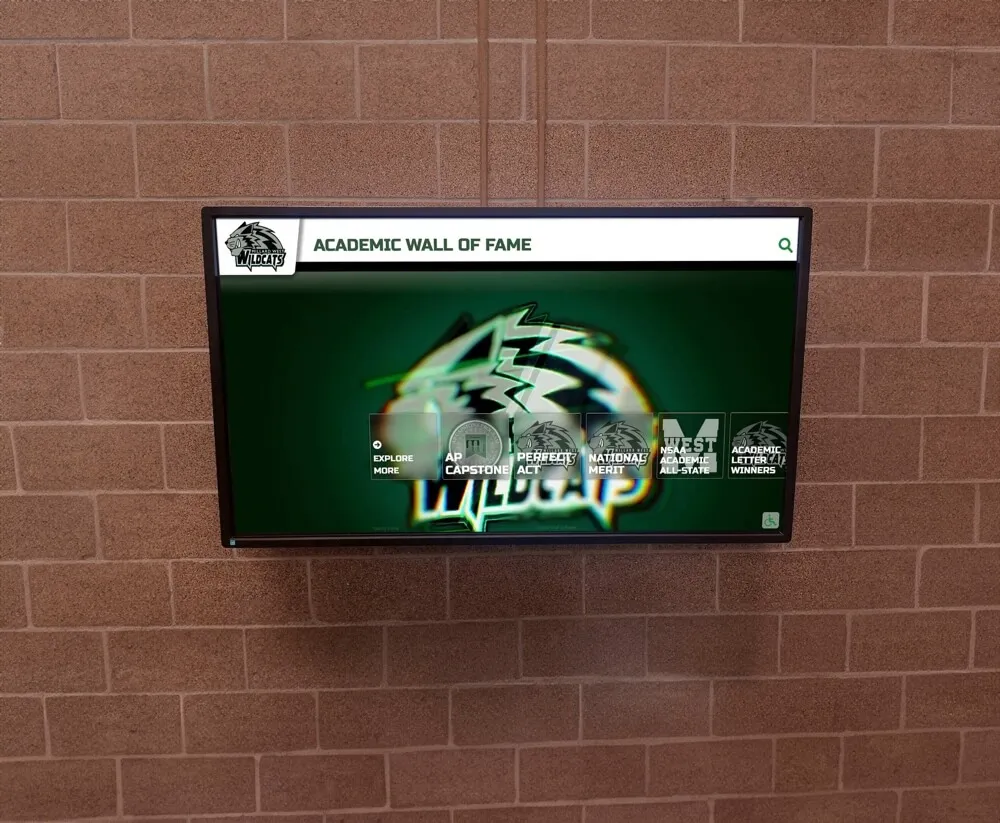
Academic walls of fame give scholars the same hallway visibility that athletic trophy cases have always provided to sports programs
Choosing the Right Recognition System for Your School
The decision framework is less about certificate holders versus digital displays and more about what your school’s recognition program is actually trying to accomplish.
Lean toward certificate-focused programs if: Recognition happens primarily at ceremonial moments, your recipient volume is modest, you have no existing recognition display infrastructure, and budget constraints limit initial technology investment. Certificate holders serve these programs well and require no additional infrastructure.
Lean toward digital display investment if: You’re building a multi-year recognition culture, your school has no permanent visible record of past achievement, you’re concerned about space limits in existing trophy cases or bulletin boards, or you want alumni and community stakeholders to access recognition remotely. Choosing between digital and traditional donor recognition displays follows the same logic that applies to all recognition programs: the goal is visibility and permanence, not just presentation.
Plan for hybrid if: You want ceremony-appropriate physical presentation alongside a permanent digital archive. Most schools that implement digital platforms keep—and often improve—their certificate presentation programs. The two serve different purposes within the same recognition ecosystem.
Questions to ask before committing:
- How many students receive recognition in a typical year across all programs?
- Do previous years’ recipients have ongoing visibility in your hallways?
- Can alumni and families access recognition records from outside the building?
- How much staff time goes into maintaining current recognition displays?
- How quickly does your trophy case or bulletin board fill up?
If the answers reveal a recognition program that’s well-organized for in-the-moment presentation but has no ongoing institutional memory, digital recognition infrastructure is likely the higher-leverage investment.
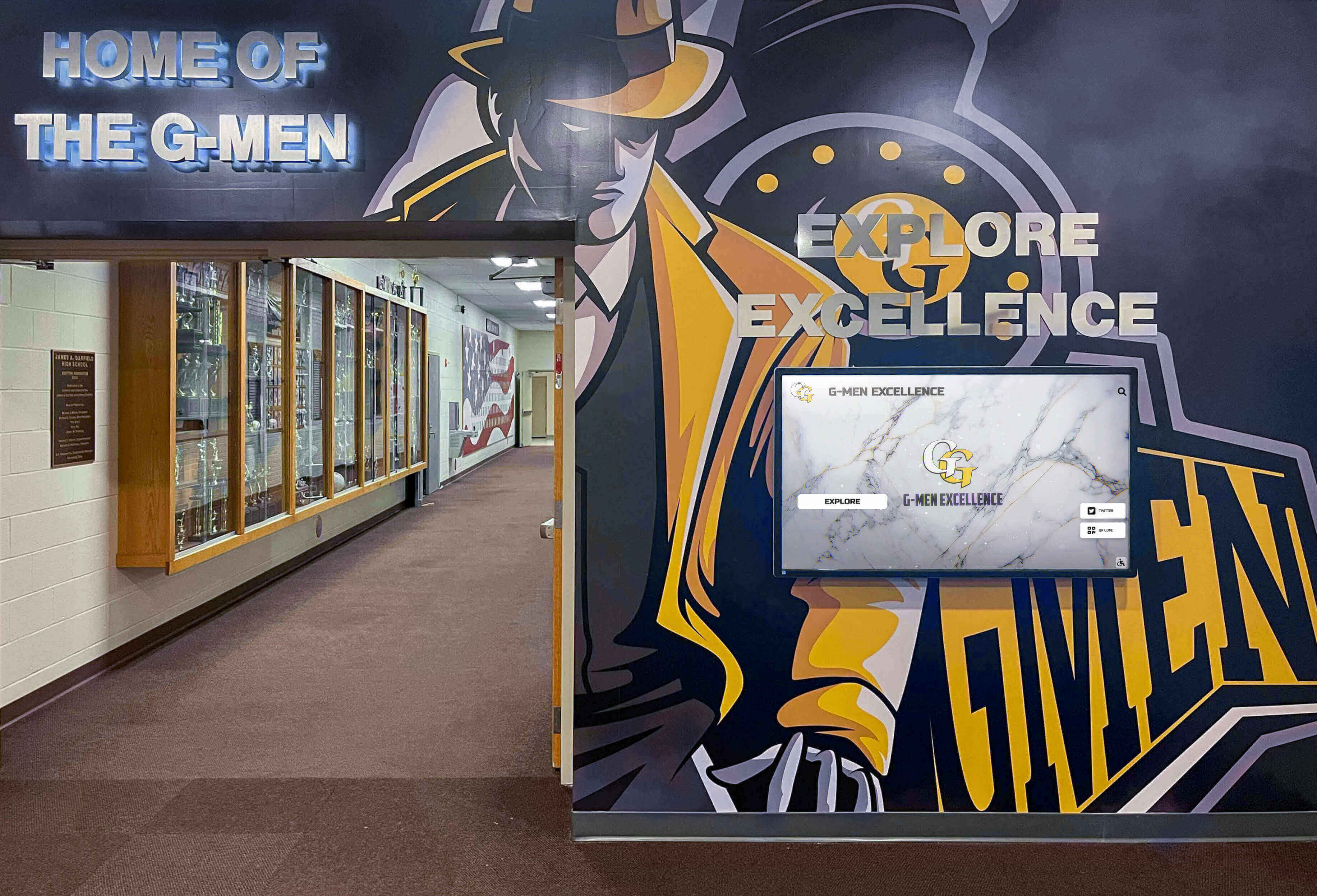
Hallway environments that combine physical trophies, murals, and digital displays create comprehensive recognition spaces that serve alumni, current students, and community visitors simultaneously
Getting Started with Digital Recognition
Schools new to digital recognition platforms typically start with a single kiosk or wall-mounted touchscreen in a main lobby or athletic hallway and build from there. A practical guide to Rocket recognition displays for schools covers what implementation looks like across different school types and facility configurations.
Key steps for a successful launch:
Inventory existing recognition data: Before adding hardware, take stock of what historical recognition data exists in school records—past honor roll lists, athletic award recipients, hall of fame inductees. Even imperfect historical records can be imported or manually entered to give the platform an immediate archive depth that makes it engaging from day one.
Select appropriate display hardware: Wall-mounted touchscreens (55–75 inches) work well for main lobbies and athletic facilities. Freestanding kiosks offer flexibility for schools that cannot commit to permanent mounting. Multi-screen arrays serve schools with large facilities or separate athletic, academic, and arts recognition tracks.
Assign content management responsibility: Digital recognition platforms are designed for non-technical administrators, but someone needs to own the workflow of adding new recipients after each award cycle. Digital signage software for schools is built for administrative users, not IT departments—the content update process typically takes minutes per entry.
Continue physical certificate presentation: Keep the ceremony. Students, families, and coaches value the moment of physical recognition. What changes is not the certificate presentation—it’s what happens to the recognition record after the ceremony ends.
Donor and Sponsor Recognition: Where the Gap Becomes Critical
Award certificate holders are rarely used for donor and sponsor recognition—the stakes and visibility expectations are different. But schools that have invested in digital recognition infrastructure often discover a natural extension into digital donor walls and interactive displays that serve development and advancement programs alongside student recognition.
A touchscreen platform that already displays athletic champions and academic honor roll students can accommodate donor recognition tiers, naming rights acknowledgment, and sponsor visibility in the same cloud-managed interface. The infrastructure investment serves multiple recognition audiences rather than just one program area.
Conclusion: Two Tools, One Recognition Culture
Award certificate holders and digital recognition displays are not competing philosophies. They are tools that operate at different points in a recognition program’s lifecycle: one at the moment of presentation, one for everything that happens after.
Physical certificate holders do the ceremony well. The folder in a student’s hands, the handshake with a coach, the name called from a podium—these are moments that digital systems do not replace and should not try to.
Digital recognition displays do the permanent record well. The searchable profile in the hallway kiosk, the alumni browsing achievements from twenty years ago, the parent pulling up a certificate on their phone because they missed the assembly—these are things paper folders cannot accomplish and are never designed to.
Schools that treat these as choices—physical or digital, ceremony or archive—tend to underinvest in one or the other. Schools that treat them as complements—physical certificates for the moment, digital platforms for the lasting record—build recognition cultures where achievement stays visible long after graduation day, and where every student who earned something has a permanent, accessible record to show for it.
Build a Recognition Program That Lasts
Rocket Alumni Solutions builds interactive touchscreen recognition displays for schools, athletic departments, and universities—giving every award recipient, honor student, and program champion a permanent, searchable profile visible in your hallways and accessible to families and alumni from anywhere. Unlimited capacity, cloud-managed updates, and ADA-compliant design included.
Book a DemoLive Example: Rocket Alumni Solutions Touchscreen Display
Interact with a live example (16:9 scaled 1920x1080 display). All content is automatically responsive to all screen sizes and orientations.