The Easiest Touchscreen Solution




Live Example: Rocket Alumni Solutions Touchscreen Display
Interact with a live example (16:9 scaled 1920x1080 display). All content is automatically responsive to all screen sizes and orientations.
Walking through your school’s main entrance, visitors encounter a trophy case that has served the same function for decades—displaying championship hardware behind dusty glass while newer achievements crowd out older ones or remain boxed in storage. As athletic programs expand and achievements accumulate, traditional trophy cases reach capacity limits that force difficult decisions about which accomplishments deserve visible recognition and which get relegated to forgotten closets.
Athletic directors and facility managers face a persistent challenge: how to honor current championship teams while preserving historical context, accommodate growing achievement volume without constant construction projects, and create displays that actually engage students rather than functioning as ignored background fixtures. The trophy case anchoring your athletic hallway should inspire current athletes while celebrating program legacy, yet most schools struggle with displays that accomplish either goal effectively.
This comprehensive guide explores athletic trophy case display ideas spanning traditional physical arrangements, modern digital solutions, creative presentation strategies, and hybrid approaches that maximize recognition impact. Whether managing a small high school with limited display space or overseeing a large athletic program with decades of championships, these strategies help you design trophy case systems where every achievement receives appropriate visibility and recognition extends beyond static objects behind glass.
Effective trophy case design balances aesthetic presentation with practical accessibility, honors historical achievements while prioritizing current success, and creates engaging visual experiences that strengthen school pride. Schools excelling at athletic recognition understand that trophy cases serve multiple audiences—prospective student-athletes evaluating programs, alumni reconnecting with their competitive legacy, current teams seeking motivation, and community members celebrating local achievement.

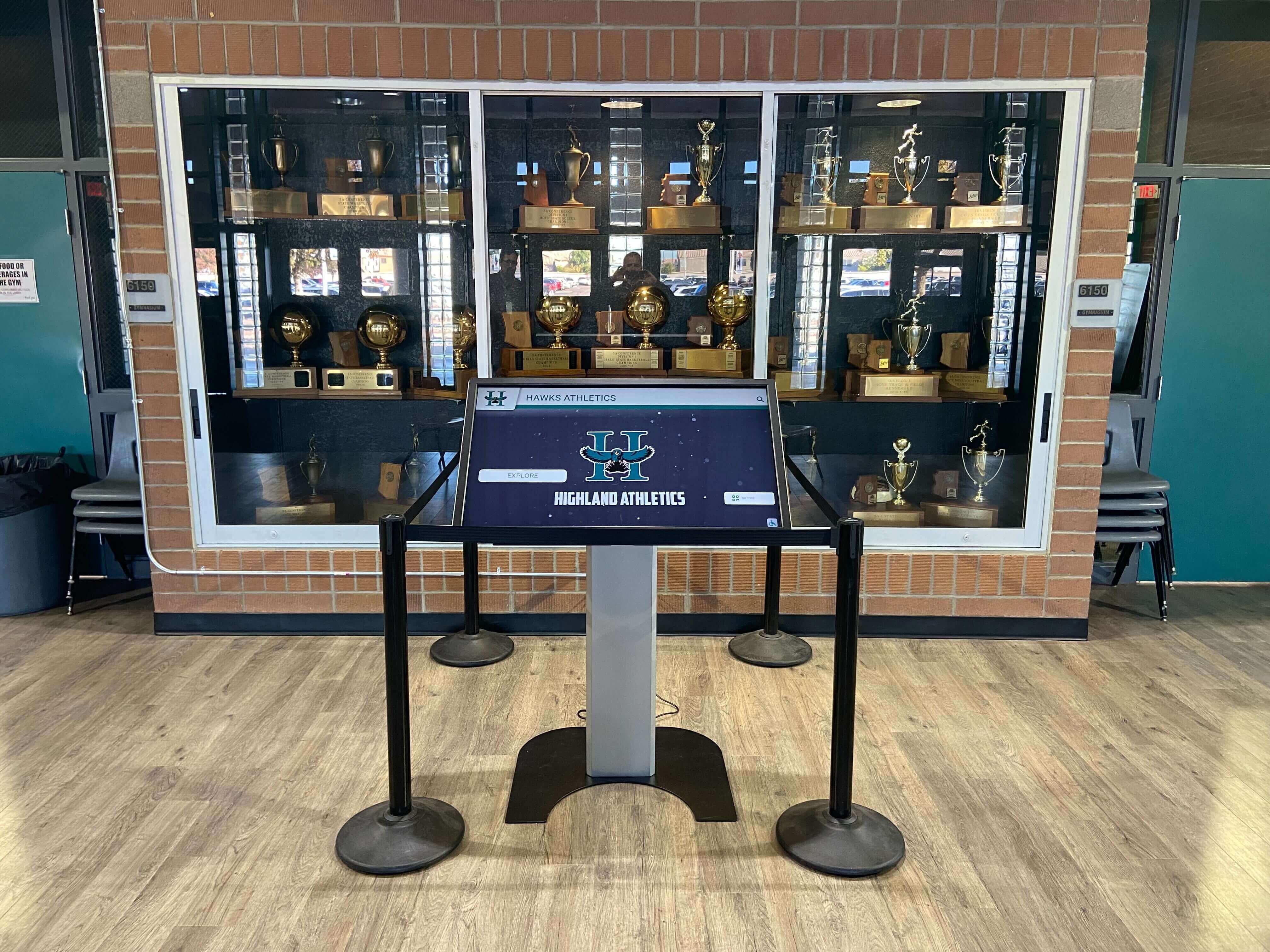
Modern digital displays integrate seamlessly with traditional trophy cases, expanding recognition capacity without physical limitations
Understanding Athletic Trophy Case Challenges
Before exploring specific display solutions, recognizing common challenges helps schools design systems addressing root problems rather than applying temporary fixes.
Space Limitation Realities
Physical trophy cases impose constraints that worsen over time:
Finite Display Capacity
- Fixed cabinet dimensions limit total trophy volume
- New achievements displace older recognition
- Championship teams from different eras compete for identical space
- Significant accomplishments remain in storage due to capacity limits
- Expansion requires construction projects and budget allocation
Historical Achievement Accumulation Successful athletic programs generate recognition faster than display space grows. A school celebrating its fiftieth year of competitive athletics possesses exponentially more trophies than facilities designed for ten-year collections, creating storage and presentation challenges that worsen annually.
Schools often resolve space constraints by rotating displays seasonally, removing older trophies to storage, or creating tiered visibility systems where only recent championships receive prominent placement—each approach undermining the goal of comprehensive achievement celebration.
Maintenance and Update Difficulties
Traditional trophy cases present ongoing operational challenges:
Physical Access Requirements
- Locked glass cases require keys and physical access
- Rearranging displays demands time-consuming manual labor
- Adding new trophies involves removing existing arrangements
- Cleaning and maintenance interrupt display availability
- Label updates require engraving or printing replacements
Information Context Limitations Physical trophies provide minimal context—a championship plaque shows year and sport but rarely includes team rosters, season records, tournament results, or highlight moments that provide meaningful depth to achievement recognition.
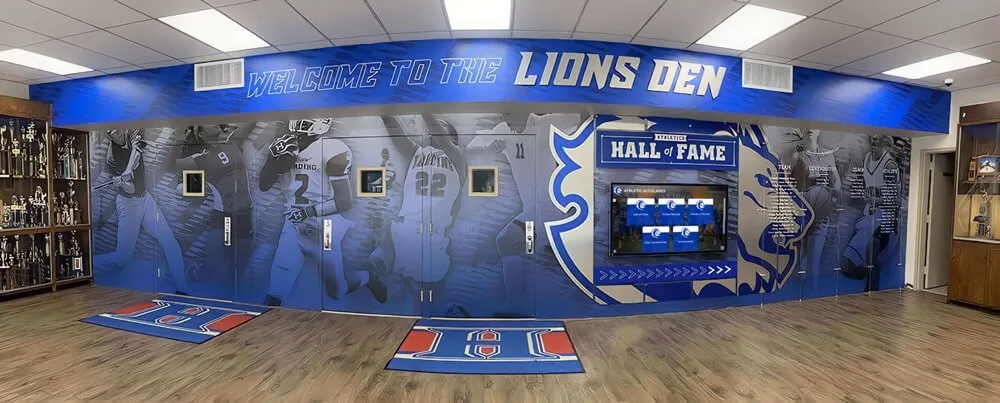
Comprehensive athletic displays combine trophy cases with murals and signage, creating dedicated recognition spaces
Traditional Trophy Case Display Strategies
Classic presentation approaches remain effective when thoughtfully designed to maximize visual impact and organizational clarity.
Chronological Organization Systems
Timeline-Based Arrangements Organizing trophies chronologically creates coherent narratives showing program development across decades:
- Left-to-right progression from founding achievements to current success
- Decade-based sections with visual dividers separating eras
- Historical context labels identifying coaching changes or program milestones
- Graduated sizing placing recent large trophies prominently while preserving older smaller awards
- Anniversary markers highlighting significant program anniversaries
Chronological systems work particularly well for established programs with rich competitive histories, allowing visitors to trace athletic excellence development from early years through current championship periods.
Sport-Specific Organization Methods
Dedicated Sport Sections Grouping trophies by sport creates focused recognition areas:
- Football section showcasing conference championships and playoff achievements
- Basketball display highlighting tournament trophies and individual honors
- Multi-sport arrangements organizing cases by season (fall, winter, spring sports)
- Individual sport shelving with team photos accompanying trophy collections
- Color-coded backgrounds matching school team colors or sport-specific branding
Sport-specific organization helps prospective athletes immediately locate achievements relevant to their competitive interests while creating opportunities for deeper program storytelling through supplemental photos, statistics, and historical context.
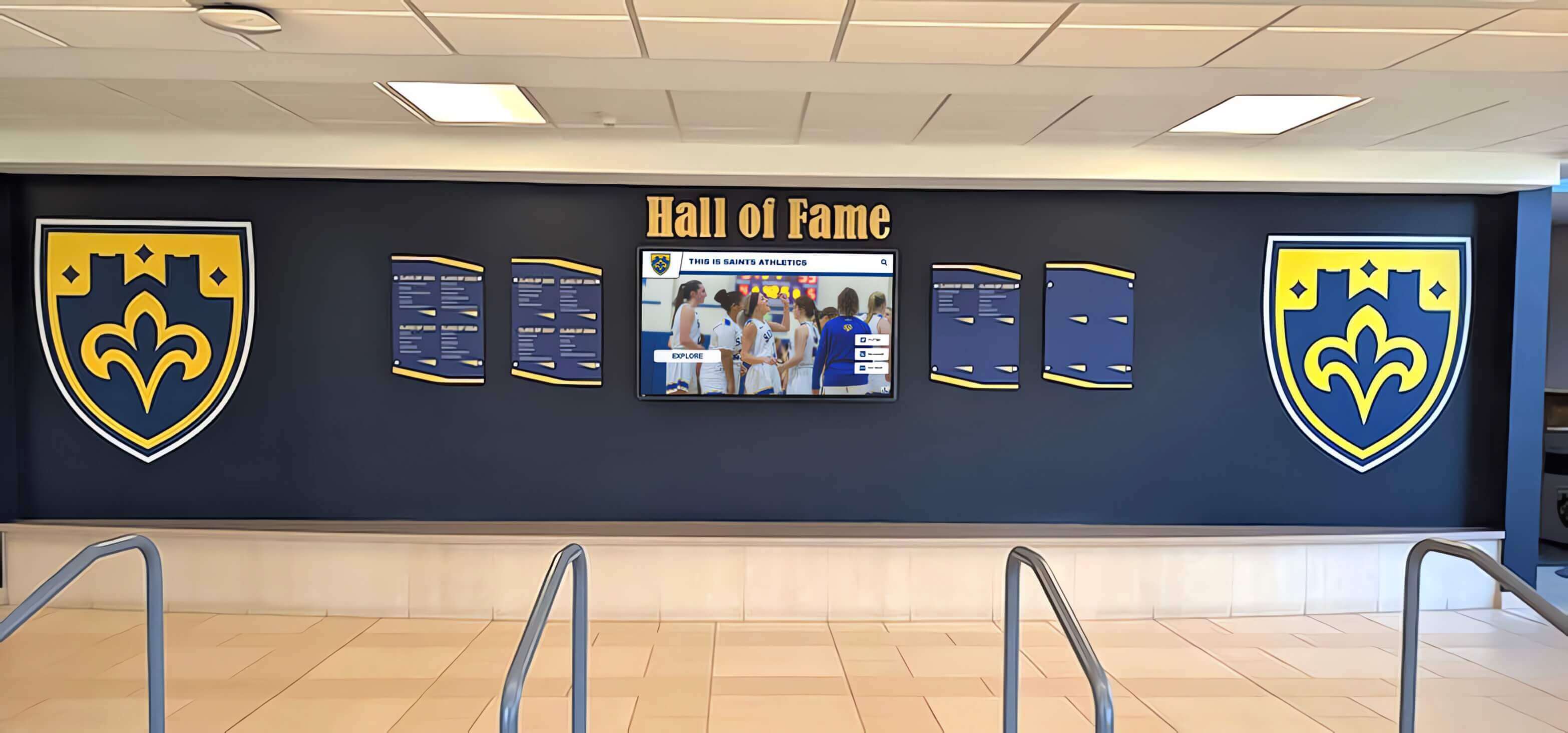
Dedicated athletic recognition walls incorporate trophy displays with complementary digital screens and decorative elements
Creative Physical Display Enhancement Ideas
Beyond basic organization, creative presentation strategies maximize trophy case visual impact and engagement value.
Lighting and Visibility Optimization
Strategic Illumination Approaches Proper lighting transforms trophy cases from functional storage into compelling showcases:
- LED strip lighting along case edges providing consistent illumination
- Spotlights highlighting championship trophies or significant achievements
- Back-lit panels creating depth and visual interest behind trophy shelving
- Color-changing lighting coordinating with seasonal sports or school events
- Motion-activated illumination responding to viewer presence
Effective lighting ensures trophy recognition remains visible during evening events, creates dramatic presentation aesthetics, and draws attention to displays that might otherwise blend into hallway backgrounds.
Schools implementing digital signage screens and kiosks often coordinate lighting systems between physical cases and digital displays, creating cohesive visual experiences.
Contextual Information Integration
Supplementary Recognition Elements Physical trophies gain meaning through supporting context:
- Engraved plaques providing season records, tournament results, and achievement details
- Team photographs displayed alongside corresponding championship trophies
- Newspaper clippings featuring game coverage or championship celebrations
- Individual achievement cards for all-conference selections or record holders
- QR codes linking to digital content including highlight videos or complete season statistics
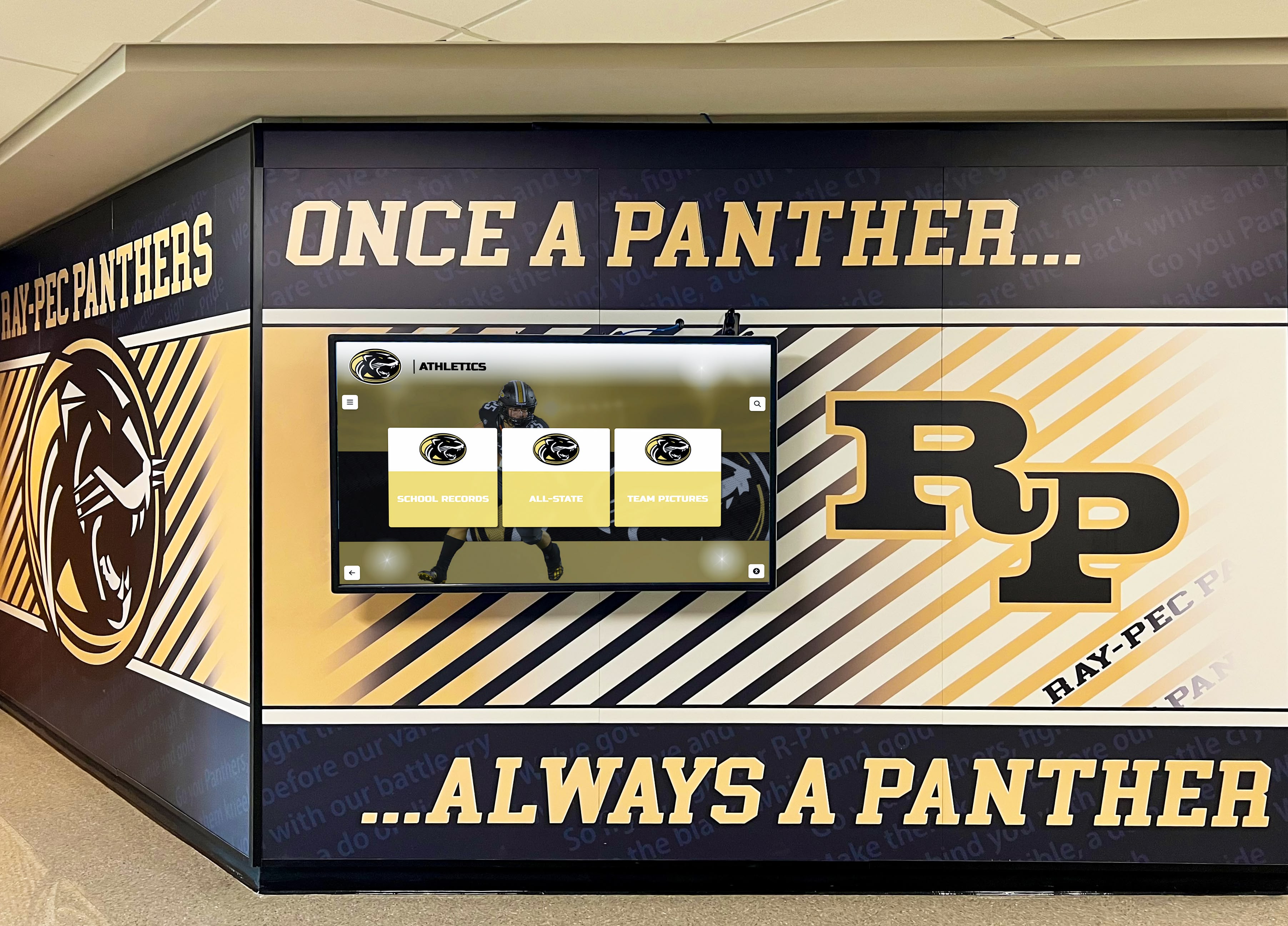
Athletic murals provide branding context for trophy displays while creating immersive recognition environments
Thematic Display Arrangements
Achievement Category Organization Grouping trophies by achievement type rather than sport or chronology creates interesting presentation alternatives:
- Championship trophy section (conference, regional, state titles)
- Individual achievement area (all-state selections, player of the year awards)
- Team accomplishment displays (sportsmanship awards, academic recognition)
- Historical milestone markers (program anniversaries, facility dedications)
- Record-breaking achievement showcases
Thematic arrangements work especially well for schools with balanced multi-sport success, preventing single dominant programs from overwhelming displays while ensuring all athletic achievements receive appropriate recognition.
Modern Digital Trophy Case Solutions
Digital display technology overcomes physical limitations while introducing engagement capabilities impossible with traditional cases.
Unlimited Recognition Capacity
Overcoming Space Constraints Digital trophy case systems eliminate the fundamental capacity problem:
- Unlimited achievement entries without physical space requirements
- Complete historical archive accessibility from founding seasons to current year
- Every championship, tournament placement, and individual honor receives inclusion
- No storage boxes filled with forgotten trophies displaced by new achievements
- Scalable systems accommodating program growth across decades
Schools transitioning to digital recognition discover hundreds of stored trophies, plaques, and awards that can finally receive proper visibility after years in forgotten closets. The shift from “what can we display” to “how should we organize everything” fundamentally changes recognition conversations.
Programs interested in academic achievement recognition benefit from systems handling both athletic and academic accomplishments within unified platforms.
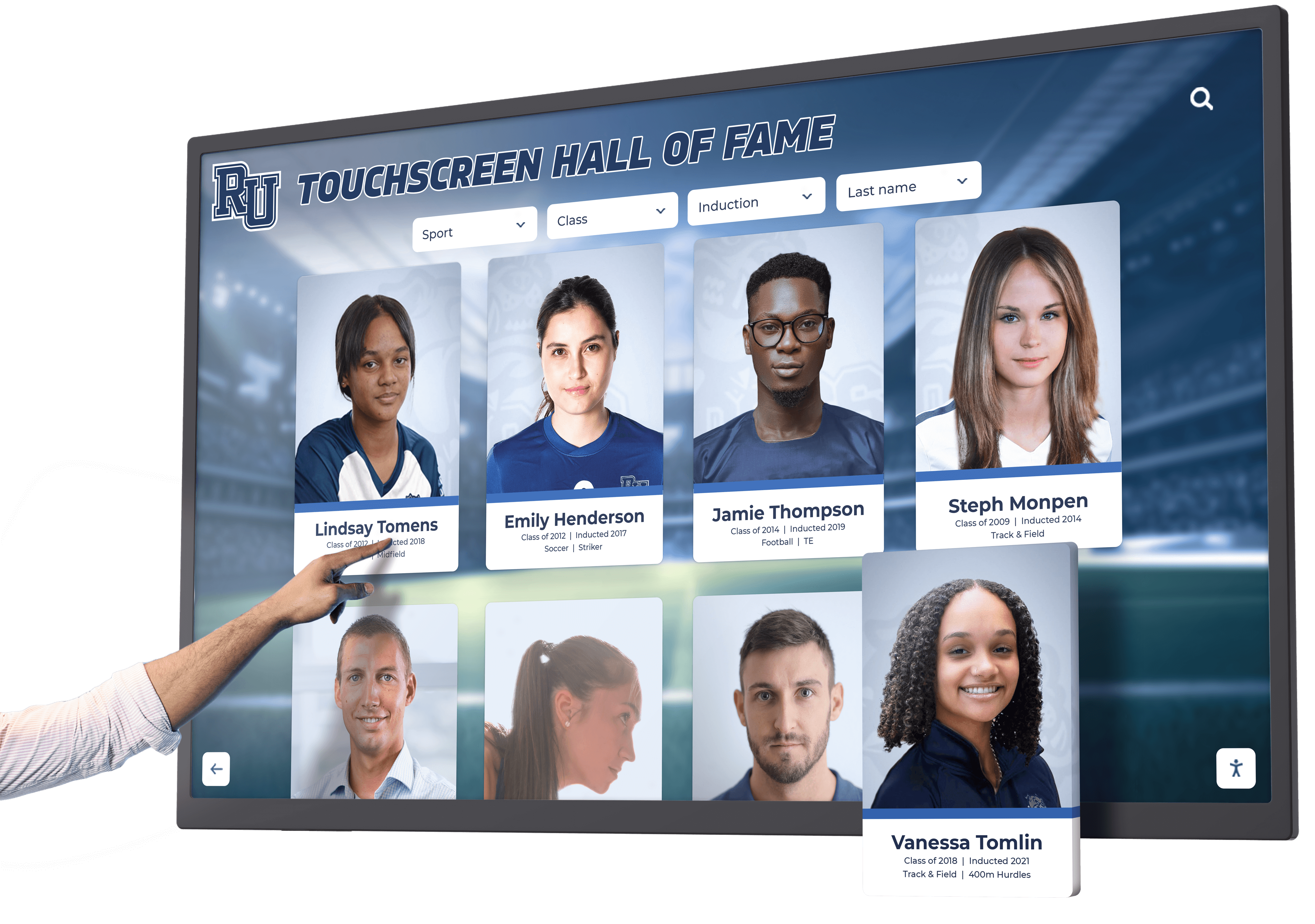
Touchscreen interaction allows visitors to explore comprehensive achievement databases, accessing details impossible in physical trophy cases
Interactive Exploration Features
Enhanced Engagement Capabilities Digital displays transform passive trophy viewing into active exploration experiences:
- Touch navigation allowing visitors to browse by sport, year, achievement type, or athlete name
- Search functionality finding specific teams, individuals, or championship seasons instantly
- Detail screens providing complete team rosters, season statistics, and tournament results
- Photo galleries showing team pictures, game action shots, and celebration moments
- Video integration displaying championship highlights, athlete interviews, or historic game footage
Students encountering interactive displays spend significantly longer exploring athletic history compared to quick glances at static trophy cases, creating meaningful connections to program legacy and tradition.
Remote Management and Updates
Operational Efficiency Advantages Cloud-based digital trophy case management eliminates physical access requirements:
- Remote content updates from any internet-connected device
- Instant recognition additions following championship victories or season conclusions
- Scheduled publishing for future-dated achievements or seasonal content rotations
- Multiple administrator access without physical key distribution
- No construction delays, engraving waits, or display rearrangement labor
Athletic directors traveling to playoff games or administrators working from home can update recognition displays immediately rather than waiting for physical access to locked cases, ensuring current achievement visibility happens in real-time.
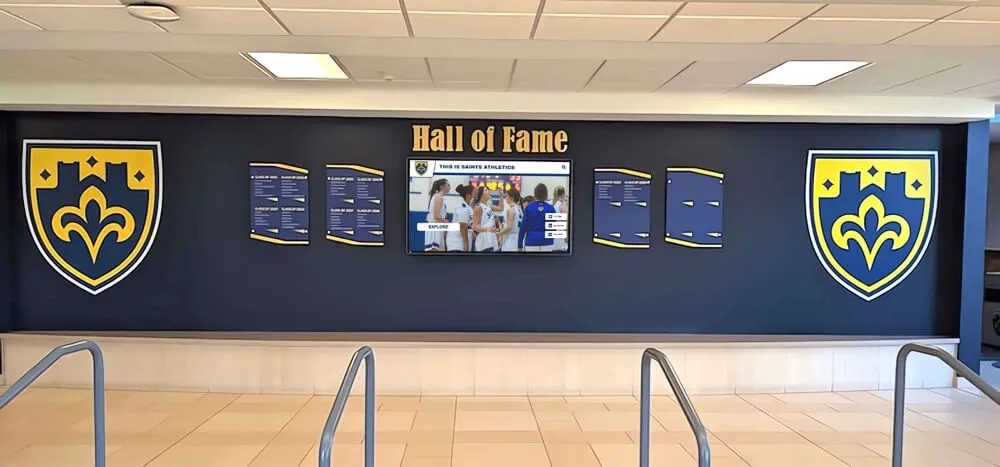
Hybrid installations combine physical elements like championship shields with digital screens, merging traditional aesthetics with modern functionality
Hybrid Trophy Case Approaches
Many schools implement combination strategies preserving physical trophy display traditions while incorporating digital enhancement capabilities.
Physical Trophy Showcase with Digital Companion Displays
Complementary Recognition Systems Maintaining physical trophy cases for significant championships while adding digital displays for comprehensive achievement archives:
- State championship trophies remain in prominent physical cases
- Digital screens display complete tournament histories, conference championships, and individual honors
- Physical displays create tangible centerpiece anchors
- Digital systems provide unlimited depth beyond featured physical items
- Visitors experience both traditional trophy presence and extensive digital exploration
This approach satisfies alumni and community members valuing physical trophy traditions while solving capacity limitations through digital expansion.
Rotating Physical Displays with Digital Archives
Seasonal Presentation Strategies Schools with substantial trophy collections rotate physical displays seasonally while maintaining permanent digital access:
- Fall sports trophies displayed physically during football and volleyball seasons
- Winter sport recognition rotated into cases during basketball season
- Spring achievements featured during baseball and track seasons
- Complete year-round access to all achievements via digital displays
- Physical rotation creates fresh presentations without permanent removal
Programs exploring high school awards ceremony ideas benefit from digital displays supporting year-round recognition beyond single ceremony events.
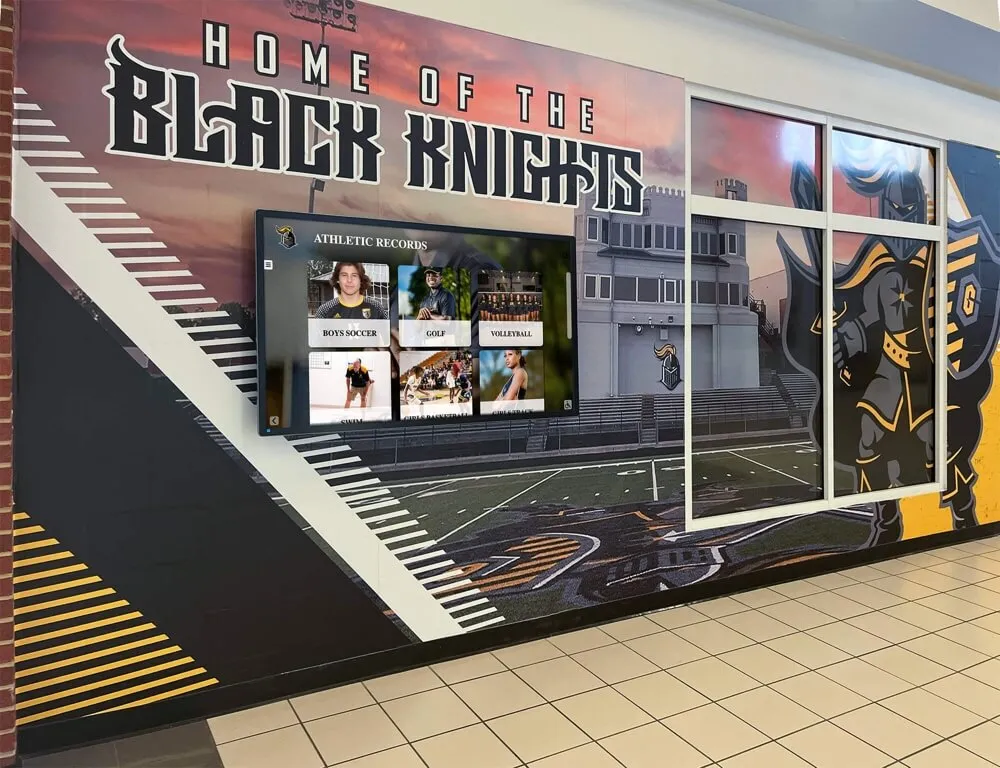
Mural-based installations create dramatic backdrops for digital achievement displays, transforming functional hallways into celebration spaces
Location and Placement Strategies
Where schools position trophy cases significantly impacts recognition visibility and engagement frequency.
High-Traffic Area Positioning
Maximizing Visibility Opportunities Strategic placement ensures maximum community exposure:
- Main entrance lobbies where all visitors encounter displays immediately
- Athletic facility corridors connecting locker rooms to competition spaces
- Cafeteria or commons areas with sustained student daily traffic
- Gymnasium lobbies where game attendees gather before and after competitions
- Alumni visiting areas creating reconnection opportunities
Placement decisions should consider both daily student exposure and special event visitor traffic, ensuring displays serve multiple recognition audiences effectively.
Multi-Location Distribution Systems
Decentralized Recognition Approaches Large schools or expansive athletic facilities benefit from distributed display strategies:
- Main lobby featuring comprehensive achievement overview
- Sport-specific displays in dedicated facility areas (wrestling room, pool, gymnasium)
- Individual team locker rooms with program-specific recognition displays
- Practice facilities highlighting training dedication and improvement
- Academic buildings showcasing student-athlete achievement balance
Schools implementing academic student of the month displays alongside athletic recognition create comprehensive achievement celebration environments.
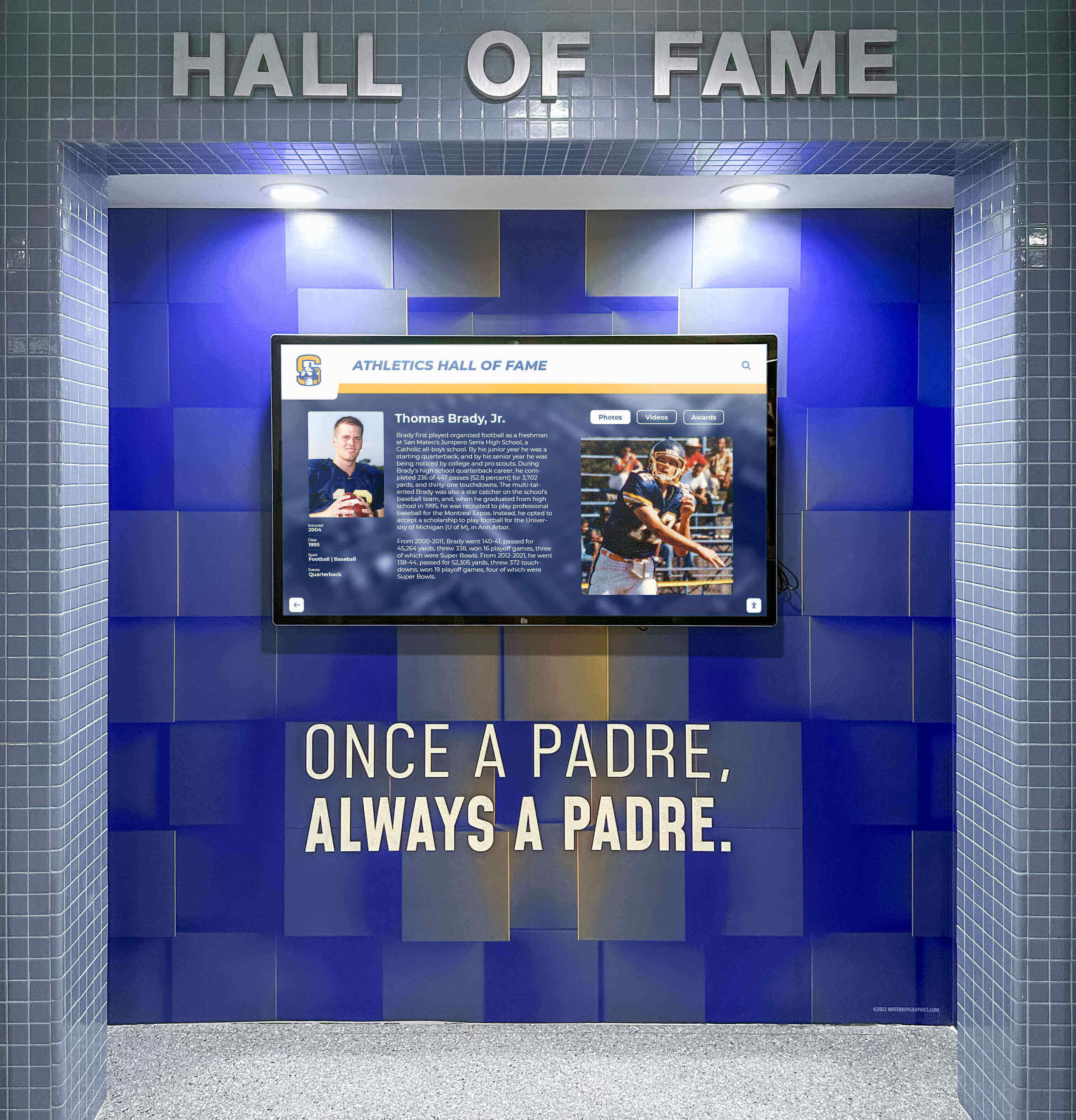
Clean, professional digital installations create focused recognition displays without visual clutter or space constraints
Individual Achievement Integration
Comprehensive trophy case systems celebrate individual honors alongside team championships.
All-Conference and All-State Recognition
Individual Excellence Showcases Highlighting personal achievements creates broader recognition:
- All-conference selection displays organized by sport and season
- All-state athlete recognition with career statistics and achievements
- Academic all-American honors celebrating student-athlete excellence
- Individual championship recognition (track events, wrestling weight classes, swimming events)
- Record holder boards acknowledging school, conference, and state record achievements
Individual recognition motivates athletes whose teams may not win championships but who demonstrate exceptional personal excellence, ensuring recognition systems value diverse achievement dimensions.
Programs highlighting 1000 point scorer basketball recognition understand the importance of individual milestone celebration within team sports.
Coach and Contributor Recognition
Program Builder Acknowledgment Complete athletic recognition includes leadership and support contributors:
- Coaching milestone achievements (100-win coaches, championship coaches, career service)
- Athletic director leadership recognition
- Booster club and volunteer contributor acknowledgment
- Facilities and equipment donors
- Support staff recognition (trainers, team managers, statisticians)
Acknowledging the complete program ecosystem demonstrates that championship success requires contributions beyond athlete performance, creating inclusive recognition cultures.
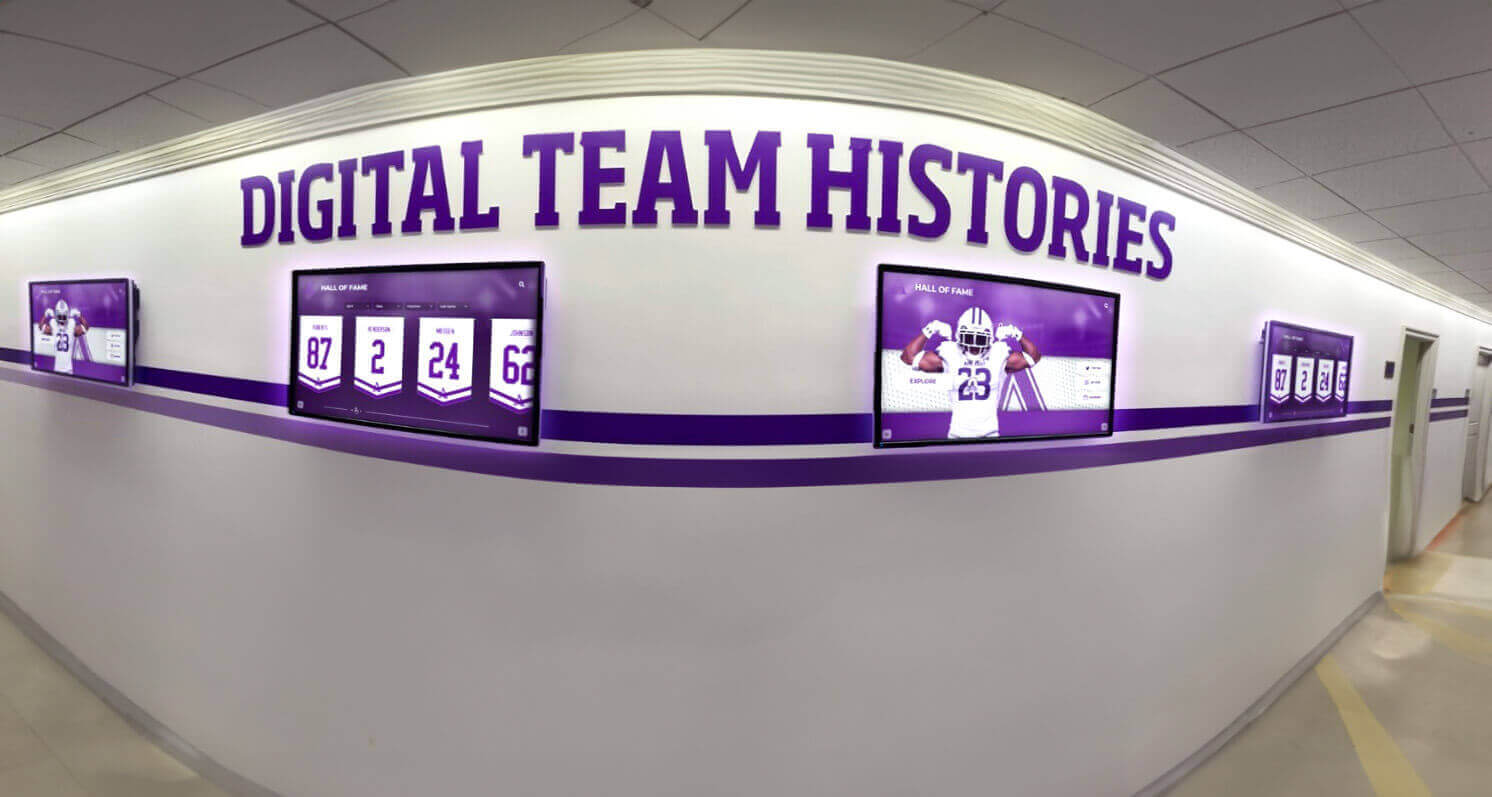
Multiple coordinated displays create comprehensive team history presentations, allowing deeper storytelling than single trophy cases permit
Accessibility and Inclusive Design
Modern trophy case planning must address accessibility requirements ensuring all community members can engage with athletic recognition.
ADA Compliance Considerations
Physical and Digital Accessibility Trophy case designs should accommodate diverse abilities:
- Display height positioning allowing wheelchair user visibility
- Touchscreen installations at accessible heights with sufficient clearance
- Digital displays meeting WCAG 2.1 AA accessibility standards
- Alternative text descriptions for visual content
- High contrast presentation modes for visual impairment accommodation
- Audio description capabilities for comprehensive accessibility
Schools prioritizing accessibility demonstrate commitment to inclusive community recognition where all students, alumni, and visitors can engage with athletic achievement celebration.
Maintenance and Longevity Planning
Sustainable trophy case systems require maintenance planning ensuring displays remain impressive across decades.
Physical Trophy Case Maintenance
Ongoing Care Requirements Traditional cases demand regular upkeep:
- Glass cleaning maintaining visibility and presentation quality
- Trophy polishing preventing tarnish deterioration
- Label verification ensuring accuracy and readability
- Lighting maintenance replacing burnt bulbs and checking electrical systems
- Lock and hinge functionality preventing access problems
- Climate control preventing moisture damage to awards and photos
Deferred maintenance transforms impressive displays into deteriorating eyesores, requiring systematic care schedules and responsible party designation.
Digital Display Maintenance
Technology Longevity Considerations Digital recognition systems involve different maintenance requirements:
- Content updates maintaining current achievement inclusion
- Software updates ensuring security and functionality
- Screen cleaning preserving visual quality
- Hardware monitoring identifying potential failures before occurrence
- Backup systems preventing content loss
- User access management maintaining appropriate administrative permissions
Quality digital trophy case platforms provide automatic software updates, cloud-based content backup, and remote monitoring capabilities minimizing local maintenance requirements while ensuring system reliability.
Schools examining academic history archiving benefit from systems handling both athletic and academic content within unified platforms.
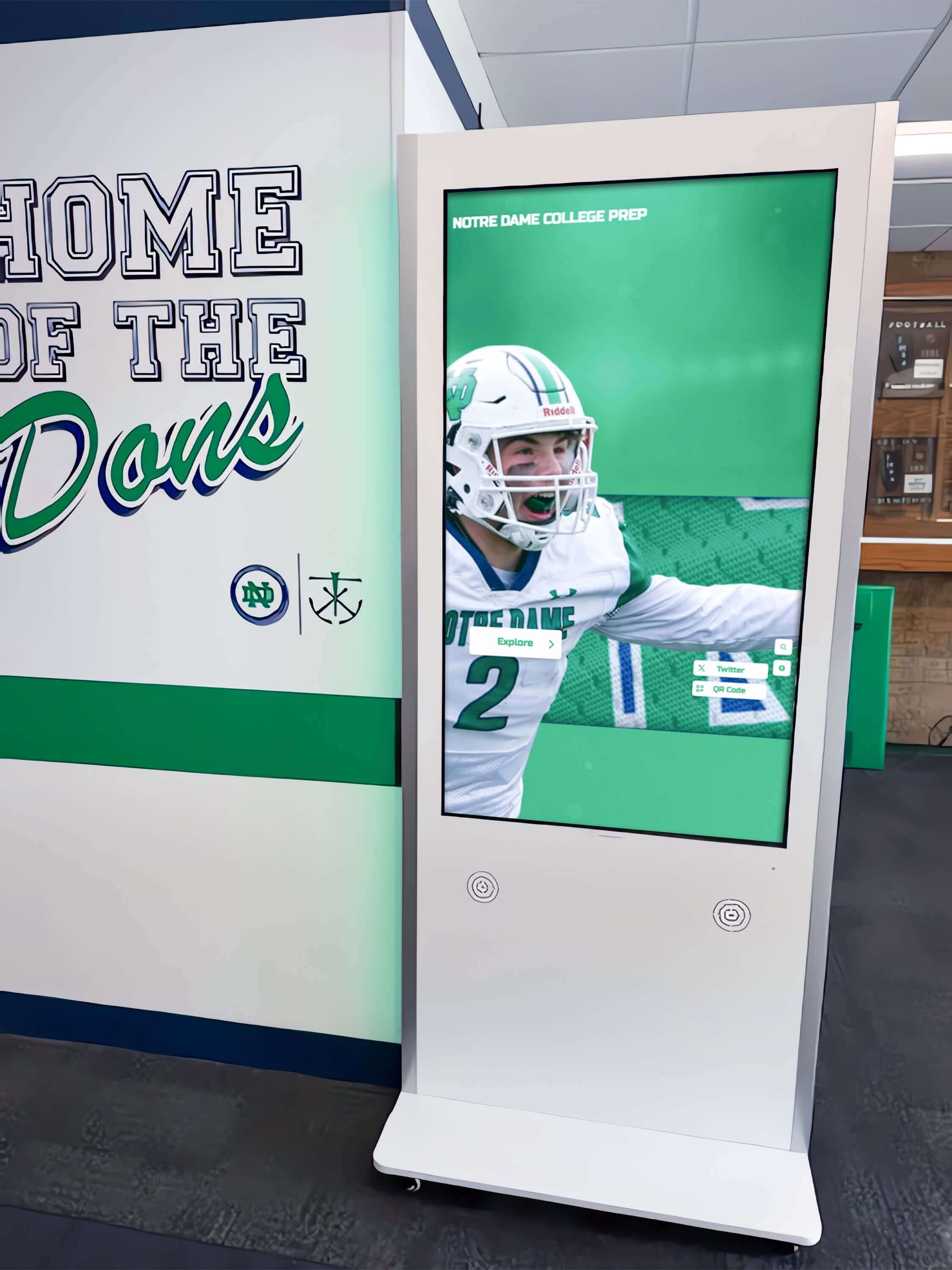
Dedicated kiosks provide deep-dive exploration opportunities, allowing visitors extended engagement with team histories and achievement databases
Budget-Friendly Display Improvements
Schools with limited resources can implement meaningful trophy case enhancements without major capital investments.
Incremental Enhancement Strategies
Phased Improvement Approaches Systematic upgrades spread costs across multiple budget cycles:
- Year one: Lighting improvements and organizational restructuring
- Year two: Supplementary signage and contextual information additions
- Year three: Digital companion displays alongside existing physical cases
- Year four: Comprehensive digital migration with physical trophy preservation
- Year five: Multi-location expansion and advanced features
Phased implementation allows budget-conscious schools to demonstrate value and community support before requesting major capital expenditures.
Cost-Effective Presentation Ideas
Low-Budget Impact Maximization Meaningful improvements requiring minimal investment:
- Reorganization and cleaning of existing cases creating fresh presentations
- Print materials adding context and achievement details
- Simple LED lighting additions dramatically improving visibility
- Sport-specific background colors using adhesive vinyl or paint
- Large-format team photos complementing trophy displays
- QR code additions linking to free online content platforms
Even schools unable to pursue comprehensive display overhauls can significantly improve trophy case impact through thoughtful low-cost enhancements.
Schools exploring youth sports awards ideas discover recognition strategies applicable across competitive levels and budget ranges.
Measuring Trophy Case Effectiveness
Systematic evaluation ensures recognition investments achieve intended goals and justify ongoing resource allocation.
Engagement Metrics
Quantitative Impact Assessment Schools with digital systems access detailed engagement data:
- Display interaction frequency and duration statistics
- Content area popularity identifying high-interest achievements
- Search query patterns revealing what visitors seek
- Time-based usage patterns showing peak engagement periods
- Demographic interaction data where available and appropriate
Physical trophy case engagement assessment relies on observation and qualitative feedback, though traffic pattern analysis and community surveys provide useful insights.
Stakeholder Feedback
Qualitative Impact Evaluation Comprehensive assessment incorporates community perspectives:
- Student surveys about awareness and pride in athletic achievements
- Alumni feedback regarding recognition accessibility and completeness
- Parent and family satisfaction with achievement celebration
- Prospective student-athlete responses during recruitment visits
- Community member engagement and local pride expressions
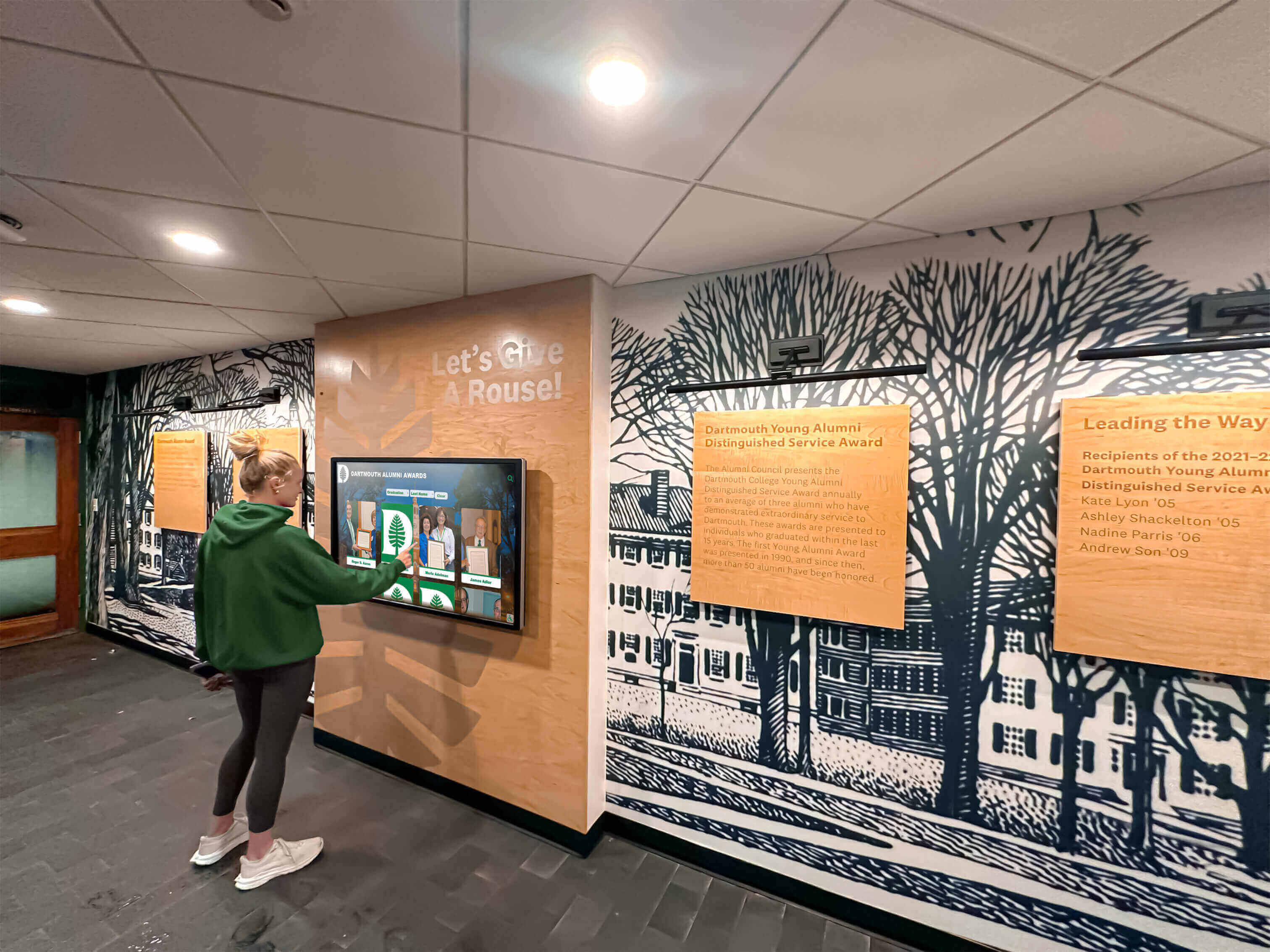
Active student engagement with recognition displays demonstrates effective implementation, creating meaningful connections to school athletic legacy
Regular feedback gathering identifies recognition gaps, ensures displays honor achievements stakeholders find genuinely meaningful, and provides evidence supporting budget requests for recognition system improvements or expansions.
Future-Proofing Athletic Recognition
Forward-thinking trophy case planning anticipates program growth and technology evolution.
Scalable System Design
Growth Accommodation Planning Recognition systems should handle expansion without complete replacement:
- Digital platforms with unlimited capacity eliminating future space constraints
- Modular physical case designs allowing sequential addition
- Flexible organizational frameworks accommodating new sports or achievement categories
- Technology infrastructure supporting feature additions and capability enhancements
- Content migration planning ensuring historical achievement preservation during system transitions
Schools implementing recognition systems today should evaluate whether solutions will still serve program needs effectively in ten, twenty, or fifty years as athletic programs grow and achievement volumes increase.
Technology Evolution Considerations
Adaptation to Innovation Digital recognition platforms evolve rapidly with new capabilities:
- Mobile integration allowing remote access to achievement databases
- Social media connectivity expanding recognition reach beyond physical locations
- Augmented reality features creating immersive exploration experiences
- Advanced analytics providing deeper insight into program history and trends
- Voice interaction capabilities improving accessibility and engagement
Selecting technology partners committed to ongoing platform development ensures schools benefit from innovation without requiring complete system replacements every few years.
Schools interested in Alabama high school football traditions and similar regional athletic cultures benefit from systems that can showcase unique program traditions alongside standard achievement recognition.
Implementation Planning and Process
Successful trophy case projects require systematic planning addressing technical, operational, and community considerations.
Stakeholder Input and Buy-In
Collaborative Planning Approaches Involving diverse voices creates better outcomes and stronger support:
- Athletic director leadership establishing vision and priorities
- Coach input ensuring sport-specific needs receive consideration
- Student-athlete perspectives on meaningful recognition elements
- Alumni feedback regarding historical achievement preservation
- Facilities staff technical assessment and maintenance planning
- Budget authority approval for funding and resource allocation
Schools skipping stakeholder engagement often discover implementation problems that could have been avoided through inclusive planning processes.
Content Preparation and Migration
Historical Achievement Documentation Trophy case launches require comprehensive content gathering:
- Physical trophy inventory documenting all existing awards
- Historical record research filling achievement database completely
- Team photograph collection and digitization
- Season statistics and tournament result compilation
- Individual honor verification and athlete identification
- Supporting documentation like newspaper coverage and program materials
Content preparation represents significant work, though comprehensive achievement documentation creates valuable historical archives extending benefits beyond display purposes.
Programs considering tennis awards ideas or other sport-specific recognition can integrate diverse athletic programs within unified trophy case systems.
Conclusion: Building Athletic Legacy Through Effective Recognition
Thoughtful athletic trophy case design creates environments where achievements receive appropriate celebration, program history remains accessible across generations, and recognition extends beyond championship trophies to honor diverse contributions defining competitive excellence. Effective displays balance tradition with innovation, accommodate program growth without constant reconstruction, and create engaging presentations that actually connect with students rather than functioning as ignored background fixtures.
The athletic trophy case display ideas explored throughout this guide provide frameworks for schools at every stage of recognition evolution—from optimizing existing physical cases through simple improvements, to implementing comprehensive digital platforms that overcome space limitations entirely, to designing hybrid approaches merging traditional trophy display aesthetics with modern technology capabilities.
Transform Your Athletic Recognition Display
Discover how modern digital trophy case solutions enable unlimited achievement capacity, engaging interactive exploration, remote management convenience, and professional presentations that athletes and families explore repeatedly. See how schools nationwide showcase complete athletic legacies without physical space constraints or update difficulties.
Book A DemoTraditional physical trophy cases create tangible recognition that athletes and communities value deeply, providing permanent displays of championship hardware that inspire current competitors while honoring past excellence. However, capacity limitations and maintenance requirements eventually constrain even well-designed physical systems as programs grow and achievements accumulate across decades. Digital recognition platforms like Rocket Alumni Solutions overcome these fundamental limitations through unlimited showcase capacity, interactive engagement features, comprehensive achievement databases, and simple cloud-based management eliminating physical access requirements.
Schools succeeding at athletic recognition balance championship celebration with individual honor acknowledgment, maintain historical achievement visibility alongside current success, ensure displays remain accessible and engaging rather than static and ignored, and implement systems that will continue serving program needs effectively as athletic excellence generates increasing recognition volume across future decades.
Begin by assessing your current trophy case situation honestly—measuring available space against achievement volume, evaluating display condition and presentation quality, gathering stakeholder feedback about what works and what frustrates, and identifying specific problems requiring solutions. Then explore options ranging from simple physical case improvements through comprehensive digital platform implementations, selecting approaches aligned with your budget reality, program priorities, and long-term vision for athletic recognition at your school.
Your athletic program’s achievements deserve recognition reflecting the dedication, teamwork, competitive excellence, and character development that define interscholastic sports. With thoughtful planning, appropriate technology selection, comprehensive content preparation, and systematic implementation, you can create trophy case displays that honor every championship while building the pride, tradition, and community connection that distinguish exceptional athletic programs from merely adequate ones.
Live Example: Rocket Alumni Solutions Touchscreen Display
Interact with a live example (16:9 scaled 1920x1080 display). All content is automatically responsive to all screen sizes and orientations.