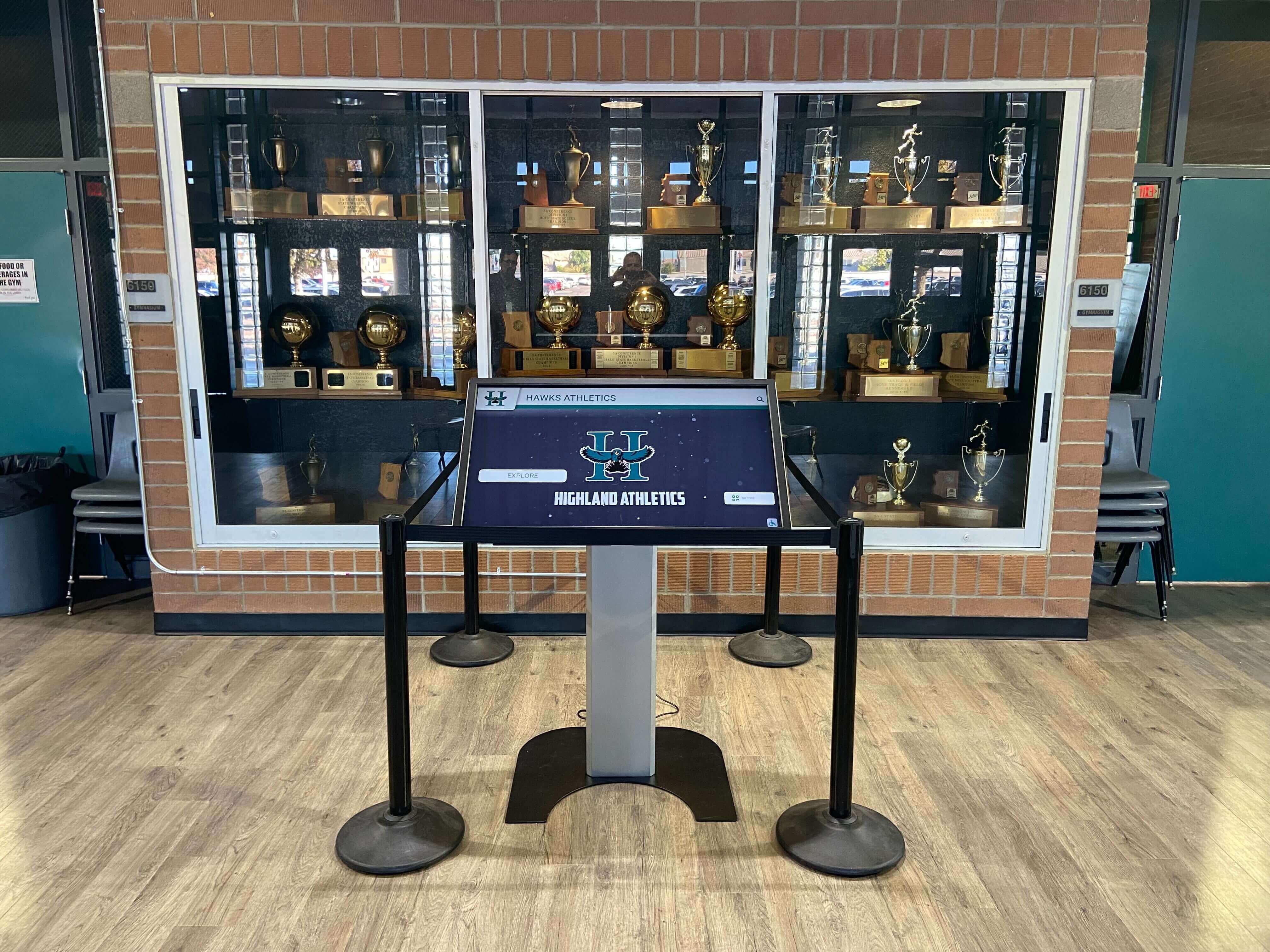




Intent: research — athletic memorabilia light exposure guidelines address one of the most invisible threats to school recognition collections: the slow, cumulative damage that light inflicts on jerseys, photographs, championship banners, signed documents, and trophies displayed in hallways and trophy cases. This guide explains which types of light cause the most harm, what illumination and UV thresholds are commonly cited in preservation literature, and what schools can realistically do to slow fading and color loss without removing items from public view. Preservation policies and legal requirements vary by jurisdiction and collection type; for items of significant historical or monetary value, consultation with a qualified conservator is appropriate before making final decisions.
Light damage is insidious precisely because it cannot be undone. A jersey that has faded from royal blue to powder blue in a sunlit trophy case hallway over ten years will not return to its original color when moved to a darker location. The loss is permanent, and it compounds year over year in ways that daily observers rarely notice until a photograph from an earlier era reveals how much saturation has drained from fabrics, photographs, and championship banners that once commanded immediate attention.
Most school athletics and facilities staff pay close attention to temperature and humidity in display areas — the variables that produce visible mold, condensation, and corrosion on a recognizable timeline. Light damage moves on a longer clock and leaves no obvious residue other than the slow erasure of color, contrast, and the legibility of signatures on documents that future generations will no longer be able to read clearly. Establishing a workable light exposure protocol is one of the lower-cost, higher-impact steps a school can take to maintain the integrity of its recognition collection across decades.

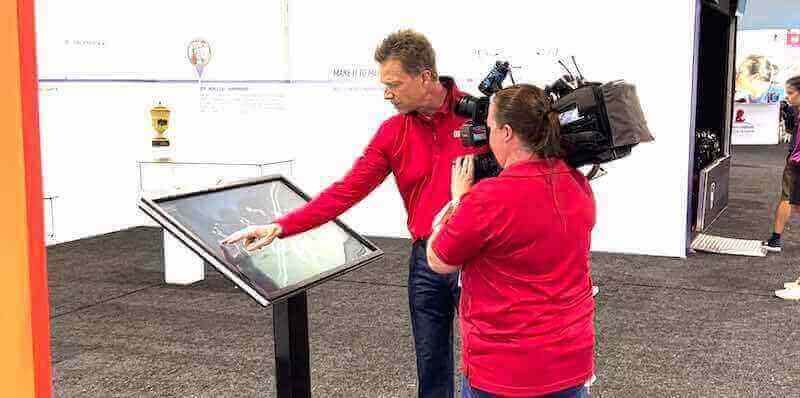
Trophy cases and display corridors expose memorabilia to both natural and artificial light — establishing clear guidelines for each source significantly extends the life of jerseys, photographs, and championship documents
How Light Damages Athletic Memorabilia
Understanding the mechanism of light damage helps schools make better decisions about display placement, fixture selection, and rotation schedules.
Ultraviolet Radiation: The Primary Driver of Fading
Ultraviolet (UV) radiation — present in natural sunlight and in many fluorescent and halogen light sources — carries enough energy to break chemical bonds in dyes, pigments, and organic materials. For athletic memorabilia, this means:
Jersey and banner fabrics: UV exposure breaks down chromophore structures in dyes, producing fading that progresses faster in areas receiving direct light than in shadowed folds. Synthetic fabrics (polyester, nylon) often fade more uniformly than natural fibers, but neither is immune. Screen-printed numbers and lettering may degrade at a different rate than the surrounding fabric, producing a ghosted appearance as the textile fades while the printing retains some color contrast.
Photographs: Photographic prints contain light-sensitive dyes and silver compounds that degrade under UV exposure. Color prints produced before approximately 2000 — the era preceding major dye stability improvements — are particularly vulnerable. A color team photograph from 1985 stored under unfiltered fluorescent lights for 20 years may have lost significant dye density in the most affected areas, often producing a reddish or cyan shift as individual dye layers degrade at different rates.
Paper and signatures: Autographs, award certificates, and athletic records signed in ballpoint or felt-tip ink are subject to UV-driven fading and paper yellowing. Iron-gall inks used in older certificates can also brown and become brittle with combined UV and air exposure over time.
Visible Light: The Often-Overlooked Contributor
Even with UV filtered out, high levels of visible light cause fading through a photochemical process separate from UV damage. This matters in practice because UV-filtering glass or acrylic — a commonly recommended intervention — reduces but does not eliminate light-induced deterioration. Items displayed under any light source at high illuminance for extended hours accumulate photochemical damage, albeit more slowly than under unfiltered UV-rich sources.
The Cumulative Nature of Light Damage
Preservation literature commonly uses the concept of lux-hours — illuminance (measured in lux) multiplied by display hours — to express total light exposure. An item displayed at 200 lux for 12 hours per day accumulates 2,400 lux-hours daily. The same item displayed at 50 lux for 8 hours per day accumulates 400 lux-hours — roughly one-sixth the damage rate. Over a decade, that difference determines whether a jersey retains its original color or has faded past the point where school colors are immediately recognizable.
Light Exposure Guidelines by Memorabilia Type
The following guidance summarizes thresholds commonly cited in museum and archival preservation literature. These are general starting points for school trophy cases and athletic display areas, not absolute conservation standards. Local conditions, specific material characteristics, and the historical significance of individual items affect what levels are appropriate in practice.
| Memorabilia Type | Recommended Illuminance | UV Exposure Target | Risk Sensitivity |
|---|---|---|---|
| Color photographic prints (post-2000) | ≤200 lux | Filter to ≤75 µW/lm | High |
| Color photographic prints (pre-2000) | ≤50 lux | Filter to ≤10 µW/lm | Very High |
| Signed documents and certificates | ≤50–100 lux | Filter to ≤10 µW/lm | Very High |
| Jerseys and fabric banners (natural fibers) | ≤50–150 lux | Filter to ≤75 µW/lm | High |
| Jerseys and fabric banners (synthetics) | ≤150–200 lux | Filter to ≤75 µW/lm | Moderate–High |
| Metal trophies and hardware | ≤300 lux | Standard filtering adequate | Moderate |
| Printed plaques and laminated items | ≤200 lux | Filter to ≤75 µW/lm | Moderate–High |
Practical notes on this table:
- Recommendations vary across preservation sources; treat these figures as initial targets rather than precise thresholds.
- UV filtering is typically measured in microwatts per lumen (µW/lm) at the light source; lower values indicate less UV output per unit of visible light.
- For cases displaying mixed material types, the most sensitive item present effectively sets the target for the entire display environment.
- Daily display hours multiply the effect — a case illuminated 10 hours per day accumulates substantially more photochemical damage than one illuminated for 6 hours.
The Light Exposure Assessment Checklist
Before making display or fixture changes, assess current conditions in each trophy case and display corridor. This inventory provides the baseline for prioritizing interventions and documenting what staff observed before any changes were made.
Natural Light Sources
- Identify all windows, skylights, or glazed doors within direct line of sight of any display case or athletic banner
- Note the orientation of each window (south-facing windows in the northern hemisphere receive the highest direct sunlight exposure across the year)
- Document whether existing glass is UV-filtering (Low-E glass and similar coatings provide some UV reduction; standard single-pane glass provides minimal UV filtration)
- Measure or estimate daily hours of direct sunlight falling on each case — even brief periods of direct sun contribute disproportionately to total light damage
- Consider seasonal variation: a case that receives no direct sun in winter may receive several hours of direct sun in summer when the sun angle changes
Artificial Light Sources
- Identify fixture type in each display area: fluorescent (T8/T12), LED, halogen, or incandescent
- Determine whether existing fixtures use UV-filtering tubes or lenses (many standard fluorescent tubes are not UV-filtered)
- Measure illuminance inside the case using a lux meter if available — typical athletic trophy case lighting ranges from 150–500 lux; cases near windows may read significantly higher during daylight hours
- Document daily operating hours for case lighting — cases illuminated around-the-clock accumulate damage far faster than those on timers or occupancy controls
- Check whether spot lighting illuminates specific items directly, creating locally higher illuminance than the overall case average
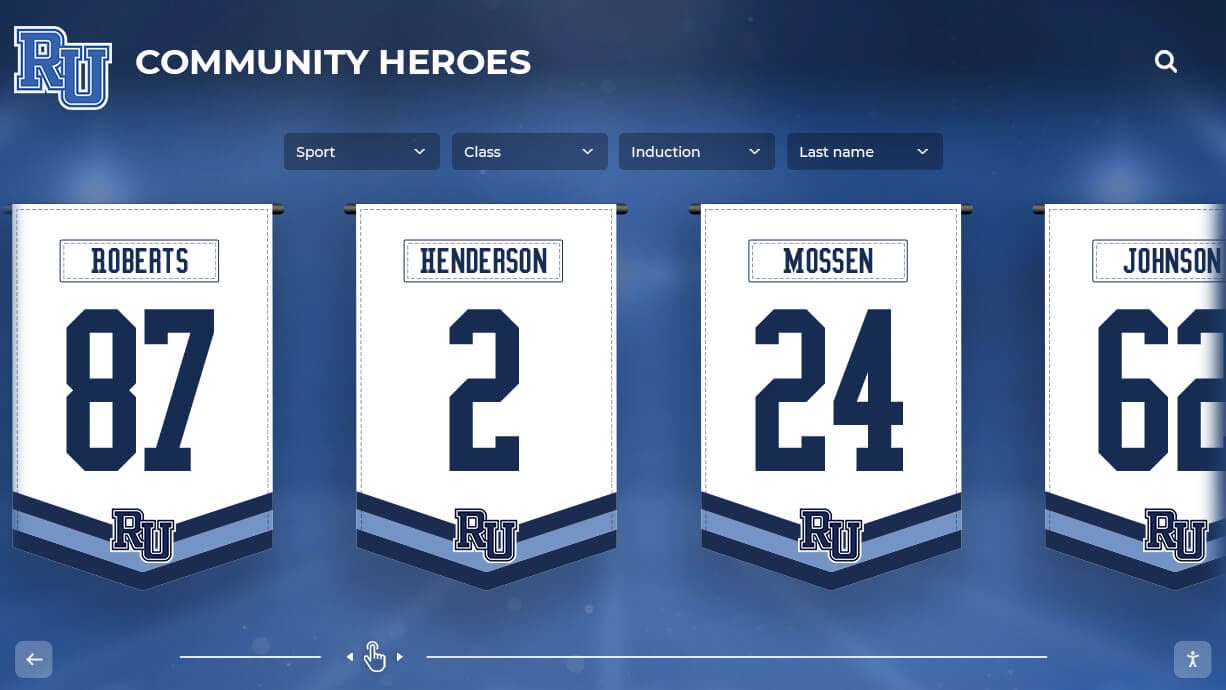
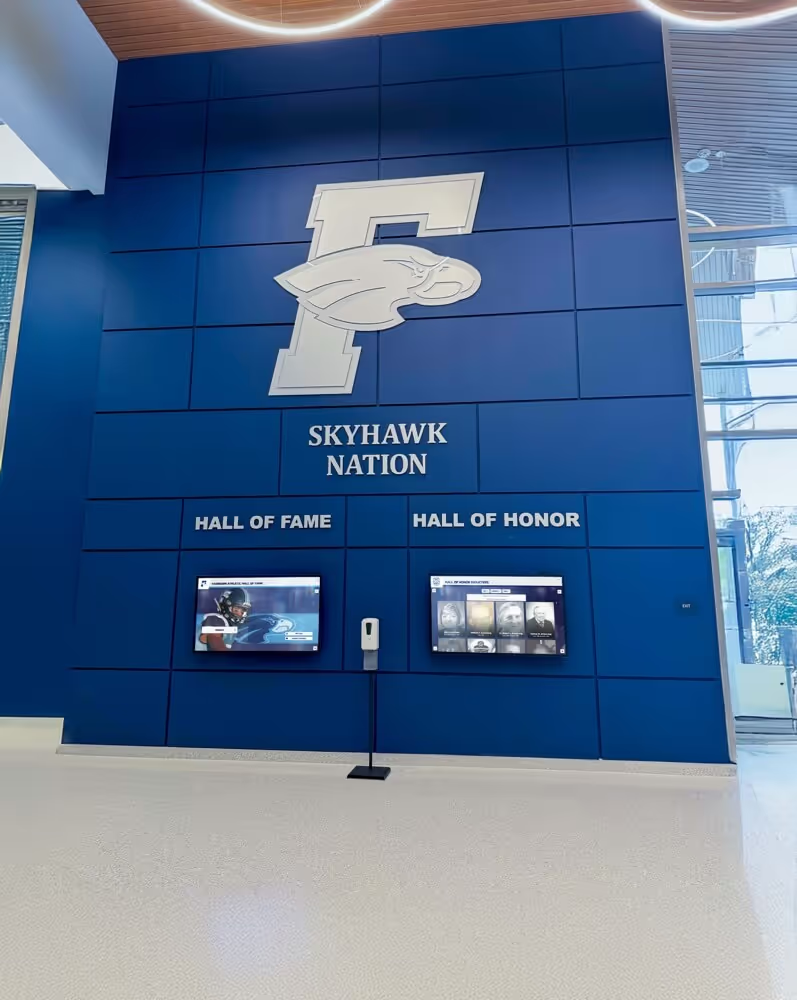
Hanging jersey banners in corridor spaces face both natural light from windows and artificial lighting — both sources contribute to cumulative fading that cannot be reversed once established
Light Sources: Risks and Recommendations by Type
Not all light sources carry the same risk profile for athletic memorabilia. Understanding each helps schools make informed replacement and placement decisions over time.
Direct Sunlight
Direct sunlight delivers the highest UV load and illuminance of any common display environment light source. Illuminance from direct sun measured inside a south-facing window can reach tens of thousands of lux — far above preservation targets for photographs and signed documents. Even brief daily periods of direct sun on jerseys and photographs produce measurable cumulative damage over months that is not recoverable.
Recommendation: No light-sensitive memorabilia — photographs, signed documents, natural fiber textiles — should be placed where direct sunlight reaches them for any portion of the day. UV-filtering window films on adjacent glazing reduce but do not eliminate the risk; physically repositioning the case away from the direct sun path is more reliable.
Fluorescent Lighting (Unfiltered)
Standard fluorescent tubes produce a spectrum that includes meaningful UV output, typically in the range of 75–200 µW/lm depending on tube formulation. Many school corridors and trophy cases use T8 or T12 fluorescent fixtures installed decades ago without UV consideration. These represent a chronic low-level UV exposure source for any item displayed beneath or near them.
Recommendation: Replace standard fluorescent tubes with UV-filtering equivalents, or sleeve existing tubes in UV-filtering acrylic. If the case uses integrated fluorescent lighting, consider replacing fixtures with LED alternatives designed for display use.
LED Lighting
LEDs produce very low UV output — typically below 10 µW/lm in most commercial fixtures — making them substantially safer than fluorescent sources for UV-sensitive memorabilia. However, LEDs can still produce high illuminance at close range, and visible light damage at high lux levels is not eliminated by UV reduction alone.
Recommendation: LED is generally the preferred fixture type for trophy case and athletic display area lighting from a preservation standpoint. Specify fixtures with a color rendering index (CRI) of 85 or higher to maintain accurate color rendering without requiring higher illuminance to compensate for poor color quality.
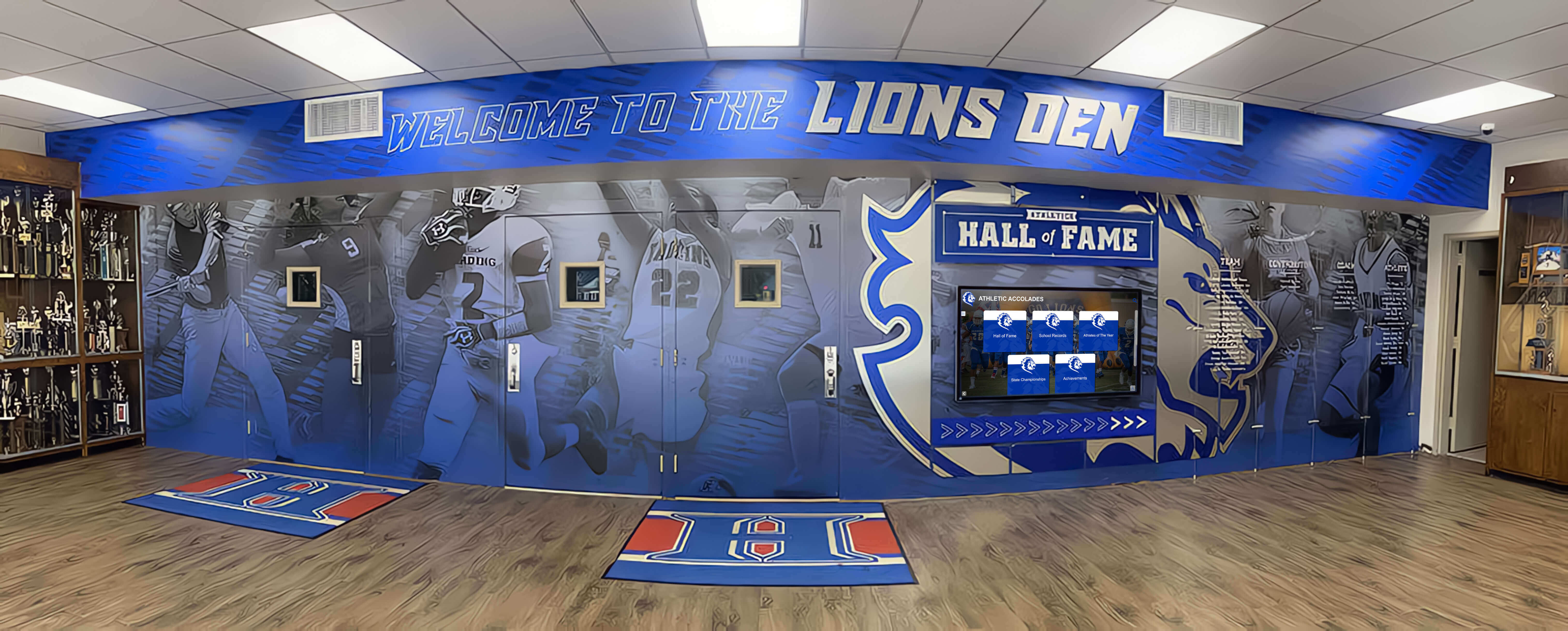
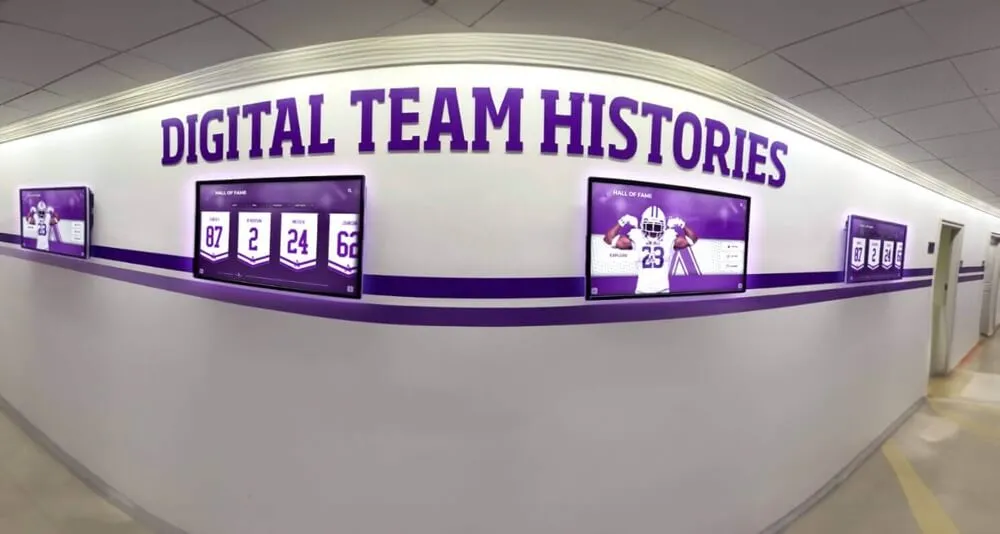
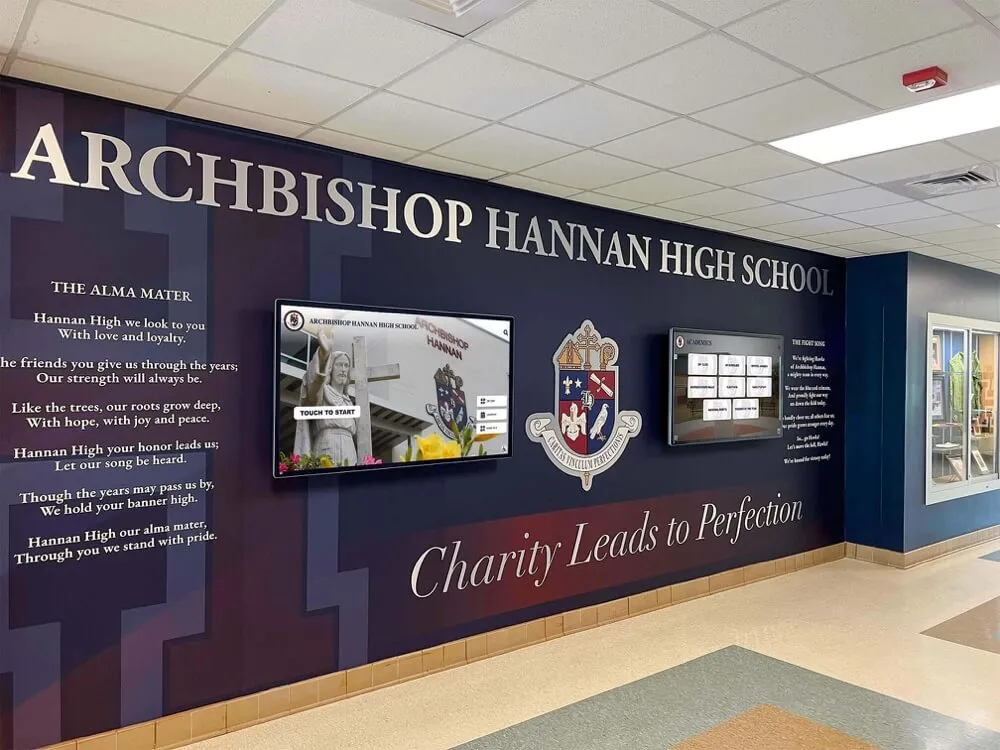
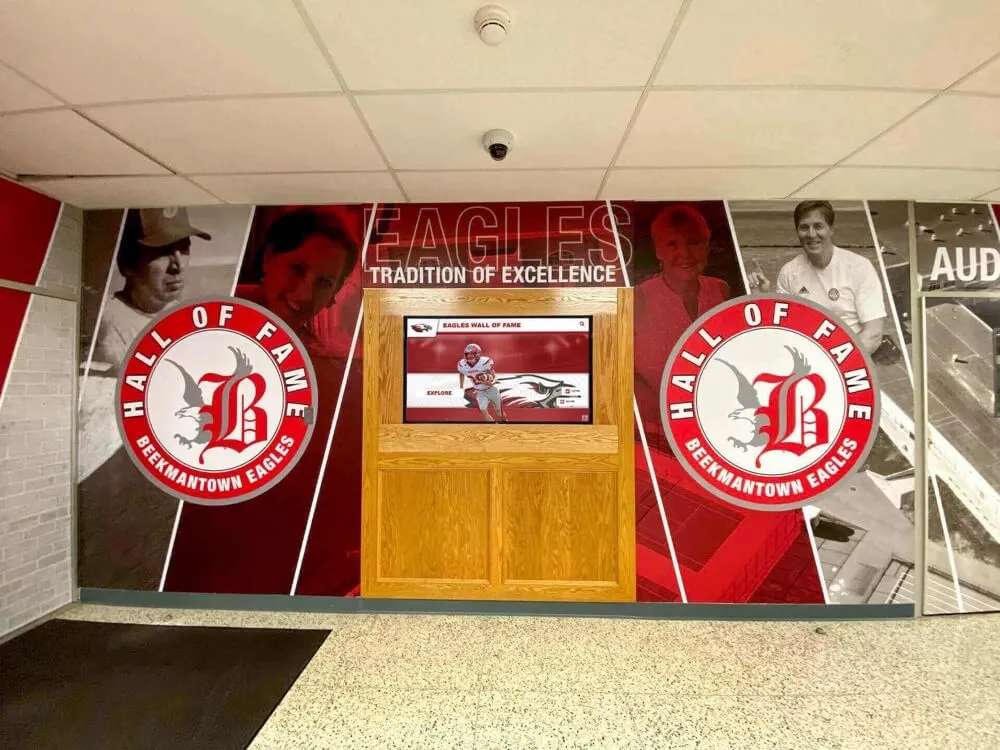
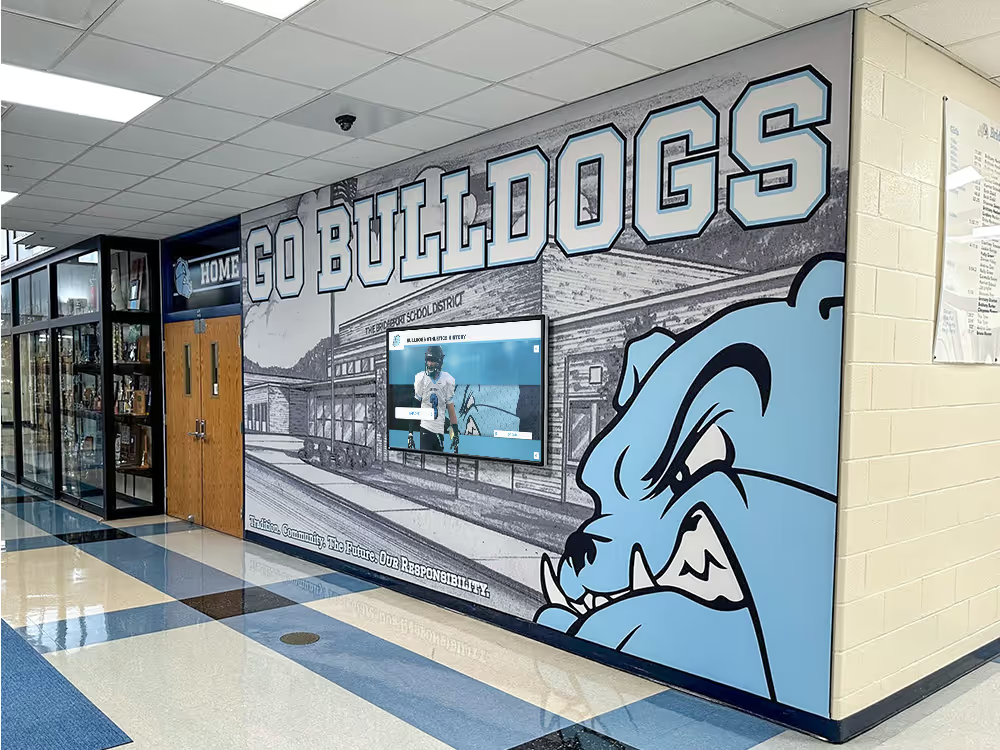
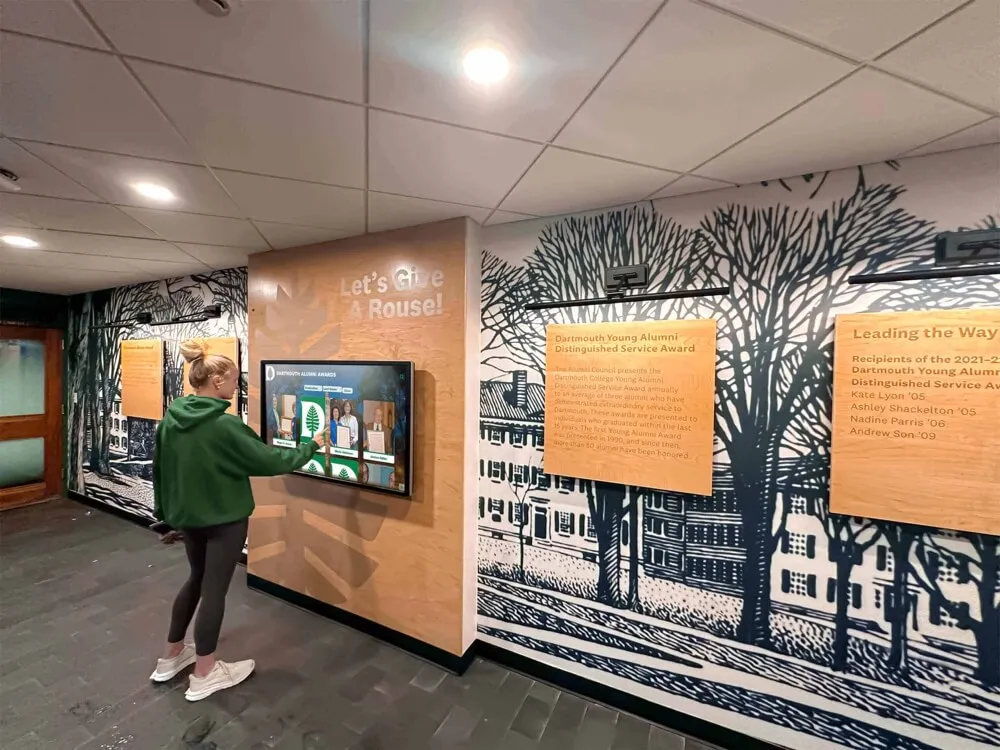
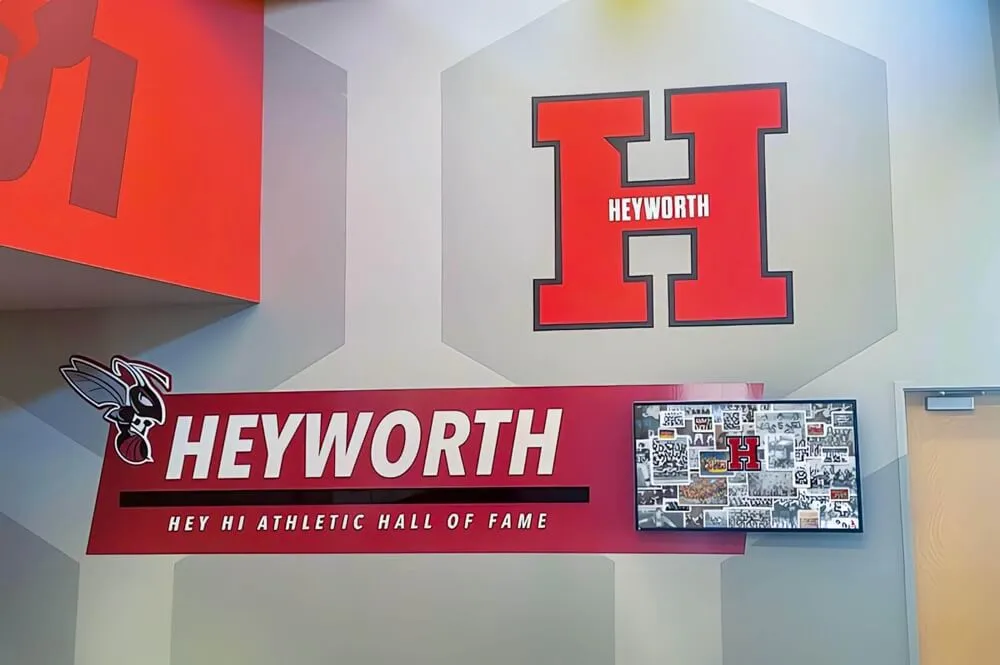
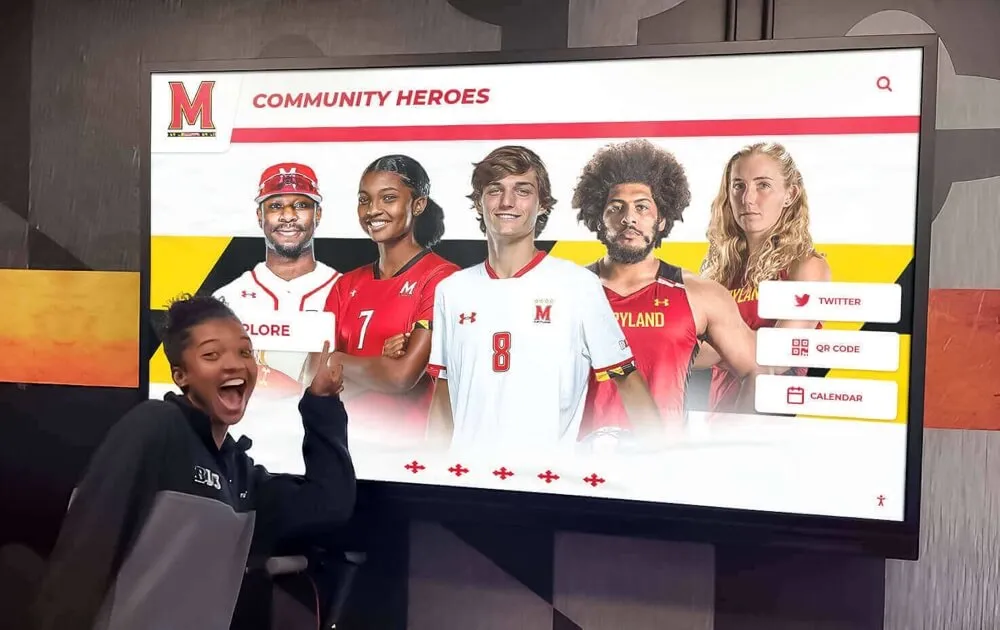
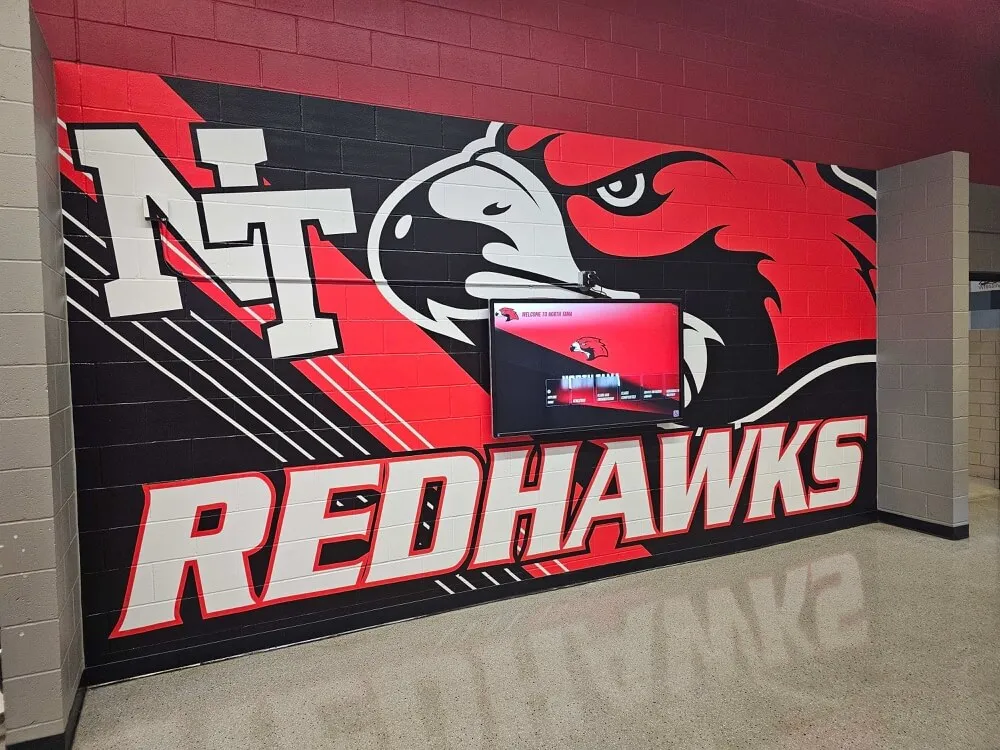
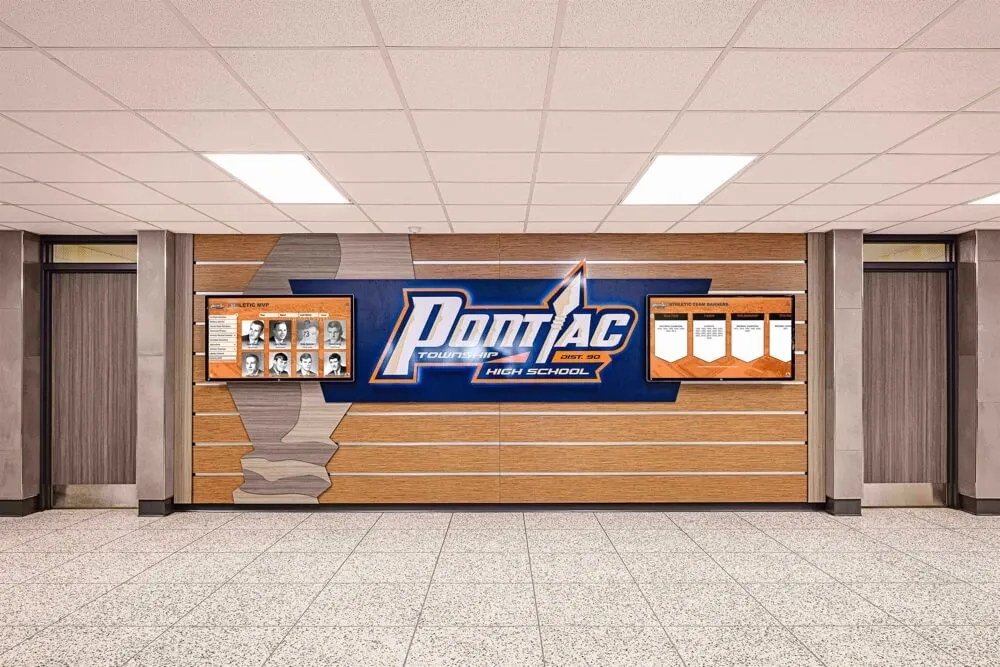
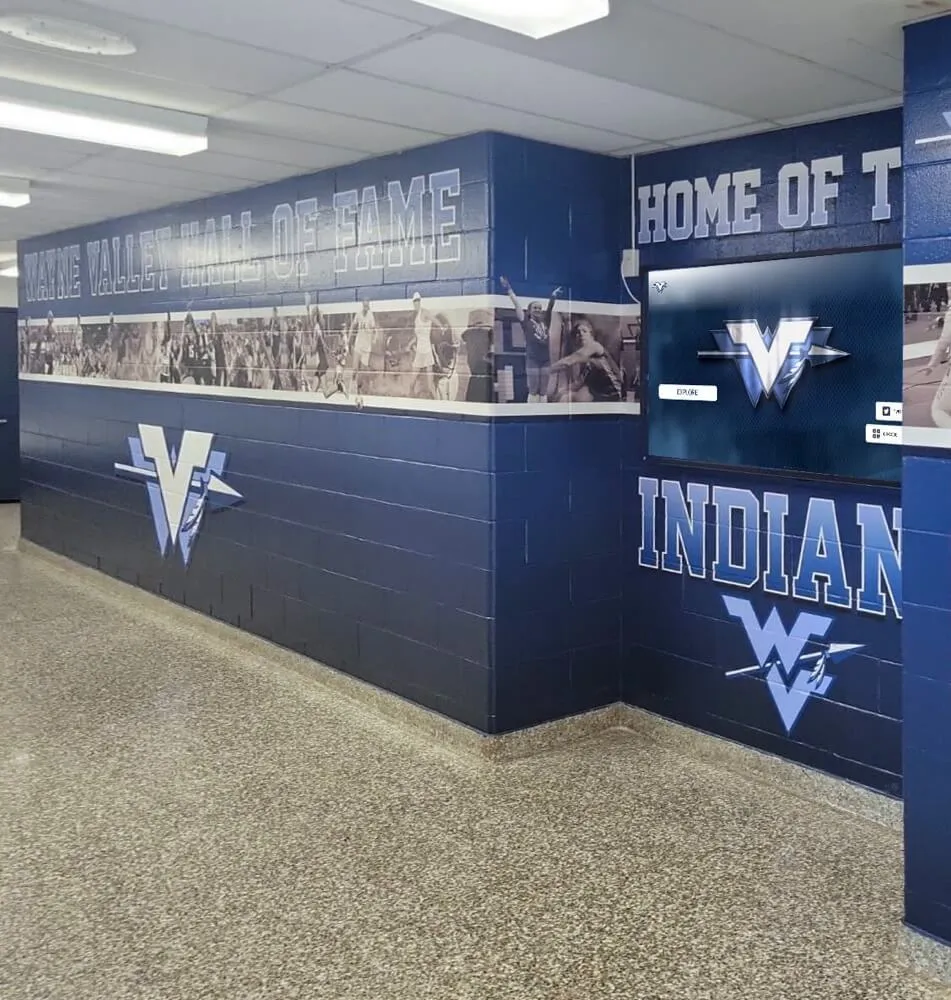
Corridors combining murals, traditional trophy cases, and digital screens require coordinated lighting decisions — a fixture appropriate for the mural may still deliver excess illuminance to adjacent photographic materials
Halogen and Incandescent Lighting
Halogen and incandescent fixtures produce less UV than fluorescent but generate significant heat and high illuminance at close range. Heat accelerates chemical deterioration in papers and dyes independently of light exposure. Case fixtures using halogen spotlights — common in older custom trophy case installations — often create localized zones of elevated temperature and illuminance on specific display items.
Recommendation: Replace halogen and incandescent case lighting with LED alternatives. If halogen fixtures cannot be immediately replaced, ensure adequate spacing between the fixture and any heat-sensitive item, and consider reducing operating hours as an interim measure.
Fiber Optic Lighting
Fiber optic display lighting systems transmit light from a remote source through optical fibers, eliminating heat and UV at the display point entirely. These systems are used in museum settings for high-sensitivity applications. They are not common in school trophy case installations due to cost and complexity but represent the gold standard for cases displaying items of significant conservation concern.
Rotation and Rest Protocols
No practical lighting level eliminates light damage — it only slows it. For items of high historical or emotional significance where original condition matters long-term, rotation strategies extend useful display life by limiting cumulative exposure.
Implementing a Display Rotation Program
A rotation protocol assigns each sensitive item a maximum continuous display period, after which it moves to dark storage for a rest period. The ratio of display time to rest time depends on the sensitivity of the item and the display conditions it has been held under.
General starting guidelines for school athletic displays:
- Photographs (pre-2000 color prints): Consider limiting continuous display to 6–12 months at a time, with rest periods of equal or greater duration in archival dark storage
- Signed documents and championship certificates: Rotate on a similar schedule to pre-2000 photographs; display archival-quality facsimiles under normal conditions while originals rest
- Historic jerseys (wool or cotton, natural fibers): Limit continuous display to 12–24 months; rest periods in dark, climate-controlled storage between display cycles
- Synthetic fabric jerseys and banners (post-1990): Higher durability, but rotation every 2–3 years under proper lighting conditions is still preferable to indefinite display
- Metal trophies and hardware: Rotation is less critical from a light exposure standpoint but beneficial for other preservation reasons — cleaning access, humidity management, visual refresh
A rotation protocol also creates natural opportunities to refresh display content. New items entering the rotation while others rest keep the trophy case and hallway displays visually current without requiring new award procurement.
For athletic programs tracking historical records across generations, the digital hall of fame guide at Digital Warming offers perspective on how schools are moving recognition content from light-sensitive physical formats into digitally preserved systems that remain fully accessible regardless of the condition of original artifacts.
UV Protection Strategies for Trophy Cases and Display Areas
Several practical interventions reduce UV exposure in existing installations without requiring major renovation or significant capital expenditure.
UV-Filtering Glazing for Trophy Cases
Trophy cases with glass fronts can be retrofitted with UV-filtering acrylic or museum-quality UV-filtering glass in place of standard glass. UV-filtering acrylic products block 98–99% of UV radiation below approximately 400 nm wavelength — the range most damaging to dyes and organic materials. This is one of the highest-impact single interventions available for sealed display cases.
Practical considerations:
- UV-filtering acrylic scratches more easily than glass; standard case glass replaced with UV acrylic will require more careful cleaning procedures
- UV-filtering glass options are available but cost more than acrylic equivalents
- Retrofit is typically straightforward for standard case formats; custom case configurations may require specialist installation
Window Films and Blinds for Display Corridors
For display areas with adjacent windows, window films that filter UV provide meaningful protection at modest cost. Films rated to block 99% of UV are available in optically clear formulations that do not significantly alter the appearance of the window.
Physical barriers — opaque blinds, UV-blocking shades, or repositioning cases away from direct sun paths — provide more reliable protection than films alone, particularly for cases that receive direct sunlight for any portion of the day.
Lighting Timers and Occupancy Controls
Case lighting operating during unoccupied hours contributes to cumulative light damage with no audience benefit. Installing timers or occupancy sensors that turn case lighting off outside school hours — or dim it significantly during evenings and weekends — can reduce total lux-hours by 30–60% without affecting the visitor experience during normal school hours.
This is one of the lowest-cost, highest-return interventions available for existing installations and requires no changes to the cases themselves.
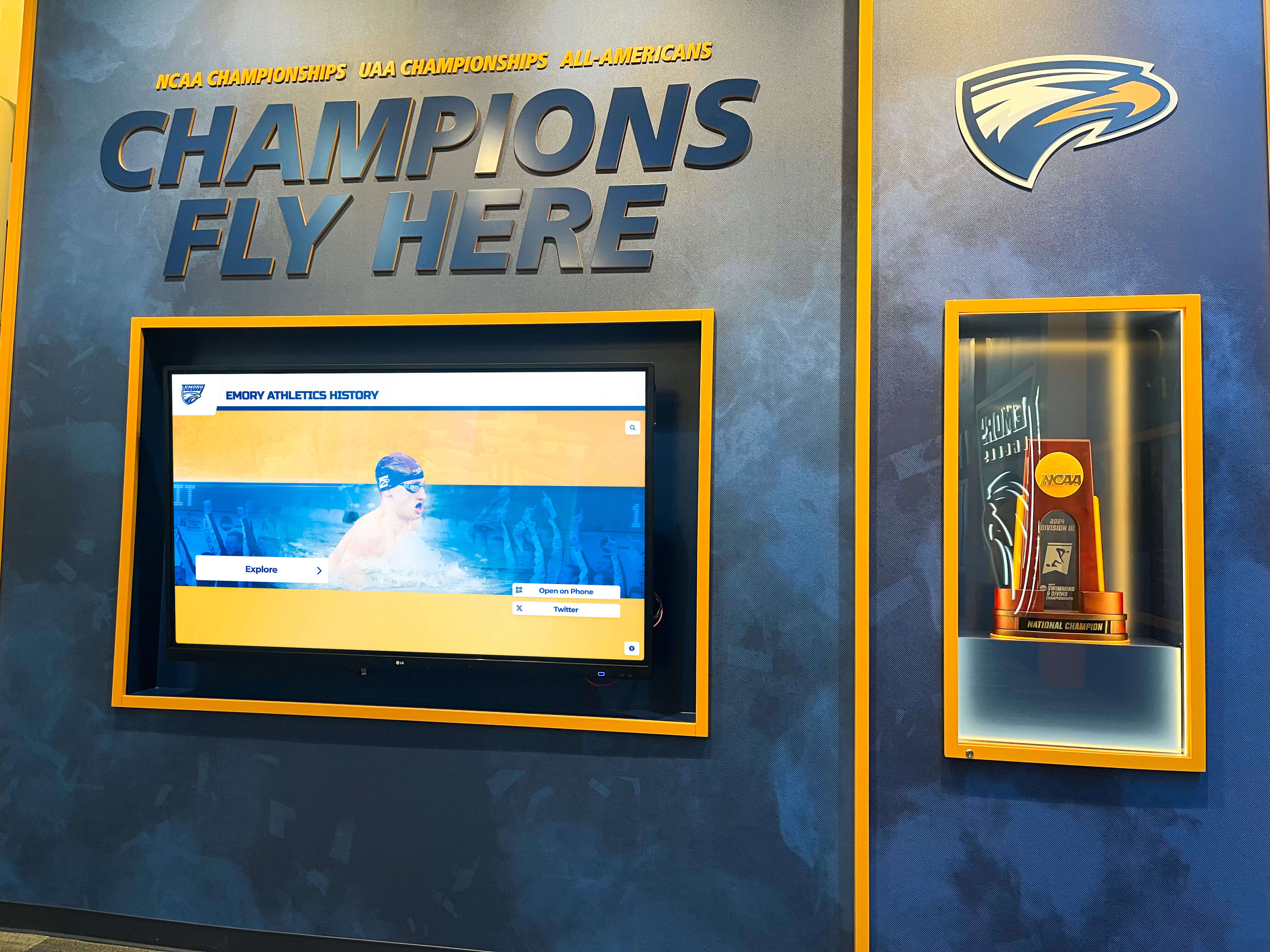
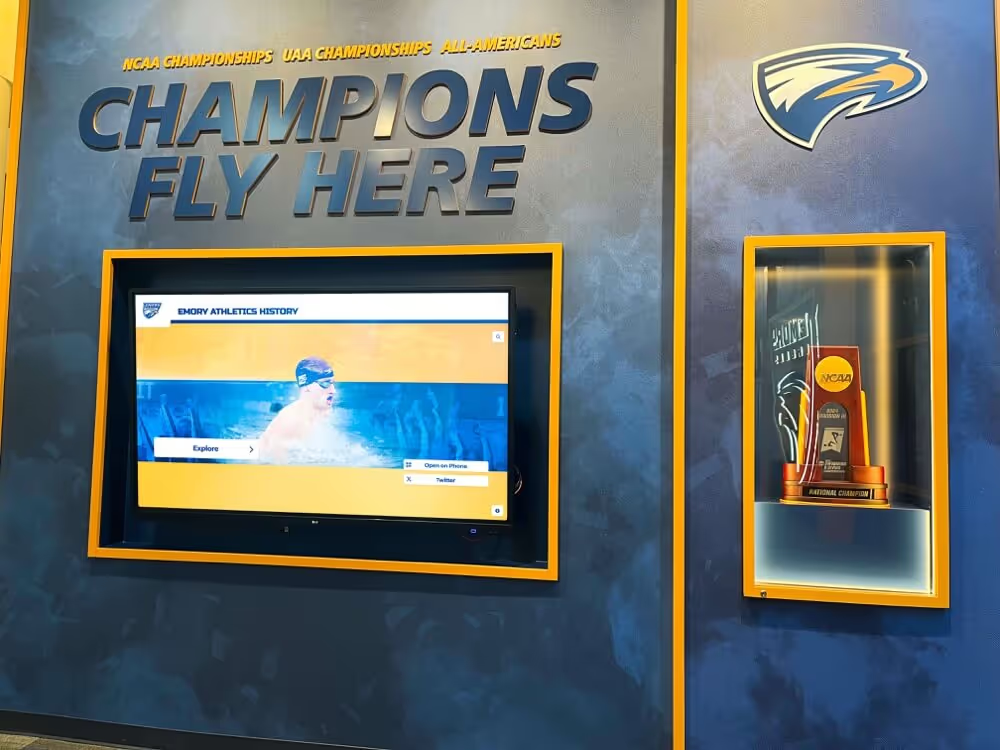
Championship hardware remains legible and presentable over decades when display lighting is designed around preservation targets rather than general corridor illumination standards
Light Exposure and Specific Memorabilia Categories
Retired Jerseys
Retired jerseys are typically the highest-profile light-sensitive items in a school’s athletic display. They combine fabric susceptible to dye fading, printing that may fade at a different rate than surrounding material, and significant institutional and emotional weight that makes physical deterioration especially visible to alumni, current athletes, and families.
Key considerations for retired jersey display:
- Mount away from direct sunlight exposure at any time of day, even brief periods
- Use LED case lighting at 150 lux or less where possible
- Apply UV-filtering glazing to the display case
- For wool or cotton jerseys — more common in programs with pre-1980s history — these thresholds are especially important, as natural fiber dyes from that era are often significantly less stable than contemporary synthetic alternatives
- Consider displaying high-resolution reproductions under standard conditions while originals rotate through archival dark storage
For schools developing athletic programs with growing recognition needs, athletic team room design and recognition space principles provide context on how lighting planning integrates with broader recognition environment design — decisions that affect preservation, visitor experience, and how recruits and current students engage with program history.
Championship Photographs and Team Photos
Team photographs are often the most historically complete records in a school’s athletic collection. A jersey can be replaced with a reproduction, but a 1967 championship team photograph with identifiable individual players has no substitute. The informational content of the photograph — every face, every name — is irreplaceable if the original is lost to light damage.
Light protection measures for photographic display:
- Avoid display of original color prints in any area receiving direct sunlight
- For hallway-mounted photographs in frames without UV-filtering glazing, retrofit frames with UV-filtering acrylic as a priority
- Consider displaying archival-quality inkjet reproductions in high-traffic or poorly controlled light environments while originals are stored in archival conditions
- For framed photographs displayed under fluorescent lighting, sleeve fluorescent tubes with UV filters as a minimum interim intervention pending fixture replacement
The long-term reliability of photographic recognition records is why many schools treat digitization as a complement to physical display: a digital record of a team photograph is immune to light damage regardless of what happens to the original print. Alumni legacy and digital wall approaches increasingly combine physical photographs managed under strict light protocols with digital displays that make the same recognition continuously accessible to alumni and community members regardless of where they are.
Championship Banners
Championship banners in gymnasiums and corridors face some of the most challenging light environments in a school building. Large windows, inconsistent artificial lighting, and extended daily exposure hours create cumulative conditions that standard fabric dyes struggle to survive intact over decades.
Practical protection strategies for championship banners:
- Request UV-stable ink specifications for any new banner production; modern banner printing can use significantly more light-stable inks than historical equivalents if specified at order time
- For existing banners showing early fading, photograph them at full resolution while color remains and create archival digital records before further loss occurs
- Gymnasium banners hung near skylights or clerestory windows often receive high UV loads on specific areas while adjacent areas remain protected — uneven fading of this kind is difficult to reverse and worth preventing at installation planning
For programs building comprehensive recognition systems that connect physical awards ceremonies to ongoing display, high school awards ceremony ideas illustrate how the recognition produced at ceremonies connects to the institutional display collection — each season producing new items that will need the same light management applied to existing artifacts.
Signatures and Signed Memorabilia
Autographed items — signed balls, framed photographs with athlete signatures, signed championship prints — combine the light sensitivity of the underlying item with ink dyes that often fade faster than the substrate they are applied to.
Ballpoint pen signatures use oil-based inks with reasonable light stability. Felt-tip and Sharpie-type signatures use solvent-based or water-based inks that are significantly more UV-sensitive. Within 5–10 years of display under unfiltered fluorescent lighting, some felt-tip signatures become noticeably lighter — readable but no longer bold — a change that is permanent and continues to accelerate with ongoing exposure.
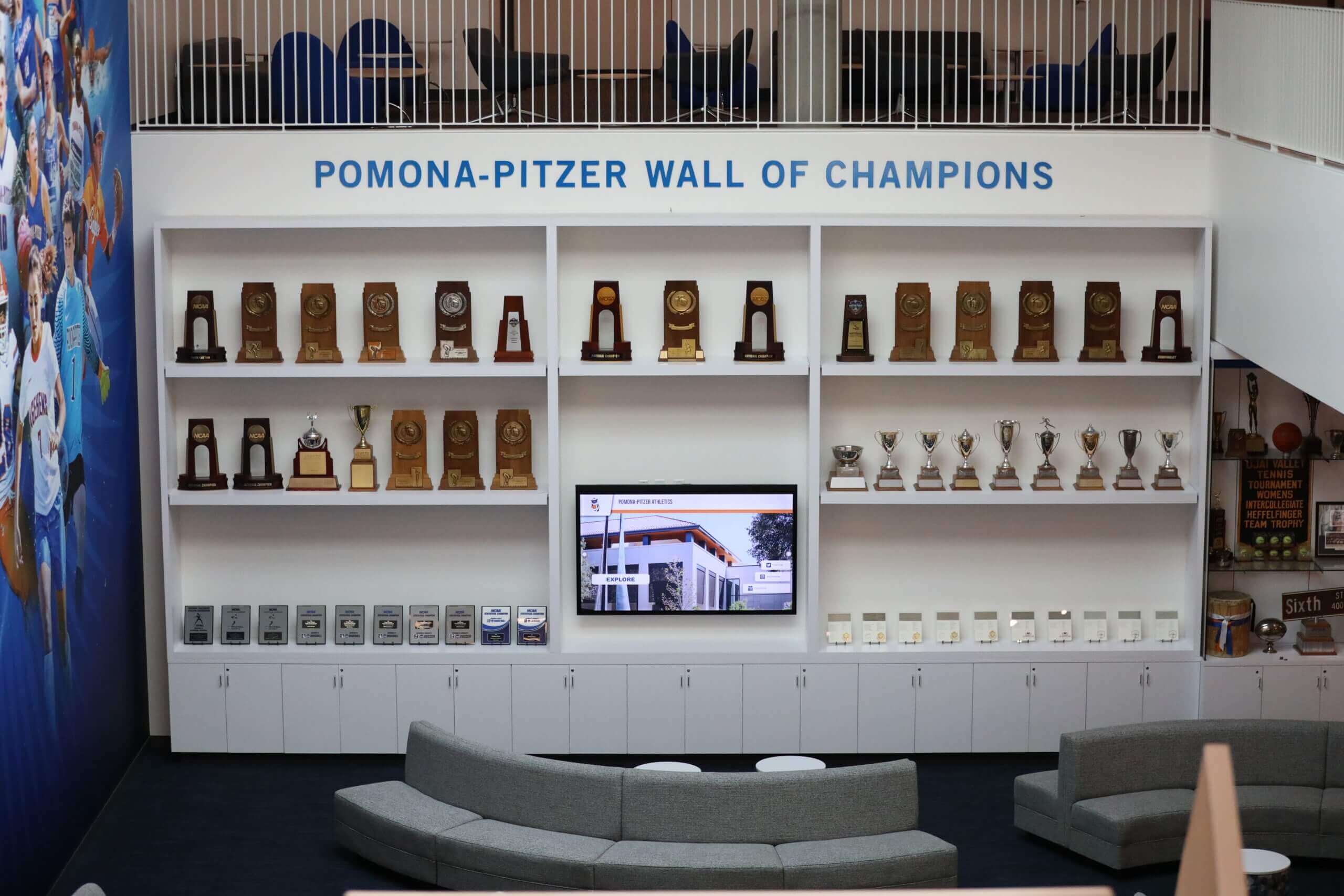
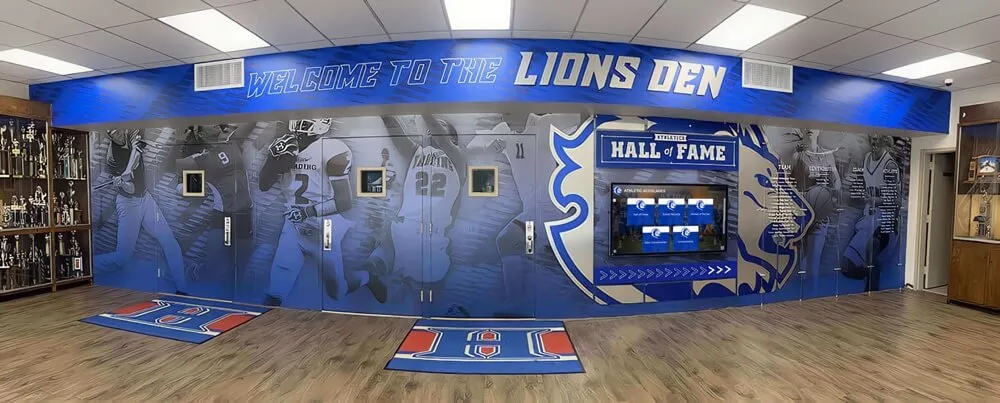
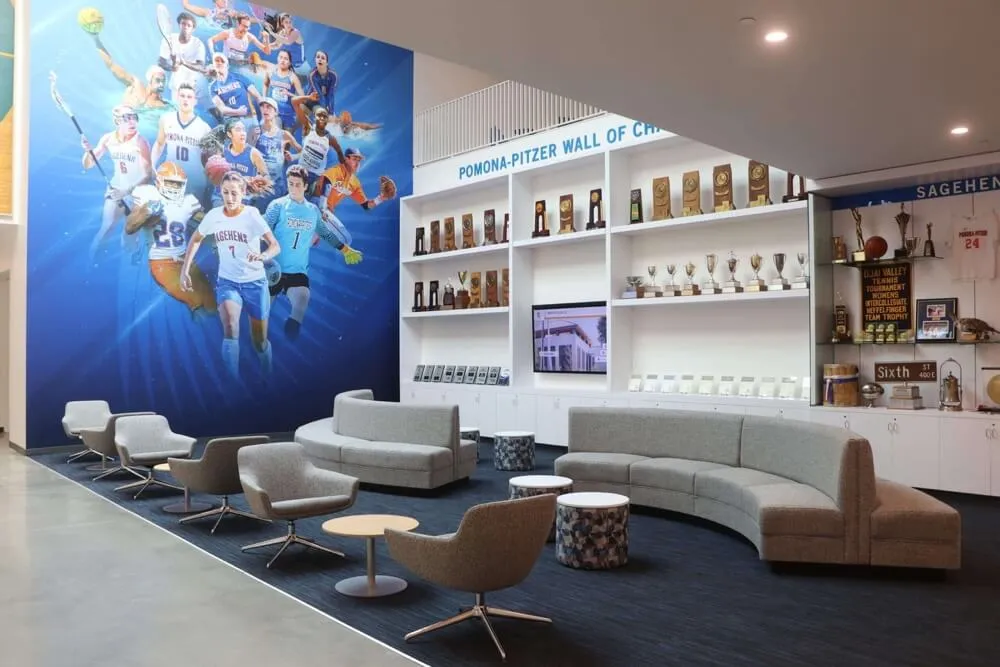
Lounge-style recognition environments with controlled lighting represent a significant improvement over standard corridor display conditions for preserving light-sensitive memorabilia over the long term
Building a Light Exposure Policy for Your Athletic Department
A written policy standardizes decisions that would otherwise be made inconsistently as staff turns over. Even a one-page document covering the key decisions reduces the risk that a future athletic director or facilities coordinator unknowingly changes display conditions in ways that accelerate damage to irreplaceable items.
Core Elements of an Athletic Memorabilia Light Policy
Classification of items by sensitivity tier:
- Tier 1 (highest sensitivity): original pre-2000 color photographs, natural fiber jerseys of historical significance, signed documents and certificates, founding-era championship hardware with original finish
- Tier 2: post-2000 color photographs, synthetic jerseys and banners, signed prints and quality reproductions
- Tier 3: metal trophies and hardware, plastic or resin items, laminated plaques
Illuminance targets by tier: Define maximum lux levels for each tier based on your current building conditions. Specific thresholds may differ from published recommendations based on how your building is lit and arranged; what matters is that the decision is documented and consistently applied year over year.
UV filtration standards: Specify whether UV-filtering glazing is required for cases holding Tier 1 or Tier 2 items. Document the current filtration status of each case so future decisions can build on institutional knowledge rather than starting from scratch with each new staff member.
Rotation schedule: Define the maximum continuous display period for Tier 1 items. Document what archival storage conditions are available in your building and how items are checked out of and returned to storage.
New display approval: Establish a simple review step before any new item is placed in a display case or mounted in a hallway — confirming it is classified, assigned to an appropriate display location, and given a rotation date if it falls in Tier 1 or Tier 2.
For schools working toward comprehensive alumni recognition systems, the largest alumni networks and community-building approaches used by leading universities illustrate how consistent institutional practices — including physical memorabilia care — contribute to the credibility and longevity of recognition programs that alumni actively engage with across decades.
Schools reviewing how football trophies and awards are displayed across athletic programs can find additional context in football trophies and award display practices, which covers how athletic hardware and digital recognition formats complement each other in high-profile display environments.
The Case for Digital Preservation Alongside Physical Protection
Physical light exposure protocols protect what is currently on display. They do not address the informational loss that has already occurred in existing collections — photographs already faded, signatures already lighter than their original state — and they cannot guarantee permanent physical preservation regardless of how carefully conditions are managed going forward.
This is why schools serious about long-term recognition integrity treat digital preservation and physical protection as parallel disciplines rather than alternatives.
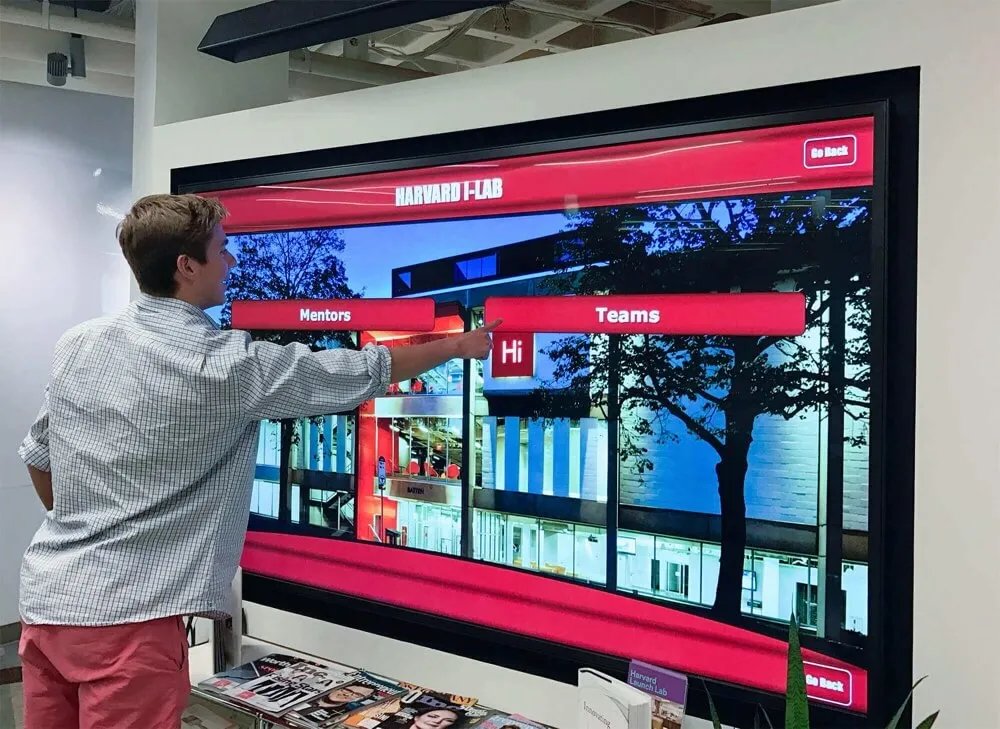
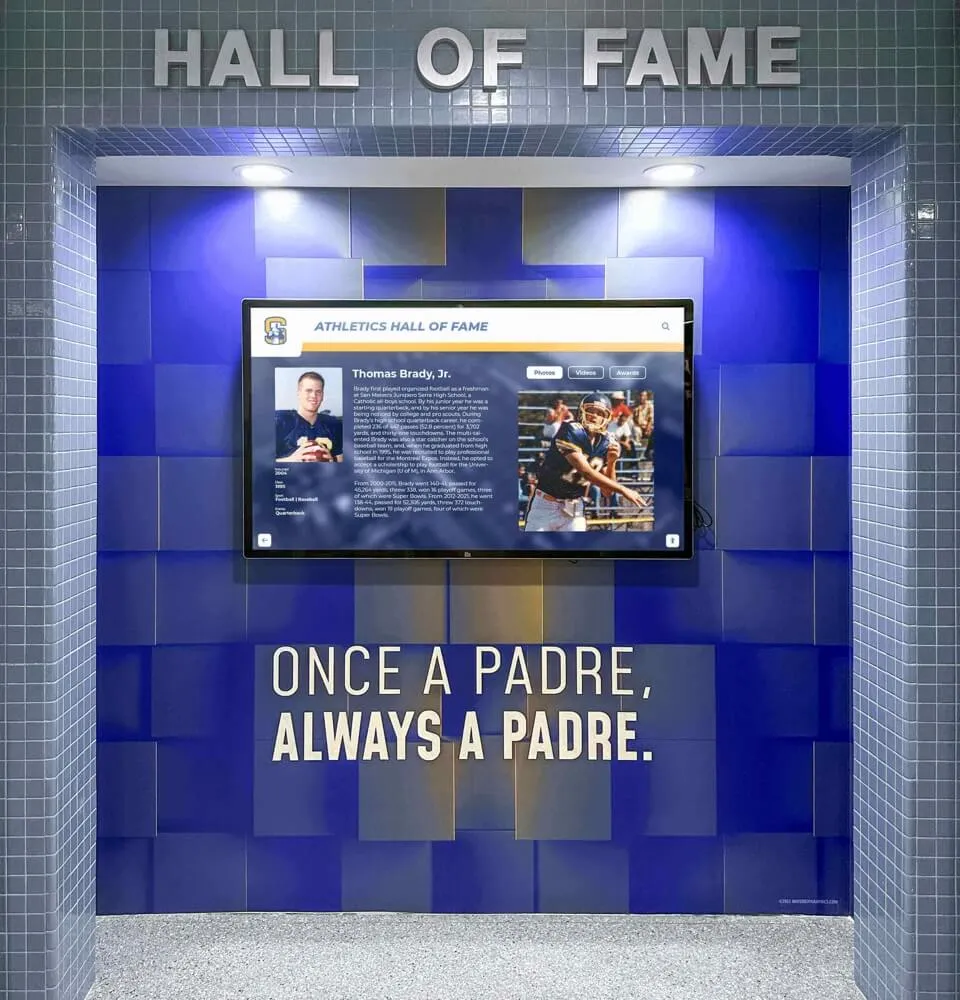
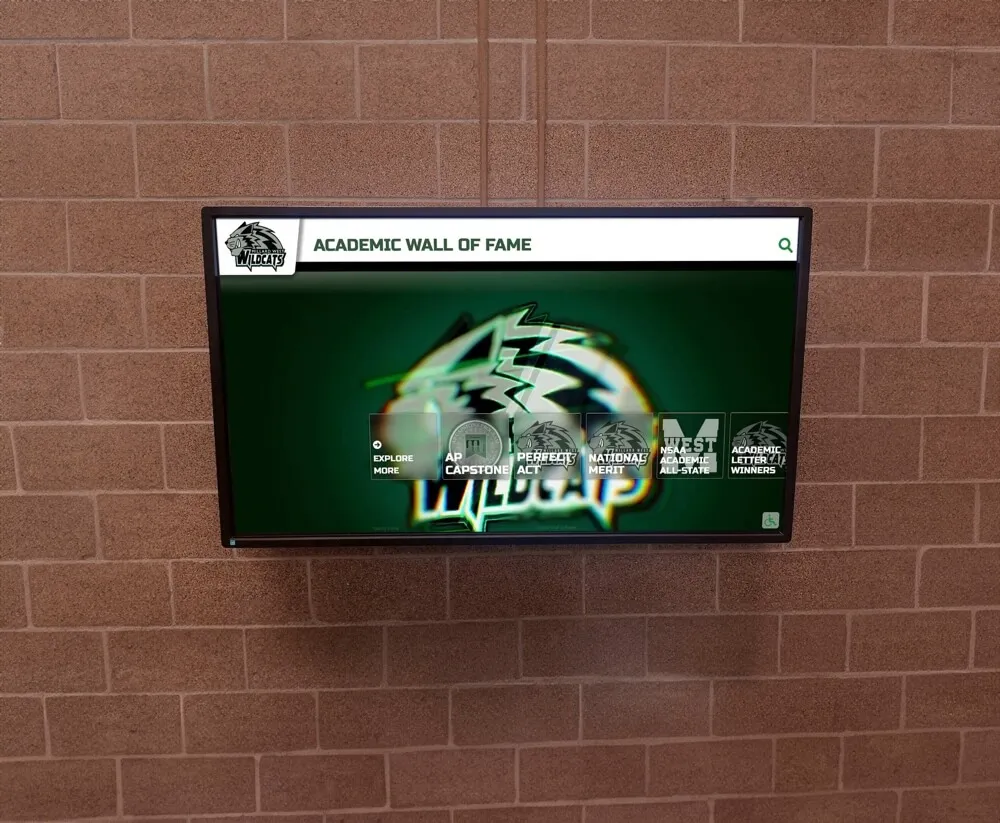
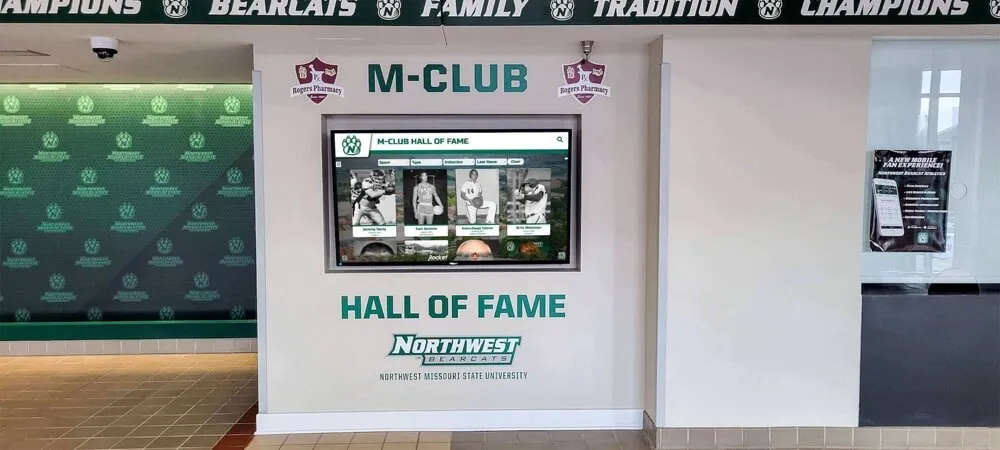
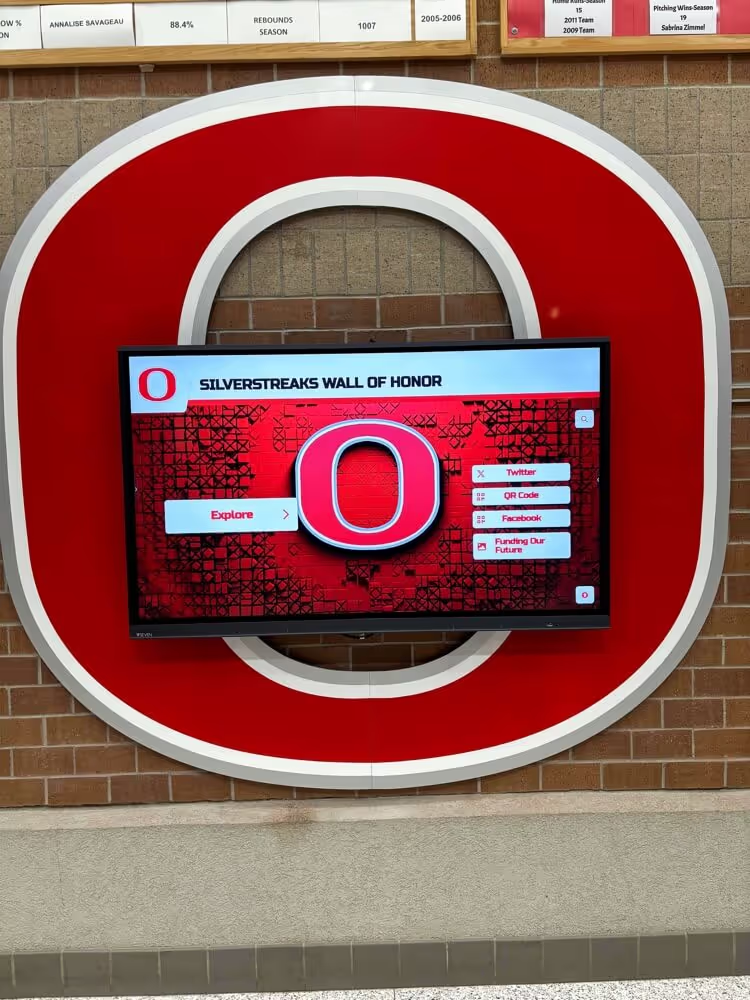
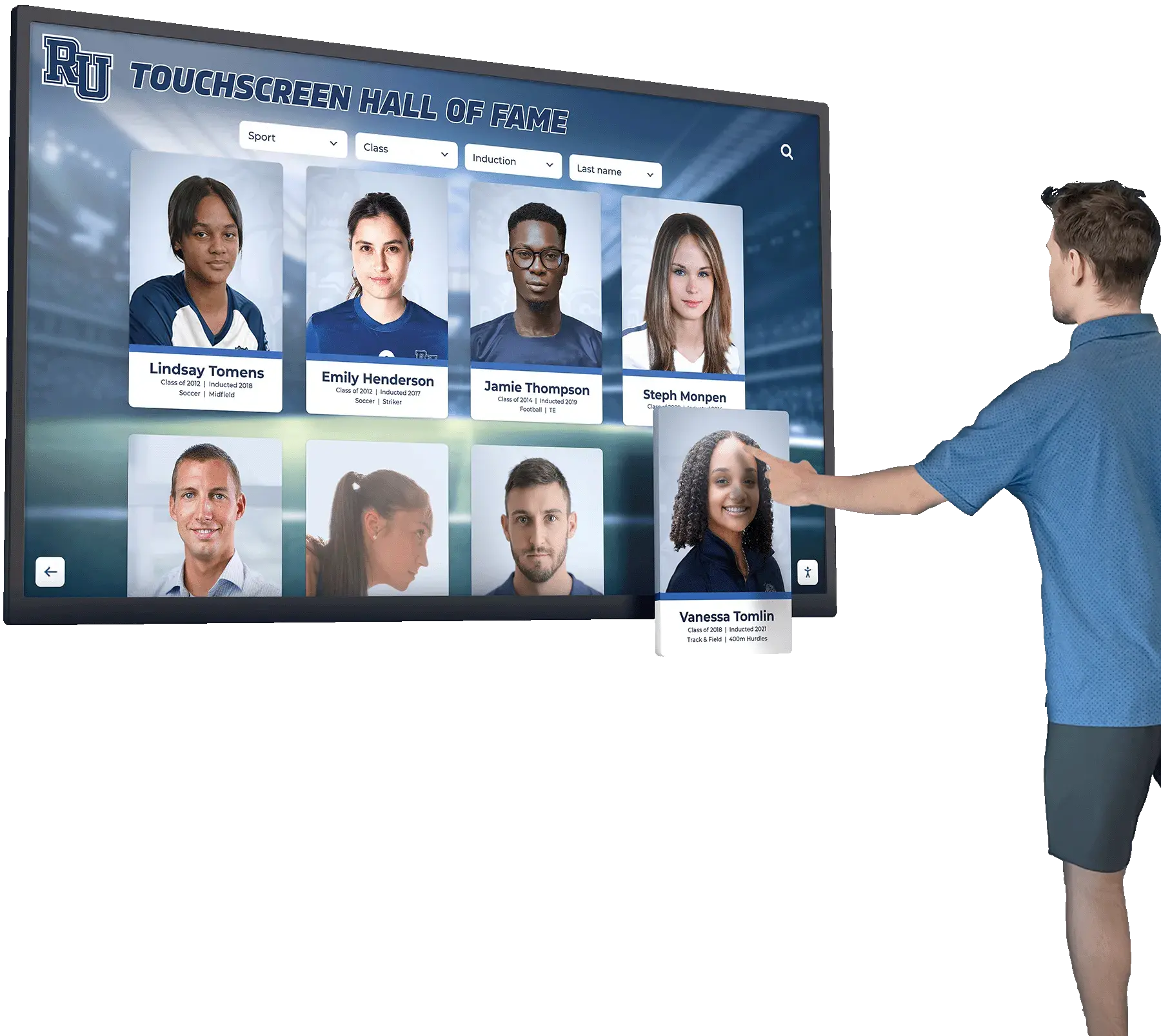
A cloud-managed digital trophy case or hall of fame provides capabilities that physical light management cannot replicate:
Immunity to photochemical damage: A digitized team photograph does not fade. A scanned championship certificate does not yellow. The record of what a physical artifact represented persists with full fidelity regardless of what happens to the original under any light conditions.
Documentation at peak condition: Digitizing at the best available current condition captures a reference record before further light damage occurs. For items already showing some fading, this creates at minimum a reference standard that helps future staff understand what the original looked like.
Unlimited display capacity without exposure risk: A digital system can display every championship, every team photograph, every retired jersey number, and every signed document from a school’s entire history simultaneously — without any item accumulating a single additional lux-hour of light exposure.
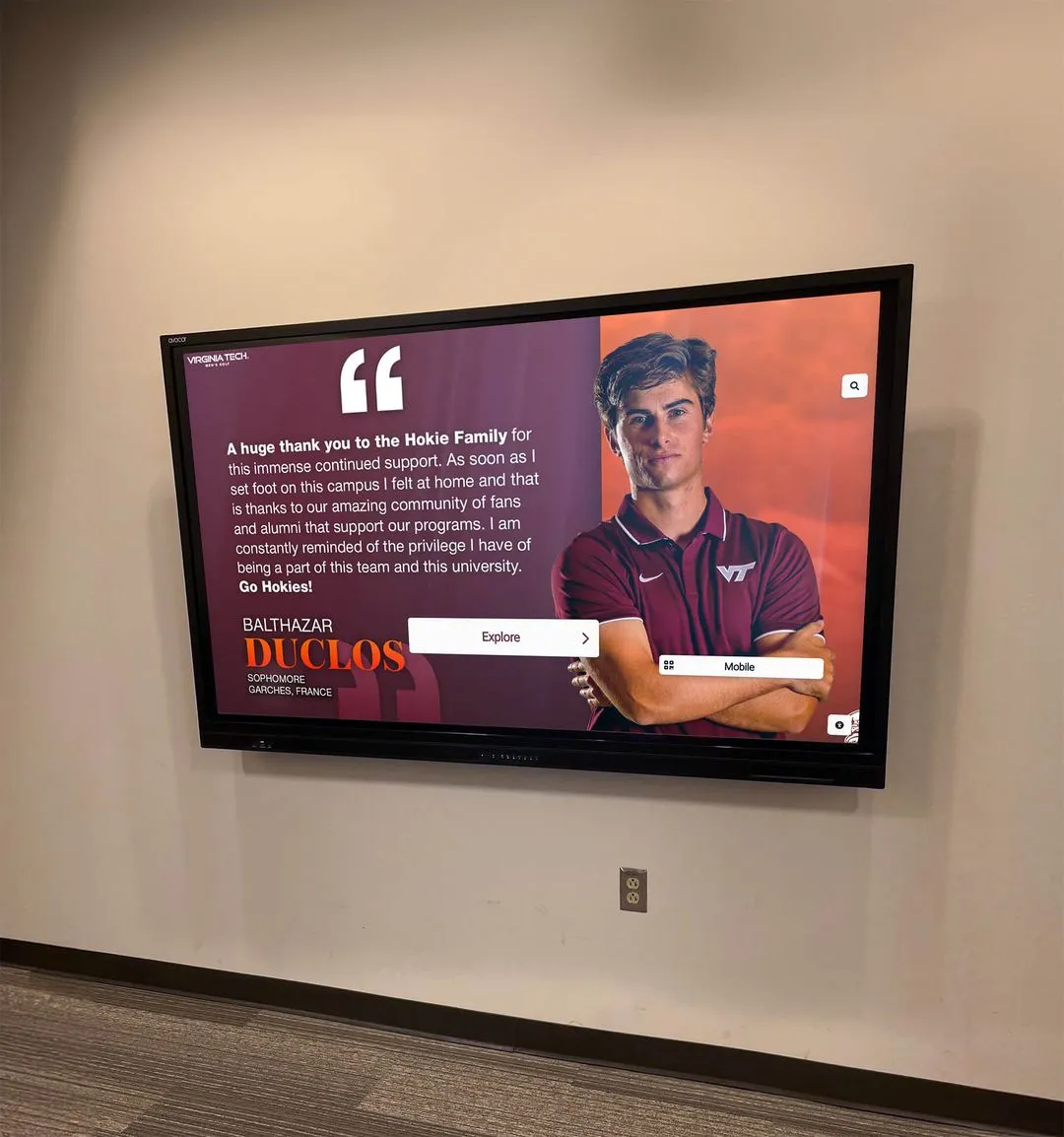
QR code mobile access: For items rotated to dark storage under light exposure protocols, a QR code on the display case allows visitors to access the full digital record of the item on their smartphone — maintaining community access to recognition content even when physical originals are resting.
Remote content management: Athletic directors and archives staff update digital records from any location, add new achievement entries within minutes of a ceremony, and schedule content for future publishing dates without physical access to display hardware.
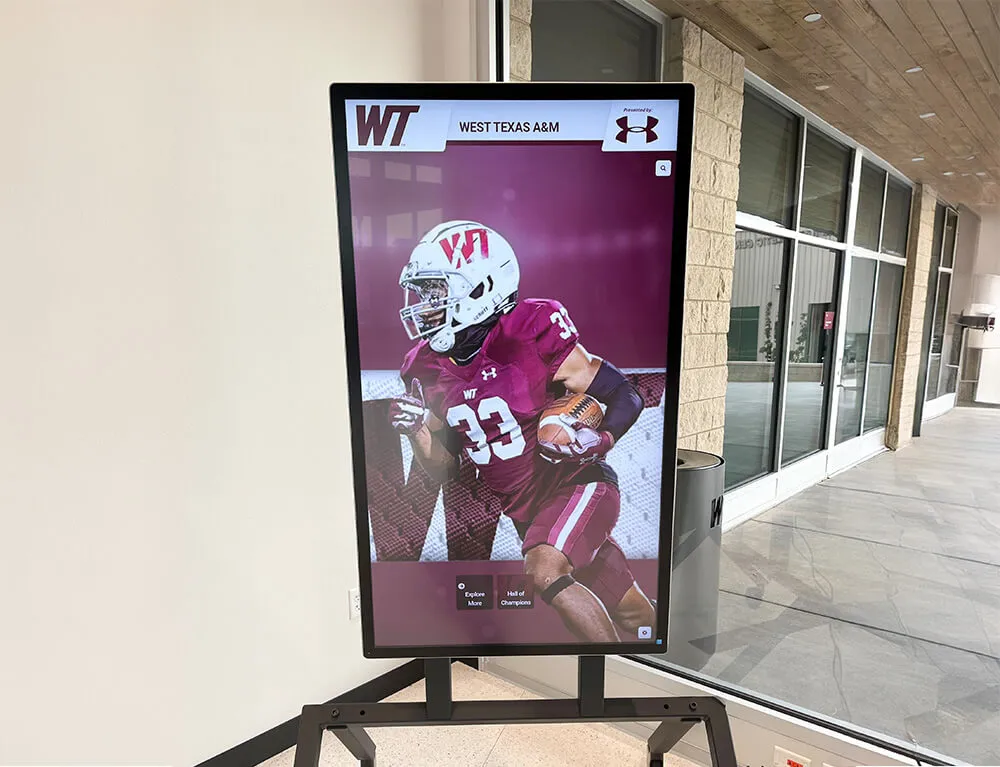
ADA WCAG 2.1 AA compliance: Digital displays built to accessibility standards extend recognition to all visitors, including those for whom physical trophy cases at standard viewing heights present access barriers — serving the full community that physical displays cannot always reach.
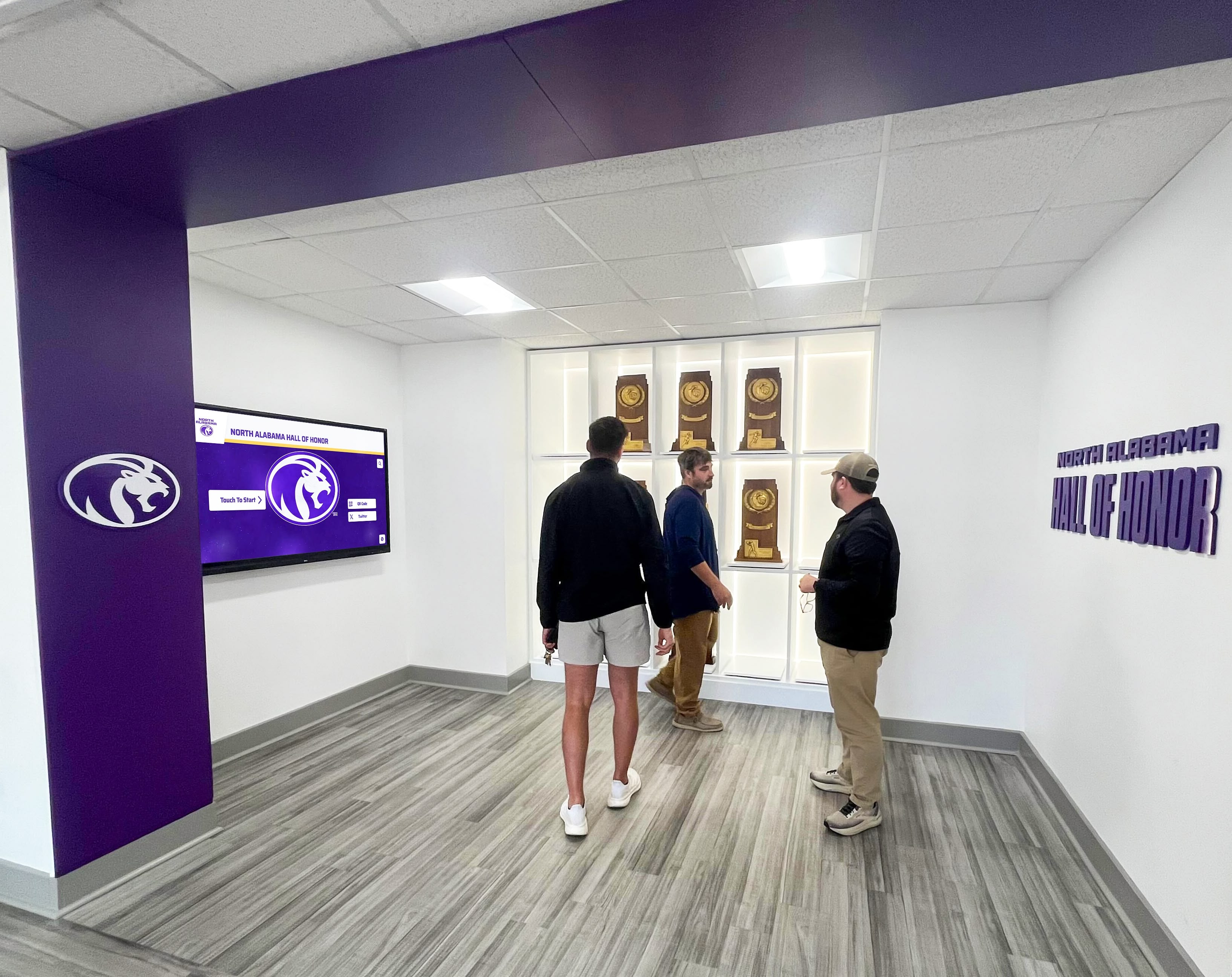
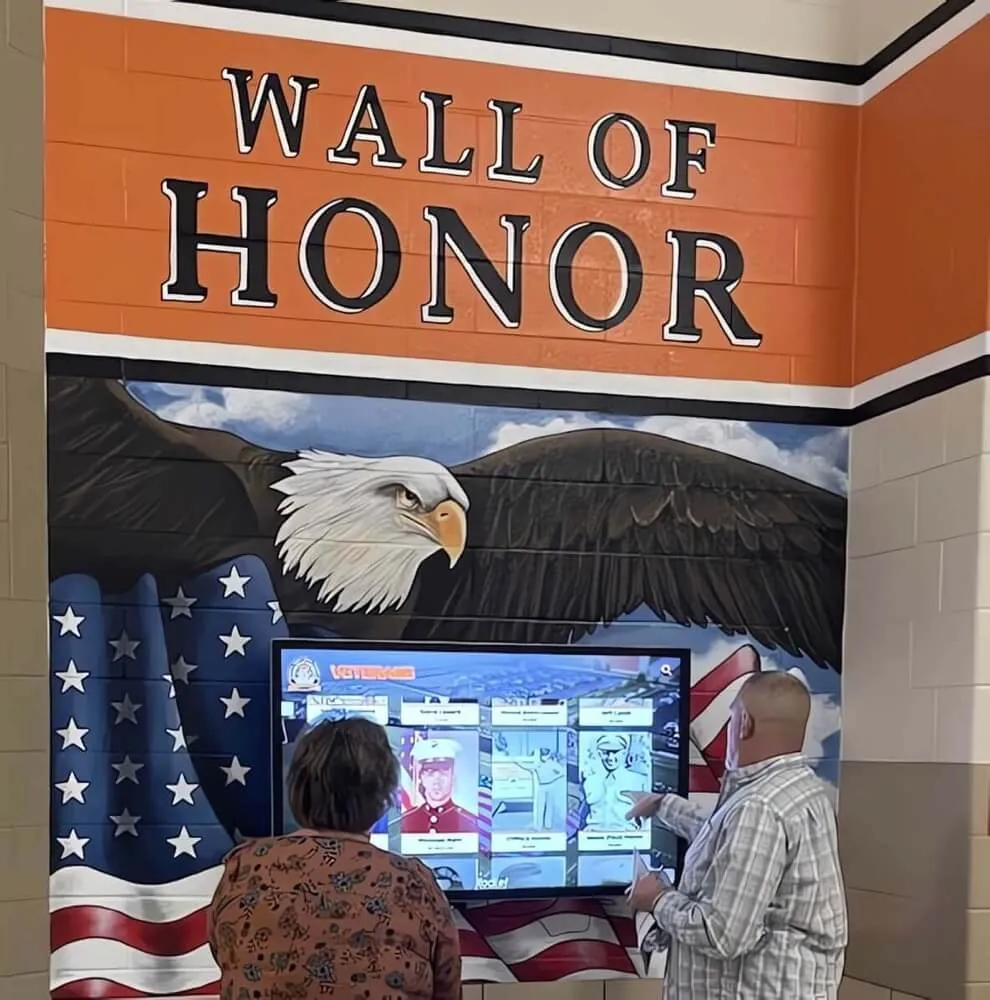
Staff engaged with recognition collections benefit from documented light exposure protocols — institutional knowledge about display conditions rarely survives staff transitions without written policy backing it up
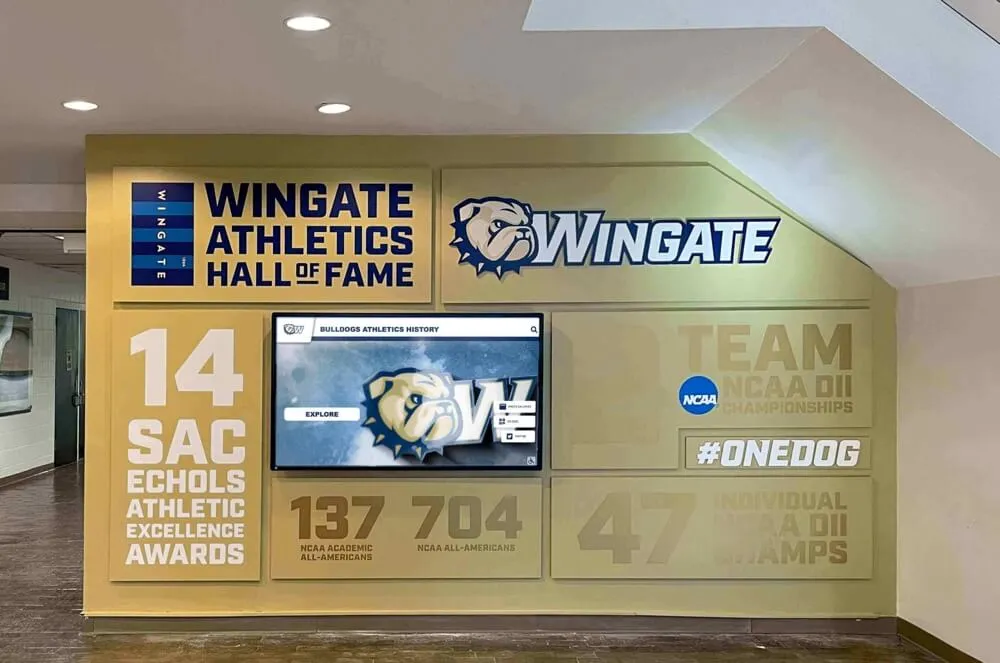
Schools exploring digital recognition as a complement to physical trophy case management can schedule a demonstration to see how a cloud-managed system integrates with existing physical displays and provides archival-quality digital records of the memorabilia your light exposure program protects.
Seasonal Light Exposure Considerations for Schools
Academic calendars create predictable shifts in natural light conditions that affect display areas in ways facilities and athletic staff can plan around rather than react to.
| Season | Natural Light Risk | Artificial Light Factor | Recommended Action |
|---|---|---|---|
| Late summer / early fall (Aug–Sep) | High — longer days, high sun angle; south-facing cases receive more direct light | School reopening; cases may be relighted after summer break | Assess window film performance; check timer settings on case lighting; inspect previously faded items |
| Fall transition (Oct–Nov) | Declining — shorter days, lower sun angle | Normal school hours; consistent artificial exposure resumes | Good time for comprehensive light assessment while conditions are stable and predictable |
| Winter (Dec–Feb) | Lower natural light overall; low sun angle can send direct light deeper into corridors | Extended artificial lighting hours during early-dark afternoons | Timers most effective at limiting off-hours exposure; UV from fluorescents persists regardless of daylight |
| Spring (Mar–May) | Increasing — sun angle rising; direct sun paths shift earlier in the day | Consistent artificial exposure | Reassess any cases that were outside direct sun in winter — solar path changes may expose them now |
| Summer (Jun–Jul) | Peak UV — high sun angle, longest days; vacant buildings may leave lighting on unmanaged | Summer lighting often runs on default schedules with no occupancy adjustment | Audit timer settings before school closes; consider case lighting off during extended summer closures |
Frequently Asked Questions
What types of light damage athletic memorabilia the most? Ultraviolet (UV) radiation causes the most significant chemical damage — it breaks down dye and pigment bonds in fabrics, photographs, and paper documents. Direct sunlight carries the highest UV load of any common display environment source, followed by unfiltered fluorescent lighting. Visible light at high illuminance also causes fading through photochemical processes even when UV is filtered, so both UV content and overall illuminance matter in practice.
What lux level is recommended for displaying athletic jerseys? Preservation literature commonly cites 50–150 lux for light-sensitive natural fiber textiles and 150–200 lux for more stable synthetic fabrics. These are general guidelines, not fixed standards — the appropriate level depends on the materials involved and how many hours per day the display is illuminated. Lux-hours (illuminance multiplied by display hours) better represents total light dose than a single illuminance reading.
How do I know if my trophy case lighting is damaging memorabilia? A basic lux meter measures illuminance inside the case and can be compared against the guidelines in this article. UV content requires a separate UV meter or knowledge of your fixture type — most LED fixtures produce minimal UV, while standard fluorescent tubes typically produce meaningful UV output without specific filtering. If you observe fading that has occurred since items were placed on display, light exposure is the most likely primary cause.
Should I display the original jersey or a reproduction? For jerseys of significant historical or emotional importance — retired numbers, championship-era game jerseys, items from programs no longer active — displaying a high-quality reproduction under standard conditions while the original rotates through archival dark storage is the approach that best protects both the artifact and the recognition function it serves. Reproductions should be labeled as such, which does not diminish their role in communicating program history.
Does UV-filtering glass completely protect memorabilia from light damage? UV-filtering glass and acrylic significantly reduce UV exposure — typically by 98–99% — which addresses the most chemically damaging component of light. It does not eliminate fading from visible light. Items displayed behind UV-filtering glazing under high illuminance for extended hours will still accumulate photochemical damage, though at a slower rate than under unfiltered conditions. UV filtration works best when combined with appropriate illuminance levels and rotation protocols for the most sensitive items.
How often should championship photographs be rotated to dark storage? Rotation frequency depends on display conditions. Under good conditions (LED lighting at ≤150 lux, UV-filtered case glazing, no direct sunlight), color photographs from the 1980s and 1990s may sustain display periods of 6–12 months before rest is appropriate. Under poorer conditions — unfiltered fluorescent lighting, higher illuminance, any direct sun — that period should be shorter. The specific material, its current condition, and its significance all inform the schedule; a qualified conservator can provide guidance for items of high historical value.
What is the best lighting type for a school trophy case? LED lighting is generally the preferred choice for trophy case and athletic display area lighting from a preservation standpoint. LEDs produce very low UV output compared to fluorescent or halogen alternatives, are available in a wide range of color temperatures, and can be specified at illuminance levels appropriate for light-sensitive materials. Pairing LED fixtures with UV-filtering case glazing provides the most complete available protection in a standard school display installation.
How does digital recognition reduce light exposure risk for memorabilia? A digitized record of a jersey, photograph, or signed document accumulates no further light damage after digitization, regardless of what display conditions the original is subsequently held under. Schools that digitize their recognition collections can display the full visual record of every artifact on an interactive screen — with no UV exposure, no fading, and no lux-hour accumulation — while original items rest in dark archival storage. This is the primary way digital systems complement physical light exposure management rather than competing with it.
Who is responsible for light exposure management in a school athletic department? Light exposure management typically works best with joint ownership. Athletic directors and recognition staff are well-positioned to classify items by sensitivity, maintain rotation schedules, and flag items showing early fading. Facilities directors own fixture selection and timer programming. Together, with input from archives staff or booster club leadership for historically significant collections, these groups can implement a consistent protocol that does not depend on any single person’s institutional memory.
Protect Your Recognition Record Beyond the Display Case
Rocket Alumni Solutions builds cloud-managed digital trophy cases and halls of fame for schools nationwide — unlimited recognition capacity, ADA WCAG 2.1 AA compliant touchscreens, QR code mobile access, and remote content management that preserves every championship, every name, and every photograph in a format immune to light damage. See how schools complement physical memorabilia care with digital records that never fade.
Book A DemoLight is one of the most democratic forces in a trophy case environment: it touches everything, affects nothing immediately, and erases significance gradually in ways that are invisible until the damage has already become permanent. Jerseys that defined a program’s identity, photographs that gave names to championship rosters, signatures that connected current students to celebrated alumni — all are subject to the same photochemical laws, and all can be protected with approaches that require more policy discipline than capital expenditure.
The athletic memorabilia light exposure guidelines in this document give facilities staff, athletic directors, and archives personnel a shared vocabulary and a practical starting point for decisions about fixture type, case glazing, illuminance targets, and rotation schedules. Pairing that physical management discipline with digital preservation — digitizing the informational content of every significant artifact before further light damage occurs — ensures that what cannot be kept perfect in glass indefinitely is preserved in a format that does not age.