



Athletic hall of fame programs represent powerful institutional traditions that celebrate achievement, preserve athletic legacy, and create aspirational examples for current student-athletes. When schools systematically honor athletic excellence through permanent recognition—from championship teams to individual record-holders and coaching legends—they strengthen community identity while reinforcing values of dedication, teamwork, and perseverance.
Yet many school administrators struggle to establish or modernize athletic hall of fame programs that truly resonate. Recognition often defaults to outdated trophy cases with limited space, selection processes that lack transparency, or static plaques that fail to tell complete athletic stories. Meanwhile, countless deserving athletes, coaches, and contributors go unrecognized, and existing displays become invisible to current students.
This comprehensive guide provides school administrators with evidence-based strategies for establishing new athletic hall of fame programs or revitalizing existing ones through modern approaches that celebrate diverse achievements, engage current students, and create lasting institutional pride.
Effective athletic hall of fame programs extend beyond simply identifying top performers—they create systematic approaches that honor excellence across multiple sports, recognize various contribution types, and use modern technology to make recognition visible and engaging. Schools that excel at athletic recognition create environments where past achievement inspires current excellence while strengthening connections between alumni and current programs.

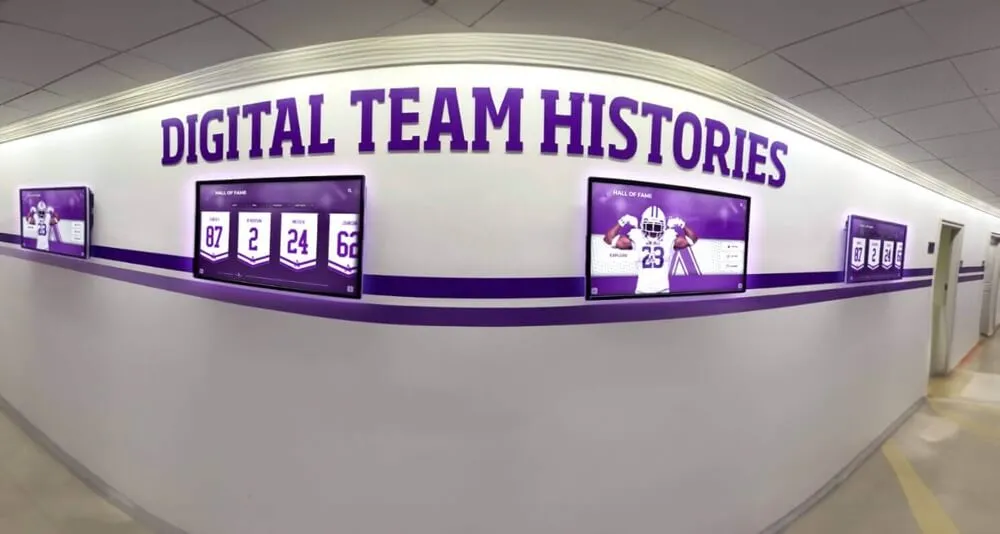
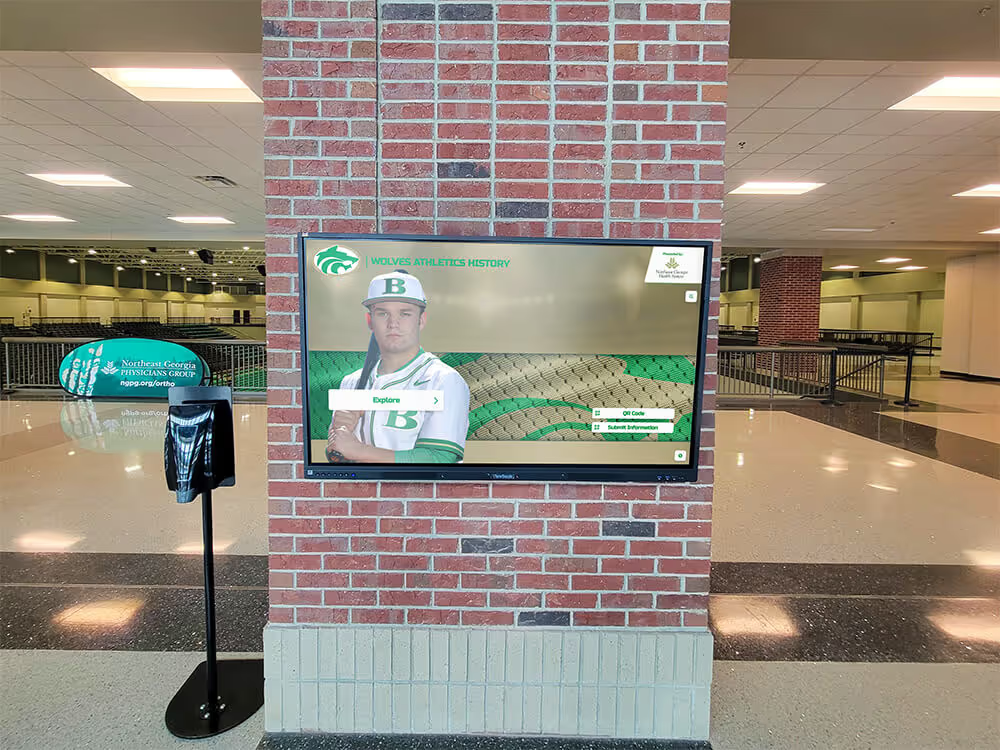
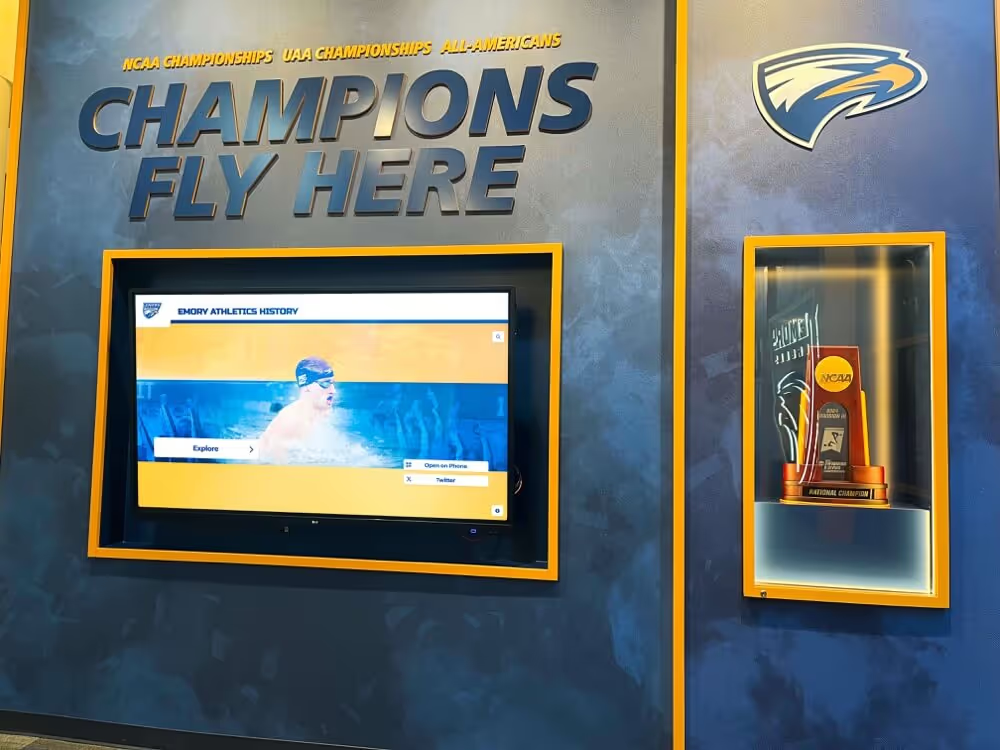
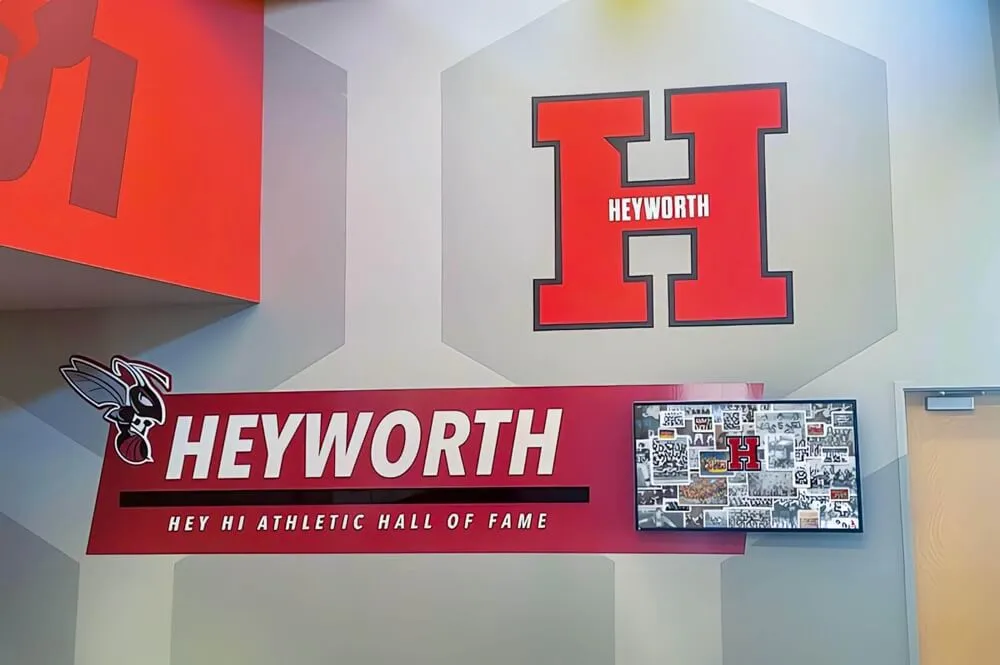
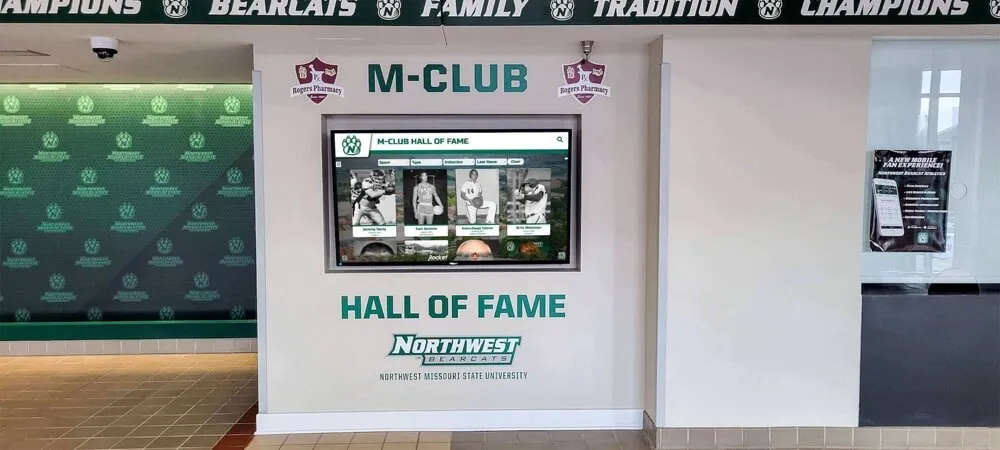
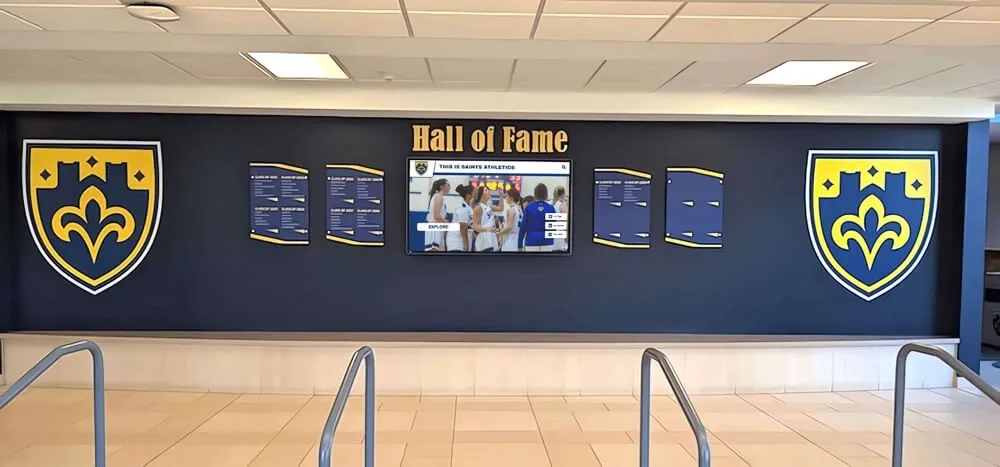
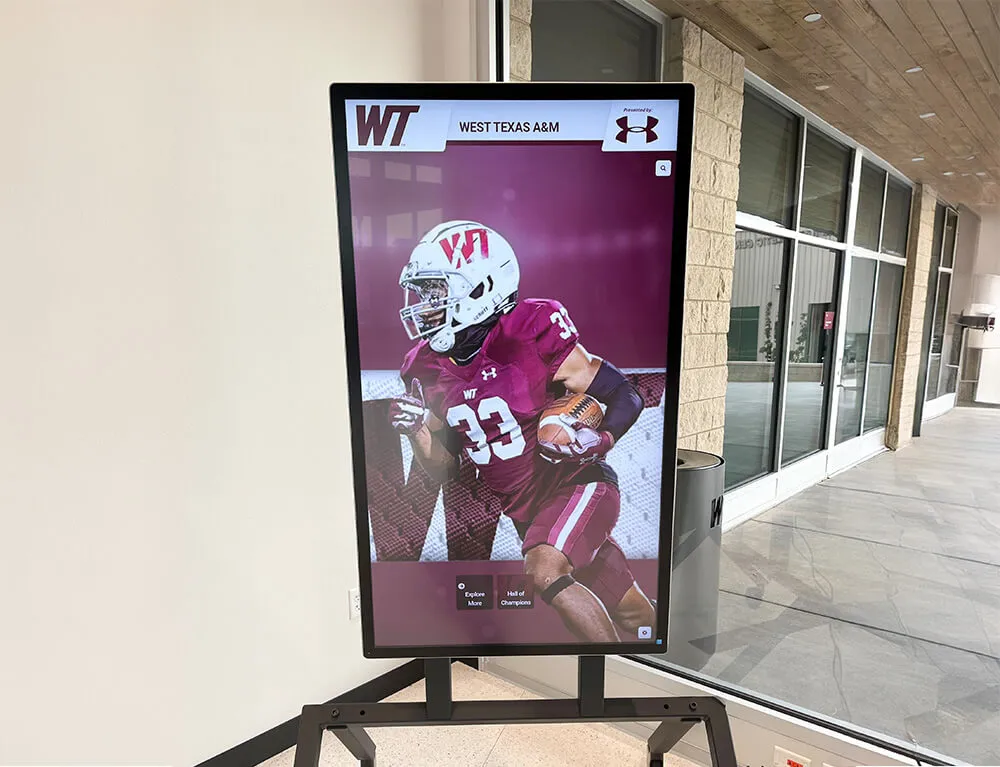
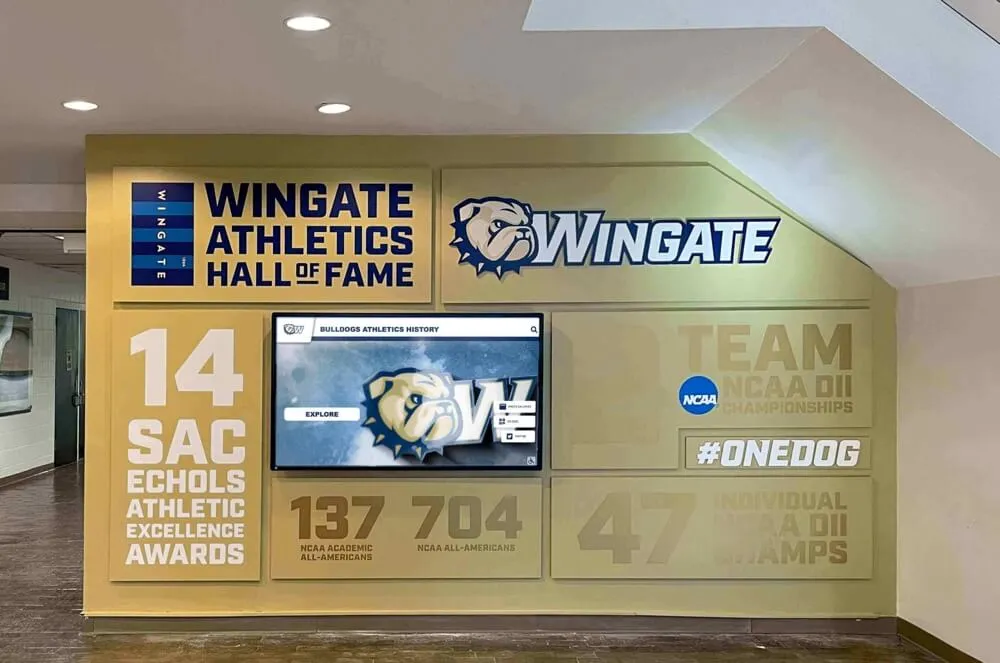
Modern athletic hall of fame displays preserve athletic legacy while creating engagement for current students and visitors
Why Schools Need Athletic Hall of Fame Programs
Understanding the broader impact of athletic recognition helps administrators justify program investment and secure stakeholder support.
Building Institutional Pride and Identity
Athletic hall of fame programs strengthen school culture in measurable ways:
Community Connection and Alumni Engagement
- Recognition creates tangible touchpoints connecting alumni to current programs
- Former athletes demonstrate continued investment when their contributions receive lasting acknowledgment
- Athletic legacy displays become gathering points during reunions and homecoming events
- Recognition programs provide conversation starters between generations of athletes
According to research from the National Federation of State High School Associations, schools with established hall of fame programs report significantly higher alumni engagement rates and increased participation in booster activities. Athletic recognition creates the foundation for stronger financial support and volunteer involvement.
Current Student-Athlete Motivation
- Visible recognition of past excellence creates aspirational goals for current athletes
- Hall of fame criteria provide clear standards defining program excellence
- Recognition programs reinforce that dedication and achievement receive lasting acknowledgment
- Athletic history context helps student-athletes understand their place in program legacy
Schools with prominent athletic recognition programs consistently report higher student-athlete retention rates and increased commitment to training and skill development.
Institutional Memory Preservation
Athletic hall of fame programs serve essential archival functions:
Historical Documentation
- Permanent records of championship seasons and record-breaking performances
- Preservation of coaching tenures and program development milestones
- Documentation of athletic facilities evolution and program growth
- Archives of team rosters, statistics, and achievement documentation
Many schools discover that without systematic recognition programs, athletic history becomes lost as people retire, documents deteriorate, and institutional knowledge fades.
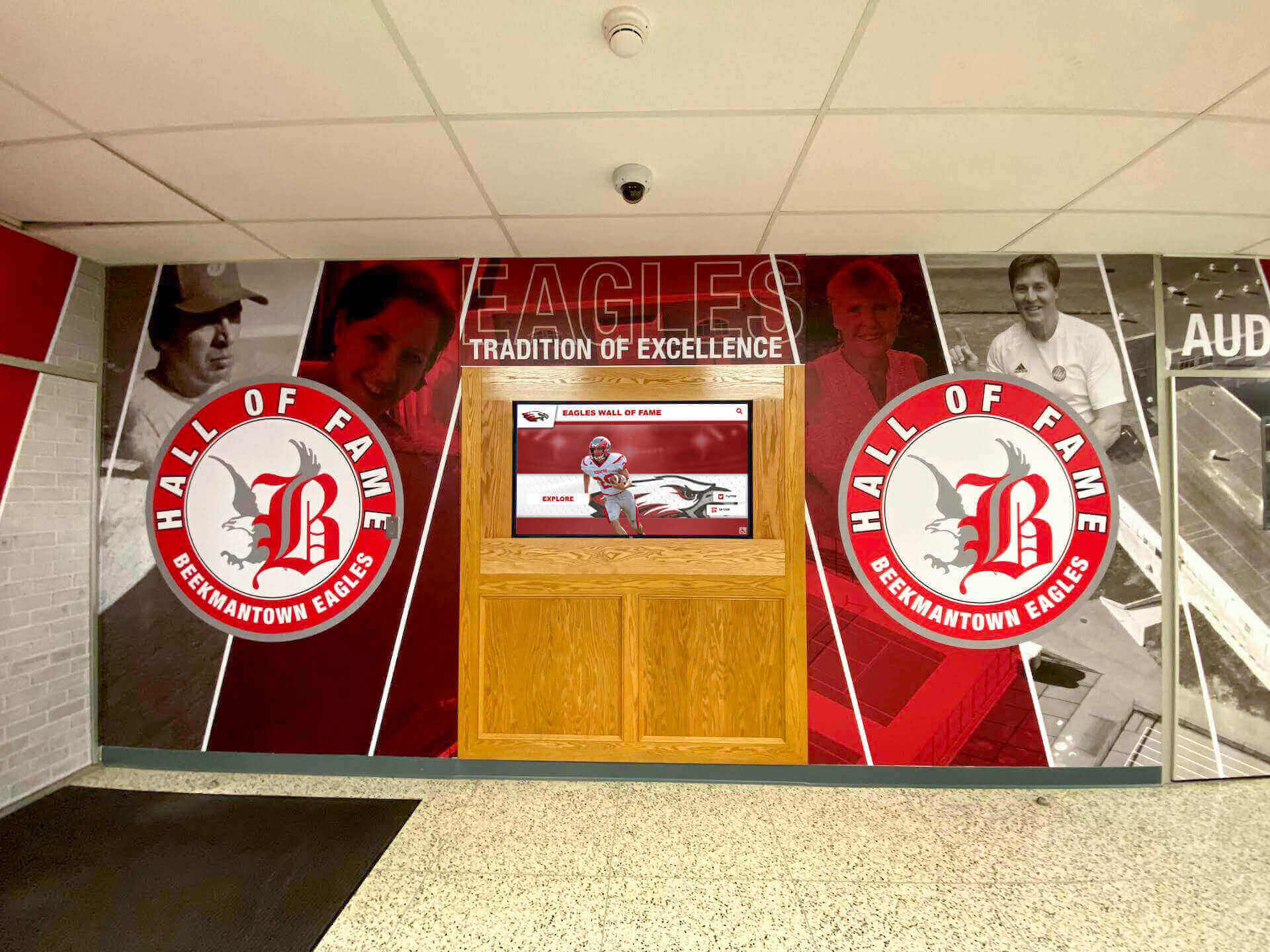
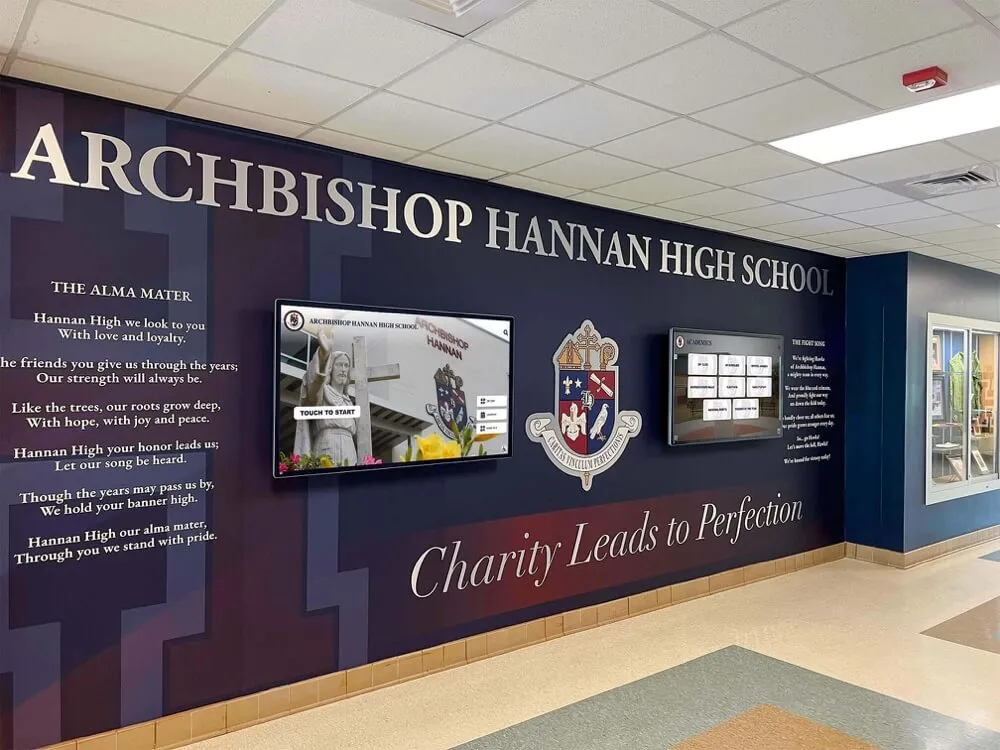
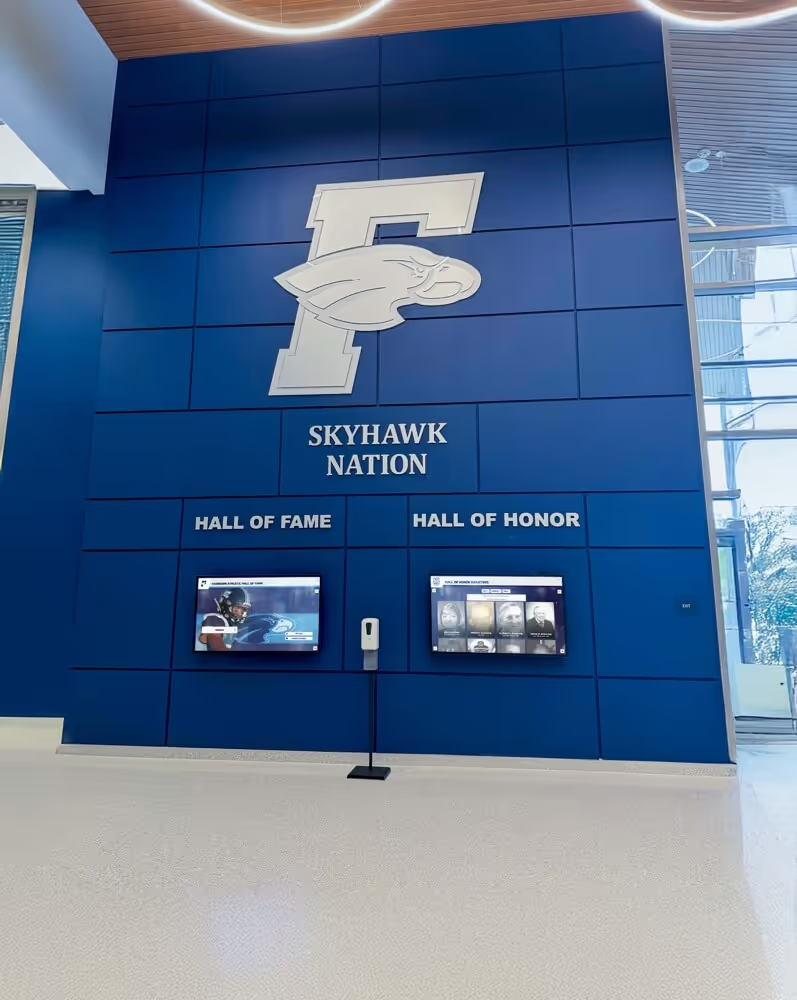
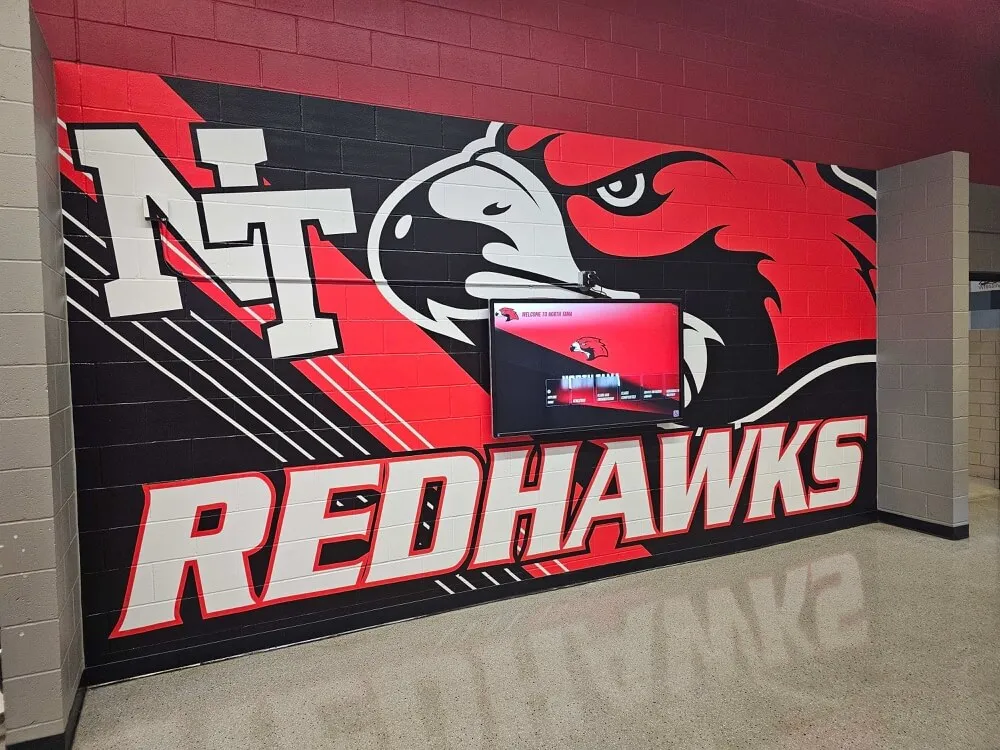
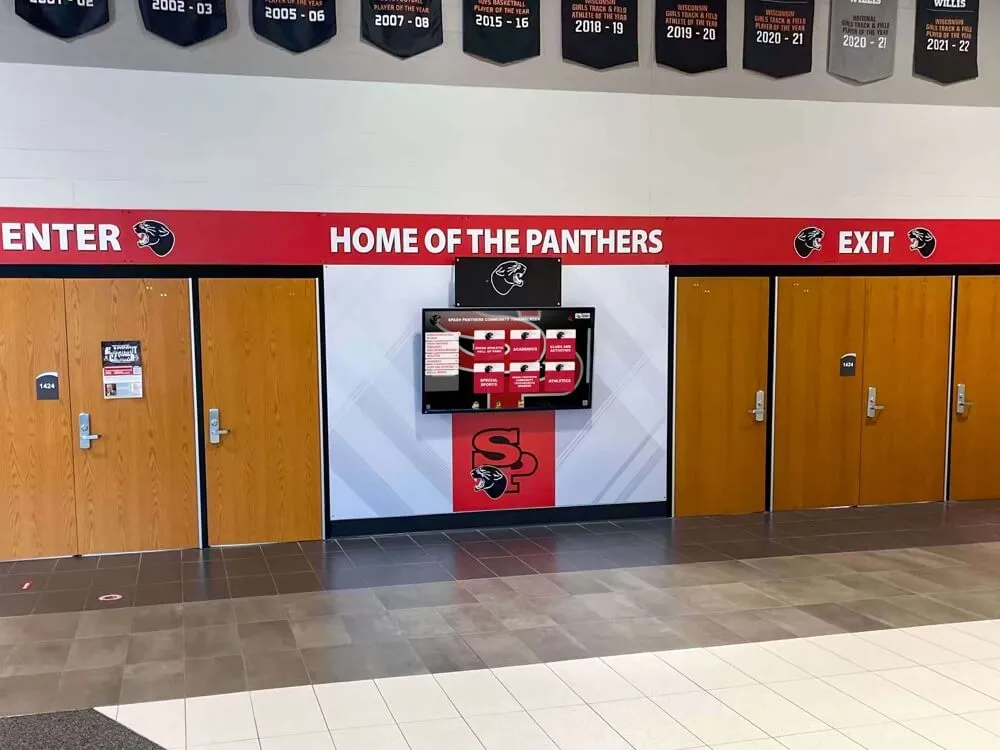
Prominent placement in high-traffic areas ensures athletic achievements remain visible to students, staff, and visitors
Cultural Continuity
- Recognition programs maintain connections across coaching changes and leadership transitions
- Athletic tradition preservation strengthens program identity beyond individual seasons
- Historical perspective provides context for understanding current program expectations
- Documented legacy creates benchmark standards for future achievement
Establishing Selection Criteria and Eligibility
Transparent, objective selection criteria represent the foundation of credible hall of fame programs, according to Coach & Athletic Director magazine. Ambiguous or inconsistent selection processes undermine program credibility and create stakeholder dissatisfaction.
Recognition Categories
Most comprehensive athletic hall of fame programs include multiple recognition categories:
Individual Athlete Recognition
- Athletes demonstrating exceptional achievement during their school career
- Record-holders in individual sports or specific performance categories
- Multi-sport athletes showing excellence across different programs
- Athletes achieving significant post-graduation athletic success
Schools typically require 10 years following graduation before athlete eligibility, allowing time to assess lasting impact and post-high school achievement. Some programs incorporate collegiate or professional athletic success as additional consideration factors.
Team Recognition
- Championship teams winning conference, regional, state, or national titles
- Teams achieving exceptional season records or performance milestones
- Teams demonstrating significant historical importance to program development
- Teams showing exceptional character, sportsmanship, or community impact
Learn more about comprehensive team recognition in basketball hall of fame programs for schools.
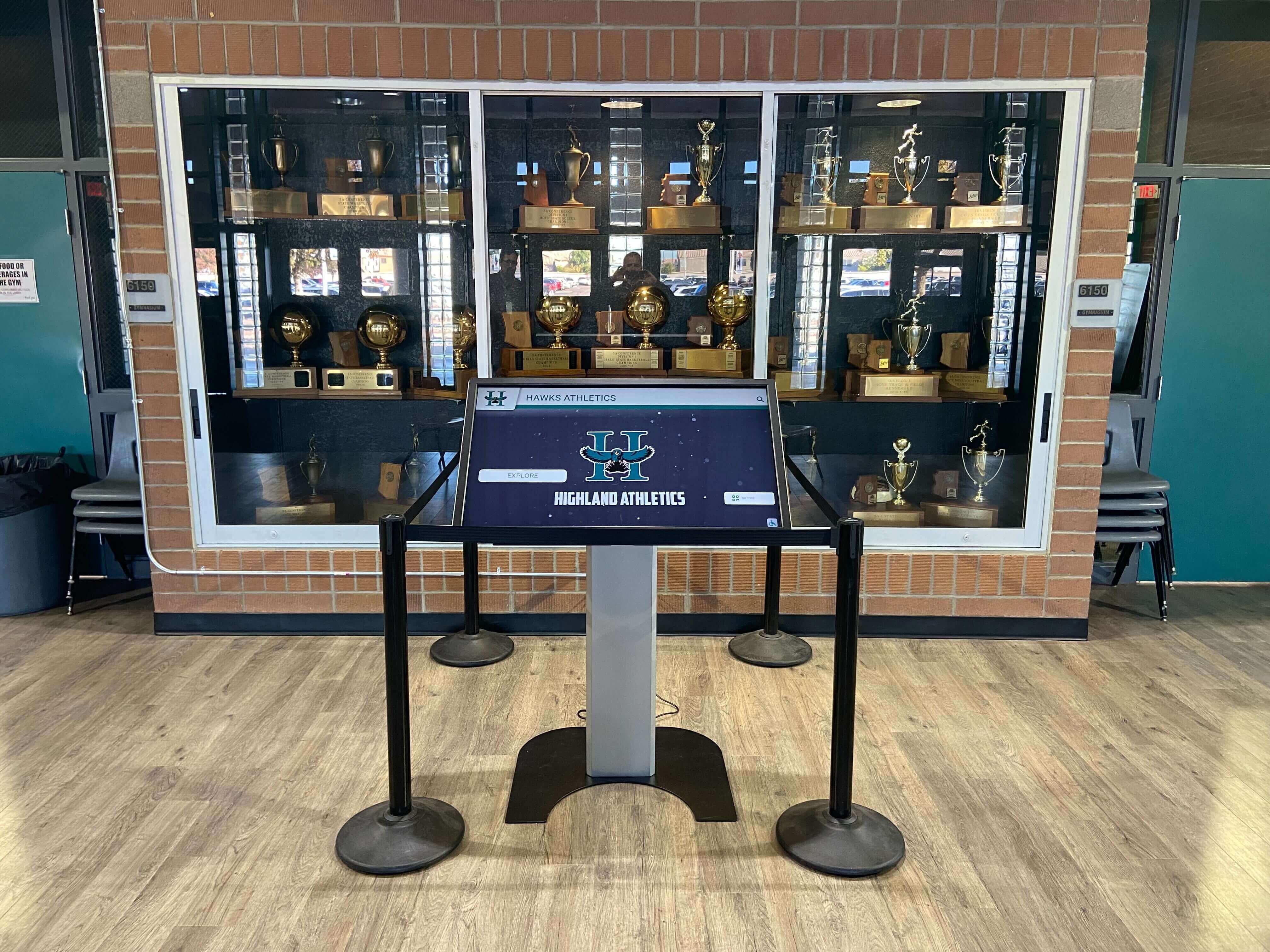
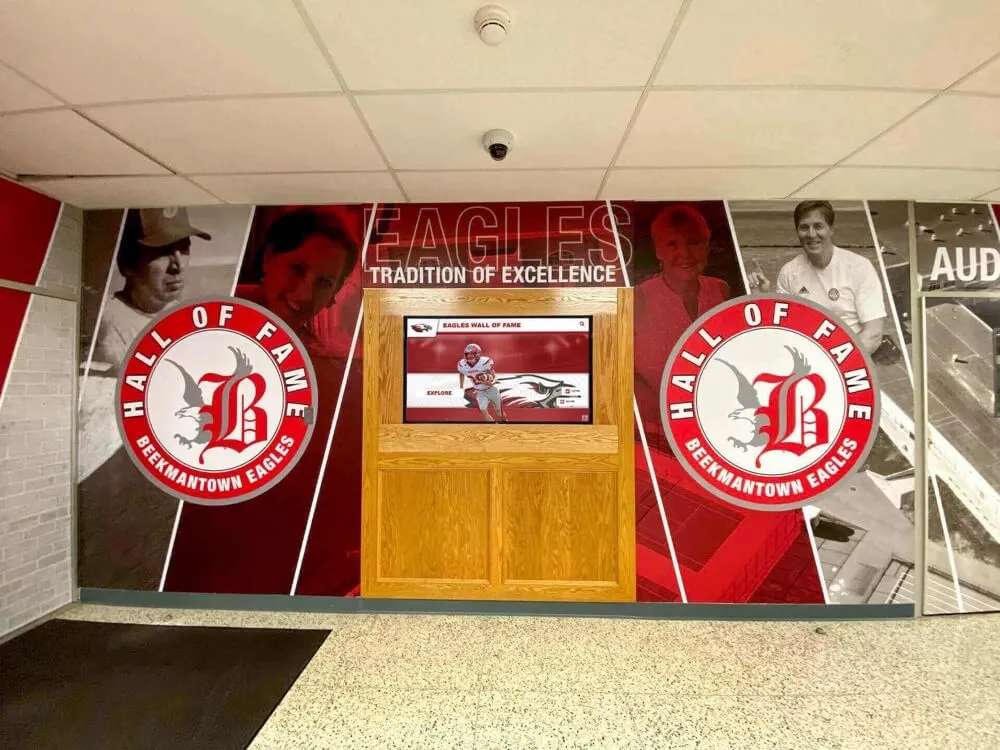
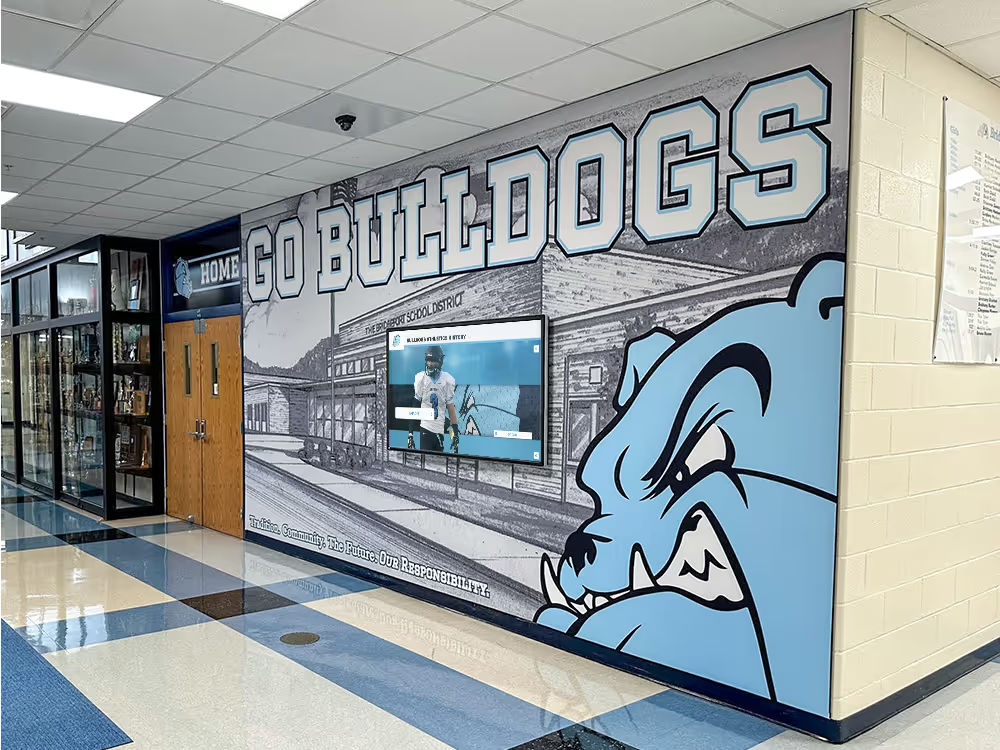
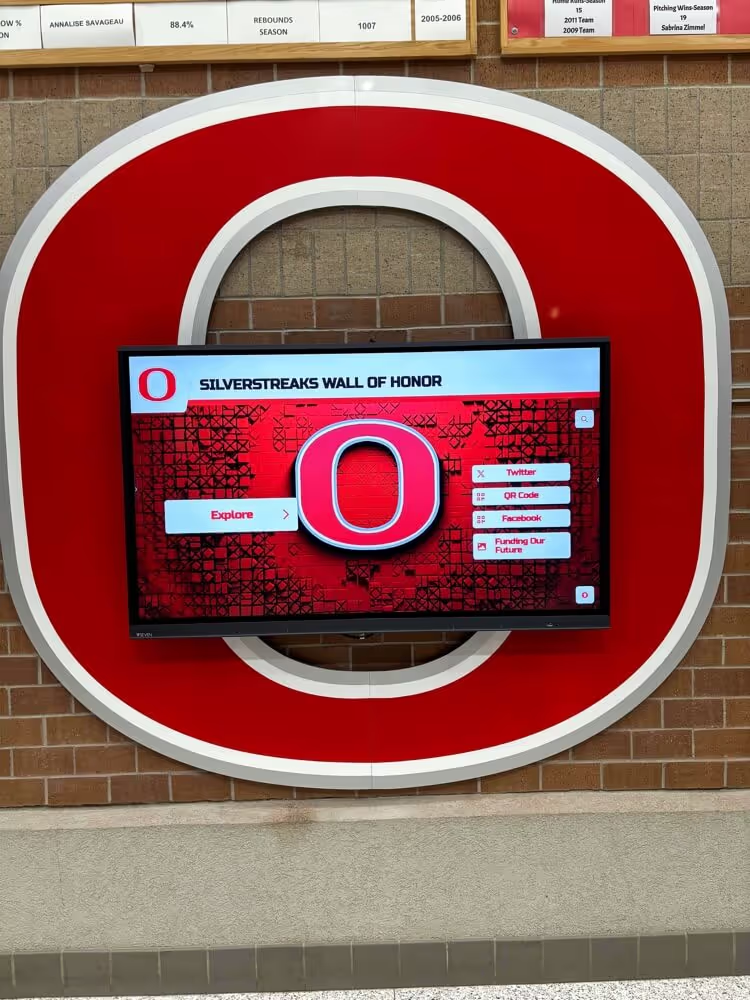
Modern touchscreen displays integrate seamlessly with existing trophy cases while providing unlimited recognition capacity
Coaching and Administrator Recognition
- Coaches achieving exceptional win-loss records or championship success
- Athletic directors and administrators advancing program development
- Coaches demonstrating sustained excellence across multiple seasons
- Athletic leaders showing exceptional impact on student-athlete development
Most programs require five years following retirement or departure before coaching and administrative staff become eligible for consideration.
Special Recognition and Contributor Categories
- Booster club members making extraordinary program contributions
- Community supporters enabling significant athletic facility improvements
- Officials, trainers, and support staff showing sustained excellence
- Alumni providing exceptional mentorship or financial support
- Media members documenting and promoting athletic achievement
Performance Criteria and Qualification Standards
Effective criteria balance objective achievement measures with subjective impact assessment:
Quantitative Achievement Benchmarks
- Championship titles and tournament success levels
- Individual performance records and statistical achievement
- All-conference, all-state, and all-American selections
- Award recognition and external honor achievement
- Post-graduation athletic success metrics
Qualitative Contribution Factors
- Character demonstration and sportsmanship standards
- Leadership impact on team culture and program development
- Contribution to school reputation and athletic program visibility
- Influence on program growth and subsequent athlete development
- Overcoming adversity and inspirational impact
Schools should document specific criteria clearly, ensuring nomination materials explain how performance measures combine with qualitative assessment.
Eligibility Timeline Requirements
Waiting periods allow appropriate perspective on lasting impact:
Standard Eligibility Periods
- Athletes: 10 years following graduation
- Coaches/Staff: 5 years following retirement or departure
- Teams: 10 years following championship or achievement season
- Special Contributors: No waiting period for sustained contribution
Some programs allow earlier consideration in exceptional circumstances, such as athletes achieving Olympic participation or professional sports success.
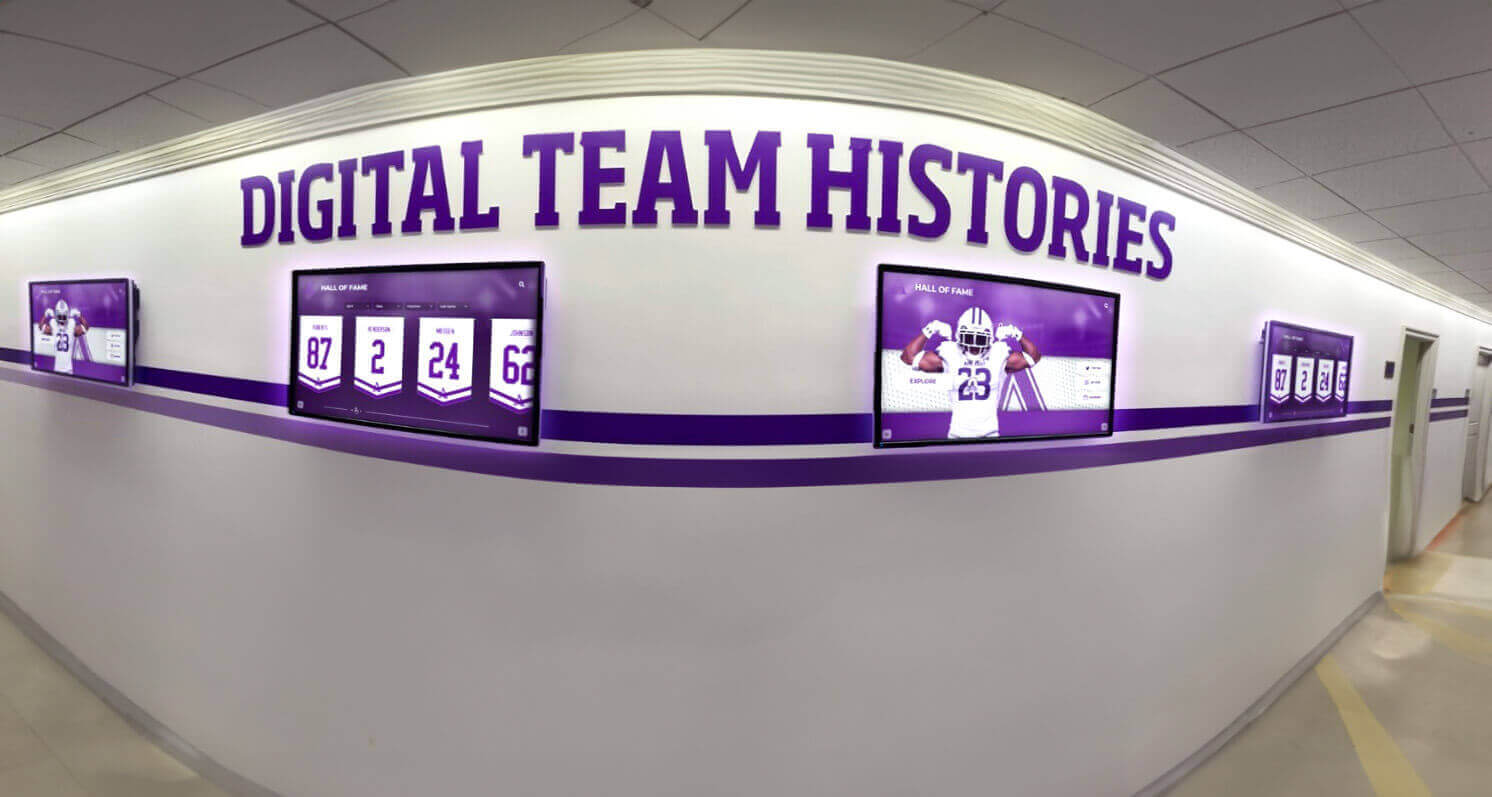
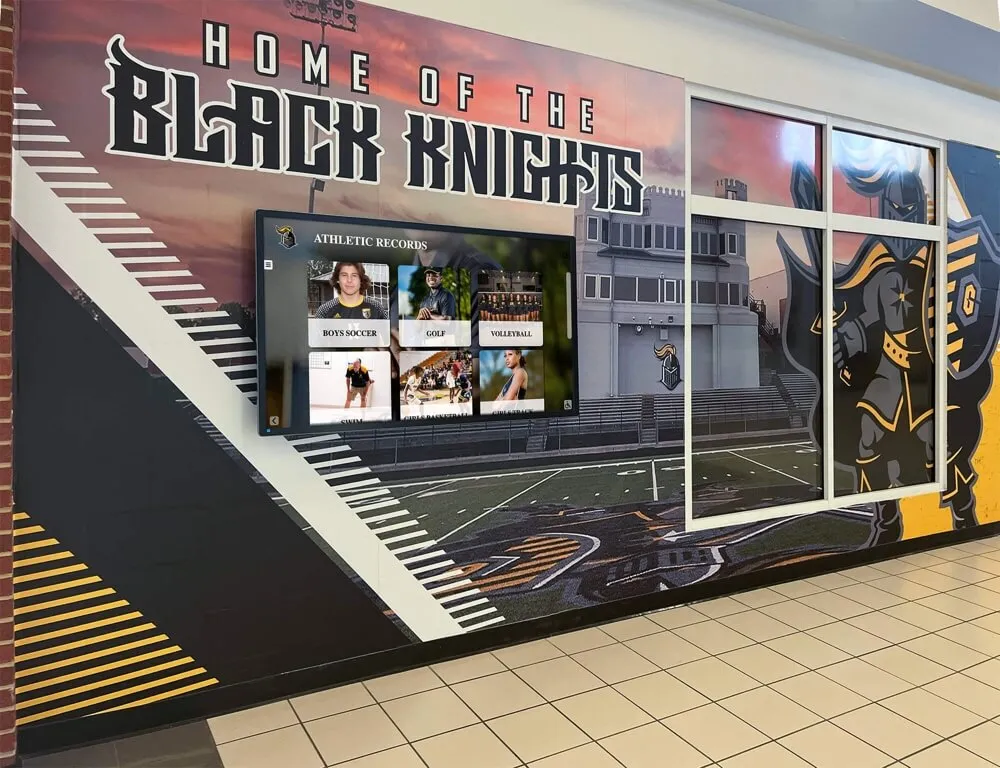
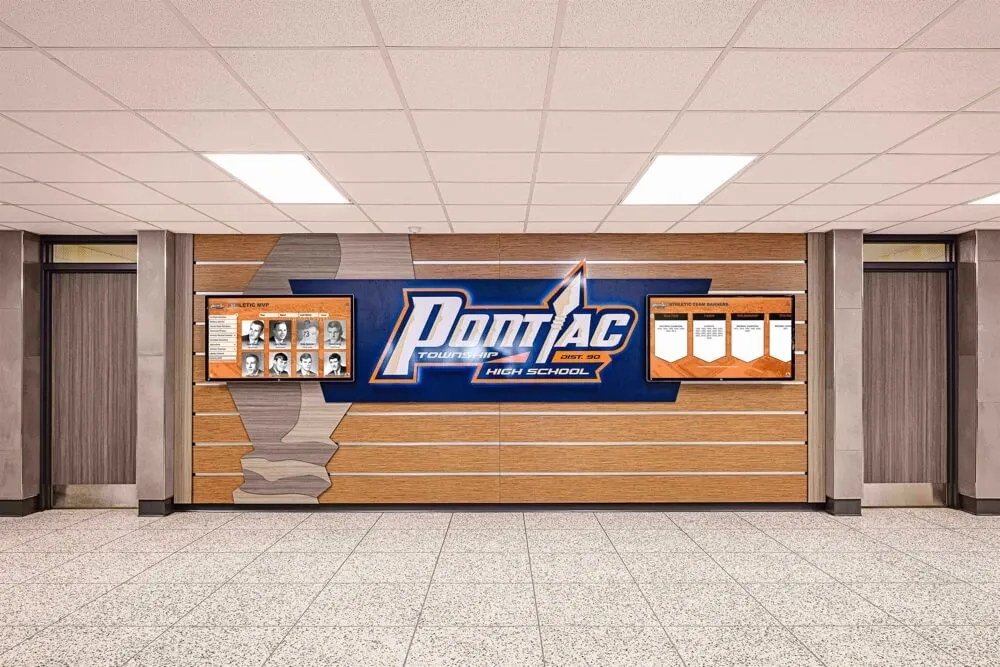
Team recognition displays document championship seasons and preserve roster information for future generations
Building Effective Selection Committees
Selection committee composition and processes determine program credibility and stakeholder confidence.
Committee Structure and Membership
Diverse representation ensures balanced perspectives and fair evaluation:
Core Committee Members
- Athletic director (typically serves as committee chair or secretary)
- Current head coaches representing different sports and seasons
- Former coaches with institutional knowledge and historical perspective
- School administrators ensuring alignment with institutional values
- Booster club or athletic foundation representatives
Advisory and Rotating Members
- Alumni athletes from various eras and different sports
- Community members providing external perspective
- Board members or school officials ensuring governance alignment
- Former inductees offering insight into selection standards
- Local media representatives familiar with program history
Committee size typically ranges from 7-12 members, balancing diverse perspective with efficient decision-making. Many schools rotate membership on staggered terms, maintaining continuity while incorporating fresh perspectives.
Selection Process Implementation
Transparent processes build stakeholder trust and ensure consistent standards:
Nomination Phase
- Open nomination periods announced through multiple channels
- Nomination forms requiring detailed achievement documentation
- Support materials including statistics, awards, media coverage, and references
- Deadline requirements ensuring adequate review time
- Confirmation communication acknowledging nomination receipt
Schools should promote nomination opportunities through athletic websites, alumni communication channels, booster meetings, and school publications well in advance of deadlines.
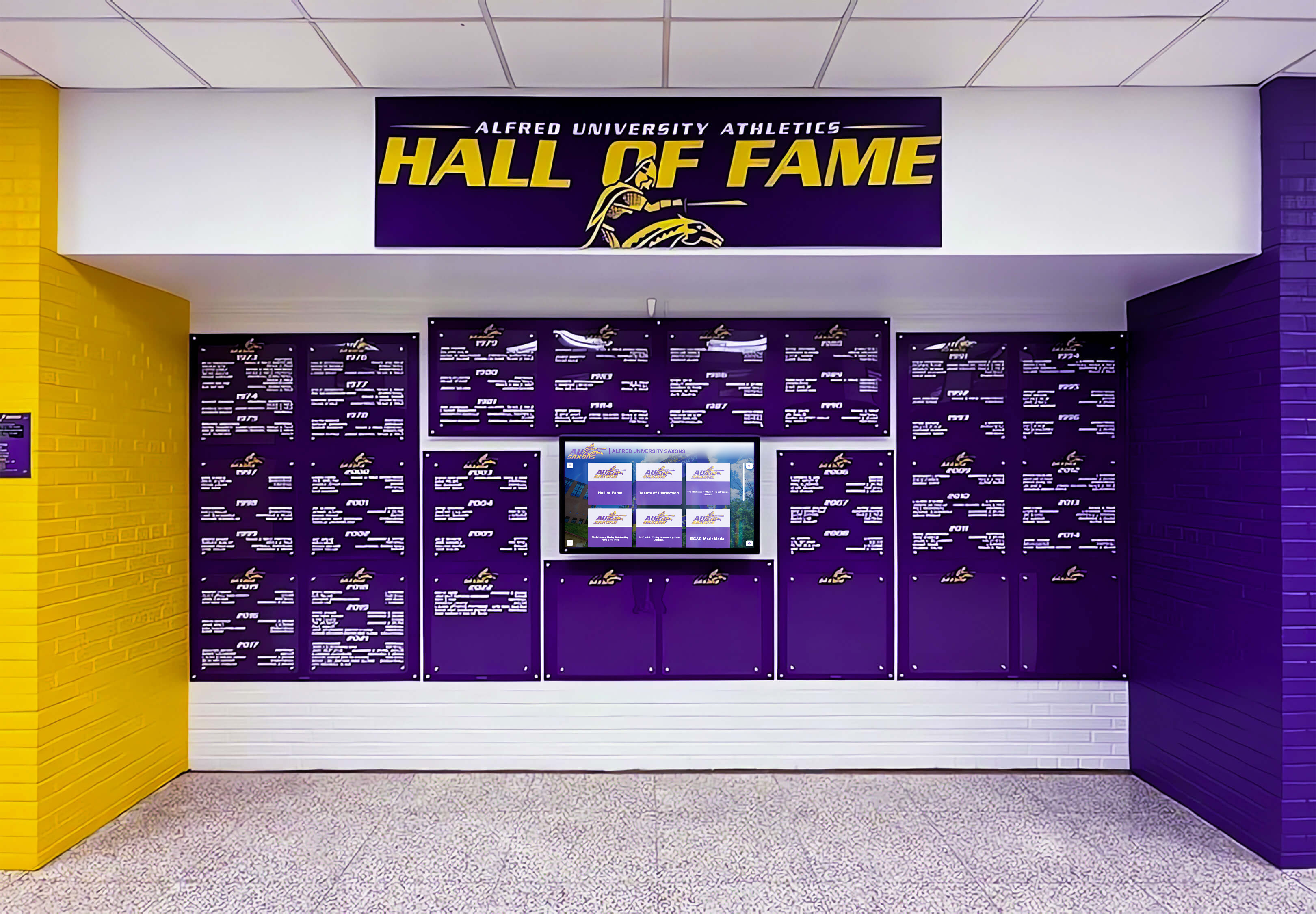
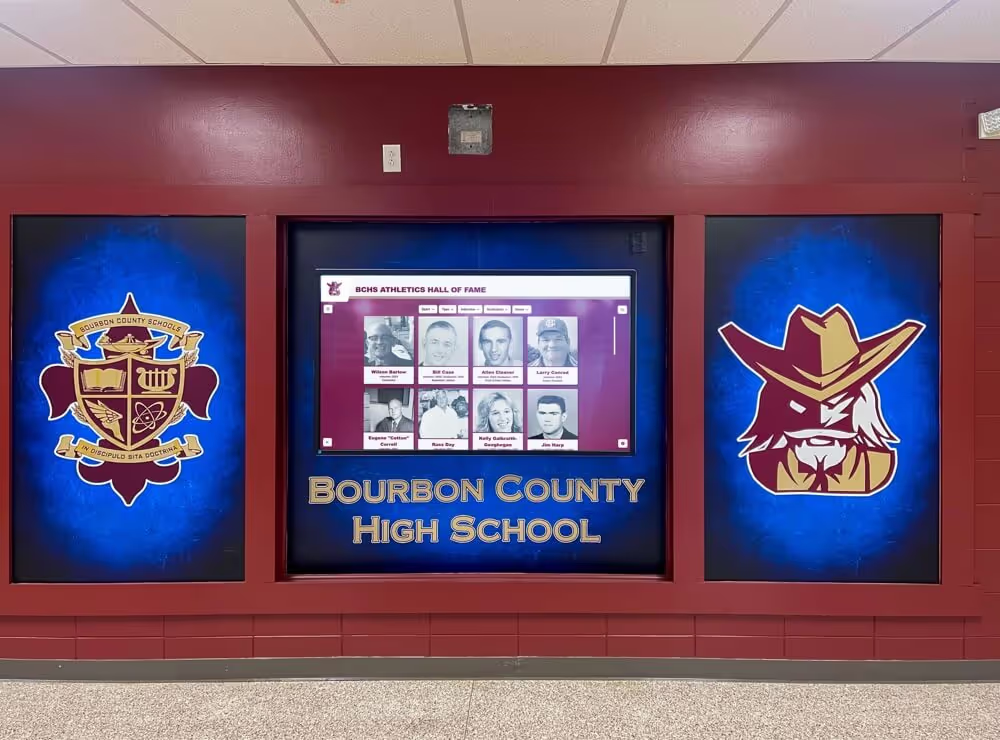
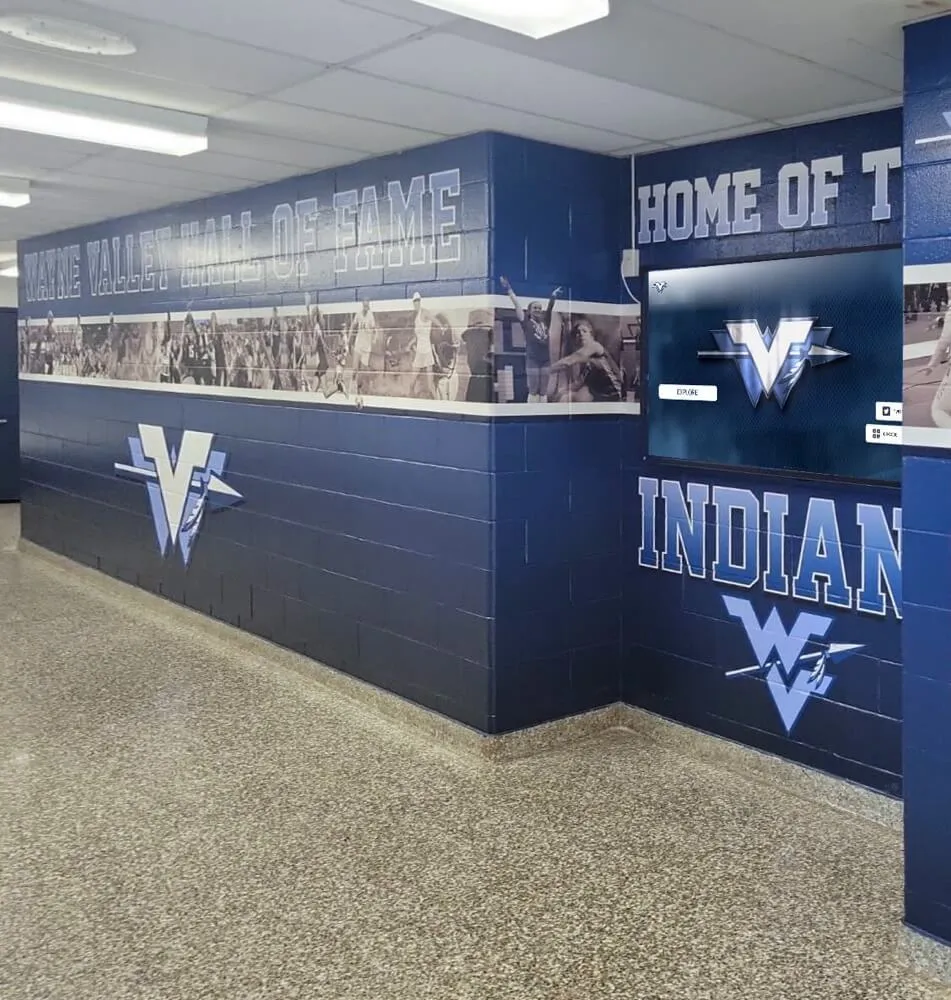
Professional presentation elevates athletic recognition and demonstrates institutional commitment to preserving excellence
Review and Deliberation Phase
- Comprehensive nomination packets distributed to all committee members
- Individual evaluation period allowing thorough assessment
- Formal meeting for collective discussion and debate
- Evaluation rubrics ensuring consistent assessment across nominees
- Secret ballot voting maintaining objectivity and reducing pressure
Many programs require supermajority support (typically 70-80% committee approval) for induction, ensuring broad consensus rather than narrow majority decisions.
Selection and Announcement Phase
- Official notification to selectees and their families
- Coordination with inductees regarding ceremony participation
- Public announcement through press releases and media outreach
- Communication to non-selected nominees maintaining positive relationships
- Documentation of selection rationale for internal records
Planning Induction Ceremonies and Events
Formal recognition ceremonies create memorable experiences while publicly celebrating achievement.
Ceremony Format and Timing
Event structure should honor inductees while engaging broader audiences:
Annual Recognition Events Most schools hold induction ceremonies annually, typically during:
- Homecoming weekend, maximizing alumni attendance and community engagement
- Significant athletic event weekends, ensuring student-athlete participation
- Dedicated athletic hall of fame banquet events focusing exclusively on recognition
- End-of-season celebrations connecting past excellence to current achievement
Ceremony Components
- Welcome and program overview by athletic director or school leadership
- Individual inductee presentations with video tributes and achievement summaries
- Acceptance speeches allowing inductees to share reflections and gratitude
- Physical or digital recognition presentation ceremony
- Reception or social time enabling conversation and connection
Event length typically ranges from 90 minutes to 2 hours, balancing comprehensive recognition with audience attention span.
Creating Meaningful Recognition Artifacts
Physical or digital recognition creates lasting acknowledgment:
Traditional Recognition Elements
- Individual plaques mounted in dedicated hall of fame display areas
- Engraved names on permanent athletic hall of fame walls
- Commemorative awards presented to inductees during ceremonies
- Framed certificates documenting induction and achievement
- Championship team composite photographs with roster information
Modern Digital Recognition Solutions like Rocket Alumni Solutions provide comprehensive alternatives to space-limited physical displays:
- Interactive touchscreen displays presenting unlimited inductees without space constraints
- Searchable databases enabling students and visitors to explore athletic history
- Multimedia presentations including photos, videos, and detailed achievement documentation
- Remote content updates allowing easy addition of new inductees
- Mobile accessibility extending recognition reach beyond physical campus
Schools implementing digital hall of fame displays report 5-10x increases in student engagement compared to traditional static plaques.

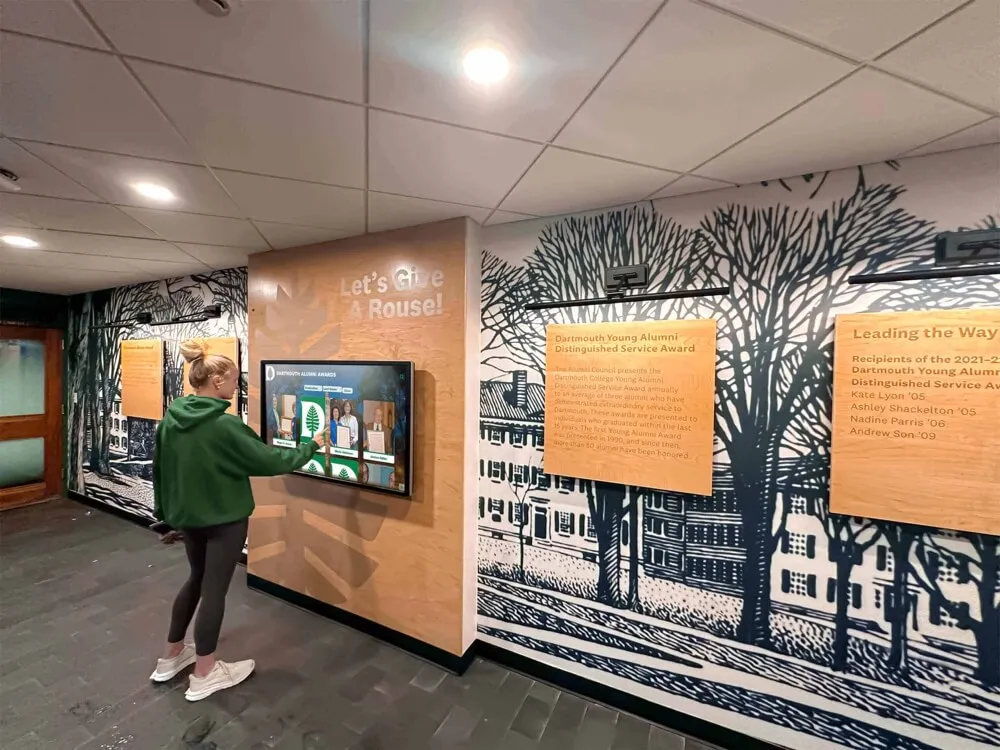
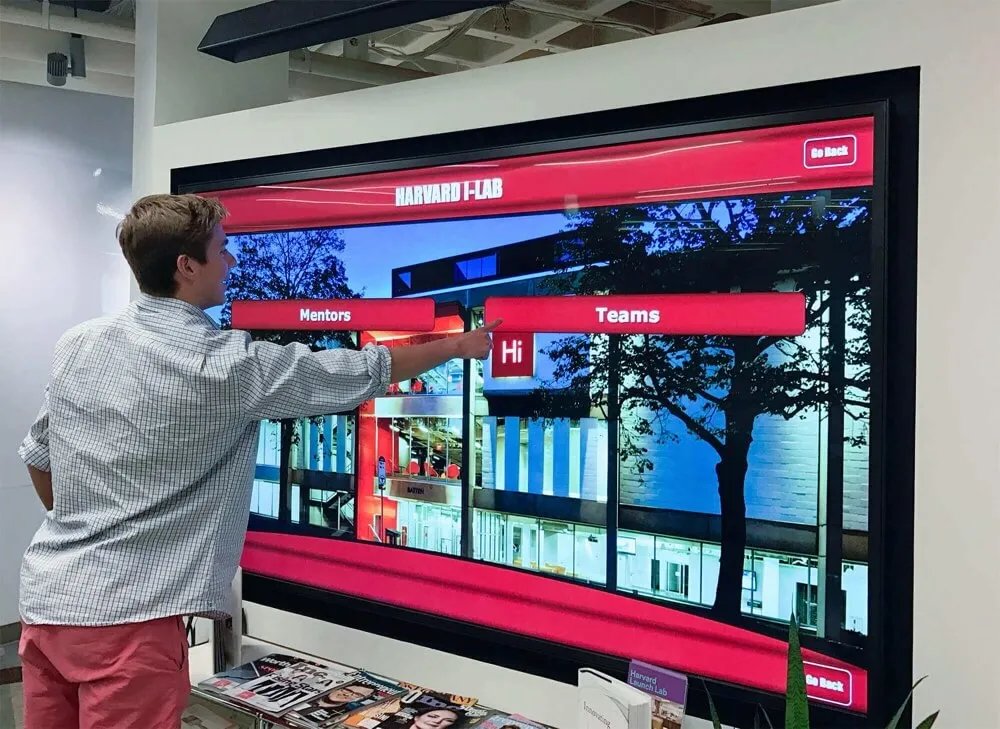
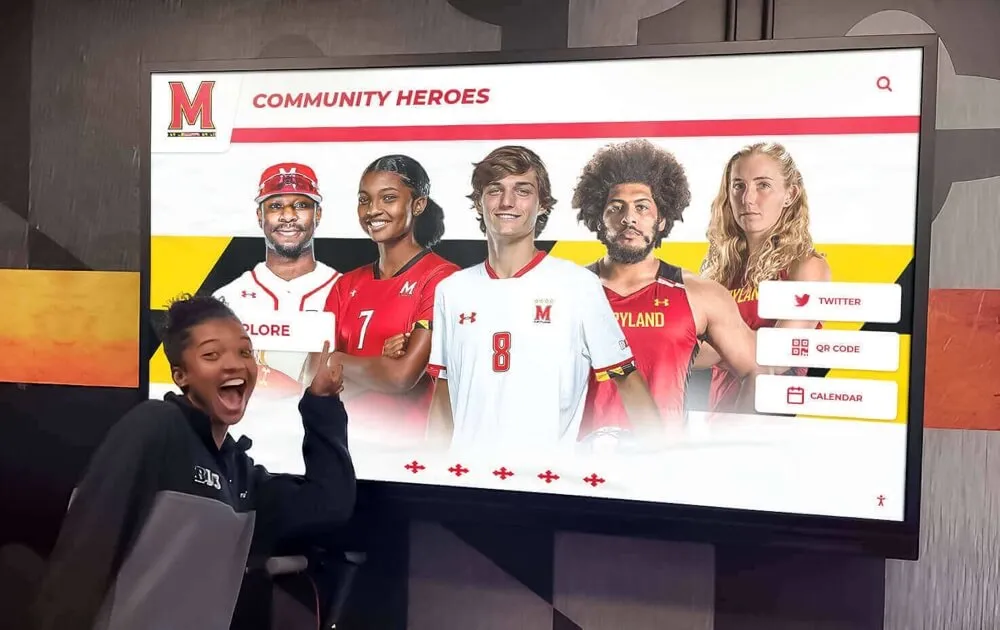
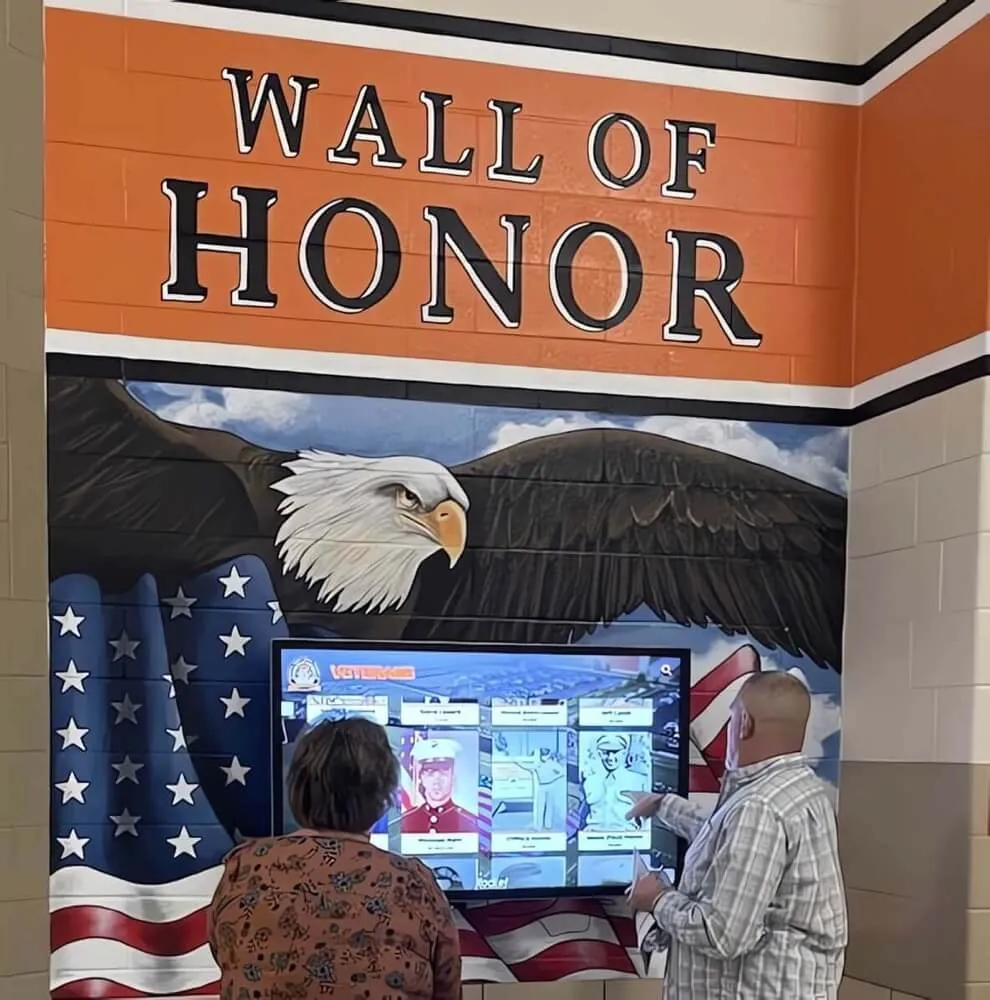
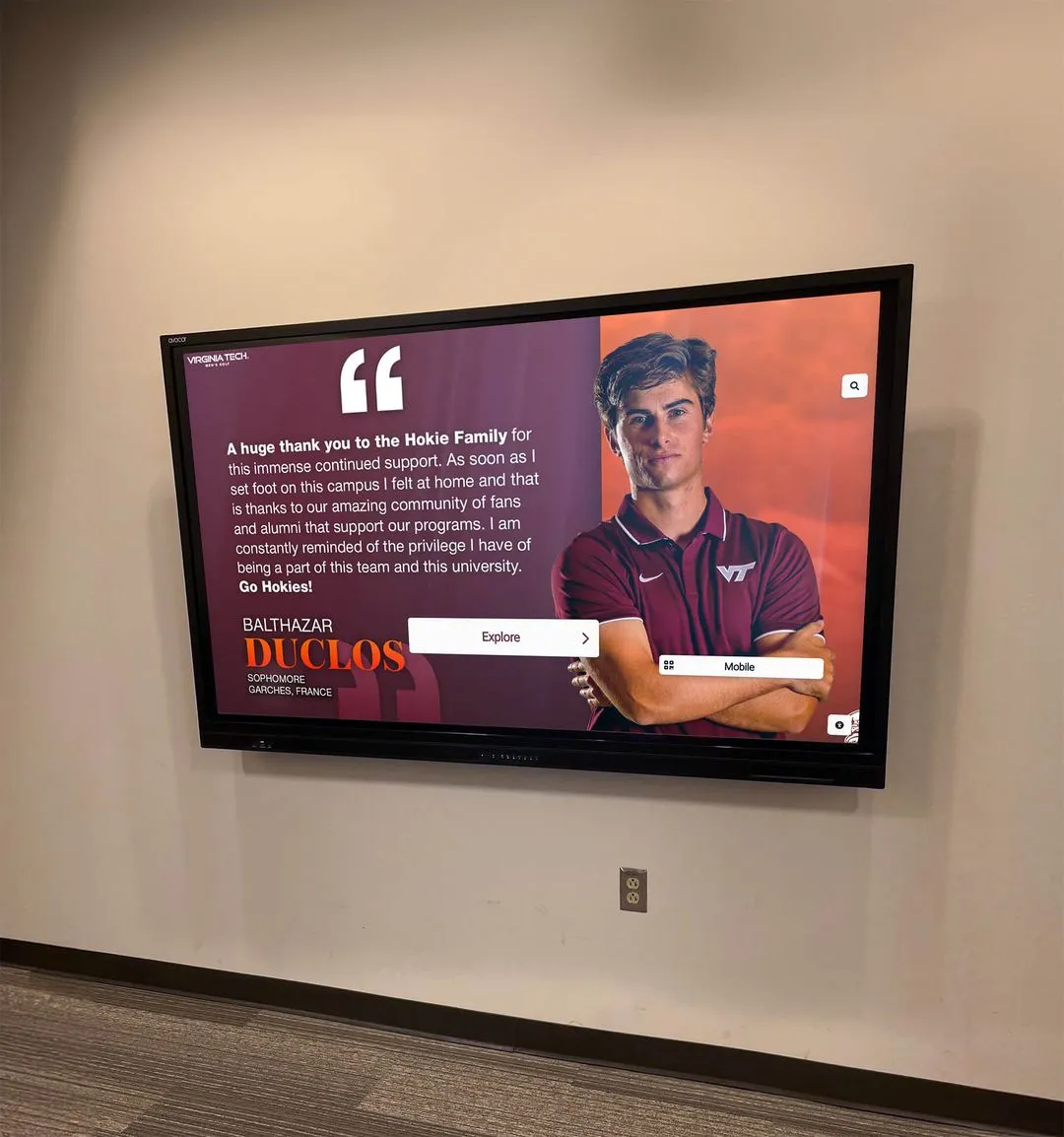
Touchscreen interfaces enable students to explore athletic achievements through intuitive interaction and detailed athlete profiles
Leveraging Digital Display Technology
Modern recognition technology eliminates traditional space limitations while increasing engagement and accessibility.
Advantages of Digital Athletic Recognition
Digital solutions address fundamental limitations of physical trophy cases:
Unlimited Recognition Capacity Physical trophy cases force impossible choices about whose achievements receive visibility:
- Limited shelf space requires removing older recognition to accommodate new inductees
- Expanding recognition requires construction projects and significant facility modification
- Multi-sport programs struggle to provide equal visibility across all teams
- Record-holders and individual achievement recognition compete for scarce display space
Digital recognition displays overcome these constraints entirely, presenting unlimited athletes, teams, coaches, and contributors in a single touchscreen system.
Dynamic Content and Engagement Features Interactive displays create experiences impossible with static plaques:
- Search functionality enabling students to find specific athletes or teams instantly
- Filtering by sport, achievement type, era, or other criteria
- Detailed profile pages with comprehensive statistics, photos, and achievement narratives
- Video segments and game footage bringing athletic accomplishments to life
- Record boards automatically updated as new marks replace historical standards
Learn about comprehensive approaches in digital trophy case implementation.
Implementation and Content Management
Cloud-based management systems simplify ongoing administration:
Remote Update Capabilities
- Content updates from any internet-connected device without campus visit requirements
- Scheduled publishing automation for induction ceremony coordination
- Bulk import tools for historical athletic data entry
- Role-based permission systems enabling appropriate staff access
- No technical expertise required for routine content management
Schools report 75-85% reduction in administrative time spent maintaining athletic recognition after implementing digital systems.

Intuitive interfaces make exploring decades of athletic history accessible and engaging for students and visitors
Web Integration and Extended Reach Recognition should extend beyond physical campus:
- Online hall of fame portals accessible to alumni and community worldwide
- Social sharing capabilities enabling inductees to celebrate accomplishments
- Mobile-optimized displays ensuring accessibility across devices
- Integration with school athletic websites and communication platforms
- QR code connections linking physical displays to expanded online content
Digital platforms enable alumni across the country to explore current athletic achievement and reconnect with school athletic programs.
Addressing Common Implementation Challenges
School administrators encounter predictable obstacles when establishing or modernizing hall of fame programs.
Managing Nomination Imbalances
Recognition programs often face skewed nomination patterns:
Sport-Specific Representation Issues
- High-profile sports like football and basketball receive disproportionate nominations
- Smaller sports or discontinued programs lack advocates submitting nominations
- Recent eras receive more nominations than historical periods
- Individual sports receive fewer nominations than team sports
Solutions include proactive outreach to coaches and alumni from underrepresented sports, committee research identifying deserving candidates from smaller programs, and dedicated recognition categories ensuring balanced representation.
Handling Controversial Candidates
Selection committees occasionally confront difficult situations:
Character and Conduct Concerns
- Athletes with exceptional performance but questionable conduct during or after school
- Individuals whose post-graduation behavior conflicts with institutional values
- Contributors whose later actions create reputational concerns
- Cases involving accusations or confirmed violations of rules or laws
Selection criteria should clearly address character requirements and committee authority to deny recognition based on conduct. Many programs include language allowing removal of recognition in extreme circumstances, though such provisions should be exercised rarely and only after careful deliberation.
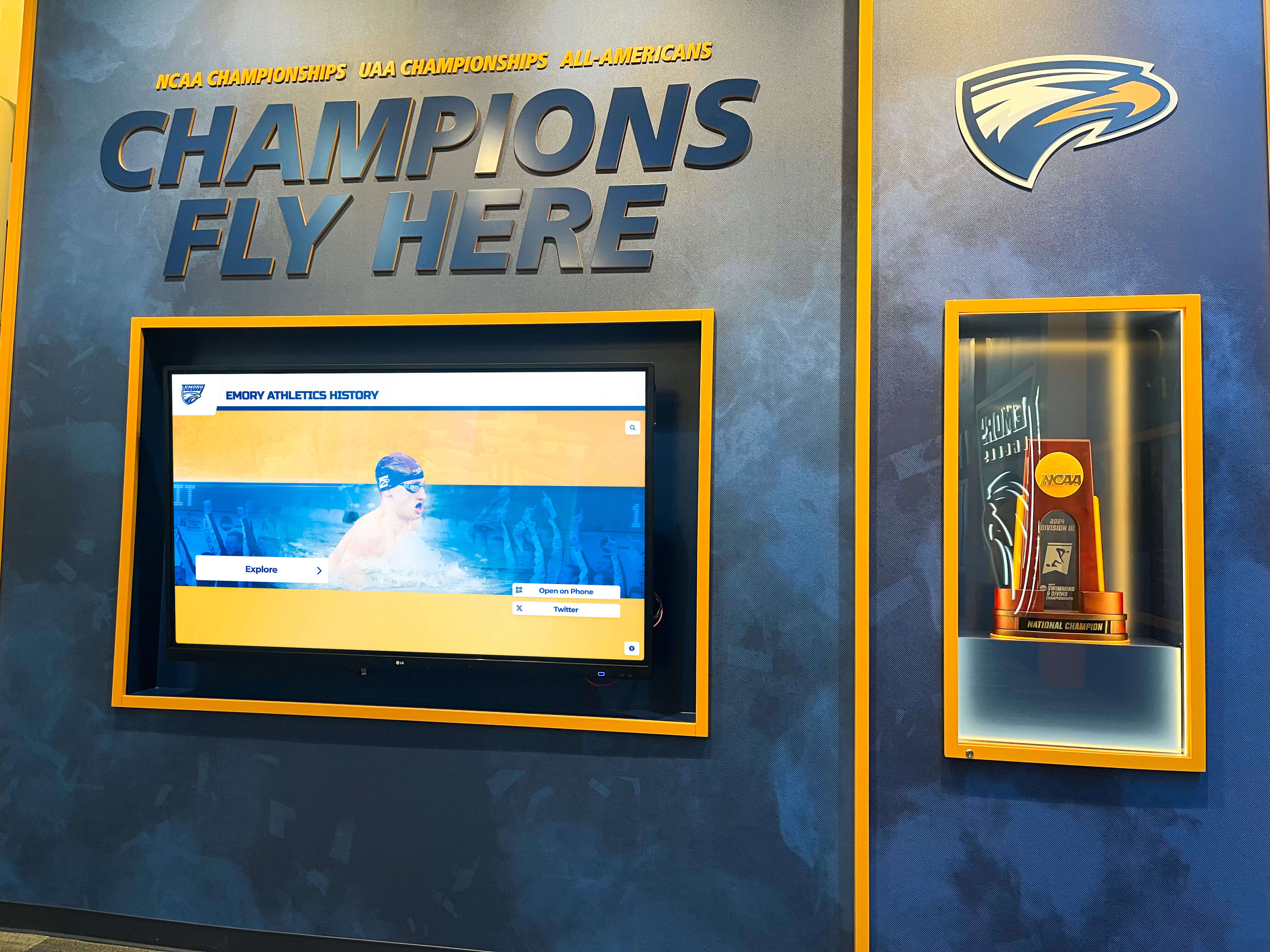
Championship team recognition preserves important program milestones and creates pride for current student-athletes
Budget and Resource Constraints
Financial limitations often impede hall of fame program development:
Funding Strategies
- Booster club or athletic foundation sponsorship of recognition programs
- Individual donor support for specific inductee profiles or recognition categories
- Alumni fundraising campaigns dedicated to hall of fame development
- Corporate sponsorship opportunities for digital display systems
- Facility naming rights associated with hall of fame display areas
Digital recognition platforms often prove more cost-effective than traditional approaches, eliminating ongoing construction costs for trophy case expansion while providing superior engagement and accessibility.
Marketing and Promoting Athletic Hall of Fame Programs
Recognition impact depends on visibility and stakeholder engagement.
Internal Promotion Strategies
Ensuring students know about athletic hall of fame programs:
Campus Integration Approaches
- Strategic placement of recognition displays in high-traffic areas like main lobbies and athletic facilities
- Integration with physical education curriculum and sports history lessons
- Recognition program presentations during team meetings and sport seasons
- Scavenger hunt activities encouraging students to explore athletic history
- Contest opportunities for students researching and presenting historical athlete stories
Schools report that interactive digital displays in main hallways receive 10-15x more student engagement than displays located only in athletic facilities.
External Communication Tactics
Broader community awareness strengthens program impact:
Media Relations
- Press releases announcing new inductees and ceremony details
- Local newspaper features profiling inductees and their achievements
- Social media campaigns celebrating recognition and historical achievements
- School publication coverage in newsletters, magazines, and annual reports
- Local radio and television interviews with inductees and program leaders
Alumni Engagement
- Dedicated hall of fame sections on school website and alumni portals
- Regular email communications featuring recent inductees
- Homecoming and reunion integration of hall of fame activities
- Alumni magazine features about recognition program and inductees
- Virtual attendance options for ceremony livestreaming
Learn about comprehensive approaches in creating college-level experiences for high school athletes.

Mobile accessibility enables alumni worldwide to explore athletic recognition and stay connected to school programs
Sustaining Long-Term Program Success
Effective hall of fame programs require ongoing attention and continuous improvement.
Annual Program Evaluation
Regular assessment ensures continued relevance and effectiveness:
Participation Metrics
- Number of nominations received by category and sport
- Committee member participation and engagement levels
- Ceremony attendance trends and stakeholder involvement
- Display interaction rates for digital systems
- Social media engagement and community awareness indicators
Equity Analysis
- Representation across different sports and athletic programs
- Gender balance in recognition across categories
- Historical era representation ensuring different decades receive acknowledgment
- Recognition distribution across different achievement types
- Comparison with overall athletic participation patterns
Assessment data should inform selection committee discussions and program refinement decisions.
Program Evolution and Expansion
Successful programs adapt to changing institutional needs:
Recognition Category Additions Consider expanding recognition as programs mature:
- Sport-specific halls of fame for major programs with deep achievement history
- Single-season achievement recognition for exceptional individual performances
- Milestone recognition for athletes reaching significant statistical benchmarks
- Coach milestone recognition for victory totals and longevity achievements
- Student-athlete academic excellence recognition categories
Technology Upgrades Digital systems should evolve with advancing capability:
- Enhanced video integration as multimedia archives expand
- Augmented reality features creating immersive historical experiences
- Social media integration enabling direct sharing from display interfaces
- Advanced analytics tracking program engagement and utilization
- Mobile app development extending recognition accessibility
Explore modern approaches in state championship trophy case displays.
Special Considerations for Different School Levels
Recognition approaches should adapt to institutional context and student population characteristics.
High School Athletic Hall of Fame Programs
Secondary schools face unique considerations:
Community Connection Emphasis High school hall of fame programs strengthen local community identity:
- Recognition of athletes who remained in local area after graduation
- Celebration of community members supporting athletic programs
- Integration with local business community through sponsorship
- Homecoming and reunion event coordination maximizing alumni return
- Local media partnerships amplifying recognition visibility
College Recruitment Tool Prominent recognition programs enhance school athletic reputation:
- College coaches notice schools valuing and celebrating athletic excellence
- Hall of fame programs signal sustained program quality across eras
- Recognition displays showcase program tradition during recruiting visits
- Historical achievement context demonstrates program commitment to excellence
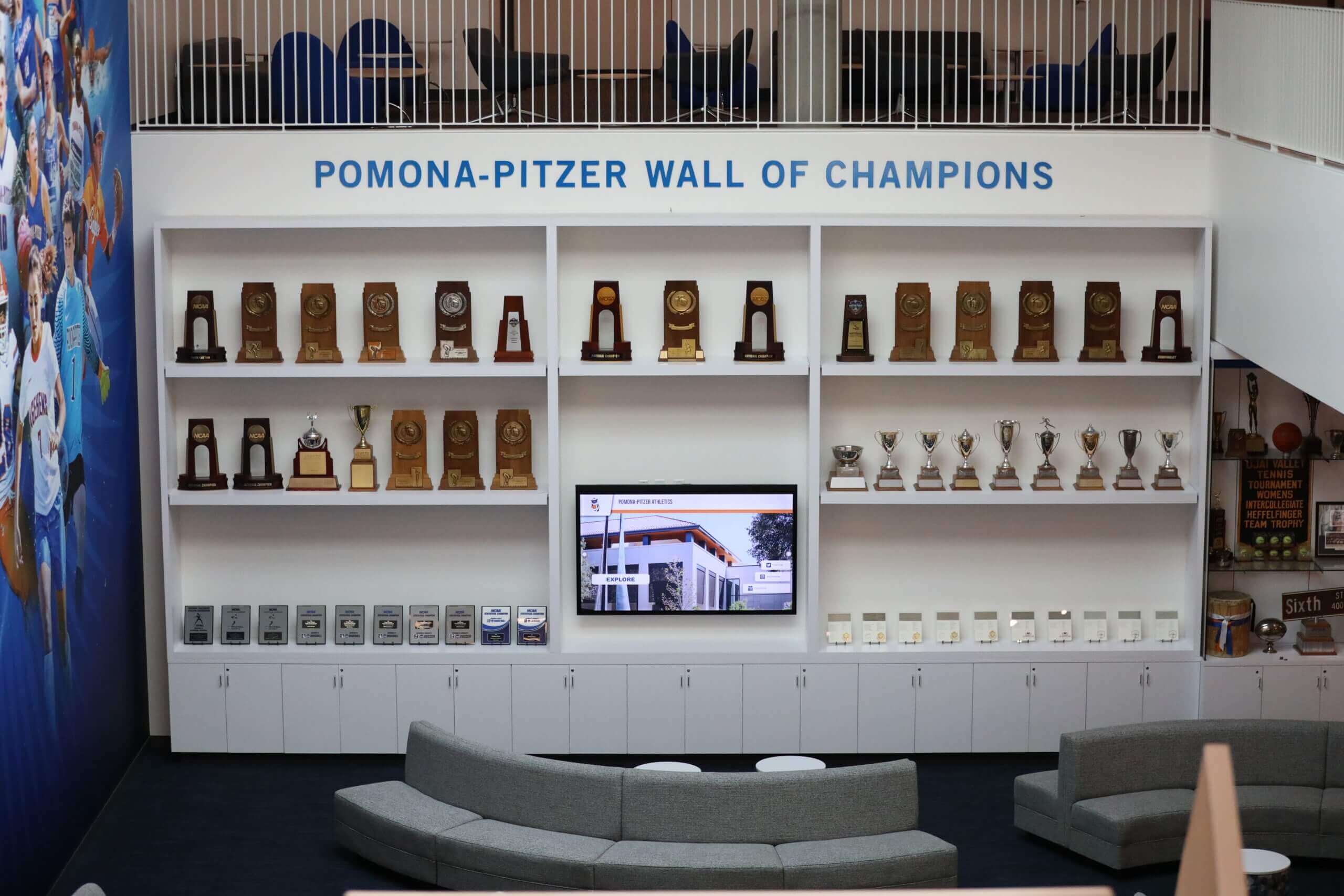
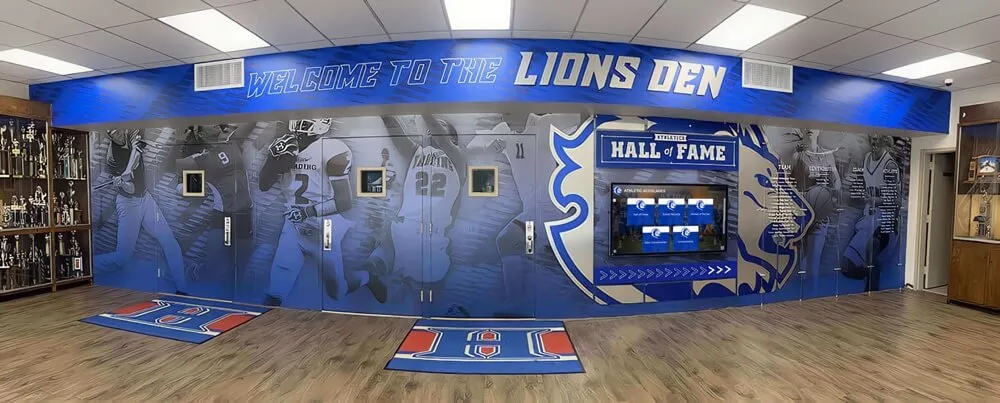
Athletic lounges with recognition displays create gathering spaces celebrating program tradition and achievement
College and University Athletic Recognition
Higher education institutions manage more complex recognition systems:
NCAA Division-Specific Considerations Recognition programs should reflect institutional athletic mission:
- Division I programs emphasizing professional-level achievement and post-graduation success
- Division II programs balancing athletic excellence with community engagement
- Division III programs emphasizing academic achievement alongside athletic success
- Junior college programs recognizing transfer success and program development contribution
Learn about Division I athletic recognition systems.
Multi-Campus Coordination Universities with multiple campuses require coordinated approaches:
- System-wide recognition standards ensuring consistency
- Individual campus flexibility for unique program characteristics
- Shared digital platforms enabling cross-campus recognition
- Coordinated ceremony scheduling avoiding conflicts
- Unified communication strategies maximizing visibility
Conclusion: Building Lasting Athletic Legacy Through Recognition
Athletic hall of fame programs represent strategic investments in institutional culture, alumni engagement, and student-athlete motivation. When schools systematically celebrate athletic excellence through transparent selection processes and modern recognition displays, they create environments where achievement receives lasting acknowledgment while inspiring current students toward their own excellence.
The strategies explored in this guide provide comprehensive frameworks for establishing new programs or revitalizing existing recognition systems. From forming diverse selection committees to implementing digital displays that eliminate space constraints, these approaches transform athletic recognition from static trophy cases to dynamic celebration systems woven throughout institutional culture.
Transform Your Athletic Recognition Program
Discover how modern digital hall of fame solutions enable unlimited recognition capacity, interactive exploration, and simple remote management. Schedule a demo to see how schools nationwide are preserving athletic legacy while engaging current students.
Book A DemoSchool administrators should begin with achievable recognition programs building momentum, then systematically expand to create comprehensive approaches celebrating diverse achievement across all sports and eras. Transparent selection criteria and diverse committee composition ensure stakeholder confidence, while digital technology makes recognition accessible and engaging for current generations.
Athletic hall of fame programs succeed when they balance celebrating pinnacle achievement with recognizing sustained contribution across different roles. Digital platforms like Rocket Alumni Solutions make this balance achievable by eliminating space constraints that previously forced impossible choices about whose accomplishments receive visibility.
Every athlete, coach, and contributor who receives meaningful recognition for their achievements develops stronger connection to school athletic programs and greater willingness to support current student-athletes. Start where you are with recognition systems you can implement immediately, then evolve toward comprehensive programs your athletic community deserves.
Your school’s athletic legacy deserves celebration equal to its importance in student development and community identity. With thoughtful planning, transparent processes, and appropriate technology, you can create hall of fame programs that honor achievement while inspiring future excellence.