



An athletic achievement award recognizes a student-athlete who demonstrated exceptional performance, character, or contribution to their program. When criteria are clearly defined and wording is intentional, these awards carry lasting meaning—motivating current athletes and building the institutional identity that alumni revisit for decades.
This guide covers every element schools need to design a credible athletic achievement award program: eligibility thresholds, criteria frameworks, inscription wording templates, and display approaches from traditional plaques to interactive digital trophy cases. Whether you are launching a new program or refining one that has been running for years, the sections below give you a practical starting point.
Every athletic department eventually faces the same question: what does it actually take to earn this award? Without a written answer, recognition feels arbitrary. With clear criteria and intentional wording, an athletic achievement award becomes something athletes strive toward and communities celebrate long after graduation.

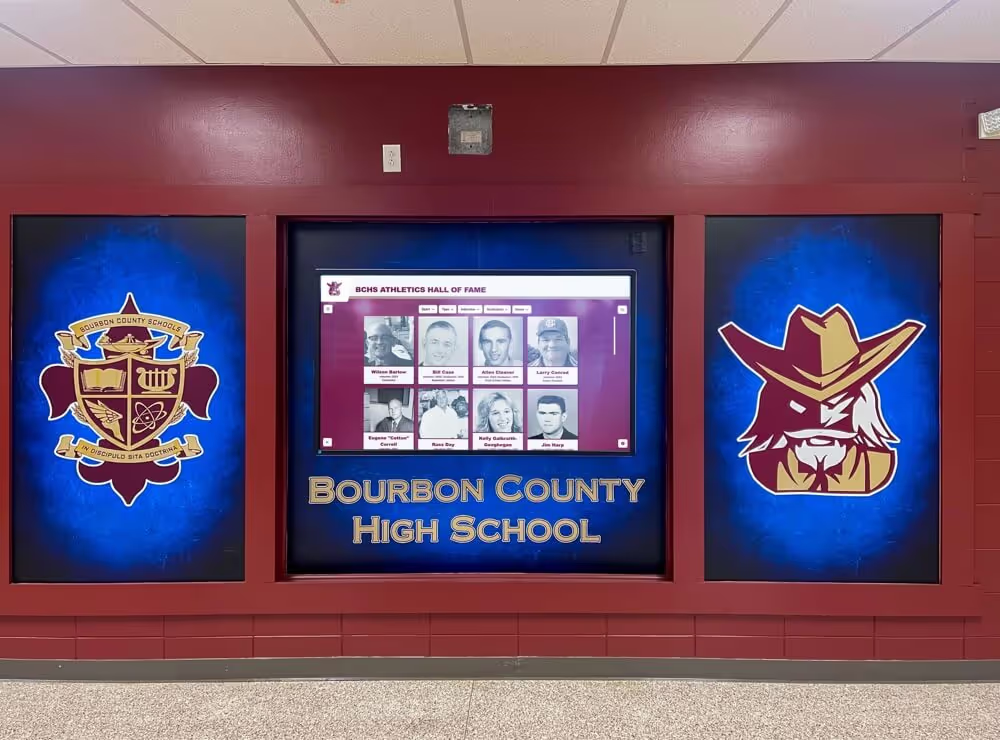
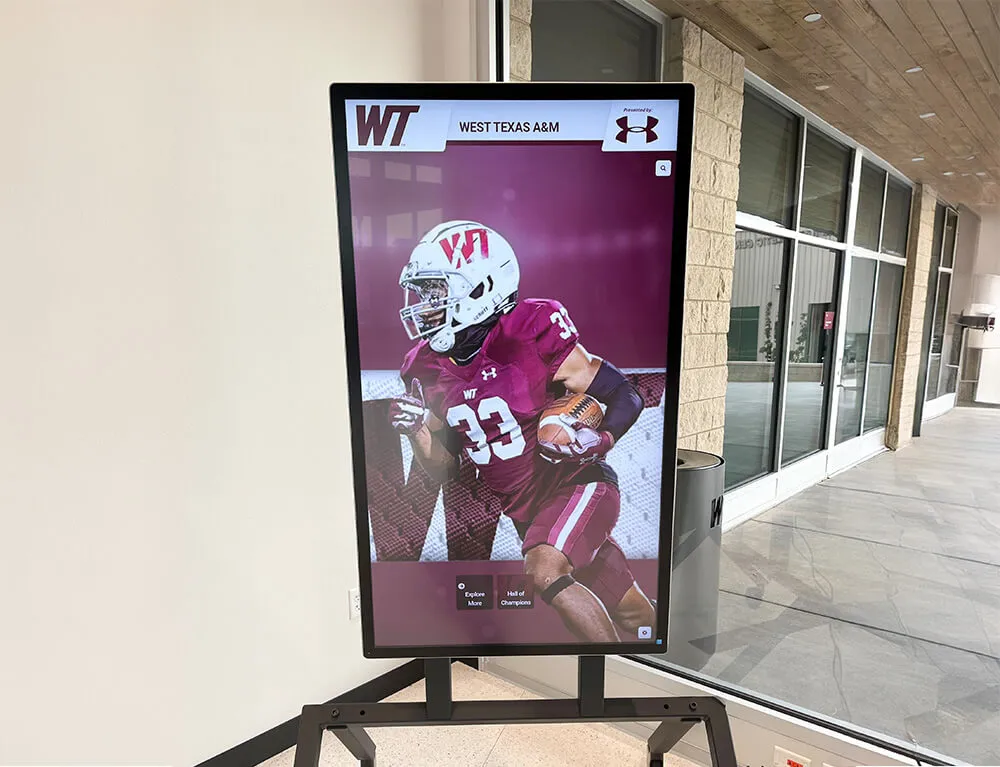
Interactive displays let visitors explore athletic achievement awards by year, sport, or athlete name—extending recognition far beyond a single ceremony
What Is an Athletic Achievement Award?
An athletic achievement award is a formal recognition given to a student-athlete who has met or exceeded defined standards in one or more areas of athletic excellence. Unlike a participation ribbon or a generic end-of-season gift, an achievement award carries documented criteria that differentiate recipients from the broader team.
Schools give athletic achievement awards in several contexts:
- End-of-season banquets recognizing outstanding performance across a sport
- Cumulative career awards celebrating a graduating senior’s full athletic record
- Single-event recognitions tied to a tournament, championship, or milestone
- Cross-sport awards honoring a student-athlete’s contributions across multiple programs
- Combined academic-athletic awards acknowledging excellence in the classroom and on the field
The defining characteristic is intentionality. An award program with documented criteria, consistent review processes, and visible display communicates to every athlete what excellence looks like and what it earns. Schools building comprehensive academic and athletic recognition programs find that clearly structured award criteria improve both participation and long-term engagement from alumni.
Criteria for Athletic Achievement Awards: A Practical Framework
Strong criteria define the award without eliminating flexibility. The goal is a standard rigorous enough to be meaningful but transparent enough that athletes and coaches understand it from the first day of the season.
Performance-Based Criteria
Performance criteria anchor the award in measurable results. Common benchmarks include:
- Finishing in the top percentage of statistical categories for the sport
- Earning all-conference, all-district, or all-state recognition
- Achieving a minimum win-loss record or qualifying for postseason competition
- Breaking a school, conference, or personal record
- Earning varsity starter status for a defined number of seasons
Performance thresholds work best when they are sport-specific. A swimmer and a soccer player should not be evaluated on a single universal number—each sport has its own valid measures of excellence.
Character and Sportsmanship Criteria
Many of the most respected athletic achievement awards incorporate qualitative criteria alongside statistics. Common character-based standards include:
- Demonstrating consistent respect for officials, opponents, and teammates
- Contributing to team culture through leadership, mentorship, or accountability
- Representing the school with integrity in public or away competition
- Maintaining conduct standards outside of athletic events
Sportsmanship-weighted criteria are especially valuable for programs that want to avoid rewarding raw talent while ignoring attitude or effort. Boards evaluating candidates should document character assessments with specific examples rather than general impressions.
Academic Eligibility Requirements
Most school athletic programs require a minimum GPA for award eligibility. Typical thresholds run between 2.5 and 3.0, though schools with academic all-American traditions often set higher bars. Schools reviewing what strong academic achievement award criteria look like at the high school level often find it useful to align athletic and academic award standards so that the school sends a consistent message about what it values.
Sample Criteria Table
The table below illustrates how a school might structure tiered athletic achievement award criteria:
| Award Tier | Performance Standard | GPA Minimum | Character Requirement |
|---|---|---|---|
| Scholar-Athlete | All-conference or top 10% of team stats | 3.5+ | No conduct violations |
| Varsity Achievement | 2+ varsity seasons, positive contribution | 2.75+ | Coach endorsement |
| Program Excellence | Career contribution, team leadership | 2.5+ | Captain or mentor role |
| Sportsmanship Award | Any competitive level | None | Nominated by peers or coaches |
Involving Multiple Stakeholders in Criteria Review
Award criteria should not live only in the athletic director’s office. Schools that include coaches, faculty advisors, and even senior athletes in the review process report stronger buy-in and fewer contested decisions.
A straightforward review model:
- Head coach nomination — identifies eligible candidates
- Athletic director review — confirms eligibility against documented standards
- Faculty or advisory panel vote — adds perspective on character and academics
- Final approval — AD or principal signs off on the award roster
Documenting this process matters. When an athletic director transitions out of the role, clear written criteria and a recorded review process allow the incoming AD to maintain program consistency without guessing at prior standards.

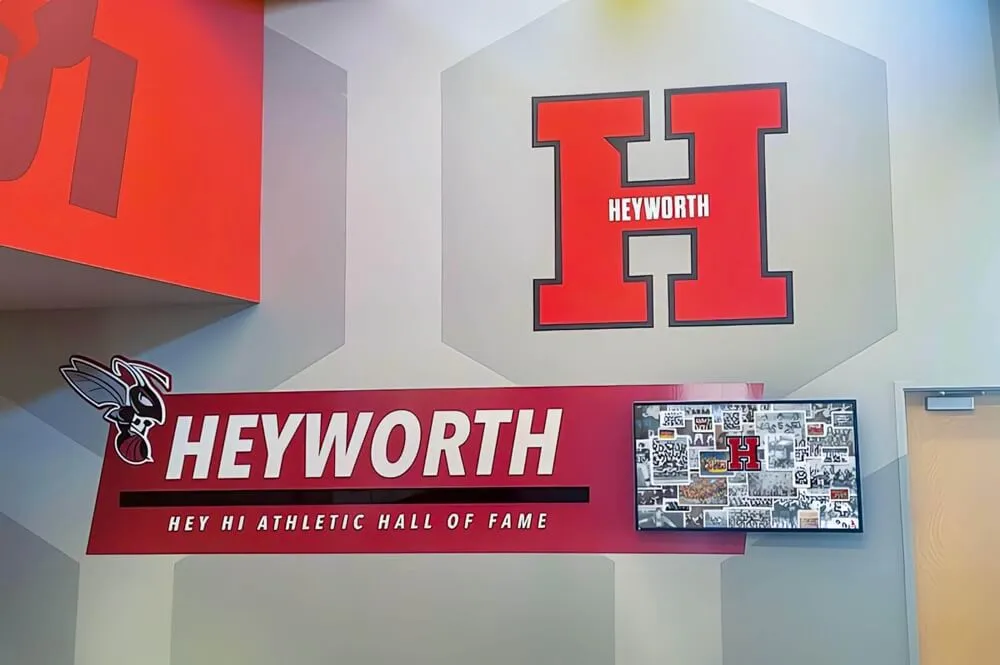
A well-organized athletic honor wall makes criteria visible to current athletes—reinforcing what the program values every day, not just at banquet season
Athletic Achievement Award Wording: Templates and Examples
The inscription on an athletic achievement award communicates the weight of the recognition. Generic wording (“For Excellence in Athletics”) tells athletes and visitors little about why the award was given. Specific, intentional language transforms a plaque into a record.
Award Name Wording
The award name itself should reflect the criteria. Consider these options:
- Athletic Achievement Award — broad, works across sports and levels
- Scholar-Athlete Award — signals the dual academic-athletic standard
- Distinguished Performance Award — implies statistical or competitive threshold
- Coach’s Award for Excellence — conveys a discretionary recognition with coaching judgment at the center
- Program Leadership Award — emphasizes team contribution over individual stats
- Sportsmanship and Character Award — separates this recognition clearly from performance categories
Inscription Wording Templates
For an individual performance award:
Presented to [Athlete Name] in recognition of exceptional athletic performance, competitive leadership, and dedication to the [School Name] [Sport] program. [Year].
For a scholar-athlete award:
Awarded to [Athlete Name] for outstanding achievement in both academic and athletic pursuits, demonstrating that excellence in the classroom and on the field are equally within reach. [Year].
For a sportsmanship or character award:
Presented to [Athlete Name] in recognition of exemplary conduct, respect for opponents and officials, and consistent commitment to the values of the [School Name] athletic program. [Year].
For a career or senior achievement award:
Honoring [Athlete Name]’s [number]-year commitment to [School Name] athletics—for the records set, the teammates inspired, and the standard of excellence carried forward. Class of [Year].
Wording Tips
- Include the year — it anchors the award in a specific season for future reference
- Name the sport or program — generic inscriptions lose specificity over time
- Avoid superlatives without backup — “best ever” or “greatest” create problems when the next exceptional athlete earns the same award
- Match formality to the award tier — a career achievement award warrants longer language than a single-season honor
Schools designing combined academic and athletic award language can review how academic all-American award criteria are structured for guidance on blending achievement language across both domains.
Types of Athletic Achievement Awards Schools Give
Most programs run several award categories simultaneously. Separating them clearly prevents a single award from carrying too much weight and ensures that different forms of excellence receive distinct recognition.
Most Valuable Player / Most Valuable Athlete
The MVP or MVA award is the most visible recognition in most programs. Because it carries the highest profile, it also generates the most scrutiny. Define it around measurable criteria—win contribution, statistical output, postseason performance—rather than leaving it entirely to coach discretion. Transparent criteria reduce the perception of favoritism.
All-Sport Athletic Achievement Award
Some schools give a cross-sport achievement award to a student-athlete who competed in multiple programs and excelled in each. This award acknowledges the rare multi-sport athlete and signals that the school values breadth of participation alongside depth. Criteria typically require varsity letters in two or more sports and a performance or character threshold in each.
Comeback and Improvement Awards
An award recognizing measurable improvement—a wrestler who moved from a losing to a winning record, a runner who cut two minutes off a personal best—honors the process as much as the result. These awards are especially motivating in programs with wide talent ranges because they give athletes who are not conference champions a concrete goal worth striving toward. Exploring youth sports awards ideas reveals how many schools structure improvement-based recognition alongside traditional performance awards.
Academic-Athletic Excellence Award
This dual award requires meeting separate thresholds in both GPA and athletic performance. Because it demands excellence across two demanding domains simultaneously, it tends to carry significant prestige. Schools choosing to formalize this award often display recipients separately from purely athletic awards, signaling the distinct standard involved.
Team Impact and Leadership Awards
Some of the most lasting athletic recognition acknowledges contributions that do not appear in a box score—the senior who mentored junior athletes, the team captain who sustained culture through a difficult season, or the athlete who organized community service on behalf of the program. These awards require clear nomination criteria and documented review but often become the ones recipients mention decades later.
Display Ideas for Athletic Achievement Awards
Recognition only reaches its potential when it remains visible. An award presented at a banquet and then stored in a box accomplishes a fraction of what the same award displayed in a high-traffic location achieves. Here are the display approaches schools use most effectively.
Traditional Plaques and Trophy Cases
Engraved plaques mounted in hallways near gyms, locker rooms, or main entrances remain a reliable display format. When organized chronologically by sport and year, a plaque wall creates a visible record of the program’s history. The limitation is physical—plaque walls fill up, and older plaques often require relocation or removal as new recipients are added.
Traditional trophy cases display hardware alongside photographs and program artifacts. They work well for championships and major individual trophies but become harder to maintain as collections grow. Schools facing trophy case capacity challenges can review practical approaches to managing athletic trophy collections to avoid losing recognition history to storage constraints.
Digital Recognition Boards and Touchscreen Displays
Touchscreen athletic achievement displays solve the capacity problem entirely. Because they store information digitally, a single screen can display every recipient of every award category across every year the program has existed—without running out of wall space.
Features schools value most in digital athletic achievement displays:
- Searchable athlete profiles — visitors browse by name, sport, year, or award type
- Photo and video integration — action photographs and highlight clips accompany award records
- Cloud-managed updates — coaches or ADs add new recipients from any device without scheduling IT support
- QR code access — athletes and families scan to view their full recognition record on a personal device
- Scheduled publishing — new recipients appear on-screen the moment the AD publishes them
- Donor and sponsor recognition — award sponsorships display alongside the recognition, supporting program fundraising goals

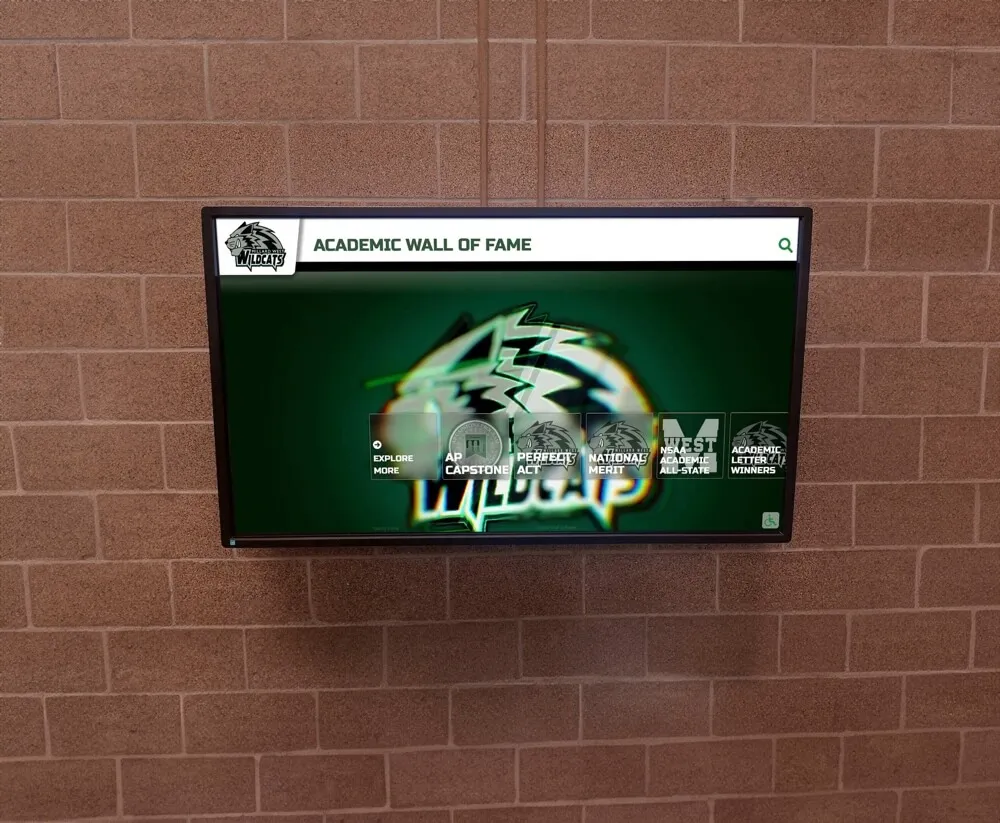
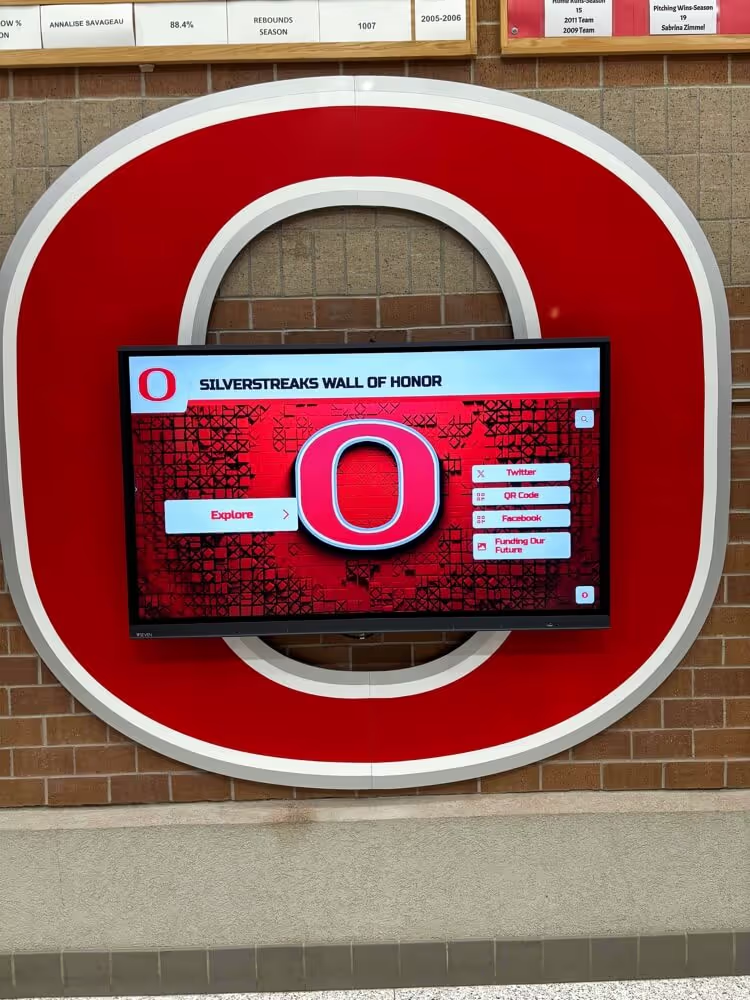
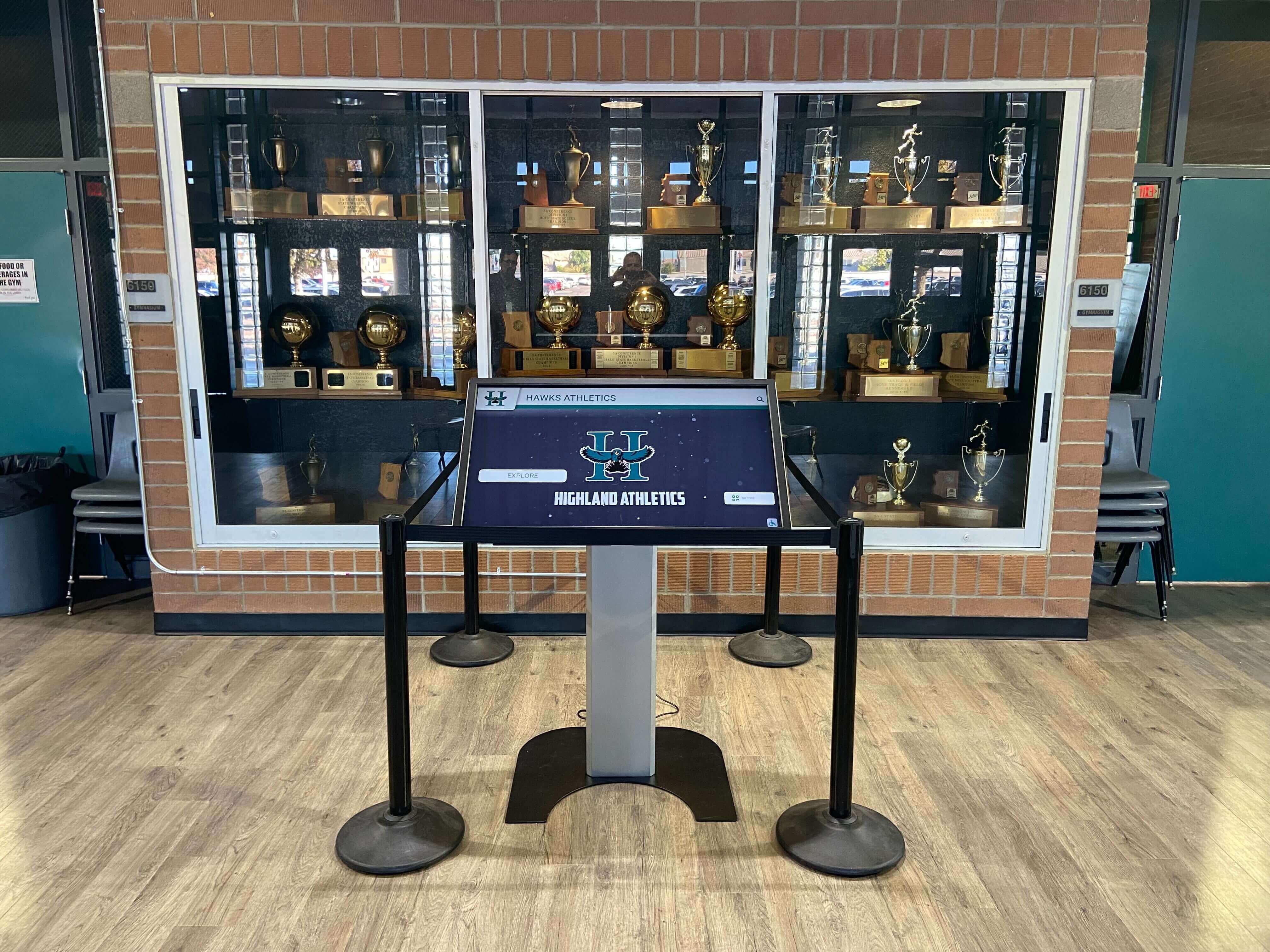
A single touchscreen display can surface every athletic achievement award the program has ever given—browsable by sport, year, and athlete
Athletic Hall of Fame Integration
Many schools integrate athletic achievement award archives into a broader athletic hall of fame. This approach connects individual season awards to career-level recognition, allowing visitors to trace an athlete’s full arc from freshman season honors through hall of fame induction. Understanding the best tools available for building athletic halls of fame helps schools choose between physical installations, digital platforms, and hybrid approaches that combine both.
Hallway and Locker Room Displays
Award recognition mounted near practice spaces and locker rooms serves a different purpose than lobby displays. Athletes pass these displays every day during the season—they become ambient motivation rather than ceremonial displays. Schools placing athletic achievement award boards in these locations often frame them as aspirational rather than archival, listing current-year award criteria alongside past recipients so athletes see exactly what they are competing toward.
Preserving Athletic Achievement Award History
Award programs outlast the administrators who build them. Ensuring that records survive staff turnover, facility renovations, and program restructuring requires intentional documentation practices from the beginning.
Building an Award Archive
A complete athletic achievement award archive includes:
- Recipient names with correct spelling — for every year the award has been given
- Award category and criteria version — criteria often evolve; recording which version applied in each year prevents retroactive confusion
- Supporting documentation — nomination forms, coach notes, or vote tallies where applicable
- Photographs — of both the recipient and the award itself
- Ceremony or event context — which banquet, which season, and any notable program context for the year
Schools that have built strong academic awards archives at the high school level apply the same documentation rigor to athletic programs—treating award records as institutional history rather than administrative paperwork.
Digital Archive Advantages
Maintaining award records in a cloud-based platform rather than binders or spreadsheets offers several practical advantages:
- Records remain accessible to future administrators without requiring file transfer
- Alumni can request to view or share their recognition records without visiting campus
- The archive remains intact through physical facility changes
- Recognition can be displayed dynamically on screens throughout the building without manual updates
Schools exploring how academic and athletic recognition archives can serve reunion programming, donor engagement, and alumni outreach find that digital displays serving multiple recognition purposes provide better long-term ROI than single-purpose physical installations.
See how schools display athletic achievement awards on interactive touchscreen systems.
Common Athletic Achievement Award Mistakes to Avoid
Even well-intentioned programs make predictable errors that reduce award credibility over time.
Criteria drift. When coaches apply standards inconsistently year to year, recipients and non-recipients both notice. Review criteria in writing at the start of each season and document any adjustments.
Over-awarding. Giving achievement awards to a large percentage of the team dilutes meaning. If every participant receives an achievement award, the award communicates participation, not achievement. Reserve recognition categories with that intent—and keep achievement awards for the subset of athletes who met the documented threshold.
Under-displaying. An award presented at a banquet and never displayed again has a half-life measured in weeks. Display systems—whether plaque walls, trophy cases, or digital screens—extend the award’s motivational value across the full athletic community for years.
Losing historical records. Awards given before digital record-keeping existed are frequently lost when administrators retire or facilities change. A retroactive digitization project recovering historical award records often reveals names and stories that strengthen program identity and alumni engagement.
Vague wording. Generic inscriptions create confusion when alumni, future coaches, or community members encounter the award. Specific language explaining what the recipient earned and why preserves the award’s meaning independently of anyone who was present at the original ceremony.
FAQ: Athletic Achievement Awards
What criteria should an athletic achievement award use?
The strongest athletic achievement awards combine at least two of the following: measurable performance benchmarks (statistics, win record, postseason placement), an academic eligibility threshold, a character or sportsmanship standard, and coach or committee endorsement. All criteria should be documented in writing before nominations open.
What should be written on an athletic achievement award?
An effective inscription includes the award name, the recipient’s full name, the school or program name, the sport if applicable, and the year. Adding one sentence describing the specific achievement or standard the recipient met—rather than a generic phrase like “for excellence”—significantly increases the award’s long-term meaning.
How should schools display athletic achievement awards?
Schools with limited wall space benefit most from digital touchscreen displays, which can surface every recipient of every award category without physical constraints. Schools with strong tradition preferences often combine plaque walls for high-profile awards with a digital archive for comprehensive historical access. The most effective programs use both.
Can one student win multiple athletic achievement awards?
Yes, and many award programs specifically design tiered recognition to acknowledge the full scope of exceptional athletes. A student might earn a performance award, a scholar-athlete award, and a sportsmanship award in the same season. Each award should be independently documented and displayed, with distinct criteria making clear why each recognition was separate and earned.
How often should athletic achievement award criteria be reviewed?
Most programs benefit from a brief annual review at the start of each season to confirm that criteria still reflect program values and competitive context. A more thorough review every three to five years—potentially involving coaches, faculty, and alumni—ensures criteria remain rigorous and relevant as the program evolves.
Should award criteria be published publicly?
Publishing criteria—whether in a student athlete handbook, on the athletic department website, or on a display near the trophy case—creates accountability and gives athletes a clear target. Programs with public criteria consistently report that athletes reference them during the season, which is precisely the motivational effect strong recognition programs are designed to achieve.
Ready to display athletic achievement awards in a way that motivates current athletes and connects alumni to program history?