



Every school has stories worth telling—from the class of 1965 that built the first gymnasium, to last year’s graduate now serving in Congress, to the alumna who invented medical technology saving lives worldwide. Yet these narratives often remain scattered across yearbooks, archived newsletters, and fading memories instead of inspiring current students and strengthening institutional identity.
Alumni walls transform scattered stories into cohesive recognition displays that celebrate accomplished graduates, demonstrate that education creates lasting impact, and inspire current students to envision their own futures. The most effective alumni recognition extends beyond simple name lists to create engaging experiences connecting generations of students while showcasing how your institution shapes lives and communities.
This comprehensive guide explores alumni wall ideas ranging from traditional architectural installations to modern interactive digital displays. Whether you’re recognizing distinguished graduates, celebrating milestone reunions, showcasing career accomplishments, or strengthening alumni engagement, these strategies help create recognition that benefits both honored alumni and current students.
Effective alumni recognition serves multiple strategic purposes: it strengthens relationships with graduates who become donors and volunteers, creates role models inspiring current students toward excellence, demonstrates institutional impact to prospective families, and builds pride within school communities. Organizations excelling at alumni walls view recognition as investment in engagement rather than mere acknowledgment.

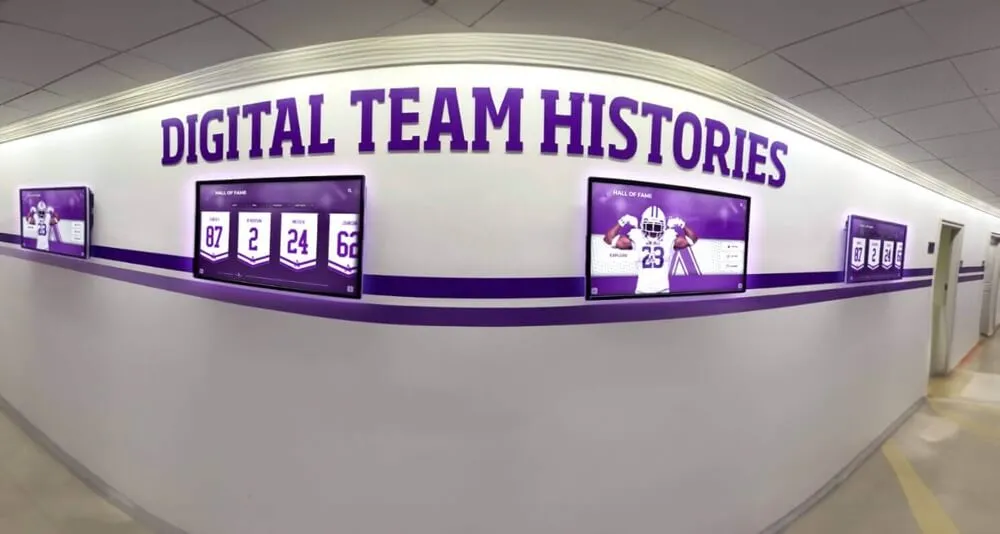
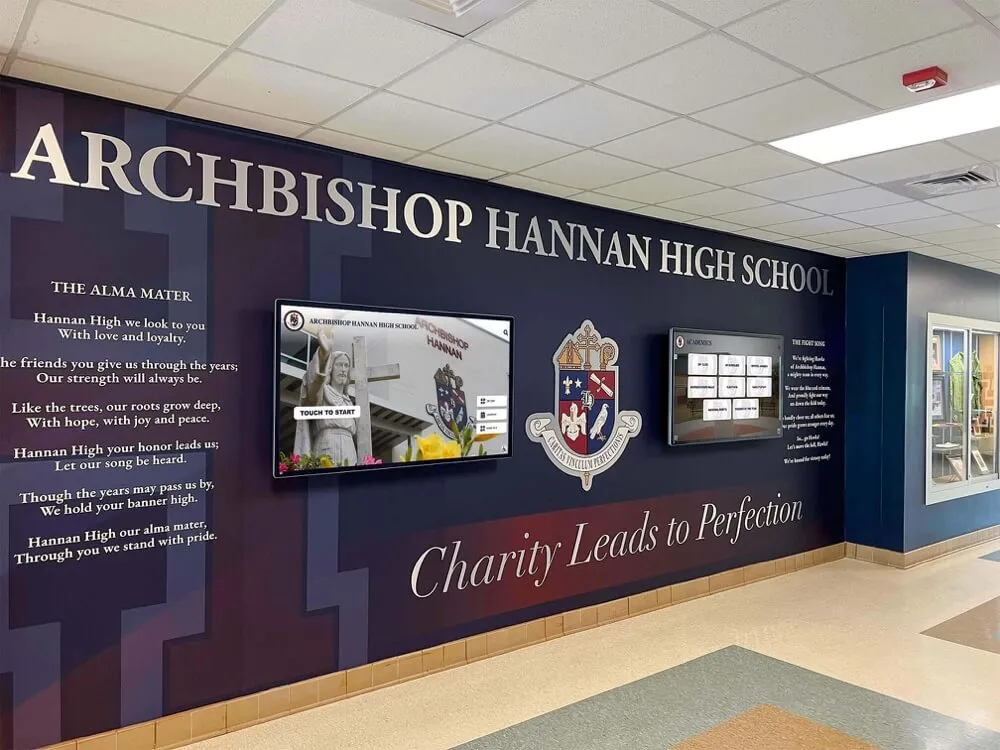
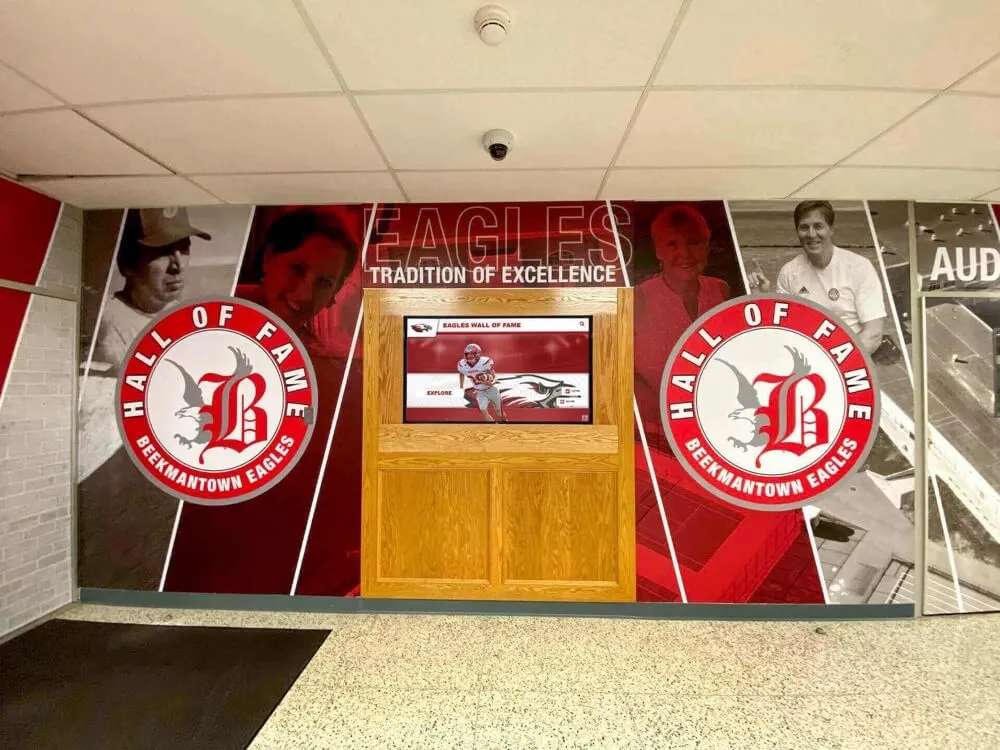
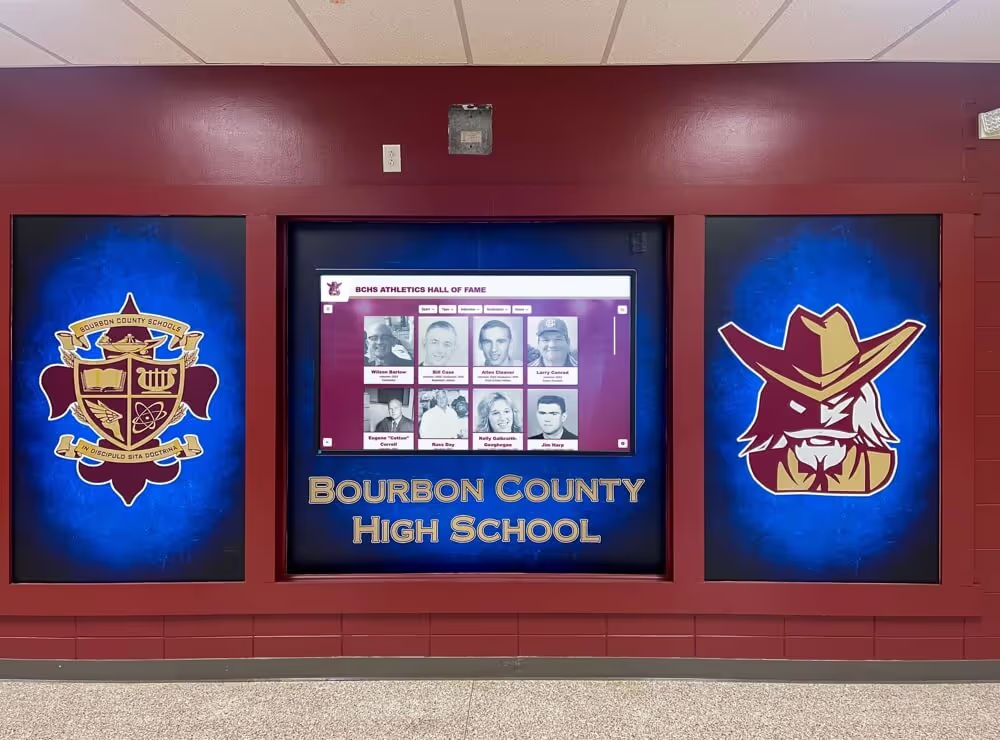
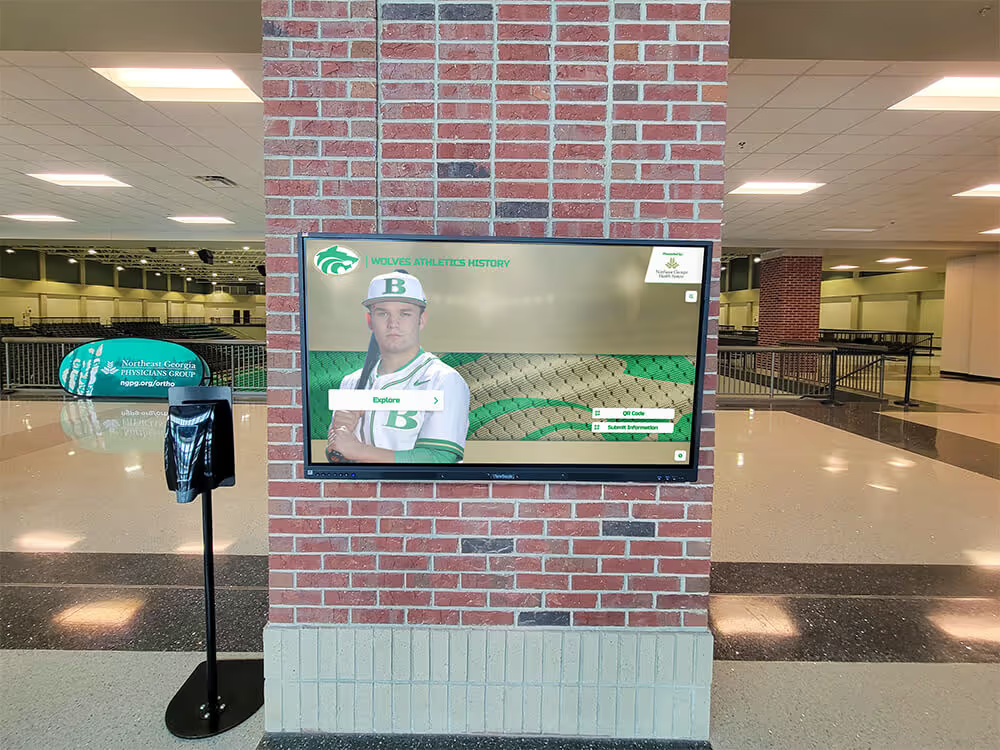
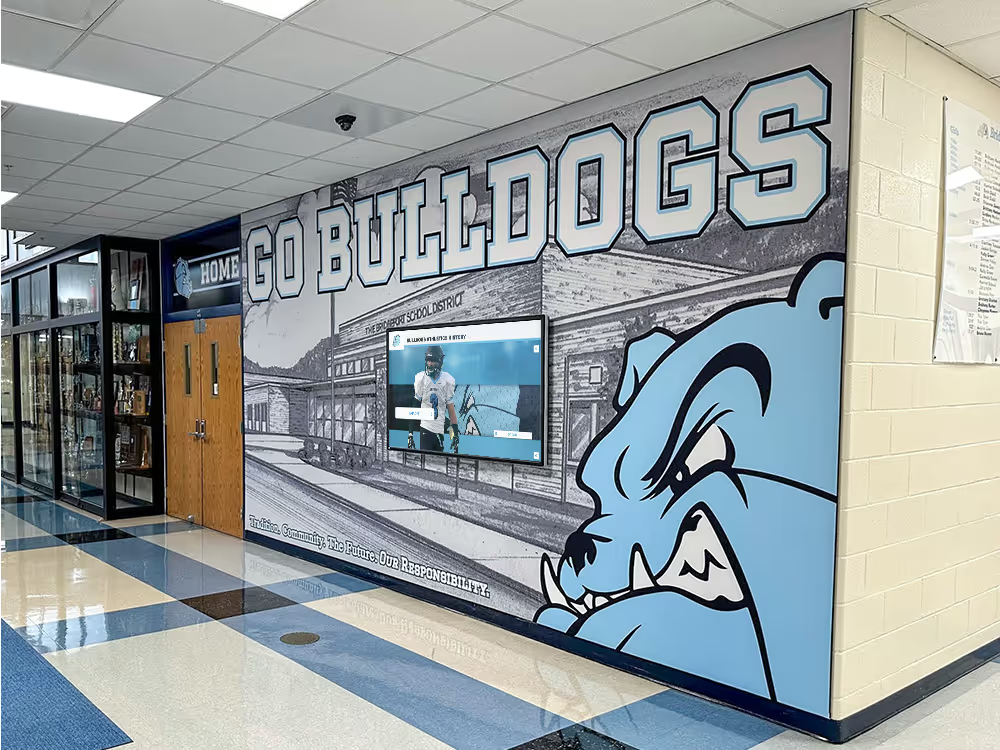
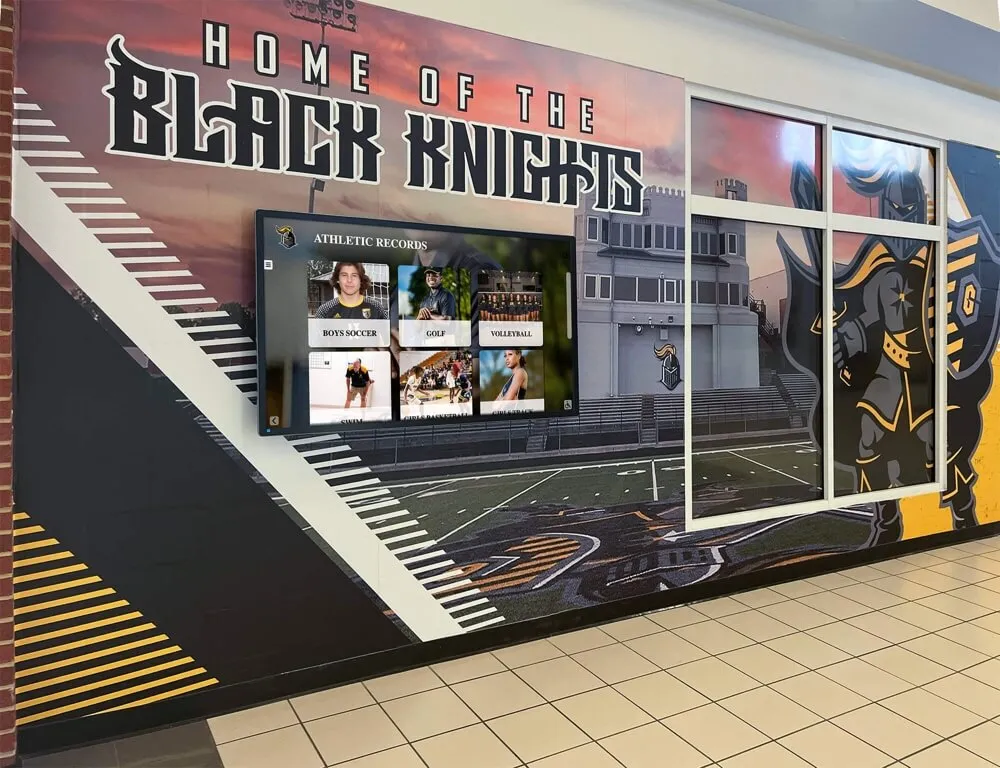
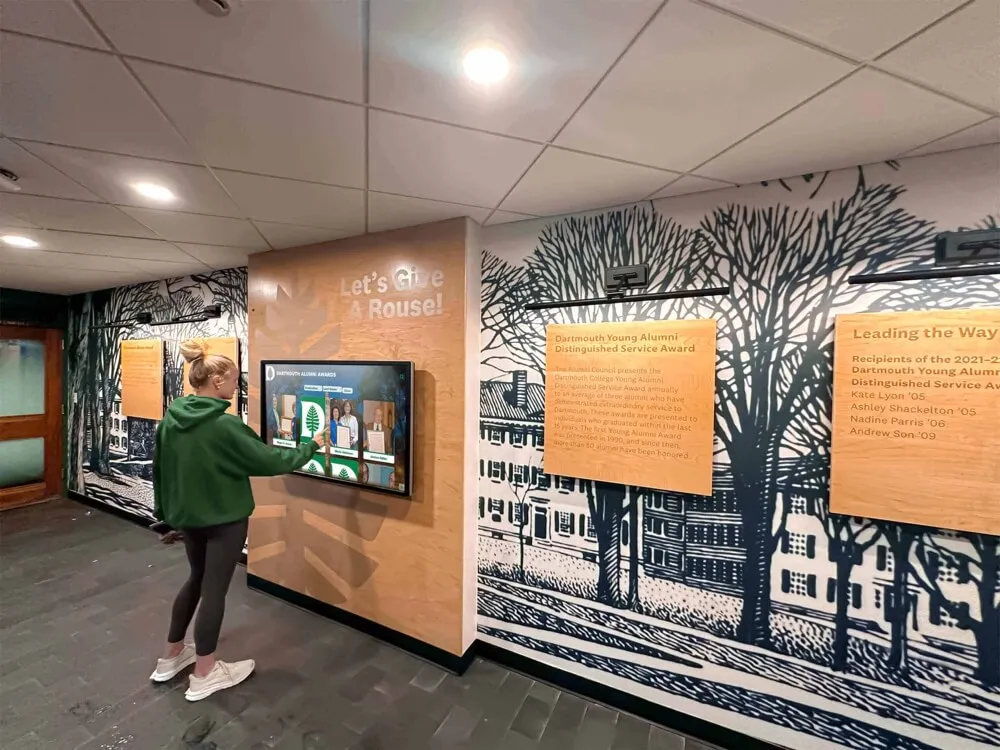
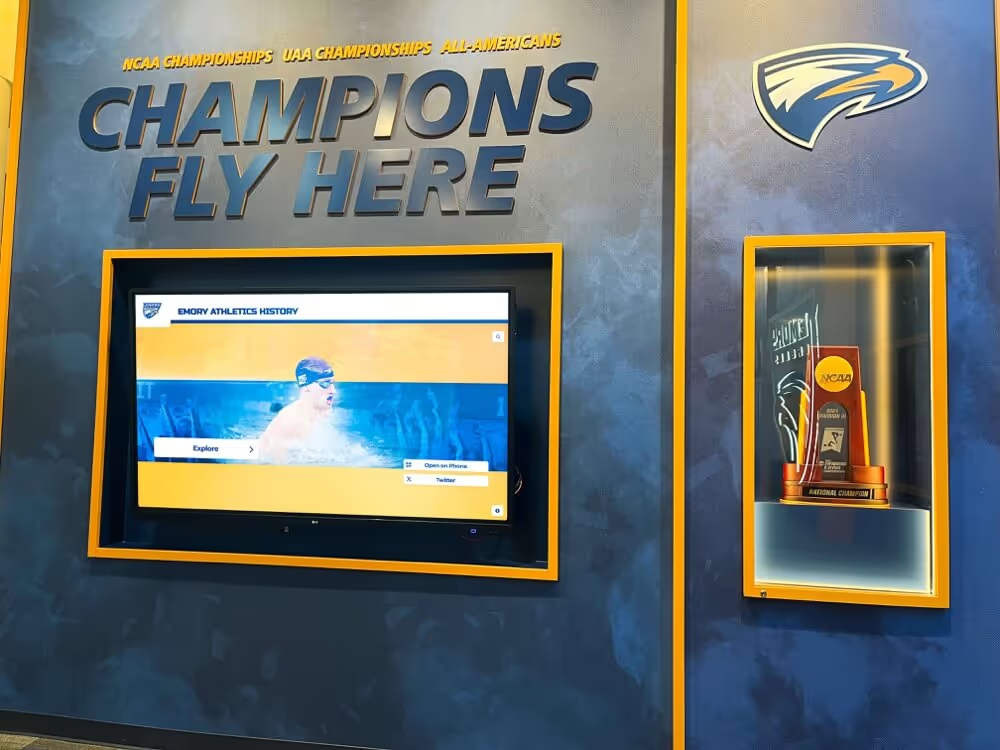
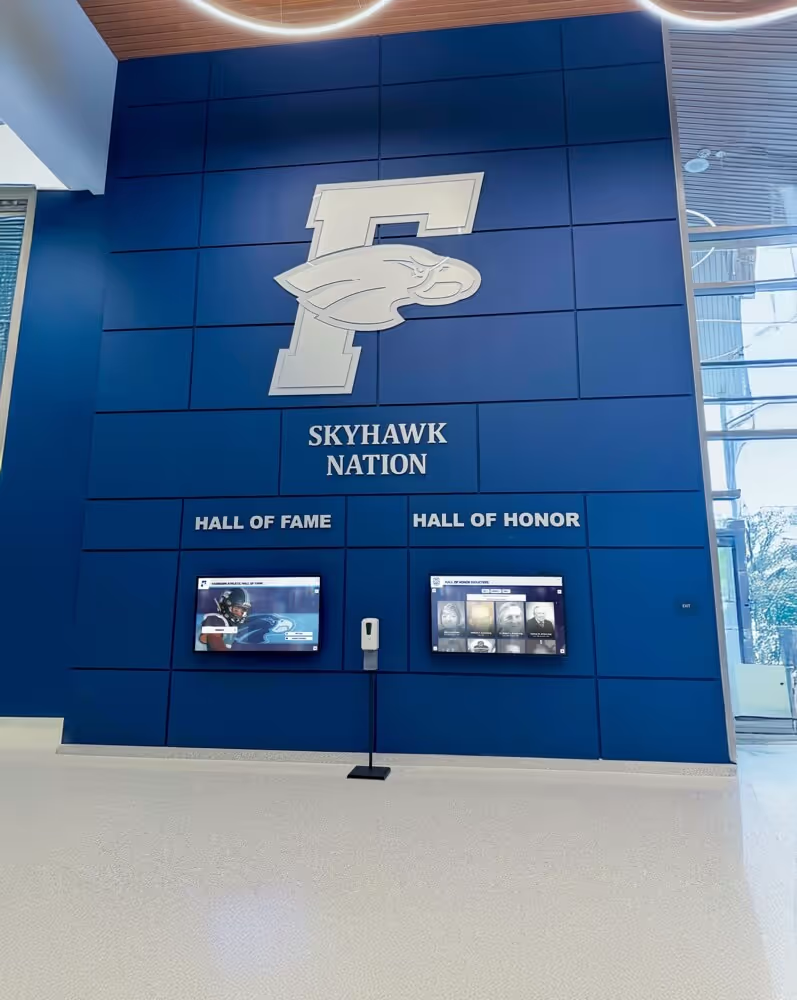
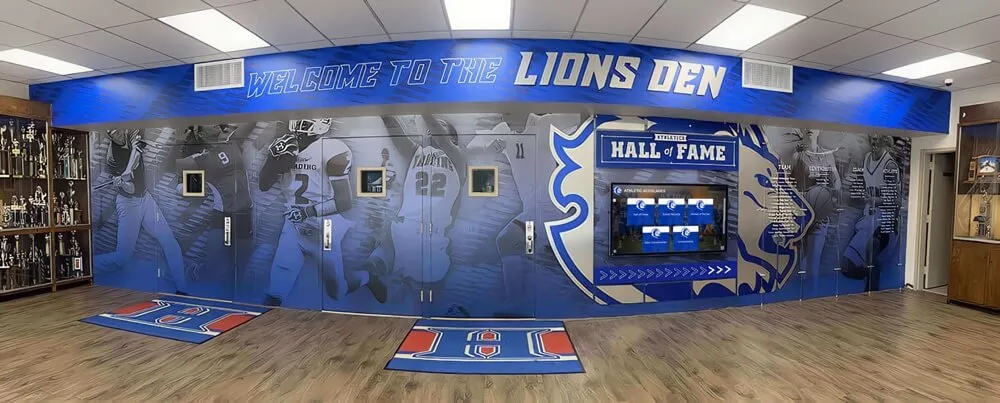
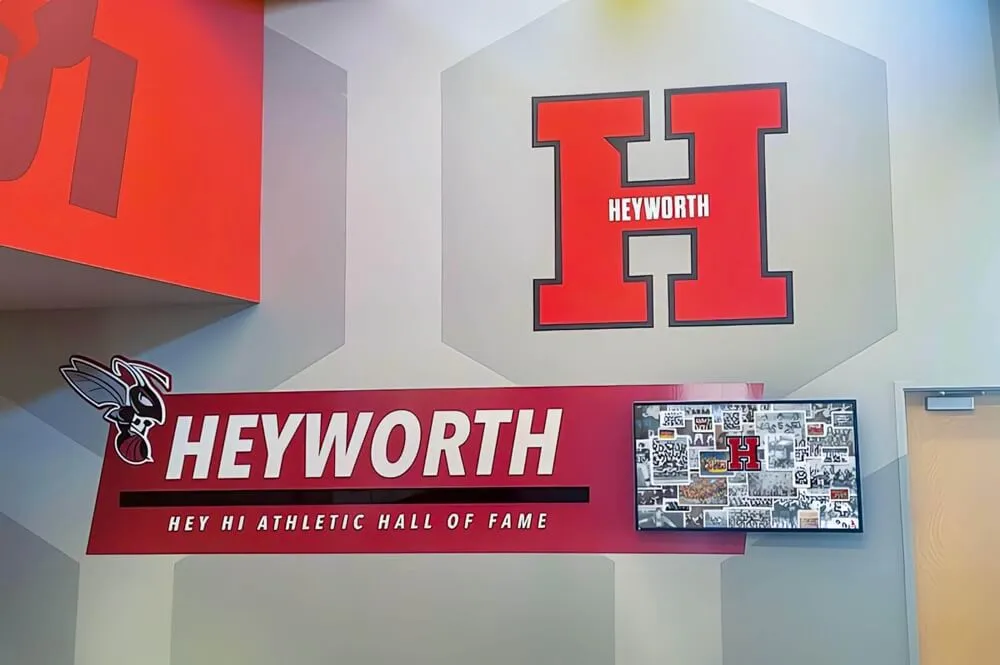
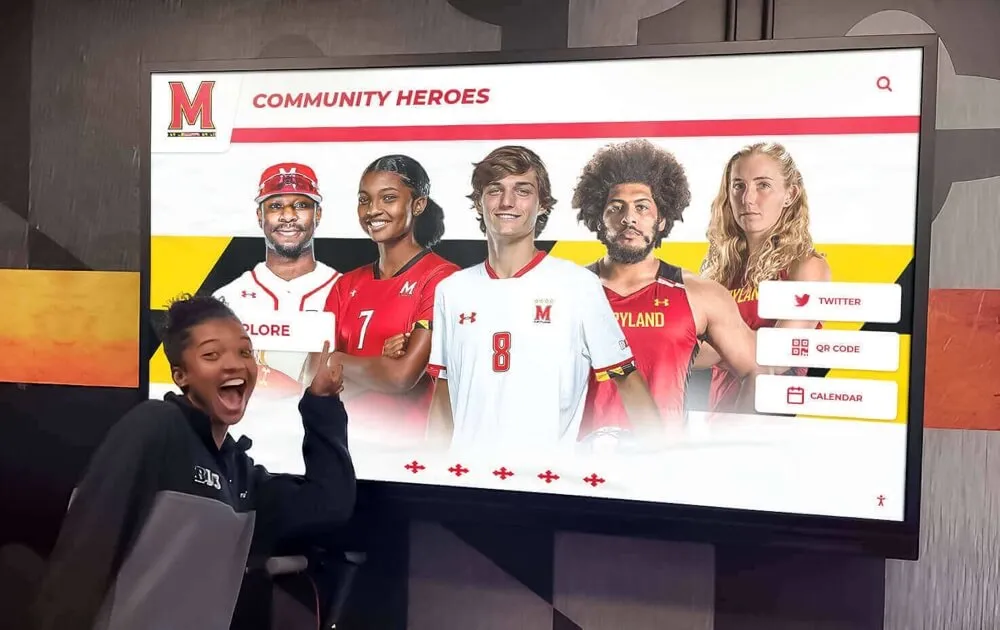
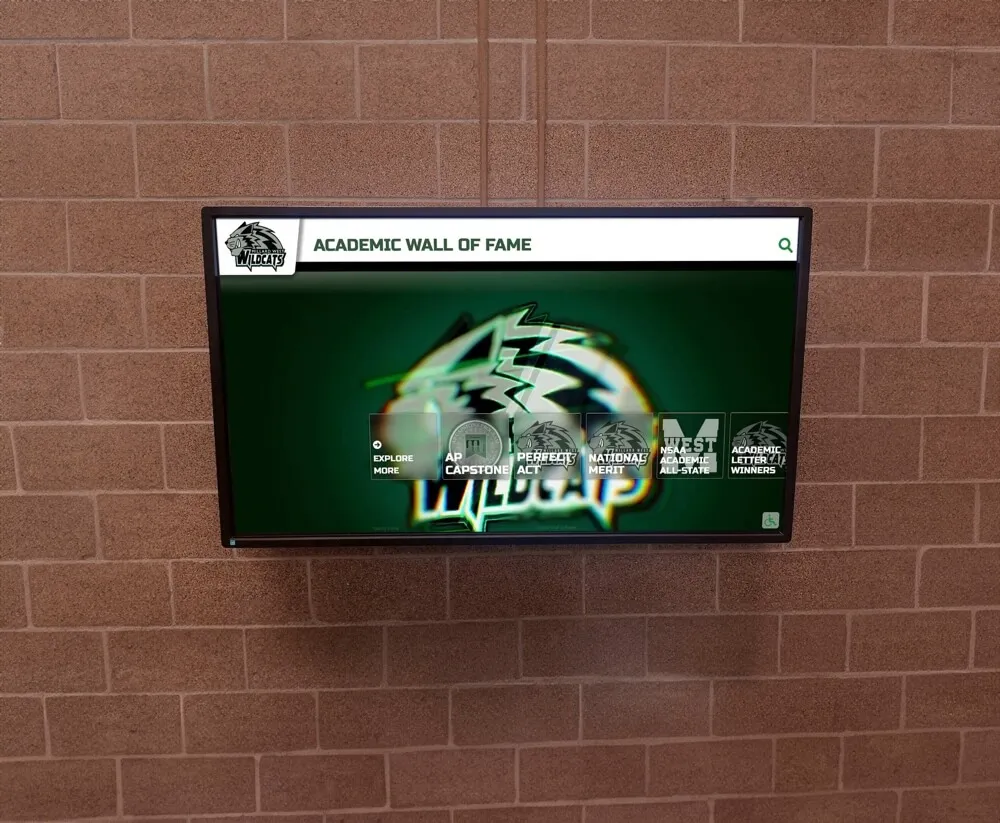
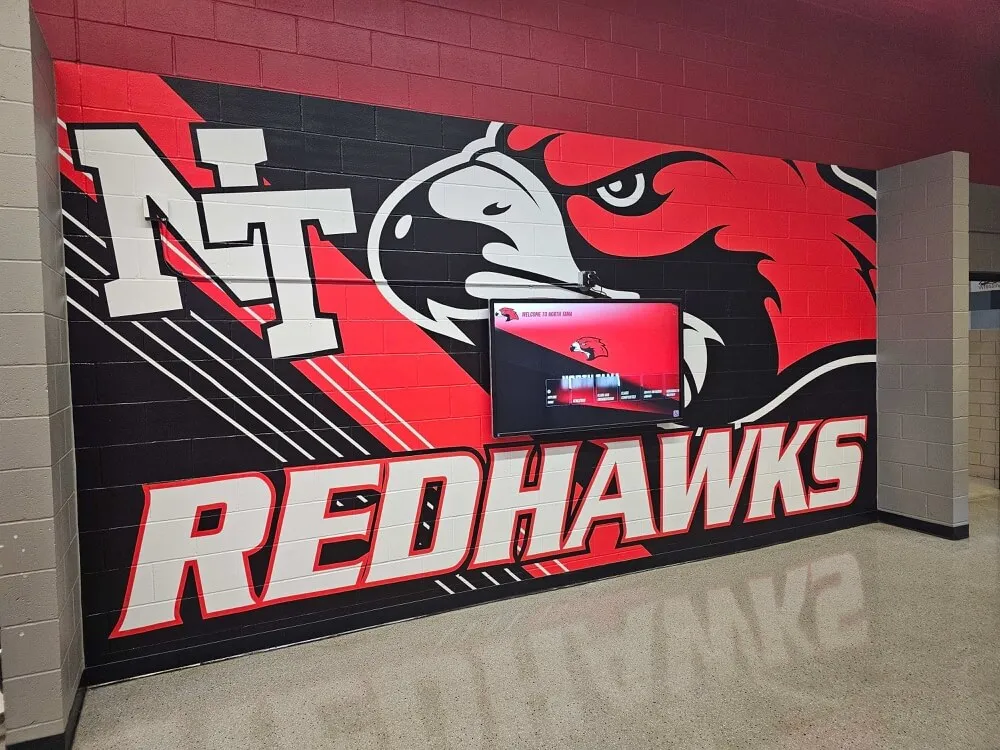
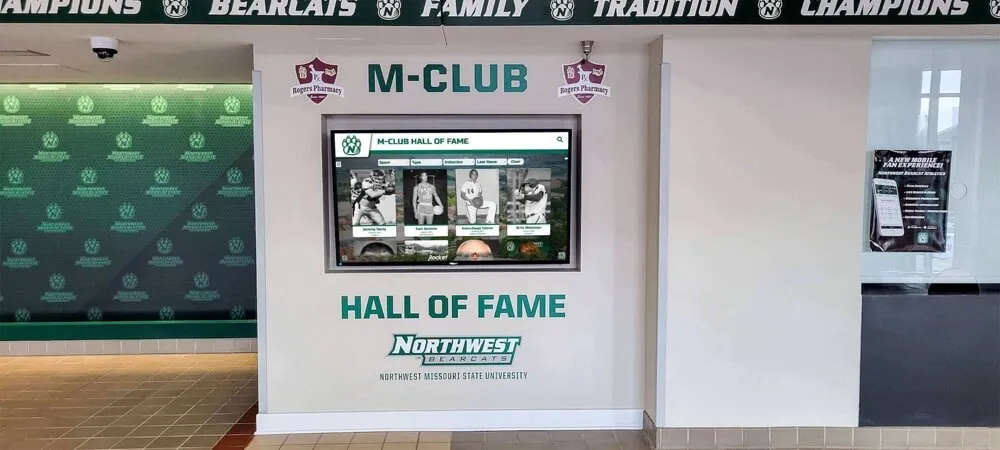
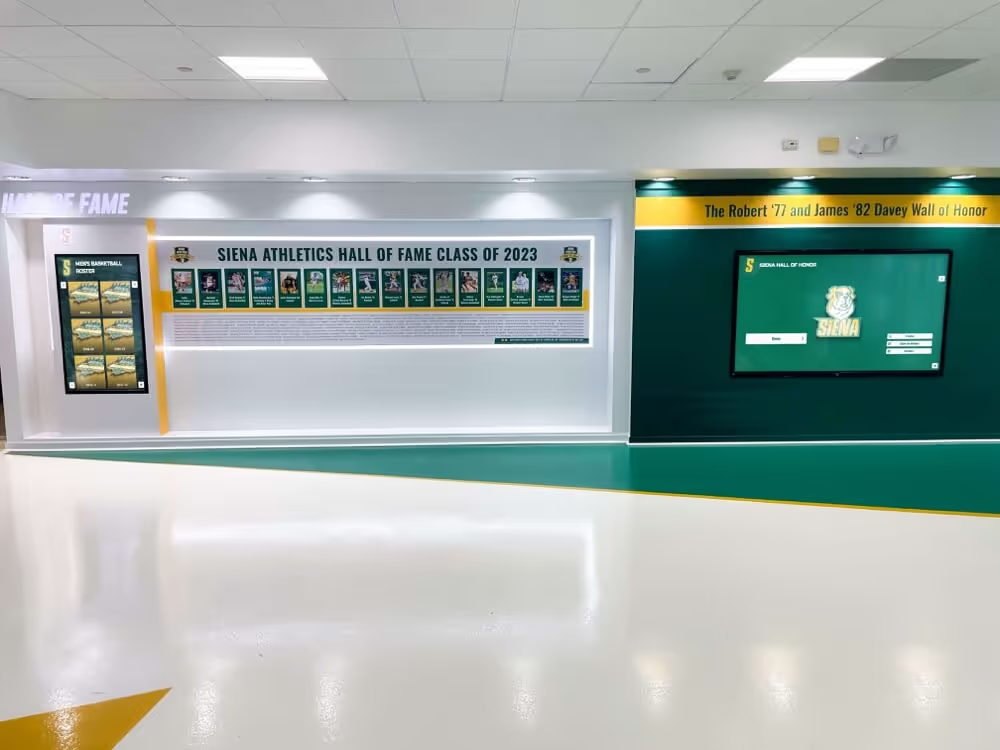
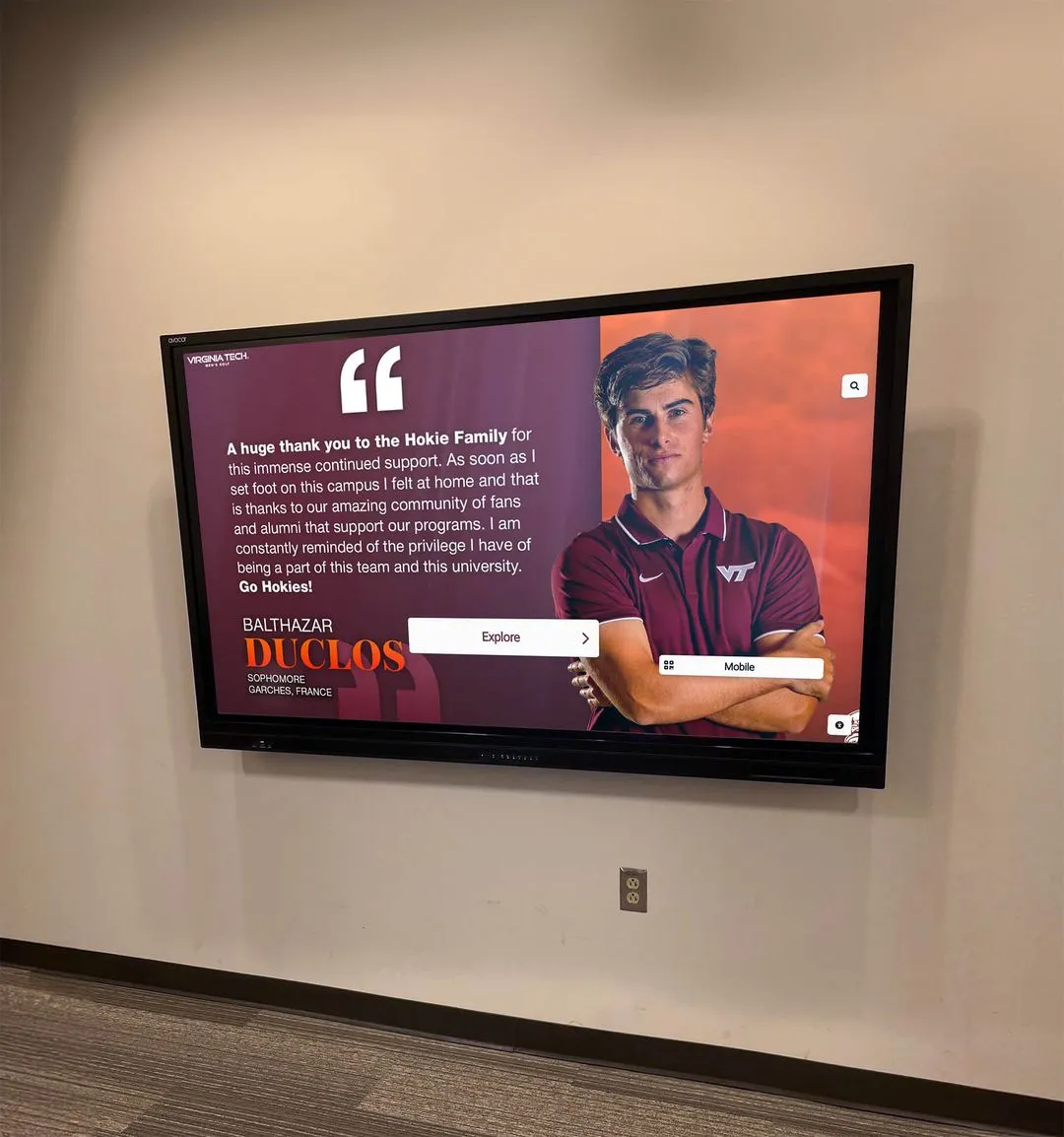
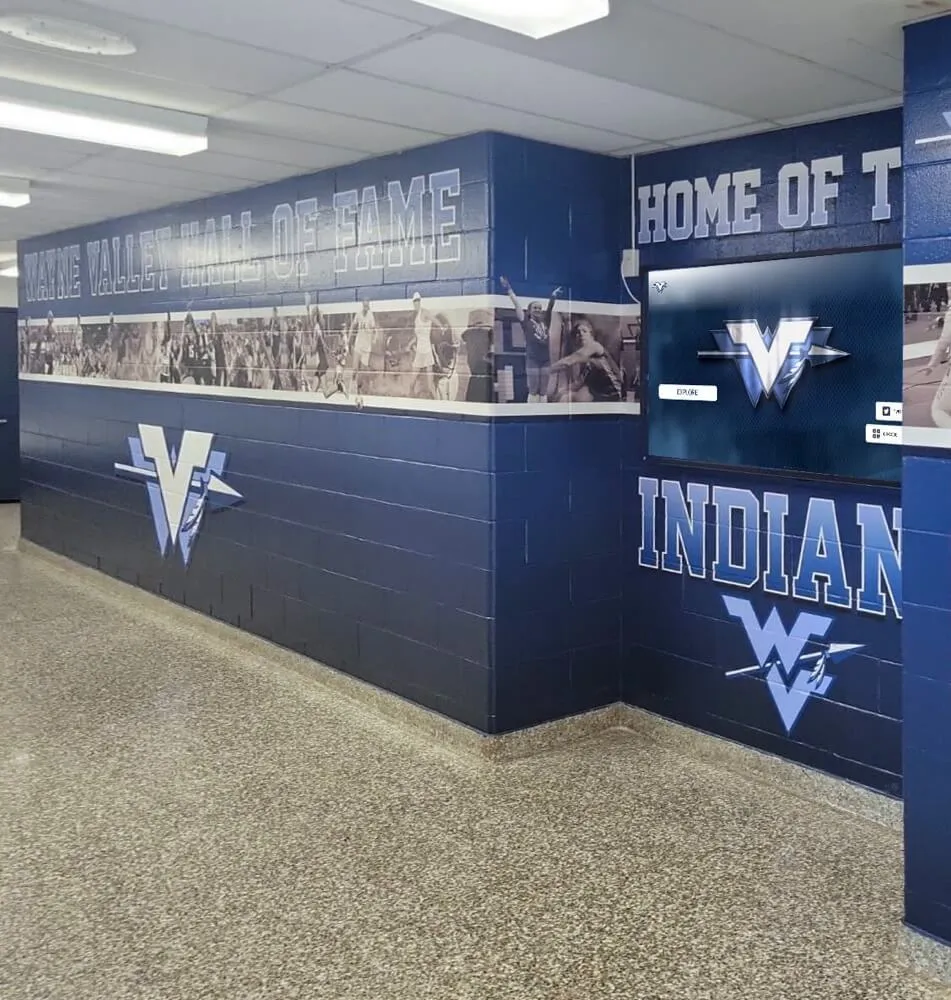
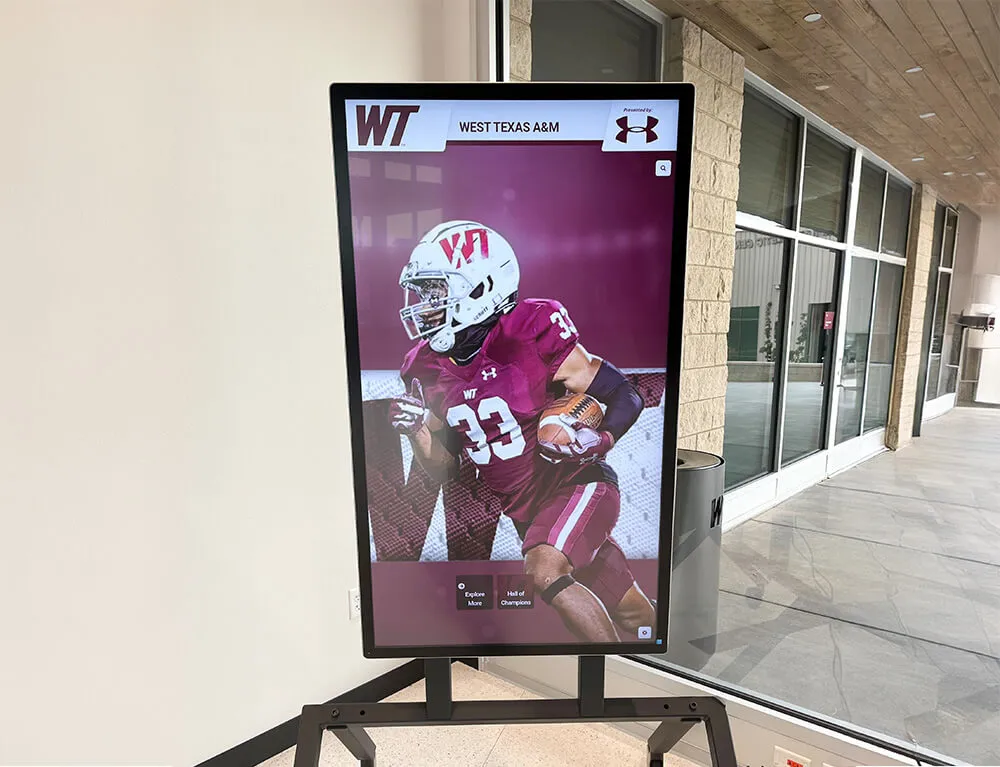
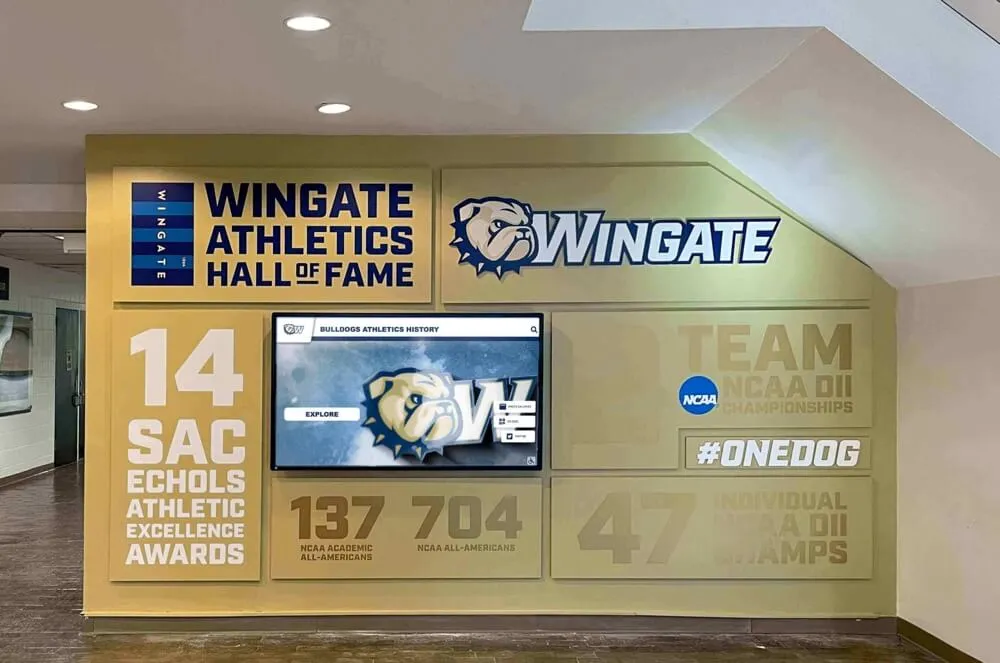
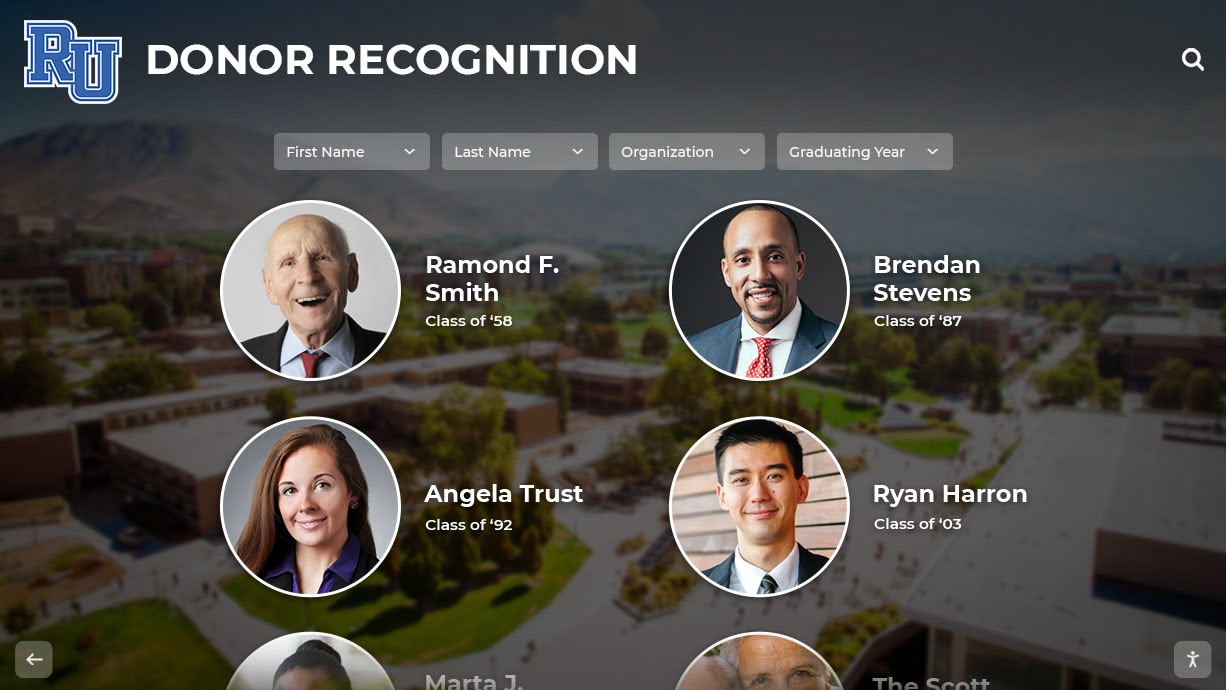
Modern alumni displays showcase graduate achievements while creating visual connections between past and present students
Understanding Alumni Wall Purpose and Value
Before exploring specific design approaches, schools must clarify how alumni recognition serves institutional goals and stakeholder needs.
Building Bridges Between Generations
Alumni walls create tangible connections spanning decades:
Current Student Inspiration
- Career path examples showing diverse post-graduation possibilities
- Achievement demonstrations proving that background doesn’t limit potential
- Role models reflecting student body diversity and varied interests
- Success narratives from relatable individuals who sat in the same classrooms
- Connection to institutional legacy reinforcing that students join communities extending across generations
Research from educational development associations indicates that schools with visible alumni recognition report 15-25% higher student aspirations and college enrollment rates compared to institutions without prominent graduate showcases.
Alumni Relationship Strengthening Recognition influences graduate engagement:
- Public acknowledgment validates that institutions remember and value contributions
- Permanent displays demonstrate that accomplishments receive lasting recognition
- Visible appreciation encourages continued involvement through volunteering and giving
- Peer recognition creates social motivation for service and philanthropy
- Campus visits to see personal recognition strengthen emotional connections to institutions
Development offices report that alumni featured in recognition displays demonstrate 40-60% higher giving rates and 3-4 times greater volunteer participation compared to non-recognized graduates.
Demonstrating Institutional Impact
Alumni walls provide powerful evidence of educational value:
Prospective Family Influence
- Graduate success demonstrates education quality and institutional effectiveness
- Career diversity showcases preparation for varied post-graduation paths
- Notable achievements create pride and excitement about joining communities
- Geographic dispersion shows that graduates succeed nationwide and globally
- Multi-generational attendance patterns validate enduring institutional quality
Admission directors consistently rank alumni recognition among top five factors influencing prospective family perceptions during campus tours.
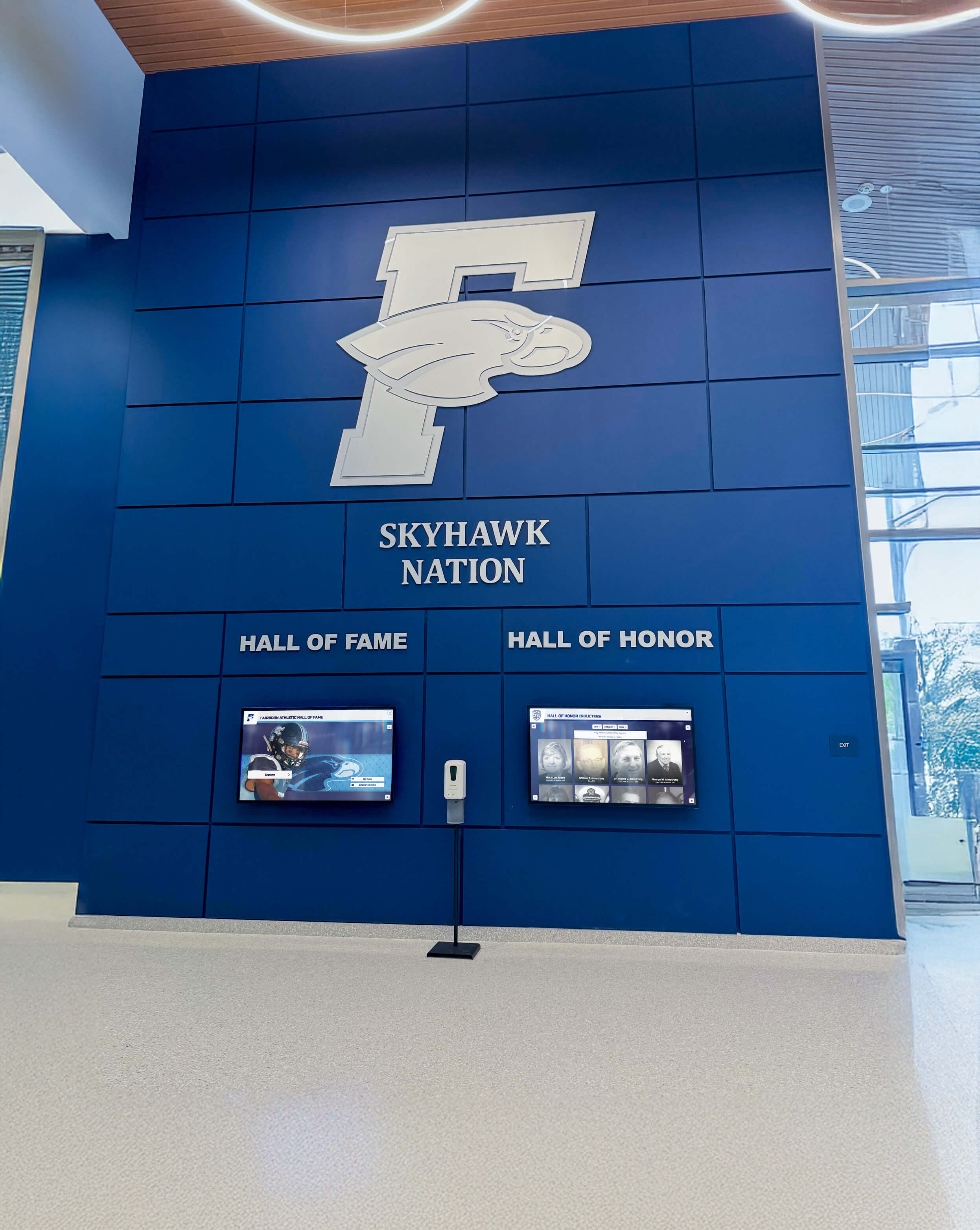
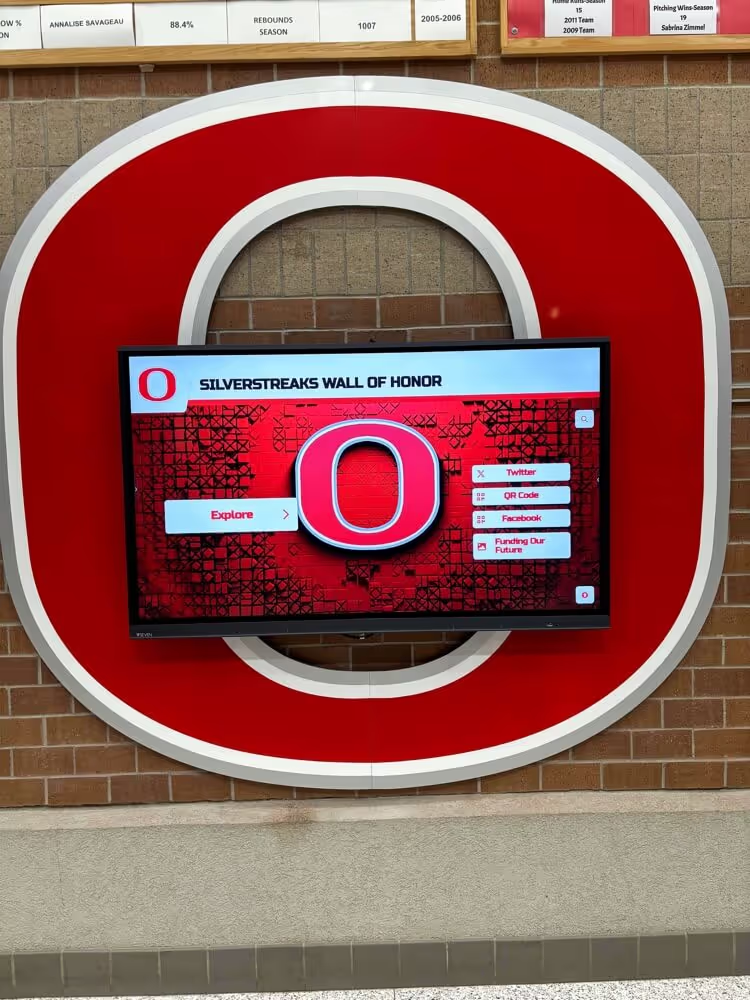
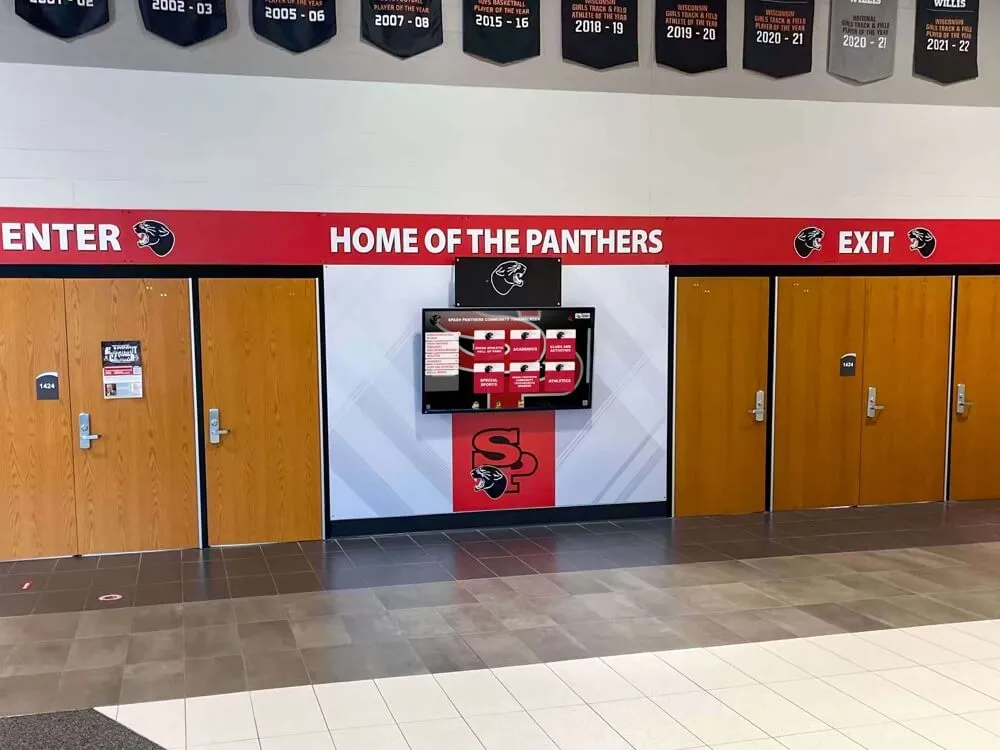
Strategic placement in high-traffic areas ensures alumni recognition remains visible to students, families, and visitors
Community Pride and Identity Recognition reinforces organizational character:
- Distinguished graduates validate institutional mission and educational approaches
- Diverse achievements demonstrate comprehensive preparation beyond single dimensions
- Service-oriented alumni reflect values-based education priorities
- Geographic and professional reach shows impact extending beyond local communities
- Multi-decade recognition spans demonstrating sustained excellence across eras
Traditional Alumni Wall Design Approaches
Conventional installations offer timeless dignity while integrating with architectural environments.
Portrait Wall Galleries
Classic photographic displays remain popular for prominent alumni recognition:
Design Elements Traditional portrait walls typically include:
- Formal portrait photographs maintaining visual consistency
- Individual plaques with names, graduation years, and accomplishments
- Chronological or achievement-based organization systems
- Coordinated framing creating cohesive aesthetic presentation
- Dedicated gallery spaces in lobbies or prominent corridors
- Professional lighting highlighting portraits and biographical details
Implementation Considerations Schools planning portrait galleries should understand:
- Professional portrait photography costs $200-500 per alumnus
- Custom framing and mounting ranges from $150-400 per portrait
- Space constraints limit how many alumni receive recognition
- Consistent portrait standards require coordination across decades
- Adding new portraits requires wall space and facilities coordination
- Visual consistency becomes challenging as photography styles evolve
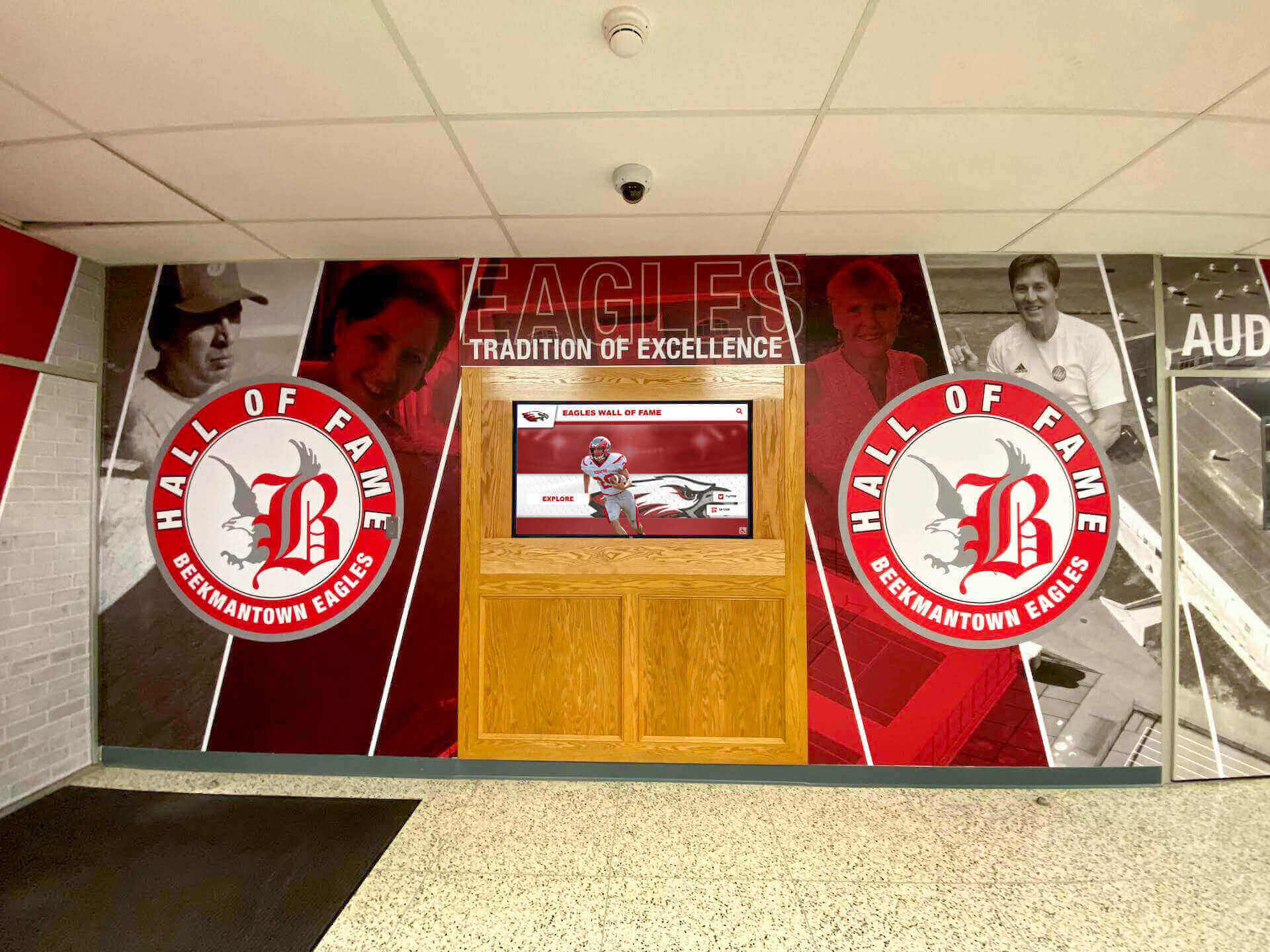
Traditional portrait galleries create formal recognition spaces honoring distinguished alumni
Best Practices Successful portrait galleries:
- Establish consistent portrait specifications ensuring visual cohesion
- Include detailed selection criteria explaining recognition requirements
- Plan expansion space accommodating future inductees
- Integrate institutional branding through colors, logos, and design elements
- Position in locations maximizing visibility during tours and daily activities
- Create accompanying narrative plaques explaining selection processes and criteria
Brick and Plaque Recognition Walls
Architectural installations integrate alumni recognition into physical spaces:
Installation Types Common architectural approaches include:
- Engraved brick walkways with individual donor and alumni recognition
- Bronze plaque walls listing graduates by class year or achievement category
- Stone monuments featuring multiple alumni on unified displays
- Building entrance features incorporating recognition into architectural design
- Courtyard or outdoor spaces with permanent recognition elements
Organizations exploring donor wall concepts can reference donor wall design guides for additional architectural recognition strategies.
Advantages of Permanent Materials Physical installations provide:
- Perceived permanence communicating lasting institutional commitment
- Weather-resistant materials suitable for outdoor environments
- Traditional aesthetics appealing to certain stakeholder preferences
- No ongoing power or technology requirements
- Architectural integration creating seamless facility incorporation
Limitations to Consider Architectural approaches involve:
- Fixed capacity creating space constraints as programs grow
- High initial costs ranging from $15,000-100,000+ for comprehensive installations
- Difficult updates when adding new alumni or correcting information
- Weather exposure requiring maintenance and potential replacement
- Limited information capacity restricting biographical detail and storytelling
Class Year Recognition Displays
Organized chronologically by graduation class:
Organization Strategies
- Dedicated sections for each graduation year or decade
- Milestone anniversary highlighting (25th, 50th reunions)
- Class gift recognition acknowledging reunion contributions
- Composite class photos alongside individual achievement highlights
- Historical context describing significant events during each era
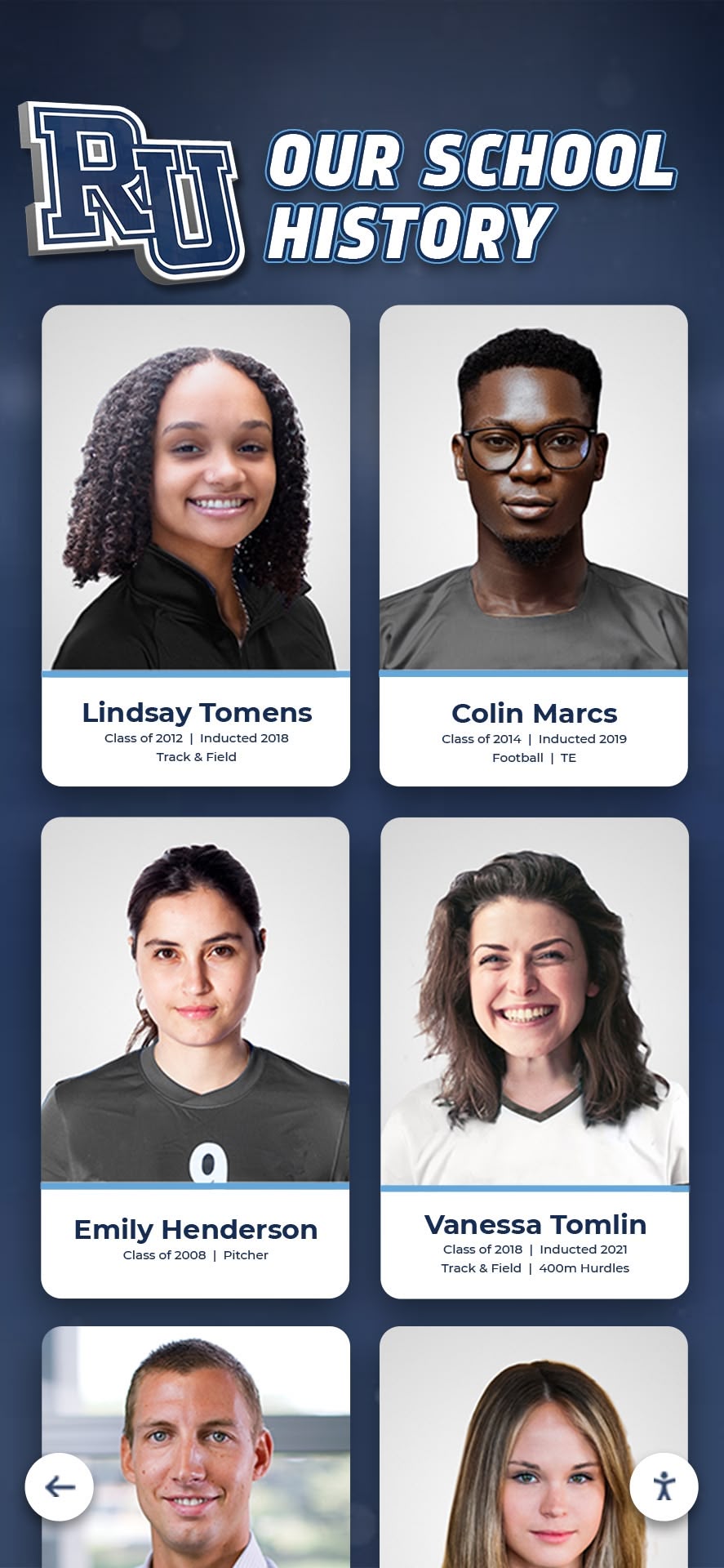
Class-based organization creates natural structures for alumni recognition while facilitating reunion engagement
Class Recognition Benefits Chronological organization enables:
- Easy alumni self-location by remembering graduation years
- Reunion programming integration during milestone anniversary events
- Peer group recognition creating social motivation for participation
- Historical progression showing institutional evolution across decades
- Class gift acknowledgment when reunion committees contribute to recognition funding
Schools implementing academic recognition programs often coordinate alumni walls with broader achievement recognition systems ensuring comprehensive institutional celebration.
Modern Digital Alumni Wall Solutions
Technology enables recognition approaches overcoming traditional space limitations while creating engaging interactive experiences.
Interactive Touchscreen Alumni Displays
Digital platforms transform static name lists into comprehensive alumni databases accessible through intuitive interfaces:
Core Capabilities Modern digital alumni walls provide:
- Unlimited recognition capacity eliminating space constraints limiting physical displays
- Searchable databases enabling visitors locating specific graduates instantly
- Detailed biographical profiles sharing career accomplishments, personal stories, and life updates
- Photo galleries displaying multiple images across education and career spans
- Video testimonials featuring alumni discussing experiences and offering advice
- Filter capabilities organizing alumni by career field, geography, graduation decade, or achievement type
- Social sharing tools enabling alumni celebrating their recognition with personal networks
- Mobile accessibility through QR codes extending recognition beyond physical campus
Solutions like Rocket Alumni Solutions offer comprehensive digital recognition platforms specifically designed for educational institutions, providing unlimited showcase capacity with intuitive content management.
Engagement Advantages Interactive displays create experiences impossible with traditional approaches:
- Students spend 5-10 minutes exploring alumni stories rather than seconds scanning names
- Career exploration becomes interactive as students research fields matching their interests
- Search functionality transforms recognition into educational tool for student research
- Multimedia presentations bring alumni to life through voices and video rather than static photos
- Real-time updates maintain relevance by showcasing recent graduates alongside historical figures
Organizations implementing digital recognition displays report 10-15 times higher student engagement compared to traditional static alumni walls.
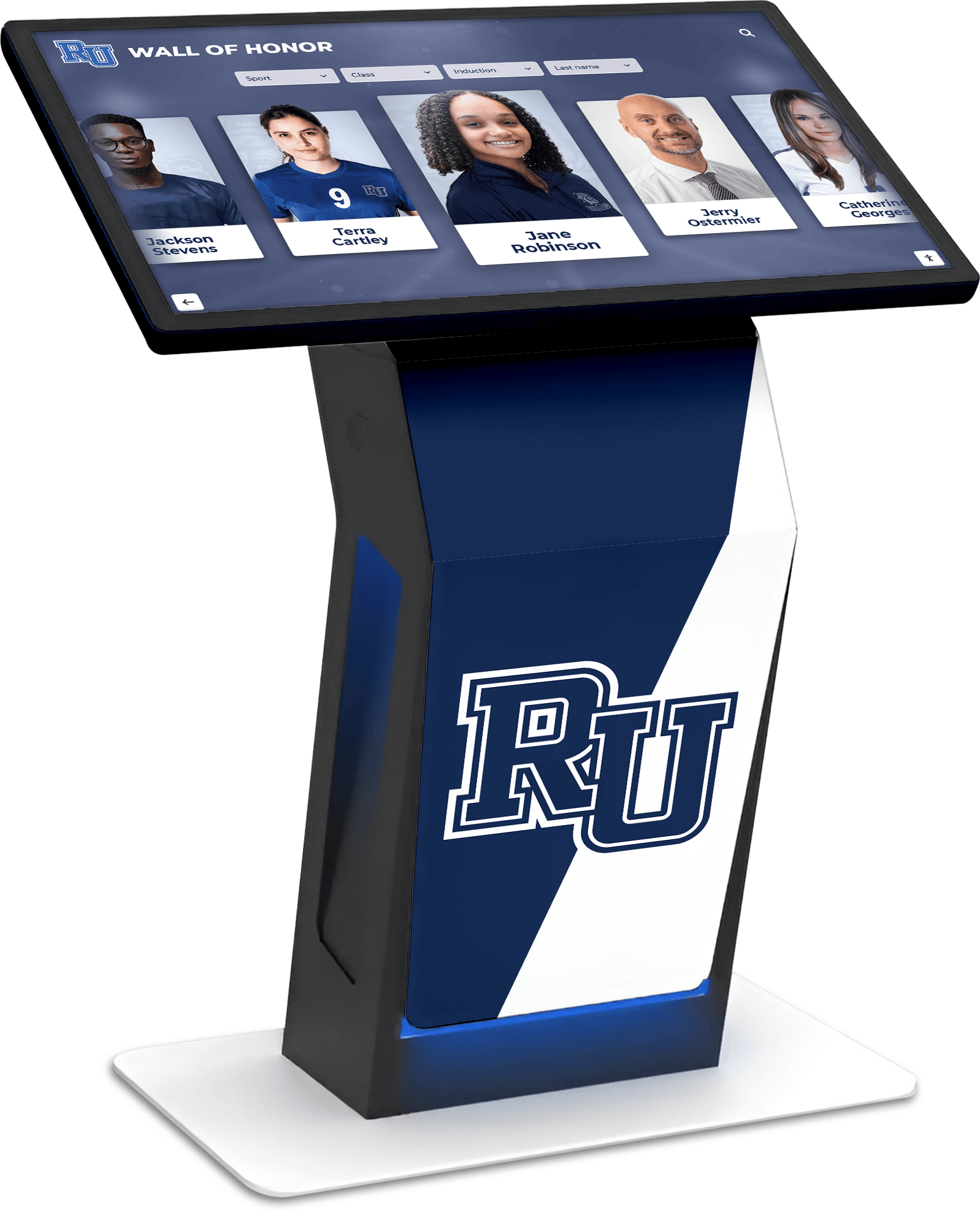
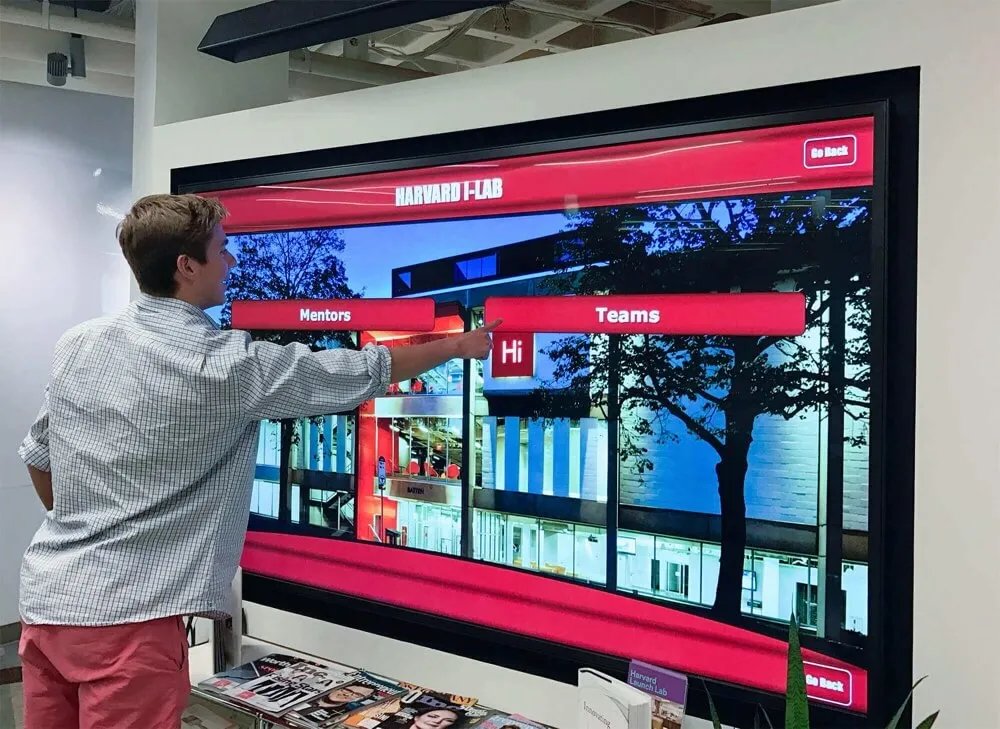
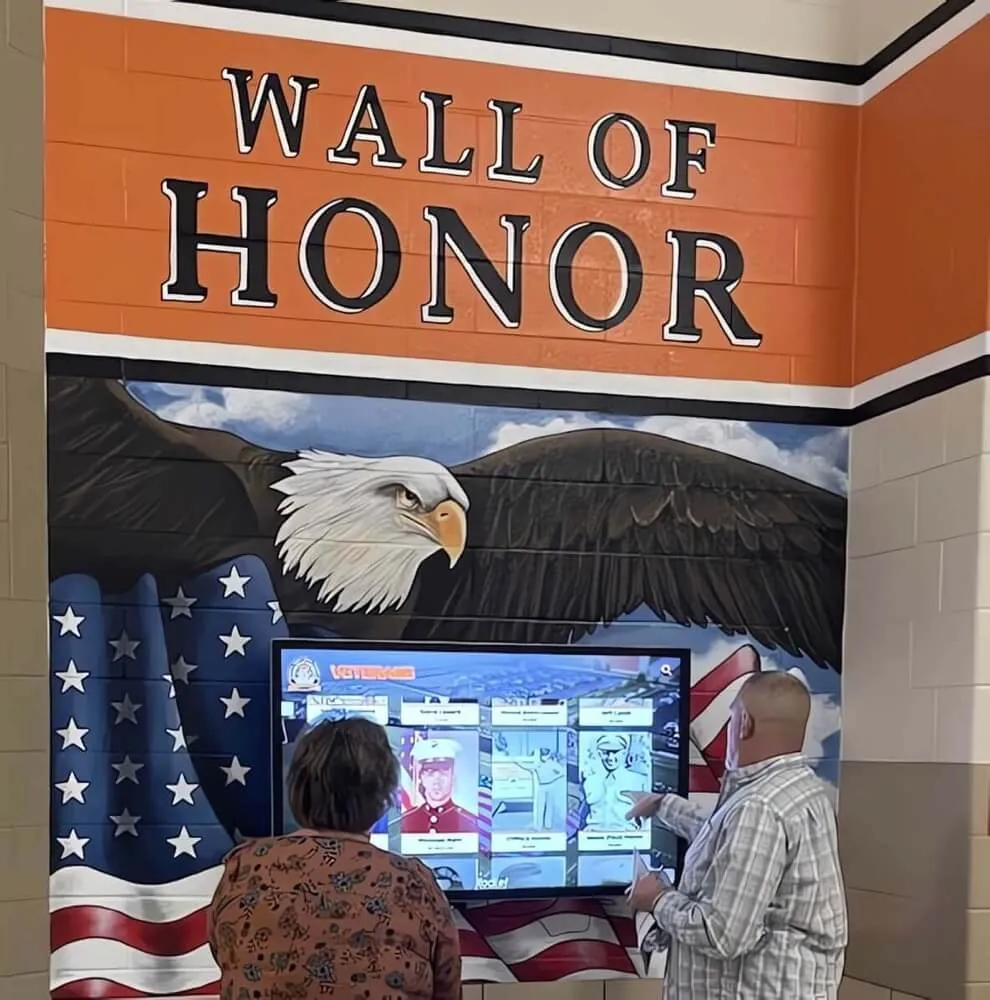
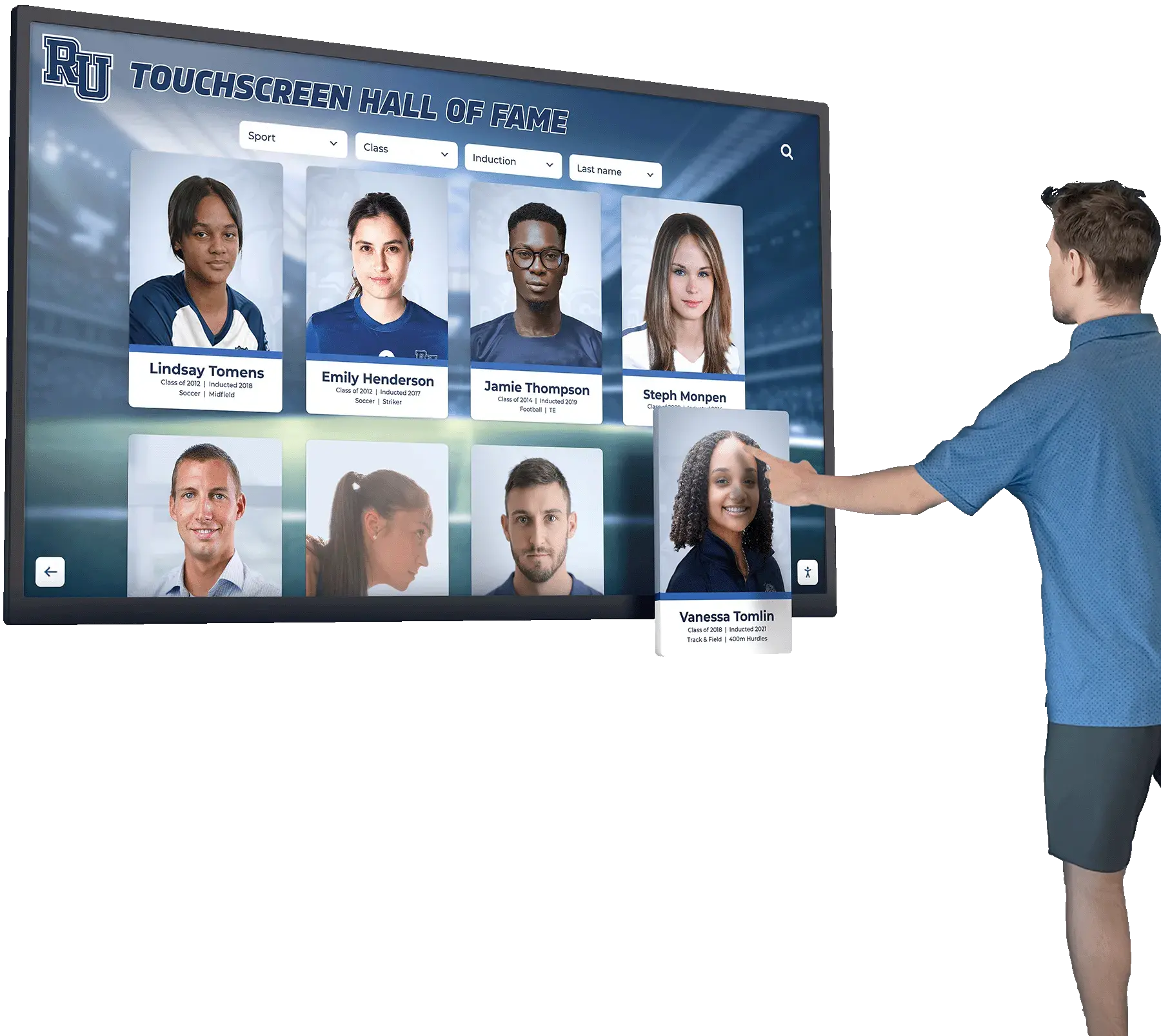
Touchscreen interfaces enable students to explore comprehensive alumni profiles through intuitive navigation
Cloud-Based Content Management Systems
Digital platforms eliminate traditional maintenance challenges while enabling sophisticated recognition strategies:
Administrative Benefits
- Add new alumni profiles instantly without construction or vendor coordination
- Update biographical information remotely as alumni achieve new accomplishments
- Bulk import historical alumni data accelerating initial implementation
- Scheduled publishing coordinates recognition timing with reunion events or induction ceremonies
- Role-based permissions enable alumni office staff, development teams, and even featured alumni to contribute appropriate updates
- Template systems accelerate new profile creation ensuring consistency
- Analytics tracking engagement patterns and popular search queries
Alumni relations staff report 80-90% reduction in time spent managing recognition displays after implementing digital systems, freeing resources for relationship building and event programming.
Alumni Collaboration Features Modern platforms enable graduate participation:
- Alumni portals for submitting career updates and accomplishment information
- Photo contribution systems allowing alumni sharing current professional headshots
- Draft review processes enabling featured alumni verifying accuracy before publication
- Networking facilitation by connecting current students with alumni in specific careers
- Testimonial recording capabilities capturing video messages for current students
This collaborative approach transforms alumni walls from administrative obligations into engagement tools strengthening institutional relationships.
Extended Reach and Accessibility Digital recognition extends beyond physical campus:
- Web-based alumni directories accessible worldwide to graduates unable to visit campus
- Mobile-responsive designs enabling access from smartphones and tablets
- Social media integration allowing alumni sharing recognition with professional networks
- Virtual tour incorporation showing prospective families alumni accomplishments remotely
- WCAG 2.1 AA compliance ensuring visitors with disabilities can access recognition
Schools implementing school digital signage often integrate alumni recognition within broader campus communication ecosystems.
Hybrid Traditional-Digital Approaches
Many schools combine physical architectural elements with digital enhancements:
Combined Solutions
- Traditional portrait galleries in prominent lobby locations
- Adjacent digital displays providing comprehensive alumni databases
- QR codes on physical plaques linking to expanded online profiles
- Architectural monuments enhanced by nearby interactive kiosks
- Class composite photos supplemented by digital storytelling screens
Benefits of Integration Combining approaches provides:
- Timeless dignity of physical materials with unlimited digital capacity
- Accommodation of varied stakeholder preferences for recognition styles
- Flexibility adding digital capabilities to existing traditional installations
- Visual focal points directing traffic to interactive displays
- Recognition redundancy if digital systems require temporary maintenance

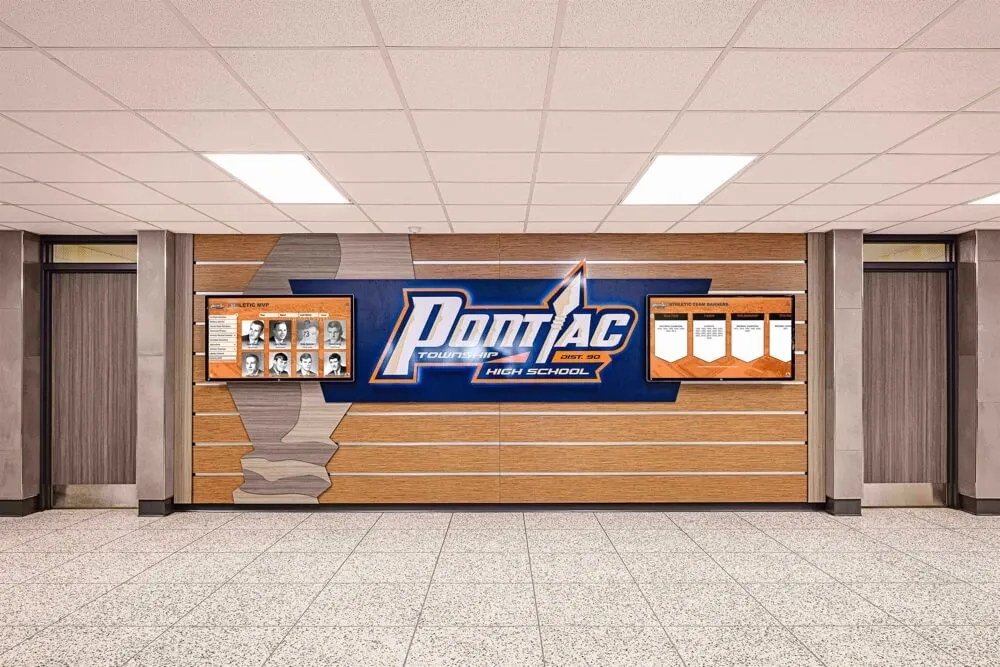
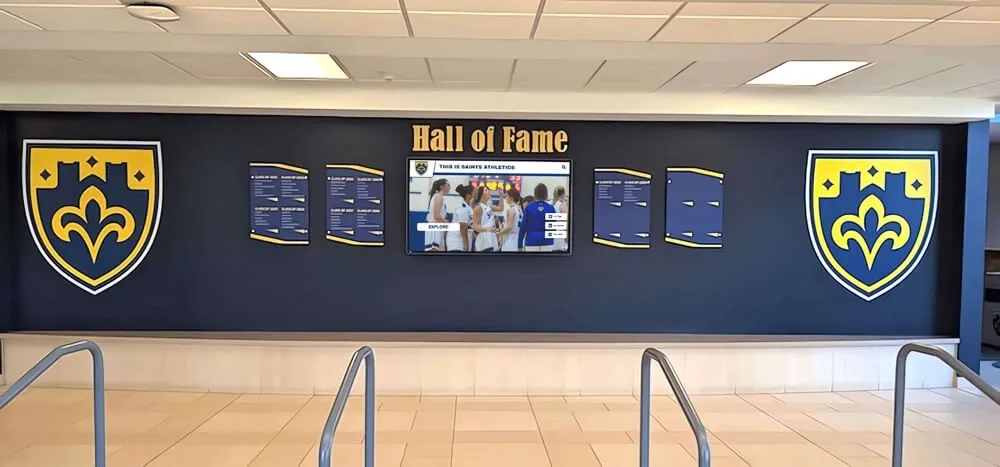
Hybrid approaches combine permanent architectural elements with flexible digital systems accommodating unlimited alumni
Organizing Alumni Recognition by Achievement Type
Effective alumni walls accommodate diverse accomplishment categories while maintaining appropriate recognition.
Distinguished Career Achievements
Recognizing graduates who achieved notable professional success:
Career Categories Schools typically highlight alumni in fields including:
- Medicine and healthcare (surgeons, researchers, hospital administrators)
- Law and judiciary (attorneys, judges, legal scholars)
- Business leadership (CEOs, entrepreneurs, corporate executives)
- Education (university presidents, innovative teachers, education policy leaders)
- Government and public service (elected officials, diplomats, agency directors)
- Arts and entertainment (musicians, actors, authors, artists)
- Athletics (professional athletes, coaches, sports executives)
- Science and technology (engineers, inventors, research scientists)
- Military service (flag officers, decorated veterans, service academy graduates)
- Non-profit leadership (foundation directors, social entrepreneurs, advocates)
Profile Elements Career achievement recognition typically includes:
- Professional biography summarizing career progression and accomplishments
- Position titles and organizational affiliations providing context
- Awards, honors, and recognitions received throughout careers
- Educational background connecting undergraduate experience to career success
- Mentor relationships and influential teachers from student years
- Advice for current students considering similar career paths
- Professional headshots reflecting current career positions
Schools implementing athletic hall of fame programs often create separate athletics recognition complementing broader alumni achievement walls.
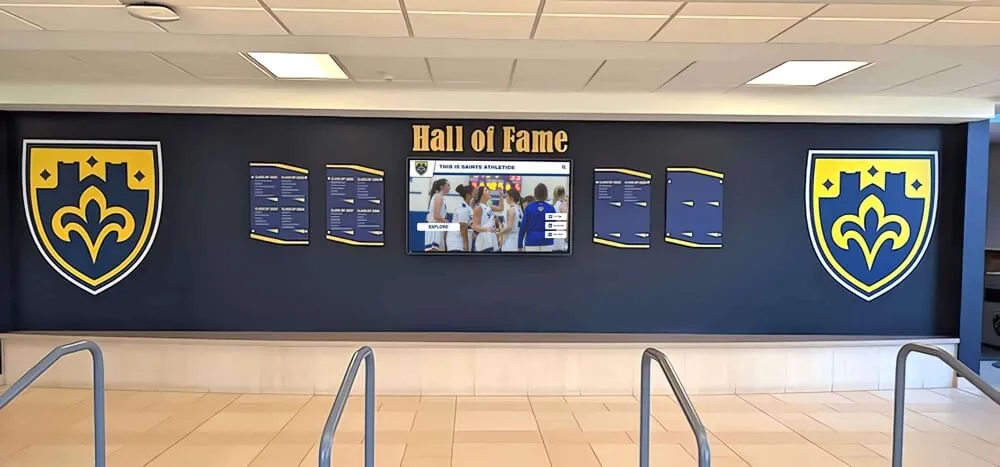
Career-focused recognition showcases diverse pathways demonstrating educational preparation for varied professions
Service and Community Impact Recognition
Celebrating graduates who made significant contributions through service:
Service Categories
- Humanitarian work and international development
- Community organizing and advocacy leadership
- Volunteer leadership across multiple organizations
- Faith-based ministry and religious service
- Medical mission work and healthcare access initiatives
- Education access programs and scholarship creation
- Environmental conservation and sustainability leadership
- Civil rights advancement and social justice work
- Disaster response and emergency services
Impact Documentation Service recognition emphasizes:
- Communities and populations served through work
- Measurable outcomes and tangible impacts achieved
- Organizations founded or led by alumni
- Recognition received from served communities
- Connection between educational values and service commitment
- Inspiration for current students considering service-oriented careers
Organizations can reference teacher recognition programs for additional insights on celebrating educational service contributions.
Academic and Research Excellence
Recognizing scholarly achievements and intellectual contributions:
Academic Achievement Types
- Advanced degrees from prestigious graduate programs
- Academic positions at universities and research institutions
- Published research and scholarly contributions
- Patents and inventions emerging from research
- Academic awards and fellowships (Rhodes, Fulbright, MacArthur, etc.)
- Teaching excellence at college and university levels
- Medical research breakthroughs and clinical innovations
- Scientific discoveries and technical advancements
Research Impact Storytelling Academic recognition benefits from:
- Plain-language explanations making research accessible to general audiences
- Real-world application descriptions showing practical impact
- Collaboration narratives describing research teams and partnerships
- Educational journey details showing path from high school through doctoral work
- Mentor appreciation acknowledging teachers who inspired academic pursuits
- Student advice about pursuing research and academic careers
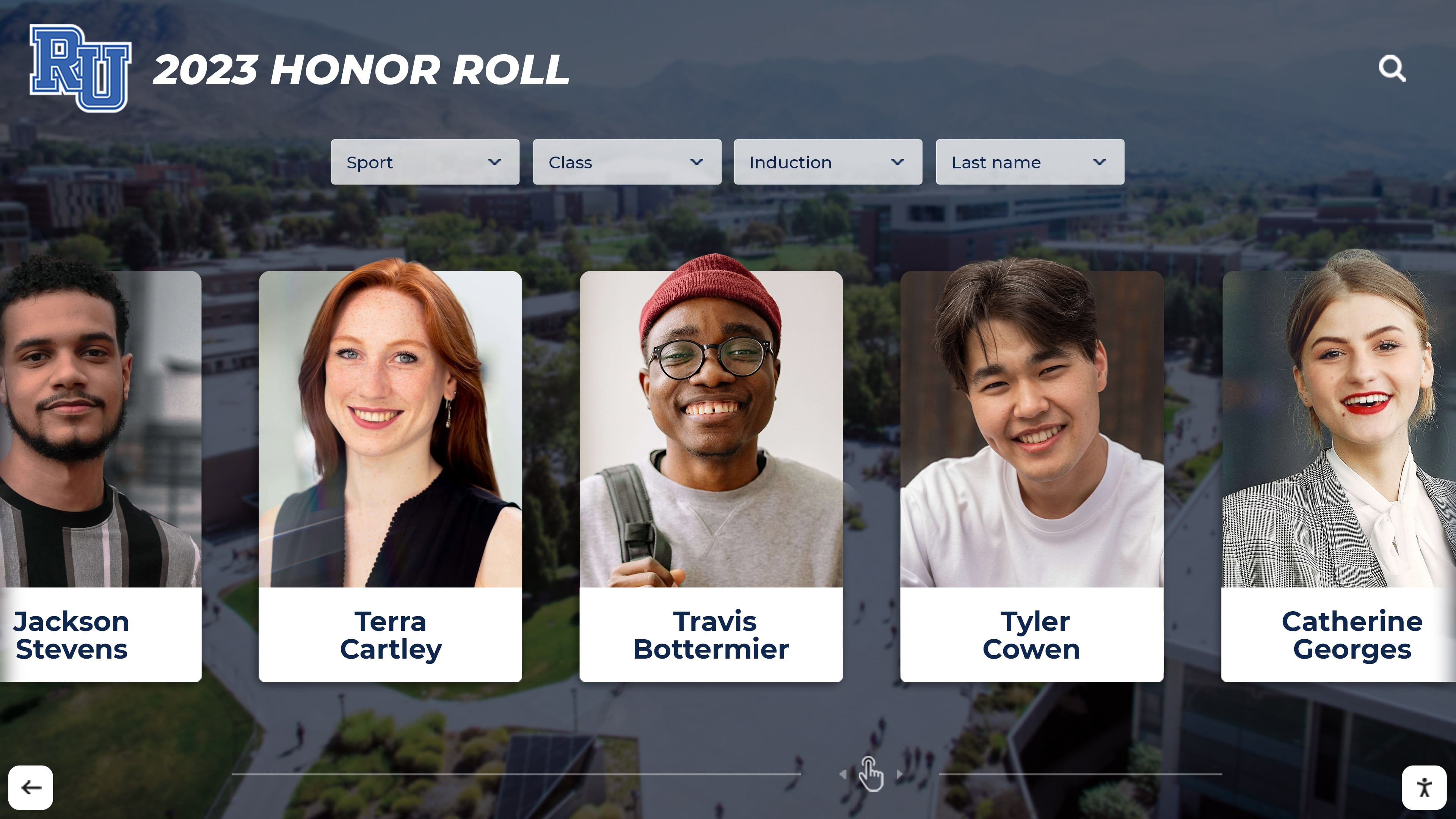
Academic recognition celebrates scholarly excellence while demonstrating educational preparation for research careers
Young Alumni and Rising Star Recognition
Featuring recent graduates building promising careers:
Early Career Categories Schools increasingly recognize younger alumni:
- Entrepreneurship and startup founding (companies less than 10 years old)
- Emerging arts and entertainment (rising musicians, authors, performers)
- Technology innovation (software development, emerging tech fields)
- Social enterprise and impact ventures
- Medical residencies and early practice achievements
- Graduate school success and research fellowships
- Early-career leadership positions despite recent graduation
- Community organizing and advocacy work by young graduates
Young Alumni Benefits Recent graduate recognition provides:
- Relatable role models closer in age to current students
- Career path visibility showing near-term post-graduation possibilities
- Alumni engagement opportunities for graduates in prime networking years
- Demonstration that recognition doesn’t require decades-long career establishment
- Connection between current student experiences and recent graduate realities
Schools report that young alumni recognition significantly increases graduate engagement in mentoring programs and career panels, as featured individuals remain closely connected to student experiences.
Creative Alumni Wall Theme Approaches
Beyond achievement categories, thematic organization creates engaging recognition experiences.
“Where Are They Now” Alumni Spotlights
Geographic and career distribution showcases:
Display Elements
- Interactive maps showing where alumni live and work globally
- Career field distribution graphics demonstrating professional diversity
- Geographic heat maps highlighting concentration areas
- Alumni cluster showcases (cities with many alumni, industries with graduate concentration)
- International alumni features celebrating global reach
- Local impact recognition honoring alumni serving home communities
Organizations can explore additional “where are they now” concepts through alumni spotlight guides.
Engagement Value Geographic displays inspire students by:
- Demonstrating that graduation opens worldwide opportunities
- Showing concentration areas where networking support exists
- Validating diverse location preferences from major cities to rural communities
- Illustrating that institutional preparation enables success anywhere
- Creating geographic affinity connections between current students and alumni in desired locations
Digital platforms enable interactive exploration of alumni geographic and career distribution patterns
Multi-Generational Family Legacy Recognition
Celebrating families with multiple generations of attendance:
Legacy Features
- Family tree displays showing multiple generations of graduates
- Multi-generational profiles highlighting family educational traditions
- Sibling and relative clusters documenting family connections
- Timeline views showing family attendance spanning decades
- Composite family photos from different graduation years
- Family testimonials explaining why multiple generations chose the institution
Impact on Enrollment Legacy recognition influences prospective families:
- Multi-generational attendance validates enduring institutional quality
- Family tradition demonstrates deep community connections
- Sibling success examples reduce prospective student uncertainty
- Parent and grandparent attendance creates family pride motivations
- Historical family photos generate emotional connections during tours
Development and admission offices report that legacy family recognition significantly influences enrollment decisions and giving patterns, particularly when families see their specific histories acknowledged.
Student Activity and Involvement Pathways
Organizing alumni by student involvement rather than post-graduation careers:
Activity Categories
- Student government alumni and leadership program graduates
- Athletic team alumni organized by sports participation
- Performing arts alumni (theater, music, dance programs)
- Publication staff (yearbook, newspaper, literary magazine editors)
- Club and organization leadership alumni
- Service and volunteer program participants
- Academic competition team members (debate, Science Olympiad, etc.)
Connection Value Activity-based organization helps current students by:
- Showing long-term impacts of current involvement choices
- Validating that extracurricular participation builds valuable skills
- Creating mentor connection opportunities with alumni sharing common activities
- Demonstrating diverse post-graduation paths from single activity groups
- Encouraging participation in activities by showing alumni achievement patterns
Schools implementing this approach often integrate activity-based alumni recognition with current student athlete recognition creating comprehensive participation celebration.
Decade and Era Theme Recognition
Grouping alumni by historical periods:
Era-Based Elements
- Decade-specific design aesthetics reflecting historical periods
- Historical context describing world events and cultural moments
- School history integration showing institutional evolution
- Fashion and style evolution visible through yearbook photos
- Technology progression documentation (pre-computer era to digital natives)
- Curriculum and program changes over time
Educational Value Historical organization benefits students through:
- Context understanding how education and society evolved
- Institutional history appreciation building pride and connection
- Change recognition showing how current experiences differ from past
- Continuity demonstration highlighting enduring institutional values
- Perspective providing about challenges and opportunities across eras
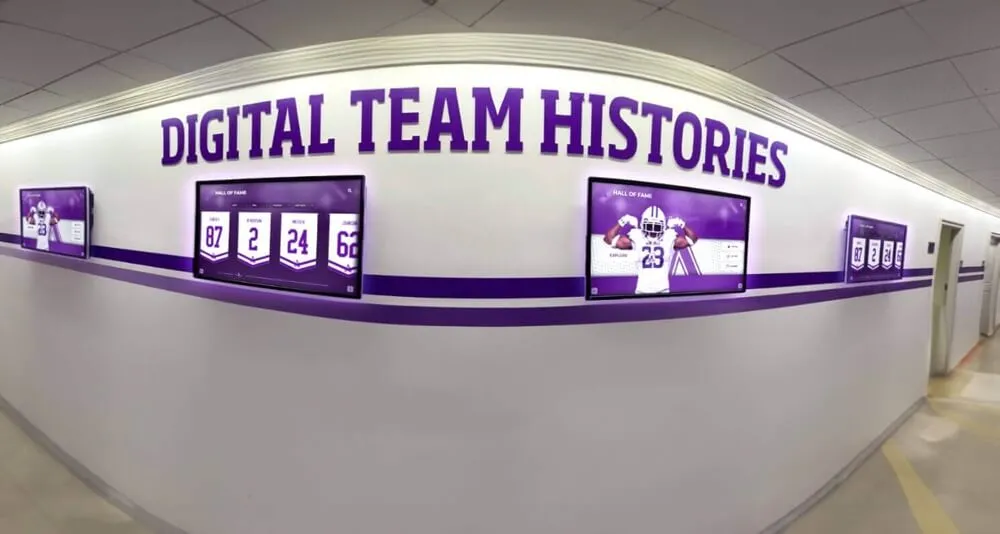
Historical timeline approaches contextualize alumni achievements within broader institutional and societal evolution
Location and Placement Strategies
Recognition effectiveness depends substantially on display positioning and visibility.
High-Traffic Campus Locations
Prime alumni wall placements balance visibility with appropriateness:
Optimal Locations
- Main entrance lobbies where visitors immediately encounter recognition
- Administrative areas toured by prospective families
- Athletic facility lobbies where students, families, and visitors gather
- Auditorium and performing arts center entrances
- Library and common areas with extended student dwell time
- Cafeteria and dining spaces ensuring daily student exposure
- Alumni center or development office reception areas
Placement should consider daily foot traffic volume, visitor demographics and stakeholder types, viewing distances and sight line clarity, available wall space or floor area for installations, lighting conditions and electrical access, and architectural context ensuring aesthetic integration.
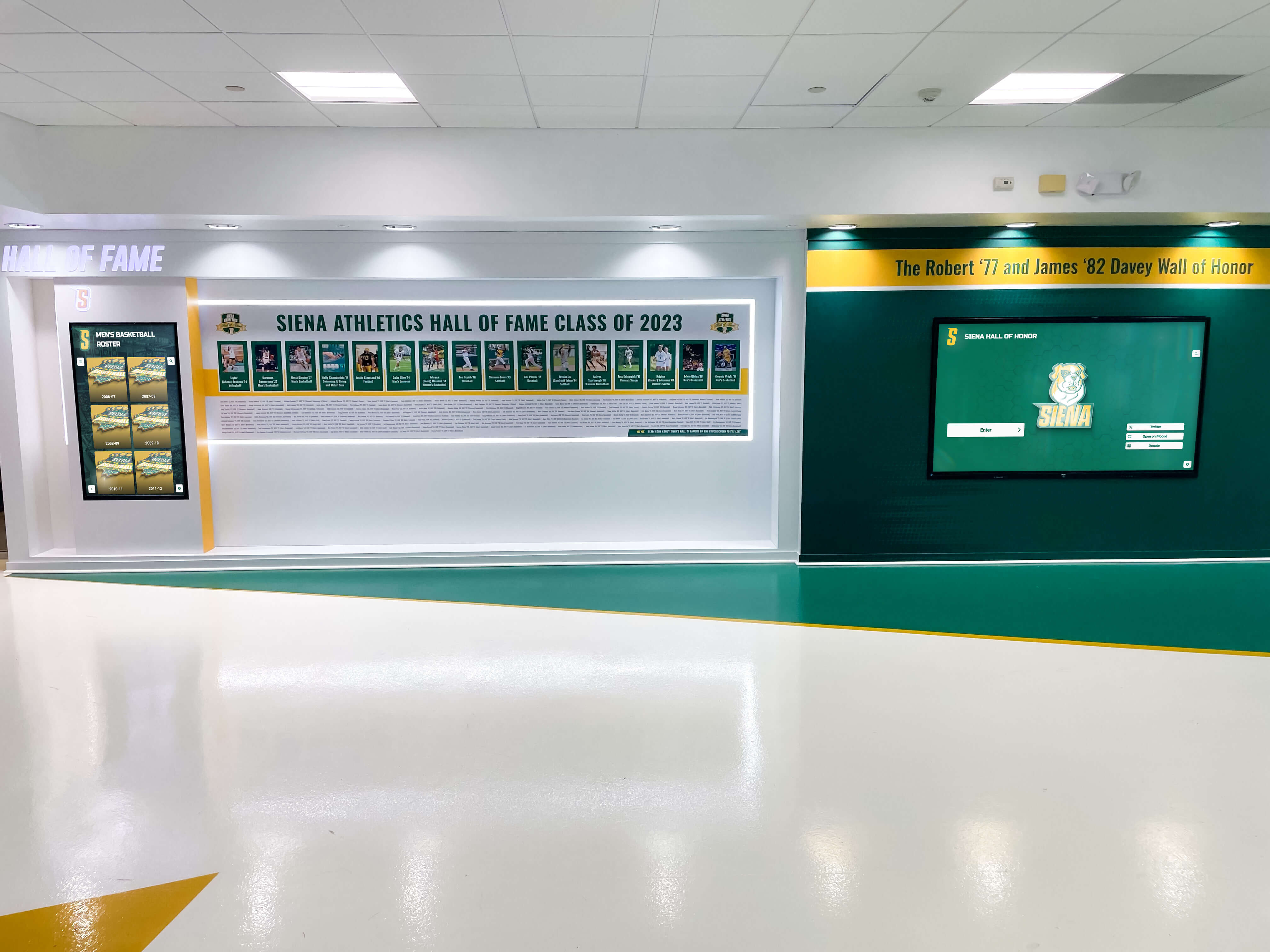
Lobby installations ensure maximum visibility for students, staff, visitors, and prospective families during campus tours
Avoiding Recognition Pitfalls Problematic placements include:
- Isolated locations requiring specific destination visits
- Areas with inadequate lighting or awkward viewing angles
- Corridors passing quickly without comfortable stopping space
- Locations visible only to restricted populations
- Spaces competing with other recognition displays creating visual clutter
Integration with School History Displays
Alumni walls gain context when integrated with broader institutional history:
Combined Exhibitions
- Historical timeline walls showing school founding and evolution
- Milestone event documentation (anniversaries, facility openings, program launches)
- Leadership succession displays featuring principals, headmasters, and superintendents
- Facility transformation photo galleries showing campus physical evolution
- Curriculum development exhibits documenting academic program changes
Schools can reference historical timeline display guides for comprehensive approaches to institutional history presentation.
Narrative Connection Benefits Integrated displays demonstrate:
- Relationship between institutional evolution and alumni achievement
- Context showing how educational approaches shaped graduate success
- Continuity linking current students to historical legacy
- Impact documentation proving education creates lasting effects
- Community pride through comprehensive institutional storytelling
Multiple Touchpoint Strategies
Distributed recognition across various campus locations:
Multi-Location Approaches Large schools benefit from:
- Central comprehensive alumni database in main lobby
- Department-specific alumni showcases (science, arts, athletics)
- Building entrance features highlighting alumni funding specific facilities
- Classroom displays featuring alumni working in subjects taught
- Career center alumni profiles organized by profession for student research
Digital platforms enable synchronized multi-location displays sharing centralized databases while accommodating location-specific content priorities and display formats.
Budget Planning for Alumni Walls
Recognition investment requires careful financial planning balancing initial costs against long-term value.
Traditional Alumni Wall Costs
Physical installations involve substantial upfront investment:
Initial Expenses
- Professional portrait photography: $300-600 per alumnus
- Custom framing and mounting: $150-400 per portrait
- Architectural elements and cabinetry: $10,000-40,000
- Bronze plaques: $200-500 each
- Installation and construction: $5,000-25,000
- Professional design services: $3,000-12,000
- Lighting systems: $2,000-10,000
Total initial investment for traditional alumni walls recognizing 50-100 individuals typically ranges from $30,000-100,000 depending on quality level and architectural integration complexity.
Ongoing Costs
- Adding new alumni: $400-1,000 per addition (portrait, framing, plaque, installation)
- Maintenance and cleaning: $500-2,000 annually
- Lighting replacement: $200-800 every 2-3 years
- Periodic refurbishment: $5,000-20,000 every 10-15 years
Organizations adding 5-10 new alumni annually face ongoing expenses of $3,000-10,000 annually for traditional approaches.
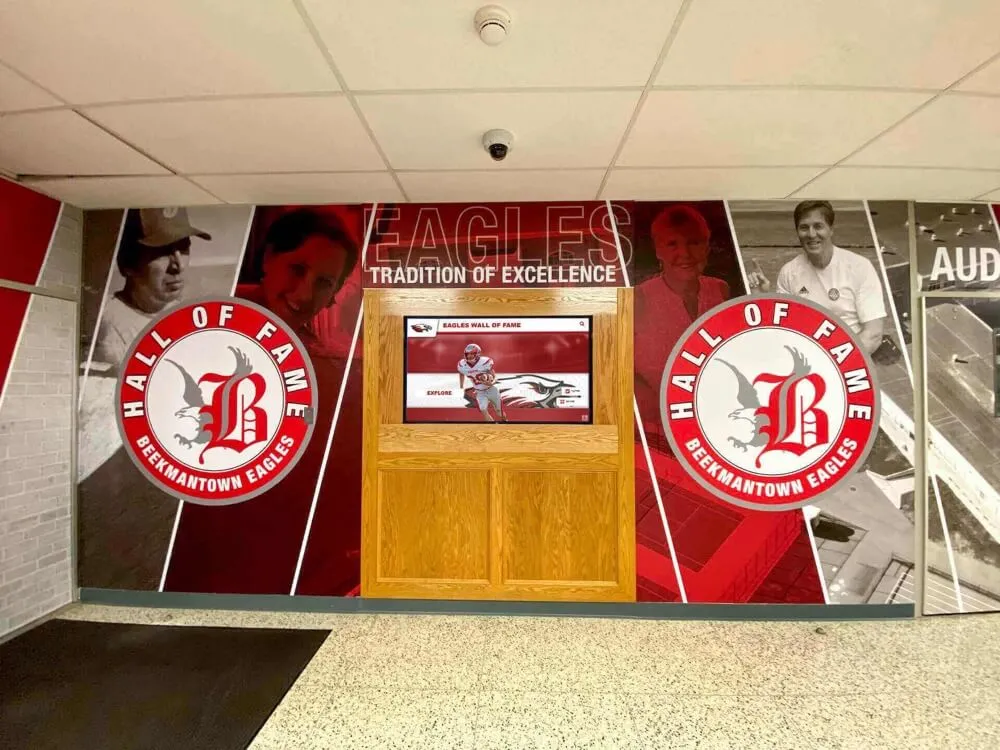
Traditional installations provide timeless elegance but impose space constraints and high per-alumnus costs
Digital Alumni System Costs
Technology-based solutions typically show lower total cost of ownership:
Implementation Investment
- Commercial-grade touchscreen display: $3,000-8,000
- Mounting and installation: $1,000-3,000
- Digital recognition software subscription: $2,500-8,000 annually
- Initial content development: $5,000-20,000
- Professional installation and setup: $2,000-5,000
- Total initial investment: $13,500-44,000
Operating Expenses
- Annual software subscription: $2,500-8,000 (includes hosting, updates, support)
- Content additions: $0 (self-service) or $1,000-5,000 (outsourced annually)
- Display maintenance and warranties: $400-1,000 annually
- Technology refresh planning: $500-1,200 annually (replacement reserves)
Digital systems show 50-70% lower total cost of ownership over 10 years compared to traditional approaches, particularly for schools regularly adding multiple alumni annually.
Return on Recognition Investment
Alumni walls generate measurable returns through engagement and giving:
Value Metrics Development research demonstrates that alumni recognition influences:
- Giving participation: 20-35% increases among featured alumni
- Gift size: 15-25% average increases in contribution amounts
- Volunteer participation: 2-3 times higher rates among recognized graduates
- Career mentoring: 40-60% greater participation in student programs
- Event attendance: Significantly higher reunion and campus event participation
Indirect Benefits Beyond direct fundraising returns:
- Admission yield improvements through prospective family tour impressions
- Student aspiration increases visible through college enrollment patterns
- Community pride enhancements influencing institutional reputation
- Current student engagement through career exploration and networking
- Faculty and staff morale through visible demonstration of educational impact
Organizations viewing alumni recognition as strategic engagement investment rather than obligatory acknowledgment typically see 4-7 times financial return within 10 years through improved giving and volunteer participation.
Implementation Best Practices
Successful alumni recognition requires systematic planning and stakeholder engagement.
Selection Criteria Development
Clear standards ensure consistent, fair recognition decisions:
Common Criteria Elements Schools typically consider:
- Career achievement level (leadership positions, professional recognition)
- Service contributions (community impact, volunteer leadership)
- Institutional support (giving, volunteer service to school)
- Time since graduation (often 10+ year requirement ensuring established careers)
- Character and conduct (alignment with institutional values)
- Diversity representation (ensuring recognition reflects student body composition)
Selection Process Options
- Nomination systems accepting submissions from alumni, students, and staff
- Selection committees reviewing nominations against published criteria
- Automatic recognition for specific achievement thresholds (elected office, major awards)
- Rotating selection by class year ensuring all decades receive attention
- Annual induction cycles creating predictable recognition rhythm
Transparent published criteria prevent perceptions of favoritism while ensuring recognition decisions align with institutional values and strategic priorities.
Content Collection and Development
Quality recognition requires comprehensive biographical information:
Information Gathering
- Alumni questionnaires collecting career details and accomplishments
- Public research documenting achievements and professional roles
- Interview processes capturing personal narratives and advice
- Photo collection from alumni and historical archives
- Social media and professional network profile verification
- Family and classmate input providing additional context
- Professional biography writing ensuring consistent quality and tone
Quality Standards Effective alumni profiles maintain:
- Factual accuracy verified through multiple sources
- Consistent length and format across all profiles
- Professional tone balanced with personal warmth
- Current information updated as alumni achieve new accomplishments
- Appropriate detail providing substance without overwhelming length
- Inclusive language reflecting diverse alumni experiences
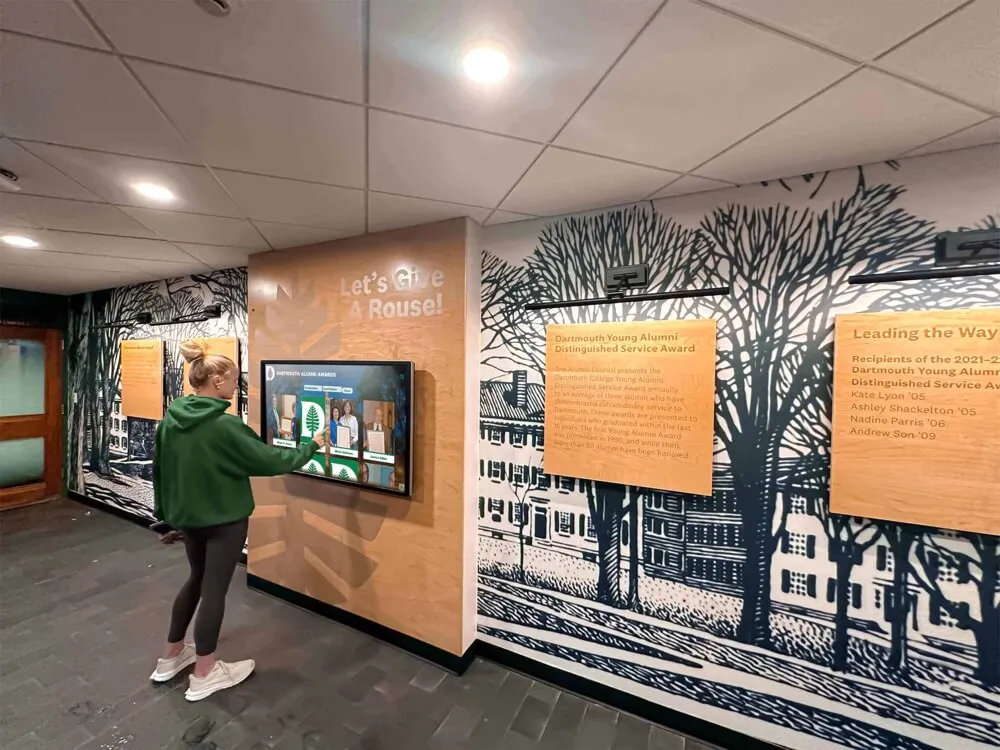
Comprehensive biographical content transforms simple name recognition into engaging storytelling experiences
Schools can reference digital archive creation guides for systematic approaches to historical content development and preservation.
Launch and Ongoing Promotion
Recognition programs require visibility and stakeholder awareness:
Unveiling Events
- Dedication ceremonies with featured alumni and school leadership
- Reunion weekend integration maximizing alumni attendance
- Student assembly presentations introducing recognition to current students
- Media coverage announcing program and celebrating featured alumni
- Social media campaigns sharing individual alumni stories
- Website integration featuring recognition content online
Sustained Engagement Ongoing promotion maintains visibility:
- Monthly or quarterly “featured alumni” spotlights in newsletters
- Career panel programming connecting current students with recognized alumni
- Homecoming and alumni event integration
- Admission tour incorporation ensuring prospective family viewing
- Annual induction ceremonies adding new alumni with appropriate celebration
- Social media anniversaries celebrating alumni milestone achievements
Leveraging Alumni Walls for Student Development
Strategic recognition serves educational purposes beyond simple acknowledgment.
Career Exploration and Mentoring
Alumni walls become educational resources for students:
Student Research Applications
- Career investigation by students exploring professional interests
- Mentor identification connecting students with alumni in desired fields
- Geographic exploration for students considering where to live after graduation
- Graduate school research finding alumni who attended target universities
- Entrepreneurship inspiration from alumni who built businesses
Mentoring Program Integration Schools implementing graduate showcase platforms often coordinate recognition with formal mentoring initiatives, using display profiles to facilitate student-alumni connections.
Curriculum Integration Teachers leverage alumni recognition through:
- Career day presentations featuring locally-accessible recognized alumni
- English class biographical research and writing assignments
- History curriculum using alumni military service as primary sources
- Science classes studying alumni research and discoveries
- Mathematics profiles showing career applications
- Social studies examining alumni civic service and leadership
Building Growth Mindset and Aspiration
Recognition influences student beliefs about possibility:
Psychological Impact Visible alumni success affects students by:
- Demonstrating that ordinary backgrounds don’t limit extraordinary outcomes
- Providing same-school role models more relatable than distant celebrities
- Showing diverse path possibilities beyond narrow career stereotypes
- Validating that current struggles (homework, extracurriculars, social challenges) lead somewhere meaningful
- Creating belief that excellence receives lasting recognition and appreciation
Educational research consistently shows that proximate role models influence student aspirations more powerfully than distant examples, making alumni recognition particularly valuable for building ambition and effort.
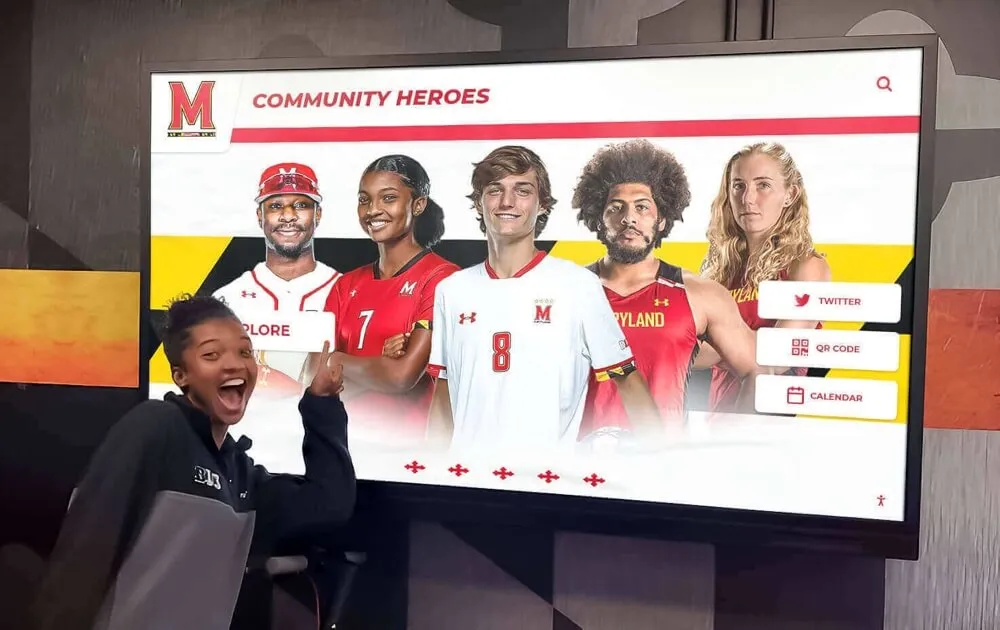
Interactive alumni displays become educational tools helping students explore career paths and envision their futures
Diversity and Representation
Intentional recognition ensures all students see themselves reflected:
Inclusive Recognition Priorities Schools should ensure alumni walls include:
- Gender balance reflecting student body composition
- Racial and ethnic diversity demonstrating success across all backgrounds
- Career variety beyond stereotypical high-status professions
- Geographic diversity from local community servants to international leaders
- First-generation college graduate recognition validating all backgrounds
- Varied extracurricular pathways showing multiple routes to success
Impact on Underrepresented Students Research demonstrates that students from underrepresented groups benefit disproportionately from seeing successful alumni sharing their backgrounds, with visible role model presence correlating with 30-40% higher college enrollment and career aspiration rates.
Future Trends in Alumni Recognition
Emerging technologies and changing preferences shape recognition evolution.
Enhanced Interactivity and Personalization
Advanced systems enable customized experiences:
Emerging Capabilities
- Personalized recommendations suggesting alumni based on student profiles and interests
- AI-powered search understanding natural language career exploration questions
- Virtual reality alumni experiences enabling immersive career day presentations
- Live video connection enabling real-time student-alumni conversations through displays
- Social networking features creating alumni-student connection platforms
Organizations can explore interactive touchscreen software guides for emerging technology integration strategies.
Social Media Integration
Recognition extends beyond physical campus:
Connected Experiences
- Automatic social media posting when alumni are featured or inducted
- LinkedIn integration pulling current professional information automatically
- Instagram and Facebook sharing enabling alumni celebrating recognition
- Twitter feeds showing alumni professional updates and accomplishments
- Professional network facilitation connecting alumni across graduation years
Viral Engagement Potential Schools report that social media integration significantly amplifies recognition reach, with featured alumni sharing recognition with professional networks generating 10-20 times more visibility than campus-only displays.
Mobile and Remote Access
Recognition accessibility from anywhere:
Extended Reach
- Dedicated mobile apps for exploring alumni directories
- Web-based platforms accessible to alumni worldwide
- Virtual tour integration for prospective families unable to visit campus
- Reunion planning tools incorporating alumni recognition
- Remote mentoring platforms connecting students with geographically distant alumni
Digital platforms enable alumni engagement regardless of proximity to campus, particularly valuable for institutions with geographically dispersed graduate populations.
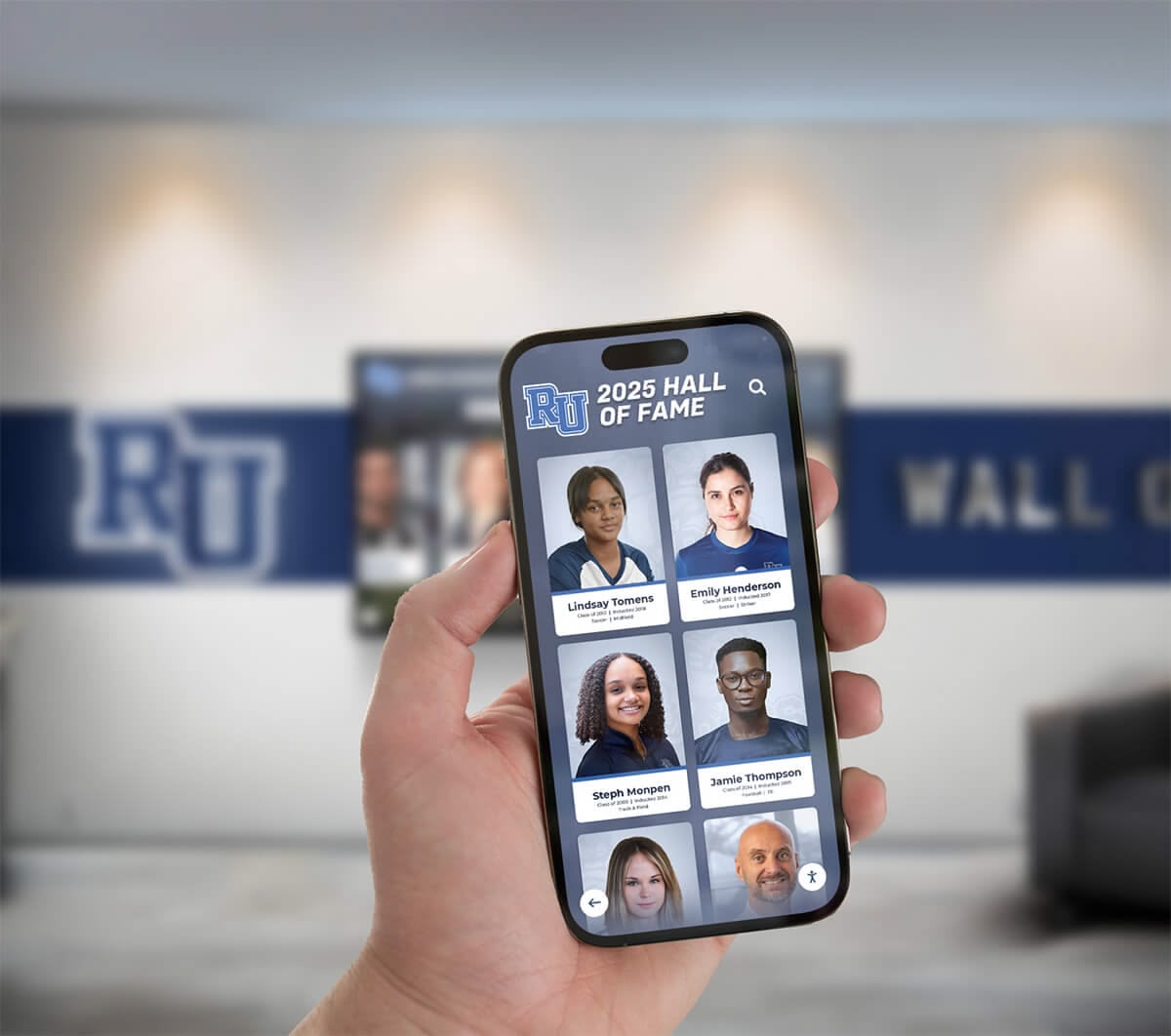
Mobile accessibility extends alumni recognition beyond physical campus, enabling worldwide access and engagement
Conclusion: Creating Alumni Recognition That Connects Generations
Effective alumni walls transform scattered graduate stories into cohesive recognition programs that strengthen institutional identity, inspire current students, and deepen alumni engagement. The most successful implementations view recognition as strategic investment in community building rather than obligatory acknowledgment, designing displays that benefit both honored alumni and current students exploring their futures.
Traditional approaches including portrait galleries, brick walls, and architectural installations offer timeless elegance and perceived permanence but impose significant space limitations and high per-alumnus costs. These constraints force schools to make difficult decisions about which graduates receive recognition, often limiting displays to small percentages of accomplished alumni.
Transform Your Alumni Recognition Program
Discover how digital alumni walls enable unlimited recognition capacity, comprehensive biographical storytelling, and interactive career exploration while simplifying content management and reducing long-term costs. See how schools nationwide connect past graduates with current students through engaging displays that strengthen community and inspire excellence.
Explore Alumni Recognition SolutionsModern digital recognition platforms like Rocket Alumni Solutions overcome these fundamental limitations through unlimited showcase capacity, eliminating impossible choices about which alumni to feature. Interactive touchscreen displays transform passive viewing into active exploration, with students researching career paths and connecting with alumni mentors. Cloud-based content management enables instant updates as alumni achieve new accomplishments, maintaining relevance that static displays cannot match. And comprehensive multimedia storytelling capabilities bring alumni to life through photos, videos, and personal narratives.
Schools succeeding at alumni recognition take systematic approaches: they establish clear selection criteria ensuring fair and consistent decisions, engage alumni throughout content development gathering comprehensive biographical information, position displays in high-traffic locations maximizing visibility, integrate recognition with mentoring and career programs serving student development needs, and maintain ongoing promotion ensuring sustained engagement and awareness.
Your alumni represent powerful evidence of educational impact—accomplished professionals, dedicated community servants, innovative entrepreneurs, and inspiring role models demonstrating that your institution prepares students for meaningful lives. With thoughtful planning, appropriate technology choices, and sustained commitment, you can create alumni recognition that honors graduate achievements while inspiring current students to envision their own extraordinary futures.
Ready to explore how digital recognition displays can showcase unlimited alumni while creating engaging experiences connecting past graduates with current students? Discover comprehensive solutions helping schools nationwide strengthen communities through effective alumni recognition.