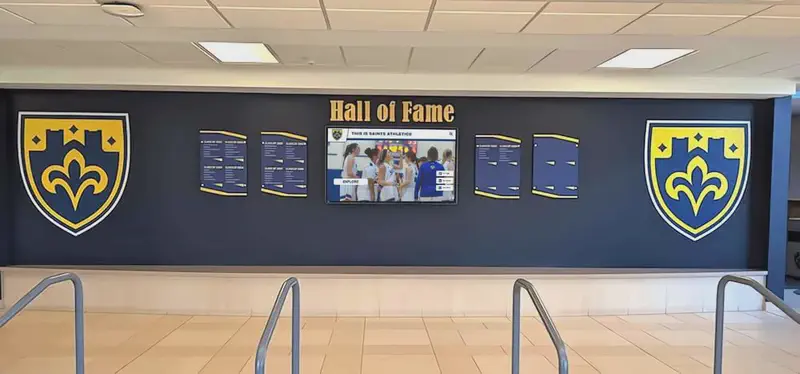
The Easiest Touchscreen Solution
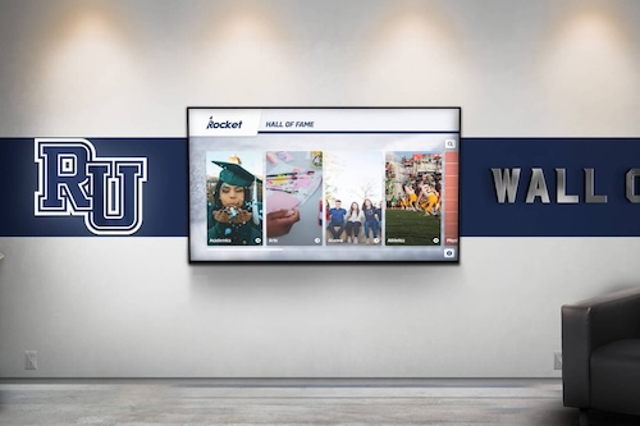
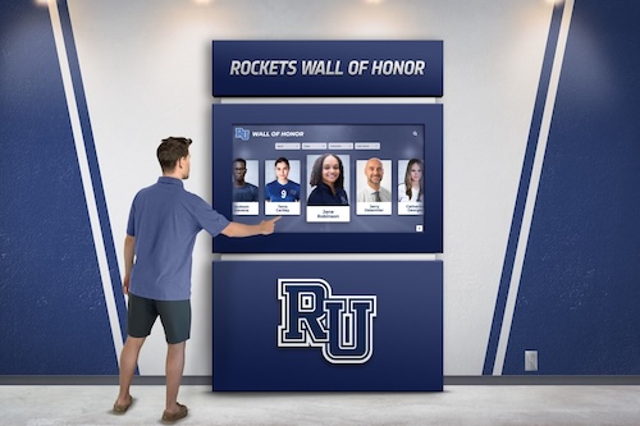
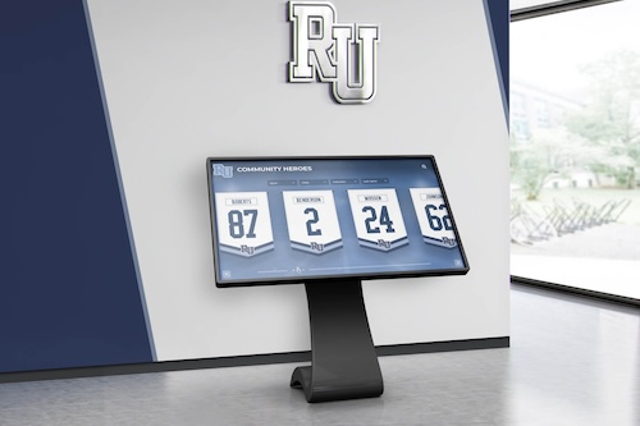
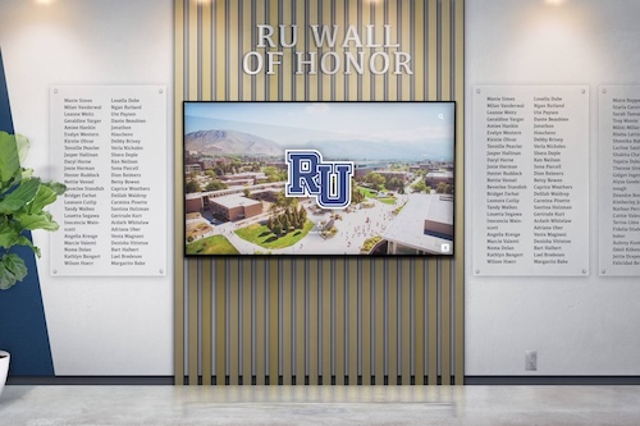
Live Example: Rocket Alumni Solutions Touchscreen Display
Interact with a live example (16:9 scaled 1920x1080 display). All content is automatically responsive to all screen sizes and orientations.
An adapted floor hockey honors display carries two distinct layers of attribution that recognition editors need to keep straight: the competing team as listed earned the team-level result, and an individual selected to the all-tournament team earned a separate individual honor. When a display collapses those two into one entry — or attributes a co-op team’s championship to a single member school — the caption misrepresents what happened and can quietly shortchange athletes who earned their own recognition.
The Minnesota State High School League’s 2026 Adapted Hockey State Tournament adds a third layer: CI Division and PI Division outcomes are reported separately, run on separate brackets, and must each be verified from their own sources. A recognition editor who copies a CI Division result into a PI Division caption will produce an entry that cannot be supported by the record if anyone checks.
This guide helps athletic directors and recognition editors prepare accurate, source-faithful display entries for every type of adapted floor hockey honor. It covers how to separate team finishes from individual all-tournament selections, how to attribute co-op team results correctly, and how to handle the two-division structure the MSHSL uses. It closes with blank placeholder caption examples and a staff planning worksheet.
A display entry that attributes a co-op team’s championship to one of its member schools, or that treats an individual’s all-tournament selection as a team championship, creates an inaccuracy that becomes harder to correct as time passes. The shortest answer to both problems is the same: use the official team name and the official award category, exactly as the source states them, and keep team-level and individual-level honors in separate entries.
An adapted floor hockey honors display that separates CI Division results, PI Division results, and individual all-tournament selections gives each earned honor its own clear, attributable entry.
Why Division Separation Matters
The 2026 MSHSL Adapted Hockey State Tournament ran two divisions — CI Division and PI Division — with separate brackets, separate sets of competing teams, and separate championship outcomes. The MSHSL 2026 Adapted Hockey State All-Tournament Teams announcement (posted March 1, 2026) reflects that structure directly: CI Division and PI Division selections appear under separate headings in separate tables, with each division’s players and competing teams listed independently.
That separation has a direct consequence for recognition staff. A caption written from a CI Division result cannot serve as a PI Division caption, and the reverse is equally true. Each division’s tournament outcomes must be looked up from that division’s own sources — the CI news report, the PI bracket — before any display entry is finalized.
The MSHSL uses “CI Division” and “PI Division” as the published labels for the two classification groupings. Those are the terms to carry through into any caption or display heading. Substituting different terminology replaces the official record language with something that cannot be matched back to the original source.
The CI Division Team Championship
The MSHSL report on the 2026 CI Division championship (posted February 28, 2026) describes how the South Suburban Jets CI team won the state title. The team competed from Bloomington Jefferson High School as its home base; the co-op program also includes Bloomington Kennedy, Eden Prairie, Edina, and Richfield. The MSHSL report identifies the competing team as “South Suburban” — that is the name as listed by the organizer, and that is what belongs in any display entry covering this team-level result.
Each school connected to the co-op has a legitimate connection to celebrate. A student from Eden Prairie who competed on South Suburban’s championship roster has an achievement worth recognizing in that school’s display. The important distinction lies in how the entry reads. A caption that says a school’s student competed on the South Suburban CI championship team tells an accurate story. A caption that presents the school itself as the CI Division state champion tells a different and inaccurate story — the South Suburban Jets CI team won the title, as the MSHSL source states it, and that name belongs on the team-level entry.
Accuracy and community pride are not in conflict. Schools can hold the connection and the official attribution at the same time. What keeps the display honest is that the team-level credit stays with the team as named.
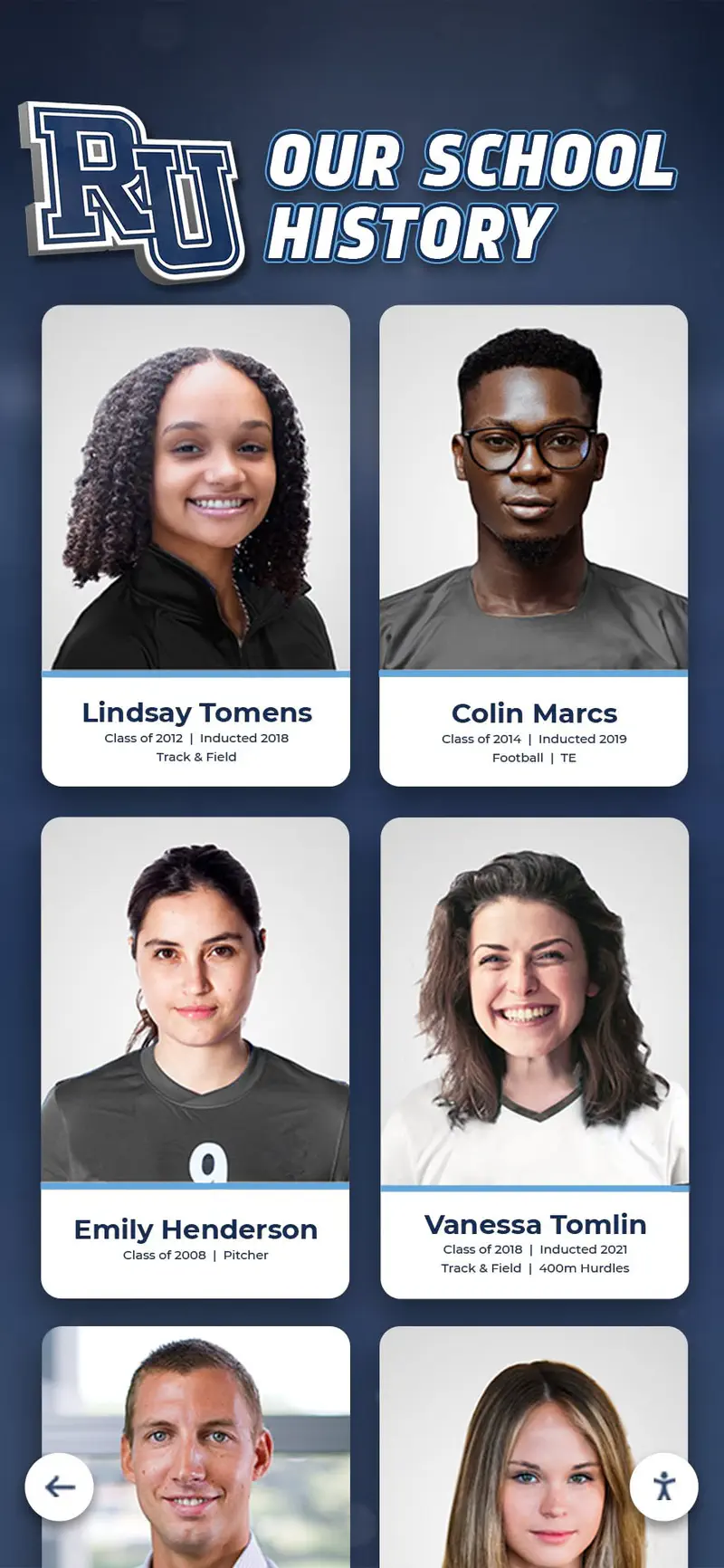
Portrait-style entries work well for individual all-tournament selections, where the athlete is the recipient, distinct from any team finish that belongs to the competing team as a whole.
All-Tournament Selections: Individual Honors, Not Team Championships
The MSHSL 2026 all-tournament teams list is a roster of individual athletes recognized across the full field of CI and PI Division competitors. The source organizes selections under separate “CI Division” and “PI Division” headings, with First Name, Last Name, and Team columns for each athlete. Being named to the all-tournament team is a significant individual honor — it does not prove that the athlete’s competing team won the championship, and not every teammate of a championship team receives an all-tournament selection.
The Team column in the MSHSL source identifies the competing team alongside each athlete’s name. That is the attributable team for a formal display entry. A school may verify its own student’s connection and add that context, but the competing team column is the name the entry should carry.
A display that collapses a CI Division all-tournament selection into the CI Division championship entry — because the athlete happened to compete for the championship team — produces a category error. The championship belongs to the team. The all-tournament selection belongs to the individual. They are separate entries with separate recipients, even when the facts are connected.
Placeholder caption — individual all-tournament selection:
[Athlete first and last name] | All-Tournament Team — CI Division [or PI Division] | 2026 MSHSL Adapted Hockey State Tournament | Competing team as listed: [team name from source] | Verified school connection: [school name, if applicable and independently confirmed] | Source: [URL]
The PI Division: A Separate Bracket and Separate Champion
The 2026 Adapted Hockey PI Bracket is the primary source for PI Division results. It records eight competing teams and a full bracket from round one through the championship, and the bracket page identifies Brainerd H.S. as the PI Division champion. These results are entirely independent of the CI Division championship; neither division’s champion holds a claim on the other’s title.
A school connected to the PI Division tournament — through a student who competed on one of the eight bracket teams — should look up its team’s specific finish directly in the PI bracket rather than approximate it from the CI report or from seeding alone. The bracket records each round’s result and identifies the finishes: champion, runner-up, third place, and consolation winner.
The PI Division all-tournament selections appear in the MSHSL all-tournament teams announcement under the “PI Division” heading, following the same First Name, Last Name, Team format as the CI Division list. A school with a student named to that list may recognize the individual selection as a separate entry from any team finish, using the competing team name exactly as it appears in the source.
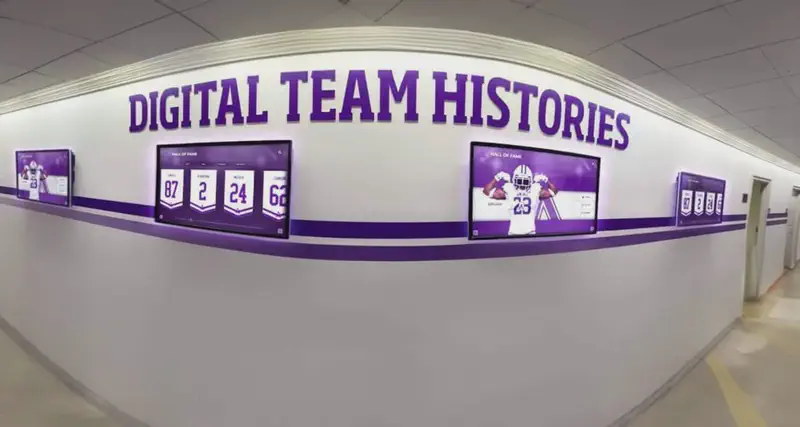
Separate display panels for each division's results — with their own headings and attributed team names — keep CI and PI outcomes visible and distinct for any visitor reading the display.
Placeholder Captions for Each Honor Type
Three types of adapted floor hockey recognition appear most commonly in a school display, and each calls for a different caption structure. The examples below use square-bracket placeholders where verified information should appear. They are starting points for your own records, not finished captions.
Division Team Title
Use when your school has a verified connection to a team that won a CI or PI Division championship. The team name and division label should match the MSHSL source exactly.
[Competing team name, exactly as listed in MSHSL source] | CI Division [or PI Division] | State Champion — 2026 MSHSL Adapted Hockey State Tournament | School connection (if applicable): [school name, verified independently] | Source: [URL]
Non-Champion Team Finish
Use when a team reached the state tournament but did not win the championship. Draw the finish — runner-up, third place, consolation — from the bracket record for that division, not from seeding or regular-season record alone.
[Competing team name, exactly as listed in MSHSL source] | CI Division [or PI Division] | [State Runner-Up / Third Place / Consolation Finish] — 2026 MSHSL Adapted Hockey State Tournament | School connection (if applicable): [school name, verified independently] | Source: [bracket URL for the relevant division]
Individual All-Tournament Selection
Use when a student competed for a bracket team and was named to the MSHSL all-tournament team for their division. This is an individual honor and should appear as a separate entry from any team finish caption, even if the same student’s team won the championship.
[Athlete first and last name] | All-Tournament Team Selection — CI Division [or PI Division] | 2026 MSHSL Adapted Hockey State Tournament | Competing team as listed: [team name from MSHSL source] | Verified school connection: [school name, if applicable] | Source: [URL]
A caption that cannot be completed from verified source records should wait — not be estimated or filled in from memory. A single unverifiable field does not hold up other confirmed entries from being published.
Co-op Teams and Accurate School Attribution
Co-op programs in MSHSL adapted hockey compete under a shared team name that reflects the multi-school structure. The South Suburban program is one example. The MSHSL report names the team “South Suburban” as the CI Division champion, notes Bloomington Jefferson as the home base, and separately identifies Bloomington Kennedy, Eden Prairie, Edina, and Richfield as also part of the co-op. The team competed and won as South Suburban — that name appears in the MSHSL record as the competing team.
Each of those member schools can appropriately recognize its students’ participation in and connection to the South Suburban championship program. What keeps the entry accurate is that the team-level championship credit stays with South Suburban — the name under which the team competed — rather than being reassigned to any single member school. Presenting the championship under one school’s name would credit one part of the co-op while erasing the rest.
For schools building a digital recognition display, adding a note of context — identifying that students from that school competed as part of the South Suburban CI team — alongside the accurate team-level entry is a reasonable way to honor both the school connection and the competitive record. The two pieces of information complement each other without creating a conflation.
The same principle applies to co-op teams in the PI Division bracket. When the bracket lists a team by name, that is the name the team-level result belongs to.
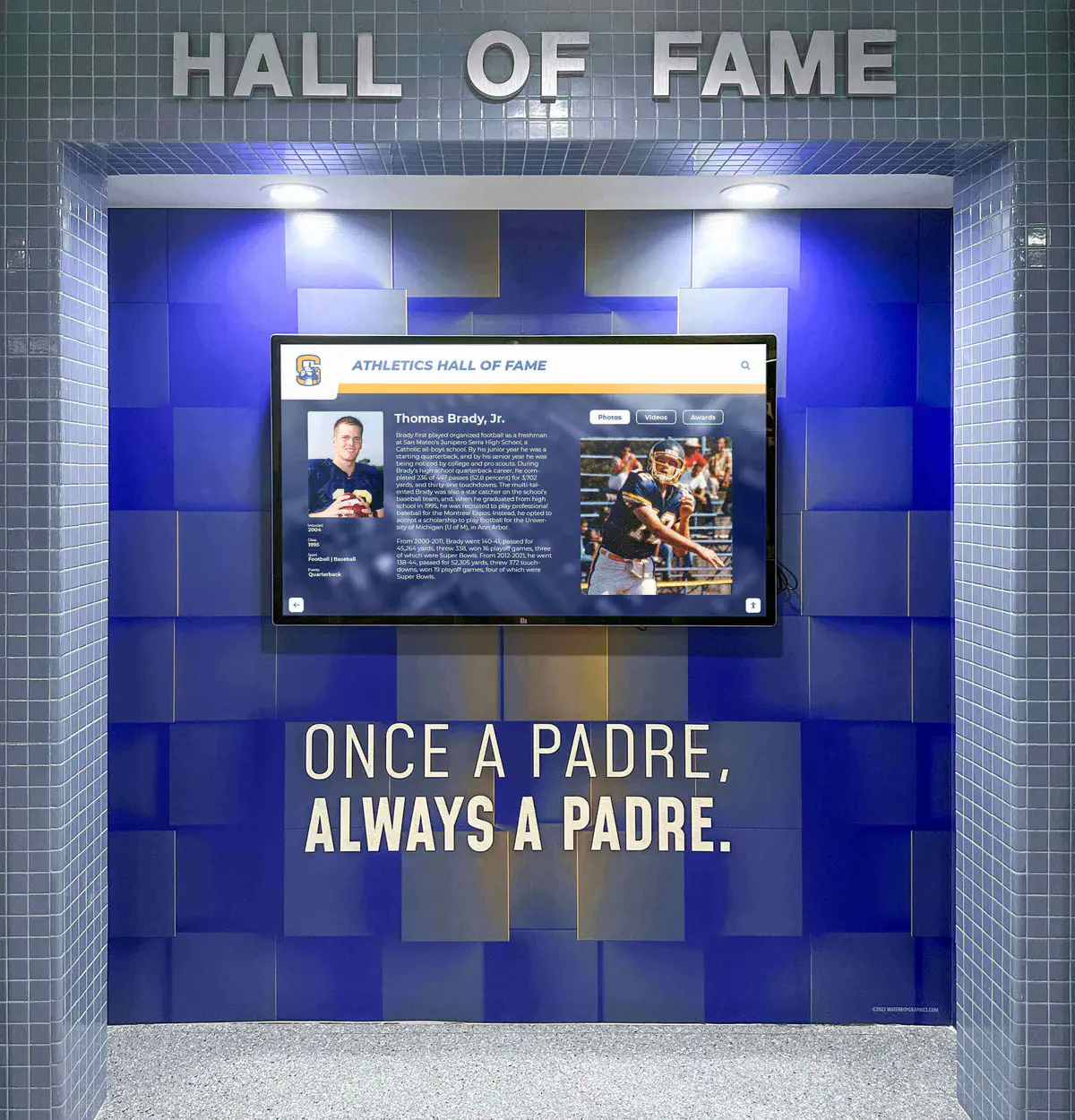
A digital display can hold a team-level entry under the competing team's name alongside a school-connection note, honoring both the official record and the local community context.
How a Digital Display Holds the Context
Physical trophies and plaques are engraved at the time of purchase. Correcting a team name or award category means new hardware, and the original caption may persist in photographs, programs, and published records for years. A digital recognition display lets staff edit captions, add context notes, and correct attribution without replacing the physical object. Physical trophies and digital records can coexist — the digital layer carries the context that a fixed plate cannot.
A school that has a student named to the CI Division all-tournament team can hold that athlete’s individual entry separate from the team championship entry — even when both facts involve the same competing team. Each entry carries its own heading, its own recipient (the athlete for an individual selection, the competing team for a team finish), and its own source citation. If a caption needs correcting after publication, the update can be made and the record stays current.
Staff can supply school-specific context — a photo, a brief program history, a note connecting the student to the community — alongside the official record from the MSHSL source. That layered approach honors the athlete, the team, and the institution without conflating them into a single entry that overstates or misstates any one of them.
Editorial Planning Worksheet
Use this table when preparing adapted floor hockey display entries. Fill in each row from primary MSHSL source documents before writing any caption or display entry. A row left partially blank is a prompt to gather the remaining information — not a reason to skip the entry entirely. Verify the attribution for each row independently before publishing; a discrepancy in one entry affects that caption, not the other confirmed records waiting to go up.
| Organizer / event / year | Division as published | Competing team as listed | Exact earned title / place / selection | Team or individual recipient | Verified school connection | Source URL |
|---|---|---|---|---|---|---|
This table is a staff planning aid for your athletics office or recognition editor. It is not a required import schema; missing unrelated fields should not hold up other verified recognitions from being published.
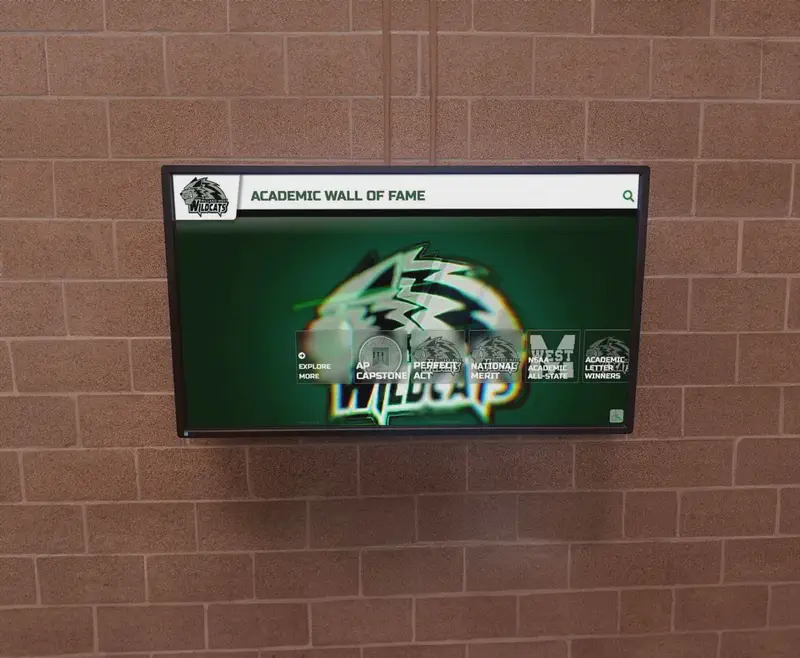
A digital display mounted alongside a physical trophy case can carry adapted hockey recognition entries accurately captioned alongside other athletic and academic honors — provided each entry is drawn from a verified source record.
Related Resources
Cross-checking athletic award records before publishing a recognition display
Schedule a conversation about your school’s adapted sports recognition display
Live Example: Rocket Alumni Solutions Touchscreen Display
Interact with a live example (16:9 scaled 1920x1080 display). All content is automatically responsive to all screen sizes and orientations.